
- What makes the Tibetan knot important in designer modern rugs?
It produces a dense, plush, topographical pile. That texture has become a major signature of high-end Nepalese production and architect-driven contemporary design.
- Why is the Turkish knot favored for modern tribal and Oushak revival rugs?
Its symmetrical structure gives the rug a more robust, boxy integrity. That suits geometric patterns and heavier-duty use especially well.
- Why is the Persian knot preferred for detailed modern rugs?
Its asymmetrical structure allows for denser knotting and more fluid pattern drawing. That makes it ideal for curvilinear, intricate, or photorealistic designs.
- What is the most durable way to make a new rug?
Hand-knotting is presented as the gold standard. Each knot is tied by hand, which gives the rug a stronger foundation and a much longer lifespan.
- Why does the article call construction the “DNA” of a rug?
Because how a rug is made determines how it will wear, feel, and age. Construction affects longevity just as much as material or design.
- What are Latin American weaving initiatives adding to the market?
They are creating a bridge between indigenous textile traditions and modern design. Local fibers like alpaca and llama are helping shape a form of indigenous modernism.
- What is the United States known for in the modern rug world?
The U.S. is less a weaving center than a design and engineering center. Many custom rugs are concepted in New York or Los Angeles and then woven abroad to fit exact architectural projects.
- What are Eastern European ateliers contributing to new rugs?
They are reviving flat-woven traditions in a modern way. Old Bessarabian-style ideas are being reworked into earthy, muted rugs for contemporary collectors.
- What role does Scandinavia play in new rug production?
Scandinavia is more limited and design-intensive than mass-market. Its flatweaves prioritize structural clarity, unbleached wools, and a restrained sense of material honesty.
- Why are Chinese new rugs split between industrial precision and luxury craft?
China dominates consistency at scale for commercial production, but it also has a luxury hand-knotting sector. That upper tier produces extremely fine wool-silk and silk revival rugs with very high detail.
- What is happening in Morocco’s contemporary rug market?
Moroccan production is shifting toward boutique, designer-linked workshops. These rugs keep the organic Berber feel but often adapt it to cleaner geometry and larger modern spaces.
- What is Turkey’s role in the new rug market?
Turkey leads in deconstructed classics and vintage-feel production. Oversized motifs, ghosted patterns, and bio-washed finishes make its rugs especially useful in transitional interiors.
- How is contemporary Persian production changing in Iran?
It is moving away from dense floral medallions toward more open-field designs and newer Gabbeh-inspired looks. The result is a modernist turn within the Persian tradition.
- What makes Afghanistan important in contemporary rug production?
Afghanistan is prized for Ghazni wool and a rugged tribal honesty. It is especially strong in modern tribal rugs and updated Kazak-style production.
- Why is Nepal described as the laboratory of designer modernism?
Nepal specializes in high-end Tibetan-knot production for the premium and designer tiers. That makes it especially important for abstract, topographical, and architect-driven modern rugs.
- What is Pakistan known for in the new rug market?
Pakistan is associated with fine-line precision, strong knot density, and refined Chobi and Ziegler-inspired production. Its hand-spun wool and vegetal dyes also fit the quiet luxury look.
- Why is India called the dominant global hub for new rugs?
India combines scale with versatility. It produces everything from accessible programmed collections to master-grade hand-knotted revivals, especially in styles like Oushak.
- Why does the article say geography matters so much in new rugs?
Because origin still shapes a rug’s technical DNA. Different weaving hubs specialize in different fibers, knots, finishing methods, and design languages.
- How long is a high-quality new rug expected to last?
The article’s matrix gives a wide range by tier. Entry-level rugs may last 5–10 years, while premium handmade pieces can last 50–80+ years and art-level rugs may exceed 100 years.
- What makes art-level rugs the “antiques of tomorrow”?
They combine rarity, authorship, and top-end craftsmanship in a way that can outlast trends. The idea is that these rugs are being made today at a future-collectible level.
- What is an art-level contemporary rug?
It is the top tier of new rug production, often involving one-of-a-kind or extremely limited masterworks. These pieces use rare materials and exceptional technical skill to rise beyond decor into art.
- Why are limited edition rugs compared to fine-art prints?
They are multi-originals rather than one-off customs. That gives buyers exclusivity and verification without requiring a fully bespoke commission.
- What is a limited edition rug?
A limited edition rug is produced in a fixed run, such as 10 or 25 pieces. Once the edition is complete, the design is retired.
- What defines a designer and luxury rug?
These rugs are driven by signature and creative authorship. They often use unusual material blends and are chosen to shape the design language of the entire room.
- Why are premium handmade rugs called the “workhorse” of luxury?
They combine beauty with real structural endurance. These are the rugs meant to live in serious homes and handle daily use without losing their character.
- What makes a premium handmade rug different from a mid-market rug?
A premium handmade rug is truly hand-knotted using traditional techniques and better materials. It has more density, more durability, and a stronger chance of lasting for decades.
- Why are mid-market rugs called “the staple” rug?
They are dependable, versatile, and widely usable in everyday interiors. They may not be highly individual, but they offer solid design value for many homes.
- What is a mid-market production rug?
It is a programmed rug made in larger batches using standardized colors and patterns. These rugs often offer a high-end look at a more accessible price.
- Why are entry-level rugs described as “ephemeral”?
They are built for short-term decorating cycles rather than multi-generational use. Most lack the durable foundation and structural memory of hand-knotted rugs.
- What defines an entry-level new rug?
Entry-level rugs are usually power-loomed or mechanized tufted pieces made for speed and low cost. They prioritize trend and price over structural longevity.
- What is the article’s main ranking system for new rugs?
It organizes the market into six tiers, from entry-level utility rugs to museum-quality art-level masterworks. The point is to separate short-term decor from long-term textile value.
- How has technology changed custom rug production?
It has made the design-to-loom process much more precise. A modern workshop can now match architectural layouts, Pantone references, and exact measurements with far more accuracy.
- Why do current buyers care so much about traceability in new rugs?
They want to know where the materials came from and how the rug was made. Certifications, fair-trade programs, and sustainable fiber sourcing now influence buying decisions much more than they used to.
- What is “hyper-texture” in a contemporary rug?
Hyper-texture refers to dramatic surface variation. High-low piles, mixed fibers, and layered textures create a rug that looks and feels more sculptural than flat.
- What is “biophilic design” in new rugs?
It is a design approach that pulls inspiration from nature. In rugs, that often shows up through topographical textures, earthy palettes, and surfaces that resemble stone, moss, or water.
- What defines the current era of rug production?
Today’s market is shaped by sustainability, traceability, bespoke precision, and highly textured surfaces. New rugs are increasingly treated as engineered textiles for design-forward living.
- Why did early 21st-century rugs embrace slight irregularities?
Those irregularities were treated as proof of handcraft rather than flaws. They signaled the touch of the weaver and made the rug feel more authentic and artisanal.
- What defined the 2000–2015 era of new rug production?
It was the era of the global artisanal wave and the return to craft. Hand-spun wool, natural silk, antique washes, and muted palettes became central to high-end rug design.
- Why are late 20th-century rugs described as “semi-vintage”?
They are old enough to reflect a distinct design era but still young enough to sit between contemporary and vintage categories. Their appeal comes from both durability and historical style relevance.
- What changed in rug production between 1985 and 1999?
That period marked a shift from retro experimentation to more precise modern production. Rugs became larger in scale, more geometric, and more influenced by early computer-aided design.
- What does it mean for a rug to act as the “Fifth Wall”?
It means the rug is treated like a true architectural surface rather than a decorative accessory. In that role, it is designed to interact with the room as deliberately as the walls, ceiling, and floor plan.
- When should someone choose a custom rug over a standard rug?
Custom is best when the room has unusual proportions or the design needs to match a very specific palette or layout. Standard rugs are better when speed and simplicity matter more than precision.
- What is a custom new rug?
A custom new rug is engineered for a specific project from the ground up. That can include exact dimensions, custom colors, altered pile heights, or special material requirements.
- What is a standard production rug?
A standard production rug is woven in predetermined sizes and established colorways. Its main advantage is immediate availability and a predictable look.
- Do art-level new rugs have better investment potential than decorative rugs?
Usually yes. Decorative rugs tend to lose value after purchase, while scarce art-level pieces may hold or build value through designer reputation and limited production.
- What is the difference between decorative modern rugs and art-level new rugs?
Decorative modern rugs are made mainly for room harmony and utility, while art-level rugs are made as artistic statements. The second category depends more on rarity, authorship, and long-term collectibility.
- What is a reproduction rug?
A reproduction rug is a newly made carpet designed to resemble an antique or vintage original. It usually copies older patterns, muted palettes, and aged-looking finishes.
- What makes a designer rug different from other new rugs?
A designer rug is defined by the creative vision behind it. Its value often comes from the collaboration with a recognized architect, fashion house, or interior designer rather than from regional tradition alone.
- Can a newly made rug still be considered a modern rug?
Yes. A rug can be newly produced while still using the visual language of 20th-century modernism.
- What is the difference between modern rugs and contemporary rugs?
Modern rugs refer to a specific design language, like Bauhaus geometry or mid-century minimalism. Contemporary rugs are simply rugs of the current moment, often shaped by today’s materials, textures, and trends.
- What does the article mean by a “Future Antique”?
It refers to a newly made rug with enough craftsmanship, material quality, and structural integrity to age into a collectible piece. The idea is that a great new rug can become tomorrow’s heirloom.
- Why does the article call a rug the “architectural foundation” of a room?
It means a rug does more than decorate a space. It anchors the proportions, mood, and visual structure of the room the way a foundation anchors a building.
- How are new rugs different from vintage rugs?
Vintage rugs are original survivors from an earlier era, while new rugs are made for present-day use. That means a new rug can better match modern room sizes, lifestyles, and color-fastness expectations from the start.
- What counts as a new rug?
A new rug is a contemporary production carpet made within the current decade. It is designed for modern interiors, current durability standards, and today’s expectations around supply-chain transparency.
New Rugs
New rugs bring contemporary style, comfort, and durability to today’s living spaces. Designed to suit a range of aesthetics—from minimalist to boho chic—these rugs come in a variety of materials, patterns, and colors that complement both modern and transitional interiors.
Whether you’re refreshing a single room or designing a cohesive look across your home, a new rug can anchor your space with clarity and charm.
Our new rugs are made using cutting-edge manufacturing techniques and high-quality fibers like wool, viscose, and recycled materials.
Many are machine-washable and stain-resistant, making them perfect for busy households, families with children, and pet-friendly environments.
From geometric prints to calming neutrals, there’s a style to match every taste.
Browse our latest collection to discover rugs that balance style and functionality. With budget-friendly options and designer-grade selections, our new rugs provide a fresh foundation for your lifestyle.
Elevate your home with on-trend designs that reflect your personality and needs.
Prefer to see a rug in person?
-
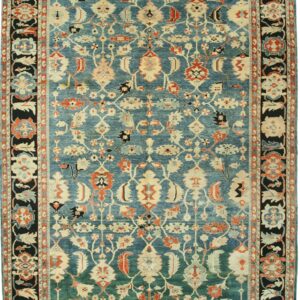
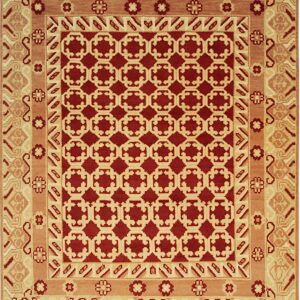
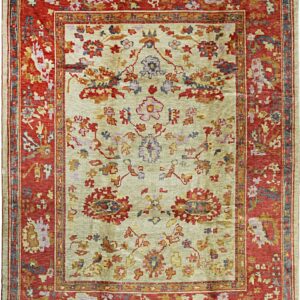
Refined Chic Green Hand Knotted Wool Rug
$5,060.00 New RugsSKU: BA1004Rug sizes: 13 ft 1 in x 20 ft 1 in (3.99 m x 6.12 m) -
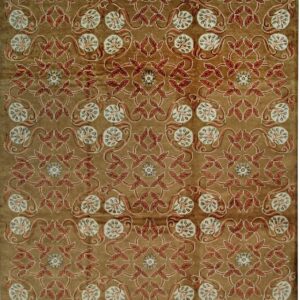
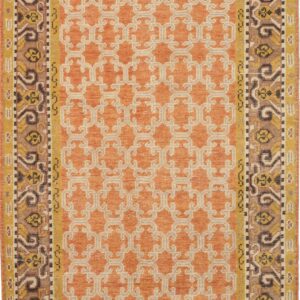
Warm Rust and Gold Hand Knotted Wool Rug
Price range: $1,295.00 through $6,927.00 New RugsRug sizes: 9 ft x 12 ft (2.74 m x 3.66 m), 10 ft x 14 ft (3.05 m x 4.27 m), 11 ft x 15 ft 1 in (3.35 m x 4.60 m), 12 ft x 18 ft (3.66 m x 5.49 m), 8 ft x 10 ft (2.44 m x 3.05 m) -
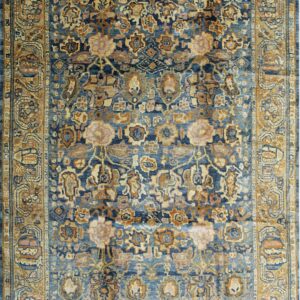
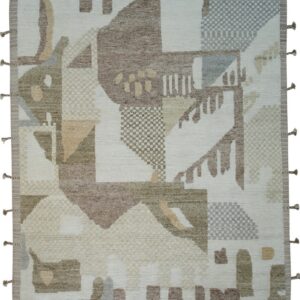
Traditional Blue Mohair Hand Knotted Rug
Price range: $3,800.00 through $15,000.00 New RugsRug sizes: 9 ft 1 in x 12 ft 3 in (2.77 m x 3.73 m), 8 ft x 10 ft (2.44 m x 3.05 m), 10 ft x 14 ft (3.05 m x 4.27 m), 12 ft x 18 ft (3.66 m x 5.49 m) -
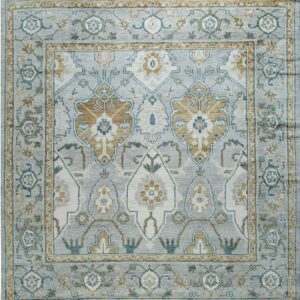
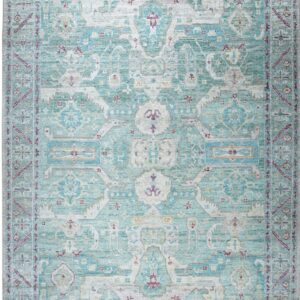
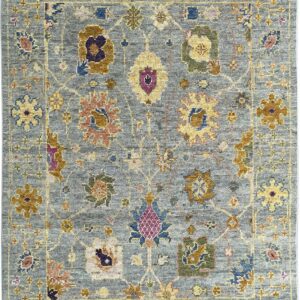
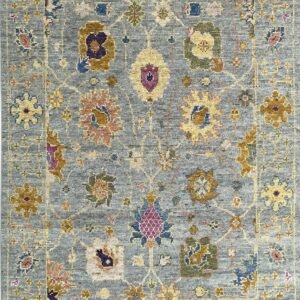
Freya Oushak Gray and Gold Hand Knotted Wool Rug
Price range: $885.00 through $2,463.00 New RugsRug sizes: 8 ft x 10 ft (2.44 m x 3.05 m), 9 ft x 12 ft (2.74 m x 3.66 m), 10 ft x 14 ft (3.05 m x 4.27 m), 8 ft x 8 ft (2.44 m x 2.44 m), 12 ft x 15 ft (3.66 m x 4.57 m) -
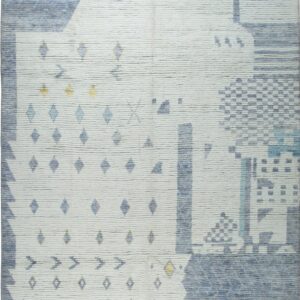
Modern Marrakech Ivory Hand-Knotted Wool Rug
Price range: $706.00 through $2,345.00 New RugsRug sizes: 6 ft x 9 ft (1.83 m x 2.74 m), 12 ft x 15 ft (3.66 m x 4.57 m) -
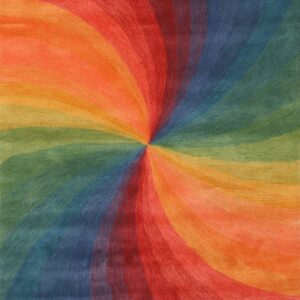
Talia Classic Rainbow Hand Tufted Wool Rug
Price range: $134.95 through $204.95 New RugsRug sizes: 4 ft x 4 ft (1.22 m x 1.22 m), 4 ft x 6 ft (1.22 m x 1.83 m) -
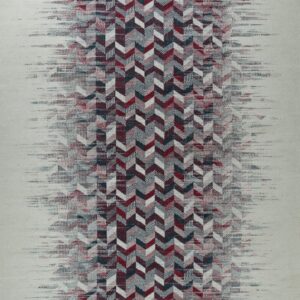
Brenda Refined Multicolor Flatweave Wool Rug
Price range: $149.00 through $799.00 New RugsRug sizes: 4 ft x 6 ft (1.22 m x 1.83 m), 6 ft x 9 ft (1.83 m x 2.74 m), 8 ft x 10 ft (2.44 m x 3.05 m), 9 ft x 12 ft (2.74 m x 3.66 m), 10 ft x 14 ft (3.05 m x 4.27 m) -
Celia Modern Green Hand Knotted Silk Rug
Price range: $1,807.00 through $3,151.00 New RugsRug sizes: 8 ft x 10 ft (2.44 m x 3.05 m), 9 ft x 12 ft (2.74 m x 3.66 m), 10 ft x 14 ft (3.05 m x 4.27 m) -
Chloe Trara Coral Hand Knotted Wool Rug
Price range: $404.00 through $1,023.00 New RugsRug sizes: 6 ft x 9 ft (1.83 m x 2.74 m), 9 ft x 12 ft (2.74 m x 3.66 m), 10 ft x 14 ft (3.05 m x 4.27 m) -
Nina Oriental Multicolor Hand Knotted Wool Rug
Price range: $965.00 through $3,375.00 New RugsRug sizes: 6 ft x 9 ft (1.83 m x 2.74 m), 8 ft x 10 ft (2.44 m x 3.05 m), 9 ft x 12 ft (2.74 m x 3.66 m), 10 ft x 14 ft (3.05 m x 4.27 m) -
Refined Exquisite Gray Hand Knotted Silk Rug
Price range: $1,181.00 through $3,039.00 New RugsRug sizes: 10 ft x 14 ft (3.05 m x 4.27 m), 6 ft x 9 ft (1.83 m x 2.74 m), 8 ft x 10 ft (2.44 m x 3.05 m), 9 ft x 12 ft (2.74 m x 3.66 m) -
Talia Lila Gray Hand Knotted Wool Rug
Price range: $2,261.00 through $2,927.00 New RugsRug sizes: 9 ft x 12 ft (2.74 m x 3.66 m), 10 ft x 14 ft (3.05 m x 4.27 m) -
Trendy Brown Color Hand Knotted Wool Rug
Price range: $490.00 through $1,000.00 New RugsRug sizes: 9 ft x 12 ft (2.74 m x 3.66 m), 8 ft x 10 ft (2.44 m x 3.05 m), 6 ft x 9 ft (1.83 m x 2.74 m) -
Lustrous Contemporary Blue Silk Rug from India
Price range: $1,181.00 through $3,039.00 New RugsRug sizes: 6 ft x 9 ft (1.83 m x 2.74 m), 8 ft x 10 ft (2.44 m x 3.05 m), 9 ft x 12 ft (2.74 m x 3.66 m), 10 ft x 14 ft (3.05 m x 4.27 m) -
Ella Chic Ivory Hand Knotted Rug
$1,052.00 New RugsSKU: MR6917IV9X12Rug sizes: 9 ft 2 in x 12 ft 3 in (2.79 m x 3.73 m) -
Selene Modair Oushak Ivory and Red Hand Knotted Rug
$5,200.00 New RugsSKU: FAAN13RD9X12Rug sizes: 9 ft 3 in x 12 ft 3 in (2.82 m x 3.73 m) -
Fiona Oriental Gray Hand Knotted Wool Rug
$2,261.00 New RugsSKU: KC42007GY9X12Rug sizes: 9 ft x 12 ft (2.74 m x 3.66 m) -
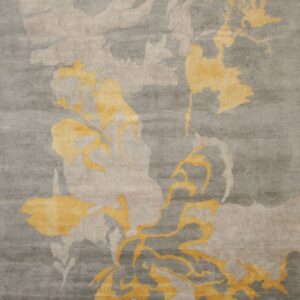
New Artistic Sloane Giselle Gray Abstract Modernist Wool & Viscose Contemporary Rug
$1,916.00 New RugsSKU: IE114GY9X12Rug sizes: 9 ft x 12 ft (2.74 m x 3.66 m) -
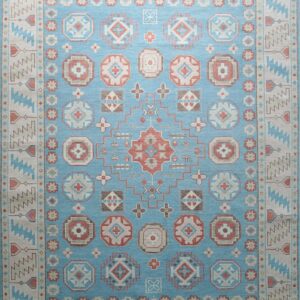
Yara Willow Light Blue Tribal Geometric Design New Hand Knotted Contemporary Rug
$1,311.00 New RugsSKU: IE447LTB9X12Rug sizes: 9 ft x 12 ft (2.74 m x 3.66 m) -
Lush Ella Blue Handmade Wool & Viscose Rug
Price range: $361.00 through $965.00 New RugsRug sizes: 9 ft x 12 ft (2.74 m x 3.66 m), 5 ft x 8 ft (1.52 m x 2.44 m) -
Modern Tribal Marrakech Blue and Ivory Hand-Knotted Wool Berber Carpet
$706.00 New RugsRug sizes: 6 ft x 9 ft (1.83 m x 2.74 m) -
Rustic Fiona Gray Hand Knotted Wool Rug
$3,212.00 New RugsSKU: KA51SL9X12Rug sizes: 9 ft 2 in x 11 ft 9 in (2.79 m x 3.58 m) -
Elena Kira Pink and Gray Hand Tufted Wool Rug
$1,494.95 New RugsRug sizes: 8 ft 8 in x 11 ft 8 in (2.64 m x 3.56 m) -
Traditional Marrakech Ivory Hand-Knotted Wool Berber Carpet
$1,141.00 New RugsRug sizes: 8 ft x 11 ft (2.44 m x 3.35 m) -
Isla Sumptuous Gray Hand Knotted Wool Rug
$2,511.00 New RugsSKU: KA1016GY8X10Rug sizes: 8 ft x 10 ft 1 in (2.44 m x 3.07 m) -
Transitional Handmade Wool & Bamboo Silk Rug
$911.00 New RugsSKU: MR6512IV8X10Rug sizes: 8 ft x 10 ft (2.44 m x 3.05 m) -
Mirage Radiant Multicolor Hand Tufted Rug
Price range: $494.95 through $934.95 New RugsRug sizes: 8 ft x 10 ft (2.44 m x 3.05 m), 5 ft x 8 ft (1.52 m x 2.44 m) -
Yara Laine Soft Pastel Modernist Hand Tufted Wool Contemporary Rug
Price range: $484.95 through $679.95 New RugsRug sizes: 6 ft x 9 ft (1.83 m x 2.74 m), 8 ft x 10 ft (2.44 m x 3.05 m) -
Yara Rustic Blue Hand Tufted Wool Rug
Price range: $484.95 through $679.95 New RugsRug sizes: 6 ft x 9 ft (1.83 m x 2.74 m), 8 ft x 10 ft (2.44 m x 3.05 m) -
Amara Kilim Multicolor Flatweave Wool Rug
$399.00 New RugsSKU: MD3VMU5X8Rug sizes: 5 ft x 8 ft (1.52 m x 2.44 m) -
Iris Sophisticated Multicolor Flatweave Wool Rug
$399.00 New RugsSKU: MD8MT5X8Rug sizes: 5 ft x 8 ft (1.52 m x 2.44 m) -
Maya Dazzling USA American Flag Design Flatweave Wool Rug in Coral
$798.00 New RugsSKU: FAM026USA5X8Rug sizes: 5 ft x 8 ft (1.52 m x 2.44 m) -
Yara Trara Brown Hand Tufted Wool Rug
$269.95 New RugsSKU: MAT03BN5X8Rug sizes: 5 ft x 8 ft (1.52 m x 2.44 m) -
Nina Rustic Gray Square Hand Tufted Wool Rug
$309.95 New RugsSKU: KC40106GY6X6RRug sizes: 6 ft x 6 ft (1.83 m x 1.83 m)
A Curated Legacy: Finding Your Beautiful New Rugs
While understanding the technical “DNA” of a new rug is essential for any consumer, the final step of the journey is deeply personal. At RugsOnNet, we have spent decades curating selections that honor these rigorous standards of craftsmanship. Our new contemporary area rug collection is not merely an inventory of floor coverings; it is a gallery of architectural foundations and future antiques sourced from the world’s most respected weaving hubs. Whether you are seeking a rugged Highland wool piece for a high-traffic family room or a luminescent Mulberry silk masterwork for a formal gallery, each rug in our Manhattan showroom has been hand-selected for its material purity and structural integrity.
We understand that acquiring a high-end textile is a significant decision. Our goal is to move beyond the traditional retail transaction, offering a partnership in design and longevity. Beyond the weave and the knot, we consider your home’s unique light, the rhythm of your daily life, and the legacy you wish to leave. When you choose a piece from our collection, you aren’t just buying a rug; you are investing in a centuries-old craft, refined for the modern interior, and backed by our commitment to transparency and textile scholarship.
At RugsOnNet, our relationship with the loom isn’t just a business—it is a family narrative spanning generations. Our rug business was founded and operated by the Rahmanan family, our work is rooted in a deep respect for the history, iconography, and physical integrity of the world’s finest textiles. When you consult with Nati, Rozi, Kevin, or Nathaniel, you aren’t speaking to a sales team; you are engaging with specialists who have spent their lives documenting the evolution of weaving techniques from the 18th-century Flemish tapestries to the bold Scandinavian Modernism of the mid-20th century.
We believe that a rug is the architectural foundation of a room, and choosing one should be an act of discovery, not a transaction. Our New York-based rug gallery and carpet collection is meticulously curated to meet the highest standards of material purity and structural art. By combining our deep historical knowledge with modern data integrity, we ensure that every piece we offer—whether a rugged Highland wool heirloom or a luminous Mulberry silk masterwork—is a “Future Antique” worthy of your home’s legacy.
Core Definitions Of Newly Made Area Rugs
Newly made rugs as contemporary production carpets that were produced within the current decade, characterized by modern supply chain transparency, refined wool-processing techniques, and an intentional alignment with 21st-century architectural scales. Unlike vintage pieces, which are “original survivors,” contemporary production allows for a dialogue between the weaver and the modern interior, ensuring the rug meets current standards for durability and color-fastness from day one.
The New Rug Categories: Modern, Contemporary, and Beyond
The trade often uses terms interchangeably. But they represent distinct categories of design and intent.
Here are the 4 main newly made area rug categories:
- Modern / Modernist Rugs: This refers to a specific aesthetic movement. A “Modern” rug utilizes the design language of the 20th century—Bauhaus geometry, Mid-Century modern minimalism, or Abstract Expressionism. A rug can be newly made but still “Modern” in its soul.
- Contemporary Rugs: This refers to a temporal boundary. These are rugs “of the moment.” They often push the boundaries of texture, using experimental fibers like silk-blends or unconventional knotting techniques to create “3D” surfaces that reflect current global trends.
- Designer Rugs: These are defined by the Auteur. A designer rug is a collaborative effort between a weaving house and a recognized name in architecture or fashion. The value lies in the “Signature” and the specific creative vision that deviates from traditional regional motifs.
- Reproduction Rugs: These are the “Re-Woven.” They are newly made textiles that intentionally mimic the patterns, palettes, and “patina” of specific antique or vintage carpets (e.g., a new Oushak rug woven with muted dyes to resemble an 18th-century original).
Market Distinction: Decorative vs. Art Level Modern Rugs
Understanding the investment profile of a newly made rug requires a look at its “Institutional” potential.
| Feature | Decorative Modern Rugs | Art Level New Rugs |
| Primary Goal | Visual Harmony & Utility. | Artistic Statement & Provenance. |
| Production | Mass-produced or high-volume artisan. | Limited edition or “Artist-Signed” series. |
| Materiality | Standard high-quality wool/synthetics. | Rare fibers (Hand-spun silk, specialty wools). |
| Value Driver | Trend relevance and room fit. | Scarcity and the designer’s reputation. |
| The “Floor” Price | Resale value is lower than retail. | Potential to appreciate as a “Finite” asset. |
Custom vs. Standard New Rugs
For the professional designer or architect, the choice between custom and standard production is a question of architectural integration.
Standard Production (The Ready-Made Rugs):
- Definition: Rugs woven in predetermined and “standardized” sizes (e.g., 8×10, 9×12) and established colorways.
- The Advantage: Immediate availability and a predictable aesthetic. These pieces are the “staples” of a collection, offering high-level craftsmanship without the lead time of a bespoke project.
Custom Production (The Bespoke Archive)
- Definition: A rug that is engineered from the ground up for a specific project. This includes custom dimensions to fit “non-standard” rooms, specific color-matching to a fabric swatch, or altering the pile height for high-traffic zones.
- The Advantage: Architecturally perfect. Custom production allows the rug to function as the “Fifth Wall,” designed to wrap around pillars, fit expansive open-concept lofts, or utilize “Green-Label” materials for specific environmental certifications.
The Evolution of Contemporary Rug Production
Understanding the era of a newly made rug is essential for assessing its material composition and its place within the broader design movement.
Contemporary rug timeline breakdown:
Late 20th Century Production (The Transition: 1985–1999)
This era represents the “Pivot Point” between the experimentalism of the Retro period and the precision of the modern market.
- The Aesthetic: Characterized by “Postmodernism” and the first wave of large-scale minimal designs. Rugs from this era often featured bold, oversized patterns influenced by the rise of computer-aided design (CAD).
- The Materiality: This was the era of the “Designer Signature.” Production began to move away from small artisan ateliers toward larger, more standardized workshops in India and Nepal, prioritizing high-consistency wool and early synthetic blends for commercial durability.
- The “Semi-Vintage” Status: Rugs from this period are currently entering a “pre-vintage” phase, valued for their durability and their representation of the late 20th-century aesthetic shift.
Early 21st Century Production (The Global Artisanal Wave: 2000–2015)
The turn of the millennium saw a “Return to Craft” as a reaction against industrialization. This era defined the current high-end market.
- The Aesthetic: The rise of “Organic Modernism.” This period saw the dominance of the Oushak Revival and the Modern Abstract movement. Designers began to experiment with “distressed” textures, antique-washes, and intentionally muted palettes to complement the “Quiet Luxury” of early 2000s interiors.
- The Materiality: A significant shift back to hand-spun wool, natural silk, and hemp. The trade focused on “The Hand of the Weaver,” celebrating slight irregularities as a mark of authenticity and artisanal value.
Current Global Production Era (The Conscious & Bespoke: 2016–Present)
New rug production is built on a foundation of technical precision as well as material honesty. In essence, we are no longer just weaving area rugs; we are engineering high-performance textiles art designed for both permanence and design-forward living.
- The Aesthetic: “Biophilic Design” and “Hyper-Texture.” Current trends emphasize high-low piles, multi-fiber compositions (wool, real silk and bamboo silk), and “Topographical” surfaces that mimic natural elements like stone, water, or moss.
- The Materiality: The era of Sustainability and Traceability. Modern collectors demand “Green-Label” certifications, fair-trade supply chains (like GoodWeave), and the use of sustainable fibers.
- The Technological Edge: While the rugs remain hand-knotted, the “design-to-loom” process is now hyper-precise. This allows for the Custom Production mentioned in our core definitions—the ability to match a specific Pantone swatch or architectural footprint with millimeter accuracy.
| Production Era | Design Focus | Material Priority | Market Role |
| Late 20th Century | Postmodern/Geometric | Durability & Scale | The “New Standard” |
| Early 21st Century | Organic/Distressed | Hand-spun/Artisanal | The “New Classic” |
| Current Era | Bespoke/Sustainable | Conscious/Tech-driven | The “Architectural Asset” |
To classify newly made rugs is to map the intersection of artisanal labor, material scarcity, and artistic intent. For the sophisticated collector, navigating this market requires distinguishing between a utilitarian floor covering and an architectural investment.
Contemporary Rug Production Ranking System
The new rug market is organized into distinct levels of quality, moving from mass-produced utility to investment-grade textile art.
The Main Contemporary Rug Tiers:
1. Entry-Level New Rugs (The Commodity Tier)
- Definition: High-volume rugs produced via power-loom or mechanized tufting.
- The Profile: These rugs prioritize speed and price. They often utilize synthetic fibers (polypropylene, polyester) or “dead wool” (processed wool that lacks natural lanolin).
- Market Role: Purely decorative and ephemeral. They are designed for short-term trend cycles rather than multi-generational use. They lack the structural “memory” of hand-knotted foundations.
2. Mid-Market Production Rugs (The Programmed Hand-Loom)
- Definition: “Programmed” rugs created in large batches using standardized patterns and colors.
- The Profile: Often hand-loomed or hand-tufted in major weaving hubs (India, Turkey). While they use better wool and cotton foundations, the designs are dictated by current global interior trends rather than individual artistic vision.
- Market Role: The “Staple” rug. They offer the look of a high-end carpets at a more accessible price point, though they lack the unique “thumbprint” of an artisan piece.
3. Premium Handmade Rugs (The Artisan Standard)
- Definition: Authentic hand-knotted pile rugs utilizing traditional techniques (Senneh or Ghiordes knots) with high-quality, long-staple wool.
- The Profile: These handmade area rugs are the backbone of a serious collection. They feature hand-spun wool and often natural or high-stability chrome dyes. The density of the knots (KPSI) is significantly higher, resulting in a rug that can withstand high-traffic environments for decades.
- Market Role: The “Workhorse” of luxury. These are intended for clients who view the rug as a “Fifth Wall”—a permanent architectural element of the home.
4. Designer and Luxury Rugs (The Auteur Approach)
- Definition: Rugs dealers produced these carpets collaboration with recognized architects, fashion houses, or interior designers.
- The Profile: The value here is driven by The Signature. These pieces often experiment with materiality—blending Himalayan wool with hand-carded silk or metallic threads. They are the “Runway” pieces of the rug world, pushing the boundaries of what a loom can produce.
- Market Role: A stylistic statement. These luxurious area rugs are chosen as the anchor of a room’s design language, often holding their value due to the reputation of the designer.
5. Limited Edition Rugs (The Finite Series)
- Definition: A specific production run where a design is limited to a predetermined number of pieces (e.g., a series of 10 or 25).
- The Profile: Much like a lithograph in fine art, these are “multi-originals.” Once the series is complete, the design is retired. They often feature numbered tags or weaver-initials to verify their place in the series.
- Market Role: The bridge to art level. They offer the exclusivity of a custom piece without the bespoke lead time.
6. Art Level Contemporary Rugs (The Antiques of Tomorrow)
- Definition: Limited production or even One-of-a-kind (1/1) masterworks produced by legendary master weavers and weaving houses or solo artist-weavers.
- The Profile: These new rugs represent the pinnacle of current global production. They utilize the rarest materials (pashmina, pure silk, rare vegetal dyes) and exhibit “Museum-Level” complexity in their weaving. They are often signed by the master weaver.
- Market Role: These are the pieces that define the peak of new rug craftsmanship. At this level, the contemporary new rug is no longer just decor; it is a primary example of artistic innovation, extreme scarcity and technical mastery in the weaving tradition.
Market Summary Matrix
| Tier | Production Method | Material Quality | Longevity Expectancy |
| Entry-Level | Power-Loomed | Synthetic / Low-grade Wool | 5–10 Years |
| Mid-Market | Hand-Tufted / Loomed | Standard Wool | 10–20 Years |
| Premium | Hand-Knotted | Hand-Spun Wool | 50–80+ Years |
| Designer | Hand-Knotted / Mixed | Wool & Silk Blends | 60+ Years |
| Art Level | Master Hand-Knotted | Rare Fibers / Signed | 100+ Years |
Geography of Global New Rug Productions
To understand newly made rugs is to map the specific geographical hubs that define the modern market. While the “Silk Road” historically defined the antique trade, the current market is divided into specialized “Design / Weaving Hubs” that offer distinct technical advantages.
In the contemporary new market, a rug’s origin is a signature of its technical DNA. Each weaving region has mastered a specific language of material, knot, and aesthetic. At RugsOnNet, we source from these hubs based on their historical strengths and their commitment to material integrity.
The Main 6 New Rug Making Origins:
1. South Asia: The Industrial & Artisanal Backbone
- India (The Dominant Global Hub): India is the titan of contemporary production, centered in the Bhadohi-Varanasi and Jaipur belts. Its dominance is rooted in versatility—mastering everything from hand-tufted pieces to master-grade hand-knotted revivals. It is the primary engine for “Programmed” collections (consistent rugs sizes and rug colors) and the world leader in high-quality Oushak revivals.
- Pakistan (The Precision of the Chobi): Defined by high knot density and fine-line detail. Modern Pakistani rug production has pivoted toward the “Chobi” (wood) and “Ziegler” / Persian Sultanabad rug styles. These Pakistani rugs often utilize high-twist, hand-spun wool and natural vegetal dyes, making them staples of the “Quiet Luxury” movement.
- Nepal (The Laboratory of Designer Modernism): The global center for High-End Tibetan rug Weaving. These Nepalese rugs are almost exclusively dedicated to the Premium and Designer tiers. Using the unique “Tibetan Knot” (a loop-and-rod technique), weavers create the dense, topographical, and abstract piles favored by modern architects.
- Afghanistan (The Tribal Modernist Revival): The rugs from Afghanistan are prized for the integrity of its materials and a rugged, “honest” tribal aesthetic. The backbone of this production is Ghazni wool—a hand-spun fiber known for its strength and natural color variation (abrash). It is the premier source for “Modern Tribal” and Super Kazak designs.
2. Middle East: The Evolution of the Persian Standard
- Iran (Current Persian Weaving): Contemporary Iranian / Persian rug production represents a “Modernist Renaissance.” Workshops in Tabriz and Isfahan have pivoted toward Classical Modernism, moving away from dense floral medallions toward open-field designs and “New Gabbeh” styles.
- Turkey (Contemporary Production): Turkey is the world leader in “Deconstructed Classics.” By utilizing oversized motifs and “ghosted” patterns that appear to fade, Turkey has created a category that fits perfectly in transitional interiors. They also pioneered the “Bio-Wash” technique to give new rugs a vintage hand-feel.
3. North Africa: The Berber Modernist Movement
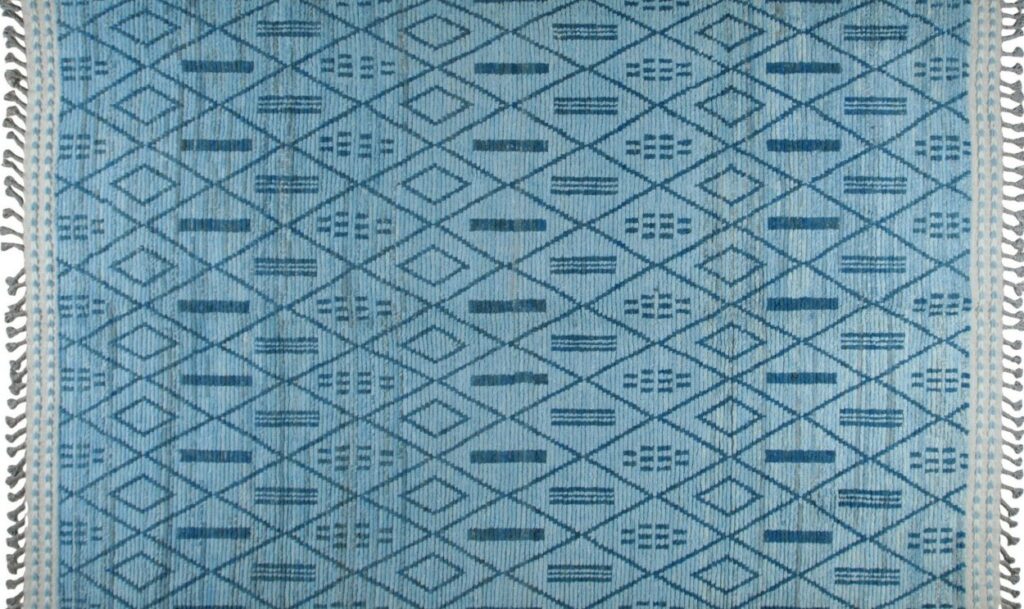
- Morocco (New Weaving Markets): The market is currently moving into Artisan-Boutique production. Contemporary workshops in Marrakesh and Tangier collaborate with global designers to create “High-Pile Modernism”—retaining the organic feel of tribal rugs but with structured geometric patterns.
- Atlas Regional Production: Weaving of the Moroccan rugs in this location has transitioned from nomadic utility to organized ateliers. Focus is on the Berber carpets such as Zanafi and Azilal rug styles / types, produced on wider, more stable professional looms to accommodate large-scale modern floor plans.
4. East Asia: Industrial Precision vs. Luxury Craft
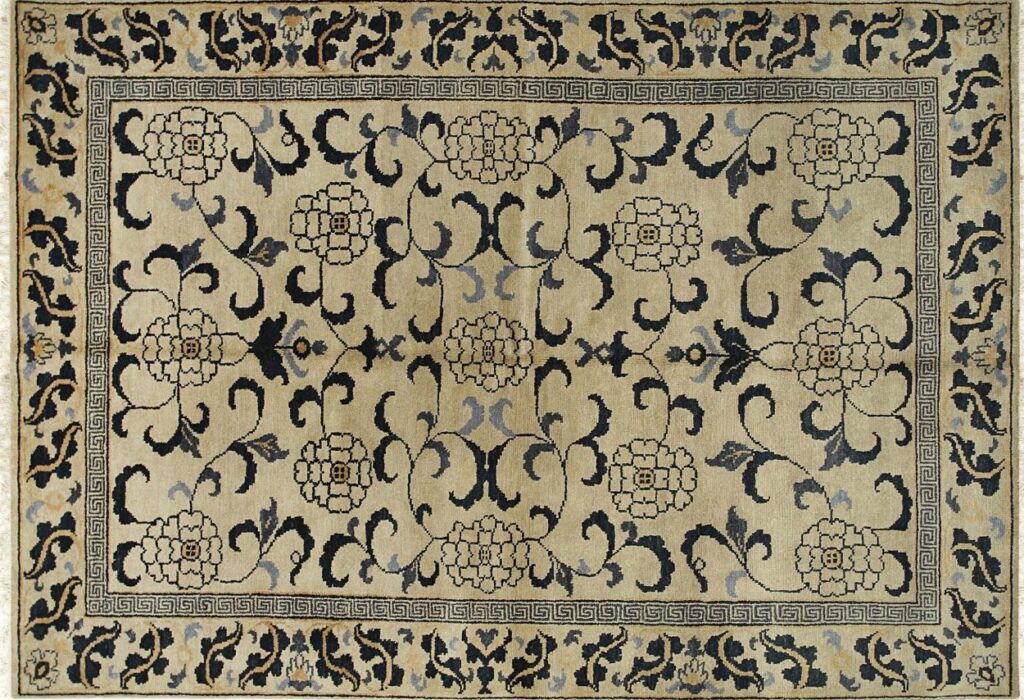
- China (Large-Scale Production): The global leader in Industrial Precision. The magnificent Chinese rugs excel in high-consistency “Programmed” rugs for the commercial market, where zero variance in color or pile height is required across hundreds of pieces.
- Chinese Luxury Hand-Knotting: This elite sector produces “Revivals” of the Chinese Art Deco rugs and “Sinkiang Modernism” using 100% pure silk or wool-silk blends. These rugs often feature the highest knot counts in the world, resulting in a mirror-like shimmer and photorealistic detail.
5. Europe: The Boutique Ateliers
- Scandinavia (Limited Production): Small-scale and design-intensive. Modern Scandinavian rug production (primarily Rölakan flatweaves) is produced in limited runs. It prioritizes “Material Honesty”—using unbleached Nordic wools and structural patterns that highlight the architecture of the rug.
- Eastern European Ateliers: Regions like Romania and Bulgaria are seeing a resurgence in “Flat-Woven Kilim Modernism.” These ateliers take 19th-century Bessarabian patterns and re-interpret them in muted, earthy tones for contemporary collectors.
6. The Americas: The Rise of the Designer Auteur
- United States (Designer Production): Aside from the Native American rugs like the Navajo flatweaves and the Hooked rugs made in America, the actual weaving of most of the rugs is done in Nepal or India, the U.S. is the global center for Textile Engineering. This is the home of the “Bespoke Revolution,” where rugs are designed digitally in New York or L.A. to fit a specific architectural footprint.
- Latin American Initiatives (Mexico & Peru): Centered in regions like Teotitlán del Valle, these initiatives focus on “Indigenous Modernism.” Utilizing local fibers like Alpaca and Llama wool, these newly made rugs bridge the gap between ancient Zapotec geometry and modern abstract design.
The Build: How Your New Rug is Made
In the world of modern rugs, “how it’s made” is the most important detail you can know. The construction method is the DNA of the textile; it determines how long the rug will last, how it feels underfoot, and whether it will become a permanent part of your home’s history.
The 5 Main New Rug Making Approaches:
1. Handmade Production: The Gold Standard
Hand-Knotted (The Architectural Heirloom) Hand-knotting remains the most labor-intensive and durable method of production. Each individual knot is tied by hand around the vertical warp threads.
- The Persian (Asymmetrical) Knot: Preferred for “Newly Made” rugs with high-detail, curvilinear, or photorealistic designs. It allows for a denser knot count and a more fluid pattern.
- The Turkish (Symmetrical) Knot: Used primarily in the “Modern Tribal” and “Oushak Revival” sectors. It provides a more robust, “boxy” structural integrity, making it ideal for heavy-duty geometric rugs.
- The Tibetan (Loop-and-Rod) Knot: The engine of the “Designer Modern” movement. Weavers tie loops over a metal rod; when the rod is removed and the loops are cut, it creates the dense, plush, and topographical pile synonymous with high-end Nepal production.
2. Handwoven / Flatwoven: The Structural Minimum
Unlike knotted rugs, flatweaves have no pile. The design is created by the interlacing of the horizontal “weft” and vertical “warp.”
- Kilim: Characterized by the “slit-weave” technique. Modern hand woven rugs / kilims are prized for their reversible nature and their “Crisp Geometry.” They are the preferred choice for a minimalist or “Scandi-Modern” aesthetic.
- Dhurrie: The flatwoven Dhurries are primarily produced in India using cotton or wool. Contemporary Dhurries utilize a tightly packed weft that makes them exceptionally durable for high-traffic “Modern Farmhouse” or “Coastal” interiors.
- Flat Tapestry Weave: A more complex version of the flatweave where the weft threads do not travel across the entire width of the loom, allowing for “Painterly” transitions and intricate, non-linear designs.
3. Hand-Tufted: The High-Speed Hybrid
Tuft Gun Production Hand-tufting is a “Hybrid” system. An artisan uses a handheld “Tufting Gun” to punch wool yarn through a pre-stretched canvas backing.
- Latex-Backed Construction: Once the tufting is complete, a layer of latex and a protective fabric (scrim) are glued to the back to lock the fibers in place.
- The Trade-Off: While hand-tufting allows for complex, multi-level textures and faster turnaround times, the latex backing will eventually degrade over 15–20 years. These are “Lifestyle” rugs rather than “Investment” rugs.
4. Hand-Hooked: The Contemporary Revival
Contemporary Hooked production similar to tufting, but the yarn is pulled up through the canvas to create a “loop” rather than a “cut” pile.
- The Aesthetic: Modern hooked rugs are often used to create “Coastal” or “Grandmillennial” textures. They offer a unique, nubby surface that provides a “soft-focus” look to geometric or floral patterns.
5. Hand-Loomed: The Loom-Controlled Movement
Loom-Controlled Contemporary Weaving A “Hand-Loomed” rug is created on a manual loom but without the individual tying of knots. The weaver uses a foot pedal and a shuttle to move the yarn.
- The Process: The texture (whether it’s a loop or a cut pile) is created by the way the weaver manipulates the loom’s “heddles.”
- The Role: This system is the backbone of “Mid-Market Production.” It allows for high-quality wool textiles that have a “Handmade” feel but can be produced at a scale and price point between a machine-made and a hand-knotted piece.
Production System Comparison
| System | Longevity | Construction Time | Investment Tier | Primary Feature |
| Hand-Knotted | 80+ Years | 6–12 Months | Premium / Art Level | Individual “Loom-Knots” |
| Flatwoven | 20–40 Years | 2–4 Months | Mid-Market / Regional | No Pile / Reversible |
| Hand-Loomed | 15–25 Years | 1–2 Months | Mid-Market | Uniform Texture |
| Hand-Tufted | 10–20 Years | 2–4 Weeks | Entry / Decorative | Latex Backing |
4 Main Types Of New Machine Made Rugs
While handmade rugs are defined by the “Soul of the Loom,” Machine Production is defined by the “Precision of the Program.” Modern machine-made rugs are the result of industrial engineering, offering a level of symmetry, speed, and consistency that human hands cannot replicate. For the RugsOnNet collector, understanding these systems is vital for distinguishing between a heritage investment and a high-performance utility textile.
1. Power-Loomed Rugs: The Industrial Backbone
High-Speed Woven Systems A power-loomed rug is manufactured on large, computer-operated looms that can weave hundreds of rugs in a single day.
- The Process: Thousands of individual spools of yarn are fed into the loom simultaneously. The computer controls the “Face Yarn” (the pile) and the “Backing Yarn” (the foundation) to create a perfectly uniform textile.
- Synthetic Market Production: This is the primary home of modern polymers like heat-set polypropylene, polyester, and nylon. These materials allow for “Stain-Proof” rugs that are resistant to fading and moisture, making them the standard for high-traffic commercial spaces or outdoor environments.
2. Wilton Woven Production: The “Pseudo-Handmade” Standard
The Wilton loom is the most prestigious of the machine-made systems. It is often referred to as a “Face-to-Face” loom because it weaves two rugs at the same time, which are then sliced apart by a traveling blade.
- Structural Integrity: Unlike cheaper machine-made rugs where the pile is simply glued to a backing, a Wilton rug has the pile yarns interwoven directly into the foundation. This creates a “Buried Pile” that is exceptionally stable and resistant to shedding.
- The Aesthetic: Wilton production is used for high-end wool machine-made rugs that mimic the look of a traditional Persian or Oushak, providing a dense, luxurious feel at a fraction of the handmade price.
3. Axminster Modern Production: The Artist’s Industrial Loom
If Wilton is defined by its structure, Axminster is defined by its Color and Complexity.
- Unlimited Palette: Traditional looms are limited by the number of colors they can carry. An Axminster loom, however, picks up individual “tufts” of yarn and places them one by one. This allows for virtually unlimited color combinations and intricate, non-repeating patterns.
- Market Role: This is the gold standard for Hospitality and Luxury Commercial design. Because of its durability and design flexibility, Axminster is the preferred choice for grand hotel lobbies, casinos, and high-end residential wall-to-wall installations.
4. Jacquard-Controlled Production: The Digital Weaver
The Jacquard system uses a series of “Heddles” that are individually controlled by a computer (historically by punch cards).
- The Technical Edge: This system allows for the most complex “Relief” patterns and “High-Low” textures. By varying the tension of the yarns, a Jacquard loom can create a 3D topographical effect, mimicking the hand-carved surfaces of designer vintage rugs.
- Intricate Flatweaves: Most high-end machine-made flatweaves and “Chenille” rugs are produced on Jacquard looms, allowing for the “Painterly” detail required for contemporary abstract designs.
Machine Production Comparison Chart
| System | Primary Advantage | Fiber Type | Longevity | Best For… |
| Wilton | Structural Density | Wool / Blends | 15–20 Years | High-End Residential |
| Axminster | Infinite Color Detail | 80/20 Wool-Nylon | 20+ Years | Luxury Hotels / Casinos |
| Jacquard | 3D / Relief Texture | Cotton / Chenille | 5–10 Years | Trendy / Decorative |
| Power-Loomed | Speed & Price | Synthetics (Poly) | 3–7 Years | Entry-Level / Outdoor |
What New Rug “Quality” Means:
The true value of a contemporary rug is found in its “Architecture”—the invisible structural decisions made during the weaving process. For the RugsOnNet collector, a construction analysis reveals whether a rug is a high-performance floor covering or a fragile decorative piece.
3 main measures of quality
1. Knot Density and Foundation
Knot Density (KPSI) The number of knots per square inch (KPSI) determines the “resolution” of the rug’s design.
- High Density (150–300+ KPSI): Necessary for curvilinear, floral, or photorealistic modern designs. These rugs are thinner, more flexible, and more valuable.
- Low to Mid Density (60–100 KPSI): Ideal for “Modern Tribal” or “Oushak Revival” pieces where a thicker, more “honest” texture is the aesthetic goal.
Foundation Structure The foundation is the “Skeleton” of the rug, consisting of the vertical warps and horizontal wefts.
- Double-Wefted Construction: Found in high-end “Premium” rugs. A second weft is passed between rows of knots, making the rug exceptionally heavy and ensuring it lies flat on the floor without “rippling.”
- Foundation Materials: Modern masterworks use cotton or silk foundations for maximum stability. Lesser rugs use jute or wool, which can stretch over time.
2. Pile and Surface Topography
Pile Height & Shearing Quality Shearing is the final “Haircut” of the rug.
- Low Shearing: Creates a “Crisp” look. It highlights the precision of the knots and is easiest to maintain in high-traffic offices or dining rooms.
- High Pile: Typical of “Retro” shags or modern “Beni Ourain” styles. It provides acoustic dampening and warmth but requires specialized suction-only vacuuming.
High-Low Surface Relief & Carving This is a hallmark of Designer Modernism.
- Hand-Carving: After weaving, an artisan uses specialized shears to cut “channels” or “moats” around the design motifs, creating a 3D shadow effect.
- Cut Pile vs. Loop Pile: By mixing “Cut” fibers (which are soft and fuzzy) with “Loop” fibers (which are tight and nubby), weavers create a topographical experience that changes as light hits the rug from different angles.
- Note on Topographical Maintenance: High-low pile heights and hand-carved channels act as natural traps for particulates. To prevent fiber ‘blooming’ or fuzzing of the carved edges, these rugs require suction-only vacuuming; the use of a beater-bar vacuum will degrade the architectural crispness of the relief over time.
3. The Finishing Details (The “Tailoring”)
Edge Construction (The Selvedge) The “Side-Finish” of the rug.
- Hand-Overcasting: In premium production, the edges are wrapped by hand in wool or silk that matches the pile. This prevents the rug from fraying and provides a finished, “bespoke” look.
- Machine-Surging: Found in entry-level and machine-made rugs. It is a continuous loop of thread that can look “industrial.”
Fringe Integration The fringe is actually the end of the warp threads—the rug’s own “roots.”
- Integrated Fringe: The best contemporary rugs show the actual foundation threads.
- Applied Fringe: In lower-tier production, a fringe is sometimes sewn onto the rug after the fact. This is a red flag for quality, as it is purely decorative and not structural.
Back Finishing The “signature” of a handmade rug is its back.
- Clean Backing: A true hand-knotted rug shows a mirror image of the pattern on the back.
- Back Coating: If the back is covered in a cloth or a layer of latex, it is a tufted or hooked rug. This restricts the “breathability” of the wool and is a key indicator of the rug’s market tier.
Construction Analysis Checklist
| Feature | Premium Standard | Decorative Standard |
| KPSI | 120+ (Detailed) / 80+ (Tribal) | 40–60 |
| Foundation | Cotton / Silk | Jute / Synthetic |
| Edges | Hand-Overcast | Machine-Surged |
| Relief | Hand-Carved / Multi-fiber | Flat / Single-fiber |
| Fringe | Integrated Foundation | Sewn-on / Glued |
The Materials Used To A New Rug
In contemporary rug production, the “Fiber System” is the raw material intelligence of the rug. While antique rugs relied primarily on local regional wools, modern textiles utilize a global supply chain of high-performance natural fibers. For the RugsOnNet collector, the choice of fiber dictates not only the rug’s luster but its “memory”—how it recovers from foot traffic and furniture weight.
The 3 main Natural World Fibers:
1. The Wool Hierarchy: The Foundation of Performance
Wool remains the gold standard for contemporary rugs due to its natural lanolin (oil) content, which acts as a built-in stain repellent.
- New Zealand Wool: The “White Canvas” of the rug world. It is exceptionally white, soft, and long-staple. Because of its purity, it absorbs dyes with high precision, making it the preferred choice for vibrant, colorful “Designer” rugs.
- Highland Wool (Himalayan / Tibetan): Sourced from high-altitude sheep, this wool is prized for its high lanolin content and rugged durability. It has a “dryer” hand-feel than New Zealand wool and is the backbone of high-end Nepal production.
- Blended Wool: Often a mix of New Zealand wool (for softness) and local regional wools (for strength). This creates a balanced fiber that is both luxurious and structurally stable for high-traffic residential use.
2. Silk and its Contemporary Substitutions
Silk is used to add “Value” and “Shimmer” to a rug. In modern production, the distinction between organic and artificial silk is a critical price-point driver.
- Pure Mulberry Silk: The highest grade of organic silk. It is incredibly strong and has a natural, internal glow. In “Art Level” contemporary rugs, pure silk is used for the entire pile.
- Silk Highlights: Many modern wool rugs use silk only for specific design motifs (like the outline of a flower). This creates a “Matte vs. Shimmer” contrast that makes the design pop off the floor.
- Artificial Silk Substitutions (Viscose/Rayon): Often labeled as “Art Silk.” These are chemically processed cellulose fibers. While they mimic the shine of real silk, they are much more fragile and can be difficult to clean if they become wet.
3. Plant-Based Fibers: The Rise of “Bio-Textiles”
Modern production has seen a massive surge in plant-based fibers, driven by the “Biophilic” and “Sustainable” design movements.
- Cotton: Primarily used for the foundation (warps and wefts) because it does not stretch or shrink like wool. However, some contemporary flatweaves and “Chenille” rugs use cotton in the pile for a soft, breathable feel.
- Linen: Used in high-end European and Scandinavian production. Linen provides a crisp, cool texture and a sophisticated “Natural Grey” luster that wool cannot replicate.
- Hemp: One of the most durable natural fibers. Modern hemp rugs are often left in their natural color, providing a rugged, “Organic Modernist” aesthetic. Hemp is naturally resistant to mold and moths.
- Jute: A softer plant fiber used in “Mid-Market” and “Entry-Level” production. While beautiful, jute is less durable than hemp and is best suited for low-traffic areas like bedrooms.
- Bamboo Fiber (Bamboo Silk): A sustainable alternative to viscose. It is processed from bamboo pulp and offers a high-shimmer finish similar to real silk but at a more accessible price point. It is soft to the touch and carries an eco-friendly “Green-Label” appeal.
Synthetic Man-Made Rug Materials
In the modern rug market, the “Synthetic System” represents the frontier of performance engineering. While natural fibers are prized for their heritage, synthetic and semi-synthetic (regenerated) fibers are designed to solve specific 21st-century problems: stain resistance, moisture management, and “High-Shimmer” aesthetics at a lower price point.
The 3 main synthetic materials used to create new rugs:
1. High-Performance Synthetics (Petroleum-Based)
These fibers are the “Engineered Textiles” of the industry, primarily found in power-loomed and high-traffic commercial production.
- Nylon: The strongest of all synthetic fibers. It is exceptionally resilient (it “pops” back after being compressed by furniture) and has a high melting point, making it the standard for high-end hotel and office carpet.
- Polyester: Prized for its “Softness” and “Color Clarity.” Polyester is naturally stain-resistant because it is non-absorbent. It is a popular choice for “Entry-Level” rugs that require a plush, luxurious feel but need to survive a busy household.
- Polypropylene (Olefin): The “Workhorse” of the outdoor and basement rug market. It is essentially plastic turned into fiber. It is moisture-proof, mildew-resistant, and can be cleaned with a garden hose. However, it has low “Resiliency,” meaning it will eventually flatten under heavy foot traffic.
- Acrylic: The “Wool Substitute.” Acrylic mimics the look and feel of wool better than any other synthetic. It was a staple of Retro 1970s production and remains popular today for rugs that require a vibrant, wool-like matte finish without the cost of high-altitude sheep’s wool.
2. The Eco-Synthetic Revolution
PET Recycled Synthetics One of the most significant shifts in the “Current Global Production Era” is the use of PET (Polyethylene Terephthalate), which is created by melting down recycled plastic water bottles and spinning them into soft, durable yarn.
- The Advantage: PET rugs are UV-stable (don’t fade in the sun) and have the soft hand-feel of wool but the haptic durability of plastic. They represent the “Sustainable Transition” for modern consumers who want to balance design with environmental stewardship.
3. Semi-Synthetics: The Regenerated Celluloses
These fibers are “Semi-Synthetic” because they start as natural plant materials (wood pulp or bamboo) but are processed with chemicals to create a silk-like thread.
- Viscose (Rayon): The most common “Art Silk” (Artificial Silk). It offers a high-luster, liquid-like shimmer. While beautiful, it is highly absorbent and loses strength when wet, making it a “Decorative Only” choice for low-traffic zones.
- Tencel™ / Lyocell: The “Premium” regenerated fiber. Unlike standard viscose, Tencel is produced in a closed-loop system (more eco-friendly) and is significantly stronger and more breathable. It is the preferred choice for high-end Designer rugs that want a silk-like glow with better long-term durability.
Synthetic & Semi-Synthetic Performance Matrix
| Fiber Type | Aesthetic Goal | Durability | Moisture Resistance | Sustainability |
| Nylon | Performance | Highest | High | Low |
| Polypropylene | Utility / Outdoor | Moderate | Highest | Low |
| PET Recycled | Eco-Performance | High | High | Highest |
| Acrylic | Wool Mimicry | Moderate | High | Low |
| Tencel / Lyocell | High Shimmer | Moderate | Low | High |
| Viscose | Maximum Shine | Lowest | Lowest | Low |
The RugsOnNet Verdict on Material Selection
For a “Newly Made” investment, we always recommend a Natural Foundation (Cotton/Silk) with a Natural or High-Performance Sustainable Pile (Wool/PET/Tencel). This combination ensures that your “New Classic” rug has the structural integrity to eventually become a “Vintage” heirloom.
Main Dyes Used In Contemporary Rug Making
In contemporary production, the “Dye System” is the bridge between chemistry and artistry. While antique rugs relied on local flora, the modern market utilizes a sophisticated spectrum ranging from ancestral vegetable extractions to high-precision digital color calibration. For the RugsOnNet collector, the dye system determines the rug’s “Light-Fastness” and its “Abrash” (the soulful, painterly variation in color).
The five main categories of new rug dyes
1. The Vegetable-Dye Revival: The “New Antique”
Natural Dyes in Modern Production The late 20th and early 21st centuries saw a massive “Return to Root” movement. Master weavers in Turkey, India, and Afghanistan revived the use of organic materials:
- Indigo (Blue): Derived from the Indigofera plant.
- Madder Root (Red): The primary source for deep terracottas and rose tones.
- Weld / Larkspur (Yellow): Used for bright ochres and citrines.
- Pomegranate/Walnut Husks: Used for blacks, browns, and earthy ochres.
The Aesthetic Advantage: Natural dyes are “Incomplete.” Because the dye bath is organic, the wool absorbs the color unevenly. This creates Abrash—the horizontal striations of color that give a rug a sense of movement and “soul” that solid machine dyes cannot replicate.
2. Chrome Dyes: The Industrial Gold Standard
Chrome (Metal-Complex) Dyes Introduced in the early 20th century and perfected in current production, chrome dyes use a “mordant” (chromium) to lock the color into the fiber.
- The Benefit: They are Light-Fast and Color-Fast. A chrome-dyed rug can sit in a sun-drenched New York loft for decades with minimal fading.
- The Palette: They allow for a nearly infinite range of colors—from vibrant neon to the “Muted Oushak” pastels currently trending in designer circles.
3. Acid Dyes: The Vibrant Specialist
Acid Dye Systems Commonly used for Silk, Nylon, and Protein fibers (wool). These dyes are applied in an acidic bath to fix the color.
- The Result: They produce the most intense, high-saturation colors. If a modern rug features a “jewel-tone” emerald or a shocking pink silk highlight, it was likely produced using an acid dye system.
4. Digital Color Calibration & The ARS System
Digital Precision In the “Custom Bespoke” era, the margin for error is zero. High-end production houses now use Digital Color Calibration to ensure that the rug woven in Kathmandu perfectly matches the fabric swatch in Los Angeles.
- ARS & Pantone Systems: Weavers and designers use standardized “Pom” boxes (physical wool samples mapped to digital codes). This ensures that “Slate Grey” is consistent across thousands of miles and different wool batches.
- Computer-Aided Dyeing: Modern dye vats are now often temperature and pH-controlled by computers to ensure “Levelness” (perfectly solid color) when a minimalist, monochromatic design is required.
Dye System Comparison Matrix
| Dye Type | Color Depth | Light Stability | Aesthetic Role | Sustainability |
| Vegetable | High (Varied) | Moderate | Soulful / Antique Look | Highest |
| Chrome | High (Solid) | Highest | Performance / Modern | Moderate |
| Acid | Extreme | High | Silk Highlights / Jewel Tones | Moderate |
| Digital | Precision | High | Bespoke / Commercial | High (Efficiency) |
The RugsOnNet Verdict on Color
For a rug that feels “Alive,” look for Hand-Spun, Vegetable-Dyed wool. The natural “Abrash” provides a texture that hides foot traffic and spills beautifully. For high-sun environments or ultra-minimalist “Solid” designs, Chrome or Digitally Calibrated dyes are the technically superior choice.
This expanded framework serves as the definitive taxonomy for Newly Made Rug Design. It categorizes contemporary production not merely by pattern, but by the artistic movement and visual logic that governs the space.
Main New Rugs Design Patterns
In the contemporary market, “Design” is no longer just a pattern; it is a conceptual framework. Modern production has moved beyond regional motifs to embrace global art movements, architectural philosophies, and historical revivals. For the RugsOnNet collector, choosing a design category is about selecting the “Visual Rhythm” of a room.
1. Modern Abstract Rugs: The Fluid Landscape
In the contemporary market, “Abstract” is the primary language of artistic expression. This category has moved beyond simple random patterns into sophisticated visual systems that mirror the evolution of 20th and 21st-century fine art. For the professional dealer or designer, categorizing the type of abstraction is essential for matching a rug to the psychological energy of a space.
1. Atmospheric & Tonal Systems
These rugs prioritize “Mood” over “Form,” using the loom to create a sense of three-dimensional space and depth.
- Atmospheric Abstraction: Focuses on a sense of mist, air, or depth. It utilizes clouded tonal transitions to create a field that feels like it is receding or advancing.
- Tonal Abstraction: Relies on layered pigment effects and tonal layering. The design is found in the subtle shift of shades—often within a single color family—to create a “glowing” or “shadowed” effect.
- Washed Field Abstraction: Mimics the look of a textile that has been gently faded by time or elements, resulting in washed field effects that allow the floor to “breathe” without a dominant focal point.
- Gradient Field Systems: Extremely subtle transitions where one tonal register dissolves into another, often used in large custom contemporary rugs for architectural calm.
- Shadow Layering: Multiple near-identical tones layered to create visual depth without obvious pattern.
2. Painterly & Gestural Systems
These rugs treat the rug as a canvas, focusing on the “Hand” of the artist and the movement of the brush.
- Painterly Abstraction: Directly mimics the fluidity of wet-on-wet painting. It utilizes watercolor-inspired fields and soft-edge abstract movement to create a “liquid” look on the floor.
- Gestural Abstraction: Captured “Action.” This system uses gestural abstraction to show sweeping, rapid movements. It is often characterized by free-form non-geometric abstraction that defies symmetry.
- Layered Pigment Effects: Uses different yarn heights or fiber types (wool vs. silk) to create the illusion of thick, physical paint being layered onto the surface.
- Fragmented Color Fields: Broken painterly zones that feel partially erased or interrupted.
- Free-Edge Chromatic Movement: Color movement without clear containment or border logic.
3. Textural & Mineral Systems
In these rugs, the “Abstraction” is driven by the physical world and the raw materials of the earth.
- Texture Abstraction: The design is created through the pile itself rather than a dyed pattern. It uses distressed abstract layering and texture-based compositions to provide visual interest through shadow and light.
- Mineral-Inspired Surfaces: Mimics the organic complexity of the earth. This includes mineral-inspired abstract surfaces and erosion-inspired patterning that look like oxidized copper, cracked marble, or sedimentary rock.
- Erosion Surfaces: Designs imitating weathered stone, aged plaster, or mineral decay.
- Topographical Texture: Relief-based abstraction where surface height creates the design.
- Fragmented Visual Planes: Uses fragmented visual planes and broken field compositions to mimic the “shattering” of a solid surface, creating a rugged, industrial aesthetic.
4. Compositional Logic: Space & Form
How the abstract elements are arranged determines the “Weight” of the rug in a room.
- Abstract Negative Space: A sophisticated use of abstract negative space compositions, where large areas of the rug are left “empty” or solid to allow a small, intense area of abstraction to command attention.
- Clouded Transitions: Uses soft-edge transitions to ensure that no part of the design feels “stuck” or stagnant, creating a sense of constant, slow-motion movement across the floor.
Abstract Visual Application Matrix
| System | Visual Energy | Primary Feature | Best For… |
| Atmospheric | Low / Calming | Clouded Tones | Bedrooms / Libraries |
| Gestural | High / Dynamic | Brush-strokes | Entryways / Large Lofts |
| Mineral | Medium / Organic | Erosion Patterns | Industrial / Biophilic Spaces |
| Textural | Medium / Subtle | High-Low Relief | Minimalist / Zen Interiors |
2. Main Rug Categories of Expressionist & Architectural Abstraction
While “Modern Abstract” rugs often lean toward the atmospheric or mineral, these two sub-categories represent the “High-Art” and “High-Structure” ends of the spectrum. They are the preferred choices for designers who need a rug to act as a definitive artistic statement or a grounding architectural element.
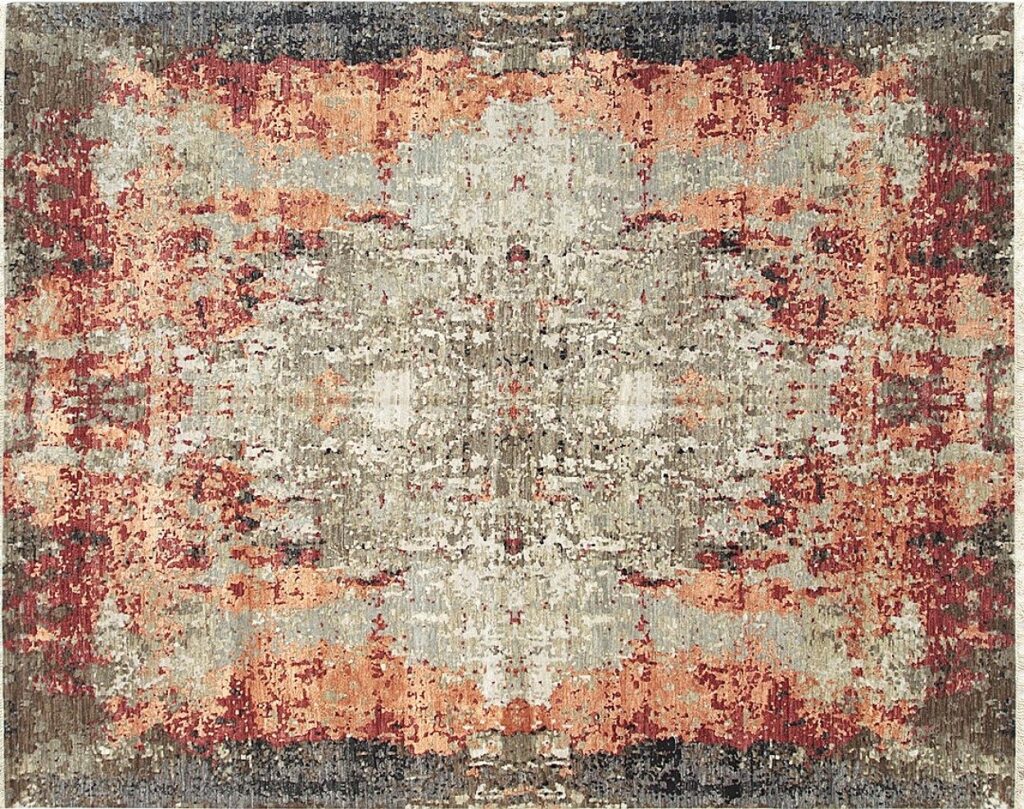
1. Expressionist Abstract Rugs: The “Action” Floor
Inspired by the Mid-Century Abstract Expressionist movement, these rugs are defined by high energy and the visual “shorthand” of the artist’s hand.
- Spontaneous Visual Movement: Unlike a repeating pattern, an expressionist rug looks like a moment frozen in time. The design flows with a sense of energetic asymmetry, ensuring that the viewer’s eye never settles in one place.
- Irregular Brush-like Formations: Using sophisticated dye-blending and “silk-layering,” these rugs mimic the physical texture of a brushstroke. These irregular formations provide a sense of depth, as if wet paint has just been applied to the canvas.
- Emotional Color Field Compositions: These rugs rely on the raw power of color to dictate the mood. By using high-saturation dyes in color field compositions, the rug becomes a psychological anchor for the room—ranging from vibrant, aggressive reds to somber, contemplative indigos.
2. Architectural Abstract Rugs: The Controlled Environment
Architectural abstraction is the “Cerebral” cousin of expressionism. It is designed to work in harmony with the hard lines, right angles, and structural integrity of modern buildings.
- Controlled Abstraction: Every “random” element is intentionally placed. This system uses measured tonal divisions to ensure the rug feels balanced, even if it isn’t symmetrical. It provides a sense of order in a chaotic open-concept space.
- Spatial Block Systems: The rug is often divided into “zones” or spatial block systems. These blocks act as visual anchors for furniture—for example, a darker tonal block might sit under a dining table, while a lighter “washed” block defines the walking path.
- Material Discipline: While expressionist rugs use silk for “flashes” of light, architectural rugs use material to define boundaries. A change from wool to silk often follows a measured line, creating a subtle, high-end “border” that is felt rather than seen.
Strategic Application Matrix
| Category | Design Philosophy | Key Visual Marker | Ideal Client/Project |
| Expressionist | “The Rug as Art” | Spontaneous Brushstrokes | Art Collectors / Creative Agencies |
| Architectural | “The Rug as Foundation” | Spatial Block Systems | Minimalist Lofts / Corporate Suites |
3. Geometric New Rugs
In contemporary weaving, geometry has evolved far beyond simple repeating diamonds. It is now a sophisticated sublanguage of Linear Modernism and Architectural Drafting. These rugs provide the “Internal Logic” for a room, using mathematical relationships to create a sense of order, movement, or depth.
1. Structured & Repeating Systems
These rugs utilize the “Power of the Grid” to create a stable, rhythmic foundation for an interior.
- Structured Geometry & Grid-Based Design: These rugs follow a disciplined, predictable layout. They are the “Mathematical” choice for professional environments where visual clutter must be eliminated.
- Repeating Geometric Systems: Unlike traditional medallions, these modern systems use a “Modular Geometry” where a single shape is repeated and interconnected, creating a seamless field that can scale to any room size.
- Nested Geometric Fields: This technique places shapes within shapes (e.g., a square within a square), creating a “Tunnel Effect” or a sense of receding space that adds architectural depth to a flat floor.
2. Linear Modernism & Intersecting Systems
This sublanguage focuses on the “Line” as the primary protagonist of the design.
- Linear Modernism: Characterized by long, continuous lines that stretch across the rug, often mimicking the “Structural Beams” or “Sightlines” of a modern building.
- Intersecting Line Systems: These rugs look like drafting-inspired geometry. Thin, precise lines (often in silk or high-contrast wool) cross the field at various angles, creating a dynamic, “blueprint” aesthetic.
- Hard-Edge Geometry: Defined by razor-sharp transitions between colors. There is no “bleeding” or shading; each geometric zone is a solid, distinct field of color, providing a clean, graphic impact.
3. Fragmented & Asymmetrical Compositions
For spaces that require energy and a break from tradition, these new rugs use geometry to create “Planned Chaos.”
- Asymmetrical & Fragmented Geometry: These rugs intentionally break the rules of symmetry. A pattern might start in one corner and “shatter” or dissolve as it moves across the field, resulting in fragmented visual planes.
- Offset & Stepped Geometry: Utilizes “staircase” patterns and stepped geometry to create a sense of climbing or movement. Offset geometry shifts the focal point away from the center, making the rug feel more like a modern art installation.
- Layered Geometry: Uses “High-Low” pile heights to create layered geometry. A circle might appear to “float” over a series of squares because it is woven at a different height or in a different material (e.g., a silk circle on a wool grid).
Geometric Sublanguage Matrix
| Sublanguage | Visual Goal | Key Technique | Best Architectural Fit |
| Structured | Stability / Rhythm | Grid-Based / Nested | Executive Offices / Formal Dining |
| Linear | Direction / Height | Intersecting Lines | Hallways / Long Living Rooms |
| Fragmented | Energy / Interest | Asymmetry / Stepping | Creative Studios / Modern Lofts |
| Layered | Depth / Dimension | High-Low Pile / Material Contrast | Minimalist Master Suites |
4. Architectural & Monumental Geometry in Contemporary Rugs
In the professional design world, geometry is often categorized by its Scale and Intent. While standard geometric rugs provide pattern, Architectural and Monumental rugs provide Structure. These are the “Heavyweights” of contemporary production, designed to interact directly with the volume and dimensions of a room.
1. Architectural Geometry: The “Drafted” Floor
Architectural geometry is inspired by the tools of the architect: the T-square, the compass, and the CAD program. These rugs treat the floor as a technical drawing.
- Drafting-Inspired Geometry: Characterized by thin, precise lines that appear to “float” over a solid field. These lines often mimic the skeletal structure of a building, using silk or high-contrast wool to create a sharp, metallic shimmer.
- Blueprint-Style Line Work: Features “unfinished” or intersecting lines that resemble a work-in-progress schematic. It utilizes measured proportion systems, where the distance between lines is mathematically calculated to create a sense of perfect balance and “Visual Quiet.”
- Structural Precision: Unlike decorative geometry, every angle in an architectural rug is intentional. It is the preferred choice for Corporate Suites and Modern Galleries where the rug must ground the space without competing with the art on the walls.
2. Monumental Geometry: The Power of Scale
Monumental geometry is not about the complexity of the shape, but the Size of the gesture. It is designed to change the perceived scale of a room.
- Oversized Geometric Scale: Instead of a repeating pattern of small diamonds, a monumental rug might feature a single, massive circle or a series of three giant rectangles that span the entire 12×15 size of the rug field.
- Bold Field Geometry: These rugs use “Color-Blocking” on a massive scale. By dividing the rug into two or three huge zones of solid color, they create a “Primary Impact” that can define different functional areas within a large open-concept loft.
- The “Anchor” Effect: Because the shapes are so large, they act as a gravitational anchor for heavy furniture. A monumental rug ensures that even a minimal room feels “furnished” and intentional.
Strategic Application: Scale vs. Precision
| Category | Visual Goal | Key Technical Marker | Architectural Match |
| Architectural | Sophistication / Detail | Blueprint Line Work | Glass-Walled Offices / High-Tech Homes |
| Monumental | Presence / Definition | Oversized Field Shapes | Industrial Lofts / Grand Entryways |
5. New Minimalist Design Area Rugs: The Power of Restraint
In the luxury market, minimalism is not the absence of design, but the elevation of materiality. This category is often underestimated because its complexity is haptic rather than visual. For the RugsOnNet collector, a minimalist rug provides a “Tactile Foundation” that allows architecture and fine art to command the room while the floor provides a sense of profound, quiet quality.
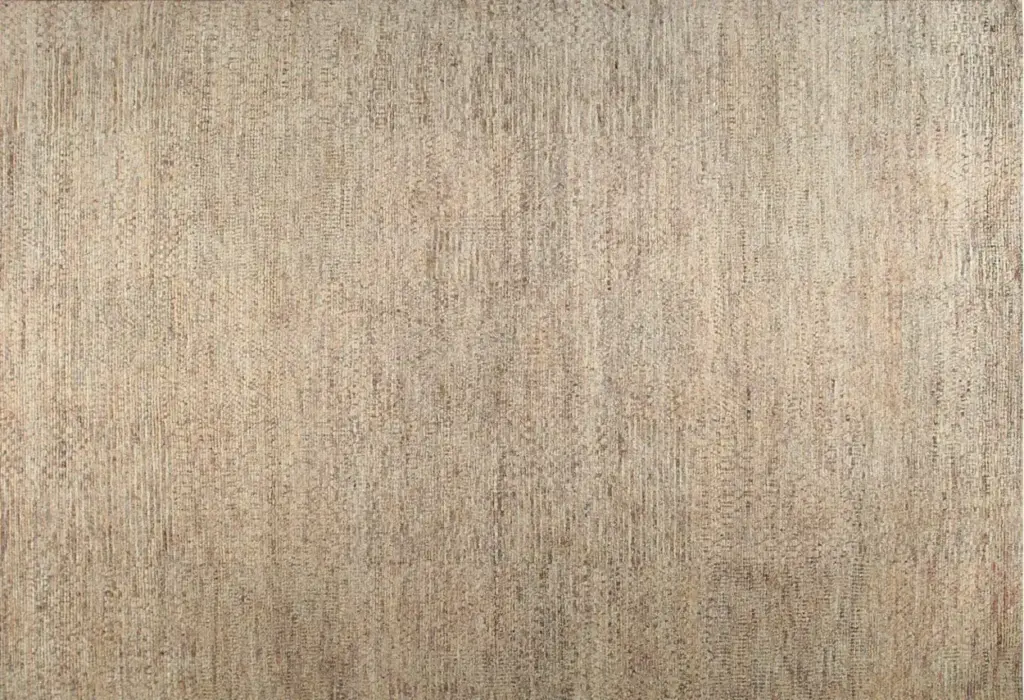
1. The Field-Dominant Surface
Minimalism begins with the “Field”—the primary expanse of the rug. In this system, the field is not a background; it is the subject.
- Monochrome Fields & Field-Dominant Surfaces: These rugs utilize a single color family (often in “Natural” tones like stone, bone, or slate). The visual interest comes from the soft material variation—the way light hits hand-spun wool versus a flat-combed silk.
- Reduced Visual Language: By stripping away borders and medallions, these rugs utilize a reduced visual language where the “design” is the quality of the yarn itself.
2. Subtle Texture & Quiet Transitions
When a pattern does exist in a minimalist rug, it is designed to be “felt” or discovered over time rather than seen at first glance.
- Subtle Texture-Based Design: Instead of using different colors to create a pattern, the weaver uses different weaving techniques (e.g., a row of soumak weave next to a row of cut pile). This creates a low-contrast pattern system that relies on shadow for definition.
- Quiet Texture Transitions: In these rugs, there are no “hard edges.” The texture evolves across the field in quiet transitions, moving from a tight, dense pile to a slightly looser, more organic “shag” texture.
- Nearly Invisible Pattern Systems: This is the pinnacle of “Quiet Luxury.” The design is woven in the same color as the field, using a slightly different fiber (like a matte wool field with a tonal silk pattern). The pattern only reveals itself from certain angles or under specific lighting conditions.
3. Tonal Layering & Line Interruption
Minimalism often uses “Micro-Movements” to keep a solid field from feeling “flat” or “commercial.”
- Restrained Tonal Layering: The rug is composed of multiple shades of a single color (e.g., five shades of “Oyster”). These are blended in the dye vat to create restrained tonal layering, providing an “atmospheric” depth that mimics a clouded sky or a concrete floor.
- Minimal Line Interruption: A single, thin line might travel across a 9×12 field and then disappear. This minimal line interruption acts as a visual “palette cleanser,” acknowledging the architectural space without dominating it.
Minimalist Performance Matrix
| Sub-Category | Design Driver | Primary Material | Best Architectural Fit |
| Monochrome | Color Saturation | High-Lanolin Wool | High-Traffic Zen Spaces |
| Textural | Physical Relief | Wool/Hemp Blends | Modern Farmhouse / Organic Lofts |
| Tonal | Atmospheric Depth | Silk-Blend / Bamboo | Master Suites / Galleries |
| Invisible | Light Interaction | Tone-on-Tone Silk | Ultra-Luxury “Quiet” Interiors |
6. Pure & Sculptural Minimalist Design New Area Rugs
Within the minimalist framework, the distinction between “Pure” and “Sculptural” defines the physical experience of the rug. One focuses on the perfection of a flat, consistent surface, while the other treats the floor as a low-relief landscape.
1. Pure Minimalism: The Seamless Field
Pure minimalism is the most disciplined form of rug production. It is designed to remove all visual noise, creating a “Silent Floor” that serves as a neutral canvas for high-end furniture and architecture.
- Single-Tone Surfaces: These rugs are defined by a total absence of pattern. The value is found in the color saturation and the quality of the fiber. Whether it is a deep charcoal or a luminous cream, the “Single-Tone” approach creates a solid, unyielding foundation.
- Low-Relief Field Variation: To prevent the rug from looking like commercial broadloom, weavers introduce low-relief field variation. This is achieved by using “Hand-Carded” wool, which has natural, microscopic irregularities. When light hits these tiny variations, it creates a “Living” surface that feels organic and bespoke.
2. Sculptural Minimalism: The 3D Floor
Sculptural minimalism introduces “Architecture” to the pile itself. The design is not drawn with color, but built through physical depth.
- Relief Through Pile Height: This technique uses “High-Low” construction. A design (such as a large-scale orb or a linear grid) is woven at a higher pile height than the surrounding field. Because the yarn is the same color, the pattern only appears through the shadows cast by the different heights.
- Carved Restraint: After the rug is woven, a master finisher uses specialized shears to “Carve” channels into the wool. This carved restraint creates sharp, architectural lines or soft, beveled edges. It allows a monochromatic rug to have a high-definition graphic impact without the need for a second color.
Minimalist Selection Guide
| Sub-Category | Visual Driver | Sensory Experience | Best Architectural Fit |
| Pure | Material Purity | Smooth / Consistent | Ultra-Modern / Galleries |
| Sculptural | Shadow / Light | Topographic / Tactile | Brutalist / High-Ceiling Lofts |
7. Organic Modern Rugs: The Biophilic Floor
In the “Newly Made” market, Organic Modernism is the fastest-growing design sector. It responds to the Biophilic Design movement—the human desire to stay connected to nature within built environments. These rugs move away from the “Hard-Edge” of geometry and into the Fluid Systems of the natural world.
1. Biomorphic & Fluid Systems
These rugs utilize biomorphic forms—shapes that resemble living organisms or cellular structures—to create a “living” floor.
- Fluid Contour Systems: Instead of straight lines, these rugs use fluid contour systems that mimic the movement of liquids. Water-flow abstractions and cloud-like transitions provide a sense of continuous, slow-motion movement.
- Organic Asymmetry: Nature rarely produces perfect symmetry. These rugs embrace organic asymmetry, where patterns grow, cluster, and dissipate across the field, much like moss on a stone or stars in a nebula.
- Botanical Abstraction: A modern evolution of the floral rug. Rather than literal flowers, botanical abstraction uses the “Idea” of a leaf or a vine—focusing on the rhythm of growth and the silhouette of flora.
2. Earth-Form & Topographic Language
This sub-category treats the rug as a cross-section of the earth’s crust, focusing on geological time and pressure.
- Sediment Layering: Designs that mimic the horizontal sediment layering of canyons or rock faces. By using subtle tonal shifts in wool, the rug appears to have been formed over millions of years.
- Topographic Visual Language: These rugs often use high-low pile heights to create a 3D map of a landscape. The result is a topographic visual language where the rug feels like a miniature mountain range or a riverbed underfoot.
- Earth-Form Compositions: Utilizes a palette of “New Neutrals”—clays, ochres, and terracottas—to ground a room in a way that feels ancient yet entirely modern.
3. Nature-Derived Modernism: The Literal Texture
This is the most “Material-Focused” wing of Organic Modernism, mimicking the specific textures of natural elements.
- Woodgrain-Inspired Movement: The weaver uses linear hand-carded wool to mimic the “rings” and “knots” found in timber. It provides the warmth of wood with the comfort of a textile.
- Mineral Fracture & Erosion Patterns: These rugs look like stone-inspired patterning that has been “weathered.” Erosion patterns and mineral fracture motifs (mimicking cracked marble or oxidized copper) create a rugged, industrial-meets-organic aesthetic.
Organic Modern Selection Matrix
| Sub-Category | Natural Inspiration | Visual Energy | Best Architectural Fit |
| Biomorphic | Living Organisms | High (Curvilinear) | Contemporary / Mid-Century |
| Topographic | Landscapes / Maps | Medium (Textural) | Minimalist Lofts / Zen Spaces |
| Geological | Stone / Sediment | Low (Stable) | Modern Farmhouse / Industrial |
| Botanical | Plant Life | Medium (Soft) | Residential Master Suites |
8. Transitional Rugs: The Deconstructed Classic
In the modern market, Transitional Rugs represent the most significant bridge between heritage and contemporary living. These are not merely “new” rugs; they are traditional-modern hybrids that utilize the DNA of antique weaving but subject it to a process of artistic “erosion.” For the RugsOnNet collector, these pieces offer the warmth of history without the formality of a traditional rug.
1. The Mechanics of Transition: Erasure & Deconstruction
The core of the transitional movement is the intentional “breaking” of classical rules. The design is no longer about a perfect medallion; it is about the ghost of a medallion.
- Erased Motifs & Partial Motif Retention: A hallmark of this category. Weavers leave sections of the rug “blank” or weave them in a tonal, low-contrast wool, creating a sense of partial motif retention. It looks as if the pattern has been worn away by centuries of use, even though the rug is brand new.
- Deconstructed Classical Patterns: This involves taking a standard Persian or European layout and “shattering” it. The fragmented medallions and faded border systems create a rhythmic, non-linear field that feels lighter and more airy than a traditional piece.
- Distressed Reinterpretations: Beyond physical wear, this includes contemporary color reinterpretation. A classic 17th-century pattern is woven in “New Neutrals” like silver-grey, charcoal, or slate, stripping away the heavy reds and navy blues of the past.
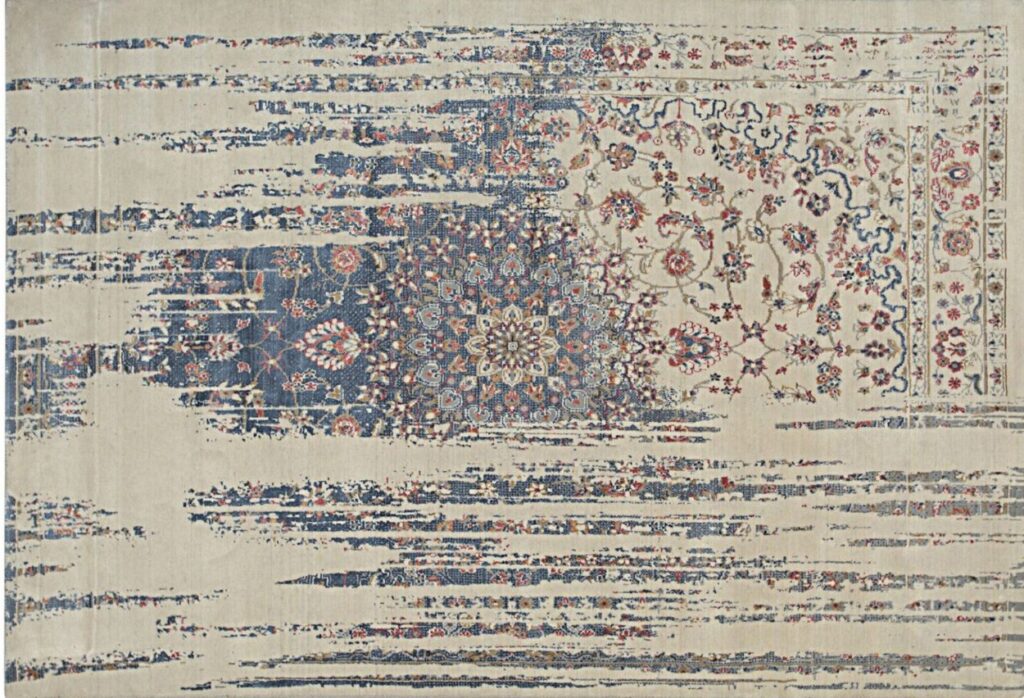
2. Transitional Persian Influence: The Scholarly Deconstruction
This sub-sector targets the most iconic Persian weaving centers, adapting their “Visual Language” for the modern loft.
- Erased Heriz Language: Takes the bold, angular geometry of a North-Western Persian Heriz and softens the edges, often removing the outer borders entirely to create a “broken field” effect.
- Faded Oushak Adaptation: Currently the most popular trend in interior design. It utilizes the large-scale floral motifs of Turkish Oushaks but uses softened historical references and a “Washed” dye system to create a decorative, low-contrast floor.
- Abstracted Tabriz References: Focuses on the fine, curvilinear “Mahi” or floral patterns of Tabriz, but executes them in a simplified ornament system—often using silk highlights to make the pattern “shimmer” rather than stand out.
3. Transitional European Influence: Neoclassical Reduction
For more formal or “Grandmillennial” interiors, designers look to the simplified elegance of French and English historical styles.
- Aubusson Simplification: The flat-woven, floral elegance of the French Aubusson is stripped of its heavy scrolls and pastoral scenes, focusing instead on a reduced visual language of soft medallions and pastel fields.
- Savonnerie Reduction: These rugs maintain the “plushness” of the Royal French workshops but utilize distressed abstract layering to turn a formal Baroque design into a soft, “Cloud-like” modern textile.
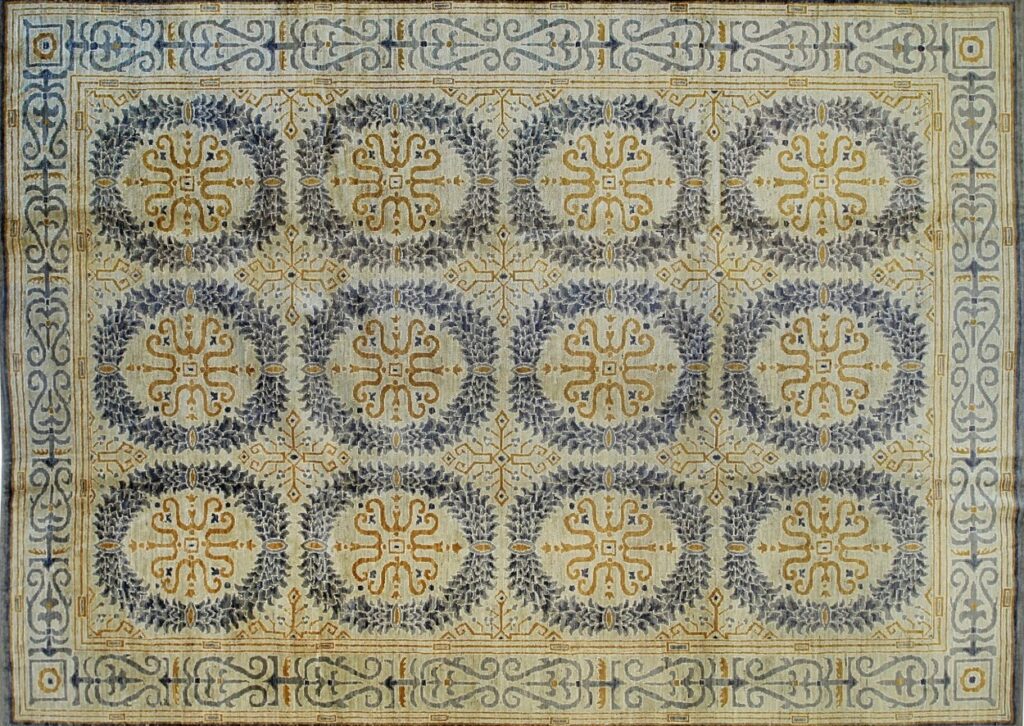
Transitional Strategy Matrix
| Sub-Category | Visual Goal | Key Technical Feature | Best Architectural Fit |
| Erased Persian | Casual Elegance | Partial Motif Retention | Modern Farmhouse / Pre-War |
| Oushak Hybrid | Decorative Warmth | Low-Contrast Palettes | Coastal / Traditional Lite |
| Deconstructed | High-Art / Edgy | Fragmented Medallions | Industrial Lofts / Galleries |
| Neoclassical | Formal Restraint | Aubusson Simplification | Master Suites / Formal Parlors |
9. Contemporary Tribal Rugs: The Abstracted Ancestry
In the modern market, Contemporary Tribal design represents a “Visual De-Cluttering” of ancient weaving traditions. Unlike traditional tribal rugs that are dense with symbolic narratives, contemporary versions focus on the Graphic Power of the motif. This category is essential for Biophilic and Organic Modern interiors that require a human, hand-made touch without the visual noise of a multi-colored antique.
1. The Modernized Tribal Language
The core of this movement is the “Simplification” of the weaver’s vocabulary. The rug is treated as a modern graphic rather than a historical document.
- Simplified Tribal Language & Abstracted Motifs: Complex geometric symbols (like the Ram’s Horn or Star) are stripped of their internal detail, leaving only the bold silhouette.
- Enlarged Tribal Forms: A single, traditionally small motif is “blown up” to a massive scale. For example, a diamond lozenge that would usually be 2 inches wide is expanded to 4 feet, turning a repetitive pattern into a Monumental Statement.
- Softened Field Repetition: In traditional tribal rugs, the pattern is rigid and repetitive. Contemporary versions use softened field repetition, where the motifs appear to float or drift across the rug with more “air” between them.
- Tonal Tribal Reinterpretation: One of the most successful modern shifts. A high-contrast tribal design is woven in a “Tone-on-Tone” palette (e.g., charcoal motifs on a slate field), creating a nearly invisible pattern system that works in ultra-minimalist spaces.
- Reduced Nomadic Geometry: Traditional tribal repetition simplified into fewer symbols.
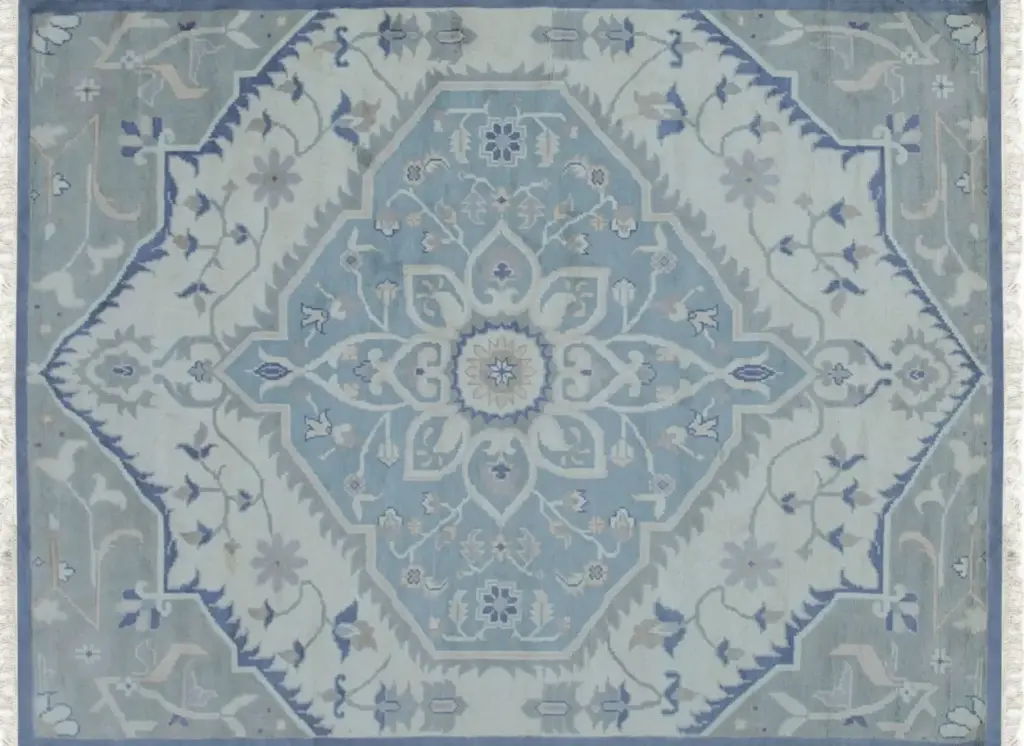
2. Tribal Minimal Hybrids: The “Quiet” Symbolic Floor
This sub-category is the preferred choice for high-end galleries and master suites. It combines the warmth of tribal weaving with the restraint of minimalism.
- Low-Density Tribal Motifs: The field is kept 90% solid, with only a few low-density motifs placed strategically. This restrained symbolic placement acts as a visual “punctuation mark” rather than a full sentence.
- The “Blank Canvas” Effect: By placing a single tribal symbol in a corner or offset from the center, the rug creates a sophisticated sense of negative space, allowing the quality of the hand-spun wool to become the primary focus.
3. Contemporary Nomadic Influence: The “Modern Village” Rhythm
This style mimics the “Imperfect Beauty” of nomadic weaving—the Beni Ourain of Morocco or the Gabbeh of Persia—but adapts it for the 21st-century home.
- Modernized Village Rhythm: These rugs maintain the “wobbly” or hand-drawn lines of a village rug but execute them in high-end materials like New Zealand wool or Silk.
- Asymmetrical Tribal Spacing: Traditional rugs are mirrored; contemporary nomadic rugs are asymmetrical. One side of the rug may be densely patterned while the other is open, creating a dynamic, “unscripted” feel that complements mid-century furniture and eclectic art.
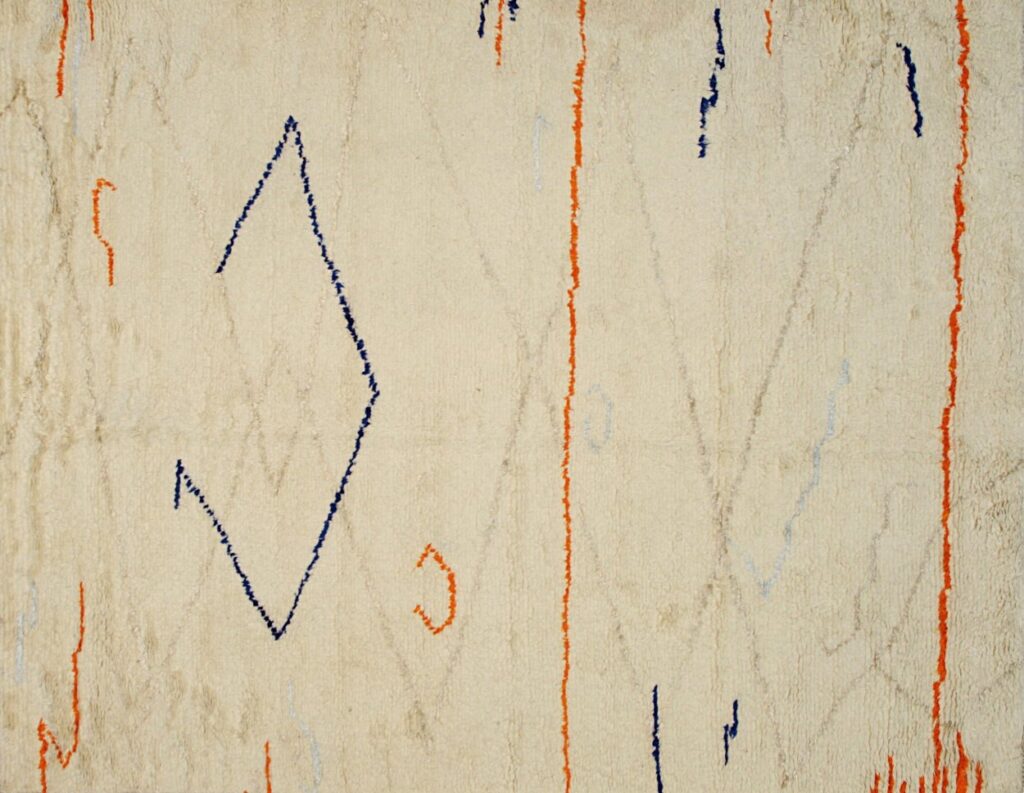
Contemporary Tribal Selection Matrix
| Sub-Category | Design Driver | Visual Energy | Best Architectural Fit |
| Enlarged Tribal | Graphic Impact | High (Bold) | Open-Concept Lofts / Entryways |
| Tribal Minimal | Restraint / Material | Low (Zen) | Master Suites / Wellness Spaces |
| Nomadic Influence | Hand-made Authenticity | Medium (Wabi-Sabi) | Modern Farmhouse / Eclectic |
| Tonal Tribal | Texture / Subtlety | Low (Quiet) | Executive Offices / Minimalist Living |
10. Scandinavian-Inspired Contemporary Rugs: The Nordic Ethos
In high-end luxury interiors, Scandinavian design is synonymous with “Light and Quiet.” This category drives the market for “New Neutrals,” prioritizing the physical quality of the weave over decorative flourish. It is a philosophy of textile-derived restraint, where the beauty of the rug comes from the mathematical precision of the loom and the purity of the fiber.
1. The Nordic Visual Language
The Scandinavian aesthetic is defined by its relationship to natural light and the long winters of the North, leading to a focus on brightness and structural clarity.
- Pale Field Systems & Cool Neutrals: These rugs utilize a palette of “Ice Blues,” “Soft Greys,” and “Bone Whites.” This cool neutral field design is intended to reflect as much ambient light as possible, making even a small urban apartment feel expansive.
- Restrained Geometry & Low-Contrast Graphics: Patterns are never aggressive. They utilize a low-contrast graphic language—for example, a light grey line on a white field—creating a design that is legible but never dominates the room.
- Tonal Nordic Palettes: Instead of contrasting colors, these rugs use multiple shades of the same hue to create depth. This tonal layering provides a “soft-focus” look that is the hallmark of modern Stockholm or Copenhagen interiors.
- Negative Space Discipline: Large open areas intentionally left visually quiet.
- Textile Clarity: Pattern reduced until weave quality becomes primary visual content.
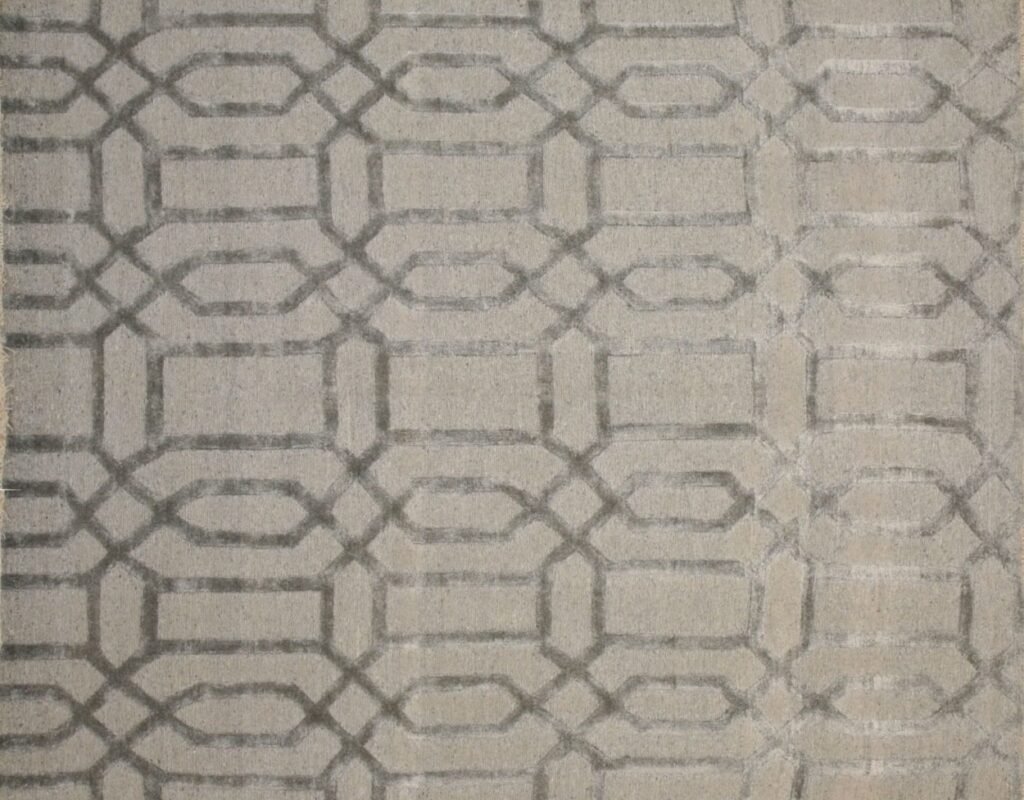
2. Scandinavian Flatweave Influence: The “Rya” and “Ingegerd” Legacy
Drawing from the historical Rollakan and Flatweave traditions, modern Scandinavian-inspired rugs focus on the architecture of the horizontal and vertical threads.
- Flat Linear Systems: These rugs move away from the “curvaceous” and into the linear. The design is often composed of simple, parallel lines or grids that provide a sense of woven simplicity.
- Woven Band Structures: A classic Nordic technique where the rug is divided into horizontal “bands” of different textures or colors. This creates a rhythmic, grounding effect that works perfectly under long dining tables or in minimalist hallways.
- Folk Reduction: Historic Scandinavian folk motifs simplified into modern stripe systems.
- Loom Rhythm: Repetition driven directly by weave cadence rather than drawing.
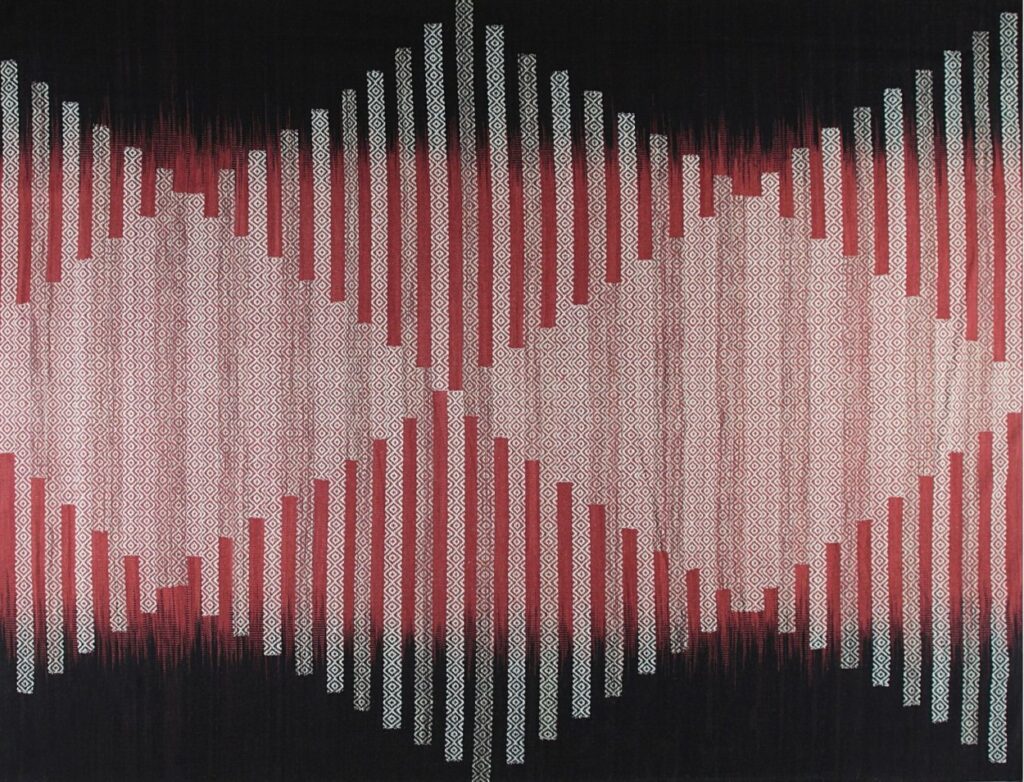
3. Scandinavian Pile Influence: Soft Minimalism
For spaces that require more warmth and acoustic dampening, the Nordic pile rug offers a “Plush” version of minimalism.
- Soft Minimal Pile Geometry: Unlike the sharp, hard-edge geometry of the Bauhaus, Scandinavian pile rugs use “softened” shapes—circles with fuzzy edges or rectangles that bleed into the field.
- Balanced Asymmetry: While the rug feels ordered, it often employs balanced asymmetry. A single geometric element might be slightly offset, or a line might stop three-quarters of the way across the field, providing a “human” touch to the industrial precision.
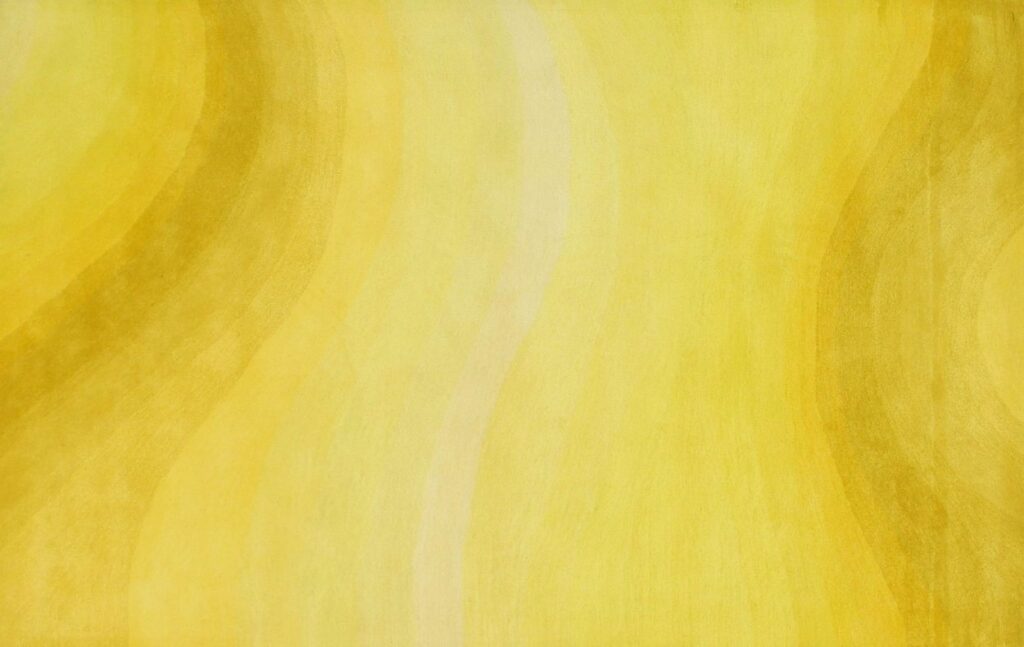
Scandinavian Selection Matrix
| Sub-Category | Design Driver | Visual Vibe | Best Architectural Fit |
| Pale Field | Light Reflection | Airy / Expansive | Small Lofts / Coastal Homes |
| Linear Flatweave | Structural Rhythm | Disciplined / Clean | Dining Rooms / Kitchens |
| Soft Pile | Tactile Comfort | Cozy / Warm | Bedrooms / Nurseries |
| Tonal Neutral | Subtlety / Depth | Sophisticated | Executive Offices / Galleries |
11. Mid-Century Modern Inspired New Rugs
In the contemporary luxury market, Mid-Century Revival is more than just a “retro” look; it is a sophisticated re-interpretation of the post-war design explosion. These rugs are engineered to complement the iconic furniture of the 1950s and 60s—Eames, Saarinen, and Wegner—using a furniture-era visual language that balances playfulness with high-design discipline.
1. The Core Visual Systems: Atomic & Optimistic
The “Mid-Century” look is defined by a belief in the future, translated into bold, graphic symbols and a departure from traditional borders.
- Atomic References & Starburst Motifs: Drawing from the “Space Age” obsession, these rugs feature starburst motifs and boomerang forms. These are often placed in playful asymmetry, appearing to float across the field like celestial bodies.
- Optimistic Geometry: Unlike the rigid grids of the Bauhaus, Mid-Century geometry is “organic.” It utilizes curvaceous triangles, “kidney” shapes, and soft-edged polygons that provide a sense of movement and “Lightness.”
- Post-War Color Systems: These rugs utilize retro modern palettes—mustard yellows, avocado greens, teals, and “burnt” oranges. These colors are specifically designed to pop against the teak and walnut woods common in Mid-Century interiors.
- Biomorphic Asymmetry: Irregular free-form shapes positioned in controlled balance.
- Furniture-Era Abstraction: Design scaled specifically to sit under iconic furniture footprints.
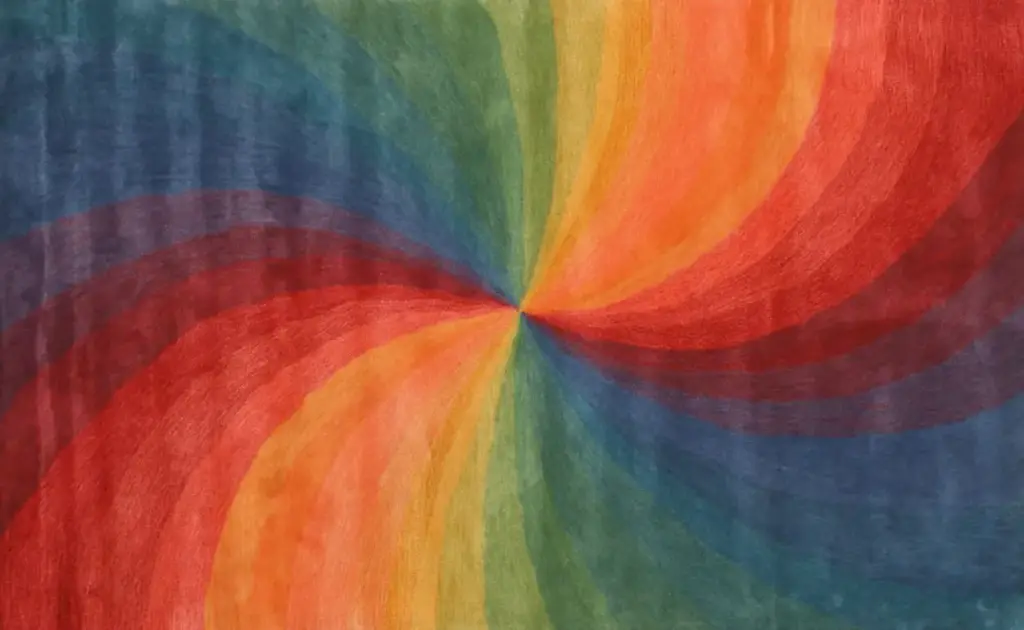
2. American Mid-Century Revival: The Interior-Driven Floor
The American interpretation of this movement is rooted in the “Total Living Concept”—where the rug, the sofa, and the architecture are a single, unified thought.
- Interior-Driven Palette Systems: These rugs are often designed to match specific 1950s textile swatches. The colors are saturated but earthy, designed to ground a room with floor-to-ceiling glass walls.
- Architect-Inspired Visual Fields: Drawing from the “Case Study Houses,” these rugs use linear modernism to define living “zones” within an open-plan home. The rug acts as a structural element, aligning with the house’s own beams and sightlines.
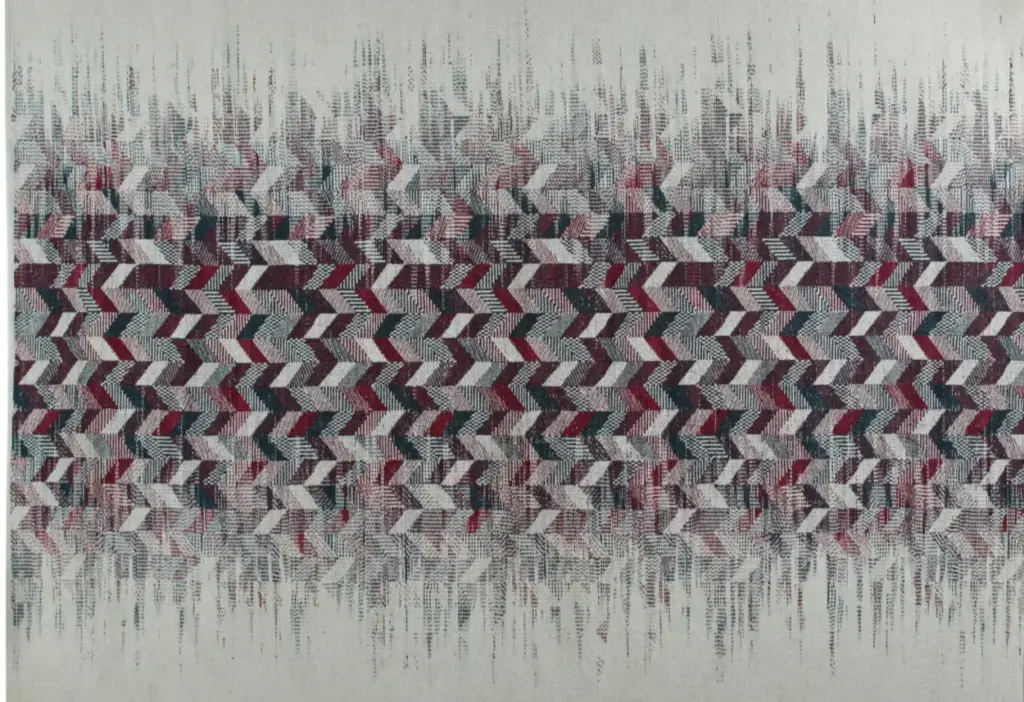
3. European Mid-Century Revival: Restrained Modernism
While the American style is often “bold and bright,” the European revival (particularly Italian and French influences) focuses on a more sophisticated, “Suave” aesthetic.
- Restrained Modernist Adaptation: These rugs use a more muted palette—charcoals, creams, and deep Burgundies. The geometry is finer, focusing on linear modernism and thin, precise line work rather than large, bold shapes.
- The “Cote d’Azur” Vibe: This sub-style mimics the Mediterranean modernism of the 1960s, using high-quality wool and silk to create a “Shimmer” that feels like a vintage luxury hotel in Milan or Cannes.
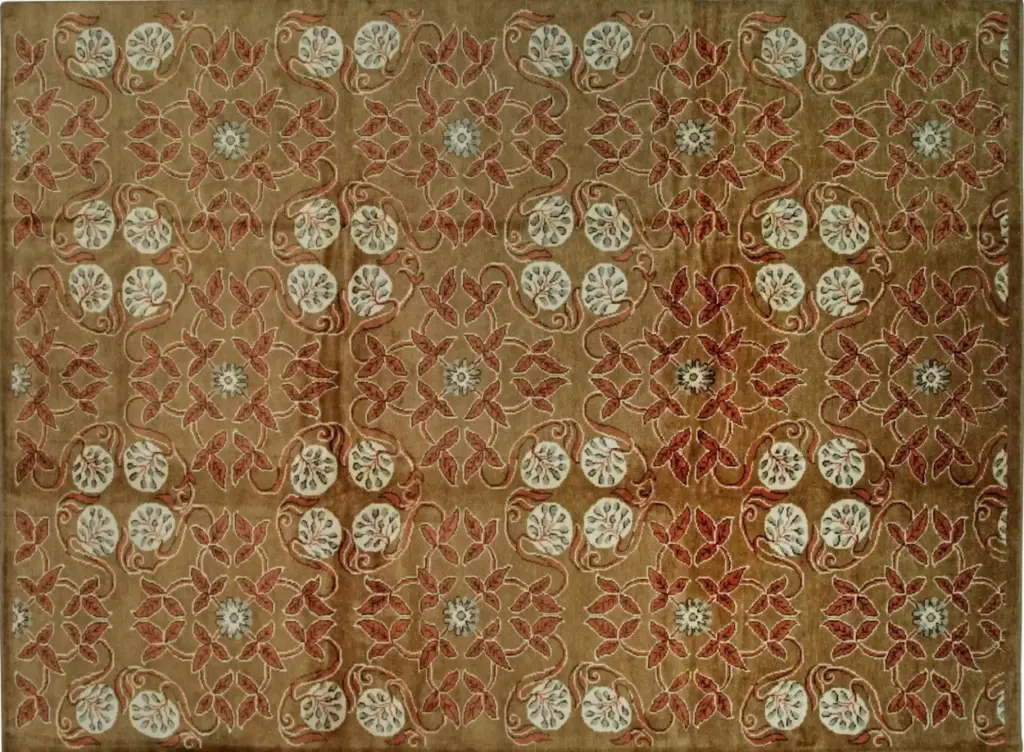
Mid-Century Selection Matrix
| Sub-Category | Design Driver | Primary Symbols | Best Furniture Match |
| Atomic | Space Age / Futurism | Starbursts / Boomerangs | Eero Aarnio / Plastic-form |
| Optimistic | Organic Movement | Kidneys / Soft Triangles | Eames Plywood / Noguchi |
| American | Spatial Integration | Linear Grids / Earth Tones | Knoll / Herman Miller |
| European | Sophistication | Fine Lines / Muted Tones | Gio Ponti / Cassina |
12. Bauhaus and Structured Modernism
In the modern luxury market, Bauhaus Revival is often oversimplified as mere “colorful shapes.” In reality, it is a rigorous educational design grammar based on the 1919 Weimar movement’s philosophy: Form follows function. These rugs are not just floor coverings; they are exercises in strict proportional relationships and the fundamental intersection of art and industry.
Architectural Geometry Beyond Bauhaus
- Structured geometry
- Linear modernism
- Stepped geometry
- Intersecting line systems
- Drafting-inspired forms
- Hard-edge field planning
1. The Bauhaus Visual Logic: The “Primary” Language
The Bauhaus aesthetic is rooted in the “Universal Language” of geometry and color theory, pioneered by masters like Kandinsky and Itten.
- The Circle-Square-Triangle Language: Every design is distilled into its most basic components. This circle-square-triangle language creates a sense of primal clarity, making the rug feel “permanent” rather than trendy.
- Primary Color Systems: Unlike the muted “Retro” palettes of Mid-Century design, Bauhaus rugs utilize primary color systems—Red, Blue, and Yellow—often set against a high-contrast black or white field. This creates a powerful, intellectual energy.
- Modular Field Construction: These rugs are built using modular field construction, where the design is composed of interlocking blocks that feel like they could be rearranged. This “Structural” approach grounds a room with undeniable stability.
2. Disciplined Asymmetry & Proportion
While the elements are simple, the arrangement is highly complex. A Bauhaus rug is a masterclass in balanced tension.
- Disciplined Asymmetry: These rugs rarely use a center medallion. Instead, they utilize disciplined asymmetry, where a large heavy block on one side is perfectly balanced by a series of thin lines or a small primary shape on the other.
- Strict Proportional Relationships: Drawing from the “Golden Ratio,” the scale of every shape is mathematically linked to the dimensions of the rug. This results in a measured visual field that feels “correct” to the eye, even in a minimalist setting.
3. Textile Bauhaus Influence: The Weaver’s Discipline
This sub-category pays homage to the legendary Bauhaus Weaving Workshop (Anni Albers, Gunta Stölzl), focusing on how the loom itself dictates the design.
- Loom-Derived Structure: The pattern is a direct reflection of the horizontal (weft) and vertical (warp) grid. It utilizes flat linear systems and “Grid-Interference” patterns that celebrate the act of weaving.
- Woven Graphic Discipline: These rugs avoid “painterly” curves in favor of hard-edge geometry and stepped transitions. The design feels “built” rather than drawn, emphasizing the rug as an industrial object of high art.
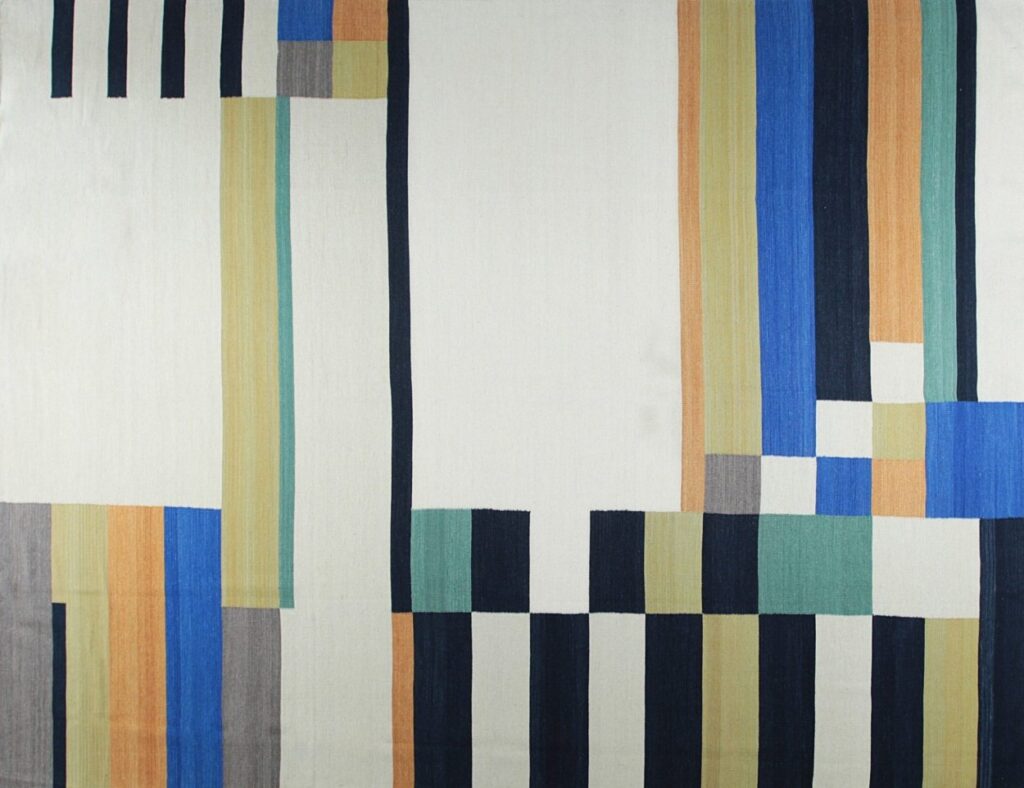
Bauhaus Selection Matrix
| Sub-Category | Design Driver | Visual Impact | Best Architectural Fit |
| Primary Block | Color Theory | High (Graphic) | Contemporary Offices / Lofts |
| Geometric Grammar | Basic Shapes | Intellectual / Pure | Libraries / Minimalist Studios |
| Textile-Driven | Loom Structure | Textured / Linear | Architect-Designed Residences |
| Monochrome Bauhaus | Proportion / Line | Sophisticated / Quiet | Art Galleries / High-End Boardrooms |
13. Pop-Inspired Rugs: The Graphic Statement
In the modern luxury market, Pop-Inspired Rugs represent the most energetic and “vocal” design category. Moving far beyond simple novelty, these rugs utilize the visual shorthand of 1960s Pop Art (Warhol, Lichtenstein) and contemporary street art to create a high-contrast floor. This is the “Protagonist” of the room—a rug designed to lead the conversation rather than follow the architecture.
1. The Mechanics of Pop: Saturation & Rhythm
Pop design is rooted in the “Power of the Image.” It strips away the nuance of traditional weaving in favor of immediate, high-impact communication.
- Graphic Saturation & Bold Visual Rhythm: These rugs utilize maximum dye saturation. Whether it is a “Screaming” pink or a “Electric” cyan, the colors are flat and unyielding. The bold visual rhythm is created through sharp, repetitive pulses of color that vibrate against each other.
- Playful Visual Interruption: A signature Pop move. A consistent pattern might be “interrupted” by a single, mismatched shape or a “glitch” in the graphic, creating a sense of playful visual interruption that feels alive and rebellious.
- Poster-like Composition: The rug is treated like a two-dimensional graphic. It often features oversized symbolic forms—a single giant lip, a star, or a lightning bolt—that turn the entire floor into a poster-like composition.
- High-Contrast Graphic Collision: Deliberate clash between unrelated saturated tones.
- Repetition as Visual Pulse: Pattern built through repeated graphic beats.
2. Pop Graphic Rugs: The Commercial Aesthetic
This sub-sector draws directly from the language of advertising, branding, and mass media.
- Hard-Edge Bold Graphics: There is no “Abrash” or shading here. Every line is a hard-edge graphic boundary. This precision mimics the look of silkscreen printing or digital vinyl.
- Commercial Visual References: These rugs often utilize the “Ben-Day dots” of comic books or the “Halftone” patterns of newspaper print. By using commercial visual references, they bring a sense of urban, high-fashion irony to an interior.
- Comic-Derived Visual Impact: Utilizes “Action Lines” and explosive shapes that suggest movement and sound (the visual equivalent of a “POW” or “BAM”).
3. Neo-Pop Rugs: The Contemporary Evolution
Neo-Pop is the 21st-century update to the movement, incorporating influences from digital culture, emojis, and global street art.
- Contemporary Graphic Reinterpretations: These rugs take classical motifs (like a French fleur-de-lis or a Persian floral) and “vandalize” them with neon drips, spray-paint effects, or digital pixelation.
- High-Contrast Color Blocks: Uses “clashing” palettes that shouldn’t work but do—such as neon orange against a deep purple. This high-contrast layering is designed to stand out in the age of Instagram and high-definition digital design.
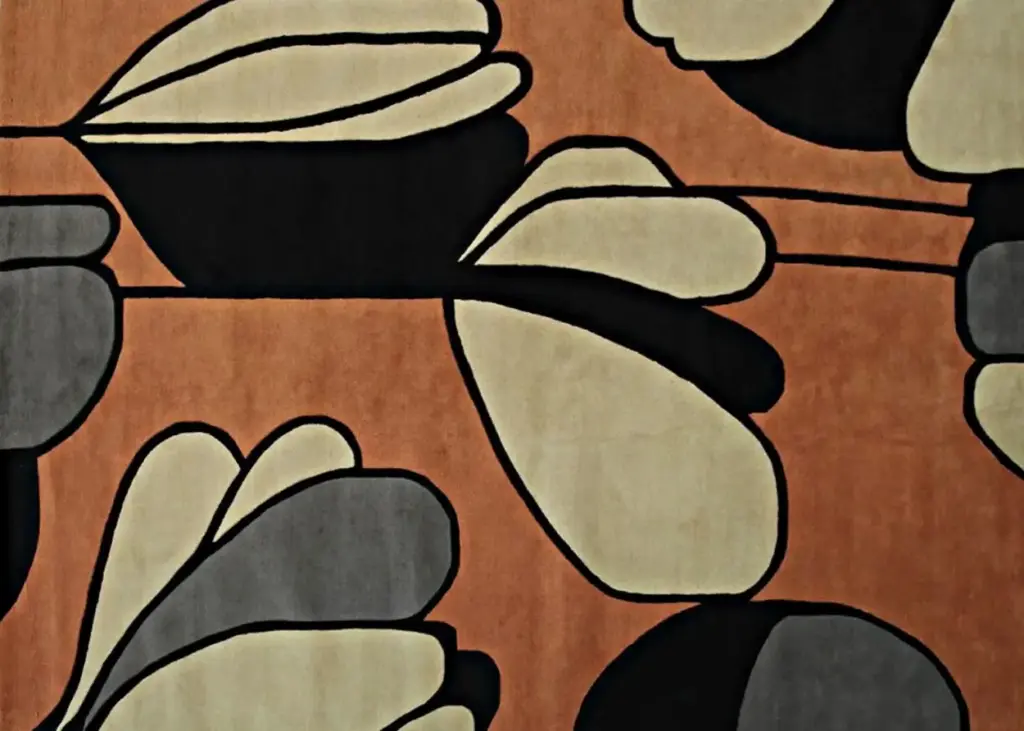
Pop-Inspired Selection Matrix
| Sub-Category | Visual Driver | Primary Inspiration | Best Architectural Fit |
| Pop Graphic | Commercial Impact | Advertising / Comics | Modern Lofts / Creative Studios |
| Neo-Pop | Digital Irony | Street Art / Emojis | Contemporary Condos / Playrooms |
| Poster-Style | Scale / Iconography | Cinema / Screenprint | Entryways / Entertainment Rooms |
| Saturated Block | Pure Color | Color Theory / Pop Art | Minimalist White-Box Galleries |
14. The Classic Antique Revival Rugs: Tradition as a Modern Variable
In the “Newly Made” luxury sector, a “New Oushak” or “New Heriz” is not a copy; it is a translation. The goal is to retain the vibe of the antique while stripping away the elements that conflict with modern minimalism, such as high-contrast “busy-ness,” heavy borders, or rigid symmetry.
1. The New Oushak: The Decorative Chameleon
- Visual Language: Characterized by enlarged floral motifs and “open” fields. The color palette moves toward paler field systems—apricots, creams, and silver-blues—with a low-contrast relationship between pattern and ground.
- Design Logic: Focuses on “Decorative Ease.” It is intended to feel airy and “un-serious,” removing the heavy architectural weight of 19th-century Turkish weaving.
- Market Language: “Coastal Modern,” “Transitional Chic,” or “High-End Decorative.”
- Production Interpretation: Often utilizes long-staple wool and a “Washed” or “Bleached” dye process to mimic a century of sun-fading. The knot count is deliberately kept lower to provide a soft, floppy handle.
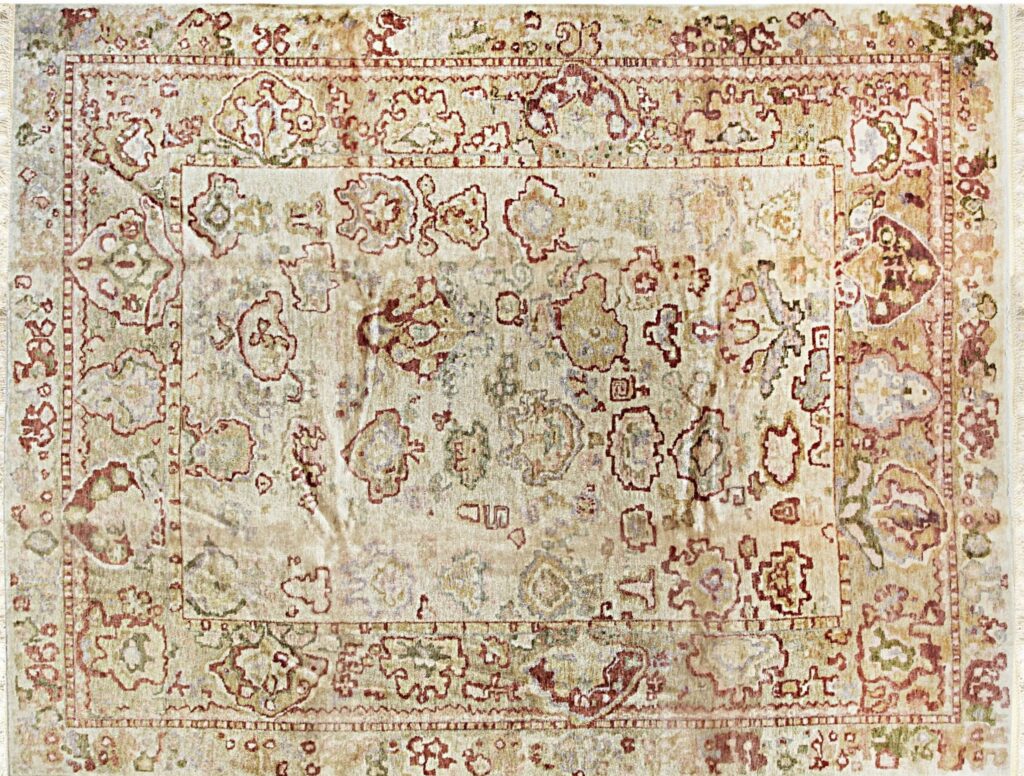
2. The New Persian Heriz & Serapi Inspired: Geometric Softening
- Visual Language: Takes the sharp, angular “oak leaf” and “cricket” motifs of Northwest Persia and executes them with erased motif systems. The central medallion is often “ghosted” or left as a skeletal outline.
- Design Logic: To provide “Geometric Stability” without the visual aggression of traditional high-contrast reds and navys. It seeks a distressed reinterpretation of tribal power.
- Market Language: “Rustic Modern,” “Architectural Tribal,” or “Deconstructed Persian.”
- Production Interpretation: Uses hand-carded, unevenly spun wool to create “Abrash” (natural color variation). This prevents the large geometric shapes from looking like flat, commercial blocks.
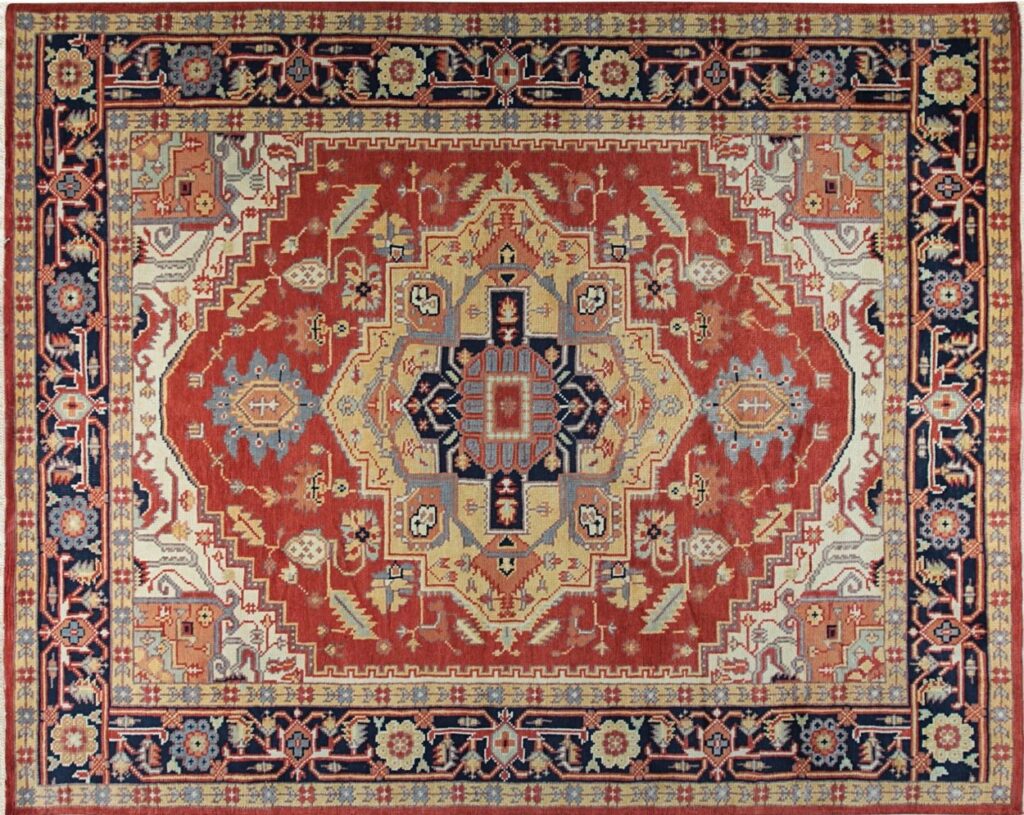
3. The New Moroccan & Nomadic: Refined Wabi-Sabi
- Visual Language: Utilizes the asymmetrical spacing and primitive line work of the Beni Ourain or Azilal, but introduces tonal Nordic palettes.
- Design Logic: To capture the “Human Element.” It is an antidote to the “machine-made” look, prioritizing the irregular brush-like formations of the weaver’s hand.
- Market Language: “Organic Modern,” “Luxe Nomadic,” or “Global Minimalist.”
- Production Interpretation: Transitions from the traditional “shag” to a refined mid-pile or even a flatweave hybrid, making it more durable and “cleaner” for high-end residential use.
4. The New Tibetan Modern: The Graphic Standard
- Visual Language: Bold, hard-edge geometry and layered pigment effects. It is defined by its density and the “matte-vs-sheen” relationship of wool and silk.
- Design Logic: “The Rug as Sculpture.” Tibetan weaving logic is inherently modern; it favors spatial block systems and measured tonal divisions.
- Market Language: “Executive Contemporary,” “Gallery Grade,” or “Architectural Modern.”
- Production Interpretation: Uses the Tibetan Loop Knot which creates a thicker, more resilient surface. It allows for relief through pile height, where silk patterns sit slightly higher than the wool field.
5. The New Deco & Chinese Art Deco: Neo-Glamour
- Visual Language: Features starburst motifs, stepped geometry, and floral asymmetry inspired by 1920s Nichols or Fette rugs.
- Design Logic: “Cinematic Elegance.” It uses the visual language of the furniture era to provide a sense of luxury and “Old Hollywood” glamour.
- Market Language: “Vintage Modern,” “Art Deco Revival,” or “Saturated Luxury.”
- Production Interpretation: High-lustre Silk-heavy compositions. The use of “Carving” around floral edges creates a 3D effect that mimics the heavy, plush pile of original 1920s Chinese production.
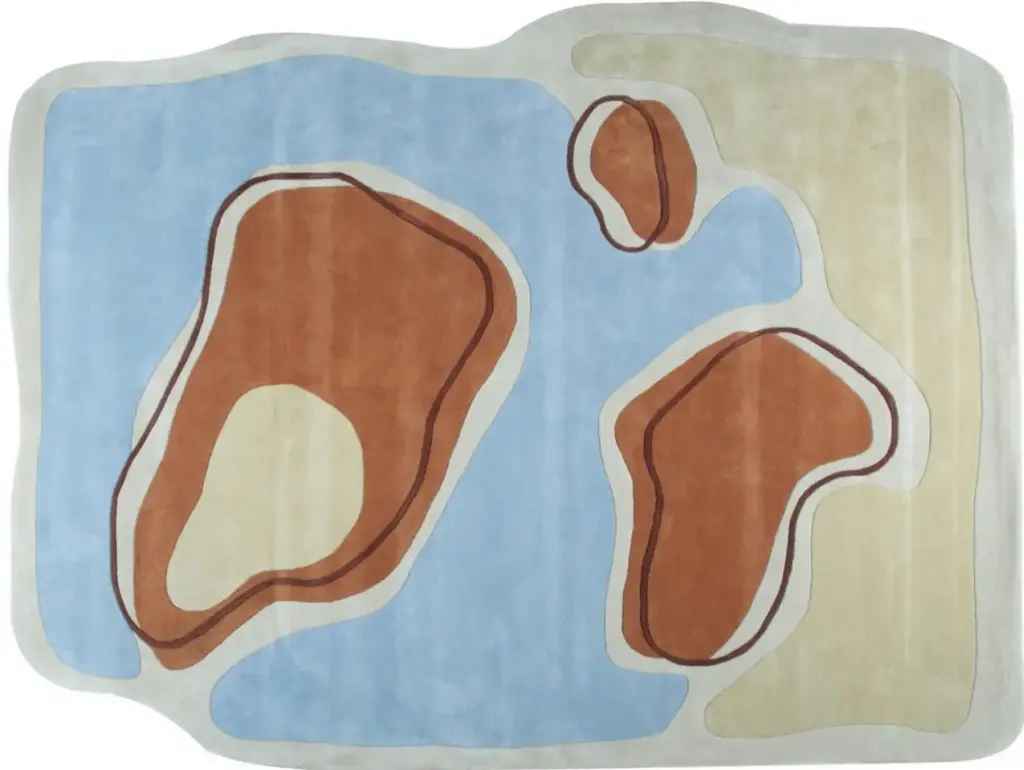
6. The New Aubusson & Savonnerie: Neoclassical Reduction
- Visual Language: A fragmented geometry of scrolls and acanthus leaves. It strips away the complex borders, leaving only a “shadow” of the central floral bouquet.
- Design Logic: “Formal Restraint.” It aims to provide the elegance of a French palace in a way that doesn’t clash with a sleek, modern sofa.
- Market Language: “Transitional European,” “Parisian Modern,” or “Soft Formal.”
- Production Interpretation: Often moves from a traditional flatweave to a low-relief pile version. It uses subtle gradient systems to make the classical flowers look “watercolor-inspired” rather than literal.
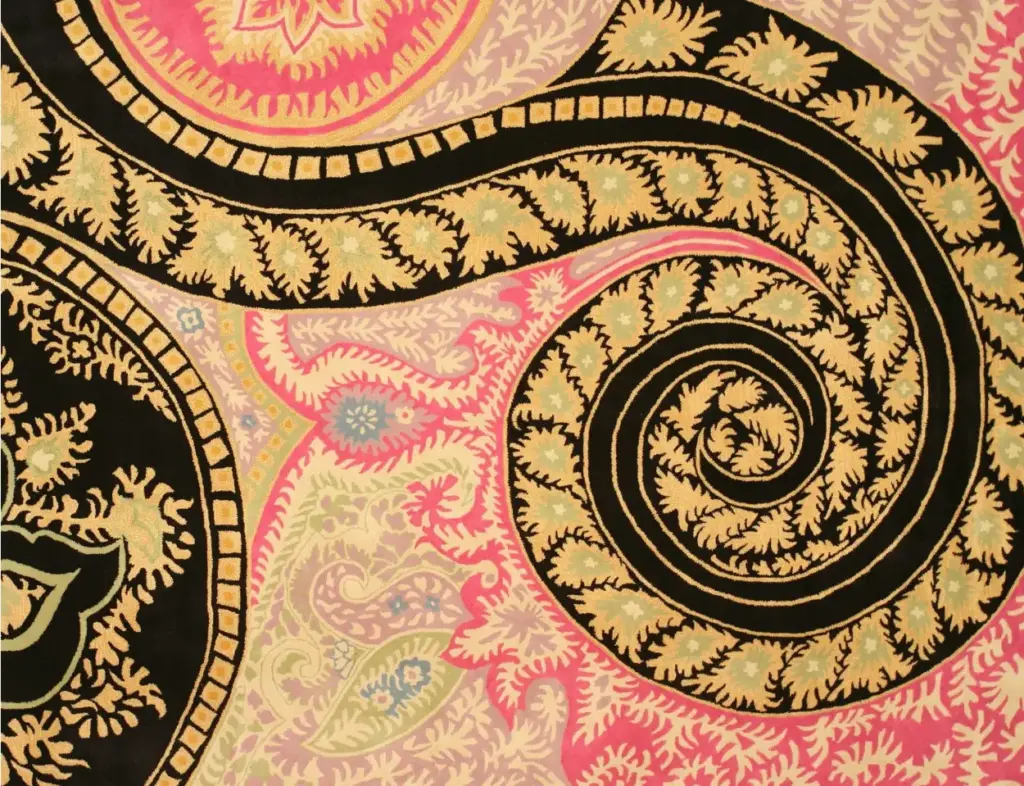
Taxonomy Framework: Traditional-to-Modern Conversion
| Original Category | Modern “Mutation” | Key Strategic Shift |
| Oushak | Faded / Enlarged | Scale Up / Color Down |
| Heriz | Erased / Sketched | Skeletal Geometry |
| Moroccan | Cleaned / Tonal | Material Upgrade / Density |
| Tibetan | Sculptural / Silk | 3D Texture / Relief |
| Deco | Saturated / Graphic | High-Contrast Glamour |
| Aubusson | Reduced / Washed | Deconstructed Ornament |
The Fields Of Modern Area Rugs
Beyond the established schools of mid-century or tribal design lies a sophisticated tier of modern production that relies on the “invisible” elements of weaving: light, depth, and physical dimension. These categories represent the vanguard of the current market, moving away from traditional “drawing” and toward a more sensory, architectural experience of the floor.
The Atmosphere of the Tonal Field
The Tonal Field Rug represents the ultimate evolution of the monochrome surface. Rather than a flat, static color, these pieces utilize subtle gradient systems and atmospheric field depth to create a sense of three-dimensional space. By employing tonal layering—the meticulous blending of multiple closely related shades within the dye vat—the weaver creates a surface that appears to glow or recede depending on the time of day. These rugs are the “Color Field” paintings of the floor, providing a quiet, immersive background that mimics the shifting light of a clouded sky or a morning mist.
Texture as the New Visual Language
In the world of Textural Rugs, the “design” is not drawn with a pen or a stencil; it is authored through the mechanical structure of the loom. This is a category where pile movement functions as a visual language. By mixing different spinning techniques—such as high-twist “crepe” wool alongside loose, lustrous silk—the rug develops an organic rhythm. The visual interest comes from how the fibers catch the light, creating a shimmering, restless surface that feels alive. It is a departure from “pattern” in favor of a raw, haptic experience that celebrates the hand-made nature of the textile.
Sculptural Relief and Dimensional Surfaces
Taking texture a step further, sculptural rugs introduce true three-dimensionality to the interior. These are relief-led designs where the pattern is physically built into the pile. Through the use of varying pile heights and carved dimensional surfaces, a single-color rug can display complex geometric or organic motifs through the interplay of shadow and highlight. A master finisher will hand-shear channels into the wool after it is off the loom, creating beveled edges and sharp architectural valleys that turn the rug into a low-relief sculpture for the feet.
Linear and Graphic Contemporary Statements
For spaces that require a more defined edge, Linear Contemporary and Graphic Contemporary Rugs provide a sharp, design-led visual statement. Linear compositions are line-driven modern works that mirror the structural sightlines of a building, using thin, precise “pinstripes” of silk to direct the eye across a room. Conversely, the Graphic Contemporary rug is bolder and more illustrative, utilizing high-contrast color blocks and sharp transitions to act as the “Protagonist” of the interior. These rugs are the bridge between architecture and art, providing a definitive anchor for modern furniture.
The Subversion of the Deconstructed Classical
Finally, the Deconstructed Classical Rug offers a sophisticated nod to the past while remaining firmly rooted in the present. This category utilizes an intentionally broken historical language, where the motifs of the 17th and 18th centuries are fragmented, “erased,” or reassembled in a non-linear fashion. It is a scholarly subversion of tradition; by stripping away the borders and shattering the central medallions, the weaver creates a rug that feels like an artifact discovered in a modern future. It provides the warmth of heritage without the rigidity of a traditional formal rug.
The Modern Master Taxonomy: Quick Reference
| Category | Primary Design Element | Interior Psychological Goal |
| Tonal Field | Gradient & Depth | Atmospheric Calm / Immersion |
| Textural | Fiber Movement | Organic / Wabi-Sabi Warmth |
| Sculptural | Pile Relief / Carving | Architectural Depth / 3D Impact |
| Monochromatic | Material Rarity | Understated Opulence / Quiet Luxury |
| Linear | Precise Sightlines | Directional Order / Structural Align |
| Deconstructed | Fragmented Heritage | Intellectual Warmth / Historical Echo |
Defining the Purpose: How a Rug Functions in Your Space
Beyond colors and patterns, high-end rugs are designed to solve specific architectural and design challenges. Professional designers don’t just look for a “pretty rug”—they look for a piece with the right “personality” to anchor a room. Understanding these categories helps you move past a simple purchase and toward a professional curation that matches your home’s unique light, scale, and rhythm.
The Curated Nuance of Boutique Abstract
The Boutique Abstract represents the “Small-Batch” movement of the modern rug world. Unlike mass-produced abstracts found in larger retail chains, these pieces are born in highly controlled, specialized ateliers—typically in Nepal or Jaipur—where the focus is on chromatic nuance and a hand-made “soul.” These rugs utilize hand-carded wool and small-batch dye vats, resulting in a washed field effect that mimics a custom watercolor painting. To the professional eye, the value of a Boutique Abstract is in its “Soft-Edge” transitions and the deliberate lack of digital rigidity.
Gallery Modern: The Intellectual Anchor
A Gallery Modern Rug is treated as a textile version of a large-scale contemporary canvas. This category prioritizes intellectual design and experimental materiality, often pushing the boundaries of what a rug “should” look like. These pieces typically feature asymmetrical compositions and fragmented visual planes, designed to be the primary “Anchor” of a minimalist space. When a dealer classifies a rug as “Gallery Modern,” they are signaling that the piece is intended for a client who views their home as a curated exhibition space rather than a traditional domestic environment.
Architectural Floor Art: The Engineered Foundation
In the world of high-end development, Architectural Floor Art serves as the “Fifth Wall.” These rugs are engineered with a structural discipline specifically intended to complement the hard-edged geometry of 21st-century architecture—glass, steel, and exposed concrete. Characterized by linear modernism and monumental scale, these rugs often use sculptural carving to create shadows that mimic a building’s own sightlines. They are used by architects to define functional zones in open-concept lofts, providing a sense of “Planar Order” that grounds the furniture within the larger volume of the room.
The Haptic Sophistication of Quiet Luxury Rugs
The Quiet Luxury Rug is the ultimate expression of understated wealth. This category does not “shout” for attention; it provides a tactile foundation of extreme, nearly invisible quality. These rugs are defined by monochromatic luxury, utilizing pure silk on wool foundations and subtle texture-based design. The pattern is often “Nearly Invisible,” revealing itself only through the shifting sheen of the silk as one walks across it. This is the “If You Know, You Know” (IYKYK) tier of the market, where the haptic experience and the rarity of the fiber take precedence over visual flash.
Statement Rugs: The Protagonist of the Interior
Conversely, a Statement Rug is a high-energy, graphic-led piece designed to be the undisputed focal point of a room. These rugs utilize Pop-inspired graphic saturation, bold visual rhythms, and high-contrast color blocks. They often feature oversized symbolic forms or aggressive dye systems that command the space. Designers use Statement Rugs as a “Hero Piece” to inject personality and life into rooms that lack architectural interest, allowing the floor to dictate the entire energy and palette of the project.
Collector Contemporary: The Antiques of Tomorrow
The collector contemporary rug represents the absolute pinnacle of current global weaving technology and artistic innovation. These are often one-of-a-kind (1/1) masterworks woven with the rarest fibers on earth—Pashmina, pure Mulberry silk, or high-altitude Ghazni wool. They feature “Museum-Level” complexity and are frequently Artist-Signed or produced by legendary weaving families. Dealers position these rugs as investment assets, targeting collectors who understand that the skill and material required to produce such a piece are both finite and vanishing.
Professional Market Matrix: The Strategic Selection
| Market Subcategory | Client Profile | Interior Goal | Primary Value Driver |
| Boutique Abstract | Boutique Designer | Color Harmony | Chromatic Nuance |
| Gallery Modern | Art Collector | Intellectual Curation | Experimental Design |
| Architectural | Architect / Developer | Structural Definition | Linear Precision |
| Quiet Luxury | UHNW / Minimalist | Tactile Comfort | Material Rarity |
| Statement | Bold Stylist | Visual Impact | Graphic Power |
| Collector | Asset Investor | Heritage Preservation | Scarcity / Artistry |
The Quality Standards for New Rugs
Purchasing a newly made rug in the luxury market is an exercise in evaluating structural permanence and material purity. Unlike the antique market, where value is derived from age and provenance, the modern market rewards technical excellence and design logic.
New Rug Buyer’s Guide to Contemporary Rug Quality
1. The Visual Language of Quality
A high-end modern rug speaks through its chromatic depth and graphic precision. When evaluating a piece, look for the following markers of superior visual execution:
- Dye Nuance (Abrash): In premium hand-knotted rugs, look for abrash—subtle, horizontal variations in color caused by the use of hand-spun wool and small-batch dyes. This provides a “living” quality to the field, whereas perfectly uniform color often indicates cheaper, chemically treated fibers.
- Design Clarity vs. Pixelation: A high-quality rug maintains sharp transitions between colors. If a pattern looks “blurry” or pixelated, it often suggests a lower knot count or a machine-assisted process.
- The “Bloom” of the Material: Natural silk and high-lanolin wool possess a distinct luster. This “bloom” should change as you walk around the rug; a high-end piece will have a “light side” and a “dark side” depending on the direction of the pile.
2. Design Logic: Purpose-Driven Aesthetics
Every luxury rug is engineered with a specific spatial intent. Understanding the logic behind the design helps you place the rug effectively within your architecture.
- The Atmospheric Logic: Used in Tonal Field and Abstract rugs. The goal here is to create depth and “air” in a room. These rugs are best for bedrooms or contemplative spaces where the floor should recede, providing a sense of calm without being a focal point.
- The Structural Logic: Found in Linear Modern and Bauhaus styles. These rugs use “Measured Proportions” to align with the sightlines of a building. They are designed to ground furniture and create “rooms within rooms” in large open-plan layouts.
- The Subversive Logic: Found in Deconstructed Classical rugs. This logic intentionally “breaks” traditional patterns (erasing medallions or borders) to provide the warmth of a classic rug while maintaining the clean “breathing room” required by modern minimalism.
3. Rug Dealer and Market Language: Decoding the Trade
When speaking with a luxury or just a new area rug dealer, the terminology used defines the rug’s positioning and expected performance.
- “Boutique Production”: Signals a small-batch, artisanal approach where every step is supervised. These rugs are the opposite of mass-market imports and hold their value better over time.
- “High-Lanolin Content”: A technical way of saying the wool is of superior grade. High-lanolin wool is naturally stain-resistant and becomes more lustrous as it is walked upon.
- “Hand-Carded and Hand-Spun”: This refers to how the wool was prepared. Hand-spun wool creates an irregular yarn that absorbs dye unevenly (creating the desirable abrash mentioned above) and provides a far more durable structural bond than machine-processed wool.
4. Rug Construction: The Physical Reality
The true value of a rug is found in its “soul”—the physical labor and the materials used to build it. When you evaluate a piece, you are looking at how well it was made and what it is actually made of.
- The Physics of the Knot:Think of a high-quality rug as a structural grid. In a Hand-Knotted rug, every single piece of yarn is tied individually around a vertical frame. This creates a foundation that is incredibly strong and integrated. Because there is no glue holding it together, the rug is flexible and “breathable.” This is the reason these rugs can be professionally deep-cleaned and repaired for decades, eventually becoming family heirlooms.
- The “Touch Test” (Handle): In the rug world, we use the term “handle” to describe how a rug feels when you pick it up or fold it. A well-made rug should feel supple and heavy, moving easily like a thick, luxurious fabric. If you fold the corner and it feels stiff or hard, it usually means the rug was Hand-Tufted. These rugs use a heavy layer of glue or latex on the back to hold the fibers in place. Over time, that glue inevitably dries out and cracks, which is why stiff rugs eventually lose their shape and cannot be easily repaired.
- Material Integrity: Real Silk vs. The “Silk Trap”: The best modern rugs use Pure Mulberry Silk or ultra-soft Pashmina wool. These are natural “protein” fibers that are incredibly tough and resilient. You should be careful with rugs labeled as “Viscose” or “Bamboo Silk” in high-traffic areas. While they look very shiny and pretty in the showroom, they are actually made from processed plant fibers (cellulose). They do not handle water or heavy walking very well and can wear out or lose their texture much faster than the real thing.
5. Summary Table: The Professional Selection Criteria
| Feature | Premium Tier (Investment) | Commercial Tier (Decorative) |
| Material | Hand-spun Highland Wool / Pure Silk | Machine-spun Wool / Viscose / Polyester |
| Construction | Hand-Knotted (No Glue) | Hand-Tufted (Latex Glue) or Machine-Made |
| Dye System | Small-batch / Natural Vegetable Dyes | Large-scale Synthetic Acid Dyes |
| Fringe | Integrated Foundation (Warp) | Sewn-on or Glued-on Trim |
| Durability | 50+ Years (Heirloom) | 5–15 Years (Disposable) |
The Rug Shopping Guide: Four Levels of Quality
When you shop for a new rug, it helps to know how it was made and how long it will last. Think of this as the “lifespan” of your floor. Here is a simple breakdown of the four main levels you will find in stores today.
Level 1: The “Style Now” Rug
These are the new area rugs you often see in big-box stores. They are made very quickly by large machines. Most use man-made materials like plastic-based yarns (polyester or “poly”). These are great if you want a trendy look for a low price, like in a kid’s playroom or a first apartment. They look great at first, but the fibers usually start to flatten or look worn out in about 5 to 10 years. They are meant to be replaced when your style changes.
Level 2: The “Practical” Rug
This is the standard for most nice home decor catalogs. These rugs are often “hand-loomed,” which is a mix of human work and simple tools. They usually use real wool mixed with a shiny material called “Bamboo Silk” or “Viscose.” These rugs feel much softer than the budget ones and look more expensive. They are perfect for a main living area where you want a cozy feel. You can expect these to last and look good for about 10 to 20 years.
Level 3: The “Forever” Rug
This is where you move into true craftsmanship. These contemporary rugs are hand-knotted, which means a person tied every single piece of yarn by hand. They use very high-quality natural wool and real silk. Because they are so strong and made from natural materials, they actually get better as they age. These aren’t just decor; they are part of your home’s architecture. These rugs are built to last a lifetime—usually 50 to 80 years or more.
Level 4: The “Masterpiece” Rug
These are the best of the best. They are one-of-a-kind works of art made by master weavers. They use the rarest materials in the world, like incredibly soft Pashmina wool or the finest Mulberry silk. These rugs are often bought as investments, much like a fine painting. They are made to be passed down through your family for generations and can easily last over 100 years.
Quick Value Checklist
If you aren’t sure if a rug is worth the price, use this simple comparison:
| Feature | High-End Investment | Budget Choice |
| How it’s Made | Tied by Hand (Super Strong) | Glued together or Machine-Made |
| Material | Pure Wool or Silk | Plastic (Polyester) or Shiny Viscose |
| Detail | Very sharp and clear patterns | Can look blurry or “blocky” |
| Cleaning | Can be washed many times | Hard to clean; may fall apart |
| Lifespan | 50 to 100+ Years | 3 to 10 Years |
New Rug Pricing Factors
In the professional rug trade, the price of a newly made area rug is rarely arbitrary; it is the result of a complex “Value Equation” that balances raw materials, intensive labor, and technical density. When a designer or dealer looks at a price tag, they are essentially reading the “Production Biography” of the rug.
Top five factors that impact the cost of contemporary new rugs:
1. Construction Methodology: The Labor-Time Variable
The single most significant driver of cost is how the rug was physically built. This is a direct reflection of “Artisan Hours.”
- Hand-Knotted (The Maximum): This is the only construction method where every individual tuft of yarn is manually tied to the foundation. A single 9×12 rug can contain over 1.5 million individual knots and take a team of three weavers up to nine months to complete. You are paying for a “Year of Human Life.”
- Hand-Tufted (The Moderate): These rugs are made using a “Tufting Gun” to punch yarn into a canvas. Because a machine assists the speed, the labor is reduced by roughly 80% to 90% compared to knotting. While they are plush, they rely on latex glue, which has a finite lifespan of about 10–15 years.
- Machine-Made (The Minimum): Produced on power looms at incredible speeds. These are “Commodity Textiles” where the price is driven by volume and shipping rather than the skill of a weaver.
2. Fiber Purity & Rarity: The Material Index
The “Ingredients” of the rug determine its longevity, stain resistance, and light-reflecting properties.
- High-Altitude Himalayan/New Zealand Wool: Not all wool is equal. High-altitude sheep produce wool with a massive concentration of natural lanolin. This makes the fiber incredibly soft and naturally stain-resistant. This “Greasy” wool is expensive to source but creates a rug that improves with age.
- Pure Mulberry Silk vs. “Bamboo” Silk: Real silk is a protein fiber with immense tensile strength and a permanent shimmer. Bamboo Silk (Viscose) is a chemically processed plant fiber that looks similar but is “Single-Use” in luxury terms—it cannot be wet-cleaned without losing its texture. The price gap between the two is enormous because real silk is an enduring asset.
- Synthetic Polymers: Polyester and Polypropylene are petroleum-based. They are inexpensive to extrude and dye, but they are essentially “Plastic.” They lack the “Bloom” of natural fibers and tend to flatten permanently under foot traffic.
3. Knot Density: The Resolution of the Floor
Think of knot density (measured in Knots Per Square Inch or KPSI) like the “Megapixels” of a digital image.
- High-Resolution Weaving: A rug with 150+ KPSI allows for incredibly fine, curvilinear details—the “Drafting-Inspired Geometry” or “Detailed Floral” patterns. Higher density requires thinner yarn and more experienced weavers who can handle the tension.
- Low-Resolution Weaving: Tribal and “New Oushak” rugs often have lower knot counts (30–60 KPSI). This isn’t necessarily “bad” quality; it is a design choice intended to create a chunky, casual, or “Wabi-Sabi” feel. However, because it takes less time to weave, it should theoretically cost less than a high-density silk piece.
4. Finishing & Washing: The Artistic Alchemy
A rug is not finished when it comes off the loom; the “After-Work” can account for 20% of the final cost.
- Hand-Carving: After weaving, a master finisher may spend weeks with specialized shears “Sculpting” the pile. This Carved Restraint adds three-dimensional depth that a machine cannot replicate.
- The Specialty Wash: New rugs undergo an intensive washing process. Luxury rugs are washed with organic minerals and sun-dried to “Open the Fiber” and stabilize the dyes. This creates the “Atmospheric Field Depth” and soft handle found in Boutique Abstract pieces. Cheap rugs are often “Chemical Washed” to add an artificial shine that disappears after the first professional cleaning.
5. Origin & Production Ethics: The Human Cost
The geography of production affects the price through both logistics and the “Ethical Premium.”
- Certified Ethical Production: Organizations like GoodWeave ensure that no child labor was used and that weavers were paid a fair living wage. Brands that prioritize Production Integrity carry a higher price tag because they are investing in the social infrastructure of the weaving community.
- Geopolitical Rarity: Rugs from regions with limited export capacity or high artisanal scarcity (like certain specialized workshops in Nepal or small-batch ateliers in India) command a premium due to the “Supply vs. Quality” imbalance.
Price-to-Value Reference Table
| Feature | High-Investment Rug | Budget-Friendly Rug |
| Construction | Hand-Knotted (Heirloom) | Hand-Tufted / Machine-Made |
| Material | Lanolin-Rich Wool / Real Silk | Viscose / Polypropylene / Jute |
| Knot Density | 100+ KPSI (High Detail) | <40 KPSI (Coarse/Simple) |
| Finishing | Hand-Carved / Hand-Sheared | Machine-Sheared / Glued Back |
| Longevity | 50–100+ Years | 3–10 Years |
To finalize your document with a professional edge, you should integrate two critical sections: a Shopping Tier Guide to categorize market levels and a Price-to-Value Reference to justify investment costs.
Here is exactly what to add and where to place it for maximum clarity.
Price-to-value Reference Guide
This table serves as a quick-audit tool to verify if a rug’s price aligns with its technical specifications:
| Feature | High-Investment Rug (Tier 3-4) | Budget-Friendly Rug (Tier 1-2) |
| Construction | Hand-Knotted (Integrated Foundation) | Hand-Tufted (Glued) or Machine-Made |
| Fiber Profile | Lanolin-Rich Wool / Pure Silk | Viscose / Polypropylene / Jute |
| Resolution | 100+ KPSI (Fine Graphic Detail) | <40 KPSI (Coarse or “Pixelated”) |
| Finishing | Hand-Carved / Hand-Sheared | Machine-Sheared / Synthetic Wash |
| Longevity | 50–100+ Years | 3–15 Years |
Material Performance & Aging Index
This index tracks how different rug materials change over time. While all luxury rugs look beautiful when new, their long-term value is determined by how they handle “birthdays.”
How fatural fibers tend to get better with age, while synthetic fibers have a limited lifespan:
| Fiber Type | Luster & Shine | Durability | Aging Profile (The “Birthday” Effect) |
| Highland Wool | Low (Matte) | Excellent | Develops a rich patina; fibers actually get softer and more resilient over time. |
| Pure Silk | Extreme Shine | High | The shine deepens into a soft glow; highly resistant to environmental yellowing. |
| Bamboo Silk | High Shine | Low | High oxidation risk; likely to yellow or become brittle after 10+ years of use. |
| Hemp / Linen | Low (Matte) | Very High | Fibers “break in” over time, fading into a soft, vintage matte look. |
Strategic Care Summary
To ensure these materials reach their full lifespan, keep these two professional rules in mind:
- The Sunlight Rule: Because Bamboo Silk (Viscose) can yellow over time, it should not be placed in rooms with constant, direct afternoon sun. Pure Silk or High-Lanolin Wool are much more stable choices for bright, sun-drenched spaces.
- The Vacuum Rule: If your rug features hand-carved details or a “high-low” texture, always use suction-only vacuuming. A rotating brush (beater bar) will pull at the delicate edges and make the architectural design look fuzzy over time.
Added: FAQ
Added: