Tribal Rugs
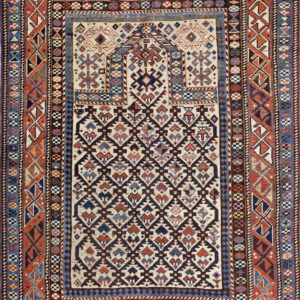
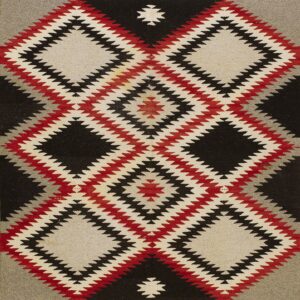
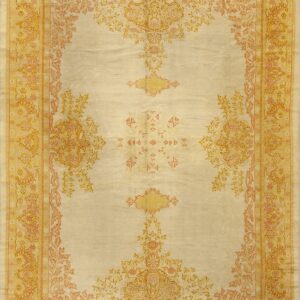
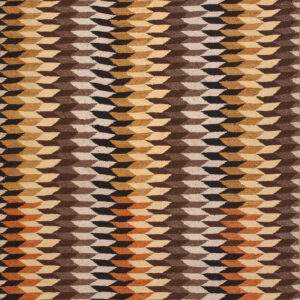
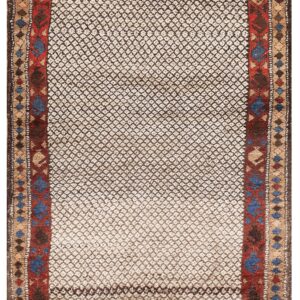
Antique tribal rugs are the rugs that nomadic, semi-nomadic and village weavers made for their own tents and houses rather than for a city workshop, and the difference shows in the drawing. Tribal rug patterns are geometric far more often than floral, and the design usually runs across the whole field in repeating rows rather than building up to a single central medallion. The pieces gathered here come from every region where that way of weaving held: the villages of Northwest Persia and Kurdistan, the Caucasus, the Oushak district of western Turkey, the Baluch country on the Persian and Afghan border, and the Navajo weavers of the American Southwest, whose flat woven blankets and rugs are the largest single type in this collection.
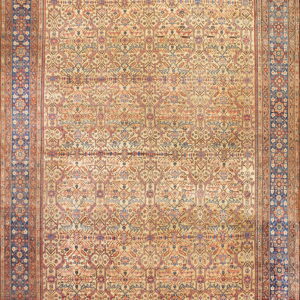
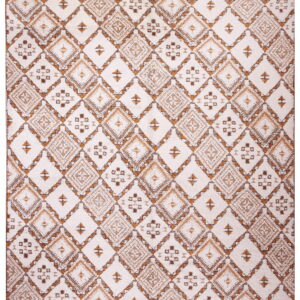
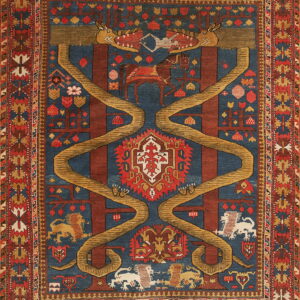
The vocabulary is small and repeated with variation: the boteh or paisley, the herati fish and leaf, trellis and lattice grids, eight pointed and four pointed stars, the mina khani flower lattice, cypress and weeping willow trees, the prayer rug format, and the protective symbols a weaver worked in for the household. Designs were carried in memory rather than drawn on a cartoon, so a motif can change scale from one row to the next and a border may be resolved differently at the two ends, and abrash, the banding where a new batch of dyed wool entered the weaving, is part of the character rather than a fault.
Nearly all are wool. Most are hand knotted pile, and about one in five is flat woven, the kilims, soumaks and Navajo blankets among them. Sizes run small and narrow: scatter rugs, hallway runners and long gallery pieces outnumber room size carpets two to one, and fewer than a quarter are wider than eight feet. Most are 19th century, with the eighteen eighties and nineties the most common dates and nearly three in four dated 1900 or earlier. Blue grounds lead, with ivory, red, coral and brown earth tones behind them and gray on the Navajo pieces; yellow and purple grounds are rare.
Antique Tribal rugs are deeply rooted in tradition, woven by nomadic and semi-nomadic artisans whose designs reflect cultural history and personal journeys. These unique pieces often feature geometric designs motifs and powerful symbols, much like those found in Moroccan Berber tattoos, offering a window into the ancient narratives of the weavers, especially those crafting rugs of Central Asia.
Prefer to see a rug in person?
-
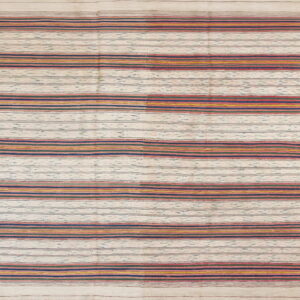
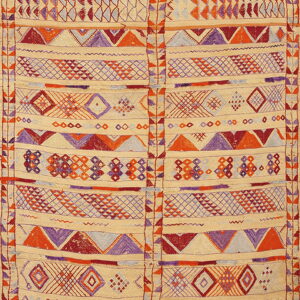
Antique Tribal Striped Turkish Kilim Hallway Runner Rug
$18,000.00 Antique RugsSKU: 5551Rug sizes: 4 ft 2 in x 11 ft 9 in (1.27 m x 3.58 m) -
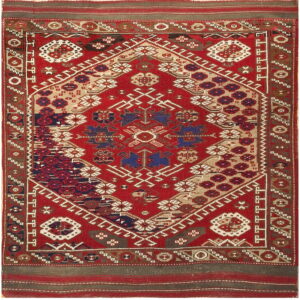
Antique Red Turkish Bergama Knotted Square Rug
$3,000.00 Antique RugsSKU: 2871Rug sizes: 3 ft 3 in x 3 ft 7 in (0.99 m x 1.09 m) -
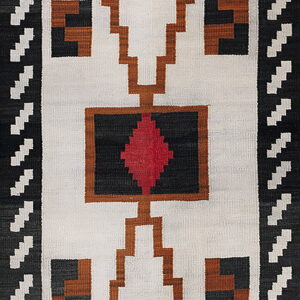
Antique Native American Navajo Geometric Design Ivory Color Rug
$6,500.00 Antique RugsSKU: 25881Rug sizes: 3 ft 6 in x 7 ft 6 in (1.07 m x 2.29 m) -
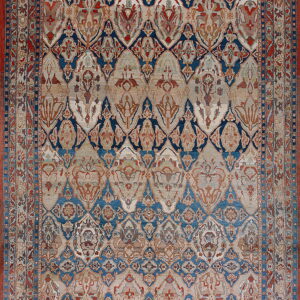
Beautiful Shield Design Vintage Persian Mahal / Sultanabad Room Size Rug
$8,500.00 Vintage RugsSKU: 25665Rug sizes: 9 ft 8 in x 14 ft 4 in (2.95 m x 4.37 m) -
Geometric Flatwoven Antique Native American Chiefs Blanket Rug
$5,200.00 Antique RugsSKU: 25322Rug sizes: 3 ft 10 in x 4 ft 8 in (1.17 m x 1.42 m) -
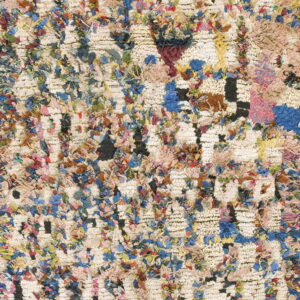
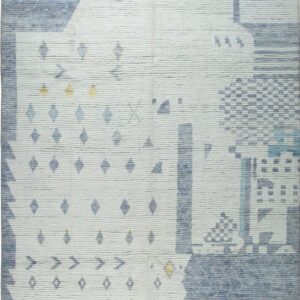
Vintage Berber Moroccan Boucherouitte Small Scatter Size Wool & Cotton Rug
$1,200.00 Vintage RugsSKU: 22440Rug sizes: 4 ft x 6 ft 3 in (1.22 m x 1.91 m) -
Tribal Geometric Antique Ivory Turkmen Yamoud Small Scatter Size Wool Rug
$2,600.00 Antique RugsSKU: 22381Rug sizes: 2 ft 4 in x 4 ft 2 in (0.71 m x 1.27 m) -
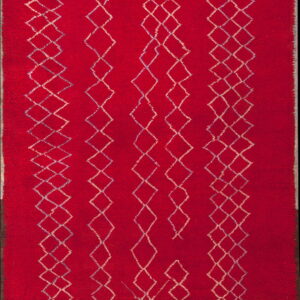
Vintage Red Diamond Pattern Rabat Moroccan Berber Rug
$8,800.00 Vintage RugsSKU: 21846Rug sizes: 5 ft 10 in x 13 ft 3 in (1.78 m x 4.04 m) -
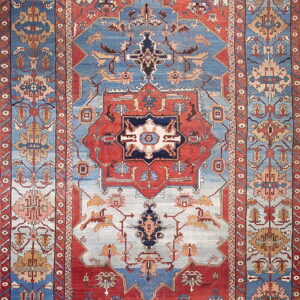
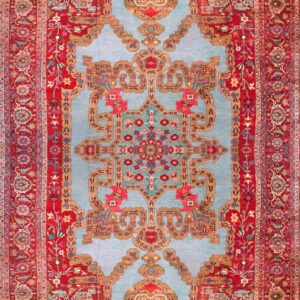
Beautiful Sky Blue Antique Persian Room Size Geometric Serapi Heriz Rug
$58,500.00 Antique RugsSKU: 21791Rug sizes: 10 ft 2 in x 15 ft 2 in (3.10 m x 4.62 m) -
Vintage Mid Century Moroccan Tribal Geometric Design Rug
$7,200.00 Vintage RugsSKU: 21606Rug sizes: 4 ft 9 in x 9 ft 8 in (1.45 m x 2.95 m) -
Decorative Light Yellow Color Antique Allover Design Persian Sultanabad Oversized Rug
$52,000.00 Antique RugsSKU: 21534Rug sizes: 13 ft 3 in x 20 ft 8 in (4.04 m x 6.30 m) -
Vintage Oversized Berber Moroccan Tribal Design Rug
$22,800.00 Vintage RugsSKU: 21425Rug sizes: 12 ft 2 in x 26 ft (3.71 m x 7.92 m) -
Vintage Rabat Tribal Diamon Pattern Berber Moroccan Ivory Color Shaggy Rug
$9,100.00 Vintage RugsSKU: 21370Rug sizes: 7 ft x 10 ft 3 in (2.13 m x 3.12 m) -
Antique Caucasian Geometric Medallion Square Wool Hand Knotted Pile Blue 1890s Rug
$13,000.00 Antique RugsSKU: 21277Rug sizes: 4 ft 4 in x 5 ft 2 in (1.32 m x 1.57 m) -
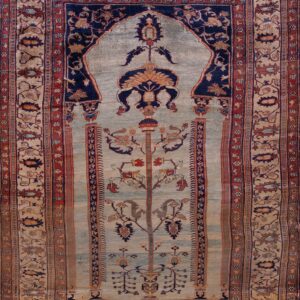
Antique Small Scatter Size Sky Blue Fine Persian Silk Heriz Muslim Prayer Rug
$32,500.00 Antique RugsSKU: 20324Rug sizes: 4 ft x 6 ft (1.22 m x 1.83 m) -
Jewel Tone Color Antique Oversized Persian Medallion Heriz Serapi Rug
$84,500.00 Antique RugsSKU: 19775Rug sizes: 14 ft x 20 ft (4.27 m x 6.10 m) -
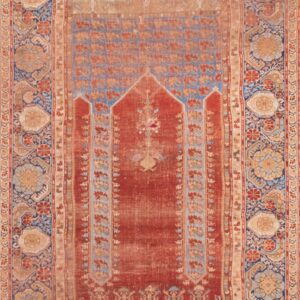
Rustic Tribal Antique Mid 18th Century Turkish Islamic Ghiordes Prayer Design Coral Rug
$16,300.00 Antique RugsSKU: 19687Rug sizes: 4 ft x 6 ft (1.22 m x 1.83 m) -
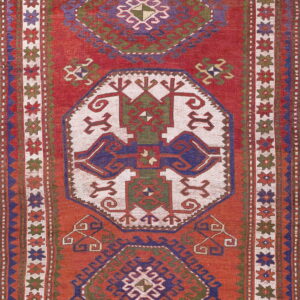
Classic Tribal Geometric Antique Caucasian Red Lori Pambak Rug
$3,000.00 Antique RugsSKU: 18521Rug sizes: 4 ft 9 in x 6 ft 10 in (1.45 m x 2.08 m) -
Late 19th Century Ivory Antique Caucasian Dagestan Prayer Design Tribal Rug
$3,300.00 Antique RugsSKU: 18046Rug sizes: 4 ft x 5 ft (1.22 m x 1.52 m) -
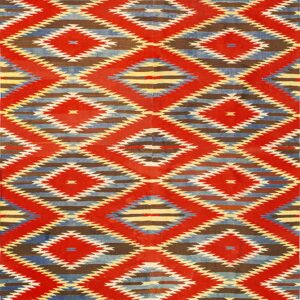
Bold Graphic Tribal Design Antique Native American Flat Weave Navajo Rug
$3,300.00 Antique RugsSKU: 24936Rug sizes: 3 ft 9 in x 6 ft (1.14 m x 1.83 m) -
Soft Decorative Yellow Antique Room Size Turkish Oushak Rug
$16,300.00 Antique RugsSKU: 24806Rug sizes: 8 ft 3 in x 11 ft 6 in (2.51 m x 3.51 m) -
Dazzling Geometric Design Vintage Native American Navajo Earth Tone Rug
$7,200.00 Antique RugsSKU: 23767Rug sizes: 4 ft 10 in x 7 ft 3 in (1.47 m x 2.21 m) -
Antique Persian Allover Tribal Design Hand Knotted Wool Pile Shahsavan Rug
$4,900.00 Antique RugsSKU: 24736Rug sizes: 3 ft 4 in x 5 ft (1.02 m x 1.52 m) -
Traditional Marrakech Ivory Hand-Knotted Wool Berber Carpet
$1,141.00 New RugsRug sizes: 8 ft x 11 ft (2.44 m x 3.35 m) -
Modern Tribal Marrakech Blue and Ivory Hand-Knotted Wool Berber Carpet
$706.00 New RugsRug sizes: 6 ft x 9 ft (1.83 m x 2.74 m) -
Nina Oriental Multicolor Hand Knotted Wool Rug
Price range: $965.00 through $3,375.00 New RugsRug sizes: 6 ft x 9 ft (1.83 m x 2.74 m), 8 ft x 10 ft (2.44 m x 3.05 m), 9 ft x 12 ft (2.74 m x 3.66 m), 10 ft x 14 ft (3.05 m x 4.27 m) -
Modern Marrakech Ivory Hand-Knotted Wool Rug
Price range: $706.00 through $2,345.00 New RugsRug sizes: 6 ft x 9 ft (1.83 m x 2.74 m), 12 ft x 15 ft (3.66 m x 4.57 m) -
Celia Modern Green Hand Knotted Silk Rug
Price range: $1,807.00 through $3,151.00 New RugsRug sizes: 8 ft x 10 ft (2.44 m x 3.05 m), 9 ft x 12 ft (2.74 m x 3.66 m), 10 ft x 14 ft (3.05 m x 4.27 m) -
Antique Rustic Red Color Allover Geometric Native American Navajo Flat Weave Rug
$4,600.00 Antique RugsSKU: 23972Rug sizes: 3 ft 6 in x 4 ft 4 in (1.07 m x 1.32 m) -
Yara Willow Light Blue Tribal Geometric Design New Hand Knotted Contemporary Rug
$1,311.00 New RugsSKU: IE447LTB9X12Rug sizes: 9 ft x 12 ft (2.74 m x 3.66 m) -
Handloomed Red Gabbeh Tribal Wool Area Rug
Price range: $84.95 through $844.95 New RugsRug sizes: 2 ft x 4 ft (0.61 m x 1.22 m), 4 ft x 6 ft (1.22 m x 1.83 m), 5 ft x 8 ft (1.52 m x 2.44 m), 8 ft x 10 ft (2.44 m x 3.05 m), 2 ft x 8 ft (0.61 m x 2.44 m) -
Handloomed Gray Gabbeh Tribal Wool Area Rug
Price range: $84.95 through $844.95 New RugsRug sizes: 2 ft x 4 ft (0.61 m x 1.22 m), 4 ft x 6 ft (1.22 m x 1.83 m), 5 ft x 8 ft (1.52 m x 2.44 m), 8 ft x 10 ft (2.44 m x 3.05 m), 2 ft x 8 ft (0.61 m x 2.44 m) -
Handloomed Blue Gabbeh Tribal Wool Area Rug
Price range: $84.95 through $844.95 New RugsRug sizes: 2 ft x 4 ft (0.61 m x 1.22 m), 4 ft x 6 ft (1.22 m x 1.83 m), 5 ft x 8 ft (1.52 m x 2.44 m), 8 ft x 10 ft (2.44 m x 3.05 m), 2 ft x 8 ft (0.61 m x 2.44 m) -
Antique Native American Navajo Rug 4’4″×7’2″ Bright Red Ground, Ivory Border, Transitional Period, Circa 1890
$7,200.00 Antique RugsSKU: 20941Rug sizes: 4 ft 4 in x 7 ft 2 in (1.32 m x 2.18 m) -
Antique American Navajo Rug Grey & Chocolate Brown, 1930s
$5,200.00 Antique RugsSKU: 24449Rug sizes: 3 ft 6 in x 5 ft 9 in (1.07 m x 1.75 m) -
Antique W. Persian Kurdish Runner 3’10″×13’2″ Brown Field, Orange Border, Tribal, Circa 1930
$6,200.00 Antique RugsSKU: 19273Rug sizes: 3 ft 10 in x 13 ft 2 in (1.17 m x 4.01 m)