
Persia / Iran Rugs
Key takeaways: antique Persian rugs
- What they are: hand-knotted carpets woven in Persia, modern Iran, most of them in the great revival of roughly 1870 to 1930, from finely knotted city workshops such as Tabriz and Kashan to bold village weaving such as Heriz and Serapi.
- How to recognize one: the design shows clearly on the back, the fringe is the rug's own warp threads, and natural dyes show abrash, the soft bands of tonal change within a single color. Our five-minute identification checklist walks through each check.
- City and village: city rugs are finely knotted with curvilinear designs drawn from a cartoon; village and tribal rugs are coarser, geometric and woven from memory. Collectors prize both.
- The room-size workhorses: Sultanabad and Heriz carpets were woven in the large formats Western rooms need, which is why decorators reach for them first.
- Our collection: more than 1,200 Persian rugs in stock at our New York showroom, most of them 19th century or early 20th century, in sizes from small mats to oversized carpets.
- Buying with confidence: every rug is inspected before it is listed, each listing states origin, approximate age, materials and measured size, shipping is free within the continental United States, and there is a 4-day in-home trial. See buying with confidence.
- The earliest piece: a mid-17th century Safavid Isfahan carpet leads our collection highlights. Read the guide to Safavid Isfahan carpets.
For centuries, Persian rugs have been celebrated as some of the most exquisite handmade textiles in the world, rich in history, artistry, and cultural legacy. Originating in what is now Iran (historically Persia) over 2,500 years ago, these rugs were woven not merely as floor coverings, but as expressions of creativity, storytelling, and regional identity. Each piece reflects a deep tradition of hand-knotting, distinctive regional motifs, and carefully selected natural dyes that yield vibrant color and remarkable longevity.
From the finely detailed urban masterpieces of cities like Isfahan and Qom, to the bold, geometric works of nomadic tribes, Persian rugs are treasured not just for their beauty and craftsmanship, but for the stories they carry, connecting generations and cultures across time
Iranian Persian rugs represent the zenith of weaving mastery, celebrated globally for their exquisite natural dyes, intricate patterns, and remarkable durability. This category encompasses diverse regional styles, ranging from the sophisticated city patterns found in Isfahan designs to the iconic geometric clarity of Heriz weaving traditions, while you can learn more about unique tribal artistry by reading about Bakshaish rugs.
Antique Persian rugs at a glance
The table below summarizes the main facts about antique Persian rugs, drawn from our guides and from the live collection on this page. Counts and prices were taken from our in-stock Persian rugs on September 27, 2026 and change as rugs sell.
| Feature | Antique Persian rugs |
|---|---|
| Where they were woven | Persia, modern Iran. Northwest: Tabriz and the Heriz district. West: Bidjar in Persian Kurdistan. West central: the Sultanabad (Arak) district, the Farahan plain, Sarouk and Malayer. Central: Kashan and Isfahan. Southeast: Kerman. Northeast: Khorassan. Plus Kurdish, Baluch, Bakhtiari and Afshar tribal and village weaving. |
| Main types in our collection | Northwest Persian, more than 150; Tabriz, more than 110; Kurdish, more than 100; Sultanabad, more than 80; Malayer, more than 80; Kerman, more than 80; Bidjar, about 70; Heriz Serapi, about 70; Sarouk, more than 40; Bakshaish, more than 40; Kashan, more than 30 |
| Periods | Most antique Persian rugs on the market date from about 1870 to 1930. In our collection, more than 600 are 19th century, more than 300 date from 1900 to 1925, and more than 200 are vintage pieces from the 1930s to the 1960s. A small group is 18th century or earlier. |
| Materials | Hand-spun wool pile for the great majority, usually on a cotton foundation in city and town rugs. A smaller group of silk and wool and silk pieces, about 35 in stock. |
| Construction and knotting | Hand-knotted pile, more than 1,200 in stock, plus about 40 flatweaves such as kilims and soumaks. Most Persian city rugs use the asymmetrical Persian (Senneh) knot; Tabriz is the notable exception, using the symmetrical Turkish knot. Fine city weaving often runs well over 120 knots per square inch, village weaving 30 to 100. |
| Typical palettes | Madder reds, indigo blues and ivory are the backbone. Heriz: brick red with ivory and blue. Kerman: soft pastels. Sultanabad: terracotta, coral, sage and soft sky blue. Blue and ivory are the most common colors in our collection, followed by multicolor jewel tones, coral and red. |
| Signature designs | Central medallions, the all-over Herati (mahi or fish) pattern, the boteh (paisley), Shah Abbas palmettes, trellis and garden layouts, vase designs, and bold geometric medallions in village weaving. |
| Formats in stock | Room size, more than 450; small scatter size, more than 250; hallway runners, more than 180; large oversized carpets, more than 180; wide gallery carpets, more than 120 |
| Most common sizes in stock | 4 x 6, more than 100; 9 x 12, more than 80; 10 x 14, more than 80; 12 x 18, more than 50; 8 x 10, more than 50; 5 x 7, more than 50; 6 x 9, more than 40; 12 x 15, more than 30 |
| Price range (antique, in stock) | For our Persian rugs dated 1925 or earlier: from $450 to more than $500,000. The median is about $13,000, and half are priced between $6,800 and $27,000. Prices are in US dollars. |
| In stock | More than 1,200 Persian rugs, of which more than 950 are dated 1925 or earlier |
Prefer to see a rug in person?
-
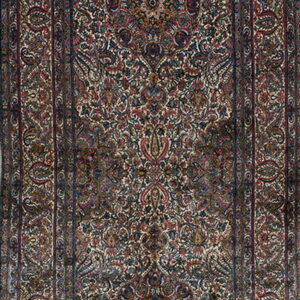
Antique Floral Persian Kerman Hallway Runner Rug
$15,600.00 Antique RugsSKU: 6811Rug sizes: 6 ft 10 in x 17 ft 4 in (2.08 m x 5.28 m) -
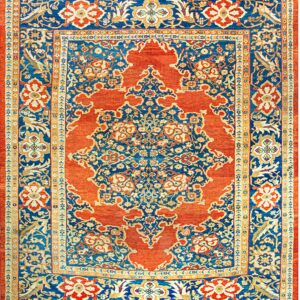
Antique Square Persian Sultanabad Rug – Late 19th Century Rustic Red and Blue
$22,500.00 Antique RugsSKU: 26153Rug sizes: 11 ft 7 in x 12 ft 6 in (3.53 m x 3.81 m) -
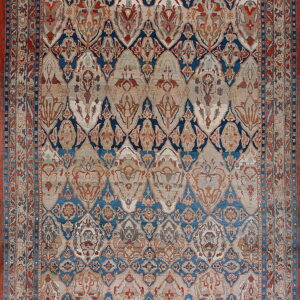
Beautiful Shield Design Vintage Persian Mahal / Sultanabad Room Size Rug
$9,800.00 Vintage RugsSKU: 25665Rug sizes: 9 ft 8 in x 14 ft 4 in (2.95 m x 4.37 m) -
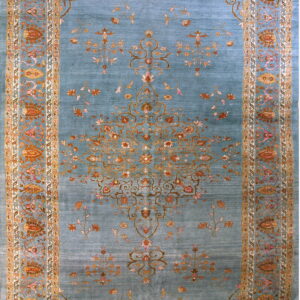
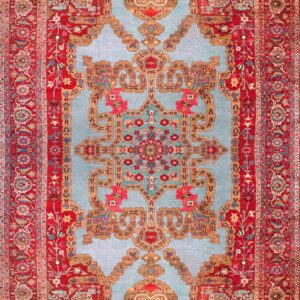
Rare Light Sky Blue Antique Finely Woven Intricate Large Persian Tabriz Rug
$68,000.00 Antique RugsSKU: 22461Rug sizes: 10 ft 2 in x 17 ft 9 in (3.10 m x 5.41 m) -
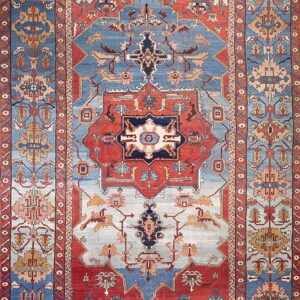
Beautiful Sky Blue Antique Persian Room Size Geometric Serapi Heriz Rug
$68,000.00 Antique RugsSKU: 21791Rug sizes: 10 ft 2 in x 15 ft 2 in (3.10 m x 4.62 m) -
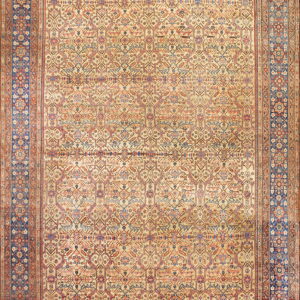
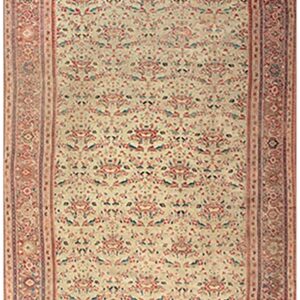
Decorative Light Yellow Color Antique Allover Design Persian Sultanabad Oversized Rug
$60,000.00 Antique RugsSKU: 21534Rug sizes: 13 ft 3 in x 20 ft 8 in (4.04 m x 6.30 m) -
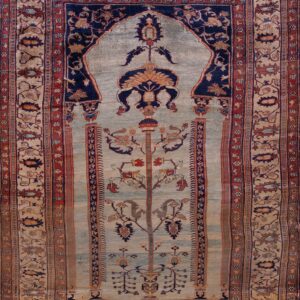
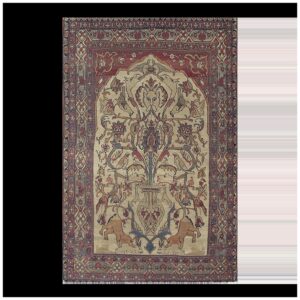
Antique Small Scatter Size Sky Blue Fine Persian Silk Heriz Muslim Prayer Rug
$38,000.00 Antique RugsSKU: 20324Rug sizes: 4 ft x 6 ft (1.22 m x 1.83 m) -
Jewel Tone Color Antique Oversized Persian Medallion Heriz Serapi Rug
$98,000.00 Antique RugsSKU: 19775Rug sizes: 14 ft x 20 ft (4.27 m x 6.10 m) -
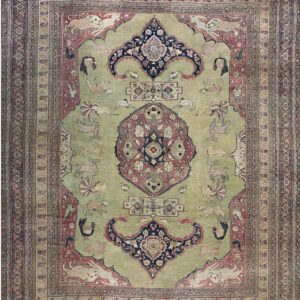
Green Fine Antique Persian Moud / Khorassan Animal Hunting Scene Room Size Rug
$33,800.00 Antique RugsSKU: 24920Rug sizes: 9 ft 9 in x 12 ft 2 in (2.97 m x 3.71 m) -
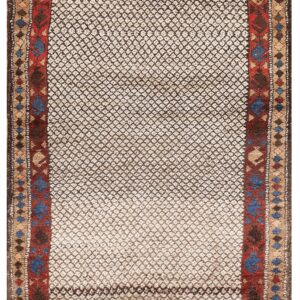
Antique Persian Allover Tribal Design Hand Knotted Wool Pile Shahsavan Rug
$6,000.00 Antique RugsSKU: 24736Rug sizes: 3 ft 4 in x 5 ft (1.02 m x 1.52 m) -
1920s Traditional Red Rust Field Medallion Antique Tabriz Handknotted Wool Room Size Rug
$15,600.00 Antique RugsSKU: 7264Rug sizes: 9 ft 3 in x 12 ft 3 in (2.82 m x 3.73 m) -
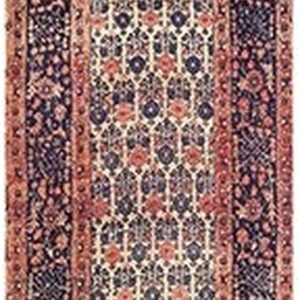
1860s Ivory Antique Paisley Geometric Wool Knotted Bijar Runner Rug
$23,400.00 Antique RugsSKU: 6887Rug sizes: 3 ft x 16 ft (0.91 m x 4.88 m) -
1880s Rare Green Field Large Scale Medallion Antique Malayer Room Size Rug
$12,400.00 Antique RugsSKU: 23499Rug sizes: 8 ft 8 in x 11 ft 3 in (2.64 m x 3.43 m) -
1890s Red Field Medallion Rustic Antique Heriz Knotted Wool Rug
$5,200.00 Antique RugsSKU: 7085Rug sizes: 9 ft 5 in x 12 ft 5 in (2.87 m x 3.78 m) -
1930s Red Ground Rustic Geometric Tribal Antique Soumak Rug
$11,700.00 Antique RugsSKU: 25623Rug sizes: 6 ft x 9 ft (1.83 m x 2.74 m) -
1890s Navy Blue Antique Geometric Rustic NW Tribal Knotted Wool Runner Rug
$19,200.00 Antique RugsSKU: 40-941Rug sizes: 7 ft 2 in x 14 ft 2 in (2.18 m x 4.32 m) -
1900s Blue Navy Herati Floral Antique Persian Bijar Rug 12′ 0” X 18′ 6” Handknotted Wool Carpet
$36,000.00 Antique RugsSKU: 6494Rug sizes: 12 ft x 18 ft 6 in (3.66 m x 5.64 m) -
Antique Sarouk – Farahan Rug
$15,000.00 Antique RugsSKU: 2036Rug sizes: 7 ft x 10 ft 2 in (2.13 m x 3.10 m) -
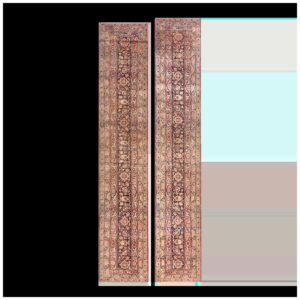
19th Century Pair of S.E. Persian Kirman Laver Runner Carpets ( 2’6″ x 15’4″ )
$13,000.00 Antique RugsSKU: 19717Rug sizes: 2 ft 6 in x 15 ft 4 in (0.76 m x 4.67 m) -
1890s Traditional Beige Field Medallion Geometric Antique Heriz Knotted Wool Rug
$97,500.00 Antique RugsSKU: 40-5454Rug sizes: 11 ft x 15 ft (3.35 m x 4.57 m) -
1840s Multicolor Traditional Antique Classical Motifs Kerman Knotted Wool Rug
$10,400.00 Antique RugsSKU: 7086Rug sizes: 8 ft x 12 ft (2.44 m x 3.66 m) -
1890s Red Field Medallion Large Scale Antique Sultanabad Knotted Wool Rug
$10,400.00 Antique RugsSKU: 6635Rug sizes: 9 ft x 10 ft (2.74 m x 3.05 m) -
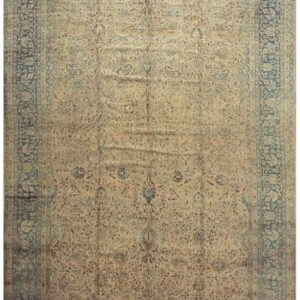
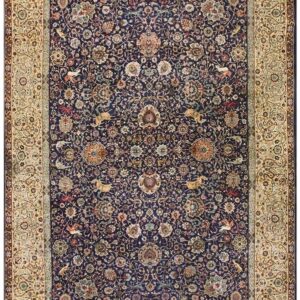
1890s Navy Blue Classic Traditional Luxury Antique Kashan Mohtasham Gallery Rug
$260,000.00 Antique RugsSKU: 26122Rug sizes: 17 ft x 31 ft (5.18 m x 9.45 m) -
1920s Blue Navy Classic Floral Shah Abbas Antique Handknotted Wool Kashan Rug
$12,000.00 Antique RugsSKU: 40-5425Rug sizes: 10 ft x 17 ft (3.05 m x 5.18 m) -
1890s Red Ground Geometric Antique Heriz Handknotted Room Size Rug
$13,500.00 Antique RugsSKU: 40-5447Rug sizes: 9 ft x 12 ft (2.74 m x 3.66 m) -
1880s Rustic Camel Geometric Antique Bakshaiesh Handknotted Wool Gallery Rug
$18,000.00 Antique RugsSKU: 40-5448Rug sizes: 7 ft x 15 ft (2.13 m x 4.57 m) -
1900s Antique Beige Ground Shah Abbas Floral Kerman Knotted Wool Carpet Rug
$12,000.00 Antique RugsSKU: 40-5445Rug sizes: 10 ft x 15 ft (3.05 m x 4.57 m) -
1860s Red Field Gallery Medallion Tortises Knotted Wool Antique Bijar Rug
$37,500.00 Antique RugsSKU: 40-5443Rug sizes: 8 ft 6 in x 21 ft (2.59 m x 6.40 m) -
1900s Antique Beige Field Floral Mashad Gallery Rug
$27,000.00 Antique RugsSKU: 40-5442Rug sizes: 10 ft x 22 ft 10 in (3.05 m x 6.96 m) -
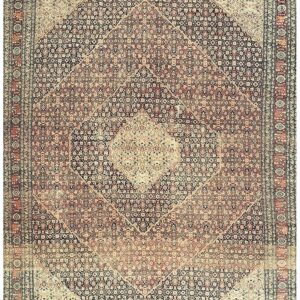
1880s Antique Allover Arabesque Medallion Navy Woven Wool Tabriz Rug
$22,500.00 Antique RugsSKU: 40-5429Rug sizes: 13 ft x 19 ft (3.96 m x 5.79 m) -
1930s Classic Allover Medallion Beige Field Antique Knotted Mahal Rug
$12,000.00 Vintage RugsSKU: 40-5387Rug sizes: 8 ft x 14 ft (2.44 m x 4.27 m) -
1830s Antique Navy Tribal Geometric Antique Knotted Wool Bakhtiari Rug
$15,000.00 Antique RugsSKU: 40-5390Rug sizes: 10 ft x 14 ft (3.05 m x 4.27 m) -
1920s Beige Room Size Antique Allover Floral Knotted Wool Mahal Rug
$19,500.00 Antique RugsSKU: 40-5388Rug sizes: 9 ft x 12 ft (2.74 m x 3.66 m) -
Mid Century Cream Traditional Luxury Pictorial Animal Antique Kerman Silk Rug
$6,000.00 Antique RugsSKU: 40-5441Rug sizes: 4 ft 10 in x 7 ft 4 in (1.47 m x 2.24 m) -
1890s Small Deep Blue Classic Vase Medallion Antique Senneh Knotted Wool Rug
$4,600.00 Antique RugsSKU: 20442Rug sizes: 4 ft x 6 ft (1.22 m x 1.83 m) -
1940s Navy Blue Persian Tabriz Hunting Design Handknotted Wool Carpet Rug
$37,500.00 Vintage RugsSKU: 40-4834Rug sizes: 11 ft x 17 ft (3.35 m x 5.18 m)
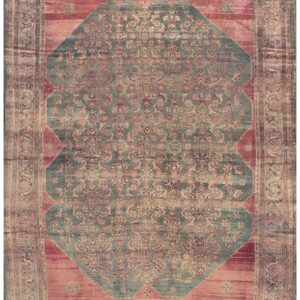
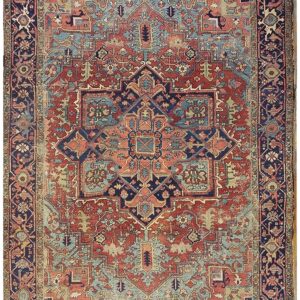
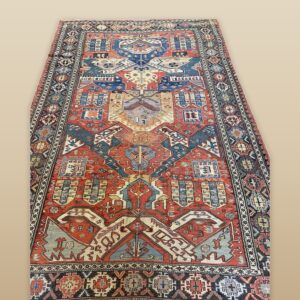
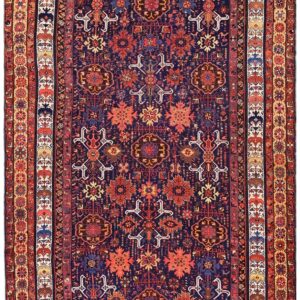
What is an antique Persian rug?
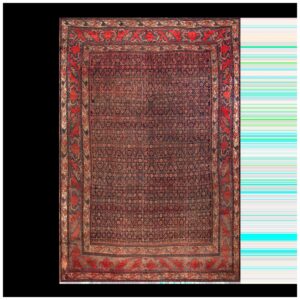
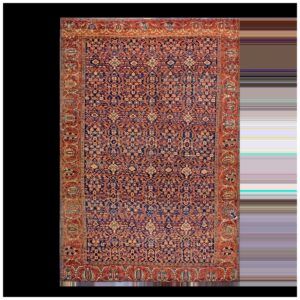
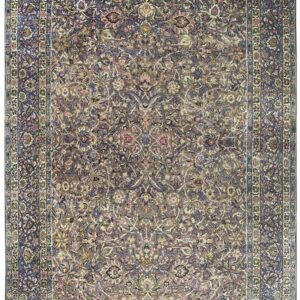
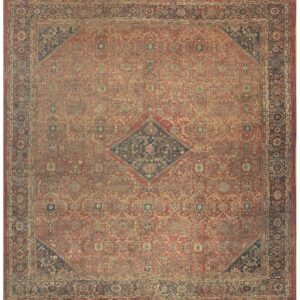
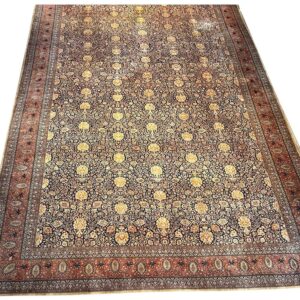
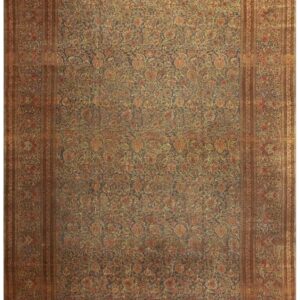
An antique Persian rug is a hand-knotted carpet woven in Persia, modern Iran, roughly 100 years ago or more, from hand-spun wool or silk and colored with natural dyes. Most antique Persian rugs on the market come from the great revival that Western demand set off in the late 19th century. Every Persian rug is an Oriental rug, but the wider term also covers Turkish, Caucasian and Chinese weaving. For history, dating and value in depth, read our antique Persian rugs guide and the longer rugs of Persia and Iran overview.
What are the main types of Persian rugs?
Persian rugs are named for the city, district or tribe that wove them, and each name carries a recognizable design dialect, palette and structure. These are the groups you will meet most often in our collection.
- Tabriz. The city of precision in northwest Persia, with the widest design range of any Persian city: formal medallions, Herati fields, Shah Abbas palmettes, pictorial and garden carpets. See our antique Tabriz rugs guide.
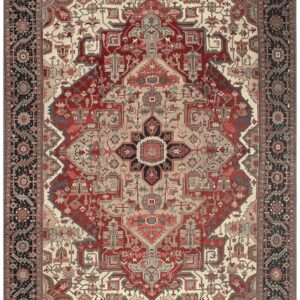
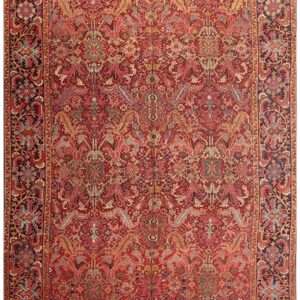
- Heriz and Serapi. Room-size village carpets from the Heriz district with a bold geometric medallion, brick red field and very durable construction. Serapi is the American trade name for the older, finer grade, generally woven before about 1900. See the Heriz guide and our Serapi page.
- Sultanabad. Large-scale, softly drawn floral carpets from the district around Arak, designed from the outset for big Western rooms. Mahal and Ziegler are grade and commission names within the same district. See the Sultanabad guide.
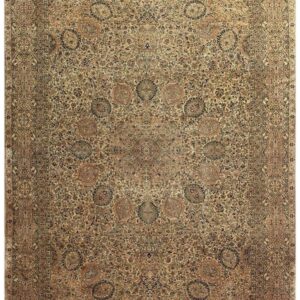
- Kashan. A byword for refinement: dense asymmetrical knotting, soft kork wool, and diamond medallions on scrolling vines in deep reds, blues and ivory. See the Kashan guide.
- Kerman. Finely drawn florals in a soft pastel palette with an unusually supple handle, from southeast Persia. Lavar is the trade term for the finest grade. See the Kerman guide.
- Sarouk and Farahan. The name covers both the fine 19th century weaving of the Farahan plain and the heavy rose-ground carpets exported to America between the wars. Our Sarouk guide separates the two.
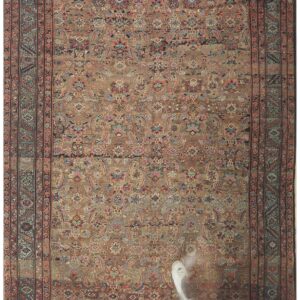
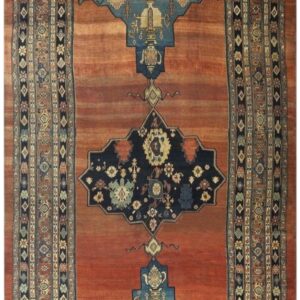
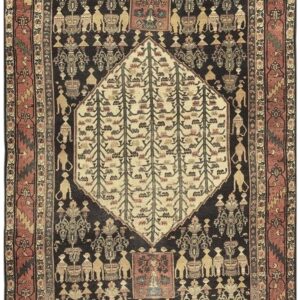
- Village and tribal weaving. Malayer from the Hamadan region, Bidjar with its very dense, heavy weave, Kurdish runners, Bakshaish, the older and most abstract cousin of Heriz, and Baluch, Bakhtiari and Afshar tribal rugs. See our Malayer and Kurdish guides.
How can you tell if a Persian rug is antique?
Turn it over first. On a genuine hand-knotted Persian rug the design is clearly visible on the back and the rows of knots are slightly irregular; a machine-made rug shows a uniform grid, and a hand-tufted rug hides a glued back under a fabric cover. Then check the rest:
- Fringe and sides. The fringe is the end of the warp threads that run through the rug, never a strip sewn on afterward, and the long sides show a hand-wrapped selvage.
- Dyes. Madder reds, indigo blues and vegetal yellows mellow into harmony and show abrash. Harsh orange, chemical pink or flat, uniform color points to later production. Our natural vs synthetic dyes guide gives tests you can run in daylight.
- Wear and handle. Real age shows as wear that follows the traffic of a room and a supple, cloth-like handle, not an engineered, evenly distressed surface.
- Structure. Knot type, knot count and foundation help place a rug. See our guides to rug knots and KPSI and foundations, warps and wefts.
In the trade, a rug 100 years old or more is an antique, and 50 to 99 years is semi-antique. Our guide to antique vs vintage vs new rugs explains how age is established.
How do you decorate with an antique Persian rug?
Choose the type by the room and the mood: finely drawn city rugs suit formal living and dining rooms, room-size Heriz and Sultanabad carpets anchor both traditional and modern interiors, and village and tribal rugs bring warmth to studies, bedrooms and hallways.
- Living rooms. A 9 x 12 or 10 x 14 carpet large enough for at least the front legs of the seating to sit on the rug. Sultanabad's large-scale drawing reads calmly under furniture.
- Dining rooms. An all-over pattern such as a Herati field or a Sultanabad floral stays visible around the table, where a central medallion would be hidden.
- Hallways and entries. Persian runners are plentiful, with more than 180 in stock. Dense, heavy weaves such as Bidjar and sturdy Kurdish runners stand up to traffic.
- Large rooms. We hold more than 180 oversized Persian carpets and more than 50 at 12 x 18. See large antique rugs, 12 x 18 and bigger.
- Measure before you fall in love. Our rug size guide explains how to measure, and every listing gives the measured size.
How do you care for an antique Persian rug?
Use a good rug pad, rotate the rug once or twice a year, vacuum gently without a beater bar, keep it out of prolonged direct sunlight, and have it hand washed by a rug specialist rather than a general carpet cleaner. Persian rugs were woven to be walked on, and with that routine they last for generations.
- Spills. Blot at once with plain water, never rub or soak, and ask a specialist before trying a home remedy.
- Professional washing. Grit settles deep in the pile and wears the knots from inside. Our rug cleaning service in Manhattan washes hand-knotted rugs with a pH-balanced process.
- Moths. Moth larvae feed on wool and silk in dark, undisturbed places such as under a sofa or bed. Check those areas occasionally, and consider our moth-proofing service, which washes the rug first and then treats the fibers.
- Shape. A rug that has pulled out of square can be corrected with blocking and stretching.
Glossary of antique Persian rug terms
These are the terms you will meet most often in our listings and guides for Persian rugs.
- Abrash
- Gentle horizontal bands of tonal variation within a single color, left where the weaver moved to a new dye lot. A sign of hand-dyed wool, not a defect.
- Senneh knot
- The asymmetrical or Persian knot, used in most Persian city workshops. Tabriz is the main exception, using the symmetrical Turkish knot.
- Herati (mahi)
- An all-over repeat of a small rosette framed by curved leaves, often called the fish pattern. Common in Farahan, Malayer, Senneh and Tabriz weaving.
- Boteh
- The teardrop or paisley motif, repeated across the field of many village and town rugs.
- Serapi
- An American trade name for the older, finer grade of Heriz weaving, generally before about 1900, with more spacious drawing and softer color. Read about Serapi rugs.
- Kork wool
- Soft, lustrous wool from the underbelly and shoulders of the sheep, associated with fine Kashan carpets.
- Mohtasham
- The name given to the finest grade of late 19th century Kashan carpets, associated with the workshop tradition of Hajji Mollah Mohtasham.
- Ziegler
- Sultanabad carpets made under Ziegler and Company, the Manchester firm that set up in the district in the 1880s and supplied designs for European and American interiors.
- Mahal
- A trade term for the coarser, generally later commercial grade of Sultanabad weaving, much of it from the 1900s to the 1930s.
- Lavar
- A trade term for the finest grade of Kerman weaving, borrowed from the nearby town of Ravar.
Antique Persian Rugs: Frequently Asked Questions
How many antique Persian rugs does Rugs On Net have?
We have more than 1,200 Persian rugs in stock, of which more than 950 are dated 1925 or earlier and more than 600 are 19th century. The largest groups are Northwest Persian, Tabriz, Kurdish, Sultanabad, Malayer and Kerman, and all of them can be seen at our showroom at 36 East 31st Street in New York.
What is the difference between city and village Persian rugs?
City rugs from workshops in Tabriz, Kashan, Kerman and Isfahan are finely knotted with curvilinear designs drawn from a cartoon. Village and tribal rugs, such as Heriz, Serapi and Baluch, are coarser, boldly geometric and woven from memory, which gives them their charming irregularities. Neither is better; collectors prize both.
What affects the value of an antique Persian rug?
Age, condition, rarity of design, the quality of the dyes and wool, and size. Original ends and sides, unrepaired pile and saturated natural color command the strongest premiums. In our stock, Persian rugs dated 1925 or earlier have a median price of about $13,000, and half fall between $6,800 and $27,000.
Can I use an antique Persian rug in a busy room?
Yes. These rugs were woven to be walked on and the wool is remarkably resilient. Use a quality pad, rotate the rug once or twice a year, vacuum without a beater bar, and have it washed by a specialist such as our rug cleaning service every few years.
Do you ship antique Persian rugs, and can I return one?
Yes. Shipping is free within the continental United States, and international orders ship at a flat rate of $495 per order ($350 to Canada, $395 to Mexico), with tracking. Orders ship in 1 to 3 business days. Customs fees, import duties and taxes are paid by the buyer on delivery. US buyers get a 4-day in-home trial starting the day the rug is delivered; see our shipping policy and returns policy.
Do you buy or appraise antique Persian rugs?
Yes. We buy antique rugs outright: send photographs and measurements, and Kevin Rahmanan reviews the photos and decides. Consignment is also offered. For a value, we give a free Quick Opinion by phone or email from photographs, and a free In-Depth Appraisal Report for insurance, estate valuation and documentation. See sell your antique rug or contact us.
Watch: from our New York gallery
Mashad was one of the great cities of Persia, and its rugs were woven as statements of craftsmanship, often for royalty. Why a Mashad rug is more than just another Persian rug.
A Mashad rug Kevin Rahmanan has seen only once: silk foundation, silk tassels, areas woven flat in metallic thread and raised silk flowers.
Come explore the vast realm of Persian antique rugs!
Why antique Persian rugs stand apart: the culture, the natural dyes, and above all the mountain wool.
More on our YouTube channel.