
- Why do antique rugs endure as collectible objects?
They hold together age, craftsmanship, chemistry, and cultural memory in one form. A great antique rug is not just decoration; it is a surviving record of a vanished material world.
- Why does the article call antique rug history “people-less”?
Because the names and voices of many weavers were never recorded, even though their work survives. Scholars often have to recover civilizations through objects, not biographies.
- What does the “Ice Maiden” reveal about textile history?
Her preserved wardrobe shows access to felt, madder-dyed wool, wild silk, and highly structured ceremonial dress. It connects nomadic life with elite textile culture in a remarkably direct way.
- Why is the “Ice Maiden” discussed alongside antique rug history?
Her preservation helps show how archaeology can recover lost civilizations through material remains. Like the Pazyryk carpet, her body, clothing, and tattoos act as historical documents where no written records survive.
- What does the Pazyryk find say about ancient trade?
It suggests that organized long-distance exchange linked the Persian world and the Eurasian steppe long before the formal Silk Road is usually imagined. A sophisticated imported carpet ended up in a Siberian burial because these networks already existed.
- How was the Pazyryk Carpet preserved for so long?
It survived because water entered the burial chamber and froze permanently, sealing the organic materials in ice for more than 2,400 years. That geological accident created extraordinary preservation conditions.
- Why do scholars think the Pazyryk Carpet may be Persian in origin?
The iconography, technical sophistication, and specific motifs like griffins and fallow deer point toward an Achaemenid Persian or related Near Eastern workshop tradition.
- What motifs appear in the Pazyryk Carpet?
Its design includes rosettes, griffins, horsemen, and fallow deer arranged in concentric borders. These details support both its ceremonial importance and its likely Near Eastern cultural connections.
- How fine is the Pazyryk Carpet?
The article gives it a density of about 3,600 knots per square decimeter, or roughly 230 knots per square inch. That places it in the range of very finely made workshop-quality rugs.
- What knot does the Pazyryk Carpet use?
It uses the symmetrical Turkish, or Ghiordes, knot. That is significant because it shows this knotting system existed long before later Turkic migrations into the region.
- What does the Pazyryk Carpet tell us about ancient rug technology?
It shows that ancient weavers had already mastered knotting precision, pile uniformity, advanced dye chemistry, and complex design organization. In some ways, its technical confidence feels surprisingly modern.
- Why is the Pazyryk Carpet so important?
It proves that highly sophisticated pile weaving already existed in deep antiquity. Its structure, dyes, and iconography challenge the old idea that early weaving was primitive or crude.
- What is the Pazyryk Carpet?
The Pazyryk Carpet is the earliest surviving hand-knotted pile rug known today. It was discovered in frozen burial mounds in the Altai Mountains and is dated to the 5th century BCE.
- What were antique rugs originally used for before they became luxury collectibles?
Their earliest roots were practical, symbolic, and social. Long before export markets and elite salons, they served everyday nomadic and domestic functions as useful textiles with cultural meaning.
- What knot types appear in early antique rugs?
Early regional traditions often favored symmetrical Turkish knots in Anatolia and Central Asia and asymmetrical Persian knots in parts of Persia and the Caucasus. The choice affected both structure and visual character.
- Why do many antique tribal rugs show asymmetry?
Slight irregularities usually reflect the weaver’s hand and the improvisational nature of the process. Rather than being flaws, they often add character and authenticity.
- Why are early tribal rugs often geometric?
Geometric forms like diamonds, crosses, hooks, and medallions are easier to remember and repeat on a loom without a full drawn cartoon. That made them ideal for nomadic and village weaving traditions.
- Why do nomadic rugs look different from court rugs?
Nomadic rugs tend to rely on memory, geometry, and improvisation, while court rugs often reflect planned compositions influenced by painting, gardens, and architecture. Both can be artistic, but in very different ways.
- How can yellow help distinguish Anatolian from Persian antique rugs?
Anatolian rugs often relied on yellow berry for thicker mustard-like yellows, while Persian dyeing more often favored weld for clearer, more transparent lemony tones.
- What is the “red divide” in antique rugs?
It refers to the historical difference between warm madder-based reds in Persia, Anatolia, and the Caucasus and cooler lac-based reds in places like early India and Tibet. That split can help identify origin.
- Why do different regions produce different antique rug colors?
Before industrial trade standardized materials, weavers were limited to local plants, insects, minerals, and water sources. That created distinct regional color signatures that can still be studied today.
- Why is relief wear a strong sign of age?
Because it usually comes from old iron-mordanted natural dyes gradually eating into the wool. Modern synthetic black dyes do not create the same long-term corrosive effect.
- What is relief wear in an antique rug?
Relief wear happens when iron-based black or dark brown dyes slowly corrode the surrounding wool over many decades. The darker motifs end up physically lower than the rest of the pile.
- Why are yellow dyes harder to preserve in antique rugs?
Yellow is one of the most light-sensitive colors in the antique rug world. Even when the visible color weakens, forensic testing can sometimes still detect its original molecular signature.
- Why does indigo last so well in antique rugs?
Indigo is chemically locked into the fiber through a vat-dye process and re-oxidation. That is one reason indigo blues can stay intense for centuries after other colors begin to soften.
- What does cochineal tell you in an antique rug?
Cochineal can signal trade, wealth, and access to non-local luxury materials. Finding it in a nomadic or regional rug can reveal connections that were never written down elsewhere.
- Why is madder such an important antique rug dye?
Madder is one of the most resilient natural red dyes. Its chemistry produces layered reds that can range from orange-red to plum, making it especially rich and informative for scholars and collectors.
- Why are natural dyes so important in antique rugs?
Natural dyes are central to both authenticity and aging behavior. They mature chemically over time and often leave clues about region, trade access, and the original dyeing environment.
- What can isotope analysis reveal about an antique rug?
It can help build a kind of geographic birth certificate. Oxygen, carbon, and nitrogen isotopes in the wool can point to local water, grazing patterns, and seasonal movement.
- How can trace minerals help identify an antique rug’s origin?
Minerals from the local water source can become locked into the wool during dyeing. By analyzing those traces, researchers can sometimes separate rugs woven only dozens of miles apart.
- What is dye fingerprinting in antique rugs?
Dye fingerprinting studies the chemical makeup of the colorants and mordants in the wool. It can help distinguish between rugs that look similar but were woven in different regions or dye environments.
- Why do chemistry and forensics matter in antique rug scholarship?
They help identify origin and age when written records are missing. Dye isotopes, trace minerals, and fiber behavior can reveal geography, trade contact, and production methods.
- What is structural analysis in antique rugs?
It is the close study of things like warp depression, weft tension, knot type, and overall construction. Those details can help identify loom type, regional habits, and the physical process of weaving.
- Why do scholars say “the rug is the document”?
Because in many cases there are no diaries, blueprints, or workshop records. The structure, dyes, motifs, and wear patterns inside the rug itself become the primary evidence.
- Can signatures in antique rugs be misleading?
Yes. Some signatures refer to merchants or workshop owners rather than the actual weaver, and dates woven into rugs can sometimes be commemorative or even intentionally misleading.
- Why are antique rug weavers often anonymous?
In many village and nomadic traditions, the rug was seen as a communal cultural product rather than an individual signed artwork. Skills were often passed from mother to daughter through practice, not formal institutions.
- Why is studying antique rugs so difficult?
Because the people who made them often left little or no written documentation. Scholars frequently have to reconstruct history from structure, chemistry, motifs, trade records, and comparative analysis.
- Can yarn twist help identify an antique rug?
Yes. The structural twist of hand-spun yarn can work like a regional fingerprint, helping scholars distinguish local weaving traditions in the absence of written records.
- Why do antique rugs usually have hand-spun rather than machine-spun wool?
Most true antiques come from the era before standardized industrial spinning took over. Hand-spinning preserves irregularities that help create abrash, regional character, and a more historically accurate surface.
- Can a rug with synthetic dyes still be antique?
Yes, chronologically it can. But if it contains early unstable synthetic dyes, it may represent a commercial transition period rather than the classic pre-industrial natural-dye world.
- What is the “technical hinge” in antique rug history?
It is the divide between pre-industrial and industrial production. The big turning point is the shift from natural dye systems to synthetic aniline dyes in the late 19th and early 20th centuries.
- Why can a rug that looks “too perfect” be suspicious?
Because antique rugs usually show some evidence of age, use, or material change. When a piece looks unnaturally fresh, it can suggest reproduction, over-restoration, or artificial aging.
- Why do scholars sometimes prefer honest wear in an antique rug?
Even wear can be a truer historical record than aggressive restoration. It shows the rug’s actual life and use rather than masking its age beneath cosmetic intervention.
- Does condition determine whether a rug is antique?
No. Condition affects value and desirability, but it does not determine whether a rug qualifies as antique. A worn fragment can still be far more antique than a pristine mid-century carpet.
- Why is age not the only thing that matters with antique rugs?
Because collectibility depends on more than age alone. A younger 19th-century village rug with strong dyes and honest condition can be more desirable than an older piece that has been heavily restored.
- Why do antique rugs matter historically?
They are cultural records as much as decorative objects. Their motifs, materials, and weaving methods can reveal trade networks, tribal identity, court influence, and social hierarchy.
- Why are antique rugs considered both art and science?
They combine design, history, and craftsmanship with chemistry, fiber behavior, and conservation issues. Studying one properly means looking at motifs, structure, dye systems, wear, and material reactions together.
- Why does hand-spun wool matter in antique rugs?
Hand-spun wool preserves the natural irregularity, lanolin, and structural memory of the fiber. That helps explain why many antique rugs feel more supple and alive than much newer machine-made pieces.
- Why is abrash valuable in antique rugs?
Abrash acts like a visual record of human labor and time. It shows that the rug was woven in stages with real dye-batch changes rather than produced in a perfectly standardized factory process.
- What is abrash in an antique rug?
Abrash is the natural variation in color you see across a field or border. It usually happens because the weaver had to dye wool in separate small batches, creating subtle tonal shifts over the course of the weaving.
- Why do antique rugs have that special glow?
Their glow comes largely from vegetable dyes aging over time rather than simply fading. As those organic pigments mature, they create abrash, patina, and a jewel-like depth that is hard to replicate convincingly.
- Why do antique rugs feel different from newer rugs?
Antique rugs come from a pre-industrial world of hand-spun fibers, natural dyes, and slower production rhythms. That often gives them a softer hand, richer patina, and more organic visual depth.
- What is the difference between antique and vintage rugs?
Antique rugs are generally 100 years old or more, while vintage rugs are old but have not yet reached that centennial mark. The distinction is chronological before it is stylistic.
- Is a rug antique just because it looks old or traditional?
No. A brand-new rug woven in an old style is still a contemporary rug, even if it uses traditional motifs, village techniques, or a historically inspired pattern.
- What makes a rug truly antique?
An antique rug is defined first by age, not just appearance. In the scholarly sense, it generally needs to be at least 100 years old, regardless of whether it looks tribal, formal, worn, or refined.
Antique Rugs
Antique rugs in New York, from a family that has collected them since 1976. Rugs On Net holds more than 4,800 antique rugs, one of the deepest inventories in the United States, and every piece can be seen in person at our showroom at 36 East 31st Street in Manhattan or browsed online at any hour. Our founder Kevin Rahmanan bought his first antique Caucasian rug in 1976, and the collection has grown around the same eye ever since: honest age, sound structure, natural dyes, and designs that hold a room.
The collection spans every major weaving tradition. Browse antique Persian rugs from Heriz, Tabriz, Kashan and Sultanabad, the largest offering of antique Chinese rugs in the country including Peking, Ningxia and Walter Nichols Art Deco carpets, geometric Caucasian rugs, Turkish Oushaks, antique Indian rugs and American hooked rugs. Sizes run from small mats and runners to palace-size carpets.
Every antique rug is inspected by hand for pile, foundation, dyes and repairs before it is listed, and each listing states the origin, circa date, exact size and condition. Interior designers and architects can buy through our trade program. Delivery inside the U.S. is complimentary and returns are accepted, so you can live with a rug before you commit. To learn what to look for, read our guides to antique Oriental rugs and antique Persian rugs, or our page on buying an antique rug with confidence. Click here to learn what makes a rug antique.
Prefer to see a rug in person?
-
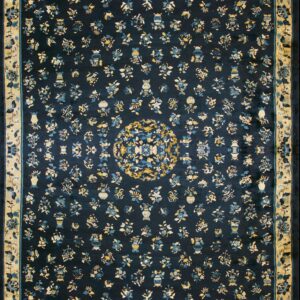
Chinese Wool – Peking 1890s Knotted Large Oversized Big Rectangle Blue Antique Rug
$70,200.00 Antique RugsSKU: 25483Rug sizes: 12 ft x 23 ft (3.66 m x 7.01 m) -
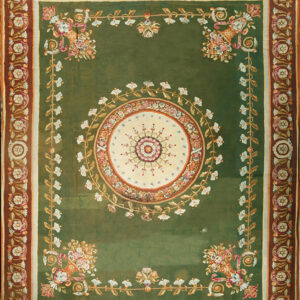
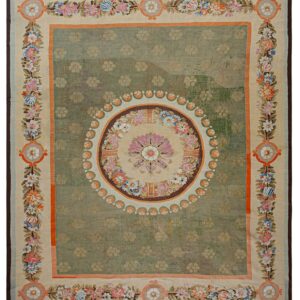
Antique Oversized Aubusson French Medallion Knotted Rug
$68,000.00 Antique RugsSKU: 24344Rug sizes: 17 ft x 20 ft 10 in (5.18 m x 6.35 m) -
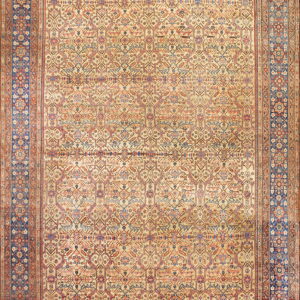
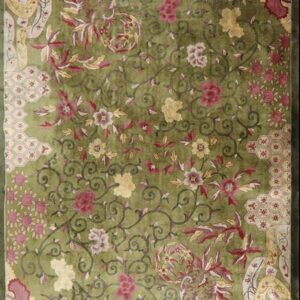
Decorative Light Yellow Color Antique Allover Design Persian Sultanabad Oversized Rug
$60,000.00 Antique RugsSKU: 21534Rug sizes: 13 ft 3 in x 20 ft 8 in (4.04 m x 6.30 m) -
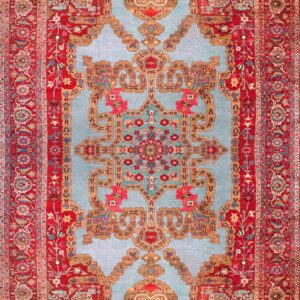
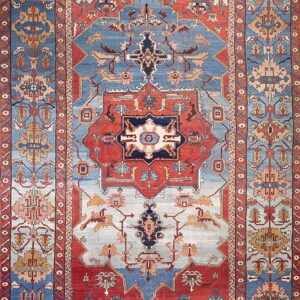
Jewel Tone Color Antique Oversized Persian Medallion Heriz Serapi Rug
$98,000.00 Antique RugsSKU: 19775Rug sizes: 14 ft x 20 ft (4.27 m x 6.10 m) -
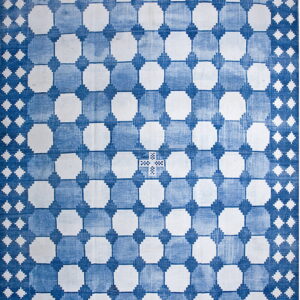
Large Geometric Mid Century Modern Design White and Blue Flatweave Dhurrie Rug
$24,500.00 Antique RugsSKU: 19966Rug sizes: 12 ft 3 in x 19 ft (3.73 m x 5.79 m) -
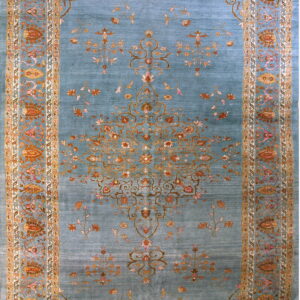
Rare Light Sky Blue Antique Finely Woven Intricate Large Persian Tabriz Rug
$68,000.00 Antique RugsSKU: 22461Rug sizes: 10 ft 2 in x 17 ft 9 in (3.10 m x 5.41 m) -
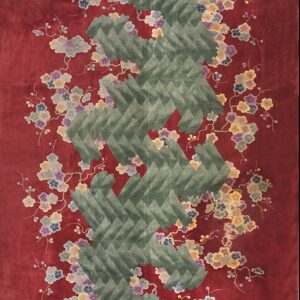
Antique Walter Nichols Art Deco Large Room Size Red Allover Rug
$38,000.00 Antique RugsSKU: 23745Rug sizes: 10 ft x 17 ft 6 in (3.05 m x 5.33 m) -
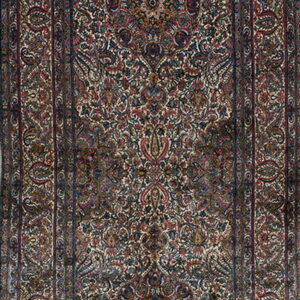
Antique Floral Persian Kerman Hallway Runner Rug
$15,600.00 Antique RugsSKU: 6811Rug sizes: 6 ft 10 in x 17 ft 4 in (2.08 m x 5.28 m) -
Stunning Antique Chinese Art Deco Carpet by Nichols Workshop Green Hand Knotted Pile Rug
$33,500.00 Antique RugsSKU: 23817Rug sizes: 11 ft 10 in x 17 ft 2 in (3.61 m x 5.23 m) -
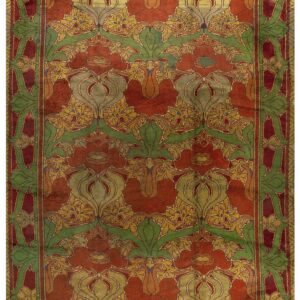
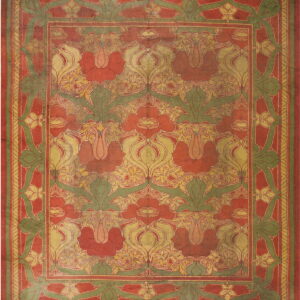
Antique Large Red Donegal – Arts & Crafts Ireland Floral Knotted Rug
$98,000.00 Antique RugsSKU: 24905Rug sizes: 12 ft x 16 ft 9 in (3.66 m x 5.11 m) -
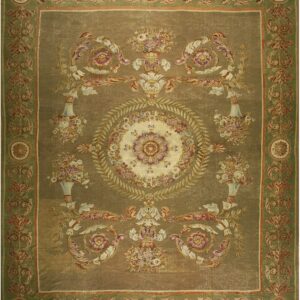
Antique Large Aubusson French Floral, Medallion Knotted Rug
$39,000.00 Antique RugsSKU: 24666Rug sizes: 14 ft 2 in x 16 ft 8 in (4.32 m x 5.08 m) -
Beautiful Sky Blue Antique Persian Room Size Geometric Serapi Heriz Rug
$68,000.00 Antique RugsSKU: 21791Rug sizes: 10 ft 2 in x 15 ft 2 in (3.10 m x 4.62 m) -
Antique Donegal – Arts & Crafts Room Size Coral Rug
$68,000.00 Antique RugsSKU: 21909Rug sizes: 12 ft 6 in x 14 ft 8 in (3.81 m x 4.47 m) -
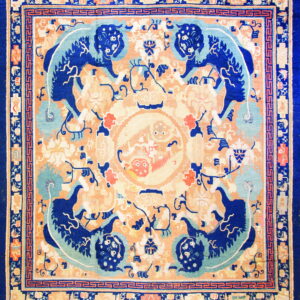
Rare Early 18th Century Antique Foo Dog Chinese Square Ningxia Carpet
$375,000.00 Antique RugsSKU: 21376Rug sizes: 12 ft 8 in x 13 ft 4 in (3.86 m x 4.06 m) -
Rectangle Antique 1920s Chinese – Peking Wool Blue Knotted Room Size Rug
$19,500.00 Antique RugsSKU: 25652Rug sizes: 10 ft x 13 ft 2 in (3.05 m x 4.01 m) -
Antique Art Deco Chinese Allover Geometric Knotted Rug
$55,000.00 Antique RugsSKU: 24747Rug sizes: 9 ft 11 in x 13 ft 1 in (3.02 m x 3.99 m) -
Antique Aubusson French Medallion Flat Weave Rug
$35,100.00 Antique RugsSKU: 23963Rug sizes: 8 ft 8 in x 12 ft 6 in (2.64 m x 3.81 m) -
Ivory Room Size American Hooked 1890s Wool Antique Rug
$21,000.00 Antique RugsSKU: 20139Rug sizes: 9 ft 6 in x 12 ft 6 in (2.90 m x 3.81 m) -
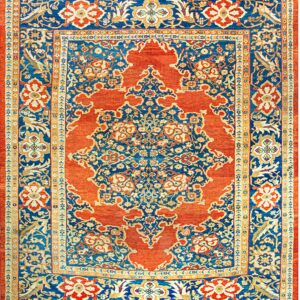
Antique Square Persian Sultanabad Rug – Late 19th Century Rustic Red and Blue
$22,500.00 Antique RugsSKU: 26153Rug sizes: 11 ft 7 in x 12 ft 6 in (3.53 m x 3.81 m) -
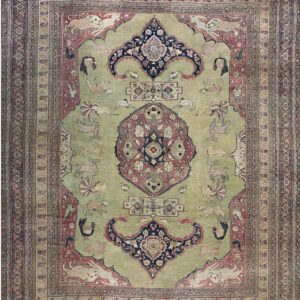
Green Fine Antique Persian Moud / Khorassan Animal Hunting Scene Room Size Rug
$33,800.00 Antique RugsSKU: 24920Rug sizes: 9 ft 9 in x 12 ft 2 in (2.97 m x 3.71 m) -
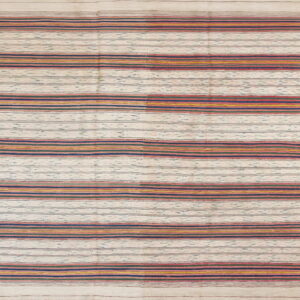
Antique Tribal Striped Turkish Kilim Hallway Runner Rug
$18,000.00 Antique RugsSKU: 5551Rug sizes: 4 ft 2 in x 11 ft 9 in (1.27 m x 3.58 m) -
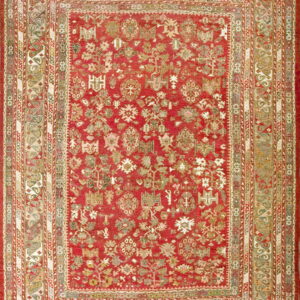
Antique Turkish Oushak Coral Rug – Rustic Village Pattern
$18,500.00 Antique RugsSKU: 19022Rug sizes: 9 ft x 11 ft 8 in (2.74 m x 3.56 m) -
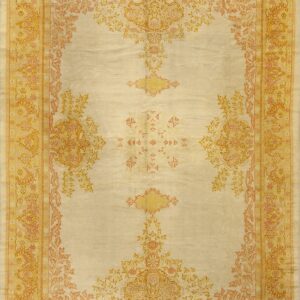
Soft Decorative Yellow Antique Room Size Turkish Oushak Rug
$18,800.00 Antique RugsSKU: 24806Rug sizes: 8 ft 3 in x 11 ft 6 in (2.51 m x 3.51 m) -
Antique Lahore Indian Knotted Rug with Allover Floral Pattern
$30,000.00 Antique RugsSKU: 23314Rug sizes: 9 ft 2 in x 11 ft 6 in (2.79 m x 3.51 m) -
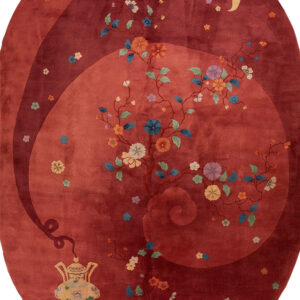
Antique Art Deco Chinese Oval Rug with Artistic Swirl Pattern in Red
$22,500.00 Antique RugsSKU: 24046Rug sizes: 7 ft 9 in x 11 ft (2.36 m x 3.35 m) -
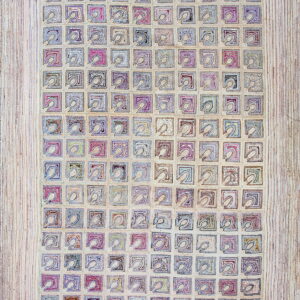
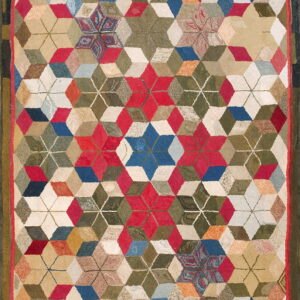
Antique Allover Geometric Wool & Cotton Hooked – Loop Pile Multicolor Jewel Tones 1900s Rug
$15,000.00 Antique RugsSKU: 21972Rug sizes: 5 ft 8 in x 11 ft (1.73 m x 3.35 m) -
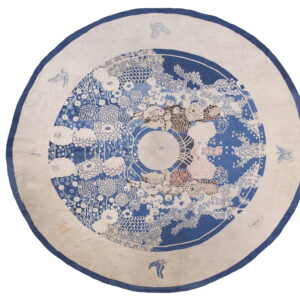
Unique Artistic Antique Chinese Peking Soft Blue Round Peking Pile Rug
$22,500.00 Antique RugsSKU: 21269Rug sizes: 10 ft x 10 ft 6 in (3.05 m x 3.20 m) -
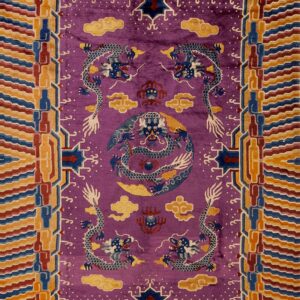
Antique Purple Ningxia Chinese Allover Knotted Rug
$17,200.00 Antique RugsSKU: 24745Rug sizes: 6 ft 4 in x 9 ft (1.93 m x 2.74 m) -
Antique Ukrainian Knotted Rug
$22,500.00 Antique RugsSKU: 17865Rug sizes: 6 ft 3 in x 9 ft (1.91 m x 2.74 m) -
Antique Irish Donegal Arts & Crafts Medallion Knotted Rug
$13,600.00 Antique RugsSKU: 24127Rug sizes: 5 ft 7 in x 7 ft 9 in (1.70 m x 2.36 m) -
Antique Native American Navajo Geometric Design Ivory Color Rug
$7,500.00 Antique RugsSKU: 25881Rug sizes: 3 ft 6 in x 7 ft 6 in (1.07 m x 2.29 m) -
Dazzling Geometric Design Antique Native American Navajo Earth Tone Rug
$8,200.00 Antique RugsSKU: 23767Rug sizes: 4 ft 10 in x 7 ft 3 in (1.47 m x 2.21 m) -
Classic Tribal Geometric Antique Caucasian Red Lori Pambak Rug
$3,400.00 Antique RugsSKU: 18521Rug sizes: 4 ft 9 in x 6 ft 10 in (1.45 m x 2.08 m) -
Bold Graphic Tribal Design Antique Native American Flat Weave Navajo Rug
$3,750.00 Antique RugsSKU: 24936Rug sizes: 3 ft 9 in x 6 ft (1.14 m x 1.83 m) -
Rustic Tribal Antique Mid 18th Century Turkish Islamic Ghiordes Prayer Design Coral Rug
$18,800.00 Antique RugsSKU: 19687Rug sizes: 4 ft x 6 ft (1.22 m x 1.83 m) -
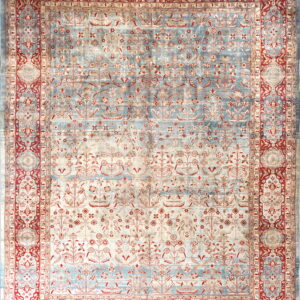
Antique Small Scatter Size Sky Blue Fine Persian Silk Heriz Muslim Prayer Rug
$38,000.00 Antique RugsSKU: 20324Rug sizes: 4 ft x 6 ft (1.22 m x 1.83 m)
The Soul of the Loom: Why Antique Rugs Endure
The allure of an antique rug lies in its defiance of time. While modern textiles are designed for the moment, an antique Persian carpet, Turkish Oushak rug, or finer weave Persian Khorasan rug was woven for the century. These rugs represent a pre-industrial world where the rhythm of the loom matched the rhythm of life, and the materials were sourced entirely from the earth.
The Alchemy of Age
-
- Vegetable Dyes and the “Glow”: Before the invention of chrome dyes, weavers relied on madder root, indigo, and pomegranate rind. Over a century, these organic pigments don’t just “fade”—they undergo a chemical maturation. This results in abrash (subtle, painterly color variations) and a soft, luminous patina that gives the wool a jewel-like depth.
-
- Hand-Spun Integrity: The wool in an antique rug was twisted by hand, retaining its natural lanolin and structural “memory.” This is why a 150-year-old carpet often feels more supple and resilient than a synthetic rug made last year.
-
- The Artist’s Hand: In an antique rug, you see the “human error” that defines true art. A slight shift in a border motif or a change in a blue hue tells the story of the weaver’s life during the months or years it took to complete the piece.
The RugsOnNet Standard: A New Era of Antique Acquisition
Shopping for an antique rug has traditionally been a daunting, opaque process reserved for the elite rug showrooms of Manhattan or London. RugsOnNet was founded to dismantle those barriers, bringing a professional, transparent, and erudite approach to the digital space.
The Curated Digital Gallery
We have replaced the “pile of rugs” experience with a precision-engineered digital platform. When you shop with RugsOnNet, you are accessing a globally recognized archive of rug history, curated with the eye of a scholar and the standards of a master restorer.
-
- Expert-Led Provenance: We don’t just list rugs; we catalog them. Every piece in our collection—from a 19th-century Mohtashem Kashan to an 18th-century Northeast Persian Khorasan—is vetted for historical accuracy. We provide the technical context of the weave, the origin of the motifs, and the specific historical era of its production.
-
- Technical Transparency: We believe an informed buyer is a confident one. Our listings feature high-resolution macro-photography that allows you to inspect the knot density, the condition of the selvedges, and the authenticity of the vegetable dyes as if you were standing in our Midtown showroom.
-
- A Family Legacy of Authority: RugsOnNet is the digital evolution of a multi-generational family business founded in 1976. We combine decades of hands-on expertise in antique textile restoration with a modern, data-driven interface, ensuring that the rug you see on your screen is an investment-grade asset.
-
- The “Right-Fit” Philosophy: Our platform is designed to help you find a rug that balances historical significance with contemporary livability. Whether you are looking for a muted, “shabby-chic” Ziegler Sultanabad rug for a sun-drenched living room or a formal, high-contrast Kerman for a library, our search systems are built to match architectural requirements with textile history.
The Global Archive: A Scholarly Treatise on Antique Rugs and Carpets
Historical Origins and Evolution Of Antique Rugs
Antique rugs and carpets are far more than decorative objects. They are living artifacts, each one a unique intersection of art, craft, culture, and material science. Unlike paintings or sculptures, which are static once created, a rug continues to interact with its environment throughout its life. Its fibers age, dyes shift and mellow, and wear patterns develop, creating a record of both human and environmental history.
Studying antique rugs requires a multi-disciplinary approach, combining art history, anthropology, chemistry, textile technology, and conservation science.
Why Antique Rugs Matter
The importance of antique rugs is manifold:
Cultural and Historical Value
Antique rugs are windows into the societies that produced them. They reflect tribal identities, urban workshop sophistication, and royal court patronage. The motifs, color choices, and weaving techniques offer insight into trade networks, religious practices, and social hierarchies. An antique tribal Qashqai rug from 19th-century Persia, for instance, speaks not just to aesthetic choices but to the migratory lifestyle, clan identity, and dyeing practices of the weavers.
Artistic Expression
A rug is a canvas of design intelligence, balancing geometry, repetition, and visual harmony. In court carpets, the influence of manuscript painting, garden layouts, and architectural forms is evident, while tribal rugs often express human creativity through improvisation, asymmetry, and bold color contrasts. In either case, the weaver’s eye and hand guide the rug’s visual narrative. The act of weaving itself becomes an art form, merging technical mastery with aesthetic decision-making.
Material Science and Chemistry
Wool, silk, and cotton—the primary materials in antique rugs—are dynamic and reactive. Natural dyes derived from plants, insects, and minerals undergo slow chemical transformations over decades or centuries. Understanding these processes is essential to authenticate a rug, assess its condition, and guide conservation efforts. Antique rugs are therefore both art and science, requiring careful observation of subtle clues like abrash (variation in color), pile sheen, and fiber resilience.
Economic and Collecting Significance
Beyond artistry and history, antique rugs hold considerable market value. However, value is rarely determined solely by age. A 19th-century village rug in pristine condition with strong natural dyes and an intact design may be more collectible than an older court carpet that has been over-restored. In this sense, antique rugs exist at the intersection of cultural heritage and commerce, and understanding both aspects is critical for scholars, collectors, and conservators alike.
The Antique Rug 100-Year Benchmark: Chronology vs. Culture
The primary definition of an “antique” rug is strictly temporal. By international trade standards and museum classifications, a rug must be at least 100 years old to be labeled “antique.”
Antique Vs Vintage Vs Culture
-
- Age as the Sole Identifier: A rug is not “antique” because it looks tribal, or because it follows a 17th-century Safavid rug pattern, or because it comes from a remote village in the Caucasus. A brand-new contemporary area rug woven in a traditional village using ancient techniques is a contemporary rug, not an antique.
-
- The “Vintage” Distinction: Vintage rugs that are significantly old but have not yet reached the centennial mark (typically 30 to 60 years old) are categorized as vintage.
-
- Irrelevance of Culture: The definition applies across all geographic origins. A 1920s Chinese Art Deco rug, a 1910s English Axminster carpet, and a fine 1900s Persian Tabriz rug are all “antiques” because they share the same chronological bracket, despite representing vastly different cultural and aesthetic movements.
The “Technical Hinge”: The Pre-Industrial Divide
Beyond the mere counting of years, scholars use the term “antique” to denote a specific technological era that ended with the industrialization of the rug trade.
The Synthetic Dye Threshold (c. 1860–1920)
The most significant “hinge” in rug history is the transition from natural (vegetal) dyes to synthetic (aniline) dyes.
Pre-Industrial vs Post Industrial Shifts:
-
- Pre-Industrial Integrity: True antiques are generally expected to belong to the era of natural dyes. When a 110-year-old rug contains early, unstable synthetic dyes, it is still chronologically an antique, but it represents the “Commercial Transition” period.
-
- Hand-Spun vs. Machine-Spun: Antiques almost exclusively feature hand-spun wool. Hand-spinning preserves the natural variations in the wool fiber, which allows for the “Visual Vibration” or Abrash that modern machine-spun rugs attempt to mimic but cannot replicate with historical accuracy. Furthermore, hand-spinning dictates the structural “twist”—specifically the Z-spin or S-spin—of the yarn. In the absence of written records, this twist serves as a regional fingerprint; machine-spinning standardizes this process, effectively erasing a critical piece of geographic data for the researcher.
Condition vs. Authenticity: The Misunderstood Factor
A common misconception among beginning collectors is that a rug must be in “good condition” to be an antique. In scholarship, condition has no bearing on the definition of age.
For Example:
-
- The “Honest” Fragment: A 16th-century fragment consisting of only a few square inches of wool is more “antique” than a pristine circa 1950s carpet. Museums frequently archive and display rugs with significant pile wear, “foundation-low” areas, and eroded selvedges because their historical and ethnographic data remains intact.
-
- Structural Integrity vs. Age: While condition impacts the market value (how much a decorator / private consumer will pay), it does not determine nor does it have any relation to a rug’s age classification. In fact, a rug that looks “too perfect” is often a red flag for a modern reproduction that has been chemically treated to look old.
-
- The Ethics of Wear: Scholars often prefer a rug with “even wear” (where the pile has naturally thinned over a century) over a rug that has been “restored” or “painted” to look new. The wear itself is a forensic record of the rug’s history and utility.
Summary of the Scholarly “Antique” Definition
| Factor | Definition for “Antique” Status |
| Age | Minimum of 100 years. |
| Technology | Preferably hand-spun wool and natural dye systems. |
| Condition | Irrelevant to age classification; “honest wear” is expected. |
| Aesthetics | Irrelevant; modern designs can be antique if woven >100 years ago. |
Scholarly Perspective
As noted in Bier (1996), the study of the rug as an “antique” is a study of carbon and nitrogen isotopes within the wool and the chemical footprint of the dyes. The object is a specimen of a bygone material world, regardless of whether it is a “museum-grade” masterpiece or a worn-down village hearth rug.
The Challenge of Studying Antique Rugs
The Silence of the Weaver: Anonymous Labor vs. Individual Art
The Absence of the “Great Master” Factor
In traditional rugs and weavings, especially in nomadic and village contexts, the individual weaver was seldom considered an “important” factor by their contemporary society. The rug was a communal or functional output rather than a self-expressive “work of art.”
-
- Collective Memory: Weavers operated within a shared visual vocabulary. A Qashqai weaver didn’t aim to reinvent the wheel; she aimed to execute the inherited “Diamond” or “Medallion” of her tribe with technical excellence.
-
- Matrilineal Transmission: Because the skill was passed from mother to daughter orally and through tactile practice, there was no “Academy” to record the names of the most talented practitioners. The “artist” was the tribe itself, spanning generations.
The Problem with Signatures and Dates
While signatures (inscriptions) do appear on some rugs, they are often unreliable or misunderstood, particularly in very early pieces.
-
- Early Anonymity: In the most significant early carpets (15th–17th century), signatures are virtually non-existent. The rug was an imperial or tribal product, not a signed canvas.
-
- The “Commemorative” Trap: When signatures do appear in later 19th-century workshop pieces, they often name the merchant or the workshop owner rather than the person who actually tied the knots.
-
- Falsified Dates: It was not uncommon for weavers (or later dealers) to weave a date into a rug that predated its actual creation to increase its perceived value or to honor an ancestor. Therefore, a date in a rug is treated by scholars as “suggested evidence” rather than “forensic fact.”
The Documentation Void: Orality vs. Literacy
One of the greatest challenges in rug history is the total lack of official records.
-
- The Literacy Gap: Most weavers throughout history were not formally educated and often could not read or write. Consequently, there are no diaries, no “blueprints,” and no written accounts of why a certain motif was chosen or how a specific dye batch was formulated.
-
- The Merchant’s Ledger: Historical documentation usually only begins at the point of export. We have records from the Dutch East India Company or Venetian merchants about prices and quantities, but these documents are silent on the history of the weavers themselves.
-
- A History Written in Knots: Because there are no written texts, the rug is the document. Scholars utilize ‘Structural Analysis’—examining the specific tension of the weft passes and the depression of the warp—to identify the loom type and physical posture of the weaver, reconstructing a physical history that was never committed to paper
The Visual Echo: Connecting the Body and the Textile
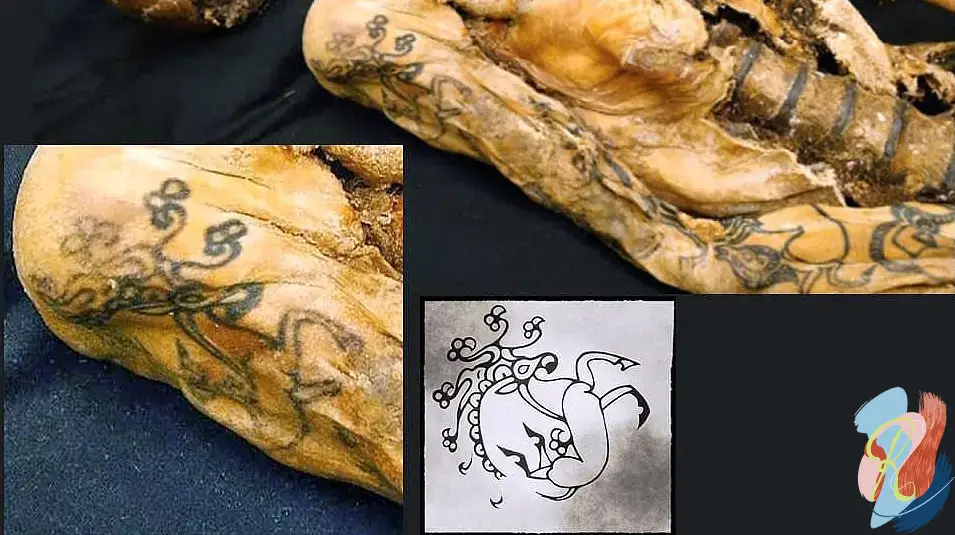
A final forensic clue lies in the “Visual Echo” between the woman and the carpet. The stylized deer and griffins tattooed on the Ice Maiden’s skin share a distinct aesthetic DNA with the fallow deer and griffins found in the carpet’s borders.
This suggests that while the carpet may have been an import, the visual language of the nomadic Pazyryk elite was part of a broader, interconnected Scythian artistic world. This shared iconography bridged the gap between the urban workshop and the high steppe, proving that even in a “people-less” history, the repetition of specific animal motifs serves as a cross-disciplinary signature of a unified
The Disciplinary Layering: How Scholars Reconstruct the Silent History
Because we cannot study the “person,” we must study the layers through multiple scientific and academic lenses:
| Discipline | What it reveals in the absence of records |
| Chemistry / Forensics | Analyzes dye isotopes to determine the specific soil and water source, identifying the geographic origin even if the weaver’s name is lost. |
| Ethnography | Compares motifs across different tribes to track migration patterns and social shifts that were never recorded in books. |
| Architecture | Maps rug designs against contemporaneous palace or mosque architecture to date a piece by its visual “echoes.” |
| Linguistics | Studies the names of rugs (e.g., “Holbein” or “Lotto”) which are ironically named after European men who painted them, rather than the women who wove them. |
Summary: The “People-less” History
Studying an antique rug is the act of giving a voice to a silent population. We are not looking for a “Rembrandt of Rugs”; we are looking for the cultural heartbeat of a civilization that prioritized communal tradition over individual fame.
The Pazyryk Carpet: The First Known Knotted Rug
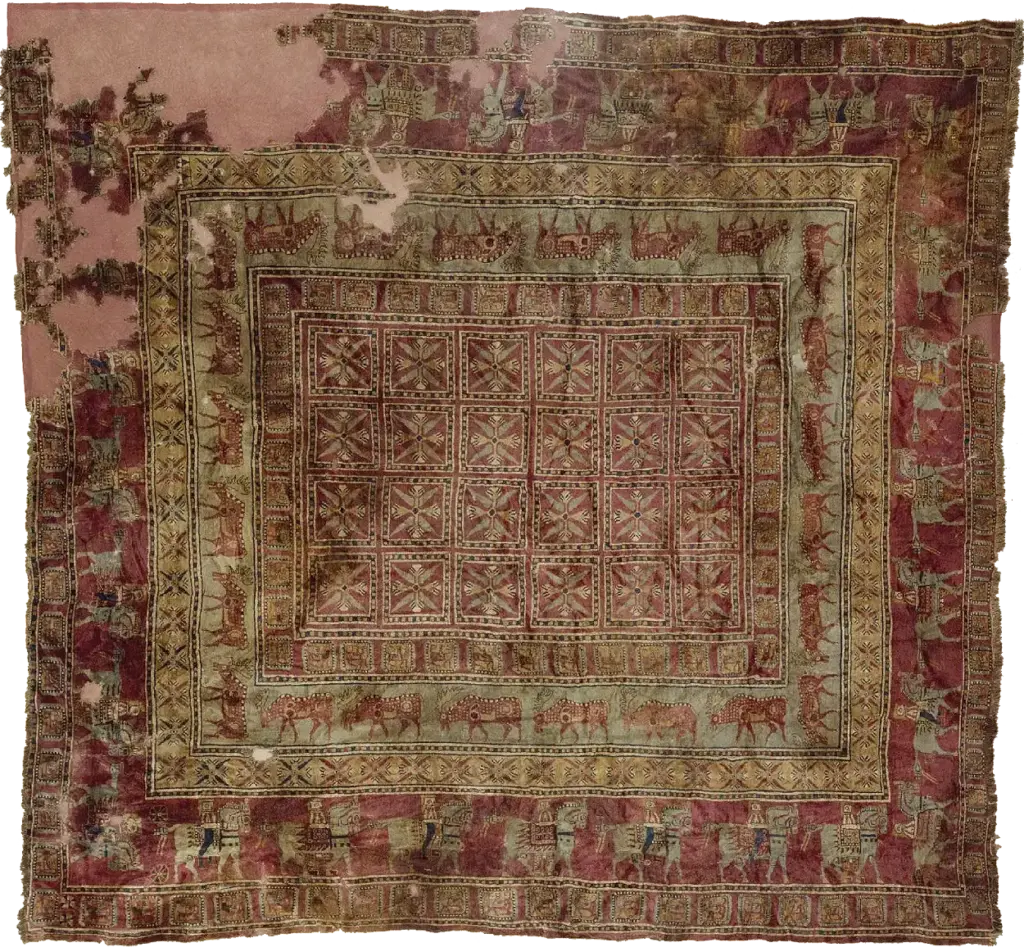
The earliest surviving hand knotted pile carpet is the Pazyryk Carpet, discovered in the frozen burial mounds of the Altai Mountains, Siberia, and dated to the 5th century BCE.
What makes the the oldest rug in the world, the Pazyryk Carpet remarkable:
-
- Sophisticated symmetrical knotting: Even at this early date, artisans had mastered knot tension and pile uniformity.
-
- Complex motifs: The carpet includes horsemen and decorative borders, hinting at cultural and ceremonial importance.
-
- Preserved dyes: Evidence of natural dyes shows early knowledge of pigment application and mordanting.
-
- Nomadic function: Likely used as a portable floor covering or ceremonial textile, consistent with its context in a burial mound.
The Pazyryk Carpet demonstrates that pile weaving was already a highly advanced craft long before the emergence of centralized urban workshops. Even as the earliest surviving example, it sets the stage for the evolution of regional design traditions in Persia, Anatolia, and the Caucasus.
The Pazyryk Excavation: Frozen in Time
The Archaeological Context: The 1949 Dig
The carpet was discovered in Kurgan 5 of the Pazyryk burials, located in the dry Ulagan valley of the Altai Republic, near the borders of modern-day Russia, Kazakhstan and Mongolia.
-
- The Lead Archaeologist: The excavation was led by the Soviet archaeologist Sergei Rudenko. Rudenko was specializing in the Scythian-era nomadic cultures of the Eurasian Steppe.
-
- The “Miracle” of Preservation: Shortly after the burial in the 5th century BCE, grave robbers broke into the tomb to steal gold and jewelry. They left the heavy timber chamber open to the elements. Rain and snow entered the tomb and subsequently froze. Because of the specific permafrost conditions of the high Altai, the water formed a solid block of ice that never melted, hermetically sealing the organic materials—wood, leather, horse hair, and the wool carpet—for over 2,400 years.
Who Was There? The Pazyryk Culture
The people buried in these mounds are known to archaeology as the Pazyryk Culture, a nomadic, horse-centered society related to the broader Scythian world.
-
- A Warrior Aristocracy: The occupants of Kurgan 5 were elite members of society—likely a chieftain and his consort. They were buried with an extraordinary retinue of “traveling gear” for the afterlife, including chariots, felt wall hangings, and slaughtered horses adorned with elaborate masks.
-
- The Silent Weavers: While the Pazyryk people used the carpet, scholars (including Rudenko) largely agree that the carpet itself was likely an import. The technical complexity suggests it was woven in a sophisticated urban workshop in Achaemenid Persia or a related Near Eastern center, then traded or gifted to the nomadic elite of the Altai.
What Was Found: The Forensic Detail of the Carpet
The carpet was found draped over the embalmed bodies within the log-cabin-style burial chamber. Its preservation allowed Rudenko to perform the first “modern” analysis of an ancient textile.
Technical Specifications
-
- The Knot: It utilizes the Symmetrical (Turkish / Ghiordes) knot. This is a profound discovery, as it proves the “Turkish knot” was in use nearly 1,500 years before the arrival of Turkic tribes in the region.
-
- Knot Density: Approximately 3,600 knots per square decimeter (roughly 230 knots per square inch). This density is comparable to modern high-quality workshop rugs, indicating that the “technology” of weaving reached its peak in antiquity.
Iconography and Layout
The design is a masterpiece of geometric and figurative discipline.
The organization of the design is in five concentric borders:
-
- The Central Field: A grid of 24 cross-shaped “squares,” each containing a stylized four-petaled flower (the rosette).
-
- The Inner Border: A row of grazing griffins (mythical eagle-lions), a common motif in Achaemenid Persian art.
-
- The Main Border: A procession of 28 horsemen. Some are mounted, while others walk beside their horses. The detail is so fine that archaeologists can identify the specific Persian-style saddlecloths and braided tails of the horses.
-
- The Outer Border: A row of spotted fallow deer (Dama mesopotamica), a species native to the Near East, further supporting the theory of an imported Persian origin.
The Archeological Impact: Challenging the “Primitive” Narrative
Before Rudenko’s find, historians believed that ancient weaving was limited to simple flat-weaves (kilims) or crude, shaggy piles.
The Pazyryk Carpet proved three critical points:
-
- Dye Maturity: Chemical analysis of the carpet revealed the use of madder and kermes (insect dye), proving that the complex chemistry of mordant dyeing was fully mastered by 400 BCE.
-
- Long-Distance Trade: The presence of a sophisticated Near Eastern carpet in a Siberian tomb proves the existence of highly organized trade routes (pre-dating the formal “Silk Road”) connecting the Persian Empire with the nomadic steppe.
-
- The Documentation Void: Because the Pazyryk culture was non-literate, we have no written records of this rug’s significance. We only know of its importance because of the archaeological context—it was buried with the most powerful members of the tribe, signifying it as a “prestige technology” of the highest order.
Summary of the Pazyryk Find
| Feature | Archaeological Reality |
| Site | Kurgan 5, Pazyryk Valley, Altai Mountains. |
| Discoverer | Sergei Rudenko (1949). |
| Preservation | Sealed in a “lens” of solid ice for 2,400 years. |
| Origin | Likely Achaemenid Persian (based on griffin and deer motifs). |
| Current Location | The State Hermitage Museum, St. Petersburg. |
“Ice Maiden” / “Altai Princess”
Like the ancient carpet, her preservation was the result of a “geological accident.” Shortly after her burial in the 5th century BCE, water seeped into the timber burial chamber and froze solid. Because the burial was deep and insulated by a massive stone cairn, it created a permanent “ice lens” that never thawed, effectively deep-freezing her body and her belongings in a sterile, anaerobic environment.
The woman found in the Pazyryk burials—often referred to as the “Ice Maiden” or the “Altai Princess”—represents one of the most extraordinary examples of organic preservation in archaeological history. While the Pazyryk Carpet was found in Kurgan 5, this woman was discovered in Kurgan 1 at the Ak-Alakha plateau by archaeologist Natalia Polosmak in 1993.
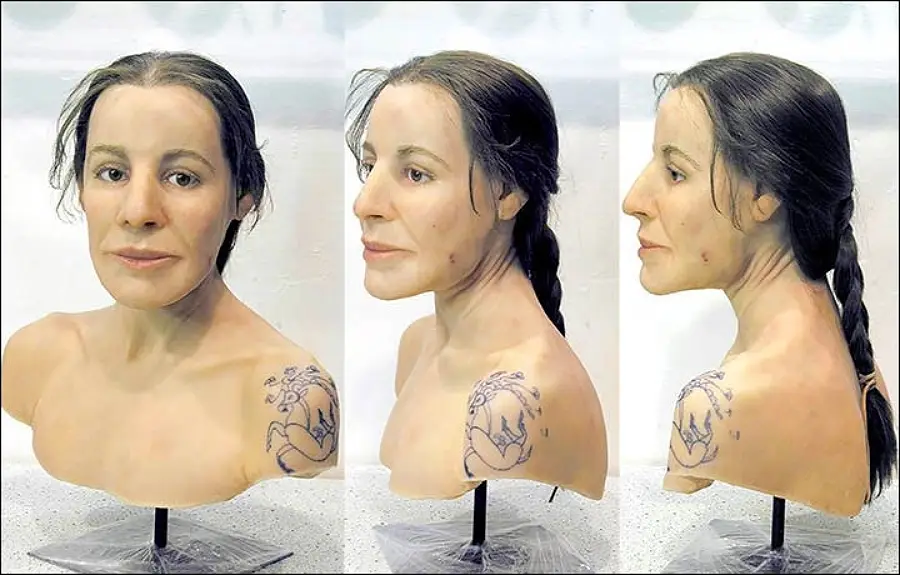
Her preservation was so complete that she provided a “biological biography” of a person who lived over 2,500 years ago, a history that would otherwise be entirely lost since her culture left no written records.
The “Miracle” of the Ice Lens
Forensic Findings: The Body and the Tattoos
When Polosmak and her team melted the ice, they found a woman in her 20s, preserved with her skin and soft tissue largely intact.
-
- The Tattoos: The most striking discovery was her extensive, highly sophisticated skin art. Her left shoulder and thumb featured elaborate “Scythian-style” tattoos of mythical animals, including a deer with a griffon’s beak and long, stylized antlers that transitioned into floral flourishes. These tattoos were not merely decorative; they were markers of social status and tribal identity, “written” directly onto the body.
-
- Health and Cause of Death: Modern MRI and DNA analysis conducted on her remains revealed that she likely suffered from breast cancer, which had metastasized. The presence of a container of cannabis found in the tomb suggests she may have used it to manage chronic pain, providing a rare glimpse into ancient medicinal practices.
The Wardrobe: A Masterclass in Textile History
Because the ice preserved organic fibers, archaeologists found the complete “couture” of a Pazyryk noblewoman, which provided the missing link between nomadic life and high-status textile art.
| Item | Material / Description | Historical Significance |
| Headdress | 3-foot tall felt and wood structure | Adorned with 15 gilded birds; symbolized her connection to the “upper world” or spirit realm. |
| Tunic | Wild silk (Tussah) | Proved that the Pazyryk elite had access to “Wild Silk” from India or China long before the formal Silk Road. |
| Skirt | Strips of crimson and white wool | Dyed with Madder, showing the same high-level dye chemistry found in the Pazyryk Carpet. |
| Boots | Soft felt with beaded soles | The soles were intricately decorated, suggesting she spent much of her time on carpets or horses, where her feet would be visible to those sitting below her. |
The Burial Context
The ice maiden was not buried alone.
To ensure her status in the afterlife, the chamber contained:
-
- Six Horses: Each was slaughtered and buried with her, adorned with elaborate harnesses and felt saddles.
-
- A Feast: A wooden table held a last meal of mutton and horsemeat, along with dairy products in ceramic vessels.
-
- The Timber Chamber: Constructed from solid larch logs, the chamber was a “house for the dead,” mirroring the architecture of the nomadic felt yurt but rendered in permanent wood.
The Documentation Void: Why the Body is the Text
The “Ice Maiden” is the ultimate answer to why we study material remains so intensely. There are no Pazyryk books, no letters, and no carved stone chronicles of her life. Without the “ice lens,” she would be a pile of dust. Because of the ice, we know her fashion, her health, her status, and even the “art” she chose to wear permanently on her skin. She is a silent witness to a civilization that communicated through textiles and tattoos rather than ink and parchment.
Nomadic Weaving Techniques
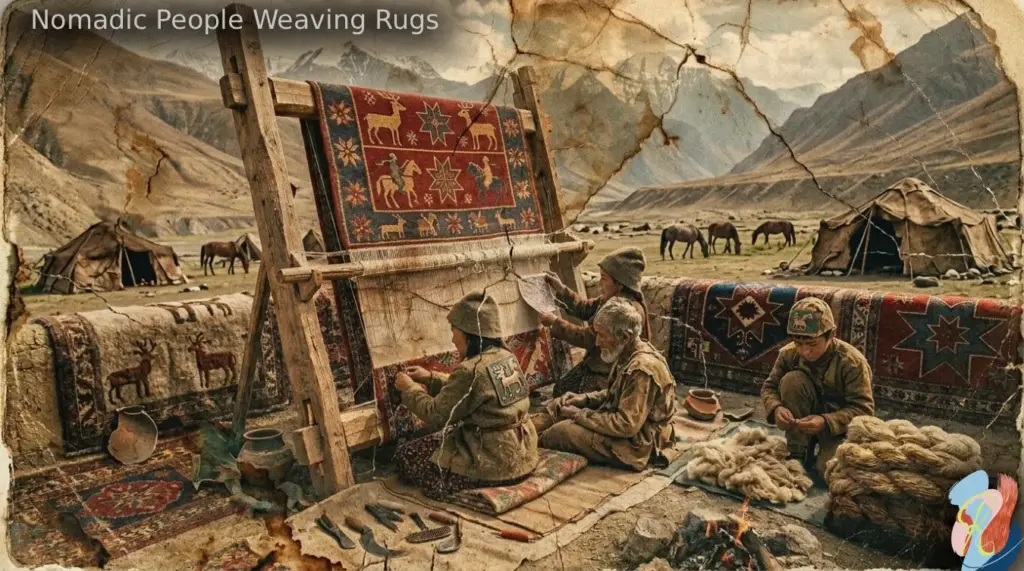
Nomadic weaving relied on memory and improvisation, rather than drawn patterns.
This is what early tribal rugs exhibit:
-
- Geometric rug designs and motifs: Diamonds, crosses, hooked shapes, and medallions dominate because they are easier to weave consistently from memory.
-
- Asymmetry: Slight irregularities reflect the weaver’s hand and local improvisation.
-
- Repetition and rhythm: Even with variation, patterns often repeat across the field, creating a coherent visual language.
-
- Border emphasis: Strong borders help define the field and reinforce structural integrity.
In practice, nomadic weaving techniques favored symmetrical Turkish knots in Anatolia and Central Asia, and asymmetrical Persian knots in regions of Persia and the Caucasus. The choice of knot was influenced by loom portability, available wool quality, and desired visual effect.
Material Choices and Natural Dyes
Early nomadic carpets were crafted from the materials at hand. These were largely organic and locally sourced.
For example:
-
- Wool: The dominant material, sourced from local sheep breeds, spun by hand. Hand-spun wool has natural irregularity that enhances visual depth and dye absorption.
-
- Cotton: Occasionally used for warp threads, particularly in more permanent nomadic dwellings.
-
- Silk: Rare, mostly for luxury or ceremonial pieces, later more common in urban centers.
The Forensic Archive: Dye Fingerprinting and Isotope Analysis
The Molecular Signature of the Village
Dyeing in a pre-industrial village was never a standardized process. It was a localized reaction between the dye source, the local water mineralogy, and the specific mordant (fixative) used.
-
- Trace Minerals: If a village in the Caucasus used water from a stream high in iron or aluminum, that mineral signature is permanently locked into the wool fibers. By analyzing these trace elements, researchers can distinguish between two rugs that look identical but were woven 50 miles apart.
-
- The Madder Root Variance: Madder (Rubia tinctorum) contains varying levels of alizarin and purpurin depending on the soil pH and the age of the root. Dye fingerprinting allows scholars to identify the specific “chemical recipe” of a region, acting as a surrogate for a written historical record.
The Primary Palette: Organic Origins
The “Silent History” of the rug is written in these specific organic sources:
The Reds (Madder vs. Cochineal):
-
- Madder: The most resilient natural dye. Its molecular complexity produces a “layered” red (termed poly-chromatic) that shifts from orange-red to deep plum.
-
- Cochineal: Sourced from the crushed bodies of the Dactylopius coccus insect. This dye was a high-prestige import. Finding cochineal in a nomadic rug tells a story of trade and wealth that the weaver never wrote down.
The Blues (Indigo and Woad):
-
- Indigo: Unlike ‘mordant dyes’ which bond to the fiber via minerals, Indigo is a ‘vat dye’ that is insoluble in water. It requires a chemical reduction (removing oxygen) to become soluble; once the wool is lifted from the vat, it re-oxidizes and the blue is permanently locked within the fiber. This molecular ‘locking’ is why indigo-dyed rugs maintain their chromatic intensity for centuries, long after other organic pigments have faded.
The Yellows (Weld, Saffron, Turmeric):
-
- Yellows are the most “fugitive” (light-sensitive) colors. Weld (Reseda luteola) was favored for its chemical stability. Forensic analysis often finds “ghost yellows”—areas that appear tan to the eye but reveal a yellow molecular signature under ultraviolet or chemical testing.
The Browns/Blacks (Walnut and Iron Oxide):
-
- Browns were achieved using tannin-rich walnut husks. For true black, weavers used iron oxide (rust) as a mordant. Over a century, the iron acidically “corrodes” the wool. This creates “Relief Wear,” where the black motifs are physically lower than the surrounding colors. This is a forensic proof of age that cannot be faked with modern dyes.
Abrash: The Chronological Record of Labor
Abrash is often the only “journal” we have of the weaving process.
How abrash happens and what you see:
-
- Batch Exhaustion: Because weavers dyed wool in small, portable pots, a single “red” field might require five different dye batches.
-
- The Pulse of Life: A horizontal shift in color (Abrash) marks exactly where the weaver ran out of one batch and began another. It records interruptions—seasons changing, a tribe moving, or a new harvest of madder roots. For the collector, abrash is a “pulse” that proves the rug was created over months of human life, not in a single factory shift.
Why Isotope Analysis Replaces Documentation
Because we cannot study the “person” through letters or diaries, we study the Carbon and Nitrogen Isotopes in the wool.
Water Isotope Fingerprinting: Oxygen isotopes in the wool fibers can be matched to the local precipitation of specific mountain ranges, providing a geographic “birth certificate” for a rug that has no label.
Grazing Records: The isotopes in the wool reflect the specific vegetation the sheep ate. This allows scientists to map the transhumance patterns (seasonal migrations) of the tribe.
Summary of Forensic Indicators
| Feature | Historical Evidence Provided |
| Relief Wear | Confirms the use of iron-mordanted natural dyes and >100 years of oxidation. |
| Trace Minerals | Identifies the specific water source/village of origin. |
| Dye Ratios | Distinguishes between imperial workshop recipes and spontaneous village dyeing. |
| Abrash | Documents the timeline and interruptions of the weaving process. |
Region Specific Dyes:
Before the expansion of global trade routes and the commercialization of the 19th-century rug industry, dyeing was a strictly bioregional science. Weavers were limited to the “tinctorial flora” and fauna within walking distance of their looms. This isolation created distinct “chemical provinces” that allow modern forensic experts to pinpoint a rug’s origin based on its molecular signature.
The table below outlines the primary localized dye sources used before these regions became interconnected by major export demands.
| Region | Primary Local Dye Source | Biological/Mineral Origin | Resulting Chromatic Signature |
| Caucasus (Highlands) | Wild Madder | Rubia tinctorum (local wild variety) | Explosive, “primary” reds and deep garnets. |
| Persia (Central Plateaus) | Pomegranate Rind | Punica granatum | Muted, sophisticated yellows and charcoal-grays (when mixed with iron). |
| Anatolia (Village) | Yellow Berry / Buckthorn | Rhamnus cathartica | Vibrant, mustard-like yellows found in early “Lotto” and “Holbein” typologies. |
| Central Asia (Turkmen Steppes) | Native Madder + Sheep Fat | Rubia species + Lipids | Deep, “liver” reds and oxbloods; the fat increased saturation in harsh climates. |
| India (Mughal/Pre-Mughal) | Lac | Kerria lacca (insect resin) | Cool-toned, “pinkish” crimsons and magentas, distinct from the brick-red of madder. |
| China (Imperial) | Safflower | Carthamus tinctorius | Delicate peaches, corals, and “Republican” pinks (often fugitive/light-sensitive). |
| Mediterranean / Levant | Woad | Isatis tinctoria | A lighter, “dusty” blue used before high-quality Indigo was imported from the East. |
| Mountainous Regions (Global) | Iron-Rich Mud | Ferrous oxide deposits | Used as a mordant to turn browns into permanent, corrosive blacks. |
The “Chemical Fingerprint” of Isolation
The Madder/Lac Divide
One of the most significant markers of “Pre-Trade” geography is the choice of red.
-
- Persian / Anatolian / Caucasian weavers relied on Madder root, which produces a “warm” red.
-
- Early Tibetan and Indian rug weavers relied on Lac, an insect secretion that produces a “cool” or purplish-red. Before trade routes allowed for the mass export of Lac or the cultivation of Madder in new territories, this “Red Divide” was a foolproof way to distinguish between an Eastern Persian rug and a Northern Indian rug.
Yellow Berry (Anatolia) vs. Weld (Persia)
Yellow is the most chemically unstable color in the antique world.
-
- In Anatolia, weavers used the Yellow Berry, which created a thick, saturated yellow seen in early village rugs.
-
- In Persia, the preference was for Weld, which produced a more transparent, lemony yellow. Because these plants occupied different ecological niches, a “Yellow Analysis” can reveal if a rug was woven in the high Anatolian plateau or the Persian lowlands.
The Iron-Oxide – Oxidized “Relief” Effect
In almost all pre-trade regions, the only way to achieve a true, deep black was by mixing local tannins (like oak galls or walnut husks) with iron-rich mud or rusted iron filings.
-
- Over 100+ years, the iron acidically “eats” the wool fibers.
-
- This results in “Relief Wear,” where the black motifs are physically lower than the rest of the pile. Because modern synthetic black dyes do not contain iron, they do not cause this corrosion. Thus, “Relief Wear” is a definitive forensic marker of a pre-industrial, naturally dyed rug.
The Documentation Void: Why the Chemistry is the History
As we discussed, because the weavers were largely non-literate and left no written records of their “recipes,” these chemical signatures are the only surviving documentation of their lives. When a researcher finds Cochineal (an insect dye) in a 17th-century nomadic rug, it “writes” a chapter of history that wasn’t recorded in books—it tells us that the tribe had contact with high-level luxury trade routes, as cochineal was an expensive, non-local commodity.
Early Origins of Antique Rugs
The story of antique rugs begins not in palaces or workshops, but in the tented encampments of nomadic peoples. Long before rugs were exported to foreign courts or displayed as symbols of wealth, they served practical, symbolic, and social purposes. Understanding these roots is critical, because even centuries later, the geometric structures, motifs, and weaving techniques developed by nomads continue to define the identity of tribal and village carpets.
Nomadic Beginnings
The nomadic lifestyle dictated the use of the Horizontal Ground Loom. Unlike the massive vertical looms of city workshops, the horizontal loom could be dismantled and packed onto a pack animal in minutes. However, this portability came with a trade-off: the weaver could not maintain perfectly even tension over months of travel. This ‘structural memory’ of the journey is what causes the slight skews and charming irregularities (the ‘re-tuning’ of the loom) found in authentic antique tribal rugs.
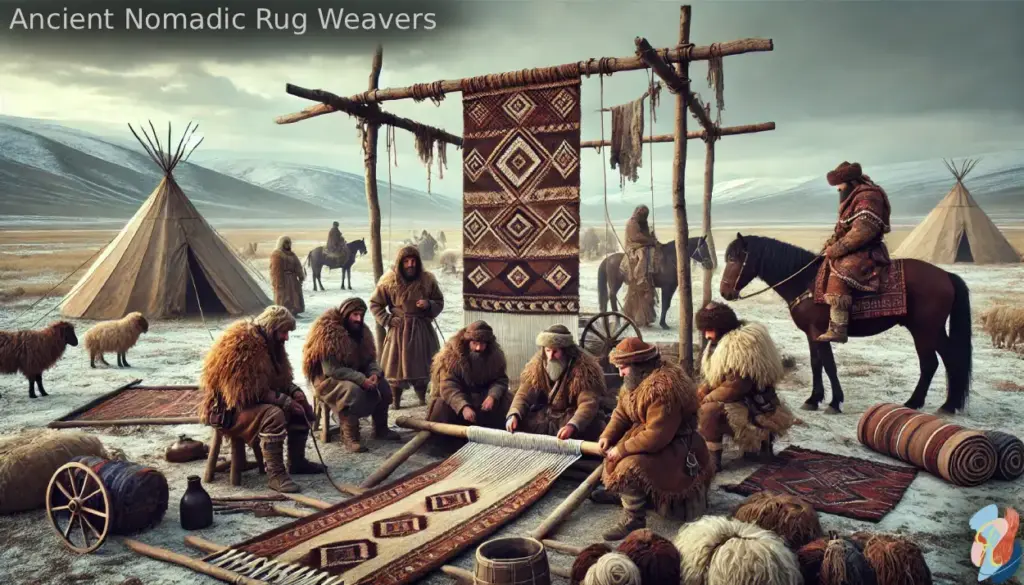
Nomadic weaving emerged in regions where pastoralism dominated: the highlands of Persia, Anatolia, and Central Asia. Sheep and goat herding dictated the availability of wool, while natural dyes derived from plants, insects, and minerals were sourced from the surrounding environment.
For nomads, carpets were:
-
- Portable insulation: rugs and kilims provided warmth on cold floors and tent surfaces.
-
- Practical bedding and covers: they served as beds, blankets, and saddle covers.
-
- Ritual or ceremonial objects: prayer rugs and dowry pieces were often woven with symbolic motifs.
-
- Trade commodities: surplus rugs and textile products could be exchanged at bazaars, providing economic leverage for tribal groups.
This functional necessity shaped early weaving: rugs were durable, compact, and flexible, designed to withstand daily use in mobile environments. Their construction had to balance longevity with portability, which explains why tribal rugs often favor medium or small rug sizes, strong edges, and compact pile.
Functionality vs Symbolism
Nomadic carpets often balance function and meaning.
Early motifs, while geometric, sometimes held cultural or symbolic significance, such as:
-
- Fertility, protection, or clan identity in tribal guls
-
- The Tribal “Gul” as Heraldry: While the term Gul literally translates to “Flower” or “Rose” in Persian, in the nomadic context, it functioned as a tribal crest. Each major tribe (such as the Tekke, Yomut, or Ersari) possessed its own specific Gul, which served as a communal “stamp” of authorship. To the scholar, the presence of a specific Gul provides a historical record of tribal lineage and migration that predates any written census.
-
- Fertility, protection, or clan identity in tribal guls
-
- Stylized animals for hunting or nomadic life
-
- Prayer niche indicators for religious function
However, scholars emphasize that many early tribal motifs were practical rather than purely symbolic, emerging from repetition, structural necessity, and regional design habits rather than a strict iconographic language.
From Nomadic Roots to Court Influence
Nomadic weaving laid the structural, visual, and technical foundations for later urban workshops.
Features like:
-
- Strong geometric rug desing borders
-
- Compact knotting
-
- Improvised but rhythmic motifs
These carried over into city carpets. Even in the most elaborate Safavid or Ottoman court rugs, the echoes of tribal geometry and color logic are visible. Understanding these nomadic origins is therefore essential for:
-
- Dating and authenticating antique rugs
-
- Recognizing tribal vs urban stylistic signatures
-
- Appreciating improvisational beauty in so-called “irregular” patterns
In short, all antique rugs, whether Persian central medallion design carpets or Caucasian tribal rugs, ultimately descend from these early nomadic weaving traditions, where practicality, portability, and human creativity merged to form the earliest visible language of carpet design.
Medieval and Early Court Carpets
While nomadic carpets laid the foundation of weaving techniques and motifs, the medieval period (roughly 13th–16th centuries) marks a turning point. This is when carpets began to shift from purely functional objects into symbols of status, cultural identity, and artistic sophistication. The expansion of empires, the rise of urban centers, and the patronage of royalty transformed carpet weaving from a nomadic craft into a court-sponsored art form.
When we speak of court carpets, we are referring to carpets that were produced under royal or elite patronage, specifically commissioned to serve symbolic, ceremonial, and decorative functions in the courts, palaces, mosques, or administrative centers of empires. These are not simply rugs for household use; they were status objects, artistic statements, and instruments of cultural diplomacy.
Definition of Court Carpets
-
- Court carpets are highly refined, large-scale, and meticulously planned textiles, often produced in centralized workshops controlled or sponsored by rulers.
-
- Unlike nomadic rugs, which were made for mobility and everyday life, court carpets were intended for permanent or semi-permanent placement. They often adorned palaces, mosques, audience halls, or ceremonial floors.
-
- Court carpets are distinguished by:
-
- Complex design: Central medallions, elaborate floral rug motifs, symmetrical layouts.
-
- Fine craftsmanship: High knot density, precise weaving, use of silk highlights, and carefully chosen wool.
-
- Scale: Frequently much larger than nomadic or village rugs, designed to cover grand halls.
-
- Artistic intention: Each motif, color choice, and proportion was considered in advance, often with input from designers and court advisors.
-
- Court carpets are distinguished by:
In short, court carpets were designed as symbols of power, refinement, and taste, rather than simply as utilitarian floor coverings.
Primary Purposes of Court Carpets
A. Ceremonial and Political Use
Court carpets were instruments of ritual and diplomacy:
-
- Royal chambers and throne rooms: Carpets delineated sacred or ceremonial spaces, guiding where rulers or dignitaries would stand or sit.
-
- Coronations, state receptions, and official ceremonies: Rugs served as visual markers of authority, projecting wealth, power, and taste.
-
- Diplomatic gifts: High-status carpets were frequently given to visiting ambassadors or allied rulers, symbolizing both generosity and artistic superiority. These gifts sometimes traveled hundreds of miles, introducing regional styles abroad.
B. Architectural Integration
Court carpets were not merely decorative; they were designed to complement architecture:
-
- Palaces and mosques: Carpets often mirrored ceiling designs, arches, or tile patterns, creating a cohesive visual environment.
-
- Field and border logic: The central medallion often echoed domed ceilings, while borders framed the field like architectural moldings.
-
- Visual balance: Designers carefully considered proportion and symmetry to harmonize with walls, windows, and furniture.
In essence, a court carpet acted as a portable floor-level architecture, expanding the aesthetic of a space beyond its walls and ceilings.
C. Social and Cultural Symbolism
Court carpets were loaded with cultural meaning, though often subtle:
-
- Symbols of authority: Certain motifs, medallions, and rug color palettes were reserved for elite use. For example, rich crimson or deep indigo might indicate royal patronage or urban workshop prestige.
-
- Cultural storytelling: Carpets could depict gardens, palatial motifs, or abstract patterns that referenced heavenly or paradisiacal ideals.
-
- Tribal identity: Even in court carpets, designers sometimes retained tribal geometric motifs, paying homage to nomadic or local traditions, but executed with more refinement.
D. Luxury and Status
Beyond functional or symbolic roles, court carpets were markers of wealth and taste:
-
- Possession of a finely woven court carpet signified access to elite workshops, rare materials, and skilled artisans.
-
- They were often displayed prominently in palaces, rather than hidden beneath furniture, to communicate the status of the owner.
-
- The rarity of materials—high-quality wool, silk highlights, natural dyes—made these carpets exclusive luxury items.
Distinguishing Features of Court Carpets
To summarize what makes a court carpet distinct from other antique rugs:
| Feature | Court Carpet | Nomadic/Village Rug |
|---|---|---|
| Size | Large; designed for halls or palaces | Small to medium; portable |
| Design | Complex, planned, often medallion-centered | Geometric, repetitive, often improvised |
| Materials | Fine hand-spun wool, silk highlights, high-quality cotton foundations | Locally available wool, less silk, functional cotton warps |
| Knot Density | High (sometimes >300 knots/in²) | Lower, designed for speed and durability |
| Purpose | Ceremonial, decorative, diplomatic, status display | Functional, portable, symbolic for local tribes |
| Production | Centralized urban workshops under royal patronage | Decentralized tribal weaving, home-based |
| Cultural Significance | Explicit markers of wealth, political authority, and taste | Clan identity, nomadic tradition, practical symbolism |
Legacy of Court Carpets
Court carpets set a benchmark for artistry, technical mastery, and design complexity.
They influenced:
-
- Subsequent urban workshops in Persia, Anatolia, and India.
-
- European carpet production through imports and visual inspiration (e.g., Holbein, Lotto, and Memling carpets).
-
- The continuation of medallion-centered and floral design motifs, which remain signature features in high-end antique carpets.
In essence, court carpets represent a culmination of the nomadic tradition elevated to high art, blending technical skill, aesthetic innovation, and social function.
Court Patronage and Its Impact
The emergence of court carpets is inseparable from royal and elite patronage. In Persia, Anatolia, and parts of the Caucasus, rulers recognized that carpets were more than decoration—they were instruments of prestige and diplomacy.
-
- Safavid Persia (1501–1736): The Safavid dynasty, particularly under Shah Abbas I (1588–1629), centralized production in urban workshops in Tabriz, Isfahan, and Kashan. Court carpets were commissioned for palaces, mosques, and diplomatic gifts.
-
- Ottoman Empire (14th–17th centuries):The Ottoman sultans established royal workshops in Istanbul, producing carpets that adorned palaces, mosques, and naval vessels. These carpets balanced intricate patterning with luxurious materials.
-
- Mamluk Egypt (13th–16th centuries):While smaller in scale, Egyptian Mamluk carpets were renowned for geometric precision and decorative experimentation, often blending local and imported influences.
-
- The Cairene Triad: Mamluk carpets from Cairo are forensically distinct for their unique “Cairene Palette”—a sophisticated three-color harmony of cherry red, leaf green, and sky blue. This specific chromatic signature, combined with complex kaleidoscopic geometry, allows experts to distinguish 15th-century Egyptian workshop production from any other regional style.
-
- Mamluk Egypt (13th–16th centuries):While smaller in scale, Egyptian Mamluk carpets were renowned for geometric precision and decorative experimentation, often blending local and imported influences.
Court patronage dramatically changed the scale, quality, and visual ambition of carpets. Unlike nomadic rugs, court carpets were designed for architectural integration, intended to fill monumental halls or grace royal chambers. This required larger dimensions, uniform pile, higher knot density, and more complex patterns.
Technical Innovations in Court Carpets
Several technical innovations distinguished court carpets from nomadic weaving:
-
- Knot Density: Court carpets often featured extremely high knot density, sometimes exceeding 300–400 knots per square inch in Persian masterpieces. This allowed finer detail, more fluid curves, and intricate floral motifs.
-
- The scale of court carpets was made possible by the adoption of the Fixed Vertical Loom. Unlike the portable ground looms of the tribes, these massive timber structures allowed for extreme warp tension and the production of carpets exceeding 30 feet in length. This verticality also allowed multiple weavers to work side-by-side in a synchronized row, transforming weaving from a solitary tribal task into an organized workshop effort overseen by a master weaver.
-
- Foundation Materials:
-
- Cotton warps and wefts were preferred in urban centers for strength and stability.
-
- Silk was introduced in select areas for highlights and luxury effects, particularly in palace carpets.
-
- Foundation Materials:
-
- Symmetrical Design Planning: While nomadic weaving was improvisational, court carpets were often pre-planned using detailed sketches, grids, and pattern books. This enabled repetition of complex motifs, medallions, and borders with precision.
-
- The “Technical Hinge”: From Memory to Paper (The “Carton”) > The most profound shift in the court workshop was the transition from weaving by memory to weaving from a “Carton”—a full-scale, color-coded paper pattern. In the nomadic tent, the weaver was the artist, making improvisational decisions with every knot. In the court workshop, the roles were bifurcated: an elite Nakkash (court designer) created the pattern on paper, and the weavers were transformed into highly skilled technicians who executed the artist’s vision. This “Technical Hinge” is why court rugs often possess the fluid, curving lines of a miniature painting, while tribal rugs retain the rugged, rectilinear “pulse” of human memory.
-
- Symmetrical Design Planning: While nomadic weaving was improvisational, court carpets were often pre-planned using detailed sketches, grids, and pattern books. This enabled repetition of complex motifs, medallions, and borders with precision.
-
- Color Harmonization: Access to larger dye workshops allowed consistent, stable color palettes across large carpets. Madder reds, indigo blues, natural yellows, and black/brown dyes were carefully blended to create harmonious visual fields.
Visual Characteristics of Medieval Court Carpets
Court carpets display a shift from geometric, tribal motifs to more fluid, naturalistic ornamentation, though the geometric logic of nomadic weaving remains visible in structure:
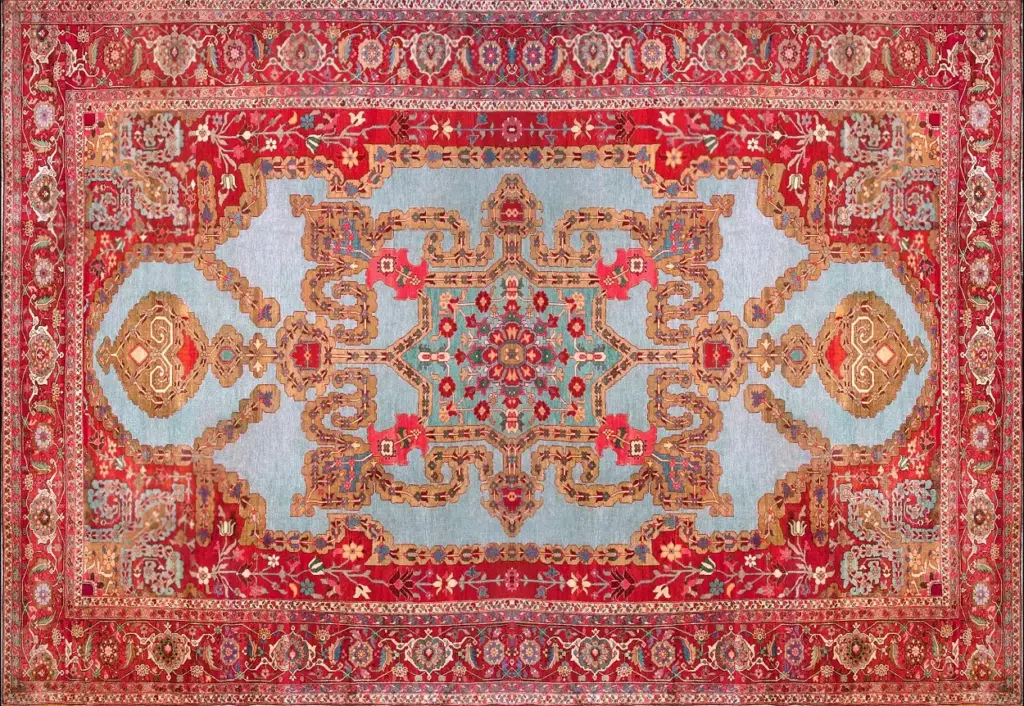
Medallions:
-
- Large central medallions dominate Persian and Anatolian court carpets.
-
- Medallions often mimic architectural forms, such as domes, or celestial symbolism.
-
- Surrounded by carefully balanced corners and borders, medallions create formal symmetry.
All-Over Patterns
-
- Mamluk carpets often use all-over geometric grids, with repeated polygonal motifs and hexagonal medallions.
-
- These all-over rug patterns suggest a transition from nomadic improvisation to deliberate urban design control.
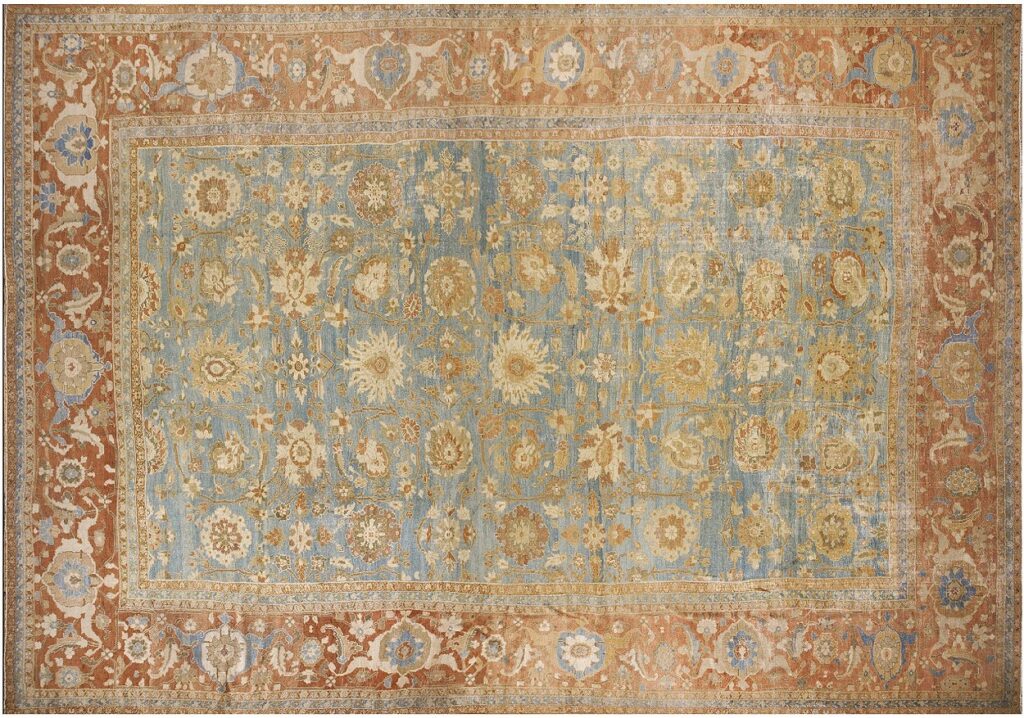
Floral and Garden Motifs
-
- Court carpets frequently depict stylized flowers, palmettes, vines, and arabesques.
-
- Inspired by Persian miniature painting, garden carpets represent idealized paradisiacal landscapes.
-
- Colors and motif repetition reinforce visual rhythm and elegance, unlike the bolder, high-contrast tribal rugs.
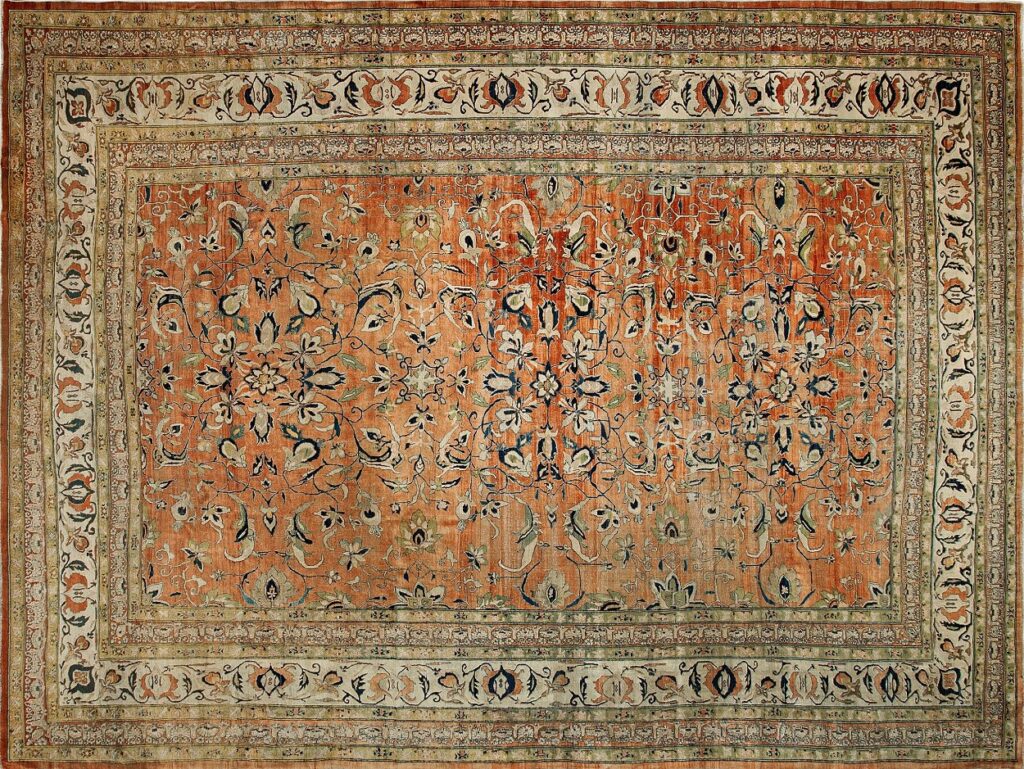
Borders
-
- Borders became highly structured and multi-tiered, sometimes with up to five separate bands.
-
- Primary borders often carried repeating floral motifs, while secondary borders used guard lines to stabilize the field visually and structurally.
-
- The border-field relationship creates a framed effect, making the carpet feel like a self-contained architectural element.
Iconic Examples
-
- Persian Safavid Carpets: Isfahan and Tabriz carpets with silk highlights, high knot counts, and balanced floral medallions. Often commissioned for mosques and palaces.
-
- Ottoman Hereke Carpets (later 17th century): Luxuriously fine silk and wool rugs, designed for palace interiors.
-
- Mamluk Geometric Carpets: Cairo-based workshops produced square or rectangular carpets with bold polygonal patterns, emphasizing structure over naturalism.
Function Beyond Decoration
Medieval court carpets were multifunctional objects:
-
- Ceremonial: Used in religious ceremonies, coronations, and diplomatic presentations.
-
- Architectural Integration: Designed to complement palace interiors, tiled floors, or mosque spaces.
-
- Economic and Diplomatic Assets: Carpets were often given as gifts between rulers, cementing political alliances.
Unlike nomadic rugs, these carpets were less mobile; their scale and prestige meant they often stayed in a single palace or mosque for decades, becoming historical markers of cultural influence.
From Tribal Roots to Courtly Refinement
Even as court carpets became more elaborate:
-
- Nomadic influence persisted: geometric structuring, medallion logic, and color vocabulary still trace back to tribal roots.
-
- Innovation expanded: floral motifs, perspective techniques, and luxurious materials elevated carpets into high art objects, rather than just functional textiles.
-
- Visual storytelling emerged: carpets conveyed wealth, taste, and status, functioning as portable architectural decoration.
This period marks the apogee of early carpet artistry, where technical mastery, visual sophistication, and cultural symbolism converged. Understanding medieval and early court carpets provides the essential foundation for studying the later evolution of carpets in Europe, the Caucasus, and beyond.
Evolution Through Trade: Influence of the Silk Road and European Markets
After centuries of local production under royal or tribal patronage, antique carpets began to travel far beyond their regions of origin. The movement of carpets along trade routes, particularly the Silk Road, introduced Persian, Anatolian, and Central Asian weaving traditions to Europe, creating a cross-cultural dialogue that profoundly shaped both production and collecting practices.
The Silk Road as a Cultural and Economic Artery
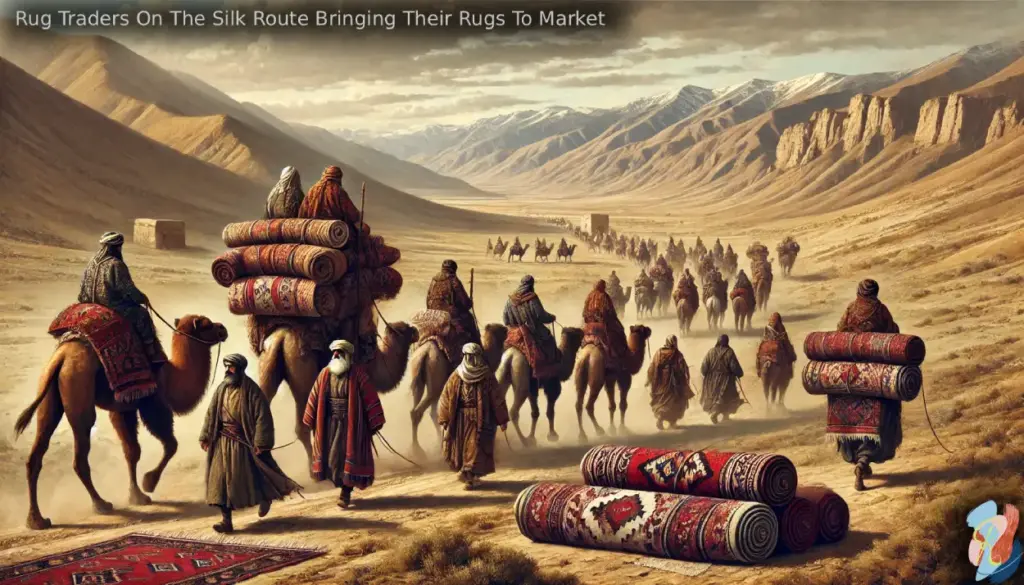
The Silk Road was far more than a network for trading silk; it facilitated the exchange of art, craft techniques, dyes, and materials, including carpets.
-
- Carpets as trade goods: Persian and Anatolian court carpets were prized for their artistry and durability. Merchants transported them to Central Asia, India, and Europe.
-
- Regional specialization: Certain weaving centers, such as Tabriz, Kashan, and Hereke, became known internationally for producing carpets that met specific tastes abroad—dense knotting, medallion layouts, and refined floral designs.
-
- Integration into global markets: Carpets traveled not just as luxury objects but also as symbols of cultural prestige, influencing both artistic and social trends along their routes.
The Silk Road thus allowed carpets to carry culture, ideas, and aesthetics across continents, rather than just commerce.
European Demand and Its Effects
By the 16th century, European demand for Eastern carpets had grown enormously. This demand had several major effects:
Importation into Europe
-
- Carpets entered Europe via major trading hubs: Venice, Amsterdam, Antwerp, and later London.
-
- Venetian merchants were among the earliest importers of Persian and Anatolian carpets, often selling them to royal courts and wealthy patrons.
-
- European buyers valued medallion carpets, prayer rugs, and intricate floral designs, which aligned with Renaissance tastes for geometry, symmetry, and ornamentation.
Symbol of Prestige
-
- Carpets became status symbols in European homes, palaces, and churches.
-
- Ownership indicated wealth, taste, and global awareness. They were frequently displayed prominently in reception rooms, ceremonial halls, and even on walls, rather than just as floor coverings.
-
- The “Table Carpet” Tradition: In 16th and 17th-century Europe, Eastern rugs were far too valuable and fragile to be placed underfoot. They were almost exclusively used as Table Carpets or wall hangings. This lack of floor wear is the primary reason why many “Lotto” or “Ushak” rugs from this era survive in such extraordinary condition today—they spent centuries as protected “furniture” rather than functional floor coverings
-
- Royal families and aristocrats sometimes commissioned large court carpets from Eastern workshops specifically for European residences.
Influence on European Art and Design
-
- Carpets appeared in paintings by Holbein, Titian, Vermeer, and others, establishing them as markers of wealth and refinement.
-
- The Painter’s Proxy: Defining the “Holbein” and “Lotto” Typologies: Because the weavers of the 16th century left no written records, European Renaissance paintings serve as our primary chronological proxy. When a specific geometric Anatolian rug appears in a Hans Holbein portrait, that entire class of textile is forever labeled by scholars as a “Large-Pattern Holbein.” Similarly, the arabesque-filled rugs of the 16th century are known as “Lotto” carpets after the painter Lorenzo Lotto. This rare intersection of art history and textile science allows us to map the evolution of designs that would otherwise be lost to the “Documentation Void.
-
- European designers and weavers studied imported carpets to adapt Eastern motifs and techniques in domestic production.
-
- This cross-cultural influence eventually led to European carpet workshops, like flatwoven Aubusson rugs and pile Savonnerie carpets in France, which imitated Persian and Anatolian aesthetics while developing their own stylistic vocabulary.
Regional Impact of Trade on Production
Trade with Europe influenced Eastern carpet production in several ways:
Adaptation to European Tastes:
-
- Certain color palettes, medallion layouts, or rug sizes were adjusted to meet the expectations of European buyers.
-
- Lighter blues, softer reds, and more consistent patterns were sometimes preferred over the robust, improvisational tribal styles.
The Transition to the Decorative Palette: As the 17th century progressed, the “Red and Blue” dominance of traditional Persian and Anatolian rugs began to shift. To accommodate the lighter, more gilded interiors of European baroque and neoclassical palaces, workshops in Kerman and Isfahan began producing carpets with “Pastel” palettes—incorporating rose pinks, ivory fields, and soft celadon greens. This marked the birth of the “Decorative” antique rug, where the bold, high-contrast tribal soul was intentionally softened for architectural harmony in the West.
Shift in Production Focus:
-
- Urban workshops prioritized carpets for export markets, occasionally producing smaller rugs, prayer mats, or panels suited to European interiors.
-
- Some traditional nomadic patterns were refined or modified for broader appeal, blending tribal and court influences.
Economic Impacts on Local Workshops:
-
- Demand created wealth for urban workshops and introduced regulated dye production, higher quality wool processing, and standardization of design motifs.
-
- European preference for elaborate, symmetrical designs encouraged workshops to increase knot density and improve technical precision, creating carpets that became highly collectible centuries later.
European Markets and Collecting Culture
As Eastern carpets reached European shores:
-
- Collectors and Connoisseurs Emerged: Aristocrats began documenting, cataloging, and preserving carpets, creating early foundations for modern collection practices.
-
- Influence on Domestic Weaving: Local European weaving centers began producing imitative carpets, often using wool and silk but adjusting knotting techniques and patterns to local methods.
-
- Auction and Display Practices: By the 17th and 18th centuries, carpets were auctioned and displayed in salons, establishing both market-driven valuation and aesthetic appreciation outside their region of origin.
The European fascination with imported carpets contributed to a feedback loop, where Eastern workshops further refined designs to match Western tastes, while European courts and collectors increasingly valued authenticity, dye quality, and intricate motifs, cementing the cultural prestige of antique rugs.
Legacy of Trade on Antique Rug History
The impact of Silk Road and European trade was transformative:
-
- Global diffusion of styles: Persian medallions, Anatolian geometric patterns, and Caucasian guls became familiar across continents.
-
- Standardization and refinement: European demand incentivized workshops to produce carpets with higher consistency, knot density, and color stability.
-
- Cultural dialogue: Carpets became vehicles for cross-cultural exchange, blending nomadic, courtly, and European influences.
-
- Foundation for collecting: Early European collectors established the patterns of appreciation, cataloging, and conservation that continue in museums and auctions today.
Trade thus shifted carpets from local functional textiles to international symbols of art, culture, and wealth, creating a rich, interconnected history that continues to define the study and appreciation of antique rugs.
Antique Rug Types by Region, Location, and Time Period
Antique carpets are best understood through the interplay of geography, historical era, and cultural influence. Each region developed distinct weaving styles, motifs, and materials, shaped by local resources, trade, and societal preferences. Grouping rugs by region and time period highlights these differences and illuminates why certain types have enduring appeal.
Persian (Iranian) Carpets
Early Nomadic and Village Rugs (Pre-16th Century)
-
- Characteristics:
-
- Geometric motifs, bold colors, coarse but resilient wool.
-
- Nomadic designs often small-scale, practical for tents and portable living.
-
- Characteristics:
-
- Materials: Wool pile, sometimes cotton foundations; natural dyes.
Safavid Period (16th–17th Century)
-
- Characteristics:
-
- High knot density (200–400 kpsi), symmetrical/asymmetrical knots depending on city.
-
- Central medallions, intricate floral patterns, garden and arabesque motifs.
-
- Luxury court carpets designed for palaces and ceremonial use.
-
- Characteristics:
-
- Materials: Fine wool, silk highlights, cotton foundations.
-
- Significance: Considered the “golden age” of Persian carpets; designs became influential worldwide.
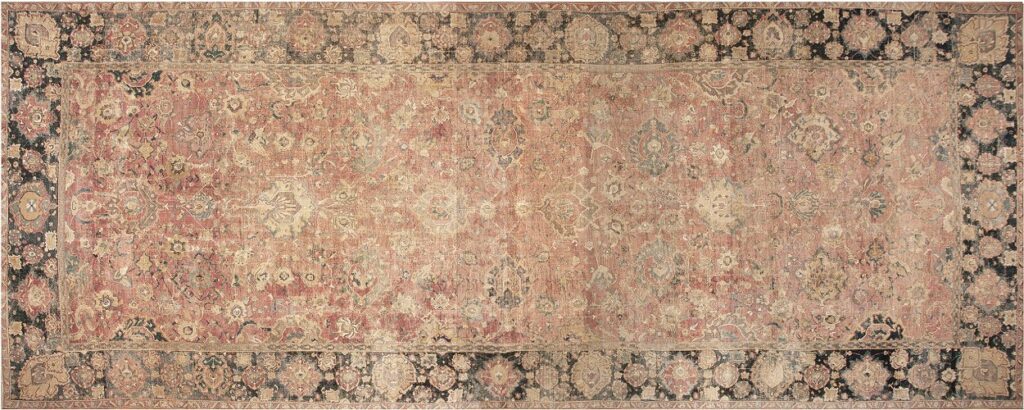
Qajar and Late Persian Carpets (19th–Early 20th Century)
-
- Characteristics:
-
- Incorporation of European floral motifs, sometimes painted-like shading.
-
- Moderate knot density, still high craftsmanship.
-
- Transition to export markets; integration of synthetic dyes in later years.
-
- Characteristics:
-
- The Ziegler Revolution (Sultanabad): In the late 19th century, the British firm Ziegler & Co. fundamentally altered Persian weaving for the Western market. By establishing workshops in Sultanabad, they produced rugs with larger-scale patterns and “distressed” or muted color palettes designed specifically to complement European interior design. Today, “Ziegler Sultanabads” remain among the most coveted 19th-century decorative antiques for their unique synthesis of Persian soul and Western scale.
Anatolian / Turkish Carpets
Early Anatolian / Seljuk Carpets (13th–15th Century)
-
- Characteristics:
-
- Symmetrical knots (Ghiordes), bold geometric patterns.
-
- Star motifs, medallions, and tribal symbolism.
-
- Characteristics:
-
- Materials: Coarse wool, natural dyes.
-
- Function: Both functional nomadic rugs and early court carpets.
Ottoman Period (16th–18th Century)
-
- Characteristics:
-
- Luxury court carpets for palaces and mosques.
-
- Soft wool, intricate floral motifs, medallions, and balanced symmetry.
-
- Integration of silk for highlights in Hereke weavings.
-
- Characteristics:
-
- Significance: Ottoman carpets influenced European interior decoration during the Renaissance and Baroque periods.
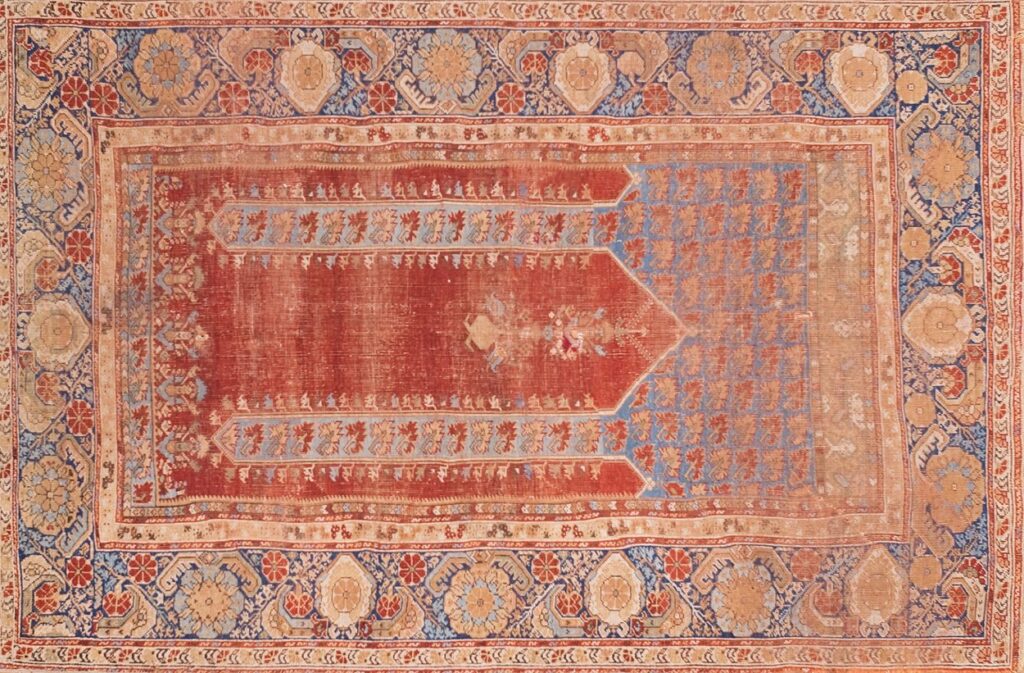
19th Century and Export Carpets
-
- Production increased for European export.
-
- Designs simplified or adapted to Western tastes: more floral, paler colors, lower knot density.
-
- Village and tribal carpets continued using traditional geometric motifs and symmetrical knots.
Caucasian Carpets (Armenia, Azerbaijan, Dagestan, Karabagh, Shirvan)
Early 16th–18th Century Caucasian Carpets
-
- Characteristics:
-
- Geometric guls, medallions, star motifs.
-
- Bold, primary color palettes: reds, blues, ivory, greens, yellows.
-
- Coarse wool, symmetrical knots.
-
- Characteristics:
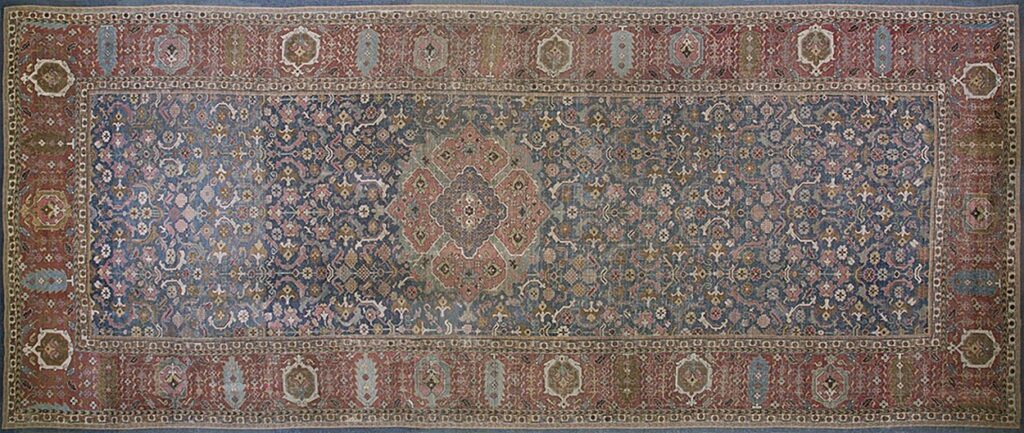
19th Century Caucasian Carpets
-
- Increased production for trade with Europe.
-
- Slight simplification in motif complexity; primary colors remain vibrant.
Turkmen Carpets (Central Asia / Turkmenistan)
Nomadic Carpets (16th–19th Century)
-
- Characteristics:
-
- Symmetrical Ghiordes knots, low to medium knot density.
-
- Dominant red field, ivory or navy motifs.
-
- Repeated guls, octagonal motifs, sometimes stylized animals.
-
- Characteristics:
-
- Materials: Coarse, durable wool; camel hair occasionally for wefts.
-
- Purpose: Nomadic functional carpets for tents, beds, and storage.
Indian Carpets (Mughal Period, 16th–18th Century)
Mughal Court Carpets
-
- Regions: Agra, Jaipur, Kashmir.
-
- Characteristics:
-
- Asymmetrical knots, very high density (up to 400 kpsi).
-
- Fine floral motifs, Persian influence blended with Indian color palettes.
-
- Garden carpet designs and pictorial representations, sometimes including animals or humans.
-
- Characteristics:
-
- Materials: Fine wool, silk highlights, cotton foundations.
-
- Significance: Luxury carpets for royal courts; often influenced later European Orientalist taste.
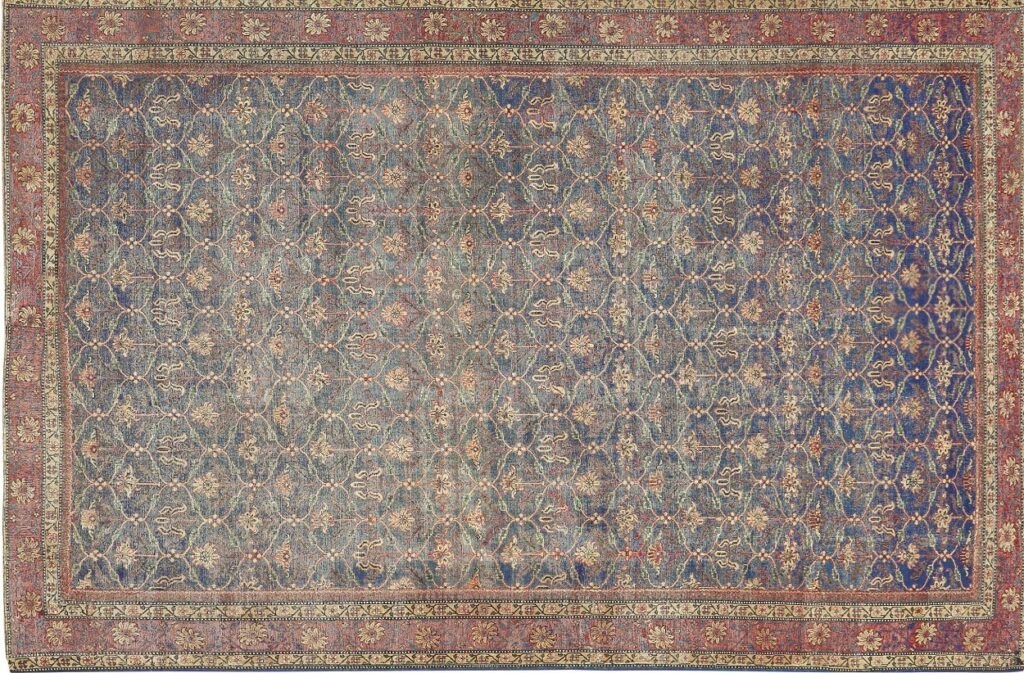
Chinese Carpets (Ming & Qing Dynasties, 16th–18th Century)
-
- Characteristics:
-
- Silk or wool pile with fine knotting (asymmetrical knots).
-
- Imperial symbolism: dragons, clouds, lotuses, medallions.
-
- Bright reds, golds, and blues dominate palette; geometric borders frame motifs.
-
- Characteristics:
-
- Purpose: Ceremonial palace use; integration with Chinese interiors and Buddhist temples.
-
- Materials: Silk highlights, fine wool, cotton foundation.
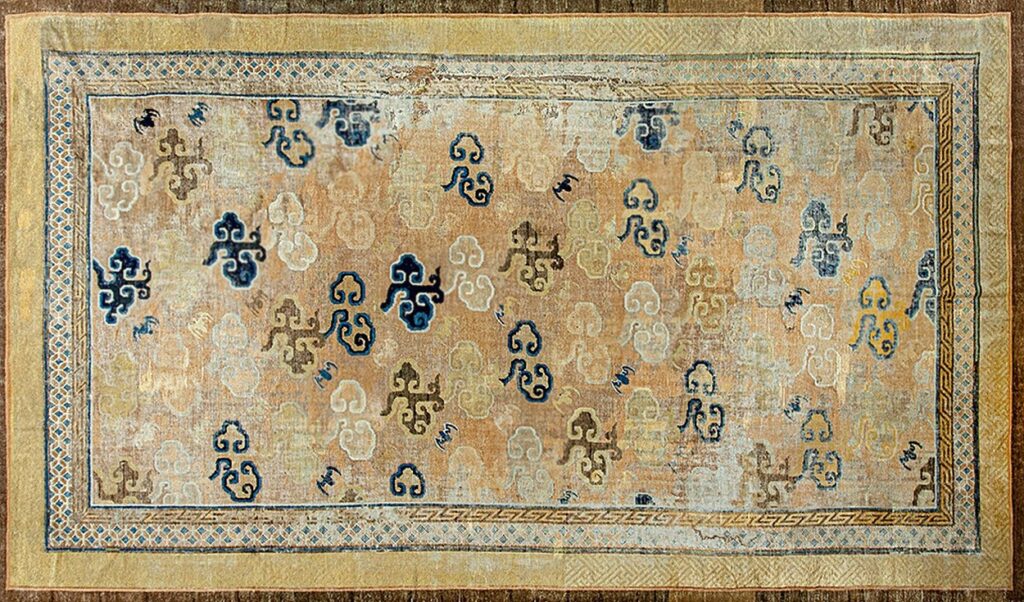
European Rugs (17th–Early 20th Century)
-
- European weaving centers: Aubusson (France), Savonnerie (France), Flanders, England.
-
- Characteristics:
-
- Flatweave tapestries and knotted pile carpets.
-
- Adopted Persian or Anatolian motifs, often adapted to Western floral and decorative styles.
-
- Lower pile than Persian carpets, sometimes used silk or wool blends.
-
- Characteristics:
-
- Significance: Demonstrates East-to-West cultural influence; these carpets often decorated aristocratic interiors.
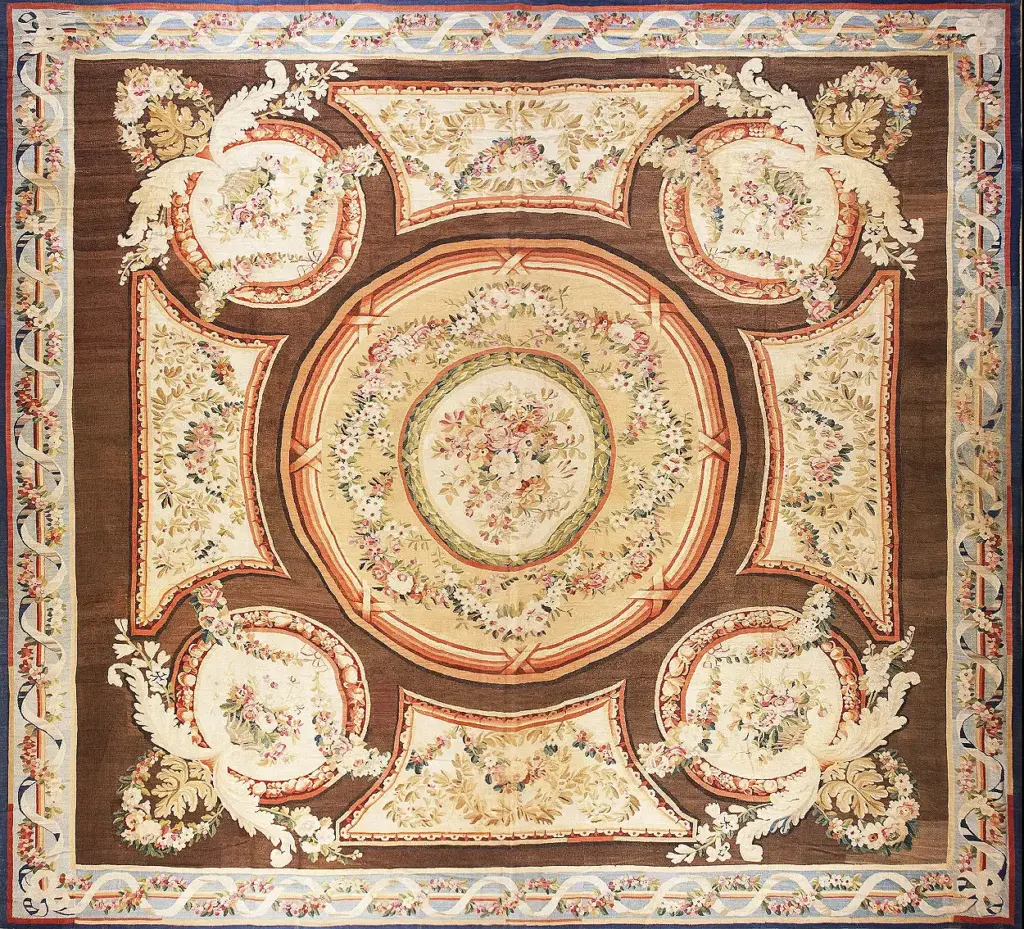
Summary Table: Region, Time, Style, and Features
| Region | Time Period | Knot Type | Materials | Motifs & Style | Key Features |
|---|---|---|---|---|---|
| Persia | Pre-16th c. | Asym. | Wool | Geometric, tribal | Nomadic functional |
| Persia | 16–17th c. | Asym. | Wool, silk | Medallions, florals | Safavid court luxury |
| Anatolia | 13–15th c. | Sym. | Wool | Geometric, stars | Seljuk nomadic carpets |
| Anatolia | 16–18th c. | Sym./Silk | Wool, silk | Floral medallions | Ottoman palace carpets |
| Caucasus | 16–19th c. | Sym. | Wool | Guls, stars | Bold geometric village carpets |
| Turkmen | 16–19th c. | Sym. | Wool | Repeating guls | Nomadic red-field carpets |
| India | 16–18th c. | Asym. | Wool, silk | Mughal floral | High knot density, luxury court |
| China | 16–18th c. | Asym. | Wool, silk | Dragons, lotuses | Imperial palace carpets |
| Europe | 17th–20th c. | Flatweave / Knotted | Wool, silk | Adapted Persian floral | Tapestry style, decorative interiors |
18th–19th Century: Village vs. City Weaving and European Demand Expansion
By the 18th century, carpet production had evolved into a dual system: urban workshops producing high-end, court-influenced carpets, and village/tribal weavers producing locally rooted, functional carpets. At the same time, European demand expanded dramatically, reshaping production, design, and trade networks. This period is critical for understanding both the diversity of antique carpets and the origins of modern collecting practices.
Urban Workshops vs. Village and Tribal Production
Urban Workshops (City Carpets)
City or workshop production built on court carpet traditions and catered increasingly to export markets.
Characteristics include:
-
- Planned designs: Carpet motifs and medallions were drawn by master designers or pattern books.
-
- High-quality materials: Silk highlights, finely hand-spun wool, and cotton foundations were common.
-
- High knot density: Urban carpets maintained precision and durability, often exceeding 200–300 knots per square inch.
-
- Complex motifs: Floral, garden, and medallion designs dominated, reflecting Safavid court influence even decades after its fall.
Major centers included:
-
- Tabriz, Isfahan, Kashan (Persia): Continued to produce “palace-style” carpets for both local elites and export.
-
- Hereke (Ottoman Turkey): Known for silk and wool blends with exceptionally fine knotting.
-
- European influence: Urban weavers often adapted designs and sizes to meet Western tastes, creating carpets that would fit salons and reception rooms.
Village and Tribal Production
In contrast, village and tribal weaving remained nomadic or semi-sedentary and functional,t hough often with aesthetic sophistication:
-
- Design logic: Geometry, tribal guls, and repeating motifs dominated; improvisation and memory guided patterning.
-
- Material constraints: Local hand-spun wool, fewer silk highlights, and coarser cotton warps.
-
- Knot density: Lower than city carpets but sufficient for durability.
-
- Color use: Strong, vibrant natural dyes, often with abrash (subtle color variation across the field).
Even in villages, carpets could carry social or ceremonial significance, serving as dowry pieces, prayer rugs, or trade items. Their value lay not only in functionality but also in cultural identity and aesthetic originality.
European Demand Expansion
By the 18th and 19th centuries, carpets had become highly desirable luxury items in Europe.
This affected both production and collecting:
A. Market Expansion
-
- Growing middle-class consumption: Beyond aristocrats, merchants and wealthy professionals sought Eastern carpets for decoration.
-
- Specialized export workshops: Urban weavers tailored carpets to sizes, motifs, and color palettes preferred in Europe.
-
- European intermediaries: Merchants in Venice, Amsterdam, and London facilitated large-scale trade, sometimes commissioning carpets to order.
B. Influence on Design
-
- Western taste favored lighter palettes, symmetrical patterns, and moderate size to fit interiors.
-
- Adaptations included modifying tribal motifs for European appeal, creating hybrid designs combining nomadic energy with court sophistication.
-
- Standardization: Workshops began producing carpets with more uniform knot density and consistent color, anticipating collector and export expectations.
Technical and Material Developments
-
- Materials: Continued refinement in hand-spun wool, access to silk highlights, and cotton foundations.
-
- Dyes: Natural dyes remained dominant, but early synthetic dyes began appearing by the mid-19th century.
-
- Construction: Urban workshops prioritized precision; village carpets retained practical, durable construction.
-
- Knotting Techniques: Symmetrical (Ghiordes) and asymmetrical (Senneh) knots were both widely used, depending on regional and workshop practices.
Visual and Artistic Trends
-
- City Carpets: Complex medallions, floral sprays, and garden carpets remained dominant. Borders became elaborate, framing the field with multiple guard bands.
-
- Village Carpets: Bold geometric fields, tribal guls, and restrained floral elements reflected local tradition and individual creativity.
-
- Color Dynamics: Abrash became a mark of authenticity in village carpets; urban carpets emphasized consistency but sometimes maintained subtle gradations for artistic effect.
Even within a single region, city and village carpets coexisted, influencing each other and creating a rich spectrum of styles.
The Role of Trade and Collecting
-
- European collectors increasingly valued authenticity, tribal origin, and natural dyes.
-
- Carpets were not only decorative but also investment objects, setting the stage for later scholarly and museum interest.
-
- Auctions and elite salons created a market-driven incentive for workshops to produce carpets that met both aesthetic and material expectations.
This period also marks the transition from purely functional or ceremonial rugs to collectibles, where European appreciation and patronage began shaping global perceptions of “antique quality.”
Summary: Significance of 18th–19th Century Carpets
-
- Foundation for modern collecting: European demand created early documentation, cataloging, and valuation practices still relevant to antique rug scholarship today.
-
- Dual production system: Urban/court-inspired vs. tribal/village functional weaving.
-
- Global trade influence: European markets shaped size, color, and design.
-
- Material and technical refinement: High-quality wool, silk highlights, and consistent knotting.
-
- Cultural preservation: Village rugs retained authentic tribal expressions, while city carpets blended traditional motifs with sophisticated aesthetics.
19th–20th Century Rugs:
The Art Deco Period, Modern Influence, and Synthesis of Global Styles
The 19th and early 20th centuries were a transformative era for carpets. Traditional weaving traditions—tribal, village, and urban—interacted with modern European aesthetics, industrial influences, and global trade networks. This period demonstrates how carpets evolved not just as functional or ceremonial objects, but as dynamic cultural artifacts bridging East and West.
The Late 19th Century: Industrial and Global Changes
Expanding European Markets
-
- European colonial and commercial expansion intensified the export of carpets from Persia, Anatolia, India, and the Caucasus.
-
- Increased demand created specialized urban workshops dedicated to European preferences, standardizing sizes, colors, and motifs.
-
- Auctions, cataloging, and exhibitions helped shape the perception of carpets as collectible art objects rather than solely functional textiles.
Industrial and Technological Influence
-
- While hand-weaving remained dominant, the 19th century saw improvements in spinning, dye preparation, and loom design.
-
- Synthetic dyes were introduced, creating brighter and more uniform colors, although purists valued older natural dyes for their aging quality and depth.
-
- Some workshops began producing semi-industrialized carpets, especially for export, balancing speed with quality.
The Art Deco Period (1920s–1930s)
The Art Deco movement in Europe had a profound impact on rug aesthetics:
-
- Simplification of motifs: Geometric patterns, abstraction, and stylized floral forms became popular, contrasting with intricate medallion and garden carpets of earlier centuries.
-
- New color schemes: Subdued pastels, grays, and bold contrasting combinations aligned with modern interior design.
-
- European reinterpretation of Eastern designs: Designers drew inspiration from Persian, Anatolian, and Caucasian carpets, abstracting motifs to fit modernist sensibilities.
-
- The “Chinese Deco” Phenomenon: While French designers were abstracting Persian motifs, the Walter Nichols workshops in Tientsin, China, were revolutionizing the market. These “Chinese Art Deco” rugs are famous for their thick, luxurious piles, asymmetrical floral sprays, and “Electric” color palettes (emeralds, magentas, and deep purples) that defined the jazz-age aesthetic.
For example:
-
- French interior designers integrated Persian floral patterns into geometrically simplified rugs.
-
- Scandinavian and English designers favored flatweaves and kilims, emphasizing texture and abstraction over elaborate color and detail.
Art Deco helped translate traditional carpet design into a modern language, bridging historical motifs with contemporary taste.
Synthesis of Global Styles
This era witnessed a fusion of Eastern and Western aesthetics:
-
- Persian and Anatolian influence: Continued to dominate design vocabulary, providing motifs, medallions, and border structures.
-
- European innovation: Emphasized simplified layouts, larger field designs, and modern color palettes.
-
- Hybrid carpets: Urban workshops in Persia, Turkey, and India produced carpets that appealed to both traditional and modern markets, often blending nomadic motifs with courtly structure and modern abstraction.
Additionally, Caucasian and Turkmen rugs gained popularity in Europe for their bold geometric designs, influencing both modernist designers and collectors.
Materials and Techniques in the 19th–20th Century
-
- Materials: Wool remained dominant, often high-quality hand-spun. Silk highlights continued for luxury rugs, especially in export or decorative items.
-
- Dyes: The transition from natural to synthetic dyes allowed brighter, more stable colors, though early synthetic dyes sometimes lacked the depth and aging quality of natural pigments.
-
- The 1863 Dye Divide: The mid-19th century marks a “forensic cliff” in rug history. Following the 1863 invention of synthetic dyes, many workshops transitioned from stable natural pigments to early Aniline dyes. To the erudite collector, the presence of “fading” or “bleeding” synthetic colors serves as a definitive timestamp, distinguishing the late-19th-century commercial boom from the earlier, chemically pure “Natural Dye” era
-
- Weaving techniques: Symmetrical and asymmetrical knots persisted; flatweaves and kilims were increasingly incorporated into modern interiors.
-
- Finishing: Urban workshops emphasized precise borders, fringe finishing, and pile consistency, catering to Western collectors’ expectations.
Collecting and Preservation
By the early 20th century, carpets had become:
-
- Museum and collector objects: Scholars and collectors began classifying carpets by region, knot type, design family, and historical period.
-
- Investment items: Prices for high-quality Persian, Anatolian, and Caucasian carpets rose in European markets.
-
- Conservation focus: Awareness grew of the importance of care, storage, and controlled cleaning to maintain color, pile integrity, and foundation strength.
Collectors began differentiating between:
-
- Tribal rugs: Valued for authenticity, bold design, and historical significance.
-
- Court-style carpets: Valued for intricacy, knot density, and artistic refinement.
-
- Hybrid or modern-influenced rugs: Valued for decorative appeal and stylistic innovation.
Legacy and Significance
The 19th–20th century represents the modern culmination of centuries of carpet evolution:
-
- From nomadic function to high art: Carpets transitioned from portable, functional objects to luxury art pieces and collectible heritage.
-
- East-West dialogue: European tastes, industrial advances, and modern design aesthetics influenced carpet production and perception globally.
-
- Preservation of tradition: Despite modernization, regional weaving traditions—Persian, Anatolian, Turkmen, Caucasian, Indian, and Chinese—maintained core techniques, motifs, and symbolic logic.
-
- Foundation for the antique market: The documentation, export, and European appreciation of carpets during this period set the stage for modern scholarship, valuation, and collecting practices.
In essence, the 19th–20th century is where history, art, commerce, and modern aesthetics converge, producing the antique carpets and rugs that remain highly valued today for both their beauty and their cultural significance.
At this point, we have a continuous historical narrative from nomadic origins through the court and village workshops, global trade, European influence, and modern Art Deco reinterpretation.
Regional Histories and Technical Structure of Antique Carpets
Antique carpets are not monolithic; each region of production reflects unique cultural, environmental, and technical conditions. Understanding regional histories illuminates why Persian carpets differ from Anatolian, Caucasian, Turkmen, Indian, Chinese, and European carpets—not only in design and motifs but in construction methods, materials, and weaving techniques.
Persia/Iran
Historical Context
-
- Persia is widely regarded as the cradle of courtly carpet weaving, with a tradition spanning over a millennium.
-
- Major urban centers, particularly Tabriz, Isfahan, Kashan, and Qom, produced high-quality carpets for royal courts, mosques, and wealthy patrons.
-
- Persian carpets served both domestic purposes and export markets, influencing European collectors from the 16th century onward.
Design and Stylistic Traits
-
- Central medallions and symmetrical layouts dominate, often surrounded by intricate corner brackets.
-
- Floral and garden motifs inspired by Persian miniature painting, symbolizing paradise or idealized nature.
-
- Borders are multi-tiered, with repeating palmettes, vine patterns, and guard bands.
-
- Color palettes often include deep crimson, indigo, ivory, and natural greens and yellows.
Technical Structure
-
- Knot Type: Asymmetrical Persian (Senneh) knot for greater detail, although some regions used symmetrical knots.
-
- Foundation: Cotton warps and wefts, occasionally silk for luxury carpets.
-
- Knot Density: Very high, typically 120–400 knots per square inch in urban court carpets.
-
- Pile: Fine wool, soft hand, sometimes with silk highlights.
Persian carpets balance technical precision and artistic expression, making them archetypal court and collector carpets.
Anatolia / Turkey
Historical Context
-
- Anatolia developed both tribal village weaving and urban workshops, influenced by Seljuk, Ottoman, and European markets.
-
- Key centers: Hereke, Bergama, Konya, and smaller village looms.
-
- Anatolian carpets were both functional for local households and prestigious exports.
Design and Stylistic Traits
-
- Tribal motifs dominate village carpets: geometric guls, medallions, and stylized animals.
-
- Urban carpets feature refined floral and palmette patterns, with Ottoman court influence evident in medallions and borders.
-
- Color palettes: Rich reds, cobalt blues, and ivory, often with strong contrast and bold graphic patterns.
Technical Structure
-
- Knot Type: Symmetrical Turkish (Ghiordes) knot is standard, producing durable, uniform pile.
-
- Foundation: Cotton or wool warps; silk occasionally in luxury Hereke carpets.
-
- Knot Density: Lower in tribal carpets (30–120 knots/in²), higher in urban exports (150–350 knots/in²).
-
- Pile: Medium to fine wool, sometimes silk highlights in workshop pieces.
Anatolian carpets are distinctive for geometric clarity, bold color contrasts, and enduring durability, reflecting both nomadic and urban influences.
Caucasus
Historical Context
-
- The Caucasus region, encompassing Armenia, Azerbaijan, Karabagh, Shirvan, and Daghestan, produced carpets for tribal, local elite, and export markets.
-
- Weaving was often nomadic or semi-sedentary, preserving tribal identities.
Design and Stylistic Traits
-
- Bold geometric guls and medallions are characteristic.
-
- Stylized motifs often include stars, animals, and symbolic tribal emblems.
-
- Color use is vibrant: deep reds, bright blues, ivory, and yellow highlights.
Technical Structure
-
- Knot Type: Both symmetrical (Turkish/Ghiordes) and asymmetrical (Persian/Senneh) knots appear depending on subregion.
-
- Foundation: Wool or cotton, rarely silk.
-
- Knot Density: Moderate, generally 30–150 knots/in².
-
- Pile: Coarser wool than Persian carpets, reflecting durability and nomadic practicality.
Caucasian carpets are graphically bold, durable, and visually striking, making them highly prized among collectors for their tribal authenticity.
Turkmen and Central Asia
Historical Context
-
- Tribal Turkmen weavers (Tekke, Yomut, Ersari) produced carpets for nomadic use and trade.
-
- Carpets often reflected tribal identity, marking clan ownership through signature motifs.
Design and Stylistic Traits
-
- Dominated by guls and octagonal medallions, repeated across the field.
-
- Minimal floral influence; geometry and symbolic motifs prevail.
-
- Strong color contrasts: deep red, indigo, brown, and natural ivory.
Technical Structure
-
- Knot Type: Symmetrical (Ghiordes) knot is standard.
-
- Foundation: Wool warps and wefts; cotton rarely used.
-
- Knot Density: Low to moderate, typically 20–100 knots/in².
-
- Pile: Coarse wool, robust and durable for nomadic life.
Turkmen carpets exemplify tribal purity and visual rhythm, emphasizing symbolic repetition over pictorial refinement.
India
Historical Context
-
- Mughal-era India (16th–18th centuries) integrated Persian motifs with local techniques, producing Agra, Jaipur, and Kashmiri carpets.
-
- Carpets were made for palaces, mosques, and elite households, often influenced by imported Persian designs.
Design and Stylistic Traits
-
- Floral motifs, medallions, and garden designs derived from Persian tradition.
-
- Colors: soft blues, ivory, pinks, and greens.
-
- Often lighter and more delicate than Persian urban carpets, suited for palace interiors.
Technical Structure
-
- Knot Type: Asymmetrical Persian knot dominates.
-
- Foundation: Cotton warps and wefts, sometimes silk highlights.
-
- Knot Density: Medium to high, 120–250 knots/in².
-
- Pile: Fine wool or silk, soft hand.
Indian carpets reflect a fusion of Persian artistry with regional sensibilities, producing elegant and detailed works prized for refinement and beauty.
China
Historical Context
-
- Chinese carpets were historically produced for imperial palaces and ceremonial use.
-
- Carpet production increased in the 17th–20th centuries with Qing dynasty court workshops.
Design and Stylistic Traits
-
- Motifs: Dragons, clouds, lotus flowers, and stylized garden patterns.
-
- Geometric and floral influences from Persian carpets appear in border treatments.
-
- Color palettes: Red, gold, blue, green—often symbolic in court culture.
Technical Structure
-
- Knot Type: Primarily asymmetrical, some symmetrical.
-
- Foundation: Silk or wool warps and wefts; silk used for luxury court carpets.
-
- Knot Density: Medium to high, 100–200 knots/in².
-
- Pile: Soft wool or silk, high luster.
Chinese carpets demonstrate fusion of Persian influence and indigenous symbolism, often produced for ceremonial or elite consumption.
European Workshops
Historical Context
-
- European centers like Aubusson, Savonnerie, and Brussels adapted Eastern designs for tapestry-style production and local interiors.
-
- They were influenced by imported Persian and Anatolian carpets, but produced carpets using local materials and techniques.
Design and Stylistic Traits
-
- Aubusson and Savonnerie: elaborate floral designs, often in subdued European palettes.
-
- Brussels: imitation of Persian medallions and garden motifs.
-
- Integration with furniture and interior architecture emphasized decorative function over floor insulation.
Technical Structure
-
- Knot Type: Brussels carpets often use cut-and-loop techniques or tapestry weaving, not traditional knots.
-
- Foundation: Wool and silk blends.
-
- Pile: Medium to fine; sometimes flatweave or low-pile construction.
-
- Purpose: Decorative, aligned with European salon or palace interiors.
European carpets reflect adaptation rather than direct imitation, blending Eastern design influence with Western artistic priorities.
Summary: Technical Diversity Across Regions
| Region | Knot Type | Foundation | Knot Density | Materials | Visual Traits |
|---|---|---|---|---|---|
| Persia | Asymmetrical (Senneh) | Cotton, silk | High | Fine wool, silk | Medallions, floral, gardens |
| Anatolia | Symmetrical (Ghiordes) | Cotton, wool, silk | Low–High | Wool, silk highlights | Geometric, bold tribal, medallions |
| Caucasus | Symmetrical/Asymmetrical | Wool, cotton | Moderate | Wool | Bold guls, geometric, vibrant |
| Turkmen | Asymmetrical | Wool | Low–Moderate | Wool | Tribal guls, geometric repetition |
| India | Asymmetrical | Cotton, silk | Medium–High | Wool, silk | Persian floral, medallions |
| China | Primarily Asymmetrical | Silk, wool | Medium–High | Silk, wool | Dragons, clouds, lotus, borders |
| Europe | Various tapestry/weaving | Wool, silk | Medium | Wool, silk | Floral, salon-oriented, adapted Eastern motifs |
In regards to the Turkmen knotting: While some tribes (like the Yomut) used symmetrical knots, the Tekke (the most famous Turkmen weavers) primarily used Asymmetrical knots.
Weaving Types and Knot Integrity in Antique Carpets
The structural foundation of a carpet—its weaving method and knotting technique—determines not only durability and pile quality but also the complexity of its design and the overall aesthetic effect. Across the centuries, artisans developed and refined distinct weaving types and knotting styles, balancing artistry with functional demands.
Core Weaving Techniques
At the most fundamental level, antique carpets are composed of:
-
- Warp threads: The vertical threads that run lengthwise along the loom.
-
- Weft threads: The horizontal threads that interlace with the warps to secure knots and build structure.
-
- Pile knots: Loops of wool, silk, or cotton tied around the warp threads to create the visible surface of the rug.
Two primary types of weaving dominate antique carpets:
Knotted Pile Carpets
This is the most iconic type of antique rug, where the pile is created by tying knots around the warp threads.
-
- Advantages: Durability, ability to create intricate designs, luxurious texture.
-
- Historical prevalence: Originated with nomadic carpets and perfected in urban workshops.
-
- Applications: Persian medallion carpets, Anatolian village rugs, Caucasian guls, and Indian Mughal carpets.
Flatweaves (Kilims, Soumaks)
Flatweave carpets are woven without knots; the design emerges from interlacing warp and weft threads, often creating geometric or linear patterns.
-
- Kilims: Simple tapestry weave; warp threads are visible on the reverse.
-
- Soumak: Weft threads are wrapped around the warps, producing a slightly raised, embroidered effect.
-
- Advantages: Lightweight, portable, durable, reversible.
-
- Usage: Nomadic and village rugs, prayer rugs, and decorative panels.
Flatweaves are particularly associated with tribal and nomadic traditions, emphasizing practicality while retaining strong aesthetic identity.
Knot Types and Their Regional Significance
The knot is the defining structural unit of pile carpets, and its type affects detail, density, durability, and aesthetic flexibility.
Symmetrical Knot (Ghiordes / Turkish Knot)
-
- Method: Each knot loops around two adjacent warp threads, then both ends are pulled upward evenly.
-
- Appearance: Produces uniform, durable pile with slightly looser definition in intricate designs.
-
- Regions: Anatolia (Turkey), Caucasus, Turkmen carpets.
-
- Advantages: Extremely strong and resilient; ideal for high-traffic areas.
-
- Design implications: Geometric motifs and tribal patterns benefit from this knot because it produces crisp edges and bold shapes.
Asymmetrical Knot (Senneh / Persian Knot)
-
- Method: Knot wraps around one warp thread and passes under the adjacent warp, leaving one end shorter.
-
- Appearance: Allows finer detail and smoother curves.
-
- Regions: Persia/Iran, India, parts of China.
-
- Advantages: Higher potential knot density; ideal for floral motifs, medallions, and pictorial designs.
-
- Design implications: Central medallions, intricate floral vines, and figurative imagery can be rendered with remarkable precision.
Other Knot Variants
-
- Jufti knot: Loops over four warps at once, used for speed; less durable, common in decorative or export carpets.
-
- Senneh double and triple variants: Employed in luxury Persian or Indian carpets to achieve extreme knot density and detail.
Knot Density and Carpet Value
Knot density—usually measured in knots per square inch (kpsi)—directly impacts design precision, durability, and market value.
-
- Low density (20–80 kpsi): Durable, suitable for geometric tribal rugs.
-
- Medium density (100–200 kpsi): Balances detail and strength; typical of village or small urban carpets.
-
- High density (200–400+ kpsi): Court and luxury carpets; allows for intricate floral and figurative motifs.
Higher knot density generally correlates with finer design, softer hand, and higher market value, though tribal authenticity and visual impact can make lower-density rugs equally prized.
Weaving Structure and Longevity
The integrity of the weave determines how well a carpet withstands centuries:
-
- Warp quality: Strong, well-spun wool or cotton ensures the carpet can endure tension and foot traffic.
-
- Weft tension: Tight wefts secure knots and prevent distortion.
-
- Pile height and trimming: Proper pile height protects motifs while maintaining texture.
-
- Edge finishing: Selvedges, fringes, and binding prevent unraveling.
Even the finest knotting will fail if warp and weft construction are weak. High-quality Persian or Anatolian court carpets exemplify mastery of both knot and foundation integrity, ensuring longevity of 300+ years in some cases.
Interaction Between Knot Type and Design
The knot type also interacts with pile height and density: short piles allow higher density and precision; longer piles create a plush surface and enhanced color depth.
Symmetrical knots excel in bold, geometric motifs (Turkmen, Caucasian, Anatolian village carpets).
Asymmetrical knots excel in curvilinear, floral, or figurative designs (Persian medallion carpets, Mughal designs).
Weaving Types and Regional Correlation
| Region | Weaving Type | Knot Type | Knot Density | Design Implications |
|---|---|---|---|---|
| Persia | Knotted pile | Asymmetrical (Senneh) | 120–400 kpsi | Medallions, floral, detailed curves |
| Anatolia | Knotted pile | Symmetrical (Ghiordes) | 30–350 kpsi | Geometric, bold, tribal patterns |
| Caucasus | Knotted pile | Symmetrical/Asymmetrical | 30–150 kpsi | Geometric guls, stars, vibrant motifs |
| Turkmen | Knotted pile | Symmetrical (Ghiordes) | 20–100 kpsi | Tribal repetition, bold guls |
| India | Knotted pile | Asymmetrical (Senneh) | 120–250 kpsi | Mughal floral, garden carpets |
| China | Knotted pile | Primarily Asymmetrical | 100–200 kpsi | Dragons, clouds, lotus motifs |
| Europe | Flatweave/Tapestry | N/A | N/A | Adapted Eastern motifs, stylized floral |
Why Knot Integrity Matters
-
- Durability: Strong knots prevent unraveling over centuries.
-
- Artistic clarity: Consistent knotting allows precise rendering of patterns.
-
- Value assessment: Knot density and uniformity are key factors in appraising antique rugs.
-
- Historical insight: Knot type and structure reveal region, era, and workshop tradition.
In essence, understanding weaving types and knot integrity allows collectors, historians, and conservators to assess authenticity, age, provenance, and artistry in antique carpets. It is the bridge between technical mastery and visual beauty, defining why certain rugs survive centuries as treasured works of art.
Materials and Dyes: “Foundation” of an Antique Carpet
The materials and dyes used in carpet weaving are as critical as knot type or weaving technique. They influence texture, longevity, colorfastness, and overall artistic effect. By studying these elements, collectors and historians can understand regional characteristics, historical authenticity, and cultural value.
Foundation Materials
The warp, weft, and pile fibers constitute the structural and tactile foundation of a carpet. Their selection is dictated by regional availability, intended use, and social context.
Wool
-
- Most common pile material across regions.
-
- Sources: Sheep breeds native to Persia, Anatolia, Turkmenistan, India, and the Caucasus.
-
- Properties: High tensile strength, natural elasticity, resilience under foot traffic, and ability to absorb dyes deeply.
-
- Regional notes:
-
- Persian carpets favored fine, soft wool for luxury court pieces.
-
- Turkmen and Anatolian tribal carpets often used coarser, more durable wool for practicality.
-
- Regional notes:
Cotton
-
- Primarily used for warp and weft in urban workshop carpets.
-
- Provides stability and dimensional control, allowing higher knot density.
-
- Persian and Indian court carpets often had cotton foundations, enabling extremely intricate patterns.
Silk
-
- Used for luxury carpets or highlights.
-
- Provides luster, fine detail, and softness, allowing visual effects like shimmering motifs.
-
- Regions: Isfahan and Kashan (Persia), Hereke (Turkey), and Chinese imperial carpets.
-
- Silk carpets often had high knot density, sometimes exceeding 400 knots per square inch.
Natural Dyes: Organic Chemistry Meets Aesthetics
Before synthetic dyes (mid-19th century), carpets relied entirely on plant, insect, and mineral-derived pigments. The chemical composition of these dyes affects color stability, vibrancy, and aging.
Common Dye Sources
Natural Dyes: Organic Chemistry Meets Aesthetics
Before synthetic dyes (mid-19th century), carpets relied entirely on plant, insect, and mineral-derived pigments. The chemical composition of these dyes affects color stability, vibrancy, and aging.
Common Dye Sources
| Color | Source | Region / Use |
|---|---|---|
| Red | Madder root (Rubia tinctorum), Cochineal insects | Persia, Anatolia, India, Europe |
| Blue | Indigo (Indigofera tinctoria, woad) | Persia, India, Anatolia |
| Yellow | Weld, turmeric, pomegranate rind, saffron | Persia, India, Anatolia, Caucasus |
| Brown | Walnut husks, oak galls, iron mordants | Across all regions |
| Green | Overdyeing yellow with indigo | Persia, Anatolia |
| Black | Iron or logwood combined with tannins | Persia, Anatolia |
Many colors were created through layering or “overdyeing”—for example, yellow over blue to produce green—demonstrating sophisticated chemical understanding by weavers.
Mordants: Fixing Colors
-
- Mordants are substances that bind dye to fiber, enhancing colorfastness.
-
- Common mordants: alum, iron, tin, and sometimes natural tannins.
-
- Mordants affected both brightness and longevity:
-
- Alum → bright, stable colors.
-
- Iron → darker, muted tones (“saddening” effect).
-
- Mordants affected both brightness and longevity:
-
- Knowledge of mordants was regionally transmitted, often as closely guarded secrets in urban workshops.
Regional Dye Preferences and Styles
-
- Persia: Deep, saturated reds from madder; rich indigo blues; golds from weld or saffron. Subtle tonal variation (abrash) adds depth.
-
- Anatolia: Strong contrast reds and blues, often more intense than Persian shades.
-
- Caucasus: Vibrant primary colors; yellows from weld and pomegranate; indigo blue dominant.
-
- Turkmen: Dominantly red fields with indigo and ivory highlights.
-
- India: Softer pastels; integration of Persian palette with local plant dyes.
-
- China: Rich red and gold tones for imperial carpets; subtle blues and greens for secondary motifs.
Interaction Between Material and Dye Chemistry
The fiber choice directly impacts dye behavior:
-
- Wool absorbs natural dyes readily, allowing rich, deep colors.
-
- Silk allows shimmering highlights, but dyes can appear more translucent; requires careful mordanting.
-
- Cotton foundations provide color stability for warps and wefts, ensuring that motifs framed by these threads remain distinct over centuries.
Additionally, pile thickness interacts with dye penetration:
-
- Short pile + high knot density → precise color placement, detailed imagery.
-
- Longer pile → colors blend optically, producing “heavenly” gradient effects in floral and medallion patterns.
Aging, Fading, and Collecting Considerations
-
- Abrash: Slight variations in color due to differences in dye batches or wool absorption; considered aesthetically desirable.
-
- Fading patterns: Sunlight, humidity, and cleaning methods affect chemical stability.
-
- Collector insight: Understanding dyes and fiber allows dating, regional attribution, and authenticity assessment.
Example: A Persian Isfahan carpet with consistent deep madder red, soft indigo blue, and silk highlights indicates early 17th–18th century court-level production, whereas uneven bright synthetic reds suggest 19th-century European influence or later production.
Summary: Materials and Dyes as Foundations
-
- Fibers: Wool, cotton, silk — determine texture, durability, and knot density potential.
-
- Natural dyes: Derived from plants, insects, minerals — chemically sophisticated, regionally distinct.
-
- Mordants: Alum, iron, tin — fix dyes, influence tone and longevity.
-
- Regional variation: Each region had its own palette, technique, and fiber-dye combination.
-
- Visual impact: Color depth, tonality, and shading interact with knot density and pile to create the rich aesthetic appeal of antique carpets.
In short, materials and dyes are the chemical backbone of antique rugs, linking the tactile experience to regional identity, historical context, and visual artistry. Without understanding fiber chemistry and natural dyes, even expert analysis of design or knot structure remains incomplete.
Condition, Aging, and Authenticity of Antique Carpets
When studying or collecting antique carpets, evaluating condition, the effects of aging, and authenticity is just as crucial as understanding origin, weaving technique, or design. Carpets are living artifacts: their fibers, dyes, and structures interact with environmental factors over centuries, producing signs of age that can enhance or reduce value. Knowledge of these factors allows collectors, conservators, and historians to distinguish authentic carpets from reproductions and assess long-term durability.
Understanding Carpet Condition
Condition refers to the overall structural integrity, pile health, and visual clarity of a carpet. Key aspects include:
Structural Condition
-
- Warp and weft integrity: Look for tension loss, broken warps, or loosened wefts, which can compromise durability.
-
- Selvedges and fringes: Fringes protect the carpet’s ends; fraying or replacement may indicate restoration or age.
-
- Knot retention: Missing or loose knots can affect both design clarity and structural stability.
Pile Condition
-
- Wear patterns: High-traffic areas often show flattening or abrading.
-
- Pile loss: Localized thinning can occur, particularly near entrances, seating areas, or corners.
-
- Foundation Exposure: Significant thinning often reveals the “shoulder” of the knot, offering a diagnostic opportunity. This “foundation peek” allows for the definitive verification of the warp and weft materials—such as confirming a rigid cotton foundation versus a more supple wool one—without invasive testing.
-
- Softness and resilience: Fine wool or silk piles retain softness longer; coarser tribal wool may feel harsh but is durable.
Surface Appearance
-
- Abrash: Variation in color due to natural dye differences or fading; valued aesthetically if subtle.
-
- Linear Abrash: While modern reproductions often mimic color variation, authentic antique abrash is strictly correlated to the horizontal path of the weft. Because it represents a specific moment where a weaver transitioned between dye batches, the shift should be consistent across the horizontal plane, providing a visual map of the rug’s organic creation process.
-
- Abrash: Variation in color due to natural dye differences or fading; valued aesthetically if subtle.
-
- Stains and discoloration: From water, sun exposure, or household use; may affect value.
-
- Patina: A natural mellowing of colors over time, considered desirable in high-quality antique carpets.
Aging: Natural Processes and Their Effects
Aging transforms carpets over decades and centuries. Key factors include:
Environmental Effects
-
- Light exposure: Sunlight fades reds, blues, and yellows differently; silk highlights are particularly sensitive.
-
- Humidity and moisture: High moisture can weaken warps and promote mold or mildew.
-
- Temperature fluctuations: Can dry fibers or warp the foundation, altering tension and knot stability.
Wear and Use
-
- Nomadic carpets: Often show even wear and dirt embedded in pile; tell a story of functional life.
-
- Court or palace carpets: Show less abrasion in central areas if ceremonial, but edges may suffer from foot traffic or folding.
-
- Vintage floor rugs: High-traffic areas tend to flatten pile, which can reveal knot density and foundation structure under careful examination.
Chemical Changes in Fibers and Dyes
-
- Wool oxidation: Natural fibers darken slightly over centuries, adding depth to reds and browns.
-
- Selective Corrosion (Low-Relief): Certain natural dyes, particularly dark browns and blacks utilizing iron mordants, tend to oxidize and corrode the wool fibers faster than lighter shades. This creates a distinctive “low-relief” effect where dark motifs appear slightly recessed—a sophisticated hallmark of genuine age that is nearly impossible to replicate authentically in modern productions.
-
- Wool oxidation: Natural fibers darken slightly over centuries, adding depth to reds and browns.
-
- Dye degradation: Natural dyes often mellow rather than fade completely; synthetic dyes introduced in the mid-19th century can produce uneven fading or bright spots.
-
- Silk sheen loss: Silk highlights lose luster with abrasion and age, though the fibers remain intact if cared for.
Indicators of Authenticity
Determining authenticity involves assessing design, materials, weaving technique, and signs of age.
Some pointers:
Materials
-
- Wool, cotton, and silk fibers should be consistent with the region and period.
-
- Synthetic dyes indicate 19th–20th century or later production, whereas natural dyes suggest pre-1850 origin in most cases.
Knotting and Weaving
-
- Knot type, density, and irregularities reflect regional tradition and artisan skill.
-
- Minor inconsistencies are expected in handwoven carpets and indicate authenticity; perfect uniformity often suggests machine-made or reproduction carpets.
Design and Pattern
-
- Symmetry, medallion placement, and motif repetition should match known regional styles.
-
- Tribal and nomadic rugs often show slight geometric irregularities, which are a hallmark of handweaving.
Signs of Age
-
- Even wear, subtle abrash, mellowed colors, and minor pile thinning indicate genuine antique aging.
-
- Restoration should be distinguishable: replaced knots, inconsistent dyes, or overly uniform edges may indicate modern repair.
Documentation
-
- Provenance (ownership history) and previous appraisals enhance credibility.
-
- Comparative analysis with museum or auction examples allows experts to verify style, technique, and age.
Restoration, Conservation, and Ethical Considerations
-
- Minor reweaving or fringe replacement is common to stabilize antique carpets.
-
- Over-restoration can reduce value if it alters design or uses modern fibers/dyes.
-
- Best practices involve reversible conservation techniques, preserving historical integrity.
-
- Conservators often aim to maintain visual and structural balance rather than make the carpet appear “new.”
Condition vs. Market Value
-
- Excellent condition, high knot density, and natural dyes → highest collector value.
-
- Moderate wear with authentic aging → still highly prized for historical and aesthetic authenticity.
-
- Severe damage, over-restoration, or synthetic dyes in “antique” style → reduced market value, although rare motifs may still attract interest.
Collectors often seek a balance: a rug that displays signs of age, has a patina, and maintains structural integrity is often considered the most desirable.
Summary: Why Condition, Aging, and Authenticity Matter
-
- Structural assessment: Ensures long-term preservation and usability.
-
- Visual evaluation: Abrash, patina, and pile wear contribute to aesthetic and historical value.
-
- Historical verification: Materials, knotting, and dyes reveal region, era, and workshop.
-
- Investment and preservation: Knowledge of condition guides purchasing, restoration, and conservation.
In short, understanding condition, aging, and authenticity allows collectors and scholars to distinguish a centuries-old masterpiece from modern imitation, preserving both artistic and historical legacy.
So why does all this matter?
-
- Investment Protection: Understanding the difference between natural patina and structural decay prevents costly acquisitions of over-restored pieces.
-
- Historical Veracity: Signs of age like iron-mordant corrosion or specific fading patterns act as a “fingerprint” for a carpet’s era.
-
- Tactile Heritage: The mellowing of fibers over centuries creates a “hand” or handle that modern machine-made replicas cannot replicate.
-
- Market Positioning: For the collector, a rug with 15% restoration is vastly different in the secondary market than one with 50% re-weaving.
Valuation, Care, and Collecting
Understanding Value in Antique Carpets
The value of an antique carpet is a nuanced combination of artistic, historical, technical, and market factors. Unlike commodities or mass-produced textiles, antique rugs carry layers of cultural meaning, craftsmanship, and rarity that directly influence appraisal and collector interest. Understanding these elements allows both collectors and historians to assess price, historical significance, and long-term investment potential.
Historical and Cultural Significance
Antique carpets are valued for their connection to specific historical periods, regions, and weaving traditions:
-
- Court vs. tribal origin: Court or city carpets, such as 17th–18th century Persian Isfahan rugs, are often highly prized for complexity, high knot density, and aesthetic refinement. Tribal or village rugs, while simpler, are culturally significant for reflecting nomadic traditions and local symbolism.
-
- Era of production: Carpets from certain periods—Safavid Persia, Ottoman Empire, Mughal India, or early Art Deco Europe—carry historical prestige. Early carpets often command higher value due to rarity and preservation of traditional techniques.
-
- Provenance: Documentation of previous ownership, particularly by royal or aristocratic collectors, enhances value. A rug with museum-quality provenance or inclusion in historical interiors gains both monetary and scholarly interest.
Technical Mastery
Technical factors influence both durability and aesthetic sophistication:
Knot Density and Precision
-
- Higher knot density allows finer motifs, detailed medallions, and subtle color gradation.
-
- A 200+ knots per square inch Persian court carpet typically commands more value than a 40–60 knots per square inch tribal rug, all else equal.
Knot Type and Weaving
-
- Asymmetrical (Senneh) knots allow greater design flexibility; symmetrical (Ghiordes) knots emphasize durability and geometric clarity.
-
- Carpets with complex knotting techniques or innovative weaving styles are often considered masterpieces of technical artistry.
Pile Quality and Material
-
- Fine wool and silk contribute to softness, sheen, and color vibrancy.
-
- Coarser wools or cotton foundations may reduce tactile luxury but can enhance durability and tribal authenticity.
-
- Carpets with silk highlights, unusually fine wool, or expertly spun threads carry premium value.
Artistic and Aesthetic Value
A carpet’s visual appeal and symbolic richness strongly affect perception and market valuation.
For exampmle:
-
- Motif complexity: Medallions, floral gardens, and narrative designs can be more sought after than simple geometric repeats in high-end markets.
-
- Color palette: Harmonious use of natural dyes, subtle abrash, and region-specific colors (like Persian indigo and crimson) are desirable.
-
- Balance and symmetry: Court carpets often emphasize perfect symmetry, while tribal rugs are appreciated for their authentic irregularities.
-
- Cultural symbolism: Iconography such as Turkmen guls, Persian boteh, or Caucasian stars increases collector interest and cultural value.
Condition, Aging, and Authenticity
As covered previously, these factors directly affect value:
-
- Excellent condition: Undamaged pile, strong warps, and minimal restoration yield higher market value.
-
- Signs of age: Subtle abrash, mellowed colors, and patina are aesthetically pleasing and historically credible.
-
- Authenticity verification: Natural dyes, handspun fibers, and correct knotting types confirm origin and period, elevating value.
-
- Restoration effects: Minor, skillful conservation can maintain value; over-restoration or synthetic replacements often reduce it.
Rarity and Regional Importance
-
- Limited production: Carpets from workshops that ceased operation centuries ago or rare tribal designs command premium prices.
-
- Unique motifs: One-of-a-kind designs or carpets from historically significant regions (e.g., early Safavid Isfahan, Hereke silk carpets) are highly collectible.
-
- Regional variation: Carpets representing a definitive regional style, such as a Turkmen Tekke or Caucasian Karabagh, are often more valuable than generic patterns.
Market Dynamics and Collecting Trends
-
- Auction results: High-profile auctions establish benchmarks for pricing antique carpets.
-
- Collector demand: Trends may influence value; for example, Persian court carpets, Turkmen guls, and Caucasian bold geometries have historically been most sought after.
-
- Global markets: European, North American, and Asian collectors may emphasize different traits, affecting pricing.
-
- The “Decorative” vs. “Collectible” Divergence: High-end valuation often splits into two categories: “Decorative” rugs, valued for their size, color harmony, and usability in modern interiors (e.g., oversized Sultanabads or Oushaks), and “Collectible” rugs, valued for their rarity, early date, and historical purity (e.g., 17th-century fragments or rare tribal guls), even if they possess significant wear.
Investment vs. Aesthetic Value
Many collectors purchase antique carpets as investment assets.
Their intrinsic value also lies in artistic and cultural appreciation:
-
- Investment considerations: Authenticity, rarity, materials, knot density, and condition determine market price stability.
-
- Aesthetic considerations: Composition, color harmony, symbolism, and tactile quality may outweigh market trends for certain collectors.
A well-chosen antique carpet balances technical excellence, historical significance, aesthetic beauty, and condition, offering both scholarly and financial value.
Components of Value
-
- Historical Significance: Court vs. tribal, period, provenance.
-
- Technical Mastery: Knot density, knot type, materials, and weaving precision.
-
- Artistic and Aesthetic Appeal: Motifs, color, balance, and symbolism.
-
- Condition and Aging: Patina, wear, restoration, authenticity.
-
- Rarity and Regional Importance: Unique designs, limited production, cultural representation.
-
- Market Trends and Collector Interest: Auction records, demand, and regional preferences.
Understanding value requires integrating historical, technical, and artistic knowledge, allowing collectors, historians, and appraisers to accurately assess the significance, rarity, and worth of an antique carpet.
Maintenance and Preservation of Antique Carpets
Antique carpets are living objects: even centuries-old masterpieces require thoughtful care to maintain their structural integrity, visual beauty, and historical value. Proper maintenance and preservation are essential to prevent fiber degradation, color fading, or structural damage, while respecting the original craftsmanship.
Environmental Considerations
The environment in which a carpet is displayed or stored has the greatest impact on its longevity.
A. Light Exposure
-
- Direct sunlight causes fading, particularly in red, yellow, and blue natural dyes.
-
- UV protection: Use filtered light or rotate carpets periodically to avoid uneven fading.
-
- Artificial lighting: Avoid high-intensity halogen or LED lights with UV emissions; warm, diffuse lighting is preferred.
B. Humidity and Temperature
-
- Ideal relative humidity: 40–60% to prevent fibers from drying and becoming brittle or encouraging mold growth.
-
- Temperature control: Avoid extremes; consistent moderate temperatures reduce expansion and contraction of warps and wefts.
-
- Ventilation: Proper air circulation prevents moisture accumulation while avoiding direct drafts, which can dry fibers unevenly.
Physical Handling
Handling and placement significantly affect carpet preservation:
-
- Avoid folding: Folding can permanently crease fibers and weaken warps. Roll carpets with pile facing inward for storage.
-
- Rotation: Rotate rugs on floors to distribute wear evenly.
-
- Protect from heavy furniture: Place protective pads or gliders under furniture legs to prevent crushing or pile deformation.
-
- Foot traffic: Limit high-traffic exposure for delicate or high-value pieces; use runners or secondary carpets for protection.
Cleaning Practices
Cleaning must balance aesthetics, fiber health, and dye stability.
A. Routine Maintenance
-
- Vacuuming: Gently vacuum the front (pile side) with low suction; avoid beater bars that can pull knots.
-
- Shaking or beating: Traditional for tribal rugs; only for small, sturdy carpets, and done lightly.
B. Deep Cleaning
-
- Water-based cleaning: Use mild pH-neutral solutions and soft brushes or hands; avoid excessive soaking.
-
- Professional conservation: For large or valuable carpets, employ trained rug conservators who understand fiber chemistry and historical dye behavior.
-
- Avoid harsh chemicals: Bleach, strong detergents, or ammonia can permanently damage natural dyes and wool or silk fibers.
Pest Management
Insect damage is a critical threat to antique carpets, particularly wool and silk piles.
-
- Common pests: Moths, carpet beetles, and silverfish.
-
- Prevention:
-
- Store carpets in clean, dry environments.
-
- Use cedar-lined storage, moth repellents, or low-heat freezing treatments for small pieces.
-
- Prevention:
-
- The “Quiet Corner” Risk: Invaluable carpets are most vulnerable in areas where they are undisturbed, such as under heavy furniture or in dark, low-traffic rooms. Regular “mechanical” disturbance—simply walking on the rug or moving it—is often the best non-chemical deterrent against moth larvae, which thrive in stagnant, dark environments.
-
- Inspection: Regularly check edges, fringes, and folds for larvae or eggs.
Storage and Display
-
- Storage rolls: Roll carpets around a core tube, preferably acid-free, with acid-free tissue or cotton sheeting to prevent dust and abrasion.
-
- Vertical storage: Large carpets can be stored vertically in racks with padded supports.
-
- Flat storage: Small, heavy carpets can be stored flat with protective layers between pieces.
-
- Display precautions: Avoid hanging antique carpets with tensioned mounts that stress warps; instead, use supportive rods, slings, or framed displays.
Restoration of Antique Carpets: Methods, Materials, and Ethics
Restoration is a critical part of preserving antique carpets, ensuring that they retain structural integrity, aesthetic beauty, and historical significance. Unlike modern cleaning or simple maintenance, restoration involves intervening in the fabric itself, often repairing damaged knots, piles, or foundations while respecting the carpet’s original artistry.
Restoration has evolved alongside carpet collecting: from early ad-hoc repairs by owners to scientifically informed conservation in museums and high-end collections.
Historical Context of Restoration
-
- Traditional repairs: Early repairs often occurred in domestic settings, particularly in nomadic or village contexts, where damaged areas were patched using leftover wool or simple knot replacements. These were functional rather than aesthetic.
-
- 19th–early 20th century: As carpets entered European collections and museums, restoration began emphasizing visual cohesion and structural preservation.
-
- Modern conservation: Today, restorers follow ethical standards, prioritizing stabilization over cosmetic enhancement, using historically appropriate materials and techniques.
Common Areas of Restoration
Pile and Knot Repair
-
- Reweaving lost knots: Missing knots can compromise the design and structure. Restorers tie replacement knots using wool or silk matched to the original fiber and dye.
-
- Pile leveling: Damaged or uneven pile may be trimmed to restore consistent surface height without removing historical patina.
Fringe and Selvedge Repair
-
- Fringe reconstruction: Fringes protect warp threads; damaged fringes are carefully re-knotted using matching materials, replicating original knotting methods.
-
- Selvedge stabilization: Side edges are reinforced to prevent unraveling, often by hand-sewing or weaving supplemental edge threads.
Foundation Repair
-
- Warp and weft reinforcement: Broken warps can be replaced or supplemented using cotton or wool threads consistent with the original.
-
- Patch replacement: In extreme cases, missing sections may be patched with new weaving; this is rare in museum-level conservation.
Color and Dye Matching
-
- Natural dye replication: For minor repairs, restorers mix natural dyes to match the original colors, considering age-related changes like abrash.
-
- Synthetic dye caution: Modern synthetic dyes are generally avoided in high-value restorations because they age differently and can compromise authenticity.
Materials Used in Restoration
-
- Wool: Matches original pile fibers for durability and aesthetic consistency.
-
- Silk: Used in fine Persian or Indian carpets for delicate motifs.
-
- Cotton: For reinforcing warps or wefts in urban workshop carpets.
-
- Natural dyes: Madder, indigo, weld, cochineal, and other plant / insect-based dyes are preferred.
-
- Support fabrics: Acid-free cloth or backing may be used temporarily in structural stabilization.
Restoration Techniques
Stitching and Reweaving:
-
- Knots are individually tied to replicate original patterns.
-
- Care is taken to maintain knot density, pile height, and directional consistency.
Edge Reinforcement:
-
- Edges may be reinforced or slightly recast using compatible warp threads.
-
- Selvedges are stabilized to prevent unraveling, without altering overall design.
Cleaning Before Restoration:
-
- Gentle washing or dust removal is performed to remove dirt without damaging fibers or dyes, ensuring repairs adhere properly.
Minimal Intervention:
-
- Museums and collectors increasingly follow the “minimal intervention” principle: repair only what is structurally necessary and avoid changing the visual character unnecessarily.
Ethical Considerations
Ethics play a central role in modern carpet restoration:
-
- Reversibility: Repairs should be reversible where possible, allowing future conservators to make updated interventions.
-
- Visual integrity vs. historical honesty: Restoration should not create a “new carpet”; signs of age and wear are part of the carpet’s history.
-
- Documentation: Every restoration step should be recorded to preserve provenance and inform future conservation.
-
- Avoid over-restoration: Overly aggressive repairs or new materials can reduce collector value and obscure historical authenticity.
Impact of Restoration on Value
-
- Positive impact: Skilled, minimal restoration stabilizes structure, prevents further damage, and can increase longevity and aesthetic appeal.
-
- Negative impact: Poorly executed or overly extensive restoration may reduce value, especially if modern fibers or synthetic dyes are used.
-
- Collectors’ perspective: Minor, expertly performed repairs are often acceptable; transparency about restoration history is critical in the market.
Modern Restoration Practices
-
- Museum-grade techniques: Use of natural materials, meticulous knot replication, and stabilization supports.
-
- Non-invasive analysis: UV light, fiber microscopy, and dye analysis guide restoration to match original materials and aging characteristics.
-
- Preventive conservation: Restoration is often coupled with preventive measures—humidity control, UV-filtered display, and proper handling—to extend life without repeated intervention.
Summary: Restoration as Preservation
-
- Purpose: Stabilize structure, maintain design integrity, and extend lifespan.
-
- Materials: Wool, silk, cotton, and natural dyes matching original composition.
-
- Techniques: Knot replacement, pile leveling, fringe and selvedge repair, patching.
-
- Ethics: Minimal intervention, reversibility, transparency, and historical honesty.
-
- Impact on value: Proper restoration can preserve or enhance value; over-restoration diminishes historical and market worth.
Restoration is not merely repair; it is a careful dialogue between the past and present, preserving both the functional integrity and cultural story of the carpet. Done correctly, it ensures that these centuries-old textiles continue to be appreciated for their artistry, history, and tactile beauty.
Long-Term Considerations
-
- Insurance and documentation: Photograph and catalog carpets, noting condition, provenance, and repair history.
-
- Education: Owners should understand fiber behavior, knot integrity, and dye chemistry to make informed preservation decisions.
-
- Periodic professional evaluation: Conservators can detect subtle structural weakness or dye deterioration before it becomes irreversible.
Summary: Principles of Preservation
-
- Control environment: Light, temperature, and humidity directly affect fibers and dyes.
-
- Handle with care: Avoid folding, excessive foot traffic, and heavy furniture stress.
-
- Clean cautiously: Gentle vacuuming, mild cleaning solutions, and professional conservation.
-
- Prevent pest damage: Regular inspection and safe preventative measures.
-
- Store correctly: Acid-free rolling, padded vertical storage, and safe display mounts.
-
- Ethical restoration: Stabilization over cosmetic enhancement preserves historical and artistic integrity.
Maintaining antique carpets requires a blend of scientific understanding, practical care, and respect for historical craftsmanship. By following proper preservation practices, collectors and museums can ensure these cultural treasures survive centuries, maintaining their aesthetic beauty, structural integrity, and historical significance.
Why Some Rugs Survive (and Others Fail)
The survival of antique carpets over centuries is far from random. While beauty and artistry are often celebrated, the durability of a carpet is a product of materials, weaving techniques, environmental conditions, human care, and cultural context. Understanding why some rugs last while others deteriorate offers insights into collecting, preservation, and historical study.
Quality of Materials
The most fundamental factor is the quality of fibers and dyes:
Fibers
-
- Wool: Fine, well-spun wool is both resilient and flexible, able to endure foot traffic and bending over centuries.
-
- Silk: Extremely delicate; even luxury court carpets made from silk require careful protection. While visually striking, silk is more prone to wear and environmental damage.
-
- Cotton foundations: Provide dimensional stability. Carpets with weak or poorly spun warp and weft fibers often suffer from warping or unraveling.
Many surviving Persian, Anatolian, or Indian carpets owe their longevity to strong, high-quality wool combined with stable cotton foundations.
Dyes
-
- Natural dyes (madder, indigo, weld) are chemically stable and fade gracefully.
-
- Carpets dyed with early synthetic dyes may fade unevenly or chemically weaken fibers.
Knotting and Weaving Technique
The structural construction of a carpet is critical:
-
- High knot density (200+ knots per square inch) produces tight, resilient pile, preserving design over centuries.
-
- Knot type: Symmetrical knots provide durability and structural strength; asymmetrical knots allow more intricate designs but require careful tensioning to survive wear.
-
- Weft and warp integrity: Loosely woven warps and wefts result in carpets prone to distortion and unraveling.
Many surviving court and city carpets from Persia, India, and China display dense knotting and tightly controlled weaving, while some tribal carpets survive primarily because the coarse, strong wool can endure rough use.
Environmental Conditions
Even the finest carpet can fail if exposed to poor conditions:
-
- Light: Prolonged UV exposure fades dyes and weakens fibers.
-
- Humidity: Excess moisture promotes mold, mildew, and fiber rot; very dry conditions can cause brittleness.
-
- Temperature fluctuations: Repeated expansion and contraction can loosen knots or warp warps.
-
- Pests: Moths and beetles feed on wool or silk, sometimes destroying entire carpets.
Rugs stored in stable, well-ventilated, low-light, low-humidity environments survive far longer than those in functional domestic spaces exposed to sunlight and foot traffic.
Human Use and Handling
Human interaction has a profound effect on survival:
-
- High-traffic carpets: Worn down pile and flattened knots reduce structural integrity.
-
- Protective usage: Some court or ceremonial rugs were never placed on the floor, preserving pile and dyes.
-
- Maintenance practices: Regular careful cleaning and rotation can prolong life, while harsh washing or neglect accelerates deterioration.
Many surviving Turkish or Persian village carpets were buried or stored when worn, while heavily trafficked rugs sometimes survive only as fragments.
Cultural and Economic Context
Cultural practices influence how long rugs survive:
-
- Nomadic vs. urban production: Nomadic rugs were often functional and durable, designed to endure constant movement.
-
- Court and palace carpets: Luxury carpets, often silk-highlighted with delicate wool and high knot density, survived because they were valued, preserved, and sometimes stored for ceremonial use.
-
- Trade and export: Carpets destined for Europe or India often received extra care, sometimes stored in collections rather than used daily.
Many surviving Persian or Caucasian carpets owe their longevity to cultural reverence and careful handling over centuries.
Restoration and Conservation
Even surviving carpets may require intervention:
-
- Carpets that were never restored or repaired may eventually succumb to wear, moth damage, or foundation failure.
Expert restoration can allow carpets to survive centuries beyond their natural lifespan, whereas neglect accelerates decay.
Summary of Survival Factors
| Factor | Why it Matters | Impact on Longevity |
|---|---|---|
| Materials | High-quality wool, silk, cotton foundations | Durable, resilient, maintains pile and color |
| Knotting & Weaving | High knot density, symmetrical/asymmetrical knots | Structural integrity, resistance to abrasion |
| Dyes | Stable natural dyes | Graceful fading, chemical stability |
| Environment | Light, humidity, pests | Prevents rot, fading, insect damage |
| Use & Handling | Traffic, storage, rotation | Controls wear and pile loss |
| Cultural Value | Revered rugs, ceremonial use | Protects carpets from excessive wear |
| Restoration | Repairs, stabilization | Extends life, preserves design and structure |
Weft Alignment and Tension: Carpets that survive centuries often possess an ideal balance of weft tension. If the wefts are too tight, the carpet becomes brittle and prone to “splitting” along the warp lines; if too loose, the knots can shift and the foundation loses its dimensional memory.
Conclusion: The Legacy of the Loom
The survival of an antique carpet is a testament to a perfect alignment of technical mastery, material purity, and consistent stewardship. From the initial selection of high-lanolin wool to the ethical stabilization by a modern conservator, every stage of a rug’s life determines its place in history. For the collector, these textiles are more than floor coverings; they are resilient records of human artistry that, with the right care, will continue to tell their stories for centuries to come.
FAQ
Watch: from our New York gallery
These carpets are over 300 years old, have been walked on for centuries, and survived. A look at antique rugs from China, India, Persia, Turkey and Europe.
Why someone buys a rug over $50,000: a great antique rug, well cared for, can hold its value for decades.
A rare antique rug is not mass produced and you are the only owner, but age alone is not enough. It needs art and beauty.
More on our YouTube channel.