
- Why does the article treat the rug as the “architecture” of the room?
The rug anchors movement, warmth, and visual rhythm across the floor plane. It does more than decorate; it helps organize how the room feels and functions.
- Why do bold vintage rugs fit post-modern or eclectic interiors?
Their strong color and graphic energy can hold their own in layered spaces. They help the room feel intentional rather than random.
- Why do vintage rugs suit organic modern interiors?
Their natural fibers, earthy palettes, and restrained geometry complement wood, stone, and clean-lined furniture. They support calm, material-driven rooms.
- Why do vintage rugs work in industrial lofts?
They soften concrete, steel, and glass with warmth and texture. The contrast makes the space feel more human and livable.
- Why do vintage rugs work so well in “quiet luxury” interiors?
Their subtle color transitions, mineral tones, and tactile richness create sophistication without visual noise. They add depth rather than flash.
- Why are vintage rugs still relevant in current interiors?
They offer historical depth without feeling trapped in the past. Their texture, abstraction, and craftsmanship make them highly adaptable to contemporary spaces.
- Why does the distinction between vintage and retro matter when buying rugs?
It tells you whether you are buying a true period object or a later stylistic statement. That affects value, expectations, and how the rug should be understood.
- Why are some later 20th-century rugs hard to classify as vintage or retro?
Rugs from about 1985 to 2005 sit in a gray area. They may be too young for strict vintage status but too old or stylistically specific to feel fully modern.
- How did synthetic fibers affect vintage and retro rugs?
They expanded the range of texture, sheen, and color available to designers. This helped push rugs toward bolder, more experimental effects.
- Why did the 1960s and 1970s become the age of shag rugs?
The period embraced comfort, informality, and sensory interiors. Deep-pile rugs fit perfectly with conversation pits, lounge spaces, and softer domestic design.
- Why is “live wool” important in Berber vintage rugs?
High-lanolin wool gives the rug a grounded, matte, organic hand. That tactile authenticity is a major part of why these rugs feel so compelling.
- What does “accidental modernism” mean in Berber rugs?
It refers to traditional weavings that happen to resemble modern abstraction. Their visual power comes from instinctive design rather than formal modernist training.
- Why do Moroccan tribal rugs look “modern” even when they were not designed as modernist pieces?
Their simplicity, asymmetry, and direct geometry align naturally with modern interiors. The look feels intentional even when it grew from tradition rather than theory.
- What makes Boujad and Azilal rugs important to vintage collecting?
They show a freer, more expressive side of Moroccan modernity. Their color fields and improvisational geometry feel highly compatible with contemporary taste.
- Why are Belgian vintage rugs significant?
Belgian production helped translate modern design into durable, export-ready rugs for a broad market. They often balance sophistication with practical usability.
- What defines Italian vintage modern rugs?
Italian vintage rugs often feel more dramatic and theatrical. Sharp geometry, bold contrast, and architectural flair are key parts of their character.
- What defines French vintage modern rugs?
French vintage modern rugs often carry a tapestry-like sensibility and a chic, restrained elegance. They tend to treat the floor as a refined artistic field.
- What role did Knoll and Herman Miller play in vintage rug history?
They helped integrate rugs into the broader language of modern furniture and interiors. The floor became part of a total design environment.
- How did Alexander Girard influence vintage rug design?
He brought playful geometry, wit, and expressive color into the modern floor. His approach made rugs feel lively and human rather than purely formal.
- Why is Edward Fields so important to American vintage rugs?
He helped define the custom modern rug in the United States. His work connected architecture, luxury interiors, and high-end floor design in a distinctly American way.
- What makes American modern vintage rugs different from European ones?
American modern rugs often feel more bespoke and architect-driven. They were frequently integrated into complete interior schemes rather than treated as separate decorative objects.
- Why does Marianne Richter stand out in the vintage rug world?
She brought strong graphic energy and vibrant color into Scandinavian weaving. Her work helped prove that a rug could be both disciplined and visually bold.
- Why does Barbro Nilsson matter in vintage rugs?
She is presented as a master of nuanced color transitions and workshop excellence. Her initials and designs are among the most recognizable markers in Swedish vintage weaving.
- Why does Märta Måås-Fjetterström matter in vintage rug history?
She stands as one of the central figures in Scandinavian modern textile design. Her workshop helped define the artistic and technical standard for collectible Nordic rugs.
- Why are Scandinavian workshop rugs considered so important?
They united disciplined weaving, modern design, and identifiable artistic voices. Many of the most admired vintage rugs from the 20th century came from these ateliers.
- What is “Collectible Vintage” in rugs?
Collectible Vintage refers to rugs tied to known designers or respected workshops. Labels, signatures, rarity, and documented production era matter much more in this tier.
- What is “Decorative Vintage” in rugs?
Decorative Vintage refers to well-made rugs produced for the general luxury market. Their value usually depends on condition, size, and how well their color and style fit today’s interiors.
- What are the three main market tiers of vintage rugs?
The article divides them into Decorative Vintage, Collectible Vintage, and higher art-level or institutional pieces. The difference comes down to authorship, rarity, and cultural importance.
- Why are artist-designed vintage rugs so collectible?
They combine design history, authorship, and textile craftsmanship in one object. That makes them appealing to both art collectors and interior-focused buyers.
- What does the article mean by the rug as the “Fifth Wall”?
It means the rug is treated as a major artistic surface, not just something underfoot. In high-level interiors, it can carry as much visual weight as a wall or painting.
- How did fine artists influence vintage rug design?
Artists brought surrealism, cubism, abstraction, rhythm, and color theory into textile form. That helped turn some vintage rugs into floor-based works of art.
- What are the main design movements behind vintage rugs?
The article ties the category to Bauhaus logic, mid-century modernism, Space Age design, Pop and Op art, organic 1970s textures, and Scandinavian abstraction. Together, they shaped the visual language of the era.
- Why did vintage rugs move away from historic ornament?
Modern design favored clarity, openness, and function over inherited decoration. Rugs followed that shift by becoming more abstract and less ceremonial.
- What made postwar vintage rugs feel more optimistic?
Designers leaned into comfort, abstraction, and expressive color after a period of hardship and destruction. Rugs became part of a more hopeful domestic vision.
- Why are approval periods helpful when buying a vintage rug?
A vintage rug can shift dramatically depending on the room and light. Time in the actual space helps confirm whether the piece feels right beyond first impressions.
- Why is placement so important with vintage rugs?
Vintage rugs often interact strongly with furniture, light, and architecture. Seeing them in context helps determine whether the scale, mood, and color really work.
- What does “structural transparency” mean when buying a vintage rug?
It means understanding the rug’s construction, material, texture, and workshop quality rather than judging it by pattern alone. The structure tells you how the rug will live and age.
- Why are vintage rugs described as the “new classic”?
They are old enough to carry historical character but modern enough to work in current interiors. That makes them feel timeless rather than merely nostalgic.
- What is meant by the “Modernist Loom”?
It describes the global network of workshops and design centers that translated modern art and architecture into rugs. The loom became a tool of 20th-century design thinking.
- Why does tactile quality matter so much in vintage rugs?
The feel of the wool is part of the design, not just a technical detail. It shapes how the rug lives in the room every day.
- What is the difference between the “hand” of a vintage rug and a retro rug?
Vintage rugs often feel drier, denser, and more grounded underfoot. Retro rugs tend to feel slicker, bouncier, softer, or more experimental.
- Why are shag rugs so important to retro style?
Shag rugs turned texture into a major part of the experience. Their deep pile made rooms feel playful, lounge-like, and sensory-rich.
- How does a rug work differently in a retro interior?
In a retro room, the rug is often the loudest visual element. It can dictate the color, mood, and movement of the whole space.
- How does a vintage rug behave in a vintage-style room?
It usually supports the room with restraint, texture, and quiet confidence. The effect is more curated than theatrical.
- What is the difference between a vintage interior and a retro interior?
A vintage interior usually feels more grounded, authentic, and historically rooted. A retro interior is more about reviving the energy and style of the past with a louder, more playful attitude.
- Why are vintage rugs so compatible with modern interiors?
They were created during the same era as many iconic modern furnishings and buildings. Their scale, color, and abstraction naturally fit those spaces.
- What happened to classical medallions and borders in vintage rugs?
Many were reduced, abstracted, or removed altogether. Designers preferred open fields, geometry, and modern compositions over heavy traditional framing.
- Why does the article say vintage rugs changed after World War II?
Postwar design shifted toward optimism, comfort, abstraction, and international exchange. Rugs followed that change by becoming simpler, bolder, and more modern.
- How did Bauhaus ideas influence vintage rugs?
Bauhaus thinking introduced primary colors, geometry, and structural logic into textile design. Rugs became more architectural and less dependent on historical ornament.
- What made Turkish vintage rugs important to mid-century style?
Turkish weavers helped define long-pile modernism through shaggy textures, mohair experiments, and enlarged decorative forms. They brought glamour and softness into the period.
- Why are Beni Ourain rugs called the “Architect’s Choice”?
Their ivory fields and dark linear patterns offered a natural counterpoint to modern architecture. They softened hard interiors without fighting the room.
- What role did Morocco play in the vintage rug era?
Moroccan rugs supplied the soft, organic, textural side of vintage design. Their high-pile surfaces and simple geometry made them ideal for modernist rooms.
- Why did Scandinavia become so important in vintage rug design?
Scandinavian makers treated the rug as both art and architecture. Their work balanced color theory, craftsmanship, and modern interior function especially well.
- Why do labels and initials matter in vintage rugs?
They can connect a rug to a known artist, atelier, or workshop. That often makes the piece more collectible and easier to place historically.
- What is a signed vintage rug?
A signed vintage rug includes the initials or name of the designer or workshop woven into the piece. That helped elevate certain rugs from craft objects to collectible design works.
- Why do vintage rugs feel more dimensional than many older rugs?
Designers began carving wool and playing with pile height more intentionally. That made the rug feel topographical rather than flat and purely decorative.
- What is the “sculptural pile” in vintage rugs?
It refers to varying pile heights and carved surfaces that create a 3D effect underfoot. Vintage rugs often turned texture into part of the design language.
- Why are vintage rug colors often so bold?
Mid-century designers wanted rugs to participate in modern architecture instead of disappearing into it. Better dye technology let them use stronger, more confident palettes.
- How did chrome dyes change vintage rug design?
Chrome dyes gave designers access to sharper, more stable colors than earlier natural-dye systems. That made electric teals, ochres, oranges, and other bold mid-century tones possible.
- Why does the article describe vintage rugs as “High-Performance Art”?
Vintage rugs combined visual creativity with practical durability. They were designed for brighter, busier, more modern homes than many earlier antique rugs.
- Why are vintage rugs so important in design history?
Vintage rugs mark the moment the area rug became a modern design object rather than just a traditional furnishing. They helped soften the steel, glass, and concrete of postwar interiors.
- What is the difference between antique, vintage, and retro rugs?
Antique rugs are generally 100 years old or more, vintage rugs are usually around 40 to 80 years old, and retro rugs are newer pieces that revive an older look. The key difference is age versus stylistic imitation.
- What makes a rug “vintage” instead of antique or retro?
A vintage rug sits between antique and retro in both age and design intent. It usually refers to rugs from the mid-20th century that combine historical age with modern production methods and styling.
Vintage Rugs
Vintage rugs in New York, hand-picked by Rugs On Net. We curate vintage rugs with real history: handwoven pieces typically 20 to 80 years old that bring patina, abrash and soul to today’s rooms. See more than 300 of them in person at our Manhattan showroom at 36 East 31st Street, or browse online with complimentary U.S. delivery and returns.
Our collection spans Persian Heriz and Kashan medallions, Turkish Oushaks with generous geometry, and Moroccan Beni Ourain shags, each woven in natural fibers, primarily wool with cotton foundations and occasional silk, for longevity under everyday living. Choose character-rich runners for hallways, room-sized statements for living and dining spaces, or one-of-a-kind kilims for layered, graphic warmth. For easy care, add a rug pad, rotate seasonally, and vacuum gently to protect the pile and preserve those mellowed hues you love. Whether you’re after a minimalist neutral or saturated mid-century color, you’ll find authentic craftsmanship and non-standard sizes that feel made for your home. Interior designers can buy through our trade program. Click here to learn more about vintage rugs
Prefer to see a rug in person?
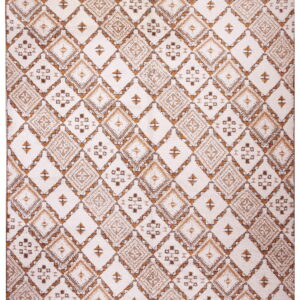
-
Vintage Oversized Berber Moroccan Tribal Design Rug
$26,000.00 Vintage RugsSKU: 21425Rug sizes: 12 ft 2 in x 26 ft (3.71 m x 7.92 m) -
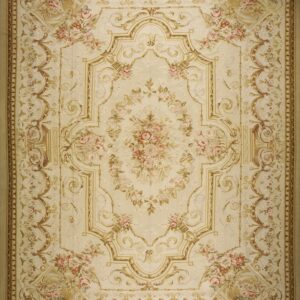
Vintage Large Aubusson Chinese Medallion Knotted Carpet
$12,100.00 Vintage RugsSKU: 24671Rug sizes: 14 ft 3 in x 19 ft (4.34 m x 5.79 m) -
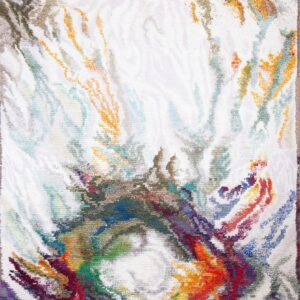
Vintage Large Rya Sweden Knotted Rug
$58,500.00 Vintage RugsSKU: 21575Rug sizes: 9 ft 8 in x 17 ft (2.95 m x 5.18 m) -
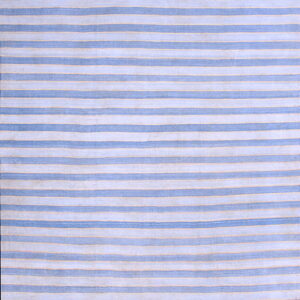
Striped Room Size Light Blue and White Antique Mid Century Indian Dhurrie Rug
$9,800.00 Vintage RugsSKU: 21332Rug sizes: 7 ft 6 in x 15 ft 9 in (2.29 m x 4.80 m) -
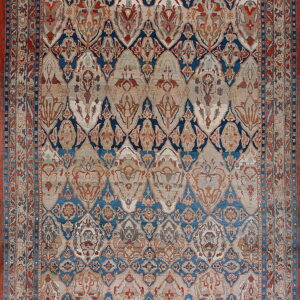
Beautiful Shield Design Vintage Persian Mahal / Sultanabad Room Size Rug
$9,800.00 Vintage RugsSKU: 25665Rug sizes: 9 ft 8 in x 14 ft 4 in (2.95 m x 4.37 m) -
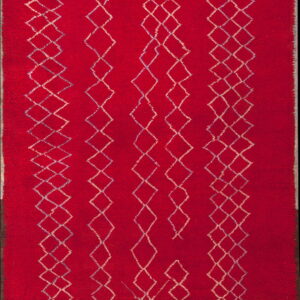
Vintage Red Diamond Pattern Rabat Moroccan Berber Rug
$9,850.00 Vintage RugsSKU: 21846Rug sizes: 5 ft 10 in x 13 ft 3 in (1.78 m x 4.04 m) -
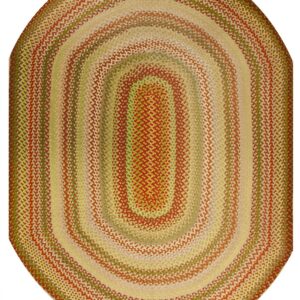
Vintage Mid Century Modern American Oval Braided Room Size Rug
$6,000.00 Vintage RugsSKU: 24137Rug sizes: 9 ft x 12 ft 6 in (2.74 m x 3.81 m) -
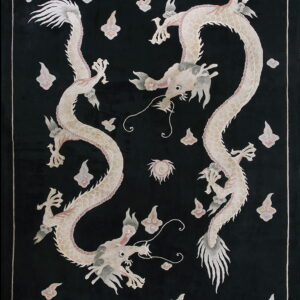
Vintage Black Double Five Claw Chinese Dragons Design Rug
$9,000.00 Vintage RugsSKU: 25692Rug sizes: 9 ft x 12 ft (2.74 m x 3.66 m) -
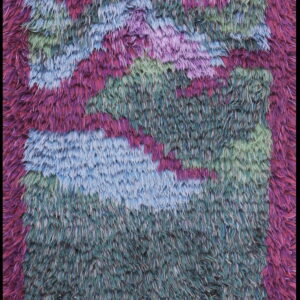
Vintage Rya Room Size Wool Multicolor Rug
$13,000.00 Vintage RugsSKU: 23303Rug sizes: 9 ft x 10 ft 10 in (2.74 m x 3.30 m) -
Vintage Rabat Tribal Diamon Pattern Berber Moroccan Ivory Color Shaggy Rug
$11,000.00 Vintage RugsSKU: 21370Rug sizes: 7 ft x 10 ft 3 in (2.13 m x 3.12 m) -
Vintage Mid Century Modern Geometric Gray Swedish Shag Pile Rya Scandinavian Rug
$13,600.00 Vintage RugsSKU: 18622Rug sizes: 5 ft 10 in x 9 ft 10 in (1.78 m x 3.00 m) -
Vintage Rya Hallway Runner Wool Multicolor Rug
$12,000.00 Vintage RugsSKU: 21509Rug sizes: 6 ft x 9 ft 8 in (1.83 m x 2.95 m) -
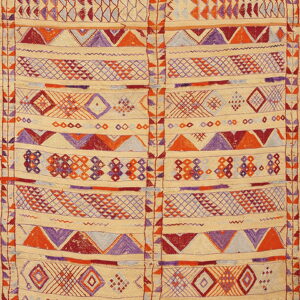
Vintage Mid Century Moroccan Tribal Geometric Design Rug
$8,800.00 Vintage RugsSKU: 21606Rug sizes: 4 ft 9 in x 9 ft 8 in (1.45 m x 2.95 m) -
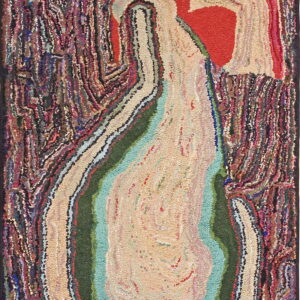
Multicolor Vintage Mid Century Modern American Hooked Artistic Folk Art Rug
$7,000.00 Vintage RugsSKU: 17467Rug sizes: 4 ft 6 in x 9 ft 6 in (1.37 m x 2.90 m) -
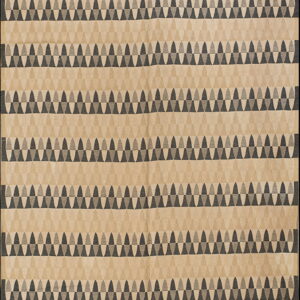
Vintage Art Deco – European Germany Flat Weave Rug
$9,800.00 Vintage RugsSKU: 21368Rug sizes: 6 ft x 9 ft 6 in (1.83 m x 2.90 m) -
Vintage Swedish Sweden Flat Weave Rug
$3,800.00 Vintage RugsSKU: 23292Rug sizes: 5 ft 6 in x 9 ft 4 in (1.68 m x 2.84 m) -
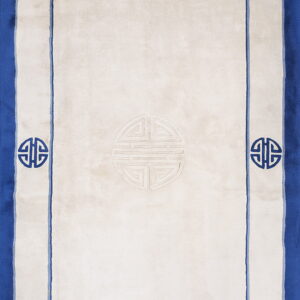
Minimalist Vintage Light Blue and Ivory White Color Open Field Chinese Rug
$4,300.00 Vintage RugsSKU: 21865Rug sizes: 6 ft 2 in x 9 ft 2 in (1.88 m x 2.79 m) -
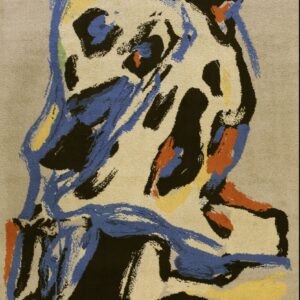
Expressive Vintage German Art Deco Abstract Wool Rug
$3,000.00 Vintage RugsSKU: 24048Rug sizes: 6 ft x 9 ft (1.83 m x 2.74 m) -
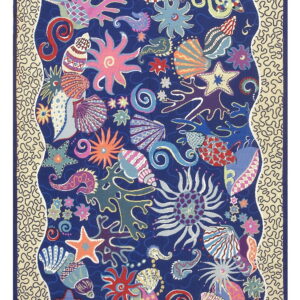
Vintage Mid Century Modern French Under The Sea Pattern Needlepoint Art Rug
$1,650.00 Vintage RugsSKU: 20726Rug sizes: 5 ft 8 in x 9 ft (1.73 m x 2.74 m) -
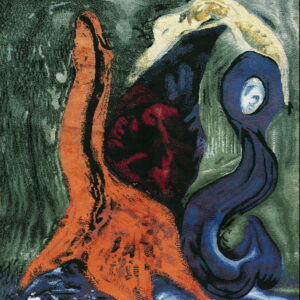
Vintage Mid Century Modern Allover Hand Knotted Pile Art Rug
$13,600.00 Vintage RugsSKU: 25440Rug sizes: 7 ft 3 in x 9 ft (2.21 m x 2.74 m) -
Vintage Rya Hallway Runner Wool Rug
$12,000.00 Vintage RugsSKU: 21387Rug sizes: 5 ft 10 in x 8 ft 8 in (1.78 m x 2.64 m) -
Vintage Benevolent 5 Claw Dragon Design Chinese Deco Rug
$9,800.00 Vintage RugsSKU: 25506Rug sizes: 5 ft 7 in x 8 ft 7 in (1.70 m x 2.62 m) -
Vintage Geometric Chevron Pattern Native American Navajo Small Scatter Size Wool Yellow Rug
$11,050.00 Vintage RugsSKU: 25702Rug sizes: 5 ft 8 in x 7 ft 10 in (1.73 m x 2.39 m) -
Vintage Art Deco Round European French Allover Knotted Rug
$19,500.00 Vintage RugsSKU: 24050Rug sizes: 7 ft 9 in x 7 ft 9 in (2.36 m x 2.36 m) -
Vintage Mid Century Modern Scandinavian / Danish Shag Pile Rya Panton Style Rug
$6,800.00 Vintage RugsSKU: 21556Rug sizes: 5 ft 7 in x 7 ft 9 in (1.70 m x 2.36 m) -
Vintage Berber Moroccan Boucherouitte Small Scatter Size Wool & Cotton Rug
$1,100.00 Vintage RugsSKU: 22440Rug sizes: 4 ft x 6 ft 3 in (1.22 m x 1.91 m) -
Yellow Vintage Art Deco – European Spanish Knotted Rug
$3,000.00 Vintage RugsSKU: 22315Rug sizes: 4 ft x 6 ft 2 in (1.22 m x 1.88 m) -
Mid Century Modern Vintage Swedish Rya Shag Rug
$1,850.00 Vintage RugsSKU: 21323Rug sizes: 3 ft 2 in x 5 ft 8 in (0.97 m x 1.73 m) -
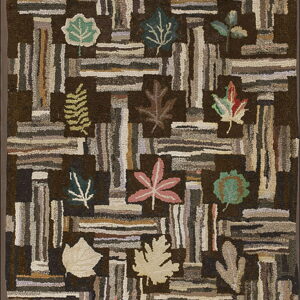
Bold Brown Color Vintage Mid Century American Folk Art Leafe Pattern Hooked Rug
$2,300.00 Vintage RugsSKU: 20493Rug sizes: 3 ft x 5 ft 7 in (0.91 m x 1.70 m) -
Vintage Small Scatter Size Mid Century Modern Shag Wool Pile Swedish Rya Rug
$1,350.00 Vintage RugsSKU: 21322Rug sizes: 3 ft 3 in x 5 ft 4 in (0.99 m x 1.63 m) -
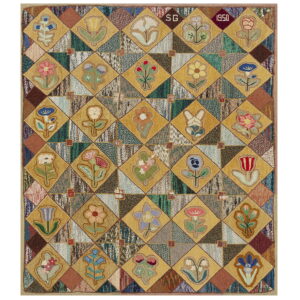
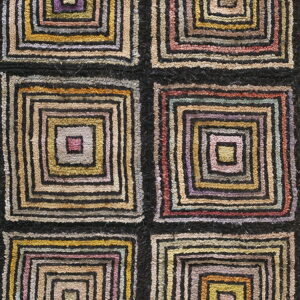
Mid Century Vintage Grid Pattern American Flowers Hooked Square Rug
$3,800.00 Vintage RugsSKU: 25649Rug sizes: 3 ft 10 in x 4 ft 6 in (1.17 m x 1.37 m) -
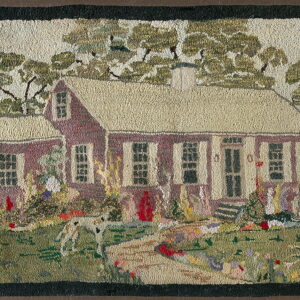
Vintage American Hooked Rug American Multicolor 1950s Multicolor
$2,300.00 Vintage RugsSKU: 20549Rug sizes: 2 ft 1 in x 3 ft 4 in (0.64 m x 1.02 m) -
Multicolor Vintage American Mid Century Modern Square Hooked Rug
$980.00 Vintage RugsSKU: 20552Rug sizes: 1 ft 9 in x 2 ft 8 in (0.53 m x 0.81 m) -
Vintage Mid Century Modern American Long Rag Hallway Runner Rug
$9,000.00 Vintage RugsSKU: 20594Rug sizes: 2 ft 3 in x 80 ft (0.69 m x 24.38 m) -
Vintage Striped Mid Century American Hallway Runner Rag Rug
$9,000.00 Vintage RugsSKU: 20596Rug sizes: 3 ft x 61 ft 6 in (0.91 m x 18.75 m) -
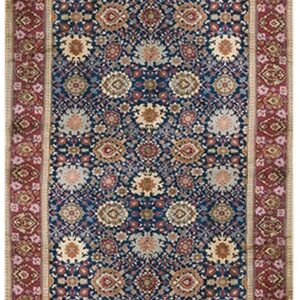
1930s Blue Navy Floral Shah Abbas Knotted Wool Antique Indian Runner Rug
$67,500.00 Vintage RugsSKU: 40-2265Rug sizes: 7 ft 9 in x 42 ft 6 in (2.36 m x 12.95 m)
Why Vintage and Retro Rugs Define the Now
The “Vintage” era (roughly 1940–1980) was the most explosive period of creativity in rug history. It was the moment the area rug moved off the “pedestal” of tradition and into the laboratory of design. These pieces were created to be the soul of the “Machine for Living,” providing the necessary warmth and rhythm to the steel, glass, and concrete of modern architecture.
The Rise of the Mid to Late 20th Century Area Rug
- The Chrome Revolution: The move from vegetable dyes to high-precision Chrome Dyes allowed artists like Marianne Richter and Verner Panton to use colors that were previously impossible: electric teals, deep ochres, and “atomic” oranges that never fade, even in sun-drenched, floor-to-ceiling glass rooms.
- The Sculptural Pile: Vintage rugs introduced the concept of the “3D Surface.” Designers began “carving” the wool and varying pile heights (from zero-pile flatweaves to 4-inch shags) to create a topographical experience for the feet.
- The Artist as Weaver: This era saw the rise of the Signed Rug. For the first time, the weaver’s initials (like the legendary “BN” for Barbro Nilsson) were woven into the corner, elevating the rug from a craft object to a “multi-original” work of fine art.
The Global Geography of the Modernist Loom
While Scandinavia led the “Intellectual” movement, other regions provided the “Textural” foundations of the vintage era.
For Example:
- Morocco (The Beni Ourain Tribal): The “Architect’s Choice.” These high-pile, ivory-and-charcoal rugs were the preferred floor coverings for Le Corbusier and Frank Lloyd Wright, offering a primal, organic contrast to glass and steel.
- Turkey (The Tulu & Oushak Revival): Known for “Long-Pile Modernism.” Turkish rugs and weavers in the 1960s experimented with mohair and oversized filigree patterns, creating the “Shag” textures that defined mid-century glamour.
- The Bauhaus Influence (Germany / Europe): The bridge between fine art and the loom. These rugs are characterized by primary colors and mathematical “Planar” geometry, designed to align with the furniture of Marcel Breuer and Mies van der Rohe.
Defining the Vintage Timeline: The Temporal Boundary
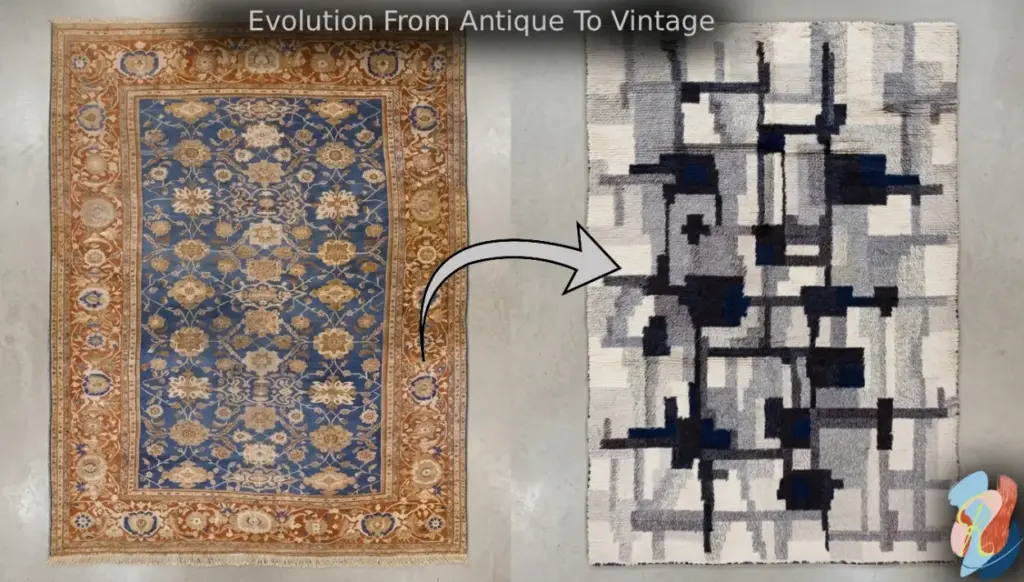
In the lexicon of textile art, the transition from “antique” to “vintage” marks a fundamental shift in both production philosophy and aesthetic intent. Understanding this distinction is the first step in becoming a sophisticated collector; one refers to the chronological age of an object, while the other refers to its aesthetic spirit.
The 100-Year Rule: Antique vs. Vintage vs. Retro
In the professional trade, these terms are not interchangeable.
They define the chemical and structural DNA of the piece:
- Antique (100+ Years): Defined by vegetable dyes and hand-spun wool. These pieces are “Living Artifacts” that require specific UV protection and lower foot traffic.
- Vintage (40–80 Years): The era of “High-Performance Art.” These rugs utilize chrome-dye stability and were engineered for the high-traffic, sun-drenched rooms of Modernist architecture.
- Retro (25–40 Years): Often refers to the “Post-Modern” revival (1980s–90s). These pieces focus on bold, graphic irony and experimental fiber blends, acting as the “New Collectibles” for younger investors.
Vintage: The Authentic Artifact
- Etymology: Originating from the Old French vendange (the harvest of grapes), “Vintage” implies a primary source—a textile actually woven during a specific historical window.
- The 50-Year Rule: Historically, “vintage” refers to a textile produced at least 50 years ago but less than 100. In the rug trade, this core currently sits between the late 1940s (the sunset of Art Deco) and the mid-1970s.
- Technical Distinction: Unlike antiques, which rely on pre-chemical dyes, vintage production reflects the “Second Industrial Revolution,” introducing high-precision Chrome Dyes and machine-assisted finishing while maintaining hand-knotted integrity.
Retro: The Stylistic Revival
- Etymology: Derived from the Latin prefix retro- (“backwards”), this term entered the design lexicon in the 1970s to describe contemporary fashions that consciously mimicked the past.
- The Aesthetic Spirit: “Retro” describes a style, not an age. A rug produced today is “retro” if it utilizes the geometric “Op-Art” patterns of the 1960s or the “Harvest” palette of the 1970s.
- The Value of Reinterpretation: These pieces allow for the “look” of a specific era without the fragility of a period-correct survival.
In the trade, there is often a gray area for rugs produced between 1985 and 2005. These are too young to be “Vintage” (by the 50-year rule) but too old to be “Modern.”
The Crossover: Why the Distinction Matters
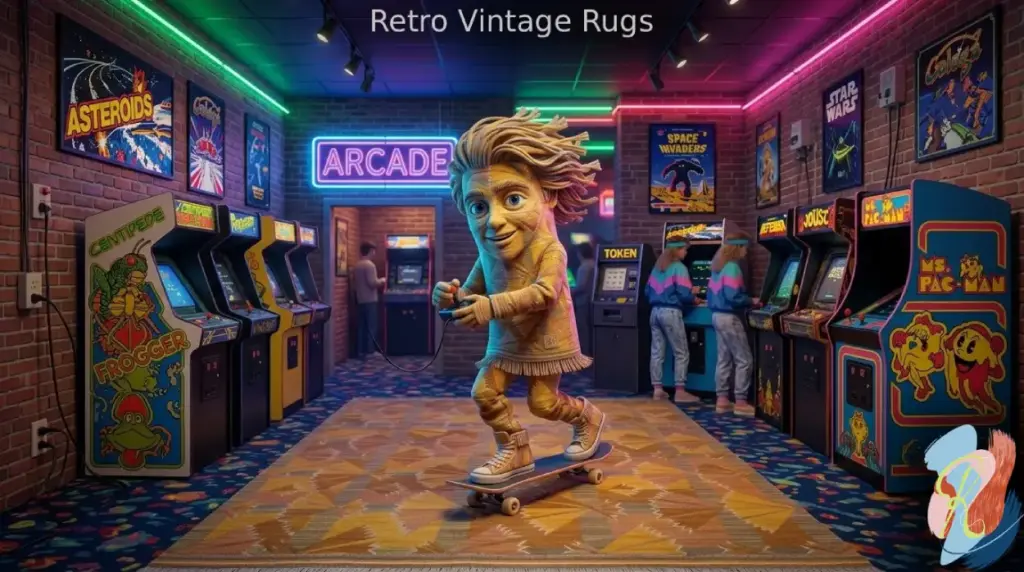
The most sought-after vintage and retro rugs at RugsOnNet exist at the intersection of these two concepts. A Vintage 1970s Ege Rya is technically “vintage” by age, but it is “retro” in its soul—it was designed during a period that was already beginning to celebrate the “funky” and the “bold” as a reaction to the 1950s’ stiffness.
Understanding this distinction allows you to decide whether you are looking for a historical document (Vintage) or a stylistic statement (Retro).
Retro Vs Vintage Interiors
What to Expect in a Vintage Interior
- Material Honesty: You will see natural materials that have aged gracefully: oiled teak, pitted brass, Top-Grain leather with a visible grain, and high-lanolin wool.
- The “Collected” Aesthetic: These rooms rarely look “catalogue-perfect.” They feel assembled over decades. A vintage interior celebrates the “slight imperfection”—the soft fading of a vegetable dye or the gentle wear on a rug’s selvedge.
- Muted Sophistication: The color palette often leans toward the “New Neutrals” of the 1950s—Ochre, Charcoal, and Sage—colors that feel grounded and organic.
The Approach
- The “Anchor” Strategy: Start with one high-provenance piece (like a signed Barbro Nilsson rug) and build the room around its geometric logic.
- Negative Space: Vintage furniture often has “legs” (tapered or hairpin). The approach is to leave enough floor space visible so the rug acts as a frame for the furniture’s silhouette.
The Retro Interior: The “High-Energy Revival” Approach
A retro interior is about attitude and nostalgia. It isn’t concerned with the “birth certificate” of the furniture; it is concerned with the vibe of an era—usually the playful, bold, and experimental spirit of the 1960s and 70s.
What to Expect in a Retro Interior
- Synthetic Brilliance: Expect a celebration of “Space Age” materials: molded plastics, chrome, tinted glass, and high-gloss acrylic fibers in the rugs.
- Saturated Palettes: This is the home of the “Pop Art” and “Harvest” colors. Think Avocado Green, Burnt Orange, and “Electric” Blue. The goal is visual impact and “fun.”
- Topographical Texture: Retro interiors love “The Shag.” You will see deep-pile rugs, “Conversation Pits,” and textured wallpapers that turn the room into a multi-sensory environment.
The Approach
- The “Statement” Strategy: In a retro room, the rug is often the loudest element. The approach is to use a high-pile Ege Rya or a geometric Op-Art carpet to dictate the room’s energy.
- Layering and Maximalism: Unlike the “quiet” vintage approach, retro interiors embrace a bit of kitsch and maximalism. You might layer a shaggy retro rug over a neutral wall-to-wall carpet to create a “lounge” zone.
The Haptic Experience: The “Hand” of the 20th Century
While the visual impact of a vintage rug is immediate, its “hand”—the tactile sensation of the fibers—is what defines its quality in a living space. A scholarly appreciation of these textiles requires an understanding of their physical materiality.
- The Vintage Hand: Authentic mid-century modern rugs, particularly Swedish flatwoven kilims and tribal Moroccan rugs, offer a “dry” and substantial feel. The use of high-lanolin wool pile results in an organic, matte texture that feels grounded and resilient underfoot.
- The Retro Hand: In contrast, retro pieces from the 1960s and 70s often prioritize a “slick” or “bouncy” sensation. Whether it is the high-gloss sheen of an acrylic blend or the dense, springy pile of a long-shag Rya, the tactile goal of the retro era was experimental softness and sensory play.
The RugsOnNet Verdict
Whether you choose the Vintage path (The Historian) or the Retro path (The Stylist), the rug remains the most critical “architecture” in the room. It is the only element that physically connects every other piece of furniture, turning a collection of objects into a cohesive era.
The RugsOnNet Advantage: Curating the “New Classic”
Shopping for vintage and retro rugs can be a minefield of synthetic reproductions and poorly preserved “finds.” RugsOnNet applies a rigorous, expert-level filter to the 20th-century market, ensuring that every “Retro” piece we offer is a documented piece of design history.
The Curated Modernist Gallery
We have built a digital environment that honors the “Space Age” and “Mid-Century” spirit, providing the technical data that modern collectors and interior designers demand.
The Main 4 Point Vintage and Retro Rug Curation Approach At RugsOnNet
- Authentication of the “Signed” Market: We specialize in the “Atelier” tier of vintage rugs. When you browse RugsOnNet, you aren’t just looking at “old rugs”; you are looking at authenticated works from the Märta Måås-Fjetterström workshop, original Edward Fields commissions, and genuine Danish Ege Rya masterpieces.
- Structural Integrity Checks: Vintage materials face unique challenges, from latex dry-rot to fiber degradation. Every rug in our vintage collection undergoes a multi-point inspection. We check the “spring” of the wool, the stability of the backing, and the clarity of the weave, ensuring your investment is as durable as it is beautiful.
- A Bridge Between Eras: Our search systems are designed for the contemporary interior. We help you pair a 1960s Moroccan Beni Ourain with an industrial loft, or a 1950s Swedish Rölakan with a teak-heavy mid-century dining room. We understand the “rhythm” of modern furniture and select rugs that act as the perfect architectural anchor.
- The “RugsOnNet” Provenance: Our family business has lived through these trends. Having been in operation since 1976, we don’t just “sell” retro; we remember the era of its creation. This deep, multi-generational memory allows us to spot a genuine 1970s “high-lanolin” shag from a miles away, protecting you from the “fast-fashion” imitations of the modern market.
The Rug Buying Experience: From Archive to Interior
Buying a vintage masterpiece online requires more than a checkout button; it requires a sensory and technical bridge between our New York archive and your home. At RugsOnNet, we have digitized the “Atelier” experience to ensure your acquisition is seamless.
High-Definition Structural Transparency
We provide more than just “room shots.” For every vintage piece, we provide a “Technical Portfolio”.
This Includes:
- The Macro-Weave: High-resolution close-ups of the knot structure and signature.
- The Verso View: Photos of the back of the rug to prove foundation integrity and label authenticity.
- True-Color Rendering: Photos taken under both natural and gallery lighting to show how the “Chrome Dyes” shift throughout the day.
Virtual “In-Situ” Placement
Unsure if a 1960s Swedish flatweave will clash with your walnut credenza? Our design team can digital rendering services. Simply send us a photo of your room, and we will “lay” the rug into your space, allowing you to get a general feel for the architectural “rhythm” before the rug ever leaves our warehouse.
The White-Glove Approval Period
We understand that the “hand” of a vintage wool rug must be felt. For our local NYC clients, we offer a specialized approval process. If the texture of a 1970s “High-Lanolin” shag or the tension of a Rölakan isn’t exactly as you envisioned, our straightforward return policy ensures your investment remains risk-free.
Global Logistical Stewardship
Vintage rugs are finite resources. We utilize specialized packing and global white-glove shipping to ensure that your vintage / retro masterpiece arrives in the same “Museum-Level” condition it left our gallery.
Historical Framework: Why Vintage Rugs Changed After World War II
The post-war era represented a tectonic shift in the textile world. As the rigid social structures of the early 20th century dissolved, the “Formal Salon” aesthetic—defined by central medallions and intricate floral borders—gave way to a new philosophy of domestic space.
The Main Shifts In Post War Design and Style Approach
Post-War Industrial and Social Change
The 1940s and 50s introduced a “democratization of design” that fundamentally altered rug production.
- Mass Housing and Modern Furnishing: The global housing boom necessitated rugs that could fit smaller, more diverse floor plans. The rug was no longer a commissioned luxury for a palace; it became a functional component of the “modern interior.”
- The Shift in Consumer Interiors: With the rise of open-plan living, rugs transitioned from being “anchor pieces” for heavy furniture to “zoning tools” that defined living areas within a single large room.
Post-War Optimism: The Aesthetic of Comfort
The psychological shift after 1945 manifested in a move away from the “dusty” palettes of the Victorian and Edwardian eras.
- Brighter Palettes and Experimental Abstraction: Designers began utilizing the newfound stability of chrome dyes to experiment with saturated teals, ochres, and “atomic” oranges.
- Informal Interiors: The “formal salon” disappeared, replaced by the family “den” or “living room.” Rugs became tactile and inviting—leading to the rise of higher piles, shags, and softer wools designed for sitting on the floor rather than just walking over it.
International Design Exchange
The post-war period saw a “cross-pollination” of ideas that made rug designs an extension of architecture and furniture.
- European Migration: Many Bauhaus-trained designers migrated to the U.S. and Scandinavia, bringing with them the “form follows function” mantra that stripped away unnecessary ornament.
- Scandinavian Influence: The “Swedish Modern” movement became a global benchmark, emphasizing flatweaves and Ryas that complemented the clean lines of teak furniture and glass-walled homes.
- American Leadership: Post-war America became the primary market for these designs, leading to the creation of “Mid-Century Modern” as a global standard.
The Decline of Historic Ornament
By the 1960s, the “classical floral system” that had dominated weaving for four centuries began to vanish in favor of a minimalist vocabulary.
- Reduction and Simplification: Traditional Persian “Shah Abbas” floral patterns were reduced to simple geometric silhouettes.
- Abstract Design Rug Fields: The central medallion—the hallmark of antique rugs—was often discarded in favor of “all-over” rug patterns or completely abstract, painterly fields that mirrored the Abstract Expressionist movement in fine art.
- Architectural Geometry: Rugs began to mirror the “Grid” of modern urban architecture, using repeating squares, stripes, and negative space to create a sense of order without the clutter of traditional motifs.
This section of the article is where we move from the history of the post-war era to the specific visual languages that define the vintage market. These movements represent a shift from the rug as a traditional floor covering to the rug as a “horizontal canvas” for modern art and architectural theory.
The Design Movements That Defined the Vintage Era
The vintage rug is a “woven mirror” of the 20th century’s most radical shifts in art and architecture. At RugsOnNet, we categorize these pieces by the intellectual movements that dictated their geometry, color, and texture.
9 Main Movements That Impacted The Retro Vintage Style
1. The Academic & Structural Foundations
- Bauhaus Influence: The shift from decoration to “functional logic.”
- Pre-War Modern Influence: How the 1930s “Art Deco” and “Early Modern” styles continued to flavor the first decade of post-war production.
- Bauhaus Migration: The literal movement of designers from Germany to the US (Black Mountain College, etc.), which transformed American Textile Design.
2. The Foundations: Bauhaus & The Migration of Logic
- Bauhaus Influence: The “Cradle of Modernism.” Bauhaus rugs replaced floral borders with mathematical grids and primary colors. The philosophy was “Total Design”—the rug was a functional extension of the architecture.
- The Bauhaus Migration: Following the closure of the school in 1933, masters like Anni Albers brought these principles to American institutions like Black Mountain College. This created a bridge between European theory and American Textile Design, leading to the “industrial-chic” look of the 1940s and 50s.
3. The Mid-Century Golden Age (1945–1965)
- Scandinavian Modernism: The “Humanist” movement. Designers like Barbro Nilsson and Marianne Richter used “Mineral Tones” and “Muted Contrasts” to soften the coldness of modern glass houses.
- Nordic Design in the US: In the late 1940s, Scandinavian rugs entered American interiors through high-end retailers like Knoll and Herman Miller, becoming the “Gold Standard” for the suburban ranch home.
- Mid-Century Modern (MCM): The era of the “Open Plan.” Rugs became “Spatial Anchors,” used to define a “living zone” without the need for walls.
- Atomic Age Design: Inspired by the dawn of nuclear science and the molecular structure. Rugs featured “starburst” patterns, kidney-bean shapes (biomorphic), and “floating” spheres.
4. The Space Age & Pop Explosion (1960–1975)
- Space Age Interiors: As the “Space Race” began, rugs became futuristic. Materials like Nylon and Acrylic were introduced to create “High-Gloss” surfaces that looked like they belonged in a moon colony.
- Pop Art: Influenced by Warhol and Lichtenstein. Rugs utilized Saturated Primaries and “Comic Book” vibrance. The floor became a “Billboard” of color.
- Op Art (Optical Art): Rugs designed to “vibrate.” Using black-and-white grids or concentric circles (think Verner Panton), these rugs created illusions of depth and movement on a flat surface.
5. The Raw & The Organic (The 1970s Counter-Movement)
- Brutalist Textile Minimalism: A reaction to “Space Age” plastic. These rugs emphasized “Textural Rigor”—heavy wool loops, un-dyed fibers, and “concrete” greys. They were designed to complement the raw concrete (Brutalist) architecture of the era.
- Organic Modernism: The return to the earth. This movement championed “The Shag” and high-lanolin Berber weaves. It utilized the “Harvest Palette” (Avocado, Mustard, Burnt Orange) to create a “Nesting” environment.
- Postmodern Beginnings (Late 70s): The start of the “Mash-up.” Designers began re-introducing classical elements (like a Greek key / column or a floral vine) but in “Acid” colors or distorted scales, signaling the end of strict Modernism.
6. Transitional Periods: The Continuity of Style
The transition between these eras was rarely a clean break. At RugsOnNet, we look for the “Hybrid” pieces that bridge these gaps:
The “Soft” Space Age: In the early 60s, you often see Scandinavian Modernism (natural wool) adopting Atomic Ag
Pre-War Influence in Post-War Rugs: Many 1950s Swedish rugs still carried the “Art Deco” symmetry of the 1930s, but rendered in the “New Teal” and “Ochre” colors of the post-war era.
The “Soft” Space Age: In the early 60s, you often see Scandinavian Modernism (natural wool) adopting Atomic Age geometries, creating a “Warm Future” look that is highly prized by collectors today.
| Movement | Key Visual | Material Feel | Interior Goal |
| Bauhaus | The Grid | Disciplined Wool | Function / Logic |
| Atomic Age | Starbursts / Biomorphic | Mixed Pile | Optimism / Play |
| Space Age | Concentric Circles | Synthetic / Glossy | Futurism |
| Brutalist | Heavy Loop / Grey | Coarse / Raw | Structural Honesty |
| Organic | The Shag | Soft / High Lanolin | Comfort / “Nesting” |
The mid-20th century saw a fragmented but brilliant explosion of styles. Each movement reinterpreted the loom to serve a specific architectural or artistic philosophy, moving away from “tradition” toward “expression.”
7. The North and the South: Scandinavian & Modernist Abstraction
- Scandinavian Modernism: Swedish and Danish designers mastered the art of warmth within minimalism. These were functional textile designs that emphasized natural materials (high-lanolin wools). The geometry remained restrained but became expressive through subtle color shifts and “hand-drawn” qualities in the weave.
- Modernist Abstraction: These are often referred to as painterly rugs. They broke away from traditional composition in favor of visual spontaneity. These rugs often resemble Abstract Expressionist paintings, utilizing the rug’s surface for “gestural” patterns that feel unplanned and avant-garde.
8. The Future & The Cosmos: Atomic and Space Age Design
- Atomic Age Design: Reflecting the futuristic optimism of the 1950s, these rugs featured biomorphic motifs and starburst forms. The patterns often mimicked molecular structures or planetary orbits, bringing a sense of scientific progress into the domestic sphere.
- Space Age Influence: Emerging in the late 1960s, this movement introduced curvilinear abstraction. It was characterized by new visual dynamism and, occasionally, synthetic experimentation—blending traditional wool with new fibers to achieve the “plastic” sheen and bold colors associated with 1970s futurism.
9. The Avant-Garde: Pop, Op, and Brutalism
- Pop Art Influence: Inspired by Andy Warhol and Roy Lichtenstein, these rugs utilized bold graphic color and oversized motifs. The focus was on visual rhythm and a playful abstraction that challenged the “seriousness” of traditional high-end decor.
- Op Art and Optical Patterning: Using rhythmic line distortion and repeated geometry, Op Art rugs created an illusion of movement on the floor. These pieces are highly collectible for their ability to alter the perception of a room’s dimensions.
- Brutalist Interior Influence: In contrast to the sleek Space Age look, Brutalism emphasized heavier textures and a raw earth palette. These rugs often featured sculptural pile use—varying heights of wool to create a 3D effect that mirrored the “honesty of materials” found in concrete architecture.
This section transitions the rug from a craft-based floor covering to a “horizontal canvas,” marking the era where fine art and decorative arts became indistinguishable. For the collector, these pieces represent a unique category of “Editioned Art”—where the weaver’s loom was tasked with translating painterly gestures into structural textiles.
Modern Artists and Their Influence on Rug Design
The mid-20th century saw a prestigious intersection between the avant-garde studios of Europe and the high-end weaving workshops of the Middle East and France. No longer content with traditional motifs, modern masters began to view the rug as a medium for monumentalism and modular abstraction.
6 Iconic Surrealist and Cubist Artists That Created Rugs
In the hands of the Surrealists and Cubists, the rug became an instrument of spatial distortion. By translating their avant-garde visual languages into three-dimensional textiles, they forced the “modern interior” to engage with high art on a tactile, everyday level.
1. Pablo Picasso: The Sculptural Line
Picasso’s foray into rugs, largely through the legendary Marie Cuttoli collaborations, focused on abstract line translation. The weavers were tasked with replicating his “one-line” drawings using varied pile heights.
- Tapestry Influence: Many Picasso rugs mirror his monumental tapestries, using a heavy handle and dense wool to give his Cubist figures a physical, almost architectural presence.
- Licensed Adaptations: Post-war “Editioned” rugs allowed his Minotaur and Bull motifs to reach a wider elite audience, with each piece acting as a “multi-original” artwork.
2. Joan Miró: Surrealist Biomorphism
Miró’s rugs are perhaps the most successful translations of Surrealism into textile.
- Floating Compositions: He utilized the rug’s background as a “void,” allowing his signature biomorphic forms and spindly “constellation” lines to appear as if they were floating on the floor.
- Textile Spontaneity: Weavers used subtle color bleeding (asymmetrical dye application) to mimic the watery, dreamlike quality of his gouache paintings.
3. Fernand Léger: The Machine-Age Grid
Léger was the bridge between Cubism and the Industrial Aesthetic.
- Segmented Forms: His rugs feature strong black outlines and heavy, segmented blocks of color that echo the rhythm of urban machinery.
- Architectural Weight: Unlike the “airy” feel of Miró, a Léger rug feels solid and anchored—designed to ground the sleek, chrome-and-glass furniture of the 1950s.
4. Salvador Dalí: The Surrealist Object
While less prolific in textiles than Picasso, Dalí’s influence brought illusionism to the floor.
- Optical Displacement: His rare textile designs often featured trompe l’oeil effects, where the rug appeared to have depth or “melting” edges, challenging the traditional flatness of the weave.
- Iconographic motifs: His use of lips, telephones, and soft watches translated into high-pile rugs created a sensory, “uncanny” experience for the feet.
5. Francis Picabia: Dadaist Geometry
Picabia’s transition from Impressionism to Dadaist Cubism resulted in rugs that prioritized mechanical symmetry.
- Overlapping Geometries: His designs often featured overlapping circles and transparent-looking layers, a technical feat for weavers who had to “layer” colors within a single flatweave to create the illusion of transparency.
6. Georges Braque: The Analytical Palette
As the co-founder of Cubism, Braque brought a more muted, analytical palette to the loom.
Textural Cubism: Rather than bold colors, Braque rugs relied on earth tones (ochre, grey, sienna) and utilized the “grain” of the wool to create the fractured, multi-perspective planes typical of his still-life paintings.
| Artist | Movement | Weaving Challenge | Impact on Interior |
| Dalí | Surrealism | Replicating 3D depth in 2D wool | Creates “uncanny” focal points |
| Léger | Cubism | Maintaining sharp, “machine-line” borders | Grounds industrial furniture |
| Miró | Surrealism | Floating small motifs in a large “void” | Adds “weightless” movement |
| Picasso | Cubism | Translating gesture into structural pile | Acts as a “horizontal monument” |
6 Iconic Artists That Were Pioneers of Color and Rhythm in Art Rugs
In this movement, the rug is no longer a static object; it is a chromatic engine. These artists utilized the physics of color and the repetition of form to create a sense of “simultaneity”—the feeling of multiple movements happening at once on a single flat surface.
1. Sonia Delaunay: The Queen of Simultaneity
Delaunay was a radical pioneer who believed color was a language of its own. Her rugs are the definitive examples of Orphism translated into textile.
- Simultaneous Contrast: She utilized the “law of simultaneous contrast,” placing clashing colors (like orange next to blue) to create a visual “shimmer” or vibration on the floor.
- Concentric Rhythms: Her designs often featured overlapping circles and arcs that broke the rectangular “grid” of the room, adding a sense of circular momentum to static interiors.
2. Wassily Kandinsky: The Music of the Loom
For Kandinsky, colors were like musical notes. His influence on vintage rugs brought a synesthetic quality to the weaving process.
- Abstract Lyricism: His rugs moved away from “patterns” toward visual spontaneity. A Kandinsky rug often feels like a musical score, with points, lines, and planes creating a rhythmic “soundscape” across the floor.
- Psychological Color Theory: He believed certain shapes belonged to certain colors (the yellow triangle, the blue circle). Weavers had to be incredibly precise in their dye matching to ensure the specific emotional “tone” Kandinsky intended was achieved.
3. Victor Vasarely: The Op-Art Rhythm
Vasarely is the father of Op-Art, and his rugs are masterpieces of kinetic illusion.
- Optical Distortion: He used repeated geometric units (the “alphabet plastique”) to create the illusion that the floor was bulging, receding, or moving.
- Rhythmic Grids: By subtly shifting the size and color of a repeated square or circle, he created a visual pulse. These rugs are highly collectible today for their ability to make a two-dimensional textile feel like a three-dimensional sculpture.
4. Yaacov Agam: Kinetic Transformation
An Israeli artist and a giant of kinetic art, Agam’s influence on rugs introduced the concept of polymorphic design.
- Multi-Directional Rhythm: His rug designs often change their “look” depending on where you stand in the room. This visual flux was achieved by using sharp, contrasting color bands that create different geometric “melodies” from different angles.
- Technicolor Geometries: Agam rugs are known for their incredibly complex use of the spectrum, requiring master weavers to manage dozens of distinct chrome-dyed wools in a single square foot.
5. Anni Albers: The Architectural Rhythm
The most famous weaver of the Bauhaus, Albers treated the interlacing of threads as a rhythmic act.
- Structural Rhythm: Unlike the painterly artists, Albers found rhythm in the weave itself. Her rugs often feature “pictorial” weaving where the structure of the warp and weft creates the pattern.
- Linear Counterpoint: Her designs utilize straight lines and “triangulated” paths that mirror the structural logic of a building, providing a disciplined rhythm that anchors high-modernist spaces.
6. Gunta Stölzl: The Weaver’s Jazz
As the only female Master at the Bauhaus, Stölzl brought a “jazz-like” improvisation to rug design.
Textural Rhythm: She often combined different materials (wool, synthetic and silk fibers) to create tactile rhythms, where the “feel” of the rug changed as you walked across it, moving from smooth to coarse.
Organic Geometry: Her rugs are characterized by asymmetrical rhythms—clashing shapes and “broken” lines that feel alive and energetic.
| Artist | Movement | Rhythmic Technique | Visual Result |
| Delaunay | Orphism | Simultaneous Contrast | Chromatic “vibration” and circular flow |
| Vasarely | Op-Art | Repeated Geometric Distortion | Kinetic movement and 3D illusion |
| Albers | Bauhaus | Structural Interlacing | Architectural “grid” logic and stability |
| Agam | Kinetic | Polymorphic Color Bands | Changeable design based on perspective |
| Kandinsky | Expressionism | Abstract Point and Line | “Musical” spontaneity and lyrical energy |
Le Corbusier’s Approach to Vintage Rug Design
Le Corbusier’s approach to rug designs was a radical departure from the decorative traditions of the 19th century. He viewed the floor as a “horizontal facade” that required the same structural discipline as a building’s elevation.
The Modulor System in Textile Form
Le Corbusier applied his Modulor—a scale of proportions based on the human body and the Golden Ratio—directly to his textile designs.
- Human-Centric Scale: His rugs often utilize large, bold blocks of color that correspond to the “zones” of human activity (sitting, walking, lounging).
- Proportional Harmony: Rather than repeating small motifs, his designs focus on the relationship between positive and negative space, creating a sense of balanced “architectural weight” that grounds a minimalist room.
Modular Abstraction: The “Object-Type” Rug
He believed in “Object-Types”—standardized, functional forms that served a clear purpose. In rug design, this manifested as:
- Pure Geometry: The use of the “primitive” shapes—the square, the circle, and the right angle—to create a modular abstraction.
- The Architectural Field: His rugs often feature a “frame within a frame” logic, where the borders are not decorative but act as structural “curtain walls” for the central design.
Chromatism: The Polychromie Architecturale
Le Corbusier’s rugs are the ultimate expression of his Polychromie Architecturale (his standardized color palettes from 1931 and 1959).
- Color as Volume: He used specific shades of “Cerulean,” “Umber,” and “Iron Grey” to alter the perception of a room’s volume. A dark rug was used to “lower” a high ceiling, while a bright, primary-colored rug was used to “illuminate” a shadowed corner.
- The Pure Palette: He famously avoided “muddy” or mixed tones, preferring saturated primaries that provided a sharp, clean contrast to the raw “Beton Brut” (raw concrete) of his buildings.
The “Fifth Wall” Philosophy
Le Corbusier frequently used the term “The Fifth Wall” to describe the floor.
- Acoustic Architecture: He recognized that modern materials like steel and glass created harsh acoustic environments. His rugs were engineered with high-density wool specifically to act as acoustic “insulators,” softening the sound-profile of the modernist home.
- Textural Contrast: He loved the juxtaposition of the “industrial” (chrome furniture) against the “organic” (thick, hand-knotted wool). This contrast is the hallmark of the Mid-Century Modern interior.
Collaborations and the Pinton Atelier
While Le Corbusier provided the vision, the execution of his most famous rugs often fell to the master weavers of the Pinton Frères atelier in Aubusson.
- Technical Translation: The weavers had to translate his flat, architectural drawings into a medium with tactile depth.
- The Signed “LC” Mark: Authentic Le Corbusier rugs from the vintage era often carry the woven “LC” initials and the workshop mark, making them some of the most high-value “architect-designed” textiles in the world.
| Element | Architectural Concept | Textile Application |
| Proportion | The Modulor | Use of Golden Ratio to define field and border |
| Color | Polychromie Architecturale | Saturated primary blocks to define “zones” |
| Structure | The “Fifth Wall” | High-density pile for acoustic and thermal insulation |
| Form | Modular Abstraction | Pure geometric silhouettes with no traditional ornament |
The Scandinavian “System” is perhaps the most intellectually rigorous of all vintage rug categories. Unlike the spontaneous tribal weaves of the East, these textiles were born from a scholarly synthesis of ancient Nordic folk techniques and the clinical requirements of Modernist architecture. For the collector, understanding the structural taxonomy—the difference between a Rölakan and a Flossa—is as important as identifying the artist’s signature.
Modern Master Tapestries Supercharge The Art Level Vintage Rug
For the elite collector, the pinnacle of the vintage market is defined by Modern Master Tapestries, Inc. Founded in New York by the legendary art dealer Charles E. Slatkin, this specialized publisher revolutionized the 1970s and 80s by treating the loom as a printing press for the world’s most significant avant-garde artists.
Unlike commercial reproductions, these were direct, royalty-based collaborations with artists or their estates, including Alexander Calder, Joan Miró, Roy Lichtenstein, and Frank Stella.
The Mechanics of the Modern Master Archive Slatkin’s genius was in his “Publisher Model.” He operated out of 11 East 57th Street, NYC, and established high-level legal contracts that paid artists significant royalties (often 15%) for the right to translate their works into textiles. He matched each artist’s style to specific regional craftsmanship to achieve “Art Level” quality
Production Regions Of The Modern Master Art Level Rug
- France (The Aubusson Flatweave): For “planar” artists like Sonia Delaunay or Frank Stella, Slatkin utilized the historic Atelier Marcel Mayeux in Aubusson. These are thin, structurally precise tapestries with sharp geometric transitions.
- India (The Mirzapur Pile): For artists requiring texture and painterly depth—such as Roy Lichtenstein or Saul Steinberg—MMT worked with master weavers in India, specifically through the Union Commercial Corporation and later Adhiraj Exports. These artisans were among the few capable of translating Lichtenstein’s “Ben-Day dots” into high-density wool pile.
- The Atelier International Era: As the company expanded, distribution and specialized production were often managed under the Atelier International (ai) umbrella, which specialized in bringing high-end Continental / European and artistic design to the American architectural market.
Collector’s Note: Trademark Rights & Buyer Beware
Because these pieces are now blue-chip investments, the market has seen an influx of unauthorized “grey market” copies. The value of a piece is tied directly to its legal status at the time of weaving.
- The Trademark Trap: After the original MMT contracts and trademark rights lapsed in the late 1990s, some workshops in India continued to produce these designs using the original graphs. These later pieces are unauthorized and were produced without paying royalties to the artist foundations. They lack the “Multiple-Original” status of the Slatkin era.
- Check the Bolduc (Label): A genuine Modern Master Tapestry is verified by its registration number found on a sewn cloth label (bolduc) on the reverse. If the signature is only woven into the wool and lacks a numbered tag or publisher’s mark, it is likely a later copy.
- Archival Registration: Authentic editions are documented in the artist’s official Catalogue Raisonné. Before acquiring a piece, it should be cross-referenced with foundation records (such as the Roy Lichtenstein Foundation). If the edition isn’t in the official records, it is merely a decorative floor covering, not a recognized work of fine art.
Nordic Weaving: Expanded Modernism
The mid-century Nordic rug is defined by a “Humanist Functionalism.” These pieces were designed to withstand the harsh northern climate while reflecting the sophisticated, minimalist geometry of the “Golden Age” of Scandinavian design.
The 5 Pillars Of Nordic Weaving
1. The Swedish Pile Rug (The “High-Traffic” Luxury)
Moving beyond the flatweave, the Swedish pile rug (Flossa) represented the peak of domestic comfort.
- Technique: These rugs utilized a dense, hand-knotted wool pile, often clipped to a uniform height to maintain a crisp, architectural look.
- The “Semi-Shag” Transition: In the 1960s, Swedish pile rugs began to feature longer, looser knots, bridging the gap between the formal “Flossa” and the casual “Rya.”
- Visual Anchor: Often designed with a central geometric field and a contrasting border, these rugs were the preferred choice for Swedish dining rooms and executive offices.
2. Swedish Signed Workshop Rugs (The “Atelier” Standard)
The “Signature” is what separates a decorative rug from a documented investment. The Swedish workshop system was the most rigorous in the world.
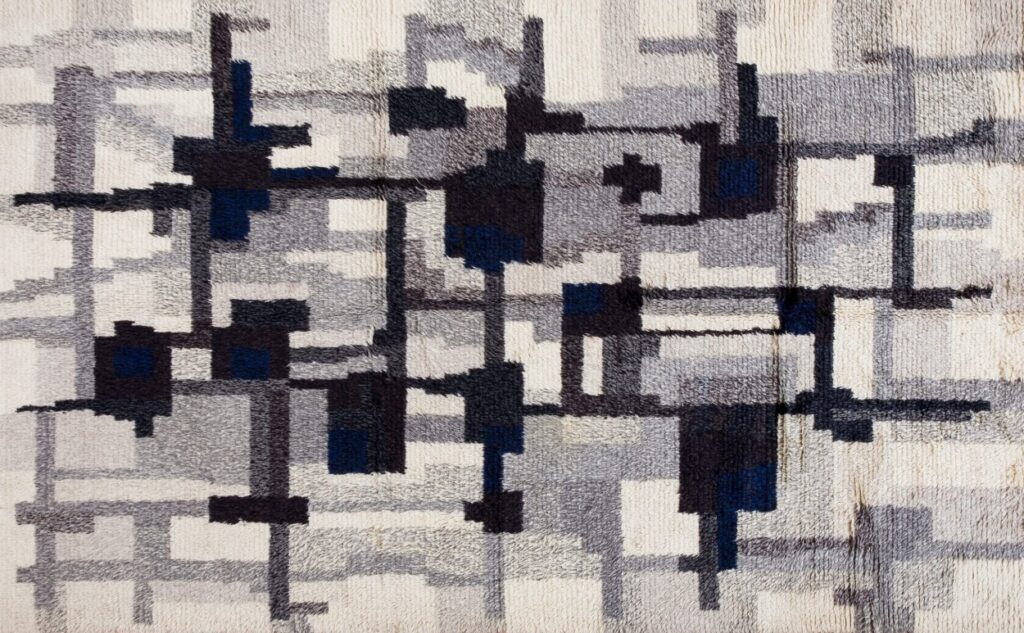
- The MMF Legacy: Rugs from the Märta Måås-Fjetterström workshop are the “Blue Chip” assets of the market. Look for the woven “AB MMF” mark.
- Designer Monograms: Key signatures to identify include “BN” (Barbro Nilsson), “MR” (Marianne Richter), and “AB” (Ann-Mari Forsberg).
- Provenance: A signed workshop rug implies a limited production run, superior hand-spun wool, and a direct link to the “Master Weaver” tradition of Båstad and Stockholm.
3. Finnish Modern Textiles (The “Tactile” Avant-Garde)
Finland brought a more “rugged” and “organic” sensibility to the Nordic movement, often inspired by the frozen landscapes of the north.
- Material Experimentation: Finnish designers, such as those at Metsovaara, were pioneers in using non-traditional fibers like linen, sisal, and even wood-fiber mixed with wool.
- The Ryijy Tradition: Finland’s version of the Rya is often more “painterly” and asymmetrical, treating the rug as a wall-hanging or a “textile meadow” rather than a gridded floor covering.
4. Norwegian Modern Weaves (The “Folk-Modern” Bridge)
Norway’s contribution focused on the modernization of ancient “Viking” and “Folk” patterns.
- Geometric Rug Design Discipline: Norwegian vintage rugs often feature high-contrast, black-and-white or deep-red-and-grey palettes.
- The Sellgren Workshop: A major producer of Norwegian modernism, Sellgren rugs are known for their heavy, durable “double-weave” construction and motifs that resemble deconstructed snowflakes and mountain topography.
5. Danish Rya Production (The “Space Age” Export)
Denmark was the engine of the 1960s “Rya Craze,” taking the traditional shaggy rug and turning it into a pop-culture icon.
- The Ege Rya Revolution: Manufacturers like Ege collaborated with “Space Age” designers like Verner Panton to create high-pile rugs with psychedelic, concentric circles and vibrant “acid” colors.
- The “Lounge” Aesthetic: Danish Ryas were designed for the “Conversation Pit.” They featured deep, 2–3 inch piles made of high-gloss wool or acrylic blends, designed to catch the light of a modern Danish lamp.
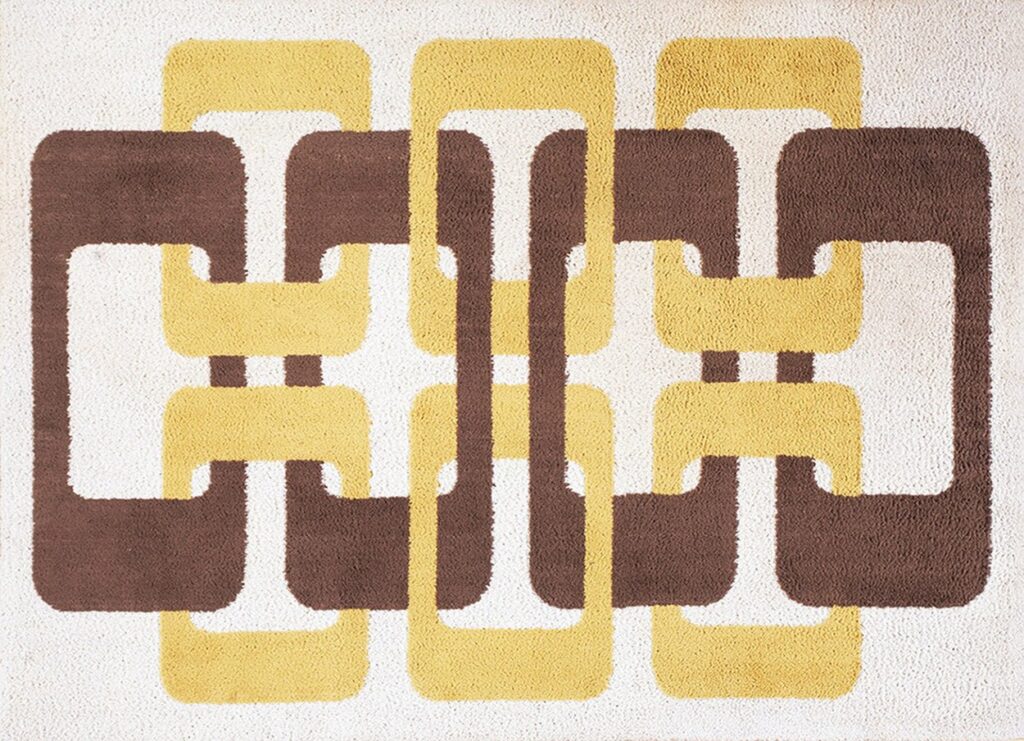
| Region | Primary Style | Key Identifier | Design Intent |
| Sweden | Signed Flossa / Pile | Woven Monograms (MMF/BN) | Architectural Rigor |
| Finland | Ryijy / Textural | Irregular, organic fibers | Tactile Art |
| Norway | Double-Weave | Folk-Modern Geometrics | Durable Tradition |
| Denmark | Long-Pile Rya | Vibrant colors (Verner Panton) | Pop-Art / Space Age |
Regional Workshops and Ateliers
The “Swedish Look” was preserved and evolved through a series of prestigious production houses that acted as the guardians of quality.
- Märta Måås-Fjetterström (MMF) Workshop: Based in Båstad, this remains the most famous textile studio in the world.
- AB MMF Production: After 1941, the workshop transitioned into “AB MMF,” moving toward mid-century commissions for public buildings, embassies, and luxury private residences. These pieces are identified by the combined initials of the designer and the workshop mark.
Finnish, Danish, and Norwegian Nuances
While Sweden led the “Atelier” movement, its neighbors developed distinct visual dialects:
- Finnish Textile Modernism: Known for stronger graphic simplification and colder palettes (greys, icy blues, and deep forest greens). Finnish designers often used the Ryijy to express a more “primal” connection to the landscape.
- Danish Rug Design: Denmark’s rugs are unique in their furniture-linked nature. Designers like Verner Panton created rugs specifically to match the curves of his plastic chairs, treating the floor textile as a holistic extension of the seating.
- Norwegian Rug Production: Norway focused on regional wool traditions, utilizing the coarse, lustrous wool of the Spelsau sheep. Their rug styles often featured folk abstraction, where traditional star and floral motifs were blown up into massive, modern geometries.
The Matriarch of Modernism: Märta Måås-Fjetterström
Märta Måås-Fjetterström: The Early Years
Before she was a titan of the textile world, Märta Måås-Fjetterström was a student of the line. Born in 1873 as the daughter of a country parson, her initial creative impulse was not the loom, but the sketchpad. She trained as an illustrator at the School of Industrial Arts in Stockholm, a background that fundamentally changed how she approached textiles. While her contemporaries viewed rugs as repetitive patterns, Märta viewed them as expansive canvases for graphic storytelling.
Her early career was spent as a teacher and a designer of lace and embroidery. These years were a masterclass in the relationship between negative space and intricate detail—a balance that would later become the hallmark of her weaving. However, the true catalyst for her career shift occurred during her tenure at the Kulturen museum in Lund. Surrounded by centuries of Swedish peasant textiles, she became obsessed with the “structural logic” of folk weaving. She saw a missed opportunity: the rugged, honest materials of the past were being wasted on stagnant, sentimental designs that didn’t fit the modern, forward-thinking architecture of the early 20th century.
Her early attempts to bridge this gap were actually met with sharp resistance. When she created radical new designs for the Malmöhus County Handicraft Association, traditionalists were scandalized. Her work was seen as “too modern” and a departure from pure folk art. It was this very friction that ultimately pushed her toward independence. In 1919, determined to prove that a rug could be both a traditional craft and a modern intellectual statement, she moved to the small seaside town of Båstad.
There, she established her own studio, free from the constraints of traditional handicraft boards. This move wasn’t just a change of address; it was the moment she transitioned from a museum illustrator to a textile architect, laying the groundwork for a workshop that would eventually redefine the floors of the world’s most sophisticated interiors.
The Living Legacy: Märta Måås-Fjetterström and the Båstad Workshop
Märta Måås-Fjetterström (1873–1941) occupies a singular position in the history of textile art, acting as the bridge between ancient Swedish weaving traditions and the sophisticated requirements of modern interior architecture. When she opened her workshop in Båstad in 1919, she did not merely start a business; she initiated a revolution that transformed the “oriental rug” aesthetic into something distinctly Scandinavian and intellectually rigorous.
The foundation of her work was a deep respect for the rural craft of the Swedish countryside. However, Måås-Fjetterström possessed a rare ability to strip away the sentimentality of folk art, refining it into a graphic, stylized language that resonated with the emerging functionalist movements of the early 20th century. Her workshop became a laboratory where the rugged durability of traditional flatweaves (Röllakan) and pile rugs (Flossa) met a new, poetic modernism. She drew inspiration from the natural world—the meadows, coastal light, and shifting seasons of southern Sweden—but translated these organic observations into rhythmic, geometric compositions.
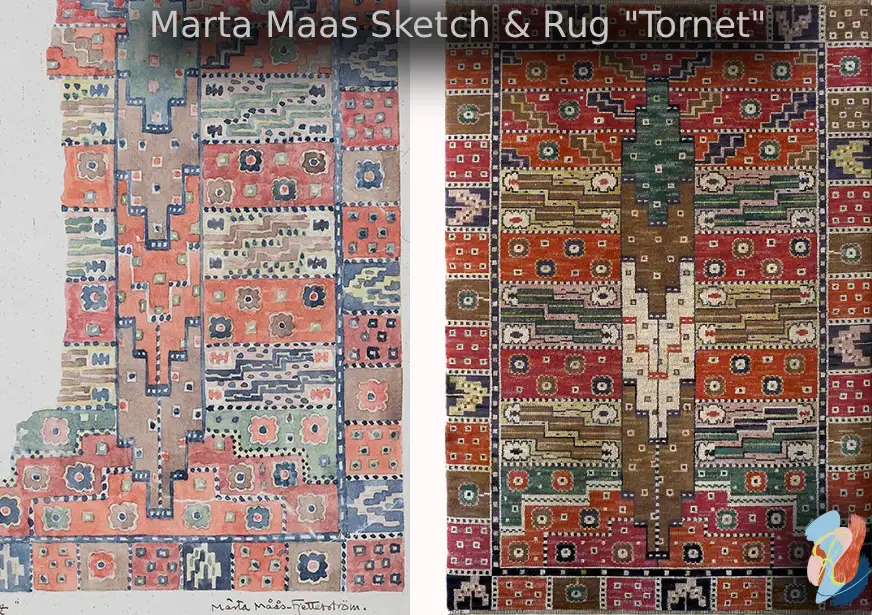
What made her workshop a definitive authority was her insistence on material purity and technical precision. She viewed the loom as a high-precision tool, and her weavers were treated as master artisans capable of executing complex “painting-like” effects through the medium of wool and linen. This commitment to quality ensured that her rugs weren’t seen as transient decor, but as “textile furniture” that grounded a room’s architecture.
Following her death in 1941, the workshop underwent a transition that solidified its legendary status. Under the artistic leadership of Barbro Nilsson, and later with contributions from luminaries like Ann-Mari Forsberg and Marianne Richter, the studio moved from a single-artist vision to a collective powerhouse of textile design. They continued to produce Måås-Fjetterström’s original sketches while introducing new, more exuberant works that defined the mid-century modern era.
Today, the MMF workshop remains the gold standard for Scandinavian rugs and weaving. It continues to operate under the same principles of hand-craftsmanship, ensuring that every piece—whether a 1920s classic or a contemporary commission—retains the “material memory” and structural integrity that first defined the Måås-Fjetterström name over a century ago.
The Märta Måås Weaving Atelier And Approach
Before the “Golden Age” of the 1950s, there was Märta Måås-Fjetterström. She is the definitive bridge between the 19th-century weaving tradition and 20th-century fine art. Märta did not just design rugs; she invented a visual language.
- The “Nature-Logic” Philosophy: Märta’s genius lay in her ability to deconstruct the Swedish landscape—the lichen on a rock, the movement of a stream, the rhythm of a wheat field—into a geometric grid.
- The 1934 Turning Point: Her exhibition in Chicago in 1934 introduced the “Swedish Look” to the world, proving that a rug could be as intellectually rigorous as a painting while remaining functionally durable.
- The Signature “AB MMF”: When you see the AB MMF initials on a rug at RugsOnNet, you are looking at a piece produced by the workshop she founded in Båstad—an institution that became the “Harvard of Textiles” under the direction of her hand-picked successors.
The Four Pillars of the MMF Atelier (1941–1970)
Following Märta’s death, the workshop was led by a “Council of Queens” who took her foundation and pushed it into the Mid-Century and Space Age eras.
1. Barbro Nilsson: The Master of Color Transitions
As the director of the MMF workshop for 30 years, Nilsson was a master of chromatic “bleeding.” She moved away from flat blocks of color, instead using the Rölakan weave to create “watercolor” effects in wool. By blending dozens of subtly different shades within a single motif, she achieved soft, atmospheric gradients that seem to shift under different lighting conditions.
- Collector’s Note: Look for her “Salerno” or “Seaweed” designs to see this mastery of liquid color.
2. Marianne Richter: The Voice of Graphic Vibrancy
Richter brought a playful, bold energy to the studio. Her rugs are characterized by high-contrast primary colors and rhythmic, repetitive motifs that feel like a “jazz” interpretation of traditional folk art. She embraced the optimism of the 1950s, creating rugs that feel kinetic and full of life.
- Collector’s Note: Her “Forsythia” and “Red Garden” pieces are icons of the high-contrast Swedish style.
3. Ingrid Dessau: The Architectural Minimalist
Dessau is the bridge to the Space Age. Her designs are strictly geometric—stripes, grids, and monochromatic fields. She stripped away the “floral” and the “narrative,” focusing entirely on the relationship between line and space. She is the favorite of collectors who prefer the “Architectural” over the “Decorative.”
- Collector’s Note: Dessau’s work is the perfect anchor for a room filled with Eames or Knoll furniture.
4. Ann-Mari Forsberg: The Narrative Weaver
Forsberg kept the “Tapestry” tradition alive. While her colleagues moved toward abstraction, Forsberg’s rugs often feature symbolic motifs—birds, trees, and figures—rendered in a modern, flat style. Her work feels both ancient and 1950s-avant-garde, appealing to those who want a “story” woven into their floor.
- Collector’s Note: Her “The Holy City” and botanical studies are masterpieces of narrative modernism.
MMF Workshop Monogram Guide
| Designer | Signature Mark | Style Key |
| Märta Måås-Fjetterström | MMF | Organic / Earthy / Foundational |
| Barbro Nilsson | BN | Color Gradients / “Watercolors” |
| Marianne Richter | MR | Graphic / High-Contrast / Bold |
| Ingrid Dessau | ID | Minimalist / Gridded / Space Age |
| Ann-Mari Forsberg | AMF | Narrative / Symbolic / Figurative |
Pile Height Of Vintage Rugs From Scandinavia
| Category | Technique | Typical Use | Market Distinction |
| Rölakan | Flatweave | Under dining tables | Reversibility and sharp lines |
| Flossa | Short Pile | Living rooms | Structural density and clarity |
| Rya | Long Pile | Lounging / Accents | High-pile “shag” and color depth |
| AB MMF | Studio Mark | Collector’s Gallery | Highest provenance and value |
American Modern Rug Design: The Bespoke Frontier
In the United States, the 1950s and 1960s saw a shift from imported area rugs and floor coverings to domestically engineered textile programs. This era was defined by a close-knit collaboration between architects, furniture designers, and specialized manufacturers who viewed the floor as a critical plane of the interior’s “total environment.”
Entre The American Designers
Edward Fields: The Architect of the American Floor
Edward Fields is the most significant name in American vintage luxury. He transformed the rug from a commodity into a custom-engineered interior element.
- Architectural Commissions: Fields worked directly with the icons of modernism—Philip Johnson, Mies van der Rohe, and Raymond Loewy. His rugs were often “sunken” or wall-to-wall, designed to be part of the building’s permanent anatomy.
- Luxury Modern Pile Design: He pioneered the use of “sculpted” or multi-level pile, where a single rug would feature varying heights and textures (loop and cut pile) to create 3D geometric patterns.
- The “L’Art de Vivre” Approach: His pieces are characterized by a “Hollywood High-Modern” feel—lush, oversized, and often featuring bold, biomorphic “Atomic Age” motifs.
Alexander Girard: The Master of Playful Geometry
As the director of the textile division at Herman Miller, Girard brought a much-needed humanism and vibrant color system to the stark lines of industrial modernism.
- Textile Color Systems: Girard moved away from the monochromatic, “safe” palettes of the 1940s. He introduced “Hot” colors (magenta, crimson, orange) and paired them with traditional “Cold” architectural tones.
- Playful Geometry: His rug designs utilized “folk-modern” motifs—circles, triangles, and whimsical patterns—that broke the coldness of steel and glass. For Girard, the rug was a way to “domesticate” the machine-age office.
Herman Miller and the Integrated Floor
Under the guidance of George Nelson, Charles and Ray Eames, and Alexander Girard, Herman Miller revolutionized how the floor was utilized in the workplace and the home.
- Interiors Integrating Rugs: The “Herman Miller look” was a holistic system. The rug wasn’t just placed in the room; it was coordinated with the upholstery of an Eames Lounge Chair and the wood of a Nelson Bench.
- The Environment as a Program: They viewed the floor as part of a “textile program” that could be swapped or updated to change the mood of a space, leading to the rise of modular and highly graphic rug “zones.”
Knoll and Architectural Rug Integration
If Herman Miller was “Humanist Modern,” Knoll was “Corporate Modern.” Their influence on vintage rug design was defined by a rigorous, disciplined aesthetic.
- The Knoll Textile Influence: Led by Florence Knoll, the company emphasized “textile architecture.” Rugs were designed with a low visual profile—primarily using grays, beiges, and deep navy—to allow the structural beauty of the furniture (like the Barcelona Chair) to take center stage.
- Textural Rigor: Knoll-associated rugs often focused on material honesty, utilizing heavy wool loops and un-dyed fibers to create a “Brutalist” or tactile contrast to polished chrome and leather.
| Designer / Brand | Core Aesthetic | Primary Market | Technical Hallmark |
| Edward Fields | Bespoke Luxury | Residential / Presidential | Multi-level “sculpted” pile |
| Alexander Girard | Folk-Modern | Residential / Experimental | Vibrant color systems and whimsy |
| Herman Miller | Holistic Lifestyle | “The Modern Home” | Integration with iconic furniture |
| Knoll | International Style | Corporate / Executive | Architectural textures and grays |
Iconic Global Designers Who Also Designed Rugs
In the “Total Design” philosophy of the mid-century, no element was too small for an architect’s intervention. For these masters, the rug was the foundation of the interior’s geometry, often serving as the structural “mirror” to the furniture placed upon it.
The American Visionaries: Eames, Saarinen, and Knoll
- Charles and Ray Eames (The Textural Foundation): While the Eames office is synonymous with plywood and plastic, their approach to rugs was rooted in collage and texture. They frequently used thick, un-dyed wool rugs (often sourced from global tribal traditions) to provide a warm, organic “nest” for their industrial lounge chairs. Their influence led to the “Eames Look”—the juxtaposition of high-tech furniture against high-touch textiles.
- Eero Saarinen (The Curvilinear Pedestal): Known for the sculptural “Womb” and “Tulip” chairs, Saarinen’s rugs were often designed as circular or elliptical “pedestals.” He used solid, architectural colors—deep reds and midnight blues—to create a “visual island” that allowed his furniture’s singular pedestals to stand out without the distraction of a patterned floor.
- Florence Knoll (The Structural Grid): Florence Knoll brought the “International Style” to the floor. Her rugs were characterized by low-profile loops and neutral palettes. She treated the rug as a “spatial anchor”—a disciplined, gridded surface that defined the boundaries of an executive office or a modernist lobby.
The European Modernists: Panton, Aalto, and Ponti
- Verner Panton (The Space Age Psychedelic): Panton was the most radical of the group, treating the floor, walls, and ceiling as a single, immersive environment. His rugs featured vibrant, repeating circular motifs and “wave” patterns in saturated oranges and purples. These were kinetic textiles, designed to create a sense of movement in an era of plastic and chrome.
- Alvar Aalto (The Organic Humanist): Aalto’s rugs reflected the natural topography of Finland. Moving away from the rigid grids of Germany, his designs featured asymmetrical, wave-like borders and mossy, earth-toned palettes. He viewed the rug as a “textile meadow,” emphasizing human comfort and natural materials like heavy, felted wool.
- Gio Ponti (The Italian Sophisticate): Ponti brought “La Dolce Vita” to rug design. His textiles were characterized by sharp, diamond-shaped geometries and “shattered glass” patterns. Ponti’s rugs often used high-contrast colors (white and navy or yellow and grey) to create a sense of Mediterranean light and architectural rhythm.
The Bridge of Modernism: Josef Frank
- Josef Frank (The Flora and Fauna of Modernism): As the lead designer for Svenskt Tenn, Frank was the bridge between traditional craft and Modernism. His rugs are legendary for their vibrant, botanical “fantasy” patterns.
- Maximalist Abstraction: Unlike the minimalists, Frank used the rug to bring the “outside in,” filling the floor with oversized, colorful depictions of maps, flowers, and exotic birds.
- The “Anti-Grid”: Frank believed that the straight lines of modern architecture needed to be broken by the “disorder” of nature, making his rugs the perfect antidote to the coldness of steel and concrete.
| Designer | Movement | Rug Philosophy | Visual Result |
| Panton | Space Age | Immersive environment | Optical waves and vibrant “pops” |
| Aalto | Scandinavian | Organic Humanism | Asymmetrical, earth-toned “meadows” |
| Saarinen | Organic Modern | The “Pedestal” effect | Solid, saturated islands for furniture |
| Frank | Swedish Modern | Botanical Maximalism | Whimsical, colorful flora and fauna |
| Knoll | International | The “Spatial Anchor” | Low-profile, neutral architectural grids |
European Vintage Rug Production Outside Scandinavia
Beyond the Nordic “System,” European workshops underwent a radical modernization. This era saw the “deconstruction” of classical borders and medallions, replaced by abstract luxury and woven geometry that sought to complement the steel, glass, and concrete of the post-war reconstruction.
Main Hubs Of European Vintage Rug Production
French “Modern”
France remained the epicenter of “Textile-Arts,” moving away from the floral Savonnerie styles of the 18th century toward a Post-War Aubusson movement.
- Modern Tapestry Workshops: Historic centers like Aubusson and Felletin began collaborating with modern masters (Picasso, Lurçat, Léger). These rugs were often flatwoven with a heavy, substantial handle, treating the floor as a horizontal tapestry.
- The “L’Art d’Habiter” Movement: vintage French rugs from the 1950s, such as those by Paule Leleu, emphasized “chic” minimalism—often featuring small, repeating stars or delicate line-work on vast, open fields of neutral wool.
Italian Modern
Italy’s contribution to the vintage rug market was driven by the Milanese Design Houses and the architectural explosion of the 1950s and 60s.
- Post-War Design Houses: Architects like Gio Ponti and Piero Fornasetti viewed the rug as a tool for “spatial theater.” Italian vintage rugs are characterized by sharp, shattered-glass geometries and bold, high-contrast palettes (e.g., emerald green, mustard yellow, and deep charcoal).
- Abstract Luxury: Unlike the “cozy” Scandinavian Rya, Italian vintage rugs often utilized silk highlights or high-twist wool to create a sophisticated, reflective surface that complemented polished marble floors and brass-legged furniture.
German Bauhaus Legacy
Following the closure of the Bauhaus in 1933, its design principles migrated into the industrial production of the 1950s and 60s.
- Textile Reduction: German vintage production focused on grid logic and color-field simplification. These rugs often utilized the “Primary Palette” (Red, Blue, Yellow) to create a visual structure for the room.
- The “Woven Architecture” Philosophy: Manufacturers like Vorwerk began collaborating with artists to create rugs that were technically rigorous—focusing on durability, acoustic absorption, and the mathematical repetition of motifs.
Belgian Modern
Belgium established itself as a powerhouse of high-quality Decorative Export Tapestries and Rugs, blending industrial efficiency with modernist design.
- Material Innovation: Belgian workshops were early adopters of blending high-quality wool with new synthetic fibers to create unique textures that were resistant to the heavy foot traffic of modern commercial spaces.
- The “Global Modernist” Look: Belgian vintage rugs often borrowed from the Scandinavian and American “Abstract” styles, producing accessible but sophisticated rugs that defined the “International Look” in middle-class European homes throughout the 1960s and 70s.
| Region | Primary Aesthetic | Key Characteristic | Market Role |
| France | Art-Tapestry | Flatwoven, artist-signed | High-end “Editioned” Art |
| Italy | Sophisticated Geometry | High-contrast, sharp lines | Architectural “Theater” |
| Germany | Functional Grid | Primary colors, structural | Modernist Office/Home |
| Belgium | Hybrid Modernism | Diverse textures, resilient | Global Decorative Export |
The integration of Moroccan tribal weaving into Mid-Century Modern interiors is one of the most significant “accidental” design movements in history. While Scandinavian and American designers were laboring over mathematical grids, the Berber tribes of the Middle Atlas Mountains had already spent centuries perfecting a visual language that—by pure coincidence—aligned perfectly with the “Less is More” philosophy of the 1950s.
The Tribal-Modernist Paradox: Vintage Moroccan Rugs
Moroccan rugs are the “organic soul” of the vintage modern interior. Architects like Le Corbusier, Alvar Aalto, and Charles Eames utilized these textiles to provide a necessary tactile contrast to the hard surfaces of steel, glass, and concrete.
Beni Ourain: The “Architect’s Rug”
The Beni Ourain is the undisputed icon of the Mid-Century Modern movement. Traditionally woven by a confederation of 17 Berber tribes, these rugs became the “uniform” for high-modernist floors.
- Minimalism and Global Importance: The signature cream field with thin, charcoal-black geometric lines mirrored the minimalist floor plans of the era. The lines were not meant to be perfect; their slight asymmetry provided a human, “hand-drawn” quality to otherwise clinical rooms.
- The Tactile Counterpoint: The deep, shaggy pile provided the acoustic and thermal insulation that modern architects required for large, open-plan spaces.
Boujad: The Freer Color Fields
While the Beni Ourain focused on restraint, the Boujad rugs of the Haouz region offered a transition into the “Pop Art” and “Color Field” sensibilities of the 1960s.
- Spontaneous Chromatics: Boujad vintage pieces are known for their unpredictable color fields—varying from dusty rose and ochre to vibrant madder reds.
- Irregular Geometry: These rugs abandoned the grid entirely, featuring “floating” shapes that look remarkably like the painterly abstraction of the New York School (e.g., Mark Rothko or Helen Frankenthaler).
Azilal: Experimental Abstraction
If the Beni Ourain is the “Classic,” the Azilal is the “Avant-Garde.” Coming from a high-altitude, rugged region, these rugs utilized a near-modern visual language that felt decades ahead of its time.
- Graphic Spontaneity: Azilal weavers used a mix of wool and occasionally recycled cotton to create thin, highly graphic patterns.
- The “Abstract Canvas”: These rugs often feature singular, bold symbols or “scribbled” lines across a white field, making them the tribal equivalent of a Joan Miró or Cy Twombly canvas.
Why Moroccan Rugs Became Mid-Century Compatible
The global obsession with Moroccan vintage rugs wasn’t a trend; it was a recognition of shared design principles between two very different worlds.
- Accidental Modernism: The Berber weaver’s reliance on spontaneous geometry—rather than pre-set patterns—aligned with the modern architect’s desire for “honesty of materials” and “form follows function.”
- Berber Authenticity: The use of un-dyed wool (in Beni Ourains) and the raw, heavy texture of the “live” wool (wool sheared from a living sheep) provided a sense of primal luxury that balanced the industrial feel of chrome-legged furniture.
- The “Soft” Grid: Mid-century design was often criticized for being too cold. The “broken” diamonds and shaky lines of Moroccan Berber rugs offered a visual softness that made modernist houses feel like homes.
Moroccan Tribal vs. Industrial: The Design Balance
| Moroccan Style | Modern Movement Parallel | Design Function |
| Beni Ourain | Bauhaus / Minimalism | Adds “organic” line-work to rigid grids |
| Boujad | Color Field Painting | Provides “warmth” and spontaneous color |
| Azilal | Surrealism / Abstract Art | Acts as a “horizontal painting” on the floor |
Summary Table: Regional Design Logic
| Region | Technical Hallmark | Primary Visual | Best For… |
| Scandinavian | Hand-knotted / Flatweave | Geometric Minimal | Minimalist / Scandi-Chic |
| American | Sculpted / Hand-tufted | Biomorphic / Atomic | MCM / Executive Suites |
| Moroccan | High Lanolin / Shag | Spontaneous Line | Loft / Industrial Spaces |
| French | Flatwoven Tapestry | Abstract Fine Art | “Gallery” Style Interiors |
The Berber Influence: The “Soft” Geometry of the Atlas Mountains
While European Modernists were theorizing about “Form follows Function,” the Berber weavers of the Middle Atlas were practicing it out of necessity. Their rugs were designed as sleeping mats and blankets for a nomadic climate, leading to a structural honesty that mid-century architects found irresistible.
Berber Authenticity: The “Live” Wool Factor
- Lanolin Richness: Authentic vintage Berber rugs use wool sheared from living sheep in high altitudes, resulting in a high lanolin content. This gives the rug a natural sheen and a “self-cleaning” durability that synthetic vintage rugs cannot replicate.
- The “Spirit” of the Weaver: Unlike urban workshop rugs (like Tabriz or Kerman) that follow a pre-drawn “cartoon,” Berber rugs are improvisational. The weaver might change the pattern mid-row based on a life event or a change in the wool supply, creating the spontaneous abstraction that collectors now prize as “horizontal art.”
Key Berber Regions in the Vintage Market
- The Beni Ourain (The Geometric Minimalists): The most famous Berber group. Their “black line on cream” aesthetic provided the perfect linear counterpoint to the rigid, right-angled architecture of the 1950s.
- The Rehamna and Haouz (The Colorist Berbers): These groups produced the deep reds and “scorched earth” oranges that provided a warmth and soul to the otherwise cool, industrial interiors of the Space Age.
- The Marmoucha: Often confused with Beni Ourain, these Berber rugs feature slightly more complex, “shaky” diamond lattices that offer a higher visual rhythm for larger minimalist lofts.
The “Accidental Modernism” of the Berber Weaver
- The Broken Diamond: The most common Berber motif—the diamond—is rarely symmetrical. In a vintage modern interior, this “imperfection” acts as a visual relief, breaking the monotony of machine-made furniture and mass-produced finishes.
- Cultural Reverence: Architects like Le Corbusier and Alvar Aalto didn’t just buy these rugs; they studied them. They saw in the Berber weave a “primitive” precursor to the abstract art of their own time (Picasso, Klee, and Matisse).
Berber vs. Urban Workshop: A Vintage Comparison
| Feature | Berber (Tribal) | Urban (Workshop) |
| Design Source | Memory and Intuition | Formal “Cartoons” (Drawings) |
| Symmetry | Intentional Asymmetry | Rigid Symmetry |
| Pile | Long, Shaggy, Insulating | Short, Clipped, Decorative |
| Dyes | Natural / Minimal Chrome | Complex Multicolored Palettes |
The shift from the “architectural” rug of the 1950s to the “Shag Movement” of the 1960s and 70s represents a profound change in the psychology of the home. As the “Formal Salon” gave way to the “Conversation Pit,” the rug transitioned from a floor covering into a sensory environment.
Dawn Of The Age Of Shag
The Shag rug was the ultimate expression of Post-War Hedonism. By increasing the pile height to 2–4 inches, designers invited homeowners to sit, lounge, and interact with the floor, fundamentally changing the “verticality” of the modern room.
The Evolution Of Shag Rugs
The Rise of Shag: 1960s–1970s
The “Shag” look emerged simultaneously from two different directions: the high-end artist studio and the industrial mass market.
- The “Lounge” Culture: As furniture became lower to the ground (think the Togo sofa or the Sacco bean bag), the rug rose to meet it. The Shag rug became a “landscape” rather than a textile.
- Acoustic and Thermal Insulation: In an era of high-fidelity stereo systems and open-plan lofts, the deep pile served a functional purpose as a powerful acoustic dampener, absorbing the “bounce” of sound and heat.
Synthetic Fiber Expansion
While the 1950s relied on wool, the late 1960s saw an explosion in fiber technology that allowed for the “Hyper-Shag” look.
- Nylon and Polyester: These new synthetics allowed for longer, “stiff” piles that wouldn’t mat down as easily as traditional wool.
- The Acrylic Sheen: Synthetics provided a high-gloss finish that caught the light of the disco and “Space Age” era, creating a visual dynamism that natural fibers couldn’t replicate.
The 1970s Color Palette: The “Earth and Acid” Trends
The color story of the Shag era moved away from the “Primary” Bauhaus colors toward a palette that was both “earthy” and “electric.”
- Avocado and Mustard: These “new neutrals” mirrored the organic-psychedelic movement.
- Burnt Orange and Brown: Often used in geometric “Space Age” patterns, these colors provided a grounding, warm atmosphere.
- Ivory and Cream: The “Luxury Shag” look, often seen in high-end penthouse designs, utilized un-dyed or “Optical White” fibers to create a cloud-like, decadent floor surface.
American Shag vs. European Shag
- American Shag (Luxury carpets): In the U.S., Shag was often synonymous with Edward Fields or broadloom carpeting. It was about “Total Coverage”—turning the entire house into a plush, tactile sanctuary.
- European Shag (The Rya Legacy): In Europe, the Shag rug remained largely a framed art piece. Building on the Scandinavian Rya tradition, European Shags were often hand-knotted and featured “painterly” designs with shorter production runs.
Why Shag Became Symbolic of 1970s Interiors
The Shag rug became the definitive symbol of the 1970s because it represented the Informalization of the Domestic Space.
- The Anti-Formalism: It was the direct antithesis of the “oriental rug” and the “stiff parlor.”
- Spontaneous Living: The Shag rug facilitated a lifestyle of visual spontaneity and “bohemian” comfort. It allowed for a room to be rearranged at will, with the floor itself acting as a continuous piece of furniture.
- The “Atomic” to “Earth” Transition: It bridged the gap between the futuristic optimism of the 1960s and the “Back to the Land” organic movement of the 1970s.
Shag Style Archetypes
| Style | Material | Design Goal | Vibe |
| Architectural Shag | Fine Wool | Acoustic Dampening | Sophisticated / Executive |
| “Funky” Shag | Acrylic / Poly | Visual Pop / Color | Playful / Space Age |
| Bohemian Rya | Hand-knotted Wool | Textural Art | Craft / Intellectual |
| Cloud Shag | High-Lanolin Ivory | Tactile Luxury | Opulent / Decadent |
The Making Of The Vintage Rug
The mid-20th century was a period of “Hybrid Construction.” As the demand for modern design outpaced traditional weaving speeds, new mechanical and chemical processes were introduced to achieve the bold, sculptural effects required by the period’s architects.
The Evolution of Weave: Hand vs. Machine
- Vintage Hand-Knotted Pile Rugs: The gold standard of the era. Designers like Märta Måås-Fjetterström and Ivan Da Silva Bruhns utilized traditional Persian or Turkish knots to execute avant-garde patterns. These rugs possess a “structural soul” and longevity that machine-made pieces cannot match.
- Hand-Tufted Rug Production Emergence: A critical mid-century development. By using a “tufting gun” to push yarn through a canvas backing, workshops like Edward Fields could create massive, seamless rugs with complex, non-repeating curves that were nearly impossible on a traditional loom.
- Flatweave Modern Production: Dominated by the Scandinavian Rölakan and the French Aubusson rug styles. These rugs rely on the intersection of warp and weft to create design, resulting in a zero-pile, architectural surface that is often reversible.
- Mid-Century Design Machine-Made Rugs: The 1960s saw the rise of high-quality “Wilton” and “Axminster” looms capable of producing complex geometric patterns. While mass-produced, these vintage machine-weaves (like those from Ege Rya) are now collectible for their specific “Space Age” accuracy.
Material Analysis: Wool, Cotton, and the Synthetic Leap
- Wool Quality by Decade: * 1950s: High-lanolin, hand-spun wool was still the norm, offering a matte, organic finish.
- 1960s–70s: Transitioned to worsted wool, which was smoother and more uniform, allowing for the “clean” look of Pop Art designs.
- Cotton Foundations: Most vintage modern rugs utilized a cotton warp and weft for dimensional stability. In high-end Swedish pieces, the fringe is often the exposed cotton warp, acting as a signature of the rug’s structural integrity.
- Synthetic Fiber Introduction:
- Nylon: Introduced for its extreme durability and ability to hold “Neon” dyes that wool could not absorb.
- Acrylic: Used to mimic the “fuzz” of wool in 1970s Shag rugs but with a higher-gloss, “plastic” sheen.
- Polypropylene Beginnings: The late 1970s saw the start of this moisture-resistant fiber, primarily for “indoor-outdoor” modernist transitions.
Structural Innovations: Pile and Surface Design
- Latex Backing Emergence: With the rise of hand-tufted rugs, a secondary backing—often made of natural or synthetic latex covered with canvas—was used to lock the tufts in place. In the vintage market, the condition of this “scrim” is a key factor in preservation.
- Pile Height Variations: The mid-century moved away from the “uniform” pile. A single rug might transition from a zero-pile flatweave to a 2-inch Shag to create a topographical, 3D effect.
- Surface Texture Design:
- Loop Pile Systems: Inspired by the “Knoll” aesthetic, these rugs use uncut loops of wool to create a pebbled, Brutalist texture that is highly resistant to crushing.
- Carved Pile Techniques: Also known as “Sculpted Pile,” this involves hand-shearing the wool at different heights or “incising” lines into the pile to create shadows and depth without changing colors.
Technical Identification Table
| Construction | Era | Fiber Content | Visual/Tactile Identifier |
| Traditional Rölakan | 1940s–50s | Wool on Linen / Cotton | Flat, reversible, geometric |
| Sculpted Tufted | 1950s–60s | High-grade Wool | Varied pile heights, latex-backed |
| Long-Pile Rya | 1960s | Wool / Synthetic Blend | Shaggy, “bleeding” color fields |
| Industrial Wilton | 1970s | Acrylic / Nylon | Rigid backing, perfect pattern symmetry |
Color Theory in Vintage Rugs: From Mineral to Acid
The shift in vintage rug color was driven by both artistic movements and the perfection of Chrome (acid) dyes, which allowed for a level of saturation and lightfastness previously impossible with natural vegetable dyes.
Mid-Century Palettes: The “New Neutrals”
The 1950s interior was defined by a sophisticated, “muted” vibrancy. These colors were designed to complement the warm wood tones of teak, walnut, and rosewood furniture.
- Ochre and Teal: These became the definitive “accent” duo of the era, providing a high-contrast but “natural” feel.
- Rust and Olive: These tones acted as the “organic” bridge, bringing the colors of the landscape into the glass-walled suburban home.
- Charcoal: Used as a structural anchor, charcoal replaced the traditional “navy” or “black” of antique rugs, providing a softer, more architectural outline for geometric patterns.
Scandinavian Palette Logic: The Light of the North
Scandinavian color theory is rooted in the “long shadows” and “mineral tones” of the Nordic landscape.
- Muted Contrast: Rather than using clashing colors, Swedish designers like Barbro Nilsson used “neighboring” tones (e.g., three shades of grey-blue) to create a sense of atmospheric depth.
- Mineral Tones: The palette relied on “flint” greys, “lichen” greens, and “terracotta” reds—colors that felt hand-hewn and eternal, even when applied to modern geometric Rölakans.
Pop Art Palette Systems: Saturated Primaries
As the 1960s progressed, the “sophisticated” palette gave way to the high-energy language of Pop Art.
- Saturated Primaries: Inspired by Andy Warhol and the “Space Age,” rugs began to feature un-mixed Red, Blue, and Yellow.
- Visual Vibration: Designers used clashing saturations—putting a bright magenta next to a neon orange—to create a “vibration” on the floor that matched the kinetic energy of 1960s youth culture.
Bauhaus Palette Reduction: The Structural Logic
The Bauhaus legacy in rug design was one of chromatic discipline.
- Color as Function: Every color in a Bauhaus-inspired rug had a structural purpose. A yellow line might indicate a path of movement, while a blue square anchored a seating area.
- The “Primary” Grid: By reducing the palette to the absolute basics, these rugs provided a clean, “uncluttered” floor that allowed the architecture of the room to breathe.
Earth Tone 1970s Transition: The Organic Shift
By the mid-1970s, the “Acid” colors of the 60s were replaced by a return to the earth—a movement fueled by the “Back to the Land” philosophy and the rise of the Shag rug.
- The “Harvest” Palette: This era was dominated by Burnt Orange, Mustard Yellow, and Avocado Green.
- Tonal Brown Systems: Rugs often featured “concentric” patterns of brown, beige, and cream, creating a warm, protective “den” atmosphere that was the antithesis of the cold, white-walled 1950s gallery.
Vintage Color Identification Guide
| Era | Dominant Palette | Artistic Influence | Interior Goal |
| 1950s | Teal, Ochre, Charcoal | Abstract Expressionism | Sophistication and Harmony |
| 1960s | Saturated Primaries | Pop Art / Space Age | Energy and Optical Movement |
| Early 70s | Psychedelic / Acid | Op-Art | Kinetic Illusion |
| Mid-Late 70s | Earth Tones / Brown | Organic Modernism | Warmth and “Nesting” |
The Vintage Rug Tiers Explained
The vintage market is tiered by the level of “Authorship.” While an Atelier rug is treated as a masterpiece, a Contract rug is valued for its durability and its “period-correct” aesthetic.
Commercial Production vs. Artist Workshop Production
Atelier Rugs: The “Masterpiece” Tier
An Atelier rug is the textile equivalent of a signed lithograph or a studio-crafted piece of furniture.
- Handwoven Authorship: These rugs were produced in small, specialized studios like the Märta Måås-Fjetterström (MMF) workshop in Sweden or the Pinton and Cuttoli ateliers in France.
- Limited Production: Designs were often executed in “editions.” For example, a Barbro Nilsson design might only have been woven twelve times, with each piece carrying the specific woven initials of the lead weaver.
- Material Superiority: Ateliers had access to the finest hand-spun wools and custom-batch chrome dyes, resulting in a depth of color that industrial looms could not replicate.
Department Store Modern Rugs: The “Democratized” Tier
During the 1950s and 60s, high-end department stores like Nordiska Kompaniet (NK) in Stockholm or Lord & Taylor in New York acted as the primary curators for the middle class.
- Designer Collaborations: Stores commissioned famous artists (like Viola Gråsten) to design “Store-Exclusive” lines.
- The “NK” Mark: Rugs with the “NK” label are highly collectible today as they represent the peak of “high-street” modernist taste—offering professional design at a more accessible production scale.
Contract and Public Space Rugs: The “Infrastructure” Tier
With the boom in post-war corporate architecture, a new category of Contract Interior Rugs emerged.
- Hotel and Public Space Design: These rugs were engineered for the lobbies of the “Hilton” era and the “Pan Am” lounges. They were designed by firms like Skidmore, Owings & Merrill (SOM) to handle thousands of footsteps while maintaining a sharp, modernist profile.
- Durability over Artistry: While they may lack an artist’s signature, these rugs are technically superior in their construction—often featuring dense, low-pile loops and moth-proofing treatments that make them remarkably well-preserved today.
Architectural Commission Rugs: The “Total Environment”
The most prestigious tier of the vintage market consists of rugs designed for a specific building.
- Site-Specific Geometry: Architects like Frank Lloyd Wright or Philip Johnson would design a rug to match the exact “grid” of a specific house.
- Non-Standard Shapes: These rugs often feature unusual dimensions—L-shapes, T-shapes, or circular cut-outs—to accommodate built-in furniture or central fireplaces.
- Investment Value: Because they were never intended for the general market, Commission Rugs carry the highest provenance, often remaining with the property for decades before entering the collector’s market.
Production Comparison Table
| Category | Typical Label/Mark | Primary Value Driver | Collectibility |
| Atelier | Woven Initials (MMF, BN, sdSB) | Artist Authorship | Highest (Museum Quality) |
| Architectural | Firm Name (e.g., Edward Fields) | Building Provenance | High (Unique Pieces) |
| Department Store | Store Label (NK, Illums Bolighus) | Designer Association | Moderate (Period Chic) |
| Contract | Manufacturer (Vorwerk, Ege) | Durability & Scale | Utility (Functional Vintage) |
The final layer of authentication in the vintage market is the physical evidence of authorship. In a world of anonymous weaving traditions, the “Modern Rug” introduced a rigorous system of branding that mirrors the fine art world. For a professional collector, the presence of a woven monogram or a specific manufacturer’s tag can shift a rug’s valuation by thousands of dollars.
Identification Labels and Rug Markings
The “Signature” on a vintage rug usually exists in one of three forms: a woven monogram, a sewn atelier label, or a stamped manufacturer’s tag. Each provides a different level of provenance.
Signed Rugs and Label Systems Breakdown
Woven Signatures: The Artist’s “Seal”
This is the most prestigious form of signature, where the artist’s initials are woven directly into the pile or flatweave during production.
- Corner Placement: Signatures are typically found in the lower-left or lower-right corner.
- The “Double Signature” (MMF / BN): In Swedish rugs, you will often see two sets of initials—one for the workshop (MMF for Märta Måås-Fjetterström) and one for the specific designer (BN for Barbro Nilsson or MR for Marianne Richter).
- French “Aubusson” Marks: Modern French rugs often, but not always, feature the workshop’s woven mark (e.g., the Pinton “P” or the Lurçat rooster) alongside the artist’s full woven signature.
Workshop Labels: The Atelier Tradition
For rugs produced in smaller studios, a fabric label was often hand-sewn onto the reverse side.
- Technical Data: These labels frequently include the design name, the edition number (e.g., 4/10), and the date of execution.
- The “Cuttoli” Label: Marie Cuttoli’s famous French workshop utilized distinctive silk labels to authenticate rugs designed by Picasso, Miró, and Léger.
Manufacturer Tags: Industrial Provenance
As modern design moved into high-end industrial production, metal or heavy-duty cloth tags became the standard.
- Ege Rya Tags (Denmark): These often feature the “Ege” logo and sometimes the specific name of the designer, such as Verner Panton.
- Manufacturer’s “Stamps”: Some German and Belgian rugs feature an ink-stamp directly onto the jute or latex backing, identifying the loom and the production year.
Regional Label Systems
Scandinavian Provenance Labels
Scandinavian rugs are perhaps the most meticulously labeled in the world.
- The “NK” Label: The Nordiska Kompaniet label is a hallmark of quality, indicating a rug was commissioned for Sweden’s premier design department store.
- Association Labels: Look for the “Handarbetets Vänner” (HV) label, which signifies a piece produced by the “Friends of Handicraft” association—a mark of museum-level quality.
American Designer Labels
In the United States, the “Label” became a symbol of corporate and domestic luxury.
- The Edward Fields “Gold Label”: Often found on the backing, these labels are essential for identifying Architectural Commissions. They typically include the “Order Number,” which can be used to trace the rug back to the original client or building.
- Herman Miller / Knoll Labels: Rugs designed by Alexander Girard or Florence Knoll often carried the same branding as their iconic furniture, ensuring a “Total Design” provenance.
- V’Soske Labels: Another giant of American custom rugs, V’Soske labels are proof of high-end, hand-tufted craftsmanship often found in executive suites and embassies.
The Expert’s Authentication Checklist
| Signature Type | Reliability | Primary Location | Top Examples |
| Woven Monogram | Highest | Lower Corners | MMF, BN, MR, sdSB |
| Sewn Atelier Label | High | Reverse Side | Cuttoli, Pinton, HV |
| Manufacturer Tag | Moderate | Reverse / Edge | Ege, Vorwerk, NK |
| Edward Fields Label | High | Corner Backing | EF Custom Orders |
Collecting Vintage Mid Century Modern Rugs Today
For the modern connoisseur, a rug is no longer just a floor covering; it is a documented asset. The market has moved toward a “Fine Art” model, where provenance and signature carry as much weight as the wool itself.
What To Look For In Art-Level Vintage Rug
What Collectors Prioritize
The hierarchy of value in the 20th-century market is built on three pillars: Identity, Rarity, and Intent.
- Signed Examples: A woven monogram (like the “BN” of Barbro Nilsson or “MR” of Marianne Richter) acts as a certificate of authenticity. In the Swedish market, a signed MMF (Märta Måås-Fjetterström) piece can command five to ten times the price of an unsigned contemporary from the same region.
- Rare Atelier Pieces: Collectors seek out area rugs from specific, short-lived workshops. Pieces from the Marie Cuttoli workshop or the Handarbetets Vänner (HV) association are prized because they represent a specific, non-industrial moment in textile history.
- Designer Provenance: A rug designed by a non-textile architect, such as Le Corbusier or Eero Saarinen, holds a unique “cross-over” value. These pieces appeal to both rug collectors and furniture enthusiasts, driving prices higher at major auction houses.
Condition Issues Specific to Mid-Century Rugs
Collecting vintage modernism requires a different technical eye than collecting antique 19th-century Persian rugs. Because these rugs utilized new chemistries and constructions, they face unique “aging” challenges.
Fiber Degradation in Post-War Materials
- Latex “Dry Rot”: Many mid-century American rugs (like early Edward Fields) utilized a latex adhesive to secure the pile. Over 50–70 years, this latex can become brittle and turn to dust, leading to “tuft loss” and a characteristic “crunchy” sound when the rug is handled.
- Synthetic Interaction: In rugs that blend wool with early Nylon or Acrylic, the two fibers may age at different rates. The synthetic fibers may retain their color while the wool fades, or the synthetic may become “sticky” due to chemical breakdown, a process known as plasticizer migration.
- Lanolin Depletion: In high-pile Berber or the Swedish Rya rugs, the “life” of the rug depends on the wool’s natural oils. If a rug has been chemically over-cleaned in the past, the wool can become “dead” and brittle, leading to permanent matting that no amount of grooming can fix.
Restoration Challenges
- The “Clean Line” Problem: The primary challenge in restoring a Rölakan or a Bauhaus-style rug is the lack of “hiding places.” Unlike a busy Persian floral pattern, a modernist rug relies on vast fields of solid color. Any re-weaving or “paling” (patching) is immediately visible if the dye match isn’t 100% perfect.
- High-Pile “Scraping”: Restoring a 70s Shag or a Moroccan Tulu requires sourcing wool of the exact same micron count and “twist.” If the replacement wool is too soft or too coarse, it will catch the light differently, creating a visible “scar” on the rug’s surface.
- The Fringe Dilemma: Many Swedish rugs feature a simple, exposed cotton warp fringe. Because this is structural, once it wears down to the “webbing,” the rug can begin to un-weave. Professional restoration often involves a complex “re-warping” process to save the rug’s geometric integrity.
Risk Assessment Table
| Issue | Impact on Value | Detectability | Restorable? |
| Faded Dyes | High | High (Compare front to back) | No (Permanent) |
| Latex Failure | Moderate | Feel/Sound (Crunchiness) | Yes (Requires re-backing) |
| Moth Damage | Moderate | Visual (Holes / Tracks) | Yes (If caught early) |
| Loss of Signature | Severe | Visual (Missing corner marks) | No (Destroys provenance) |
Vintage Rugs in Contemporary Interiors
The resurgence of mid-century and 70s aesthetics isn’t merely a trend—it is a recognition that these rugs were engineered for the very architectural conditions we live in today: open floor plans, hard surface flooring, and large glass exposures.
Decorating With Vintage Mid Century Modern Rugs
Why Mid-Century Rugs Work Today
- The “Humanizing” Factor: Modern construction (steel, polished concrete, glass) can often feel clinical. A Berber or a Swedish Rya introduces a “primal” texture that softens the acoustic and visual harshness of the “White Box” gallery home.
- Investment Stability: Unlike “fast-furniture” rugs, a signed Barbro Nilsson or Edward Fields piece is a finite resource. As the supply of well-preserved 1950s–70s textiles diminishes, their value as “functional art” continues to climb.
Pairing Vintage Rugs with Modern Furniture
The key to a successful contemporary room is the tension between eras.
- The Low-Profile Rule: Mid-century rugs (especially Rölakan flatweaves) were designed for furniture with legs (tapered wood or chrome). This creates a “floating” effect where the rug’s geometry is visible under the sofa, not just around it.
- Color Anchoring: A vibrant Pop Art or Verner Panton rug can act as the “center of gravity” in a room filled with neutral, contemporary Italian furniture.
Scandinavian Rugs in Minimal Interiors
The “Scandi-Minimal” look remains the dominant global aesthetic, and the Swedish Flatweave is its cornerstone.
- Quiet Complexity: In a room with white walls and light oak floors, a Märta Måås-Fjetterström design provides “quiet” detail. The subtle mineral tones and geometric borders offer visual interest without breaking the minimalist “zen.”
- Zoning Open Spaces: Architects use large-scale Scandinavian rugs to define “rooms within rooms” in open-concept lofts, utilizing the rug’s border as a soft architectural wall.
The Shag Revival: Sensory Luxury
The “Shag” is no longer a 1970s cliché; it has been rebranded as High-Texture Luxury.
- The Conversation Pit 2.0: Modern designers are using deep-pile Turkish Tulu and Moroccan Beni Ourain rugs to create “soft zones” in media rooms and primary suites.
- Tactile Contrast: Placing a high-shag rug against a sleek, lacquered coffee table creates a sensory “pop” that defines luxury in the 2020s—moving away from visual flash toward tactile comfort.
Artist Rugs as Statement Pieces
The most significant shift in contemporary collecting is treating the rug as “The Fifth Wall.”
- Horizontal Art: Collectors are increasingly purchasing signed Picasso, Miró, or Léger rugs not to be walked on, but to be displayed as “soft paintings.”
- The Gallery Effect: In a contemporary home, a signed artist rug acts as the “intellectual anchor” of the space, signaling that the homeowner values art history as much as interior decoration.
Quick-Style Pairing Guide
| Contemporary Interior Style | Recommended Vintage Rug | Why it Works |
| Industrial Loft | Moroccan Beni Ourain | Softens concrete/steel with organic lines |
| Organic Modern | Swedish Rölakan (Flatweave) | Complements natural wood and “clean” lines |
| Post-Modern / Eclectic | Verner Panton / Pop Art | Embraces bold color and “Space Age” curves |
| Quiet Luxury | Barbro Nilsson MMF | Provides sophisticated, painterly “mineral” tones |
Main Market Category Tiers Of Vintage Rugs
To navigate the 20th-century market, one must distinguish between rugs intended for the mass-market consumer and those commissioned as significant cultural artifacts.
The 3 Main “Levels” Of Vintage Area Rugs:
1. Decorative Vintage: The “Aesthetic” Tier
This category comprises high-quality rugs produced for the general luxury market between 1950 and 1979.
- Focus: Visual appeal, color coordination, and durability.
- Examples: High-end Turkish Oushak rugs from the 1960s, Moroccan Berber rugs sourced for their “look,” and high-quality Belgian or Indian modernist exports.
- Value Driver: Size, condition, and how well the colors (e.g., Avocado, Rust, or Teal) fit current interior trends.
2. Collectible Vintage: The “Provenanced” Tier
Collectible rugs are those associated with a specific, recognized designer or a prestigious regional workshop.
- Focus: Historical significance and the “hand” of the artist.
- Examples: Signed Ege Rya rugs by Verner Panton, early Edward Fields custom pieces, or Marianne Richter designs for the MMF workshop.
- Value Driver: The presence of a label or woven signature, the rarity of the pattern, and the documented era of production.
3. Art-Level Vintage Rug Design: The “Masterpiece” Tier
These are the “Blue Chip” assets of the rug world. They are often one-of-a-kind commissions or limited-edition artist collaborations.
- Focus: Innovation and art history.
- Examples: Original Marie Cuttoli tapestries/rugs (Picasso, Léger), site-specific commissions by Frank Lloyd Wright, or lifetime weaves by Märta Måås-Fjetterström.
- Value Driver: Exhibition history, inclusion in design catalogs, and direct links to major architectural landmarks.
Designer Rugs vs. Regional Rugs
The central tension in the vintage market is between the Individual Vision (The Designer) and the Collective Tradition (The Region).
Designer Rugs: The “Auteur” Approach
In this category, the rug is an extension of an individual’s creative portfolio.
- Characteristics: Unique geometries, non-traditional color palettes, and a “branded” identity.
- Investment Profile: Volatile but high-growth. These rugs follow the reputation of the designer. If Gio Ponti or Alexander Girard is trending in the furniture market, their rugs will see a simultaneous spike in value.
Regional Rugs: The “Vernacular” Approach
These rugs are the product of an evolved local style, where the “weaver” remains anonymous but the “tribe” or “region” is the brand.
- Characteristics: A shared visual language (e.g., the Beni Ourain diamond or the Scandinavian Rölakan star).
- Investment Profile: Stable and “Essential.” Regional rugs like the Swedish Flatweave are considered “staples” of modern design and maintain a consistent, high floor-price regardless of individual designer trends.
Preservation Protocol: Protecting the Antique of Tomorrow
Acquiring a vintage or retro rug is an act of stewardship. Because these pieces are finite historical resources, their maintenance requires a specialized approach that differs from traditional antique care.
Main Vintage Rug Care Tips:
- Light Stability: One of the primary advantages of the “Chrome Revolution” is color fastness. These dyes are significantly more resistant to UV fading than 19th-century vegetable dyes, making them ideal for modern homes with floor-to-ceiling glass. However, consistent rotation is still recommended to ensure even exposure.
- Foundation Integrity: While the wool surface is durable, the internal cotton or jute foundation can become brittle if kept in excessively dry environments. Professional “wet-cleaning” by a textile specialist is recommended every 3–5 years to rehydrate the fibers and remove deep-seated grit that can abrade the loom-knots.
- The Vacuum Protocol: For high-pile retro shags or delicate flatweaves, avoid using a vacuum with a beater bar, which can snag long fibers or cause surface abrasion. A suction-only attachment or traditional “shaking” is the preferred method for maintaining the structural topography of the pile.
The table defines the four main tiers of the current international market:
| Category | Primary Buyer | Key Identifier | Market Stability |
| Decorative | Interior Designers | Color/Texture | Fluctuates with Trends |
| Collectible | Design Enthusiasts | Label / Tag | Steady Growth |
| Art-Level | Art Collectors / Institutions | Provenance / Signature | Highest Appreciation |
| Regional | Modernist Homeowners | Weaving Technique | Very Stable |
The RugsOnNet Legacy: A Multi-Generational Curatorship
In a market often saturated with mass-produced reproductions, the value of a vintage rug is inseparable from the integrity of its source. At RugsOnNet, our approach is defined by a 1976 foundation and a multi-generational commitment to the “Laboratory of Design.
- The Rahmanan Standard: Led by Nati, Rozi, Kevin, and Nathaniel Rahmanan, our family-operated business bridges the gap between old-world textile scholarship and 21st-century aesthetics. Every piece in our collection is hand-selected based on structural integrity, dye stability, and historical relevance.
- Curation Over Commerce: We prioritize education over sales copy. Our mission is to provide collectors with a “Primary Source” experience—ensuring that every Swedish flatweave or Mid-Century Modern pile rug is an authentic artifact of its era, not a stylistic imitation.
- The 31st Street Archive: From our New York headquarters, we maintain a rigorous authentication protocol. We examine the “hand,” the loom-tension, and the chemical signature of the dyes to ensure that every investment-grade piece meets the “Museum-Level” criteria defined in our market matrix.
Added: FAQ
Added: