
Red / Rust Rugs
Key takeaways: red and rust rugs
- What this page holds: every rug in our collection with a strong red, rust, brick or crimson in its palette, of every age. That means more than 350 antique rugs dated 1925 or earlier, 79 vintage rugs and 50 new rugs, all in stock. A rug can appear under more than one color.
- Where the red comes from: in older rugs, mostly madder root, which gives anything from rose to brick depending on how the wool is prepared and dyed. Some weaving areas also used insect reds for deeper crimson. The 1920s and 1930s Chinese Art Deco rugs use synthetic chrome dyes.
- Traditions known for red: Persian village carpets such as Heriz and Serapi and Sultanabad, Caucasian Kazak rugs and Turkmen rugs. In our stock, Chinese Art Deco and Walter Nichols rugs in deep red are the most common type.
- How it decorates: red warms a room and draws the eye. Brick and rust read earthy and relaxed; crimson reads formal. It pairs well with navy, olive, ivory and leather.
- How it ages: red fades toward rose and salmon in strong sun, and some reds can run if soaked. Rotate the rug and leave washing to a specialist.
- Buying with confidence: every rug is inspected before it is listed, each listing states origin, approximate age, materials and measured size, shipping is free within the continental United States, and there is a 4-day in-home trial. See buying with confidence.
Shop our red and rust rugs to find the most iconic and resilient foundations in the textile world. Red is a ‘performance color,’ derived from madder root to create a pigment that is naturally lightfast and exceptional at hiding traffic lanes.
View our selection of Ruby Red, Crimson, Burgundy, and Wine for a commanding presence, or browse our Rust, Terracotta, and Brick Red pieces for an earthy, oxidized look. Select a Red masterpiece—whether Scarlet or Cinnabar—to invest in a rug that patinas beautifully over decades.
Rust red color rugs bring a sophisticated warmth to any setting, blending the fiery passion of crimson with the grounded, earthy depth of terracotta. This rich, complex hue provides a luxurious focal point that is simultaneously vibrant and enduringly traditional. Discover more about how to style and use red rust rug colors to elevate your home’s aesthetic.
Red and rust rugs at a glance
The table below summarizes the red and rust rugs on this page. Counts and prices were taken from our in-stock red and rust rugs on September 27, 2026 and change as rugs sell. Ages follow the circa date in each listing: antique means dated 1925 or earlier, vintage means later than 1925, and new means rugs from our new rugs collection.
| Feature | Red and rust rugs in our collection |
|---|---|
| In stock | 482 rugs: 353 antique, 79 vintage and 50 new |
| Age of the antiques | 194 from the 19th century or earlier and 157 from 1900 to 1925. Of the vintage rugs, 61 date from the late 1920s to the 1940s. |
| Top origins | Persia, 138; China, 132; India, 56; the Caucasus, 43; Turkey, 34; Turkmenistan, 12; France, 11 |
| Most common types | Chinese Art Deco, 96, including 66 by Walter Nichols; Oushak, 24; Kazak, 23; Heriz Serapi, 20; Sultanabad, 16; Agra, 14; kilims, 12; Tabriz, 11; Turkmen rugs, 16 |
| Main dyes | Madder root in most antique Persian, Caucasian, Turkish and Turkmen rugs; insect reds in some weaving areas; synthetic chrome dyes in 1920s and 1930s Chinese Art Deco rugs |
| Colors most often paired with red | Ivory and cream (33 rugs tagged with both), blue (30), green (21), gold (20), and multicolor jewel tones (18) |
| Formats in stock | Room size, 233; small scatter rugs, 138; large oversized carpets, 62; runners, 43; wide gallery carpets, 20 |
| Most common sizes in stock | 9 x 12, 81; 8 x 10, 68; 10 x 14, 48; 6 x 9, 28; 12 x 18, 21; 12 x 15, 18 |
| Price range | Antique red rugs: from $585 to $220,000, with a median of about $11,700 and half priced between $6,800 and $22,000. Vintage: median about $7,500. New: from about $85 to $8,100, median about $895. Prices are in US dollars. |
Prefer to see a rug in person?
-
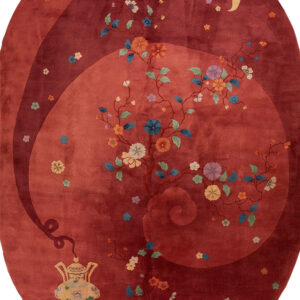
Antique Art Deco Chinese Oval Rug with Artistic Swirl Pattern in Red
$22,500.00 Antique RugsSKU: 24046Rug sizes: 7 ft 9 in x 11 ft (2.36 m x 3.35 m) -
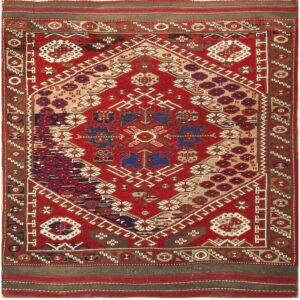
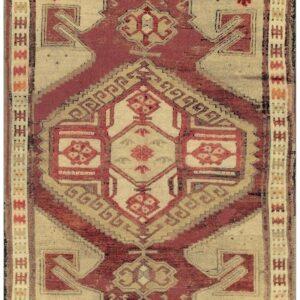
Antique Red Turkish Bergama Knotted Square Rug
$3,000.00 Antique RugsSKU: 2871Rug sizes: 3 ft 3 in x 3 ft 7 in (0.99 m x 1.09 m) -
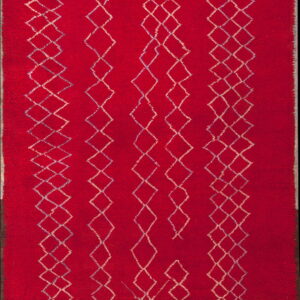
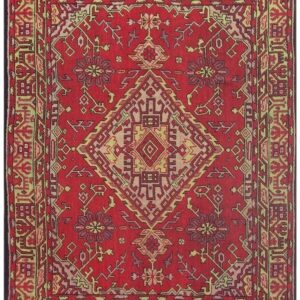
Vintage Red Diamond Pattern Rabat Moroccan Berber Rug
$9,850.00 Vintage RugsSKU: 21846Rug sizes: 5 ft 10 in x 13 ft 3 in (1.78 m x 4.04 m) -
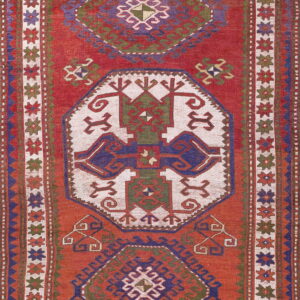
Classic Tribal Geometric Antique Caucasian Red Lori Pambak Rug
$3,400.00 Antique RugsSKU: 18521Rug sizes: 4 ft 9 in x 6 ft 10 in (1.45 m x 2.08 m) -
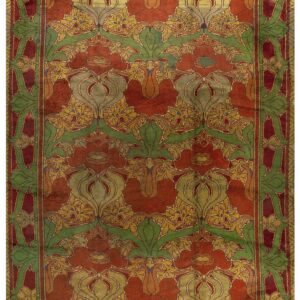
Antique Large Red Donegal – Arts & Crafts Ireland Floral Knotted Rug
$98,000.00 Antique RugsSKU: 24905Rug sizes: 12 ft x 16 ft 9 in (3.66 m x 5.11 m) -
Antique Walter Nichols Art Deco Large Room Size Red Allover Rug
$38,000.00 Antique RugsSKU: 23745Rug sizes: 10 ft x 17 ft 6 in (3.05 m x 5.33 m) -
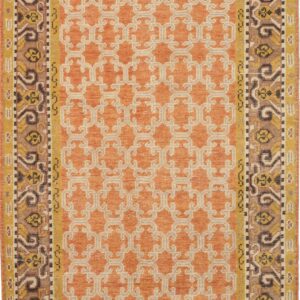
Warm Rust and Gold Hand Knotted Wool Rug
Price range: $1,295.00 through $6,927.00 New RugsRug sizes: 9 ft x 12 ft (2.74 m x 3.66 m), 10 ft x 14 ft (3.05 m x 4.27 m), 11 ft x 15 ft 1 in (3.35 m x 4.60 m), 12 ft x 18 ft (3.66 m x 5.49 m), 8 ft x 10 ft (2.44 m x 3.05 m) -
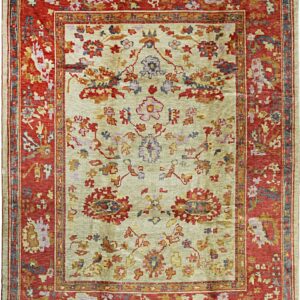
Selene Modair Oushak Ivory and Red Hand Knotted Rug
$5,200.00 New RugsSKU: FAAN13RD9X12Rug sizes: 9 ft 3 in x 12 ft 3 in (2.82 m x 3.73 m) -
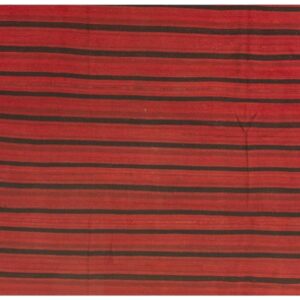
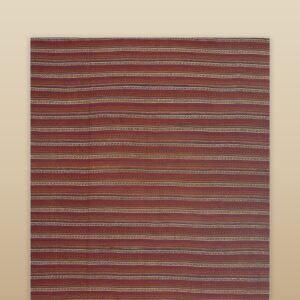
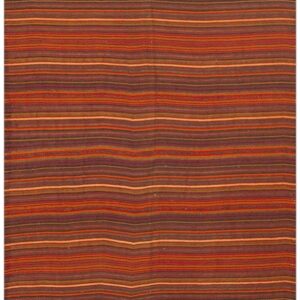
1950s Vintage Red Field Stripe Modern Turkish Decorative Kilim Wool Small Rug
$800.00 Vintage RugsSKU: 7201Rug sizes: 5 ft 3 in x 6 ft 6 in (1.60 m x 1.98 m) -
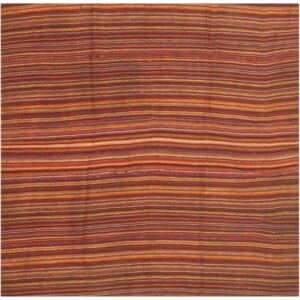
Mid Century Multicolor Red Wine Vintage Turkish Decorative Kilim Square Wool Rug
$700.00 Vintage RugsSKU: 7188Rug sizes: 5 ft 3 in x 5 ft 4 in (1.60 m x 1.63 m) -
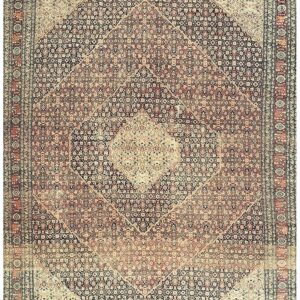
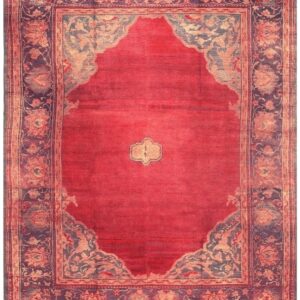
1920s Traditional Red Rust Field Medallion Antique Tabriz Handknotted Wool Room Size Rug
$15,600.00 Antique RugsSKU: 7264Rug sizes: 9 ft 3 in x 12 ft 3 in (2.82 m x 3.73 m) -
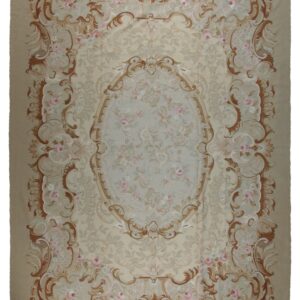
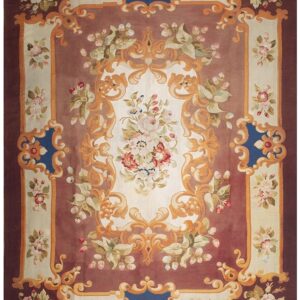
Vintage Aubusson Flat Weave Rug, Louis Philippe Rose Wreath, 12′ x 16′
$8,639.95 Vintage RugsSKU: FA5037IV12X16Rug sizes: 12 ft x 16 ft (3.66 m x 4.88 m) -
1950s Red Field Modern Stripe Vintage Turkish Kilim Flatweave Wool Small Rug
$1,000.00 Vintage RugsSKU: 7178Rug sizes: 5 ft 10 in x 7 ft 11 in (1.78 m x 2.41 m) -
1920s Red Ground Donegal Medallion Antique European Arts & Crafts Large Wool Rug
$19,500.00 Antique RugsSKU: 6922Rug sizes: 11 ft 7 in x 15 ft 6 in (3.53 m x 4.72 m) -
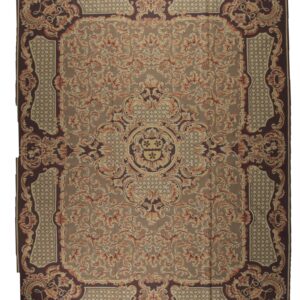
Vintage Aubusson Flat Weave Rug, Brown Baroque Medallion, 9′ x 12′
$4,859.95 Vintage RugsSKU: FA5158BBN9X12Rug sizes: 9 ft x 12 ft (2.74 m x 3.66 m) -
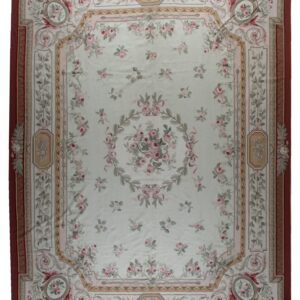
Vintage Aubusson Flat Weave Rug, Beige Rose Medallion, 9′ x 12′
$4,859.95 Vintage RugsSKU: FA5006BG9X12Rug sizes: 9 ft x 12 ft (2.74 m x 3.66 m) -
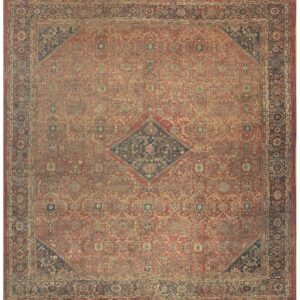
1890s Red Field Medallion Rustic Antique Heriz Knotted Wool Rug
$5,200.00 Antique RugsSKU: 7085Rug sizes: 9 ft 5 in x 12 ft 5 in (2.87 m x 3.78 m) -
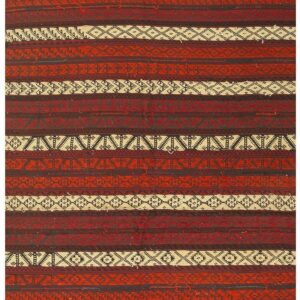
1930s Red Ground Rustic Geometric Tribal Antique Soumak Rug
$11,700.00 Antique RugsSKU: 25623Rug sizes: 6 ft x 9 ft (1.83 m x 2.74 m) -
1950s Vintage Multi Red Stripe Modern Flatweave Decorative Turkish Kilim Rug
$1,600.00 Vintage RugsSKU: 7131Rug sizes: 7 ft 10 in x 8 ft 5 in (2.39 m x 2.57 m) -
1950s Red Stripe Modern Vintage Mid Century Turkish Decorative Kilim Rug
$1,000.00 Vintage RugsSKU: 7101Rug sizes: 4 ft x 6 ft (1.22 m x 1.83 m) -
1890s Red Field Medallion Large Scale Antique Sultanabad Knotted Wool Rug
$10,400.00 Antique RugsSKU: 6635Rug sizes: 9 ft x 10 ft (2.74 m x 3.05 m) -
1920s Red Vibrant Field Medallion Antique European Donegal Arts & Crafts Rug
$12,400.00 Antique RugsSKU: 7049Rug sizes: 7 ft x 10 ft (2.13 m x 3.05 m) -
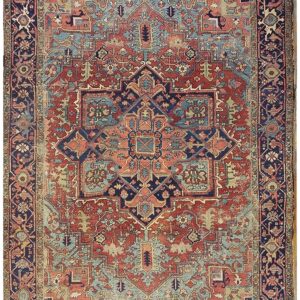
1890s Red Ground Geometric Antique Heriz Handknotted Room Size Rug
$13,500.00 Antique RugsSKU: 40-5447Rug sizes: 9 ft x 12 ft (2.74 m x 3.66 m) -
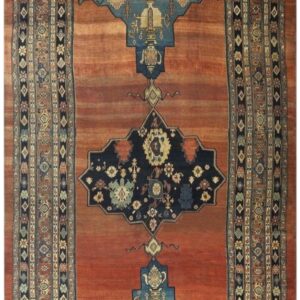
1860s Red Field Gallery Medallion Tortises Knotted Wool Antique Bijar Rug
$37,500.00 Antique RugsSKU: 40-5443Rug sizes: 8 ft 6 in x 21 ft (2.59 m x 6.40 m) -
1890s Antique Warm Red Medallion Anatolian Turkish Knotted Pile Decorative Rug
$1,100.00 Antique RugsSKU: 6690Rug sizes: 3 ft x 5 ft (0.91 m x 1.52 m) -
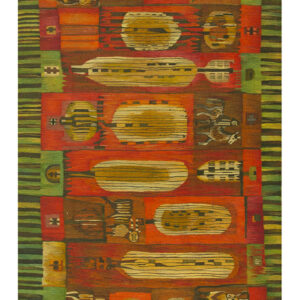
Colorful Antique Swedish Flatweave with Animals, Trees, and Figures
$3,300.00 Antique RugsSKU: 7000Rug sizes: 5 ft x 8 ft 5 in (1.52 m x 2.57 m) -
Mid 19th Century Floral French Aubusson
$15,600.00 Antique RugsSKU: 6942Rug sizes: 7 ft 8 in x 10 ft 4 in (2.34 m x 3.15 m) -
1930s Red Medallion Antique Persian Mahal Rug 10’3” X 13’5” Handwoven Wool Carpet
$6,800.00 Vintage RugsSKU: 40-698Rug sizes: 10 ft 3 in x 13 ft 5 in (3.12 m x 4.09 m) -
Ivory & Coral Red Color and Expressive Medallion Design Antique Persian Sultanabad Rug
$22,500.00 Antique RugsSKU: 40-135Rug sizes: 9 ft 4 in x 12 ft 4 in (2.84 m x 3.76 m) -
1900s Red Geometric Antique Turkmen Tekke Ensi Rug 4′ 1” X 4′ 6′ H’andknotted Wool Rug
$2,700.00 Antique RugsSKU: 40-473Rug sizes: 4 ft 1 in x 4 ft 6 in (1.24 m x 1.37 m) -
1900s Ruby Red Floral Medallion Antique Chinese Art Deco Rug 9’4″ X 11’6″ Handknotted Wool Carpet
$14,100.00 Antique RugsSKU: 40-4517Rug sizes: 9 ft 4 in x 11 ft 6 in (2.84 m x 3.51 m) -
1860s Red Burgandy Floral Medallion Antique English Axminster Rug 9′ X 13′ 3″ Handwoven Wool Carpet
$45,000.00 Antique RugsSKU: 40-766Rug sizes: 9 ft x 13 ft 3 in (2.74 m x 4.04 m) -
Fabulous Red Circles Forming a Diamond Pattern Antique American Hooked Rug
$22,500.00 Antique RugsSKU: 40-2392Rug sizes: 9 ft 6 in x 12 ft (2.90 m x 3.66 m) -
Fine Decorative Medallion Design on Red-Raspberry Background Color Antique Persian Kerman Laver Rug
$16,500.00 Antique RugsSKU: 40-614Rug sizes: 7 ft 9 in x 11 ft 9 in (2.36 m x 3.58 m) -
1940s Red Medallion Vintage Persian Sarouk Rug Handknotted Wool Carpet
$9,800.00 Vintage RugsSKU: 40-5066Rug sizes: 7 ft 9 in x 10 ft 6 in (2.36 m x 3.20 m)
Which rug traditions are known for red?
Red is the backbone color of Persian, Caucasian, Anatolian and Turkmen weaving, and in our stock Persia leads the origins on this page with 138 pieces. The most common single type, though, is Chinese: Art Deco and Walter Nichols rugs in deep red. Here is how our red stock breaks down.
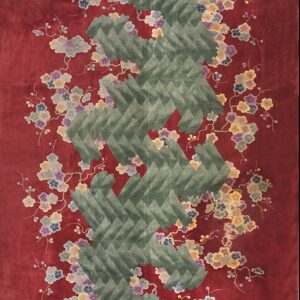
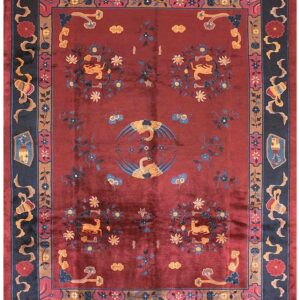
- Chinese Art Deco, 96 in red, including 66 by Walter Nichols. Deep reds and rusts from the 1920s and 1930s, often with floating flowers on an open field and little or no border. Their chrome dyes are fast, so many still look saturated. See Chinese Art Deco rugs and the Walter Nichols story.
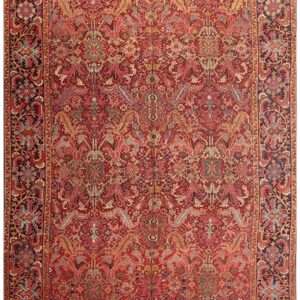
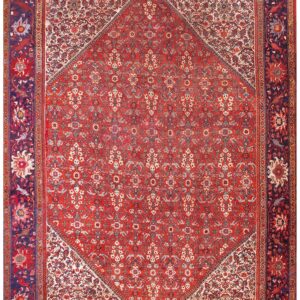
- Heriz, Serapi and Bakshaish, 29 together. Room-size village carpets from North West Persia with brick red fields, bold geometric medallions and ivory and blue drawing. See Heriz Serapi rugs and our Serapi reference.
- Sultanabad, 16. Large-scale Persian carpets in terracotta and soft red with sage and sky blue. See Sultanabad rugs.
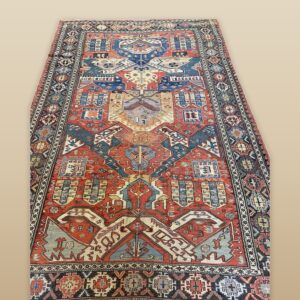
- Kazak and other Caucasian rugs, 43. Saturated madder red with indigo and ivory in bold, stepped geometry. See Kazak rugs and Caucasian rugs.
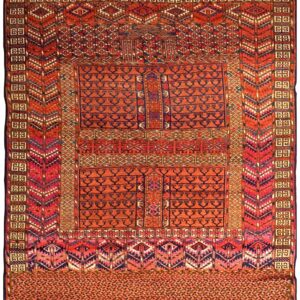
- Turkmen rugs, 16. Tekke rugs and engsi door rugs with deep madder red grounds and rows of repeating guls. See Turkmen rugs.
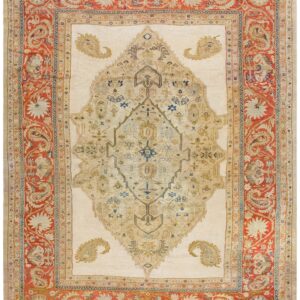
- Oushak and other Turkish rugs, 34. Softer terracotta and brick reds on large, open drawing. See Oushak rugs.
How is red made in a hand-knotted rug?
Most red in older rugs comes from the root of the madder plant. The same dye gives rose, brick, rust or deep red depending on the strength of the bath, the mordant used to fix it, and how long the wool stays in the dye. Some weaving areas also used insect dyes, such as cochineal or lac, for crimson and purple reds.
- Abrash. A red field often shows soft bands of lighter and darker red from separate dye batches. In an antique rug this is expected and adds depth.
- Rust and brick. Many rust tones are madder reds that have mellowed with age, light and washing, or that were dyed lighter to begin with.
- Synthetic reds. Synthetic dyes reached most weaving areas in the late 19th century. Some early reds were unstable and could bleed into nearby ivory; later chrome dyes, used in Chinese Art Deco rugs, are fast. Our natural vs synthetic dyes guide explains how to tell.
- Look closely. A pink haze on ivory next to a red motif can mean an old color run. Every listing notes condition, and we can send close-ups or a condition report.
How does a red rug look in different light?
Red is a warm, advancing color: it seems to come toward you, so a red field makes a room feel warmer and more enclosed.
- Warm evening light makes red glow, which is why red rugs are a classic choice for dining rooms and libraries used at night.
- North light pulls brick and rust toward brown and makes crimson read cooler and deeper.
- Bright sun brings out orange in rust and pink in lighter reds.
- Pile direction. Viewed against the pile, red reads darker and richer; viewed with it, lighter.
How do you decorate with a red rug?
Use red where you want warmth and presence. A red rug can anchor a whole room, so let it lead and keep the rest of the palette calmer.
- With wood floors. On pale oak or maple, red looks fresh and bright. On mahogany or cherry, choose a rug with plenty of ivory or blue drawing so the floor and rug do not merge.
- With stone. Brick and rust rugs warm cool stone and concrete floors, which makes them useful in modern and loft interiors.
- With walls. White and warm white walls let red lead. Deep green, navy and ochre walls give a rich, traditional room.
- With upholstery. Navy, olive, sage, ivory linen and brown leather all work. Pull the rug's blue or ivory into the seating rather than adding more red.
- Room by room. Heriz and Serapi carpets are durable enough for family rooms; Kazaks suit smaller rooms and studies; Art Deco reds give a strong statement in a modern room.
- Measure first. Our rug size guide explains how to measure, and every listing gives the measured size.
How do you care for a red rug?
Care for a red rug the way you would any fine wool rug: a good pad, rotation once or twice a year, gentle vacuuming without a beater bar, and professional washing every few years.
- Sun. Strong direct sun fades red toward rose and salmon, often unevenly. Rotate the rug and use curtains or UV film in bright rooms.
- Water. Some reds can run if the rug is soaked. Blot spills at once with plain water, never rub or flood the area, and never wash a red rug at home.
- Professional washing. Our rug cleaning service in Manhattan washes hand-knotted rugs with a pH-balanced process.
- Moths. Moth larvae prefer dark, undisturbed wool under furniture. Our moth-proofing service washes the rug first and then treats the fibers.
- Shape. Large village carpets can ripple over time. Blocking and stretching helps a rug lie flat again.
Glossary of red rug and dye terms
These are the terms you will meet most often in our listings and guides for red rugs.
- Madder
- A plant whose root gives the traditional reds of Persian, Caucasian, Turkish and Turkmen rugs.
- Mordant
- A substance, often a metal salt, that fixes a dye to the wool and helps set its shade.
- Cochineal and lac
- Insect dyes used in some weaving areas for crimson and purple reds.
- Brick red
- An earthy, slightly orange red typical of Heriz and Serapi fields. Shop Heriz Serapi rugs.
- Rust
- A brownish orange red, often a mellowed madder.
- Color run
- Dye that has bled from one color into another, usually red into ivory, after the rug was soaked.
- Abrash
- Soft bands of tonal variation within one color, from changes in dye batch. Welcome in antique red fields.
- Gul
- The repeating medallion of Turkmen rugs, usually set on a deep red ground.
Red and Rust Rugs: Frequently Asked Questions
Why are so many antique Persian rugs red?
Because madder, the root that gives red, grew widely across Persia, the Caucasus, Anatolia and Central Asia, and weavers there made it the base of their palettes. Madder reds with indigo blue and ivory are the backbone of Persian village rugs such as Heriz and Serapi.
Do red rugs bleed?
Some can, especially rugs with early synthetic reds or rugs that are soaked. A well dyed madder red is usually stable. Blot spills with plain water, never flood the rug, and have it washed by a specialist.
Is a red rug too strong for a modern room?
Not if you choose the right red. Rust and brick read earthy and relaxed and sit well on concrete and pale oak, while Chinese Art Deco reds with open fields suit modern furniture. Keep walls and upholstery calm and let the rug lead.
How many red rugs do you have, and what do they cost?
We have 482 red and rust rugs in stock: 353 antique, 79 vintage and 50 new. On September 27, 2026, antique red rugs ranged from $585 to $220,000, with a median of about $11,700 and half between $6,800 and $22,000.
Do you ship red rugs, and can I return one?
Yes. Shipping is free within the continental United States, and international orders ship at a flat rate of $495 per order ($350 to Canada, $395 to Mexico), with tracking. Orders ship in 1 to 3 business days. Customs fees, import duties and taxes are paid by the buyer on delivery. US buyers get a 4-day in-home trial starting the day the rug is delivered; see our shipping policy and returns policy.
Do you buy or appraise antique red rugs?
Yes. We buy antique rugs outright: send photographs and measurements, and Kevin Rahmanan reviews the photos and decides. Consignment is also offered. For a value, we give a free Quick Opinion by phone or email from photographs, and a free In-Depth Appraisal Report for insurance, estate valuation and documentation. See sell your antique rug or contact us.