
A rag rug is a floor covering woven on a loom with strips of cut cloth used as the weft, so the cloth itself makes the surface you walk on, with no knots and no pile. It is the plainest hand weaving there is, it was made in American farmhouses out of worn clothing and bedding, and for the money it is the most floor you can buy from an antique rug gallery.
We currently hold 26 antique rugs with the word rag in the title, 25 of which are woven rag rugs. This guide is built from those 25 and from the 4,809 other antique rugs in the same collection, so every figure below is a measurement of real stock rather than a rule of thumb. It covers what a rag rug is, how to tell one from a braided or a hooked rug, what they cost by the square foot, and which sizes they actually come in. All of them sit on the American rag rugs archive.
Key takeaways
- Woven, not knotted and not hooked. A rag rug is made on a loom, a braided rug is coiled and stitched, and a hooked rug is pulled through a backing.
- Our 25 run $400 to $12,000, median $6,750, which is $89 a square foot against $167 for the rest of the collection.
- The discount is real rather than a size illusion. Matched on measured area it runs 0.48x to 0.71x, and matched on area and period together it runs 0.53x to 0.6x.
- They come large. Median 88 square feet against 60, 52.0% room size and 24.0% hallway runners, which is 3.1 times the usual rate.
- Stripes are the signature: 21 of 25 carry the striped design value against 2.4% of everything else, a rate of 34.82 times.
- Date moves the price more than anything else inside the type. Ours dated before 1900 run $107 a square foot against $70 for the later ones.
- Read the construction, never the label. For much of the nineteenth century the words rag rug covered hooked work as well, and our own catalogue still calls five of these knotted.
What a rag rug is
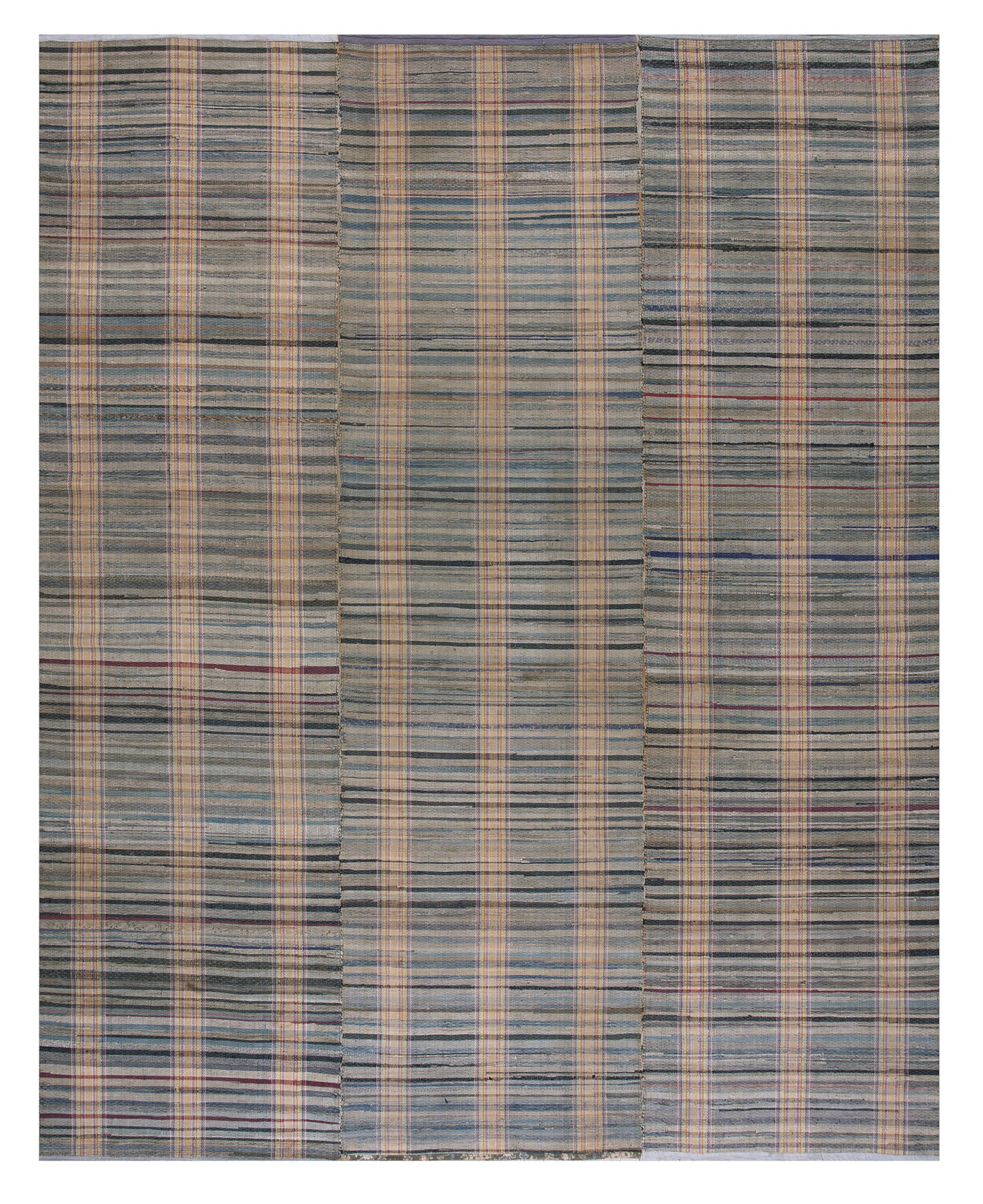
The weaver sets up a warp of cotton or linen thread on the loom, then cuts worn cloth into long strips and passes those strips across the warp in place of yarn. Each pass is beaten down hard, so the finished rug is thick, dense and flat. Because the strips go right through the warp rather than being tied or looped onto it, both faces look much alike and there is no pile to crush.
Our records bear that out, and where they do not, the record is wrong rather than the rug. 20 of the 25 carry the flat weave value, which is 8.99 times the rate across the rest of the collection, while five carry a hand knotted pile value that a woven rag rug cannot have. The same muddle shows in pile thickness, where 13 are filed at a quarter inch and 12 at half an inch on a weave with no pile at all. We are correcting those entries. They are worth mentioning because the same inconsistency runs through the whole trade, and it is the first thing to test when you read a listing.
Materials are the other giveaway. 17 of ours are recorded as wool, 5 as cotton and 2 as wool and cotton mixed. Cotton is the telling one: it sits on 20.0% of the rag rugs and only 2.6% of the other antiques we hold, because cotton clothing and sheeting is exactly what a household had spare. One of ours is woven in jute, one of only 3 jute antiques in the whole collection. For how warp and weft divide the work in a flat weave, our guide to rug foundations goes through it properly.
Rag, braided or hooked: which one do you have?
Three American traditions get called by each other names constantly, and they are built in three completely different ways. One look at the back settles it.
| Type | How it is made | What the back shows | Usual shape |
|---|---|---|---|
| Woven rag rug | Cloth strips carried across a warp on a loom | The same strips, weft wise, on both faces | Rectangle, square or a long runner |
| Braided rug | Strips plaited into a rope, then coiled and stitched edge to edge | Stitching between the coils, and no warp | Oval or round |
| Hooked rug | Loops pulled with a hook through a burlap or linen backing | The backing cloth, with loop ends showing through | Small mats, often pictorial |
Shape alone will usually settle a braided rug: of the 23 antique braided rugs we hold, ten are oval and eight are round, because a coiled braid grows outward from a centre. Rag rugs grow along a warp, so they come off the loom rectangular. Hooked rugs are the small ones: the 448 antique American hooked rugs in stock have a median area of 21 square feet, which is a hearth mat rather than a floor. Our guide to antique American hooked rugs takes that comparison further, and Rugs of America sets all three traditions in their history.
The word rag has meant two different things
Before the phrase hooked rug settled into general use late in the nineteenth century, American writers applied rag rug to hooked work too, since both were made of cut up clothing. That older usage is still alive in auction descriptions and in family memory, which is why a rug inherited as a rag rug often turns out to be hooked. The construction is the only reliable answer, and checking it takes two seconds.
When a seller says knotted
Our own catalogue is the cautionary example. Four of these 25 titles call the rug knotted, among them a 1900s room size piece and an 1880s square, and nine of the descriptions contain sentences about pile or knotting. A woven rag rug has neither. When a record contradicts itself like that, trust the photograph of the back and the measurements, and ask the seller which of the two statements they stand behind.
What antique rag rugs cost
The median price of our 25 is $6,750 against $9,800 for the other 4,809 antique rugs in stock, so the headline ratio is 0.69x. That is the least interesting number on this page, because a price comparison between rugs of different sizes mostly measures the sizes. By the square foot ours run $89 against $167, and inside the group the figures spread from $19 to $227 a square foot, a factor of 11.9.
Even a per square foot figure needs care. Across the collection small rugs carry much higher per foot prices than large ones: about $270 a square foot under 12 square feet, falling to $121 between 87 and 105 square feet. Since rag rugs are large, comparing their per foot figure with a collection wide average would flatter them. The honest way is to compare like with like, so this table matches on measured area and reports how many rugs sit in each cut.
| Area | Rag rugs | Per square foot | Other antiques | Per square foot | Ratio |
|---|---|---|---|---|---|
| 6 to 30 sq ft | 6 | $117 | 1,283 | $204 | 0.57x |
| 20 to 45 sq ft | 5 | $100 | 1,158 | $200 | 0.5x |
| 60 to 100 sq ft | 7 | $107 | 689 | $151 | 0.71x |
| 75 to 120 sq ft | 12 | $75 | 1,078 | $128 | 0.58x |
| 80 to 130 sq ft | 13 | $77 | 1,025 | $127 | 0.6x |
| 95 to 150 sq ft | 10 | $70 | 1,060 | $124 | 0.56x |
| 100 to 200 sq ft | 9 | $61 | 1,295 | $128 | 0.48x |
Every cut comes out below 1.0, from 0.48x to 0.71x. That is unusual. Most cheap looking rug types are simply small, and their discount disappears the moment you match on area. A rag rug is cheap at its own size.
Date has to be held constant too
Age is priced separately from size. Measured on the same stock, antiques dated before 1900 cost roughly 1.55x to 1.8x per square foot what comparable later rugs cost, and that holds in every size band. 7 of our 25 rag rugs are dated before 1900, a little under the 34.8% rate across the rest of the collection, so the cuts above could in principle be reading a date rather than a type. Holding both constant, with only rugs made after 1900 on each side:
| Area | Rag rugs | Per square foot | Other antiques | Per square foot | Ratio |
|---|---|---|---|---|---|
| 6 to 30 sq ft | 5 | $106 | 896 | $176 | 0.6x |
| 75 to 120 sq ft | 8 | $66 | 796 | $114 | 0.58x |
| 80 to 130 sq ft | 8 | $66 | 743 | $111 | 0.59x |
| 95 to 150 sq ft | 8 | $65 | 780 | $109 | 0.59x |
| 100 to 200 sq ft | 8 | $59 | 906 | $112 | 0.53x |
The discount holds, between 0.53x and 0.6x. Inside the rag group the date is the strongest lever we can see: the ones dated before 1900 run $107 a square foot and the later ones $70.
The cheapest and the dearest of ours
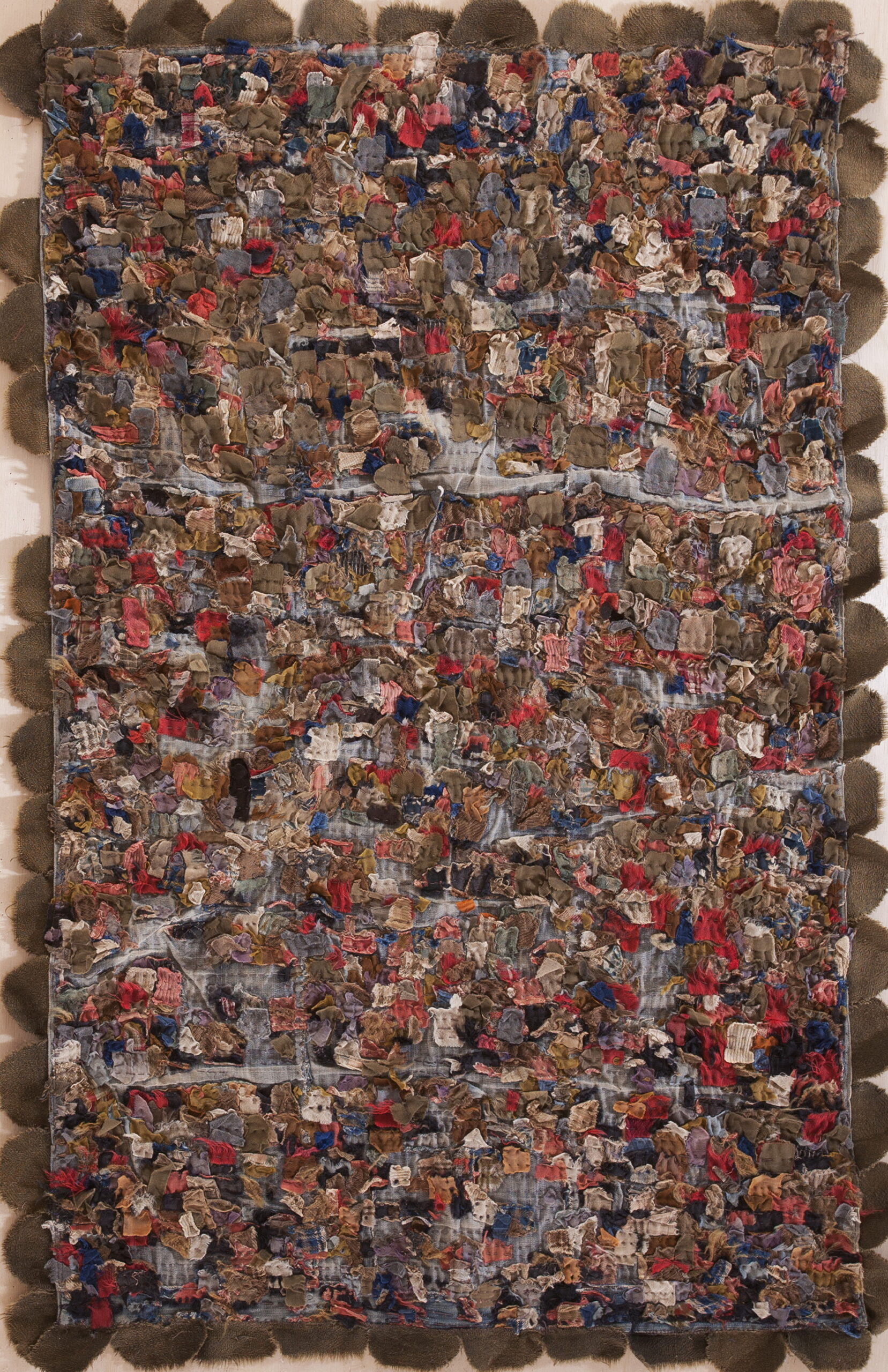
A 1940s multicolour scatter rug is $400, which at 21 square feet is $19 a square foot, the lowest figure in the group. A circa 1875 piece with a scalloped dark edge is $1,875 and only 8 square feet, so it is $227 a square foot, the highest. Both are small and plain, they are 12 times apart per foot, and 65 years of age sit between them. Within the group, area and per foot price move in opposite directions at a correlation of -0.46, so the largest rag rugs give the most floor for the money.
Sizes: the one inexpensive type that also comes big
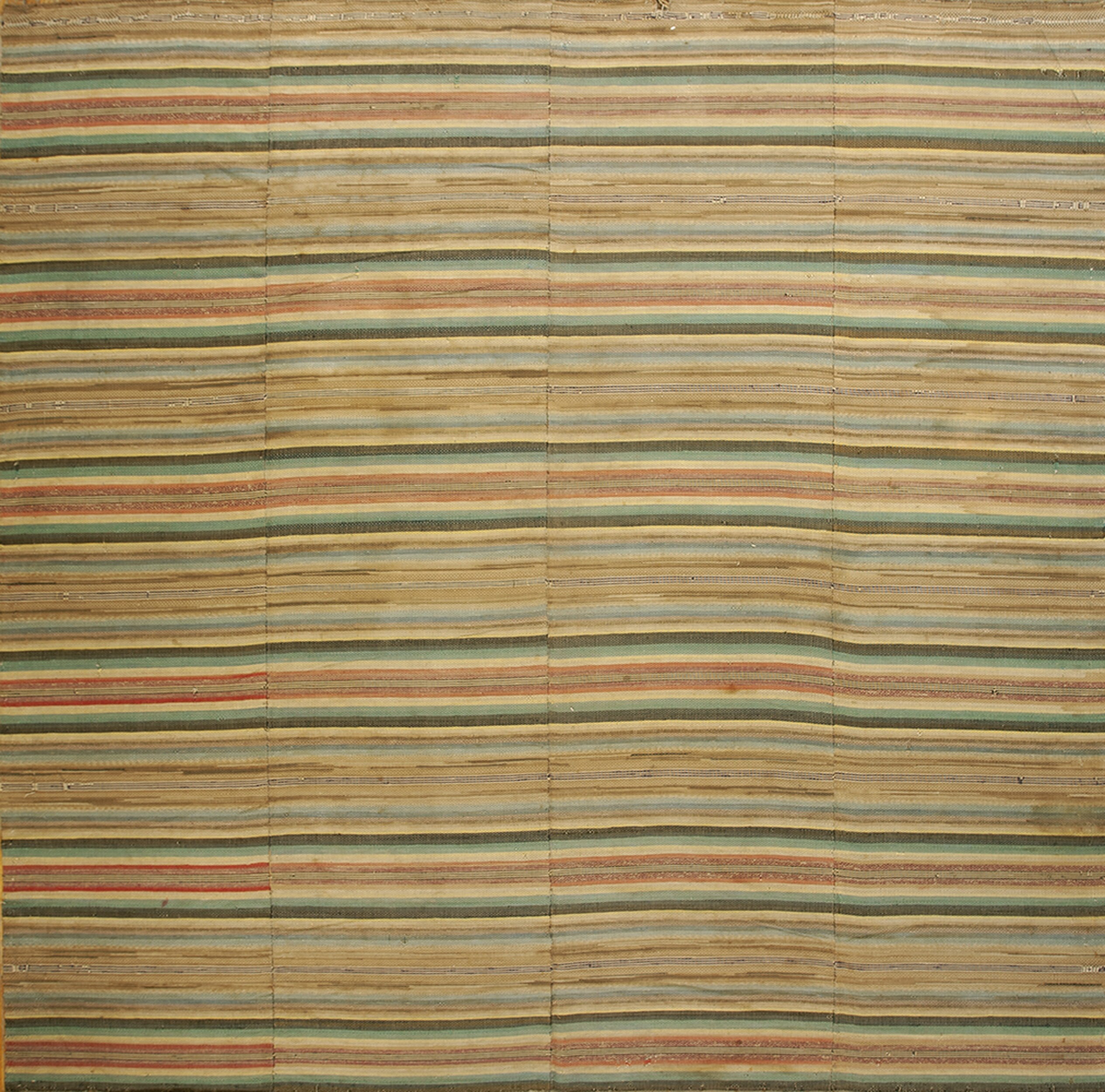
This is where rag rugs stop behaving like a budget category. Their median area is 88 square feet against 60 for the rest of the collection, and their median long side is 11.8 feet against 10.0. 13 of 25 carry a room size value, 5 fall in the 8 by 10 band and 4 in the 9 by 12 band, while only 5 are small scatter pieces, a rate of 0.58x. The largest of ours, a 152 by 176 inch rug of joined panels, covers 186 square feet.
Long runners are a rag rug speciality
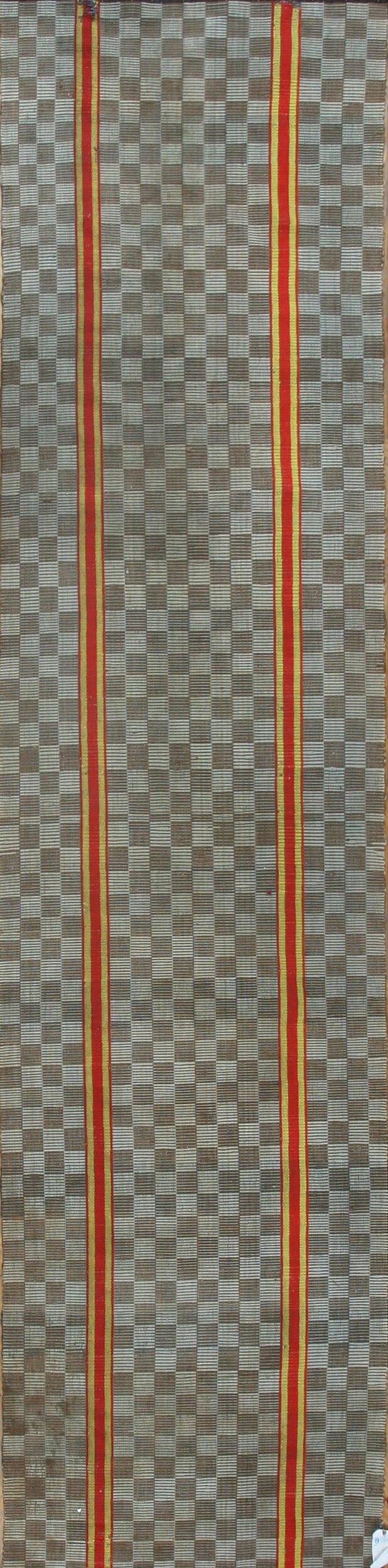
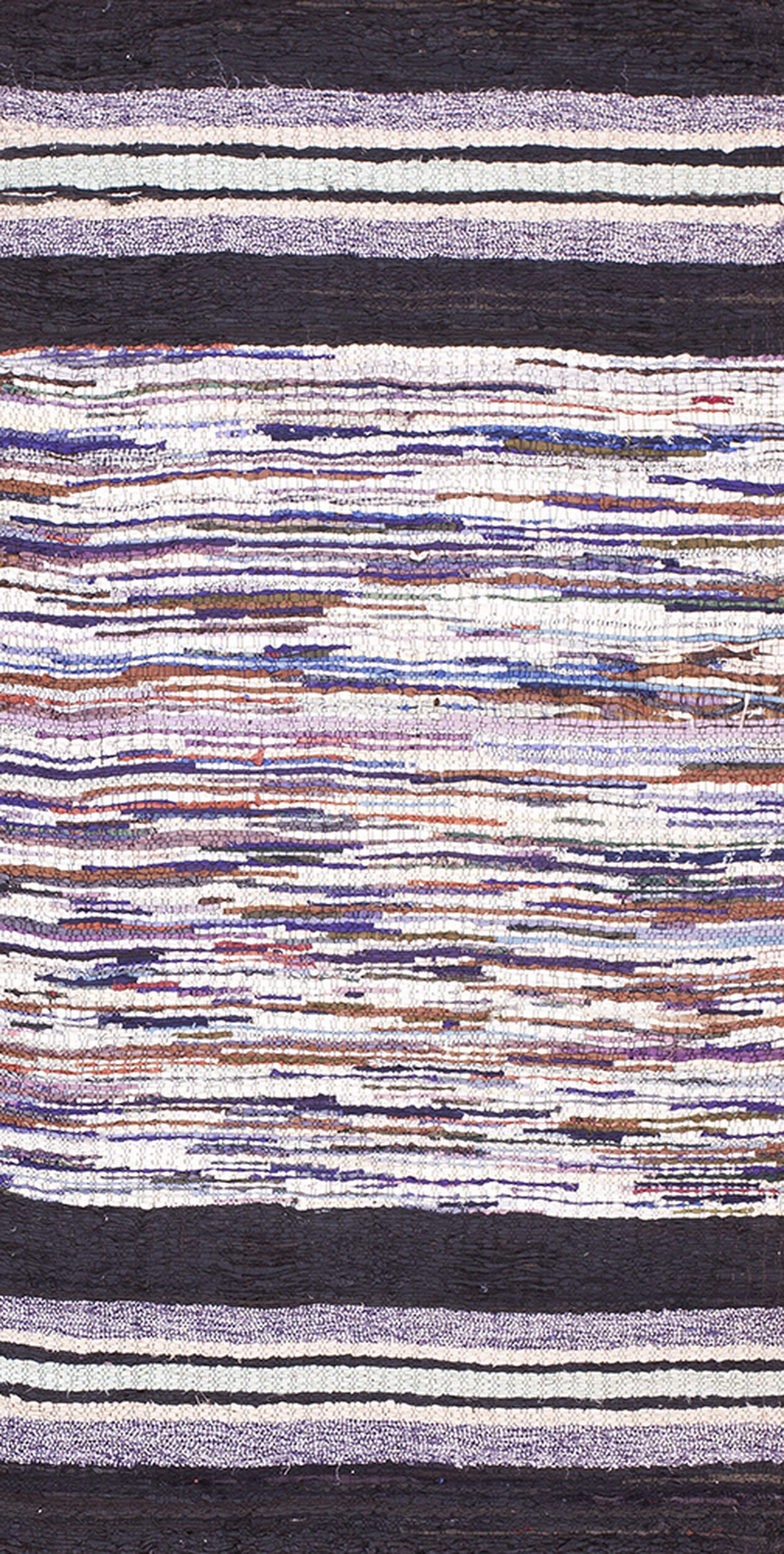
6 of the 25 are hallway runners, which is 3.1 times the rate across the rest of the collection, and 3 sit in the 3 by 20 foot and longer band at 14.08 times the usual rate. A loom warped narrow can simply be woven on, so length costs a household nothing but time. The longest here is a striped runner at 38 by 394 inches, followed by a warm cream runner at 34 by 352 inches and a wool and cotton plaid at 36 by 312 inches. Two shorter cotton runners, a checkered example and a banded one, sit at $4,500 and $700.


Squares, and why the tape measure wins
5 of ours are filed as square, at 2.02 times the usual rate, which fits a loom set up for a particular room. Three of the five measure square: a room size piece at 132 by 136 inches, an 1880s square at 105 by 113, and an ivory cotton scatter rug at exactly 65 by 65. The other two are not square at all: a red square measures 54 by 66 inches, a ratio of 1.22, and a small purple striped piece measures 25 by 36, a ratio of 1.44. Title and shape field agree on both and both are wrong, which is the clearest argument there is for buying on the dimensions rather than the adjective.
Stripes, checks and hit or miss colour
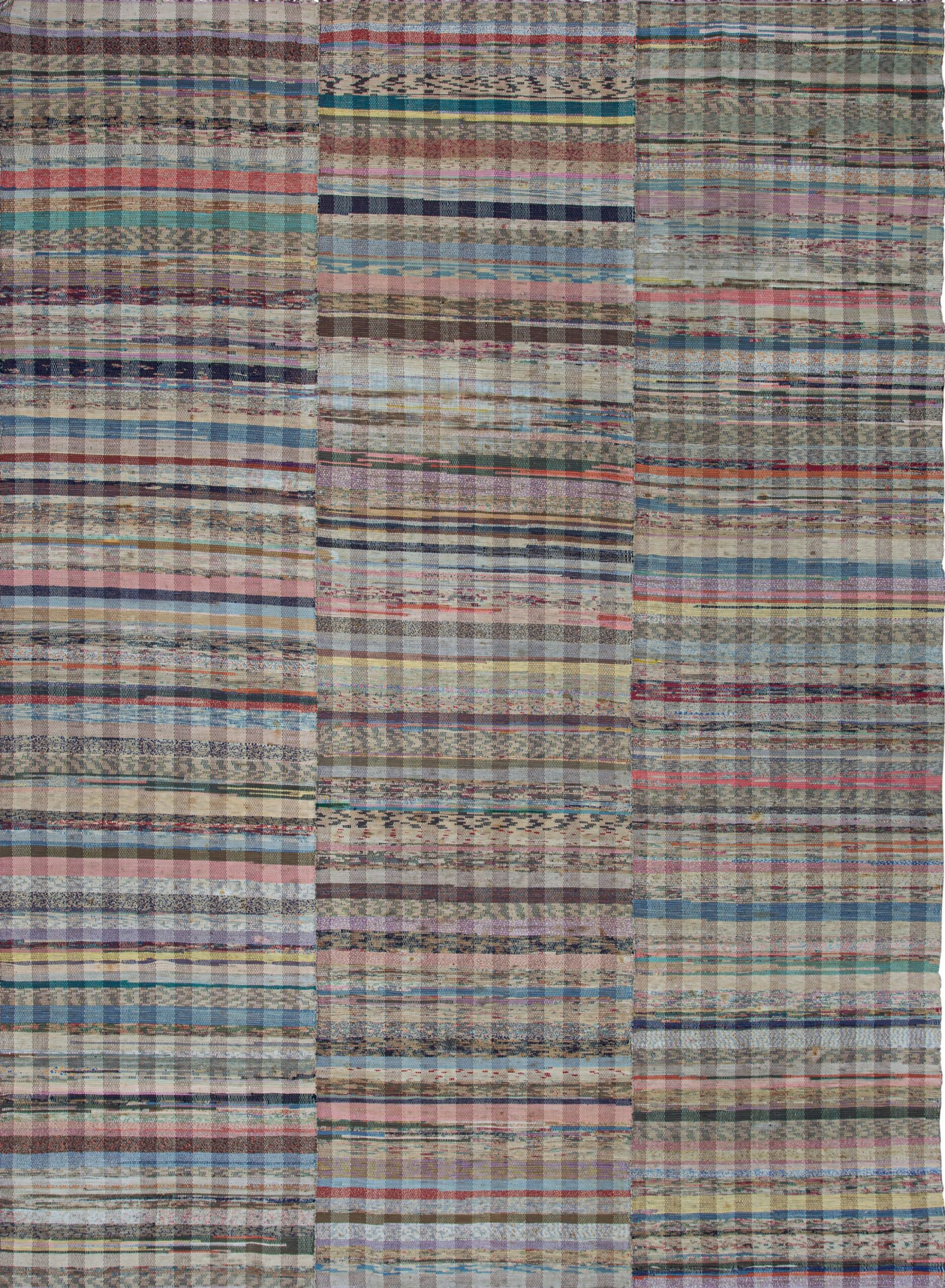
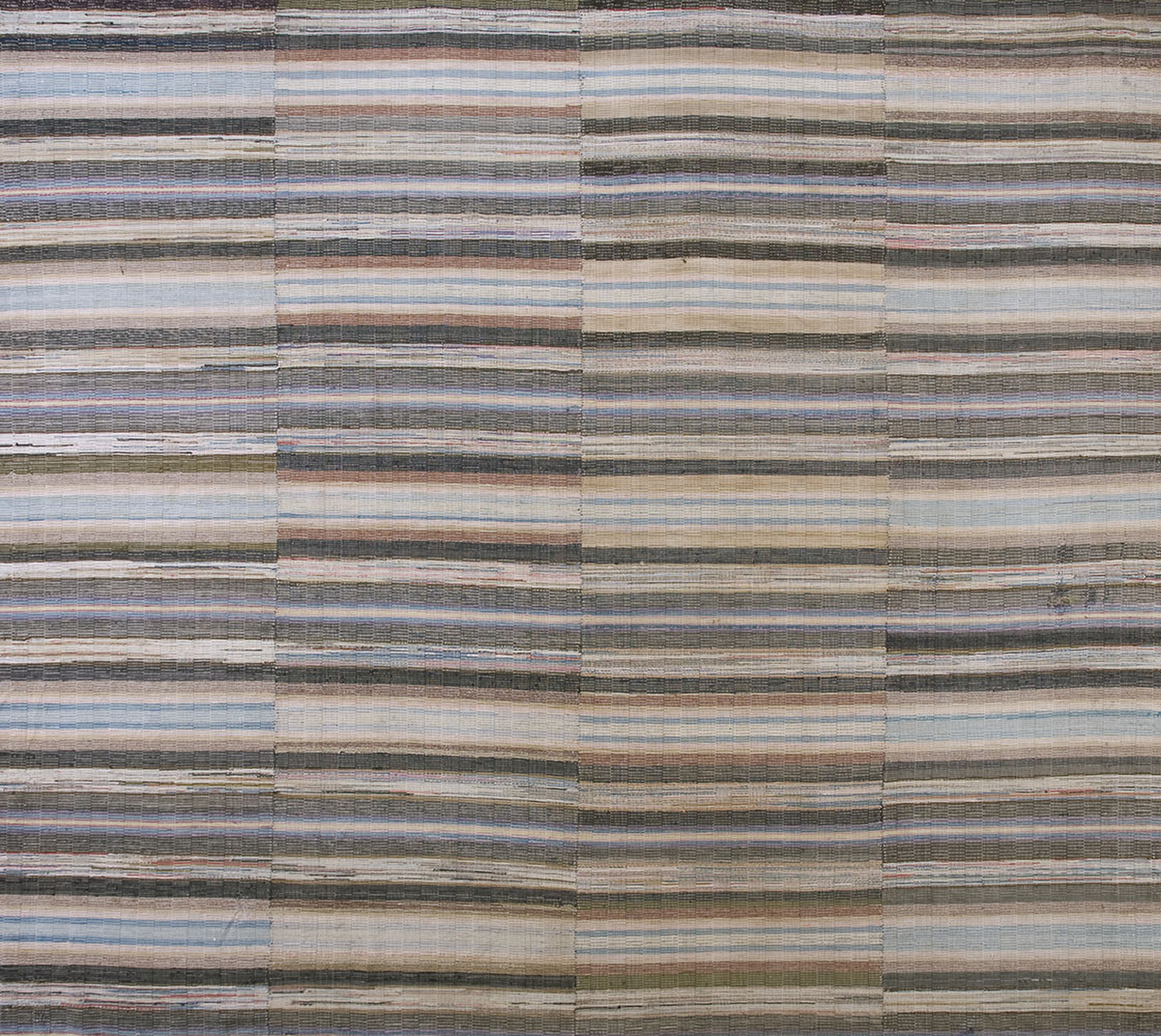
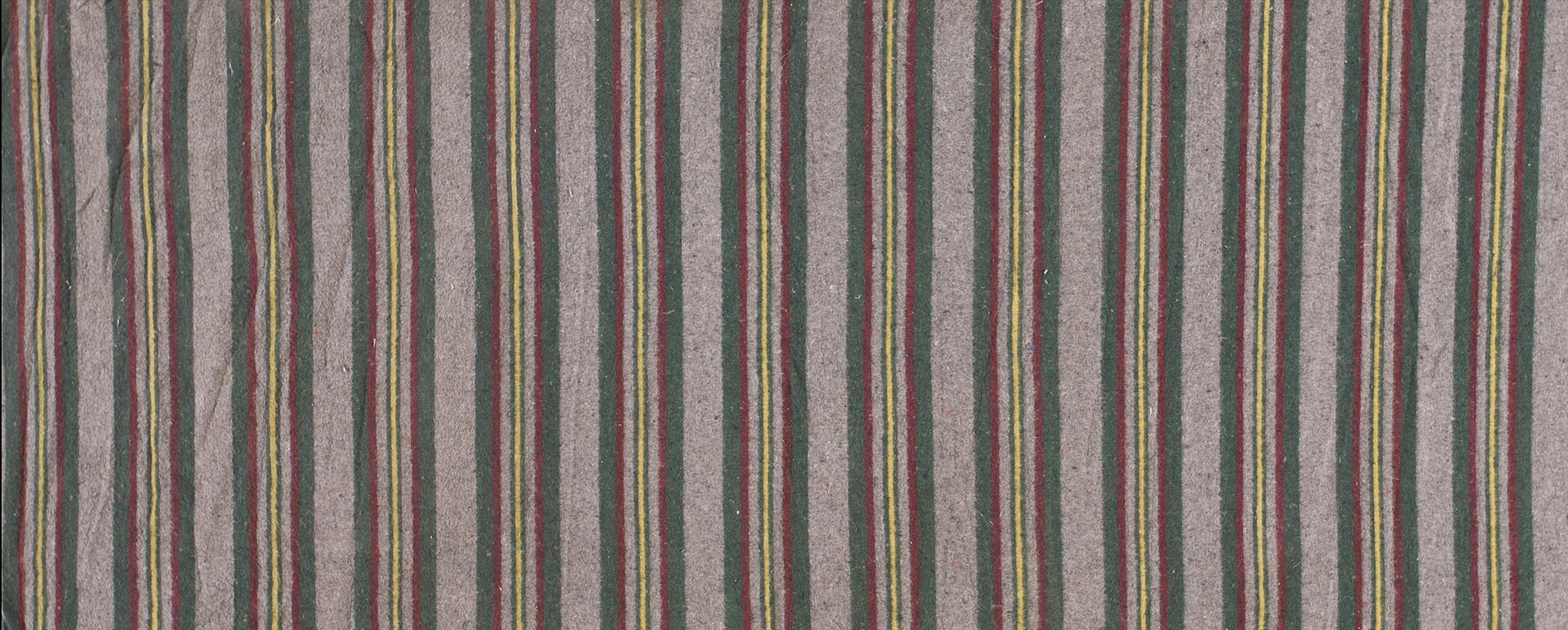
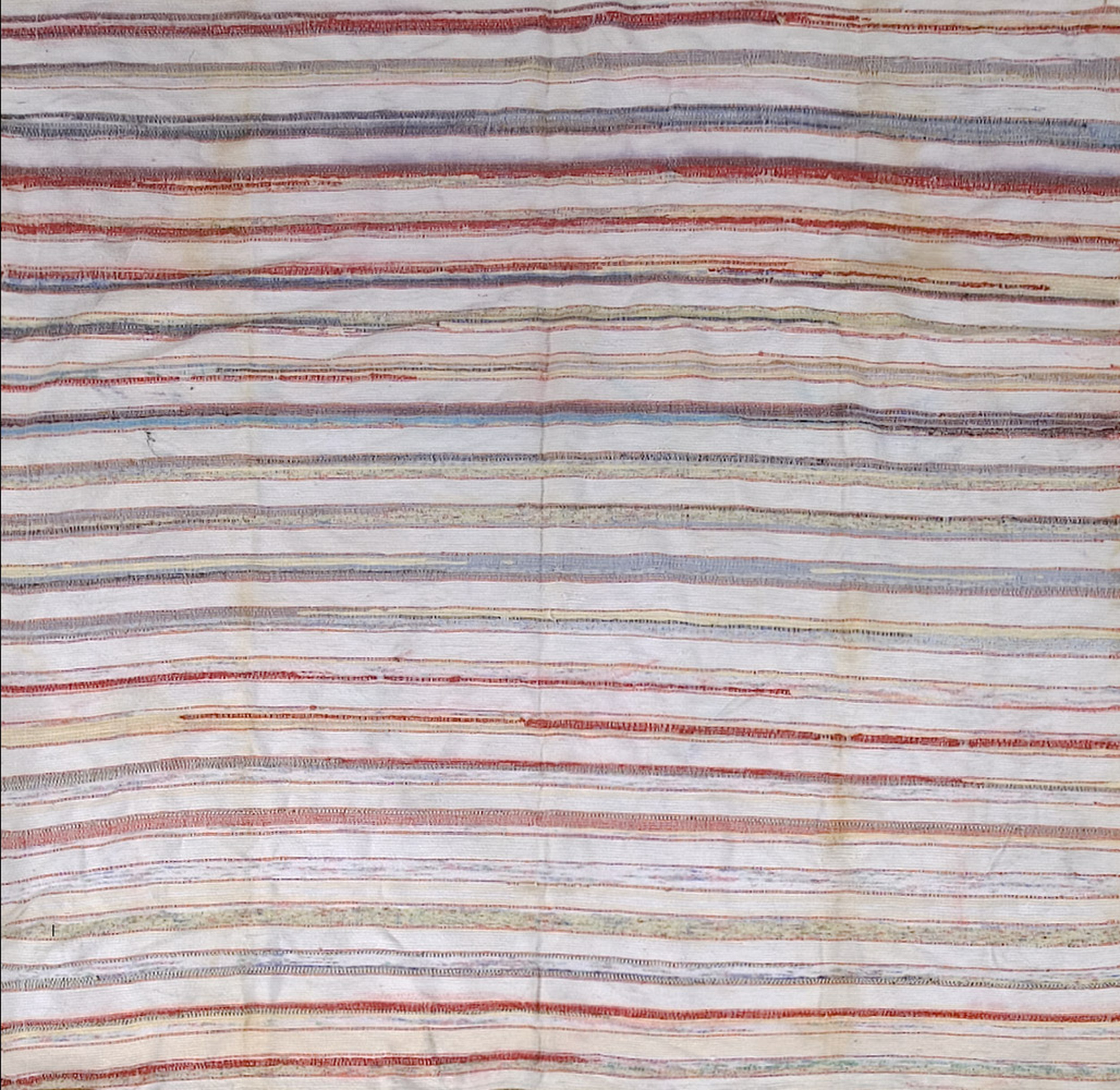
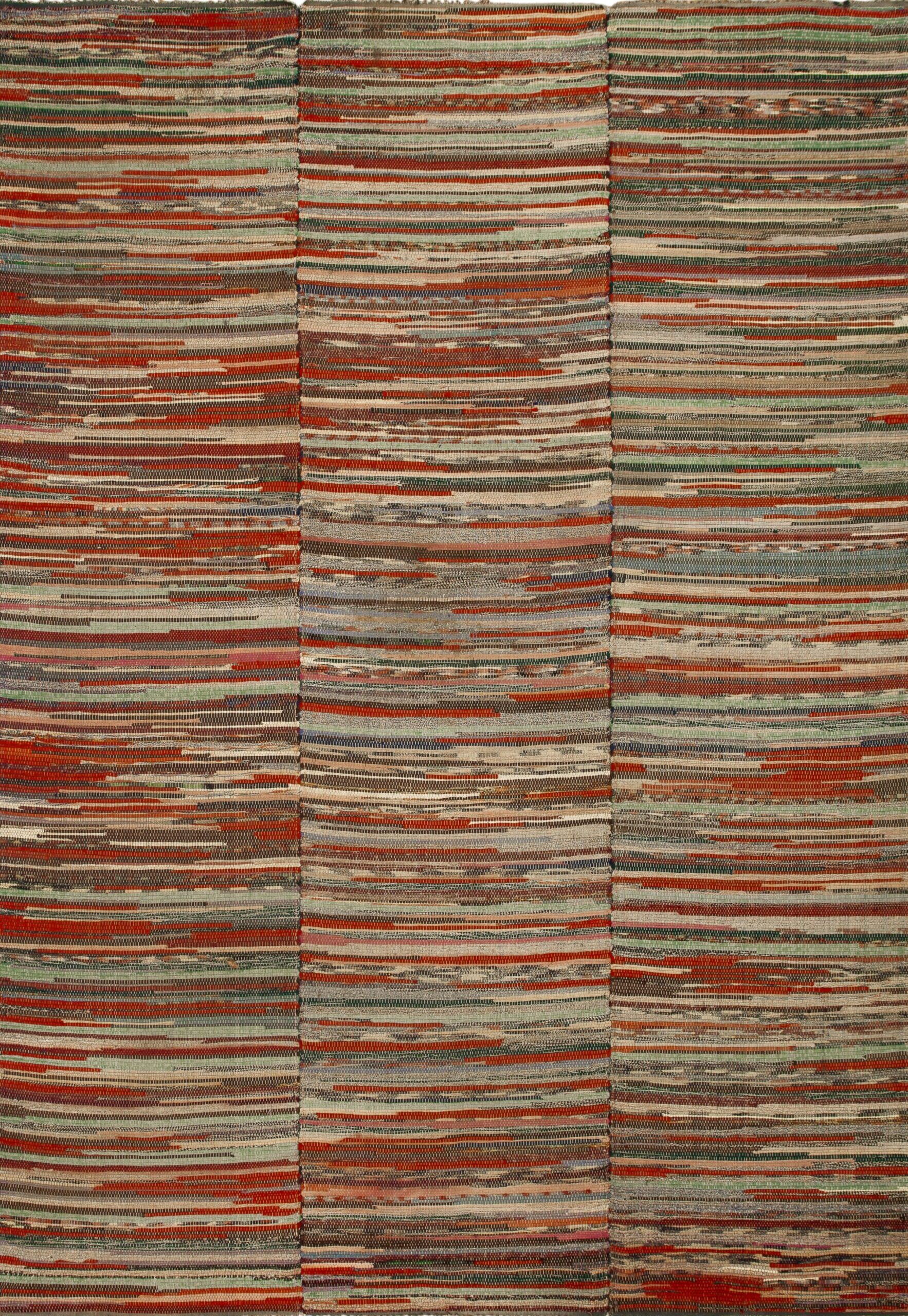
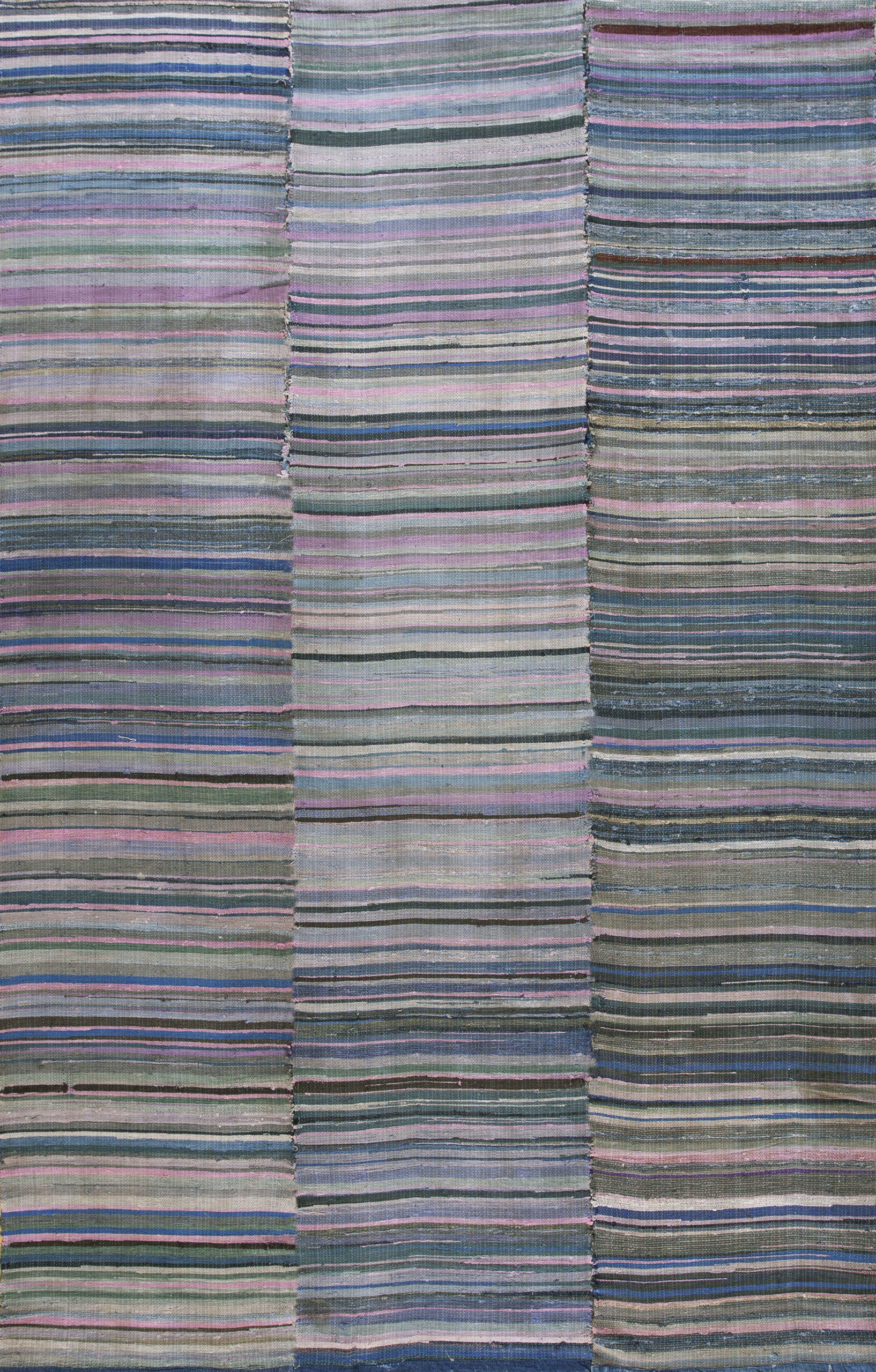
21 of 25 carry the striped design value against 2.4% of the other antiques we hold. At 34.82 times, that is the strongest single design signal we have measured on any type. It follows from the method: the weaver works through whatever cloth is to hand, a bundle at a time, and each bundle becomes a band. Where the bundles were mixed deliberately the result is the hit or miss look, a speckle of unrelated colours, as in the 1875 piece above. 24 are geometric and the same number allover, because a loom and a strip of cloth will not easily make a medallion.
Colour runs the same way. 17 of ours carry multicolour jewel tones against 11.4% elsewhere, a rate of 5.95x, while blue as a single dominant colour appears on one and ivory on 3, at 0.17x and 0.41x. Nobody dyed cloth to make a rag rug, so these rugs do not have a palette in the sense an Oushak does.
One honest warning about our own vocabulary. Three of these carry abstract as a design value and two carry mid century modern, at 11.54x and 14.8x the usual rates, and one of them and another are catalogued as modernist stripes. The rugs are from the 1920s. A striped rag rug looks like a mid century flatweave because a mid century designer was looking at rugs like this one, not because it was made then. By the same token 2 of ours carry a tribal design value, at 0.39x, and that word belongs to other weaving traditions entirely.
How old is an antique rag rug?
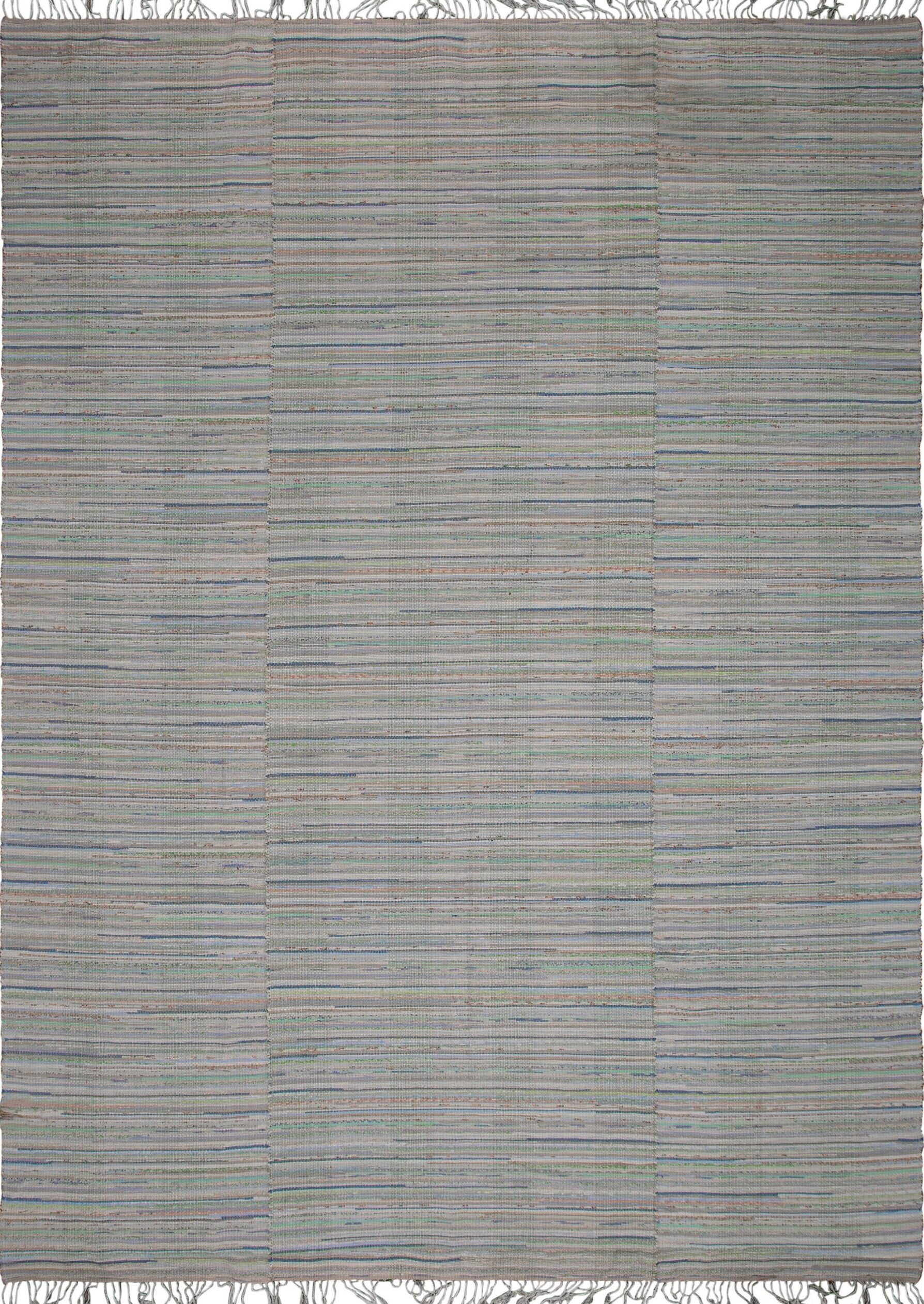
Our circa dates run from 1870 to 1940. 7 of 25 are dated before 1900, which is 0.8 times the rate across the rest of the collection, and the oldest is the cream runner, catalogued to about 1870. At the other end, 3 carry circa 1940, which is 6.34 times the rate elsewhere, because this is a tradition that carried on into living memory while most hand knotted carpet industries had already turned industrial. If the line between antique, vintage and new matters for what you are buying, our note on antique against vintage against new sets out where we draw it.
American rag weaving itself is far older than any surviving floor rug. The reason the stock starts in the 1870s is attrition: a rug made of worn cloth was laid in the hardest used rooms of a working house and was replaced when it failed. What survives tends to be what was made for a parlour, kept rolled, or woven late.
Condition, cleaning and where they work
Six things are worth checking, in this order: the ends, where the warp is exposed and goes first; the selvedges, where a loose weft unravels sideways; any broken or missing strips in the field, which cannot be rewoven invisibly; cotton that has gone stiff and brittle with age or damp; red dye that has run into the pale bands, which happens with cheap turkey red cloth; and the width, since a loom draws in as it is worked and a rug can be an inch or two narrower at one end than the other. None of those is disqualifying on its own. All of them should be in the price.
Durability is not uniform across the type, and our own records say so: 21 of 25 carry the high traffic value against 91.4% of the other antiques, while 4 are marked low traffic only, which is 1.88 times the normal rate. For cleaning, vacuum with the beater bar off or lifted, turn the rug end for end a couple of times a year, and send a cotton rag rug to a rug washer rather than a carpet cleaner, because the warp shrinks differently from the cloth.
Where rag rugs sit among American antiques
We hold 730 antique rugs of American origin, filed across American USA and Native American. Four weaving traditions account for nearly all of them, and they are priced very differently by the square foot.
| Tradition | In stock | Median price | Per square foot |
|---|---|---|---|
| American hooked | 448 | $3,275 | $156 |
| Navajo weaving | 119 | $5,650 | $242 |
| Woven rag | 26 | $6,750 | $83 |
| Braided | 23 | $6,800 | $102 |
The rag rug is the cheapest American antique floor we sell by area and the Navajo weaving is the dearest, which makes sense once you notice that a Navajo blanket or rug is bought as often for a wall as for a floor. One of ours, a blue and cream striped flat weave, is filed under Native American origin and titled that way, but it carries the American rag type value and no tribal attribution, so we make no claim about who wove it.
Set against the flat weaves from everywhere else, the same ranking appears. These are medians of the stock we hold, measured today:
| Flat weave or folk type | In stock | Median price | Median area | Per square foot |
|---|---|---|---|---|
| Indian dhurrie | 68 | $12,000 | 146 sq ft | $83 |
| American rag | 25 | $6,750 | 88 sq ft | $89 |
| American braided | 23 | $6,800 | 76 sq ft | $102 |
| Kilim | 90 | $6,000 | 61 sq ft | $108 |
| American hooked | 453 | $3,300 | 21 sq ft | $154 |
| Aubusson | 60 | $24,200 | 176 sq ft | $156 |
| Needlepoint | 44 | $21,000 | 98 sq ft | $194 |
| Savonnerie | 26 | $46,250 | 265 sq ft | $201 |
| Navajo | 123 | $5,650 | 24 sq ft | $237 |
| Bessarabian | 25 | $15,000 | 65 sq ft | $243 |
| Soumak | 25 | $7,500 | 23 sq ft | $424 |
Only the Indian dhurrie is cheaper by the foot, and it is cheaper partly because it is bigger again. A kilim costs about 1.21 times as much per foot and a hooked rug about 1.73 times. If the brief is the largest hand made antique floor for a fixed budget, this is the category, and our guide to antique 8 by 10 rugs compares the same money across types at one size.
Browsing ours
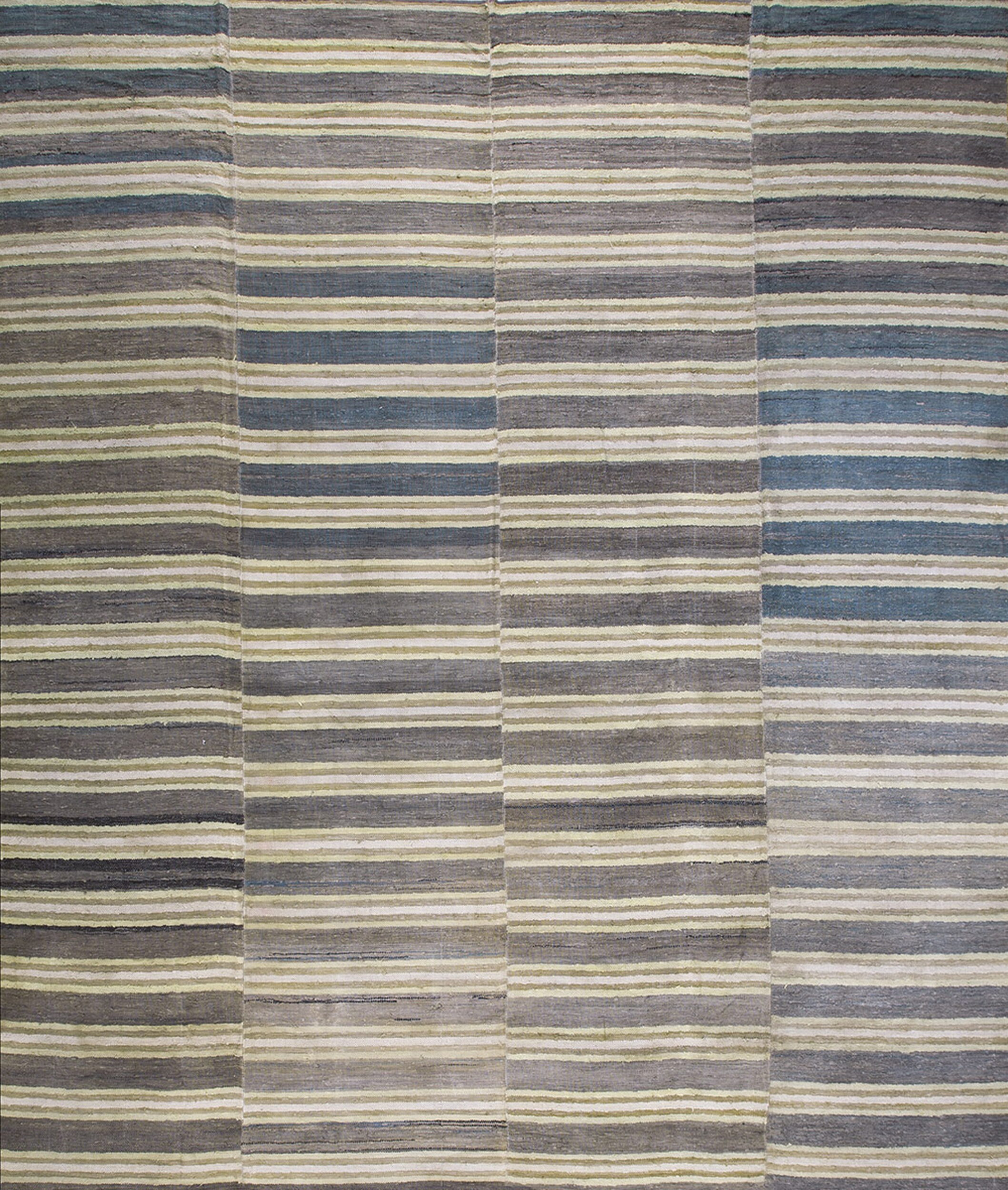
Everything described here is in stock as this is written. Start with the rag rug archive, then narrow by what matters to you: room size, hallway runner, long and narrow, wide gallery, cotton, stripes, folk art, grey, red and rust, or by decade: nineteenth century, 1880, 1890, 1900, 1920, 1930 or 1940. The ones not pictured above are a cotton room size rug with checkered bands, a tightly striped wool room size rug, a 1940s rug in beige, brown and red, a 1900s rug in dark blue and cream.
Frequently asked questions
What is a rag rug?
A rag rug is a floor covering woven on a loom with strips of cut cloth used as the weft, so the fabric itself forms the surface instead of a knotted or looped pile. Nothing is knotted and nothing is pulled through a backing, which is what separates it from a braided rug and from a hooked rug.
Are antique rag rugs valuable?
They are the least expensive hand made antique floor we sell by the square foot, and that is a fact about the category rather than about condition. Our 25 antique American rag rugs run from $400 to $12,000 with a median of $6,750, which is $89 a square foot against $167 for the other 4,809 antique rugs we hold.
How do I tell a rag rug from a braided or a hooked rug?
Look at the back and at the shape. A woven rag rug shows the same cloth strips running weft wise on both faces and is almost always rectangular, square or a long runner. A braided rug is made of plaited ropes of cloth coiled and stitched together, so you can see the stitching between coils and the shape is usually oval or round. A hooked rug has loops standing up from a separate burlap or linen backing and only one usable face.
Why does the description of my rag rug say knotted?
Because the trade, this gallery included, has been loose with the word. Four of our own 25 titles say knotted and five carry a hand knotted pile value in their weave field, on rugs that are woven and have no knots at all. Read the construction from the rug, not from the label, and ask if a record contradicts itself.
Are rag rugs reversible?
Many are usable on both faces, because the cloth strips pass right through the warp and leave a similar surface on each side. It is not a property of the type, though: wear, dye bleed and old repairs are usually heavier on the side that faced up, so look at both faces of the particular rug before planning to flip it.
What are antique rag rugs made of?
Cut strips of wool, cotton or a mix of the two, woven across a cotton or linen warp. In our stock 17 are recorded as wool, 5 as cotton and 2 as wool and cotton together, with one in jute, which is one of only 3 jute antiques in the entire collection.
How old is an antique rag rug?
Ours carry circa dates from 1870 to 1940, and 7 of 25 are dated before 1900. American rag weaving goes back much further than that, but surviving floor rugs are mostly late nineteenth and early twentieth century, because a rug made of scrap cloth was used until it failed.
Do antique rag rugs come in room sizes and runners?
More often than the rest of the collection does. 52.0% of ours carry a room size value against 43.3% elsewhere, and 24.0% are hallway runners against 7.7%, which is 3.1 times the normal rate. Three of ours are 20 feet long or longer.
Are rag rugs hard wearing enough for a kitchen or a hallway?
Usually, but not uniformly, and our own records say so: 21 of 25 carry our high traffic value against 91.4% for the rest of the collection, and 4 are marked low traffic only, which is 1.88 times the normal rate. Check the individual rug, especially the ends, where the warp takes the wear.
What should an antique rag rug cost per square foot?
Between about $61 and $117 a square foot in our stock, depending on size and date, against $167 for antique rugs generally. The large ones are the cheapest by area: our room size rag rugs run near $70 a square foot while the small scatter pieces run two to three times that.
If you have a rag rug at home and are not sure what it is, a photograph of the back and a note of the measurements is usually enough for us to tell you. Everything described above is stock we hold, so if a piece has sold by the time you read this, the archives linked through the page will show what has taken its place.