
Blue Rugs
Key takeaways: blue rugs
- What this page holds: every rug in our collection with a significant blue in its palette, of every age. That means more than 950 antique rugs dated 1925 or earlier, 200 vintage rugs and more than 150 new rugs, all in stock. A rug can appear under more than one color, so a blue and ivory Peking rug also shows on our ivory page.
- Where the blue comes from: in antique rugs, almost always indigo, a plant dye built up in repeated dips. The number of dips sets the shade, from pale sky blue to a navy that reads almost black.
- Traditions known for blue: Chinese rugs lead our blue stock by a wide margin, above all Peking rugs in blue and ivory. Persian village and town rugs with navy fields come next, then Caucasian rugs such as Kazak and Shirvan.
- How it decorates: pale blue opens a room and navy grounds it. Blue sits naturally with warm wood, pale stone, white walls and linen, and it is the classic partner for ivory, apricot and rust.
- How it ages: indigo is among the most lightfast natural dyes, but the reds and yellows around it are not. Rotate the rug and keep it out of strong direct sun.
- Buying with confidence: every rug is inspected before it is listed, each listing states origin, approximate age, materials and measured size, shipping is free within the continental United States, and there is a 4-day in-home trial. See buying with confidence.
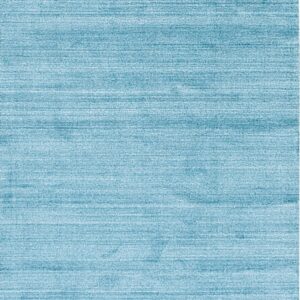
Blue pigments—ranging from the ethereal clarity of Sky Blue to the deep, light-absorbing density of Midnight Blue—are among the most coveted and historically significant in the weaving world. From a technical standpoint, high-quality blue rugs rely on indigo, a ‘living dye’ that bonds with the wool cuticle to create a unique patina that resists the UV fading often found in synthetic alternatives. When selecting a blue foundation, the ‘spectral depth’ of the pigment determines the room’s atmospheric weight: a Light Blue or Sky Blue field can visually expand a confined architectural footprint, providing a sense of airy permanence, while a commanding Navy Blue or Royal Blue acts as a sophisticated anchor, absorbing excess light and grounding grand-scale furniture suites.
Our collection of the blue collection focuses on ‘chromatic consistency.’ We prioritize pieces where the saturation—whether it is the vibrant, jewel-toned energy of Royal Blue or the blackened depths of a formal Navy Blue—is achieved through multiple dye-pot immersions. This ensures that the color remains a permanent part of the fiber’s structural integrity rather than a superficial surface treatment. By vetting for these specific tonal variations, we provide a curated inventory that allows the buyer to choose a blue that doesn’t just decorate a space, but masterfully engineers its mood and longevity.
Blue color rugs infuse spaces with tranquility and timeless sophistication, mirroring the calming depth of the ocean or the vastness of the sky. Ranging from deep navy to soft powder blue, these versatile pieces create a serene foundation for any design style; discover the vast possibilities and learn more about decorating with blue rug colors in our expert guide.
Blue rugs at a glance
The table below summarizes the blue rugs on this page. Counts and prices were taken from our in-stock blue rugs on September 27, 2026 and change as rugs sell. Ages follow the circa date in each listing: antique means dated 1925 or earlier, vintage means later than 1925, and new means rugs from our new rugs collection.
| Feature | Blue rugs in our collection |
|---|---|
| In stock | 1,314 blue rugs: 960 antique, 200 vintage and 154 new |
| Age of the antiques | 10 made before 1800, 367 from the 19th century and 581 from 1900 to 1925. Of the vintage rugs, 177 date from the late 1920s to the 1940s. |
| Top origins | China, 590; Persia, 354; India, 205; the Caucasus, 67; America, 27; Turkey, 18 |
| Most common types | Peking, 378; Chinese Art Deco, 113, including 61 by Walter Nichols; North West Persian, 69; dhurries, 40; Malayer, 33; Kurdish, 30; Baluch, 30; Bidjar, 28; Kazak, 22 |
| Main dye in antique pieces | Indigo, a plant dye fixed in the fiber by repeated dipping and exposure to air. Chinese Art Deco rugs of the 1920s and 1930s use synthetic chrome dyes, which is why their blues often still look vivid. |
| Colors most often paired with blue | Ivory and cream (88 rugs tagged with both), gray (33), red and rust (30), multicolor jewel tones (23), and gold (23) |
| Formats in stock | Room size, 646; small scatter rugs, 369; runners, 166; large oversized carpets, 142; wide gallery carpets, 83 |
| Most common sizes in stock | 9 x 12, 225; 8 x 10, 177; 6 x 9, 122; 10 x 14, 114; 12 x 18, 46; 12 x 15, 44 |
| Price range | Antique blue rugs: from $361 to $595,000, with a median of about $12,000 and half priced between $6,800 and $22,500. Vintage: median about $8,800. New: from $44 to $11,250, median about $706. Prices are in US dollars. |
Prefer to see a rug in person?
-
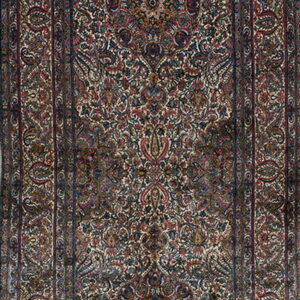
Antique Floral Persian Kerman Hallway Runner Rug
$15,600.00 Antique RugsSKU: 6811Rug sizes: 6 ft 10 in x 17 ft 4 in (2.08 m x 5.28 m) -
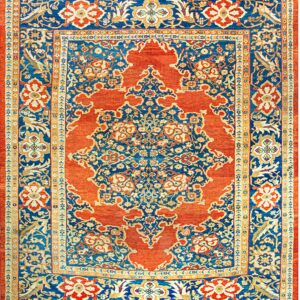
Antique Square Persian Sultanabad Rug – Late 19th Century Rustic Red and Blue
$22,500.00 Antique RugsSKU: 26153Rug sizes: 11 ft 7 in x 12 ft 6 in (3.53 m x 3.81 m) -
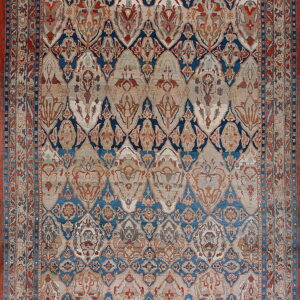
Beautiful Shield Design Vintage Persian Mahal / Sultanabad Room Size Rug
$9,800.00 Vintage RugsSKU: 25665Rug sizes: 9 ft 8 in x 14 ft 4 in (2.95 m x 4.37 m) -
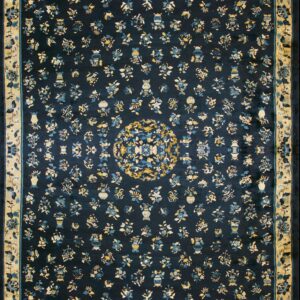
Chinese Wool – Peking 1890s Knotted Large Oversized Big Rectangle Blue Antique Rug
$70,200.00 Antique RugsSKU: 25483Rug sizes: 12 ft x 23 ft (3.66 m x 7.01 m) -
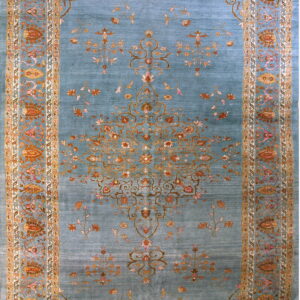
Antique Lahore Indian Knotted Rug with Allover Floral Pattern
$30,000.00 Antique RugsSKU: 23314Rug sizes: 9 ft 2 in x 11 ft 6 in (2.79 m x 3.51 m) -
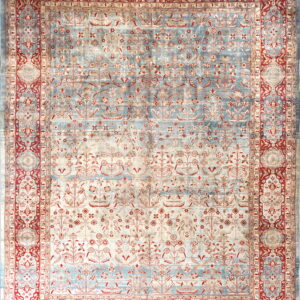
Rare Light Sky Blue Antique Finely Woven Intricate Large Persian Tabriz Rug
$68,000.00 Antique RugsSKU: 22461Rug sizes: 10 ft 2 in x 17 ft 9 in (3.10 m x 5.41 m) -
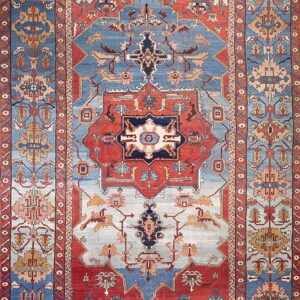
Beautiful Sky Blue Antique Persian Room Size Geometric Serapi Heriz Rug
$68,000.00 Antique RugsSKU: 21791Rug sizes: 10 ft 2 in x 15 ft 2 in (3.10 m x 4.62 m) -
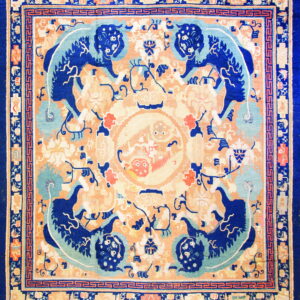
Rare Early 18th Century Antique Foo Dog Chinese Square Ningxia Carpet
$375,000.00 Antique RugsSKU: 21376Rug sizes: 12 ft 8 in x 13 ft 4 in (3.86 m x 4.06 m) -
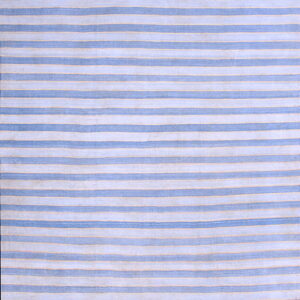
Striped Room Size Light Blue and White Antique Mid Century Indian Dhurrie Rug
$9,800.00 Vintage RugsSKU: 21332Rug sizes: 7 ft 6 in x 15 ft 9 in (2.29 m x 4.80 m) -
Antique Caucasian Geometric Medallion Square Wool Hand Knotted Pile Blue 1890s Rug
$15,000.00 Antique RugsSKU: 21277Rug sizes: 4 ft 4 in x 5 ft 2 in (1.32 m x 1.57 m) -
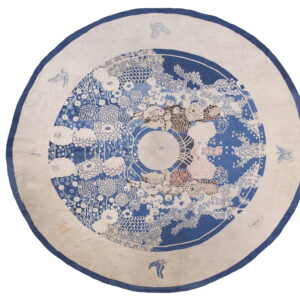
Unique Artistic Antique Chinese Peking Soft Blue Round Peking Pile Rug
$22,500.00 Antique RugsSKU: 21269Rug sizes: 10 ft x 10 ft 6 in (3.05 m x 3.20 m) -
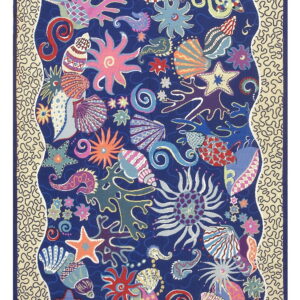
Vintage Mid Century Modern French Under The Sea Pattern Needlepoint Art Rug
$1,650.00 Vintage RugsSKU: 20726Rug sizes: 5 ft 8 in x 9 ft (1.73 m x 2.74 m) -
Antique Small Scatter Size Sky Blue Fine Persian Silk Heriz Muslim Prayer Rug
$38,000.00 Antique RugsSKU: 20324Rug sizes: 4 ft x 6 ft (1.22 m x 1.83 m) -
Large Geometric Mid Century Modern Design White and Blue Flatweave Dhurrie Rug
$24,500.00 Antique RugsSKU: 19966Rug sizes: 12 ft 3 in x 19 ft (3.73 m x 5.79 m) -
Jewel Tone Color Antique Oversized Persian Medallion Heriz Serapi Rug
$98,000.00 Antique RugsSKU: 19775Rug sizes: 14 ft x 20 ft (4.27 m x 6.10 m) -
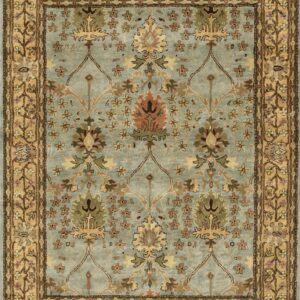
Antique Irish Donegal Arts & Crafts Medallion Knotted Rug
$13,600.00 Antique RugsSKU: 24127Rug sizes: 5 ft 7 in x 7 ft 9 in (1.70 m x 2.36 m) -
Lustrous Contemporary Blue Silk Rug from India
Price range: $1,181.00 through $3,039.00 New RugsRug sizes: 6 ft x 9 ft (1.83 m x 2.74 m), 8 ft x 10 ft (2.44 m x 3.05 m), 9 ft x 12 ft (2.74 m x 3.66 m), 10 ft x 14 ft (3.05 m x 4.27 m) -
Yara Rustic Blue Hand Tufted Wool Rug
Price range: $484.95 through $679.95 New RugsRug sizes: 6 ft x 9 ft (1.83 m x 2.74 m), 8 ft x 10 ft (2.44 m x 3.05 m) -
Traditional Blue Mohair Hand Knotted Rug
Price range: $3,800.00 through $15,000.00 New RugsRug sizes: 9 ft 1 in x 12 ft 3 in (2.77 m x 3.73 m), 8 ft x 10 ft (2.44 m x 3.05 m), 10 ft x 14 ft (3.05 m x 4.27 m), 12 ft x 18 ft (3.66 m x 5.49 m) -
Modern Tribal Marrakech Blue and Ivory Hand-Knotted Wool Berber Carpet
$706.00 New RugsRug sizes: 6 ft x 9 ft (1.83 m x 2.74 m) -
Lush Ella Blue Handmade Wool & Viscose Rug
Price range: $361.00 through $965.00 New RugsRug sizes: 9 ft x 12 ft (2.74 m x 3.66 m), 5 ft x 8 ft (1.52 m x 2.44 m) -
Freya Oushak Gray and Gold Hand Knotted Wool Rug
Price range: $885.00 through $2,463.00 New RugsRug sizes: 8 ft x 10 ft (2.44 m x 3.05 m), 9 ft x 12 ft (2.74 m x 3.66 m), 10 ft x 14 ft (3.05 m x 4.27 m), 8 ft x 8 ft (2.44 m x 2.44 m), 12 ft x 15 ft (3.66 m x 4.57 m) -
Yara Willow Light Blue Tribal Geometric Design New Hand Knotted Contemporary Rug
$1,311.00 New RugsSKU: IE447LTB9X12Rug sizes: 9 ft x 12 ft (2.74 m x 3.66 m) -
Selene Modair Oushak Ivory and Red Hand Knotted Rug
$5,200.00 New RugsSKU: FAAN13RD9X12Rug sizes: 9 ft 3 in x 12 ft 3 in (2.82 m x 3.73 m) -
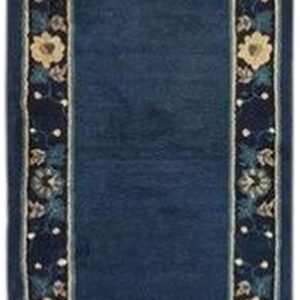
1920s Blue Deep Field Traditional East Asian Chinese Peking Hallway Gallery Rug
$7,800.00 Antique RugsSKU: 26030Rug sizes: 2 ft 3 in x 13 ft (0.69 m x 3.96 m) -
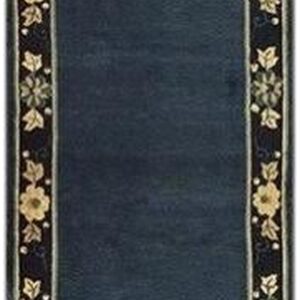
1920s Navy Blue Solid Minimalist Deco Antique Chinese Peking Runner Rug
$7,800.00 Antique RugsSKU: 26028Rug sizes: 3 ft 3 in x 18 ft 1 in (0.99 m x 5.51 m) -
Hand Tufted Wool Blue Traditional Oriental Morris Runner 2.6 x 10
$214.95 New RugsSKU: OT31BL2X10Rug sizes: 2 ft 6 in x 10 ft (0.76 m x 3.05 m) -
Xena Blue and Gray Hand Tufted Wool Rug 10 Round
$1,314.95 New RugsSKU: T175BL10RRug sizes: 9 ft 9 in x 9 ft 9 in (2.97 m x 2.97 m) -
Captivating Timeless Light Blue Hand Knotted Wool Rug 10 x 14
$1,693.00 New RugsSKU: IE500LB10X14Rug sizes: 10 ft x 14 ft (3.05 m x 4.27 m) -
Captivating Timeless Light Blue Hand Knotted Wool Rug 9 x 12
$1,317.00 New RugsSKU: IE500LB9X12Rug sizes: 9 ft x 12 ft (2.74 m x 3.66 m) -
1890s Classic Blue Ground Medallion Traditional Antique Chinese Peking Rug
$3,000.00 Antique RugsSKU: 40-4976Rug sizes: 3 ft x 5 ft 8 in (0.91 m x 1.73 m) -
1920s Blue Field Floral Traditional Medallion Antique Chinese Peking Knotted Rug
$13,000.00 Antique RugsSKU: 25664Rug sizes: 11 ft 10 in x 14 ft 6 in (3.61 m x 4.42 m) -
Dip Dyed Teal Hand-Tufted Wool Rug Abstract 8’x10′ Carpet
$929.95 New RugsSKU: KA103TL8X10Rug sizes: 8 ft x 10 ft (2.44 m x 3.05 m) -
Steel Blue Gray Abstract Hand Knotted Wool Rug 8 x 10
$1,039.00 New RugsSKU: KC20000BL8X10Rug sizes: 8 ft x 10 ft (2.44 m x 3.05 m) -
1890s Navy Blue Antique Geometric Rustic NW Tribal Knotted Wool Runner Rug
$19,200.00 Antique RugsSKU: 40-941Rug sizes: 7 ft 2 in x 14 ft 2 in (2.18 m x 4.32 m) -
1900s Blue Navy Herati Floral Antique Persian Bijar Rug 12′ 0” X 18′ 6” Handknotted Wool Carpet
$36,000.00 Antique RugsSKU: 6494Rug sizes: 12 ft x 18 ft 6 in (3.66 m x 5.64 m)
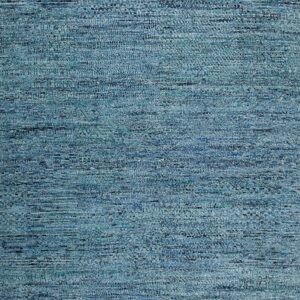
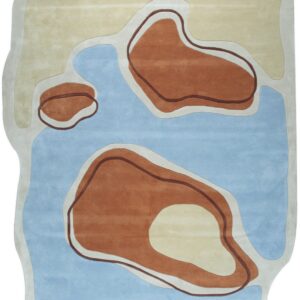
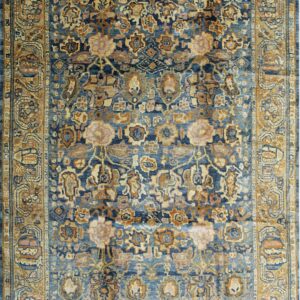
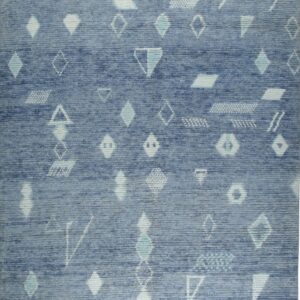
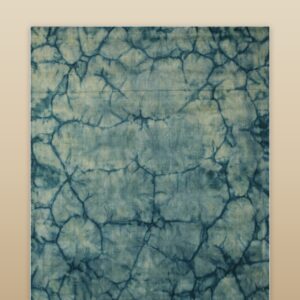
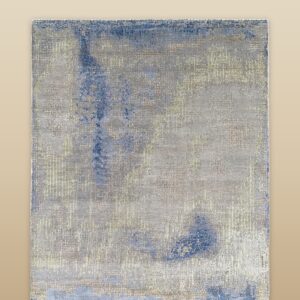
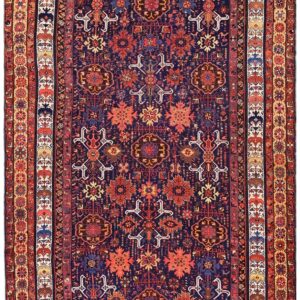
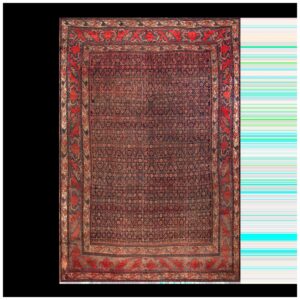
Which rug traditions are known for blue?
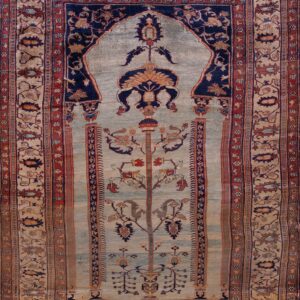
Chinese rugs are the tradition most closely tied to blue, and they make up 590 of the blue rugs on this page. After China come Persian village and town rugs with deep navy fields, then Caucasian and Indian rugs. Here is how our blue stock breaks down.
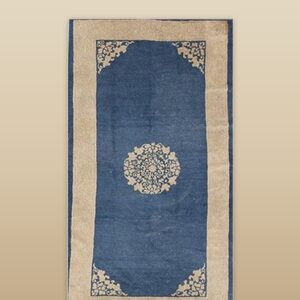
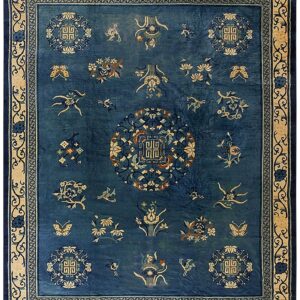
- Peking rugs, 378 in blue. The classic Chinese scheme of two or three blues on an ivory or champagne ground, with a quiet field and a few well spaced symbols. Most of ours are antique, 327 of them dated 1925 or earlier. See Peking rugs and our comparison of Peking, Ningxia and Art Deco rugs.
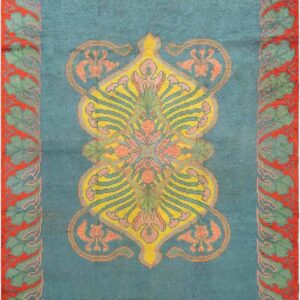
- Chinese Art Deco, 113 in blue, including 61 by Walter Nichols. Deep navy and brighter lapis and teal from the 1920s and 1930s, often with floating motifs and little or no border. The deep navy associated with Nichols is sometimes called Nichols Blue. See Chinese Art Deco rugs and Walter Nichols rugs.
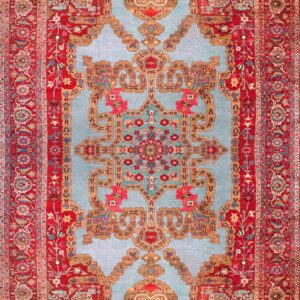
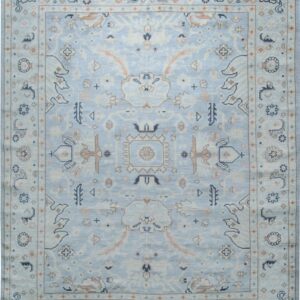
- Persian village and town rugs, 354 in blue. Navy and midnight fields are a staple of North West Persian, Malayer, Bidjar and Kurdish weaving, usually set against madder red and ivory. Our blue Persians are mostly antique: 304 of 354. See antique Persian rugs.
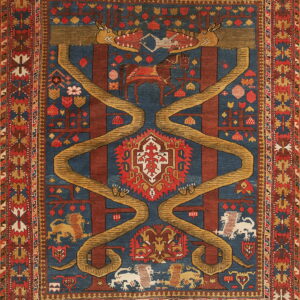
- Caucasian rugs, 67 in blue. Blue is the most common ground in our Caucasian collection. Expect saturated indigo in bold, stepped geometry, as in Kazak rugs and Shirvan rugs. See Caucasian rugs.
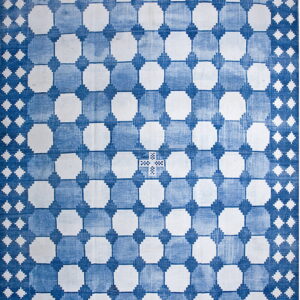
- Indian rugs and dhurries, 205 in blue. A mix of antique Agra carpets, vintage and antique cotton dhurries in blue stripes and grids, and new hand-knotted rugs. Most of our new blue rugs, 122 of 154, were woven in India.
How is blue made in a hand-knotted rug?
Traditional blue comes from indigo, and the dyer builds the shade by dipping the wool again and again. Indigo does not dissolve in plain water, so the dyer prepares a vat in which it becomes soluble, dips the yarn, and lets the air turn it blue as it dries. One dip gives a pale sky blue; many dips give navy.
- Abrash is normal. Each batch of dyed wool comes out a little different, so a blue field often shows soft horizontal bands of lighter and darker blue. This is expected in an antique rug.
- Natural and synthetic dyes. Synthetic dyes reached most weaving regions in the late 19th century. Some early ones were unstable and faded or ran; later chrome dyes are fast and stable, and they are what give 1920s Chinese Art Deco rugs their clear, strong blues. Our natural vs synthetic dyes guide explains the checks.
- Check the base of the pile. Part the pile with your fingers. A blue that is brighter at the knot than at the tips shows sun exposure. We are glad to send close-ups of the back or a condition report.
How does a blue rug look in different light?
Blue shifts more with light than most rug colors, so judge it in the room where it will live.
- North light and overcast days cool blue down and push navy toward charcoal. Pale blues can read as gray blue.
- South and west light warms blue and brings out any green or teal in it.
- Warm evening bulbs deepen navy until it reads close to black. Cooler, brighter bulbs keep it reading as blue.
- Pile direction matters. Viewed with the pile, a blue field looks lighter and shinier; viewed against it, darker and richer.
How do you decorate with a blue rug?
Use blue where you want calm. It works in traditional, transitional and modern rooms alike.
- With wood floors. Blue is the natural complement of warm oak, walnut and cherry, so a blue rug makes a wood floor look richer. On pale or whitewashed oak, choose a navy field for contrast.
- With stone and tile. Pale limestone, marble and concrete pair well with blue and ivory Peking rugs; the ivory ties to the stone and the blue adds depth.
- With walls. White and warm white walls let blue lead. Ochre, terracotta and warm gray walls make a blue rug the cool note in a warm room. Pale blue walls over a navy rug create a tonal, layered look.
- With upholstery. Rust, cognac leather, camel and ivory linen all sit well on blue. For a single accent, pull the rug's secondary color, often apricot, rust or gold, into cushions or a chair.
- Room by room. Navy Persian and Caucasian rugs suit libraries, dining rooms and studies. Open, pale Peking fields suit bedrooms and living rooms where you want air. Runners in blue hide traffic well in halls; we have 166 blue runners in stock.
- Measure first. Our rug size guide explains how to measure, and every listing gives the measured size.
How do you care for a blue rug?
Care for a blue rug the way you would any fine wool rug: a good pad, rotation once or twice a year, gentle vacuuming without a beater bar, and professional washing every few years.
- Sun. Indigo holds up well to light, but the reds, golds and greens next to it fade faster. Rotate the rug and use curtains or UV film in very bright rooms.
- Spills. Blot at once with plain water. Never rub, and never use bleach or strong cleaners near an ivory ground next to blue, where a run of color would show.
- Professional washing. Our rug cleaning service in Manhattan washes hand-knotted rugs with a pH-balanced process.
- Moths. Dark blue hides moth damage until it is well advanced, so check under furniture and along the edges. Our moth-proofing service washes the rug first and then treats the fibers.
Glossary of blue rug and dye terms
These are the terms you will meet most often in our listings and guides for blue rugs.
- Indigo
- The traditional plant source of blue in rugs, used across China, Persia, the Caucasus, Anatolia and India.
- Vat dyeing
- The method used for indigo: the dye is made soluble in a vat, taken up by the wool, and turns blue as it meets the air.
- Abrash
- Soft bands of tonal variation within one color, from changes in dye batch. Common and welcome in antique blue fields.
- Aniline dye
- An early synthetic dye of the later 19th century. Some early synthetics were prone to fading or running.
- Chrome dye
- A later synthetic dye fixed with a chrome mordant, fast to light and washing. Used in 1920s and 1930s Chinese Art Deco rugs.
- Navy field
- A deep blue ground built up with many dips in the indigo vat, typical of Persian village and town rugs.
- Blue and ivory
- The classic Peking palette of several blues on an ivory or champagne ground. Shop Peking rugs.
Blue Rugs: Frequently Asked Questions
Why are so many antique Chinese rugs blue?
Because blue and ivory is the classic palette of Chinese weaving, especially in Peking rugs, where two or three shades of indigo sit on an ivory or champagne ground. Of the 1,314 blue rugs in our collection, 590 are Chinese, and 378 of those are Peking rugs.
Do blue rugs fade?
Indigo is one of the most lightfast natural dyes, so a well dyed blue field usually holds its color for generations. The reds, golds and greens around it fade faster in strong sun. Rotate the rug once or twice a year and use curtains or UV film in very bright rooms.
Are blue rugs a good choice for a living room?
Yes. Blue is calm, it pairs with almost any wood floor, and navy fields hide everyday soil well. For a living room, look at our 9 x 12 and 10 x 14 blue rugs, and choose a size that lets at least the front legs of the seating rest on the rug.
How many blue rugs do you have, and what do they cost?
We have 1,314 blue rugs in stock: 960 antique, 200 vintage and 154 new. In our stock on September 27, 2026, antique blue rugs ranged from $361 to $595,000, with a median of about $12,000 and half between $6,800 and $22,500. New blue rugs had a median of about $706.
Do you ship blue rugs, and can I return one?
Yes. Shipping is free within the continental United States, and international orders ship at a flat rate of $495 per order ($350 to Canada, $395 to Mexico), with tracking. Orders ship in 1 to 3 business days. Customs fees, import duties and taxes are paid by the buyer on delivery. US buyers get a 4-day in-home trial starting the day the rug is delivered; see our shipping policy and returns policy.
Do you buy or appraise antique blue rugs?
Yes. We buy antique rugs outright: send photographs and measurements, and Kevin Rahmanan reviews the photos and decides. Consignment is also offered. For a value, we give a free Quick Opinion by phone or email from photographs, and a free In-Depth Appraisal Report for insurance, estate valuation and documentation. See sell your antique rug or contact us.