
What Rug Colors Really Do (Perception, Space, Story)
Hue, Value, and Saturation in Rugs
Rug colors theory begins with hue (the base color family), value (lightness or darkness), and saturation (intensity). In area rugs, these properties are shaped not just by dye, but also by pile, sheen, and texture. A high pile rug with lustrous wool or silk reflects more light, amplifying saturation and making colors appear more vivid. In contrast, a flatweave or matte wool rug mutes tones, softening the same hue into a more calming rug palette.
Value contrast is equally powerful: a rug with a light field and dark borders directs focus inward, while uniform tones create a serene, unbroken field. The interplay of these elements determines whether a rug feels energetic, grounding, or tranquil.
 Black Rugs |  Black White Rugs |  Blue Carpets |  Brown Earth Tone Carpets |  Coral Pink Rugs |  Gray Rugs |  Green Rugs |  Ivory Beige Cream Rugs |
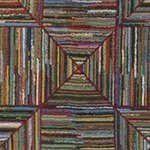 Multicolor Jewel Tone Rugs |  Purple Rugs |  Red Rugs |  Gold Yellow Orange Carpets |
Warm vs Cool Palettes
- Warm rugs (reds, oranges, yellows) advance visually, making a space feel intimate. — Why: They offset cool daylight and create a sense of coziness.
- Cool rugs (blues, greens, purples) recede, expanding space and calming the atmosphere. — Why: They balance rooms with strong sun or heavy warmth from wood finishes.
- Neutral blends can swing either way depending on undertones. — Why: Subtle hints of pink, yellow, or green can shift the mood dramatically.
Light Direction and Finishes
Daylight direction changes how rug colors are read. In north-facing rooms, natural light is cooler and can make colors appear grayer or bluer; warm vs cool rugs become a critical choice here. Selecting a warm rug helps offset the chill and prevents a flat, washed-out look. South-facing rooms, on the other hand, receive stronger, warmer light, allowing cooler palettes to thrive without the space feeling cold.
Beyond light, finishes matter: lustrous wool or silk amplifies brilliance and makes living room rug colors look richer, while matte finishes diffuse light, giving a subdued, calming rug palette even in bright rooms.
Undertones in Neutrals
Ivory, beige, and greige rugs may look simple, but undertones define their character. A greige rug can contain yellow, pink, or green undertones, which shift depending on daylight exposure.
Just as explored in earlier sections on rug size and room placement, neutral undertones should always be tested in both morning and afternoon light to avoid surprises. A rug undertone that looks balanced under artificial light may reveal an unwanted green or pink cast in sunlight.
Visual Tricks to Expand or Anchor Space
- Dark rugs with large fields visually anchor furniture groupings. — Why: They ground the room and create a sense of stability.
- Light-colored rugs expand space and bounce light. — Why: They visually enlarge small rooms or hallways.
- Low-contrast palettes keep the mood calm. — Why: Subtle shifts between rug and wall colors promote a restful setting.
- High-contrast rug design adds energy. — Why: A rug with bold pattern or sharp color difference draws the eye and defines focal points.
Common Questions
When buying rugs for the home, should the rug match wall color or contrast it? Both approaches work. Matching creates a harmonious, calming rug palette, while contrasting introduces depth and energy, particularly effective in high-contrast rug design. In north-facing rooms, opt for warm tones to balance cool light, ensuring the rug sets the mood rather than being dulled by daylight.
Color is never neutral in rugs. It directs perception, alters spatial feel, and tells a story about how a room should be experienced. Whether through rug undertones, sheen, or warm vs cool choices, every decision about living room rug colors shapes mood, scale, and focal points.
Nature’s Palette: Traditional Dye Sources
Plant, Insect, and Mineral Dyes
The art of natural dye rugs rests on the raw materials weavers had at hand. Plant sources such as roots, leaves, bark, and fruit skins dominated, with madder, weld, and pomegranate becoming staples across Asia and the Middle East. Insects like cochineal, kermes, and lac provided vivid crimson hues that traveled along trade routes, reaching Persian and Anatolian workshops.
Mineral additives such as iron or alum acted as mordants, fixing dyes and modifying tones. Regional access dictated choices: Anatolian villages relied on madder and chamomile, Central Asia favored indigo blue rugs, while North African weavers used henna and saffron where available. The resulting vegetable dyed wool carried the distinct signature of its land of origin, linking dye to geography and culture.
Madder, Cochineal, Kermes, and Lac Reds
Classic Persian red rug tones are most often derived from madder root. Depending on mordant and dyeing time, madder red rugs range from delicate pinks to deep burgundies. Alum brightens the shade, while iron mordants create earthy brick reds. Cochineal, an insect dye imported from the Americas, enriched carpets with brilliant carmine and was prized in Safavid Persia and Ottoman Turkey.
Earlier, kermes and lac provided crimson hues in Mediterranean and Indian traditions. Each of these dyestuffs required precise mordanting: without it, the dye washed away; with proper fixing, the tones aged gracefully, mellowing into warm, complex shades over centuries.
Indigo and Woad Blues
Indigo is the cornerstone of indigo blue rugs, valued for its exceptional lightfastness. Unlike other dyes that dissolve, indigo is applied by repeated dipping in a reduced solution, with each immersion deepening the shade from sky to midnight.
Woad, cultivated in Europe, offered a similar though less intense blue, forming a parallel tradition that later unified with indigo imports. Indigo’s unique molecular stability makes it the backbone for over-dyeing, providing the base for greens, purples, and complex patterned fields in carpets.
Weld, Chamomile, and Pomegranate Yellows
- Weld produces a bright, lemon-yellow that is both durable and luminous. — Why: It resists fading and holds clarity even under heavy wear.
- Chamomile gives softer golden tones. — Why: Its gentler hue created balance against stronger reds and blues.
- Pomegranate skins yield golden to khaki shades. — Why: With alum mordant, it stays warm; with iron, it deepens into olive-brown.
Saffron was sometimes used for brilliance but remained rare and costly. Greens were usually achieved by over-dyeing yellow over indigo, creating layered chromatic depth.
Table: Traditional Dye Sources in Rugs
| Hue | Dye Source | Region of Use | Process | Fastness | Notes |
|---|---|---|---|---|---|
| Red | Madder root | Persia, Anatolia, India | Alum/iron mordants, varying time | High if mordanted | Core of madder red rugs; pink to burgundy range |
| Red | Cochineal (insect) | Imported via trade routes | Alum mordant, precise boiling | Very high | Cochineal in carpets gave brilliant carmine, prized in Persian courts |
| Red | Kermes, Lac insects | Mediterranean, India | Mordanted with alum | Medium-High | Earlier crimson sources before cochineal |
| Blue | Indigo plant | Persia, Central Asia | Multiple dips, reduction vat | Exceptionally high | Basis for indigo blue rugs; foundation for over-dyeing |
| Blue | Woad plant | Europe | Similar to indigo process | High | Less intense, precursor to indigo imports |
| Yellow | Weld plant | Anatolia, Europe | Alum mordant, direct dyeing | High | Basis of weld yellow rug tones; brilliant, clear |
| Yellow | Chamomile flower | Anatolia, Caucasus | Boiled infusion, mordanted wool | Moderate | Softer, muted yellows |
| Yellow | Pomegranate skins | Persia, India | Alum for gold, iron for khaki | Medium | Versatile; used to tone greens |
| Green | Indigo + yellow overdye | Persia, Anatolia, India | Sequential dips | High | Achieved by layering indigo with weld or pomegranate |
Natural Harmony and Over-Dyeing
Natural dyes contain mixed chromophores, producing subtle variations that harmonize when woven side by side. This complexity ensures that vegetable dyed wool never looks flat or synthetic.
Over-dyeing was a key innovation: indigo layered with weld produced greens, while red over yellow created orange. These secondary hues gave carpets depth and versatility, expanding palettes beyond primary tones.
Common Question
What natural dyes create classic Persian red rug tones? The answer is madder root, with cochineal later adding brilliant crimson. Both required careful mordants to achieve stable, long-lasting reds.
When properly fixed, these colors not only resisted fading but aged gracefully, deepening into the warm tones admired in antique natural dye rugs today.
How Color Enters Wool: Techniques & Fastness
Mordanting: Alum, Iron, and Tin
Mordant dyeing wool relies on mineral salts that bind dye molecules to the fiber and alter their appearance. Alum is the most common, producing clear, bright colors and forming the backbone of traditional madder red palettes. Iron creates darker, “saddened” hues—an alum-bright orange madder can shift into a brick brown when mordanted with iron.
Tin, though rarer due to cost, intensifies brilliance, particularly in cochineal reds, producing sharp, luminous scarlets. The choice of mordant not only affects hue but also fastness: well-mordanted fibers resist fading, while poorly fixed ones may bleed or dull over time.
Indigo Vat Dyeing Steps
- Step 1: Prepare the vat with reduced (oxygen-free) solution using natural fermentation or chemical agents. — Why: Indigo is insoluble in normal water; reduction allows the dye to attach.
- Step 2: Submerge the wool in the yellow-green liquid. — Why: At this stage, the dye is in its reduced form and penetrates the fiber.
- Step 3: Expose to air after removal. — Why: Oxygen transforms the reduced dye into insoluble indigo blue, locking color inside the fiber.
- Step 4: Repeat dips to deepen shades. — Why: Layering increases saturation without compromising stability.
This indigo vat process makes indigo blue rugs exceptionally lightfast, a quality prized for centuries across weaving traditions.
Over-Dye Sequences for Secondary Colors
Over-dyeing requires careful order to ensure stability. To create an overdyed green rug, dyers first dip wool in indigo, then apply a yellow dye such as weld or pomegranate. Indigo forms the base, and the yellow layer creates a lasting green.
For oranges, a yellow base is followed by red from madder or cochineal. Purples require indigo under red. The sequence matters: applying indigo last risks uneven coverage and reduced fastness. These layered methods expanded palettes beyond primaries, adding depth to rug fields and borders.
Abrash: Causes and Appeal
Abrash—the subtle striation of tone within a rug—is often the product of small dye lots, shifts in water mineral content, or uneven mordanting. In natural dye rugs, abrash is not a flaw but a mark of authenticity.
Vegetable dyed wool contains multiple chromophores; minor variations yield visual texture and life. Collectors value abrash as it records the weaver’s hand and the village conditions of production, ensuring no two rugs are ever identical.
Preventing and Diagnosing Bleeding
- Pre-wash rub test: Press a damp white cloth onto each color. — Why: If pigment transfers, the rug risks bleeding during cleaning.
- Use acidic rinses: A mild acidic solution (such as diluted vinegar) can stabilize marginal dyes. — Why: It resets pH and helps dyes lock to the fiber.
- Avoid prolonged soaking: Standing water may loosen mordant-dye bonds. — Why: Reduces chances of widespread bleed.
- Professional cleaning with pH control: Skilled cleaners test and treat before immersion. — Why: Prevents catastrophic dye migration across fields and borders.
Common Questions
How are indigo blues dyed in handmade wool rugs? They are achieved through the indigo vat process: wool is dipped into a reduced indigo solution, removed, and exposed to air, where oxidation transforms the fibers into lasting blue. Multiple dips deepen the shade.
Does rug color bleed during cleaning, and how can it be avoided? Yes, poorly mordanted or unstable dyes can bleed, especially reds. Simple tests before washing, along with acidic rinses and controlled cleaning, prevent rug dye bleed and protect both field and border designs.
Technique choices—from alum mordant effects to over-dye sequences—determine not just tone but the long-term survival of color. With proper methods, wool retains brilliance for centuries, while shortcuts risk bleeding and fading that compromise both beauty and value.
Color Symbolism Across Cultures
Persian and Islamic Meanings
In Persian rug color meanings, hues carry layered associations that reach back through Islamic art and theology.
Red often represents joy, courage, and prosperity, which is why red rug meaning is tied to vitality and wealth. Blue stands for serenity, truth, and protection, echoing the heavenly dome; blue rug symbolism appears in prayer niches and medallions.
Green holds the highest sanctity, representing paradise in the Qur’an and associated with the Prophet’s lineage. Because of its sacredness, Islamic green rugs were rare throughout the history of rugs and often avoided underfoot—appearing instead in small motifs, borders, or architectural tilework-inspired fields.
Yellow and gold symbolized light, glory, and divine favor, while white signified purity and peace.
Black, while used for outlines to give designs power, was sparingly applied to avoid excessive solemnity.
Common Questions
What do traditional rug colors symbolize in Persian designs? Red means prosperity and courage, blue conveys spiritual truth, green represents paradise and sanctity, and yellow or gold stands for divine light and royalty.
Is green a rare, symbolic color in Persian rugs? Yes. Green is deeply sacred in Islamic tradition, so while it appears symbolically, large fields of green are rare, as treading on them was considered disrespectful.
Turkic and Central Asian Symbolism
- Red: Life force and celebration. — Why: Used in wedding rugs and dowry pieces to signify joy.
- Blue: Sky and protection. — Why: Central Asian nomads viewed the eternal sky as divine, making blue a protective color.
- Green: Fertility and spring renewal. — Why: Associated with pasturelands and seasonal cycles.
- Yellow: Wealth and strength. — Why: Linked to the sun and vitality.
- Black: Power and stability. — Why: Outlines often emphasized strength, anchoring bold geometric motifs.
Chinese Five-Color System
In Chinese rug traditions, symbolism followed the five-element cosmology where colors mapped onto elements and directions.
Red corresponded to fire and the south, representing prosperity and joy.
Blue/green related to wood and the east, symbolizing growth and vitality.
Yellow was central—linked to earth, balance, and imperial authority, giving rise to the famed Chinese imperial yellow rug.
White connected with metal and the west, standing for purity and mourning.
Black corresponded to water and the north, embodying depth, wisdom, and sometimes mystery. The harmony of these five hues created balance in design, reflecting cosmic order.
North African and Tribal Readings
As noted earlier on in this article on rug patterns, color in North African weaving is inseparable from tribal symbolism.
Red often marked protection and strength against evil, woven into bold lozenges and diamonds.
Blue symbolized both water and spirituality, vital in arid landscapes.
Green, while sacred in Islam, also indicated fertility and agricultural hope in Berber symbolism.
Yellow linked to the desert sun and feminine energy, while white represented peace and life transitions.
Black was used sparingly, often in outlines to frame talismanic motifs, echoing practices in Persian and Caucasian weaving.
Table: Cultural Color Symbolism in Rugs
| Color | Persian/Islamic | Caucasus & Central Asia | Chinese System | North Africa |
|---|---|---|---|---|
| Red | Joy, courage, prosperity | Life, weddings, vitality | Fire, south, prosperity | Protection, vitality |
| Blue | Serenity, truth, heaven | Sky, divine protection | Wood, east, growth | Water, spirituality |
| Green | Paradise, sanctity, rare underfoot | Fertility, spring renewal | Wood/earth blend, balance | Fertility, sacredness |
| Yellow/Gold | Light, royalty, glory | Sun, wealth, vitality | Earth, center, imperial | Sun, feminine energy |
| White | Purity, peace, mourning (in some) | Purity, weddings | Metal, west, mourning | Peace, life transitions |
| Black | Power in outlines, solemn if overused | Strength, grounding | Water, north, wisdom | Outlines, talismanic frames |
Color meanings shift by region and era, but all traditions show how rugs were more than floor coverings: they carried symbols of belief, environment, and identity woven directly into their palettes.
Persian Palettes: Cities vs Tribes
Canonical Red, Blue, and Ivory Balance
Across Persian weaving traditions, the interplay of red, blue, and ivory defined classical palettes. The field often carried the dominant red or deep blue, while ivory borders framed and lightened the composition.
This balance created contrast and clarity: rich indigo fields highlighted floral or medallion patterns, while ivory borders acted as breathing space against saturated grounds. In many masterworks, this triad provided both harmony and structure, setting a visual standard for Persian rug aesthetics.
City Carpets: Isfahan, Kashan, Tabriz
Urban workshops prized refinement and nuance. A Kashan indigo field with scrolling vines and medallions epitomized elegance, often accented with pistachio greens or soft golds. Isfahan carpets used deep blues and crimsons with meticulous floral detail, echoing Safavid court art.
Tabriz weavers leaned on sophisticated palettes, balancing restrained reds with silvery ivory and muted greens. These city palettes showcased control: colors layered in proportion, never overwhelming, highlighting precision in drawing and dyeing. Rugs from these centers are the most likely to feature deep blue grounds, anchoring ornate designs in a sea of indigo.
Common Question
What rug styles most often feature deep blue grounds? Kashan, Isfahan, and Tabriz city carpets consistently used indigo grounds to enhance the delicacy of their floral and medallion layouts.
Qashqai and Bakhtiari Vibrancy
- Qashqai color palette: fiery reds, bold indigos, and orange sparks. — Why: As nomadic weavers, they favored high-saturation tones to create energy and warmth in tent settings.
- Bakhtiari: lively garden-panel designs mixing ruby reds, emeralds, and ivory. — Why: Their compartmentalized layouts demanded strong contrasts to distinguish each section. Both tribal groups valued saturation over subtlety, with dyes applied in small batches that often produced abrash—color striations treasured for authenticity.
Heriz Rust and Brick Identity
Heriz rugs are synonymous with rust-red fields and bold navy or light blue geometry. The Heriz rust red rug is instantly recognizable: its brick tone anchors angular medallions and broad ivory borders. As noted in the section on rug size categories, the bold scale of Heriz designs pairs with this palette to dominate large living spaces. Few other Persian groups embraced such a consistently earthy, brick identity, making Heriz palettes iconic worldwide.
Common Question
Are Heriz rugs known for bold brick-red palettes? Yes. The brick and rust-red grounds, paired with strong navy, define the Heriz palette and remain one of the most recognizable signatures in Persian weaving.
Ziegler and Sultanabad Pastels
In contrast to both city precision and tribal saturation, Ziegler and Sultanabad pastel rugs catered to Western export markets of the 19th century. Their palettes leaned toward sage green, pale rose, and soft powder blue, softening traditional Persian designs for European interiors.
As noted in the section on rug origins, these pastel tones represented a cultural adaptation—Persian craft reimagined for foreign taste. Ivory was often expanded in borders and grounds, producing open, airy designs that stood apart from the dense jewel tones of Kashan or Qashqai rugs.
City vs. Tribal Palettes
The distinction lies in subtlety versus saturation. City carpets refined tones into balanced compositions with indigo fields and ivory frames, while tribal rugs embraced fiery reds and bold contrasts.
Heriz occupied a middle ground, using its hallmark rust to strike a lasting identity, while Ziegler / Sultanabad translated Persian motifs into soft, pastel export palettes. Together, these strands illustrate the diversity of Persian rug color expression, from courtly refinement to nomadic vibrancy.
Anatolian (Turkish) Color Signatures
Oushak Golds, Apricots, and Indigo
Oushak carpets are celebrated for their glowing golds and apricots, offset by expansive indigo grounds. The wool itself carries a natural sheen that amplifies these tones, giving Oushak gold rugs their luminous quality even when colors are soft.
Indigo fields, often diluted into a smoky blue, contrast against apricot medallions or golden vines. This balance between warmth and depth became the hallmark of Oushak exports to Europe, prized for their jewel-like but restrained palettes.
Bergama and Yörük Primaries
- Bergama red blue combinations: strong crimson fields framed by deep navy. — Why: These coastal Anatolian rugs favored bold geometry, making high-contrast primaries the natural choice.
- Yörük weavings: saturated reds, blues, and whites. — Why: Nomadic groups relied on durable natural dyes and emphasized sharp contrast for visual impact in tent settings.
- Both traditions highlight the Turkish love of red-blue opposition, a defining palette across Anatolia.
Konya and Ladik Yellows in Prayer Rugs
Central Anatolia, particularly Konya, developed a reputation for brilliant yellow fields achieved through weld dyeing. These tones appear most prominently in Konya yellow rugs and in Ladik prayer rugs, where niches were often woven in lemon yellow with red spandrels framing the mihrab.
Turkish prayer rug colors emphasized symbolic brightness: yellow for divine light, red for vitality, and blue for spiritual depth. This regional use of yellow remains one of the most recognizable Anatolian signatures.
Common Question
What rug styles most often feature deep blue grounds? Alongside Persian city rugs like Kashan and Isfahan, Turkish Bergama and Oushak traditions also used indigo grounds extensively, often paired with contrasting golds, apricots, or fiery reds.
Milas Ochre and Olive Schemes
In southwestern Anatolia, Milas rugs distinguished themselves with ochre, olive, and soft brown schemes. These tones derived from local dyestuffs and soils, creating a subdued, earthy Milas palette distinct from the jewel-like colors of western centers.
Borders often combined olive green with plum or rust accents, while prayer rug niches in Milas designs leaned toward saffron ochre and pale gold. Regional dyes gave these pieces a muted, atmospheric quality linked closely to place.
Table: Regional Anatolian Palettes
| Region | Ground Colors | Accent Colors | Notes |
|---|---|---|---|
| Oushak | Indigo, smoky blue | Gold, apricot, ivory | Wool sheen heightens glow; export favorites in Europe |
| Bergama | Red, navy | White, yellow | Strong primaries; bold tribal motifs |
| Yörük | Crimson, indigo, white | Black, green | Nomadic style; high-contrast geometrics |
| Konya | Lemony yellow, red | Blue, ivory | Central Anatolian; weld-based yellow grounds |
| Ladik | Yellow niches, red spandrels | Blue, white | Famous Turkish prayer rug colors with symbolic contrasts |
| Milas | Ochre, olive, soft brown | Plum, ivory | Regional dyestuffs yield earthy, muted palettes |
Turkish palettes are bold, high-contrast, and jewel-like in effect, but with regional signatures: Oushak’s glowing golds, Bergama’s primaries, Konya’s yellows, and Milas’s ochres. Together, these schemes mark Anatolia as one of the richest color traditions in rug weaving.
Caucasian Jewel Tones
Kazak, Shirvan, and Kuba Triads
Caucasian rugs are instantly recognized for their high-intensity, limited-color palettes. The most characteristic harmony is the red–blue–green triad, framed by ivory. A Kazak color palette typically uses a strong red field, bold navy or cobalt blue medallions, and bright green accents.
Shirvan rugs refine this scheme with sharper geometry and frequent green highlights, while Kuba blues introduce vivid contrast against white-ground borders. Across these groups, ivory outlines sharpen motifs, giving a crisp, jewel-like clarity that defines Caucasian rug identity.
Cochineal vs. Madder Reds
- Cochineal red: a cooler, carmine crimson with a luminous sheen. — Why: Imported through trade routes, it signaled access to luxury dyestuffs and often appears in later 18th–19th century Caucasian rugs.
- Madder red: a warmer, brick-to-burgundy tone. — Why: Locally available and traditional, madder formed the base of village weaving palettes, especially in Kazak rugs. The distinction between cochineal vs. madder red helps scholars date and attribute rugs: cooler cochineal tones often indicate later or export-focused weavings, while madder roots the piece in village practice.
Bright Greens via Over-Dye
True green wool rarely comes directly from nature. Instead, Caucasian weavers achieved their Shirvan green accents through over-dyeing: indigo-dipped yarns later bathed in weld or pomegranate solutions.
The result was a luminous, emerald tone that pops against red and blue fields. Because green was relatively scarce, its use became a focal point in medallions and corner spandrels, enhancing the jewel-tone effect.
Yellow Fading and Dating
Some 19th-century yellows, especially those from fugitive vegetable dyes, faded over time into tan or beige. This natural fading can complicate identification: a rug that once carried lemon-yellow stars may today present as muted khaki.
Context matters—when yellows fade unevenly, they can reveal a rug’s true age, helping appraisers distinguish antique from later revival weavings.
Palette-Based Quick ID
- Kazak rugs: Strong red fields with blue medallions and ivory framing. — Why: Bold saturation and large-scale design.
- Shirvan rugs: Red or ivory fields with crisp green highlights. — Why: Precision drawing and jewel-tone contrasts.
- Kuba rugs: Predominantly blue grounds with ivory and red accents. — Why: Regional dye emphasis and balanced layouts.
Common Question
How do color choices influence a rug’s perceived age or style? Cooler cochineal reds, fading yellows, and bright over-dyed greens can indicate 19th-century Caucasian rugs, while warmer madder reds and consistent saturation often suggest earlier village traditions.
Palette shifts—whether jewel-tone clarity or mellowed antique tones—are key clues in distinguishing age, region, and weaving style.
High-intensity triads of red, blue, and green, sharpened by ivory outlines, remain the hallmark of Caucasian jewel-toned rugs, giving them unmatched vibrancy and instant recognizability.
Central Asian/Turkmen Monochrome Mastery
The Spectrum of Turkmen Red
The hallmark of Turkmen weaving is the uniform red field, often referred to simply as “Turkmen red.” This spectrum ranges from garnet and wine tones to warm brick and russet. Subtle shifts result from dyestuff variation, water quality, and mordanting.
Alum brightens, while trace amounts of iron darken the hue, producing the lacquered richness found in antique Turkmen red rugs. Collectors value this tonal range not as inconsistency but as proof of authenticity and depth.
Common Question
Why are red rugs so common in antique carpets? Red was the most stable and available natural dye in Central Asia. Madder root was plentiful, and when combined with careful mordanting, it produced enduring shades that aged gracefully.
Red also carried symbolic associations of strength, vitality, and protection, making it both practical and meaningful.
Guls with Charcoal, Indigo, and Ivory Accents
The repetitive gul motif dominates Turkmen carpets, but the palette supporting it is restrained. Guls are typically drawn in deep indigo or Yomut dark outlines, sometimes softened with camelhair browns.
Small ivory highlights articulate the geometry, punctuating the sea of red with luminous points. These carefully placed contrasts give Bokhara colorway carpets their crisp structure while maintaining overall unity.
Mordant Tweaks to Deepen Red
Mordanting plays a critical role in hue depth. Alum mordanting with traces of iron was a Turkmen refinement, producing darker, richer reds without sacrificing fastness.
This subtle chemistry allowed Ersari and Tekke weavers to vary their palettes from glowing crimson to deep garnet while still maintaining the monochrome field that defines the tradition.
Rare Olives and Greens as Accents
While the Ersari palette occasionally introduced soft greens or olives, these colors remained accents rather than dominant tones. Achieved through indigo over-dyed with yellow, these hues emphasized details in borders or subsidiary guls.
Their rarity made them visually striking, signaling both technical skill and access to less common dyestuffs.
Collector Cues: Reading Turkmen Color
- Uniform red fields with subtle abrash striations. — Why: The depth of tone signals natural madder and authentic weaving practice.
- Charcoal or indigo outlines around guls. — Why: These anchor motifs against the field and point to Yomut or Tekke traditions.
- Ivory highlights within medallions. — Why: They punctuate monochrome fields and reveal balance in design.
- Camelhair browns in weft or pile. — Why: These natural shades occur in some Ersari groups, adding quiet variety.
- Rare greens or olives in border details. — Why: Their scarcity elevates interest and collector value.
Turkmen elegance thrives not on a rainbow of colors but on the mastery of a single dominant hue. Subtle abrash bands—caused by small dye batches or water mineral variations—add lacquered depth to the field, turning uniformity into richness. The result is a visual language where restraint creates power, and where a Turkmen red rug achieves timeless authority through nuance alone.
Chinese, Tibetan, and Samarkand Harmonies
Peking Blues and Imperial Yellows
Chinese workshop carpets often emphasized blue–camel pairings, producing calm yet formal designs. A Peking blue rug might feature a navy or cobalt ground offset by beige or camel borders, conveying stately elegance.
In imperial contexts, Chinese imperial yellow carpets were reserved for throne rooms and temples, reflecting their restricted symbolism of power, light, and divine authority. These large fields of blue or yellow underscore the East Asian preference for expansive color harmony rather than fragmented palettes.
Common Question
What rug styles most often feature deep blue grounds? Beyond Persian Kashan and Anatolian Oushak traditions, Chinese Peking rugs are among the most notable for deep blue fields, often used to frame ivory dragons or floral medallions.
Tibetan Monastic Reds and Oranges
- Deep Tibetan red rug fields were tied to Buddhist monastic life. — Why: Red symbolized sacred energy and protection, aligning with the robes of monks.
- Orange and saffron tones appeared in temple pieces. — Why: They echoed Buddhist associations with wisdom and fire, reinforcing spiritual context.
- Blue or yellow accents often framed lotus or endless-knot motifs. — Why: These complementary touches added balance to the overwhelmingly warm palettes.
Art Deco Brights, Lavenders, and Jades
The 1920s–30s Art Deco rug colors marked a dramatic departure from tradition. Weavers in China, especially around Tianjin, embraced saturated pinks, turquoise, lavender, jade green, and even black grounds.
These bold experiments reflected Western taste for modern design while still employing Chinese floral and phoenix motifs. Vast color fields, often unbroken by heavy patterning, made the dyes themselves central to the aesthetic.
Samarkand Apricot with Turquoise and Olive
Samarkand weavings from Central Asia blended influences from both China and Persia, producing palettes that feel like a desert sunset with cool accents. A Samarkand apricot rug might combine warm fields of apricot or rose with turquoise, olive, and soft violet highlights.
Borders often balanced these contrasts, resulting in hybrid harmony that appealed to Silk Road markets. This cross-cultural synthesis made Samarkand palettes unique: at once bold, exotic, and balanced.
Table: Regional Palette Harmonies
| Style | Dominant Hues | Motif Roles |
|---|---|---|
| Peking | Deep blue, camel/beige, ivory | Large dragon medallions, floral sprays, borders |
| Tibetan | Monastic red, orange, saffron | Lotus motifs, endless knots, temple contexts |
| Art Deco | Lavender, jade, turquoise, black | Simplified florals, phoenixes, modern symmetry |
| Samarkand | Apricot, rose, turquoise, olive | Medallions and borders blending East–West motifs |
East Asian and Central Asian palettes share a devotion to large color fields and harmony, yet differ in execution. Where Peking blue rugs and Chinese imperial yellow carpets emphasize formality and symbolism, Tibetan reds assert spiritual power, Art Deco designs experiment with modern bright tones, and Samarkand rugs merge warm apricot bases with cool accents for balance.
Together, they demonstrate how rug color traditions along Asia’s trade routes were shaped by both cultural symbolism and evolving tastes.
North African/Moroccan Minimal & Bold
Beni Ourain Undyed Neutrals
The Beni Ourain neutral rug is iconic for its simplicity. Woven by Berber tribes in the Middle Atlas, these rugs use the natural colors of sheep wool—ivory, black, and brown—without added dye.
Designs rely on geometric black or brown lines set against a creamy field. This restraint reflects both the availability of undyed wool and a minimalist aesthetic, offering warmth and quiet elegance. The result is a palette that feels timeless, aligning seamlessly with contemporary interiors.
Boujaad and Taznakht Fiery Oranges and Reds
In contrast, Boujaad orange rugs and Taznakht pieces ignite spaces with bold, earthy tones. Dyed with madder and plant mixtures, their fiery oranges and reds reflect Morocco’s mineral-rich soil and desert light.
These rugs often include small indigo or green accents but remain dominated by warm, saturated fields. — Why: Boujaad and Taznakht palettes express vibrancy and strength, making them statement pieces in tribal households and in modern eclectic design.
Local Dye Sources: Henna, Pomegranate, and Saffron
North African weaving traditions drew heavily from natural resources. Moroccan henna dye produced soft browns and reds, pomegranate skins yielded golden-khaki shades, and saffron provided rare, brilliant yellows—though its cost limited widespread use.
These earth-derived dyes echo the landscape itself, grounding Moroccan rugs in their environment and imbuing them with organic authenticity.
Contemporary Boucherouite Brights
Modern boucherouite color schemes diverge radically from natural palettes. Woven from recycled textiles and synthetic yarns, these rag rugs embrace playful neon pinks, electric blues, and mixed bright colors.
Boucherouitte pieces reflect adaptability: where traditional weavings drew on earth tones, these rugs celebrate abundance of material and color, transforming necessity into artistic expression.
Palette-to-Style Matches
- Beni Ourain: Ivory, black, brown. — Why: Neutral sheep wool defines minimalist geometry.
- Boujaad: Fiery oranges, reds. — Why: Madder and plant dyes deliver earthy vibrancy.
- Taznakht: Deep oranges, rusts, saffrons. — Why: Regional palettes emphasize warmth and desert identity.
- Boucherouite: Neon and synthetic brights. — Why: Contemporary recycling produces playful, eclectic palettes.
Common Question
Can patterned multicolor rugs anchor neutral furniture palettes? Yes. Even bold Moroccan designs—whether a Boujaad orange rug or a neon boucherouite—act as grounding focal points when paired with neutral furnishings. Their concentrated color fields or patterns provide balance, preventing otherwise pale interiors from feeling flat.
Moroccan aesthetics thrive on two extremes: the minimalist calm of undyed neutrals and the bold singularity of fiery or neon hues. Both approaches echo their cultural landscapes—either the wool of mountain sheep or the earth and dyes of desert regions—offering versatility that spans tradition and modernity.
Religion, Trade, and Sumptuary Rules
Green Sanctity and Usage Limits
In Islamic traditions, green symbolized paradise and the Prophet’s lineage. As a result, many Muslim weavers avoided weaving Islamic green taboo floor carpets with expansive green fields, since walking on such a sacred color was considered disrespectful.
Instead, green appeared sparingly in borders, motifs, or textiles not placed underfoot—such as wall hangings or prayer mats. Religion constrained color placement more than overall selection, shaping how palettes were expressed in Persian, Anatolian, and North African contexts.
Cochineal Trade and the Rise of Brilliant Reds
From the 16th century onward, the introduction of cochineal trade carpets transformed red palettes across Eurasia. Extracted from insects in the Americas and carried eastward via Spain, cochineal produced luminous carmine tones far brighter than local madder. Persian, Ottoman, and Caucasian workshops quickly adopted it, expanding the range of reds and adding luxury appeal to rugs.
This global exchange explains why red rugs are so common in antique carpets: red dyes were plentiful, durable, and symbolically tied to prosperity and vitality, while trade provided ever more brilliant shades.
Common Question
Why are red rugs so common in antique carpets? Red was both practical and symbolic. Madder root grew abundantly across weaving regions, producing stable tones, while cochineal imports deepened variety.
Red also carried universal meanings of wealth, joy, and protection, ensuring its dominance in antique rug palettes.
Ziegler and Sultanabad Export Pastels
By the late 19th century, Western tastes redirected Persian weaving. Workshops in Sultanabad, under Ziegler & Co., developed Ziegler pastel rugs with sage greens, soft blues, and pale roses.
These palettes differed from traditional jewel tones, catering to European and American interiors that favored subdued, airy designs. The export market effectively re-colored Persian traditions, showing how global demand reshaped palettes as much as religion or local symbolism.
Imperial Chinese Yellow Exclusivity
In China, sumptuary rules restricted imperial yellow carpet rules to the emperor’s court. Yellow, tied to the Earth element and cosmic balance, was considered sacred and could not be freely used by the public.
Imperial carpets often featured vast yellow fields with dragon motifs, visually reinforcing power and exclusivity. This limitation elevated yellow from a mere color to a legal boundary between ruler and subject.
Table: Forces Shaping Rug Color Traditions
| Force | Region | Color Effect | Era |
|---|---|---|---|
| Religion | Islamic regions | Limited green fields; sacred placement | Medieval–modern |
| Trade (cochineal) | Persia, Ottoman, Caucasus | Expansion of red range, brighter tones | 16th–19th century |
| Export markets | Persia (Sultanabad/Ziegler) | Pastel palettes for Western taste | Late 19th century |
| Sumptuary rules | Imperial China | Yellow restricted to emperor’s use | Ancient–Qing era |
Religion, trade, and law each acted as forces that constrained or expanded rug palettes. Where Islam limited sacred green, global trade enriched reds, Western demand softened Persian colors into pastels, and Chinese sumptuary law enshrined yellow as imperial privilege.
Together, these dynamics reveal that rug color was never only aesthetic—it was also spiritual, economic, and political.
Synthetic Dyes: Disruption to Equilibrium
The Aniline Era, 1856–1900
- Aniline dyes in rugs first appeared after William Perkin’s 1856 discovery of mauveine. — Why: They offered bright, inexpensive alternatives to vegetable dyes.
- Early anilines produced neon-like hues that lacked depth. — Why: Their molecular structure reflected light harshly compared to natural dyes.
- These dyes bled easily and faded rapidly in sunlight. — Why: Poor fastness made them unreliable for long-term use.
- Rug buyers quickly learned to distrust them. — Why: Color instability compromised both aesthetics and value.
This period marked a disruption to centuries of natural dye equilibrium, with workshops struggling to balance cost-saving synthetics against traditional expectations.
Chrome and Azo Stability in the 1900s
By the early 20th century, advances in chrome dye fastness and azo chemistry solved many of aniline’s weaknesses. Chrome mordant dyes offered improved resistance to light and washing, rivaling natural dyes in stability.
Workshops adopted them widely, producing consistent results that satisfied both local markets and export demand. The downside was aesthetic: chemical precision reduced the tonal variations and abrash prized in vegetable-dyed rugs.
Common Question
Are chrome-dyed rugs more colorfast than vegetable-dyed pieces? Yes. Chrome dyes are generally more resistant to fading and bleeding, though natural dyes, when properly mordanted, still age with more complexity and harmony.
Uniformity vs. the Loss of Abrash
One consequence of synthetic dyes was the loss of natural abrash. Because vegetable dyeing relied on small batches and variable water chemistry, rugs displayed subtle striations that created depth.
Synthetic dyes, however, were produced in standardized lots, flattening the palette into uniform expanses. This made new rugs “feel” different: technically precise but lacking the layered warmth of traditional vegetable-dyed wool.
“Painted” American Sarouks
Perhaps the most famous synthetic intervention was the American Beauty Sarouk. Sarouk rugs exported to the U.S. in the 1920s–30s were often chemically recolored after weaving.
Local importers stripped and repainted their fields into a deep, uniform rose-red that suited American taste. These recolored pieces, though now collectible, illustrate how synthetic dyes not only changed production but also altered existing carpets to fit market demand.
Dating Rugs by Color Behaviors
- Neon or fugitive pinks/purples: Likely early aniline use. — Why: These unstable shades mark late 19th-century rugs.
- Overly uniform reds/blues: Suggest synthetic dyes. — Why: Chrome and azo batches removed natural abrash.
- Painted rose fields: Indicate American Beauty Sarouks. — Why: Export recoloring left distinctive chemical signatures.
- Soft, mellow aging: Consistent with vegetable dyes. — Why: Natural dyes fade harmoniously, unlike synthetics.
Synthetic vs natural dye rugs can often be distinguished by these color behaviors. While synthetics evolved from unstable experiments into reliable standards, they forever changed the visual language of rugs—swapping the irregular charm of vegetable dyes for the evenness of modern chemistry.
Revival & Reinterpretation Now
DOBAG and the Return of Vegetal Dyes
- DOBAG colors: Turkey’s DOBAG project (founded in the 1980s) reintroduced traditional methods using madder, weld, and indigo. — Why: It sought to recover authentic hues and restore trust in natural dye revival rugs after synthetic dominance.
- Abrash reintroduced: Small-batch dyeing was embraced intentionally. — Why: Collectors and designers value abrash as a sign of life and authenticity.
- Cultural continuity: Training rural women ensured craft transmission. — Why: It paired science with tradition, proving vegetal dyes could compete with modern synthetics.
Afghan and Iranian Revivals
Afghan workshops now produce vegetal-dye carpets inspired by Kazak and Ersari jewel tones, while Iranian looms reissue Gabbeh rugs with saturated fields and playful minimalism.
These Afghan vegetal dye carpets combine heritage patterns with eco-conscious branding, bridging tradition and global taste. Both revivals emphasize depth of tone and the soft aging of natural pigments, distinguishing them from chrome-dyed rugs.
Common Question
How do color choices influence a rug’s perceived age or style? Natural-dye revival rugs that include abrash and vegetal pigments often read as older or “authentic,” while uniform synthetic palettes suggest newer manufacture.
Overdyed rugs, conversely, signal contemporary fashion rather than age, even if applied to antique bases.
Overdyed and Distressed Trends
The overdyed rug trend involves bleaching an existing carpet and re-coloring it with a single, bold synthetic dye—emerald, fuchsia, charcoal—erasing traditional palettes. Distressing further softens patterns, turning antique structures into décor-driven statements.
These rugs are not about authenticity but about reimagining the rug as an artistic floor canvas, fitting modern interiors that favor minimal or dramatic singular tones.
Sustainability and Eco Narratives
With rising environmental awareness, sustainable rug dyes have become a marketing point. Brands highlight non-petrochemical, biodegradable dyes, and vegetable-dyed wool is cast as healthier for both weaver and owner.
These narratives resonate with consumers seeking ethical and eco-friendly products, ensuring natural dye revival is not just about heritage but also about modern values.
Table: Revival and Reinterpretation Projects
| Project/Trend | Methods | Palette Traits | Market |
|---|---|---|---|
| DOBAG (Turkey) | Madder, weld, indigo; small lots | Jewel-like, visible abrash | Collectors, heritage enthusiasts |
| Afghan vegetal-dye | Local plants, Kazak reissues | Bold reds, blues, greens | Export and eco-conscious buyers |
| Iranian Gabbeh revival | Hand-spun wool, natural dyes | Saturated primaries, minimal | Contemporary and traditional markets |
| Overdyed rugs | Bleach, re-color, distress | Single bold tones | Urban décor and fashion-driven buyers |
| Eco-marketed brands | Plant-based, sustainable dyes | Museum-accurate to avant-garde | Global conscious consumers |
Natural-dye revival marries science and tradition, while reinterpretation through overdyeing or sustainability narratives broadens palettes from museum-accurate reproductions to avant-garde décor statements.
Together, they show how rug color remains a living language, continually adapted to cultural, aesthetic, and ethical demands.
Color Care, Fading & Bleed: Conservation
Lightfastness by Hue
Not all rug colors age equally. Indigo is one of the most lightfast natural dyes, retaining depth for centuries even under exposure. In contrast, many yellows—particularly early vegetable or synthetic anilines—are fugitive, shifting from bright lemon to dull tan with prolonged sunlight.
Reds from madder or cochineal hold better than yellows but still mellow over time. This uneven lightfastness means that conservation strategies must account for which hues are most at risk in any given rug.
Rotation, UV Control, and Cleaning Protocols
- Rotate rugs 180° every 3–6 months. — Why: It evens out fading and wear patterns, preventing one side from appearing lighter.
- Install UV films or use sheer curtains. — Why: UV protection rugs resist sun damage when direct exposure is reduced.
- Avoid direct sunlight altogether where possible. — Why: Prevention is far more effective than later restoration.
- Vacuum lightly and regularly. — Why: Dust buildup accelerates fiber abrasion and color dulling.
Common Questions
When should I rotate rugs to even out fading? Every three to six months is recommended, especially for rugs in bright rooms. How do I prevent my rug from sun fading? Use a combination of UV window films, sheers, and thoughtful placement away from direct sun.
Antique Luster Wash Risks
Some antique rugs were treated with a luster wash, a chemical and sun process designed to soften colors and give wool a sheen. While visually appealing, these treatments weaken fibers.
Prolonged sun drying after wet cleaning compounds brittleness, making luster wash risks a key conservation concern. Collectors and owners should avoid such processes today and prioritize gentle, fiber-preserving methods.
Repair Color Match and Abrash Blending
When restoring a rug, matching original hues is essential. Professional weavers often replicate abrash blending—the natural tonal shifts from hand-dyeing—to ensure repairs do not appear flat or artificial.
Subtle shade variation is preferable to a uniform patch, as it maintains both authenticity and harmony with surrounding pile.
Prevent, Test, and Respond Steps
- Prevent: Control light, rotate rugs, and maintain regular low-moisture cleaning. — Why: Prevent rug fading before damage sets in.
- Test: Perform a rug dye bleed test by pressing a damp white cloth against each color before any wet cleaning. — Why: Detects unstable dyes before catastrophic migration.
- Respond: If flooding or spills occur, extract moisture quickly and wick outward. — Why: Stops dye from bleeding into adjacent fields or borders.
Common Question
Do rug colors bleed during cleaning, and how can it be avoided? Yes, unstable dyes may bleed when exposed to water. The key is to test dyes beforehand, stabilize with mild acidic rinses if needed, and ensure rapid drying.
Professional rug cleaning services follow these protocols with pH control to avoid bleed.
Conservation Priority
The core principle is simple: prevention beats restoration. Light control, rotation, and pre-wash testing safeguard rug colors more effectively than any repair after damage.
With care, antique palettes—whether indigo blues, madder reds, or delicate yellows—retain their vibrancy and continue to tell their story without loss.
Choosing Colors for Rooms: Practical Playbook
Gray Sofa Pairings
The best rug color for a gray sofa depends on undertone. A cool gray (with blue or violet hints) pairs best with navy, teal, or charcoal rugs, but warmth can be added through rust or terracotta accents to prevent sterility.
A warm gray (with beige or taupe undertones) harmonizes with sage, terracotta, or muted blue rugs, creating a balanced, calming effect. Always read the sofa’s undertone before choosing a rug, since a mismatch can make the entire palette feel off.
Common Question
What color rug works with a gray sofa best? Navy or teal rugs flatter cool gray sofas, while sage or muted blues complement warm gray sofas. Rust and terracotta inject warmth across both.
Brown Leather with Blues and Rusts
- Blue rug brown leather combo: Denim, navy, or indigo rugs cool down the warmth of brown leather. — Why: Blues contrast against leather’s earthy undertone, creating balance.
- Rust and red Persian tones: Echo the natural warmth of leather. — Why: They intensify coziness and highlight the richness of leather’s patina.
- Layered neutrals with pattern: Cream, ivory, or tan rugs with intricate borders. — Why: Patterns add visual interest while complementing leather’s classic presence.
Common Question
Are blue rugs versatile with brown leather sofas? Yes. Blue provides a versatile counterbalance—navy or denim cools the look, while Persian indigo-rust combinations create depth and warmth.
Walls: Match, Complement, or Contrast
A rug can match wall color for tonal calm, complement it by selecting a color opposite on the wheel for balance, or contrast for bold energy. Matching creates seamless flow (e.g., pale gray walls with soft gray-blue rugs). Complementing adds balance (sage rug with blush walls). Contrasting introduces drama (navy rug against white walls).
For north-facing rooms, choose warm living room rug tones like rust, ochre, or warm neutrals to offset cool daylight. For south-facing rooms, cooler palettes like blue, gray, or teal feel refreshing without turning cold.
Common Question
Should my rug match wall color or contrast it? Both work—matching calms, contrast energizes, and complementing balances. Choose based on whether the space needs serenity, energy, or harmony.
Dirt Visibility: Ivory vs Patterned or Darker Rugs
Ivory rug dirt issues are real—light solids show every spill and footprint. In contrast, patterned rug for neutrals and mid-toned rugs camouflage daily wear. Multicolor Persian-style rugs are particularly effective, as their busy layouts hide stains while adding vibrancy to neutral furniture palettes.
Common Questions
Does an ivory rug show dirt more than darker colors? Yes. Ivory reveals dust and stains easily, while patterned or darker rugs conceal them better. Can patterned multicolor rugs anchor neutral furniture palettes? Absolutely. Patterns add depth and visual grounding, ensuring neutral rooms don’t feel flat.
Table: Practical Rug Color Scenarios
| Scenario | Rug Colors | Why It Works |
|---|---|---|
| Cool gray sofa | Navy, teal, charcoal, rust accent | Balances cool undertone while adding warmth if needed |
| Warm gray sofa | Sage, terracotta, muted blue | Complements warm undertone and enhances calm |
| Brown leather sofa | Indigo, denim, rust, Persian reds | Blues cool leather; rusts deepen warmth |
| Walls (matching) | Tonal neutrals, soft blue | Creates calm, seamless flow |
| Walls (complementing) | Sage vs blush, navy vs cream | Balances contrasts without overpowering |
| Walls (contrasting) | Navy rug + white wall, rust + gray | Energizes space with strong visual distinction |
| High-traffic/dirt concern | Patterned multicolor, mid-tones | Conceals stains better than flat ivory |
| North-facing rooms | Ochre, rust, warm neutrals | Offsets cool daylight, prevents sterile feel |
| South-facing rooms | Blue, gray, teal, sage | Cooler palettes feel fresh without reading cold |
Color choice in interiors blends psychology, practicality, and harmony. Rugs are not just decorative—they determine whether a room feels calm, energized, or balanced, while also dictating how well the space hides or reveals daily life.
Spot-Testing & Identifying Dyes
Dry and Wet Rub Tests (Crocking)
- Dry rub: Use a clean white cloth to rub across the rug surface. — Why: Detects loose pigment without water and reveals if dyes were poorly fixed.
- Wet rub: Dampen the cloth slightly with cool water and press against each color, especially reds. — Why: A rug dye test at home identifies unstable dyes before washing, preventing catastrophic bleed.
- Test each color separately: Dark reds and blues are most prone to transfer. — Why: They contain higher dye loads and historically used mordants that can loosen under moisture.
Edge and Fringe Checks Before Washing
Fringes and edges absorb water quickly, becoming hotspots for bleeding. A quick cloth test along fringe knots indicates whether color may wick outward. This step ensures targeted stabilization before a full wash, protecting adjacent ivory or lighter shades.
Lab Methods for Dye Identification
When value or preservation stakes are high, HPLC dye analysis rugs (high-performance liquid chromatography) is the gold standard. Labs can identify specific dye molecules, distinguishing between natural madder, cochineal, or synthetic azo and chrome dyes.
Use is most critical in museum settings, legal disputes, or high-end antique verification, where the cost is justified by clarity.
Common Question
Are chrome-dyed rugs more colorfast than vegetable-dyed pieces? Yes—chrome mordants typically create superior wash and light fastness. However, properly mordanted vegetable dyes age more gracefully, producing nuanced undertones synthetic precision often lacks.
Telltales: Natural vs Synthetic Palettes
- Natural dyes: Subtle undertone blends, slight abrash shifts, and non-uniform saturation. — Why: Plant and insect sources contain multiple chromophores.
- Synthetic dyes: Flat, “primary” clarity with little tonal variation. — Why: Industrial formulas produce uniformity not found in natural dyeing.
- Chrome-dyed rug fastness: Stable, precise hues with minimal abrash. — Why: Batch dyeing standardizes colors.
Safe-at-Home vs Professional Only
- Safe at home:
- Dry/wet rub test with white cloth. — Why: Simple, low-risk, reveals instability.
- Spot-test with cool water only. — Why: Avoids fiber shock or chemical reaction.
- Professional only:
- Acidic rinses or stabilizers. — Why: Requires controlled pH and experience.
- Full immersion cleaning. — Why: Risk of widespread dye migration if mishandled.
- HPLC analysis. — Why: Laboratory expertise and equipment needed.
Common Question
Does solution-dyed polypropylene resist fading better than nylon? Yes. Solution-dyed polypropylene fade resistance is superior because pigments are integrated into the fiber itself, making them UV-stable, unlike surface-dyed nylon which degrades faster in sunlight.
Conservation Priority
Simple tests prevent damage: documenting results before cleaning helps guide safe treatment. At-home rub tests flag unstable dyes, but when authenticity, age, or high value is in question, professional testing and lab analysis remain the definitive path to identify natural vs synthetic dye sources and ensure long-term preservation.
FAQ
-
Should I choose rug colors or wall paint first?
Pick the rug first; paint has thousands of adjustable shades. Match paint afterward to your rug colors under your room’s lighting.
-
Do white rug colors yellow over time?
They can—photo-oxidation and high-pH cleaners cause yellowing. Limit sun, use neutral-pH products, and consider off-white rug colors for longevity.
-
Which rug colors feel warmer versus cooler in a room?
Warm: terracotta, rust, camel, honey beige. Cool: blue, gray, charcoal, sage. Match rug colors to your room’s undertones for harmony.
-
Do robot vacuums avoid certain rug colors?
Some models misread very dark or black rug colors as “cliffs” and won’t cross. Mid-tones or mapped no-go zones help.
-
How should I match rug colors to art or curtains?
Pull one color from a key artwork or fabric and repeat it in the rug. Limit to 2–3 repeating rug colors to avoid visual noise.
-
Which rug colors minimize visible vacuum tracks and footprints?
Heathered and patterned mid-tone rug colors conceal tracking better than solid darks. Cut-pile shows marks more; loop or low-contrast patterns disguise them.
-
Can rug colors transfer onto floors or other carpets?
Rarely, but non-colorfast dyes can crock or bleed when wet. Use a quality rug pad, keep rugs dry, and test before cleaning.
-
What rug colors flatter small apartments without showing everything?
Light to mid-tone rug colors with subtle pattern enlarge space yet hide dust. Try oatmeal heather, light gray melange, or soft sage motifs.
-
Which rug colors feel timeless versus trendy?
Timeless: beige, ivory, gray, navy, and classic red-and-blue combos. Trendy saturated hues date faster; use them as accents within patterns.
-
How many rug colors should I repeat in an open-plan space?
Use the 60-30-10 rule: one dominant, one secondary, one accent. Repeat 2–3 rug colors across adjoining rooms for cohesion.
-
How do lighting temperatures change how rug colors look?
Warm bulbs (≈2700–3000K) make rug colors read cozier; cool daylight (≈5000K) can shift them bluer. Check samples morning, midday, and evening.
-
What is “abrash” in rug colors, and is it a defect?
Abrash is natural color variation in handmade rugs from small dye-lot differences. It’s prized for character and authenticity, not considered damage.
-
Why do the same rug colors look lighter from one side?
Pile “shading” makes rug colors appear lighter or darker depending on nap direction and light. It’s normal, especially on cut-pile rugs.
-
What rug colors work best under a dining table?
Mid-tone, patterned rug colors disguise crumbs and stains. Multicolor designs or burgundy/navy patterns hide red wine and tomato-based spills better.
-
Are black-and-white rug colors practical with kids or pets?
They’re striking but high-contrast shows both lint and spills quickly. A small-scale pattern or mid-tone version is more forgiving day-to-day.
-
Which rug colors complement warm wood floors?
Terracotta, rust, beige, and cream enhance warm oak or cherry; light neutrals brighten dark floors. Aim for undertone harmony, not exact matches.
-
What rug colors pair best with a gray sofa?
Warm camel, beige, or tan balance gray; blues and muted greens harmonize. Patterned rugs that include your sofa’s gray tie the palette together.
-
Are outdoor rug colors more fade-resistant than indoor ones?
Typically yes—solution-dyed polypropylene outdoor rugs resist UV fading. Bright reds/navy still fade faster than neutrals; expect gradual lightening outdoors.
-
How do I test rug colors for colorfastness before cleaning?
Blot a damp white cloth (water or diluted detergent) on a hidden area; if color transfers, the rug isn’t colorfast. Avoid wet cleaning and consult a professional.
-
How often should I rotate rugs to keep rug colors even?
Rotate 180° every 3–6 months to balance sun exposure and foot traffic. Seasonal rotation helps prevent one side from lightening faster.
-
What rug colors are best for sunny rooms to resist fading?
Solution-dyed outdoor-grade neutrals and lighter mid-tones fade less visibly than saturated darks. Choose solution-dyed polypropylene or nylon and rotate the rug periodically.
-
Do light rug colors make a room look bigger?
Yes—light, low-contrast rug colors reflect more light and visually expand space. Soft cream, pale gray, and icy blue can make small rooms feel airier.
-
Which rug colors show lint and pet hair the most?
Dark solid rug colors highlight light hair and lint; very light colors showcase dirt. If you have white pets, choose light rugs; for black pets, choose darker mid-tones.
-
What rug colors hide dirt best?
Mid-tone, multicolor, speckled or patterned rug colors hide soil well—think taupe, heathered gray, or navy with flecks. Avoid very light solids; they show spots immediately.
-
What’s trending now in rug colors?
Warm earth tones (chocolate, olive, rust), moody blues, and deep purples are rising, alongside textured neutrals. Choose trend-forward rug colors in patterns that echo your existing palette.
-
Do certain rug colors bleed more than others?
Saturated rug colors like red or indigo are more prone to dye transfer. Always colorfast-test before cleaning and avoid hot water or strong oxidizers on wool.
-
Should rug colors match curtains or walls?
Not exactly—coordinate instead of matching. Repeat one or two tones from walls or curtains within the rug colors to tie the scheme together.
-
How do warm vs. cool rug colors affect mood?
Warm rug colors (red, terracotta, ochre) feel cozy and energized; cool rug colors (blue, green, violet) calm and recede. Use warmth in social spaces, coolness in restful rooms.
-
Will dark rug colors confuse robot vacuums?
Occasionally—some cliff sensors misread very dark rug colors (especially black) as drop-offs. Model settings, sensor cleaning, or no-go zones can mitigate this.
-
Which hallway runner rug colors hide shoe marks?
Medium rug colors with mottled or heathered patterns—taupe, stone, slate—disguise scuffs. A bordered or speckled design reduces visible traffic lanes.
-
Do white rug colors need extra care?
Yes—white rug colors show stains fastest. Enforce shoes-off habits, use pads, and spot-clean promptly; textured white weaves hide minor marks better than smooth piles.
-
Can I change rug colors by dyeing a rug?
Often—wool and nylon can be dyed darker; polyester or polypropylene generally can’t. Dyeing doesn’t lighten colors, only deepens them.
-
Which outdoor rug colors resist fading?
Outdoor-rated, solution-dyed rug colors (sands, charcoals, ocean blues) resist UV better. Expect years of color when combined with shade or UV-filtering films.
-
What rug colors suit gray sofas?
Gray sofas pair well with warm rug colors (tan, rust) for contrast or cool hues (navy, forest) for depth. A textured neutral with flecks of gray adds cohesion.
-
Are multicolor rugs a smart rug color choice today?
Yes—multicolor rug colors are versatile, tying together accents across a room and hiding wear. Pick palettes that repeat two to three existing room colors.
-
Which rug colors complement blue walls?
Warm rug colors like terracotta, camel, and rust balance blue beautifully. Tone-on-tone blues also work—choose a rug slightly lighter or darker than the wall.
-
What dining-room rug colors hide spills best?
Medium, patterned rug colors—think oatmeal, mocha, slate, or multicolor vintage—camouflage crumbs and stains. Busy motifs mask accidents better than solids.
-
Which rug colors make small rooms feel bigger?
Light rug colors (ivory, light gray, pale blue) reflect light and open up tight spaces. Low-contrast patterns keep the floor visually continuous.
-
Do black rug colors show lint and pet hair more?
Typically yes—dark solid rug colors reveal dust, light fur, and lint faster. Choose heathered dark patterns or medium charcoal to reduce visible debris.
-
Are beige and gray rug colors still a safe, timeless choice?
Yes. Neutral rug colors like beige and gray ground bold rooms and adapt across seasons. Add texture (jute, chunky wool) or subtle pattern to avoid looking flat.
-
How do I use the 60-30-10 rule with rug colors?
Let 60% be your dominant room color, 30% secondary, 10% accent—place rug colors in the 30% or 60% slice to unify the palette without overpowering.
-
What rug colors pair well with warm wood floors?
Warm woods (oak, cherry) suit earthy rug colors like terracotta, rust, camel, or beige. Cool-toned woods (gray stains) favor blues, greens, and soft neutrals.
-
Should my rug color be lighter or darker than the sofa?
Aim for contrast: light rug colors under dark sofas, or vice versa, to create definition. One-to-two shades of difference usually feels balanced.
-
How can I test if rug colors will bleed during cleaning?
Blot a hidden spot with a damp white cloth; dye transfer means the rug colors aren’t colorfast. If risky, use cold water, gentle blotting, and consider professional care.
-
Which rug colors are most fade-resistant in sunny rooms?
Solution-dyed synthetics (e.g., UV-stabilized polypropylene) hold rug colors better against sunlight. Use window films or sheers and rotate rugs every \~6 months to balance fading.
-
How do natural and artificial light change rug colors?
Rug colors shift with light; northern light reads cooler, southern light warms hues. View samples morning, midday, and evening to confirm undertones before buying.
-
What rug colors work best for homes with kids and pets?
Choose mid-to-dark, patterned rug colors that hide fur and spills; match tones to your pet’s coat (e.g., taupe for golden retrievers). Flatweaves show fewer imprints than plush piles.
-
Do dark rug colors make a room look smaller?
Often yes—dark rug colors absorb light and can visually “shrink” small rooms. Lighter rugs reflect light and feel airier, especially in compact spaces or north-facing rooms.
-
Which rug colors hide dirt and stains best?
Dark, patterned rug colors camouflage messes effectively; deep browns, charcoal, navy, or multicolor blends conceal wear in high-traffic areas. Medium earth tones (taupe, olive) also mask debris between cleanings.