
Introduction: Why Rug History Matters
Definition of Rugs in History
The history of rugs begins with a fundamental distinction between pile and flatweave. Pile rugs are constructed with vertical knots tied onto warp threads, creating a raised surface that provides warmth, softness, and durability.
Flat weave area rugs, such as kilims, French Aubusson rugs , and tapestries, lack this knotted pile and instead rely on tightly interlaced warps and wefts for their design.
While both forms qualify as rugs, the pile technique allowed for intricate motifs and richer symbolism, whereas flatweaves often carried bold geometric patterns and practical portability for nomadic groups.
Unlike general textiles, rugs were designed specifically as floor coverings, evolving into portable art objects that served both functional and cultural purposes.
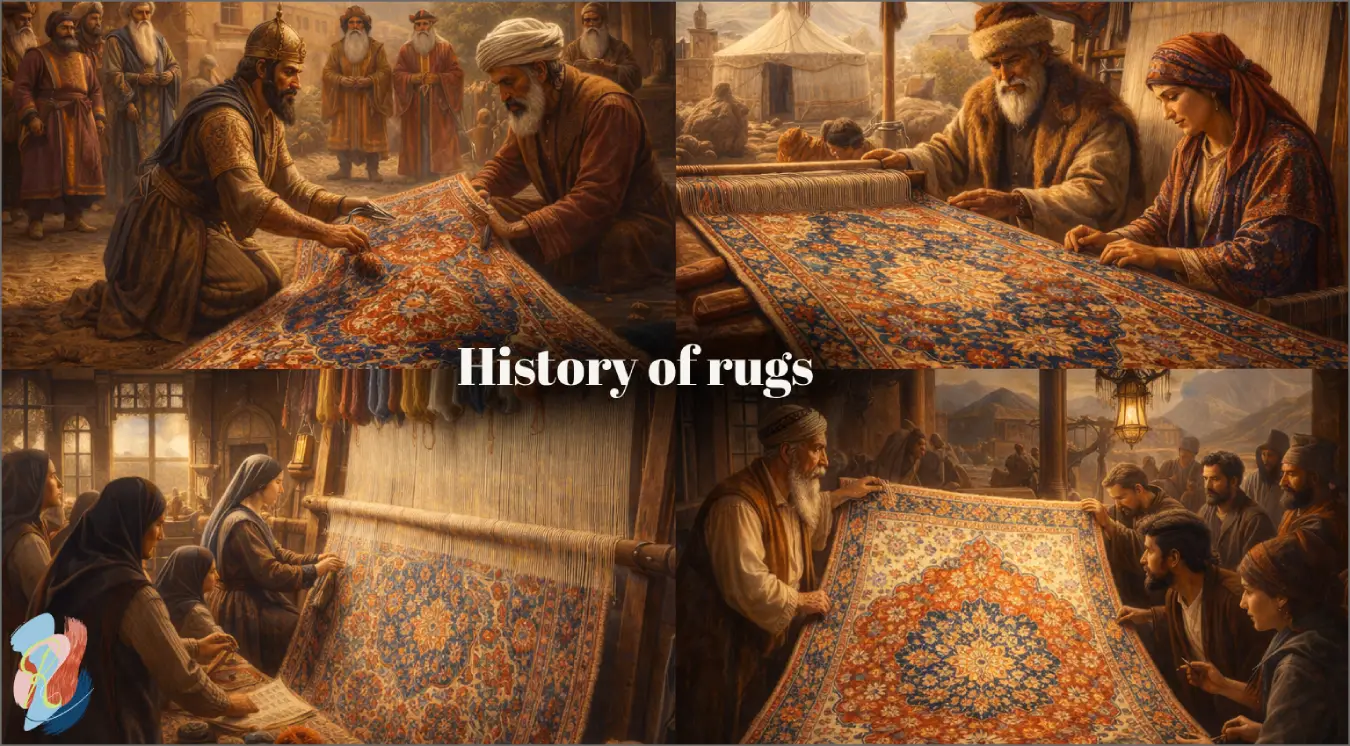
History of Rugs as Cultural Artifacts, Not Just Decoration
Throughout history, rugs have never been mere decoration; they are cultural artifacts that embody identity, belief, and exchange. In ancient civilizations, rugs carried deep symbolism—geometric motifs served as talismans, floral patterns represented fertility, and medallions reflected cosmic or spiritual order.
Beyond symbolism, rugs played a role in trade networks, with patterns and dyes revealing connections between Persia, Anatolia, Central Asia, and beyond. They were also embedded in religious practice, such as Islamic prayer rugs that blended artistry with devotion.
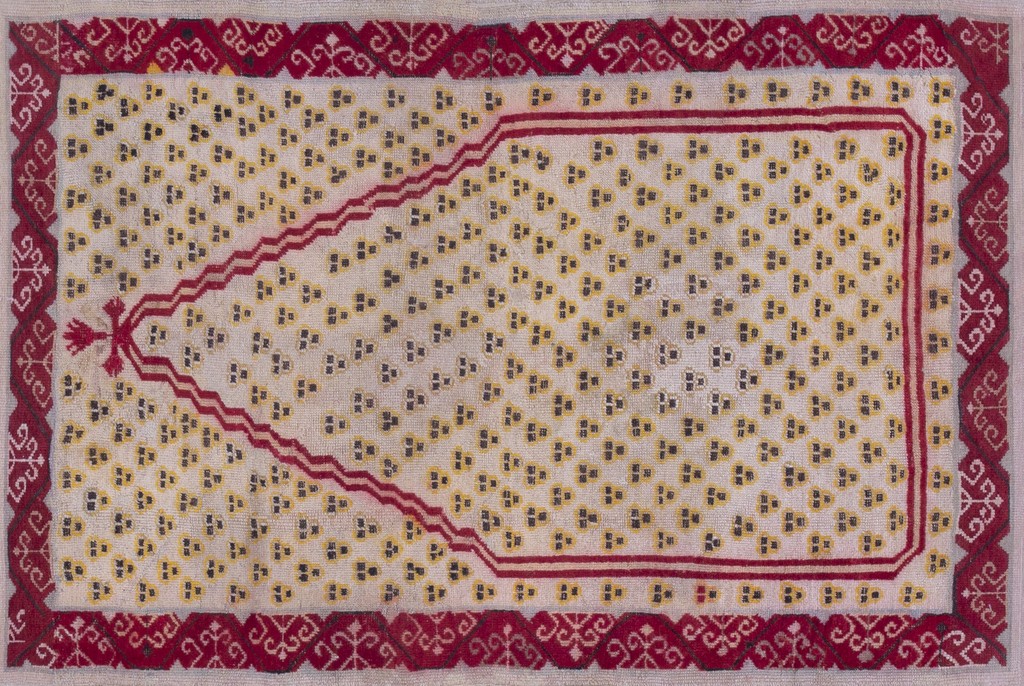
In this sense, area rugs are cultural texts, recording the aesthetic and social values of the people who wove them. Their cultural role makes them vital for understanding how communities expressed identity and exchanged ideas across borders.
Importance of Studying Rugs Across Regions and Time
- Connection to Archaeology — Why: Excavated rugs, such as the famous Pazyryk carpet dating to the 5th century BCE, reveal the earliest known history of rugs and show how weaving was already sophisticated in nomadic societies.
- Anthropological Insight — Why: Studying rugs highlights how they were used in ancient civilizations not only as floor coverings but also as dowry gifts, trade goods, and ceremonial objects, reflecting daily and spiritual life.
- Art Historical Value — Why: Antique rug traditions showcase evolving techniques, motifs, and dye practices across regions, linking them to larger movements in art and design history.
- Modern Collecting Context — Why: Understanding the cultural role of rugs provides essential perspective for collectors today, clarifying why certain antique pieces are valued as much for their heritage as for their beauty.
Rugs thus embody both art and function, mirroring the rise and fall of civilizations through their fibers, patterns, and materials. The history of rugs is not just about craft but about the transmission of cultural meaning across centuries.
As we study them, we trace the story of human creativity, exchange, and identity—insights that remain essential for collectors and scholars alike. For readers seeking deeper exploration of motifs, see our rug symbolism guide, which uncovers the layered meanings woven into antique rug traditions.
Earliest Origins of Rug Weaving
First Known Pile-Woven Rugs
when it comes to the history of rugs, the very earliest hand-knotted rug known today is the Pazyryk Carpet, discovered in a Scythian burial mound in the Altai Mountains and dated to around the 5th century BCE. Preserved in ice, this rug is remarkably intact, revealing both technical mastery and artistic sophistication.
Its dense knotting, complex border patterns, and depictions of horses and deer demonstrate that weaving had already reached an advanced stage long before classical antiquity.
The Pazyryk carpet history proves that rug-making was not a primitive craft but a highly developed art form serving both utility and ceremony. Scholars believe its origins lie in Persian or Central Asian weaving traditions, showing that the first pile-woven rugs were tied to nomadic and imperial cultures alike.
History of Rugs in Ancient Mesopotamian and Egyptian Rug Fragments
Beyond the Altai, fragments of woven textiles from Mesopotamia and Egypt provide further evidence of ancient rug origins. In Mesopotamia, rugs were associated with temples and palaces, where fine rugs and weavings indicated wealth and divine favor.
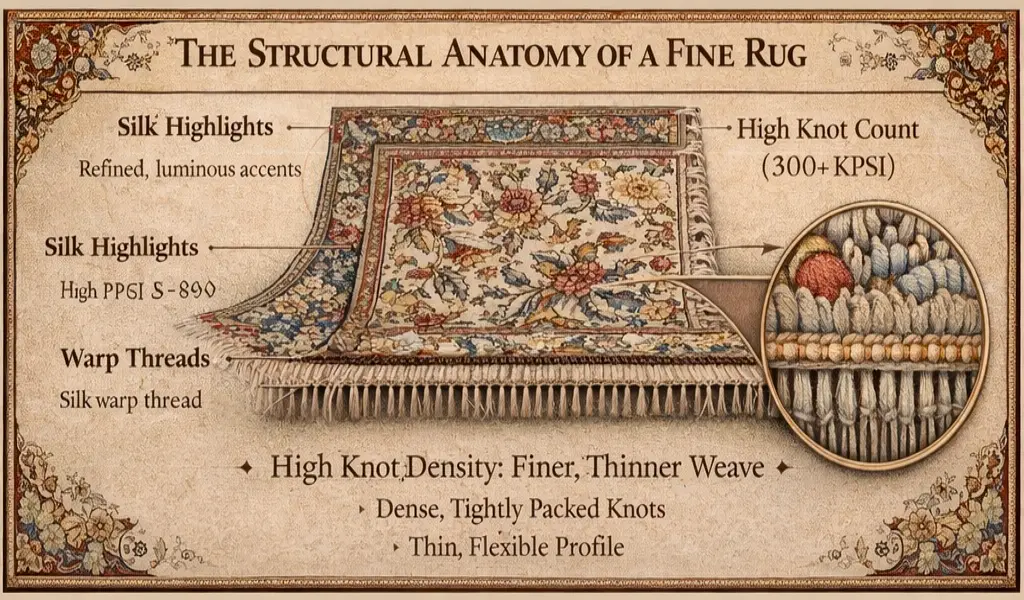
Egyptian tombs also contained fragments of flatwoven and knotted pieces, suggesting their use in burial rites and domestic spaces. These finds illustrate that rugs were not only practical floor coverings but also deeply tied to religious and royal contexts.
Before Wool: The Neolithic Grass Mat
Long before the first sheep was shorn for weaving, humans were creating “floor coverings” from the earth. Archaeological evidence from the Near East suggests that as early as 7000 BC, humans were twining reeds and flax into intricate mats.
These humble beginnings provided the structural logic—the vertical warp and horizontal weft—that would eventually allow the nomads of the Iron Age to transition to the wool textiles we recognize today.
Early Written References
The written record confirms the prestigious history of rugs in early civilizations. The Greek historian Xenophon, writing in the 4th century BCE, described “Persian tápides”—luxurious carpets used as royal tributes.
These references place Persia at the center of early rug-making and underscore its role as both a producer and exporter of textiles of exceptional quality. By the Achaemenid era, rugs had become markers of cultural identity and instruments of diplomacy, exchanged as gifts between rulers.
Rugs in Tombs, Palaces, and Ceremonies
- Burial Goods — Why: Rugs placed in tombs, such as in Egypt and the Pazyryk mound, symbolized status and were believed to accompany the dead into the afterlife.
- Palatial Display — Why: In Mesopotamian palaces, rugs lined ceremonial halls, asserting wealth and political authority.
- Ceremonial Use — Why: Rugs were spread during rituals or religious practices, signaling sacred space and devotion.
- Daily Utility — Why: Beyond prestige, rugs provided bedding, floor warmth, and practical comfort in households, making them essential to daily life.
Rugs therefore date back more than 2,500 years, with the Pazyryk carpet standing as proof of advanced weaving in the ancient world. These early pieces combined utility with prestige.
This demonstrates that rugs were never just functional—they were also social symbols, woven into the very fabric of civilization.
Nomadic Traditions and Tribal Symbolism
Role of Nomadic Weavers in the History of Rugs
The history of rugs is rooted in nomadic rug weaving and pastoral traditions of tribes who relied on their herds for survival. Wool shorn from sheep and goats became the essential raw material, spun into yarn and woven into rugs that were both functional and symbolic.
For nomadic peoples, rugs were portable architecture, serving as bedding, tent partitions, saddlebags, and prayer mats—objects that could travel with the tribe across vast landscapes. This mobility ensured that rug-making remained central to daily life, preserving techniques and motifs across centuries.
The Pazyryk Carpet as Nomadic Innovation
We cant talked about the history of rugs without mentioning the famed Pazyryk carpet. Often cited as the earliest hand-knotted rug, the Pazyryk carpet reflects the ingenuity of nomadic artisans in the 5th century BCE.
While its scale and sophistication suggest elite patronage, its knotting technique and wool materials indicate deep ties to nomadic rug weaving practices.
This masterpiece illustrates how nomadic groups transformed necessity into art, merging technical mastery with decorative expression long before sedentary urban centers dominated textile production.
Tribal Symbolism
- Moroccan Berber Symbols and Motifs— Why: Rooted in history of rugs by Berbers, motifs like zigzags and diamonds often trace back to Paleolithic cave art, carrying messages of fertility, protection, and continuity across generations.
- Boteh Motif — Why: The teardrop-like boteh, often seen in Persian tribal rugs, symbolizes eternal life, fire, or a seed—an enduring design that later evolved into the paisley motif.
- Elibelinde — Why: Common in Anatolian rugs, this stylized female figure symbolizes fertility and motherhood, expressing the central role of women in tribal continuity.
- Diamond Patterns — Why: Used across nomadic weavings, diamonds represent the human eye, serving as talismans to ward off the evil eye while anchoring compositions with balance and symmetry.
History of Rugs as “Visual Codebooks” of Cultural Beliefs
Throughout the history of rugs, tribal symbolism functioned as a woven language, encoding shared myths, protective charms, and social values into geometric designs. Each motif acted as a mnemonic device, preserving knowledge in non-literate societies.
Moroccan weavers, for example, passed down Berber symbols through oral tradition and loom practice, creating textiles that chronicled family history, spiritual beliefs, and tribal identity.
Over centuries, Moroccan rugs evolved to blend these ancient motifs with regional dyes and urban influences, yet their symbolic foundations remain unchanged.
Nomadic traditions demonstrate that rugs were never just floor coverings; they were cultural storytelling devices, linking prehistoric art with modern design. Through their symbols, these early weavings reveal the intimate connection between mobility, survival, and meaning in human history.
Silk Road and Islamic Golden Ages
Rug Trade Across Eurasia
The Silk Road played a key part in the history of rugs. The expansion of commerce along the Silk Road established rugs as one of the most important cultural exports of the medieval world. Silk Road carpets traveled from Persia and Anatolia through Central Asia into China, India, and Europe, carrying with them both utility and luxury value.
Each region contributed a distinct style—geometric Central Asian patterns, Persian floral medallions, and Anatolian tribal motifs—while traders spread these designs across empires.
Carpets became commodities, but also cultural ambassadors, transmitting symbols, dyes, and weaving techniques across continents.
Table: Regional Styles and Trade Roles
Safavid Persia: Royal Workshops and Prestige
When discussing the history of rugs, the Safavid dynasty (1501–1736) transformed rug weaving into a state-sponsored art. Safavid Persian carpets, produced in royal workshops at Tabriz, Isfahan, and Kerman, became icons of courtly prestige and global diplomacy.
These rugs featured unprecedented complexity: lush arabesques, central medallions, and silk-and-wool blends highlighted with precious metal threads.
Safavid rulers used carpets as diplomatic gifts, sending masterpieces to European monarchs and Ottoman sultans, ensuring that Persian identity was woven into global elite culture.
This era cemented Persia as the world’s leading carpet producer and elevated rug-making to the level of painting and architecture.
The Ardabil Masterpieces: Rugs as State Power
In 1539, the Safavid Shahs of Persia commissioned a pair of carpets for the shrine of Safi-ad-din Ishaq. Known as the Ardabil Carpets, these are considered the “Mona Lisas” of the rug world.
Featuring a staggering 340 knots per square inch and a design that mimics a reflecting pool filled with lotus flowers, they marked the moment rug weaving transitioned from a functional nomadic craft to a sophisticated tool of imperial diplomacy and religious devotion.
Islamic Aesthetics: Calligraphy, Geometry, and Arabesques
The history of rugs was profoundly impacted by the rise of Islamic rug design embedded the spiritual and intellectual ideals of Islamic art into carpets. Avoiding figural imagery in sacred contexts, artisans turned to calligraphy, tessellated geometry, and infinite arabesque scrolls.
These motifs mirrored mosque architecture, Qur’anic manuscript illumination, and urban decorative arts. Rugs thus became not only functional objects but also extensions of sacred aesthetics, embodying unity, order, and divine beauty.
Rugs as Mosque Furnishings and Diplomatic Gifts
- Mosque Furnishings — Why: Large carpets filled prayer halls, aligning rows for worship and transforming architectural spaces into patterned sanctuaries.
- Diplomatic Gifts — Why: Safavid carpets sent to foreign courts symbolized cultural sophistication and political alliance, reinforcing Persia’s soft power abroad.
- Courtly Display — Why: Within Islamic palaces, rugs marked royal status, adorning reception halls, banquets, and throne rooms with woven magnificence.
- Household Use — Why: Even in homes, rugs reflected religious devotion and cultural pride, with prayer rugs serving as personal expressions of faith.
The Silk Road spread rug culture far beyond its origins, carrying designs across empires, while Islamic art shaped core rug aesthetics that still define carpets today.
When reviewing the history of rugs, the Safavid golden age elevated weaving into both an artistic pinnacle and a global diplomatic instrument, ensuring rugs were woven into the story of civilizations.
Dynasties and Courts: Safavid Persia & Ottoman Turkey
Safavid “Garden” Carpets and Silk Masterpieces
During the Safavid dynasty, weaving became a royal art form woven into the very fabric of state identity. Safavid court rugs included monumental “garden carpets” designed as symbolic paradises, their layouts divided into quadrants filled with streams, trees, and blossoms that evoked the Qur’anic vision of eternal gardens.
Equally famous were the silk masterpieces woven with gold and silver thread, which showcased Persia’s technical brilliance. These works were never intended for ordinary use—they were emblems of divine kingship, artistic triumph, and luxury beyond measure.
A high point pf the history of rugs was that fact that the Safavid shahs elevated carpets into the highest realm of imperial culture, ensuring their presence in palaces, mosques, and diplomatic exchanges.
Ottoman Palace Workshops (Oushak, Hereke)
Throughout the history of rugs across Anatolia, the Ottoman sultans cultivated their own weaving traditions. Ottoman palace carpets produced in Oushak and later Hereke became hallmarks of court life.
Oushak was famed for its large-scale medallion designs and brilliant dyes, while Hereke workshops in the 19th century refined silk carpets of extraordinary fineness.
These rugs decorated throne rooms, imperial chambers, and mosques, embodying the grandeur of Ottoman power. They also traveled abroad, gifted to European courts as tokens of alliance and prestige, extending Ottoman influence into the broader world of art and diplomacy.
History of Rugs in Royal Audiences, Ceremonies, and Diplomacy
The history of rugs is intertwined with royalty. Carpets were woven into the very protocols of kingship. In royal audiences, rulers received envoys while seated on thrones framed by monumental rugs, signaling wealth and authority.
In ceremonial banquets, carpets stretched across reception halls, transforming stone floors into patterned fields of color. As diplomatic gifts, they carried imperial messages without words.
For example, a Safavid silk masterpiece sent to Venice or an Ottoman Oushak offered to Habsburg rulers was not just a gesture of goodwill but a declaration of cultural supremacy.
Symbolism of Carpets as Imperial Prestige
- Authority — Why: Court carpets symbolized the ruler’s ability to marshal vast resources, from herds of sheep and mulberry groves for silk to highly trained artisans in palace workshops.
- Wealth — Why: Materials like silk, gold, and lapis-derived dyes made these carpets material testaments to abundance and prosperity.
- Prestige — Why: Displayed in courts and exchanged among monarchs, rugs carried the aura of empire, reinforcing the perception of rulers as worldly and divine.
- Artistic Influence — Why: Motifs pioneered in Safavid and Ottoman weaving spread into manuscripts, miniature painting, ceramics, and even architecture, weaving imperial aesthetics into every medium.
The imperial rug prestige of Safavid and Ottoman courts shaped global perceptions of Islamic art. Safavid court rugs embodied paradise on earth, while Ottoman palace carpets projected power across continents.
Together, they defined carpets not merely as household items but as symbols of sovereignty and engines of cultural influence.
History of Rugs of Anatolian and Caucasian Traditions
Anatolian Weaving Origins
The history of rugs in Anatolia stretches back over 9,000 years, with archaeological finds from Neolithic Çatalhöyük (c. 7,000 BCE) showing woven fragments that predate many other textile traditions.
As waves of Turkic and Oghuz nomads migrated into Anatolia, they brought wool-working skills and design traditions that blended with indigenous practices.
This fusion created the foundation for Anatolia’s later dominance in rug weaving. By the Ottoman period, Anatolia had become a hub where nomadic motifs met courtly refinement, producing a legacy that spanned from rustic kilims to elaborate palace carpets.
Turkmen / Oghuz Influences: Gul Medallions and Kilims
During the history of rugs, nomadic Turkmen and Oghuz tribes shaped the identity of early Anatolian weaving. The gul medallion, a repeating octagonal emblem, originated among Turkmen weavers and became a signature motif across Central Asia and Anatolia. Alongside these pile carpets, flatwoven kilims remained vital.
Their portability and bold linear designs suited the needs of nomadic communities, while their symbolic motifs—diamonds, hooks, and stylized flora—conveyed protection, fertility, and tribal pride.
These designs ensured that Anatolian weaving retained strong links to nomadic storytelling even as it absorbed imperial influences.
Ottoman Anatolian Centers: Uşak, Konya, Hereke
Under the Ottomans, weaving centers flourished in cities such as Uşak, Konya, and Hereke. Uşak carpets became renowned for their monumental medallion and star designs, prized by both Ottoman elites and European collectors.
Konya, by contrast, preserved older Seljuk and tribal aesthetics, producing geometric prayer rugs and village pieces.
Later, the imperial workshops at Hereke in the 19th century produced silk carpets of unrivaled fineness, blending Ottoman courtly motifs such as tulips and saz leaves with technical mastery. Together, these centers illustrate the spectrum of Ottoman Anatolian weaving, from village looms to palace ateliers.
Caucasian Rugs: Bold Geometrics and Tribal Distinctiveness
The Caucasian carpet design tradition is instantly recognizable for its bold, angular geometry, vivid primary colors, and tribal originality. Woven in regions such as Shirvan, Kazak, and Karabagh, these rugs often feature stacked medallions, hooked polygons, or abstracted animal forms.
Their symbolic lexicon draws from both ancient tribal heritage and the mountainous environment, where isolation preserved distinct regional styles. Unlike the lush floral arabesques of Persian carpets, Caucasian rugs are celebrated for their striking simplicity and immediacy.These qualities have made them enduringly collectible.
Anatolia and the Caucasus together enriched the diversity of rug weaving, blending tribal aesthetics with Islamic courtly styles. While Anatolia preserved and refined nomadic motifs within the Ottoman sphere, the Caucasus maintained distinctive palettes and forms that stand apart in the history of rugs.
Their shared contributions ensured that rug art remained as varied as the cultures and landscapes that produced it.
Moroccan and Berber History Of Rugs
Paleolithic and Neolithic Symbolic Origins
The history of rugs by the Moroccan Berbers is deeply rooted in prehistory, with motifs tracing back to Paleolithic and Neolithic cave art.
Symbols such as diamonds, zigzags, and stylized human figures evolved into a woven vocabulary that carried forward themes of fertility, protection, and continuity.
These motifs were never decorative alone—they served as cultural codes, preserving tribal memory and belief systems across centuries. In this way, Moroccan rugs bridge prehistoric art with modern design, linking ancient symbolic language to contemporary aesthetics.
Domestic Role of Moroccan Rugs
Within Berber communities, rugs were essential parts of domestic and tribal life. They were woven by women for use in tents and homes, serving as bedding, seating, and protective insulation.
More than functional, these rugs embodied life-cycle symbolism: woven patterns marked marriage, childbirth, and fertility, embedding personal and collective identity into everyday objects.
The history of rugs can be seen quite literally in the transmission of designs remained family-based, with mothers and grandmothers passing motifs to daughters, ensuring continuity of tradition through generations of weavers.
Export History of Rugs
From the 16th century onward, Moroccan Berber rugs entered international circulation. They appeared as diplomatic gifts between Moroccan dynasties and European courts, symbolizing wealth and cultural sophistication.
By the 19th century, global exhibitions in Paris showcased these weavings to a wider audience, sparking fascination with their bold abstraction and raw symbolism.
This exposure positioned Moroccan rugs as global icons, admired by collectors and later embraced by modernist designers for their timeless simplicity.
Enduring Beni Ourain and Azilal Traditions
Two regional traditions stand out as enduring representatives of Berber weaving. The Beni Ourain history of rugs is defined by minimalist ivory wool rugs patterned with dark, angular lines—a style that resonated strongly with 20th-century modernist interiors and remains widely influential today.
The Azilal rug tradition, by contrast, is known for vivid, multicolored compositions, often combining symbolic motifs with improvisational design. Both continue to embody tribal identity while appealing to contemporary tastes, ensuring that Moroccan rugs retain cultural depth alongside modern relevance.
Over centuries, Moroccan rugs evolved from tribal artifacts into international art forms. Their enduring power lies in their ability to carry symbols of tribal identity across generations while adapting to global demand, making them both ancestral documents and timeless design objects.
Rugs Enter Europe: Renaissance to Industrial Age
Venetian Merchants and Crusader Trade Routes
One of the more significant aspects of the history of rugs is arrival of the Oriental rug in Europe began with Crusader contact and expanded through Venetian merchants who dominated Mediterranean trade.
By the Renaissance, finely woven carpets from Anatolia, Persia, and the Caucasus appeared in Italian palaces and churches.
These rugs are often depicted in paintings by masters such as Holbein and Lotto. These imports symbolized wealth and worldliness, embedding rugs into the visual language of European status and art.
European Imitations of Oriental Carpets
By the 16th and 17th centuries, European workshops began producing their own versions of imported designs. English and French rug weavers in places like Axminster and Savonnerie adapted Turkish and Persian patterns, creating carpets suited to aristocratic estates.
These imitations reflected a desire not only to own exotic styles but also to cultivate local industries capable of competing with Ottoman and Persian imports. Thus, European weaving absorbed motifs like medallions, floral scrolls, and latticework, reshaping them into distinctly European aesthetics.
Industrial Revolution: Power Looms and Mechanization
The rug industrial revolution fundamentally altered production. In 1839, Erastus Bigelow invented the first carpet power loom, dramatically increasing output and lowering costs. Factories in England and later the United States could produce rugs on an unprecedented scale, making them accessible to the middle classes.
The Jacquard loom further enabled complex pattern replication, ensuring that once-elite designs could be woven mechanically. Power loom carpets transformed rugs from symbols of aristocracy into everyday household items, democratizing ownership but also changing expectations of quality and artistry.
Synthetic Dyes and the Decline of Natural Techniques
The history of rugs was greatly affected by the invention and use of synthetic dyes. By the late 19th century, the introduction of aniline and other synthetic dyes brought both innovation and decline.
On one hand, colors became cheaper and more varied, fueling mass production; on the other, authenticity suffered as traditional natural-dye practices were abandoned.
Oriental imports themselves were affected, as workshops under economic pressure adopted synthetics, leading to fading and harsher tones compared to the depth of natural pigments. Collectors later came to view this period as a decline in artistic integrity, even as production expanded globally.
Europe’s relationship with rugs during these centuries was twofold: it imported and imitated Oriental carpets, then redefined production through mechanization. Industrialization democratized rug ownership, but at the cost of the handwoven traditions that had defined the art for millennia.
The shift from artisanal to machine weaving reshaped both the market and cultural perception. It created a divide between luxury collectibles and mass-produced household goods.
1856: The Day the Colors Changed
For thousands of years, every rug on Earth was dyed with roots, bugs, and minerals. In 1856, an 18-year-old chemist named William Perkin accidentally created the first synthetic dye.
Within decades, the “Natural Palette” of the ancient world was replaced by a rainbow of chemical colors. For the modern collector, the “Pre-1860” era represents the last of the “Pure” textiles, where every hue was a labor-intensive extract of the natural world.
History of Rugs – The American Demand and Globalization
U.S. Demand in the Late 19th–20th Century
By the late 19th century, American rug imports began reshaping the global carpet trade. Wealthy collectors and institutions sought authentic Oriental weavings, fueling massive shipments from Persia, Turkey, and the Caucasus.
In the early 20th century, firms such as the Atiyeh Brothers went so far as to establish looms in Kerman, Persia, specifically to produce rugs for buyers in America.
This illustrates how demand in the United States directly influenced production overseas. This appetite for imported rugs distinguished the U.S. as a primary driver of the international rug market.
Expansion of Imports and Domestic Imitations
As the U.S. market grew, so did the need for affordable alternatives. Importation of high-quality Persian carpets coexisted with domestic efforts to mimic these styles at scale.
American companies adopted Oriental motifs, medallion layouts, and floral patterns, creating accessible versions for middle-class consumers. This blend of authentic imports and domestic interpretations blurred cultural lines, expanding the reach of Oriental aesthetics in American homes.
History of Rugs in American Magazines
The rise of lifestyle magazines in the early 20th century played a crucial role in shaping public taste. Publications such as House Beautiful and Good Housekeeping presented Oriental rugs in model interiors, framing them as essential elements of stylish living.
These visual cues encouraged consumers to view rugs not only as functional floor coverings but as central components of modern design. In doing so, the media amplified American demand and further globalized rug production.
Tufted, Broadloom, and Machine-Made Carpets
The invention of tufting machines and the rise of broadloom technology brought mass production to unprecedented levels. Companies like Karastan, launched in 1928, produced machine-made carpets that replicated the look of Persian hand-knotted pieces.
The history of rugs hit a turning point with the emergence of the Karastan rugs: Oriental styles became available to the average American household without the high costs of importation. Mohawk and other mills followed, weaving affordable options that soon became staples of middle-class living rooms.
American demand in the 20th century created a bridge between artisanal imports and industrial production. The U.S. shaped the trajectory of the global rug trade by fueling both Oriental rugs in U.S. markets and the rise of domestic imitations.
As a result, rugs became firmly established as household essentials, securing their place in everyday American culture.
History of Rugs and Weaving Centers of Persia/Iran
Major City Weaving Centers
Throughout the history of rugs, Persian rug centers in urban hubs set the benchmark for technical mastery and artistic refinement. Each city developed its own signature, tied to local resources, dynastic patronage, and cultural identity.
Table: Persian City Rug Specialties
These centers were not only geographic hubs but also cultural schools, where techniques were standardized and exported globally.
History of Rugs From Tribal Weaving Centers: Fars, Lorestan, Gabbeh Rugs
Throughout the history of rugs, alongside the urban ateliers, tribal provinces preserved weaving traditions rooted in nomadic life. In Fars, tribes such as the Qashqai produced richly colored rugs with symbolic motifs. In Lorestan, bold geometric compositions reflected ancient tribal identity.
The Gabbeh weavings of southern Iran epitomize this heritage: simple, large-pile rugs with primitive geometric forms, often improvised by women for family use. Unlike city pieces intended for elite courts, these tribal rugs embodied tribal symbolism—diamonds, animals, and abstract figures woven as protective and storytelling devices.
City Rugs vs. Tribal Rugs
The contrast between “city rugs” and “tribal rugs” defines the stylistic spectrum of Persian weaving. City rugs, crafted under organized workshops, prioritized symmetry, silk, and high knot density, reflecting courtly refinement.
Tribal rugs, by contrast, emphasized spontaneity, symbolism, and portability—direct continuations of nomadic traditions. Both strands enriched Persian identity: urban weavings demonstrated imperial sophistication, while tribal rugs preserved ancestral memory and cultural authenticity.
Persian weaving centers remain iconic today, setting global standards of quality and artistry. From the Tabriz rug weaving history of precision to the rustic vibrancy of Gabbeh, Iran’s provinces continue to embody the balance between refinement and tribal spirit.
This ensures that Persian carpets are recognized as the pinnacle of rug artistry.
The Tribal Memory: Weaving Without a Map
While city workshops used paper “cartoons” (patterns) to guide weavers, the history of rugs that are tribal is a history of oral tradition. Nomadic weavers (Qashqai, Turkoman, Caucasian) wove from memory, passing motifs down through generations like a visual language.
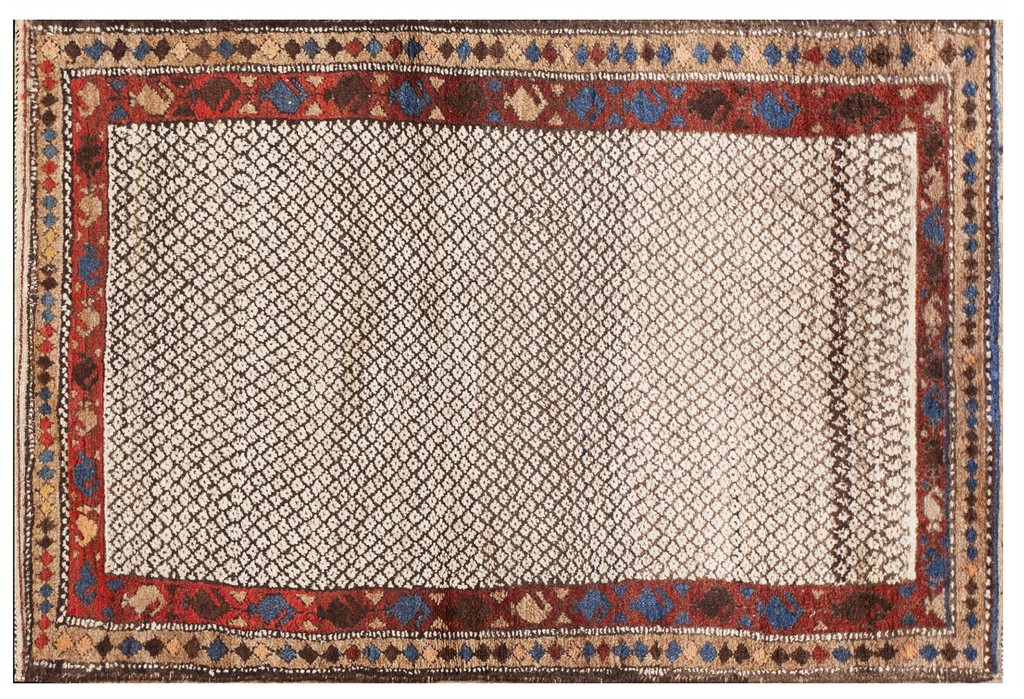
A diamond or a star wasn’t just a shape; it was a signature of the tribe, a prayer for protection, or a map of the local landscape, ensuring that the history of the people was literally woven into the floors of their tents.
History of Rugs as Cultural Heritage and Historical Documents
Rugs Encoding Cultural Identity and Beliefs
Across centuries and throughout the history of rugs, carpets have served as woven manuscripts of cultural identity. Through motifs, dyes, and construction, they preserve systems of belief, family histories, and tribal affiliations.
Rugs as cultural heritage reveal themselves as visual archives—where diamonds guard against evil, botehs signal fertility, and medallions represent cosmic order. This tradition of rug symbolism history turns everyday floor coverings into repositories of meaning, ensuring that even a fragment can narrate the worldview of its makers.
UNESCO Recognizes the Importance Of The History of Rugs
The international importance of weaving traditions was affirmed when Iranian carpet-weaving was inscribed on UNESCO’s Intangible Cultural Heritage list in 2010. This recognition underscored rug-making not only as an artisanal craft but as a living cultural practice that binds communities together.
By honoring weaving and the history of rugs as intangible heritage, UNESCO acknowledged that rug production is both an art and a mode of cultural survival, safeguarding identity in the face of modernization and globalization.
Museums and Collections
Museum rug collections play a vital role in preserving this fragile heritage. Institutions such as The Metropolitan Museum of Art in New York, the Victoria and Albert Museum in London, and The Textile Museum in Washington, D.C., conserve masterpieces alongside fragmentary remains.
While no museum can trace a complete, uninterrupted history of rugs—given the perishability of textiles and the losses of war and trade—these collections form a mosaic.
It is these mosaics that allow scholars to reconstruct lineages of style, symbolism, and technique. For collectors, the lesson is clear: rugs must be viewed not only as decorative objects but as cultural documents carrying the memory of civilizations.
War Rugs and Contemporary Narrative Weavings
In the history of rugs, the narrative role of carpets extends into the present. Afghan weavers in the late 20th century began producing “war rugs,” embedding tanks, helicopters, and rifles into traditional geometric layouts.
These striking textiles testify to the resilience of rug-making as a medium of commentary, where ancient looms document the traumas of modern conflict. Likewise, contemporary weavers continue to respond to social change, encoding stories of migration, resilience, and adaptation into their designs.
In every era, the history rugs as cultural archives remind us that weaving is both an art and a historical record. Museums safeguard fragments of this story, while modern weavers prove that rugs remain a living language, capable of narrating both ancestral memory and contemporary struggle.
History of rugs – 20th–21st Century
Continued Imports, Modern Collecting, and Scholarship
In the modern era, the global appetite for antique and contemporary carpets has only grown. The expansion of modern rug collecting has fueled both private collections and institutional archives, ensuring that masterpieces remain accessible to scholars and the public.
The Metropolitan Museum’s Ballard Collection, for example, preserves over 125 rare carpets, many of which anchor research into Safavid, Ottoman, and tribal weaving traditions.
At the same time, scholarship has shifted from treating rugs as decorative objects to recognizing them as cultural documents that encode history, trade, and symbolism. This academic lens has elevated rug studies within art history, anthropology, and archaeology.
Digital Reconstruction of Fragmented Carpets
One of the most transformative tools in the history of rugs is recent decades is digital rug reconstruction. Many historic carpets survive only in fragments dispersed across different museums and collections.
Through digital imaging, researchers can reunite these pieces virtually, revealing original compositions hidden for centuries.
Such reconstructions allow a fuller appreciation of Safavid masterpieces, Anatolian prayer rugs, and Caucasian tribal works, reshaping our understanding of design evolution and regional connections. These technologies not only preserve knowledge but also make it globally accessible.
Revival of Natural Dyes and Sustainable Methods
In response to the overuse of synthetic dyes since the 19th century, the late 20th century saw a revival of natural dye practices. This movement, tied to the broader interest in sustainable rug weaving, reestablished plant- and mineral-based palettes that had defined traditional rugs for millennia.
Contemporary artisans also emphasize fair-trade production, hand-spun wool, and eco-friendly processes, aligning rug-making with global sustainability movements.
These practices connect today’s weavers directly to the lineage of their ancestors, ensuring that modern production reflects both heritage and responsibility.
Rugs Today: Design, Heritage, and Cultural Symbolism
Rugs remain cultural symbols as well as design staples. In interiors, they anchor spaces with color and texture, while in cultural terms they continue to embody identity, memory, and artistry.
Collectors and designers alike now view rugs and their past histories as cultural documents, artifacts that bridge heritage with contemporary style.
Modern rug design often integrates ancient motifs—whether a Beni Ourain diamond or a Safavid arabesque—into new contexts, affirming the continuity of rug symbolism across centuries.
Through scholarship, digital tools, and sustainable practices, the history of rugs has entered a new phase. Modern rug collecting reshapes appreciation, digital rug reconstruction reveals hidden histories, and sustainable rug weaving reaffirms ancestral traditions.
Above all, rugs remain vital cultural artifacts today, living testaments to the enduring bond between human creativity and the woven world.
Needless to say, the history of rugs is as fascinating as the people who made them and the cultures they represent.
FAQ
- Why does the term “Oriental” appear in rug history, and what’s preferred now?
Historically it grouped Asian carpets for Western markets. Today, specific origins—Persian, Anatolian, Caucasian, Moroccan, Chinese, Navajo—give clearer, respectful context.
- What distinguishes tribal vs. city weaving in rug history?
Tribal/village rugs use portable looms and bold geometry; city/court pieces feature curvilinear florals and higher knot counts. Centers include Tabriz, Kashan, and Kerman.
- How are rugs dated in rug history without documents?
Experts triangulate weave, dyes, and motifs with provenance; science helps. The Pazyryk carpet’s 5th-century BCE date was confirmed by radiocarbon testing.
- How do paintings help with the history of rugs?
European art documents designs and dates—e.g., Holbein carpets in 16th-century canvases. Paint-recorded patterns assist scholars in attribution.
- How do Scandinavian rya pieces fit into the history of rugs?
Originating as 15th-century bedcovers, ryas use long pile and Ghiordes knots. They reemerged in mid-century modern interiors with bold geometry.
- Where do prayer rugs belong in the history of rugs?
From the 16th century, Anatolian and Persian workshops wove niche (mihrab) designs for personal devotion. Portable sizes and arch motifs define them.
- How did new fibers change the history of rugs?
Nylon (first synthesized 1935; carpet use by 1950) and polypropylene (1954, commercial 1957) drove durable, stain-resistant, budget carpets.
- How did tufting transform modern rug history in the U.S.?
Dalton, Georgia mechanized tufting in the 1930s, shifting to wall-to-wall. By the 1960s, Dalton produced the majority of the world’s tufted carpets.
- What do knot types reveal in rug history?
- How did synthetic dyes alter the history of rugs?
Perkin’s mauveine (1856) launched cheap, bright anilines. Colors expanded rapidly; collectors still prize natural-dye pieces for nuanced “abrash.”
- What’s Axminster and Wilton’s impact on rug history?
Wilton’s loom (1741) and Axminster’s manufactory (1755) advanced patterned carpets. In the U.S., a woven mill opened in Philadelphia in 1791, scaling production.
- How did French Savonnerie and Aubusson shape rug history?
Savonnerie made knotted-pile court carpets; Aubusson perfected flatwoven tapestries and rugs. Both flourished from the 17th century with floral and architectural schemes.
- When did hooked and braided pieces emerge in American rug history?
Early-1800s New England saw braided rugs from mill scraps; by the 1850s burlap enabled hooked rugs. Edward Sands Frost stenciled patterns in the 1860s.
- In U.S. rug history, what defines Navajo rugs?
Early confirmed Navajo weaving dates to 1804, using Churro wool. Classic-period chief’s blankets are tight, light, and prized.
- Where do Moroccan Beni Ourain fit in the history of rugs?
Atlas-mountain Berber weavers made thick, undyed wool piles for warmth. Their graphic diamonds gained global popularity in the 20th century.
- How do Caucasian rugs figure into the history of rugs?
Shirvan, Kazak, Karabagh, and Quba regions flourished in the 18th–19th centuries. Expect small formats, strong geometry, and saturated vegetable dyes.
- What’s the place of Turkmen “gul” weavings in rug history?
Nomadic Central Asian tribes wove tribal-identity guls for tents, floors, and bags. Tekke and Yomut types codified repeating octagons by the 19th century.
- How do Chinese Ningxia pieces appear in rug history?
In the Qing era, Ningxia carpets—dragons, fret borders—entered imperial halls. Kangxi (r. 1662–1722) ordered sets after tours to the northwest.
- Where do Mughal carpets sit in the history of rugs?
Mughal India (16th–18th c.) produced pashmina-pile masterpieces with naturalistic “flowers underfoot.” Court ateliers at Lahore and Agra tailored designs for export.
- How do Mamluk Cairene carpets contribute to the history of rugs?
Late-15th to mid-16th-century Egyptian workshops made geometric, “five-color” palettes. Their kaleidoscopic medallions influenced Ottoman and European tastes.
- What role did Ottoman Oushak play in rug history?
From 15th–17th centuries, Oushak medallion rugs flooded Europe. Their presence in Dutch paintings helps date types like “Holbein” and “Lotto” variants.
- Why is the Ardabil Carpet pivotal in the history of rugs?
Dated 1539–40 and signed “Maqsud Kashani,” it’s a benchmark for Safavid design and scale. The V\&A’s example measures \~34×17 feet with silk foundations.
- Where do Safavid Persian carpets fit in the history of rugs?
Safavid Iran (1501–1736) professionalized court workshops at Tabriz, Kashan, and Kerman. Hallmarks include medallions, scrolling vines, and animal motifs on silk or fine wool.
- How did the Silk Road shape the history of rugs?
It moved designs, dyes, and looms across Asia to Europe. By the 1400s–1500s, “Oriental” rugs appear in Renaissance paintings, documenting trade and taste shifts.
- In rug history, what’s the earliest known rug and why does it matter?
The Pazyryk carpet (5th–4th century BCE), found in 1949, is the oldest pile rug. Its over-200-knots-per-inch finesse proves weaving was sophisticated millennia ago.