
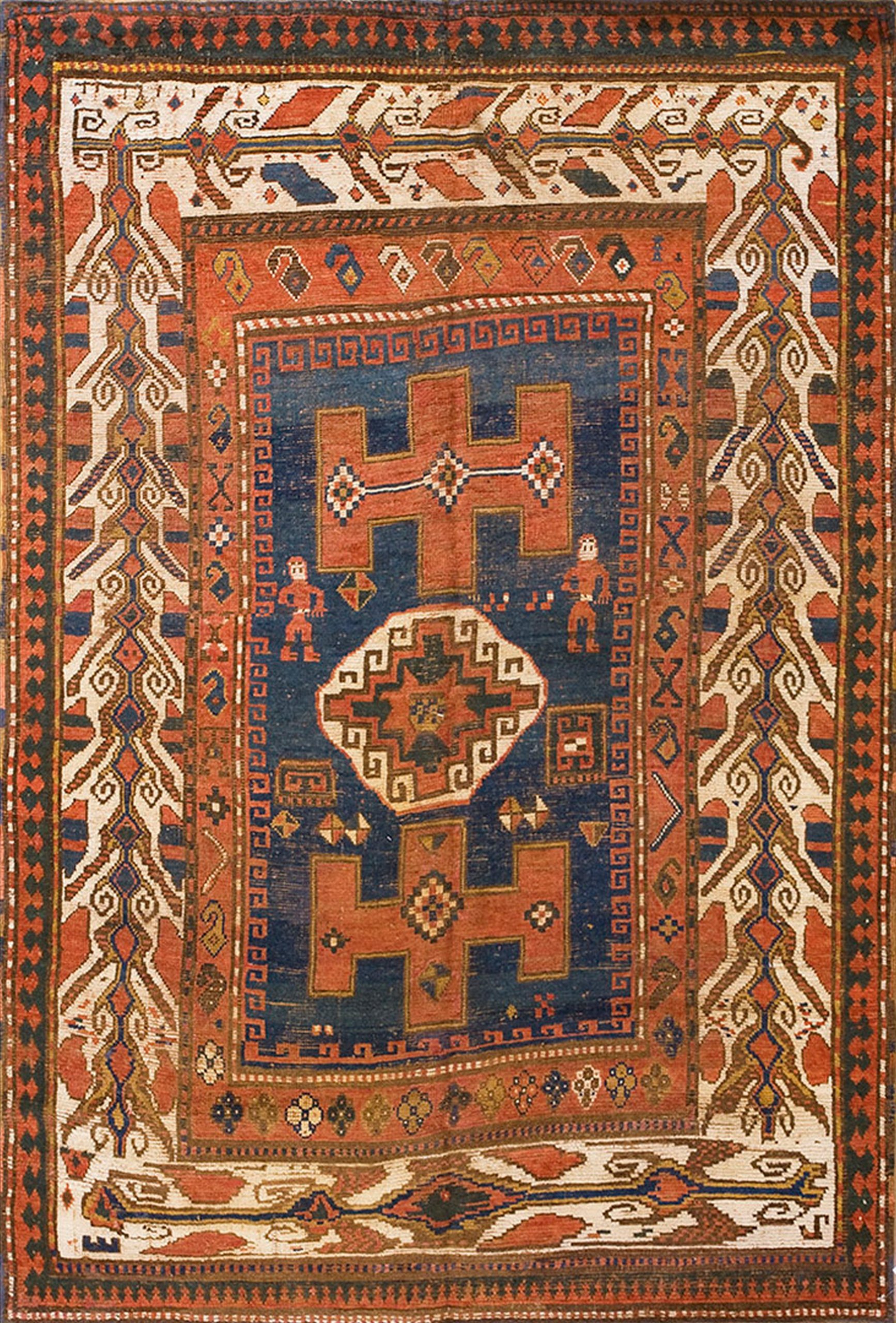
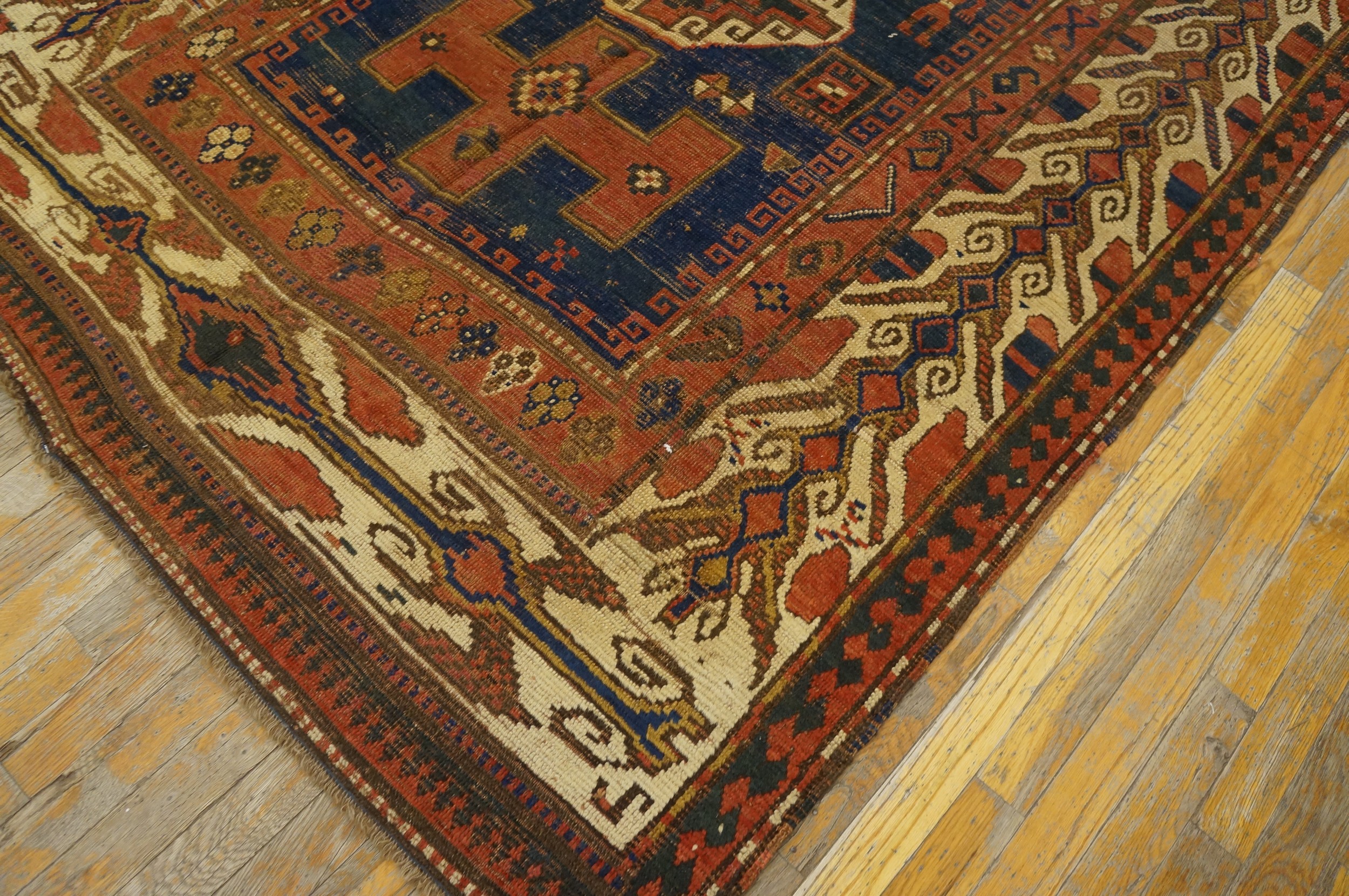
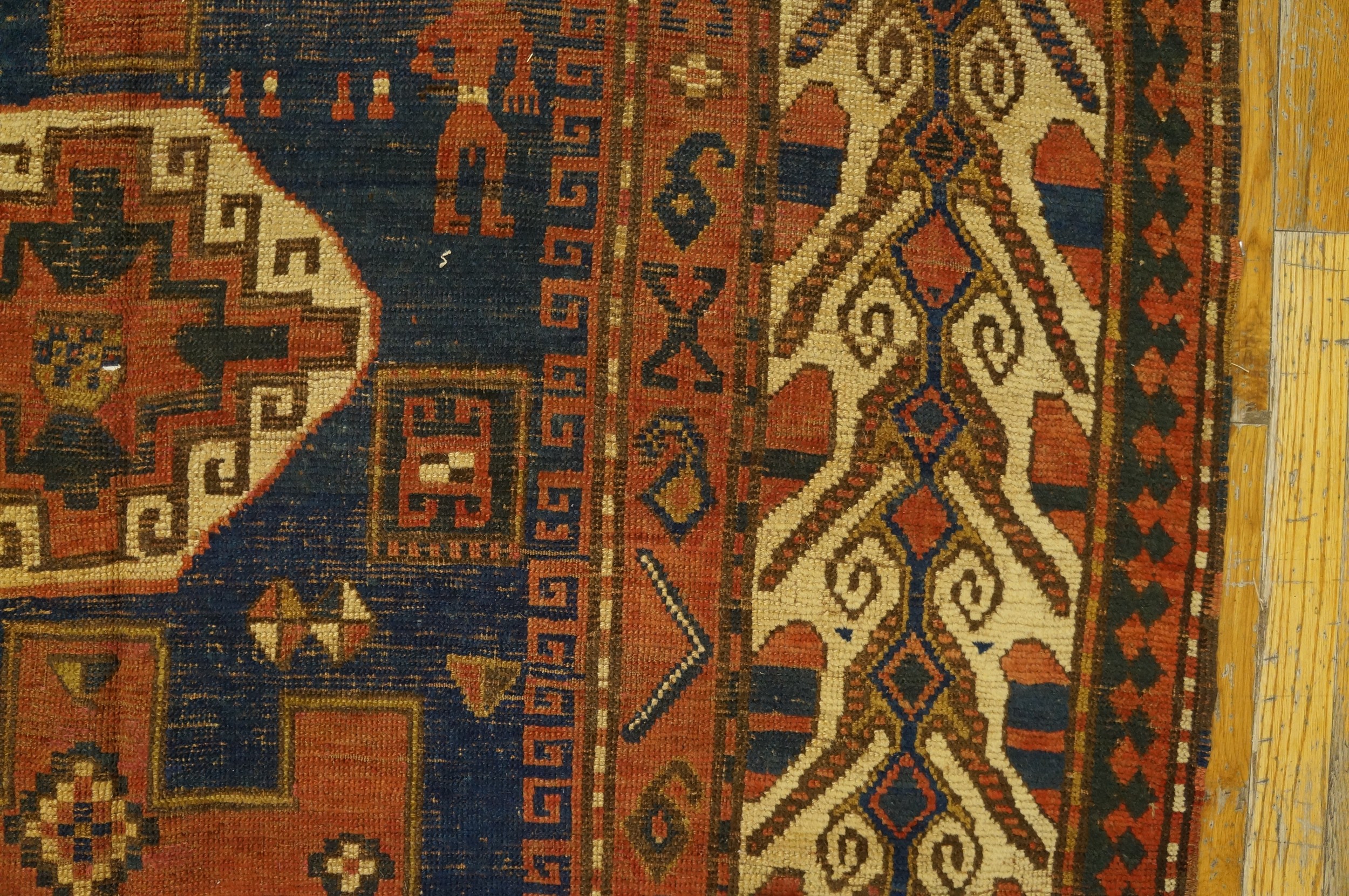
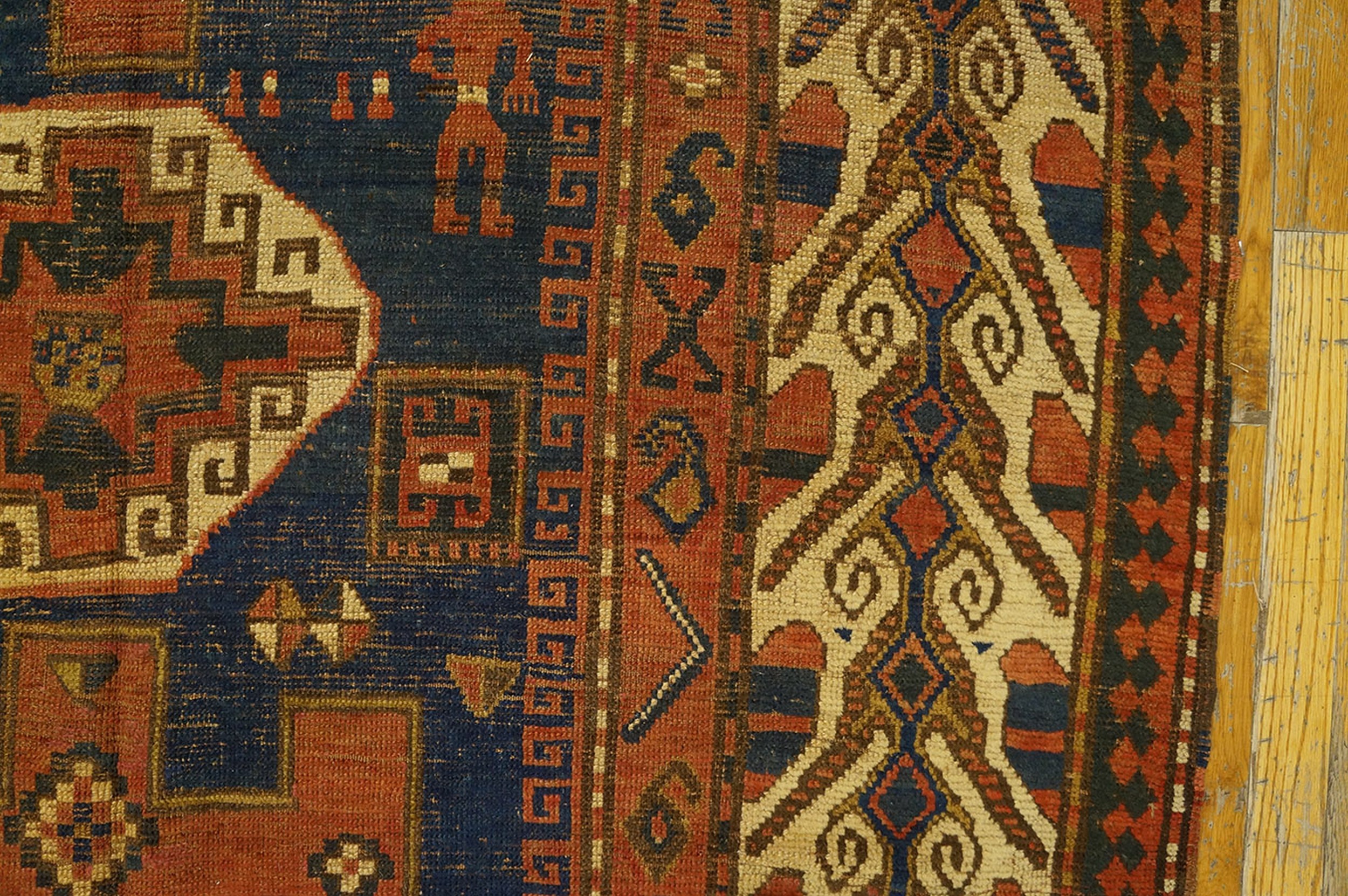
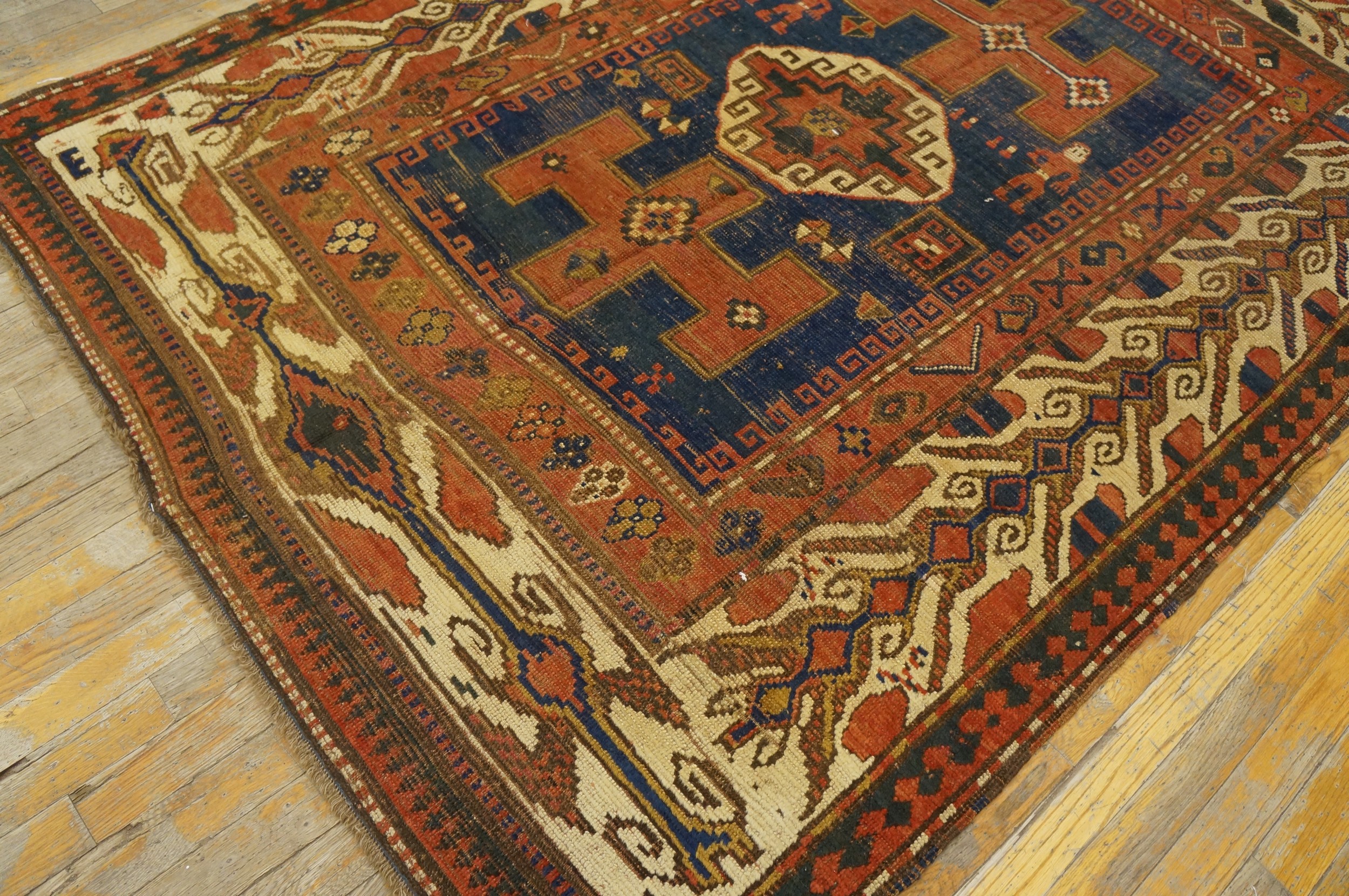
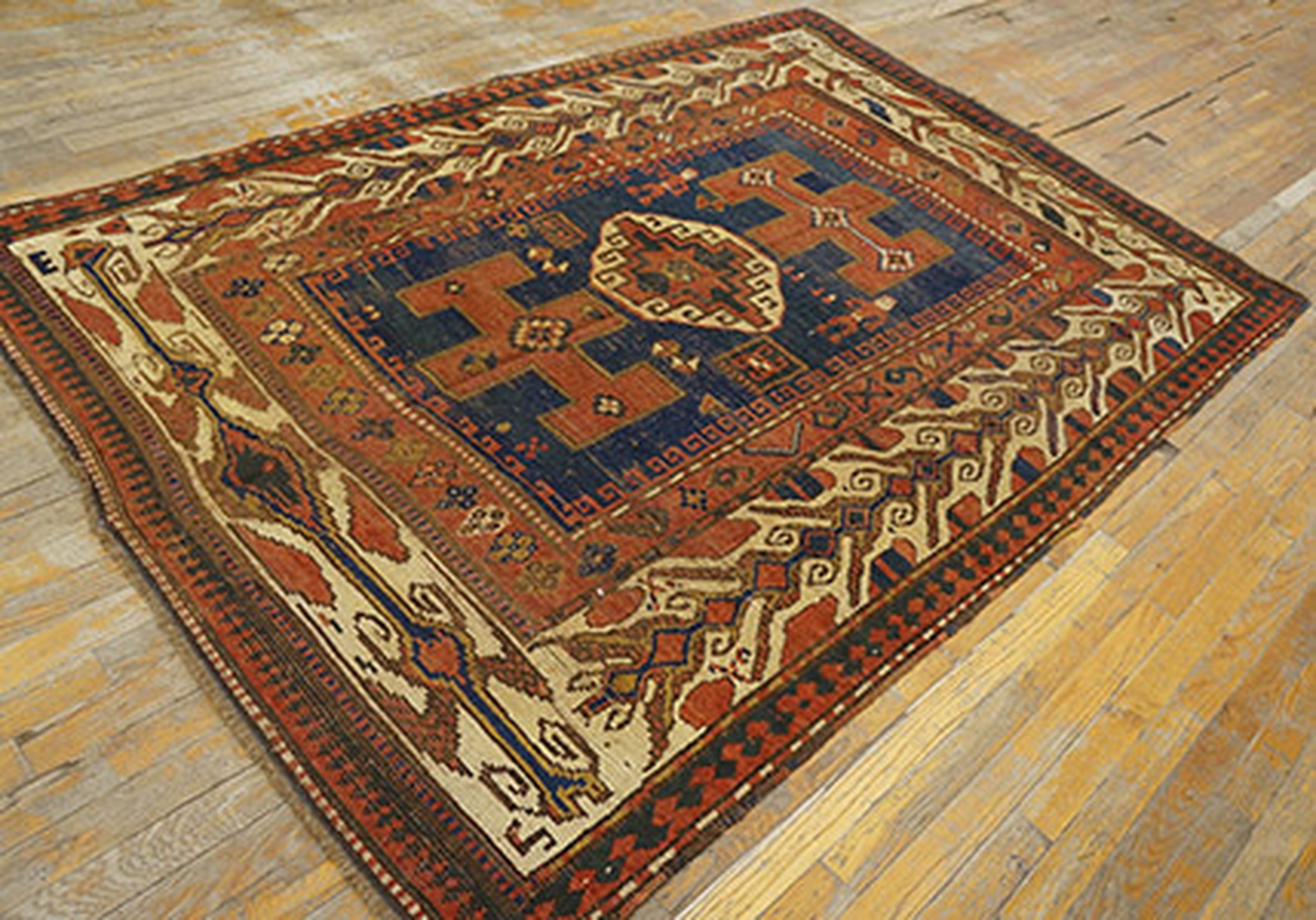
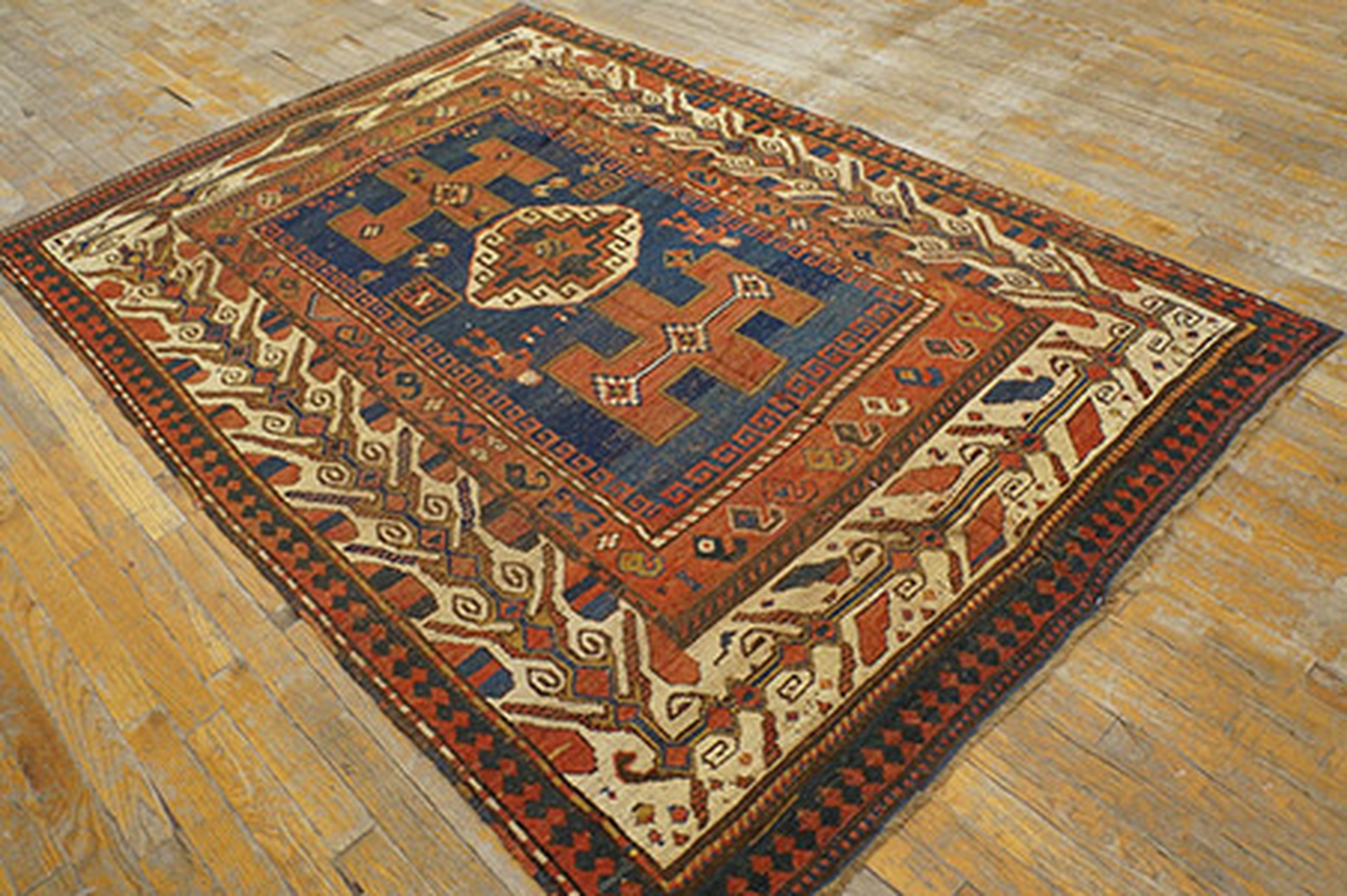
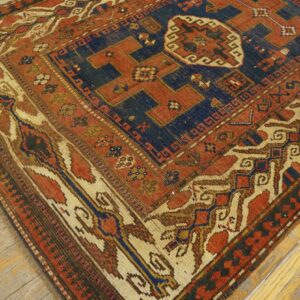
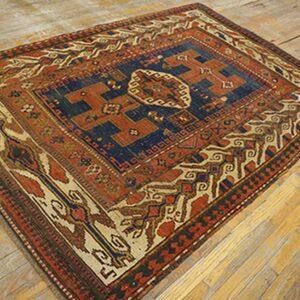
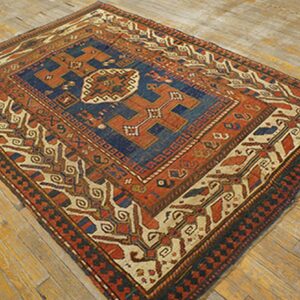
This late nineteenth-century Caucasian rug is a superlative example of the “high-altitude” tribal weaving traditions of the southwestern Caucasus. While antique Caucasian Kazak rugs are most famously associated with deep madder reds, this specific specimen is distinguished by its highly coveted blue ground. Achieving this deep, resonant indigo field required a sophisticated dyeing process, making blue-ground Kazaks significant rarities that were often produced for tribal leaders or as special ceremonial pieces.
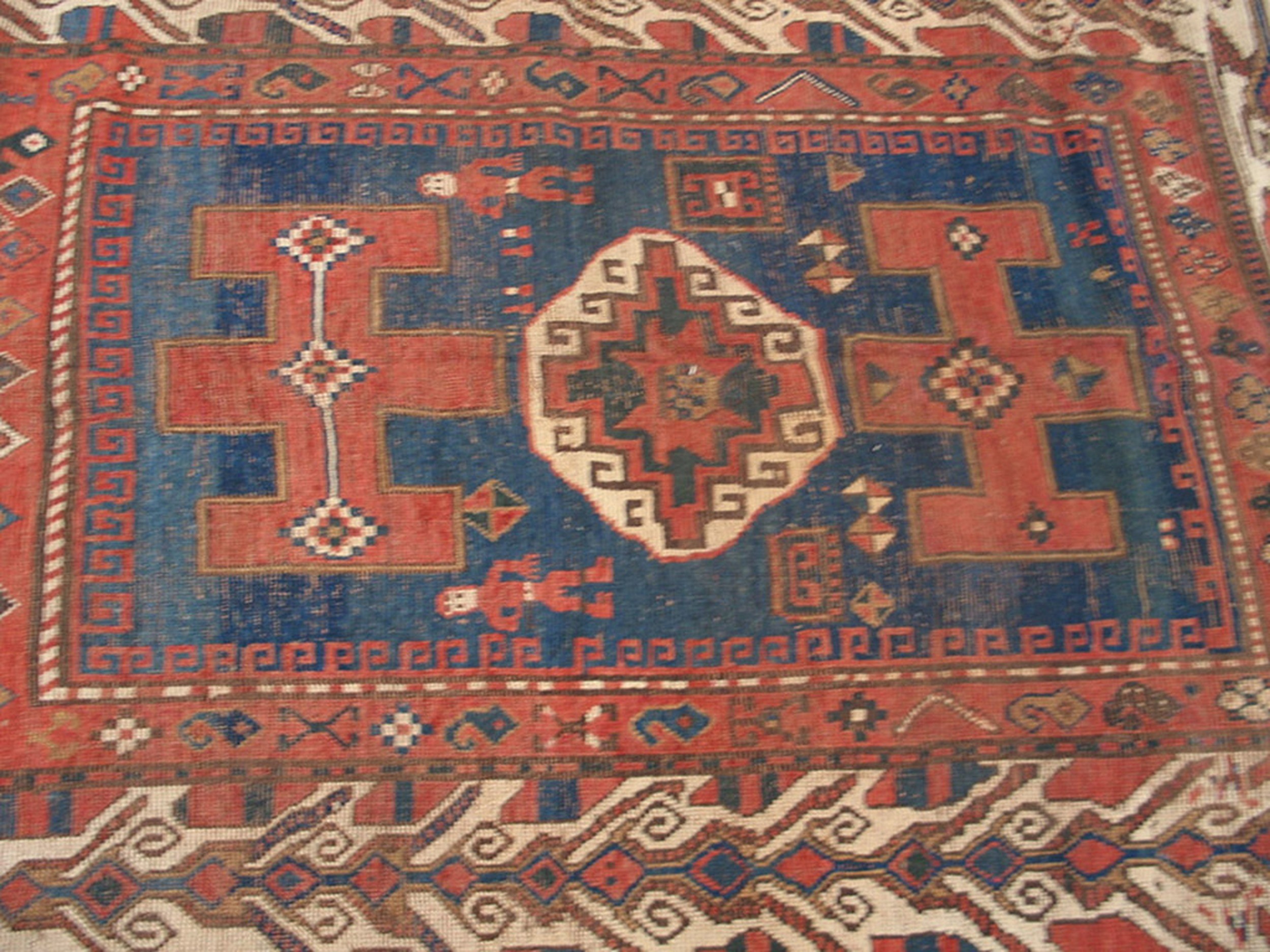
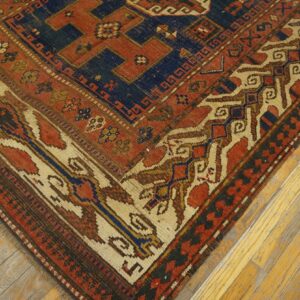
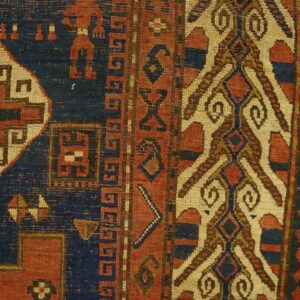
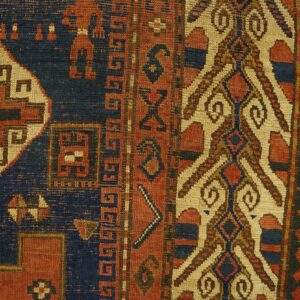
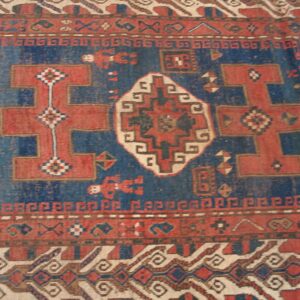
The composition is a virtuoso display of the tribal geometric human figural narrative characteristic of the nomadic lifestyle. The central field is typically anchored by monumental, stepped medallions—often referred to as “shrine” or “shield” motifs—which are surrounded by a constellation of smaller talismans. Of particular note in this piece is the presence of figural patterns, which may include stylized human figures (ancestors), primitive animals (likely goats or horses), and the “S” hook (an ancient symbol of protection). These figures are not merely decorative; they serve as a hand-wrought record of the weaver’s environment and tribal mythology.
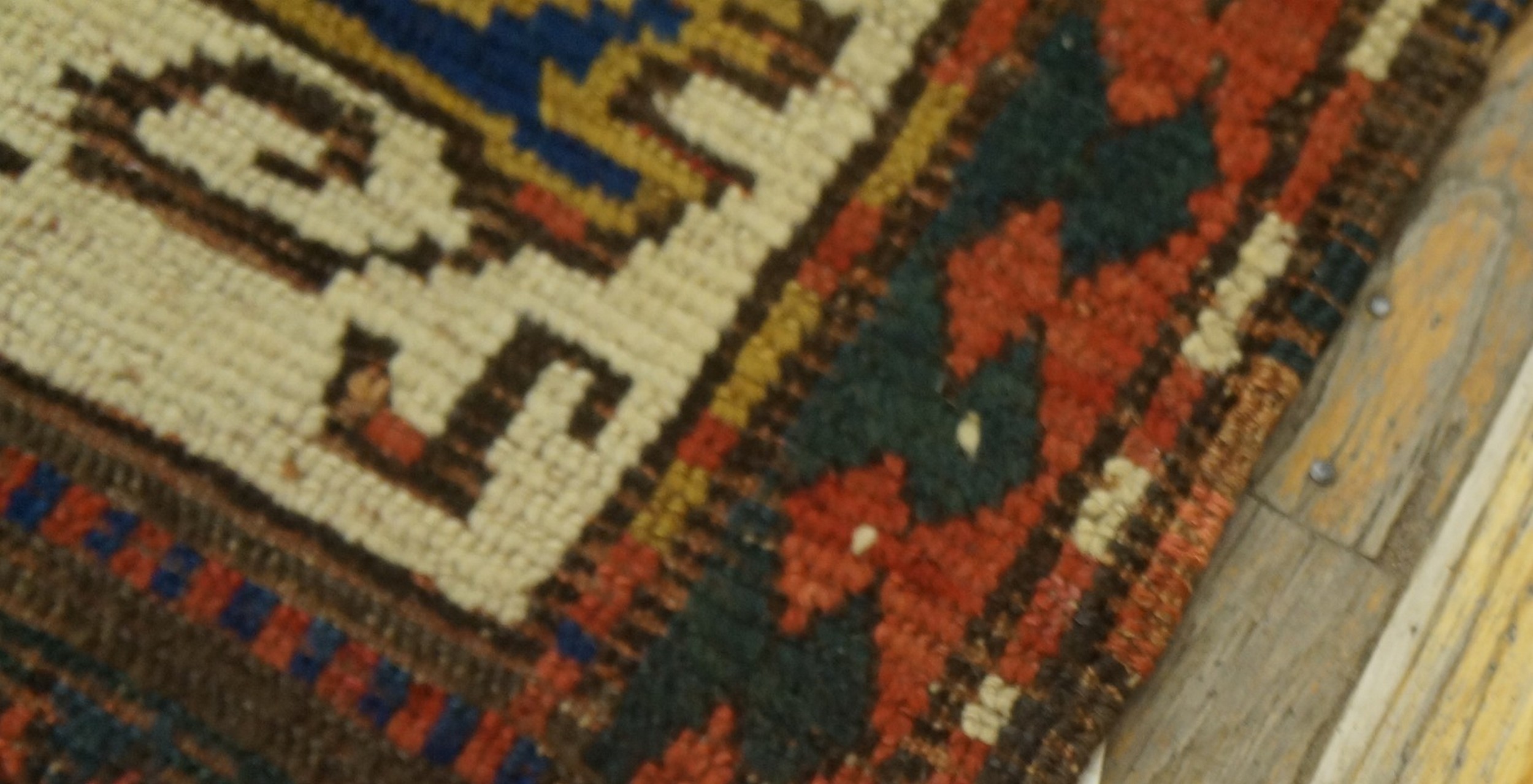
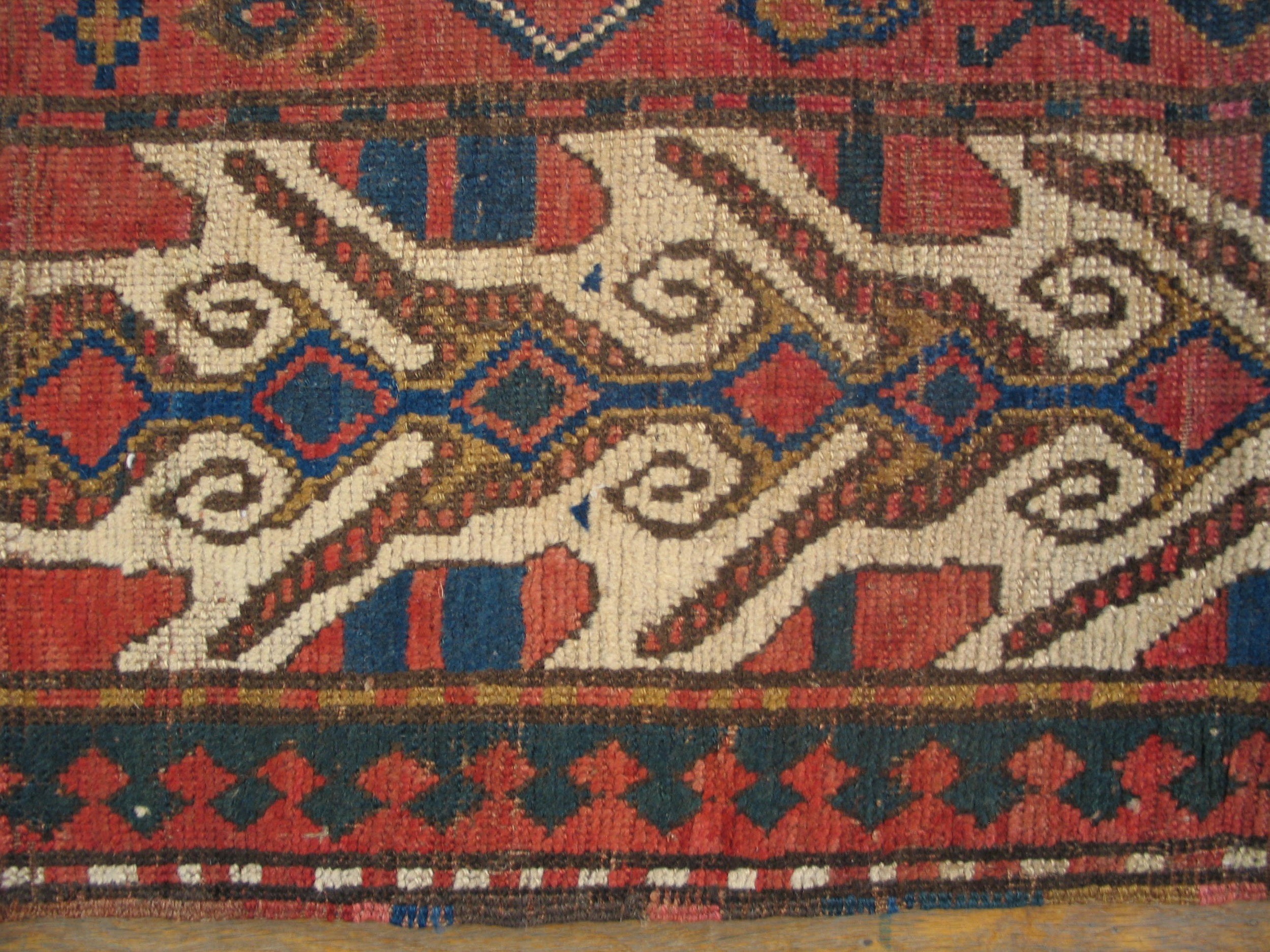
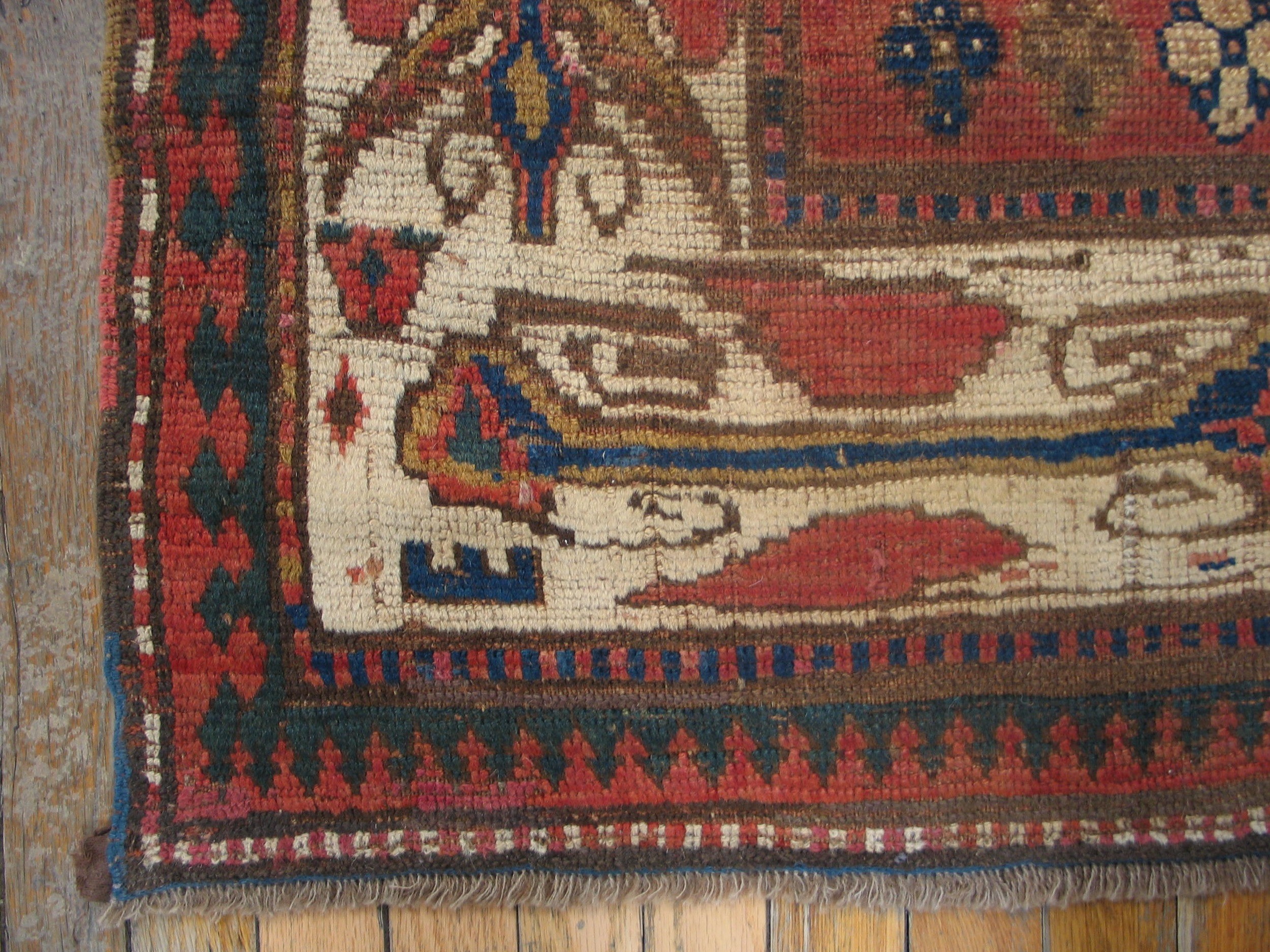
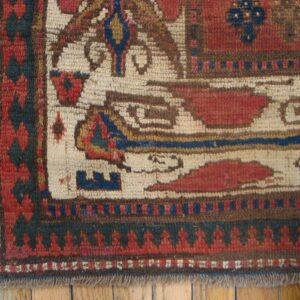
Technically, an antique Kazak is prized for its substantial, “fleshy” pile and its heavy, leather-like handle. The wool is exceptionally long-staple and lanolin-rich, which gives the rug a lustrous, shimmering quality. Over the last century, the natural vegetable dyes have developed a sophisticated abrash (tonal variation), particularly visible in the indigo field, which creates a watercolor-like movement that mimics the sky or water. Unlike the rigid symmetry of finer Persian carpets, this Kazak possesses a “charming irregularity” that reflects the spontaneous artistry of the nomadic loom.
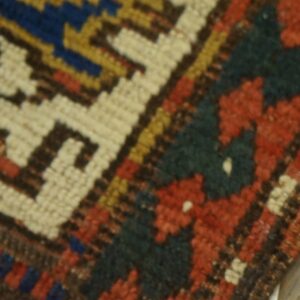
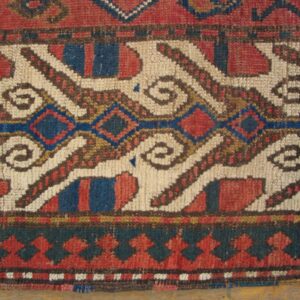
The borders provide a powerful architectural frame, frequently featuring the “Leaf and Calyx” or “Running Dog” patterns in high-contrast ivory and madder red. This frame “contains” the exuberant energy of the blue central field, giving the rug a sense of classical permanence. To possess an antique blue-ground Kazak with figural elements is to hold a monument to a vanishing way of life—a work that bridges the gap between ancient nomadic geometry and the bold, graphic requirements of the modern interior.