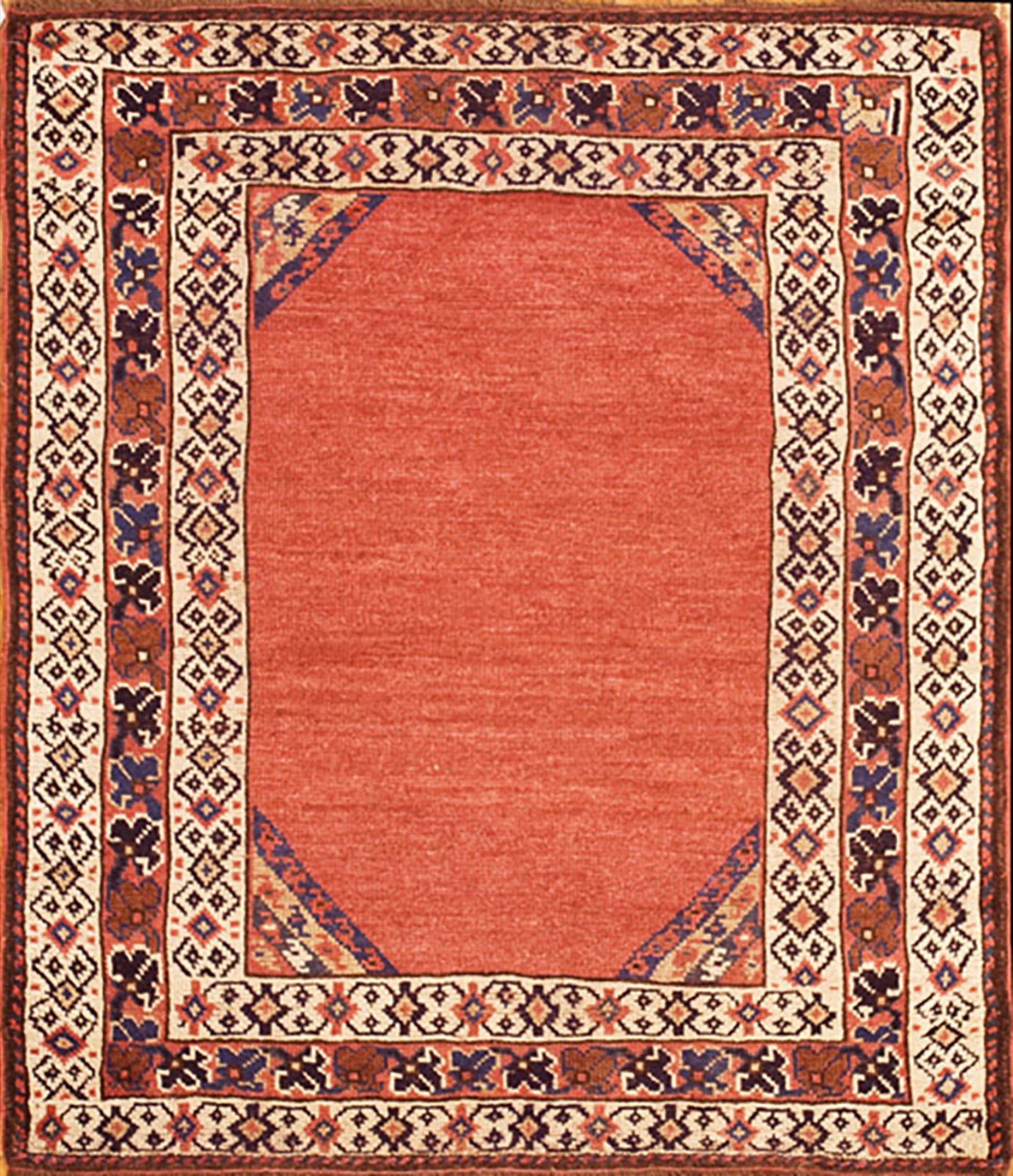
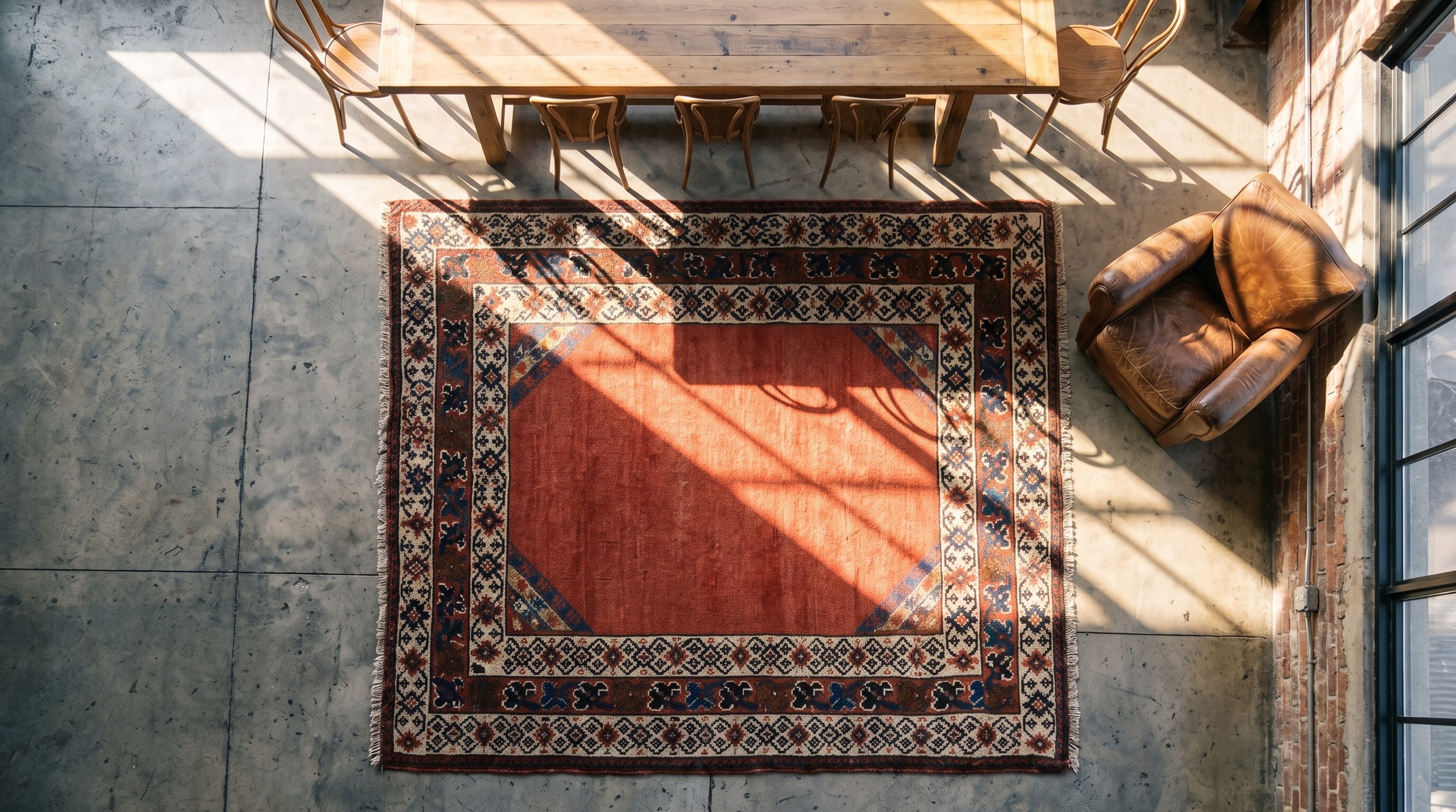
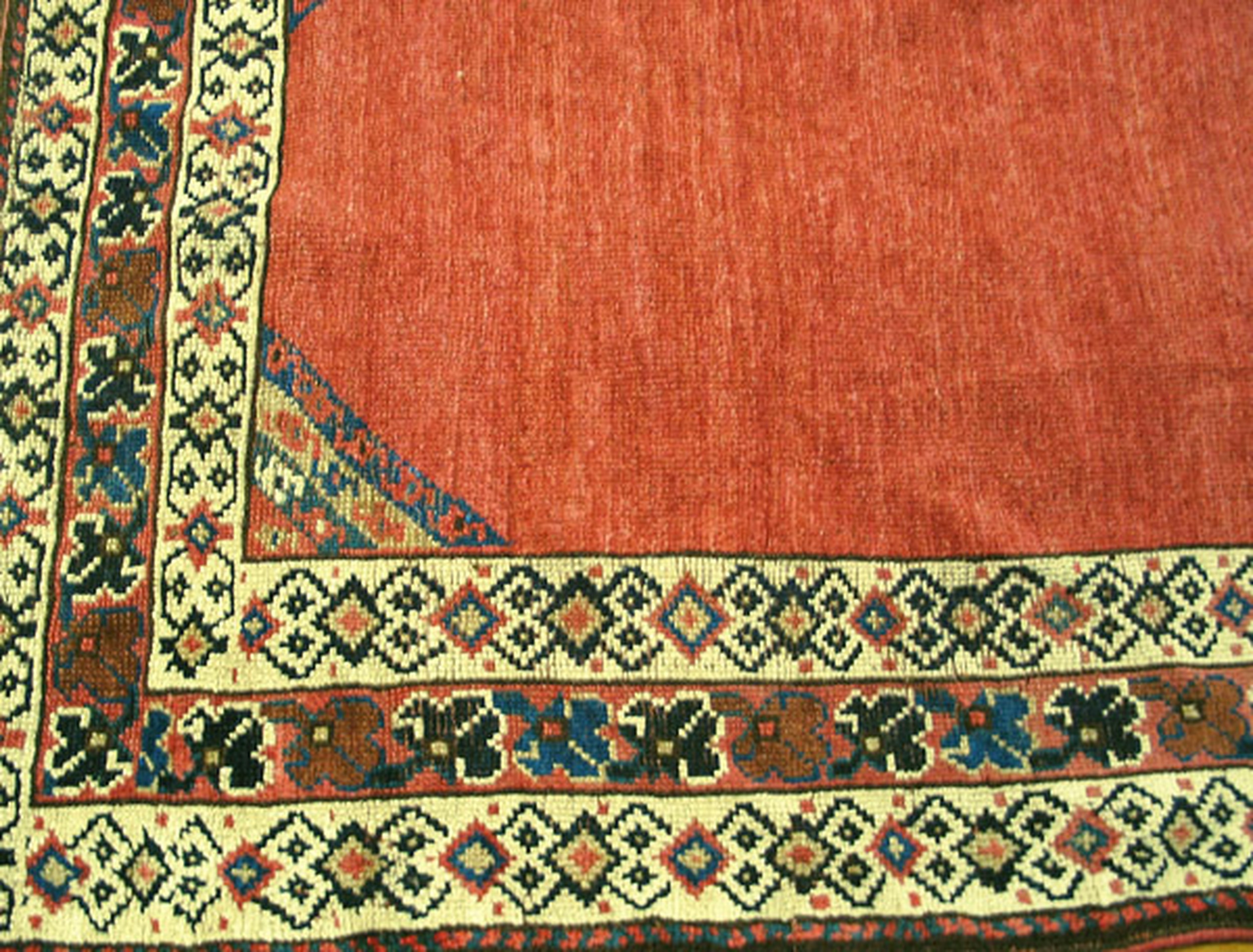
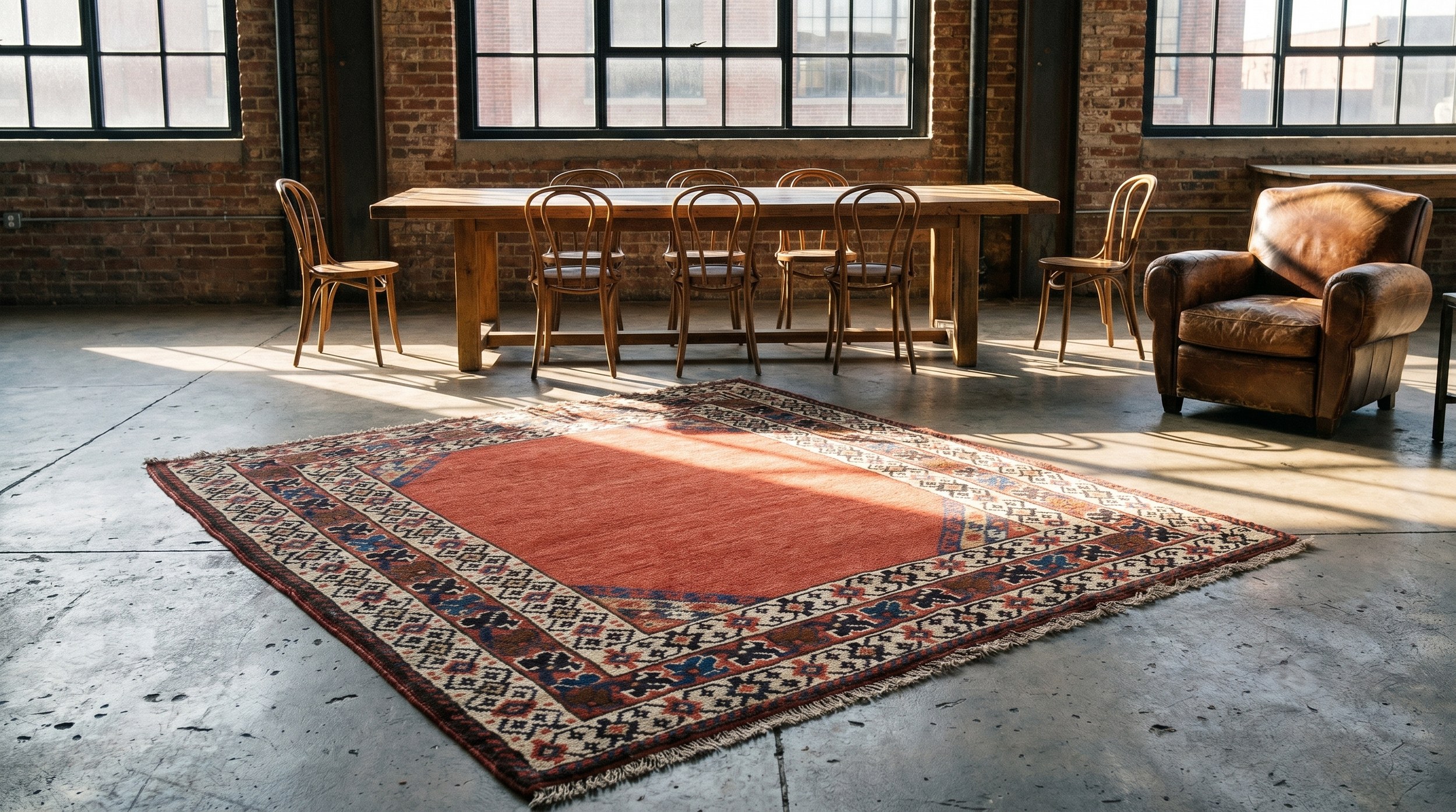
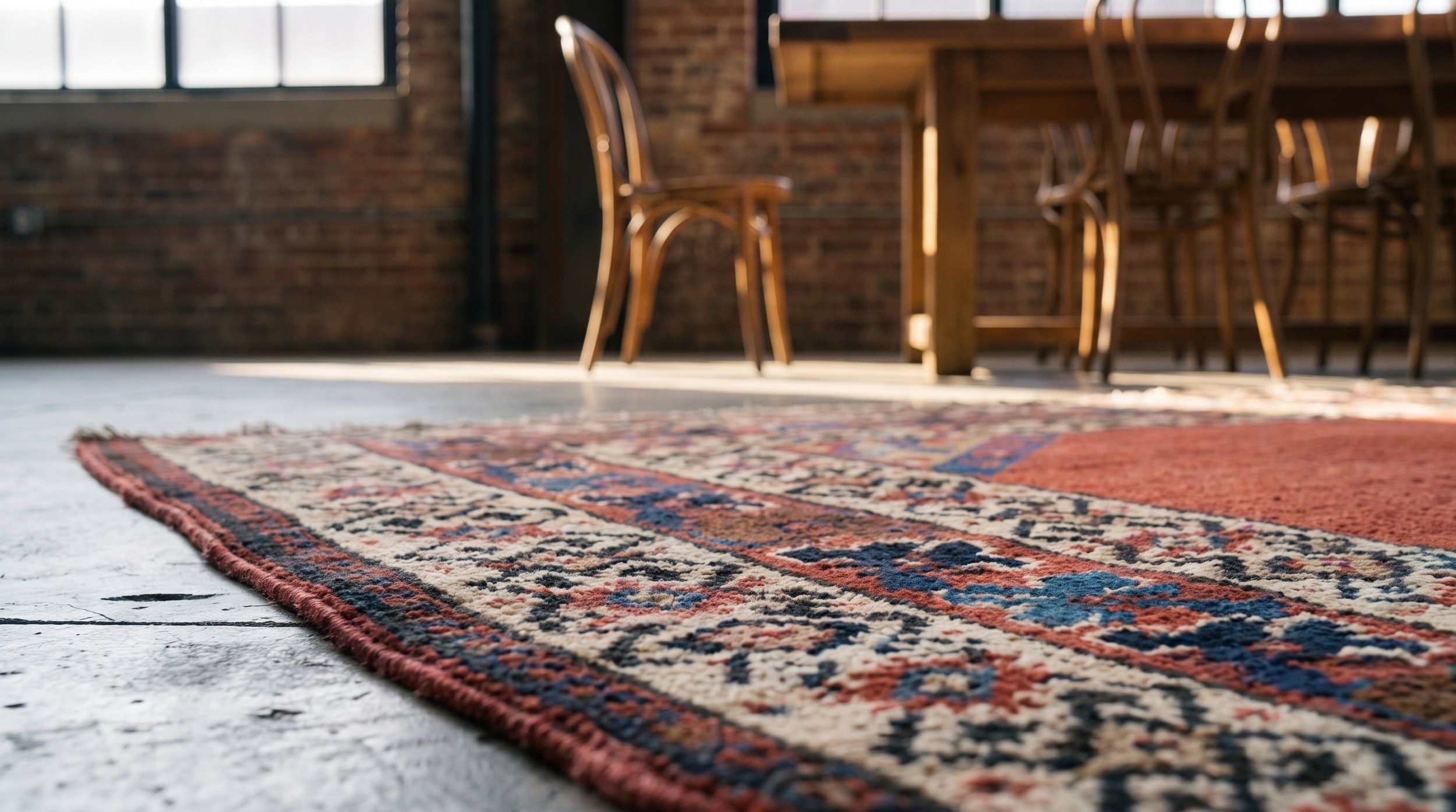
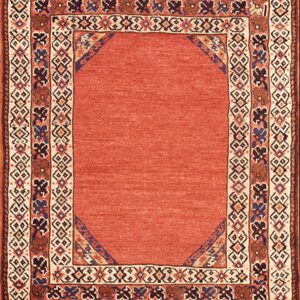
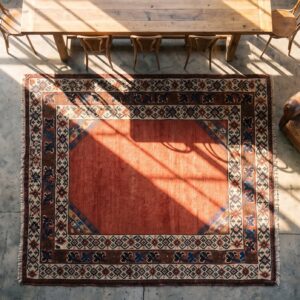
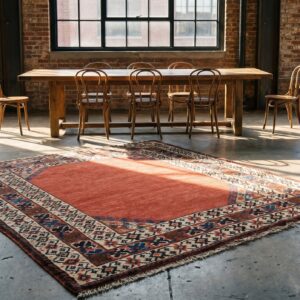

This nineteenth-century tribal antique Caucasian Kazak rug is a rare and striking “Primitive Modernist” masterwork. While the Kazak district is famed for its complex “latch-hook” medallions and dense tribal motifs, this specific specimen is distinguished by its highly unusual “Solid Open Field” design and its uncommon square shape. It represents a moment of bold, minimalist expression within the weaving traditions of the South Caucasus.
The composition is centered upon a vast, “Solid” Red Open Field, devoid of the typical central medallion. This creates a powerful sense of visual scale and “breathing room,” allowing the viewer to focus entirely on the raw beauty of the red color and the quality of the hand-spun wool. The use of an open field in a tribal rug design context is a sign of high-level confidence on the part of the weaver, as there is no intricate pattern to hide any imperfections in the dyeing process. The square format further enhances its architectural presence, making it a versatile “conversation piece” for a library, an entryway, or a contemporary gallery setting.
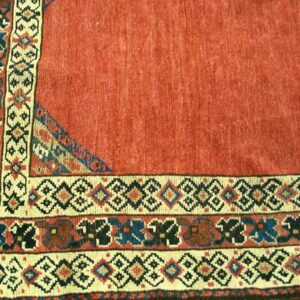
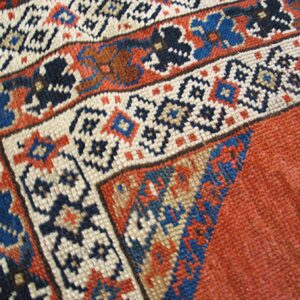
The palette is anchored by a saturated Madder Red foundation. Because this is an antique piece dyed with natural vegetable roots, the red is not a flat, monolithic color; instead, it exhibits a magnificent abrash (tonal variation). The field shifts and shimmers with varying shades of red, creating a “watercolor” depth that gives the solid space a living, breathing pulse. This radiant red field is typically framed by a high-contrast border which “locks in” the fiery energy of the center.
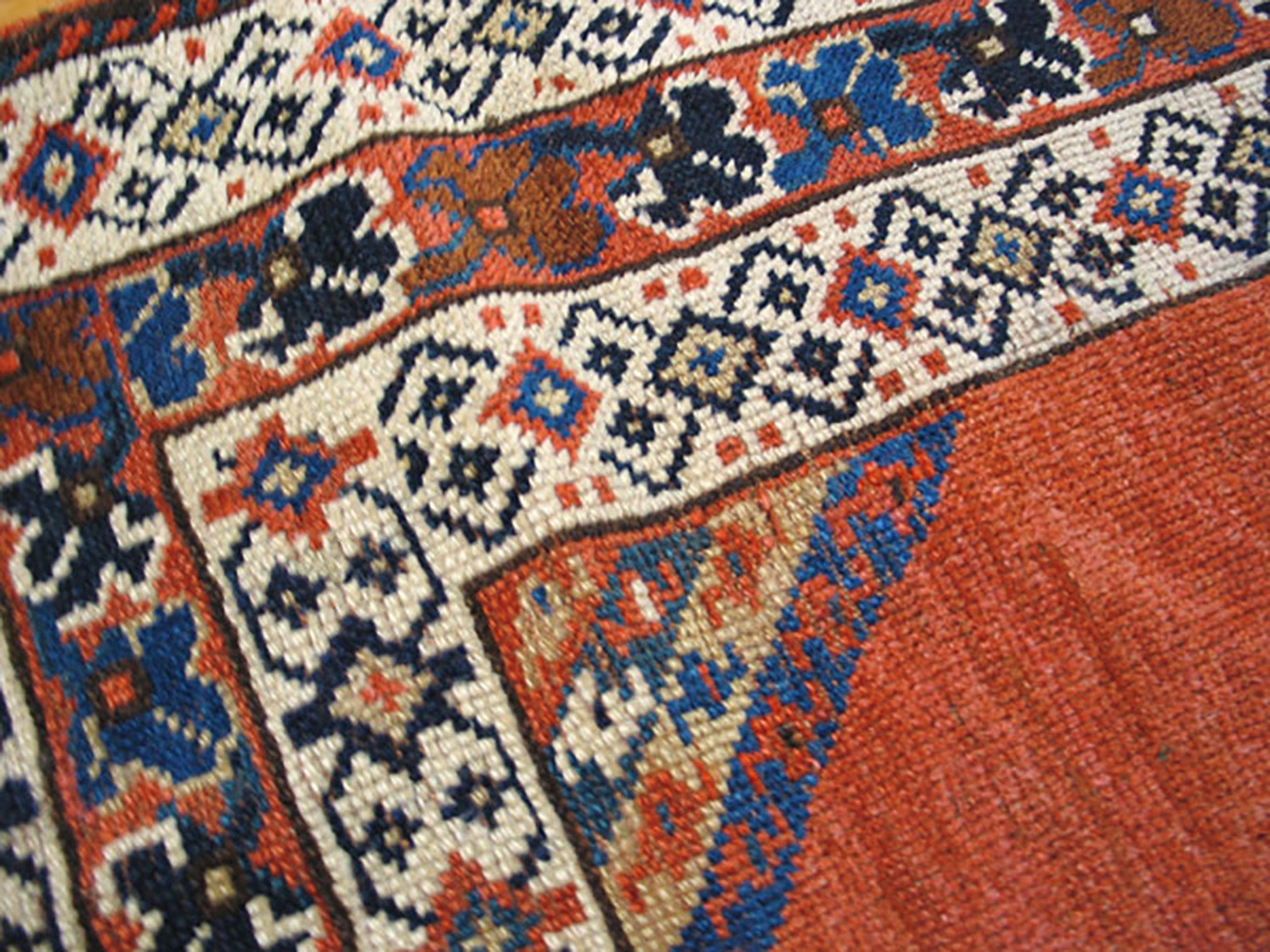
Technically, this Kazak is prized for its substantial, “fleshy” pile and its heavy, “leather-like” handle. Woven from the lustrous wool of high-altitude sheep, the fibers are exceptionally rich in natural lanolin, resulting in a light-reflective surface that has developed a soft, matte patina over more than a century. Unlike the thin city made Persian rugs of the era, this piece possesses a rugged, tactile resilience that is a hallmark of the nomadic hearth.
The borders provide the necessary tribal geometric containment, often featuring the “Wine Glass” or “Leaf and Calyx” patterns. These border motifs act as a disciplined architectural frame, providing a sense of historical permanence to the otherwise expansive and modern-feeling red open field. To possess this antique square open-field Kazak is to own a monument to Caucasian rugs and heritage—a work that bridges the gap between 19th-century tribal soul and 21st-century minimalist design.