
Rug Shapes 101: Definition, Why Shape Matters, Quick Taxonomy
Physical Outline vs. Motif Shapes
A rug shape definition begins with the physical outline of the carpet—the perimeter created by its warps, wefts, and finished edges. This differs from motif shapes, which are the graphic forms woven inside the rug’s field, such as medallions, florals, or geometric repeats. Confusing the rug outline vs motif blurs two separate dimensions of design: one structural, the other decorative. For example, a prayer rug in the Metropolitan Museum’s collection maintains a rectangular outline, but its niche motif creates a pointed arch shape within. Understanding this distinction is central to rug shape basics, as the outline dictates placement and durability, while motifs govern visual storytelling.
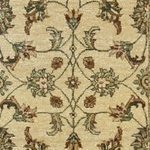 Long and Narrow | 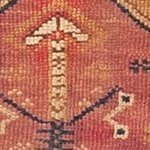 Square Carpets |  Oval Rugs |  Rectangle Rugs |  Round Rugs |
Why Shape Affects Function, Meaning, Care
- Placement and balance — Why: A rug’s outline controls how it anchors a room. Choosing a rug too small is the most common mistake, as undersizing undermines balance and function.
- Symbolic resonance — Why: Round or niche-shaped rugs historically conveyed spiritual or courtly associations, as seen in Mamluk circular carpets.
- Wear distribution — Why: Rectangular rugs develop stress lines along central traffic paths, while irregular shapes distribute wear differently.
- Conservation needs — Why: Shapes with curved edges, like ovals or free-forms, are harder to repair than straight-edged pieces, demanding specialized textile care.
Core Taxonomy of Rug Shapes
- Rectangular rugs — Why: Rooted in loom geometry, rectangles have dominated rug history and remain the most versatile for design layouts and border framing.
- Square rugs — Why: Rare historically but effective in squaring small seating zones or symmetrical rooms.
- Round rugs — Why: Evoke harmony and center ceremonial or domestic spaces, echoing Mamluk precedents.
- Oval rugs — Why: A softer alternative to circles, often favored in European interiors of the 18th–19th centuries.
- Polygonal rugs — Why: Less common, yet impactful in tribal and avant-garde modern contexts where edges break from convention.
- Free-form rugs — Why: A 20th-century expansion enabled by tufting and post-cutting, breaking the strictures of the loom to create organic outlines.
Loom Limits and Edge Creation
Traditional looms establish rug outline through the fixed relationship of warp and weft tension. Because warps are stretched in parallel, the natural result is a rectangle. This explains the rectangular rugs history that dominates nearly every weaving culture. Pile rugs require secure selvedges and ends, making straight edges the most durable. Deviations—curved or cut edges—require extra techniques or post-weaving alterations, often reducing longevity, as edges are the first point of wear (see: Pile height and edge durability).
Visual Space Effects by Outline
The outline of a rug interacts directly with architectural space. Rectangles elongate rooms, squares reinforce balance, circles soften hard edges, and free-form pieces disrupt geometry to create focus. These shape ↔ design mechanics connect directly to internal patterning: borders adjust to fit the outline, medallions shift to remain centered, and motifs may distort when woven on non-rectangular foundations. For deeper exploration, see Patterns vs. shapes.
Key takeaway: Physical shape is not interchangeable with motif design. While loom architecture explains why rectangular rugs dominate, the choice of outline influences aesthetics, function, and longevity—making rug shape a foundational consideration for both makers and owners. For placement guidance, reference the Rug sizes guide.
Master Classification: Historic Shapes, Use-Cases, Design Fit
Rectangles and Runners: Default Loom Output
Rectangles dominate rug shape types because loom geometry naturally produces straight edges. From palace carpets to modest nomadic mats, the rectangle has anchored interiors for centuries. Runner rugs are elongated rectangles adapted for corridors, tent strips, and stairways. A runner rugs guide emphasizes their practical role: long, narrow forms channel movement, define pathways, and distribute wear along linear zones.
Squares: Symmetry Emphasis
Square rugs are less common historically but strongly associated with balance and symmetry. Chinese weaving traditions produced square kang mats and seat mats, scaled perfectly to furniture platforms. This format emphasizes centrality, making square rugs ideal for symmetrical rooms or paired seating arrangements.
Rounds: Rare Historical, Rising Modern
Circular rugs are exceptional in rug history, yet Mamluk Cairo workshops left documented examples of round carpets used in ceremonial and religious settings. While rare in antiquity, round rugs today answer modern needs for anchoring circular dining tables or softening rectilinear interiors. In comparing round vs oval rugs, the circle conveys unity and centrality more forcefully than the ellipse.
Ovals and Ellipses: Braided and European Salons
Ovals emerged less from loom tradition and more from cutting, sewing, or braiding methods. In 19th-century America, braided rag rugs introduced oval outlines as a practical, homegrown craft. In Europe, oval and elliptical rugs became fashionable in salons and parlors, offering a softer alternative to hard-edged forms.
Polygonal and Niche Forms: True Non-Rectangular Shapes
Some shapes were not trimmed but woven intentionally non-rectangular. Turkmen bridal trappings known as asmalyks are pentagonal, designed for display on camel flanks (see What is an asmalyk?). Pillar wraps in Tibetan and Chinese temples also adapted polygonal outlines, proving that not all deviations were afterthoughts. These forms reveal how ritual and environment demanded specialized outlines.
Animal and Free-Form Rugs
Animal shaped rugs hold symbolic weight. Tibetan tiger rugs, woven to mimic pelts, carried protective and ritual meanings. Free-form “blob” rugs, by contrast, are a modern innovation enabled by tufting guns and post-cutting. They disrupt geometric tradition with organic outlines. As to whether irregular blob rugs are practical for living rooms: they can be, provided they are placed in low-traffic zones, built with thick backing for stability, and vacuumed carefully along curves.
Shape, Origin, and Use: A Quick Table
| Shape | Historic Origin | Typical Use | Strengths | Watch-outs |
|---|---|---|---|---|
| Rectangle / Runner | Loom default; nomadic tents | General rooms, corridors | Versatile, durable, design-friendly | Narrow runners show wear along traffic path |
| Square | China (kang mats, seats) | Symmetrical layouts | Balanced proportions, central motifs | Harder to find historically |
| Round | Mamluk Cairo | Ceremonial, dining rooms | Centrality, harmony | Rare antique examples, border adaptation tricky |
| Oval / Ellipse | 19th-c. America, European salons | Parlors, braided mats | Softens rectilinear spaces | Edges may fray faster than straight lines |
| Polygonal / Niche | Turkmen asmalyks, pillar wraps | Ritual, architectural fit | Cultural specificity, striking form | Difficult conservation, limited placement use |
| Animal / Free-form | Tibetan tiger, modern tufted art | Ritual, accent pieces | Symbolism, creative statement | Low traffic only; vacuuming and repair issues |
Key takeaway: Every rug shape carries a cultural anchor, from Chinese squares to Turkmen pentagons. Some outlines were woven into being, others cut after weaving. Together, they demonstrate how form, function, and meaning intersect in the long history of rug making.
Regional Signatures: Who Wove What Shapes, and Why
Persia and the Middle East: Rectangles, Saffs, and Galleries
In Persian weaving, rectangular rugs formed the overwhelming standard, reflecting both loom geometry and architectural needs. Workshop production in cities like Isfahan or Kashan emphasized long, balanced rectangles that aligned with courtyards and reception halls. Special categories evolved: saff rugs, which aligned multiple pointed niches in horizontal rows for group prayer, and Persian gallery carpets, extra-long formats designed for extended rooms or corridors. These regional rug shapes illustrate how both architecture and religious practice directly shaped format.
Central Asia: Pentagonal Trappings
Among Turkmen tribes, non-rectangular forms played distinctive roles. The pentagonal asmalyk was woven as a bridal trapping, hung from a camel during wedding processions. This design was never meant for the floor but for ritual display, showing how shape itself became a marker of life-cycle traditions. Such Central Asian forms demonstrate how nomadic mobility demanded portable, symbolic textiles rather than expansive floor coverings.
Caucasus: Rectangles, Near-Squares, and Prayer Motifs
Caucasian weaving traditions also centered on rectangular outlines but occasionally approached near-square proportions, especially in village workshops. Prayer rugs with pointed niche motifs added a secondary “shape within a shape,” where the outline stayed rectangular but the interior visual structure emphasized verticality. Here again, local worship practices guided design choices.
China, Tibet, and Mongolia: Pillar, Saddle, and Kang Formats
East Asian weaving produced some of the most inventive outlines. Chinese pillar carpets were created to wrap around temple columns, their spiraling dragons and clouds designed to appear continuous around a circular surface. Tibet and Mongolia excelled at saddle rugs, rectangular but scaled to fit equestrian gear, and kang mats, small squares or rectangles used on heated brick platforms. These formats show how architecture, religion, and daily life converged in specialized shapes.
North Africa and Egypt: Mamluk Circles and Rectangular Norms
In Cairo, Mamluk workshops broke from the rectangular norm to produce documented circular carpets, rare in world history and linked to ceremonial use. Elsewhere in North Africa, rectangular rugs dominated, matching both loom constraints and domestic architecture. The Egyptian examples highlight how courts could afford experimentation where most weavers maintained practical conventions.
Indigenous Americas: Navajo Circular Rugs
Navajo weaving is known for strong rectilinear design, but guarded traditions also include rare Navajo circular rugs. These required careful technique to maintain radial balance, diverging from the upright loom’s natural tendency toward straight edges. Such pieces emphasize both technical mastery and symbolic significance in Indigenous artistry.
Architecture and Portability as Drivers
Across all regions, rug shape was not arbitrary. Architecture drives regional formats: galleries for long Persian rooms, pillars for Chinese temples, and kang mats for brick platforms. Equally, nomad portability shaped rug dimensions, as loom width limited rug breadth and encouraged long, narrow forms easier to transport.
Practical Insight: Mixing multiple rug shapes in one room can succeed if regional cues or colors are repeated. A round Navajo-inspired accent can harmonize with a Persian gallery carpet if both share earth tones or geometric motifs.
Key takeaway: From Persian gallery carpets to Chinese pillar carpets and the rare Navajo circular rug, regional rug shapes embody the dialogue between architecture, ritual, and mobility. See Regional rug origins for a deeper survey of how geography and culture directed format.
Sacred Geometry: Symbolism and Spiritual Shapes
Mihrab Niche Symbolism
In Islamic weaving, the prayer rug arch meaning lies not in altering the outline but in the motif. Prayer rugs remain rectangular, yet the woven mihrab niche creates a pointed arch symbolizing the direction of Mecca. This design guides worshippers in orientation and frames the sacred act of prayer. The arch is never cut into the textile; it is encoded within the pattern, reinforcing that in sacred textiles, outline and motif are distinct but interdependent. See Prayer rug motifs for further exploration.
Tiger and Leopard Pelt Imagery
In Tibetan traditions, tiger rug symbolism carries protective and psychological weight. The stylized pelt represents ego-taming during meditation, echoing tantric practices where the tiger is subdued under the practitioner. Leopard pelts function similarly, projecting authority and spiritual power. These animal-shaped rugs preserve ritual associations far beyond their physical outline.
Circular Mandalas and Heaven/Earth Analogies
Circular rug symbolism draws on universal cosmology. Mandala-like layouts encode cosmic diagrams, mapping order onto the floor. In Chinese thought, the circle signified heaven and the square represented earth; rugs that invoked these geometries brought cosmic harmony into domestic or temple settings. The round rug, rare historically, became a direct emblem of wholeness and celestial order.
Multi-Niche Saff and Congregational Unity
Saff prayer rugs display rows of mihrabs side by side, aligning worshippers in coordinated ranks. This repetition of niches symbolizes unity and order in communal devotion. The format demonstrates how shape and pattern could scale from individual guidance to collective ritual, embedding social cohesion into woven geometry.
Directionality in Ritual Textiles
Sacred designs often carry explicit directionality. Prayer rugs point toward Mecca; tiger pelts orient the body in meditation; mandalic circles center energy. These are design mechanics where shape and symbolism merge: the outline anchors the textile to space, while the motif guides spiritual focus.
Practical Insight: Mixing clashing shapes—say, a round mandala rug with jagged free-form blobs—can unsettle a room. Sacred geometries demonstrate why ignoring symmetry and orientation risks creating visual chaos.
Key takeaway: Across cultures, shape and symbolism interlock. Whether through the mihrab’s guiding arch, the tiger rug’s protective pelt, or the circle’s cosmic resonance, rug outlines and motifs became spiritual tools that oriented both the body and the soul.
Practical Forces: Architecture, Loom Constraints, Intended Use
Space Dictates Outline
Architecture often determined rug outline. Long palace corridors demanded runner rugs and gallery carpets, while alcoves or rotundas encouraged non-rectilinear forms. In such cases, architecture rug shapes reveal how function outranked aesthetics: the rug was designed to fit the space rather than the other way around.
Looms and Their Constraints
Traditional looms set natural boundaries on shape. Nomadic horizontal looms limited width, producing narrow strips. Vertical looms with rollers allowed greater length, explaining the prevalence of long carpets for halls. These loom constraints in rugs explain why rectangles dominate: warps and wefts lock into straight planes. Non-rectangular outlines require cutting, sewing, or structural compromise.
Felt vs. Pile: Shaping Freedoms
Felted mats, common among Central Asian nomads, allowed cut curves and notched outlines. Because they were pressed rather than woven, felts provided greater freedom in shaping. By contrast, pile-woven rugs relied on secure selvages and straight ends, restricting outlines to geometric forms. The construction method thus defined feasible shapes. See Weaves and constructions for structural comparisons.
Portable Needs: Prayer, Saddles, Trappings
Some shapes evolved directly from mobility. Prayer rugs remained portable rectangles scaled for one person. Saddle rugs introduced rounded corners to prevent curling under tack. Turkmen asmalyks took pentagonal form to hang on bridal camels. These examples highlight how portability and ritual use dictated deviations from the standard rectangle.
Commissioned Fits: Bespoke Shaping
- Alcove fits — Why: European courts often commissioned bespoke shaped carpets tailored to irregular floorplans, ensuring wall-to-wall harmony.
- Column wraps — Why: Temple pillar rugs were woven in specific lengths and widths to spiral seamlessly around supports.
- Estate salons — Why: Custom ovals and ellipses softened formal interiors, aligning rug outline with architectural flow.
Practical Consideration: Oval Rugs
When asked, Are oval rugs good for small living areas? the answer is yes. Oval rug benefits include softening sharp corners, easing circulation in tight rooms, and creating a visual sense of openness without overwhelming the floorplan.
Key takeaway: Function and architecture often outrank aesthetics in determining shape. From loom ceilings to saddle needs, construction method and intended use defined the outlines we still encounter today.
Shape ↔ Design Mechanics: Borders, Compositions, Focal Control
Borders: Ring Borders vs. Corner Resolutions
A rug’s outline dictates its border strategy. Rectangular rugs demand precise “corner math,” ensuring floral scrolls or geometric bands meet seamlessly at four joints. By contrast, round rugs favor radial rug designs, where concentric rings resolve without corners. Free-form rugs cannot rely on either system; they require fluid rug border design by shape, using color fields or abstract edges to integrate perimeter and field.
Centralized vs. Directional Field Logic
Outline also shapes the logic of a rug’s field. Circular carpets emphasize central medallions and radiating symmetry. Runners use linear repeats or serial medallions to guide the eye along their length, a hallmark of runner motif planning. Prayer rugs place emphasis toward the arched end, directing visual and spiritual focus upward. Each approach ensures design aligns with function and proportion.
Motifs by Fit: Medallions, Trees, Repeats
Certain motifs thrive in certain outlines. Medallions center best in squares, rounds, or balanced rectangles. Tree-of-life motifs benefit from vertical rectangles, climbing naturally through the field. Allover repeats accommodate variable dimensions, making them adaptable across diverse shapes. This alignment shows how outline and motif scale must be matched for harmony. See Medallion vs. allover for more on structural fit.
Eye-Path Control by Outline
- Rectangles — Why: Borders frame the field, guiding the gaze in circuits around a central medallion.
- Runners — Why: Serial motifs direct the eye linearly, echoing corridor movement.
- Rounds — Why: Concentric symmetry keeps the gaze anchored at center.
- Prayer rugs — Why: Directional arch pulls focus toward one end, reinforcing ritual orientation.
- Free-form rugs — Why: Asymmetry disperses eye movement, requiring strong color anchors to avoid visual drift.
Shape and Design Mechanics: A Quick Table
| Shape | Border Approach | Field Logic | Motif Fit | Pitfalls |
|---|---|---|---|---|
| Rectangle | Corner resolutions | Balanced or medallion | Trees, medallions | Poor corner math creates broken patterns |
| Runner | Linear repeats | Directional flow | Serial medallions | Central motifs may look stretched |
| Round | Concentric rings | Radial symmetry | Central medallions | Hard to adapt borders without distortion |
| Square | Even joins | Centralized balance | Medallions, repeats | Can feel static if under-decorated |
| Prayer | Framed arch end | Vertical hierarchy | Mihrab niche | Off-center niches ruin orientation |
| Free-form | Integrated fields | Abstract balance | Organic motifs/colors | Edges may appear unresolved without planning |
Visual Balance in Rooms
When asked, Are dark, busy rugs shrinking small rooms visually? the answer is often yes. Heavy borders and dense motifs can compress space, while light tones and simpler fields expand it. Successful visual balance rugs depend on choosing outlines and compositions that harmonize with architectural scale.
Key takeaway: Outline dictates border math, motif scale, and eye movement. Good compositions anticipate edge behavior, ensuring that rugs remain visually balanced and structurally sound across every shape.
Technology, Trade, and Alterations: How Markets Reshaped Shapes
Roller Looms and Extended Length
With the advent of roller looms, weavers could produce carpets of extraordinary length. This innovation supported the rise of gallery carpets and oversized room-filling rectangles, aligning with export markets that demanded uniform coverage for Western halls and salons. Loom advances extended scale, but outlines remained bound to straight geometry.
Tufting and Post-Cut Outlines
The development of tufting radically transformed possibilities. Unlike knotted pile or flatweave, tufting allows rugs to be cut into virtually any outline after production. Circles, scallops, and free-form blobs became accessible as tufted shaped rugs, widening design horizons beyond loom limits. This process explains the prevalence of modern novelty outlines in global markets.
Western Standardization and Art Deco Experiments
Export demand reshaped formats, introducing standard sizes like 8×10 and 9×12 rectangles for living rooms and dining areas. At the same time, Art Deco designers experimented with asymmetry, angled cuts, and unexpected forms, rejecting pure geometry. These shifts reflected a tension between standardization and experimentation in 20th-century design.
Resizing and Patchwork: Pros, Cons, Ethics
Resizing antique rugs—by cutting and sewing—has been a commercial practice to fit modern interiors. While effective for scale, resized antique rugs lose historical borders, inscriptions, and proportional integrity. Similarly, patchwork carpets ethics are debated: combining fragments revives textiles otherwise unsalvageable, yet such alterations erase original context. Collectors must weigh utility against preservation of authenticity.
New Materials and Laser-Cut Synthetics
- Hides — Why: Cowhides and sheepskins naturally introduce irregular outlines that resist loom geometry.
- Laser-cut synthetics — Why: Industrial technology allows complex mosaic patterns, starbursts, and tessellated forms, offering precision unachievable in handwoven production.
- Hybrid blends — Why: Combining hides or synthetics with woven grounds creates decorative overlays, but often compromises long-term resilience (see Rug durability implications).
Shape and Style Trends
When asked, Are scalloped-edge and wavy rugs trending now? the answer is yes. The scalloped rug trend has risen with modern tufting and consumer appetite for playful edges. Yet these shapes should be used sparingly: overuse risks clutter and visual fatigue in interiors.
Key takeaway: Modern technology freed rug shape from loom constraints, while global trade standardized rectangles for mass markets. Alterations and innovations solve fit and expand design, but they raise ethical concerns about authenticity and longevity.
Iconic Case Studies: Shapes that Made History
Pazyryk: The Ancient Rectangle Exemplar
The Pazyryk carpet shape demonstrates that the world’s oldest known pile rug (5th century BCE, excavated in Siberia) was already rectangular. Its proportions confirm the loom’s tendency toward straight-edged geometry. This case anchors the history of rectangular weaving in antiquity, showing continuity with later Persian and Caucasian traditions.
Mamluk Circulars: Cairo’s Radial Masterpieces
In Cairo, Mamluk workshops created exceptional circular carpets. A surviving example in Doha reveals a Mamluk circular rug with concentric borders and an octagram core. These masterpieces highlight the technical precision required to maintain radial symmetry, marking them as ceremonial showpieces rather than domestic furnishings.
Tibetan Tiger: Silhouette and Spirituality
Tibetan tiger rug history exemplifies how outline itself could become symbolic. Woven as stylized pelts complete with heads, paws, and tails, these rugs served meditation practices, symbolizing the taming of the ego. Their unique silhouette demonstrates the fusion of animal imagery, ritual use, and spiritual identity.
Asmalyks: Five-Sided Bridal Pairs
Among Turkmen Tekke tribes, the asmalyk—a pentagonal rug—was hung in pairs on bridal camels. The five-sided outline, combined with fertility motifs, signaled transition and union. Here, shape was inseparable from social ritual, designed for visibility in processions rather than utility on the ground.
Savonnerie and Aubusson: Courtly Shapes
In France, Savonnerie oval carpets and Aubusson tapestries were tailored for palace salons. Octagonal and oval formats softened rigid room geometries, aligning with Rococo and Neoclassical interior ideals. These court commissions underscore how bespoke rug shapes became integral to European decorative arts.
Modernist Shaped Art Rugs
In the 20th century, modernist artists reconceived rugs as shaped canvases. Asymmetrical cuts, abstract blobs, and sculptural silhouettes challenged tradition, treating floor coverings as contemporary art forms. This experimentation extended the lineage of shape innovation into gallery and residential contexts alike.
Style Insight: Layering Shapes
When asked, Is layering different rug shapes considered stylish? the answer is yes. Pairing a round rug over a rectangle, or a tiger silhouette atop a flatweave, can be striking if curated carefully. The key is balancing ratios, textures, and palettes to avoid discord.
Key takeaway: From the Pazyryk carpet shape to the Mamluk circular rug, from Tibetan tiger rug history to Savonnerie oval carpets, shape innovations have appeared across centuries. These case studies, preserved in museums and collections (see Museum-grade rug examples), anchor claims that rug outlines are as historically meaningful as their motifs.
Conservation & Display: Supporting Irregular Edges and Heavy Textiles
Stabilizing Points, Claws, and Corners
The first rule of irregular rug conservation is stabilizing vulnerable points. Delicate claws, tips, or corner projections are prone to fray, requiring overcasting stitches to prevent unraveling. Even rectangular rugs with cut borders benefit from reinforced edges, but shaped textiles demand special attention to each extremity.
Velcro Systems and Honeycomb Panels
Modern mounting combines two strategies: rug Velcro hanging distributes the textile’s weight evenly across the top edge, while lightweight honeycomb panels act as rigid supports behind the rug. Together, they prevent sagging and stress on localized threads. This method is widely used in museums for both large rectangular carpets and uniquely contoured examples.
Backings and Full Linings
For heavier or fragile carpets, conservators apply full cloth backings. These linings stabilize structure, distribute load, and conceal repair stitches. Backing antique carpets is often essential for irregular forms, where unsupported edges would otherwise warp under gravity.
Contour Mounts for Shaped Pieces
Circular rugs or animal-shaped textiles require mounts that follow their outline. Curved supports prevent uneven stress, while contour-cut panels ensure the perimeter rests evenly. Such mounts preserve both form and readability, allowing shaped rugs to be displayed without visual distortion.
Storage: Roll vs. Rigid Board
- Rolled storage — Why: Best for strong rectangular rugs, preventing fold creases and saving space.
- Rigid board storage — Why: Necessary for irregular or fragile shapes; flat storage avoids crushing corners or distorting arcs.
- Hybrid supports — Why: For oversized rugs, layered materials such as honeycomb and archival boards provide strong but lightweight stability (see Rug care and storage).
Key takeaway: Even support prevents distortion and sag. Conservation choices balance historical integrity with effective display, ensuring that shaped and heavy textiles survive with their outlines intact for generations.
Misconceptions & Market Pitfalls: Shape Myths Debunked
Prayer Arch as Design, Not Silhouette
One of the most persistent myths is the belief that prayer rugs are arched in outline. In reality, the prayer rug myth arises from confusing motif with perimeter. True prayer rugs remain rectangular, with the mihrab arch woven into the field as a design. Buyers who expect a shaped silhouette risk misunderstanding both form and function.
Altered Shapes Sold as “Traditional”
The market often presents round or oval “Persian” rugs as ancient formats. In fact, many are modern conversions created by trimming rectangular antiques. Such altered antique rugs usually lose border integrity and cultural authenticity in the process. While appealing at first glance, these conversions misrepresent tradition.
“Unique” Shape Premiums vs. Value Losses
Dealers sometimes attach price premiums to rugs with irregular outlines, calling them “rare” or “unique.” In practice, value often declines when original proportions are compromised. Collectors prize intact borders and woven edges; trimming typically reduces both aesthetic harmony and resale worth. Only genuinely woven shapes, not post-cutting alterations, command historic significance.
Historic Cuts vs. Modern Trimming
Not all alterations are deceptive. Some historic cuts document legitimate in-situ use, such as floor sections adapted to alcoves or architectural recesses. When disclosed honestly, these cuts provide insight into past interiors. Modern trimmings, however, often lack this context and primarily serve to fit contemporary furniture, at the expense of authenticity.
Misleading Labels: Runner, Gallery, Scatter
- Runner — Why: Properly denotes long, narrow rugs intended for corridors. Misused when applied to any rectangular strip.
- Gallery — Why: Refers to extra-long Persian carpets designed for reception halls. Over-applied in the trade to oversized but otherwise standard rectangles.
- Scatter — Why: Once referred to small mats; now often masks scatter rug fragments, cut from larger carpets and resold as complete.
Buyer Guidance
To avoid pitfalls, buyers should confirm authentic rug shape by inspecting original borders and selvages. Ask directly about alterations, and remember: motif does not equal outline. See How to verify authenticity for methods of confirming age and integrity.
Key takeaway: Shape myths thrive in the rug market, but careful attention to borders, construction, and terminology protects buyers from mistaking fragments or altered antiques for genuine woven forms.
Choose by Room: Shape Playbooks for Halls, Entries, Dining, Living, Bedrooms
Hallways: Ideal Runner Widths and Lengths
For narrow corridors, the best solution is a runner. When asked, What rug shape works best for narrow hallways? the answer is always runner. Proper hallway runner size leaves margins of 3–6 inches on each side so the rug defines the path without wall-to-wall coverage. Length should fall just short of door thresholds to avoid curling or bunching at entries.
Entryways: Runner vs. Round Decision Tree
- Long, narrow entry — Why: A runner directs circulation cleanly from the door inward.
- Square or round foyer — Why: A round or square rug anchors the space and balances symmetry.
- Large open vestibule — Why: Oversized rectangle provides coverage and visual grounding.
This entryway rug shape decision tree ensures rugs support geometry rather than fighting it.
Dining: Round Tables and Clearance Math
The rule is simple: a round dining table sits best on a round rug. Following dining round rug rules, the rug should extend at least 24 inches beyond the table edge so chairs remain fully on the surface when pulled out. For rectangular tables, a rectangular rug provides similar clearance along all sides.
Living Rooms: Grouping, Leg-Rules, and Coordination
Furniture placement defines living-room success. When asked, Should furniture legs sit on or off the rug? two answers apply:
- Front-legs-on unifies a grouping while saving rug area.
- All-legs-on maximizes cohesion and creates a floating, island effect.
Coordinating rug shape with seating arrangements ensures balance: rectangles anchor sectional sofas, rounds soften compact lounges, and layered shapes add dimension. These shape coordination strategies depend on scale and layout.
Bedrooms: Under-Bed Layouts by Bed Size
| Bed Size | Recommended Rug Sizes | Extension Rule |
|---|---|---|
| Twin | 5×8 or 6×9 | Extend 18–24 in. at foot and sides |
| Full | 6×9 or 8×10 | Extend 18–24 in. at foot and sides |
| Queen | 8×10 or 9×12 | Extend 18–24 in. at foot and sides |
| King | 9×12 or 10×14 | Extend 18–24 in. at foot and sides |
| California King | 10×14 | Extend 18–24 in. at foot and sides |
These bedroom rug extension guidelines ensure rugs frame beds comfortably and visually anchor the room.
Key takeaway: Match rug shape to room geometry and traffic. Runners belong in halls, rounds under round tables, and rectangles in living zones. Leg rules and extension math keep layouts cohesive, while the right outline strengthens both function and style. See Standard sizes and rooms for expanded size references.
Sizing Math: Formulas, Margins, Centering, and Visual Balance
Round-Under-Round Formula
The most reliable round rug size formula is: table diameter + 24 inches on all sides. For example, a 48 inch table rug requires at least 96 inches of coverage, meaning an 8-foot round rug is the correct fit. The rug should be concentric with the table so chair legs remain on the rug even when pulled out. Equal clearance in all directions keeps the setting visually balanced.
Runner Margins and Endpoints
When asked, Where should a runner start and stop in hallways? the answer is 6–12 inches from thresholds and walls. Side reveals should stay consistent: hallway runner margins of 3–6 inches along both edges create clean, parallel lines. Avoid wall-to-wall placement, which makes runners look cramped and interrupts circulation flow.
Centering in Asymmetrical Rooms
How do you center a rug in asymmetrical rooms? Center not to the walls but to the anchor zone—whether that’s a seating group, dining table, or bed. These centering rug rules ensure rugs read as part of the functional layout rather than floating off-balance within irregular architecture.
Perimeter Floor Reveal Targets
For overall balance, leave a consistent border of flooring visible around large rugs. Recommended perimeter floor reveal is 8–12 inches in small rooms and 12–18 inches in larger rooms. This reveal frames the rug like a mat around artwork, adding proportion and polish.
Furniture-Leg Rules and Sofa Groupings
In living areas, rugs should span at least the sofa’s full length. How big should a rug be relative to sofas? At minimum, the front legs should sit on the rug for cohesion. For greater unity, use the all-legs-on rule to float the entire seating group. These principles prevent rugs from feeling undersized, the most common mistake in living spaces.
Sizing Rules by Context
| Context | Rule | Example |
|---|---|---|
| Round dining table | Diameter + 24″ per side | 48″ table → 96″ rug (8′ round) |
| Hallway runner | 3–6″ side margins; 6–12″ ends | 30″ hall → 24″ runner; rug stops 8″ from doorway |
| Asymmetrical room | Center to anchor, not walls | Rug aligned with sofa group instead of room’s off-center fireplace |
| General perimeter | 8–12″ small rooms; 12–18″ large rooms | 12″ floor reveal around living room rug |
| Sofa group | Span sofa length; legs partly or fully on | 7′ sofa → 8×10 rug, front legs anchored |
Key takeaway: Use formulas, not guesses. A rug that’s too small undermines both function and balance. Accurate math—whether for runners, dining, or sofas—ensures rugs frame their anchors, maintain proportional reveals, and unify spaces. See Room layout math for extended design calculations.
Styling Mix: Rounds in Squares, Ovals in Small Spaces, Trends and Layering
Round Rugs in Square Rooms
When asked, Is a round rug better for square rooms? the answer is often yes. A round rug square room pairing enhances symmetry and brings softness to otherwise rigid geometry. The circular outline echoes the balanced proportions of the room while introducing gentle curves that relax the visual weight.
Ovals in Tight Spaces
In compact living areas, an oval rug small room strategy improves circulation. The softened ends ease movement flow around furniture and prevent bottlenecks in narrow zones. Ovals act as a bridge between the harmony of circles and the practicality of rectangles, particularly useful in apartments and smaller lounges.
Scalloped, Wavy, and Blob Trends
The scalloped edge rug trend and wavy outlines bring whimsy and playfulness. However, restraint is key: irregular edges should be paired with simple palettes and quiet patterns to avoid overwhelming interiors. Are irregular blob rugs practical for living rooms? Moderately—yes, if used as accent zones with thick backing and placed away from rolling chairs or high-traffic paths.
Mixing Shapes Without Chaos
- Hierarchy matters — Why: Always select one dominant shape (rectangle, round, or oval) and one supporting form.
- Repetition builds cohesion — Why: Echo a geometry in furniture or décor to reinforce consistency.
- Limit variety — Why: More than two distinct outlines creates visual noise.
These mix rug shapes rules help interiors feel curated rather than cluttered.
Layering Shapes for Impact
Layering expands possibilities while maintaining harmony. A small round rug placed over a larger rectangle works best at a ratio of about 1:1.5, ensuring both shapes remain visible. This approach grounds the furniture grouping while highlighting a central accent. Such layering aligns with design mechanics: outlines guide the eye, borders frame focus, and proportions sustain balance.
Color and Pattern Reinforcement
For layered or mixed shapes, color and pattern unify the composition. Repeating hues or motifs across shapes ties the scheme together, as explored in Color and pattern effects. Without these echoes, even mathematically correct layouts risk feeling disjointed.
Key takeaway: Shape styling depends on hierarchy, repetition, and restraint. Rug layering guides show that combining rectangles and rounds can be stylish, but only when ratios are controlled and palettes simplified. Trends like scalloped edges or blobs should be edited carefully, serving as accents rather than overwhelming statements.
FAQ
- How do rug shapes affect safety and tripping?
Any rug shape can trip if it slides or curls. Use a non-slip pad, corner grippers, and replace curled edges; keep thresholds and stairs rug-free.
- What rug shapes work outdoors on patios?
Match to furniture: round rug shapes under round tables; rectangles under sofas or sectionals. Choose UV-resistant, quick-dry materials.
- Are half-round rug shapes good for kitchens or bathrooms?
Yes—half-round rug shapes hug sinks and vanities while minimizing corner curl. Pick low-profile, washable mats where water and door clearance are factors.
- What rug shape is best for a home office with a rolling chair?
Rectangular rug shapes sized so the chair stays fully on the rug at full extension. Low-pile rugs prevent caster ruts and edge catching.
- What rug shape suits a breakfast nook or bay window?
Round rug shapes mirror circular nooks and pedestal tables; keep 24–30 inches around chairs. Oval rug shapes also glide around tight corners.
- Can I cut a rug into a custom rug shape, and what will finishing cost?
Yes—pros will cut and bind/serge edges. Expect roughly \$2–\$12 per linear foot for binding/serging, depending on material and profile.
- Do rug pads need to match rug shapes exactly?
Match the outline, but trim pads to be \~1″ smaller on all sides so they don’t peek out. Most rug pads cut easily to round or custom rug shapes.
- How do I measure for different rug shapes quickly?
Dining: add 48″ to table diameter/length for round/rectangular rug shapes. Hall: leave 4–6″ exposed floor per side. Beds: aim for \~24″ beyond bed edges.
- Are irregular or cowhide rug shapes practical day-to-day?
Yes for low-traffic accent zones. Anchor irregular rug shapes with furniture, add a cut-to-shape pad, and avoid high-traffic thresholds to reduce curling or trips.
- What rug shapes are best for kids’ rooms?
Round or oval rug shapes feel playful and safer around edges. Choose low-pile, non-slip backing; size to keep major toys/furniture fully on the rug.
- Should rug shape always match table shape?
Not required. A square rug shape under a round table can look striking—just keep 24–30 inches of chair clearance (e.g., 48″ round table → 8′ x 8′ square).
- When should I choose an oval rug shape?
Use oval rug shapes to soften straight-line rooms or under oval/rectangular tables. For six dining chairs, an 8′ x 10′ oval often fits.
- Are octagon rug shapes dated or on-trend?
Octagon rug shapes are a current accent trend, great for entries or under centered tables. They also layer nicely over larger rectangles.
- What rug shape pairs best with a sectional sofa?
Rectangular rug shapes are safest; oversized round rug shapes (9’–10′ diameter) can beautifully center L- or U-sectionals with a round coffee table.
- Can I layer rug shapes, like a round over a rectangle?
Yes—layering different rug shapes adds depth. As a guide, make the top rug about 60–70% of the base rug so borders remain visible.
- Can I mix rug shapes in one room without visual clutter?
Yes—combine rug shapes to define zones. Keep palettes cohesive and vary sizes so pieces don’t compete; let major rugs share one dominant axis.
- Which rug shapes can make small rooms look bigger?
Round rug shapes often read airier by avoiding hard corners and keeping sightlines moving. Light colors and larger sizes amplify the effect.
- What rug shape should I use in a hallway?
Runner rug shapes, usually 2’–3′ wide, leave 4–6 inches of floor on each side. Length typically covers about three-quarters of the hall.
- Which rug shapes fit entryways with tight door clearance?
Half-round (semi-circle) rug shapes sit flush to thresholds and swing under doors when low-profile (≈0.2–0.4″). A 2′ x 3′ half-round is common.
- What rug shape suits a bedroom under a queen or king bed?
Rectangular rug shapes work best; aim for \~24 inches of rug beyond bed sides/foot. Typical picks: 8′ x 10′ for queen, 9′ x 12′ for king.
- For a square dining table, do rug shapes need to match?
Square rug shapes balance square tables; allow 24–30 inches beyond edges. An 8′ x 8′ rug typically suits a four-seat square table.
- For a rectangular dining table, which rug shape works best?
A rectangular or oval rug shape with 24–30 inches of clearance on all sides. Example: 72″ x 36″ table → about 9′ x 12′ rug.
- For a round dining table, what rug shape and size should I choose?
A round rug shape that extends 24–30 inches past the tabletop all around prevents chair snags. Example: 48″ table → 8′ round rug.
- Which rug shape is best for a living room layout?
A rectangular rug shape usually anchors seating cleanly; size so at least front sofa legs sit on it. Round rug shapes can soften angles or center small conversation areas.
- What are the main rug shapes and how do rug shapes map to rooms?
Rectangular, square, round, oval, runner, half-round, octagon, and irregular. Rectangles suit most rooms; runners fit halls; half-rounds work at doors; round and oval rug shapes soften tight or boxy spaces.