
Turkish Rugs
Key takeaways: antique Turkish rugs
- What they are: hand-knotted pile rugs and flatwoven kilims from Anatolia, the peninsula of modern Turkey, woven in nomadic tents, villages and town workshops. Most antique examples on the market date from the late 19th and early 20th centuries.
- How to recognize one: the symmetrical Ghiordes (Turkish) knot, bold angular motifs, strong color contrasts and, in village and nomadic weaving, a springy wool foundation.
- The biggest name: Oushak, from Uşak in western Anatolia, prized for soft palettes, open large-scale drawing and lustrous wool. It is Turkish, not Persian, and it makes up about half of our Turkish collection.
- Flatweaves matter here: Anatolia has one of the richest kilim traditions, and more than 50 of our Turkish rugs are kilims.
- Our collection: more than 250 Turkish rugs at our New York showroom, from 18th century prayer rugs to room-size and oversized Oushak carpets.
- Buying with confidence: every rug is inspected before it is listed, each listing states origin, approximate age, materials and measured size, shipping is free within the continental United States, and there is a 4-day in-home trial. See buying with confidence.
Turkish rugs represent one of the foundational traditions in the history of carpet weaving, developed across Anatolia’s nomadic, village, and workshop cultures. These rugs are characterized by strong structural clarity, symmetrical knotting, and bold, confident design language that reflects both tribal roots and refined artistic influence.
Common motifs include medallions, stylized florals, geometric forms, and symbolic protective elements, often arranged with clear spacing and powerful color contrasts. Natural dyes, high-quality wool, and time-tested weaving techniques give Turkish rugs their enduring strength and visual presence. Influential far beyond their region of origin, Turkish rugs have shaped global carpet design for centuries and continue to be admired for their balance of durability, symbolism, and timeless aesthetic appeal.
The rugs from Turkey are woven masterpieces, celebrating millennia of Anatolian artistry through their distinctive color palettes, robust construction, and masterful knotting techniques. From the large-scale geometric grandeur of Oushak patterns to the detailed craftsmanship found across the region, you can explore the rich history and unique characteristics of rugs woven in Turkey.
Antique Turkish rugs at a glance
The table below summarizes the main facts about antique Turkish rugs, drawn from our guides and from the live collection on this page. Counts and prices were taken from our in-stock Turkish rugs on September 27, 2026 and change as rugs sell.
| Feature | Antique Turkish rugs |
|---|---|
| Where they were woven | Anatolia, modern Turkey. Western Anatolia: Uşak (Oushak), Ghiordes (Gördes), Kula and Bergama. Central Anatolia: Konya, Sivas and Kayseri. Near Istanbul: Hereke, the court workshop. Plus the Yörük nomads, who wove for their own tents. |
| Main types in our collection | Oushak, more than 120; kilims, more than 50; Ghiordes, 7; yastik, 6; plus small groups of Yörük, Sivas, Konya, Bergama, Kula, Hereke and Kayseri rugs |
| Periods | More than 100 of our Turkish rugs are 19th century and 4 are 18th century or earlier. About 50 date from 1900 to 1925, and about 80 are vintage pieces from the 1930s to the 1960s. |
| Materials | Wool pile for the great majority, often on a wool foundation in village and nomadic weaving. Ten pieces in lustrous Angora wool, and silk in the finest court weaving such as Hereke. |
| Construction and knotting | Hand-knotted pile with the symmetrical Ghiordes knot, more than 180 in stock, and flatweaves such as slit-weave kilims, about 60 in stock |
| Typical palettes | Madder reds and indigo blues with ivory in village and prayer rugs; apricot, terracotta, soft green, gold and silvery ivory in Oushak. Multicolor jewel tones and ivory are the most common colors in our collection, followed by coral and red. |
| Signature designs | Prayer niches (mihrab), large-scale medallions and stars, stylized florals, stripes and bands in kilims, and protective symbols such as the elibelinde and the evil-eye diamond |
| Formats in stock | Room size, more than 130; small scatter size, more than 50; large oversized carpets, more than 30; hallway runners, 17; wide gallery carpets, 10 |
| Most common sizes in stock | 9 x 12, 29; 4 x 6, 26; 10 x 14, 23; square sizes 6 x 6 and 4 x 4, 14 each; 3 x 5, 12; 8 x 10, 12; 12 x 15, 11 |
| Price range (antique, in stock) | For our Turkish rugs dated 1925 or earlier: from $1,100 to $195,000. The median is about $18,800, and half are priced between $9,000 and $27,000. Prices are in US dollars. |
| In stock | More than 250 Turkish rugs, of which more than 160 are dated 1925 or earlier |
Prefer to see a rug in person?
-
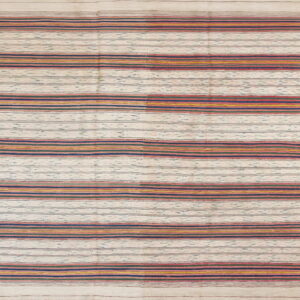
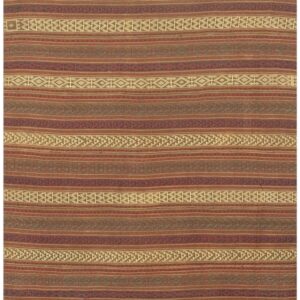
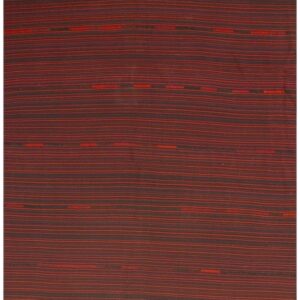
Antique Tribal Striped Turkish Kilim Hallway Runner Rug
$18,000.00 Antique RugsSKU: 5551Rug sizes: 4 ft 2 in x 11 ft 9 in (1.27 m x 3.58 m) -
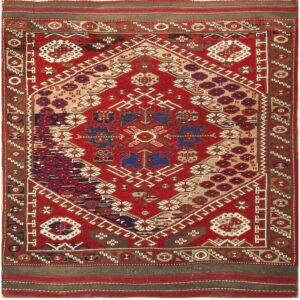
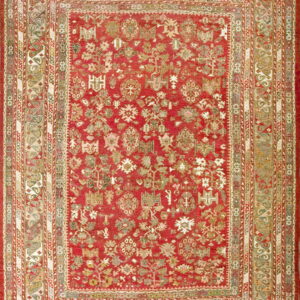
Antique Red Turkish Bergama Knotted Square Rug
$3,000.00 Antique RugsSKU: 2871Rug sizes: 3 ft 3 in x 3 ft 7 in (0.99 m x 1.09 m) -
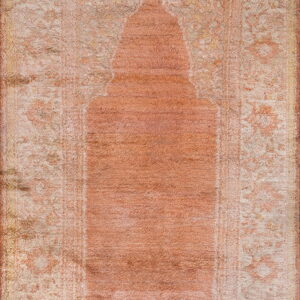
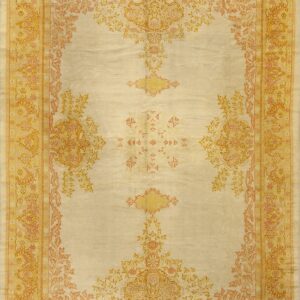
Luxurious Soft Pile Antique Coral Turkish Islamic Prayer Design Angora Oushak Rug
$6,000.00 Antique RugsSKU: 21273Rug sizes: 3 ft 10 in x 5 ft 10 in (1.17 m x 1.78 m) -
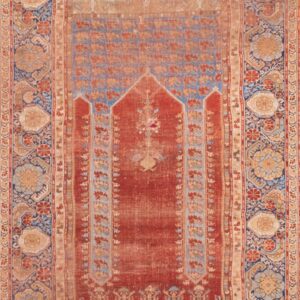
Rustic Tribal Antique Mid 18th Century Turkish Islamic Ghiordes Prayer Design Coral Rug
$18,800.00 Antique RugsSKU: 19687Rug sizes: 4 ft x 6 ft (1.22 m x 1.83 m) -
Antique Turkish Oushak Coral Rug – Rustic Village Pattern
$18,500.00 Antique RugsSKU: 19022Rug sizes: 9 ft x 11 ft 8 in (2.74 m x 3.56 m) -
Soft Decorative Yellow Antique Room Size Turkish Oushak Rug
$18,800.00 Antique RugsSKU: 24806Rug sizes: 8 ft 3 in x 11 ft 6 in (2.51 m x 3.51 m) -
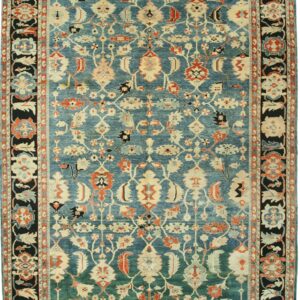
Refined Chic Green Hand Knotted Wool Rug
$5,060.00 New RugsSKU: BA1004Rug sizes: 13 ft 1 in x 20 ft 1 in (3.99 m x 6.12 m) -
Vintage Turkish Kilim Multi Geometric Decorative Wool Flat-Weave Rug, c. 1950s
$1,000.00 Vintage RugsSKU: 7205Rug sizes: 6 ft 4 in x 7 ft (1.93 m x 2.13 m) -
Traditional Geometric Tribal Vintage Mid-Century Turkish Decorative Kilim Rug
$700.00 Vintage RugsSKU: 7204Rug sizes: 5 ft 9 in x 6 ft 6 in (1.75 m x 1.98 m) -
1950s Mid-Century Anatolian Flat-Weave Multi Geometric Turkish Kilim Square Rug
$700.00 Vintage RugsSKU: 7203Rug sizes: 6 ft x 6 ft (1.83 m x 1.83 m) -
1950s Vintage Mid-Century Rustic Chic Geometric Turkish Kilim Flatweave Wool Rug
$1,200.00 Vintage RugsSKU: 7202Rug sizes: 6 ft 9 in x 7 ft 10 in (2.06 m x 2.39 m) -
1950s Vintage Red Field Stripe Modern Turkish Decorative Kilim Wool Small Rug
$800.00 Vintage RugsSKU: 7201Rug sizes: 5 ft 3 in x 6 ft 6 in (1.60 m x 1.98 m) -
Vintage Multicolor Geometric Turkish Kilim Hand-Woven Wool Flat-Weave Rug 1950s
$800.00 Vintage RugsSKU: 7200Rug sizes: 5 ft 4 in x 7 ft 1 in (1.63 m x 2.16 m) -
1950s Mid-Century Square Geometric Anatolian Turkish Kilim Wool Rug 5’6″x5’6″
$700.00 Vintage RugsSKU: 7199Rug sizes: 5 ft 6 in x 5 ft 6 in (1.68 m x 1.68 m) -
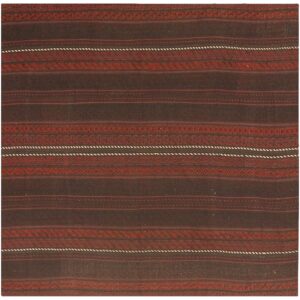
1950s Mid-Century Anatolian Square Stripe Flat-Weave Turkish Kilim Rug 7’8″x7’9
$800.00 Vintage RugsSKU: 7198Rug sizes: 7 ft 8 in x 7 ft 9 in (2.34 m x 2.36 m) -
1950s Mid-Century Anatolian Rustic Geometric Flat-Weave Turkish Kilim Rug 5×7
$1,100.00 Vintage RugsSKU: 7197Rug sizes: 5 ft 9 in x 7 ft 4 in (1.75 m x 2.24 m) -
Vintage Authentic Traditional Tribal Stripe Hand-Woven Turkish Kilim Wool Rug
$1,000.00 Vintage RugsSKU: 7196Rug sizes: 6 ft 1 in x 6 ft 11 in (1.85 m x 2.11 m) -
1950s Vintage Square Turkish Decorative Kilim Hand-Woven Wool Rug (6’9″ x 6’9″)
$1,000.00 Vintage RugsSKU: 7195Rug sizes: 6 ft 9 in x 6 ft 9 in (2.06 m x 2.06 m) -
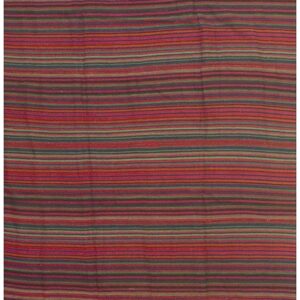
Mid-Century Anatolian Flat-Weave Turkish Kilim Multicolor Stripe Square Rug
$800.00 Vintage RugsSKU: 7194Rug sizes: 5 ft 8 in x 5 ft 9 in (1.73 m x 1.75 m) -
Vintage Square Turkish Kilim Hand-Woven Wool Flat-Weave Rug, c. 1950s 5’2″ x 5’2
$800.00 Vintage RugsSKU: 7192Rug sizes: 5 ft 2 in x 5 ft 2 in (1.57 m x 1.57 m) -
Vintage Turkish Kilim Geometric Modern Hand-Woven Wool Flat-Weave Rug c. 1950s
$700.00 Vintage RugsSKU: 7191Rug sizes: 5 ft 3 in x 5 ft 8 in (1.60 m x 1.73 m) -
Authentic Mid-20th Century Anatolian Multi Stripe Turkish Kilim Flat-Weave Rug
$800.00 Vintage RugsSKU: 7189Rug sizes: 5 ft 5 in x 5 ft 7 in (1.65 m x 1.70 m) -
1930s Multicolor Geometric Antique Turkish Village Flatwoven Wool Kilim Rug
$800.00 Vintage RugsSKU: 90-1012Rug sizes: 6 ft 8 in x 8 ft 6 in (2.03 m x 2.59 m) -
1930s Multi Geometric Antique Turkish Village Traditional Kilim Small Rug
$600.00 Vintage RugsSKU: 90-1011Rug sizes: 5 ft 8 in x 7 ft 9 in (1.73 m x 2.36 m) -
1930s Mid-Sized Multi Geometric Antique Turkish Village Kilim Flatweave Wool Rug
$700.00 Vintage RugsSKU: 90-1015Rug sizes: 5 ft 7 in x 7 ft 10 in (1.70 m x 2.39 m) -
1950s Brown Multi Field Vintage Modern Stripe Geometric Turkish Kilim Small Rug
$700.00 Vintage RugsSKU: 7185Rug sizes: 5 ft 8 in x 6 ft 2 in (1.73 m x 1.88 m) -
1950s Multicolor Stripe Geometric Vintage Turkish Decorative Kilim Flatweave Rug
$1,000.00 Vintage RugsSKU: 7186Rug sizes: 6 ft 11 in x 8 ft 3 in (2.11 m x 2.51 m) -
Mid Century Multicolor Red Wine Vintage Turkish Decorative Kilim Square Wool Rug
$700.00 Vintage RugsSKU: 7188Rug sizes: 5 ft 3 in x 5 ft 4 in (1.60 m x 1.63 m) -
1950s Brown Field Geometric Vintage Turkish Kilim Flatweave Wool Square Rug
$700.00 Vintage RugsSKU: 7247Rug sizes: 5 ft 7 in x 6 ft (1.70 m x 1.83 m) -
1950s Multicolor Geometric Vintage Turkish Decorative Flatweave Wool Kilim Rug
$600.00 Vintage RugsSKU: 7248Rug sizes: 4 ft 8 in x 7 ft (1.42 m x 2.13 m) -
Vintage 1950s Geometric Multicolor Ground Flatweave Turkish Decorative Kilim Rug
$1,100.00 Vintage RugsSKU: 7249Rug sizes: 5 ft 8 in x 7 ft 3 in (1.73 m x 2.21 m) -
1950s Multicolor Field Geometric Stripe Vintage Turkish Kilim Wool Small Rug
$800.00 Vintage RugsSKU: 7250Rug sizes: 5 ft 9 in x 6 ft 9 in (1.75 m x 2.06 m) -
1950s Brown Field Geometric Stripe Vintage Turkish Decorative Kilim Square Rug
$1,000.00 Vintage RugsSKU: 7254Rug sizes: 6 ft 3 in x 6 ft 4 in (1.91 m x 1.93 m) -
1950s Vintage Multicolor Stripe Turkish Decorative Kilim Flatweave Small Rug
$800.00 Vintage RugsSKU: 7184Rug sizes: 6 ft 3 in x 7 ft 7 in (1.91 m x 2.31 m) -
1950s Brown Field Geometric Vintage Turkish Decorative Wool Kilim Small Rug
$1,100.00 Vintage RugsSKU: 7251Rug sizes: 6 ft 9 in x 7 ft 2 in (2.06 m x 2.18 m) -
Vintage Mid-Century Colorful Stripe Turkish Kilim Traditional Flatweave Wool Rug
$800.00 Vintage RugsSKU: 7183Rug sizes: 5 ft 9 in x 7 ft 6 in (1.75 m x 2.29 m)
What is an antique Turkish rug?
An antique Turkish rug is a hand-knotted or flatwoven rug made in Anatolia, the peninsula of modern Turkey, roughly 100 years ago or more. Scholars often prefer the term Anatolian, because it takes in the Turkish, Greek, Armenian and Kurdish weavers who all worked in the region. Turkish rugs were among the first carpets to reach Europe as luxury imports: 15th and 16th century Anatolian rugs appear so often in Renaissance paintings that some designs are still named after the painters, such as Holbein and Lotto. The oldest surviving Anatolian knotted-pile carpets are the 13th century fragments found in 1905 in the Alâeddin Mosque in Konya. For the full history, read our rugs of Turkey reference.
What are the main types of Turkish rugs?
Turkish weaving divides into court workshops, commercial export centers, village weaving and nomadic weaving, and each produced a different kind of rug. These are the groups you will find in our collection.
- Oushak. The great export center of western Anatolia. Its 15th to 17th century star and medallion carpets were admired across Europe, and its late 19th century revival carpets, woven in room sizes and oversizes, are among the most decorator-demanded antique rugs today. See our antique Oushak rugs guide.
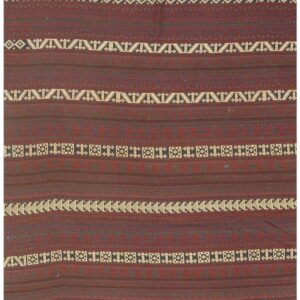
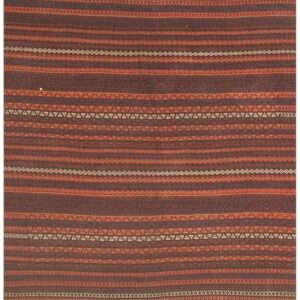
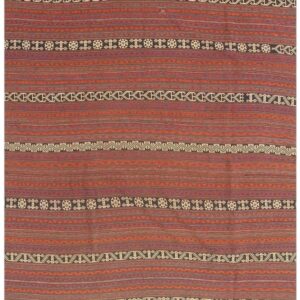
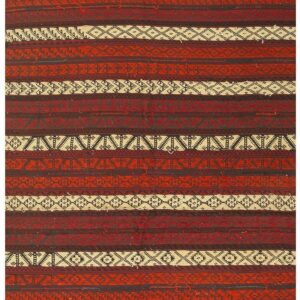
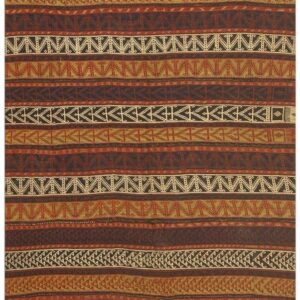
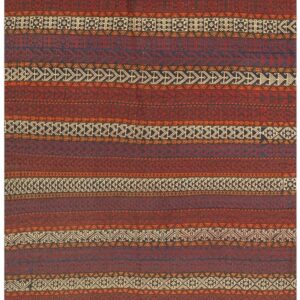
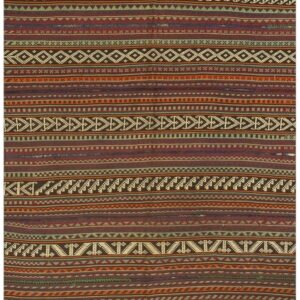
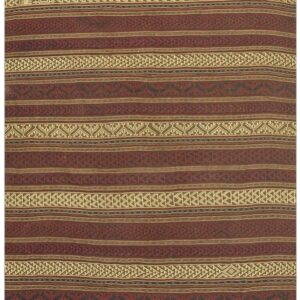
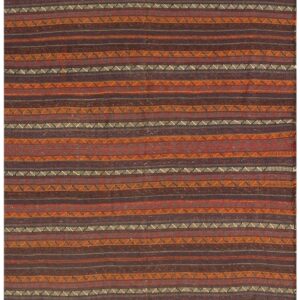
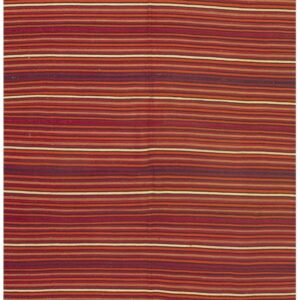
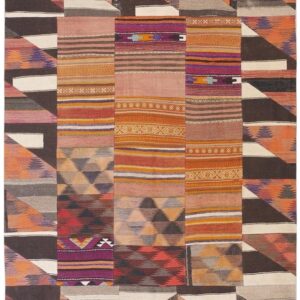
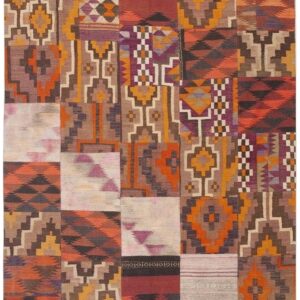
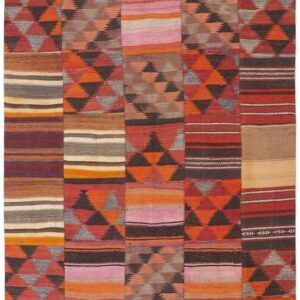
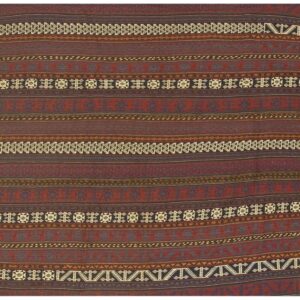
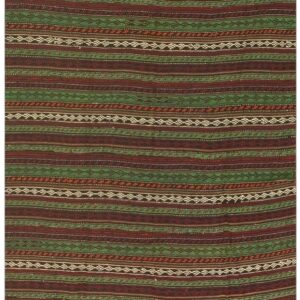
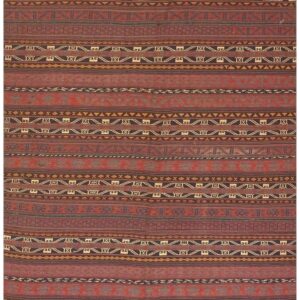
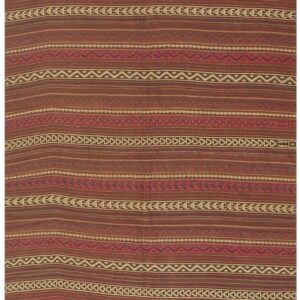
- Kilims. Flatwoven rugs with no pile, made by weaving colored wefts tightly through the warps, most often in slit-weave. Anatolia has one of the richest kilim traditions, with bold medallions, hooked motifs and protective symbols. See our antique kilim guide.
- Ghiordes, Kula and Konya prayer rugs. Rugs built around the mihrab, the prayer niche. By the 18th century Ghiordes prayer rugs were sought after by European collectors; Ghiordes niches tend to be stepped and elegant, Konya pieces bolder and more archaic.
- Bergama and Yörük weaving. Village and nomadic rugs with an all-wool construction, glossy wool and large-pattern geometric designs in saturated madder reds and indigo blues. A Bergama may even be slightly wider at one end, from the changing tension of a portable ground loom.
- Yastik. Small cushion-format rugs, woven as pillow faces, that show the village design vocabulary at a small scale.
- Hereke. The court workshop tradition, using silk or very fine cotton foundations and very high knot density for a level of detail close to fine painting.
How can you tell if a Turkish rug is antique?
Start with the knot and the foundation. Turkish pile rugs use the symmetrical Ghiordes knot, and village and nomadic pieces are often wool on wool, which gives them a springy, supple handle. Then check the rest:
- Dyes. Before the late 19th century, Anatolian weavers colored their wool with madder reds, indigo blues and vegetal yellows that age into deep, luminous tones with visible abrash. Flat, uniform color and bright white cotton point to later production. Our natural vs synthetic dyes guide explains how to check.
- Wool. Hand-spun wool is slightly irregular, and good Anatolian wool, especially in Oushak, catches the light with a distinctive sheen.
- Drawing. Village rugs were woven from memory, not from a cartoon, so borders improvise their corners and motifs vary slightly. That irregularity is a mark in the rug's favor.
- Kilim structure. In a kilim, fine, crisp slits where two colors meet are a mark of good weaving, and true slit-weave kilims are usually reversible.
- Honest wear. Real age shows at the ends, the sides and the folds, and follows use. Evenly distressed or chemically washed surfaces point to reproduction.
For how age is established across all types, see antique vs vintage vs new rugs, and for what knot counts do and do not tell you, see rug knots and KPSI.
How do you decorate with an antique Turkish rug?
Match the type to the room: soft-toned Oushak carpets anchor living rooms in both traditional and contemporary interiors, bold village rugs and prayer rugs bring color to studies, bedrooms and entries, and kilims work on floors, walls and upholstery alike.
- Living rooms. A room-size or oversized Oushak warms a large space without dominating it. We hold more than 130 room-size Turkish rugs and more than 30 oversized carpets.
- Square rooms. Turkish weaving is unusually rich in square formats, from 4 x 4 and 6 x 6 up to oversized square carpets, which suit square rooms and round tables.
- Small spaces. Prayer rugs, yastiks and scatter-size village rugs suit a landing, a bedside or a reading corner, and look good grouped together.
- Kilims. Light and flat, they layer well over sisal or wall-to-wall carpet, hang easily on a wall, and upholster benches, ottomans and pillows.
- Get the size right. Our rug size guide explains how to measure, and every listing gives the measured size.
How do you care for an antique Turkish rug?
Put a good pad underneath, rotate the rug once or twice a year, vacuum gently without a beater bar, keep it out of prolonged direct sun, and have it washed by a rug specialist. Turkish wool is resilient, and a well-kept antique handles daily life well.
- Kilims need a non-slip pad. With no pile to grip, a flatweave slides easily on a hard floor.
- No steam cleaning. Blot spills at once with plain water, never rub or soak, and leave deeper cleaning to a specialist.
- Professional washing. Our rug cleaning service in Manhattan washes hand-knotted rugs and flatweaves with a pH-balanced process, after checking for old repairs and fragile areas.
- Moths. Moth larvae feed on wool in dark, undisturbed spots, including the underside of a rolled rug in storage. Our moth-proofing service washes the rug first and then treats the fibers.
- Shape. Village rugs woven on portable looms can be out of square. Blocking and stretching can help a rug lie flat.
Glossary of antique Turkish rug terms
These are the terms you will meet most often in our listings and guides for Turkish rugs.
- Anatolia
- The peninsula that makes up most of modern Turkey, also called Asia Minor. Many scholars prefer "Anatolian rugs" to "Turkish rugs."
- Ghiordes knot
- The symmetrical or Turkish knot, tied around two warps. Named for the town of Ghiordes (Gördes) in western Anatolia.
- Kilim
- A flatwoven rug with no pile, where the colored wefts form both surface and pattern. Read our kilim guide.
- Slit-weave
- The classic kilim technique, which leaves a small vertical slit wherever two color areas meet.
- Mihrab
- The prayer niche that gives a prayer rug its arch-shaped field, pointed in the direction of prayer.
- Elibelinde
- A motif of a stylized figure with hands on hips, common in Anatolian kilims and village rugs.
- Yörük
- The nomadic and semi-nomadic peoples of Anatolia, whose rugs, bags and tent furnishings were woven for their own use.
- Yastik
- A small cushion-format rug woven as a pillow face.
- Hereke
- The court workshop tradition, known for silk and very finely knotted rugs.
- Holbein and Lotto carpets
- 15th and 16th century Anatolian rugs, often from Uşak, named after the European painters who pictured them.
- Angora wool
- Lustrous fiber from the Angora goats of the Ankara region, used in some of the most prized 19th century Oushak rugs.
- Abrash
- Soft bands of tonal variation within one color, from changes in dye lot. A normal feature of naturally dyed wool.
Antique Turkish Rugs: Frequently Asked Questions
How many antique Turkish rugs does Rugs On Net have?
We have more than 250 Turkish rugs in stock, of which more than 160 are dated 1925 or earlier and more than 100 are 19th century. About half are Oushak rugs, more than 50 are kilims, and the rest include Ghiordes, Konya, Sivas, Bergama, Kula and Yörük pieces, all held at our New York showroom.
What is the difference between Turkish and Persian rugs?
The clearest structural difference is the knot: Turkish rugs use the symmetrical Ghiordes knot, while most Persian city rugs use the asymmetrical Persian knot. Turkish village weaving also tends toward bold, angular motifs and wool foundations, where Persian city rugs favor curvilinear floral drawing on cotton. Neither rule is absolute; Tabriz in Persia, for example, uses the Turkish knot.
Are Oushak rugs Turkish?
Yes. Oushak rugs come from the town of Uşak and its surrounding villages in western Anatolia, Turkey. They are the largest group in our Turkish collection, and they have their own page: antique Oushak rugs.
Are antique Turkish kilims durable enough for the floor?
Yes, with a non-slip pad underneath, since kilims are thinner and lighter than pile rugs. They also make excellent wall hangings and upholstery, and they are easy to roll, store and move.
Do you ship antique Turkish rugs, and can I return one?
Yes. Shipping is free within the continental United States, and international orders ship at a flat rate of $495 per order ($350 to Canada, $395 to Mexico), with tracking. Orders ship in 1 to 3 business days. Customs fees, import duties and taxes are paid by the buyer on delivery. US buyers get a 4-day in-home trial starting the day the rug is delivered; see our shipping policy and returns policy.
Do you buy or appraise antique Turkish rugs?
Yes. We buy antique rugs outright: send photographs and measurements, and Kevin Rahmanan reviews the photos and decides. Consignment is also offered. For a value, we give a free Quick Opinion by phone or email from photographs, and a free In-Depth Appraisal Report for insurance, estate valuation and documentation. See sell your antique rug or contact us.