Antique Chinese Rugs
Key takeaways: antique Chinese rugs
- What they are: hand-knotted Chinese carpets roughly 100 years old or more, from 17th to 19th century Ningxia rugs through late Qing Peking rugs to the Chinese Art Deco rugs of the 1920s.
- How to recognize one: open fields that let a few symbols breathe, such as a dragon, a shou medallion or a pair of bats, framed by a fret border, instead of the edge-to-edge pattern of Persian and Turkish rugs.
- Three main families: Ningxia is the oldest and most scholarly, Peking is the versatile blue and ivory classic, and Art Deco is the boldest, with saturated color and thick, lustrous wool.
- The most collected maker: Walter Nichols, an American wool trader whose Tianjin workshops set the standard for Chinese Art Deco rugs from 1924 until production ended in 1939.
- Our collection: more than 2,200 Chinese rugs, of which more than 1,850 are antique, one of the largest collections of antique Chinese rugs in the United States, held at our New York showroom.
- Buying with confidence: every rug is inspected before it is listed, each listing states origin, approximate age, materials and measured size, shipping is free within the continental United States, and there is a 4-day in-home trial. See buying with confidence.
Shop the World’s Premier Collection of Antique Chinese Rugs
Rugs On Net keeps more than 1,850 antique Chinese rugs in stock in New York, one of the largest collections of antique Chinese rugs in the United States, from 17th-century Ningxia carpets and 19th-century Peking rugs to the 20th-century Art Deco works of Walter Nichols. Antique Chinese carpets follow a weaving tradition distinct from Persian rugs and other oriental carpets. Their composition is balanced, their imagery symbolic, and their use of space refined. These “open field” works of art anchor traditional and contemporary interiors alike, and this is the page where collectors and designers identify authentic pieces and buy them.
Whether you are a designer seeking a vibrant Walter Nichols Art Deco “bridge piece” or a collector hunting for a rare, scholarly Ningxia or Peking carpet, our gallery offers unparalleled access to over 100 years of Chinese textile history. Every rug in our collection is inspected for condition and construction before it is listed.
These hand-knotted Chinese wool rugs, and the rarer silk pieces among them, combine elegance with exceptional craftsmanship. Read more about Chinese art deco, foo dogs Chinese lions design motif rugs, or shop our incredible Collections of:
Antique Chinese Art Deco rugs, antique Ningxia rugs, antique Peking rugs and Walter Nichols’ iconic Chinese Art Deco rugs
Every piece is held at our New York showroom at 36 East 31st Street, alongside vintage and new Chinese rugs. Start with our collector’s guide to antique Chinese rugs, learn to tell Peking, Ningxia and Art Deco rugs apart, read the Walter Nichols Art Deco rug guide, or find out what your antique Chinese rug is worth. Interior designers can buy through our trade program; delivery inside the U.S. is complimentary.
Antique Chinese rugs at a glance
The table below summarizes the main facts about antique Chinese rugs, drawn from our guides and from the live collection on this page. Counts and prices were taken from our in-stock antique Chinese rugs on September 27, 2026 and change as rugs sell.
| Feature | Antique Chinese rugs |
|---|---|
| Main weaving centers | Ningxia in north-central China; Peking (Beijing); Tianjin (Tientsin), the port city where most Art Deco rugs were made for export; Baotou in the Inner Mongolia region |
| Periods | Ningxia, 17th to 19th century; Peking, late 19th to early 20th century; Baotou, many from the late 19th and early 20th centuries; Chinese Art Deco, 1920s to 1930s |
| Main types in our collection | Peking, more than 800; Chinese Art Deco, more than 700; Walter Nichols, more than 400; Ningxia, more than 150; Baotou, about 50 |
| Most common dates | Circa 1920 is the largest group, followed by 19th century pieces, circa 1930 and circa 1900. The oldest are 18th century. |
| Materials | Wool pile on a cotton foundation for the great majority; a smaller group of silk and silk with metallic thread pieces |
| Construction and knotting | Hand-knotted. Ningxia rugs are loosely knotted with a soft, supple handle. Peking rugs are more densely knotted. Walter Nichols rugs follow a strict 90-line standard, while traditional Chinese rugs often run 60 to 70 line. |
| Pile | Art Deco rugs have a thick, plush pile, about one pound per square foot, often carved around the motifs so the design stands in relief |
| Typical palettes | Ningxia: golds, apricots, ivories and faded indigo. Peking: several blues on ivory or champagne grounds. Baotou: blues and creamy whites with camel. Art Deco: jewel tones such as magenta, jade and tangerine, "Nichols Blue" navy, and tonal camel and champagne. Ivory and blue are the most common colors in our collection. |
| Signature motifs | Dragons and phoenixes, bats, the shou longevity symbol, peonies and lotus, cloud bands, and the key fret border. See antique Chinese rug symbols and meanings. |
| Most common sizes in stock | 9 x 12, more than 400; 8 x 10, more than 250; 2 x 3, more than 170; 6 x 9, more than 140; 10 x 14, more than 120; 3 x 5, more than 120; 12 x 18, more than 60; 12 x 15, more than 40 |
| Price range (antique, in stock) | From $450 to more than $200,000. The median is about $10,200, and half of our antique Chinese rugs are priced between $5,900 and $15,600. Prices are in US dollars. For what drives value, see what is my antique Chinese rug worth. |
Prefer to see a rug in person?
-
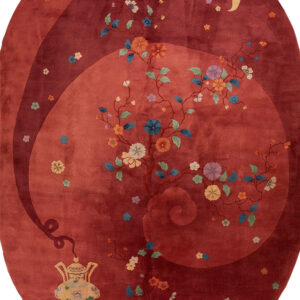
Antique Art Deco Chinese Oval Rug with Artistic Swirl Pattern in Red
$22,500.00 Antique RugsSKU: 24046Rug sizes: 7 ft 9 in x 11 ft (2.36 m x 3.35 m) -
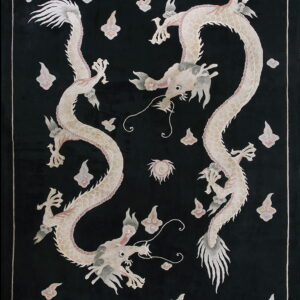
Vintage Black Double Five Claw Chinese Dragons Design Rug
$9,000.00 Vintage RugsSKU: 25692Rug sizes: 9 ft x 12 ft (2.74 m x 3.66 m) -
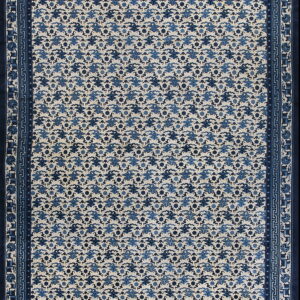
Rectangle Antique 1920s Chinese – Peking Wool Blue Knotted Room Size Rug
$19,500.00 Antique RugsSKU: 25652Rug sizes: 10 ft x 13 ft 2 in (3.05 m x 4.01 m) -
Vintage Benevolent 5 Claw Dragon Design Chinese Deco Rug
$9,800.00 Vintage RugsSKU: 25506Rug sizes: 5 ft 7 in x 8 ft 7 in (1.70 m x 2.62 m) -
Chinese Wool – Peking 1890s Knotted Large Oversized Big Rectangle Blue Antique Rug
$70,200.00 Antique RugsSKU: 25483Rug sizes: 12 ft x 23 ft (3.66 m x 7.01 m) -
Minimalist Vintage Light Blue and Ivory White Color Open Field Chinese Rug
$4,300.00 Vintage RugsSKU: 21865Rug sizes: 6 ft 2 in x 9 ft 2 in (1.88 m x 2.79 m) -
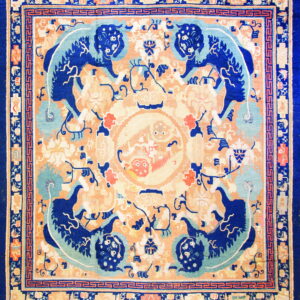
Rare Early 18th Century Antique Foo Dog Chinese Square Ningxia Carpet
$375,000.00 Antique RugsSKU: 21376Rug sizes: 12 ft 8 in x 13 ft 4 in (3.86 m x 4.06 m) -
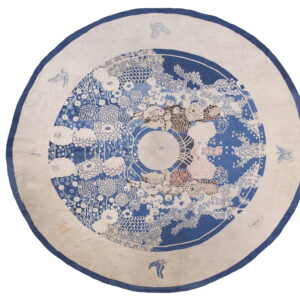
Unique Artistic Antique Chinese Peking Soft Blue Round Peking Pile Rug
$22,500.00 Antique RugsSKU: 21269Rug sizes: 10 ft x 10 ft 6 in (3.05 m x 3.20 m) -
Stunning Antique Chinese Art Deco Carpet by Nichols Workshop Green Hand Knotted Pile Rug
$33,500.00 Antique RugsSKU: 23817Rug sizes: 11 ft 10 in x 17 ft 2 in (3.61 m x 5.23 m) -
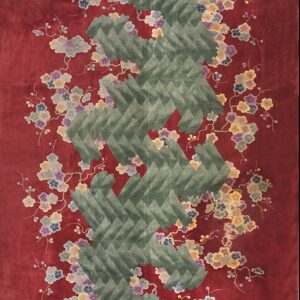
Antique Art Deco Large Room Size Red Allover Rug
$38,000.00 Antique RugsSKU: 23745Rug sizes: 10 ft x 17 ft 6 in (3.05 m x 5.33 m) -
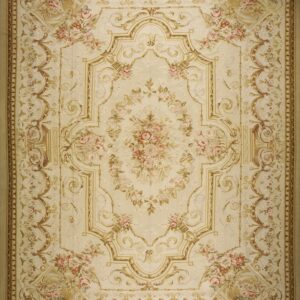
Vintage Large Aubusson Chinese Medallion Knotted Rug
$12,100.00 Vintage RugsSKU: 24671Rug sizes: 14 ft 3 in x 19 ft (4.34 m x 5.79 m) -
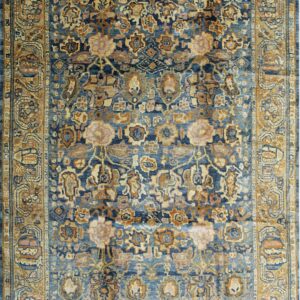
Traditional Blue Mohair Hand Knotted Rug
Price range: $3,800.00 through $15,000.00 New RugsRug sizes: 9 ft 1 in x 12 ft 3 in (2.77 m x 3.73 m), 8 ft x 10 ft (2.44 m x 3.05 m), 10 ft x 14 ft (3.05 m x 4.27 m), 12 ft x 18 ft (3.66 m x 5.49 m) -
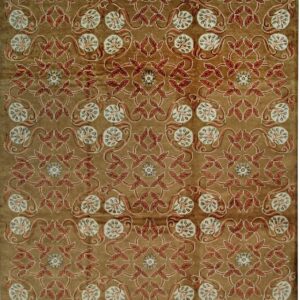
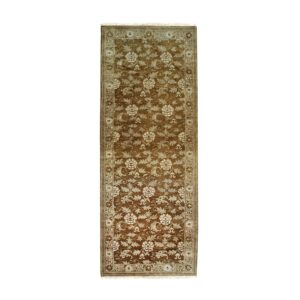
Warm Rust and Gold Hand Knotted Wool Rug
Price range: $1,295.00 through $6,927.00 New RugsRug sizes: 9 ft x 12 ft (2.74 m x 3.66 m), 10 ft x 14 ft (3.05 m x 4.27 m), 11 ft x 15 ft 1 in (3.35 m x 4.60 m), 12 ft x 18 ft (3.66 m x 5.49 m), 8 ft x 10 ft (2.44 m x 3.05 m) -
Antique Art Deco Chinese Allover Geometric Knotted Rug
$55,000.00 Antique RugsSKU: 24747Rug sizes: 9 ft 11 in x 13 ft 1 in (3.02 m x 3.99 m) -
Antique Purple Ningxia Chinese Allover Knotted Rug
$17,200.00 Antique RugsSKU: 24745Rug sizes: 6 ft 4 in x 9 ft (1.93 m x 2.74 m) -
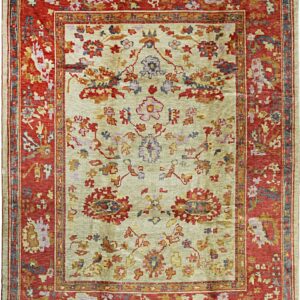
Selene Modair Oushak Ivory and Red Hand Knotted Rug
$5,200.00 New RugsSKU: FAAN13RD9X12Rug sizes: 9 ft 3 in x 12 ft 3 in (2.82 m x 3.73 m) -
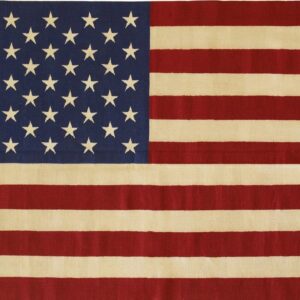
Maya Dazzling USA American Flag Design Flatweave Wool Rug in Coral
$798.00 New RugsSKU: FAM026USA5X8Rug sizes: 5 ft x 8 ft (1.52 m x 2.44 m) -
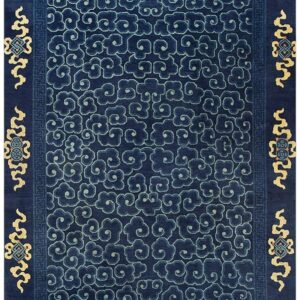
1920s Blue Deep Field Traditional East Asian Chinese Peking Hallway Gallery Rug
$7,800.00 Antique RugsSKU: 26030Rug sizes: 2 ft 3 in x 13 ft (0.69 m x 3.96 m) -
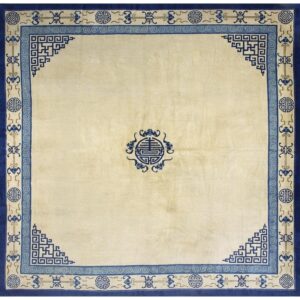
1880s Beige Field Shou Symbols Medallion Antique Chinese Peking Square Rug
$39,000.00 Antique RugsSKU: 25911Rug sizes: 12 ft 10 in x 13 ft 2 in (3.91 m x 4.01 m) -
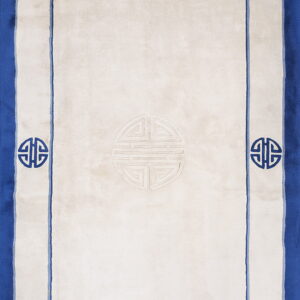
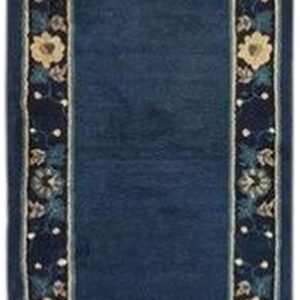
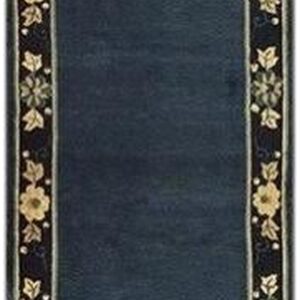
1920s Navy Blue Solid Minimalist Deco Antique Chinese Peking Runner Rug
$7,800.00 Antique RugsSKU: 26028Rug sizes: 3 ft 3 in x 18 ft 1 in (0.99 m x 5.51 m) -
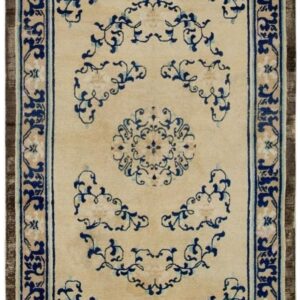
1700s Beige Field Medallion Qing Style Antique Chinese Ningxia Small Rug
$23,400.00 Antique RugsSKU: 25956Rug sizes: 5 ft 3 in x 8 ft 6 in (1.60 m x 2.59 m) -
Handmade Wool Ivory Transitional All Over Ningxia Rug 9 x 12
$1,743.00 New RugsSKU: FAF118BIV9X12Rug sizes: 9 ft x 12 ft (2.74 m x 3.66 m) -
Handmade Wool Beige Transitional All Over Ningxia Gallery Rug 6 x 16
$1,551.00 New RugsSKU: FAF118BG66X16Rug sizes: 6 ft x 16 ft (1.83 m x 4.88 m) -
1920s Beige Field Traditional Symbols Art Antique Chinese Peking Small Rug
$800.00 Antique RugsSKU: 7215Rug sizes: 2 ft x 4 ft 2 in (0.61 m x 1.27 m) -
1920s Beige Field Traditional Symbols Art Antique Chinese Peking Small Rug
$800.00 Antique RugsSKU: 7214Rug sizes: 2 ft x 4 ft 2 in (0.61 m x 1.27 m) -
1890s Classic Blue Ground Medallion Traditional Antique Chinese Peking Rug
$3,000.00 Antique RugsSKU: 40-4976Rug sizes: 3 ft x 5 ft 8 in (0.91 m x 1.73 m) -
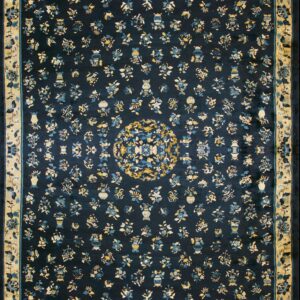
1920s Blue Field Floral Traditional Medallion Antique Chinese Peking Knotted Rug
$13,000.00 Antique RugsSKU: 25664Rug sizes: 11 ft 10 in x 14 ft 6 in (3.61 m x 4.42 m) -
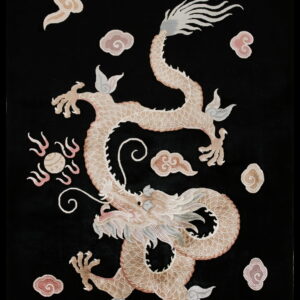
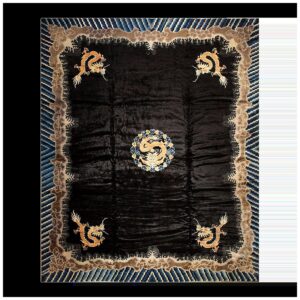
1920s Black Dragon Antique Chinese Peking Rug Handknotted Wool Carpet
$40,500.00 Antique RugsSKU: 9254Rug sizes: 6 ft x 8 ft 6 in (1.83 m x 2.59 m) -
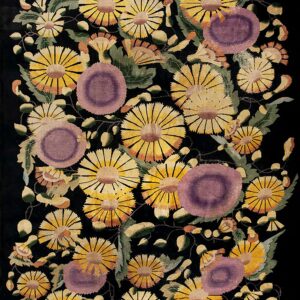
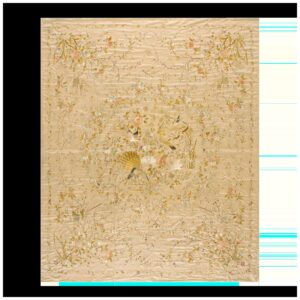
Elegant Ivory Ground With Stylized Floral Design Antique Chinese Silk Embroidery
$22,500.00 TapestrySKU: 24585Rug sizes: 6 ft 2 in x 9 ft 8 in (1.88 m x 2.95 m) -
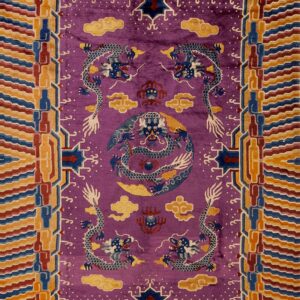
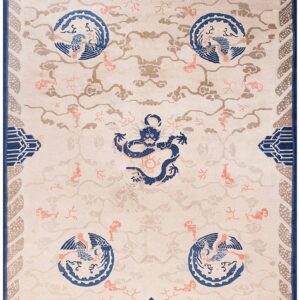
1880s Ivory Blue Coral Antique Traditional Chinese Peking Dragon Rug Wool Carpet
$39,000.00 Antique RugsSKU: 23386Rug sizes: 9 ft 2 in x 11 ft 8 in (2.79 m x 3.56 m) -
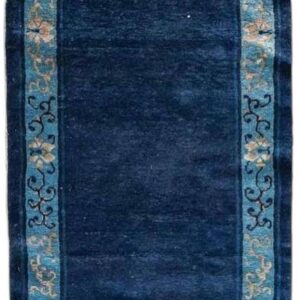
1920s Traditional Navy Blue Open Field Antique Chinese Peking Runner Rug
$5,200.00 Antique RugsSKU: 25518Rug sizes: 2 ft 6 in x 8 ft 6 in (0.76 m x 2.59 m) -
1920s Traditional Geometric Cloud Bands Patterns Antique Chinese Peking Wool Rug
$13,000.00 Antique RugsSKU: 7083Rug sizes: 6 ft 1 in x 8 ft 10 in (1.85 m x 2.69 m) -
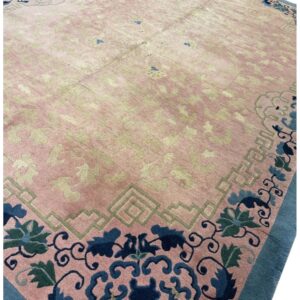
1920s Classic East Asian Pink Field Chinoiserie Antique Chinese Rug
$10,400.00 Antique RugsSKU: 7090Rug sizes: 8 ft x 10 ft (2.44 m x 3.05 m) -
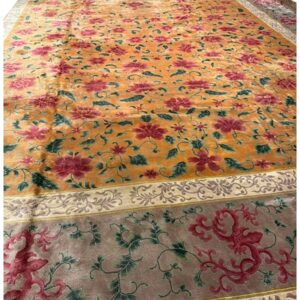
1920s Gold Field Floral Antique Chinese Art Deco Knotted Wool Wide Gallery Rug
$97,500.00 Antique RugsSKU: 6999Rug sizes: 18 ft x 31 ft (5.49 m x 9.45 m) -
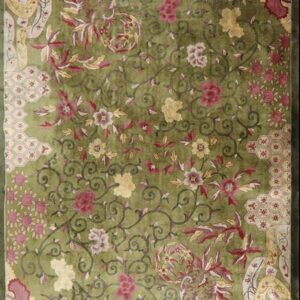
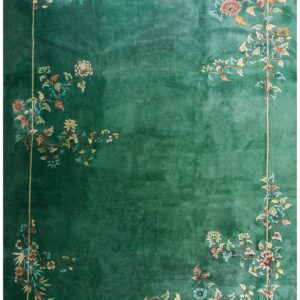
1930s Solid Green Field Floral Antique Chinese Art Deco Carpet Rug
$18,200.00 Vintage RugsSKU: 25804Rug sizes: 12 ft 10 in x 15 ft 9 in (3.91 m x 4.80 m) -
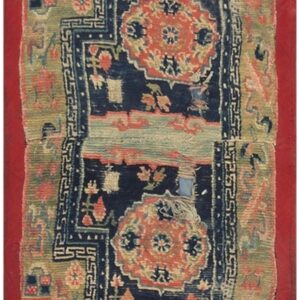
1930s Bllue Medallion Traditional Antique Chinese Horse Cover Tibetan Rug
$4,600.00 Vintage RugsSKU: 6835Rug sizes: 2 ft x 3 ft (0.61 m x 0.91 m)
How do you decorate with an antique Chinese rug?
Choose the family by the room: Peking rugs suit traditional and transitional rooms, Ningxia rugs suit serious collections and quiet, scholarly spaces, and Art Deco rugs suit contemporary, eclectic or glamorous rooms. Because most antique Chinese rugs have open fields rather than allover pattern, they sit comfortably with modern furniture as well as period pieces.
- Let the palette decide. If you are furnishing around what you already own, blues and ivories point to a Peking rug, soft golds point to a Ningxia, and saturated color points to Art Deco.
- Living rooms. Room-size pieces of about 9 x 12 and up anchor a seating area. The open color field of an Art Deco rug lets clean-lined modern furniture stand out without competing with the pattern.
- Dining rooms. On a medallion rug the table hides the center. Many Art Deco and Nichols rugs place their flowers in the corners and along the sides, so the design stays visible around the table.
- Bedrooms and studies. Smaller Peking and Ningxia pieces suit studies, bedrooms and layering. Tonal camel and champagne Nichols rugs give a calm bedroom a quiet sheen.
- Open-plan spaces. A bold Art Deco rug can define a reading corner or a conversation area without the boxed-in feel of a heavy border.
- Get the size right. Our rug size guide explains how to measure, and every listing gives the measured size.
How do you care for an antique Chinese rug?
Keep it out of prolonged direct sunlight, vacuum it gently, rotate it once or twice a year, and have it washed by a rug specialist rather than a general carpet cleaner. Most antique Chinese rugs are wool pile on a cotton foundation, and they last for generations with that routine care.
- Light. Good ambient light shows off the colors, but long exposure to direct sun fades dyes.
- Vacuuming. Vacuum lightly with the beater bar turned off, and keep the fringe and carved pile edges away from the brush roll.
- Rotation. Turning the rug once or twice a year evens out wear and fading.
- Spills. Blot at once, never rub or soak, and test any cleaner on a hidden spot first. When in doubt, ask a specialist before trying a home remedy that could set the stain.
- Padding. A good quality rug pad stops slipping, cushions wear and keeps the rug stable.
- Professional washing. Grit settles deep in the pile and wears the knots from inside. Our rug cleaning service in Manhattan washes hand-knotted rugs with a pH-balanced process, after checking for old repairs and fragile areas.
- Moths. Moth larvae feed on wool and silk in dark, undisturbed spots, such as the part of a rug under a sofa or bed. A clean rug is far less attractive to them. Our moth-proofing service washes the rug first and then treats the fibers directly.
- Shape. A rug that has pulled out of square or will not lie flat can be corrected with blocking and stretching.
- Storage. Clean the rug first, roll it pile-in, wrap it in breathable cotton rather than plastic, and keep it off the floor.
- Provenance. Leave any original Nichols or Fette labels and tags in place, and keep your purchase records. They support future appraisals.
Glossary of antique Chinese rug terms
These are the terms you will meet most often in our listings and guides for antique Chinese rugs.
- Ningxia
- The oldest of the Chinese weaving traditions in our collection, from the Ningxia region of north-central China, woven from the 17th to the 19th century for monasteries, the imperial court and merchants. Soft golds, apricots and ivories, Buddhist and Taoist motifs, and a loose, painterly weave. Shop Ningxia rugs.
- Peking
- Rugs woven around Beijing, named after the old Western spelling of the city, from the late 19th into the early 20th century. Blue and ivory palettes, medallions, peony sprays and fret borders make them the classic antique Chinese look. Shop Peking rugs.
- Baotou
- Hand-knotted rugs from Baotou in the Inner Mongolia region of northern China, many from the late 19th and early 20th centuries, known for calm palettes of blues and creamy whites with camel, and for pictorial and symbolic motifs.
- Tianjin (Tientsin)
- The northern port city that led Chinese rug production for export in the 1920s and 1930s. It was home to the Walter Nichols workshops, and its rugs tend toward bolder palettes and thicker construction than Beijing pieces.
- Chinese Art Deco
- Hand-knotted rugs woven in China in the 1920s and 1930s, mainly for Western buyers, that pair Chinese symbols with modern design: open or borderless fields, asymmetric layouts and saturated jewel tones. Read our Chinese Art Deco guide.
- Walter Nichols
- An American wool grader who settled in Tianjin and founded Nichols Super Yarn and Carpets in 1924. His rugs are heavy, lustrous and deeply carved, and production ended in 1939. Read the Walter Nichols story.
- Fette (Fette-Li)
- The workshops of Helen Fette and her partner Li Meng Shu in Beijing and Tianjin, the main rival to Nichols. Fette rugs have a softer, more painterly look, often in pastels, and a flexible handle from thinner cotton warps.
- Super Yarn and the Mule System
- The machine-spun, long-staple wool Nichols used, spun on the "Mule System." After washing it takes on a reflective, silk-like sheen that is a hallmark of his rugs.
- 90-line
- A measure of knot density. Walter Nichols rugs follow a strict 90-line standard, while traditional Chinese rugs often run 60 to 70 line.
- Incising (carving)
- Cutting the pile at an angle around the motifs after weaving, so flowers and dragons stand out in relief. It is a signature of Chinese Art Deco rugs, and deepest on Nichols pieces.
- Shou medallion
- A stylized, often round form of the Chinese character for longevity, used as a central medallion, scattered through the field or worked into borders.
- Fret border (key fret)
- The squared, running maze border that is the signature frame of Chinese rugs, often read as thunder or unbroken continuity.
- Cloud band
- Scrolling cloud forms in the field or border that stand for heaven and the sky, the realm of the dragon. On Art Deco rugs they are often reduced to a stylized swirl.
- Fu (bat) and the Five Blessings
- The word for bat sounds like the word for good fortune, so a bat is a wish for happiness. Five bats together stand for the Five Blessings: long life, wealth, health, love of virtue and a peaceful death.
- Five-clawed dragon
- A dragon with five claws was historically reserved for the emperor and the imperial household. Most antique Chinese rugs show dragons with three or four claws.
Antique Chinese Rugs: Frequently Asked Questions
What makes a Chinese rug antique?
In the rug trade a piece is antique once it is roughly 100 years old, so antique Chinese rugs are those woven before about 1930: Ningxia carpets of the 17th to 19th centuries, Peking rugs of the late Qing dynasty, and the earliest Chinese Art Deco pieces of the 1920s. Rugs from the 1930s to the 1970s are described as vintage. Every rug page on this site states its circa date.
What is the difference between Peking, Ningxia and Chinese Art Deco rugs?
Ningxia rugs are the oldest, with pale fields, soft wool and archaic Buddhist and Taoist motifs. Peking rugs, woven around Beijing from the 1880s to the 1920s, use denser knotting, blue and ivory palettes and formal medallion, dragon and cloud-band designs. Chinese Art Deco rugs of the 1920s and 1930s, many from the Walter Nichols workshops in Tianjin, have thick carved pile, open fields and bold jewel colors. Our comparison of the three types goes deeper.
Who was Walter Nichols?
Walter Nichols was an American wool trader who opened workshops in Tianjin in 1924 and produced the finest Chinese Art Deco rugs: heavy hand-knotted wool, washed for luster, in saturated blues, corals and greens. Nichols rugs are among the most collected Chinese rugs today. Read the Walter Nichols Art Deco rug guide or shop the Walter Nichols collection.
How can I tell if an antique Chinese rug is hand-knotted?
Turn it over. On a hand-knotted rug the design is as clear on the back as on the front, each knot is visible, the fringe is the continuation of the warp threads rather than sewn on, and small irregularities in pattern and dimensions are normal. Machine-made copies show a uniform back, a glued or stitched fringe and perfectly repeating motifs. Our buying and identification guide covers the full checklist.
How many antique Chinese rugs does Rugs On Net have, and can I see them in person?
More than 1,850 antique Chinese rugs are in stock, alongside vintage and new Chinese pieces, one of the largest such collections in the United States. They are held at our New York showroom at 36 East 31st Street, 9th floor. Every rug can also be placed in your own room online with the View in Room tool on its page.
Do you ship antique Chinese rugs free within the United States?
Yes. Delivery inside the U.S. is complimentary on every rug. International orders ship at a flat rate, with duties and taxes paid by the buyer at delivery. Interior designers can also buy through our trade program.
Do antique Chinese rugs work in modern interiors?
Yes. Most antique Chinese rugs leave open space around a few symbols instead of covering the field with pattern, so they sit easily with clean-lined modern furniture. Chinese Art Deco rugs of the 1920s and 1930s, with their open color fields and asymmetric layouts, are the most natural fit for contemporary rooms, while blue and ivory Peking rugs suit transitional spaces.
Are antique Chinese rugs made of silk?
Most are not. The great majority of antique Chinese rugs have a wool pile on a cotton foundation, and Walter Nichols rugs are known for a lustrous wool that looks almost like silk. A smaller group of antique Chinese rugs is woven in silk or in silk with metallic thread, and each listing on this site states the materials.
How should I clean an antique Chinese rug?
Vacuum it gently with the beater bar off, blot spills at once without rubbing or soaking, and have it washed by a rug specialist rather than a general carpet cleaner. Our rug cleaning service washes hand-knotted rugs with a pH-balanced process, and moth-proofing after washing protects the wool from moth larvae.
Can I sell or get an appraisal of an antique Chinese rug?
Yes. We buy antique rugs outright: send photographs and measurements, and Kevin Rahmanan reviews the photos and decides. Consignment is also offered. For a value, we give a free Quick Opinion by phone or email from photographs, and a paid In-Depth Appraisal Report for insurance, estate valuation and documentation. See what is my antique Chinese rug worth or contact us.
Watch: from our New York gallery
Kevin Rahmanan shows a fragment of the Tiffany Palace Carpet, a late Ming dynasty imperial carpet woven in China around 1630, and explains where the other pieces of the carpet are known to be.
About 300 years old and in remarkable condition, this Chinese chair back cover is so large it likely belonged to a throne or an important ceremonial chair.
More on our YouTube channel.