
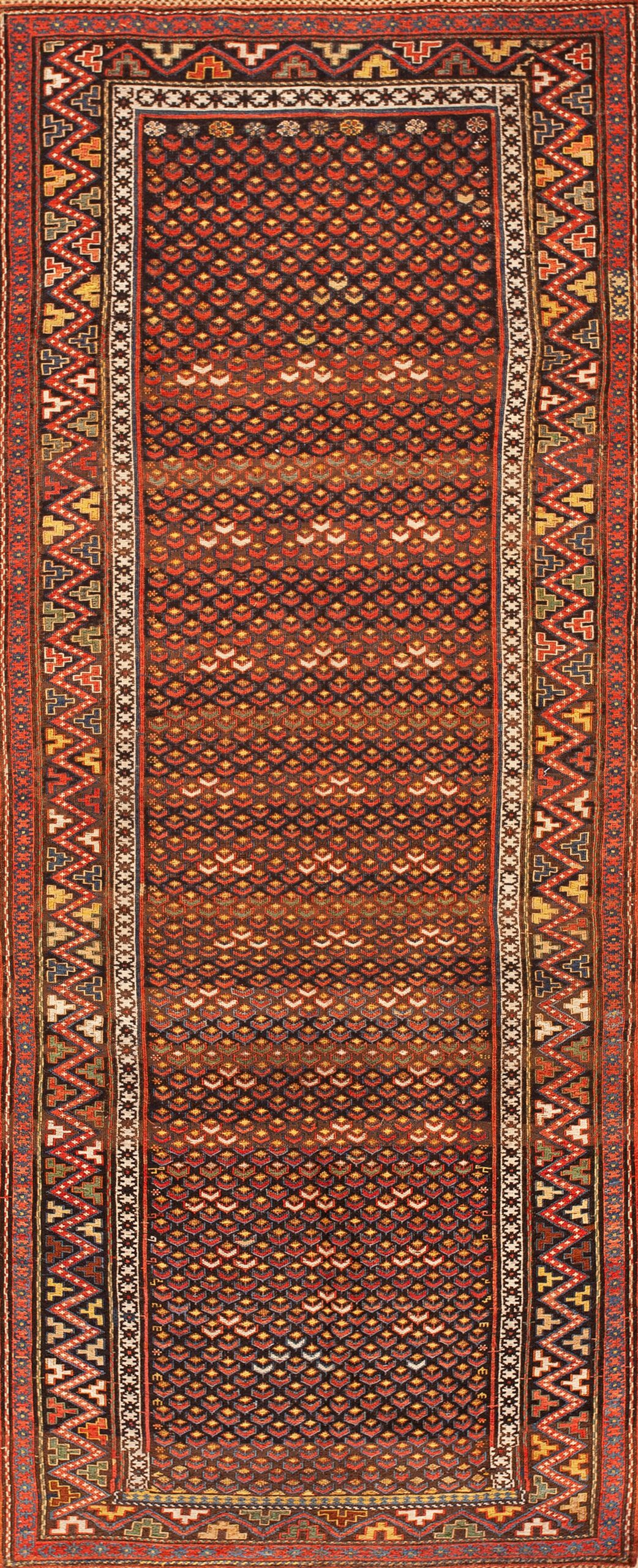
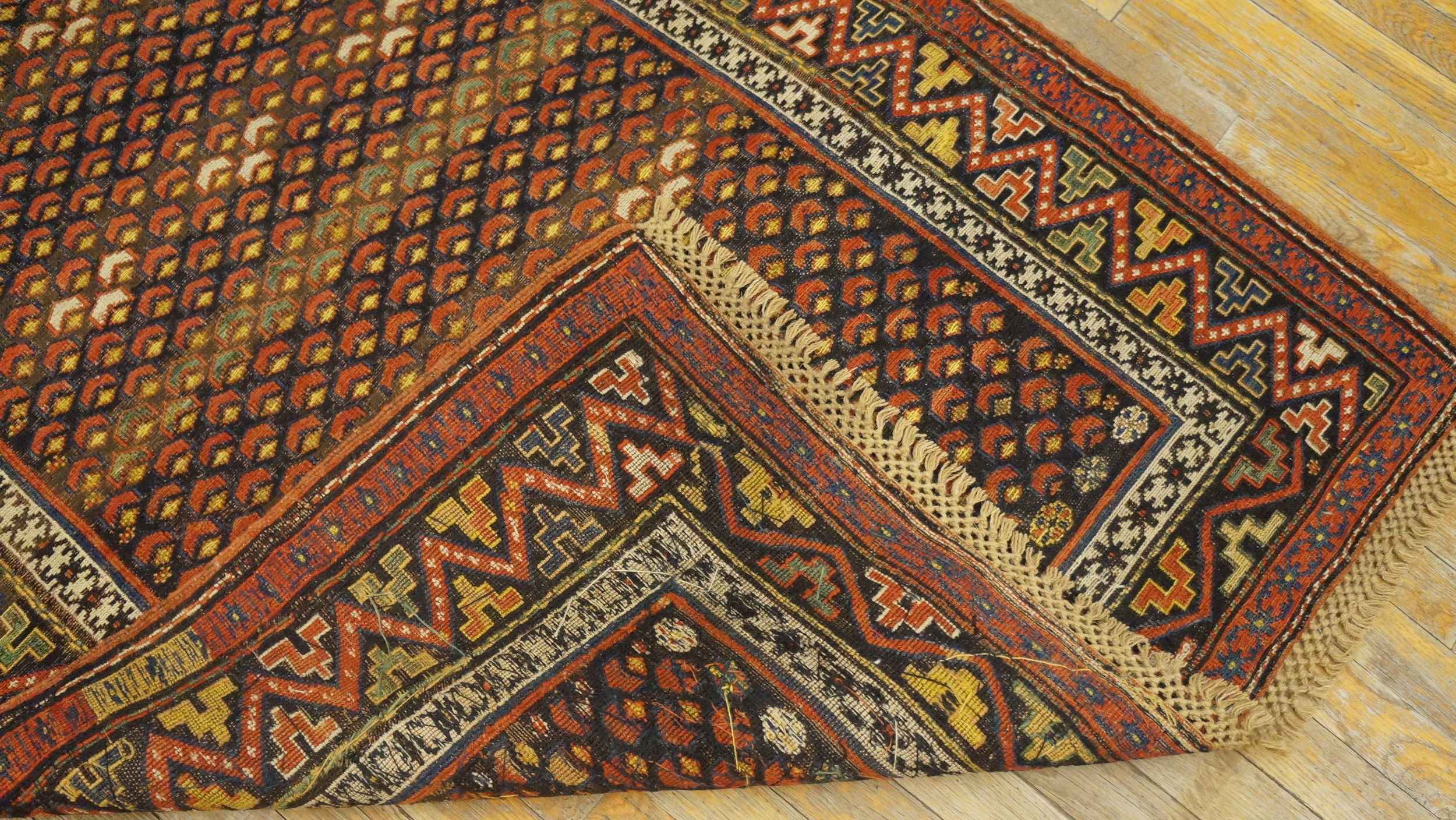
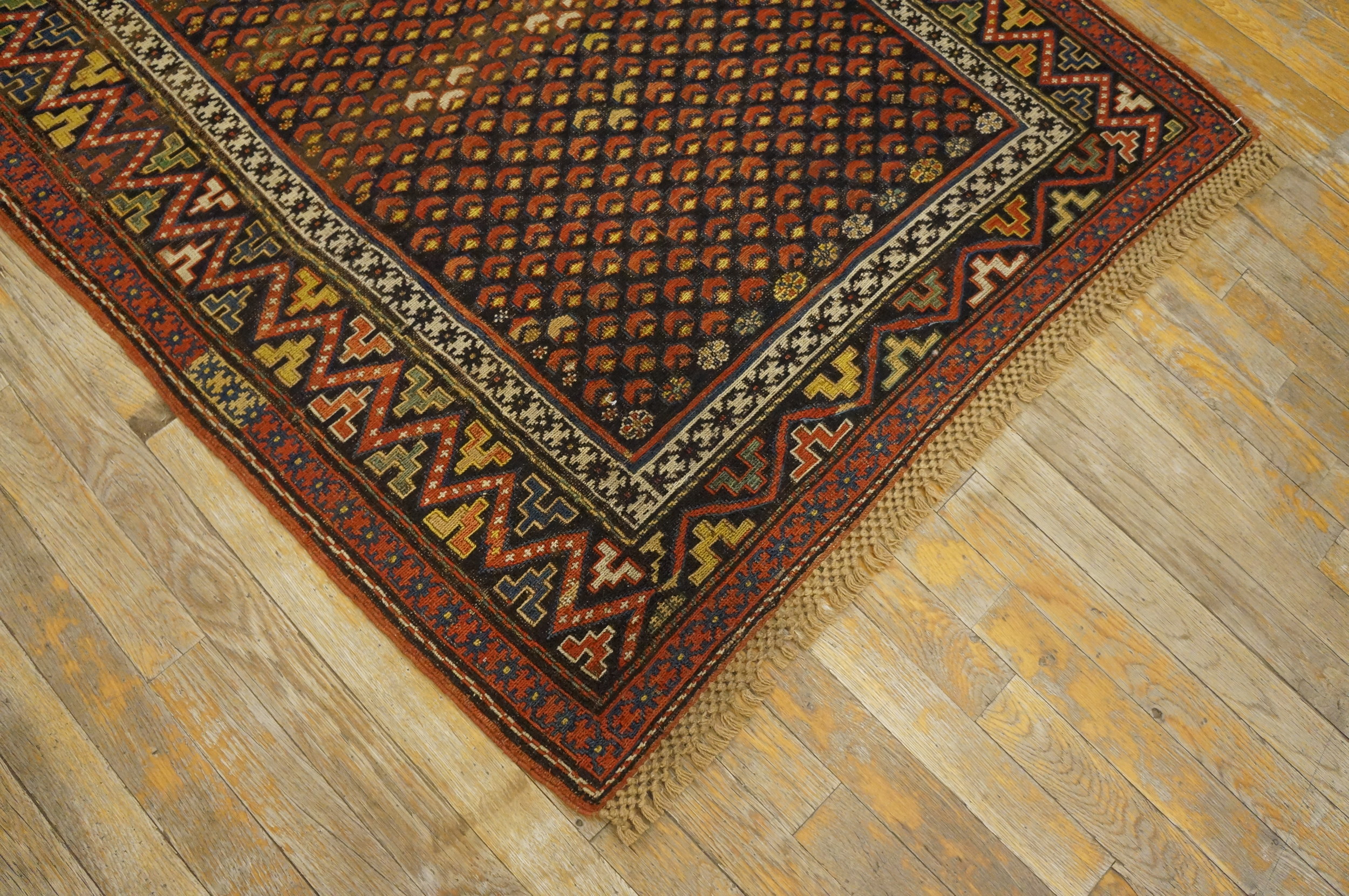
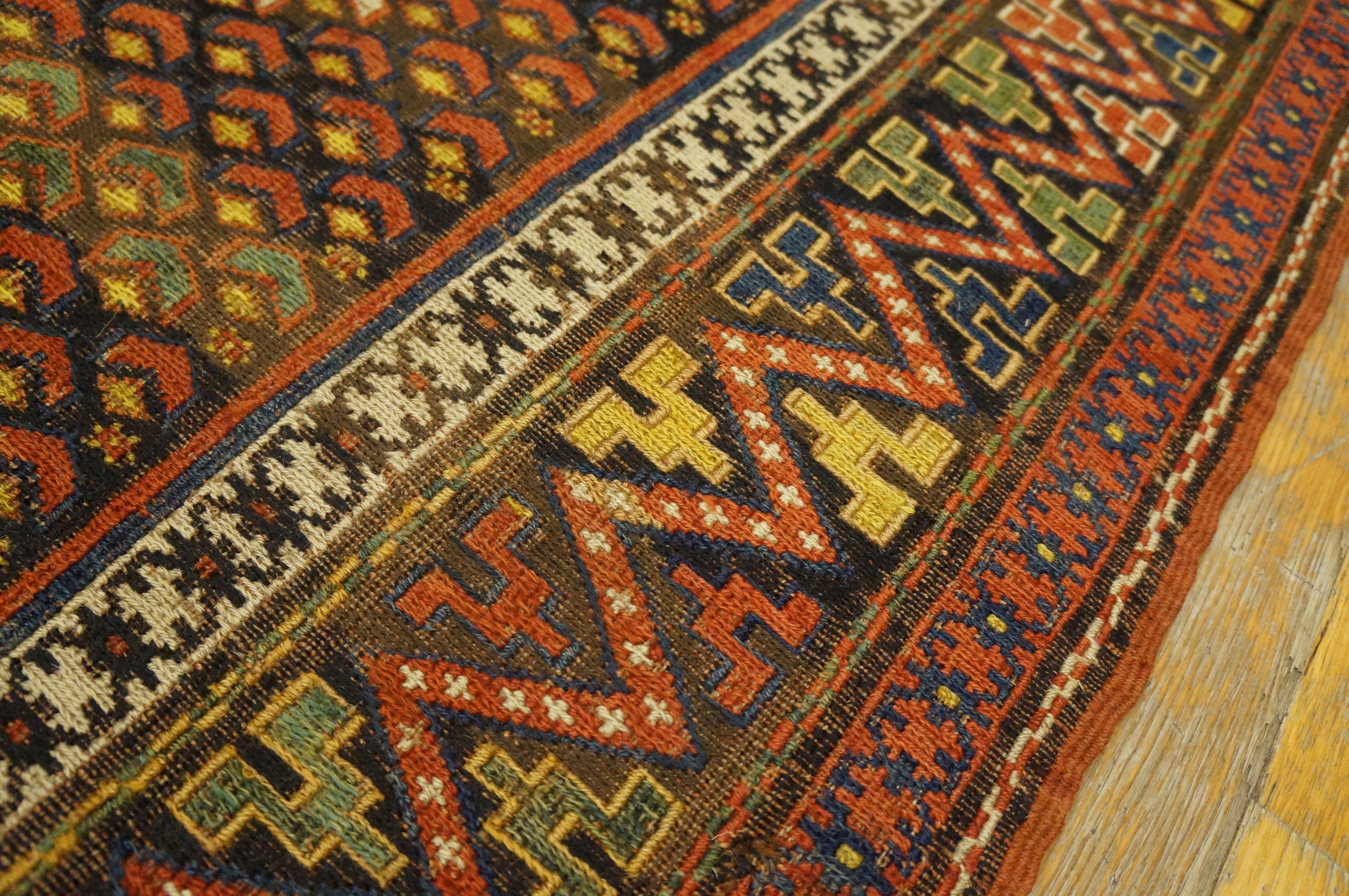
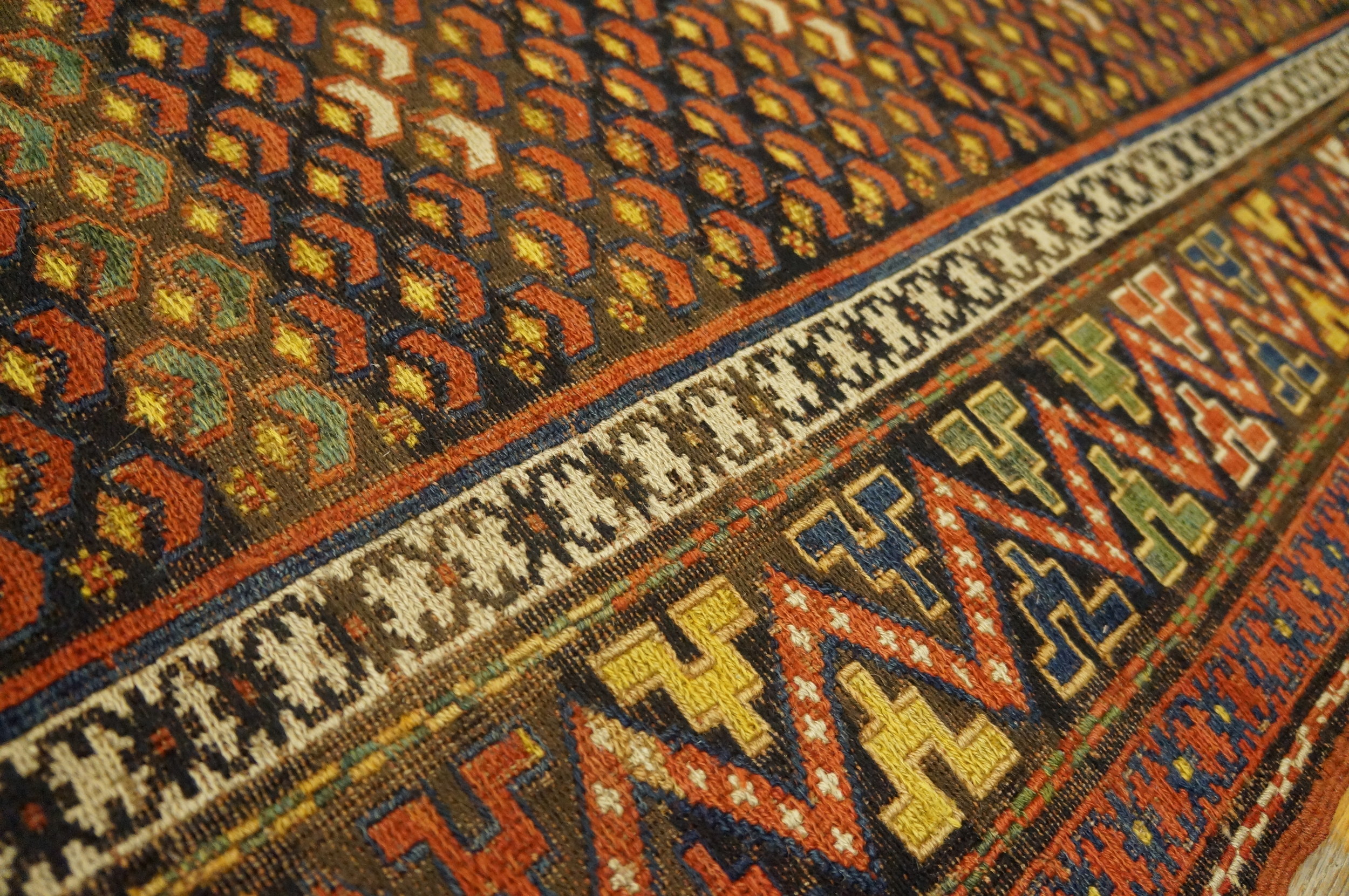
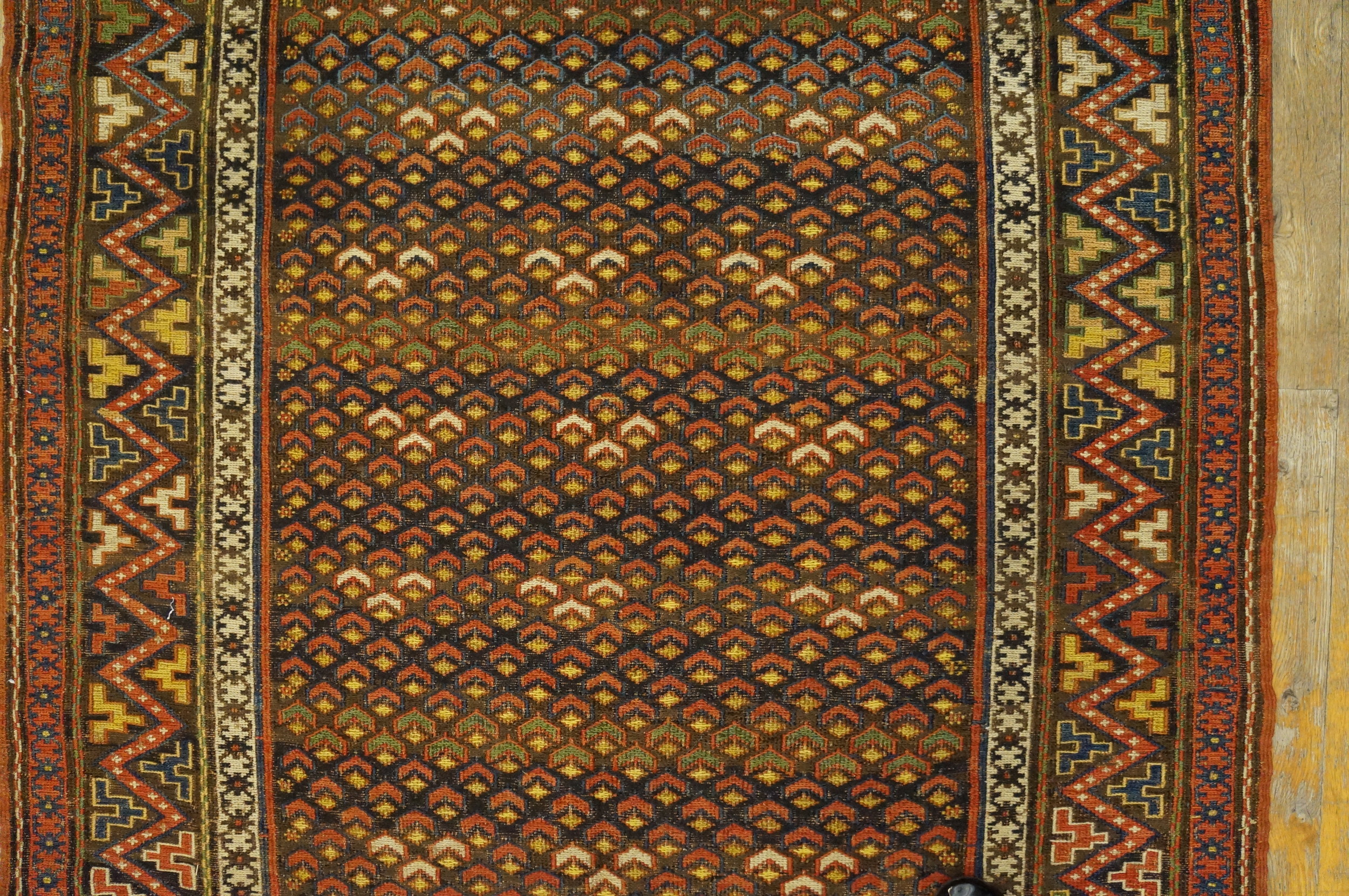
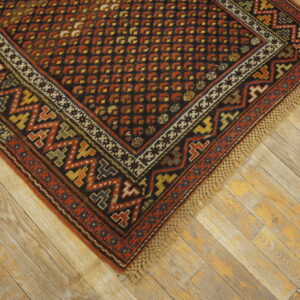
Antique Caucasian Hallway Runner Wool Rug, Country of Origin: Caucasus, Circa Date: 1890s. This exceptional late 19th-century textile represents the pinnacle of nomadic weaving traditions. Woven in the Sumak technique, which creates a durable, brocade-like surface, this piece showcases the bold, saturated palette characteristic of the region. The strong geometric vocabulary immediately identifies it as a product of the Caucasian rugs tradition, prized for its intensity and visual power.
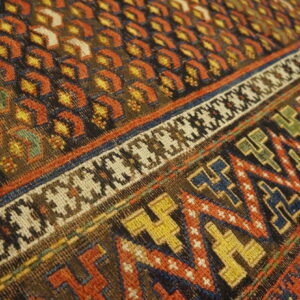
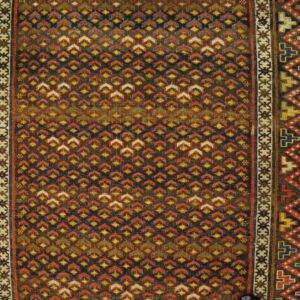
The field design is composed of tightly packed, repeating diamond and stepped motifs rendered in rich terracotta, deep indigo, and saffron yellow. This dense, continuous arrangement ensures that the eye is constantly engaged, providing textural depth without relying on a central medallion. Such a composition, where the pattern extends seamlessly across the entire surface, is a classic example of allover rugs design, perfectly suited to the long, narrow format.
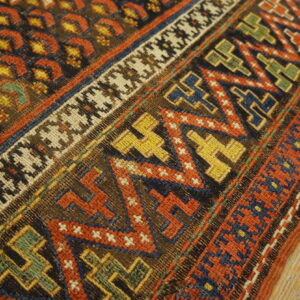
The borders frame the central field with layers of stylized zigzag and latch-hook elements, providing robust visual structure. The skillful use of natural dyes, which have mellowed beautifully over the past 130 years, lends the wool a remarkable sheen and depth. As a highly collectible example among antique rugs, this piece retains excellent integrity, reflecting the superior craftsmanship of the nomadic weavers.
Designed specifically for transitional spaces, this piece functions not merely as floor covering but as a linear artwork, guiding the eye through an interior space. The runner format is ideal for adding warmth and historical gravitas to long corridors or entryways. Its durability and striking aesthetic make it a superb choice among fine hallway runner rugs for discerning collectors seeking authenticity and historical provenance.