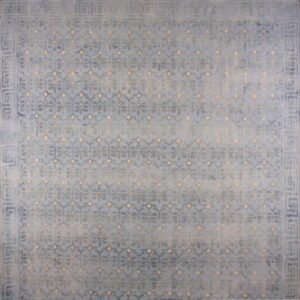
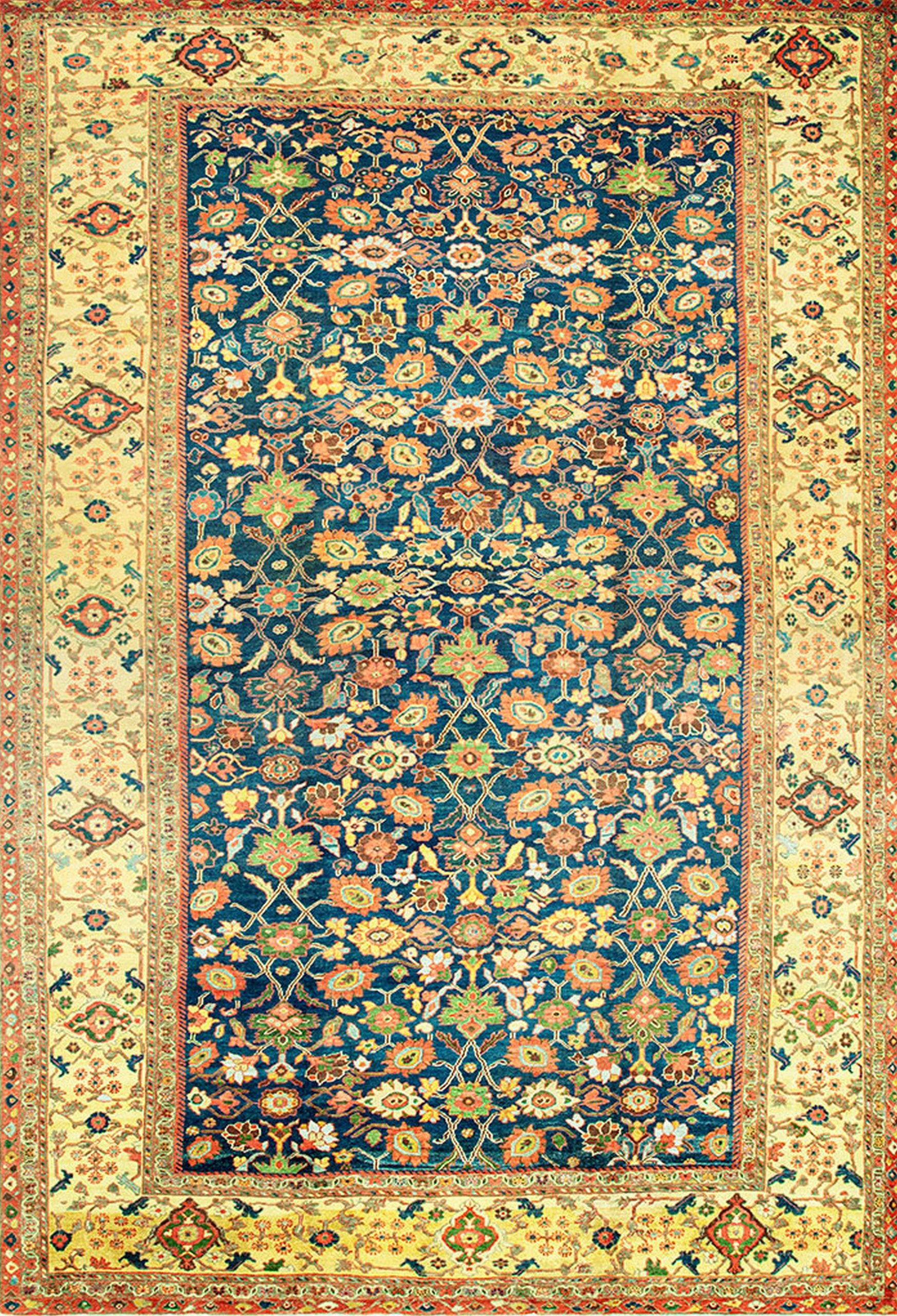
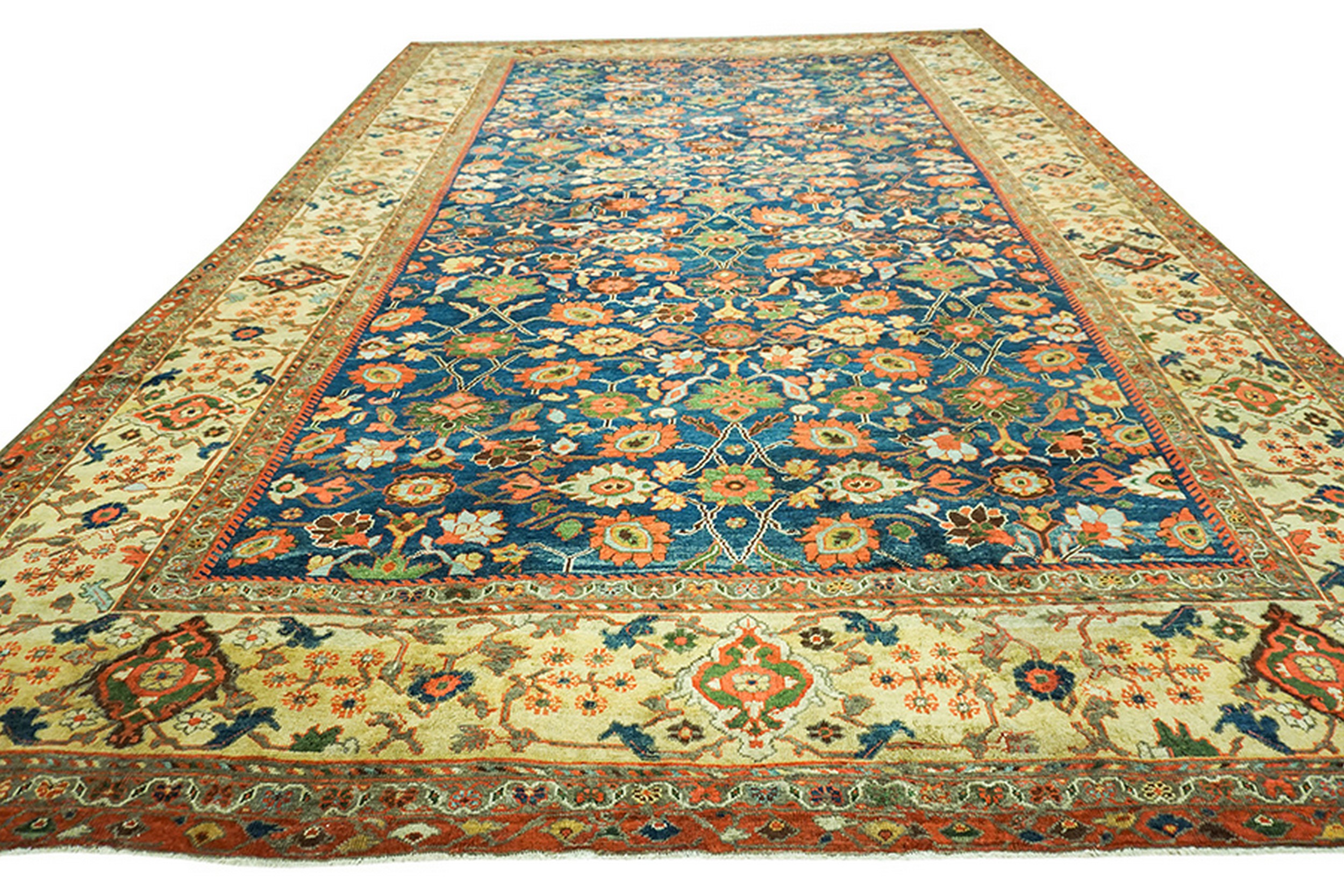
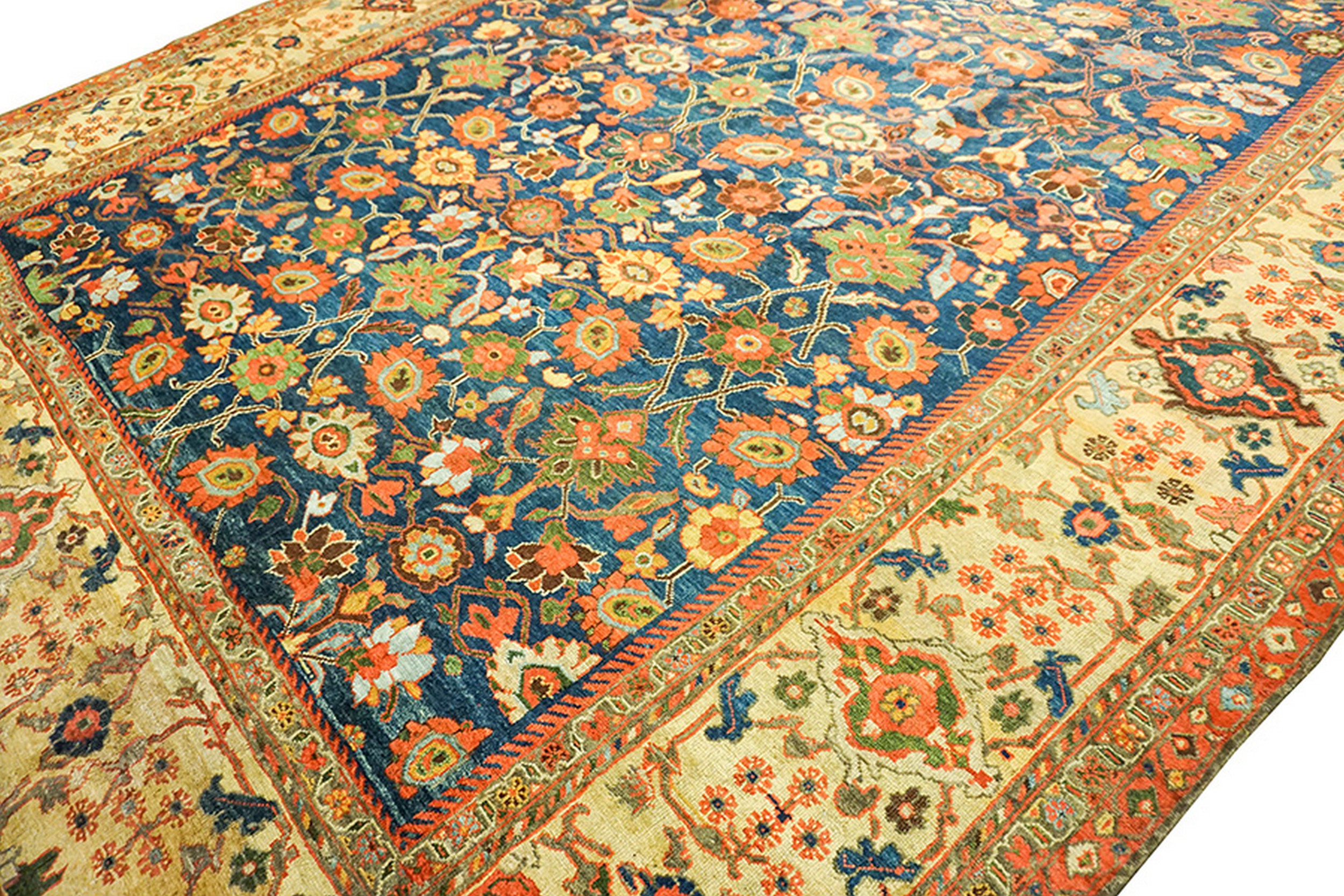
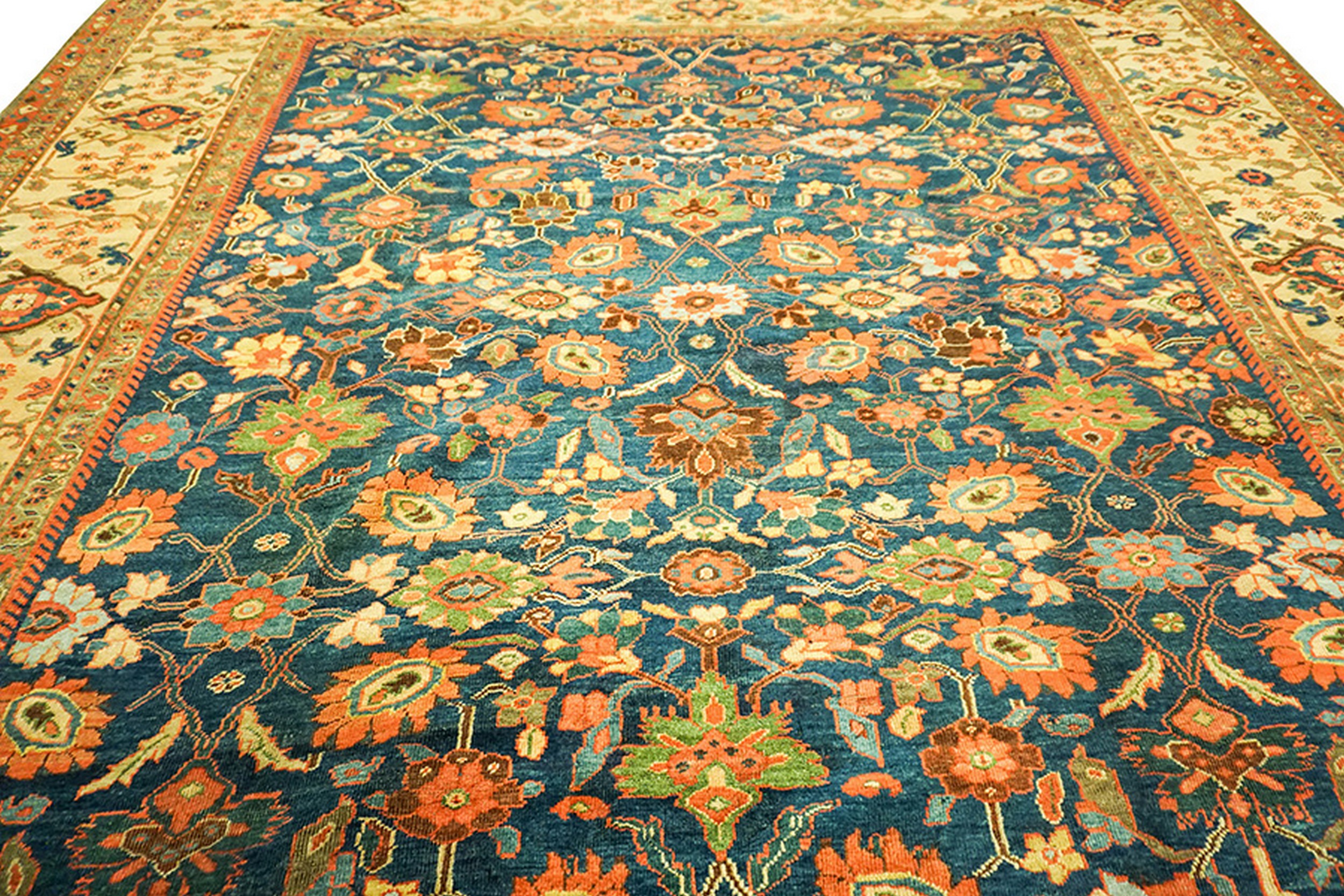
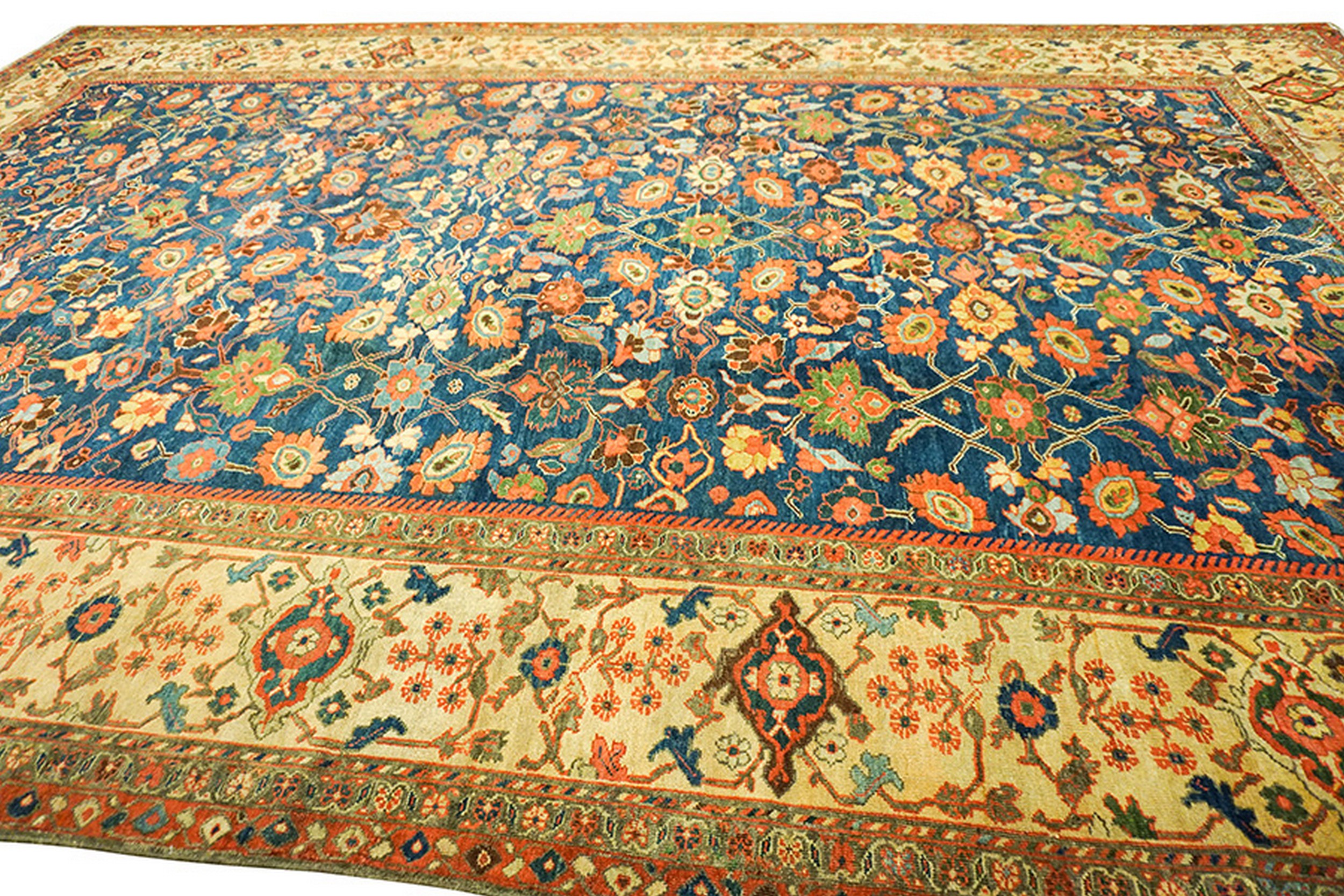
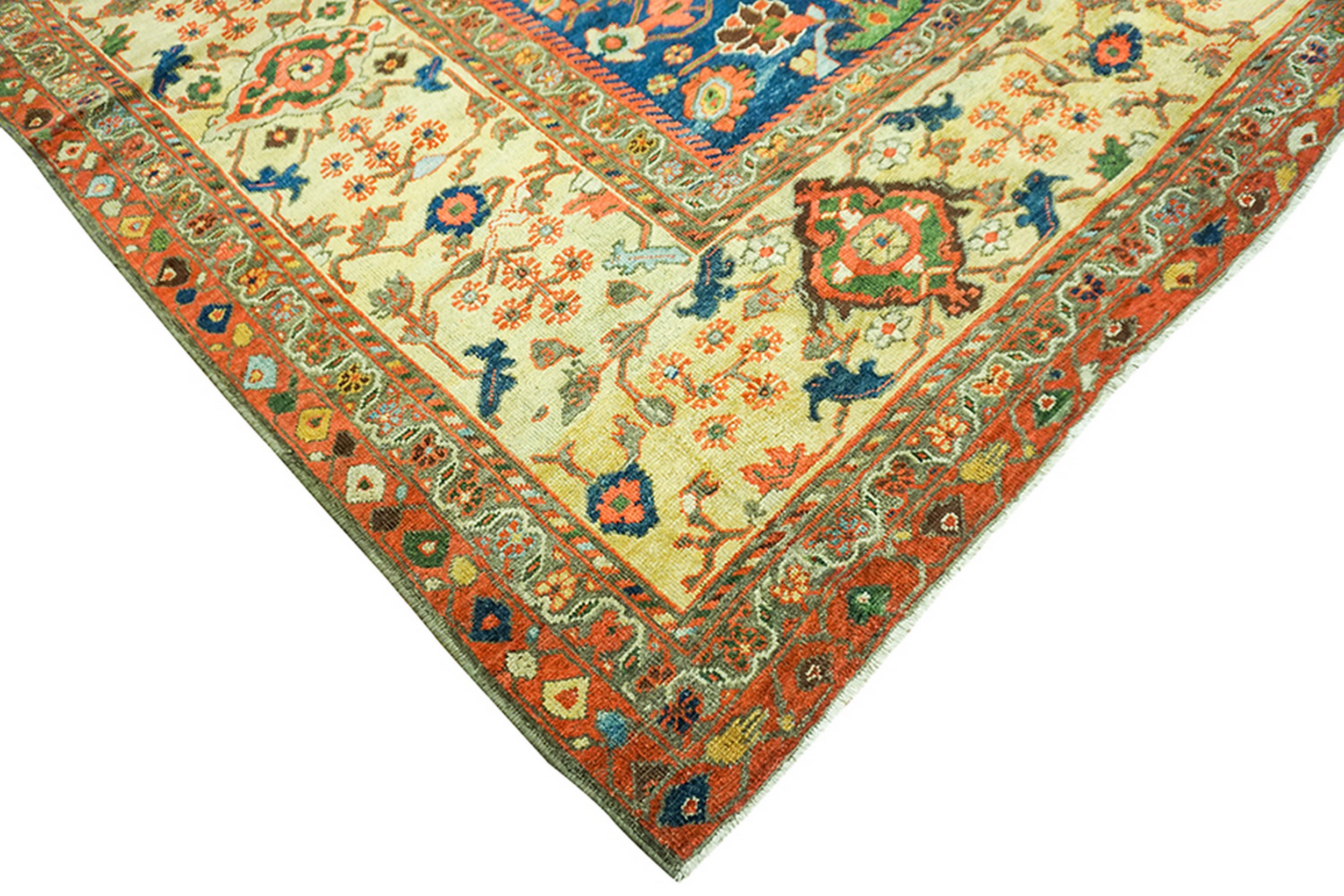
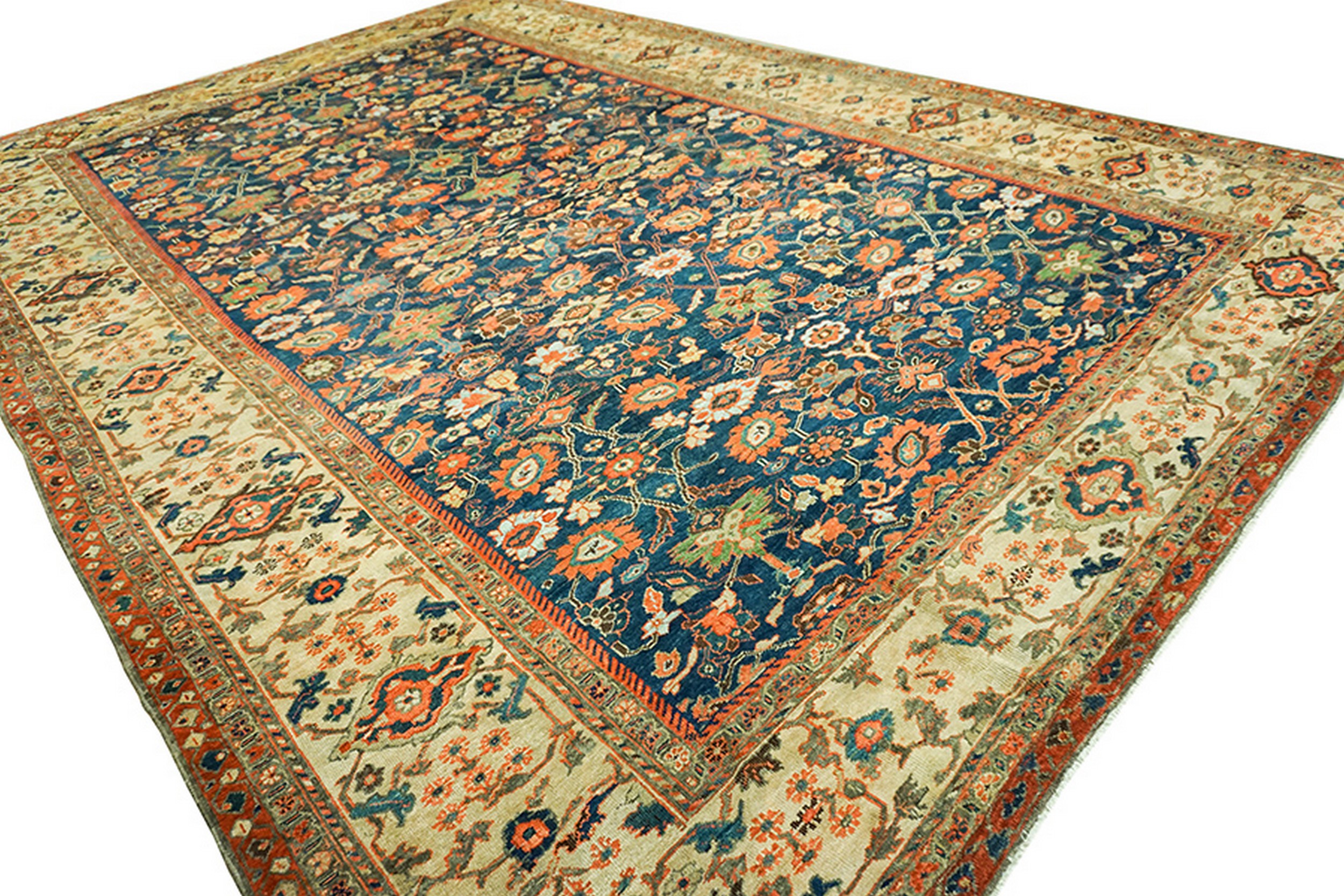
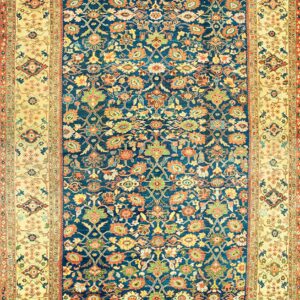
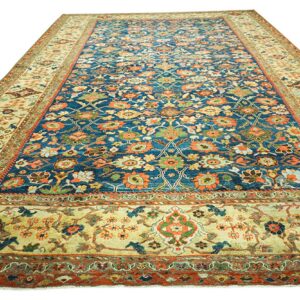
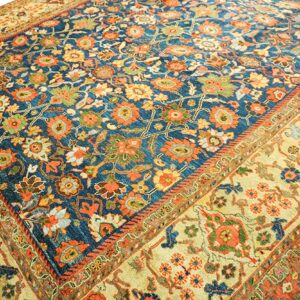
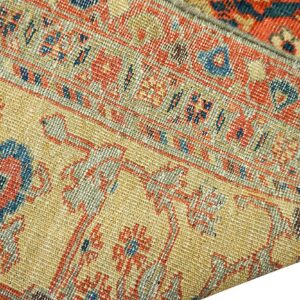
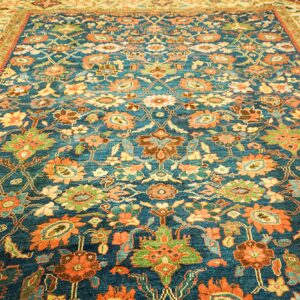
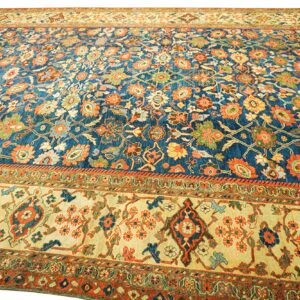
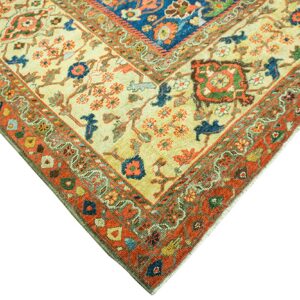
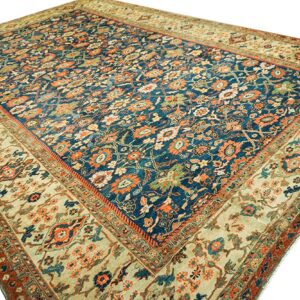
This antique late 19th-century Persian Sultanabad carpet, featuring a majestic deep blue field and a bold, all-over tribal pattern, is a premier example of the aesthetic revolution spearheaded by the Manchester-based firm Ziegler & Co. In the final decades of the 1800s, Ziegler & Co. recognized a growing desire among Western tastemakers for carpets that maintained the soul of Persian weaving while adopting a more spacious, “breathable” design language suited for monumental Victorian and Edwardian interiors. By commissioning weavers in the Arak district to enlarge traditional motifs and simplify color palettes, they birthed the “Ziegler Sultanabad”—a style that effectively bridged the gap between the untamed spirit of village tribal art and the refined requirements of high-society décor.
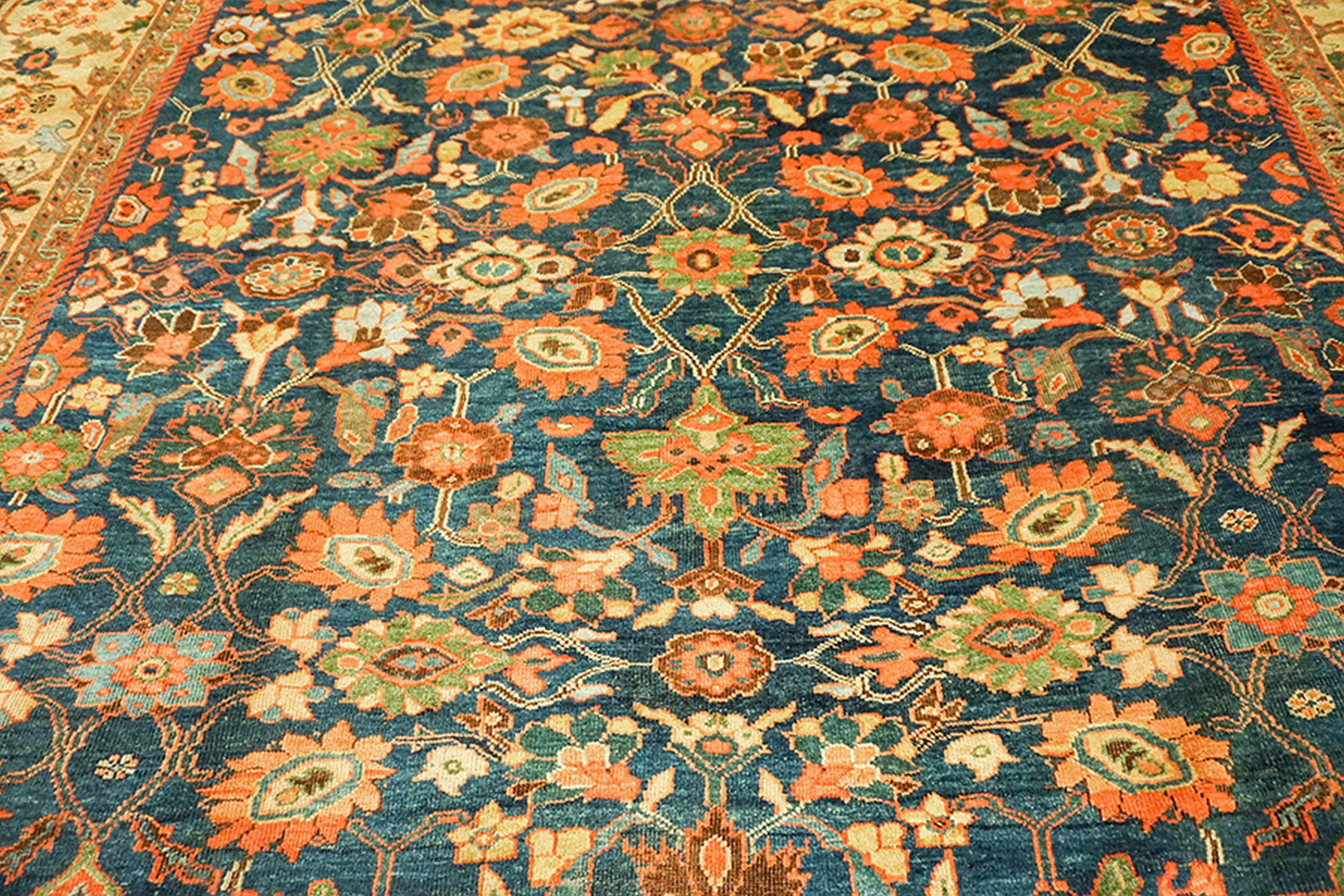
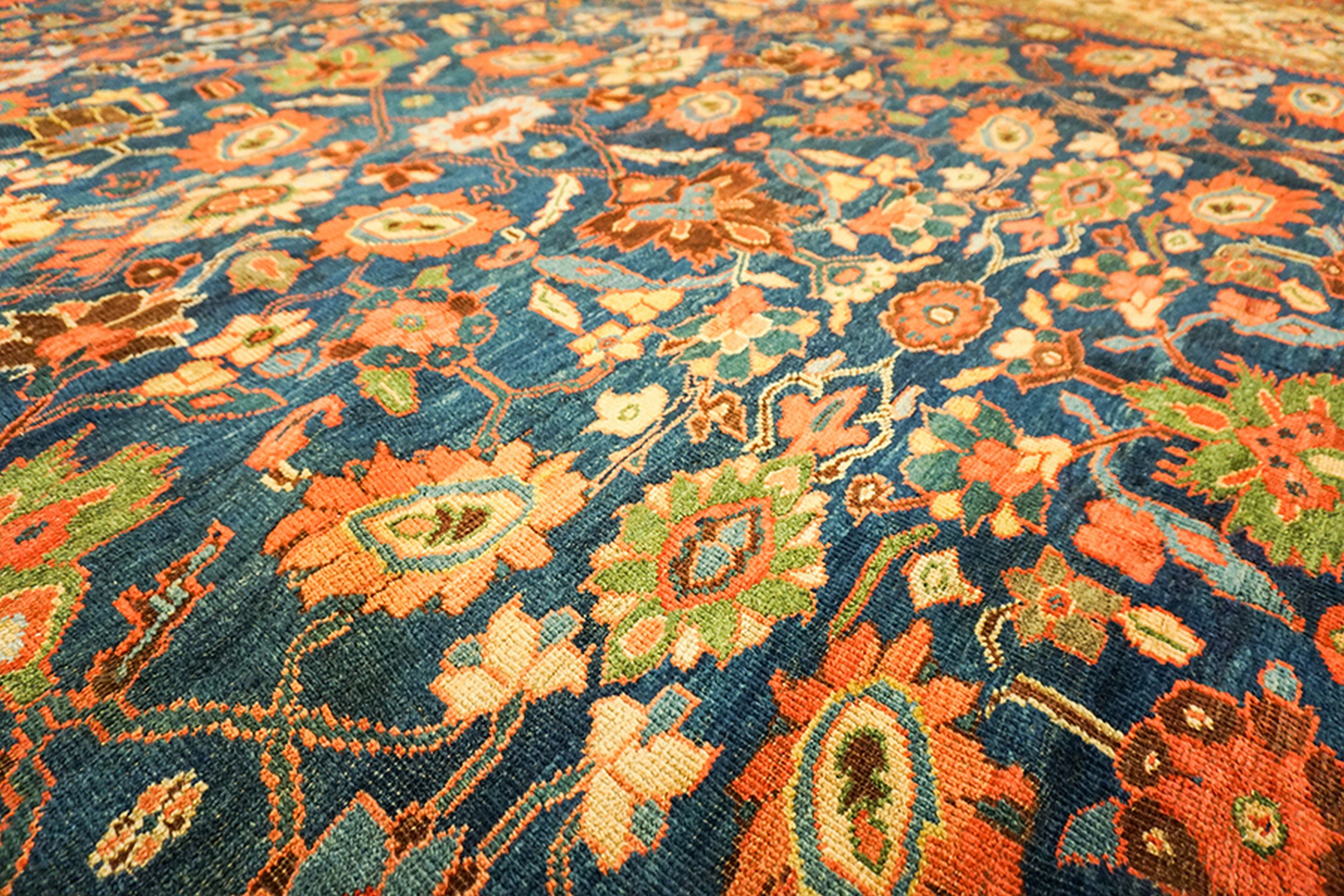
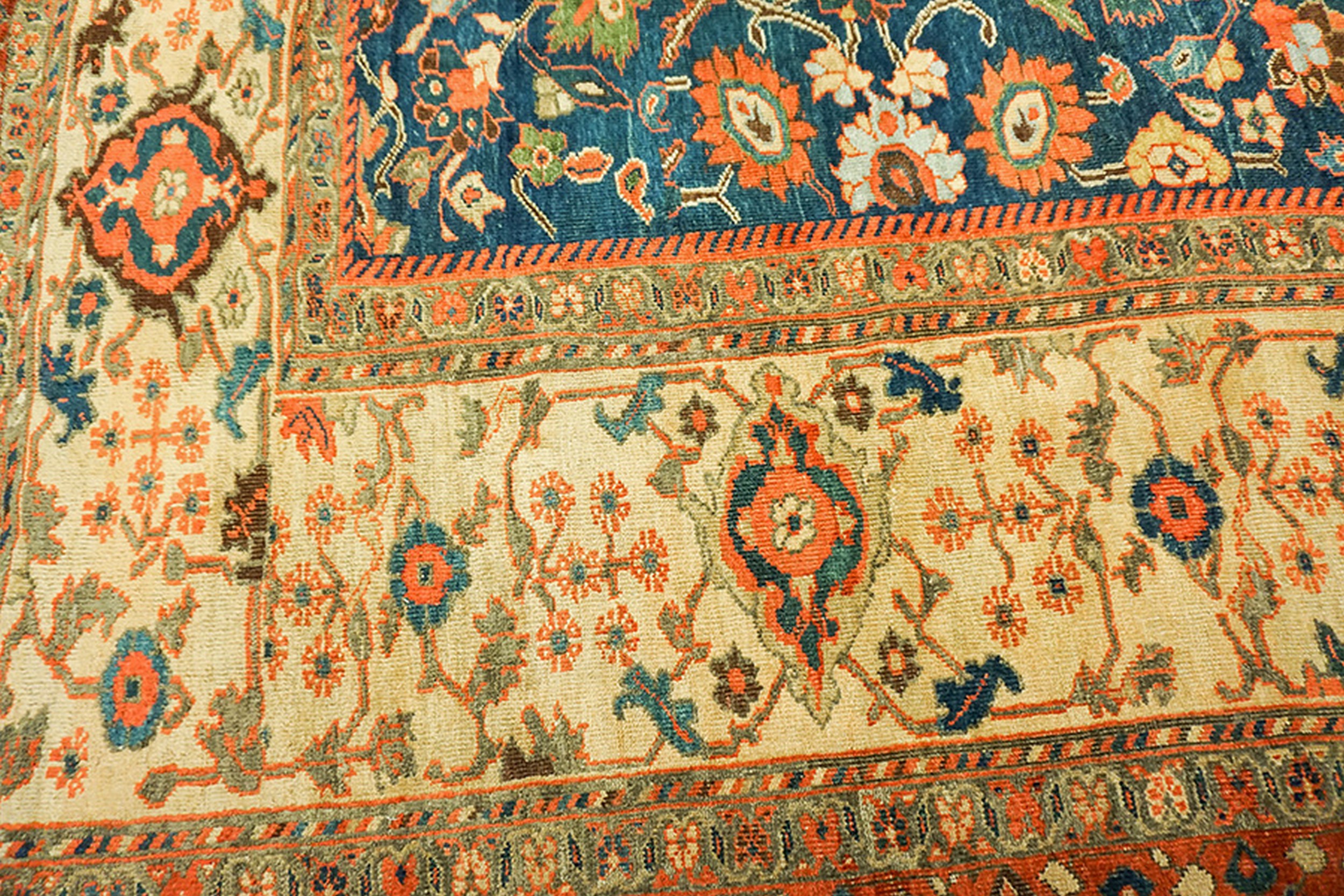
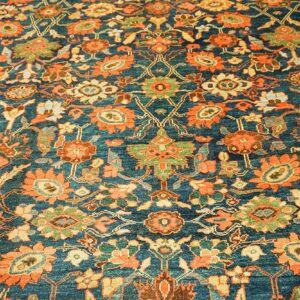
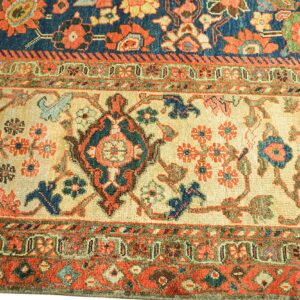
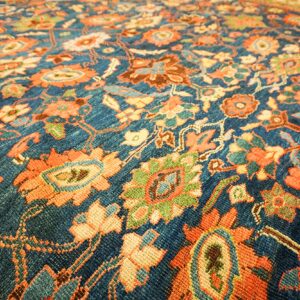
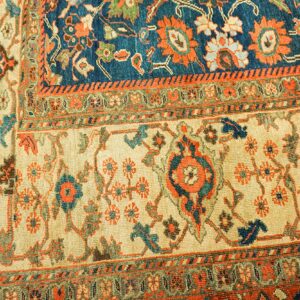
The historical allure of this particular rug resides in its deep indigo ground, a color traditionally derived from the fermented leaves of the Indigofera tinctoria plant. Unlike the more common madder-red fields of the era, a saturated blue background was a mark of distinction, providing a dramatic, nocturnal canvas for the oversized palmettes and scrolling foliate vines to appear with striking clarity. The “all-over” pattern is a hallmark of the Sultanabad tradition; by eschewing a central medallion, the weavers created a democratic composition where the design flows seamlessly to the edges, ensuring the rug’s visual impact remains consistent even when placed beneath grand furniture. These “large-scale” motifs are characterized by a rustic, angular charm, reflecting the local weavers’ preference for expressive, hand-drawn geometry over the clinical precision of city-center looms.
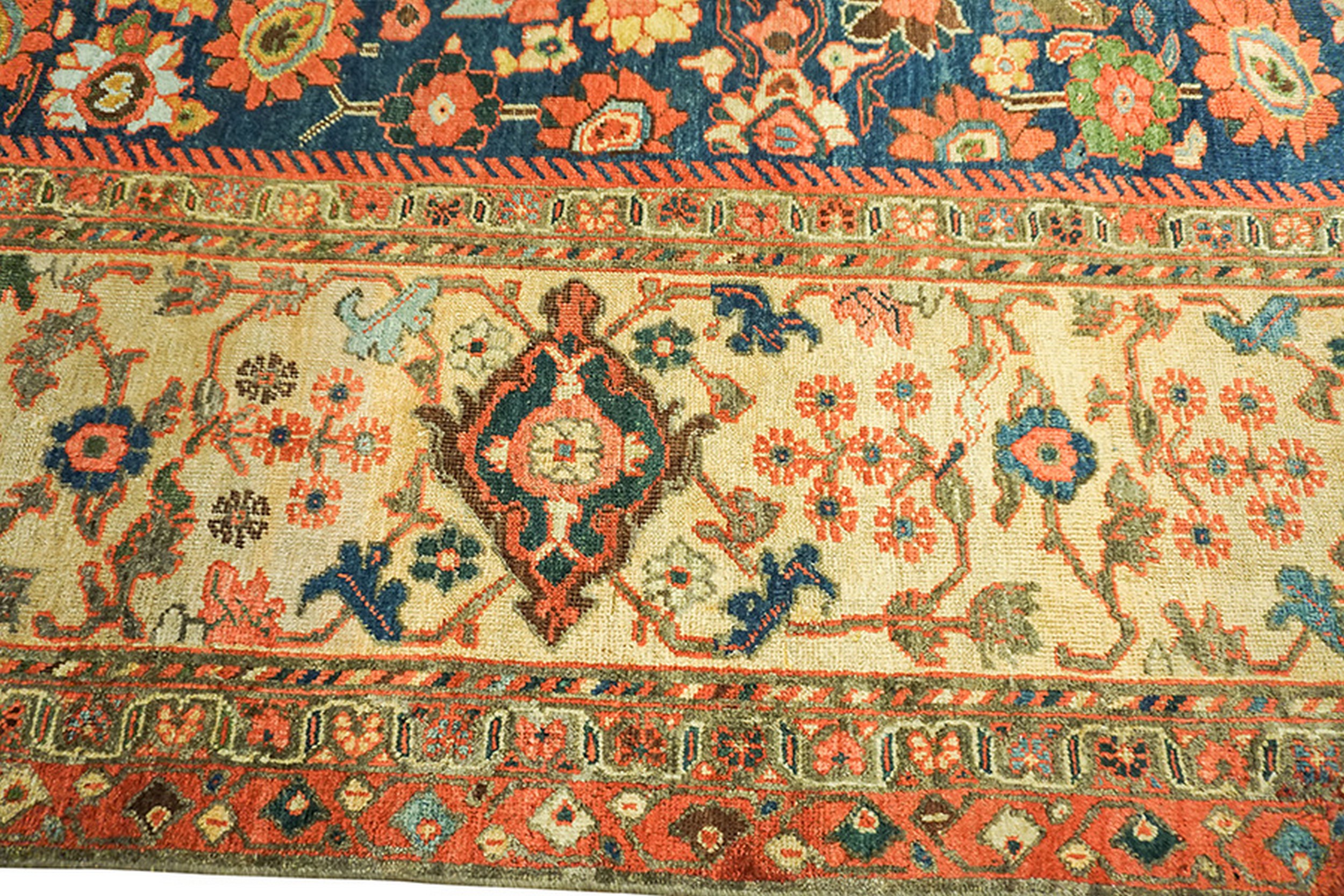
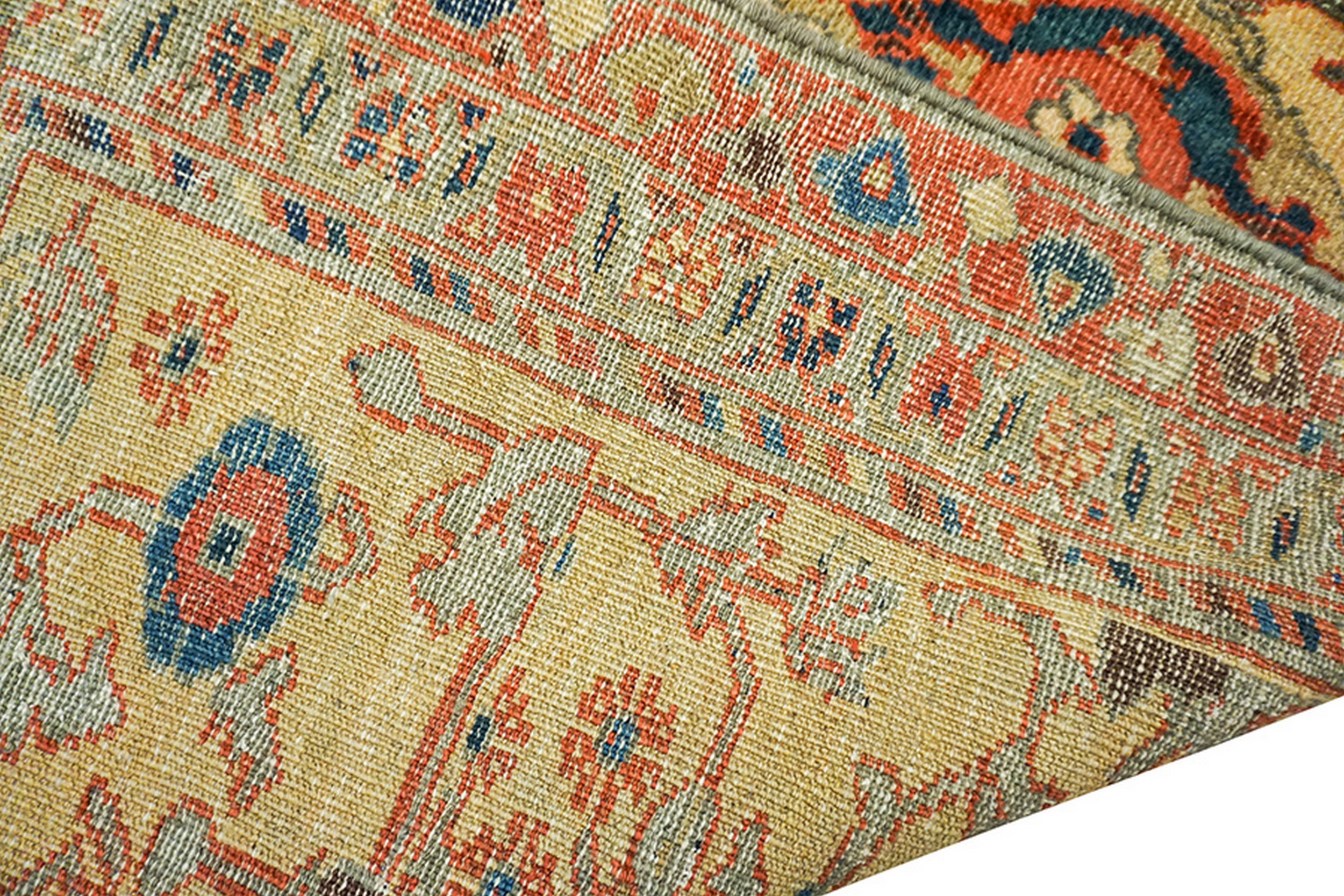
The late nineteenth century rugs by Ziegler became the definitive choice for the great English manor houses, prized for their heavy, lustrous wool and their ability to anchor a room with a sense of “understated grandeur.” The wool utilized here is hand-spun and rich in natural lanolin, which not only provides a soft, supple handle but also allows the vegetable dyes to develop a sophisticated abrash—a natural tonal variation that gives the blue field its characteristic depth and movement. Today, an antique specimen of this caliber is highly coveted by collectors and designers alike for its “modern” sensibilities; its blend of ancient tribal symbolism and expansive, open design makes it a timeless masterpiece that transcends the boundaries between nineteenth-century heritage and contemporary luxury.