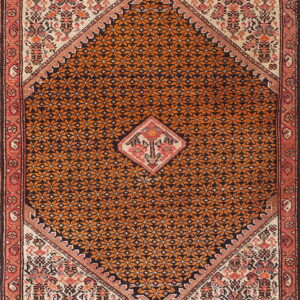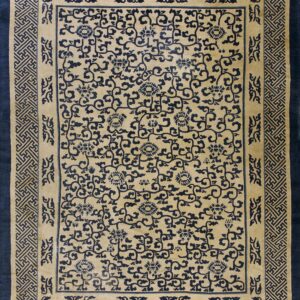
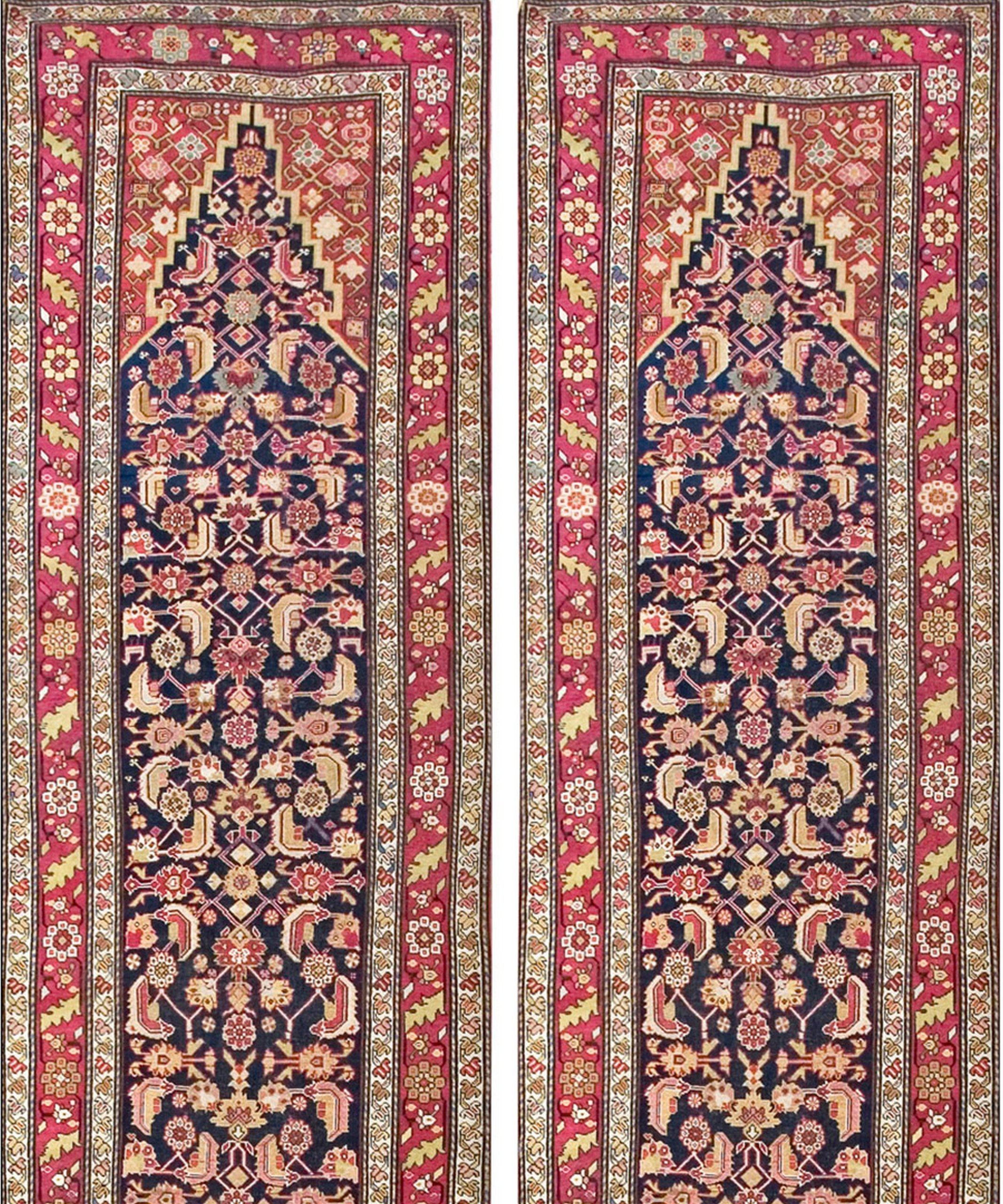
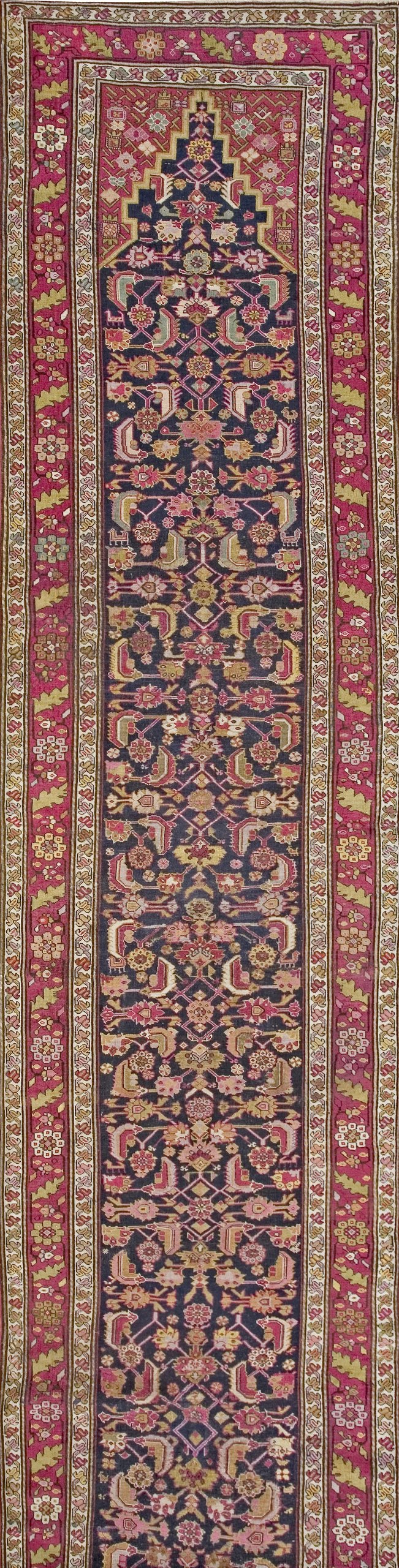
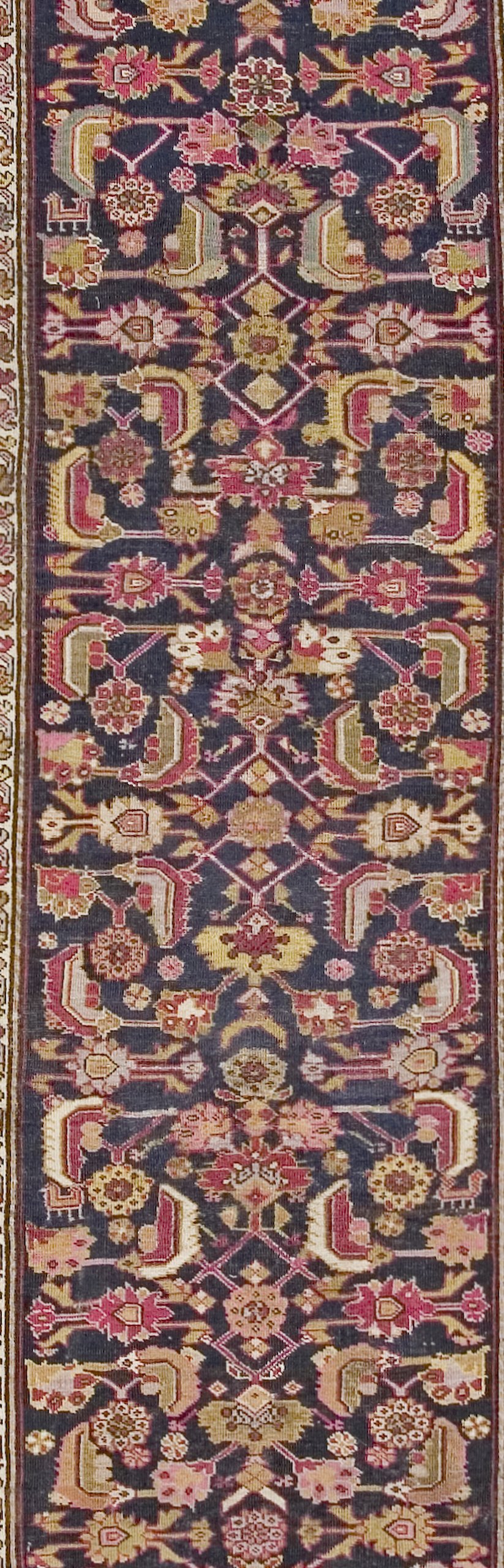
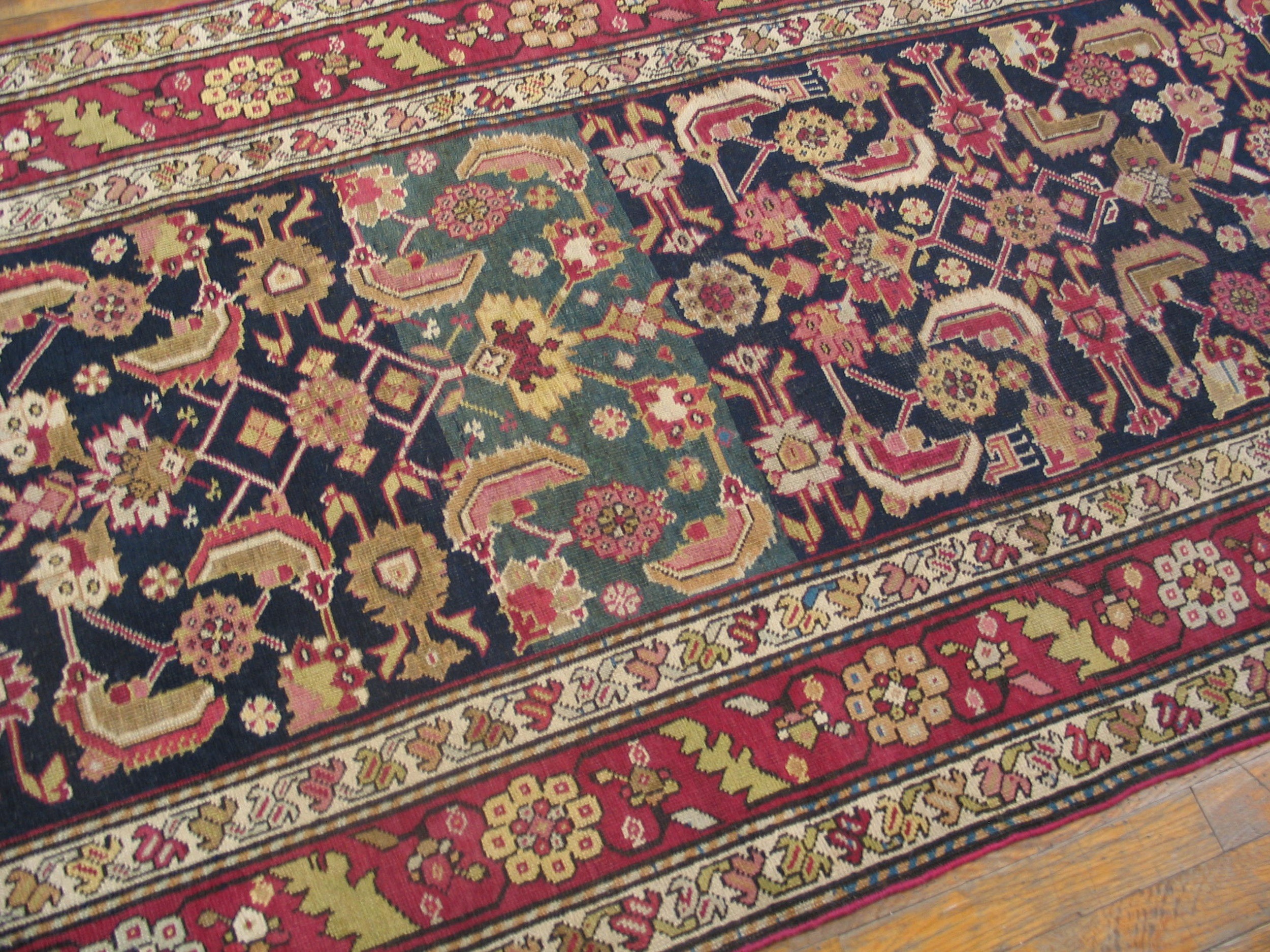
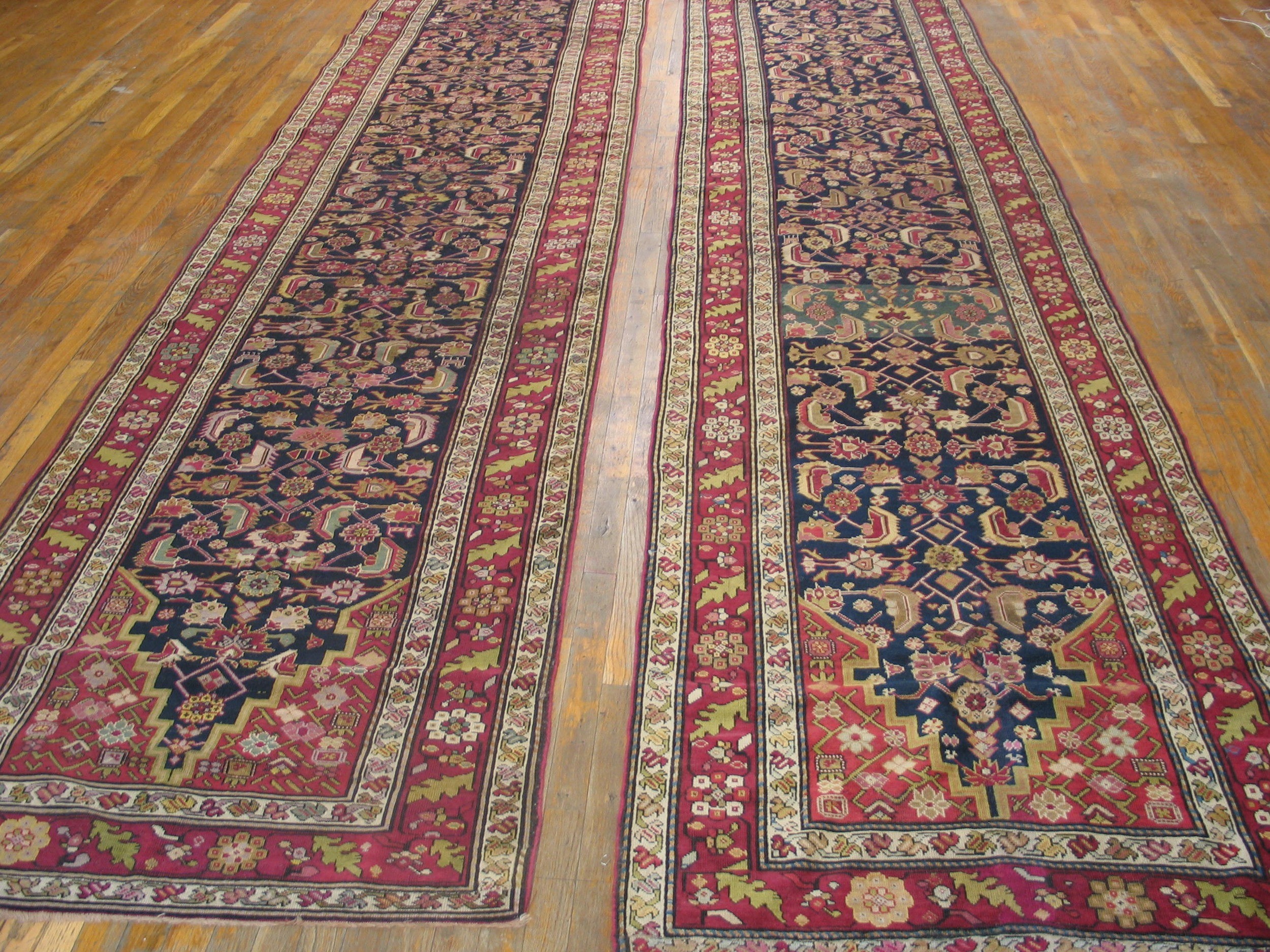
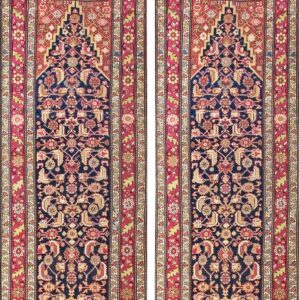
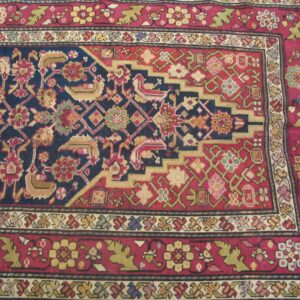
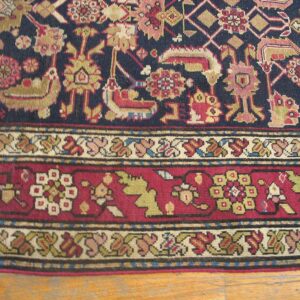
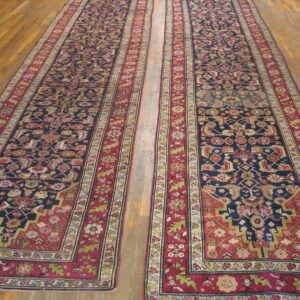
This magnificent matched pair of late nineteenth-century tribal antique Caucasian Karabagh rugs / runners represents a rare and prestigious find in the world of antique textiles. Originating from the Karabagh region—the southernmost weaving district of the Caucasus—these captivating tribal Caucasian hallway runner rugs are celebrated for their unique cultural synthesis, blending the rugged, nomadic spirit of the Caucasian mountains with the sophisticated, “scholarly” aesthetics of the Persian court.
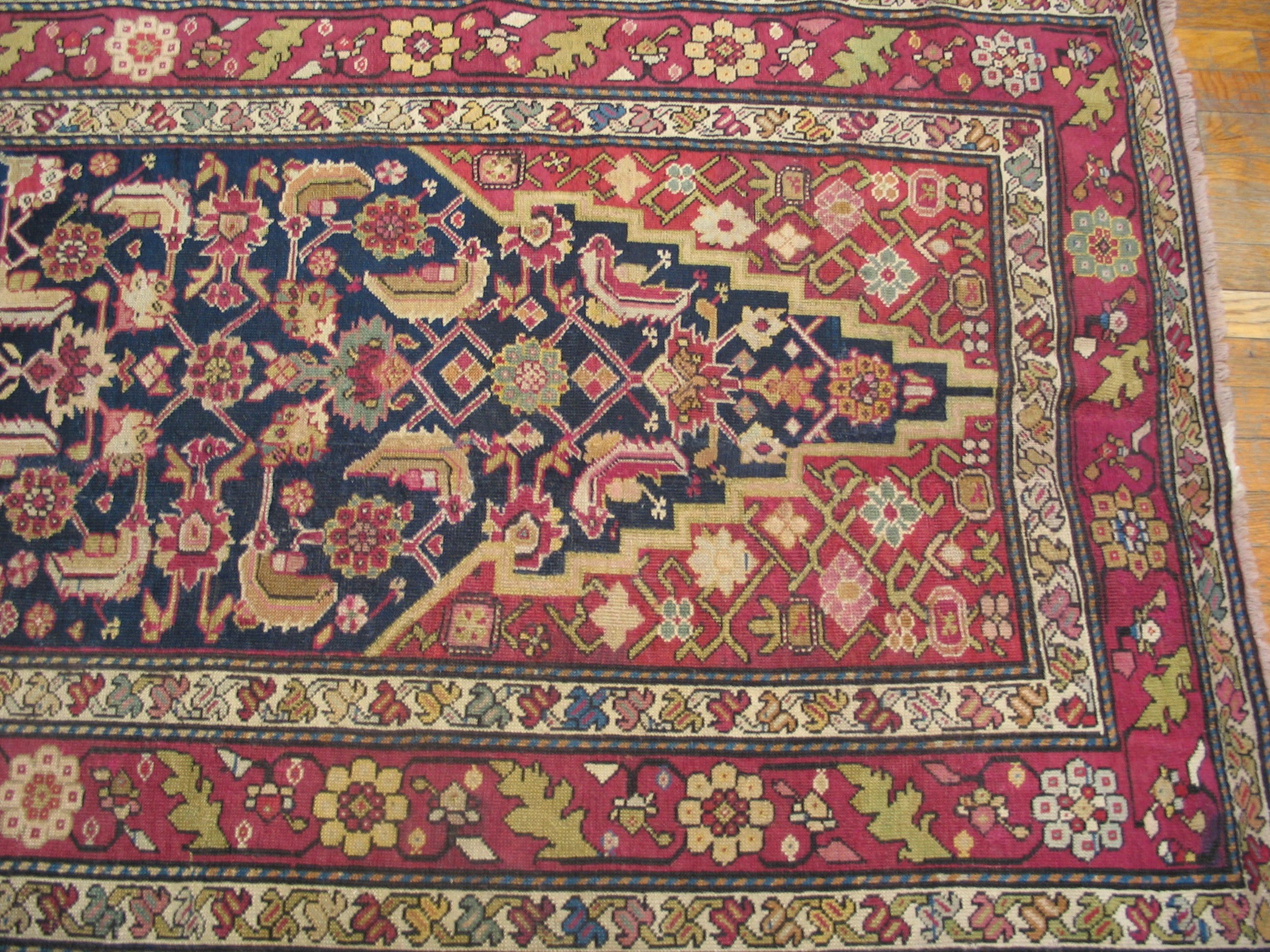
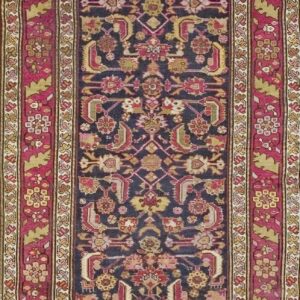
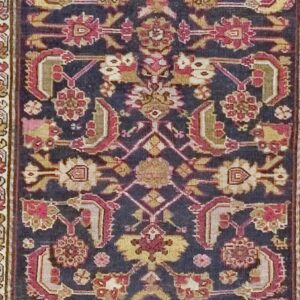
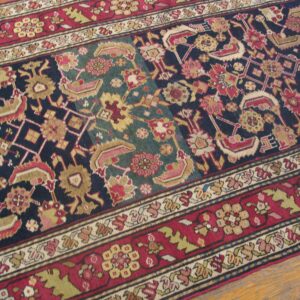
The composition is centered on the iconic Herati design (also known as the Mahi or “Fish” pattern). This ancient motif features a diamond-shaped framework of serrated leaves and stylized blossoms. While the Herati pattern is common in Persian rugs from city centers, these Karabagh weavers have “tribalized” the design, rendering it with a distinct geometric strength and a more spacious, rhythmic pacing. The presence of a matched pair is highly significant; traditionally, such runners were woven to flank a larger central carpet in a formal “Kelleh” arrangement, making them a “designer’s dream” for grand hallways or symmetrical architectural spaces.
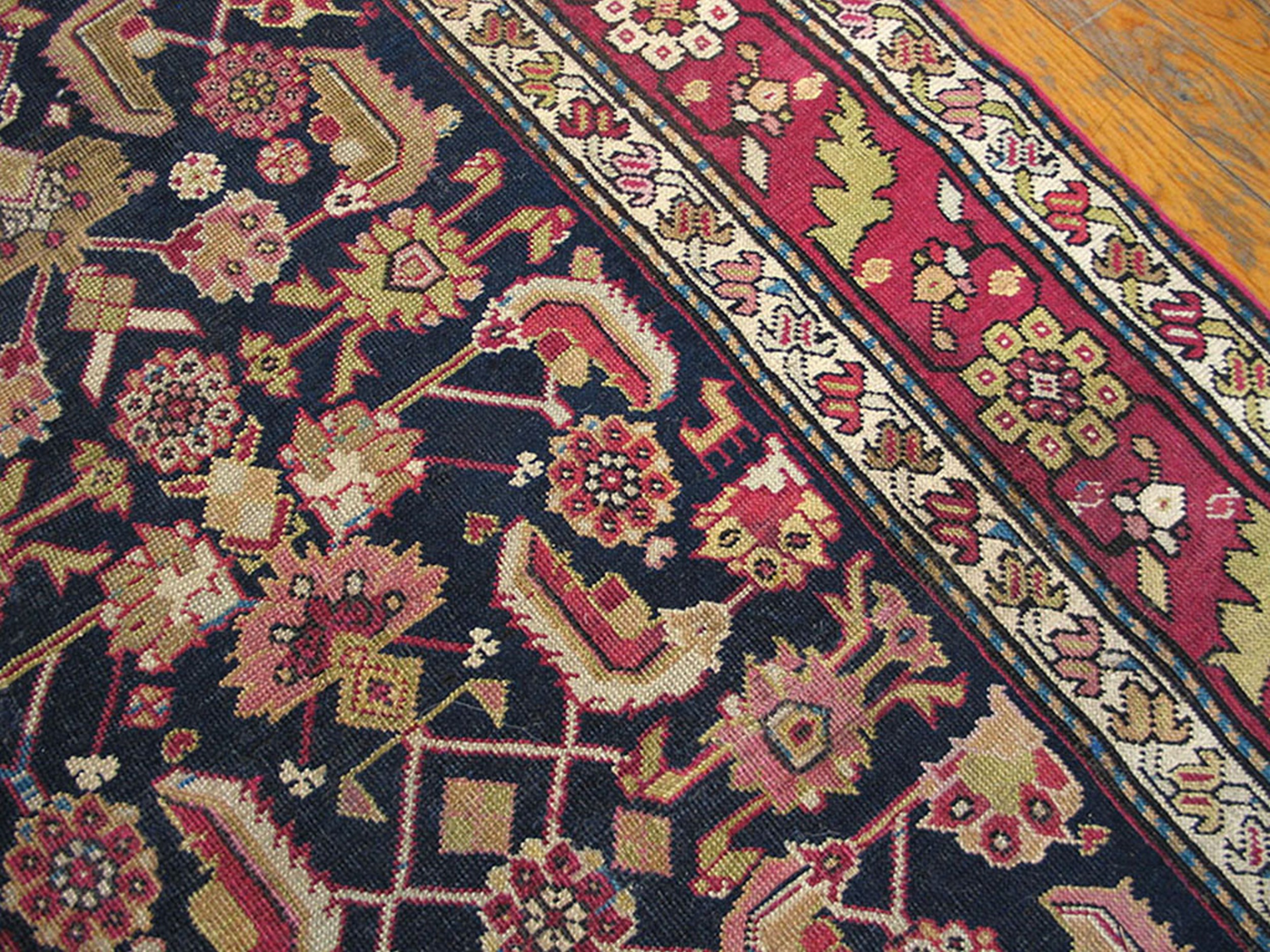
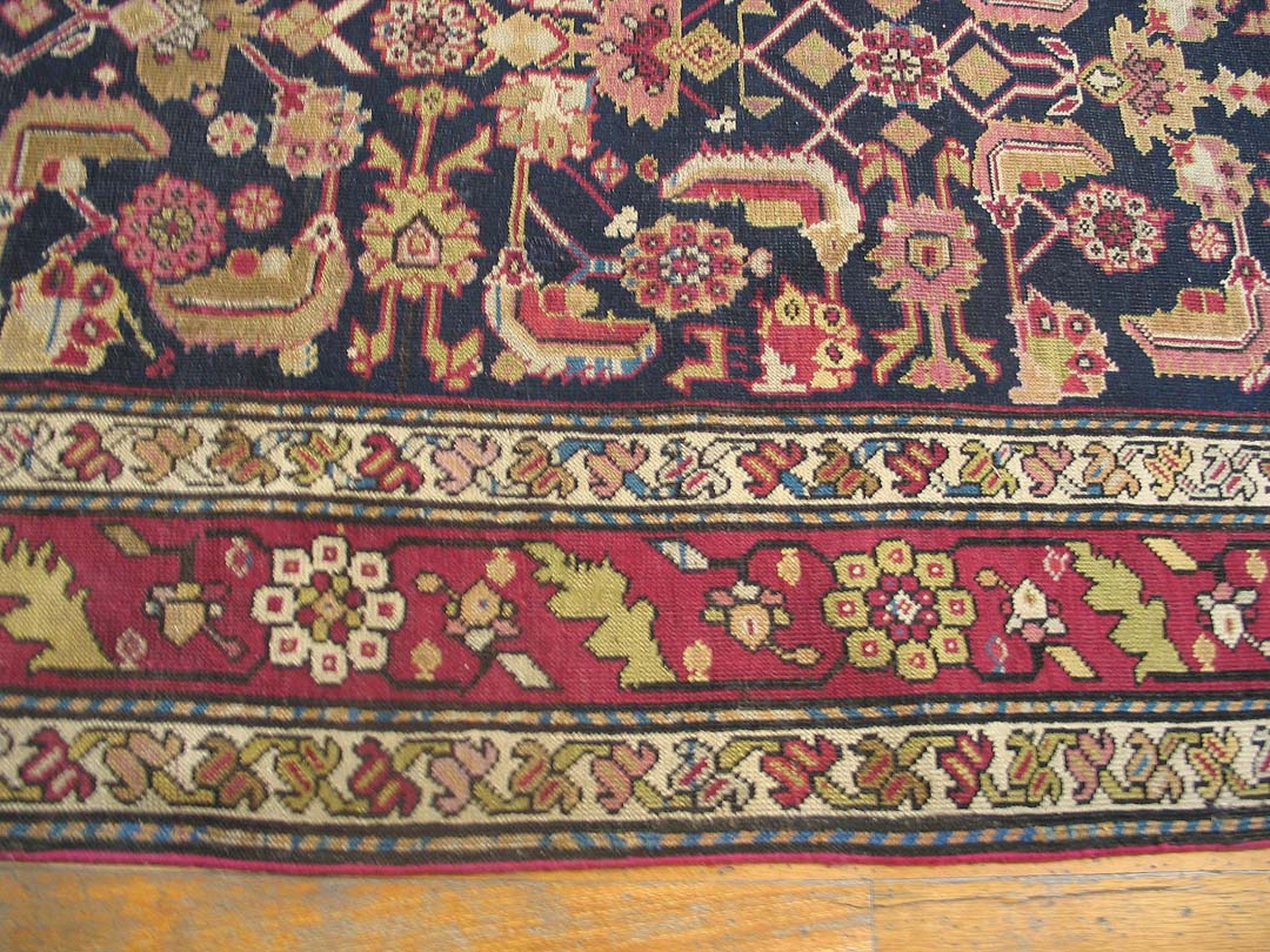
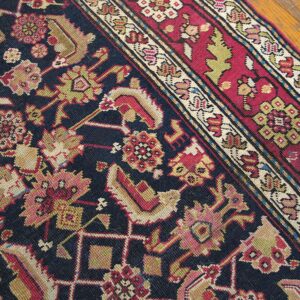
The palette is anchored by a deep, “midnight” indigo blue field, a hallmark of the finest Karabagh specimens. This somber, regal ground provides a dramatic stage for the vibrant accents of madder red, burnt orange, and soft cream that populate the Herati motifs. The use of natural vegetable dyes has resulted in a beautiful abrash (tonal variation), giving the blue field a shimmering, watercolor-like depth that shifts with the light.
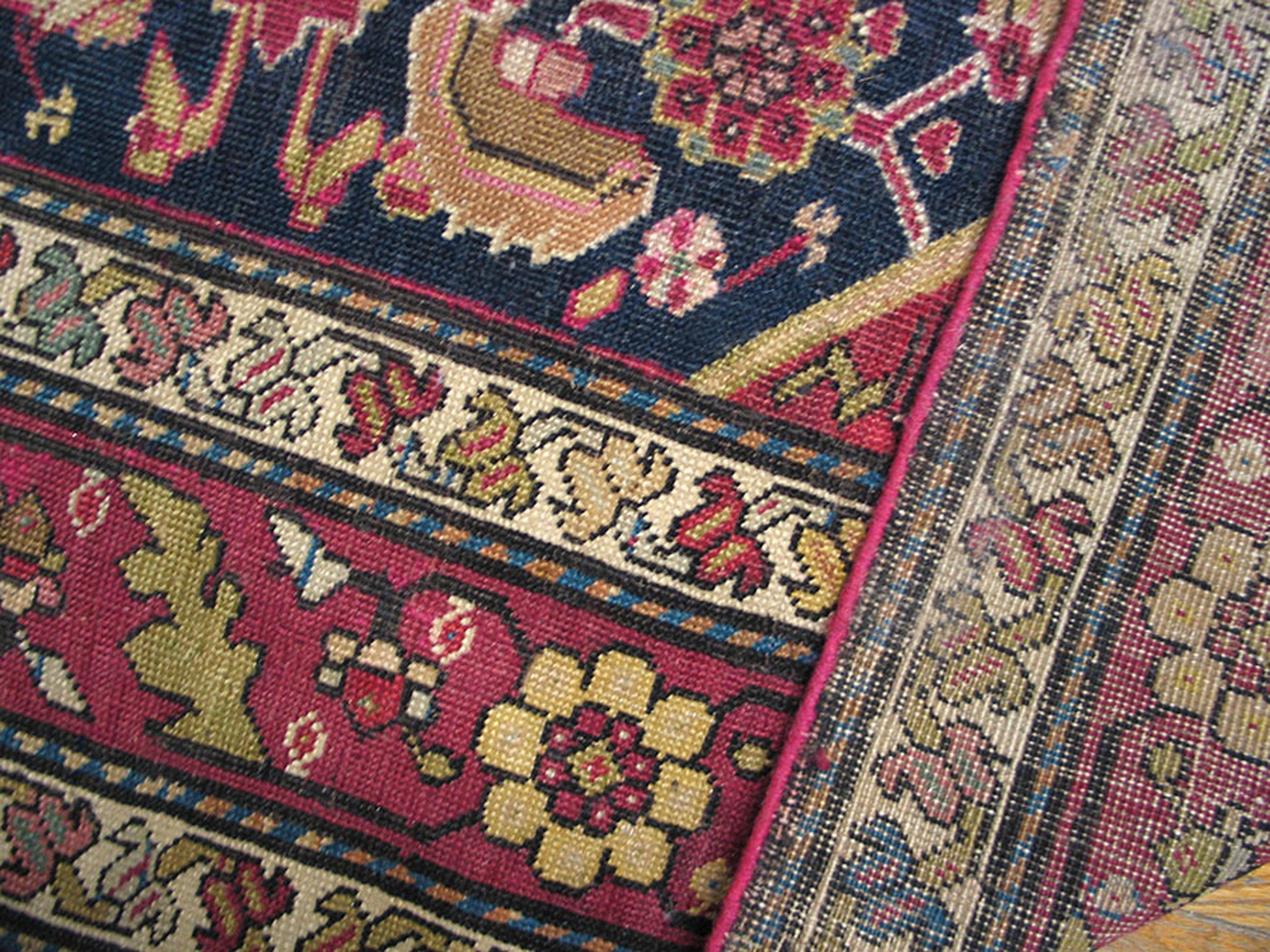
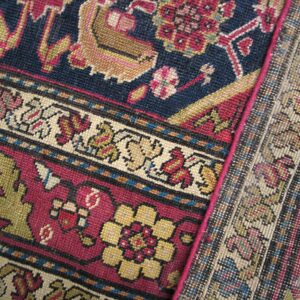
Technically, a Karabagh is prized for its substantial, fleshy pile and its heavy, “leather-like” handle. Unlike the finer, thinner weaves of the neighboring Shirvan district, Karabaghs utilize a thick, lustrous mountain wool rich in natural lanolin. This gives the runners a tactile warmth and a durable body that has allowed them to survive more than a century of use while retaining their vibrant artistic character.
The borders act as a disciplined, regal frame, typically featuring a “Main Border” of stylized rosettes and scrolling vines that ground the complex energy of the central field. To possess a matched pair of antique tribal hallway runner rugs like these blue Karabagh runners is to hold a monument to the intersection of two great weaving traditions. They are works of historical gravity and rugged elegance, capable of transforming a long corridor into a curated gallery of 19th-century tribal art.