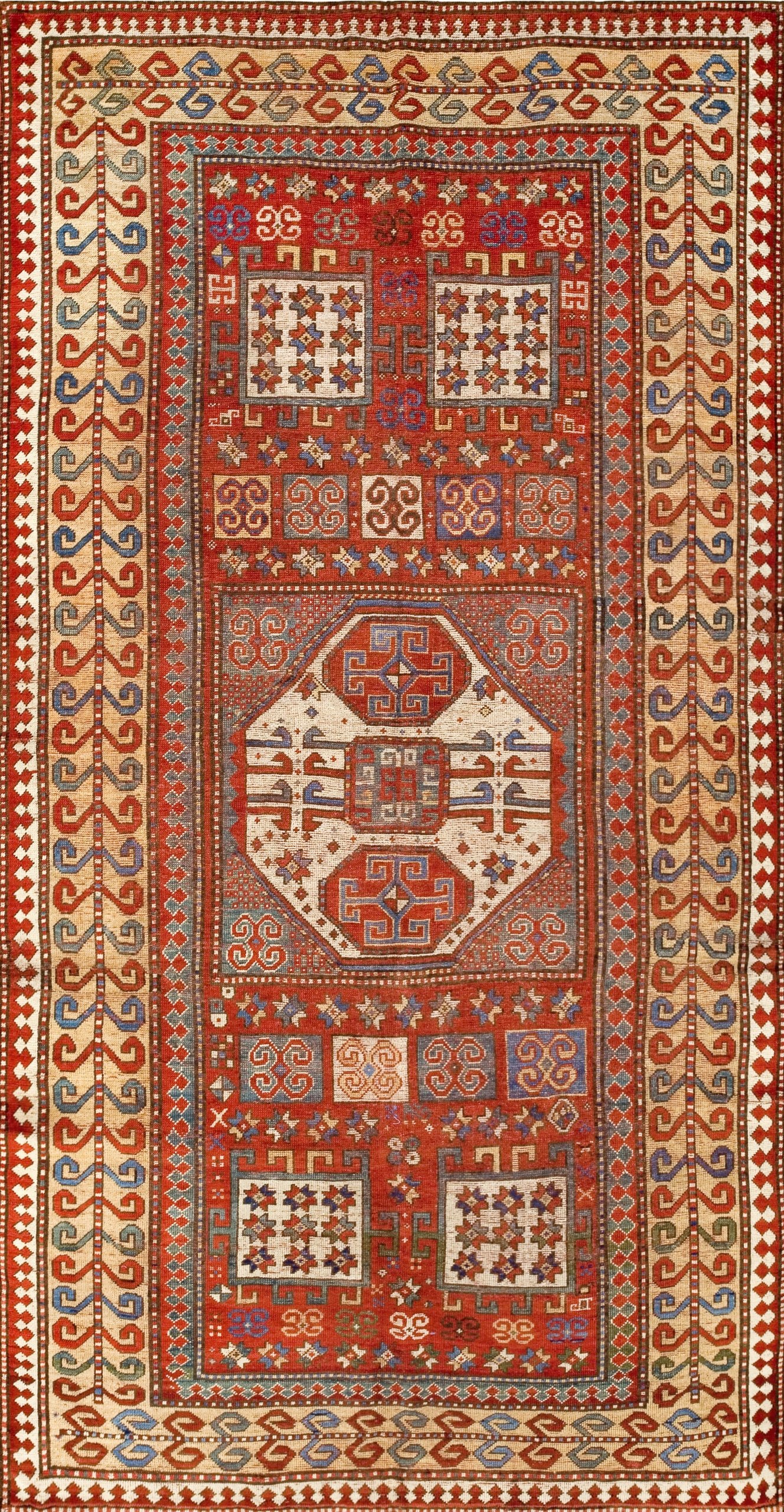
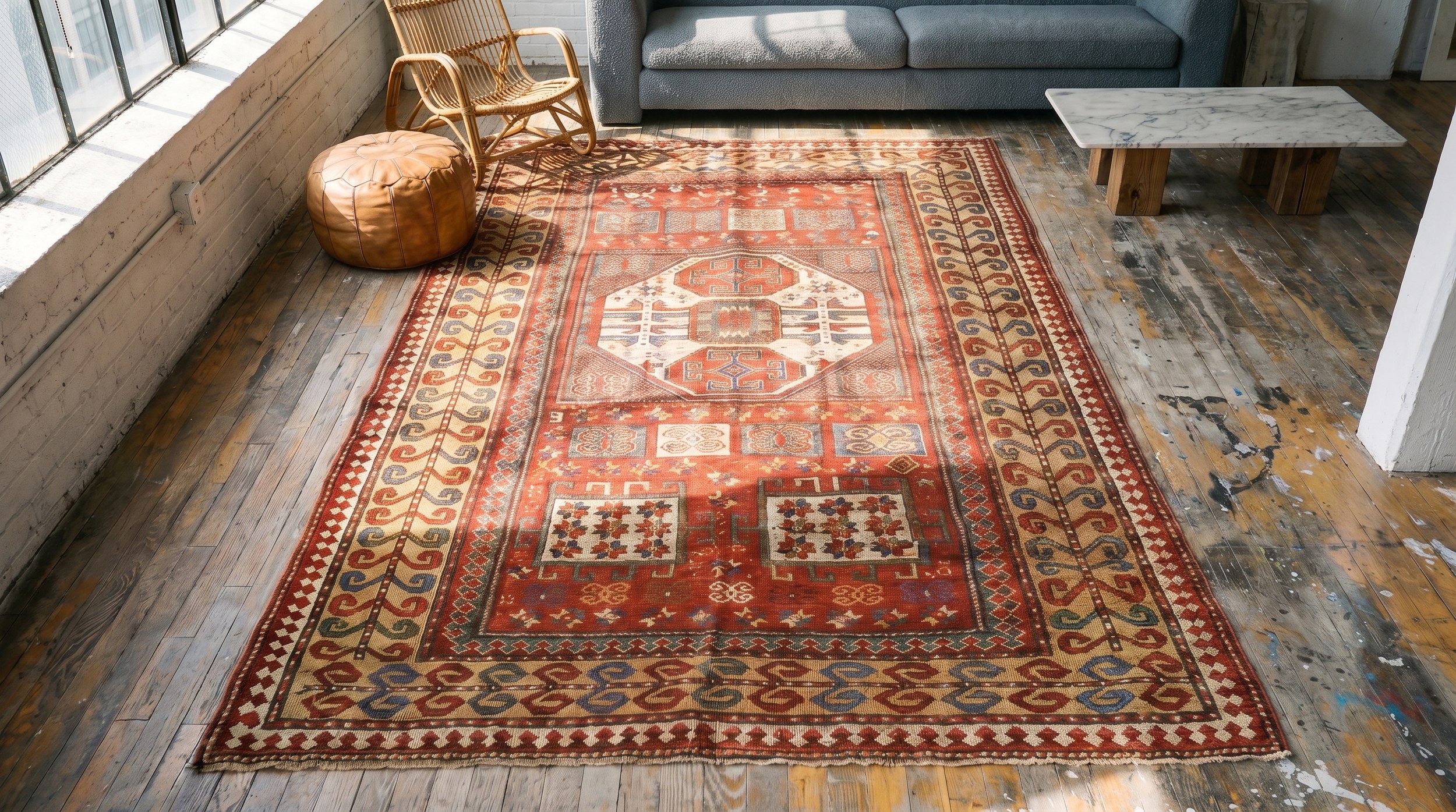
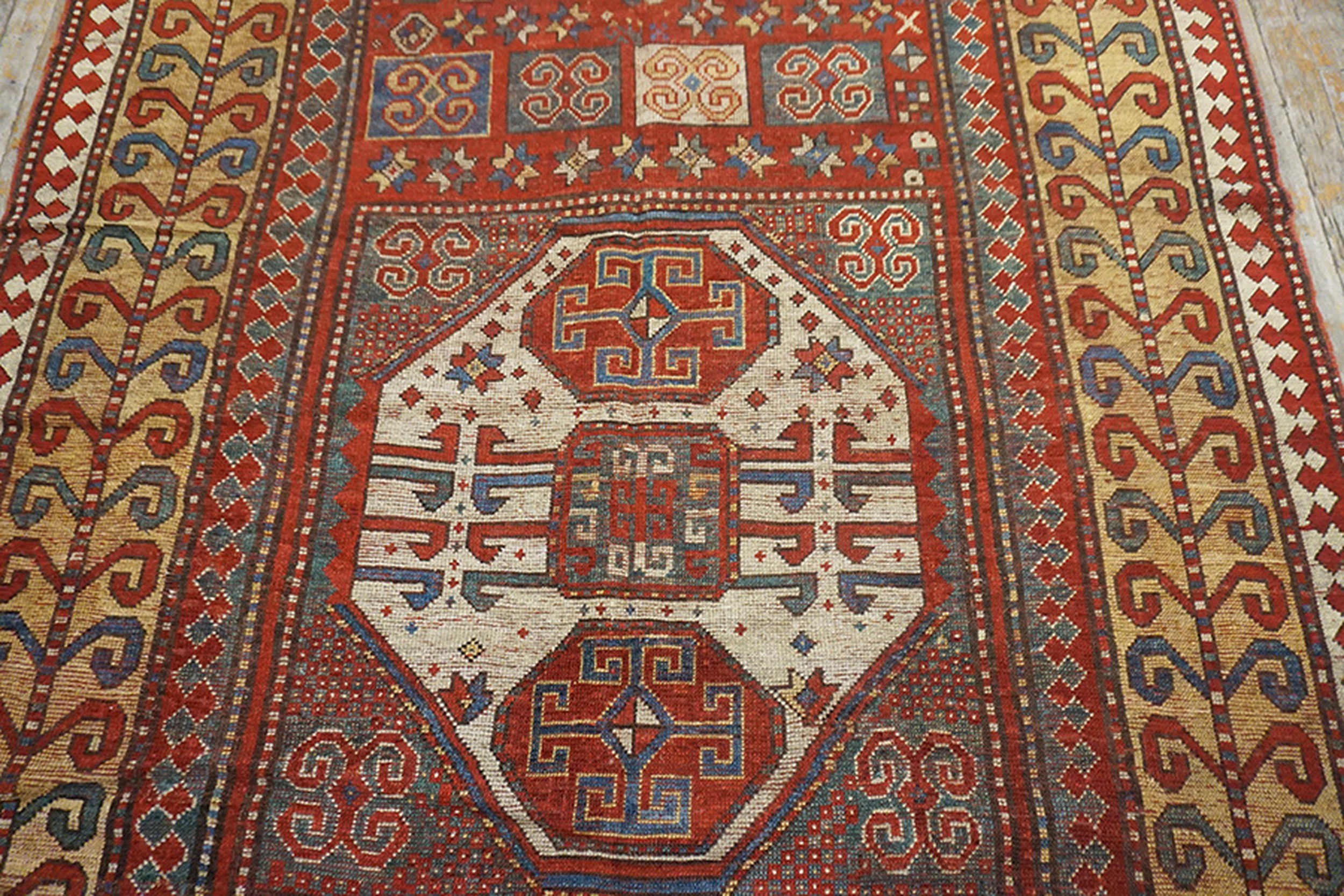
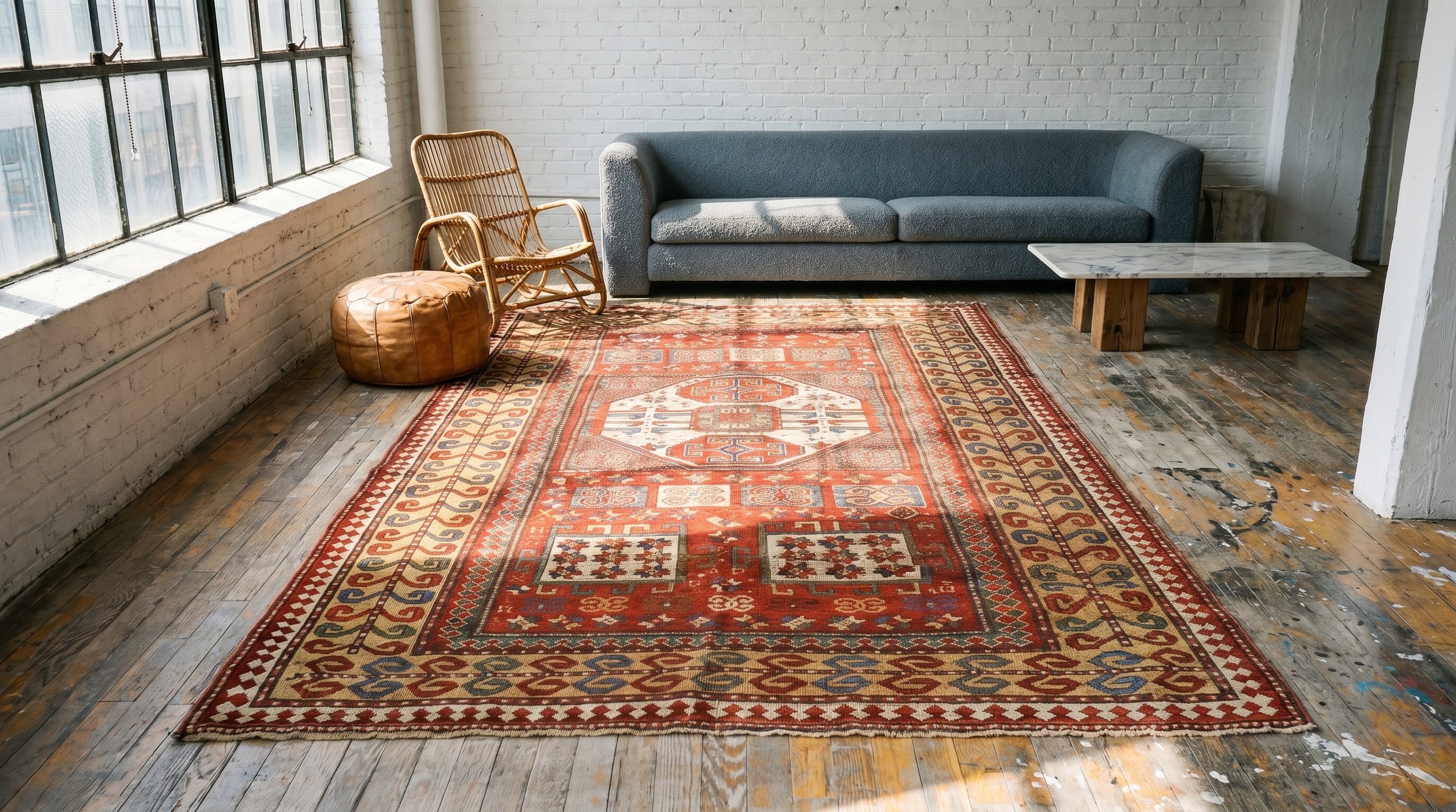
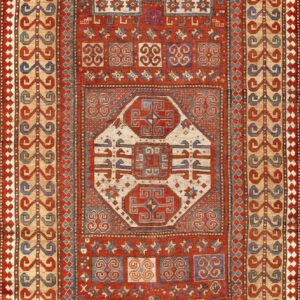
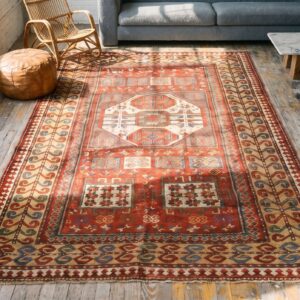
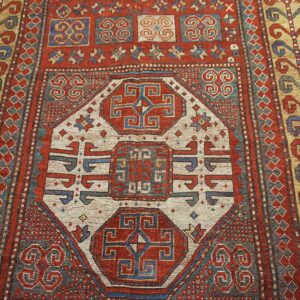
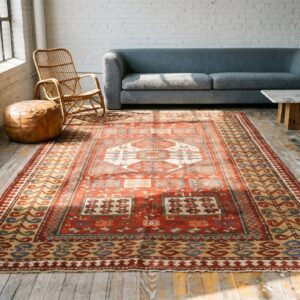
This nineteenth-century Caucasian Karachopf Kazak rug is a superlative example of the “High-Art” tribal weaving traditions of the South Caucasus. Among collectors of antique Caucasian textiles, the Karachopf (or Karachov) group is considered the “King of Kazaks,” celebrated for its monumental, almost architectural geometric power and its distinct, recognizable layout that has remained unchanged for centuries.
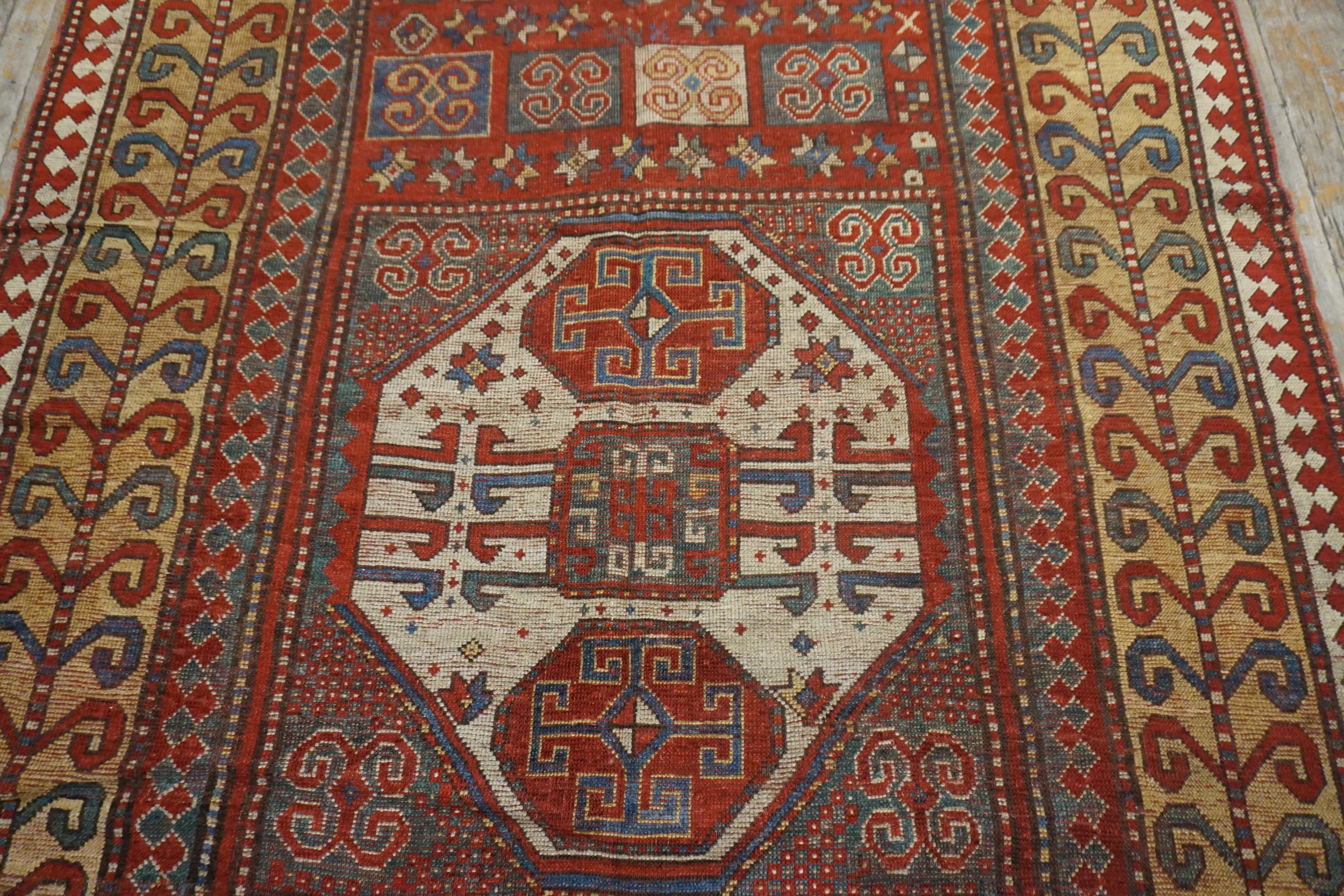
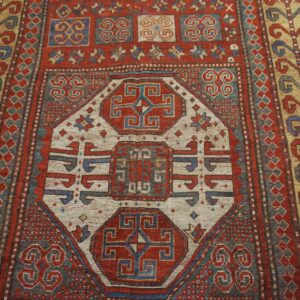
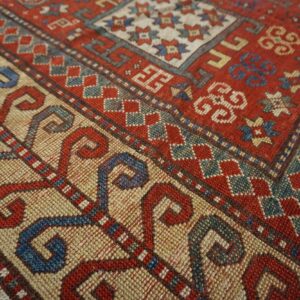
The composition is centered upon a massive octagonal medallion, which serves as the “heart” of the antique tribal design area rug. This central anchor is traditionally flanked by four smaller, square-shaped satellite medallions—a layout that scholars believe represents a stylized “Map of the Universe” or a sacred tribal architectural plan. The field is populated with a “scatter” of smaller, totemic symbols, including eight-pointed stars, “S-hook” protection charms, and stylized animals, all rendered with the bold, “razor-sharp” geometric clarity that defines the Kazak aesthetic.
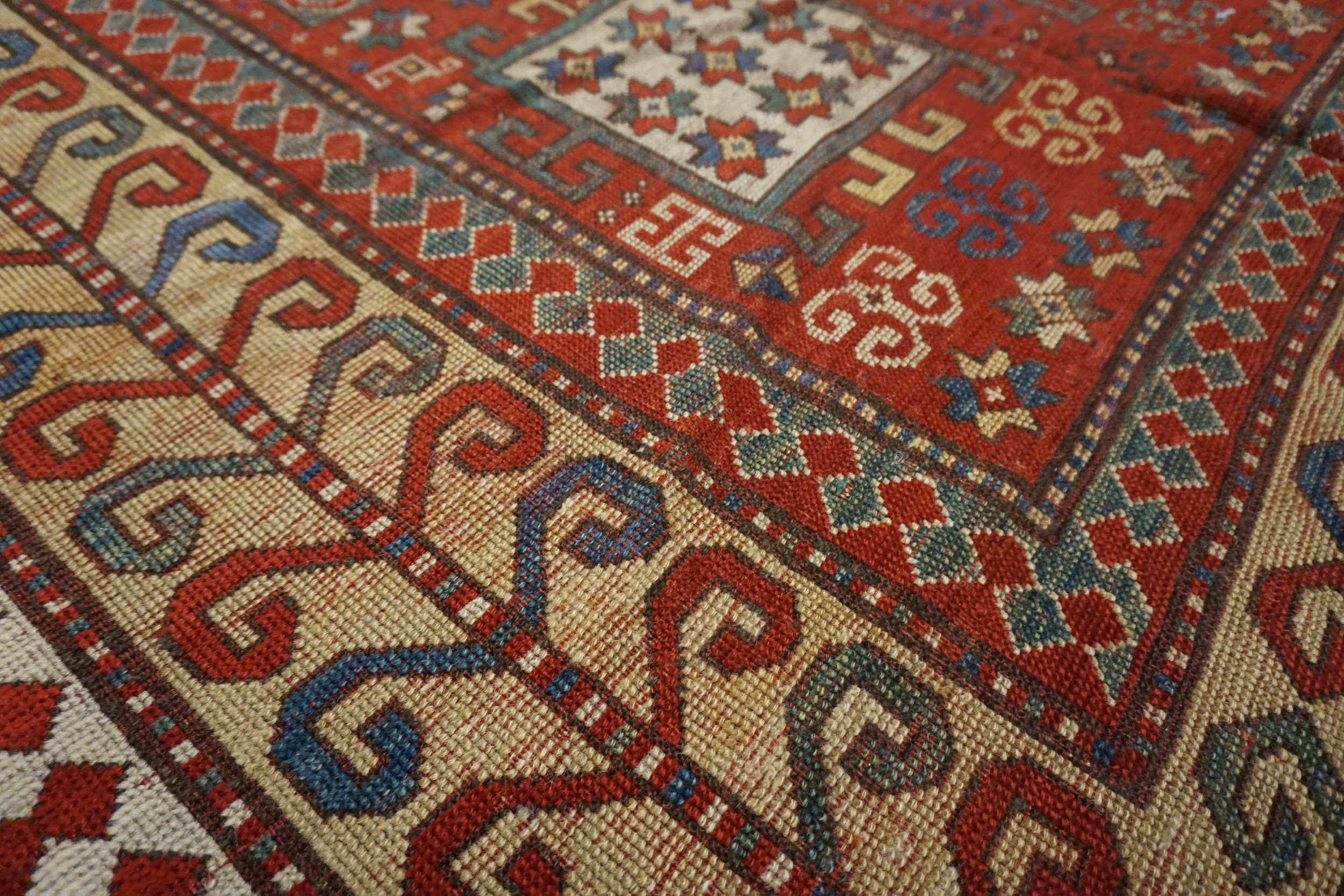
The palette is a masterclass in 19th-century natural dye work. The ground is a saturated, deep madder red, providing a powerful foundation for the high-contrast medallions. The bold red character of the antique Tribal Caucasian rug is enhanced by a slight abrash variations (tonal variation in the red hues), giving the solid areas a shimmering, watercolor-like depth. Because these antique tribal Caucasian Karachopf rugs were woven by nomadic tribes using hand-spun mountain wool, the fibers are exceptionally rich in natural lanolin, resulting in a luminous, light-reflective surface.
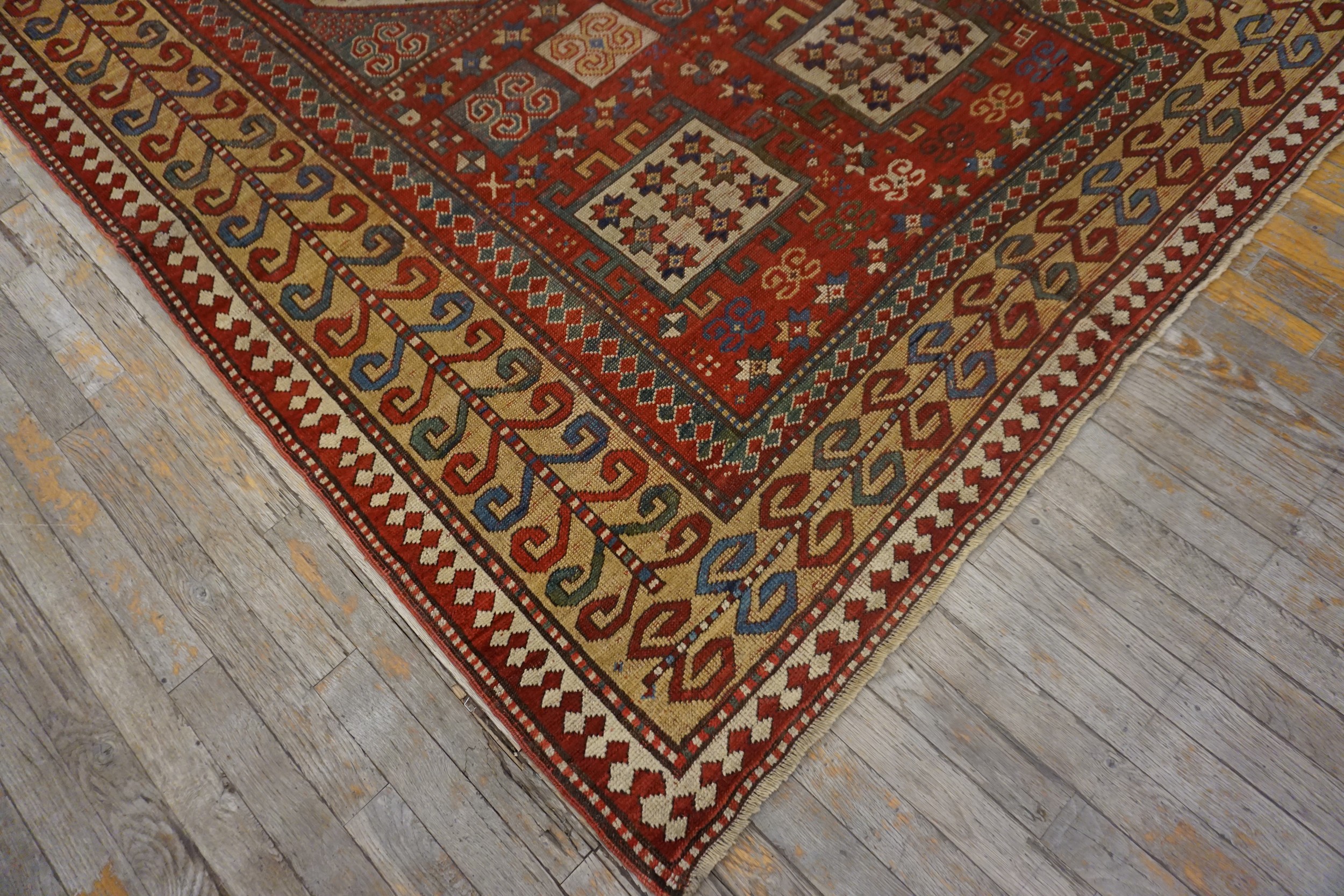
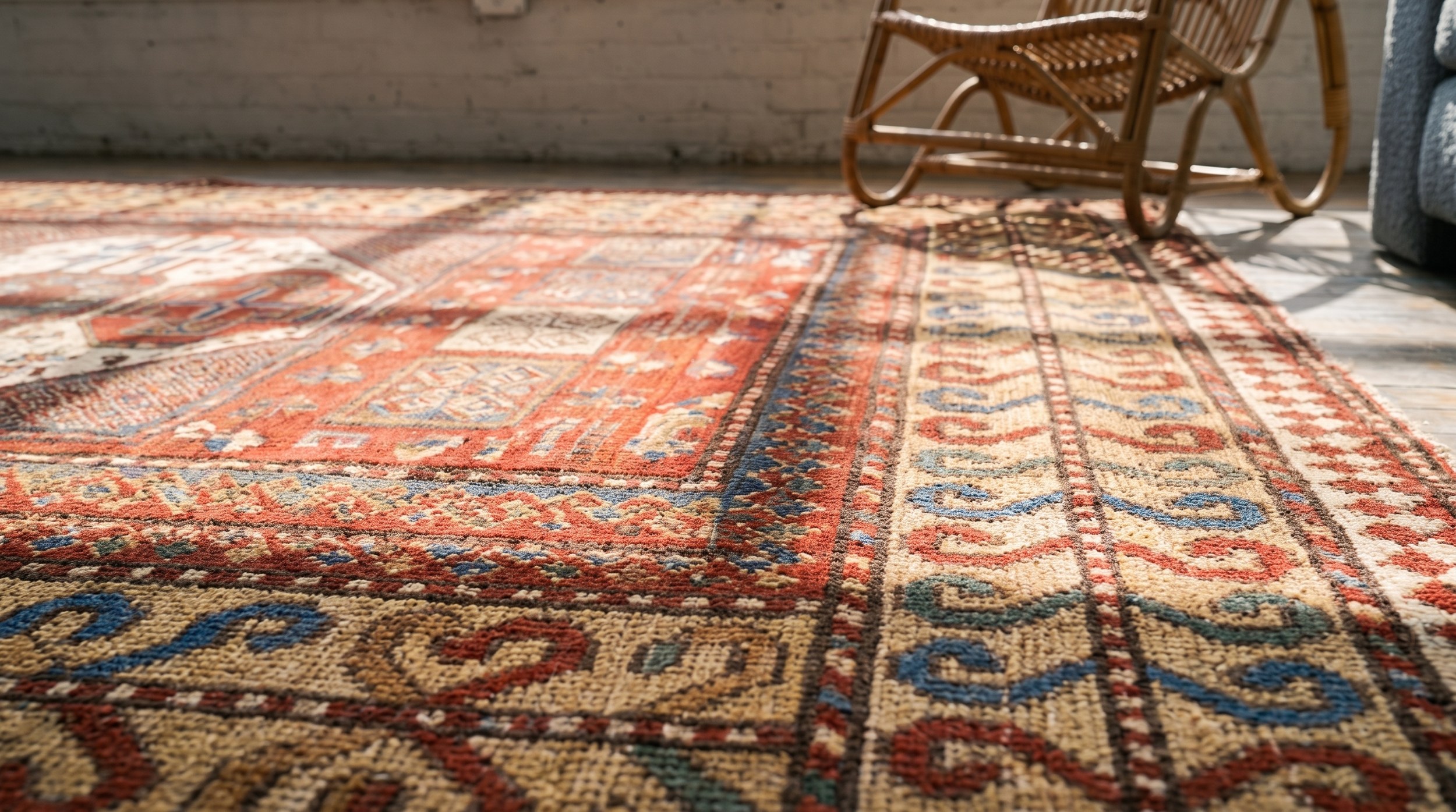
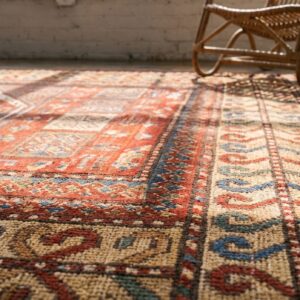
Technically, a Karachopf is prized for its substantial, fleshy pile and its heavy, “leather-like” handle. Unlike the thinner, urban rugs of Persia, this antique tribal Caucasian Kazak rug was built for warmth and durability, offering a luxurious, tactile presence underfoot. The wool is long-staple and resilient, allowing the rug to maintain its “chunky” architectural texture even after 130+ years of use.
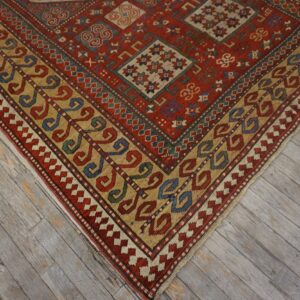
The borders act as a disciplined, regal frame, often featuring the iconic “Leaf and Calyx” or “Wine Glass” pattern. This border provides a rhythmic counterpoint to the explosive, static energy of the central medallions, “locking” the design into a state of perfect tribal balance. To possess an antique Karachopf Kazak is to hold a monument to a vanishing nomadic heritage—a work that transforms a floor into a space of historical gravity, ancient symbolism, and scholarly opulence.