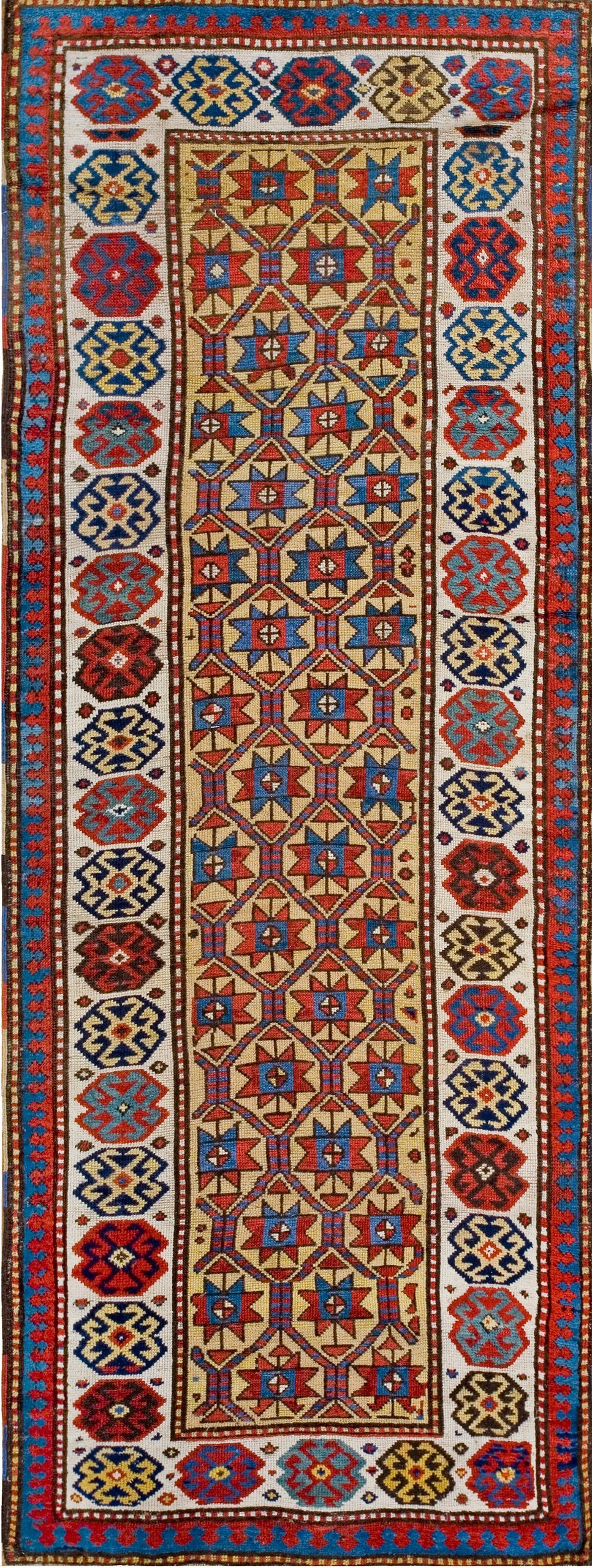
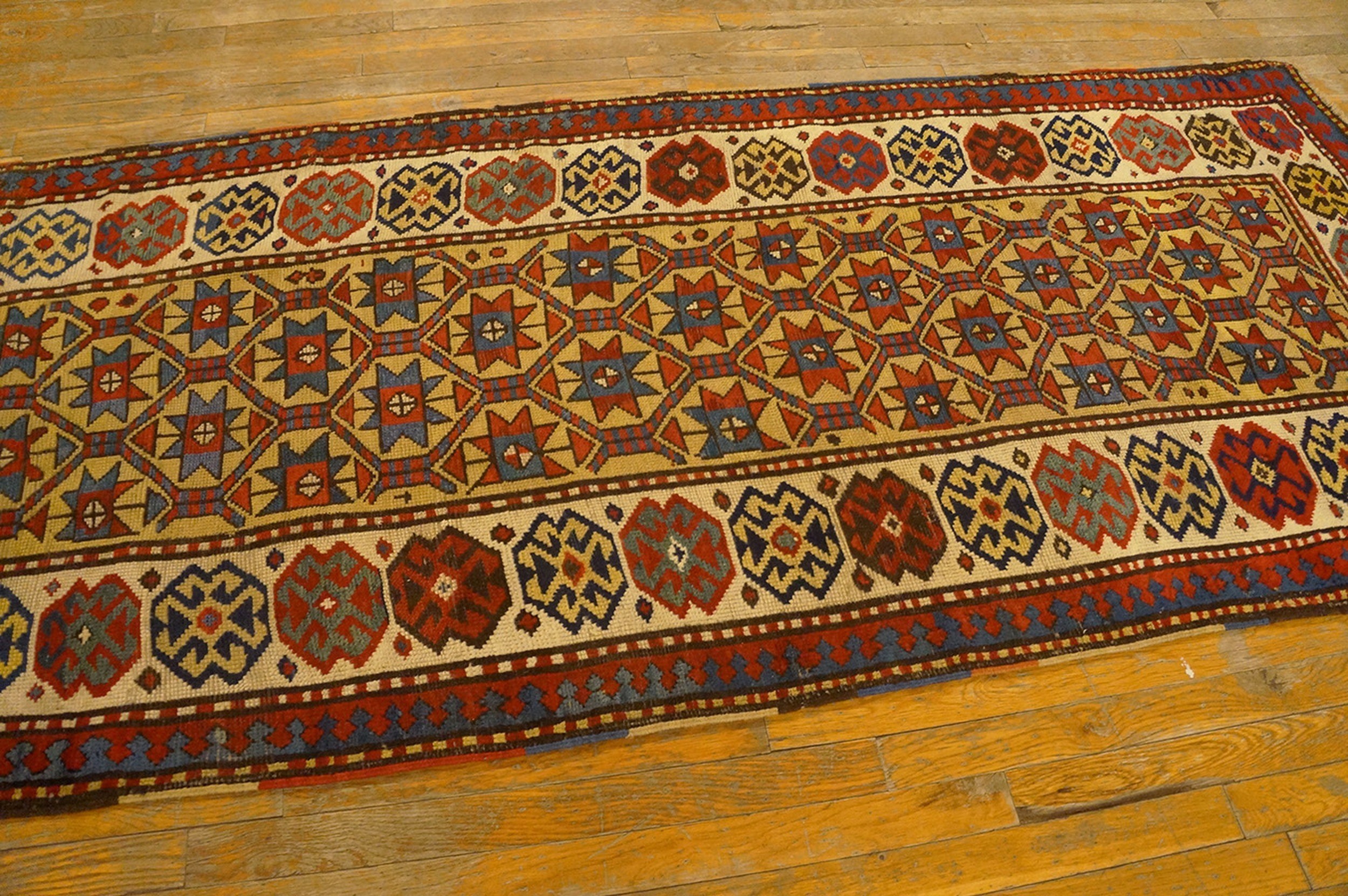
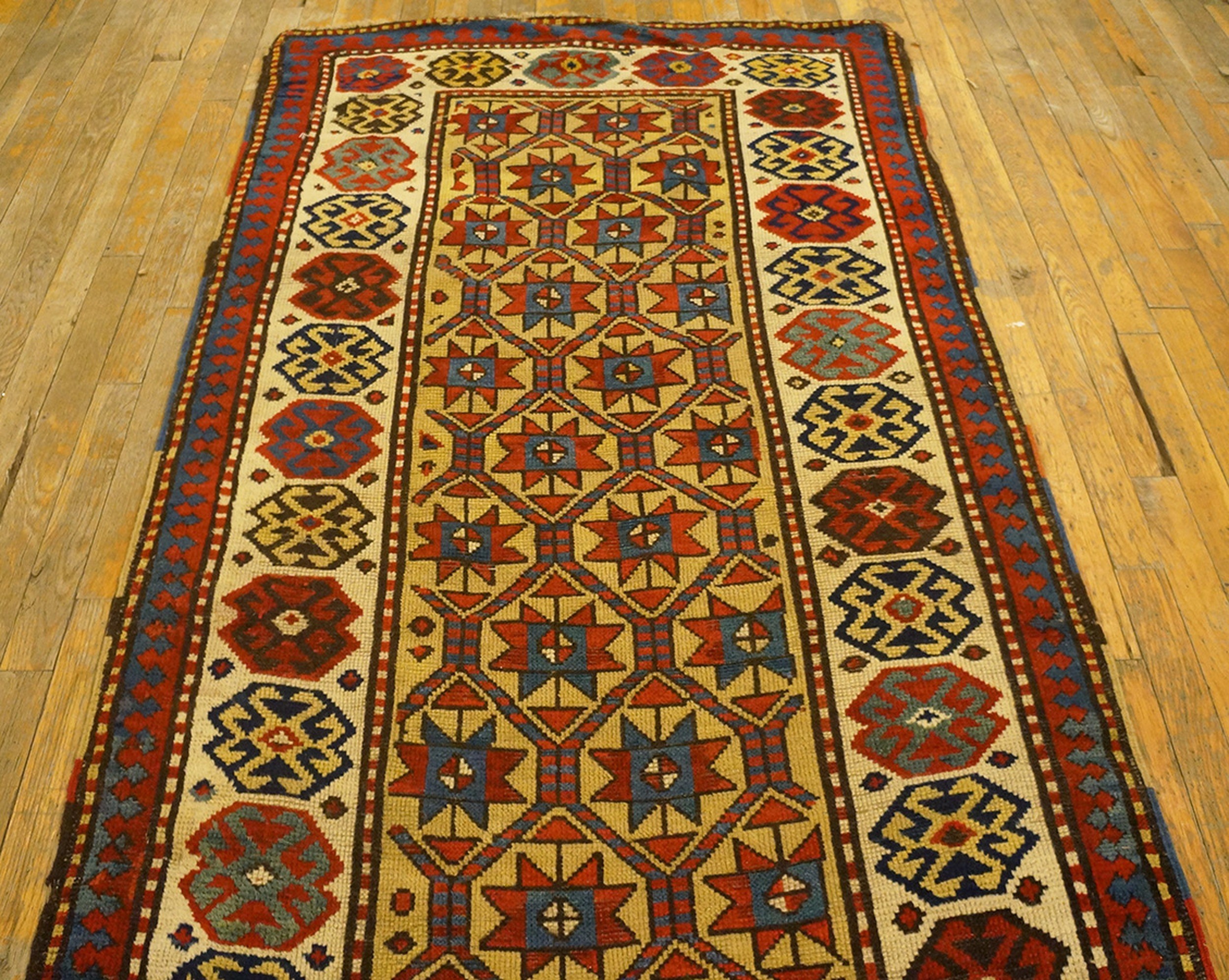
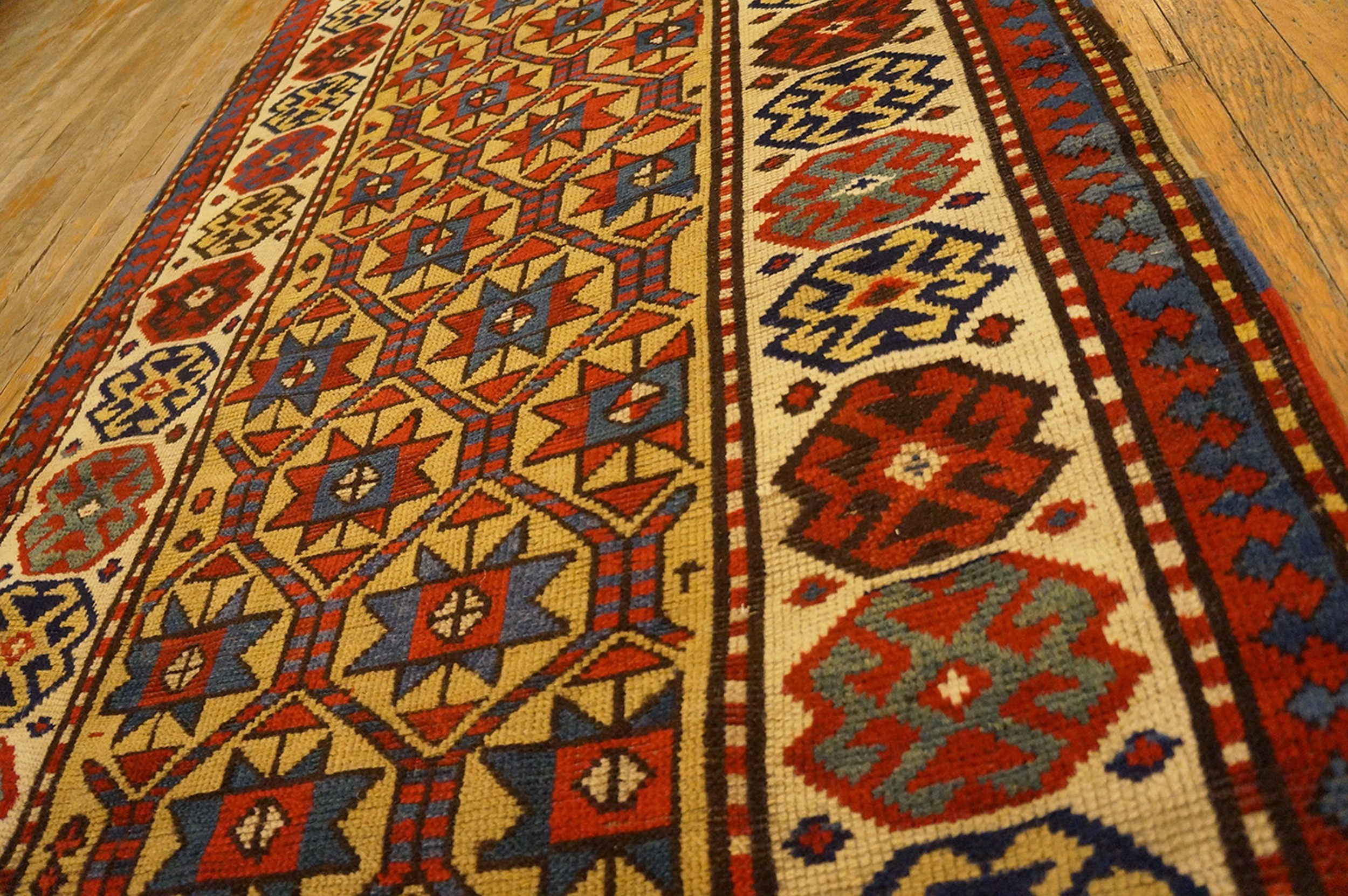
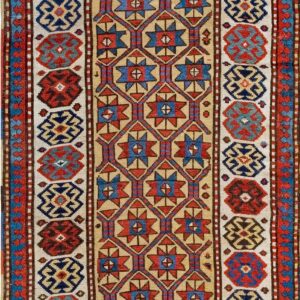
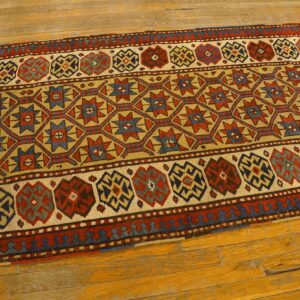
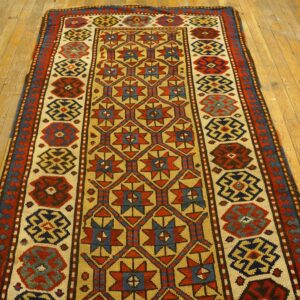
This late nineteenth-century Caucasian Kazak rug / runner is a rare and radiant example of tribal artistry, hailing from the Kazak Steppe—a region nestled between the Talish mountains and the Caspian Sea. While many tribal antique Caucasian rugs favor the deep crimsons and indigos of the “high-altitude” palette, this specific specimen is distinguished by its extraordinary and highly sought-after Saffron, Gold, and Ochre Yellow color story.
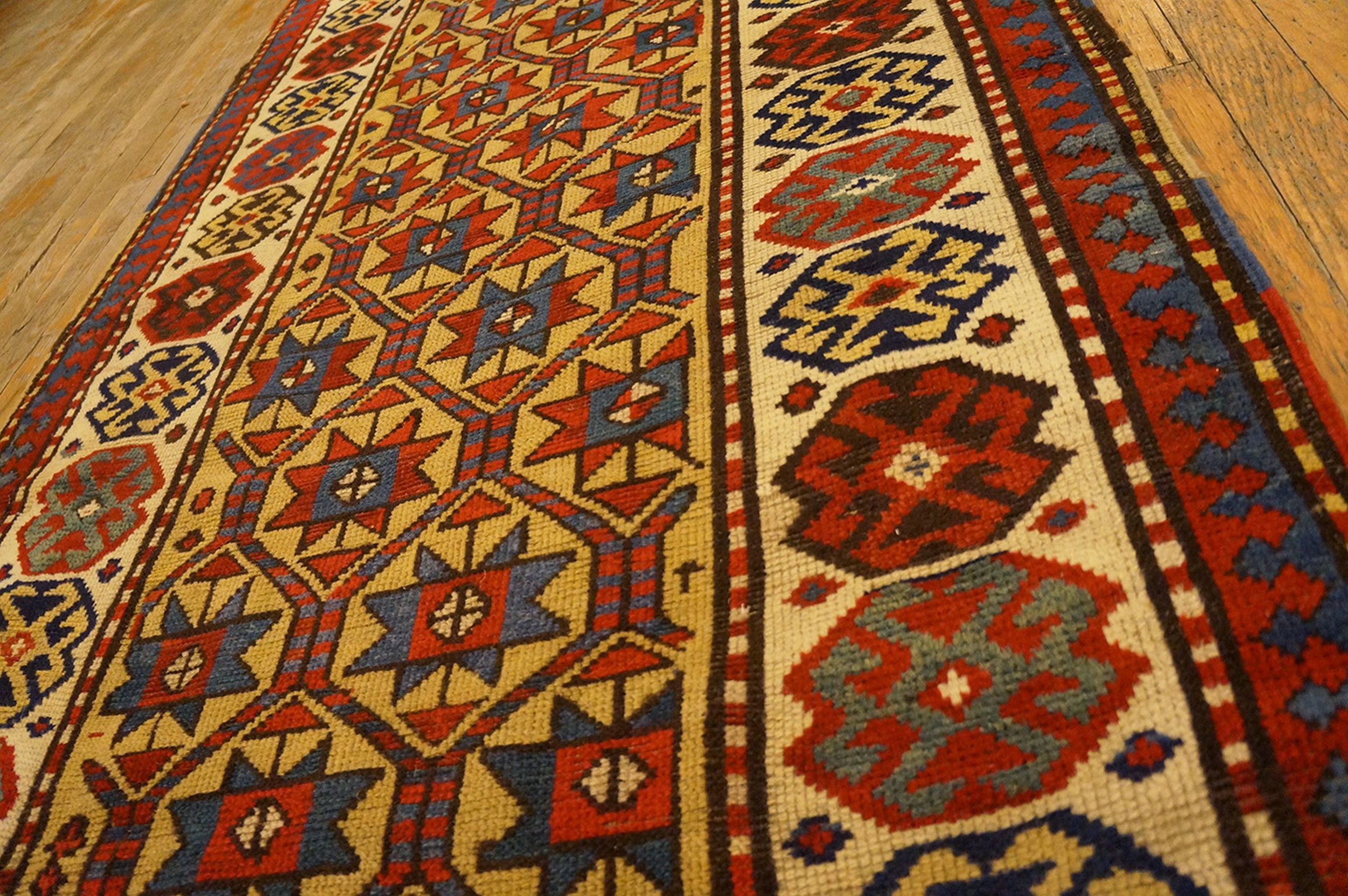
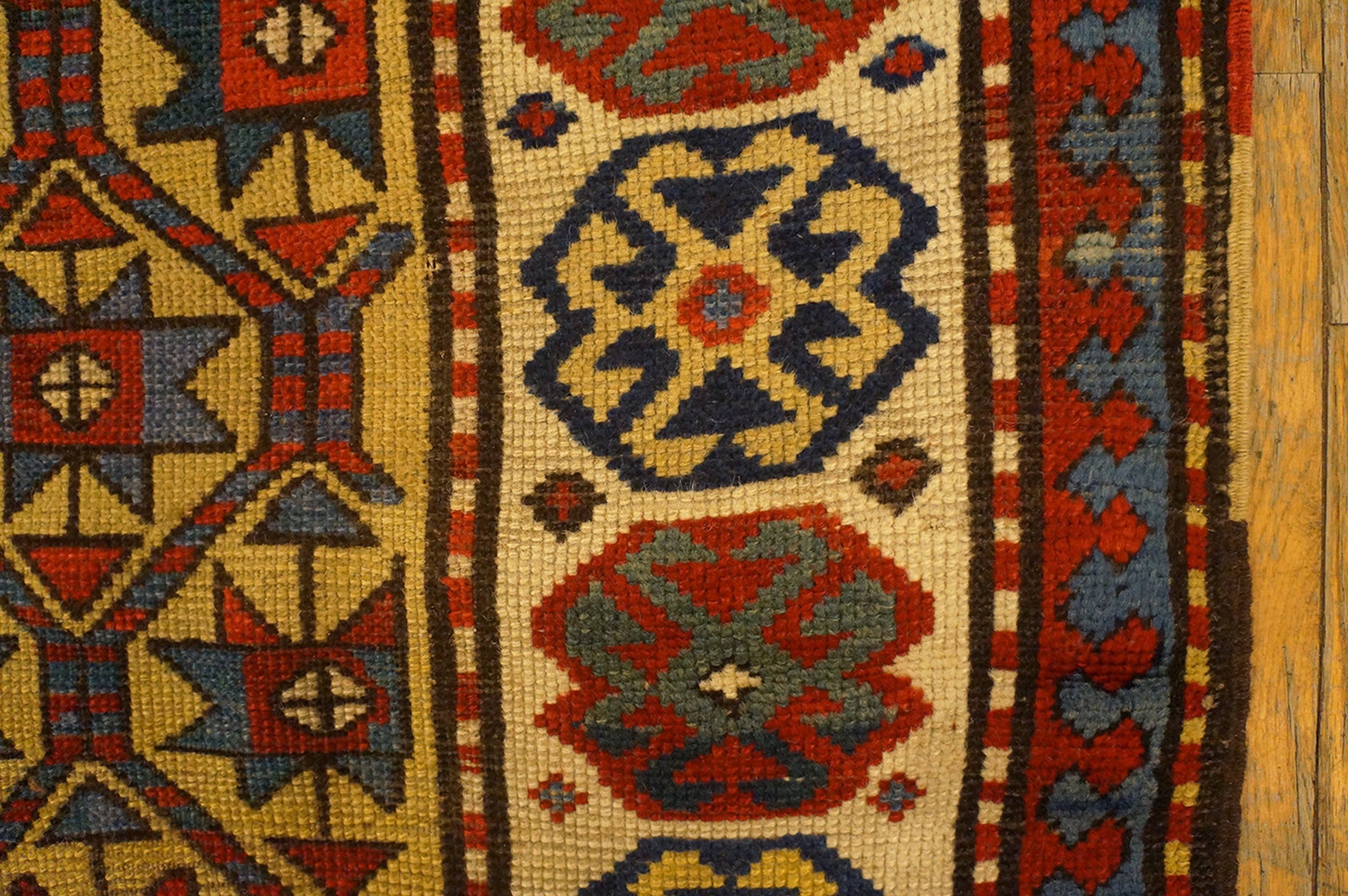
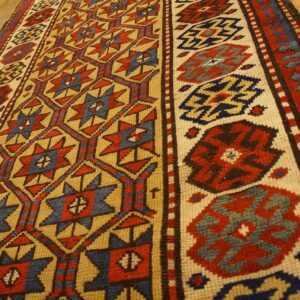
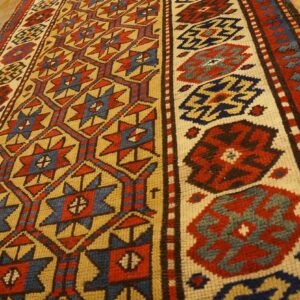
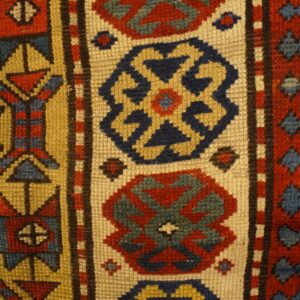
The composition is defined by a rhythmic, highly geometric tribal layout. Central to the Kazak tradition is the use of “Memling” or stepped medallions, often arranged in a vertical “gallery” format that draws the eye down the length of the runner. These medallions are not merely decorative; they are ancient totems representing the weaver’s lineage and the rugged landscape of the Steppe. The “razor-sharp” execution of the geometry, with its latch-hooked edges and crystalline internal motifs, reflects the disciplined hand of a master nomadic artisan.
The palette is the defining feature of this “Scholar’s Piece.” To achieve this specific spectrum of Saffron and Ochre, the weavers utilized rare natural dyes—likely derived from weld, pomegranate rinds, or saffron crocuses. Yellow is historically one of the most difficult natural colors to stabilize and preserve; the fact that this runner retains such a vibrant, “sun-drenched” luminosity after 130+ years is a testament to the quality of the original dye work. The subtle abrash (natural tonal shifting) across the golden field creates a shimmering, watercolor effect that gives the rug a sense of movement and warmth.
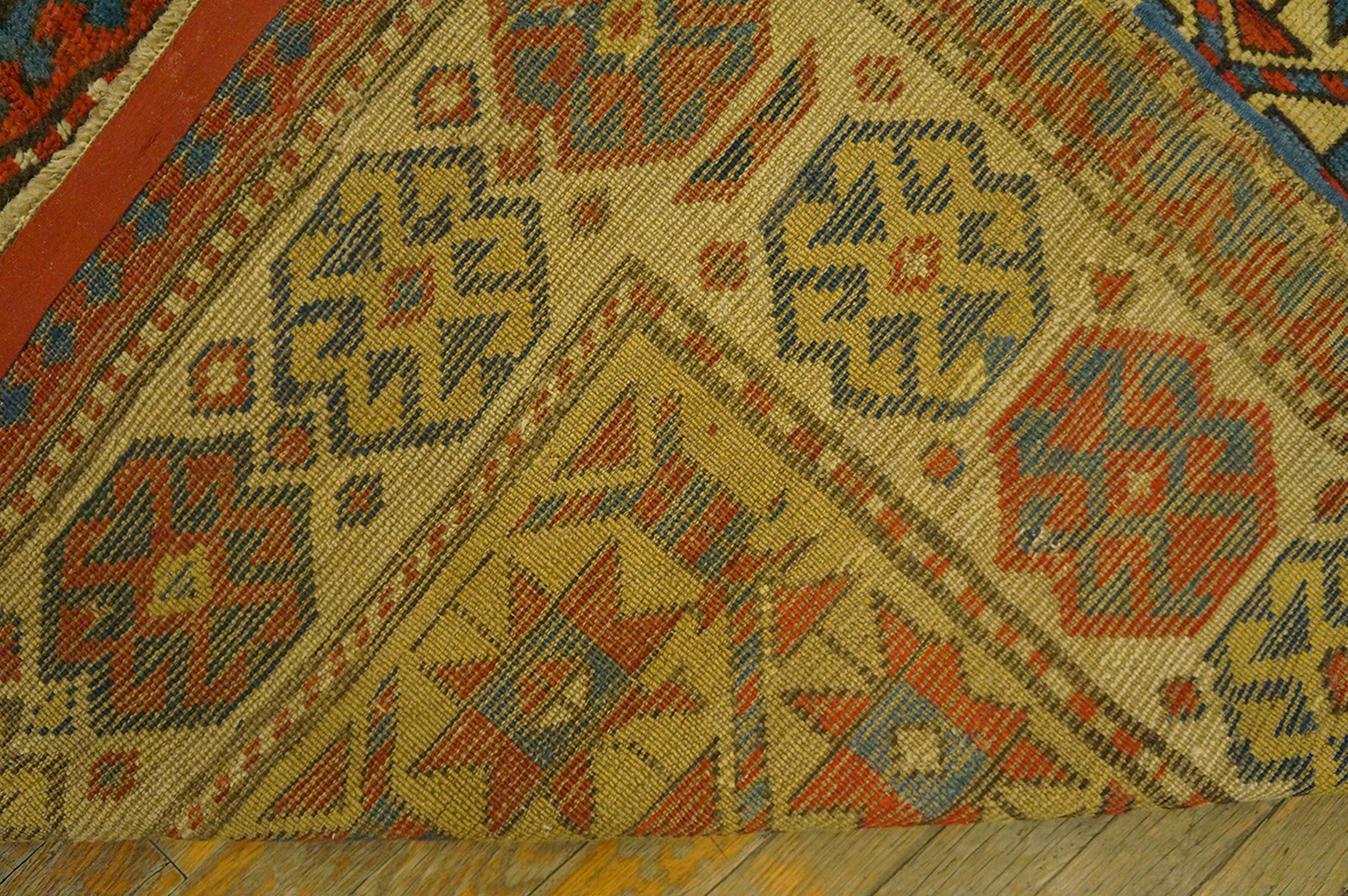
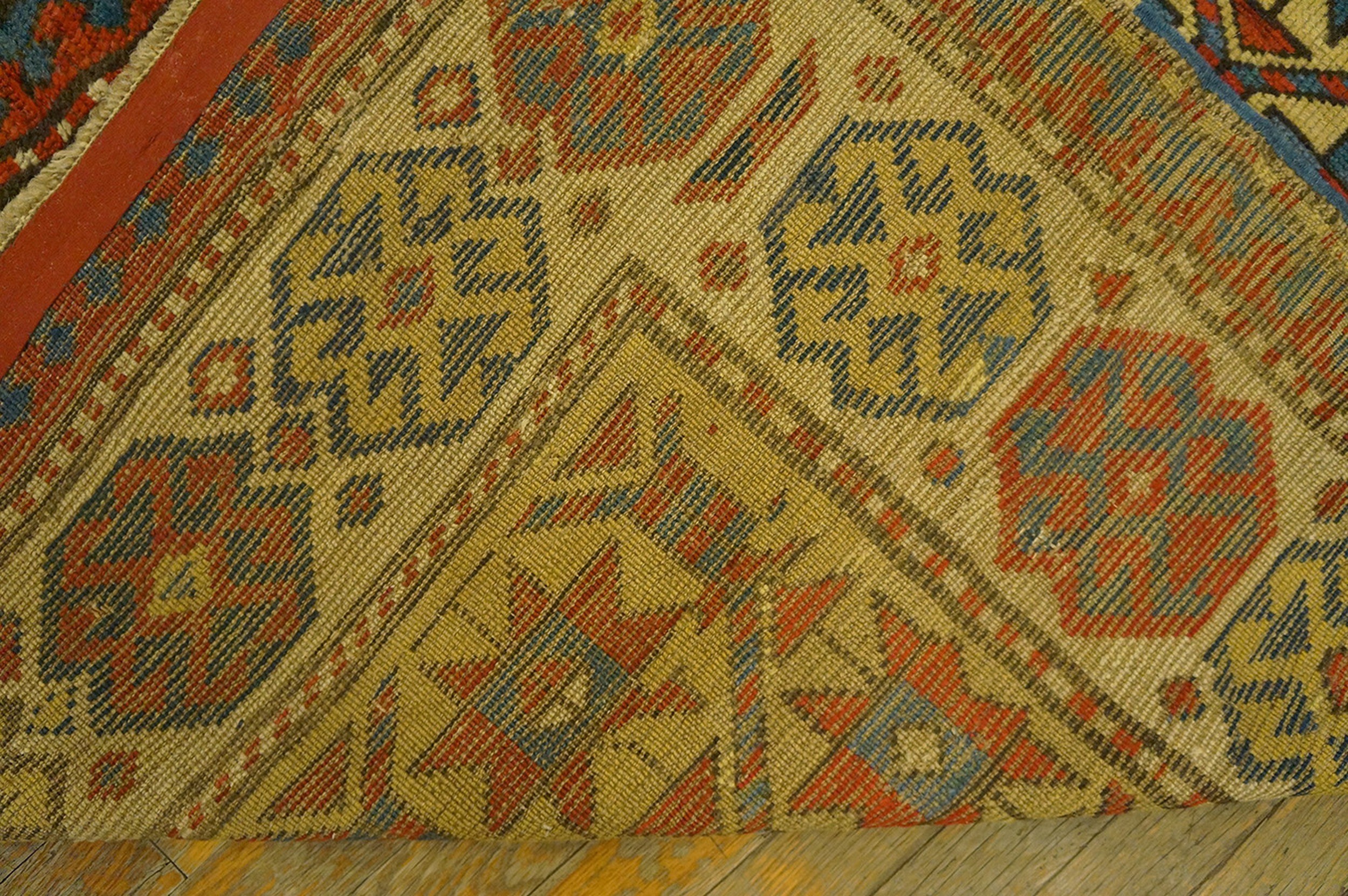
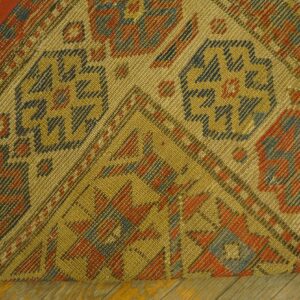
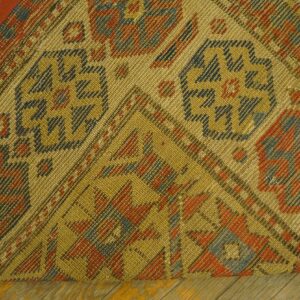
Technically, a Kazak runner of this period is prized for its substantial, lustrous wool. The wool is hand-spun from high-altitude sheep and remains rich in natural lanolin, providing a soft, silky handle and a light-reflective surface. Unlike the finer, thinner weaves of the neighboring Shirvan district, the Kazak handle is “fleshy” and durable, designed to withstand the nomadic life of the 1800s while serving as a statement of tribal prestige.
The borders act as a regal frame, typically featuring the iconic “Running Dog” or “Medallion and Calyx” patterns in high-contrast tones. This architectural framing “locks in” the explosive energy of the golden field, providing a sense of historical permanence. To possess magnificent antique tribal rugs like this Kazak runner is to own a piece of “liquid gold”—a monument to a vanishing way of life that transforms a transitional hallway into a gallery of historical gravity and rugged, solar-powered brilliance.