
What Is Wool in Rug Production?
Discover our curated collection of high-quality, durable wool rugs and find the perfect piece for your home.
Wool Fiber Structure & Properties
Wool is a keratin-based animal fiber, most often sourced from sheep, that has evolved with remarkable characteristics perfectly suited for rugs. Each strand contains a cortex with natural crimp, giving the fiber elasticity and bounce that helps rugs retain their shape even under heavy furniture or repeated foot traffic.
The surface of wool fibers is covered in overlapping scales, which contribute to wool’s ability to absorb and hold dyes with richness and depth unmatched by most other fibers.
This same structure, along with the fiber’s hygroscopic proteins, allows wool to regulate moisture in the environment, naturally resisting static and moderating humidity. Wool contains lanolin, a waxy substance secreted by sheep, which provides a degree of built-in stain and moisture resistance.
Another crucial property is its inherent flame resistance—wool chars rather than ignites, adding a safety dimension to wool rugs in the home. These combined wool fiber properties create rugs that are resilient, lustrous, and comfortable for decades of use.
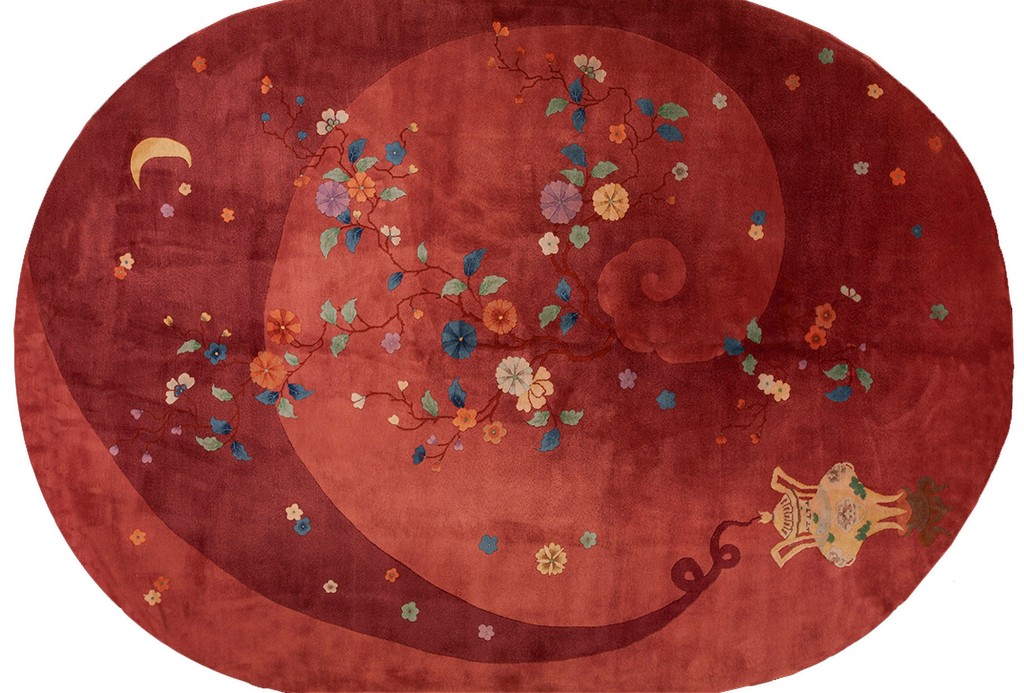
Oval Shape Antique Artistic Swirl Pattern Rustic Red Siena Color Art Deco Chinese Rug by Rugs On Net
Wool vs. Other Rug Fibers
- Wool vs. Synthetics — Wool is softer, warmer, and more resilient underfoot than synthetic fibers like nylon or polypropylene. — Why: The natural crimp and protein structure create bounce and insulation, while synthetics often flatten and feel colder.
- Wool vs. Cotton — Wool provides plushness and resilience, while cotton is flatter and more absorbent. — Why: Cotton works well for flatweaves, but lacks the elasticity needed for a luxurious pile.
- Wool vs. Silk — Silk delivers sheen and fineness, but is less durable for everyday floors. — Why: Wool offers a balance of strength and softness, making it more practical for large area rugs.
- Wool vs. Plant Fibers (jute, sisal) — Plant fibers provide rustic textures but can feel coarse and wear quickly. — Why: Wool retains softness and spring, aging gracefully where plant fibers may fray.
In short, wool vs synthetic rugs remains a decisive factor: synthetics win on affordability, but natural wool rugs dominate in comfort, performance, and longevity.
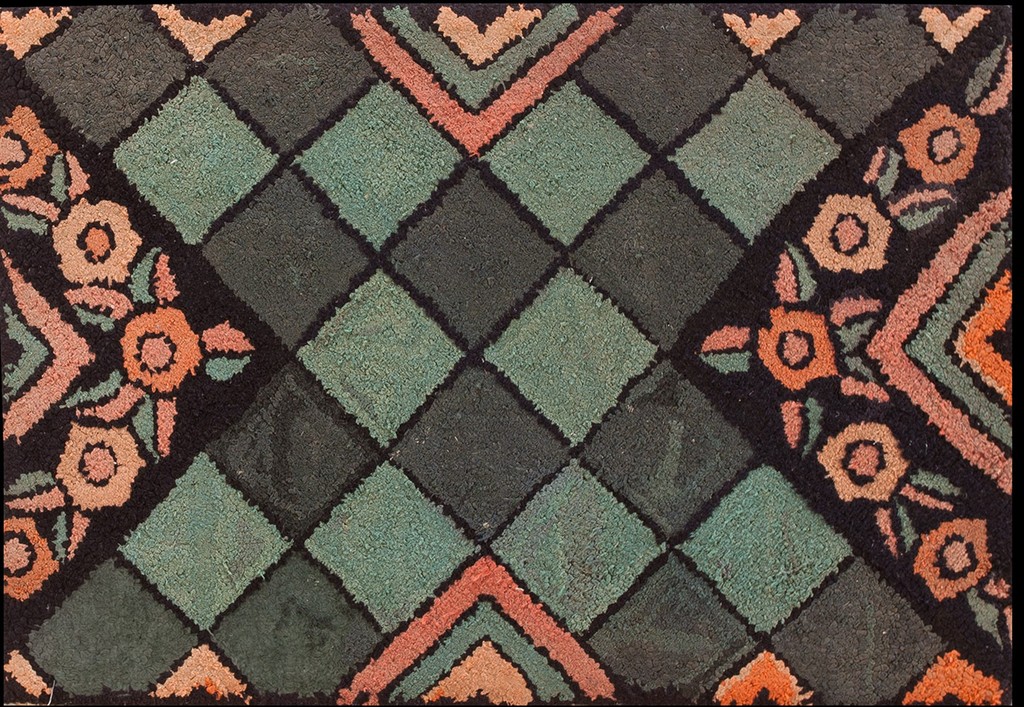
Antique American Hooked America Multicolor 1920s Rug by Rugs On Net
What Is Wool Pile?
In rug terminology, wool pile refers to the upright yarns that form the nap or surface of a carpet. These yarns are knotted into the foundation of the rug and then sheared to an even height, creating the plush surface we associate with fine rugs.
Wool pile delivers a tactile softness underfoot, absorbing impact and insulating against cold floors. Performance-wise, pile made from rug-grade wool is resilient, bouncing back after compression and resisting matting more effectively than most fibers. This pile is the defining feature of luxury and longevity in fine carpets, as it combines beauty, practicality, and durability.
Common Sources of Rug-Grade Wool
- Persian Wool (Iran) — Known for strong, lustrous fibers ideal for dense knotting. — Why: Long tradition of Persian weaving relies on this robust fiber.
- Ghazni Wool (Afghanistan) — Highland sheep produce coarse yet oily fibers that are exceptionally durable. — Why: Lanolin-rich quality makes it favored for tribal rugs.
- New Zealand Wool — Renowned for uniformity and whiteness, taking dyes vibrantly. — Why: A consistent choice for modern rug production.
- Indian Wool — Adaptable and widely used for a range of rug qualities. — Why: India has become a global hub for both traditional and contemporary wool rug production.
- Tibetan Wool — High-altitude sheep yield thick, resilient wool with a unique sheen. — Why: Ideal for hand-knotted rugs with bold texture.
- Moroccan Wool — Often used in Beni Ourain and tribal rugs, with a soft, fluffy feel. — Why: Its loose, tactile texture defines the character of Moroccan designs.
These sources supply the majority of rug-grade wool, each lending distinct qualities that influence the look and performance of the finished carpet.
Key Advantages for Rugs
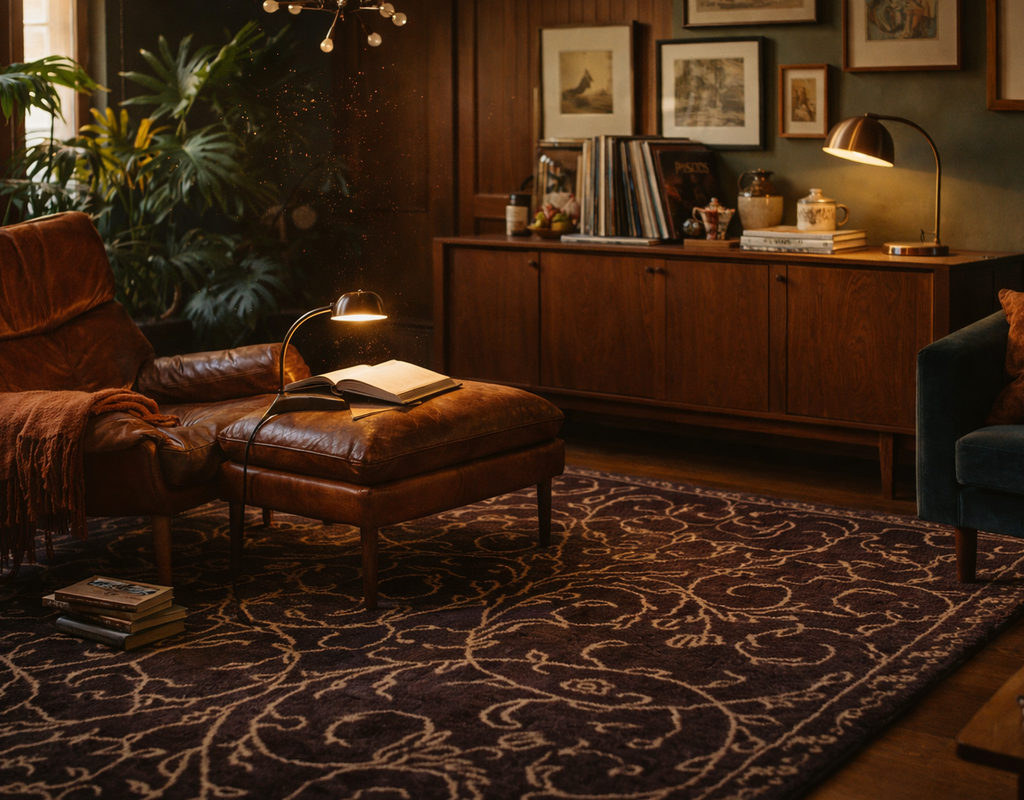
A luxurious, dark patterned rug anchors this inviting study space filled with vintage charm and warm lighting.
- Softness Underfoot — Wool feels inviting and cushioned. — Why: Natural crimp creates loft and insulation, making wool rugs feel warmer and softer than alternatives.
- Durability — Wool rugs can last decades, even centuries. — Why: The keratin structure resists wear while maintaining bounce.
- Rich Dye Absorption — Colors appear deep and luminous. — Why: The scaly surface and protein bonds lock in dye securely.
- Flame Resistance — A natural safety advantage. — Why: Wool chars at high heat rather than igniting, reducing fire risk.
- Stain and Moisture Resistance — Easier to maintain than many expect. — Why: Lanolin and fiber structure help repel spills and soil.
- Aging Gracefully — Wool develops a patina rather than simply wearing down. — Why: The fiber’s natural properties enhance rather than diminish with time.
Altogether, wool for area rugs is not just a traditional choice but an enduring benchmark for quality. Its biological structure creates unmatched comfort, durability, and visual depth, while wool pile remains the hallmark of both artisan and modern carpets.
When one asks “Why do wool rugs feel softer underfoot?” or “Is wool better than synthetic fibers for rugs?” the answer lies in wool’s living structure: a fiber evolved to insulate, protect, and endure—qualities that continue to make natural wool rugs the foundation of fine carpet weaving.
How Wool Becomes a Rug: From Sheep to Floor
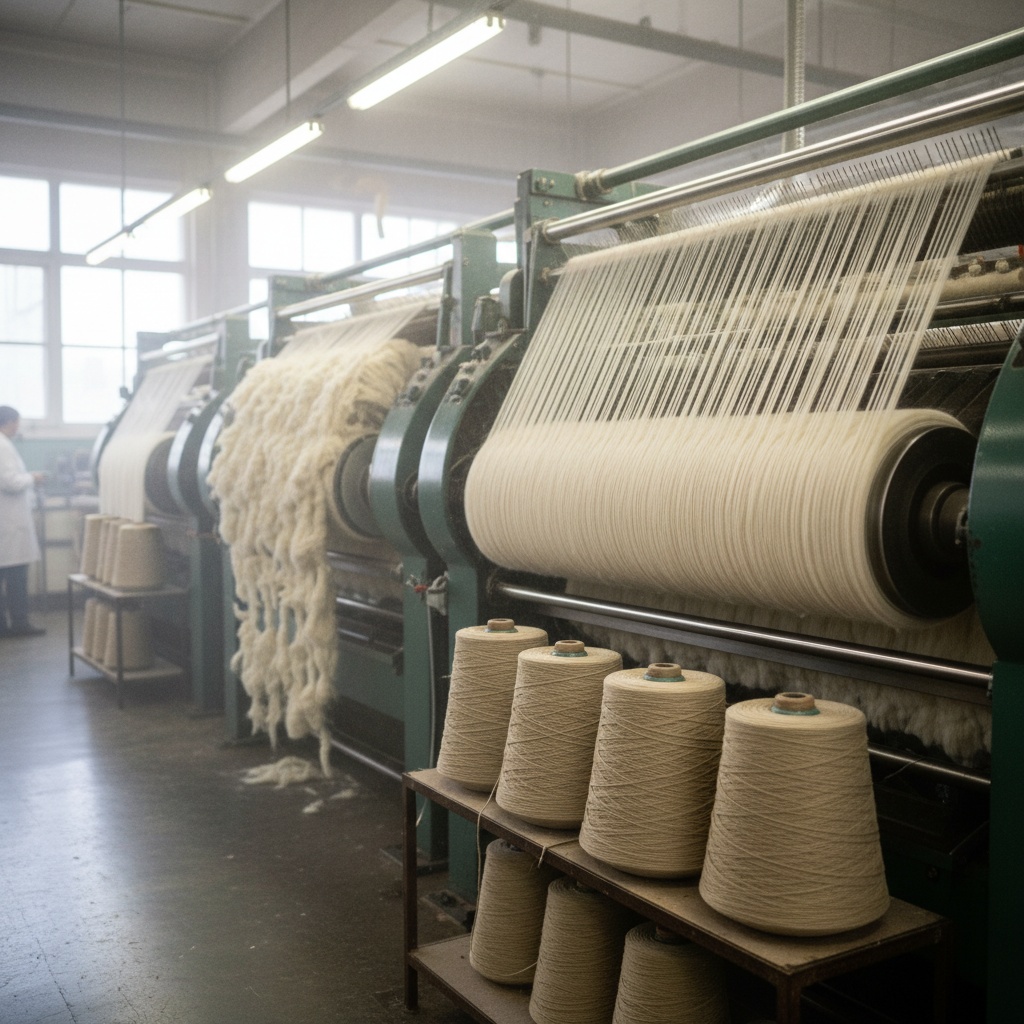
Fibers being processed into yarn for rug making.
Wool Processing Steps
Transforming raw fleece into a finished rug involves an intensive sequence of steps that blend ancient craftsmanship with modern efficiency. The process begins with shearing, where sheep are carefully clipped once or twice a year. The raw wool is then scoured to remove lanolin, dirt, and plant matter, yielding a clean fleece ready for textile use.
Next comes carding or combing, which aligns fibers into parallel strands. Once prepared, the wool is spun into yarn—traditionally by hand-spinning or more commonly by mechanized spinning mills. The yarn is then dyed, either before weaving (yarn-dyed) or after weaving (piece-dyed).
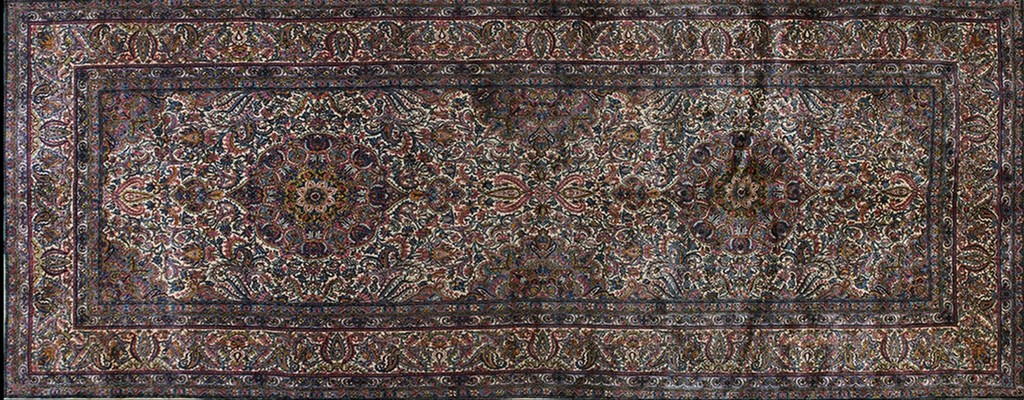
Antique Kilim Persian Knotted Rug by Rugs On Net
For added strength, yarns may be plied, or twisted together, with pile yarns spun more loosely for softness and foundation yarns spun tightly for structural stability. Whether handled by hand-spun wool traditions or modern industrial processing, these steps define the look, feel, and performance of a finished rug.
Wool for Pile vs. Foundation
- Wool Pile — Looser twist, designed for plushness and resilience. — Why: Pile yarn creates the soft nap underfoot and absorbs dyes richly.
- Wool Foundation — Tighter twist, used in warp and weft for strength. — Why: A stable foundation ensures the rug’s durability and resistance to distortion.
This distinction—wool pile vs foundation—shows wool’s dual purpose: it provides both luxurious surface texture and structural strength.
Material Pairings
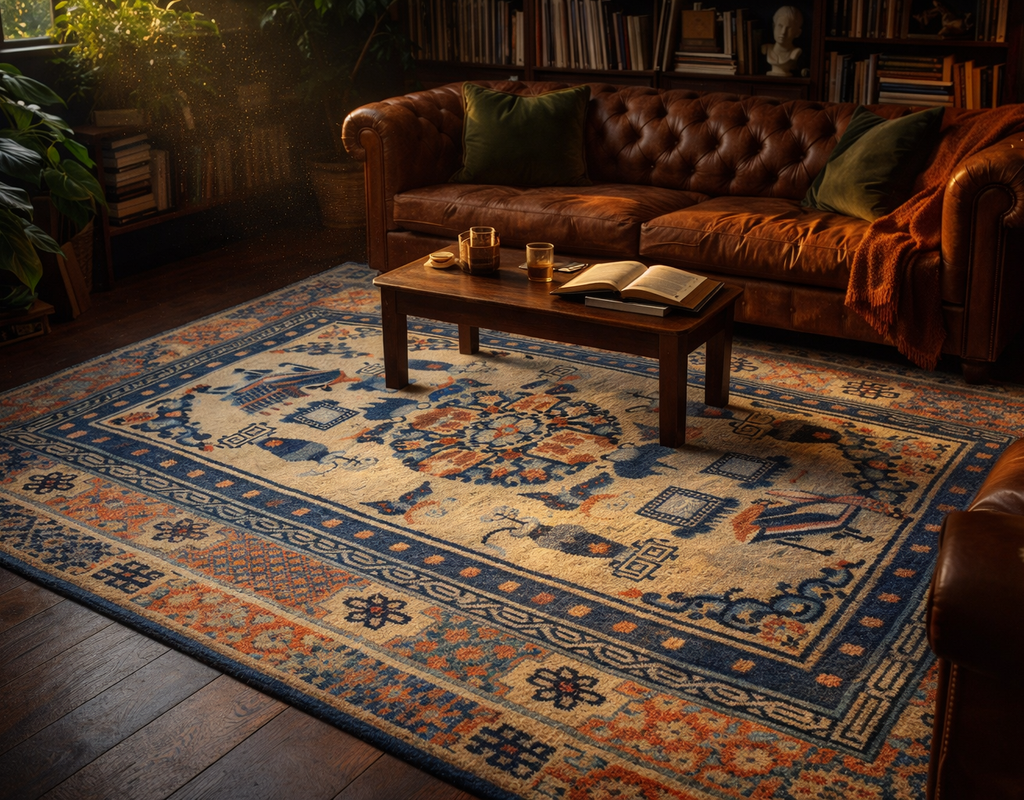
A traditional area rug adds warmth and color to a classic study space dominated by rich leather.
- Wool + Cotton — Common in Persian and Indian rugs. — Why: Cotton provides a stable foundation, while wool offers a soft, colorful pile.
- Wool + Silk — Found in high-end carpets. — Why: Silk adds sheen and highlights motifs against the wool field.
- Wool + Goat Hair — Seen in tribal weavings. — Why: Goat hair’s coarse strength reinforces selvages and rug backs.
- Wool + Viscose — Used in contemporary rugs. — Why: Viscose mimics silk’s luster, paired with wool for affordability.
These combinations result in wool-cotton blend rugs or hybrid constructions that balance cost, durability, and beauty.
What Weaves Use Wool?
- Hand-Knotted — Wool pile tied onto a cotton or wool foundation. — Why: Traditional and highly durable, prized in Persian, Turkish, and Tibetan rugs.
- Flatweave (Kilim, Navajo) — Wool woven without pile. — Why: Lightweight yet strong, ideal for layering and versatile interiors.
- Hand-Tufted — Wool yarn punched into a canvas backing. — Why: Faster and more affordable, with plush appearance.
- Machine-Made — Wool used in power-loomed production. — Why: Offers consistency and broad design variety at different price points.
Wool’s adaptability makes it the most widely used fiber across rug-making methods, from nomadic flatweaves to luxury knotted carpets.
Why Do Wool Rugs Shed?
Wool rug shedding is one of the most common concerns for new owners. Shedding occurs because short or loose fibers remain in the yarn after spinning or cutting. In hand-knotted rugs, shedding typically subsides within a few months as the loose fibers work their way out. In hand-tufted and machine-made rugs, shedding may persist longer due to the way fibers are secured to the backing.
Proper care minimizes shedding: vacuum gently with a suction-only attachment, rotate rugs regularly, and avoid overly aggressive cleaning. With time, shedding decreases, leaving behind the strong, resilient wool pile that defines long-lasting rugs.
Cleaning and Care FAQs
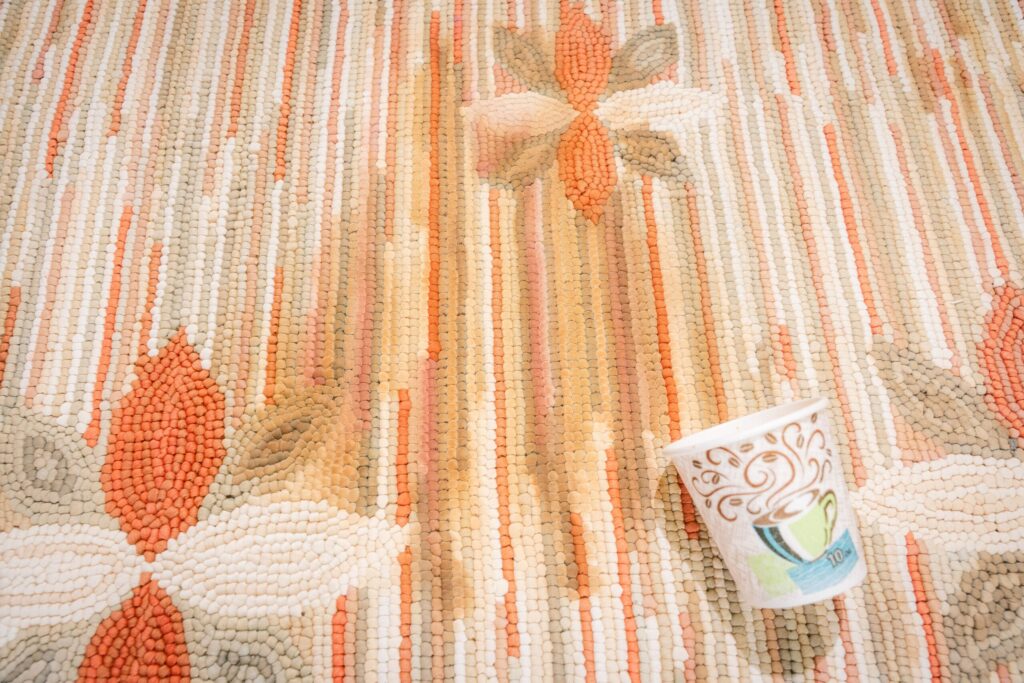
Close-up view of a tipped paper coffee cup resting on a handwoven wool rug, highlighting the rug’s dense pile, subtle color variations, and traditional geometric motifs in warm neutral and terracotta tones.
- How should you clean a hand-tufted wool rug? Use regular vacuuming with care; for deeper cleaning, rely on professional rug cleaners, as tufted backings are sensitive to moisture.
- Can wool rugs be steam cleaned at home? No—excessive heat and moisture can damage wool fibers and backings. Always choose professional cleaning for steam treatments.
- What weaves are most common in wool rugs? Hand-knotted, hand-tufted, machine-made, and flatweaves like kilims are all widely produced.
- Are flatweave wool kilims durable for living rooms? Yes—wool kilim durability is high for everyday spaces, though they may benefit from rug pads to prevent shifting.
- How well do wool rugs resist foot traffic? Extremely well; wool’s crimp and elasticity allow fibers to bounce back, making them ideal for high-traffic areas.
- Why do wool rugs shed and for how long? Shedding is caused by loose fibers from processing and generally subsides within months, especially in hand-knotted rugs.
From shearing sheep to weaving the final piece, wool rug processing demonstrates both tradition and versatility. Wool serves as both pile and structure, pairs beautifully with other fibers, and performs across every major weaving style.
While shedding is natural in the early stages, proper care ensures a natural wool rug remains resilient, soft, and vibrant for decades.
Major Wool Rug Traditions by Region
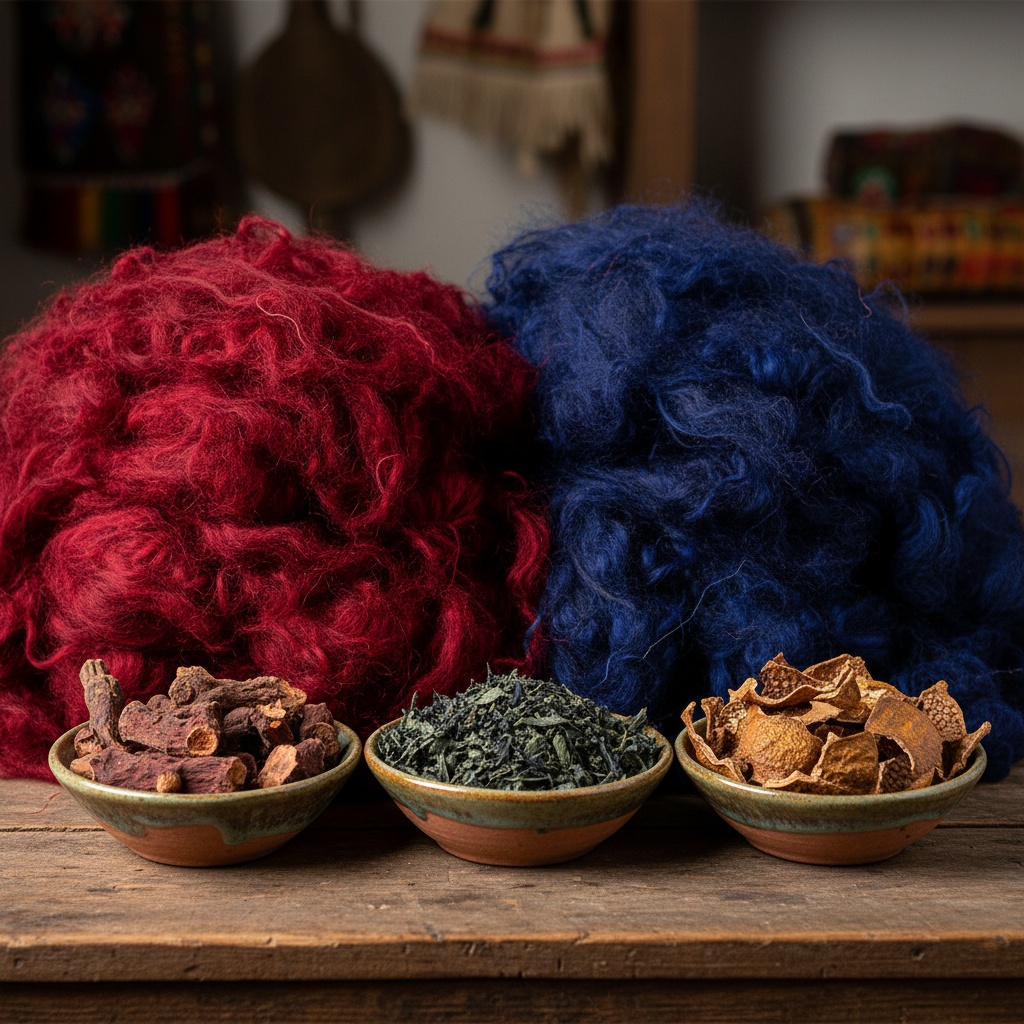
Natural dye ingredients and dyed wool fibers
Persian and Iranian Wool Rugs
Persian wool rugs represent one of the richest textile traditions in the world, distinguished by both city and tribal production. City rugs from centers such as Isfahan, Tabriz, and Kashan often feature a wool pile on cotton foundations, which allows for higher knot density and sharper design precision.
In contrast, tribal and nomadic groups like the Qashqai and Bakhtiari typically use all-wool construction, with hand-spun pile and foundations that emphasize durability and warmth.
The wool in Iran primarily comes from fat-tailed sheep, producing fibers that balance sheen and softness with resilience. Dye traditions rely heavily on natural sources—madder for red, indigo for blue, pomegranate rind for yellow and green tones—yielding deep, enduring hues.
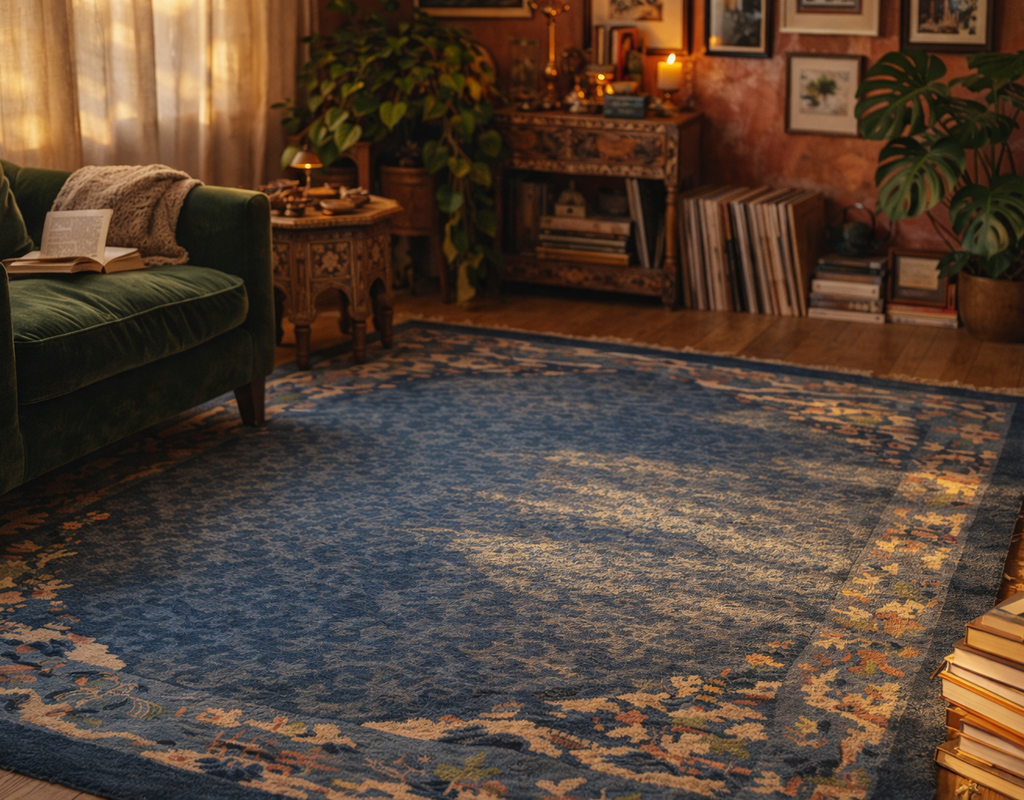
A richly textured room combines dark jewel tones and eclectic decor anchored by a beautiful, faded blue traditional rug.
Persian rugs often demonstrate exceptionally fine knot density, with urban workshops producing over 400 knots per square inch, while tribal pieces emphasize bold designs and robust textures. Both types showcase how wool quality, combined with knotting style, defines a rug’s performance and artistry.
Central Asian and Afghan Wool Rugs
Afghanistan and its surrounding regions are celebrated for Ghazni wool, sourced from highland sheep with exceptionally high lanolin content. This produces fibers that are both strong and naturally lustrous, perfect for tribal weaves and nomadic traditions.
Afghan rugs include the iconic Bokhara patterns, with repeating guls and deep red grounds, as well as more modern war rugs, which emerged during the late 20th century as weavers encoded conflict imagery into their textiles. The durability of Ghazni wool ensures these carpets withstand heavy foot traffic and age gracefully.
Though often coarser in handle compared to Persian city rugs, their resilience and cultural symbolism give them immense value, both practical and collectible. Resale values increase particularly for those made with hand-spun Ghazni wool, as the irregular twist imparts greater character and longevity than machine-spun alternatives.
Turkish and Caucasian Wool Rugs
- Anatolian Rugs (Turkey) — Known for bold geometric motifs and use of the Turkish (Ghiordes) knot. — Why: Local wools, often dyed with natural madder and indigo, yield robust, enduring floor coverings.
- Oushak — Famous for luminous, silky wool with a soft, glowing pile. — Why: Large-scale floral medallions and luxurious handle made them highly prized in Ottoman courts and Europe.
- Hereke — Often wool and silk blends with extremely fine knotting. — Why: Workshop production emphasized artistry and refinement for elite buyers.
- Kazak Rugs (Caucasus) — Woven with robust highland wool, showcasing bold tribal medallions. — Why: Dense, springy fibers give Kazaks durability and a tactile, rustic charm.
- Shirvan and Dagestan Rugs — Known for smaller-scale repeating motifs and tightly spun wool. — Why: Mountain sheep breeds produced firm, fine fibers that allowed for precision in small designs.
Together, these Anatolian wool rugs and Caucasian weavings reflect the region’s geographic diversity, with wool quality and knotting traditions shaping distinctive aesthetics.
Moroccan and Berber Wool Rugs
Berber wool rugs from Morocco highlight the relationship between sheep breed, climate, and weaving tradition. In the Atlas Mountains, local sheep yield thick, lanolin-rich fleeces perfect for high-pile weavings. Beni Ourain rugs are among the most famous, traditionally made from undyed ivory and brown wool in minimalist geometric patterns.
Their deep pile was designed to insulate homes in cold mountain climates. Other Moroccan styles, like Azilal rugs, incorporate colorful dyed yarns, often combining abstract and symbolic motifs. These rugs are usually constructed with all-wool foundations, reflecting a continuity of Berber weaving traditions. Their tactile softness and cultural authenticity make them highly desirable in modern interiors.
Himalayan and Tibetan Wool Rugs
Tibetan wool is renowned for its exceptionally high lanolin content, giving fibers a natural luster and resilience. Sourced from sheep raised at high altitudes, it produces thick, springy yarns ideal for the unique Tibetan knot technique.
In this method, yarns are looped around a temporary rod, creating a dense, resilient pile. Today, many Tibetan wool rugs are woven in Nepal, where refugee artisans continue the craft.
Cotton may be used for warps and wefts, but the defining element remains the rich, hand-spun Tibetan wool pile. These rugs often feature bold colors and abstract designs, combining ancient fiber traditions with contemporary artistic expression.
Navajo and Global Wool Flatweaves
- Navajo Weaving (United States) — Traditionally made with churro sheep wool, these textiles are flat, firm, and tapestry-like. — Why: Their durability and striking geometric designs made them both functional blankets and collectible art.
- Kilim Weaving (Anatolia, Persia, Balkans) — Flatwoven with interlocking wefts of dyed wool. — Why: Lightweight and versatile, kilims showcase regional motifs and color palettes.
- European Flatweaves — Scandinavian rölakan and rya rugs also rely on local wools. — Why: Their muted palettes and durable wool reflect northern design sensibilities.
These Navajo wool weaving and global flatweaves underscore wool’s adaptability beyond pile carpets, producing textiles that are durable, culturally rich, and artistically distinct.
FAQs on Longevity, Wool Sources, and Value
- How does knot density vary in wool carpets? City workshops often produce higher knot densities (300–600 KPSI), while tribal rugs emphasize looser, more robust knots (80–200 KPSI).
- How long do quality wool rugs typically last? With care, hand-knotted wool rugs can last for generations—often 50 to 100 years or more.
- Where does rug-grade wool typically come from? Key sources include Persian fat-tailed sheep, Afghan Ghazni wool, New Zealand wool, Tibetan highland sheep, Moroccan Atlas breeds, and Navajo churro sheep.
- Does rug resale value increase with hand-spun wool? Yes—hand-spun yarns impart irregularity and depth of texture, often enhancing both aesthetic and monetary value in resale markets.
From Persian wool rugs with urban refinement to rustic Berber wool rugs, from resilient Ghazni wool carpets to lustrous Tibetan wool creations, regional traditions reveal how geography, breed, and technique define the beauty and endurance of regional wool carpets worldwide.
Wool in Modern & Historic Contexts
Wool’s Historical Significance in Rug-Making
The story of wool rug history reaches back over 2,500 years to the Pazyryk Carpet, excavated from a Scythian tomb in Siberia and dated to the 5th century BCE. This earliest surviving knotted carpet is made entirely of wool, with a density and artistry that demonstrate how advanced weaving techniques already were in antiquity.
From the Silk Road through the medieval period, wool rugs became a cornerstone of global trade: Persian, Turkish, and Moroccan wool rugs were prized for their durability, beauty, and symbolic meaning, serving both utilitarian and ceremonial purposes. During the medieval and early modern eras, wool rugs symbolized status and wealth across Europe and the Islamic world, often appearing in paintings as indicators of refinement.
In the colonial and industrial periods, mechanized production allowed wool to remain central even as rug-making expanded into mass markets. Unlike other fibers, wool has continuously bridged elite artistry and everyday practicality, ensuring its unrivaled place in rug history.
Modern Wool Rugs: Hand-Knotted, Tufted & Machine-Made
- Hand-Knotted Wool Rugs — Still considered the pinnacle of craftsmanship. — Why: Each knot is tied by hand, producing luxury carpets that last generations.
- Hand-Tufted Wool Rugs — Midrange option using a tufting gun to punch wool into a backing. — Why: Faster and more affordable while still delivering a wool pile’s softness.
- Machine-Made Wool Rugs — Accessible and versatile, available from budget to high-end. — Why: Industrial looms democratized wool rugs, offering consistent quality for wider markets.
What has changed is the scale of production and global reach. What has not changed is wool’s role as the “gold standard” fiber—valued for its comfort, resilience, and enduring beauty across all rug-making methods. For buyers comparing price points, machine-made wool rugs are cheaper than handmade ones, but they do not carry the same uniqueness, longevity, or collectible value as their hand-knotted counterparts.
Sourcing: Regions, Grades, & Ethical Wool
- Ghazni Wool (Afghanistan) — High lanolin, hand-spun character, favored for tribal rugs. — Why: Its resilience and sheen give Afghan carpets their distinctive appeal.
- Persian Wool — Soft, lustrous, sourced from fat-tailed sheep. — Why: Historically central to Persian carpet supremacy.
- New Zealand Wool — Uniform, fine, and bright white. — Why: Takes dye vibrantly, ideal for both traditional and contemporary designs.
- Indian Wool — Versatile and widely produced. — Why: Supports both artisanal hand-knotted and industrial rug industries.
- Organic & Fair-Trade Wool — Certified to ensure animal welfare and fair labor. — Why: Ethical wool sourcing responds to growing consumer demand for transparency.
The quality and provenance of rug-grade wool remain key factors in determining a rug’s performance, aesthetics, and value in the modern market.
Sustainability & Organic Wool
- Renewable Resource — Wool regrows annually after shearing. — Why: Unlike synthetics, it has a natural cycle of renewal.
- Biodegradable — Decomposes without leaving microplastics. — Why: Makes wool rugs a long-term sustainable choice.
- Eco-Certifications — Standards like GOTS and GoodWeave ensure eco-friendly and socially responsible production. — Why: Provide assurance to eco-conscious buyers.
- Animal Welfare — Ethical shearing and care practices increasingly influence purchasing decisions. — Why: Buyers seek rugs aligned with humane sourcing.
- VOC and Indoor Air Quality — Wool emits fewer volatile organic compounds compared to synthetic rugs. — Why: Contributes to healthier indoor environments.
These factors make organic wool rugs an appealing choice, particularly for buyers prioritizing health and sustainability. However, buyers often ask: Does organic wool make a difference in rugs? The answer is yes—it ensures traceability, ethical production, and minimal chemical processing, appealing to eco-conscious consumers even if the tactile difference from conventional wool is subtle.
Care & Maintenance Considerations
One common question concerns mothproofing treatments. While protective chemicals can safeguard against moth damage, harsh treatments may weaken fibers or alter their natural feel.
Eco-friendly moth deterrents and regular cleaning are preferable for maintaining sustainable wool area rugs.
FAQs on Sustainability and Value
- Are machine-made wool rugs cheaper than handmade ones? Yes, they are generally more affordable, but they lack the individuality and longevity of hand-knotted wool rugs.
- Does organic wool make a difference in rugs? Yes, especially for buyers seeking traceable, eco-friendly, and humane products, even if physical performance is similar.
- How sustainable is sourcing wool for area rugs? Very—wool is renewable, biodegradable, and lower-impact than synthetics, though sustainability depends on animal welfare and supply chain ethics.
- Can mothproofing treatments harm natural wool rug fibers? Some chemical treatments can; eco-friendly alternatives and preventative care are safer options.
From the Pazyryk Carpet to organic wool rugs woven today, wool has shaped both the history and the future of rug-making. It remains the fiber that blends tradition with innovation, offering not only beauty and durability but also a pathway toward sustainable wool area rugs rooted in ethical practices.
Performance, Care, & Buying Guide
Durability: Foot Traffic, Longevity, & Shedding
- Foot Traffic Resistance — Wool fibers have natural crimp and elasticity, allowing them to spring back after compression. — Why: This makes wool rug durability superior in high-use areas like living rooms and hallways.
- Longevity — Quality wool rugs last anywhere from 25 to over 100 years. — Why: Dense knotting, strong foundations, and the resilience of keratin-based fibers ensure exceptional lifespan.
- Shedding — New wool rugs release loose surface fibers. — Why: This is normal and diminishes over time, especially in hand-knotted rugs. Proper vacuuming and rotation help control it.
Stain & Fire Resistance
- Stain Resistance — Wool contains lanolin, a natural wax that repels liquids and soil. — Why: This makes stain-resistant rugs easier to maintain than many expect, though prompt blotting is still key.
- Fire Resistance — Wool is inherently flame-retardant, charring rather than igniting. — Why: Unlike synthetics, wool produces fewer toxic fumes and is considered one of the safest fire-resistant rugs for home interiors.
How to Clean a Wool Rug (Hand-Tufted & Knotted)
- Hand-Knotted Rugs — Regular vacuuming with suction-only attachments is recommended; professional deep cleaning every few years maintains fibers. — Why: Preserves both pile resilience and foundation integrity.
- Hand-Tufted Rugs — Spot clean with minimal water and avoid harsh chemicals; professional cleaning is preferred for heavy soiling. — Why: Latex backings in tufted rugs can weaken if overexposed to moisture.
- General Care — Rotate rugs annually and use pads to reduce wear. — Why: Promotes even aging and prolongs lifespan of natural wool rugs.
Mothproofing: Risks & Recommendations
Chemical mothproofing treatments can sometimes weaken wool fibers or alter their hand feel. Safer approaches include:
- Storing rugs clean and dry. — Why: Moths thrive on dirt and organic residue.
- Using cedar, lavender, or airtight storage. — Why: Natural repellents avoid chemical damage.
- Professional eco-friendly treatments. — Why: Protect without compromising fiber integrity.
For long-term preservation, regular inspection and preventative cleaning remain the most effective strategies.
Knot Density & Price Factors
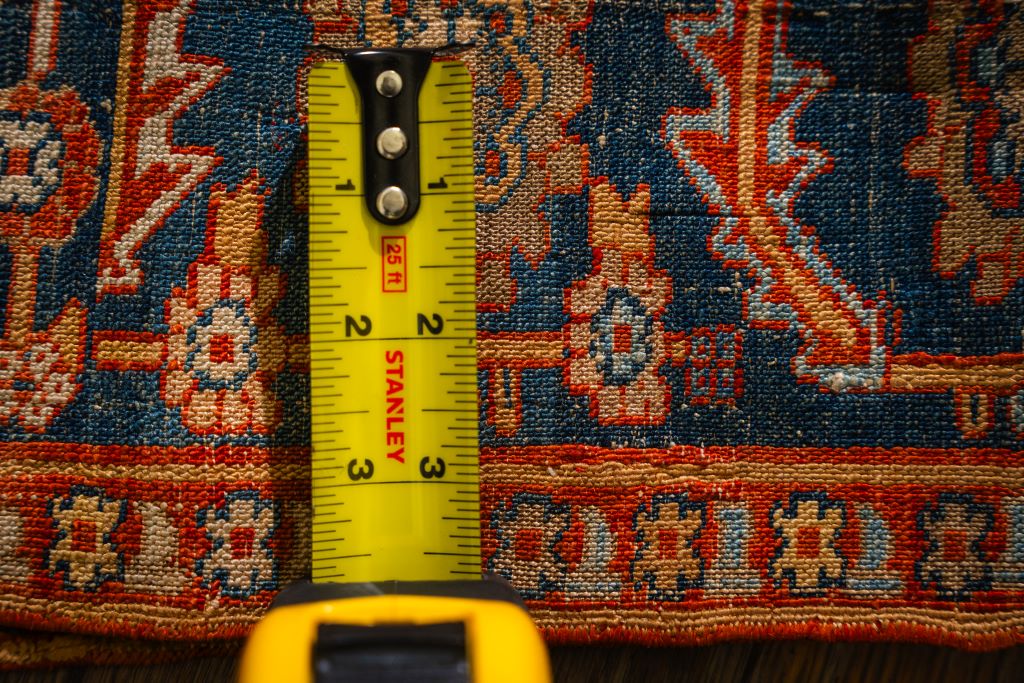
A detailed inspection of a richly colored oriental rug pattern while measuring its dimensions.
- Knot Density — Higher knots per square inch indicate greater precision and labor. — Why: A high-knot Persian wool rug can take years to complete, raising both price and resale value.
- Material Quality — Hand-spun wool and natural dyes increase cost. — Why: They produce richer texture, luster, and longevity compared to machine-spun alternatives.
- Origin & Craftsmanship — Renowned weaving centers (e.g., Tabriz, Isfahan, Oushak) command premium pricing. — Why: Tradition and reputation enhance collectible value.
In short, what affects the price range of wool rugs is a mix of knot density, wool quality, dyeing, and artisanal expertise.
Should You Invest in a Hand-Knotted Wool Rug?
- Value — Hand-knotted rugs retain beauty and often appreciate over time. — Why: They are considered both art and asset.
- Resale — Antique or finely woven Persian and tribal rugs often gain market value. — Why: Collectors seek rarity, hand-spun yarn, and high knot density.
- Longevity — These rugs can last for generations with proper care. — Why: A true wool rug investment blends function and heritage in one piece.
For buyers asking, “Should I invest in a high-knot Persian wool rug?”—the answer is yes, provided you prioritize authenticity and quality indicators such as knot density, wool grade, and provenance.
Eco-Certifications & Where to Buy
- GoodWeave Certified Rugs — Guarantees no child or forced labor. — Why: Supports ethical wool rug production.
- GOTS-Certified Wool Rugs — Ensures organic wool, safe dyes, and sustainable processes. — Why: Appeals to eco-conscious homeowners.
- Fair Trade Rugs — Ensures fair wages and community investment. — Why: Purchasing supports artisans and local economies.
Buyers can find eco-certified wool rugs through specialized online platforms, artisan cooperatives, and high-end retailers that emphasize sustainability and ethical sourcing.
FAQs on Performance & Care
- How well do wool rugs resist foot traffic? Extremely well—wool pile bounces back, hiding dirt and retaining appearance for decades.
- How long do quality wool rugs typically last? 25–100+ years, depending on weave type and maintenance.
- What affects the price range of wool rugs? Knot density, wool quality, dye methods, and region of origin.
- Where can I buy eco-certified wool area rugs? Look for vendors offering GoodWeave, GOTS, or Fair Trade certifications online or through reputable showrooms.
- Should I invest in a high-knot Persian wool rug? Yes—if authentic, such rugs combine cultural value, longevity, and resale potential.
- Can mothproofing treatments harm natural wool rug fibers? Harsh chemicals may damage fibers; eco-friendly alternatives are recommended.
With proper maintenance, wool rug durability is unmatched. From being stain-resistant rugs and fire-resistant rugs to offering timeless beauty and investment value, wool remains the benchmark for both heritage and modern interiors.
For today’s buyers, choosing ethical wool rugs and eco-certified wool rugs ensures a purchase that honors both tradition and sustainability.
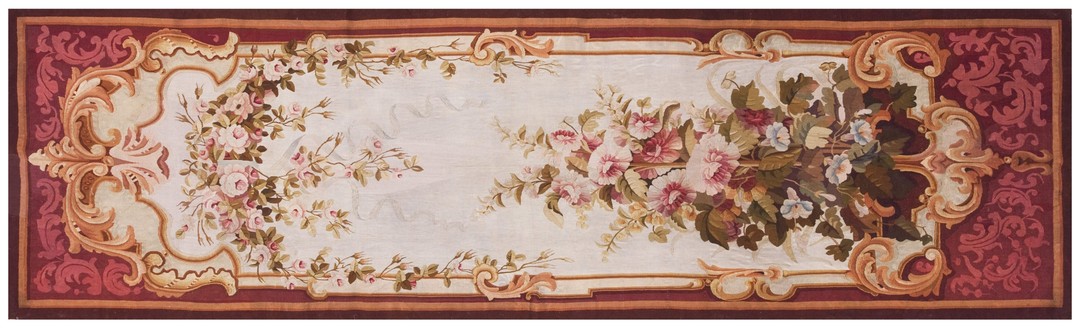
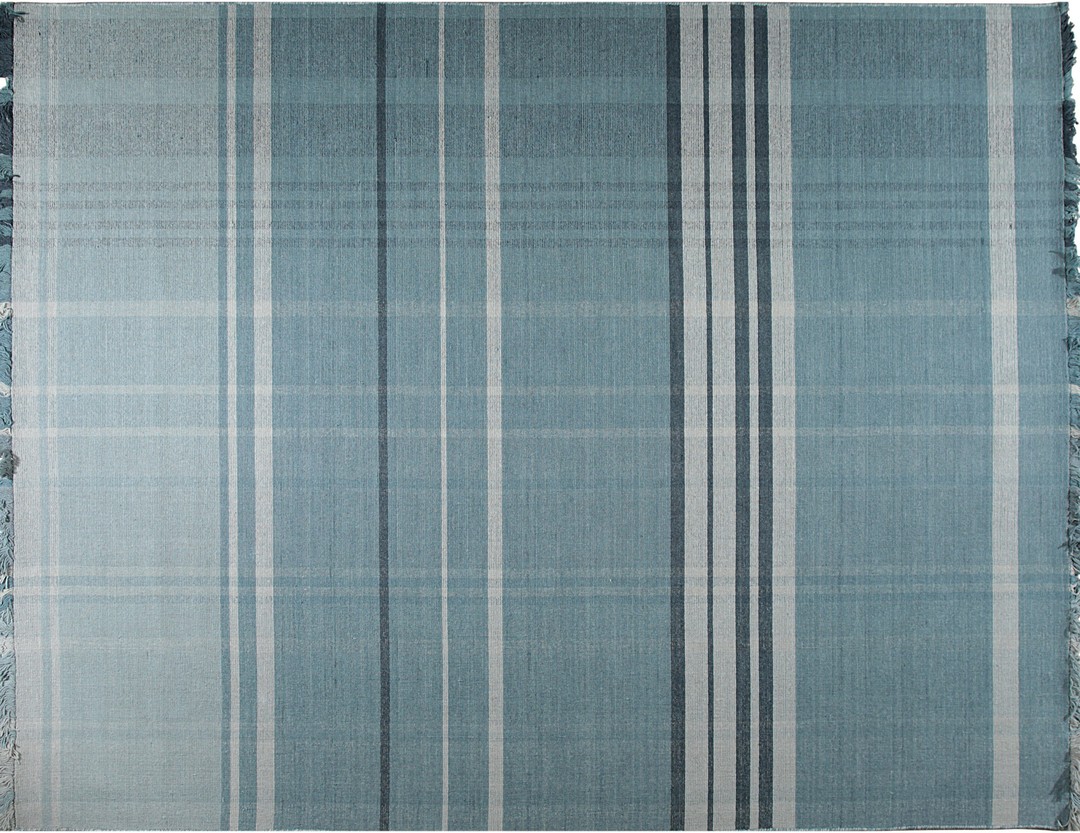
Explore a Few of Our Charming Wool Rugs
FAQ
- Are wool rugs a good choice in humid climates (e.g., Florida)?
They can be, with dehumidification and regular airflow. Use low pile, a breathable pad, and dry spills fast to avoid mildew.
- Are loop-pile wool rugs a bad idea with pets?
Often, yes—claws can snag loops and cause pulls. Choose cut-pile or low, dense weaves for pet-friendly wool rugs.
- Do wool rugs bleed color when cleaned?
They can—always color-test first and avoid high heat or alkaline cleaners. Keep cleaning solutions mild and dry the rug promptly.
- Will robot vacuums work on wool rugs?
Yes for low to medium pile; very high pile can trip robots. Use carpet-boost models and avoid robots on delicate loop-pile wool to prevent fuzzing.
- Why does my wool rug smell like “wet dog,” and how do I fix it?
Damp wool (and some backings) can smell until fully dry. Speed dry with fans, sprinkle light baking soda once dry, and improve ventilation.
- What are the best ways to stop moths from damaging my wool rugs?
Vacuum regularly—including under furniture—rotate every 6 months, and keep areas dry and bright. For storage, clean first and seal in airtight containers or bags.
- How can I tell if a wool rug is hand-knotted or hand-tufted?
Flip it: hand-knotted shows visible knots and a pattern on the back; fringe is structural. Hand-tufted usually has a canvas/latex backing and sewn-on fringe.
- What’s a fair price for an 8x10 wool rug?
Prices vary by construction: hand-tufted often \$300–\$1,500; hand-knotted commonly \$1,000–\$10,000+. Age, knot density, and brand can push prices higher.
- How long do quality wool rugs last?
Hand-knotted wool rugs can last decades—even generations—with proper care. Hand-tufted wool rugs typically last around 5–15 years.
- Are wool rugs safe over radiant or underfloor heating?
Yes, with moderate pile and a breathable pad; follow system temperature limits. Thick pads and extra-thick piles insulate and reduce heat transfer.
- Can wool rugs be used outdoors?
No—wool absorbs moisture and can mildew outside. Use outdoor-rated synthetics for patios and decks instead.
- Are wool rugs suitable for bathrooms?
Only in well-ventilated, dry bathrooms and away from direct splash zones. Wool absorbs moisture—dry thoroughly and hang to air out if it gets wet.
- Can wool rugs be used in kitchens?
They can, especially flatweaves, but wipe spills quickly and use a pad for grip. Darker patterns hide splashes; avoid high-pile wool by the stove or sink.
- Are wool rugs OK for dining rooms?
Yes—wool’s springy pile and stain resistance make it dining-friendly. Choose low pile or flatweave so chairs slide easily and crumbs don’t embed.
- Do wool rugs fade in sunlight?
Yes—UV can lighten dyes over time. Rotate every 6 months and use window shades or UV film to reduce fading.
- What’s the best rug pad for a wool rug on hardwood?
A felt or felt-with-natural-rubber pad adds grip and cushioning without floor damage. Avoid cheap PVC pads that can stick or off-gas.
- How often should a wool rug be professionally cleaned?
Deep clean every 6–12 months depending on traffic and pets. In between, vacuum regularly and spot-treat promptly.
- Do wool rugs off-gas VOCs?
Wool rugs are typically low-VOC, but some tufted backings use latex or adhesives that can smell. Air out the rug, use good ventilation, and prefer natural rubber/felt pads.
- Are wool rugs hypoallergenic or irritating?
Most people tolerate wool rugs well; true wool or lanolin allergy is rare. For sensitive households, vacuum with a HEPA filter and choose finer, softer wool to minimize itch.
- Are wool rugs good for homes with cats and dogs?
Yes—wool’s resilience and natural stain resistance handle everyday messes well. Choose low or cut pile; avoid loop pile that can snag claws.
- How do I remove pet urine from a wool rug safely?
Blot immediately, then treat with a wool-safe, pH-neutral (or WoolSafe-approved) cleaner; avoid hot water. Keep moisture minimal and dry with fans until completely dry to prevent odor and dye issues.
- Can I steam clean a wool rug?
Generally no—excess heat and moisture can shrink fibers and cause dye bleed. Opt for wool-safe shampoos or professional low-moisture cleaning; always color-test first.
- How should I vacuum a wool rug without damaging it?
Use suction-only or a beater-bar on the highest setting; avoid aggressive brush rolls on loop pile. Vacuum weekly in low-traffic rooms and more often in busy areas or homes with pets.
- Do wool rugs shed and when does it stop?
Yes—new wool rugs shed for a few months, often up to about six months. Regular gentle vacuuming and a quality rug pad help reduce fuzz and keep fibers from breaking.
- What makes wool rugs different from synthetic rugs?
Wool rugs are natural, resilient, and naturally flame- and stain-resistant due to lanolin. They bounce back from traffic better than most synthetics and insulate floors, but cost more and can shed initially.