
Introduction to Soumak Rugs
Discover our complete collection of premium Soumak rugs available now.
Definition and Etymology
The word Soumak has several possible origins, and its spelling varies across languages and traditions. Common variants include soumakh, sumac, sumak, and soumac. One theory traces the name to Shemakha, a historic weaving center in present-day Azerbaijan, suggesting a direct geographic link between the term and a renowned regional production hub.
Another explanation ties the word to the Turkish verb sekmek, meaning “to skip,” a reference to the characteristic way the weft threads skip over warp threads in the weaving process. A further possibility points to the Persian and Arabic word summāq, the name of the sumac plant, long used as a source of natural dye in rug-making. Each of these roots emphasizes either the location, the technique, or the materials involved, reflecting how the identity of Soumak weaving evolved at the intersection of culture and craft.
What is a Soumak Rug?
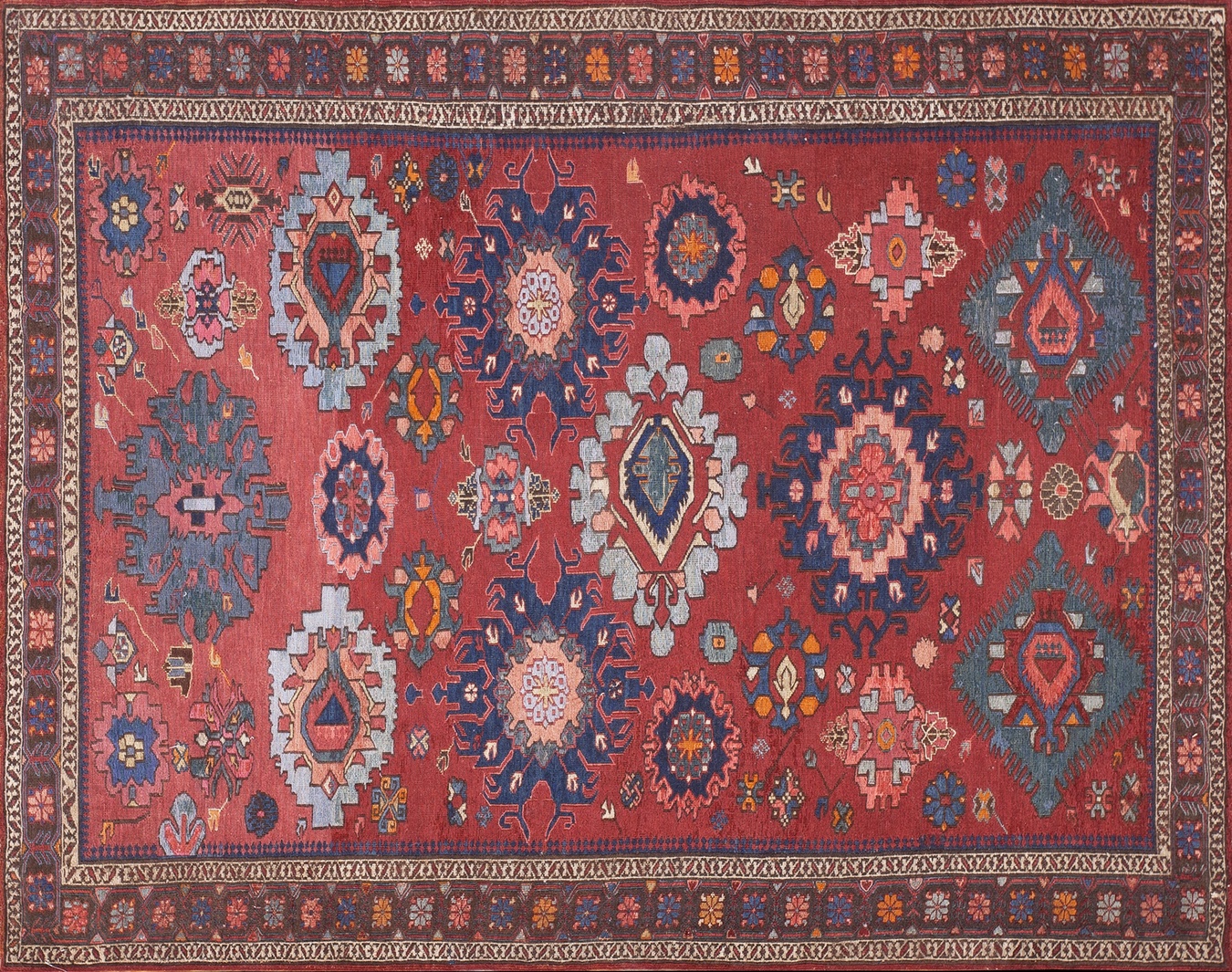
Antique Caucasian – Sumak Small Scatter Size Wool Coral Rug – by Rugs On Net
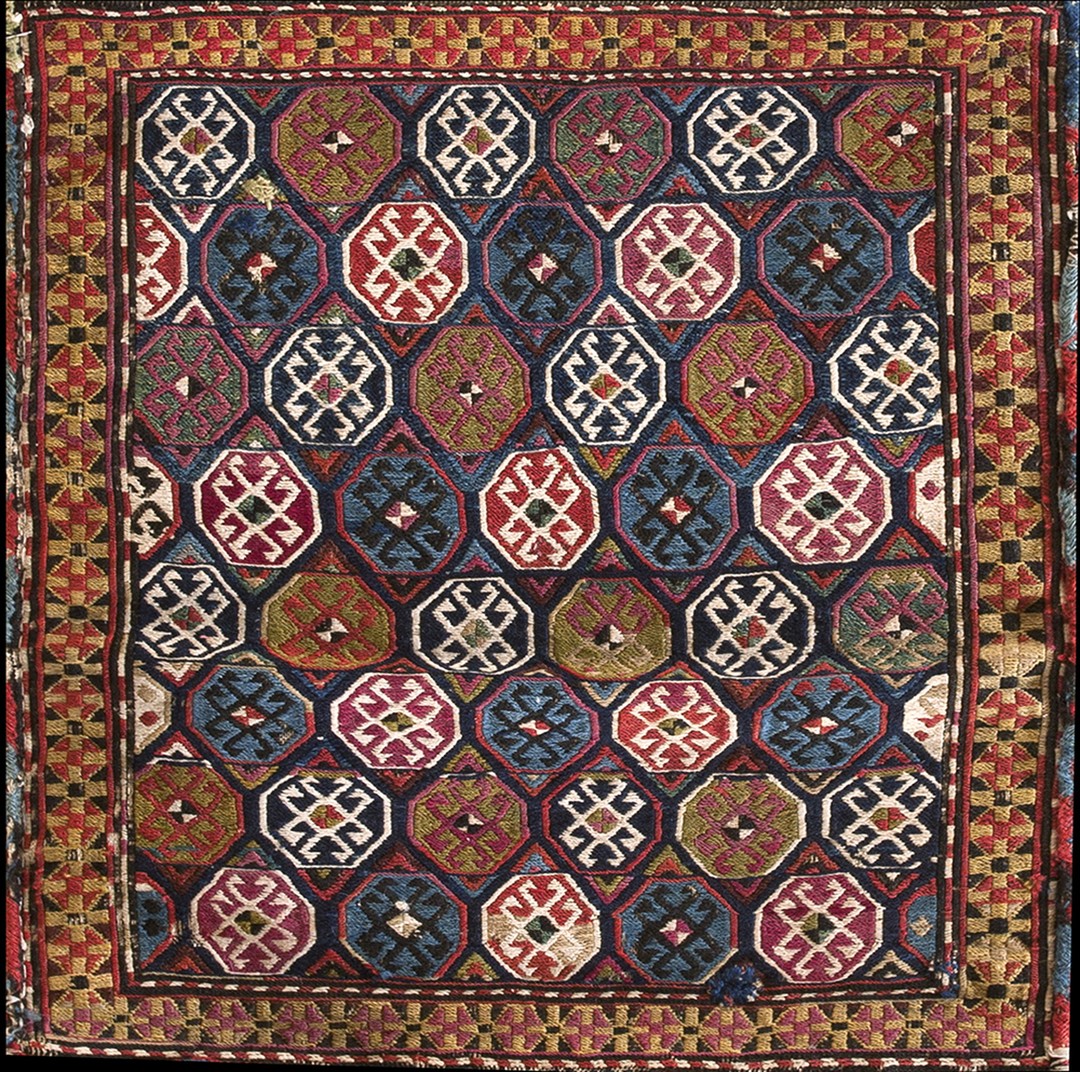
A Soumak rug is a type of flatwoven textile distinguished by its weft-wrapping technique rather than knotting. Unlike pile rugs, which build texture through knotted tufts, or kilims, which rely on interlacing warp and weft, Soumak rugs are constructed by wrapping colored wefts around the warp threads to create intricate patterns. This produces a smooth, embroidery-like surface on the front of the rug and a slightly ragged, loose-ended appearance on the back where the wefts reverse direction.
In practical terms, the soumak weaving definition refers to a tapestry technique that combines durability with decorative richness. The flat, tightly wrapped structure makes the rug sturdier than many kilims, while the absence of pile gives it a sleek, almost stitched look that highlights detailed motifs. Because of this method, Soumak rugs often feature geometric, tribal, or medallion patterns that appear crisp and vivid. When considering soumak vs pile rug, the differences are immediately apparent.
Pile rugs have a soft, plush surface made of cut or looped knots, while Soumak rugs remain entirely flat yet textured by the weft wrapping. This places Soumaks closer in construction to kilims, but their unique back-and-front contrast and embroidery-like finish set them apart as a category of their own.
Distinctive Features and Meaning
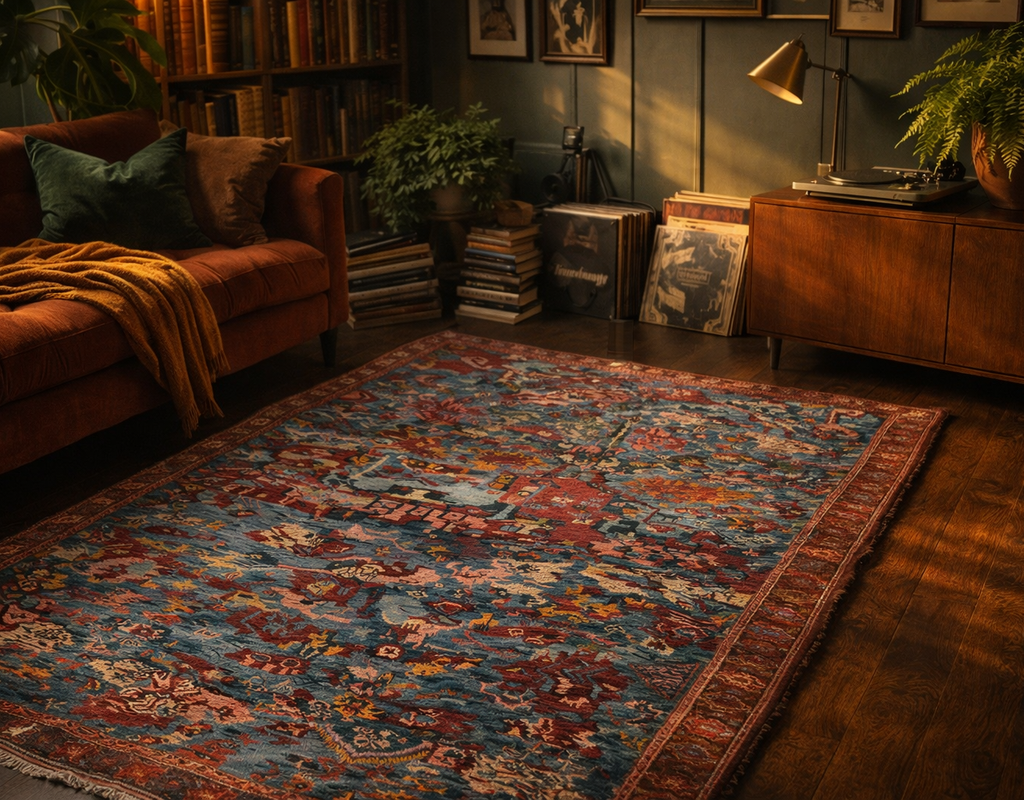
A vibrant, layered area rug adds texture and color to this inviting, book-filled reading nook.
The Soumak rug meaning lies not only in its technical definition but also in its cultural role as a textile that bridges utility and artistry. Weavers could produce coverings that were durable enough for everyday use—such as floor spreads, bags, and bedding covers—yet sophisticated enough to serve as prestige items in domestic and ceremonial contexts.
The irregular, trailing yarns on the back are an identifying mark of authenticity, making Soumaks instantly recognizable to collectors and connoisseurs. In essence, a Soumak rug is a flatwoven textile with an embroidery-like surface, no knotted pile, and a unique weaving technique rooted in centuries of craftsmanship.
Its very name preserves traces of geography, language, and natural materials, reminding us that the art of weaving is inseparable from the cultural landscapes in which it flourishes.
Historical and Geographic Origins
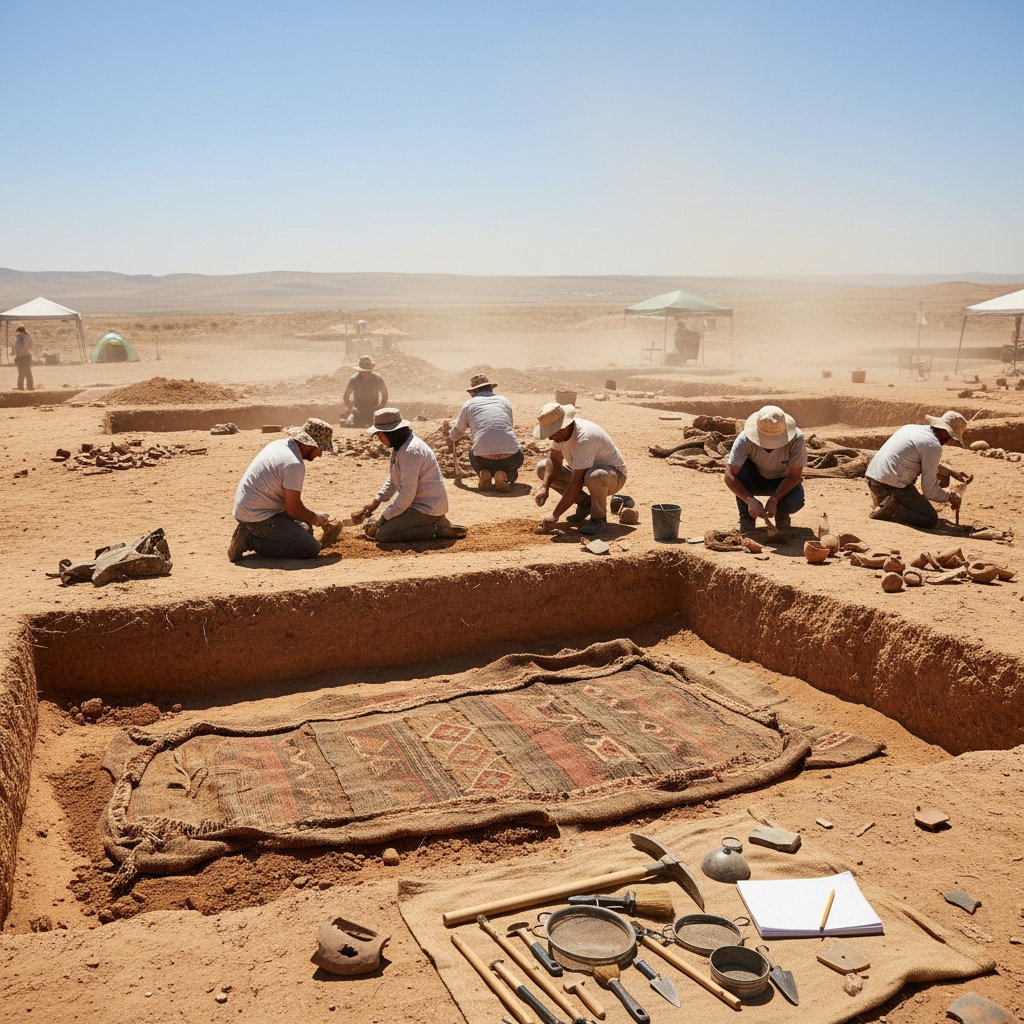
Excavation reveals ancient textile in arid setting.
Early Evidence and Ancient Roots
The soumak rug history stretches back over two millennia, making it one of the world’s oldest textile traditions. Archaeological finds at Phrygian Gordion in central Anatolia (modern Turkey) provide some of the earliest evidence, with fragments dating as far back as the 7th century BC.
These textiles reveal a tapestry-like structure remarkably similar to what is now recognized as ancient soumak weaving, indicating that the method of wrapping colored wefts over warps was already in practice during the Iron Age. Such early discoveries establish Soumak not merely as a decorative tradition but as a durable, practical weaving technique that predated—and likely influenced—later flatweave and pile rug innovations.
Regional Development
The origin of Soumak rugs lies in the cultural crossroads of the Caucasus, Persia (Iran), and Anatolia, where nomadic and village-based weavers developed and transmitted the technique. In the Caucasus, Soumak weaving flourished among Azeri, Armenian, Georgian, and Dagestani communities, often producing large and bold tribal carpets.
In northern Iran, the Shahsavan tribes became renowned for their intricate Soumak bags and coverings, which blended utility with striking design. Across eastern Anatolia, Kurdish weavers adopted and adapted the style, producing distinctive regional variations. This wide distribution along the Silk Road facilitated both the spread of the weaving method and the exchange of motifs, dyes, and materials. Soumak thus reflects a multi-ethnic heritage, shaped by the interactions of Turkic, Persian, Caucasian, and Kurdish cultures over centuries of trade and migration.
Who Traditionally Wove Early Soumak Rugs?
The first Soumak rugs were woven by tribal and village communities rather than urban workshop weavers. Shahsavan women in Iran, Kurdish families in Anatolia, and Caucasian tribes across Azerbaijan, Armenia, and Georgia were among the earliest and most significant practitioners.
For these groups, Soumak weaving was both a domestic necessity and an artistic expression, used to create floor coverings, bedding, and storage bags essential to nomadic life. The strong tribal associations of Soumak weaving remain evident today, as many antique examples are linked to specific ethnic groups and weaving clans.
When Did Soumak Weaving Begin?
Soumak weaving first began in the early first millennium BC, with archaeological confirmation at least by the 7th century BC in Phrygia. From this ancient root, it continued as a continuous tribal tradition, carried forward by generations of nomadic weavers in the Caucasus, Persia, and Anatolia.
Its persistence through time underscores not only the strength of the technique but also its adaptability across diverse cultural settings.
Legacy of Origins
Taken together, the tribal Soumak traditions highlight the rug’s enduring role as both a practical textile and a cultural artifact. With its deep roots in antiquity, broad regional development across the Silk Road, and connection to nomadic lifeways, Soumak weaving embodies the layered history of the peoples who created it.
The origin of Soumak rugs is thus not tied to a single place or tribe but rather to a shared tradition spanning some of the most influential weaving cultures of the ancient world.
Weaving Technique and Materials
The Weft-Wrapping Process
The soumak weaving technique is defined by its distinctive weft-wrapping method, which sets it apart from pile rugs and other flatweaves. In this process, the weaver first sets up vertical warp threads on the loom, typically made of strong wool or cotton. Instead of tying knots, as in a pile rug, the weaver takes a colored weft thread and wraps it over two or more warp threads and then back under one or two, moving across the loom in a systematic way. This wrapping sequence creates tightly bound, horizontal rows of pattern.
The design emerges as successive colored wefts are wrapped in discontinuous sections, forming geometric motifs, medallions, or borders. Once a row of wrapped wefts is complete, a simple ground weft (often of a neutral tone) is passed through to bind and stabilize the structure. The result is a flat, tapestry-like surface on the front, while the reverse side reveals loose or ragged ends of weft yarns where the wrapping changes direction. This irregular back is one of the hallmarks of Soumak rug construction.
Why Soumak Rugs Have No Pile
A Soumak rug has no pile because it is not made with knotted tufts. Instead, the patterns are woven directly into the structure by wrapping wefts around the warps.
Without knots projecting upward, the surface remains flat and smooth, with texture created only by the thickness of the wrapped wefts. This makes Soumaks distinct from pile rugs, which have a soft, raised surface, and gives them their embroidery-like look.
Authentic Soumak Construction
To identify authentic Soumak rug construction, collectors look for three key indicators:
- Embroidery-like face – crisp motifs with a flat, stitched appearance.
- Ragged back – trailing or discontinuous weft threads visible behind the pattern.
- Absence of pile – a smooth surface with no tufted knots.
These traits ensure the piece is a genuine example of handwoven Soumak rugs, not a kilim or pile carpet. Authenticity is especially important in the marketplace, as the technique directly reflects the lineage of traditional weaving skills.
Soumak vs. Kilim: Key Differences
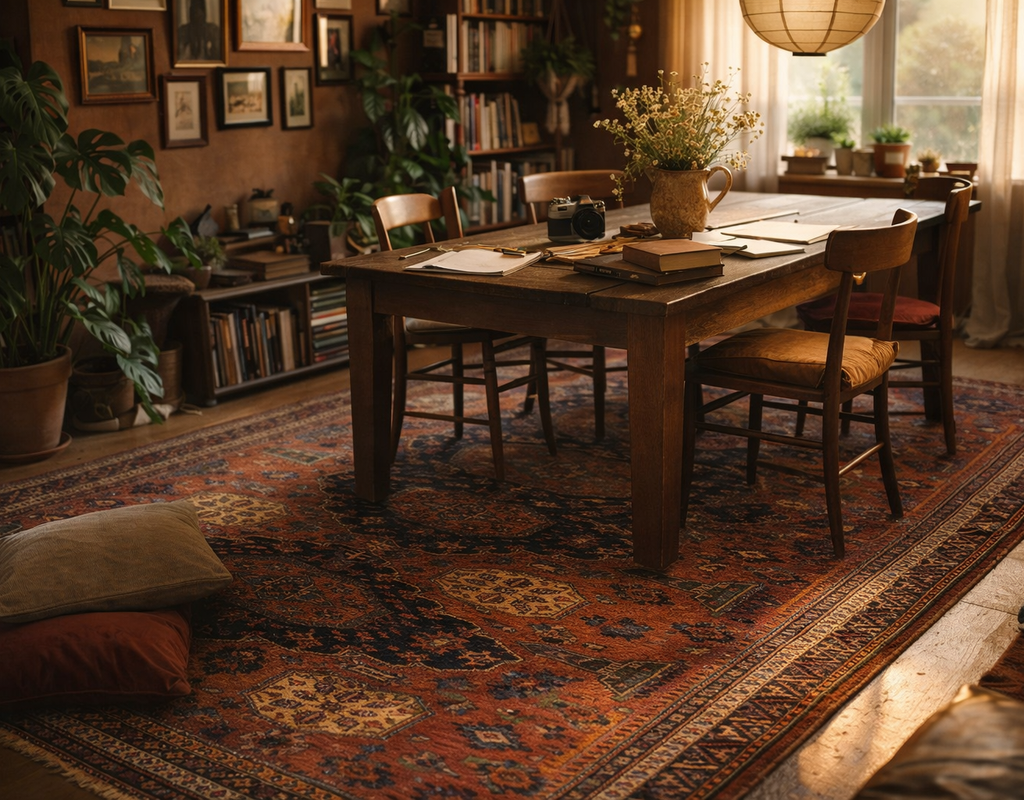
A vintage-style Persian rug grounds this warm, plant-filled study and dining area, creating an atmosphere of lived-in comfort.
- Weaving method – Kilims are woven using the slit-tapestry technique, where warps are interlaced and small gaps (slits) often appear at color changes. Soumaks, by contrast, use wrapped wefts, which avoid vertical slits. — Why: This makes Soumaks structurally stronger and less prone to tearing at motif edges.
- Surface texture – Kilims are completely flat and reversible. Soumaks are flat-faced but have a textured, embroidery-like front and a ragged, unfinished back. — Why: This difference helps distinguish them instantly when examining the reverse side.
- Weight and feel – Soumaks are heavier and denser than most kilims. — Why: The extra yarn used in wrapping adds bulk and durability.
Understanding soumak vs kilim distinctions is essential for both practical use and proper valuation.
Materials, Dyes, and Looms
Traditional soumak rug construction relies on handspun wool for both warp and weft, valued for its strength, elasticity, and dye absorption. In some later examples, cotton was introduced as a warp foundation, providing added stability.
Natural dyes derived from plants, roots, and insects gave early Soumaks their vivid yet earthy palettes, with sumac, madder, indigo, and walnut husks among the most common sources. Weaving was performed on horizontal ground looms for nomadic use or vertical village looms for larger pieces. The loom type often influenced the scale and detail of the patterns.
Are Modern Soumak Rugs Still Handwoven?
Yes, modern Soumak rugs are still handwoven, continuing the legacy of the craft. Today, production thrives in regions such as Pakistan, India, and Turkey, where artisans preserve the traditional methods of weft-wrapping.
While some commercial imitations exist, the majority of Soumak rugs available on the market remain the product of skilled hands, ensuring that the ancient technique continues to flourish in the modern textile trade.
Distinctive Technique and Lasting Value
The unique soumak weaving technique produces a textile with an unmistakable feel and appearance—flat yet richly textured, strong yet decorative.
By understanding the materials, process, and differences from kilims and pile rugs, buyers and collectors can better appreciate the artistry behind these enduring handwoven Soumak rugs.
Design, Motifs, and Symbolism
Core Soumak Motifs
One of the defining features of these textiles lies in their soumak rug motifs, which are both visually striking and symbolically rich. The most recognizable include geometric medallions and diamond-shaped lattices, which often dominate the field. More dynamic patterns appear in the form of dragon or serpent S-shapes, long associated with power, protection, and continuity.
Other common motifs include the protective eye (warding off evil), crosses and hooks (defensive or talismanic devices), and zig-zags or wave-like bands that symbolize movement, water, or life’s energy. These motifs are not purely decorative but deeply encoded with meanings passed through generations of tribal weavers.
When asked what motifs distinguish Soumak rug patterns, the answer is clear: bold geometric medallions, dragon-like S-forms, protective eyes, hooks, crosses, and zig-zags are the signature vocabulary of Soumak design.
Regional Patterns and Tribal Symbolism
The diversity of geometric Soumak designs reflects the wide distribution of weaving communities across the Caucasus, Persia, and Anatolia. In the Caucasus, Soumak rugs often feature large, central medallions flanked by hooked diamonds and protective eyes, serving as symbols of strength and guardianship.
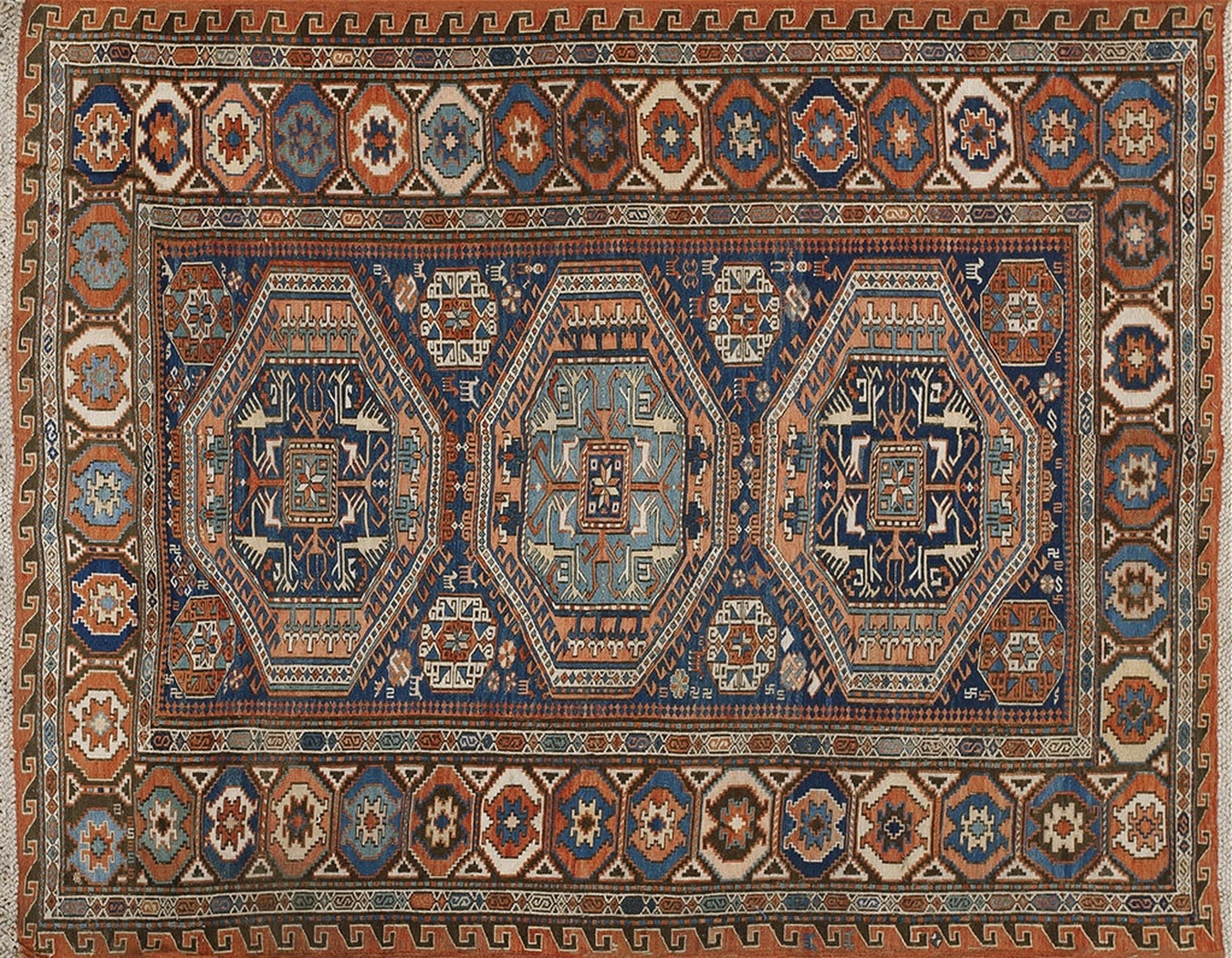
Antique Caucasian – Sumak Flat Weave Rug – by Rugs On Net
Persian Shahsavan Soumaks are known for their detailed bagfaces and bedding covers, often combining small geometric repeats with talismanic hooks that represent fertility and prosperity. Anatolian Kurdish Soumaks frequently include zig-zag borders and serpent forms, tied to local beliefs in protection and resilience.
Each tribal group infused its textiles with meaning, turning rugs into coded narratives of identity, survival, and spirituality. For nomadic cultures, these patterns were not only aesthetic choices but also protective emblems woven into the very fabric of daily life.
Color Palette and Symbolic Meaning
The Soumak color palette was traditionally derived from natural dyes, lending depth and symbolism to every rug. Madder red symbolized vitality, courage, and fertility; it was among the most dominant colors in Soumak weaving. Indigo blue, drawn from the indigo plant, stood for spirituality, wisdom, and protection.
Earthy ochres and yellows, often from plants or minerals, conveyed abundance and prosperity. Ivory white provided contrast, evoking purity and balance. Far from being random, these colors were chosen deliberately to align with the motifs’ meanings. A protective eye woven in deep indigo, for example, carried greater spiritual potency, while a medallion outlined in madder red emphasized strength and endurance.
The symbolic weight of these hues amplified the power of the designs, making Soumaks both functional textiles and woven talismans.
Meaning Woven in Thread
The artistry of Soumak weaving lies in the way tribal rug symbolism transforms abstract shapes and natural colors into a visual language of protection, identity, and hope.
Whether through dragon forms that embody resilience, eyes that shield against misfortune, or medallions that anchor the composition, Soumak motifs preserve the stories of the peoples who wove them. Their designs are not only aesthetically compelling but also enduring testaments to the beliefs and traditions of the Caucasus, Persia, and Anatolia.
Rug Structure and Practical Qualities
Reversibility and Rug Backing
A common question for buyers is whether a reversible Soumak rug exists. The answer is no: Soumak rugs are not fully reversible. The front face is smooth, patterned, and embroidery-like, while the back shows the distinctive ragged weft ends left from the wrapping technique.
Unlike kilims, which are usually identical on both sides, Soumaks have a functional reverse that was never intended for display. This feature is one of the quickest ways to identify authentic Soumak construction.
Thickness, Weight, and Texture
In terms of Soumak rug weight, these textiles are noticeably heavier and thicker than kilims. The weft-wrapping process uses more yarn, which adds density and substance. While kilims are often light and easily folded, Soumaks feel more substantial, with a firm, tapestry-like body.
This structural heft makes them less prone to slippage and better suited for use as floor coverings. The texture is flat yet slightly raised due to the over-wrapping, giving designs a tactile definition absent in lighter flatweaves.
Soumak Durability and High-Traffic Use
Collectors and homeowners often ask if Soumak rugs are suitable for high-traffic floors. The answer is yes—with some caveats. Their dense weave makes them highly durable, able to withstand everyday wear better than many kilims.
However, because they lack the cushioning pile of knotted rugs, the patterned surface can show signs of wear more quickly in heavily trodden areas. For high-use spaces like living rooms, hallways, or entryways, Soumaks perform well, provided they are rotated periodically to even out foot traffic.
Should I Use a Rug Pad?
The best Soumak rug pad advice is simple: always use one. A pad provides additional grip, especially on hardwood or tile, preventing slipping and uneven wear. It also cushions the rug slightly, extending its life and reducing strain on the warp and weft.
For heavier Soumaks, a thinner felt-and-rubber pad works best, offering both stability and breathability without adding unnecessary bulk.
Structure as Function
The practical qualities of Soumaks stem directly from their structure. They are non-reversible, denser, and heavier than kilims, yet lighter and flatter than pile rugs. Their durability makes them a smart choice for high-traffic areas, and with the addition of a rug pad, they gain extra protection and safety.
These qualities highlight how the Soumak’s unique construction not only defines its look but also determines its usability in modern homes.
Collecting, Buying, and Market Insights
Identifying Authentic Soumak Rugs
For collectors and buyers, the first step is understanding authentic Soumak identification. Genuine Soumak rugs are handwoven using the weft-wrapping method, producing a smooth patterned face and a ragged back with trailing yarns. Unlike kilims, they are not reversible, and unlike pile rugs, they have no knotted tufts.
Authentic pieces often feature tribal motifs such as hooked medallions, dragon forms, or protective eyes, with natural-dye palettes of reds, blues, and ochres. When buying, examine the back carefully, ask about materials (handspun wool is typical), and purchase only from reputable dealers who disclose origin and age.
Vintage vs. Modern Soumak Quality
When comparing vintage vs. modern Soumak quality, differences are notable. Antique and vintage Soumaks—woven in the Caucasus, Persia, or Anatolia—tend to display finer workmanship, regional symbolism, and natural dyes. They are rare and highly valued by collectors.
Modern Soumaks, often made in Pakistan, India, and Turkey, still use the traditional handwoven technique but may incorporate machine-spun yarns and chemical dyes. While they lack the historical and cultural depth of antique examples, they remain durable, decorative, and affordable, making them excellent choices for everyday use.
Typical Costs and Value Appreciation
The soumak rug price varies widely depending on age, condition, and rarity. Antique Soumak rug value often starts around $1,000 for smaller examples and can reach $20,000 or more for large, rare tribal pieces in excellent condition.
Vintage rugs usually fall in the mid-range, between $1,000–$5,000, while newly woven Soumaks from South Asia or Turkey may cost a few hundred to a few thousand dollars depending on size. As for investment, Soumak rug value can appreciate over time, especially for antique tribal examples with well-documented provenance. However, as with any collectible, appreciation is not guaranteed, and condition, rarity, and authenticity are crucial.
Can Soumak Runners Be Found Under $500?
Buyers occasionally seek Soumak runners for sale under a budget. While most antique or vintage runners will exceed this price, small contemporary Soumak runners from India or Pakistan can sometimes be found under $500, particularly through online artisan platforms or during auctions. However, antique runners in this price range are exceedingly rare.
Should I Invest in Antique Soumak Rugs?
For serious collectors, investing in antique Soumak rugs can be rewarding. These pieces are rare, culturally significant, and increasingly scarce on the market.
Their artistry, tribal symbolism, and durability make them desirable not only as functional textiles but also as works of art. Buyers considering investment should focus on authentic, well-preserved tribal Soumaks from the Caucasus or Persia, as these have the strongest potential for long-term value.
Where to Buy Contemporary Soumak Rugs Online
Those looking to buy Soumak rugs online have several reputable options. Specialty rug dealers and auction houses frequently list antique and vintage examples.
Artisan-focused platforms also connect buyers directly with workshops in India, Pakistan, and Turkey producing modern Soumaks at accessible prices. For everyday buyers, established online retailers with strong reputations in handwoven rugs offer a wide range of contemporary Soumak rugs for sale.
Market Takeaway
Whether choosing a modern Soumak for practicality or seeking an antique piece as an investment, buyers should remember that age, authenticity, and condition dictate value.
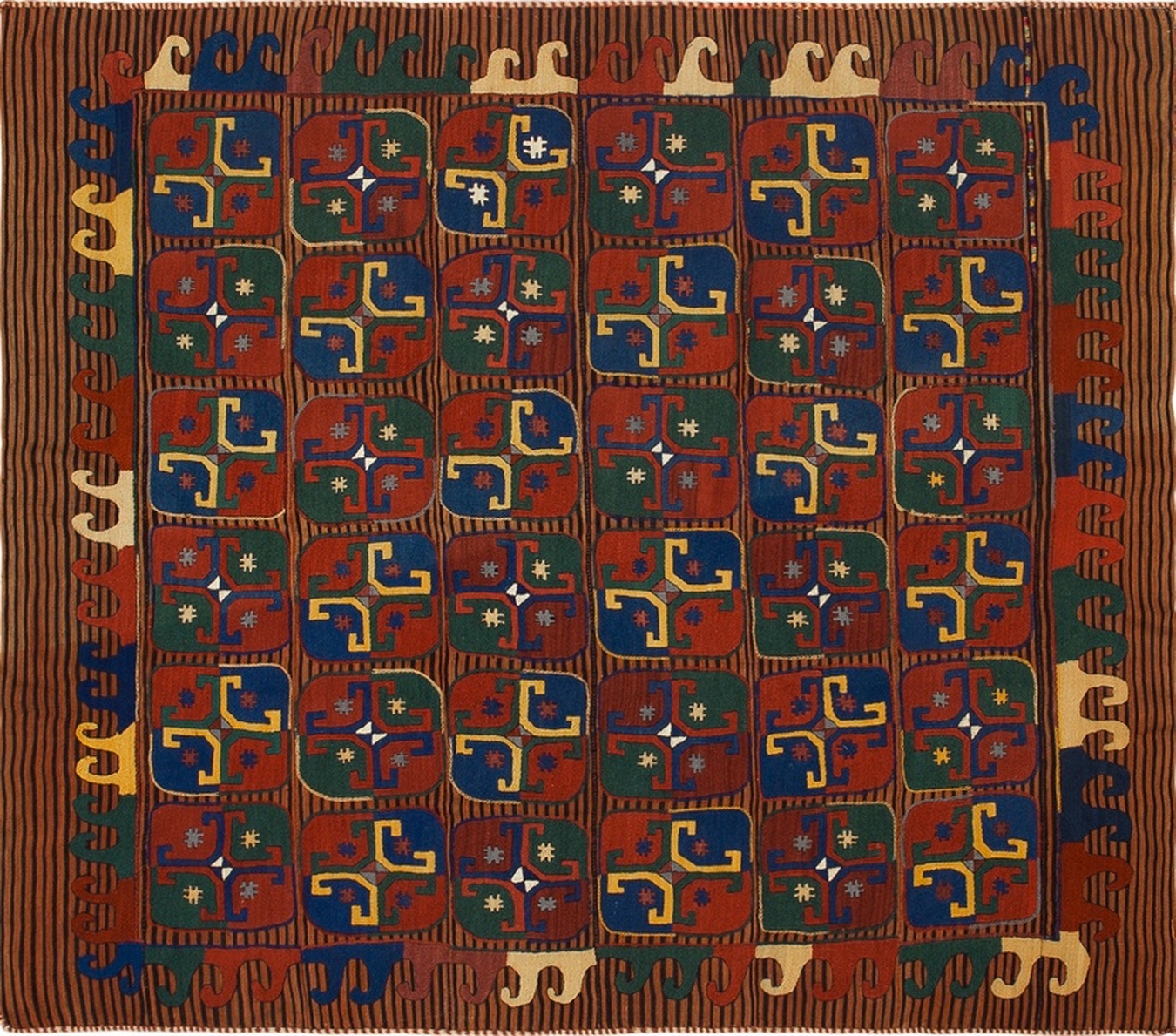
Antique Soumak Wool Coral Rug – by Rugs On Net
With prices ranging from a few hundred dollars for new runners to tens of thousands for rare antique examples, the Soumak remains both an accessible home textile and a collectible work of art.
Care, Repair, and Contemporary Use
Can Soumak Rugs Be Repaired Easily?
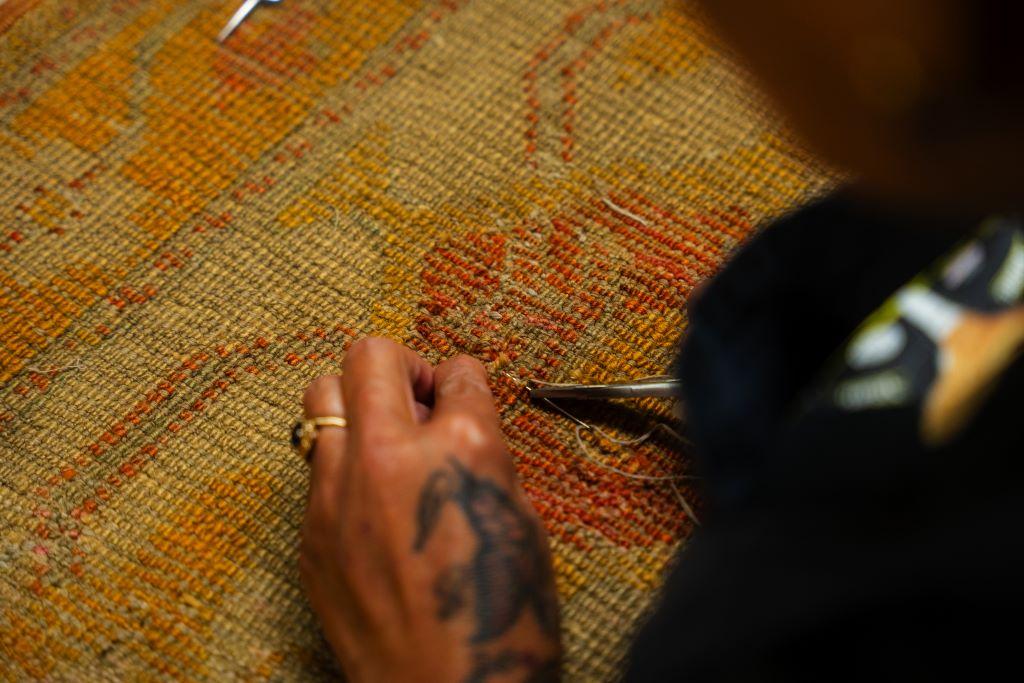
Detail of hands mending a rustic, richly colored woven rug.
Yes, Soumak rug repair is possible, but the process depends on the condition of the rug and the complexity of its design. Because Soumak weaving involves discontinuous wrapped wefts, restoring damaged sections requires the skill of an experienced weaver familiar with the technique.
Small tears, frayed edges, or worn areas can often be reinforced or rewoven, but repairing large sections with intricate geometric motifs can be costly. Professional restoration is strongly recommended, as improper repair may compromise both the durability and value of antique or vintage Soumaks.
Best Practices for Cleaning and Maintenance
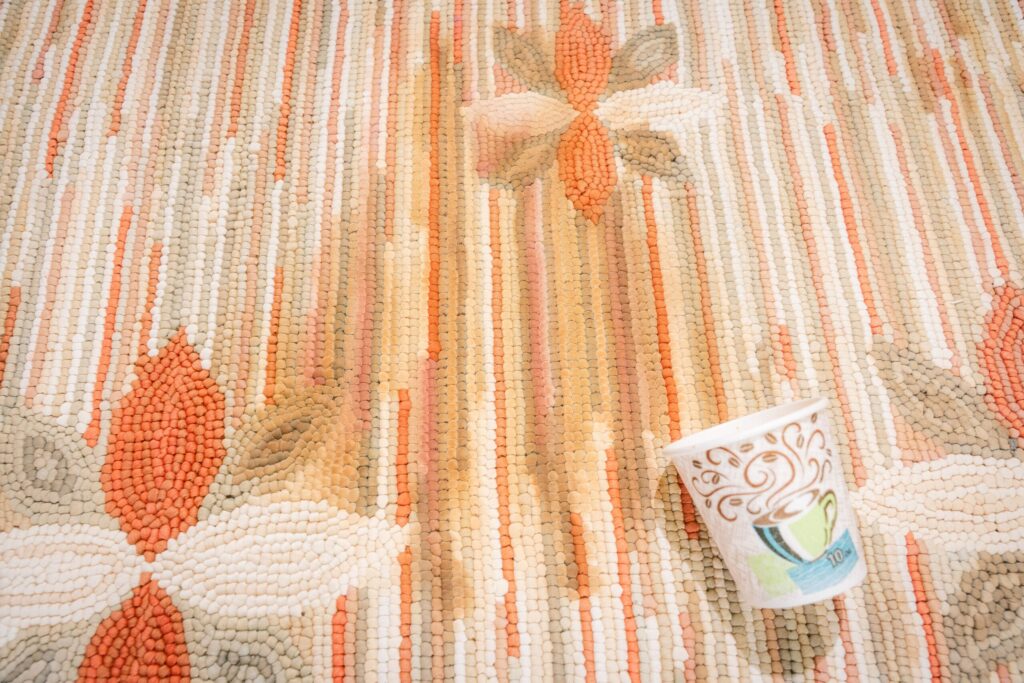
Close-up view of a tipped paper coffee cup resting on a handwoven wool rug, highlighting the rug’s dense pile, subtle color variations, and traditional geometric motifs in warm neutral and terracotta tones.
- Regular vacuuming — Why: Prevents dirt and grit from settling into the fibers, which can weaken the structure over time.
- Rug rotation — Why: Distributes wear evenly, especially in high-traffic areas.
- Spot-cleaning with mild solutions — Why: Protects natural dyes from fading or bleeding while addressing spills promptly.
- Avoid harsh chemicals or steam cleaning — Why: Aggressive treatments can strip natural oils, damage handspun wool, and dull colors.
- Professional cleaning every few years — Why: Maintains both appearance and value, ensuring deeper care without risk of damage.
Following these steps for cleaning Soumak rugs ensures they remain vibrant, durable, and collectible.
Modern Uses and Design Trends
Soumak rugs are increasingly popular in modern interiors, where their flatwoven construction and bold motifs fit seamlessly into evolving design aesthetics. They are often used for layering—placed over larger neutral rugs to add texture and visual interest. Their lightweight structure makes them easy to move and restyle, perfect for flexible layouts.
In boho decor, Soumaks bring authenticity and global flair, complementing natural fibers, eclectic furniture, and vibrant textiles. Designers also use them for upholstery projects, covering benches or ottomans to highlight the intricate woven patterns.
Repurposing Soumak Textiles
- Pillows and cushions — Why: Old or fragmentary Soumaks can be transformed into decorative pillows, preserving motifs in a practical format.
- Bags and fashion accessories — Why: The strong woven fabric adapts well to wearable items, allowing tribal designs to live on in daily use.
- Wall hangings or framed art — Why: Displaying Soumak textiles as art pieces emphasizes their symbolic and aesthetic value.
- Furniture upholstery — Why: The dense, durable weave makes an excellent covering for stools, chairs, and benches.
These repurposed Soumak textiles extend the lifespan of older or damaged rugs, celebrating their artistry even when they are no longer intact as floor coverings.
Tradition and Modern Living
Through careful maintenance, repair, and creative reuse, Soumak rugs continue to bridge the worlds of tradition and modern design.
Whether preserved as collectible antiques, styled in contemporary interiors, or repurposed into new forms, they remain both functional textiles and enduring works of art.
Regional Variations and Geographic Indications
Caucasian Types: Shirvan, Kuba, Karabakh Verneh
The Caucasus is one of the strongest centers of Soumak weaving, producing highly collectible types with distinct cultural traits. A Shirvan Soumak rug is typically noted for its fine geometric detailing, small-scale medallions, and intricate borders, reflecting the precision and artistry of village weavers. Kuba Soumaks, by contrast, emphasize crisp diamond lattices and repeating hooked motifs, often in tightly balanced compositions.
The Karabakh Verneh—a celebrated form of Caucasian Soumak—is instantly recognizable for its bold use of the dragon “S” motif, a sinuous design symbolizing power and protection. These rugs embody the multi-ethnic weaving traditions of Azeri, Armenian, and Georgian communities, and remain among the most prized regional Soumak variations.
Persian Types: Shahsavan, Kurdish, Luri Soumak
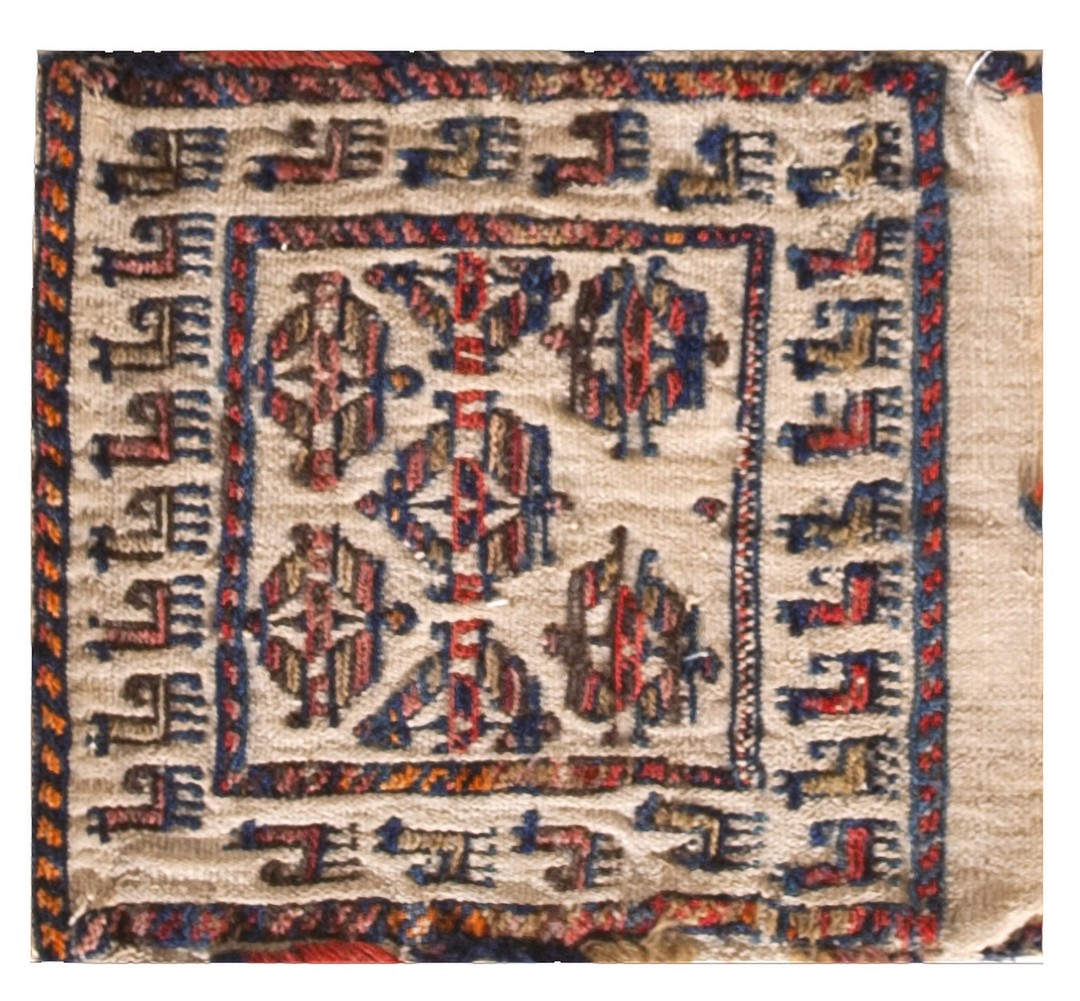
In Persia, Soumak weaving was carried forward by diverse tribal groups. The Shahsavan Soumak stands out for its use in small panels, bedding covers, and storage bags, featuring animal motifs, protective hooks, and fertility symbols. Their portability reflected the nomadic lifestyle of the Shahsavan, while their symbolism affirmed tribal identity.
Kurdish Soumaks tend to be coarser, with bold blocks of color and simple geometric repeats, a reflection of practical use and strong visual impact. Luri Soumak weaving incorporates highly symbolic designs—stars, trees, and talismanic shapes—woven in rich palettes that emphasized spiritual meaning as much as visual appeal. Collectively, Persian Soumaks highlight how weaving techniques adapted to different tribal needs, from decorative dowry pieces to functional storage textiles.
Anatolian and Turkish Soumak
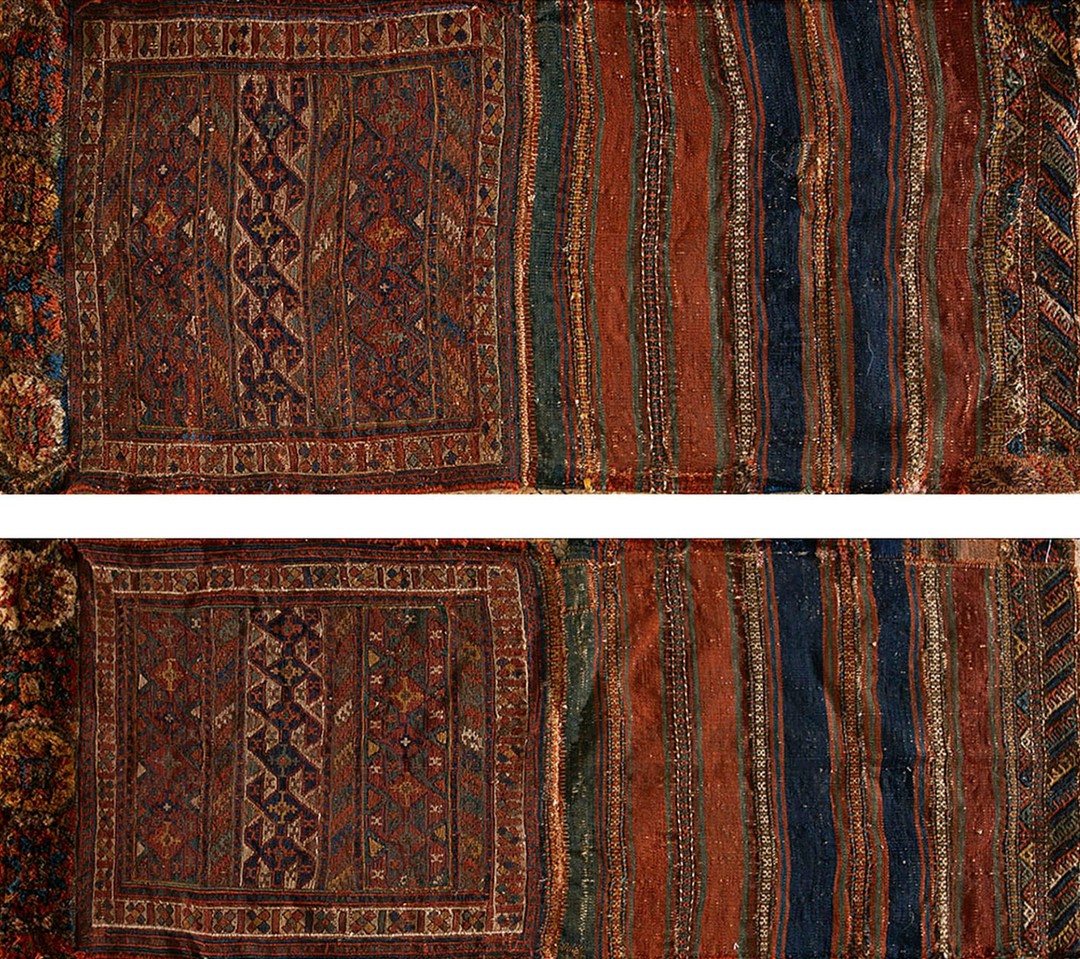
In Anatolia, Soumak weaving often blended with other flatweave traditions, producing pieces that mix kilim techniques with wrapped-weft Soumak bands. A common format was the camel bag, a large and durable textile used by nomadic groups to carry belongings across the highlands.
These Turkish Soumaks often include striped layouts punctuated by geometric motifs, less intricate than Caucasian or Persian examples but highly practical. Their role in nomadic life gives them enduring cultural value, even when found today in fragmentary form.
UNESCO & Geographic Indication Protections
Recognizing the importance of these traditions, governments in Azerbaijan, Iran, and Turkey have sought Geographic Indication (GI) status and UNESCO recognition for certain Soumak types.
These protections aim to preserve weaving knowledge, safeguard cultural heritage, and prevent mislabeling in the marketplace. For collectors, such regional Soumak differences—backed by official protections—provide assurance of authenticity and add to the long-term value of the pieces.
Regional Significance for Collectors
Each region’s Soumak variation carries a distinct identity: the dragon-laden Karabakh Verneh, the symbolic Shahsavan Soumak, the bold Kurdish weaves, and the precise Shirvan geometrics. Understanding these regional traits not only enriches appreciation but also helps buyers assess both authenticity and market value. Geographic and cultural labeling ensures that Soumak rugs are recognized not just as textiles but as living artifacts of their tribal and regional origins.
Cultural Significance and Heritage
Soumak in Dowries and Tribal Identity
Within traditional societies of the Caucasus, Persia, and Anatolia, Soumak weaving carried profound cultural meaning. Dowry rugs were central to marriage customs: brides and their families prepared Soumak textiles as part of the trousseau, displaying both the weaver’s skill and the family’s social standing.
These pieces were not just functional but symbolic, embodying blessings for fertility, protection, and prosperity in the couple’s new life. The presence of Soumak in a dowry also reinforced tribal soumak customs, linking family honor and continuity to the artistry of weaving.
Ceremonial and Prestige Uses
Beyond domestic settings, Soumak weaving served as a medium of prestige and ceremony. Nomadic and village groups fashioned horse trappings, saddle bags, and festival banners in Soumak technique, transforming utilitarian objects into markers of wealth and status.
For important occasions, chiefs, elders, or honored guests might be presented with Soumak textiles as gifts of esteem. In these contexts, Soumak was not merely a household item but a visible sign of community identity and social hierarchy.
Storytelling and Symbolism in Weaving
Every Soumak textile is also a work of soumak storytelling. Motifs such as dragon “S” shapes, protective eyes, or hooked medallions carry meanings rooted in ancestral belief systems. A rug’s design could narrate themes of fertility, defense against misfortune, continuity of lineage, or spiritual blessings.
Because weaving was often passed from mother to daughter, the knowledge of these motifs became a living cultural text—transmitted alongside technical skills, oral traditions, and social values. In this way, Soumak weaving functioned as a form of intergenerational storytelling, binding families and tribes through shared symbols.
Soumak as Living Heritage
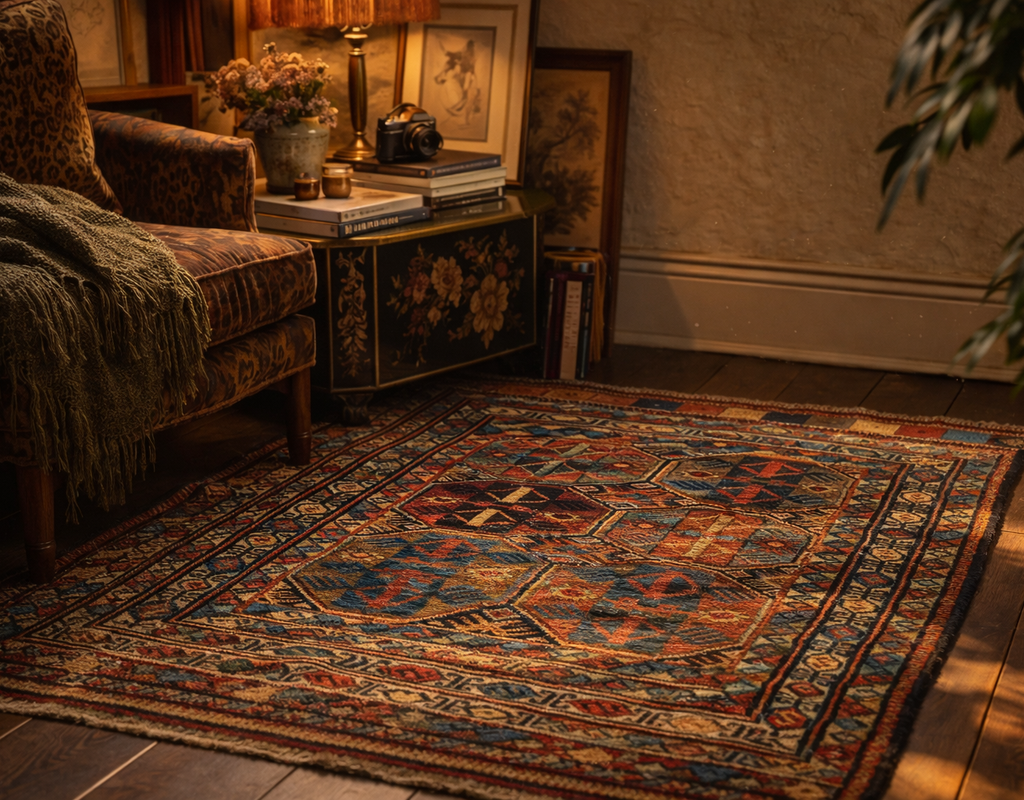
A deeply hued, traditional area rug brings warmth and texture to this dimly lit, eclectic corner.
The soumak rug heritage extends far beyond its decorative appeal. These textiles embody tribal soumak customs, serving as dowry symbols, ceremonial objects, and woven narratives of community life.
Today, they are appreciated not only for their artistry but also for their role in preserving cultural memory. Each authentic Soumak rug is both an artifact of daily life and a testament to the enduring human impulse to encode social values, protection, and stories in the medium of thread.
Browse a Few of Our Favorite Soumak Rugs
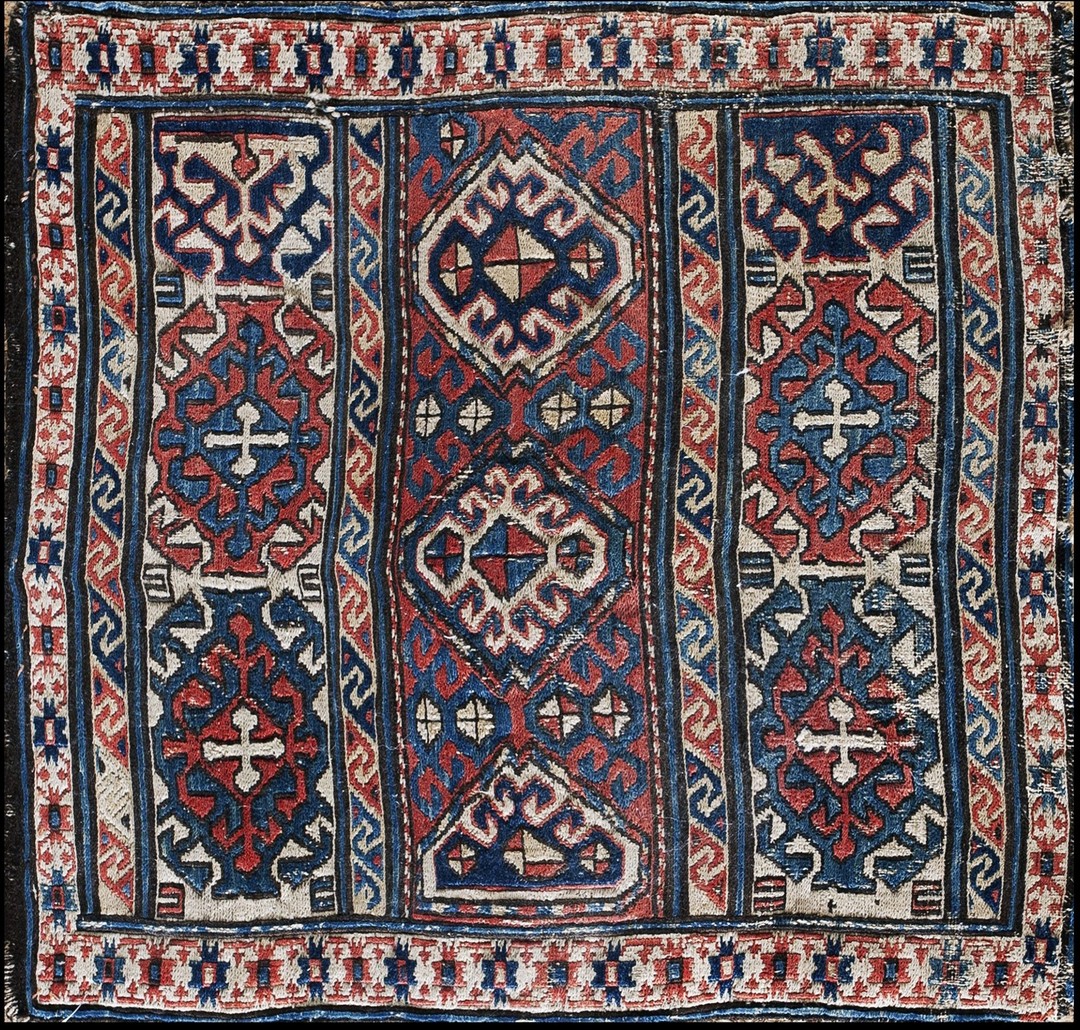
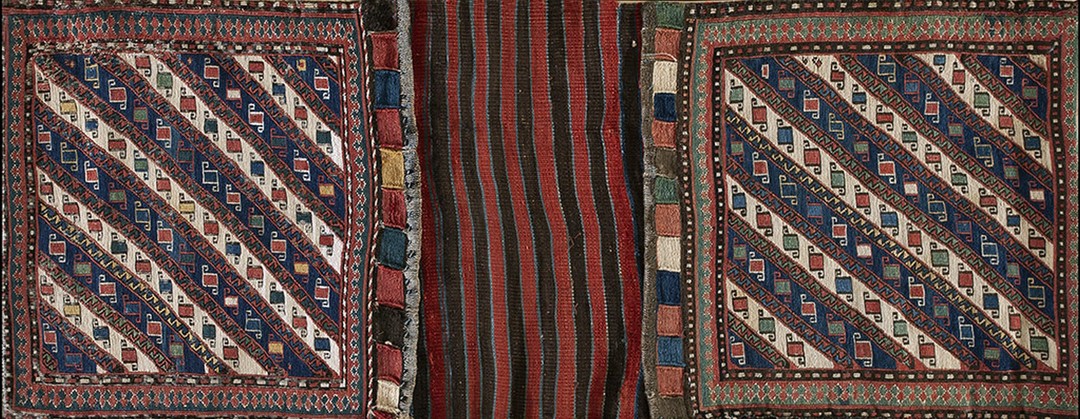
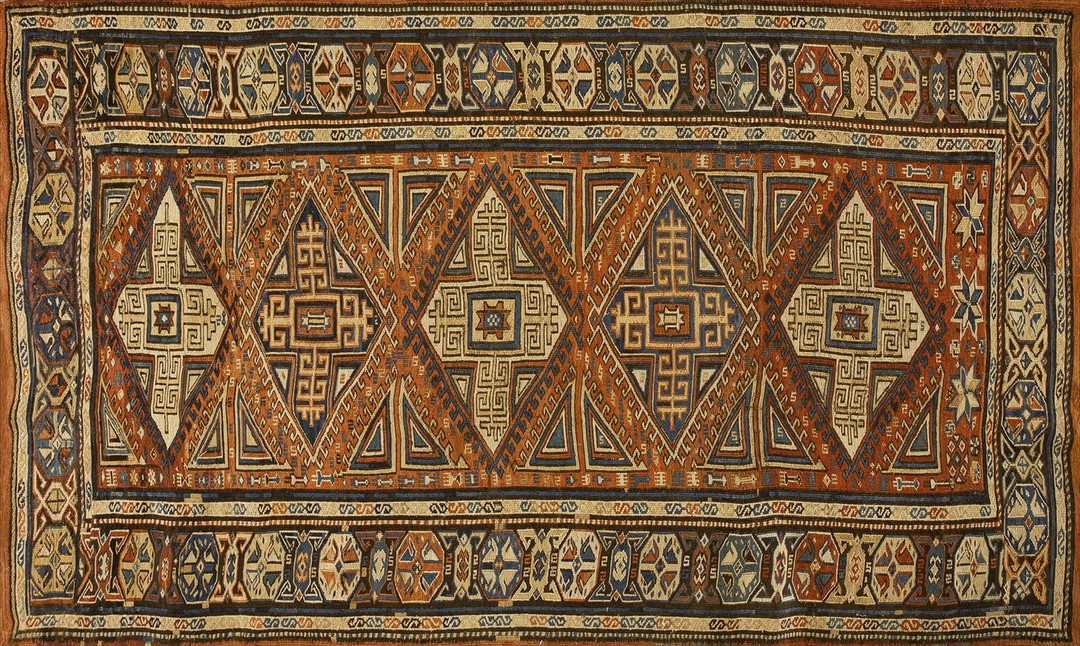
FAQ
- What rooms suit Soumak rugs best?
Soumak rugs excel in dining rooms, living rooms, hallways, and entryways. Runners keep high-traffic corridors tidy, while larger sizes anchor seating areas.
- Do robot vacuums work on Soumak rugs?
Usually, yes—Soumak rugs’ low profile is robot-friendly. Tuck fringe, use low suction if possible, and set no-go zones if tassels snag.
- How much do Soumak rugs cost?
New Soumak rugs vary widely—smaller pieces can start a few hundred dollars, while 8×10 options often run \~\$700–\$3,500. Antique Caucasian Soumak rugs can reach \$4,000–\$10,000+.
- Are modern “reversible” Soumak rugs really Soumak?
Some are Soumak-inspired flatweaves engineered to be reversible. True Soumak rugs typically show floats on the back; inspect construction and labeling.
- What patterns are common on Soumak rugs?
Expect bold geometrics: medallions, “dragon” or “eagle” motifs, verneh/sileh stripes, and hooked or stepped forms. Palettes range from rich reds and indigo to modern neutrals.
- Where do Soumak rugs come from?
The Soumak technique has roots in the Caucasus (e.g., Shirvan/Shemakha) and Persia; today Soumak rugs are also woven in Turkey, Iran, India, and Pakistan.
- How can I identify an authentic Soumak rug?
Look for a braided, raised texture on the face and loose weft floats on the back. Kilims lack those floats; pile rugs show cut or looped ends.
- How do I store Soumak rugs long-term?
Roll (don’t fold), wrap in breathable Tyvek or acid-free paper, and keep in a cool, dry, elevated spot. Avoid plastic wraps that trap moisture; check every 3–6 months.
- Are Soumak rugs suitable for outdoor use?
No. Traditional wool Soumak rugs are indoor textiles; moisture and UV degrade fibers and dyes. Choose outdoor-rated synthetics for exterior spaces.
- Will Soumak rugs fade in sunlight?
Any dyed wool can fade with prolonged UV. Use window coverings, rotate Soumak rugs every 6–12 months, and avoid placing them in persistent direct sun.
- When should Soumak rugs be professionally cleaned?
Every 12–18 months in busy rooms, or sooner after heavy soiling. Choose a cleaner experienced with flatweaves.
- How do I spot-clean a Soumak rug?
Blot spills immediately with a white cloth, then dab a small amount of wool-safe detergent in cool water. Rinse lightly, blot dry, and lay flat until fully dry.
- How do I vacuum Soumak rugs?
Vacuum with suction only (no beater bar) on both sides, then rotate every few months. For debris along edges, use a soft brush attachment.
- Can Soumak rugs go over radiant heated floors?
Yes. Soumak rugs work well with radiant heat; pair with a thin felt or heat-rated rubber pad and avoid thick insulating pads.
- Are Soumak rugs pet-friendly?
Generally yes—no pile means fewer pulled fibers and easier cleanup. Keep claws trimmed, tuck tassels, and use a pad to prevent bunching.
- Are Soumak rugs good for dining rooms?
Excellent. Soumak rugs’ low profile lets chairs glide easily; size the rug to extend 24–30 inches beyond the table on all sides.
- Do Soumak rugs need a rug pad?
Yes. Use a felt + natural rubber pad to stop sliding and add comfort. Avoid PVC pads, which can discolor hardwoods.
- How thick are Soumak rugs?
Typically low profile—often under 0.25 inch (≈5–6 mm). That makes Soumak rugs great for door clearance and under dining chairs.
- What materials are Soumak rugs made from?
Most Soumak rugs are wool with wool or cotton foundations. Contemporary versions may blend in jute or silk details; always check the fiber content.
- Do Soumak rugs shed?
Minimal. With no pile to release fibers, Soumak rugs shed far less than tufted or shag styles. Expect normal loose lint early on, then very little.
- Are Soumak rugs durable for high-traffic areas?
Yes—Soumak rugs handle entries, halls, and family rooms well. They’re generally stronger than kilims but a bit less abrasion-proof than dense pile rugs.
- How do Soumak rugs differ from kilim rugs?
Soumak rugs use wrapped wefts (thicker, stronger face; ragged back), while kilims interlace wefts and warps (thinner; smooth on both sides). Both are flatweaves but constructed differently.
- Are Soumak rugs flatweave or pile?
Soumak rugs are flatweaves with no pile. The wrapped weft technique yields a textured surface that reads like subtle cables rather than tuft or knot ends.
- Are Soumak rugs reversible?
Traditional Soumak rugs aren’t reversible—the back shows long weft floats. Some modern “Soumak-style” flatweaves are finished on both sides, so check the back before buying.
- What are Soumak rugs?
Soumak rugs are handwoven flatweaves made by wrapping colored weft yarns around warps, creating a textured, braided look. They’re sturdier and thicker than kilims yet still low-profile for easy placement.