
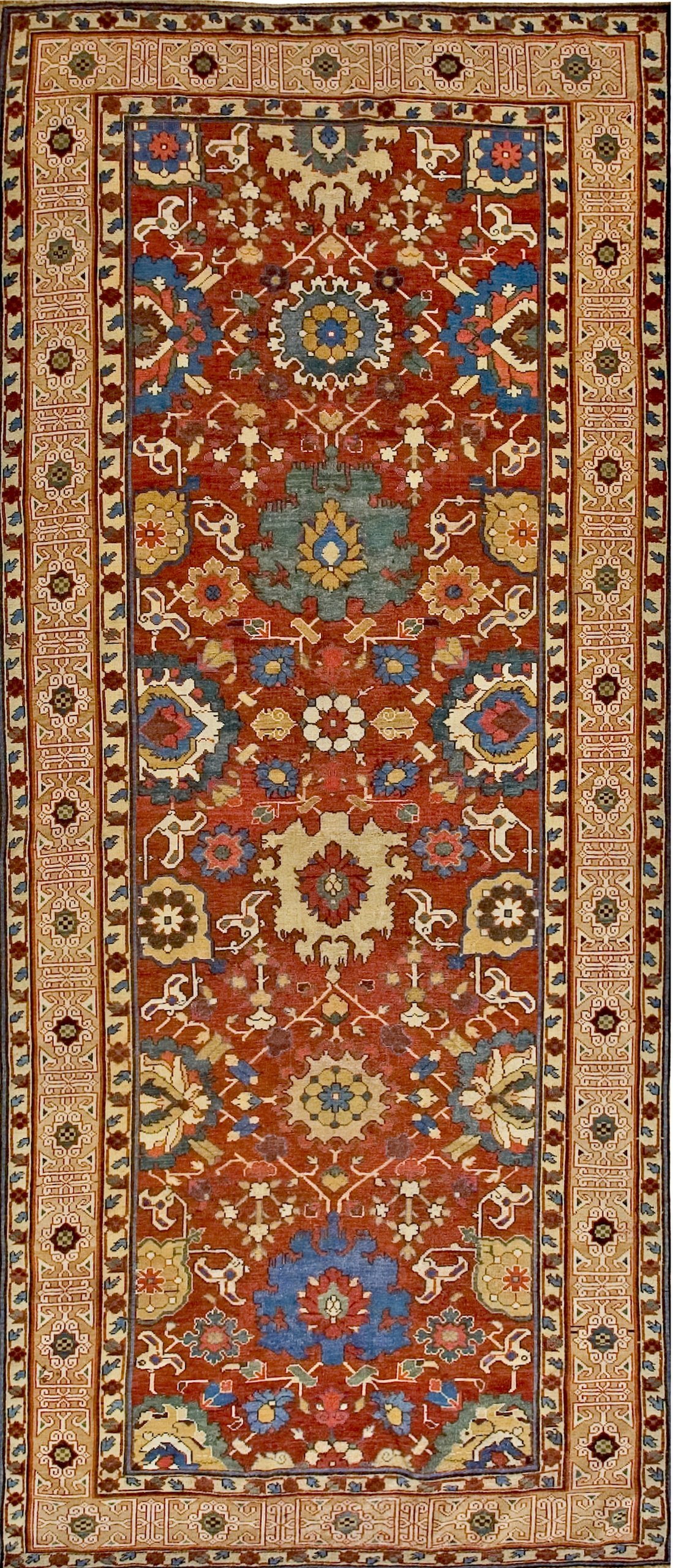
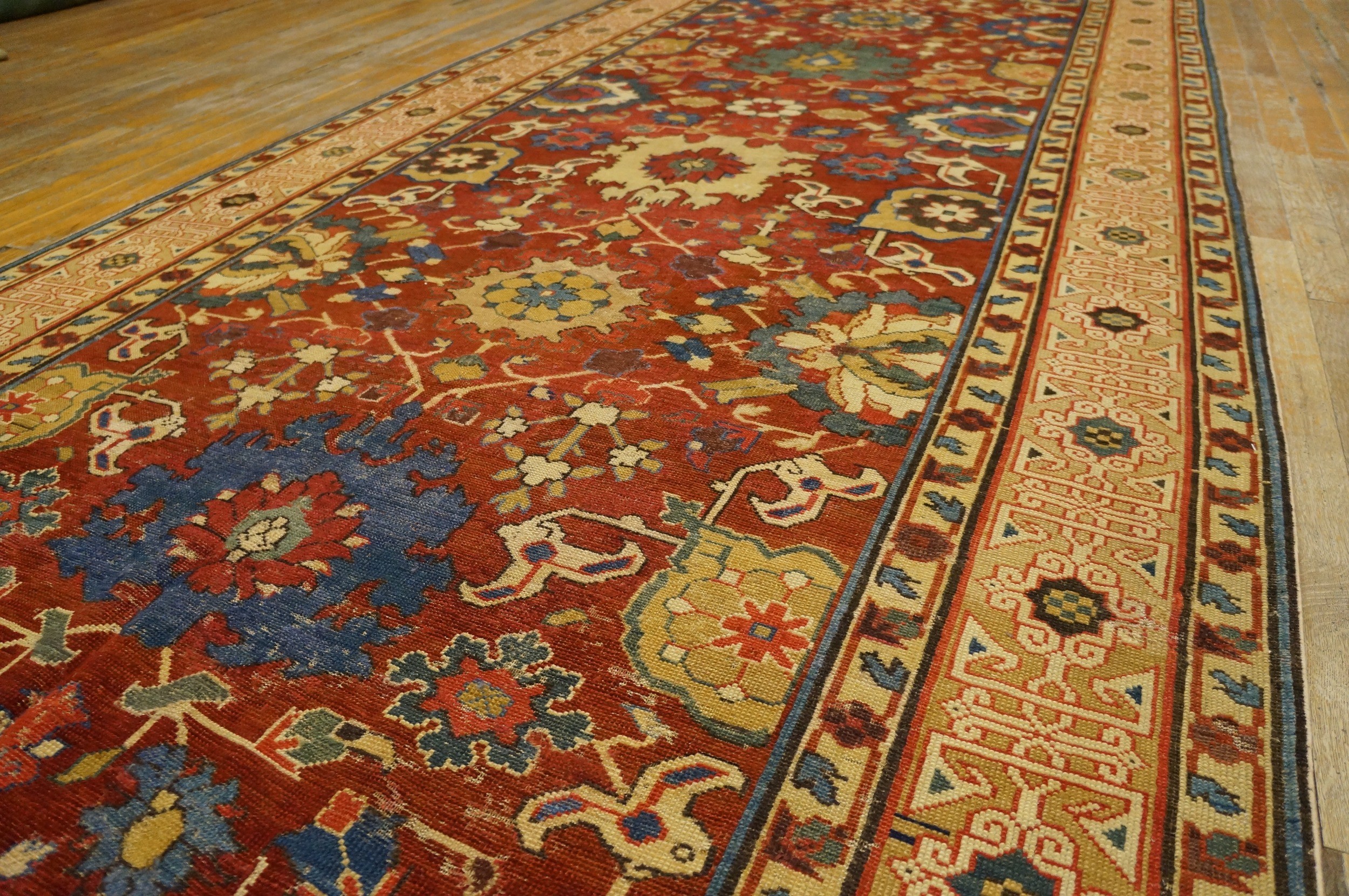
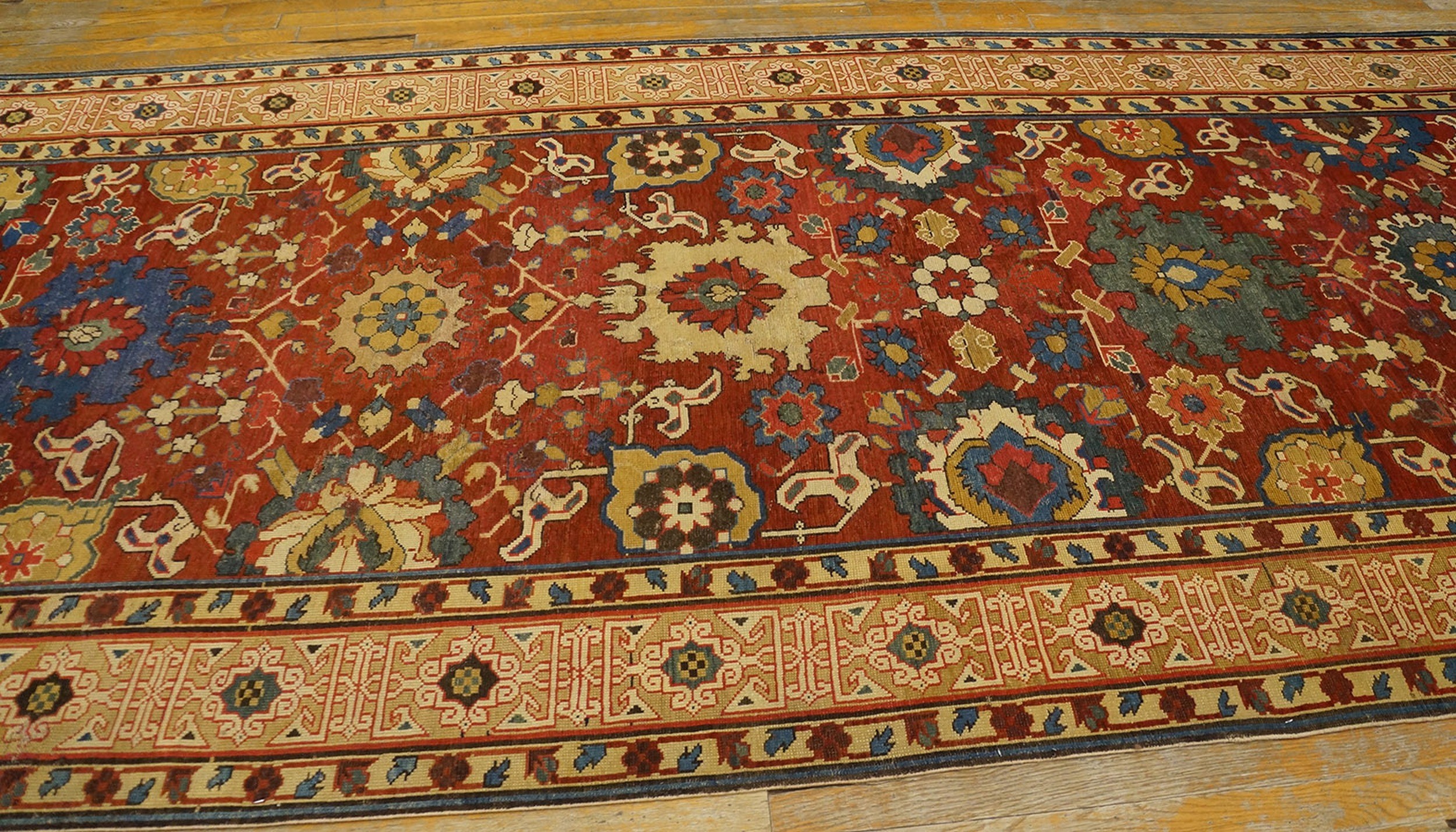
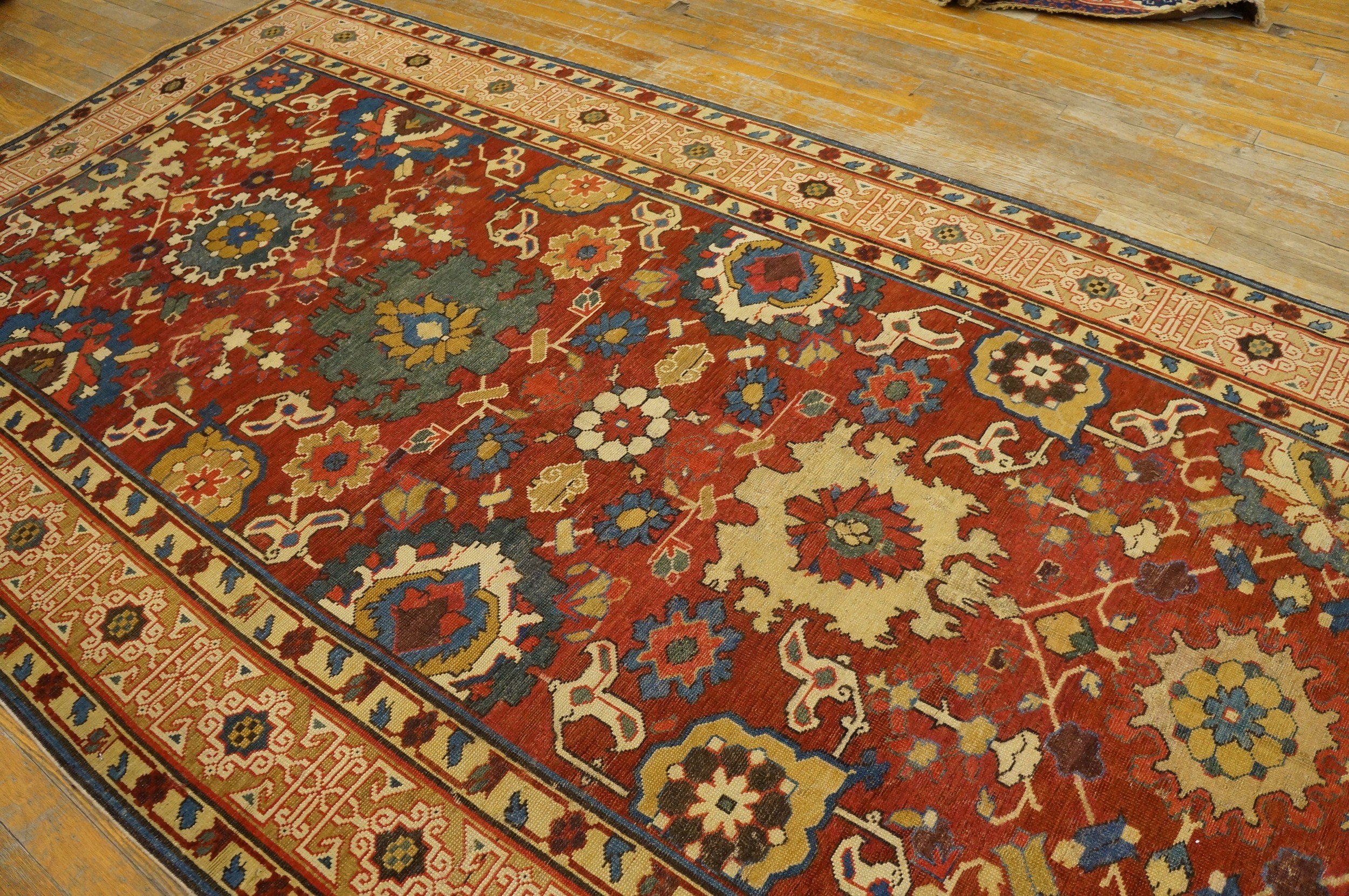
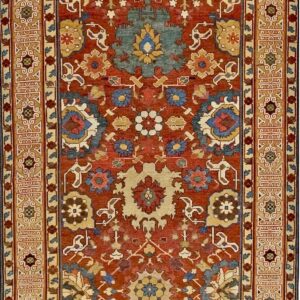
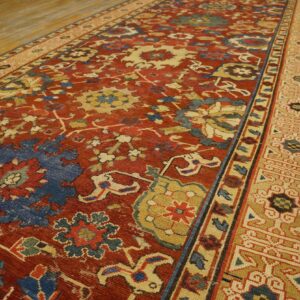
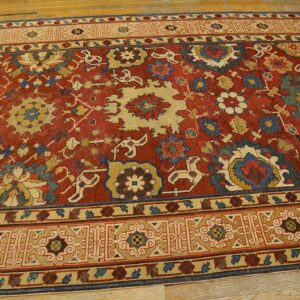
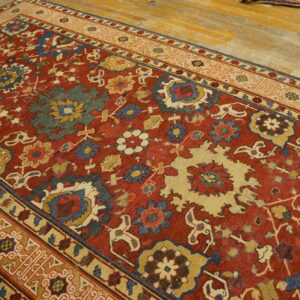
This extraordinary antique tribal Caucasian hallway runner rug, dating from the early nineteenth century, is a museum-quality exemplar of the “Kuba” weaving tradition—one of the most intellectually and artistically revered regions of the Caucasus. Historically, antique tribal Caucasian Kuba rugs were the “scholarly” cousins of the more rustic Caucasian tribal weaves, known for their incredible structural density and their preservation of ancient, high-relief motifs. This specific specimen is defined by its hallway runner format (often referred to as a Kenareh), likely intended for the grand corridors of a local khan’s palace or as a prestigious commission for a high-ranking family.
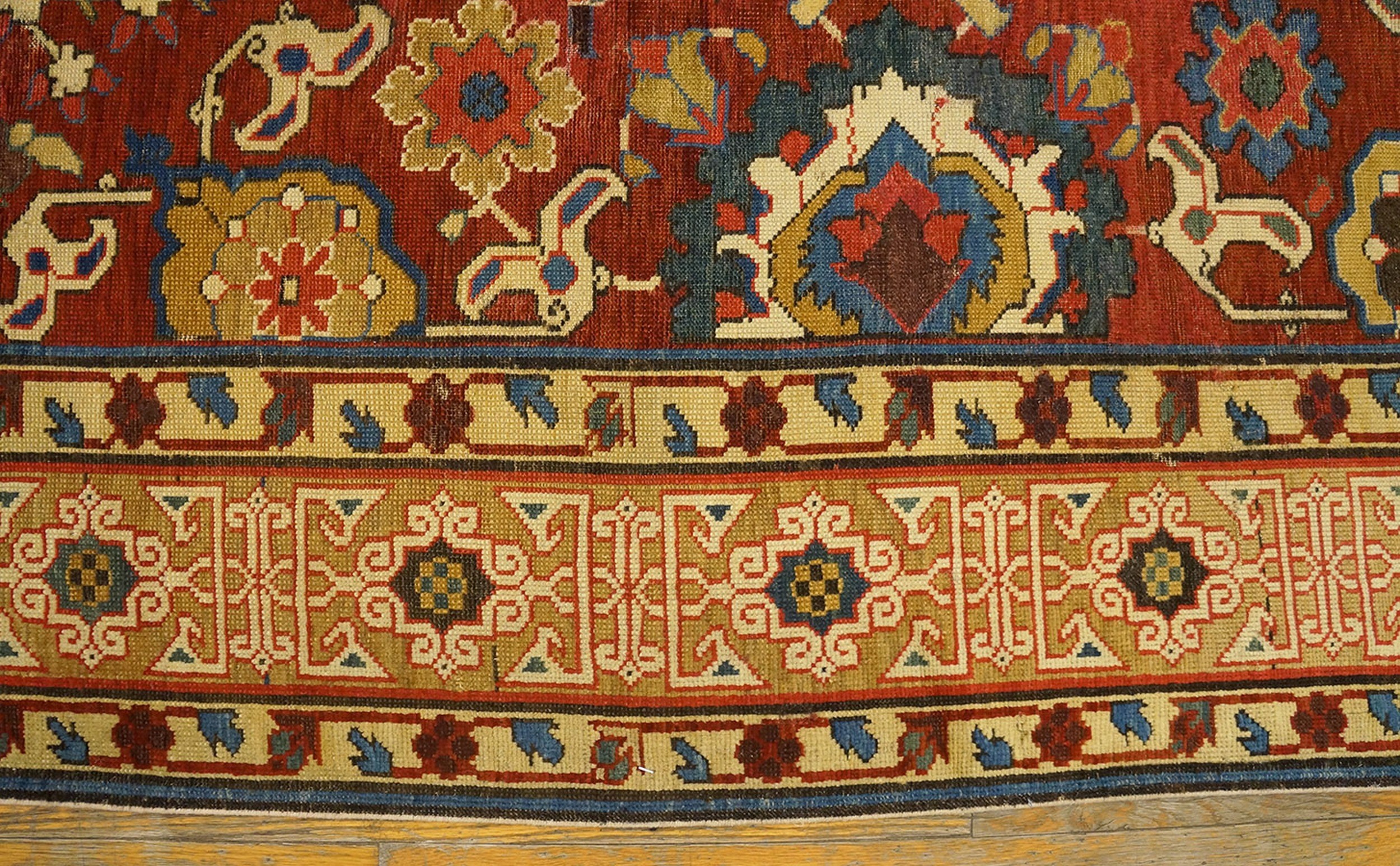
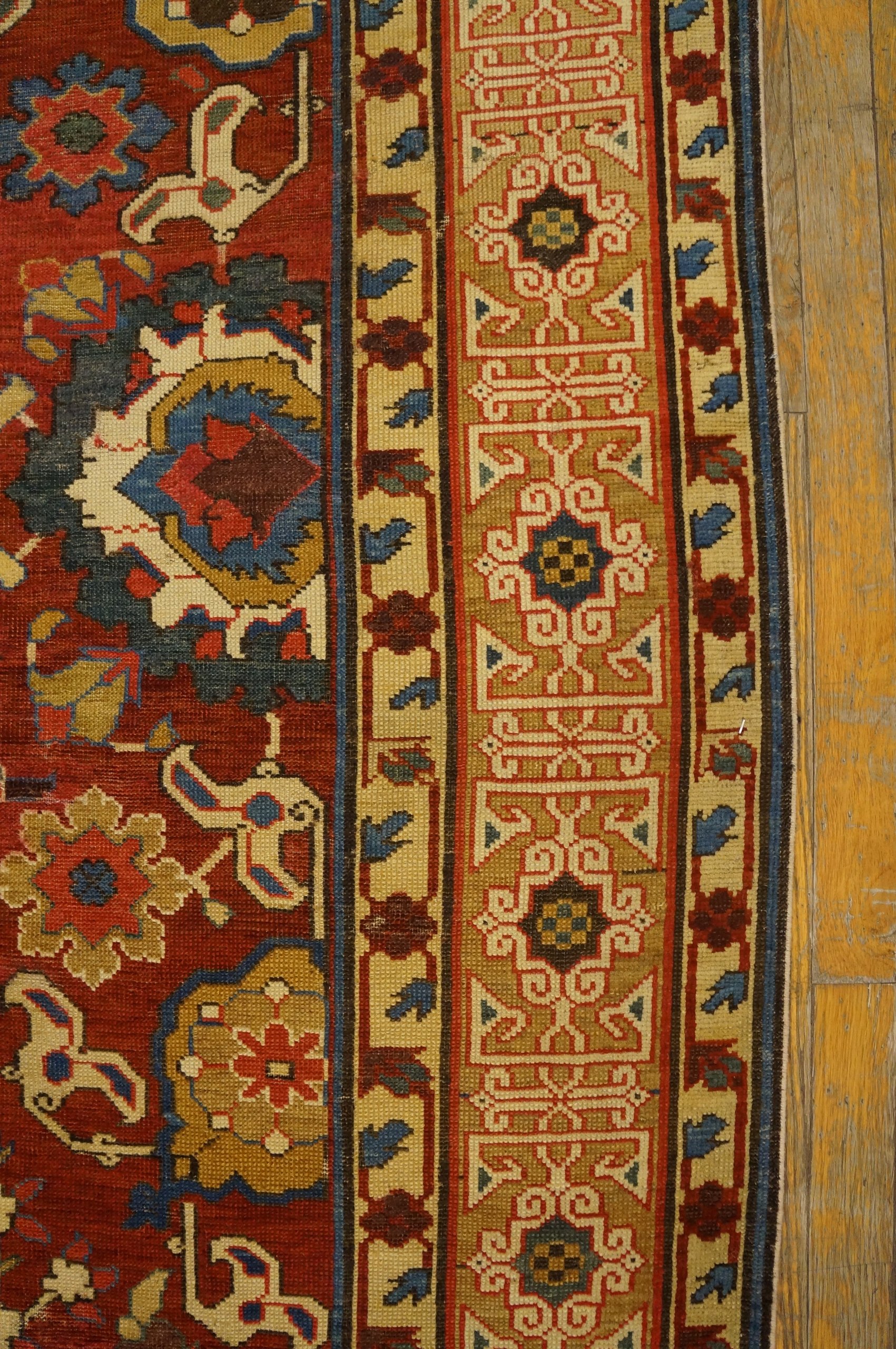
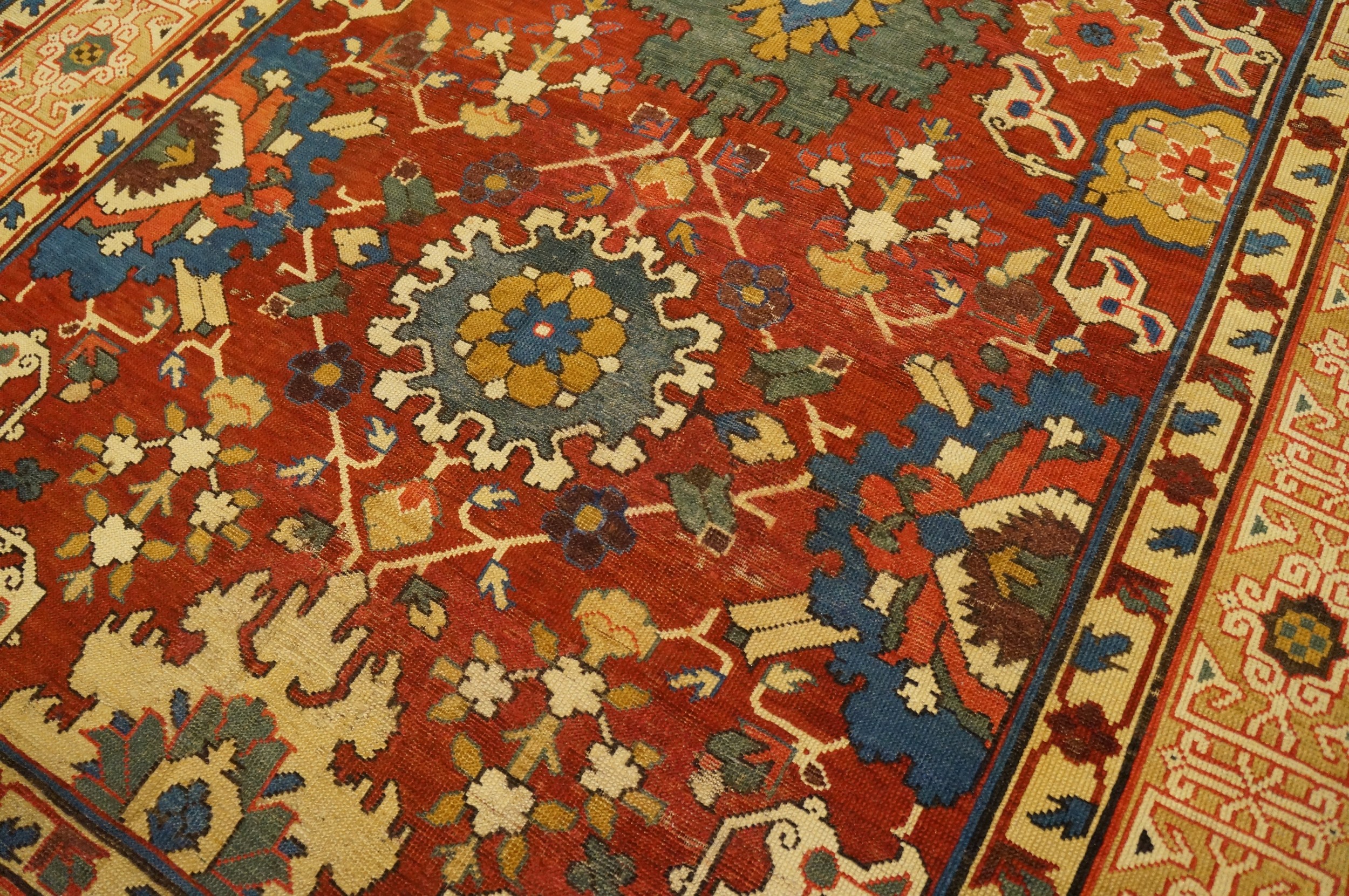
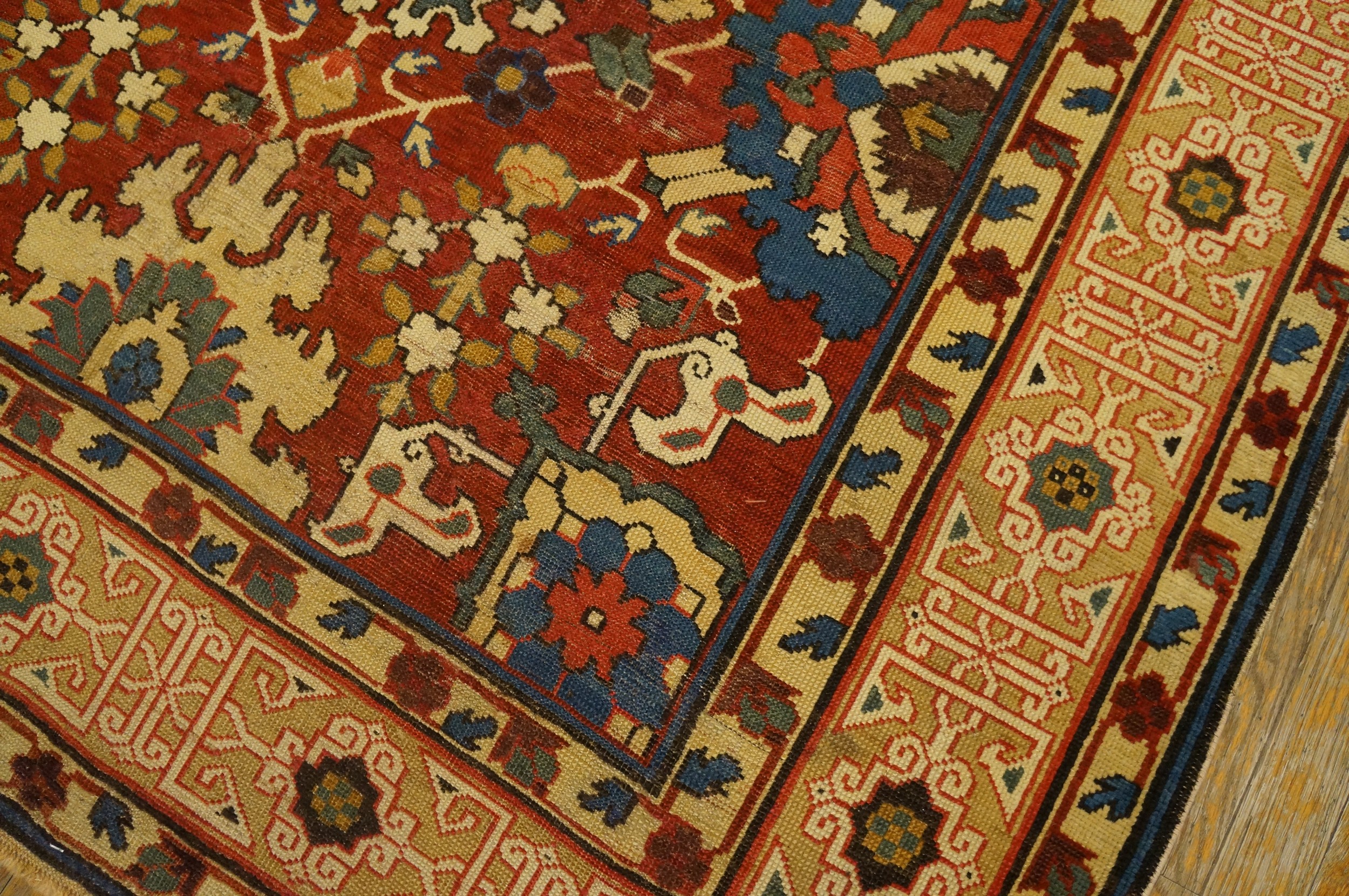
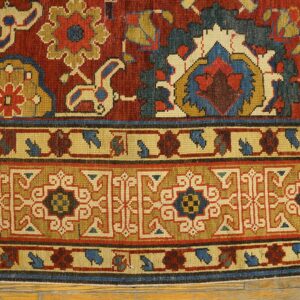
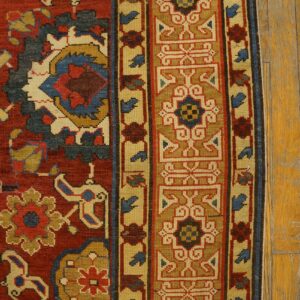
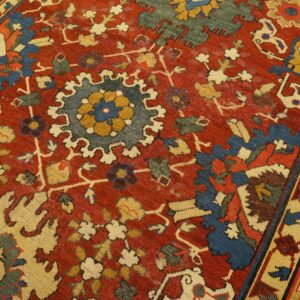
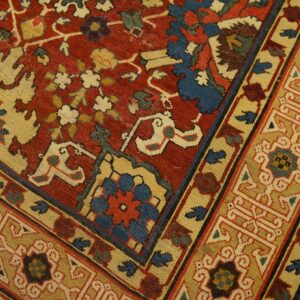
The composition is a virtuoso display of the “Large-Scale Tribal” aesthetic, featuring a rhythmic succession of bold, geometric medallions—each a self-contained universe of ancient symbolism. However, the true hallmark of this early 19th-century masterpiece is the “Kufic” border. This sophisticated geometric pattern is a stylized, textile interpretation of early Arabic calligraphy, a motif that traces its lineage back to the 15th-century “Holbein” and “Lotto” carpets of the Ottoman Empire. In this Kuba, the Kufic border acts as a powerful, protective frame, its interlocking red lines creating a sense of infinite, architectural movement.
The vibrant red quality of the rug is found in its primordial palette. The deep madder reds are remarkably saturated, a testament to the purity of the mineral and vegetable dyes used in the high-altitude villages of the eastern Caucasus. The wool is hand-spun and exceptionally lustrous, having developed a “leather-like” handle and a shimmering patina over two centuries. Unlike later, more commercialized antique tribal Caucasian rugs, this early piece possesses a “primitive-modernist” graphic power, where every sharp angle and stylized bird or animal motif serves as a silent guardian of tribal history.
To possess an early 19th-century Kuba with a Kufic design border is to hold a relic of a vanishing world. It is a work that bridges the gap between the nomadic spirit of the steppes and the sophisticated geometry of the Islamic Golden Age. This rug is not merely a floor covering, but a textile monument—a sprawling, hand-wrought chronicle of Caucasian heritage and ancient artistic discipline.