
Introduction to Kazak Rugs
Explore our exclusive collection of authentic Antique Caucasian Kazak rugs and find your perfect centerpiece.
What Makes Kazak Rugs Unique?
- Bold Geometric Design Patterns — Why: Unlike curvilinear Persian carpets, Kazak rugs stand out for their crisp, angular motifs such as medallions, diamonds, and hooked polygons. These forms symbolize strength and clarity, making them some of the most easily recognizable rugs of the Caucasus.
- Vibrant Natural Dyes — Why: Saturated reds, indigo blues, emerald greens, and golden yellows give Kazak rugs their unmistakable charisma. The depth of color comes from natural dye sources like madder, indigo, and plant-based yellows, ensuring hues that age with dignity rather than fading.
- Thick, Lustrous Wool Pile — Why: The pile of a Kazak rug is unusually dense and tactile, often woven from highland sheep’s wool rich in lanolin. This creates durability, sheen, and warmth underfoot, making these area rugs both functional and luxurious.
- Folk Heritage and Tribal Spirit — Why: Every Kazak carpet is a woven reflection of Caucasian village culture. Passed down through generations, they embody motifs tied to family identity, protective symbols, and local storytelling traditions.
- Collector Appeal — Why: Antique Kazaks, especially from the 19th century, are highly sought after. Their bold patterns, authentic craftsmanship, and scarcity make them icons of tribal art, prized as both decorative treasures and cultural artifacts.
Quick Facts & Iconic Traits
- Region of Origin: South Caucasus, especially the Kazak region of present-day Armenia and Georgia — Why: This mountainous environment influenced both the wool quality and the tribal independence expressed in design.
- Design Language: Large-scale geometric medallions dominate — Why: Medallion-centered designs anchor the eye and convey balance, making them especially popular with interior designers seeking a bold focal point.
- Color Palette: Saturated primary tones — Why: The glowing reds, deep indigos, and verdant greens project energy and confidence, fitting both rustic and modern spaces.
- Construction: Village-made, hand-knotted, thick wool pile on a cotton or wool foundation — Why: This combination creates durability while preserving the handmade character.
- Historical Period of Fame: 19th-century Kazaks are considered the “golden age” examples — Why: Carpets from this era show unmatched dye quality, balanced proportions, and authentic tribal weaving methods, inspiring today’s reproductions.
- Modern Revivals: Contemporary workshops produce faithful recreations of antique patterns — Why: This allows new buyers to enjoy iconic Kazak rug features without the price or fragility of antiques.
Kazak rugs stand out in the world of carpets because of their graphic power and tactile richness. The dominance of geometric medallions is not coincidental but an essential hallmark of the style, answering the question of whether these motifs are common: they are not just common but definitive.
Designers love Kazaks for their striking visual punch, easily anchoring both traditional and modern interiors, while collectors prize them for their authenticity and cultural depth. To own one of these magnificent tribal rugs is to hold a piece of collectible Caucasian rug history, where folk art, bold design, and enduring craftsmanship converge.
Origins & Etymology
Historical Homeland: Where Kazak Rugs Began
Kazak rugs trace their roots to the rugged upland areas straddling the modern borders of Armenia, Azerbaijan, and Georgia, specifically the old Kazakh Khanate district. This mountainous region, known for its cold climate and hardy sheep, provided both the wool and the cultural backdrop that shaped these carpets.
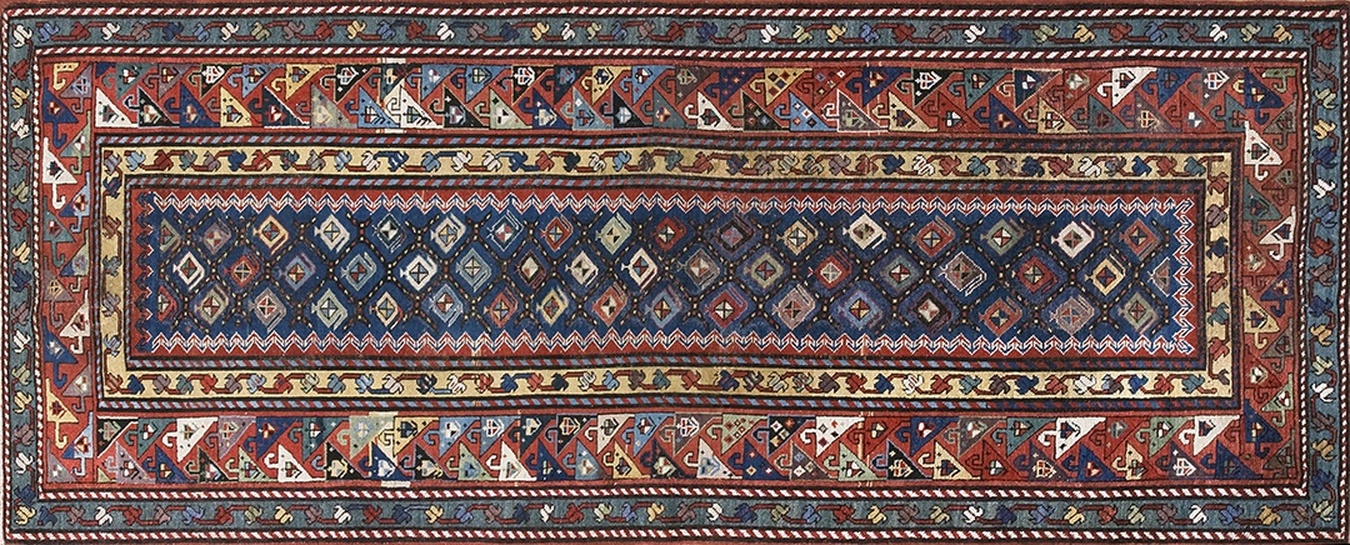
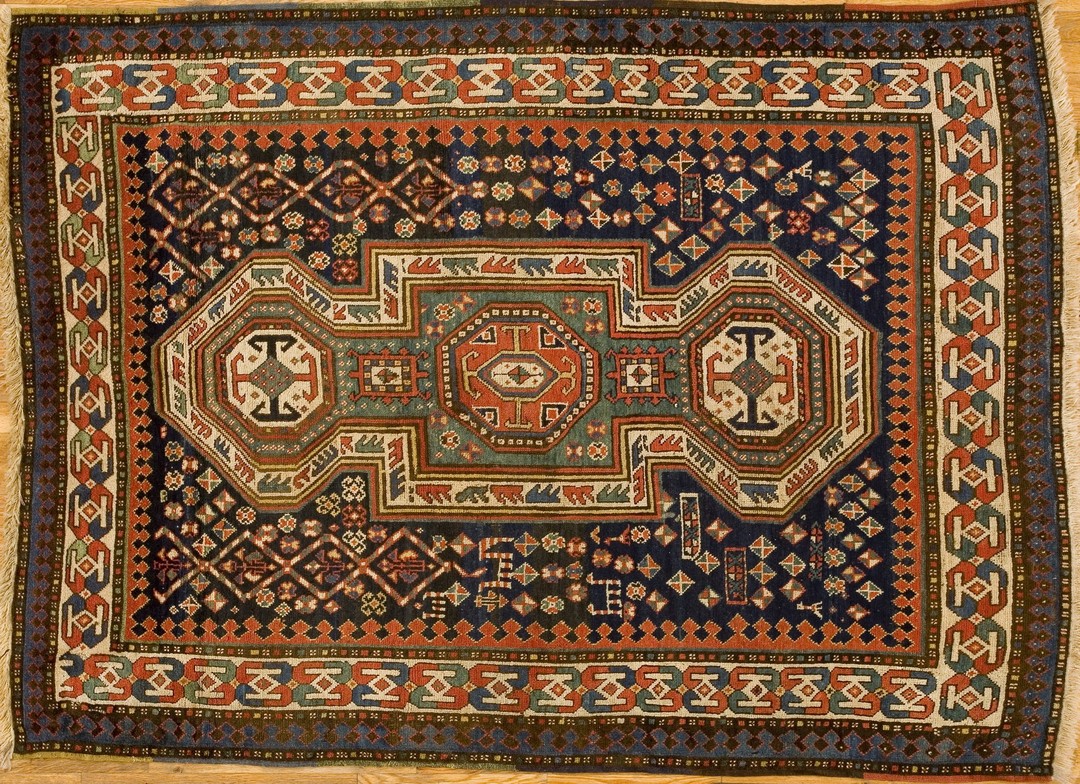
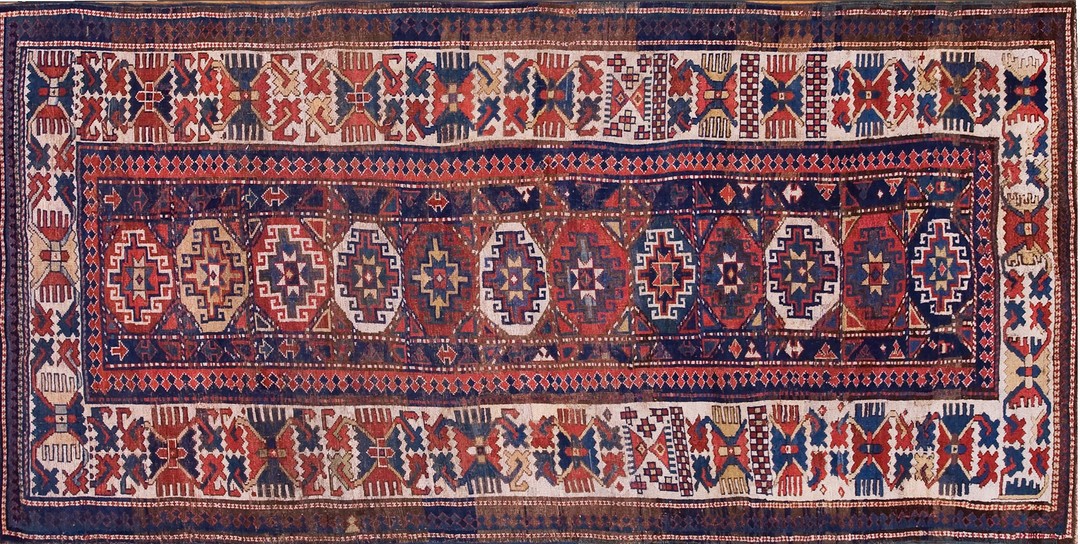
Antique Kazak Hallway Runner Wool Blue Rug – by Rugs On Net
The weaving was not confined to a single tribe or ethnicity; instead, it was a shared art form of Armenian, Azeri, and Georgian villagers, each contributing motifs, colors, and weaving practices to what became the iconic Caucasian rug roots of Kazak carpets.
The Meaning of “Kazak” in Carpets
The term “Kazak” is a geographic trade label rather than an ethnic identity. In Russian, the word relates to “free man” or “Cossack,” but in the rug world it referred specifically to carpets woven for trade and export from the Qazax district of the South Caucasus.
Over time, dealers and collectors in Europe and beyond came to use “Kazak” as shorthand for bold, geometric, thick-pile carpets from this upland zone, regardless of the precise village origin. This distinction is vital: a Kazak rug origin reflects its geography and style, not the ethnicity of its weaver.
Armenian and Caucasus Roots
While Kazak rugs embody the multi-ethnic tapestry of the Caucasus, Armenian influence stands out with particular clarity. Many of the most celebrated of these magnificent antique rugs—those with luminous natural dyes and complex symbolic motifs—were woven in Armenian villages. Armenian weavers preserved iconography such as cross forms, hooked medallions, and protective symbols, embedding layers of cultural meaning into their textiles.
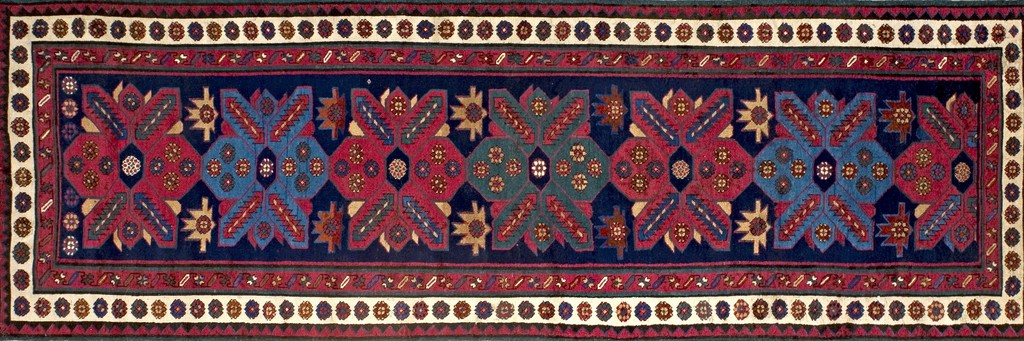
Antique Kazak Caucasian Blue 1900s Rug by Rugs On Net
Their long-standing tradition of weaving ensured both technical excellence and symbolic depth, making Armenian rug heritage inseparable from the story of Kazak carpets. The cultural mix of Armenians, Azeris, and Georgians gave these rugs their diverse symbolism and distinct power, but the strong Armenian presence explains why their artistic fingerprint is especially visible.
Thus, to answer directly: Kazak rugs originated in the South Caucasus uplands of the Kazakh Khanate, and Armenian influence is prominent because Armenian weavers were central to the craft, passing down motifs and dye traditions that defined the styles and types of these breathtaking area rugs.
Cultural and Historical Context
Kazak Weaving Traditions: Timeline & Milestones
The history of these rugs can be traced to the 18th century, when village workshops in the South Caucasus began producing thick-pile rugs primarily for local use. By the 19th century, under Russian imperial rule, the weaving industry flourished as carpets became prized trade goods in European and Ottoman markets.
This was the golden period of Kazak weaving history, when workshops in Armenian, Azeri, and Georgian villages woven and knotted these rugs that combined household function with artistic identity. Export demand encouraged bold designs and durable construction, securing the reputation of Kazak rugs as distinctive icons of Caucasian rug culture.
The Role of Village Weaving in the Caucasus
Kazak weaving was not centralized in factories but instead rooted in village homes and family workshops. Women were the primary weavers, often working with mothers, daughters, and neighbors, turning spinning and knotting into both an economic and communal activity. These area rugs were made and woven for dowries, ceremonial use, and household honor, serving as markers of family status and cultural identity.
In these contexts, weaving became a form of social fabric—an interlacing of economic necessity, artistic expression, and generational teaching. The family-centered production gave Kazak rugs an intimacy and authenticity absent in mass-produced carpets.
Symbolism in Motifs: Faith, Folklore & Identity
The motifs of Kazak rugs are deeply tied to faith and folklore. Shields and protective devices symbolized defense against misfortune, while eagles represented strength and divine power. The inclusion of crosses reflected Armenian Christian blessings, woven not only as decorative elements but as spiritual safeguards for the home.
Animal forms conveyed fertility, protection, or prosperity depending on local oral traditions. These symbols were not abstract ornamentation; they carried personal and communal meanings, passed down orally, often evolving from village to village. Each geometric Kazak motif can thus be read as a visual language of belief and identity.
Armenian Contributions & Cross-cultural Exchange
Armenian weavers played a defining role in shaping the iconography and symbolism of Kazak carpets. Many antique pieces include woven dates, Christian crosses, and inscriptions unique to Armenian tradition, anchoring these rugs in a specific cultural lineage. Yet the artistry of Kazak rugs also reflects a fusion of traditions—Persian floral influences, Turkish geometric clarity, and Russian market adaptations—all integrated into the Caucasian design vocabulary.
This cross-cultural exchange is what gives fabulous geometric rugs their richness: they are not the product of one people alone, but of a region where faiths and ethnicities overlapped, creating textiles that embody both diversity and unity. To answer directly: Kazak weaving traditions first emerged in the 18th century, gaining prominence in the 19th century under Russian trade networks.
The motifs reflect the Caucasus’ multi-faith culture, with Armenian contributions especially visible in Christian symbols and inscriptions, while Persian, Turkish, and Russian elements added further depth to their design heritage.
Design Characteristics of Kazak Rugs
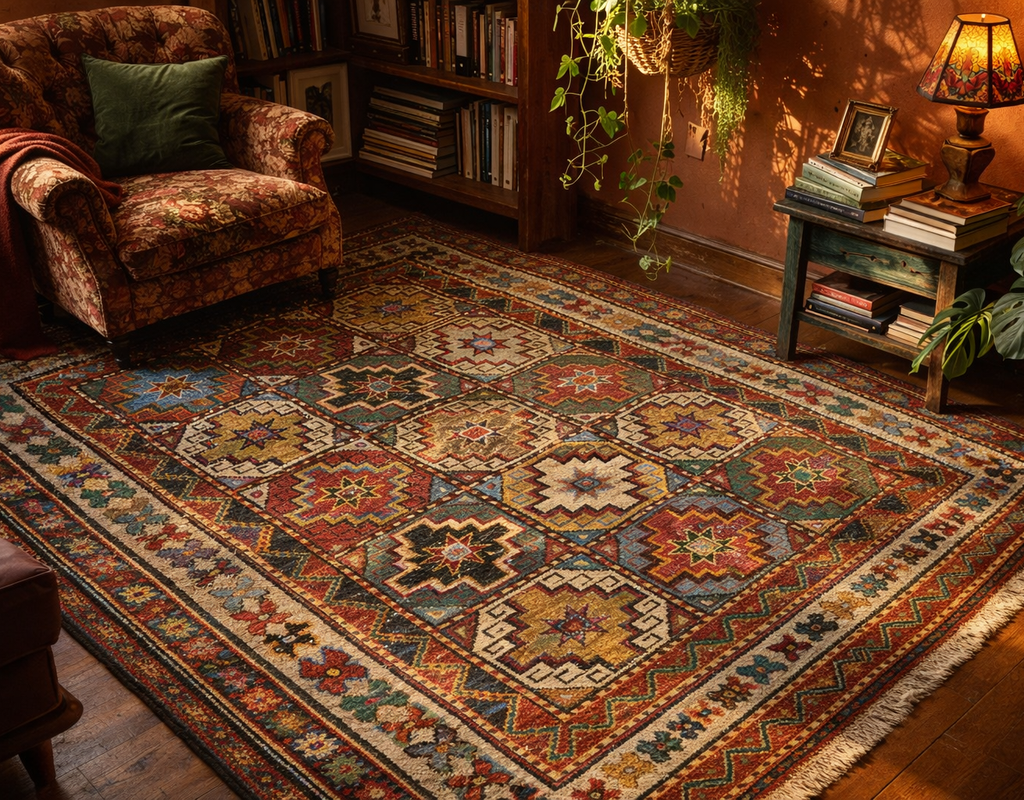
A traditional, multi-colored geometric rug adds depth and character to this richly decorated, dimly lit corner.
Defining Motifs & Geometric Medallions
- Star Motifs — Why: The star, often an eight-pointed form, symbolizes guidance and protection, making it one of the most recognizable Kazak rug patterns.
- Shield and Cross Forms — Why: Shields represent defense and strength, while crosses, especially in Armenian-woven pieces, embody Christian blessings.
- Hooked Diamonds — Why: These angular, repeating shapes convey continuity and protection, serving as one of the core tribal motifs in Kazak rugs.
- Eagles and Animals — Why: Birds of prey suggest power and spiritual guardianship, while stylized animals symbolize fertility and prosperity.
- Memling Guls — Why: Borrowed from Turkic design traditions, these repeating geometric medallions add rhythm and identity to Kazak weaving. Geometric medallions dominate: single bold centers, cruciform arrangements, or stacked sequences across the field. Their clarity makes them readable across a room, one of the hallmarks of a geometric medallion carpet.
Color Palettes: Differences from Persian Rugs
Kazak rugs are defined by strong contrasts of saturated reds, deep indigo blues, emerald greens, and golden yellows. These bold primaries create immediate visual impact. In contrast, Persian rugs often use curvilinear floral patterns with more blended or muted tones.
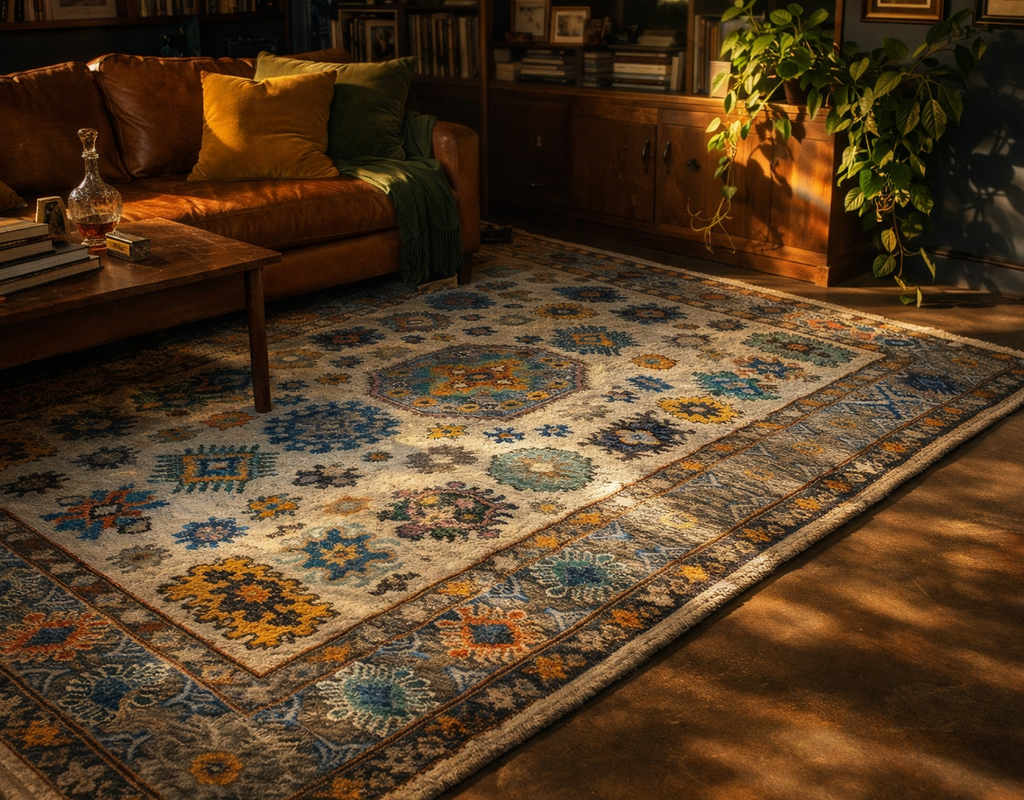
A colorful, modern-meets-traditional rug grounds the seating area in this warmly lit, richly textured den.
Antique Kazak Russia Knotted Rug – by Rugs On Net
Where a Persian carpet may create a garden-like subtlety, a Kazak rug asserts itself with simplicity and striking color clarity. This Kazak vs. Persian color distinction is one of the easiest ways to identify the style: Kazaks radiate energy and boldness, while Persians often suggest refinement and intricacy.
Typical Layouts: Medallions, Borders, Negative Space
The medallion layout is the defining structural choice in these woven rugs. Fields may feature a single central medallion, a cruciform arrangement, or a stack of repeated diamonds, always commanding the viewer’s eye.
Surrounding these are richly decorated borders—crenellated fences symbolizing protection, zigzags evoking water or movement, rosettes for fertility, and “running dog” or reciprocal motifs signifying continuity.
Equally important is the use of negative space: unlike many Persian rugs that fill every inch with floral detail, Kazaks use empty ground color boldly, giving motifs room to breathe and reinforcing their geometric power.
Symbolism & Storytelling in Patterns
Each Kazak rug encodes stories through its motifs. A shield design might signal defense for the household, while eagles communicate power and divine guardianship. Hooked diamonds and crosses carry layers of cultural meaning, ranging from protective talismans to Armenian Christian blessings. Animal motifs convey prosperity, protection, and kinship ties, linking the weaver’s family to the broader tribal community.
These stories were rarely written down; instead, they passed from one generation of weavers to the next, preserving local folklore in geometric clarity. To answer directly: Classic Kazak rugs are defined by geometric motifs such as stars, shields, hooked diamonds, and eagles. Medallion layouts are not just common but central identifiers of the style. Their colors differ from Persian rugs by favoring bold primaries and high-contrast simplicity rather than blended, floral subtleties.
Materials & Construction
Traditional Materials: Wool, Dyes, Foundation
The foundation of classic weaving of these rugs lies in its lustrous, lanolin-rich wool. Highland sheep from the Caucasus provided fiber with natural sheen and resilience, ideal for producing a thick, tactile pile. The wool pile rug structure is typically supported by a foundation of wool warps and wefts, though in some later pieces cotton warps were introduced. The warmth and softness of wool-on-wool construction gave antique Kazaks their prized feel and durability. Dyes were equally important: madder for red, indigo for blue, weld for yellow, and cochineal for deep crimson. These natural sources produced enduring hues that aged gracefully, creating the nuanced patina known as abrash.
Hand-Knotting Techniques
Every hand-knotted Caucasian carpet from the Kazak region was woven with the Turkish knot (Ghiordes knot). This symmetrical knot secures yarn ends firmly around the warp, contributing to the rug’s durability.
Knot counts in these carpets typically range from 30 to 80 knots per square inch (KPSI)—lower than city rugs like Isfahan rugs or Tabriz, but more than sufficient for the large-scale geometric designs that define the style. Multiple wefts, often dyed red, are packed between rows of knots, giving them their thickness, ribbed back texture, and distinctive drape. The sharpness of patterns in Kazak rugs comes not from high density but from bold, graphic drawing—proving that artistry, not knot count, defines their power.
Natural vs. Synthetic Fibers
- Wool — Why: Provides softness, sheen, and resilience; the signature material of Kazak rug weaving materials.
- Cotton — Why: Occasionally used in the warp for added tension, but less common in traditional weavings.
- Synthetic Fibers — Why: Modern reproductions sometimes use synthetics or blends to reduce cost; however, this diminishes tactile richness, softness, and long-term value.
Vegetable vs. Synthetic Dyes
- Vegetable Dyes — Why: Derived from natural plants and insects, they yield colors with depth and subtle variation. Over time, they fade gracefully, creating the prized abrash effect. 100% vegetable-dyed carpets are especially collectible.
- Synthetic Dyes — Why: Introduced in the early 20th century, aniline dyes offered convenience and bright tones, but many early synthetics were fugitive, fading unevenly. Today, high-quality synthetics are stable, but lack the organic warmth of vegetable dyes.
How Construction Affects Durability and Value
The combination of dense wool pile, Turkish knotting, and multiple wool wefts makes Kazak rugs remarkably durable, capable of withstanding heavy foot traffic for generations. Durability and tactile richness enhance value, while the use of vegetable dyes and all-wool construction increases collectability.
By contrast, rugs with synthetic fibers or overly chemical dyes, though more affordable, rarely achieve the same longevity or cultural authenticity. Knot density plays a role in valuation, but not in the same way as Persian city rugs: a moderate knot count paired with bold design is what gives Kazaks their visual power.
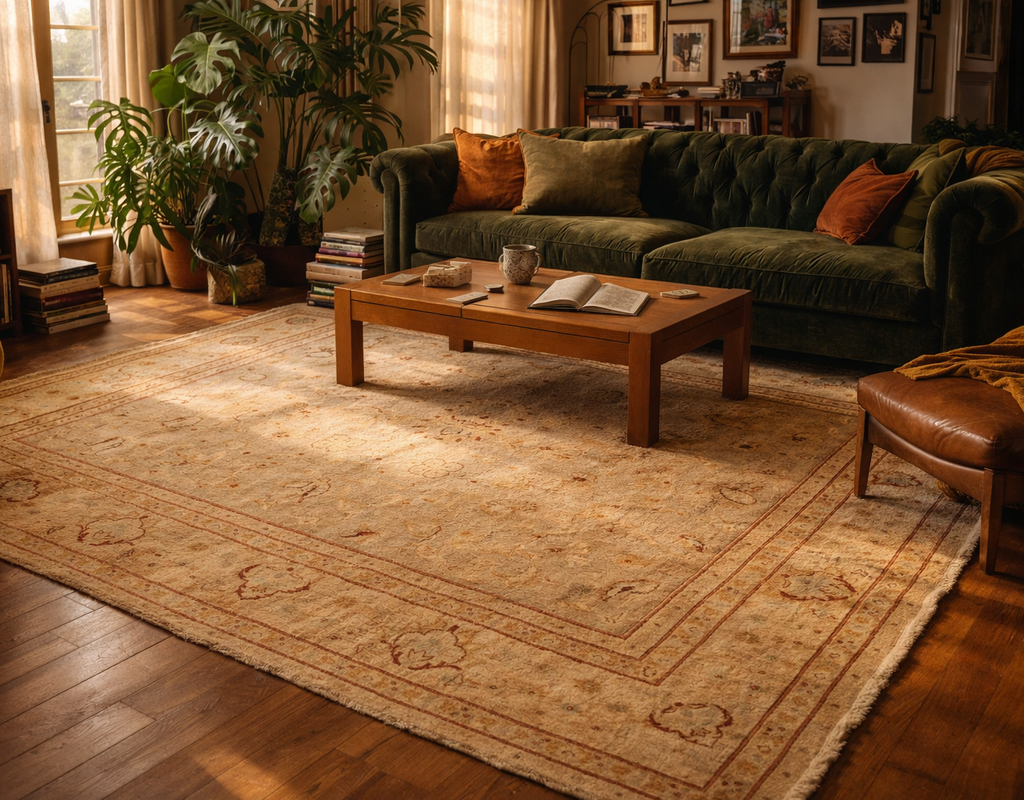
Sunlight illuminates the detailed patterning of the antique-style rug in this richly decorated reading nook.
Thus, value is tied less to density and more to authenticity, materials, and dye quality.
To answer directly: Kazak rug piles are traditionally wool; they are hand-knotted with the Turkish knot using wool warps, wefts, and pile. Vegetable dyes are still used in modern Kazaks, prized for their richness.
Synthetic fibers can reduce softness and long-term durability. Knot count does not sharpen patterns—bold geometric drawing does—but knot density still influences overall value when paired with authentic materials.
Regional Variations & Subtypes
Overview of Major Kazak Substyles
The umbrella term “Kazak” rug encompasses a range of regional subtypes, each reflecting the local preferences for color, layout, and motifs. These differences developed as weaving villages responded to geography, culture, and trade demand.
While boundaries between subtypes were never rigid—motifs flowed between regions—the names of these styles help collectors, dealers, and scholars identify key examples within the broader tradition of Caucasian rug subtypes.
Karachopf, Sewan, Fachralo, Bordjalou, Lori-Pambak, Others
- Caucasian Karachopf rugs — Characterized by green or teal fields with bold star-shaped medallions at the center. Their strength lies in balance between field color and powerful geometry.
- Caucasian Sewan (Shield Kazak) rugs — Known for its cruciform “shield” medallion set against vivid red grounds, often decorated with stylized floral or plant forms. This type is one of the most iconic and easily recognized.
- Caucasian Fachralo rugs — Distinctive for its Islamic prayer rug format: an arch-like design framing a central medallion, frequently in light blue or green fields. These rugs blend ritual use with decorative strength.
- Caucasian Bordjalou rugs — Rustic examples with brown, ivory, and blue fields, populated by simple geometric figures. Their more restrained palette makes them stand apart from other saturated Kazaks.
- Caucasian Lori-Pambak rugs — Features vertical strings of star medallions on red fields, woven with a finer weave that shows technical refinement alongside bold design.
- Other Types — Variations include pinwheel, hooked star, and specialized motifs like the cloudband and eagle designs, often associated with neighboring Karabagh traditions but collected under the Kazak label.
“Eagle” and “Cloudband” Kazaks
Among the most famous collectible forms are the so-called Eagle and Cloudband design rugs. Eagle rugs feature giant, stylized medallions interpreted as wings or eagle silhouettes, symbols of strength and guardianship. Cloudband rugs adopt the swirling cloud motif of Persian-Chinese origin, representing eternity and divine favor, adapted into the bold geometry of Caucasian weaving. Though many of these originated in nearby Karabagh, they are marketed as part of the Kazak design family because of their shared pile, color palette, and construction.
Regional variation demonstrates that these antique tribal Caucasian rugs were not uniform but richly diverse, with local workshops adding distinctive touches. To answer directly: The main types of Kazak rugs include Karachopf, Sewan, Fachralo, Bordjalou, and Lori-Pambak, along with motifs like eagle and cloudband designs. They differ by field color, medallion structure, and layout, reflecting the artistic preferences of their respective regions.
Evolution: Antique, Vintage, and Modern Kazaks
Key Historical Phases: Golden Age, Soviet Era, Modern Revival
These carpets of the 19th and early 20th centuries represent the Golden Age of this weaving tradition. These pieces were woven with hand-spun wool, natural vegetable dyes, and bold tribal motifs, embodying the authentic folk art of the Caucasus.
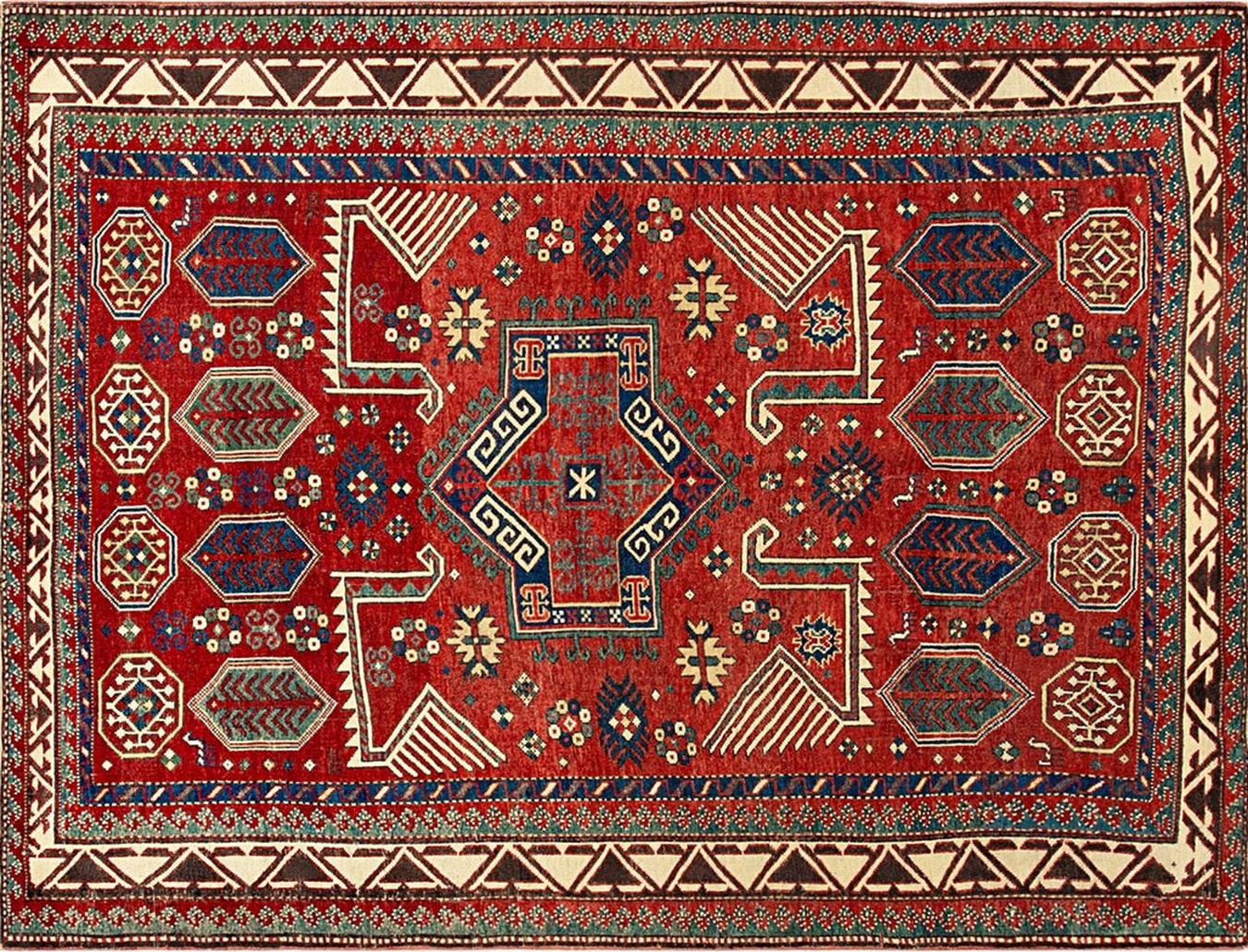
During the Soviet era, weaving declined in quality as collectivization and industrial demands led to the use of synthetic dyes, cotton foundations, and simplified designs. Yet the tradition did not vanish.
In recent decades, a modern revival has emerged, led by Afghan, Pakistani, and Armenian workshops that consciously replicate antique aesthetics, often returning to hand-spun wool and natural dyes.
How Vintage Kazaks Differ from Modern Reproductions
- Materials — Why: Vintage Caucasian rugs often used a mix of wool and cotton with synthetic dyes, while modern reproductions favor wool-on-wool with natural dyes to recreate authenticity.
- Durability — Why: Antique and early vintage examples were tightly knotted with lustrous wool, while mid-20th-century versions sometimes sacrificed quality under industrial pressures.
- Color & Dyes — Why: Older pieces reveal nuanced vegetable-dye tones and graceful fading (abrash), whereas many modern reproductions have brighter, more uniform color from controlled dyeing.
- Patina — Why: The aged surface of an antique example, developed through decades of use, cannot be replicated in new rugs, giving antiques their distinctive character and higher collectible value.
Are Contemporary Weavers Preserving Tradition?
Yes. Today’s Afghan and Armenian workshops are among the most faithful preservers of the tradition. They hand-knot rugs with Turkish knots, wool piles, and vegetable dyes, closely echoing the originals.
By reviving medallion layouts, shield motifs, and strong red-blue-green palettes, they ensure that modern reproductions are not mere imitations but deliberate continuations of the art form. Pakistani and Caucasian initiatives also participate in this revival, though the highest quality examples tend to come from Afghan looms.
Kazaks Today: Afghan & International Production
Modern variations of the designs are predominantly woven in Afghanistan, where skilled artisans create carpets that honor antique designs while serving contemporary markets. Afghan workshops focus on quality, producing rugs with wool-on-wool construction and natural dyes that mimic the look of 19th-century originals.
Production also continues in Pakistan and Armenia, and there are revivalist efforts in the South Caucasus itself, though on a smaller scale. These international workshops keep the style alive, ensuring that these carpets remain one of the most recognizable tribal rug traditions worldwide.
To answer directly: Vintage rugs of these examples and versions differ from reproductions in materials, dyes, and patina—antiques and early vintage examples carry authenticity and natural aging that modern rugs cannot replicate.
Contemporary weavers, particularly in Afghan and Armenian workshops, are indeed preserving traditional techniques through wool-on-wool construction and vegetable dyes.
Buying Guide: Kazak Rugs in the Modern Market
Should I Choose Antique or Modern?
- Antique — Why: Collectible and historically significant, with authentic vegetable dyes, hand-spun wool, and patina that modern rugs cannot replicate. However, they are rare, expensive, and require careful preservation.
- Modern — Why: Handmade (often in Afghanistan), durable, and more affordable. They replicate the look of antiques while offering strength for daily use. Ideal for buyers seeking to purchase area rugs that are durable and handmade without the fragility of antiques.
What Influences Price?
Several factors shape the Kazak rug price:
- Age and Authenticity: Antique Caucasian rugs for sale command the highest values.
- Condition: Wear, restoration, and dye preservation directly affect market worth.
- Knot Density: Higher knot counts add technical value, but in Kazaks, design scale and authenticity matter more than sheer density.
- Color and Dyes: Vegetable-dyed pieces are more collectible than synthetic-dyed examples.
- Provenance and Rarity: Rugs tied to named subtypes (e.g., Sewan, Fachralo) fetch premium prices.
- Size: Larger pieces multiply cost exponentially compared to small rugs.
Typical Prices for 5×7 Kazaks
A new 5×7 Kazak woven in Afghanistan or Pakistan typically ranges from $800 to $2,500+, depending on material quality and dyes.
By contrast, a 19th-century antique 5×7 Kazak can command $3,000 to $15,000 or more, especially if it features rare designs like shield medallions or eagle motifs.
Where to Buy Authentic Kazak Rugs Online
- Specialty Rug Dealers — Why: Offer vetted collections with guarantees of authenticity.
- Major Online Galleries — Why: Curated selections of both antique and modern rugs with professional photography and provenance notes.
- Auction Houses (Sotheby’s, Christie’s, regional sales) — Why: Best source for high-end antique Caucasian rugs for sale, though buyer premiums apply.
- Trusted E-commerce Platforms — Why: Some retailers carry Afghan designed rugs that balance price and authenticity, though due diligence is essential. For buyers seeking to shop for these area rugs online, reputation and transparency are critical—avoid sellers without detailed origin, material, and dye information.
Auction Trends & Collector Insights
Auction records show steady demand for antique Kazaks, especially 19th-century examples with strong colors and bold medallions. Prices have climbed in the past two decades, with elite pieces fetching five-figure sums.
Collectors value authenticity, originality of dyes, and minimal restoration. Modern Kazaks rarely appear in auctions but dominate retail and online markets.
Are Modern Kazaks Suitable for Minimalist Interiors?
Yes. While often associated with tribal or eclectic styles, modern Kazaks fit minimalist interiors by serving as bold focal points against neutral surroundings.
Their strong reds, blues, and geometric medallions introduce visual energy, grounding simplicity with character.
Care, Longevity & Durability Tips
- Use Rug Pads — Why: Prevent slipping, protect edges, and extend rug life.
- Rotate Periodically — Why: Ensures even wear and light exposure.
- Vacuum Gently — Why: Removes dust without pulling fibers.
- Avoid Harsh Sunlight — Why: Prevents premature fading, even with vegetable dyes.
- Professional Cleaning — Why: Every 3–5 years maintains wool quality and dye brilliance.
To answer directly: For durability, modern Kazaks are the better choice; antiques excel in cultural and collectible value. A 5×7 modern Kazak averages $800–$2,500, while antiques may exceed $15,000. Authentic Kazaks can be bought online via specialty dealers, major galleries, or auctions. Knot density influences value, but authenticity and dye quality matter more. Modern Kazaks also work beautifully in minimalist spaces, adding bold geometry to clean interiors.
Cultural Legacy & Global Influence
Kazak Rugs in Art, Museums, and Decor
Kazak rugs occupy a place not only in homes but also in the world’s leading collections. Institutions such as the Metropolitan Museum of Art, the Victoria and Albert Museum, and regional Caucasian cultural centers display antique museum Kazak carpets as both decorative textiles and ethnographic records.
Their bold medallions, saturated colors, and tribal motifs ensure they are regarded as Caucasian art rugs, merging folk tradition with high art. In interior design, Kazak rugs continue to be used as statement pieces, anchoring both traditional and contemporary rooms with visual strength.
Ongoing Heritage Debates
Because weaving flourished in villages shared by Armenians, Azeris, and Georgians, questions of origin are deeply debated. Kazak rug heritage is claimed by multiple communities, each emphasizing their contribution to the motifs, dyes, and structures of these carpets.
Armenian weavers are especially noted for their Christian symbols and inscriptions, while Azerbaijani and Georgian traditions also left strong imprints. Today, most scholars view Kazak weaving as a shared Caucasian achievement, born of cultural overlap and exchange rather than exclusive ownership.
The Enduring Appeal of Kazak Design
The timeless appeal of Kazak carpets lies in their clarity of design and universality of symbolism. Their bold red and blue fields, cruciform medallions, and protective motifs transcend local origin, resonating globally as expressions of strength, faith, and artistry. Modern weavers in Afghanistan, Pakistan, and Armenia continue to adapt these Kazak pattern influences into new rugs, textiles, and fashion.
Designers and collectors value Kazaks as both functional art and cultural artifacts, ensuring their legacy remains alive. To answer directly: Kazak rugs today are viewed as enduring symbols of Caucasian folk art and global design icons. They hold a dual role—celebrated in museums as cultural treasures and embraced in décor as powerful, timeless design statements.
Explore a Few of Our Favorite Kazak Rugs
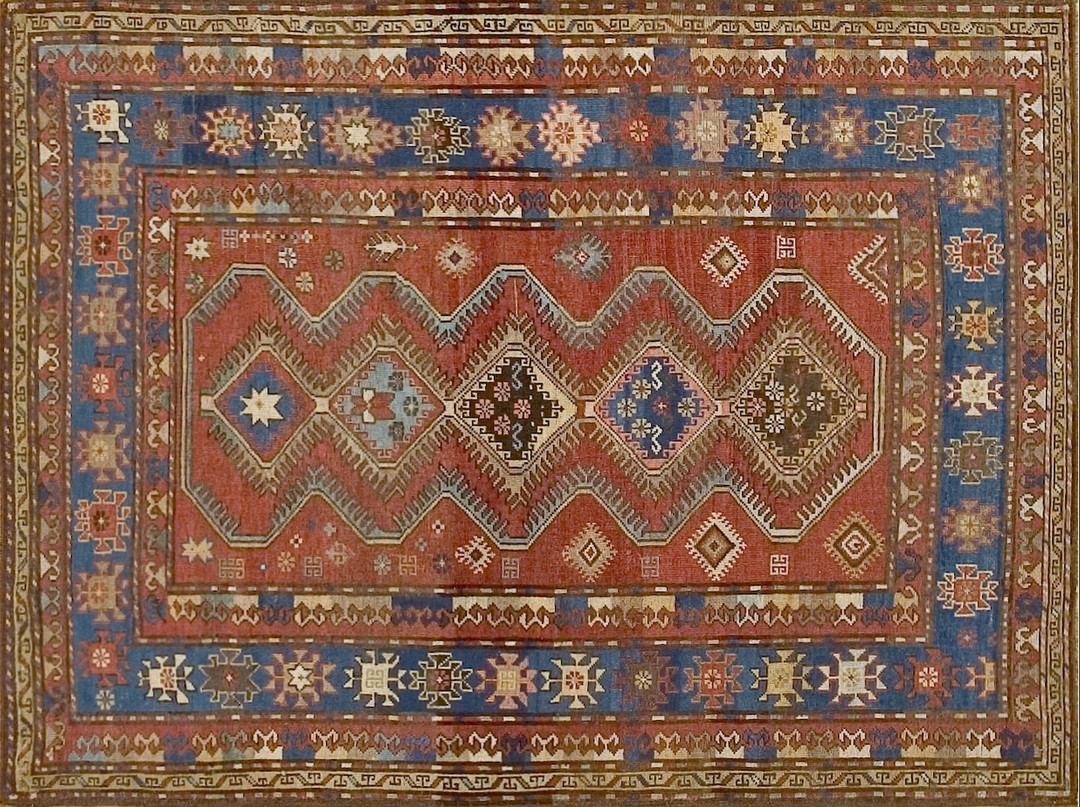
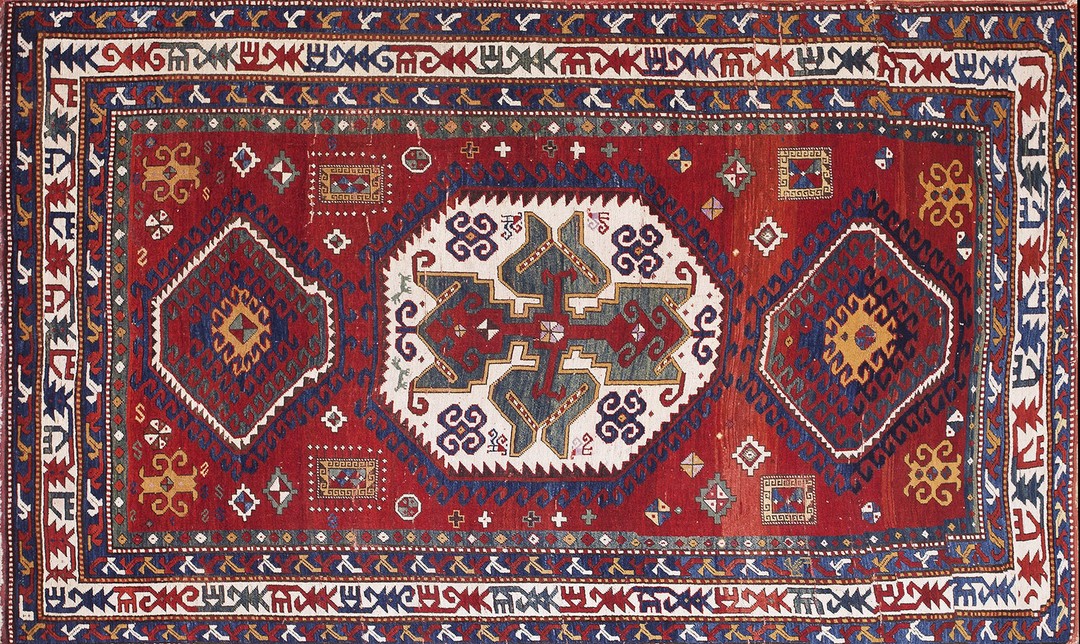
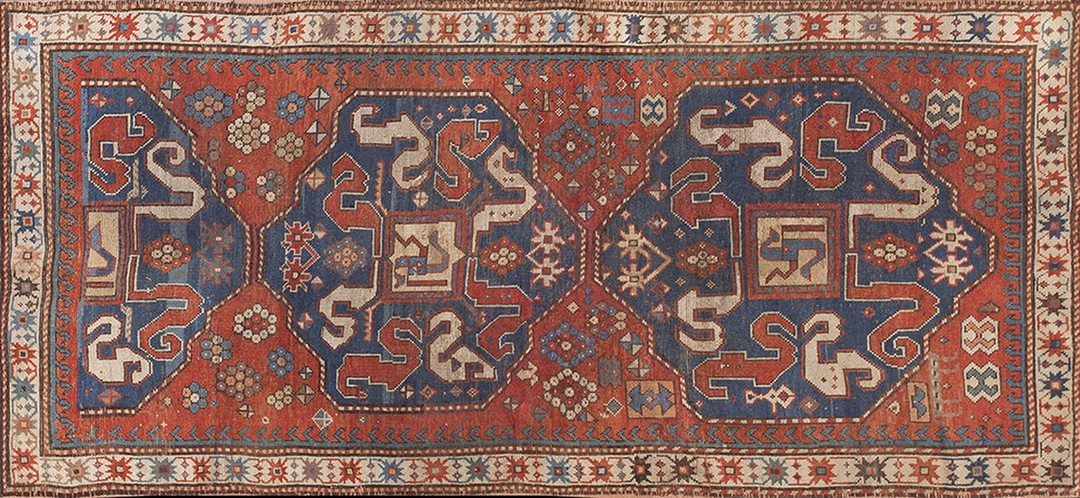
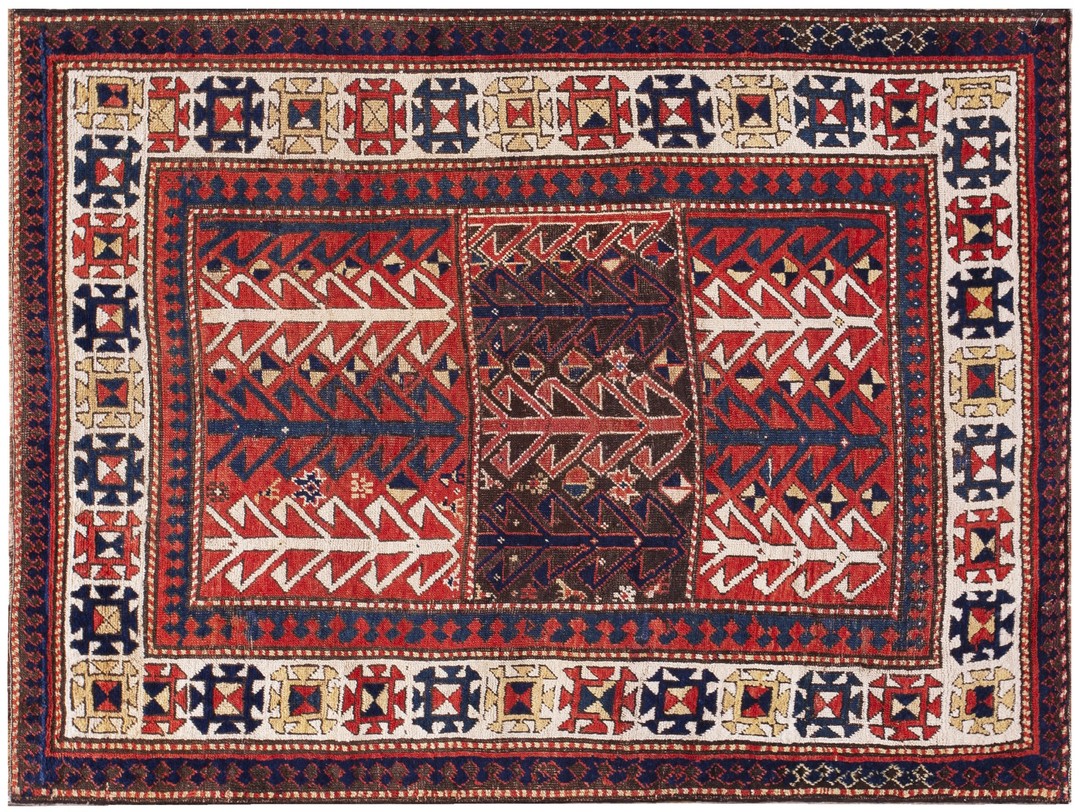
FAQ
- Where should I buy Kazak rugs in the U.S., and what policies matter?
Shop reputable rug galleries or specialists with in-home trials, written descriptions (fiber, knotting, origin), and return windows (e.g., 7–14 days). Ask for back photos and cleaning guidance.
- How can I verify that Kazak rugs are hand-knotted?
Flip the rug: the back mirrors the front with visible knots, and fringe should be the rug’s warp (not sewn on). Slight irregularities signal handwork, not machine manufacture.
- How much do Kazak rugs cost?
Modern Kazak rugs often range from a few hundred dollars for small mats to \~\$2,000–\$4,000 for 8×10. Antique Kazak rugs vary widely, from low thousands to \$10,000+ depending on rarity.
- How do Kazak rugs compare to Heriz rugs?
Both are robust and geometric. Heriz rugs (NW Iran) feature a large central medallion with angular florals and thicker feel; Kazak rugs skew to stacked medallions and sharper tribal symbols.
- How do Kazak rugs compare to Oushak rugs?
Kazak rugs are geometric, saturated, and crisper; Oushak rugs favor large-scale floral motifs and softer, muted palettes. Oushaks often feel airier; Kazaks read bolder and more graphic.
- How dense are Kazak rugs (knots per square inch)?
Many Kazak rugs fall roughly around 40–120 KPSI, balancing durability and bold geometry; finer “Super Kazak” pieces can exceed that range for sharper detail.
- What does “Super Kazak” mean?
“Super Kazak” usually denotes finer, brighter modern Kazak rugs with higher knot counts and crisp pattern clarity, commonly woven in Afghanistan or Pakistan with hand-spun wool.
- What sizes do Kazak rugs come in?
Antique Kazak rugs are often small to mid-size (many under \~6×10). Modern Kazak rugs are available in runners, 3×5/4×6, and room sizes like 8×10 and 9×12.
- Are Kazak rugs suitable outdoors?
No—wool Kazak rugs absorb moisture and can mildew or fade in sun. Reserve them for indoors or covered spaces; use outdoor-rated synthetics outside.
- Can I use Kazak rugs over radiant-heated floors?
Typically yes—wool conducts heat well. Choose low pile and breathable pads, keep total “tog” low (≈1–2), and follow your floor system’s max-temperature guidelines to avoid hot spots.
- Are Kazak rugs good under dining tables?
Yes—low/medium-pile Kazak rugs slide chairs easily and their patterns hide crumbs and scuffs. Size so chairs stay on the rug when pulled out (usually table size plus 24 inches all around).
- What rug pad is best under Kazak rugs?
Use a felt-and-rubber pad slightly smaller than the rug to add cushion, prevent slips, and reduce wear. Aim for \~1/8–1/4 inch thickness on hard floors to maintain stability.
- Can Kazak rugs bleed color?
Some natural and saturated dyes can bleed if over-wet or exposed to high-pH products. Always color-test an inconspicuous area and keep cleaning minimal; professionals can stabilize fugitive dyes.
- How should I clean spills on Kazak rugs?
Blot immediately with white towels, then lightly dab with cool water and a wool-safe detergent. Avoid scrubbing and high-pH cleaners; for stains or overall wash, use a rug professional.
- Do Kazak rugs shed?
New Kazak rugs may shed lightly for a few weeks to months as loose fibers release. Regular vacuuming (suction-only, no beater bar) helps; quality hand-knotted wool settles with time.
- Are Kazak rugs good with kids and pets?
Generally, yes—wool in Kazak rugs resists soiling and bounces back. Promptly blot pet accidents to prevent odor or dye issues, and choose mid-tone patterns to disguise everyday messes.
- Are Kazak rugs durable for high-traffic areas?
Yes. Kazak rugs’ tight wool pile and geometric, busy patterns hide wear well. With a quality pad and rotation every 6–12 months, they handle entryways, living rooms, and halls.
- How can I tell an antique Kazak rug from a newer one?
Antique Kazak rugs often have wool warps/wefts and smaller sizes, while later examples commonly use cotton warps and simplified patterns. Look for age-consistent wear and natural-dye abrash.
- Are modern Kazak rugs still handmade?
Yes—most modern Kazak rugs are hand-knotted by Afghan or Pakistani artisans, often marketed as “Super Kazak,” using hand-spun wool and low to medium pile for daily living.
- What colors do Kazak rugs usually have?
Kazak rugs favor saturated madder red, indigo/navy, ivory/cream, and accents of green, yellow, or apricot. Vegetable-dyed examples show lively abrash; modern pieces may use natural or synthetic dyes.
- What motifs define Kazak rugs?
Classic Kazak rugs feature octagonal medallions, hooked polygons, latch-hooks, ram’s-horns, stars, and cruciforms. Borders are busy and geometric, with rosettes and running “leaf-and-calyx” patterns.
- What materials are used in Kazak rugs?
Kazak rugs typically use hand-spun sheep’s wool for pile, prized for resilience and natural lanolin. Modern pieces often use Ghazni wool; foundations may be wool (older) or cotton (newer).
- How are Kazak rugs constructed?
Most Kazak rugs are hand-knotted wool pile on wool or cotton foundations, often using the symmetrical Turkish (Ghiordes) knot. Expect a sturdy, moderately coarse weave designed for everyday use.
- Where do Kazak rugs come from?
Historically, Kazak rugs originated around the Qazax/Kazak district of the South Caucasus (western Azerbaijan, northern Armenia, southern Georgia). Today, many “Kazak” pieces are woven in Afghanistan and Pakistan in the same style.
- What are Kazak rugs?
Kazak rugs are hand-knotted Caucasian-style wool carpets known for bold geometric medallions and saturated reds, blues, ivories, and greens. They’re durable village weaves with tribal motifs like stars, crosses, and ram’s-horns.