
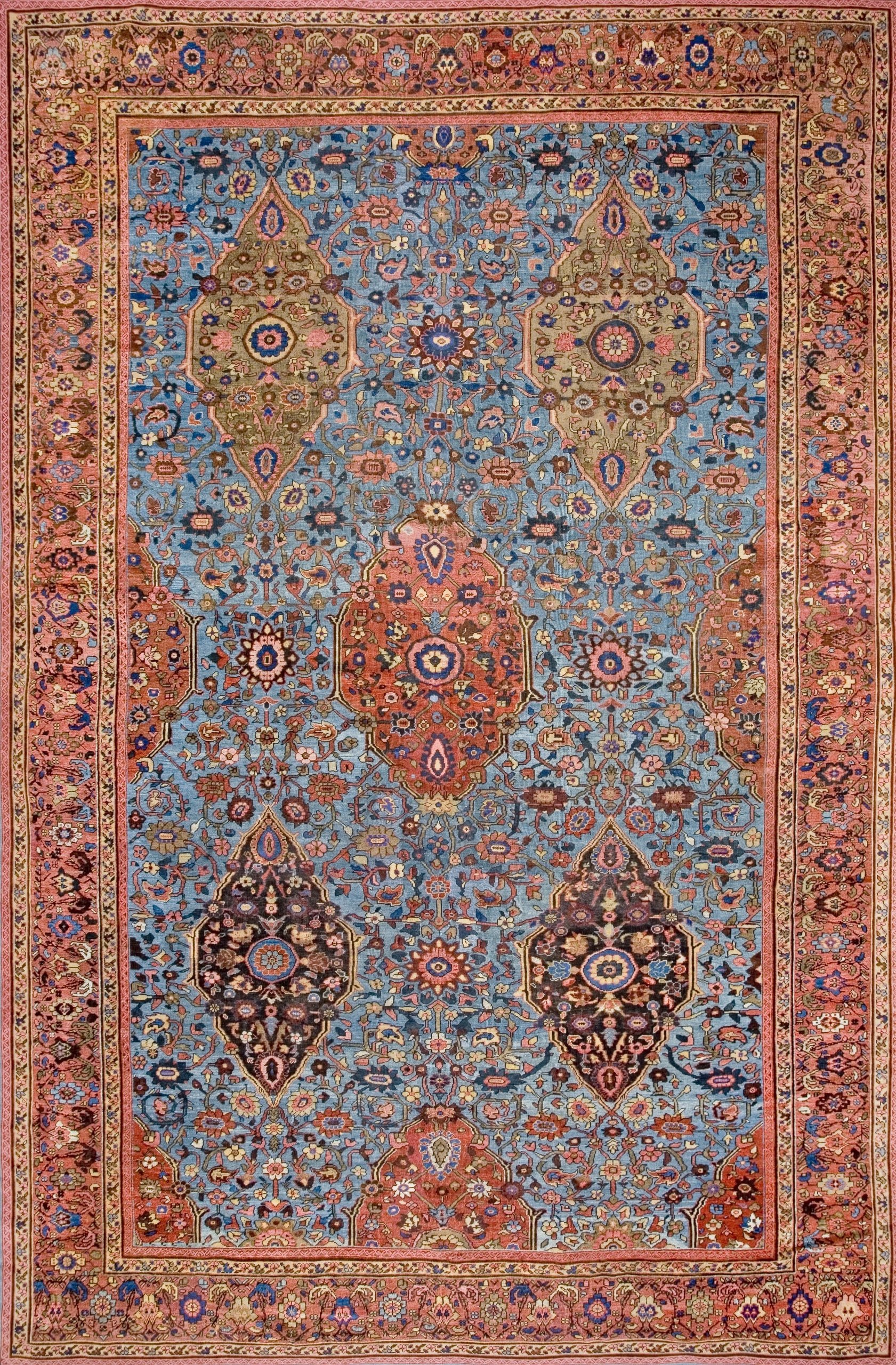
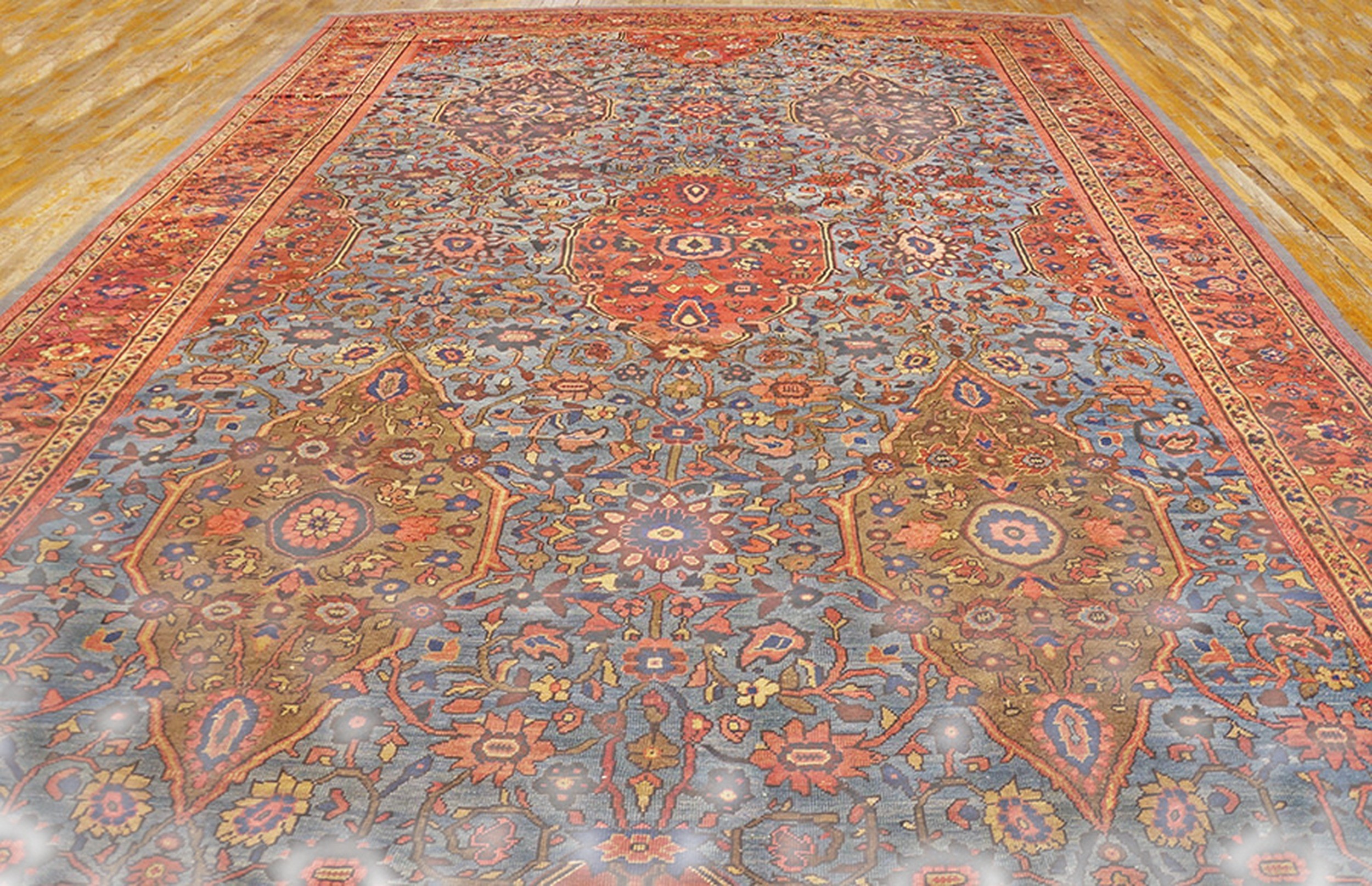
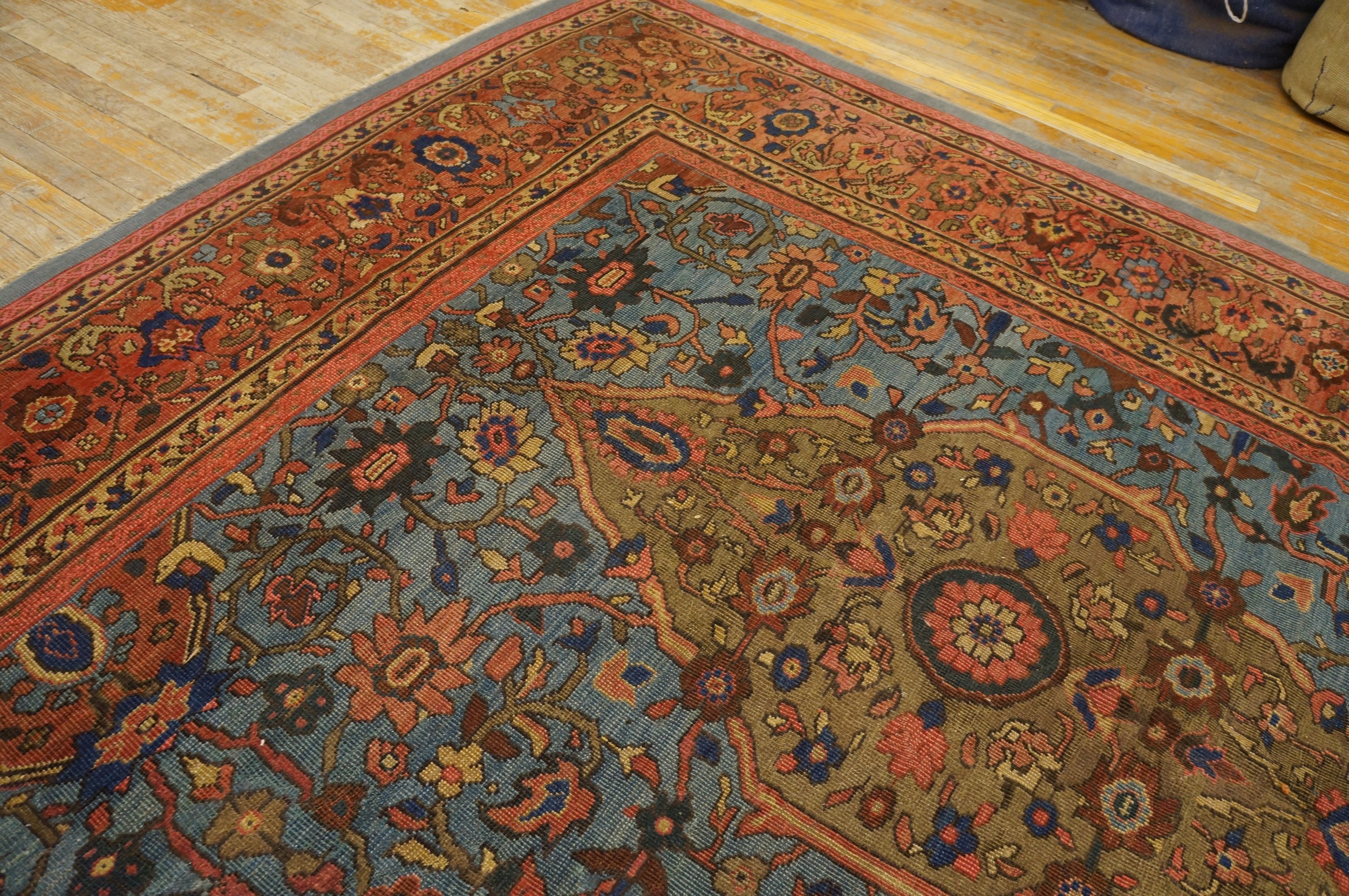
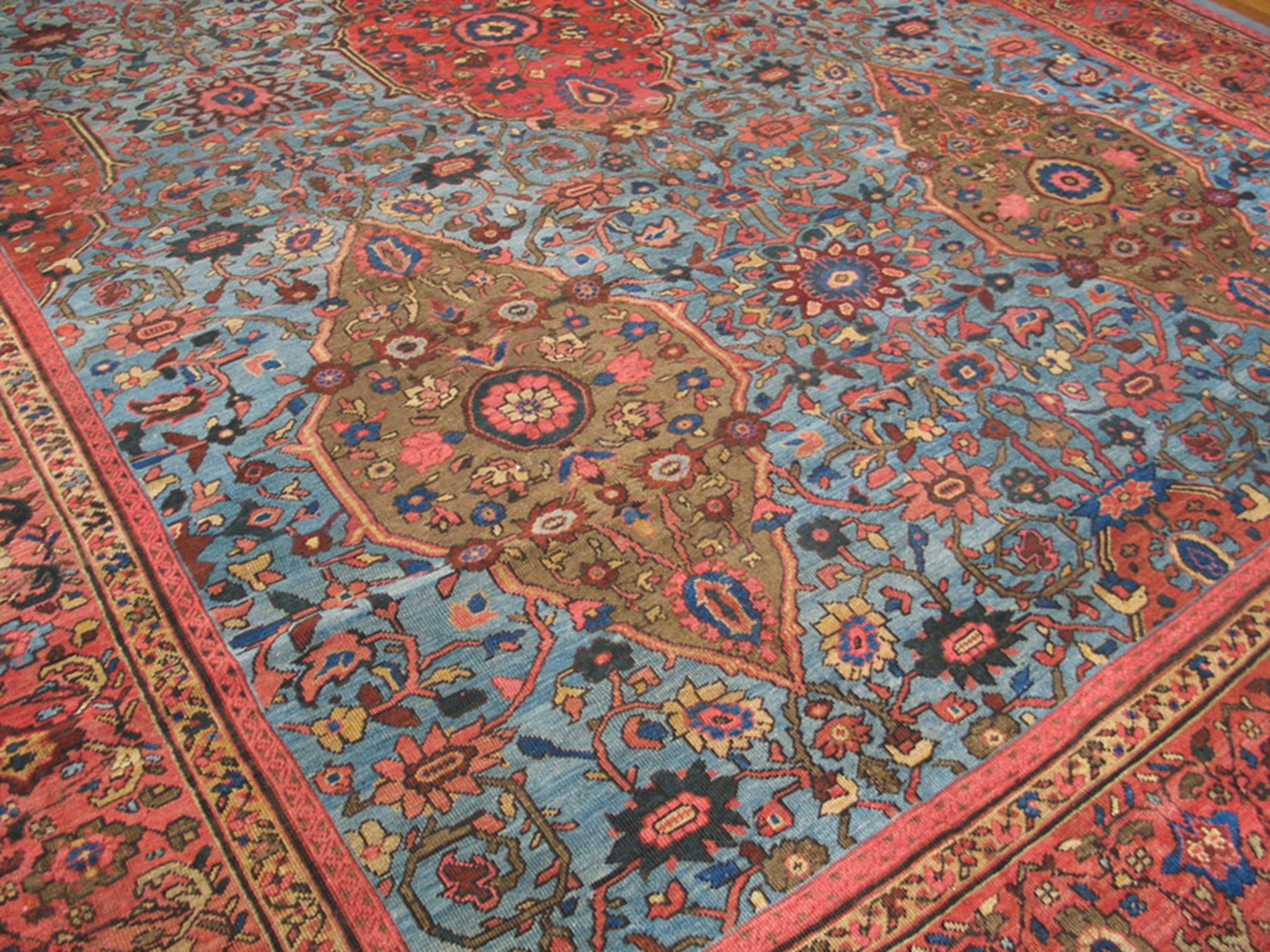
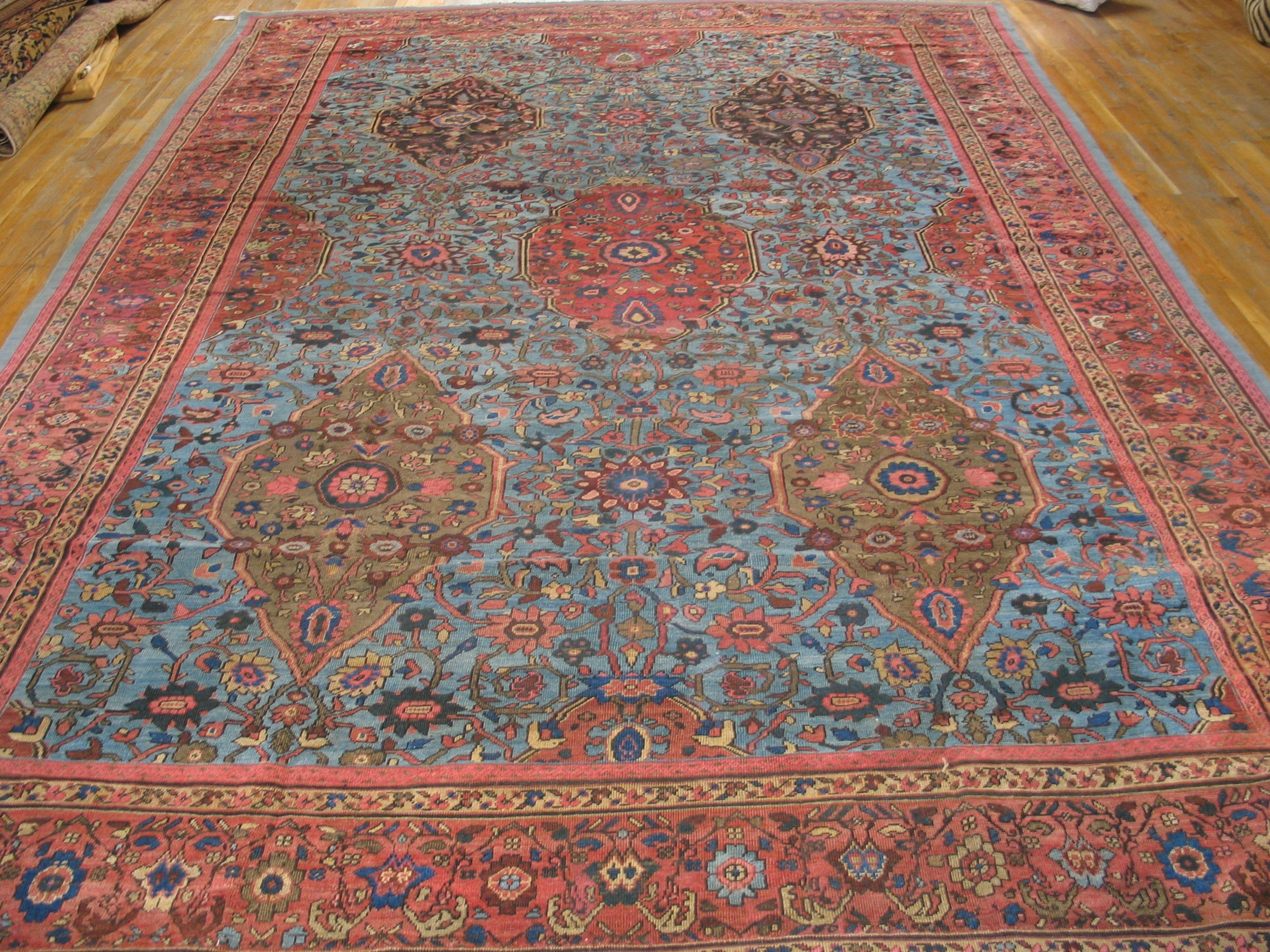
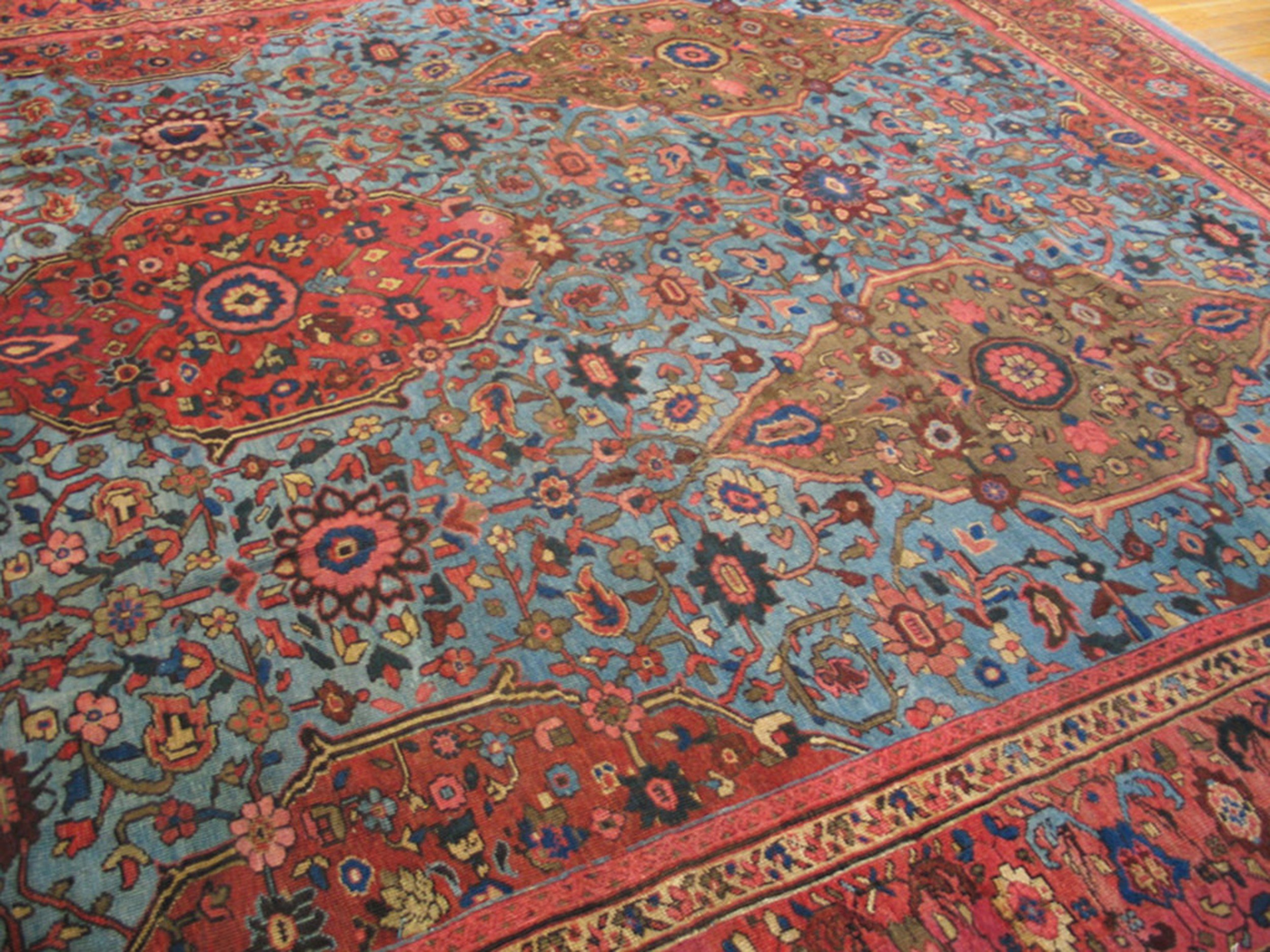
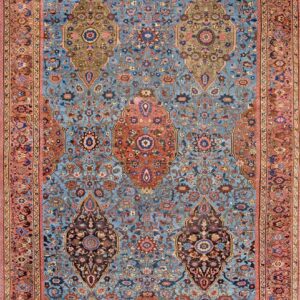
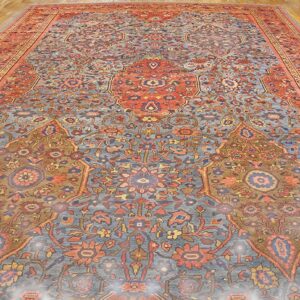
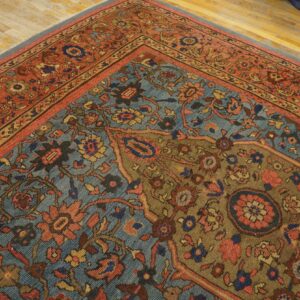
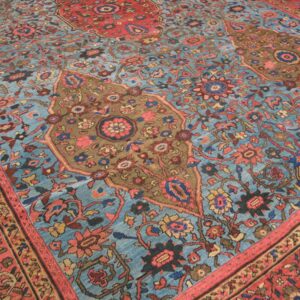
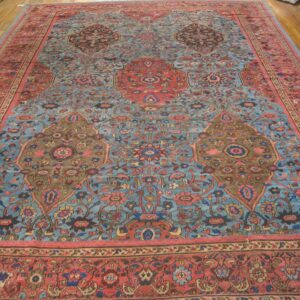
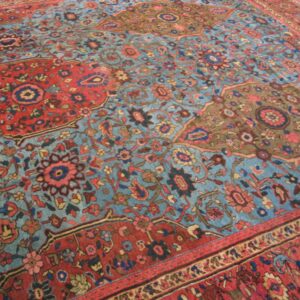
This nineteenth-century Persian Sultanabad carpet is a rare and ethereal example of the “Ziegler” era of weaving, distinguished by its exceptionally fine weave and a breathtaking happy sky-blue field. While the Sultanabad district (modern-day Arak) is traditionally associated with bold, rustic palettes and large-scale tribal motifs, this specific specimen represents the height of the late 19th-century refinement. During this period, the Anglo-Swiss firm Ziegler & Co. revolutionized the local industry by commissioning rugs that blended the rugged, soulful character of Persian village art with a more sophisticated, “breathable” aesthetic tailored for the grand manor houses of Europe. The choice of a “sky blue” ground is a mark of extreme rarity; achieved through a precise and delicate fermentation of indigo, this hue was intended to bring a sense of light and celestial airiness to the often-heavy Victorian interiors of the time.
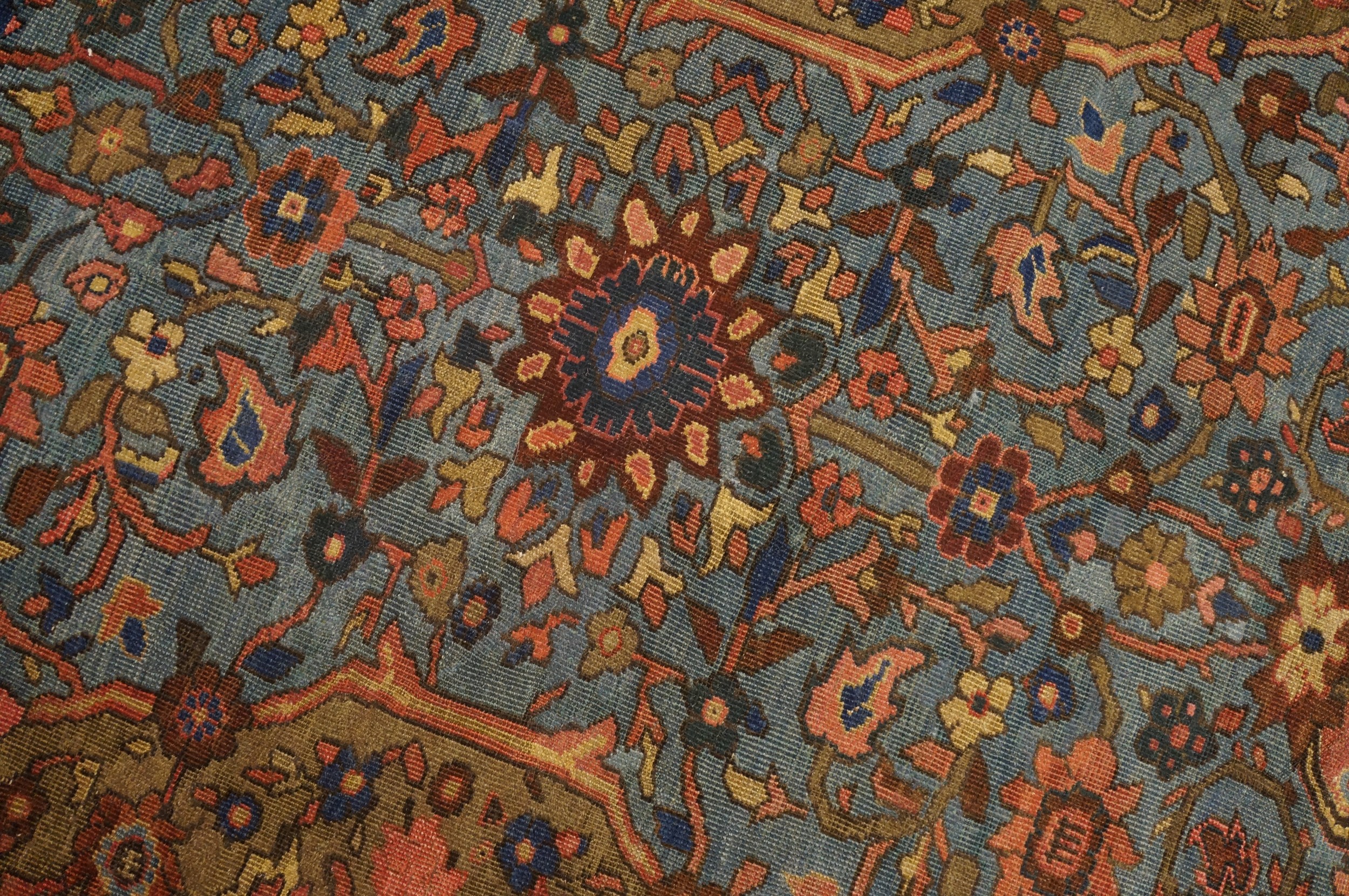
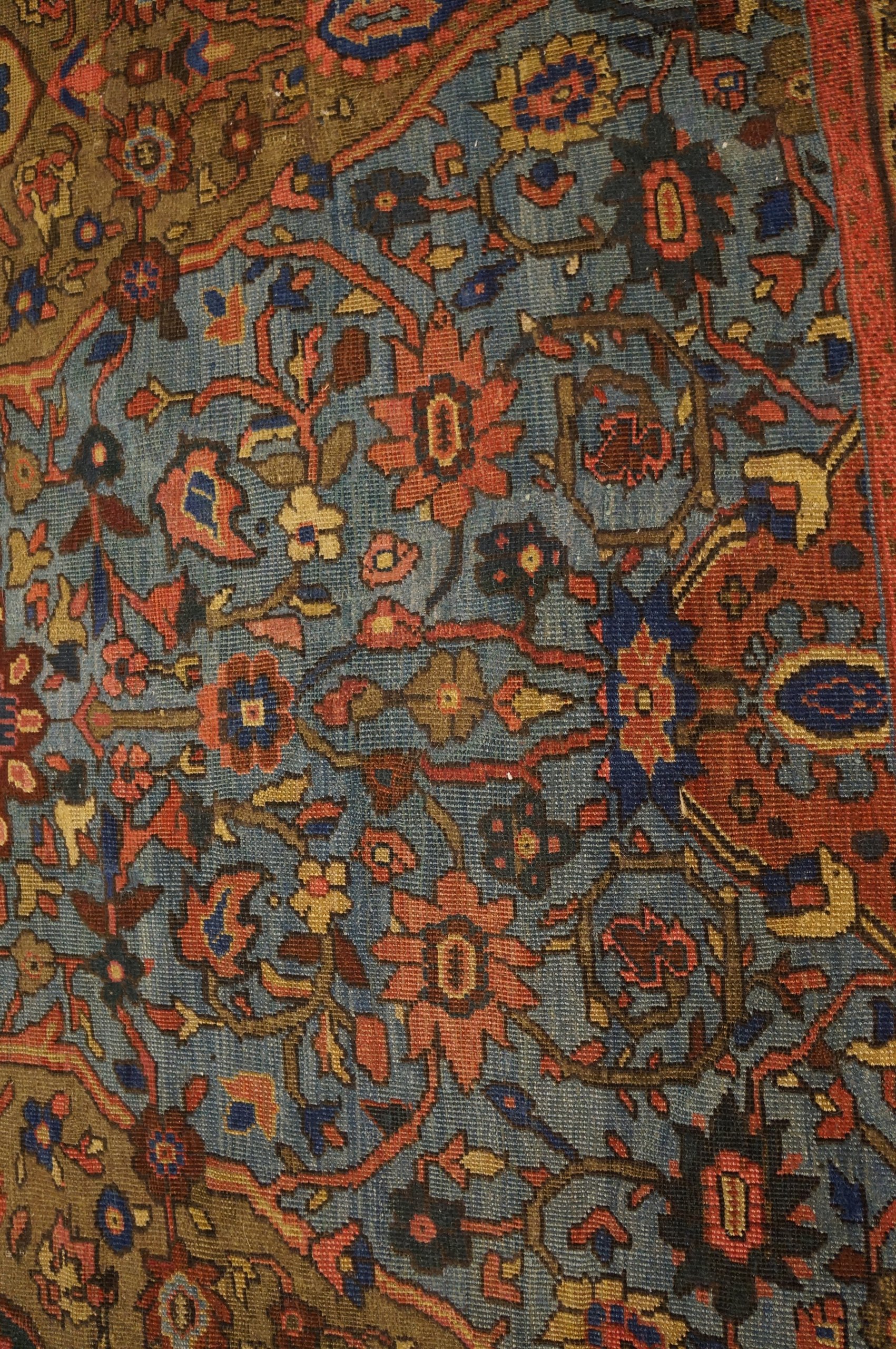
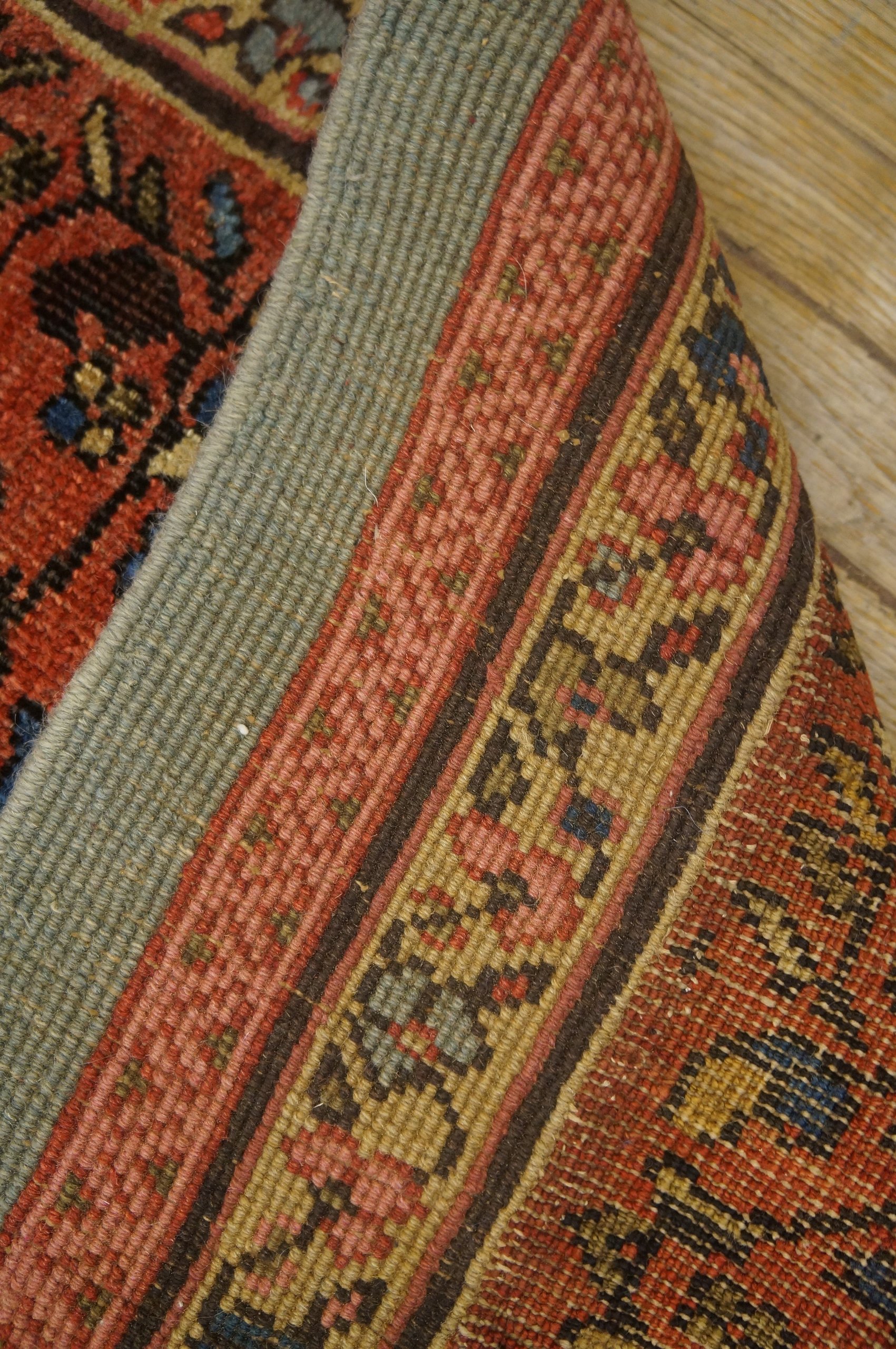
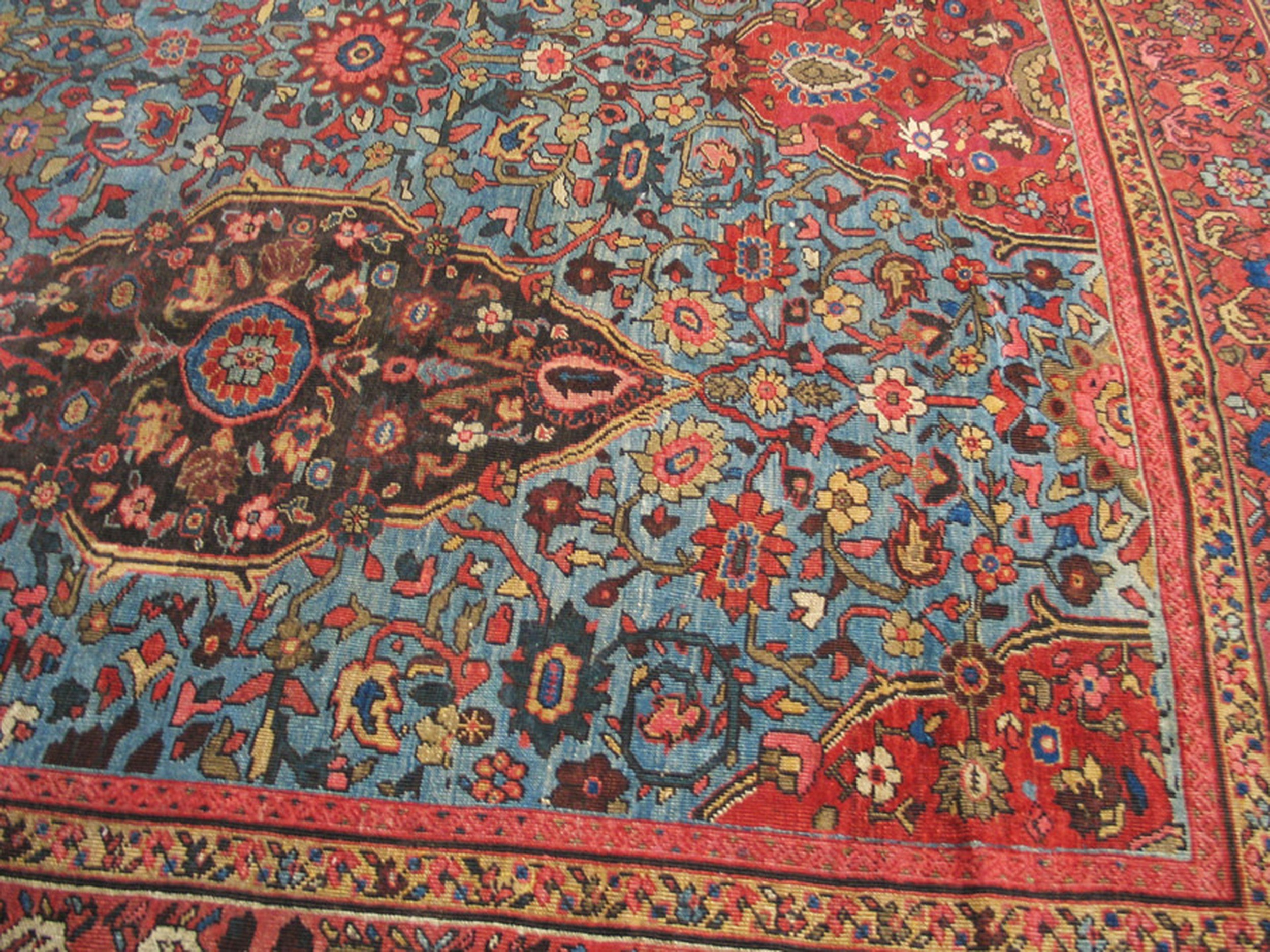
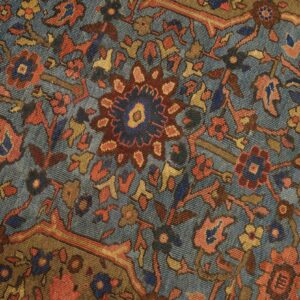
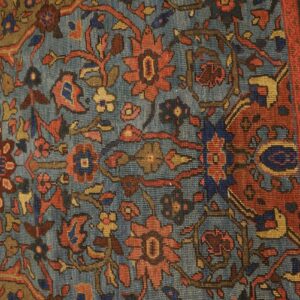
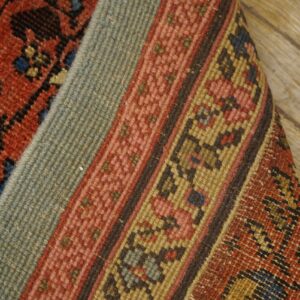
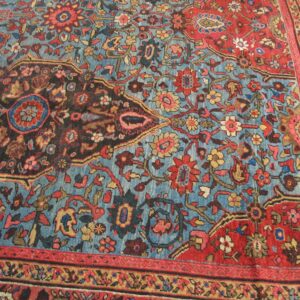
The design features a sprawling, “all-over” floral arrangement that eschews the rigid constraints of a central medallion, a stylistic hallmark of the Sultanabad tradition. This layout allows the large-scale palmettes and scrolling “vine-scroll” motifs to float gracefully across the blue expanse, creating a rhythmic, organic energy that feels both ancient and surprisingly modern. Unlike many of its more rugged contemporaries, this carpet boasts a “fine weave,” indicating it was likely a prestige commission produced by the region’s most skilled artisans. The wool is hand-spun and high in natural lanolin, which gives the sky-blue field a luminous, silken quality and a sophisticated abrash—the subtle, horizontal tonal shifts that characterize the most desirable antique vegetable-dyed textiles.
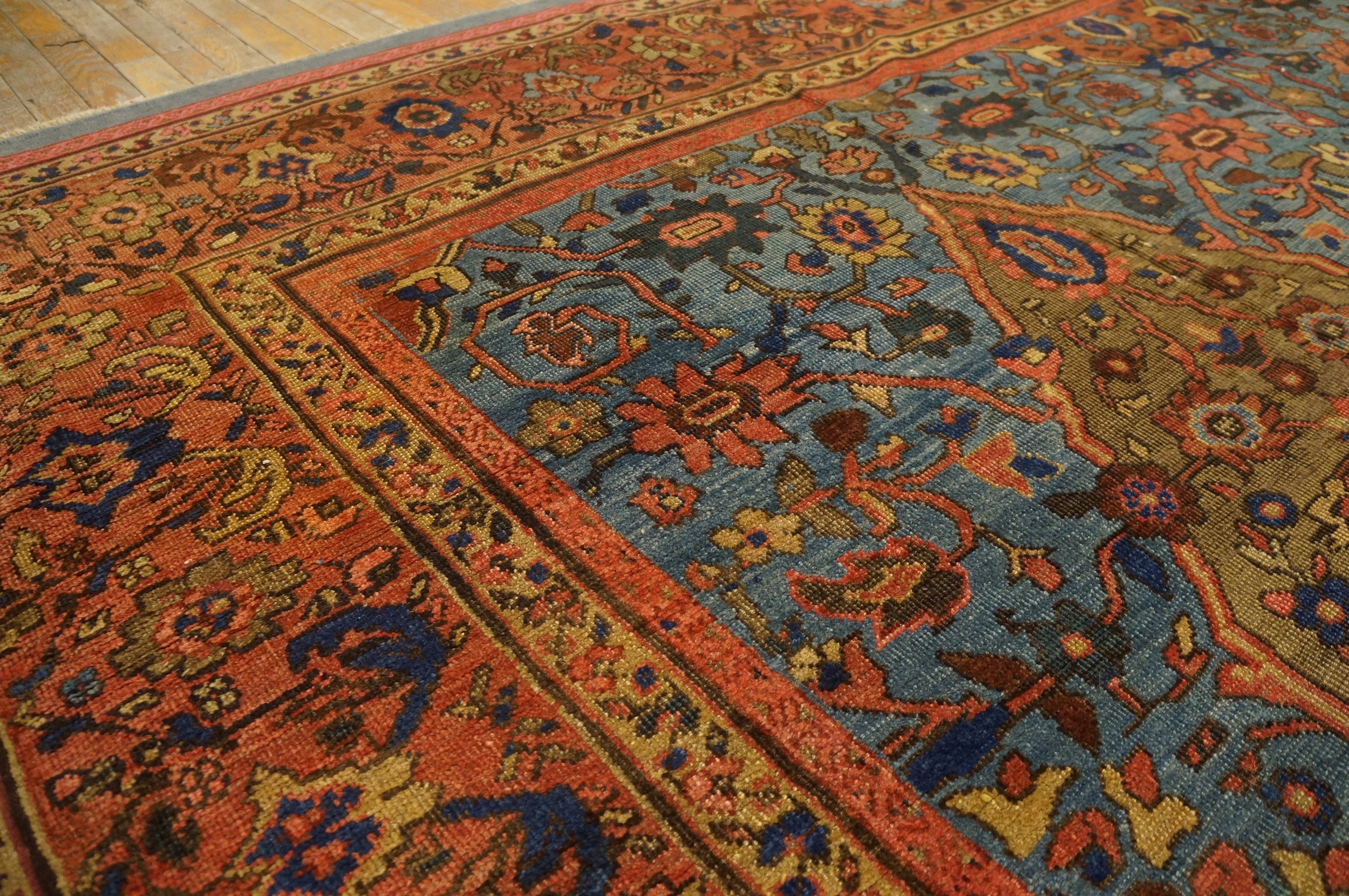
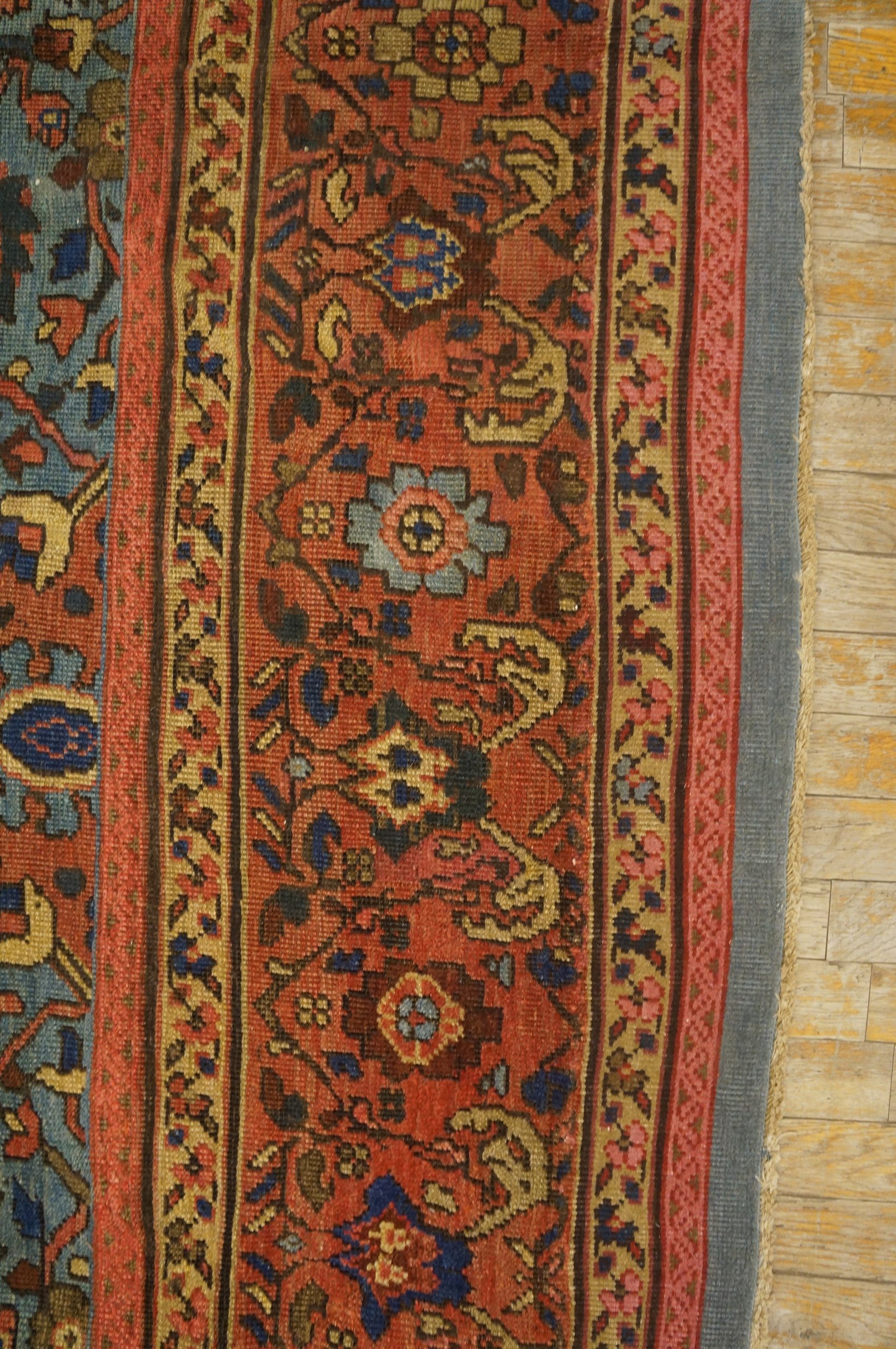
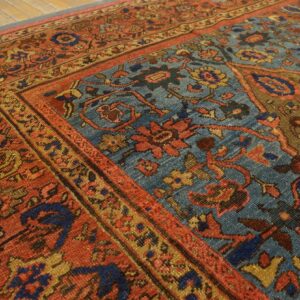
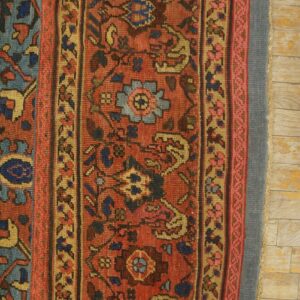
Historically, the antique Persian rugs from Sultanabad, in this specific colorway and level of fineness, were the “architect’s choice” for the most prestigious global commissions, favored for their ability to harmonize with both neoclassical architecture and more minimalist decorative movements. The borders act as a structural frame, utilizing a series of delicate guards and a primary border of repeating floral rosettes that ground the expansive energy of the central field. This carpet is more than a decorative object; it is a historical bridge between the tribal heritage of the Persian plateau and the refined sensibilities of the 19th-century international elite. To possess a fine-weave Sultanabad in this rare celestial blue is to hold a masterpiece of textile diplomacy—a work that represents a perfect synthesis of light, color, and enduring craftsmanship.