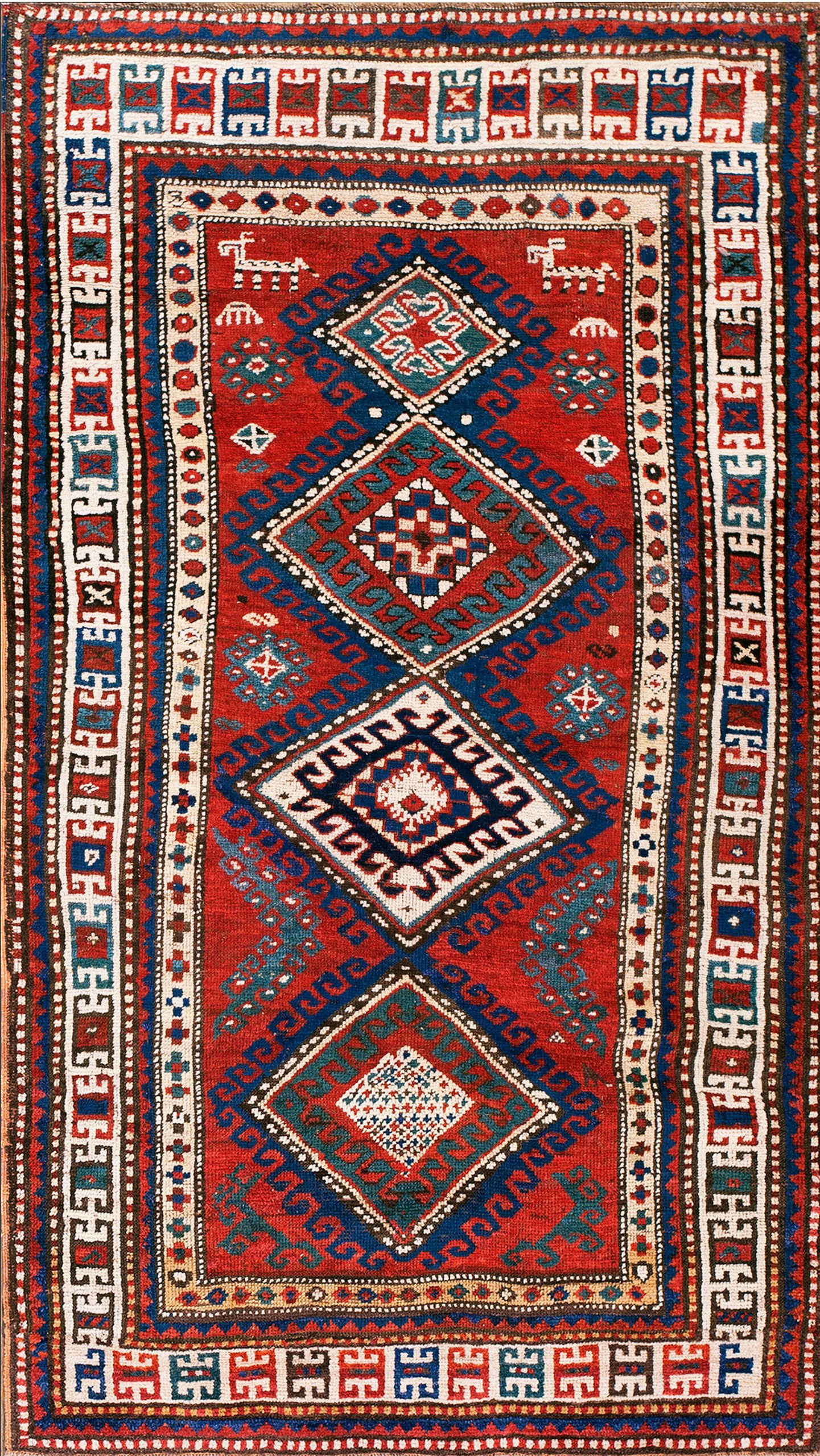
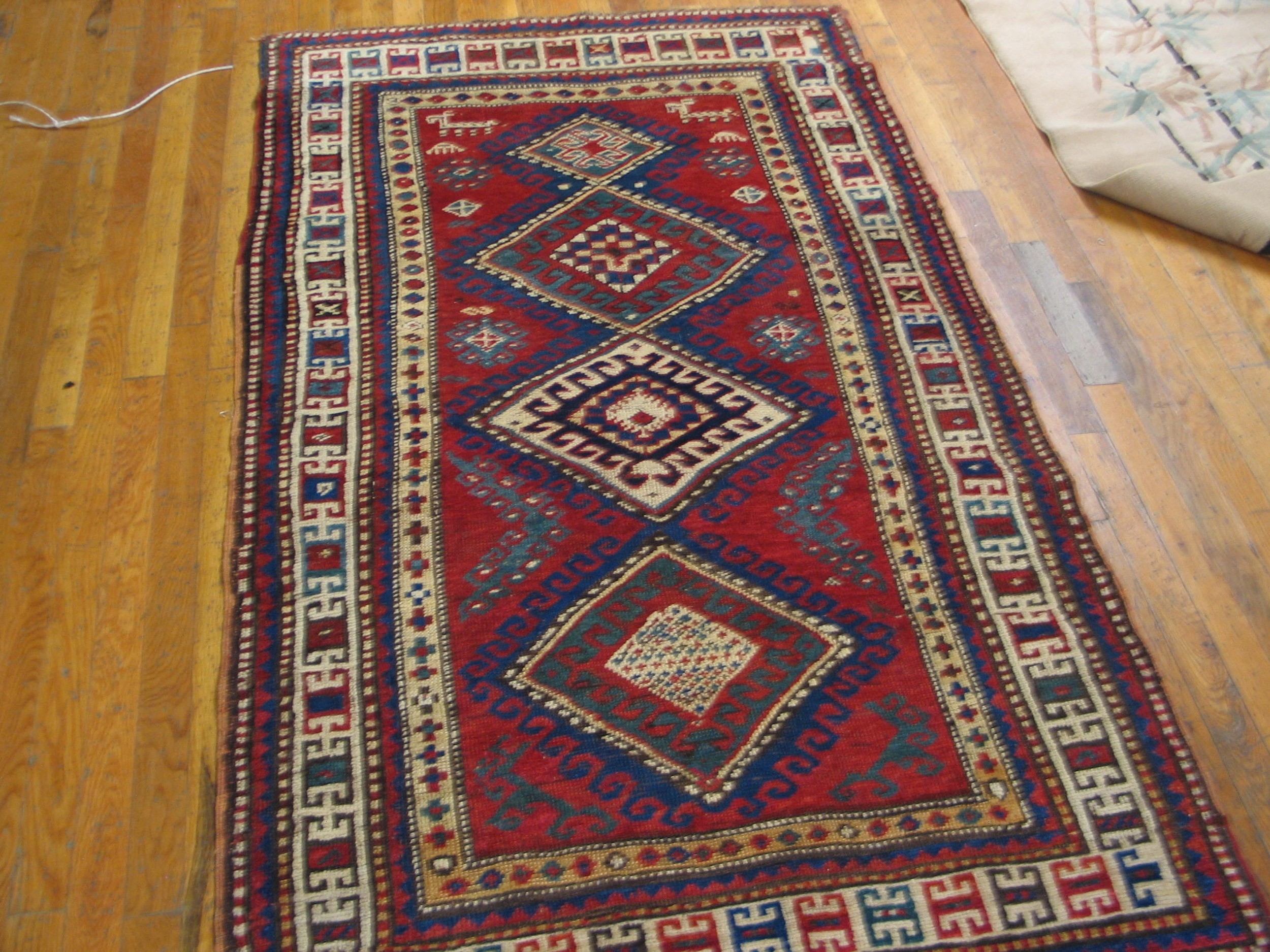
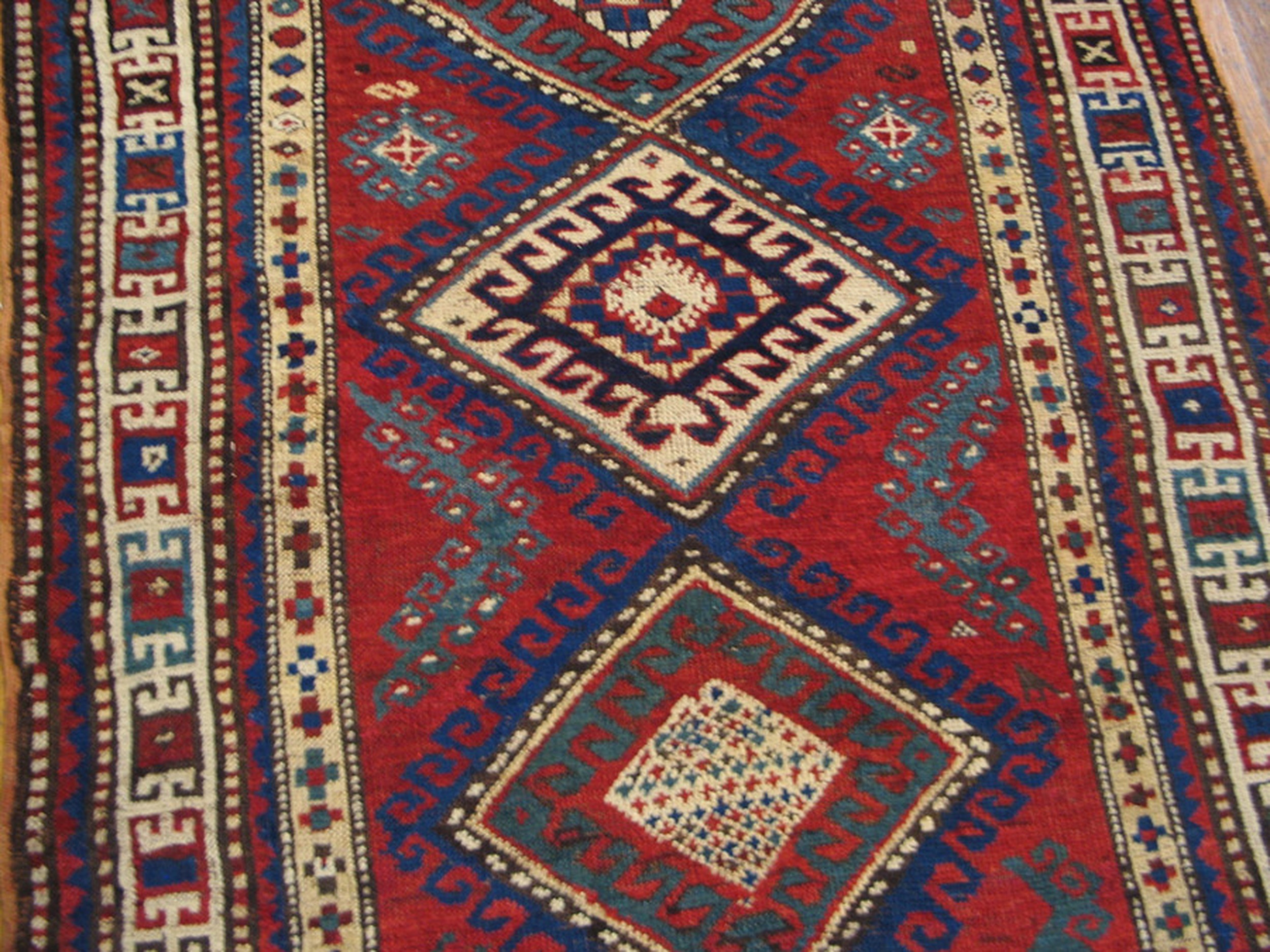
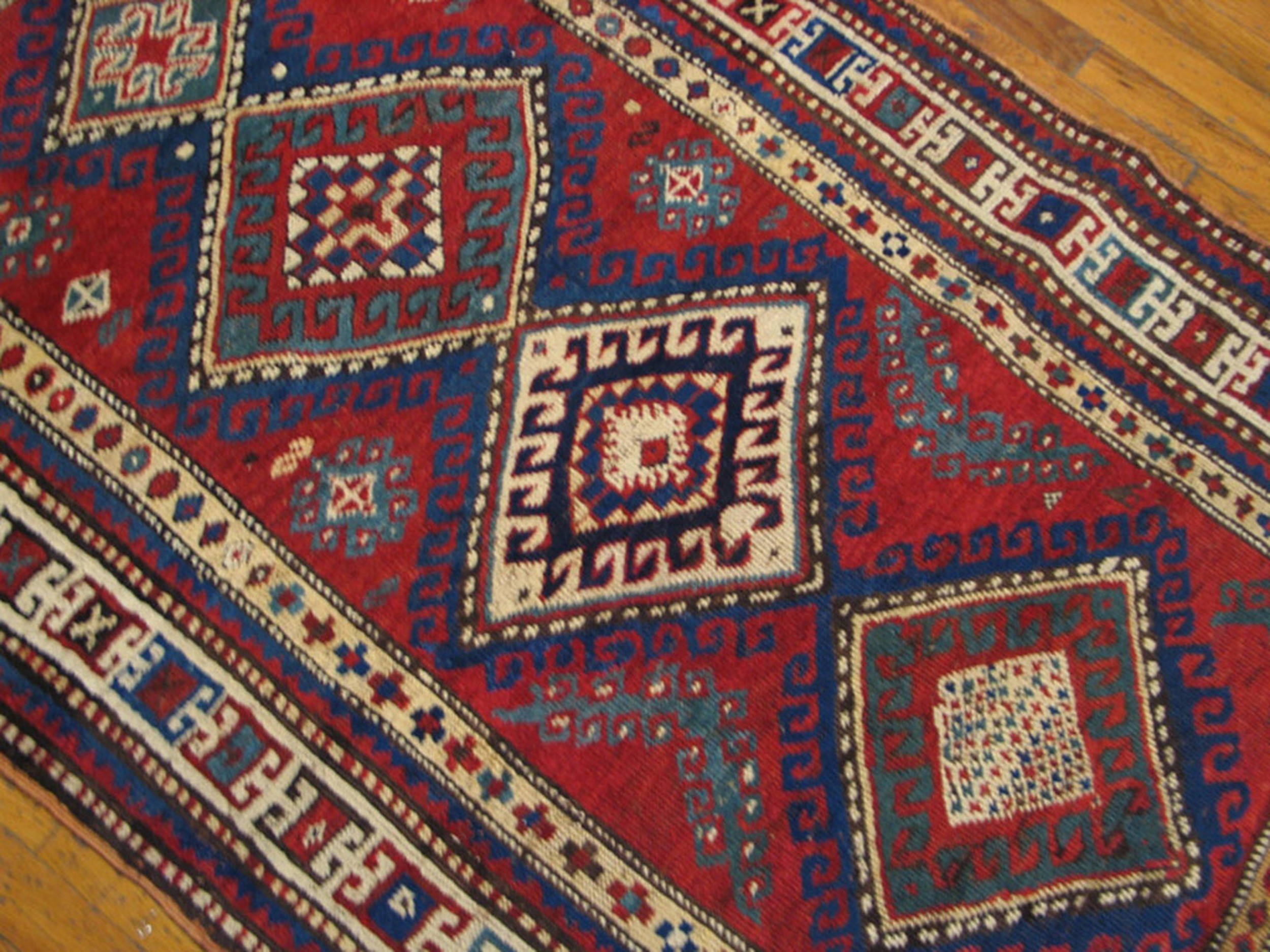
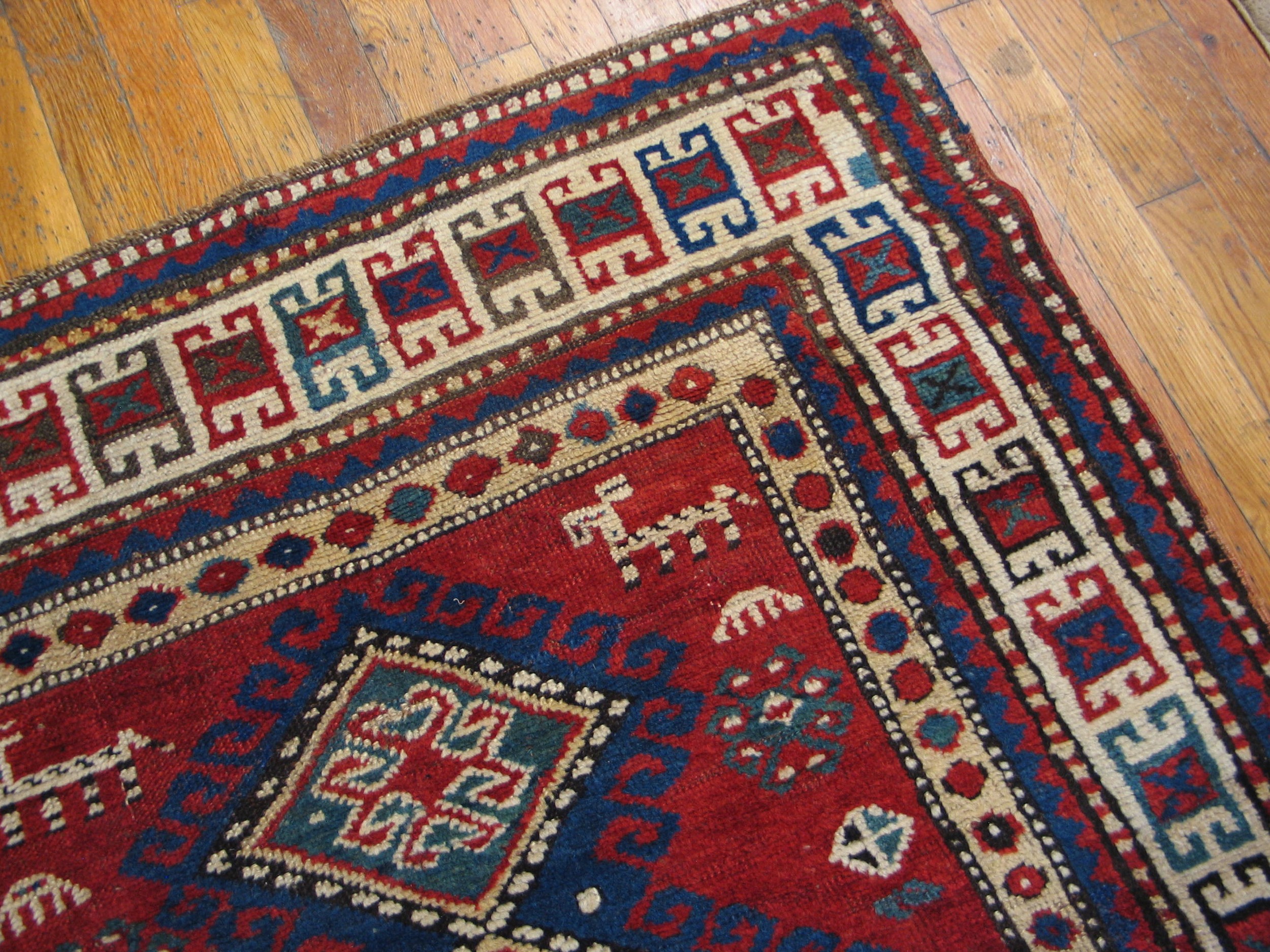
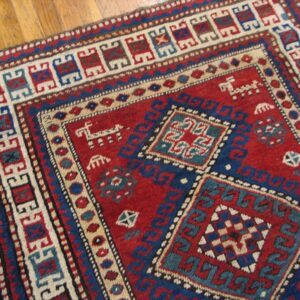
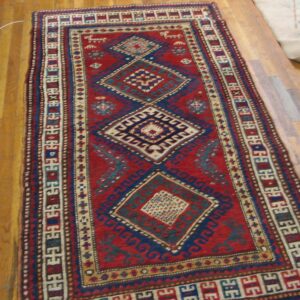
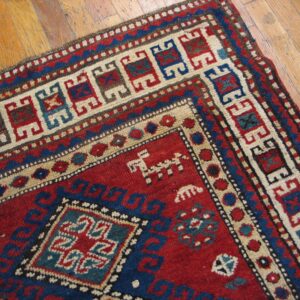
This nineteenth-century Caucasian Kazak rug is a spectacular example of the tribal design tradition, representing the pinnacle of nomadic weaving from the South Caucasus. While the neighboring Shirvan and Kuba weavers focused on miniature, fine-scale detail, the Kazak weaver’s soul is found in monumental scale and raw, saturated color. This specific specimen is a “power rug,” defined by its heroic geometric presence and its fiery, uncompromising palette.
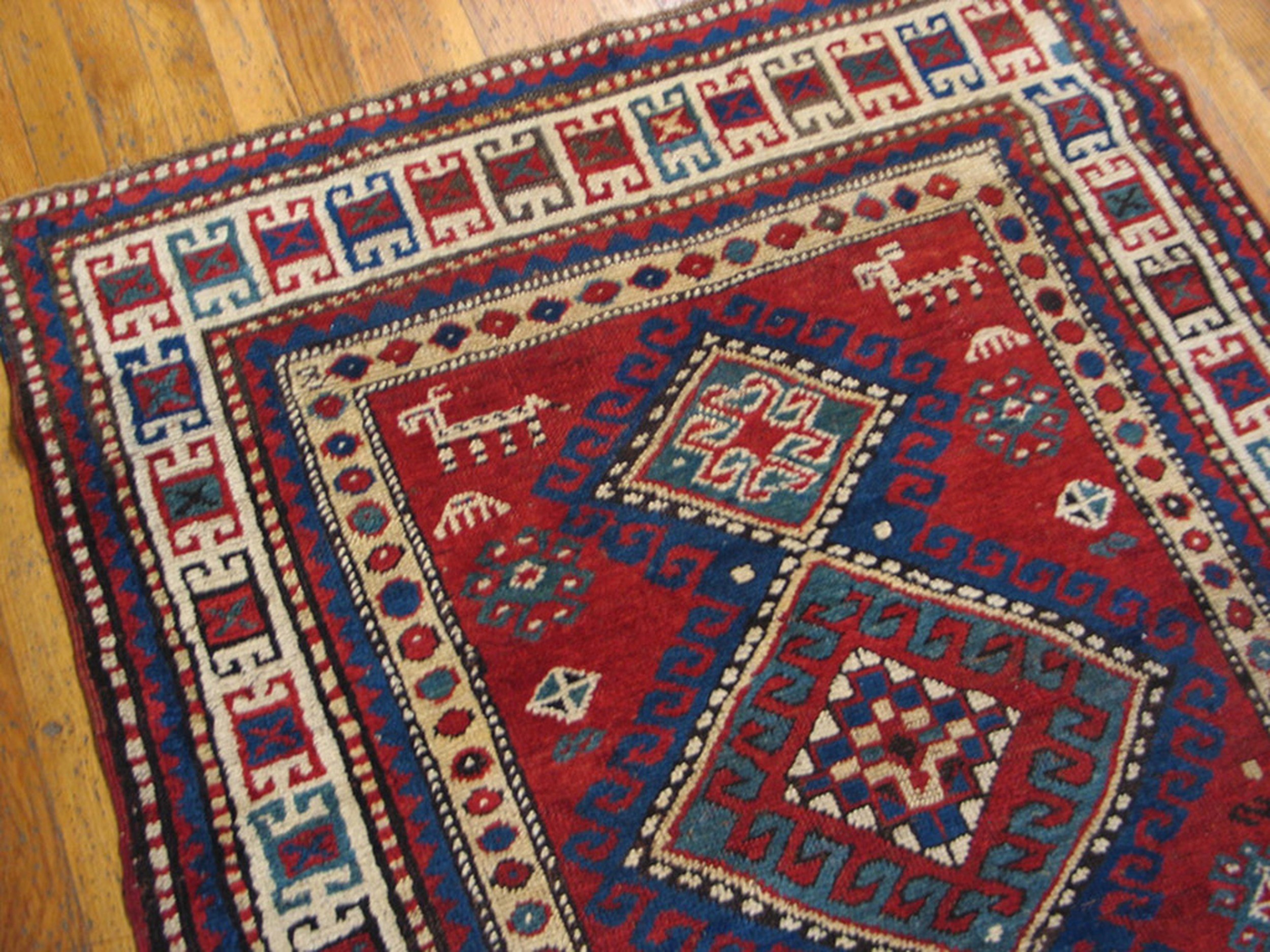
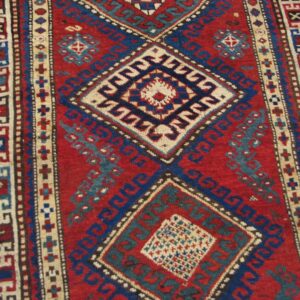
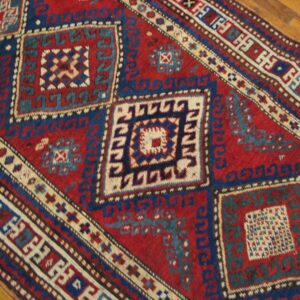
The composition is centered upon a series of bold, oversized medallions, often featuring the iconic “Latch-hook” or “Karachoph” geometry. These massive totems dominate the field, rendered with an architectural strength that feels remarkably modern. The drawing is characterized by its “primitive” honesty—the slightly irregular symmetry serves as a hallmark of authentic tribal design origin, reflecting the individual hand of a weaver working without a written pattern. The tribal motifs in this antique Caucasian rug are not merely decorative but are ancient protective symbols designed to ground the home.
The palette is anchored by an extraordinary, “Bright and Bold” Madder Red ground. This is not a flat, synthetic red; because it was created using 19th-century vegetable dyes, it possesses a magnificent abrash (tonal variation). Over 130+ years, the red has matured into a complex spectrum of flame, crimson, and terracotta, creating a shimmering, “watercolor” depth. This radiant field is balanced by high-contrast accents of creamy ivory and midnight indigo, which make the large-scale geometric patterns appear to “pop” with three-dimensional intensity.
Technically, this Kazak is prized for its substantial, fleshy pile and its heavy, “leather-like” handle. Woven from the lustrous, lanolin-rich wool of high-altitude sheep, the surface possesses a soft, light-reflective sheen. Unlike the thin, formal carpets of the city, the Kazak was built for warmth and tactile resilience, offering a “meaty” texture that has only grown more beautiful with a century of historical patina.
The borders act as a disciplined, rhythmic frame, often featuring the “Wine Glass” or “Leaf and Calyx” patterns. This architectural containment serves to “lock in” the explosive energy of the red field, providing a sense of historical permanence and order. To possess this antique bold red Kazak is to hold a monument to a vanishing way of life—a hand-wrought sanctuary of historical gravity and rugged, artistic power that transforms any interior into a gallery of Caucasian brilliance.