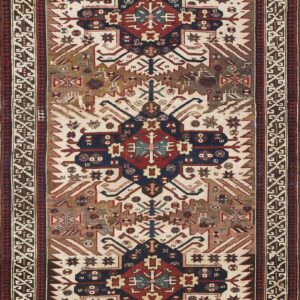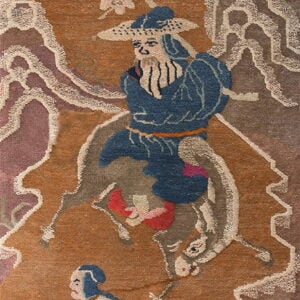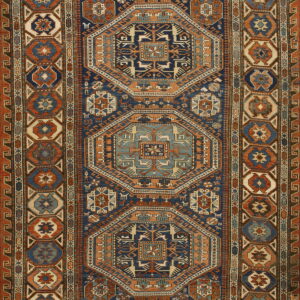
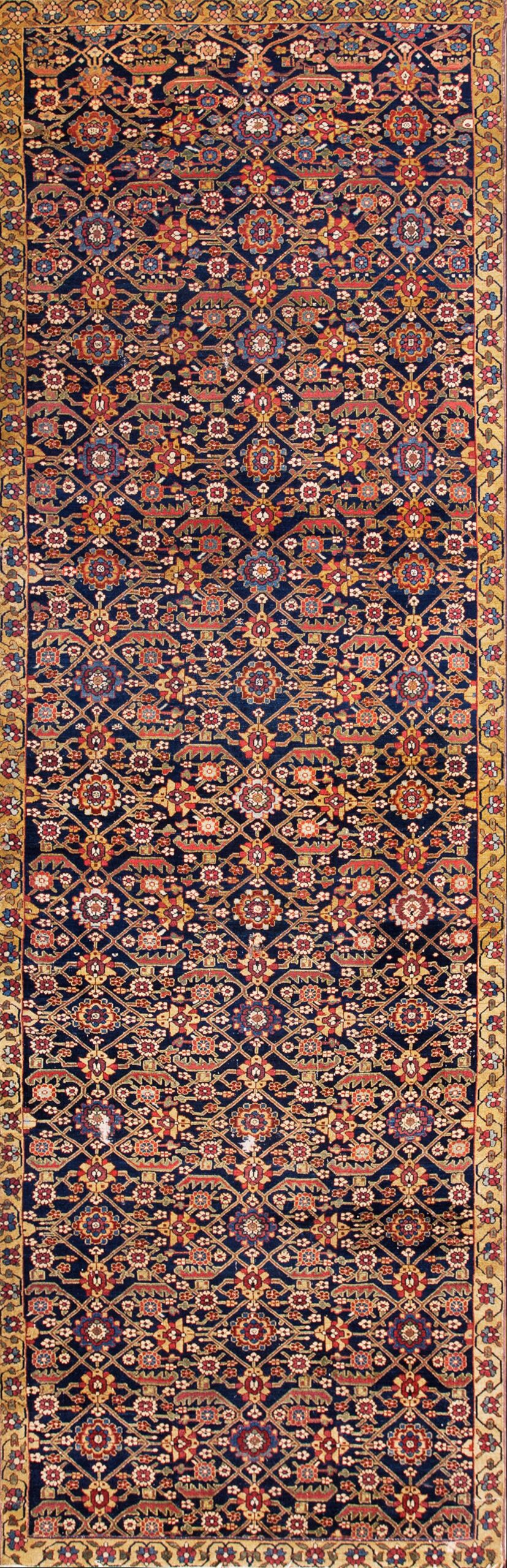
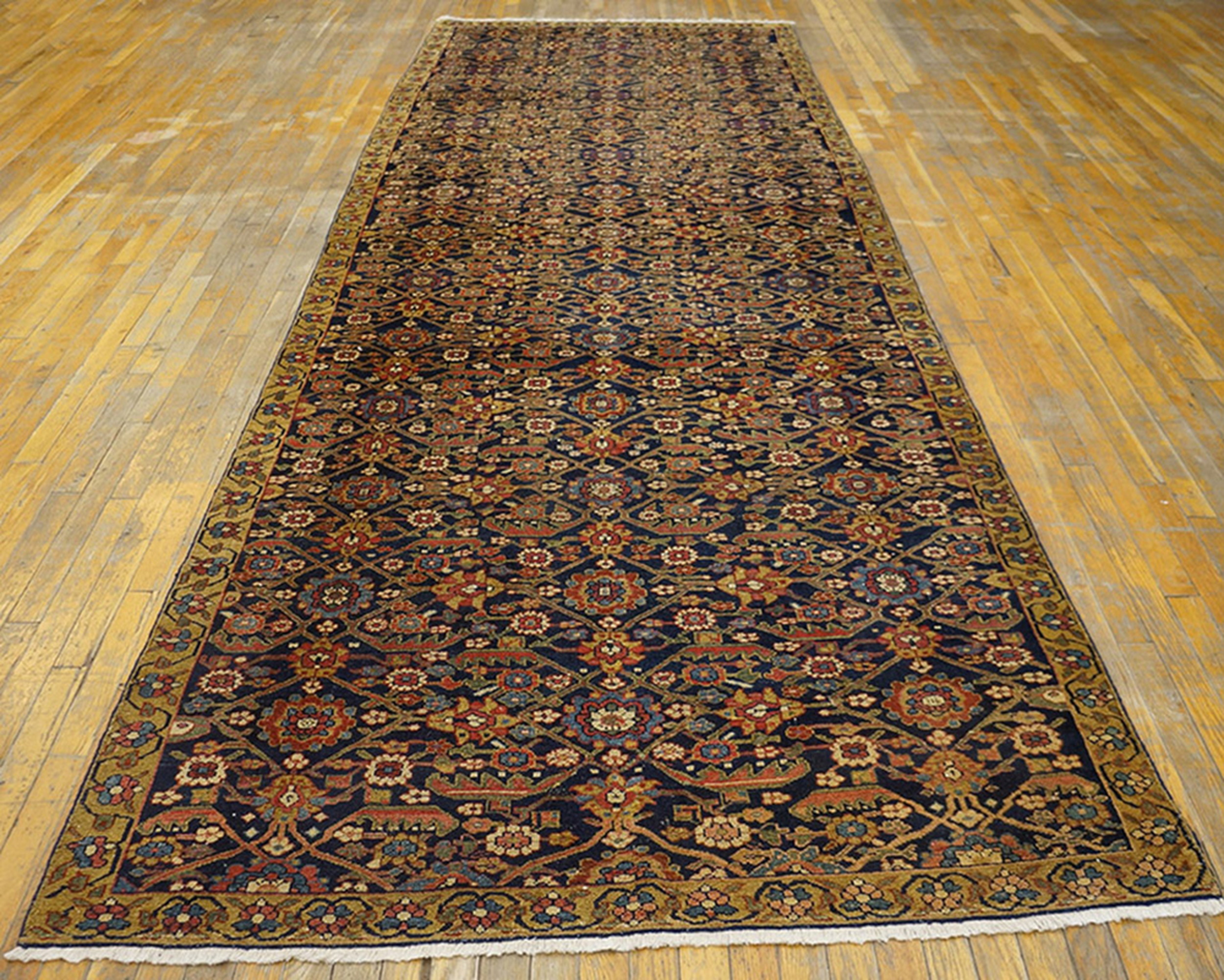
Antique N.W. Persian Chinese Hand-Knotted Rug, Country of Origin: China, Circa Date: 1825. This exceptional piece, dating from the early 19th century, exemplifies the sophisticated cross-cultural exchange often found in Chinese weaving tradition. While the structure and knotting technique point firmly to China, the intricate patterning suggests a strong influence from classical Persian design, creating a unique synthesis prized by collectors of antique rugs.
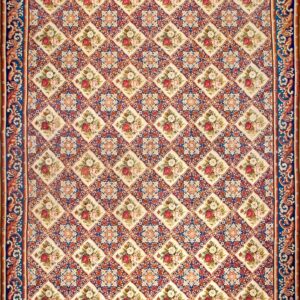
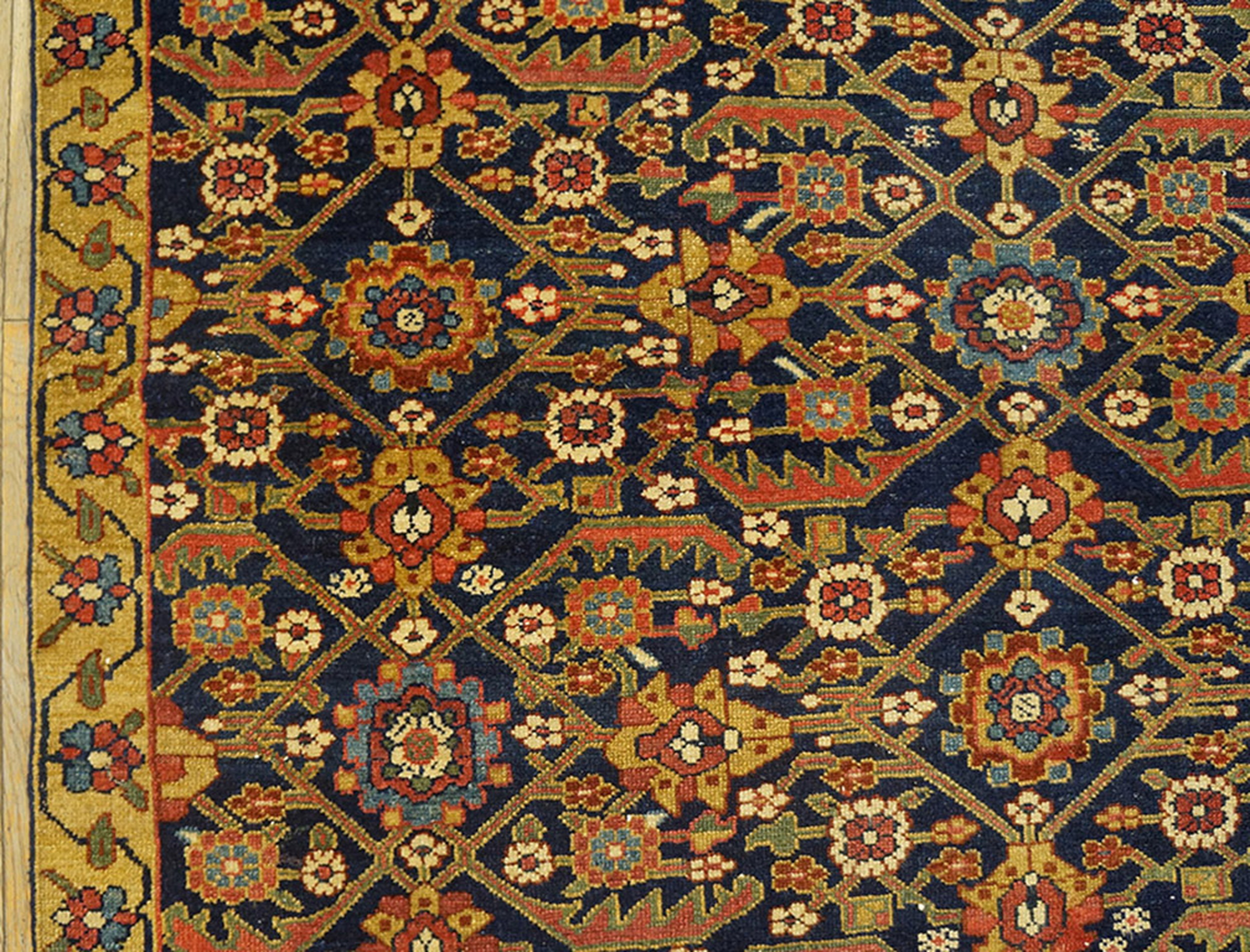
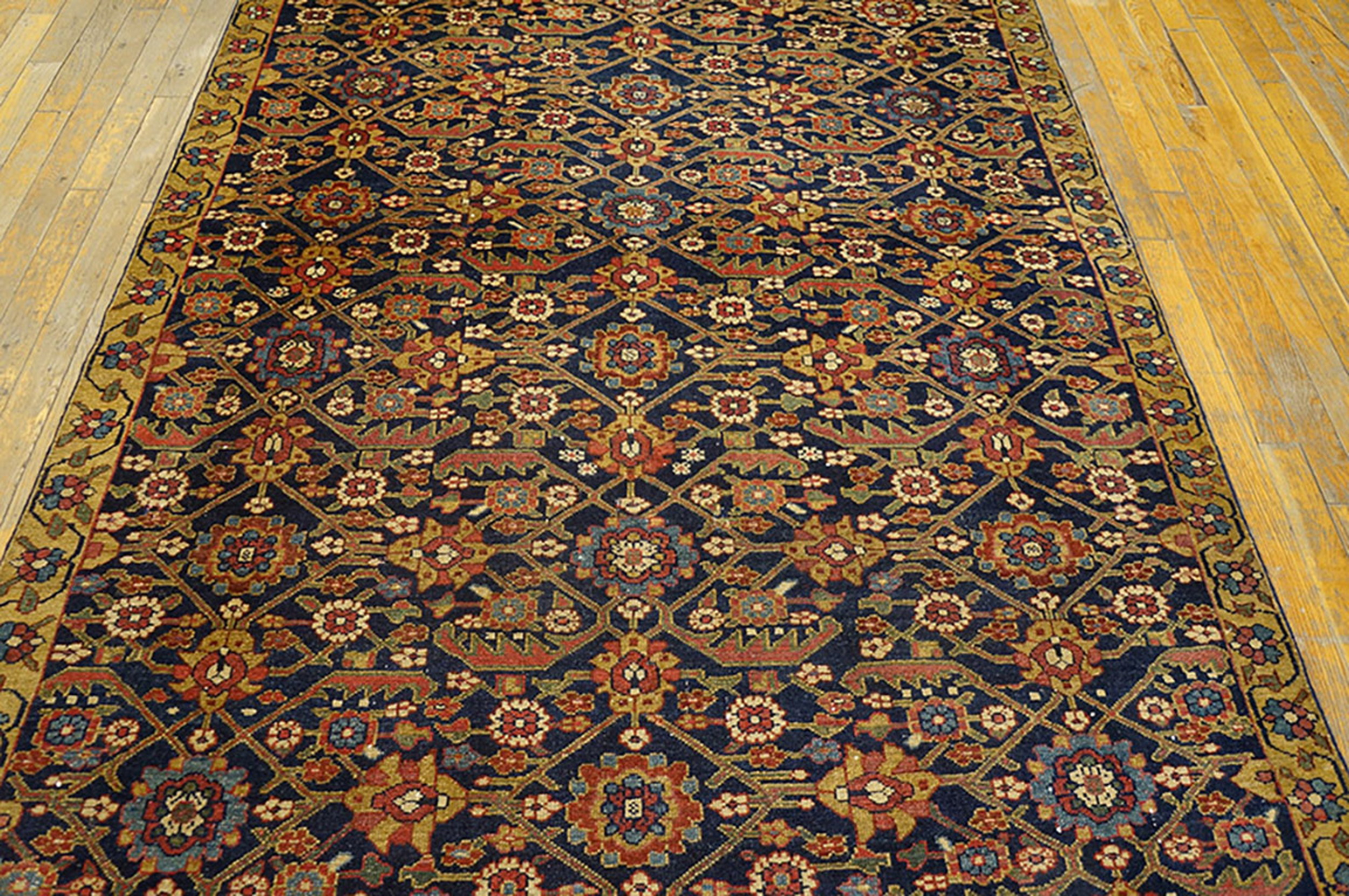
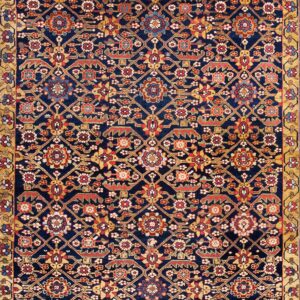
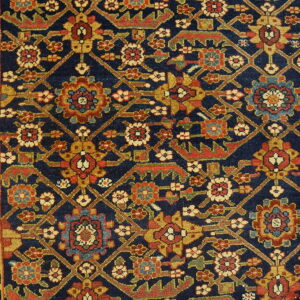
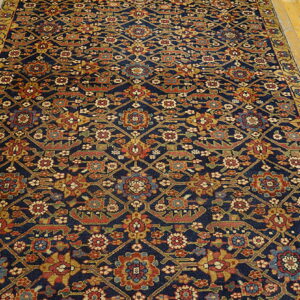
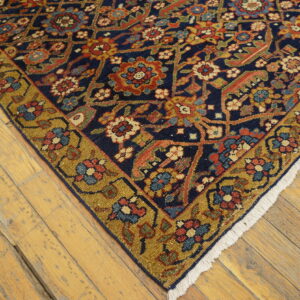
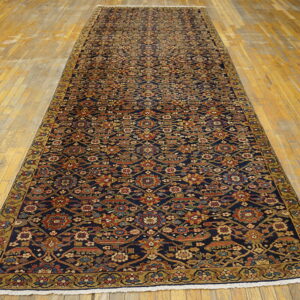
The visual impact of this runner is defined by its saturated color palette, centered on a rich, nearly black deep blue ground. This dark field provides a striking contrast to the repeating, highly detailed motifs executed in shades of gold, saffron, and madder red. The complexity of the field is rooted in an allover design featuring a delicate trellis structure that organizes the dense floral elements across the entire length of the textile.
The elongated, narrow format identifies this piece as one of the finest hallway runner rugs produced during the Qing Dynasty period. Such runners were essential elements in grand architectural settings, designed to guide the eye and protect floors in long corridors and reception halls. The meticulous knot count necessary for such a dense pattern in this scale speaks to the high level of craftsmanship employed in its creation.
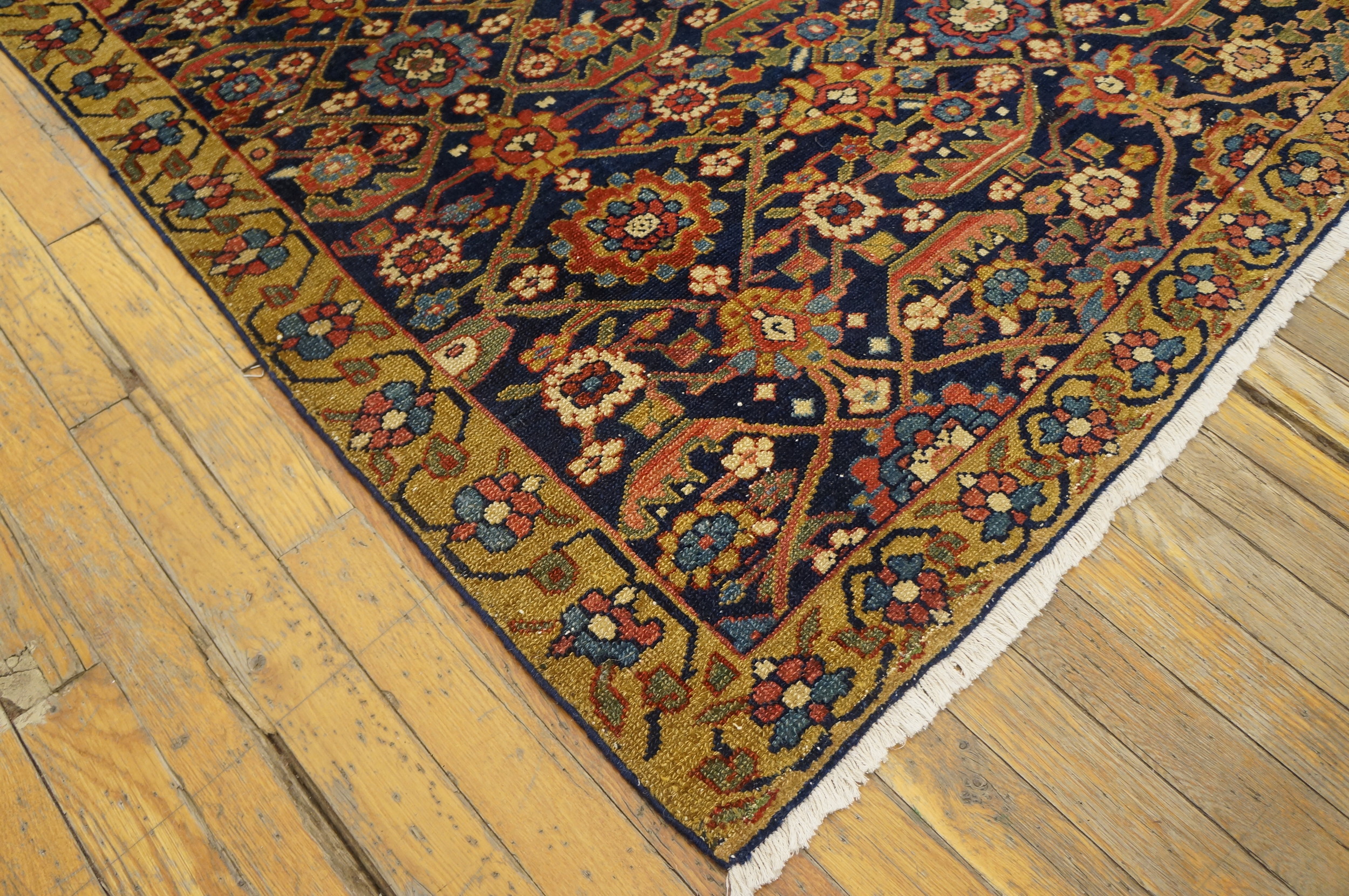
A narrow, luminous border frames the central field, utilizing a vibrant gold hue that provides necessary visual lift and definition. This border contains a repeating vine and rosette pattern that complements the density of the primary field without competing with it. The overall effect is one of restrained opulence, characteristic of pieces made for the imperial or wealthy scholarly class of the period.