
Introduction to American Hooked Rugs
Discover our curated selection of beautiful American Hooked Rugs and bring a piece of handcrafted history into your space.
What Are American Hooked Rugs?
American hooked rugs are a type of handmade textile created by pulling loops of fabric or yarn through a sturdy base material—traditionally burlap—using a hook. The result is a surface covered in looped textures that form colorful patterns and images.
In the simplest terms, when people ask, “What is a hooked rug?”, the answer is that it is a rug made with a looping technique, rather than knotting or weaving.
This process makes them distinct from other handwoven or knotted carpets. Historically, they were also called rag rugs or mats before the specific phrase “hooked rug” appeared in print around 1880.
Etymology and the Hooked Technique
The name “hooked rug” directly refers to the rug hooking technique itself: creating designs by hooking strips of cloth or yarn into a base. The core motion is simple yet highly adaptable—much like embroidery, but with loops rather than flat stitches.
These looped rugs were often pieced together from scraps, reflecting the ingenuity and thrift of households that turned leftover textiles into something both practical and decorative.
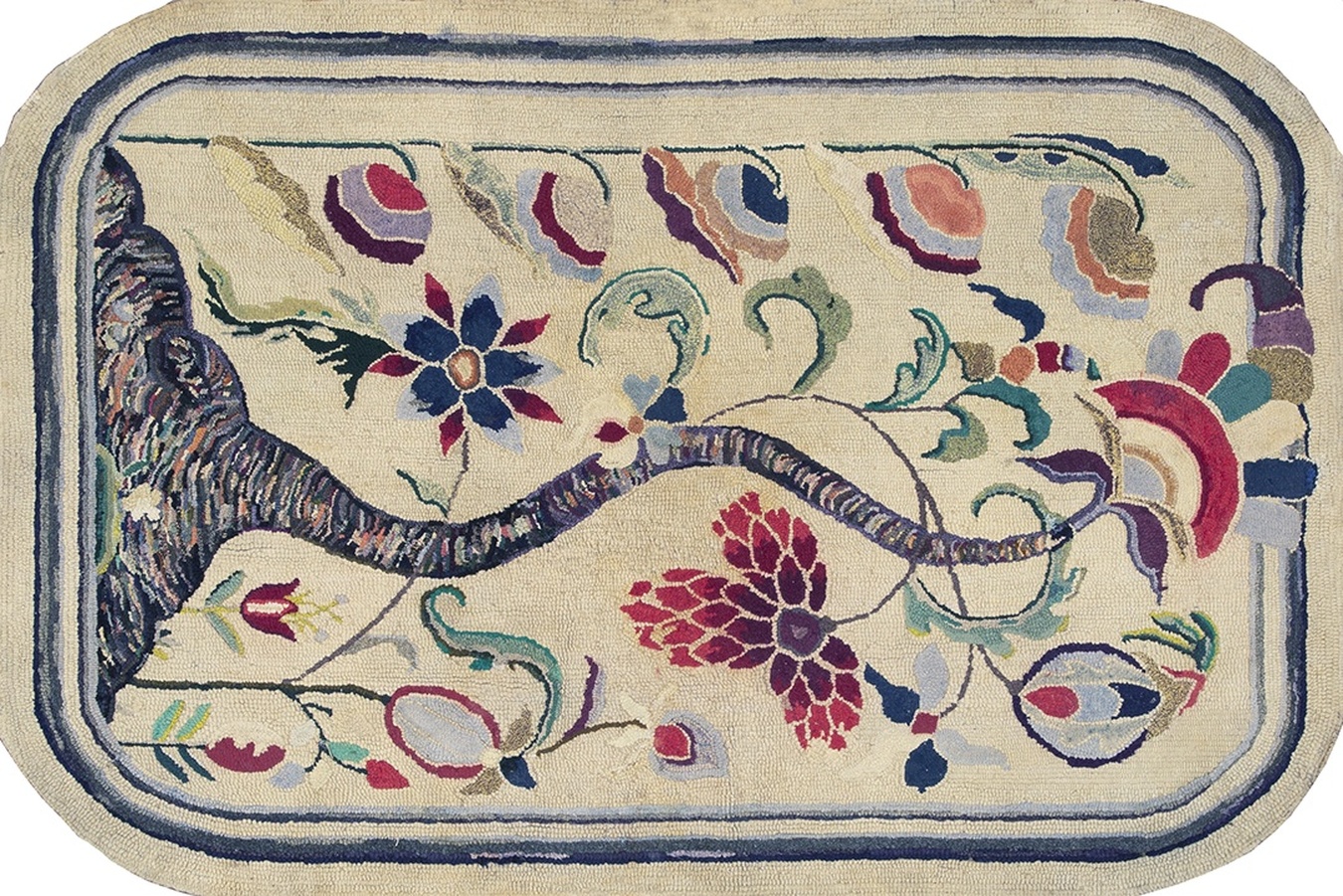
Over time, the phrase hand-hooked rug came into common use, emphasizing the handmade nature of the craft and distinguishing it from later machine-made imitations.
Overview of the Craft as a North American Folk Art
American hooked area rugs became a true North American folk art, rooted in the rural communities of New England and eastern Canada. Families living in modest farmhouses often had little access to imported carpets, so they developed their own method of floor covering using available scraps. This practice blended necessity with artistry—each rug was a personal creation, often filled with symbolic motifs, floral borders, or scenes drawn from daily life.
Over the generations, folk art area rugs from the USA evolved from purely functional mats into objects of cultural expression. Today, they are celebrated not just as thrifty home goods but as a vibrant artistic tradition that connects craft, heritage, and storytelling through loops of fabric.
Hooked vs. Penny Rugs: Know the Difference
While often sold together in folk art galleries, Penny rugs and American Hooked Rugs are technically different. A Penny rug is made by cutting “pennies” (circles) out of wool scraps and blanket-stitching them onto a base in layers. A Hooked Rug is made by pulling loops through the base. If your rug has a flat, felt-like surface with visible stitching, it’s likely a Penny rug—a beautiful but distinct branch of American textile history.
Origins and History Of American Hooked Rugs
Early American and Canadian Origins
The origins of American hooked rugs lie in the early 19th century, though some evidence suggests experiments with the technique may have begun as early as the late 18th century. This was a distinctly North American invention, born in the rural landscapes of New England in the United States and the Maritime provinces of Canada.
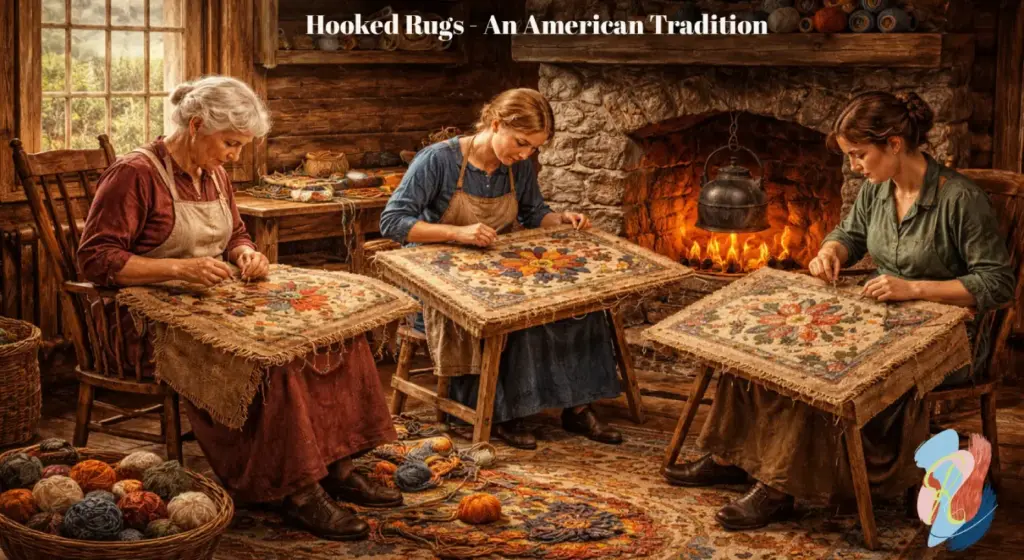
Families without access to costly imported carpets devised their own solution by pulling strips of cloth through burlap or other coarse foundations. What began as a necessity quickly grew into a defining expression of regional craftsmanship, embedding itself deeply in the domestic and cultural life of the Northeast.
Spread Across New England
When did hooked rug making spread across New England? By the mid-1800s, rug hooking had expanded rapidly throughout the region, moving from isolated homesteads into a widespread household craft.
As the practice grew, each community adapted the method to its own resources and aesthetic preferences. From Maine farmhouses to small fishing towns in Nova Scotia, the rugs became fixtures in everyday interiors, marking a tradition that connected generations across both sides of the border.
Why Settlers Began Using Scraps for Rugs
Why did settlers start hooking rugs from fabric scraps? The answer lies in a combination of thrift and necessity. Imported woven carpets were expensive luxuries that most families in rural America and Canada could not afford. Instead, households saved worn-out clothing, old blankets, and discarded fabric remnants.
These scraps were cut into strips and transformed into rugs through the rug hooking technique. This practice not only kept floors warmer but also reflected the ingenuity of settlers who found beauty and utility in what would otherwise have been waste.
Notable First Creators and Commercial Pioneers
Who first created American hooked rugs? While no single individual can be credited with the original invention, the craft was pioneered collectively by early settlers in New England and Canada. However, certain figures stand out in the hooked rug history for transforming the tradition. In the 1860s, Edward Sands Frost of Maine began producing stenciled patterns on burlap.
His pre-made designs became the first widely distributed rug-hooking kits, democratizing the craft and enabling thousands of households to create rugs with standardized motifs. Later, in the early 20th century, the Grenfell Mission in Newfoundland introduced what became known as Grenfell mats, crafted from silk and cotton donated by factories.
These mats, often depicting northern wildlife and seascapes, gave rug hooking both an economic and artistic dimension in coastal communities. Together, Frost’s kits and Grenfell’s mission work highlight how innovation and organization turned a humble household practice into a recognized North American folk art.
Traditional Materials and Construction
Loop Formation Technique Explained Simply
How are loops formed in a hand-hooked rug? The process is both simple and ingenious. Using a small hook—similar to a crochet tool—strips of fabric or yarn are pulled upward through a sturdy base cloth such as burlap or linen. Each strip is drawn into a small loop that stays anchored in the backing.
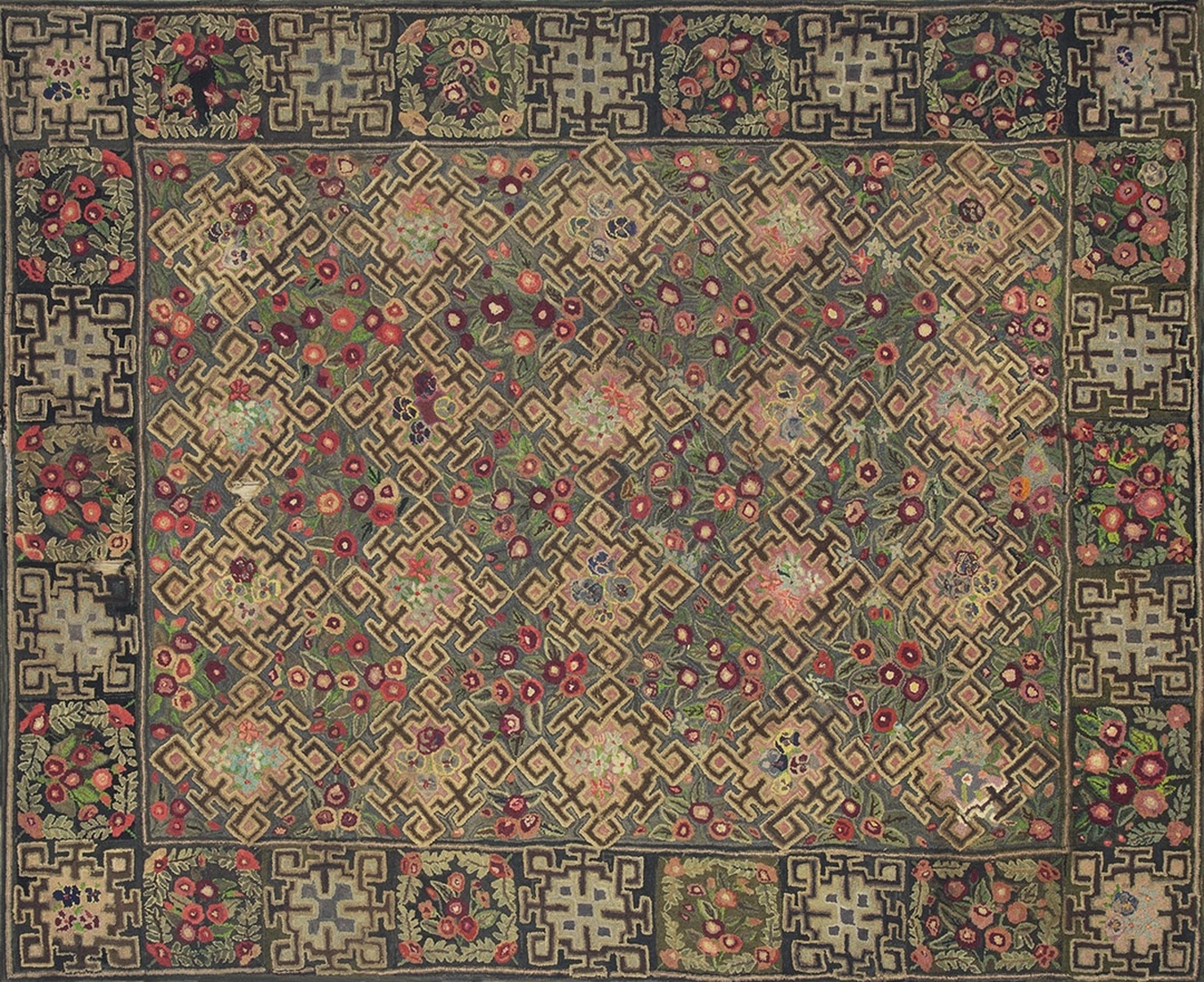
By repeating this motion row after row, a dense surface of loops is created, forming both the texture and the design. This looping action is what makes a hooked rug distinct from knotted or woven rugs, giving rise to the term “looped rugs” or hand-hooked rugs.
Foundations and Backings: Burlap, Linen, Sackcloth
- Burlap (jute): After 1850, discarded burlap sacks became the most common burlap rug foundation. Their abundance and low cost meant nearly every household could experiment with rug hooking. — Why: Burlap democratized the craft by replacing more expensive base fabrics.
- Linen: Before burlap’s widespread use, linen or homespun cloth served as the traditional foundation. — Why: Linen offered durability but was costly and less accessible to poorer households.
- Sackcloth and other coarse weaves: In some cases, settlers used whatever rough, sturdy cloth they had on hand. — Why: These materials ensured that the rug could withstand the strain of daily use.
The “Potato Sack” Standard: How Agriculture Shaped Rug Size
Before burlap was sold by the yard in craft stores, the primary source for rug foundations was the humble agricultural feed or potato sack. Once the potatoes or grain were used, thrifty households would slit the sacks open, wash them, and stretch them onto a wooden frame for hooking.
Because a standard potato sack, when opened and flattened, typically measured roughly 2 feet by 3 feet, this became the “default” rug size for thousands of American cottage rugs. For larger “room-sized” carpets, several sacks had to be painstakingly sewn together with heavy twine before hooking began. If you notice a vertical or horizontal seam running through the center of an antique hooked rug, you are likely looking at the junction of two original farm sacks—a true hallmark of authentic, resourceful folk art.
Pile: Recycled Strips and Preferred Fibers
The surface pile of early American hooked rugs came from thrift and resourcefulness. Families cut strips from worn-out clothing, blankets, or leftover fabric.
Over time, certain fibers became preferred:
- Wool: Highly prized for its resilience and ability to hold color, wool became the gold standard.
- Cotton: Widely available but less durable, cotton rugs tended to wear thin under heavy use.
- Silk: Rare, but used in special cases—such as the Grenfell mats, which famously repurposed silk stockings into striking designs.
Durability of Wool vs. Cotton
Does wool outperform cotton in hooked rug durability? Yes. Wool is stronger, more resilient under foot traffic, and retains dye far better than cotton. A wool-based hooked rug could last for generations if properly cared for, while cotton strips often wore out more quickly, particularly in high-traffic areas.
For this reason, wool became the fiber of choice in traditional rug hooking, both for practical longevity and for maintaining the vibrancy of colors.
Materials Most Common in Traditional Hooked Rugs
What materials are most common in traditional American hooked rugs? The foundations were typically burlap or linen, and the pile was most often made from wool strips, supplemented with cotton or silk when available.
This combination of sturdy backing and looped wool pile gave the rugs both strength and beauty, making them enduring examples of American folk rugs.
Tools: The Hook, Frames, and Hoops
- The Hook: The essential tool, shaped like a crochet hook, used to pull loops of fabric through the backing. — Why: Without the hook, the characteristic loops of a hooked rug cannot be formed.
- Wooden Frame or Hoop: The foundation cloth was stretched tight on a frame or hoop, keeping the backing stable and making it easier to pull even loops. — Why: Stability ensured consistent tension, which gave the rug both durability and a neat appearance.
- Pattern-Drawn Backing: Often, stenciled or hand-drawn patterns were applied to the backing to guide the hooker. — Why: This allowed for more intricate and repeatable designs, especially after the introduction of commercial kits.
Together, these rug hooking tools and materials formed the backbone of the craft, enabling ordinary households to transform scraps into durable works of art.
Specialized Forms: The Hearth and Welcome Rug
The Hearth Rug: Protection Meets Personal Expression
Perhaps the most iconic form of the American hooked rugs is the “Hearth Rug”. Historically, these were placed directly in front of the fireplace to protect expensive wood floors (or the main room carpet) from flying sparks and embers.
Because they were designed to sit flush against the fireplace’s stone or brick base, they were frequently crafted in a semi-circle or “half-moon” shape.
Beyond their practical use, hearth rugs were often the “showpiece” of a weaver’s collection. Since the fireplace was the focal point where guests gathered, these rugs featured the most intricate designs—often including the word “Welcome” or “Home Sweet Home,” as well as symbols of hospitality like lions, cats, or floral baskets.
Motifs, Patterns, and Design Characteristics
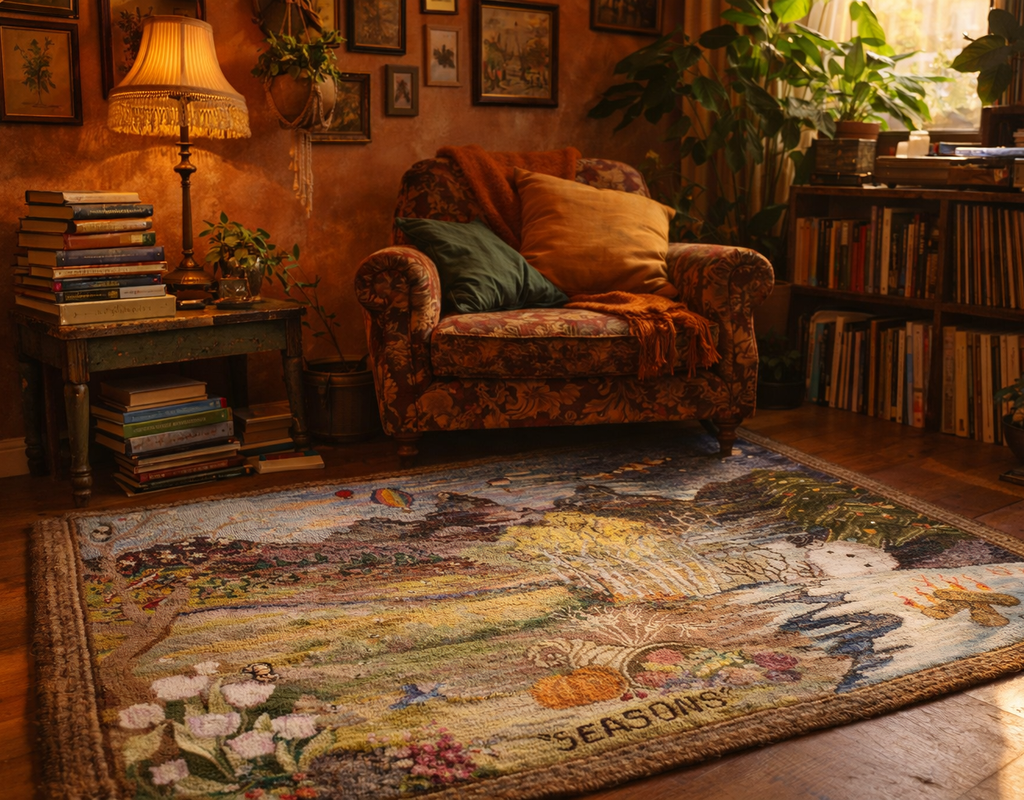
An intimate corner filled with books, plants, and layered textures, anchored by a whimsical landscape area rug.
Wreath motif featuring roses and small flowers.
Typical American Hooked Rugs Folk Art Motifs
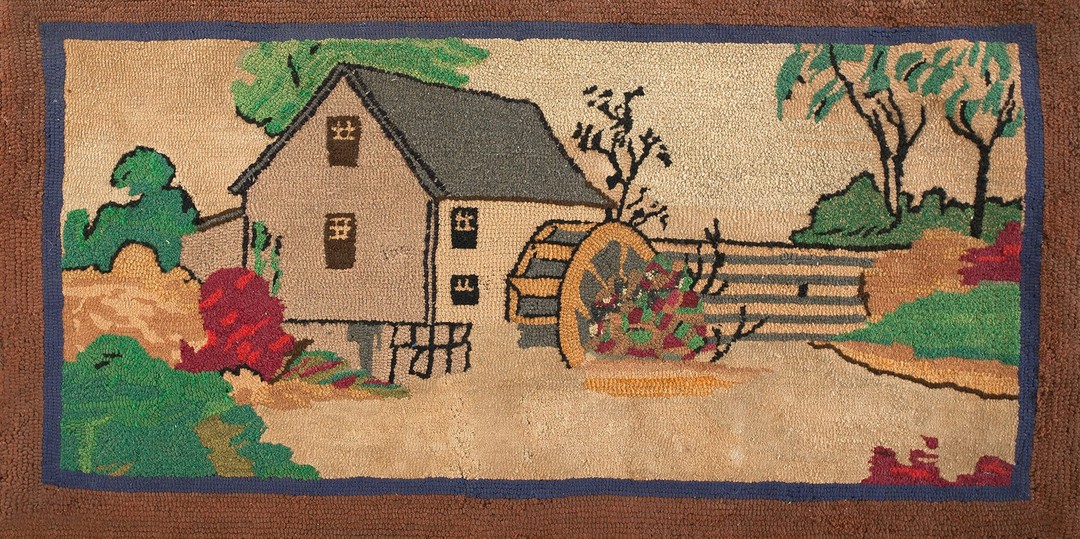
What motifs typify early American hooked rugs design? The earliest hooked rug patterns were filled with folk art imagery drawn from everyday life. Stylized floral motifs were especially common, often arranged in wreaths or bouquets. Domestic animals such as cats, dogs, and horses frequently appeared, as did birds and farmyard scenes.
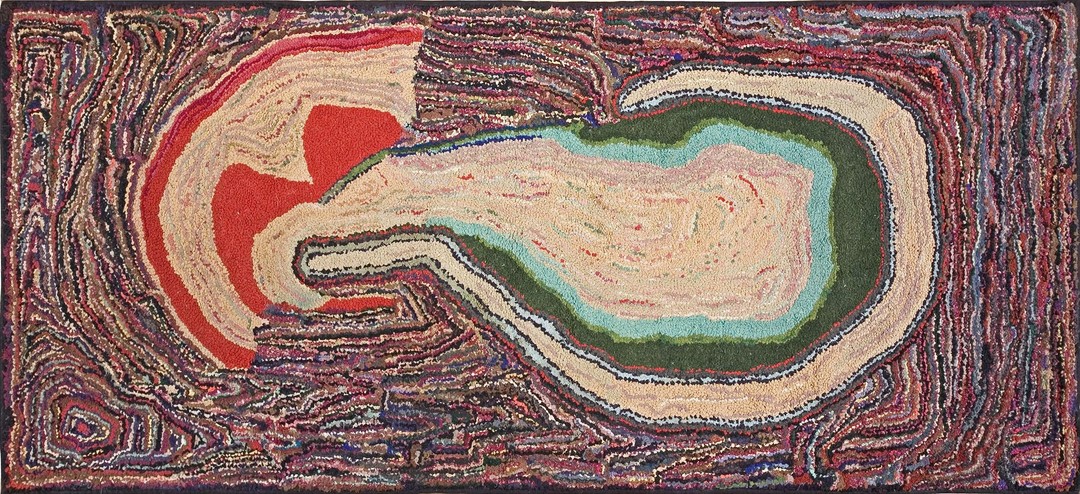
Another defining style was the “hit-or-miss” pattern, where makers used leftover strips of cloth in random arrangements of color and geometry. Central medallions framed by floral borders also became a hallmark, reflecting both thrift and creativity in design.
Together, these folk art rug motifs show how household scraps were transformed into area rugs that carried personal and cultural meaning.
The “Hit-or-Miss”: A Masterpiece of Necessity
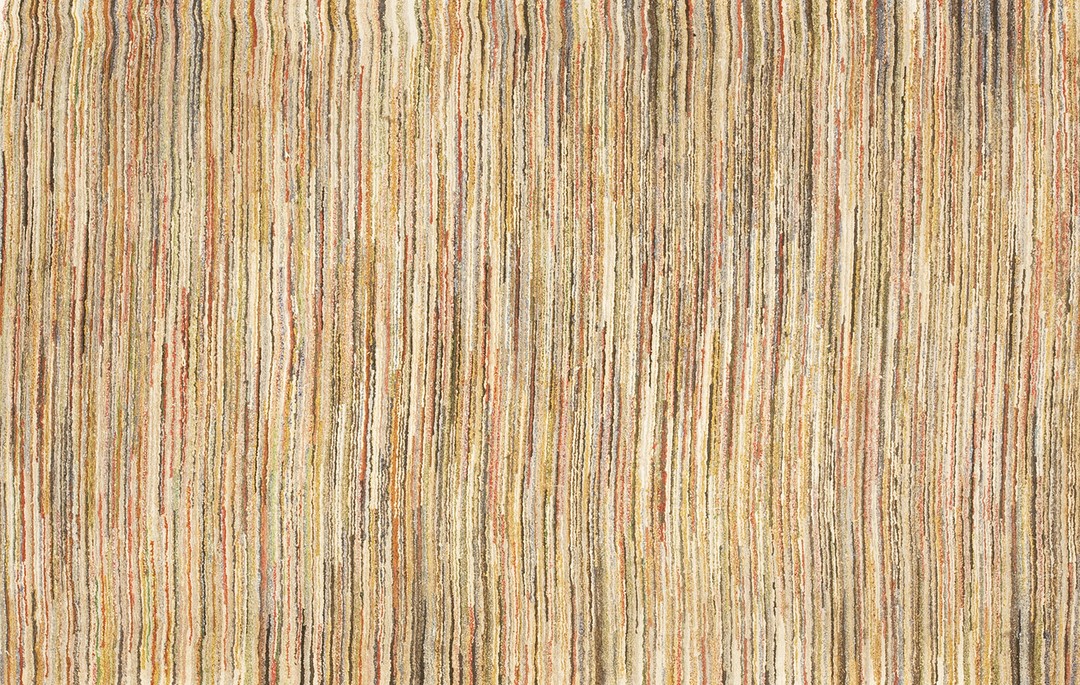
The most famous pattern in the history of the craft is the “Hit-or-Miss.” These rugs were born from absolute thrift—the maker simply hooked whatever scrap came out of the rag bag next. The result is a vibrant, chaotic, and unintentionally modern “pixelated” effect. Today, these rugs are beloved by interior designers for their ability to hide wear and their effortless “boho-chic” aesthetic.
Where Brightest Colors Appear
Where are the brightest colors seen on American hooked rugs? In traditional American hooked rugs, the most vivid colors were reserved for the foreground motifs—the blossoms of flowers, the center of a medallion, or a favorite animal.
To heighten the contrast, darker colors were often used in the background fields, creating a bold outline effect.
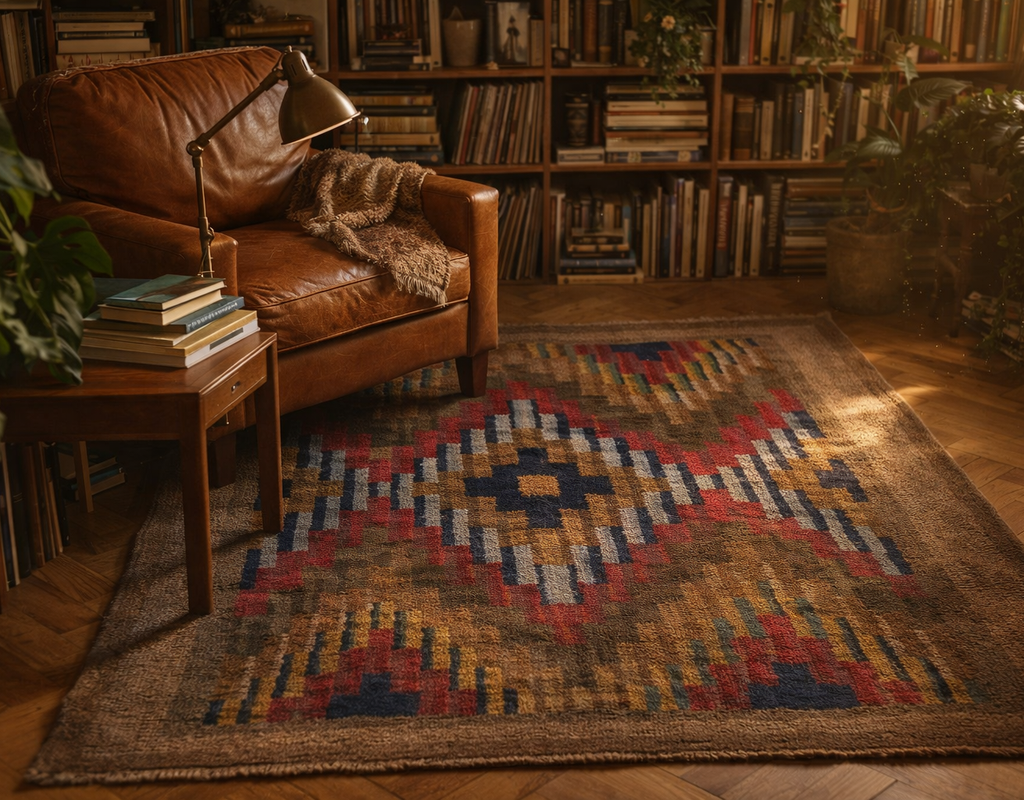
A richly textured rug anchors this warm and traditional study nook.
This interplay gave American hooked rugs their distinctive vibrancy, ensuring that the central motifs caught the eye while the background framed the design.
Identifying Vintage Patterns
How can I identify a vintage hooked rug pattern? There are several visual clues for vintage American hooked rugs identification. Older rugs often feature borders framing the main field, sometimes with repeated blocks or floral chains. Central medallions are another giveaway, acting as the focal point of the composition.
In many cases, the drawing of motifs is charmingly naïve or uneven, reflecting the hand of an untrained but imaginative maker. These elements—borders, medallions, and folk-like drawing—together signal a 19th- or early 20th-century origin.
Distinctive Regional and High-Relief Styles
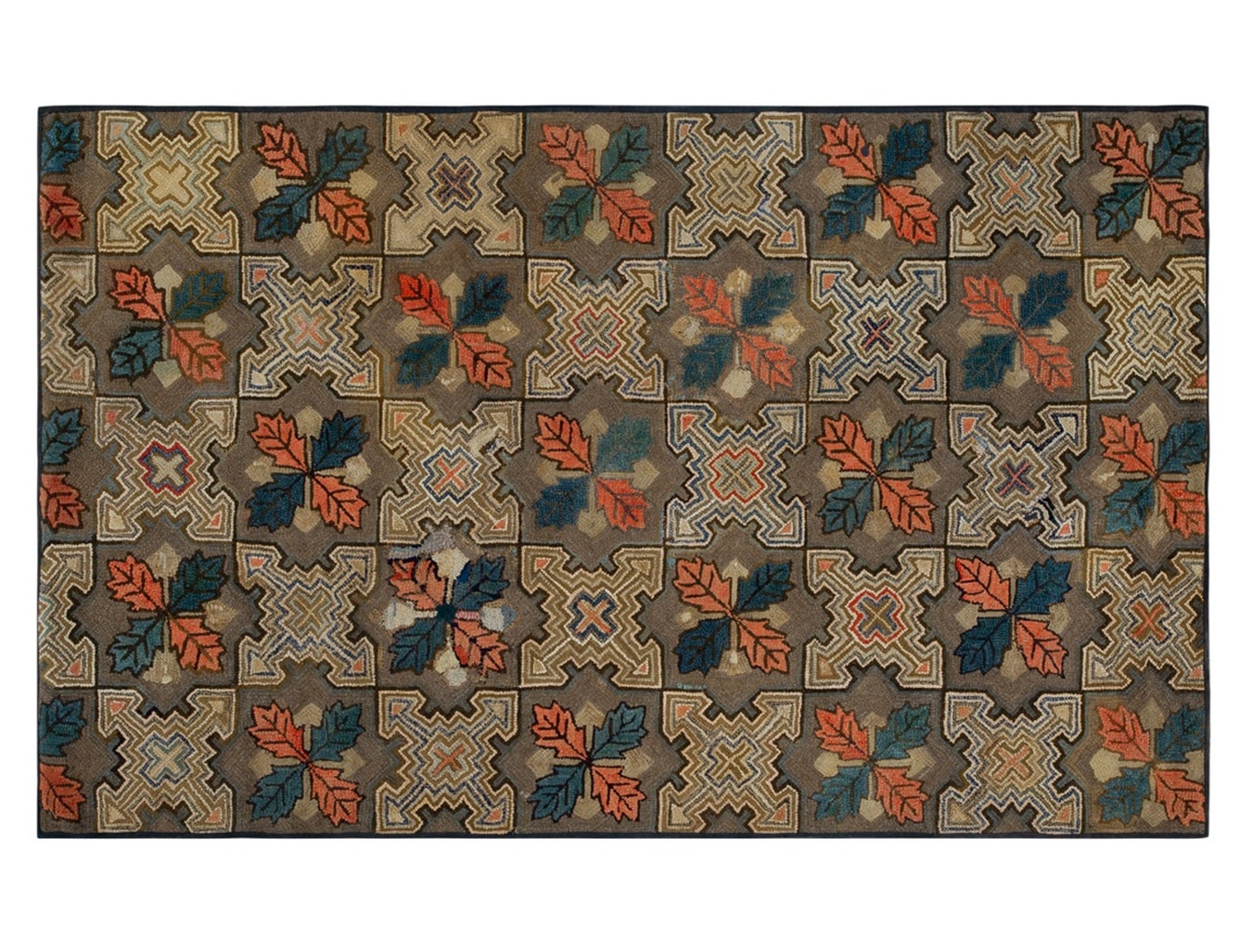
Beyond general motifs, certain regions developed unique styles that help identify specific traditions:
- Waldoboro rugs (Maine): Known for their sculpted, high-relief floral motifs, where loops were clipped and sculpted to give flowers a three-dimensional look.
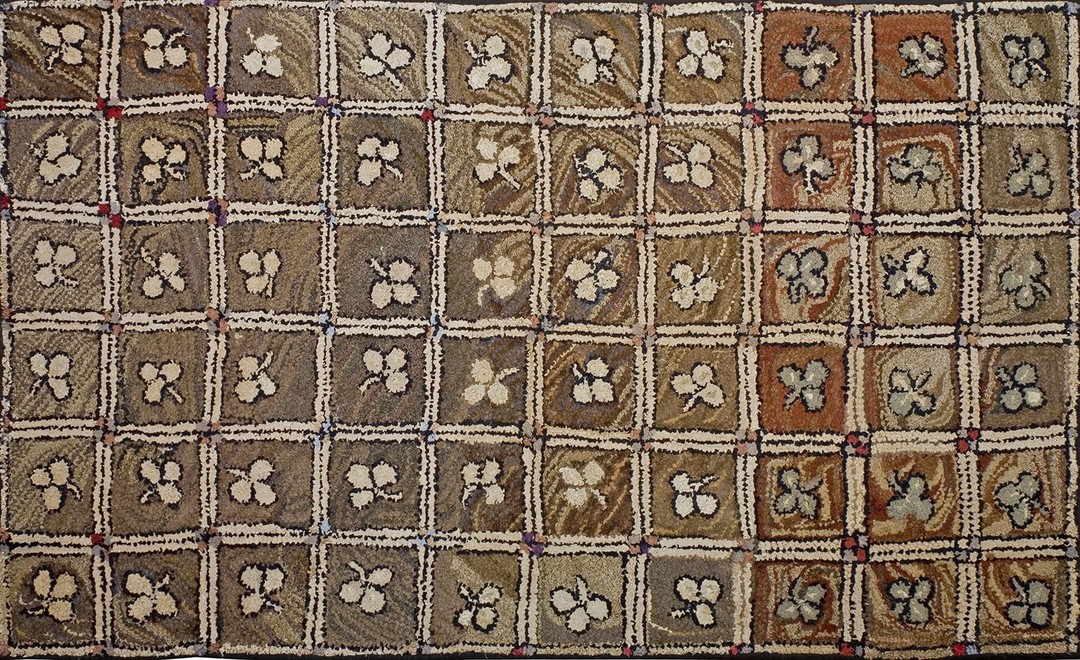
- Chéticamp rugs (Nova Scotia): Characterized by small, tidy loops arranged in a grid of squares, often showing intricate geometric or floral repeats.
- Grenfell mats (Newfoundland): Crafted through the Grenfell Mission, these rugs depicted pastel coastal scenes, icebergs, and wildlife, often hooked from silk stockings.
These regional innovations highlight the diversity within American folk rugs, proving that rug hooking was not a monolithic craft but a canvas for local identity and personal artistry. Recognizing motifs and regional hallmarks is the key to distinguishing one tradition from another.
Regional and Historical Variations
New England and Maine (Waldoboro)
In New England, the American hooked rugs flourished as both practical floor coverings and expressions of folk art tradition. Within Maine, the town of Waldoboro developed a particularly distinctive style.
Waldoboro rugs are famous for their sculpted relief, achieved by clipping and shaping loops to create three-dimensional floral motifs. These designs often appeared against dark backgrounds, which made the vibrant flowers and medallions stand out.
Waldoboro rugs demonstrate the technical sophistication that certain communities brought to an otherwise humble craft, elevating American hooked rugs into decorative art.
Canadian Maritimes: Chéticamp and Grenfell
The Canadian Maritimes added their own voices to the hooked rug story. In Chéticamp, Nova Scotia, rug makers of French Acadian heritage created rugs distinguished by grid-based layouts with fine, intricate motifs. Their precision and uniformity reflected a high level of skill, and today the Chéticamp style is one of the most recognizable regional traditions.
Farther north, the Grenfell Mission in Newfoundland introduced a different innovation. Using donated silk and cotton stockings, local craftswomen created Grenfell mats depicting Arctic wildlife, icebergs, and seascapes in pastel tones. These mats combined utility with artistry while also supporting community livelihoods, embedding rug hooking into a broader social and economic story.
Mid-Atlantic and Appalachian/Southern Traditions
In the Mid-Atlantic states, American hooked rugs often displayed classic American folk motifs—stylized florals, patriotic emblems, or central medallions—hooked from wool strips on burlap foundations. By contrast, in the Appalachian and Southern regions, makers leaned toward bold improvisation.
Appalachian rugs were known for geometric “hit-or-miss” patterns that embraced irregularity and vibrant contrast. During the 1930s, government-sponsored craft initiatives like the WPA revival helped sustain and formalize rug making in these communities, preserving a tradition rooted in thrift and resourcefulness.
How Vintage Rugs Differ from Modern Versions
How do vintage hooked rugs differ from modern versions? The differences can be seen in materials, construction, design, and the effects of time. Vintage American hooked rugs were often made with hand-dyed wool, linen, or burlap, and they display more improvisational patterns born from limited resources. Their colors may have mellowed with age, and their motifs—borders, medallions, folk animals—often show the naïve charm of individual artistry.
By contrast, modern hooked rugs may incorporate synthetic fibers, machine-dyed colors, or new backings that extend durability but reduce the irregular, handmade character. Contemporary rugs also tend to feature more regular patterns and standardized designs, shaped by commercial production or kit-based uniformity.
The Waldoboro Sculpted Technique
For the connoisseur, no American hooked rug is more prized than the Waldoboro. Emerging from a small German-immigrant community in Maine, these rugs are famous for their “sculpted” pile. Unlike standard American hooked rugs where the loops remain uncut, Waldoboro weavers used a high-pile technique and then sheared the loops to create three-dimensional, beveled floral arrangements. These rugs are heavy, dense, and represent the peak of 19th-century American textile artistry.
A Patchwork of Traditions
Each region contributed a unique perspective to the making of regional American hooked rugs—from the sculpted florals of Waldoboro to the gridded artistry of Chéticamp, the pastel Arctic visions of Grenfell, and the bold improvisations of Appalachia.
These variations reflect not only differences in geography and cultural heritage but also the shifting availability of materials and the evolution of aesthetic preferences over time. Together, they illustrate how the simple act of pulling loops through cloth became a tapestry of North American identity.
The Modern Hooked Rug Scene
Are Contemporary American Hooked Rugs Still Handmade?
Are contemporary American hooked rugs still handmade locally? Yes. Despite the rise of mass-produced floor coverings, the tradition of hand-hooked rugs in the USA continues, carried on by artisans, hobbyists, and regional guilds.
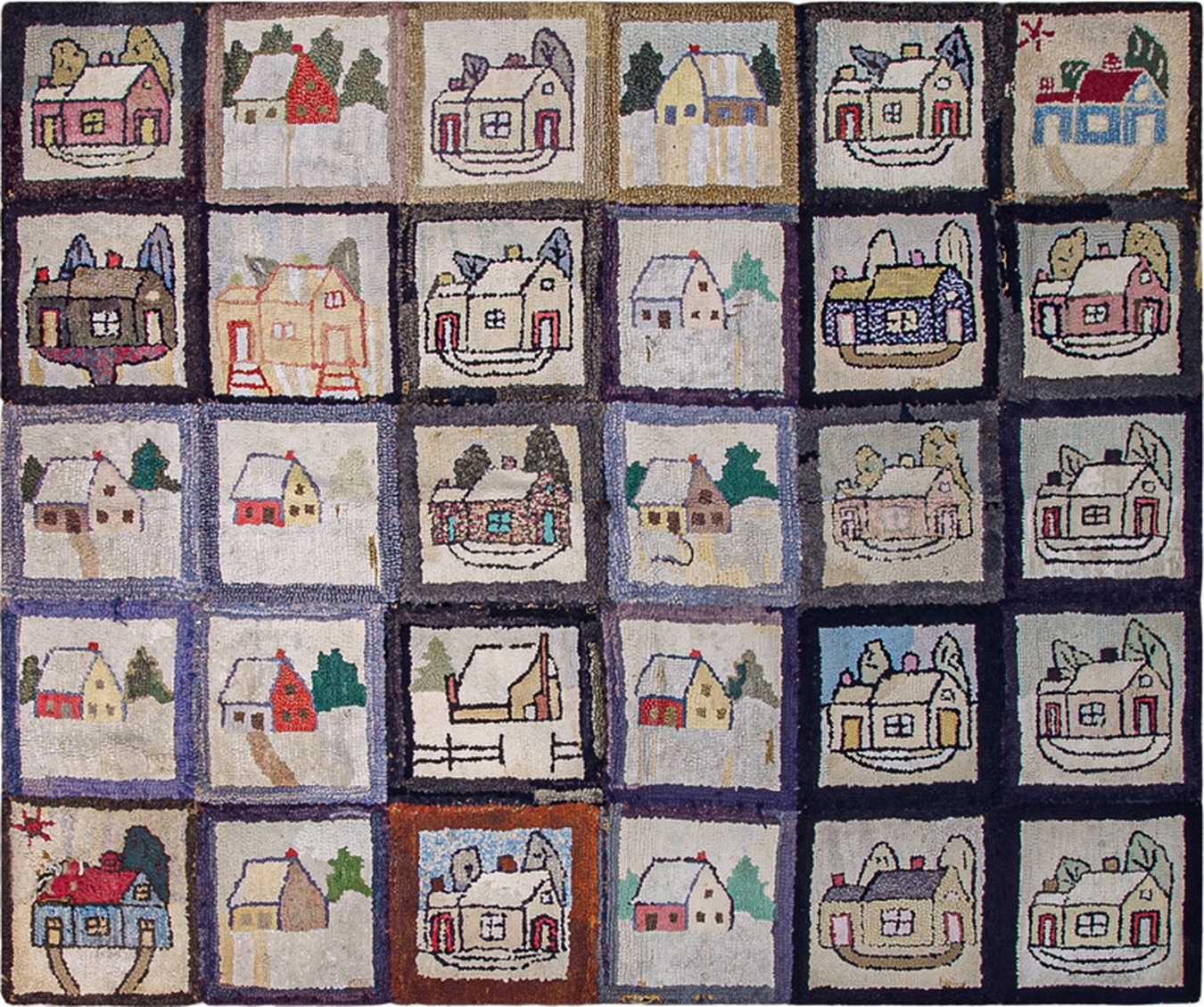
Across both the United States and Canada, rug hooking remains a thriving craft community, supported by associations that preserve historical methods while encouraging modern creativity.
Many artisans still cut their own wool strips, dye their fibers, and use hooks and frames much like their 19th-century predecessors, proving that the handmade tradition endures.
Can Machines Mimic Hand-Hooked Texture?
Can machine-made rugs mimic true hooked rug texture? While machine-made rugs often market themselves as “hooked,” they cannot fully replicate the authentic looped relief of a hand-hooked piece. Machines can create a surface with small loops, but they lack the subtle irregularities, varied loop heights, and tactile depth that distinguish true handmade work.
In short, machine-made rugs may provide a similar look, but they cannot reproduce the character, warmth, and individuality that come from the human hand. This distinction underscores the difference between machine made vs. hand hooked loop pile woven rugs.
Where to Buy Authentic American Hooked Rugs
Where can I buy authentic American hooked rugs online? Collectors and homeowners have several reliable options. For antique and vintage pieces, specialist dealers and platforms such as Ruby Lane, 1stDibs, and even curated offerings on eBay are common sources.
For contemporary handmade rugs, sites like Etsy often connect buyers directly with artisans, while regional guilds and associations frequently maintain their own shops. These sources allow buyers to buy American hooked rugs with greater confidence in authenticity and craftsmanship.
Authenticity and Shopping Tips
- Buy from reputable sources: Established dealers, guild members, or well-reviewed online shops. — Why: Trusted sellers reduce the risk of purchasing reproductions or misrepresented items.
- Check materials and construction: Look for looped piles, wool strips, and natural fibers rather than synthetic yarns. — Why: These details confirm authenticity and durability.
- Inspect for irregularities: Small inconsistencies in loop size or design are signs of handwork. — Why: Perfect uniformity usually points to machine production.
- Research provenance: Antique rugs may come with documented history or appraisals. — Why: Provenance enhances both authenticity and value.
Whether purchasing an antique collectible or a new artisan creation, attention to hooked rug authenticity ensures that the rug buyer acquires a piece that honors the tradition rather than a mere imitation.
Decorating with American Hooked Rugs: From Farmhouse to Modern
While rooted in rural history, American hooked rugs are highly versatile in contemporary design. Their “painterly” quality and thick texture make them the perfect tool for softening a room or adding a layer of folk-art character.
The “Wall Art” Alternative
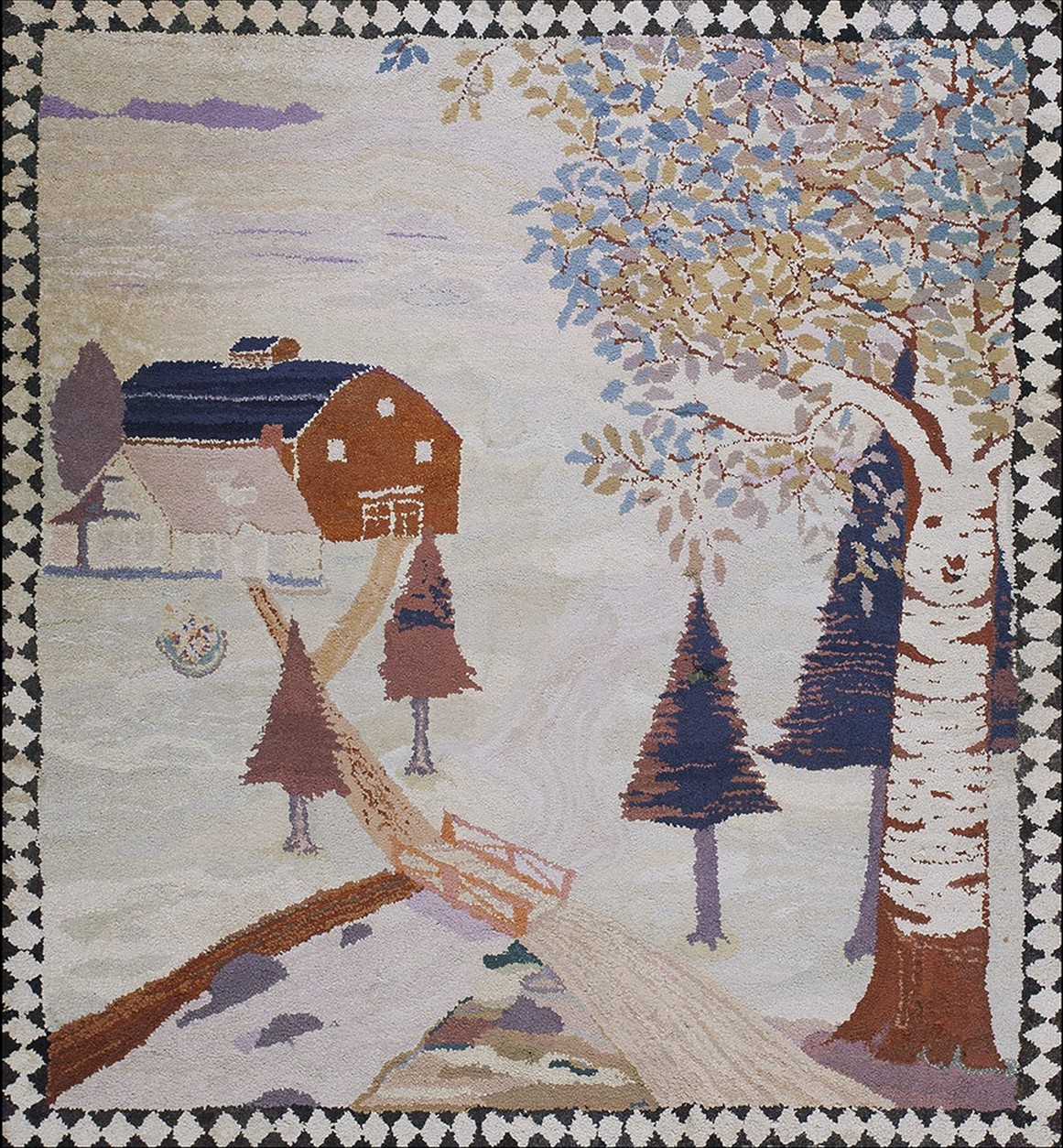
Because antique American hooked rugs are often small (due to the “potato sack” size constraint) and fragile, many designers now treat them as tapestries. A pictorial rug featuring a lion, a house, or a landscape can be mounted and hung over a console table or headboard. This protects the delicate burlap foundation from foot traffic while putting the artistry at eye level.
Modern Maximalism & Pattern Choice
The “Hit-or-Miss” and geometric hooked patterns are the secret weapons of the Maximalist aesthetic. Because they contain a chaotic mix of colors, they can bridge a room’s color palette, tying together disparate fabrics and wall colors.
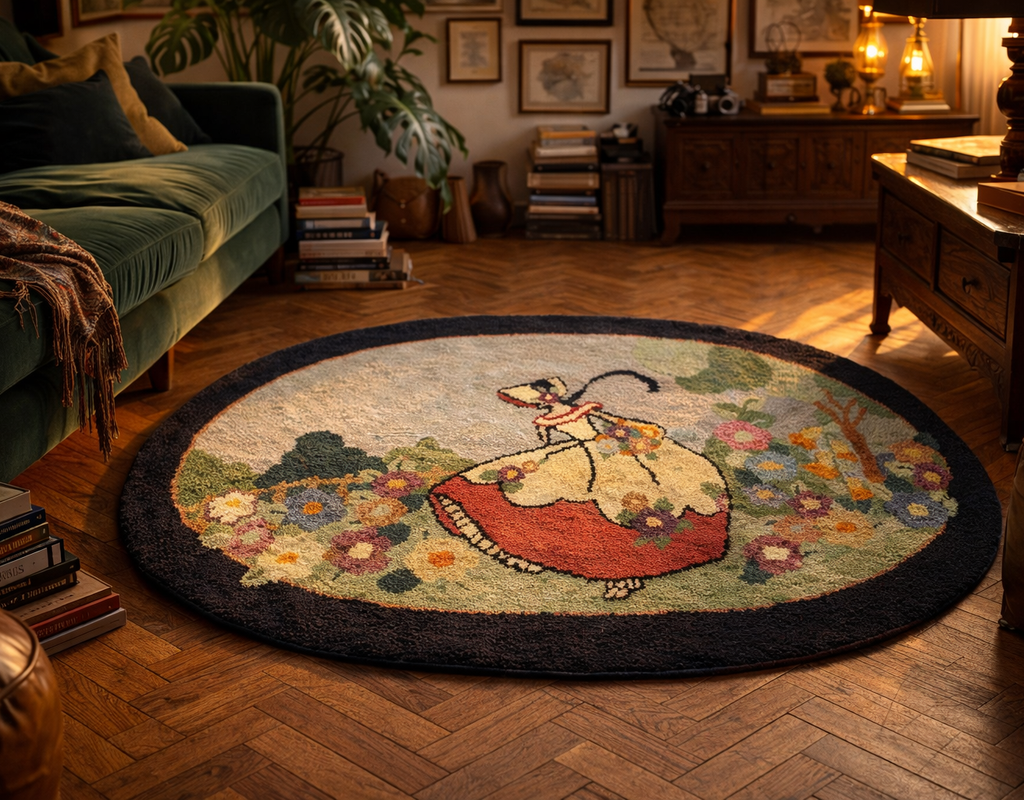
Design Tip: Pair a busy geometric hooked rug with solid-colored velvet furniture to let the rug’s texture take center stage.
Creating a “Nook” with Half-Moon Shapes
The traditional Hearth (semi-circle) rug is perfect for “awkward” modern spaces:
- Entryways: Place a half-moon “Welcome” rug flush against the door threshold.
- Kitchens: Position one in front of the sink or stove to add warmth to a hard-surfaced floor.
- Bedrooms: Use a semi-circle rug next to the bed as a soft landing for your feet in the morning.
Layering for Scale
If you love a small antique hooked rug but have a massive room, use the Layering Technique. Place a large, neutral Jute or Sisal rug down first to fill the space, then “float” your colorful American hooked rug on top, centered under the coffee table. This anchors the room while highlighting the collectible textile.
Primitive Contrast in Minimalist Homes
In a “Clean Girl” or “Organic Modern” interior with lots of white, linen, and light wood, a single Primitive Hooked Rug (with dark, earthy tones and simple folk motifs) provides a “grounding” element. It prevents the room from feeling too sterile by adding a sense of history and “wabi-sabi” imperfection.
Collecting, Investment, and Value
Should You Choose Vintage for Longevity?
Should I choose a vintage hooked rug for longevity? Yes. Vintage and antique American hooked rugs are remarkably durable when properly preserved. Because many were made from tightly hooked wool, they can withstand generations of use.
Their natural fibers not only age gracefully but also hold color well, meaning that a well-cared-for piece can remain both functional and beautiful long after its creation. For buyers seeking rugs with proven staying power, choosing vintage often ensures both character and longevity.
Price Ranges for Antique and Small American Hooked Rugs
What price range covers antique American hooked rugs? The antique hooked rug price spectrum is broad, depending on age, condition, and rarity. Collectors can expect to pay anywhere from $300 to well over $10,000 for larger or historically significant examples.
How much should I pay for small American hooked rugs? Smaller collectible American hooked rugs, often called mats, are typically more affordable. Their value generally falls between $75 and $2,000, again depending on the quality of workmanship, condition, and design.
Does Rarity Affect Resale Value?
Does rarity affect hooked rug resale value significantly? Absolutely. Rugs with rare motifs, unusual regional styles, or documented provenance can command much higher prices on the secondary market.
For example, unique Waldoboro florals or early Grenfell mats depicting distinctive coastal scenes often achieve premiums because of their scarcity. Rarity, condition, and maker recognition work together to elevate value, making certain pieces especially desirable to collectors.
Are American Hooked Rugs Good Investment Pieces?
Are American hooked rugs considered good investment pieces? In many cases, yes. Investment rugs such as antique American hooked rugs are seen as solid assets, particularly when they are in excellent condition and have verifiable provenance.
While the market is smaller compared to Persian or Oriental carpets, American hooked rugs offer steady value appreciation, especially for collectors of folk art. They are not just decorative items but recognized as part of American cultural heritage, which strengthens their appeal as investments.
Restoration and Market Value
Can restoration increase a hooked rug’s market price? Professional restoration can indeed enhance hooked rug value, particularly when it preserves structural integrity without altering the rug’s original design.
Repairs that stabilize wear or restore lost loops often increase marketability. However, excessive or poorly executed restoration may harm authenticity and reduce value.
Buyers and collectors are advised to seek restorers familiar with hooked textiles to maintain originality. For those drawn to collectible American hooked rugs, the keys to value lie in age, rarity, condition, and careful preservation. Choosing wisely can yield not only a beautiful piece of folk art but also a lasting investment.
Caring for the “Acidic” Foundation
The greatest enemy of an antique hooked rug is its own foundation. Most were hooked into burlap (jute), which becomes highly acidic and brittle as it ages. To test for “dry rot,” a collector should very gently press on the backing; if it makes a “crunchy” sound or feels stiff, the fibers are breaking. Never fold these rugs for storage; always roll them with the pile facing outward to reduce tension on the foundation.
Cultural & Social Relevance
American hooked rugs as Story-Bearers and Folk Art
American hooked rugs were never just floor coverings—they were storytelling rugs that carried the lives, values, and imaginations of their makers. Many designs depicted family farms, local wildlife, or symbolic flowers, turning scraps of cloth into visual narratives of community and home. As part of hooked rugs and American folk art, these pieces preserved personal and collective histories.
A single rug might embody the memory of a family’s harvest, a beloved pet, or a regional landmark, making them cultural documents as much as household textiles. Their symbolic value far outlasted their practical purpose.
The Craft as a Women-Driven Tradition
Women in rug making shaped much of the hooked rug tradition. For generations, women created these rugs as part of their domestic roles, embedding artistry and identity into everyday life. American Hooked rugs were expressions of creativity in a world where other outlets for self-expression were limited.
At the same time, the craft was not exclusively female. In fishing villages and maritime communities, men—especially sailors and fishermen—American hooked rugs during idle hours, adding their own motifs to the folk tradition. While women drove the craft forward, rug hooking became a shared activity that cut across gender roles when necessity or community spirit called.
Economic and Community Role
The history of rug hooking also reflects its role in local economies and social bonds. In many towns, families relied on rugs as part of cottage industries, producing pieces for barter or sale. Community events like hooking bees brought neighbors together, blending work with companionship and reinforcing social ties. During the 1930s, federal WPA programs promoted rug hooking as a way to provide income and sustain folk traditions, giving new life to the craft in Appalachian and rural communities.
Across both the United States and Canada, rug hooking symbolized ingenuity, thrift, and resilience—values central to the North American story. In this way, the rug hooking history goes far beyond aesthetics. Each loop of fabric was not only a stitch in a design but also a stitch in the fabric of community life, carrying stories, strengthening households, and preserving a uniquely American form of folk expression.
Care, Display, and Restoration
Preservation: How to Display Antique Hooked Rugs
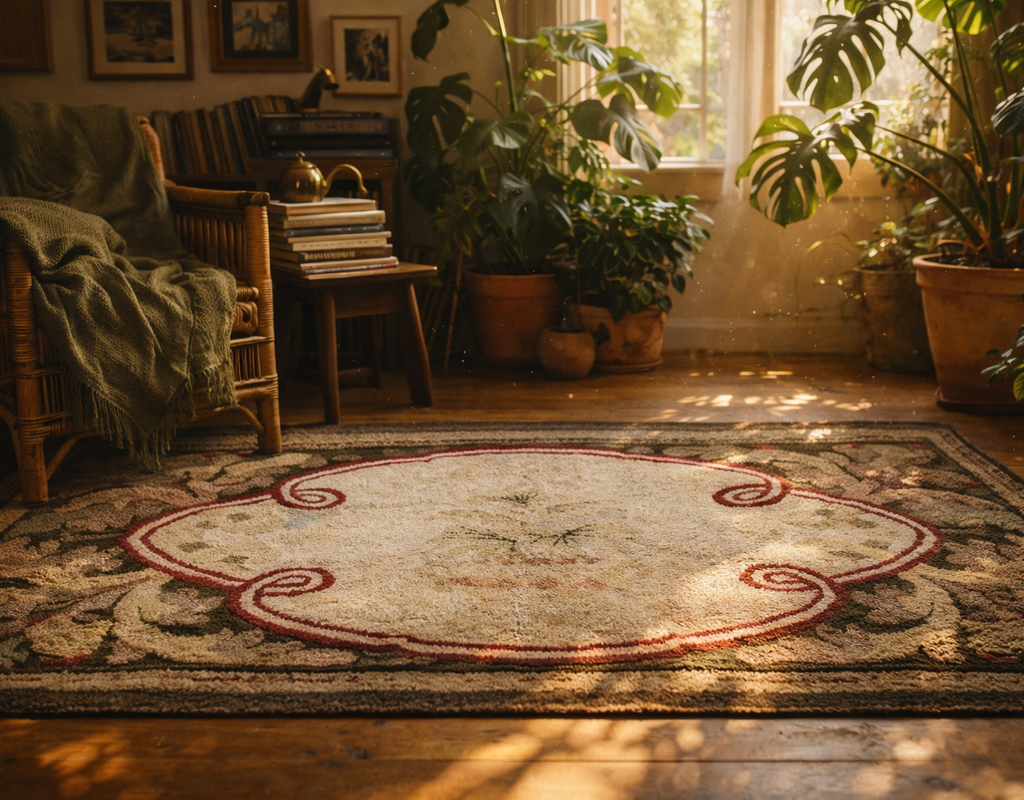
Sunlight filters into a warmly decorated room highlighting a plush, traditional area rug.
- Use as wall art rather than floor coverings: Antique American hooked rugs, especially those with burlap foundations, can become fragile with age. — Why: Displaying them on the wall prevents wear and extends their lifespan.
- Avoid direct sunlight and humidity: Exposure to UV rays fades dyes, while moisture weakens fibers. — Why: Controlled environments protect both color and structure.
- Store flat or rolled, never folded: Folds can create permanent creases and break fibers in old backings. — Why: Rolling or laying flat reduces stress on the textile.
Restoration: How It Affects Value
Can restoration increase a hooked rug’s market price? Yes—if done carefully. Antique rug restoration performed by professionals can stabilize weak areas, replace lost loops, and revive appearance, which often enhances value and marketability.
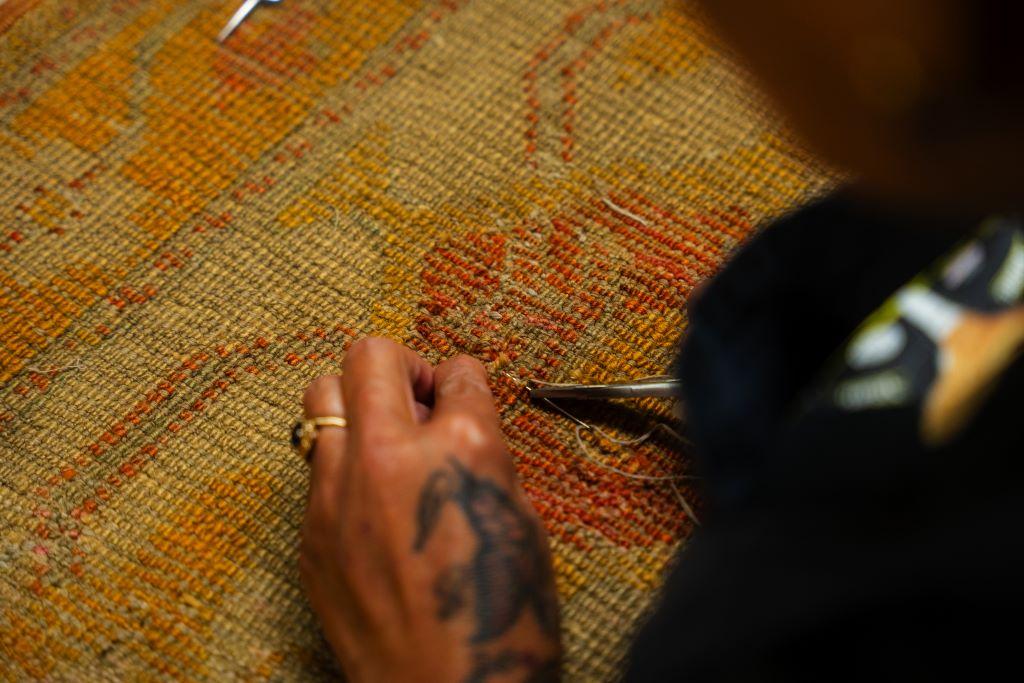
Detail of hands mending a rustic, richly colored woven rug.
However, excessive intervention or over-restoring can diminish originality, making a rug less appealing to serious collectors. The best restorations aim to preserve rather than reinvent, balancing authenticity with longevity.
Practical Care Tips
- Vacuum lightly without beater bars: Gentle suction removes dust without pulling loops. — Why: Aggressive cleaning can damage the pile and weaken fibers.
- Consult a textile expert for deep cleaning: Specialist knowledge ensures fragile fibers are treated safely. — Why: Household cleaning methods can cause irreparable harm.
- Handle with clean hands or gloves: Oils and dirt from skin can stain and degrade fibers. — Why: Prevents long-term discoloration and deterioration.
Preservation of American Hooked rugs is both an art and a responsibility. With thoughtful display, cautious cleaning, and professional restoration when necessary, collectors can ensure that vintage and antique American hooked rugs continue to tell their stories for generations to come.
Explore Some of Our Favorite American Hooked Rugs
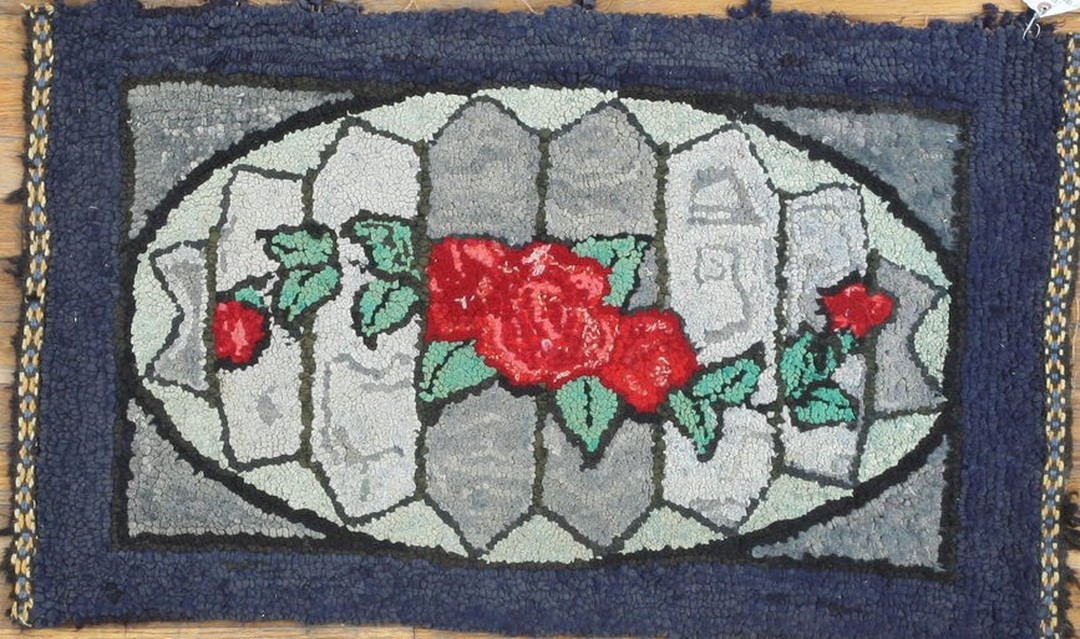
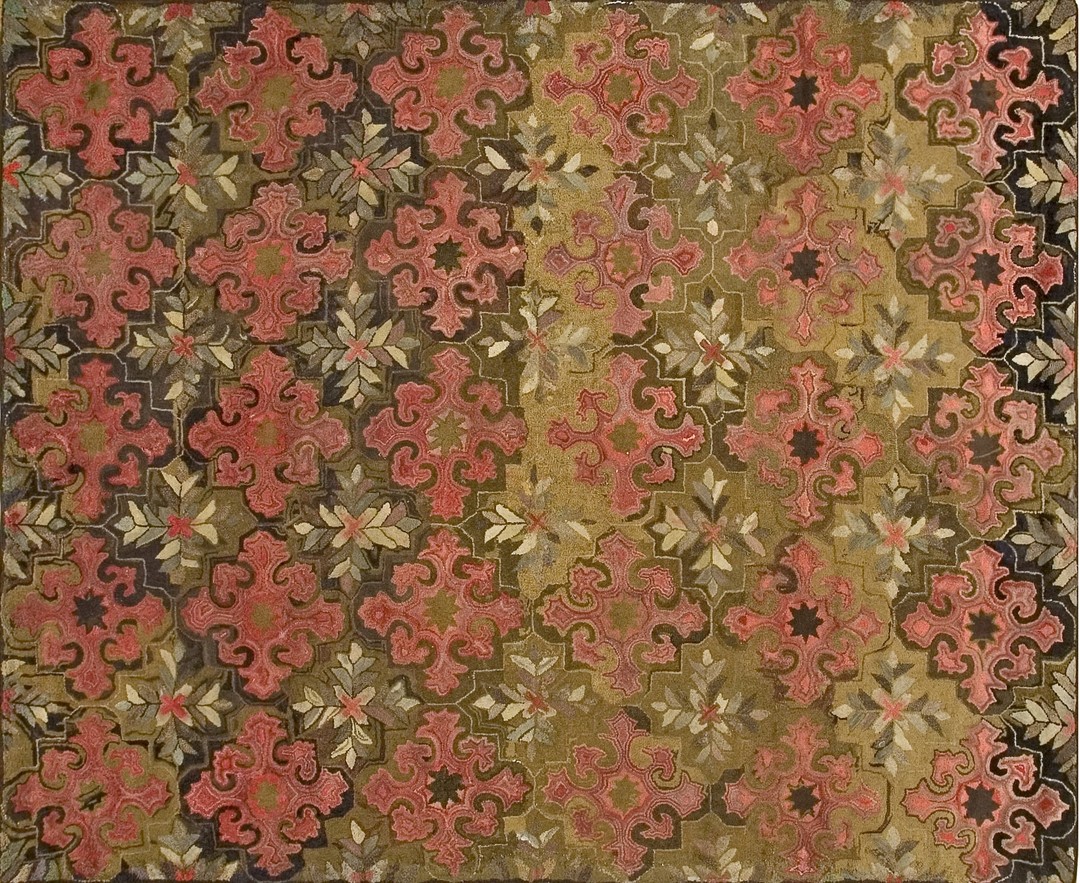
FAQ
- How should I store American hooked rugs?
Clean first, roll (don’t fold), wrap in breathable material, and keep cool and dry. Inspect quarterly and use moth prevention; long-term storage of dirty wool invites infestation.
- Can American hooked rugs be used outdoors?
Traditional wool American hooked rugs are indoor-only. For porches or patios, choose polypropylene “hooked-look” outdoor rugs designed for moisture and UV resistance.
- Are American hooked rugs eco-friendly?
Many American hooked rugs use natural wool and recycled textiles with low VOCs. Check labels—some modern versions add latex backings; low-VOC or glue-free options exist.
- Do American hooked rugs shed?
Wool loops may shed lightly at first, then settle. Expect roughly 3–10 years of life for quality hand-hooked rugs with proper padding, rotation, and care.
- Are American hooked rugs good for dining rooms?
They can be, if loops are dense and low. Size so chairs remain on the rug—about 24 inches beyond the table edge—and use a spill-resistant pad.
- Where can I buy American hooked rugs in the U.S.?
Check antiques dealers, auctions, and folk-art shows for older pieces. For new American hooked rugs, visit specialty rug stores or artisans’ studios and reputable online marketplaces.
- What do American hooked rugs cost?
New hand-hooked wool rugs typically run \~\$200–\$1,500 depending on size. Antiques range from a few hundred to tens of thousands; exceptional folk-art pieces can exceed \$50,000.
- What designs are typical in American hooked rugs?
American hooked rugs often feature florals, geometrics, and animals. Pictorial folk-art examples, such as Pennsylvania animal motifs, are especially prized.
- How can I date an antique American hooked rug?
Look for burlap backings (common after \~1850), Frost-style stenciled patterns (post-1868), dye types, and age-consistent wear. When unsure, get a textile appraisal.
- How can I hang an American hooked rug on the wall?
Sew a cotton sleeve along the back and mount with a Velcro® strip on a wooden batten. This museum-style method distributes weight and prevents stress on loops.
- Do American hooked rugs fade in sunlight?
Strong UV can fade dyes, especially older aniline colors. Rotate American hooked rugs twice yearly and use window shades to reduce exposure.
- Are American hooked rugs safe over radiant floor heating?
Yes—natural-fiber American hooked rugs with felt pads generally suit radiant heat. Follow floor-manufacturer temperature limits and avoid thick pads that trap heat.
- What rug pad works best under American hooked rugs?
Use felt or felt-with-natural-rubber on hardwood/tile, trimmed 1–1.5 inches smaller than the rug. On vinyl floors, choose a “vinyl-safe” pad (felt/EVA), not rubber or latex.
- How do I fix a pulled loop in an American hooked rug?
Gently pull the loop back to the underside with a hook or tapestry needle—don’t cut it. If the backing tore, have a professional insert a patch and rehook.
- Can I machine-wash an American hooked rug?
No. Machine washing can distort loops and backing. Spot-clean promptly and use a professional cleaner experienced with American hooked rugs for deep cleaning.
- How do I clean American hooked rugs safely?
Vacuum with suction only—no beater bar—and blot spills using a wool-safe solution. Avoid soaking; older burlap backings are fragile and can weaken when wet.
- Are American hooked rugs pet-friendly?
Loops can snag on claws, so pick dense, low-loop American hooked rugs and keep nails trimmed. A felt-rubber pad reduces movement and stress on loops.
- How durable are American hooked rugs in high-traffic areas?
Quality wool American hooked rugs handle moderate traffic with a good pad. For heavy use, choose tight, low loops and rotate every 3–6 months.
- How do American hooked rugs differ from braided rugs?
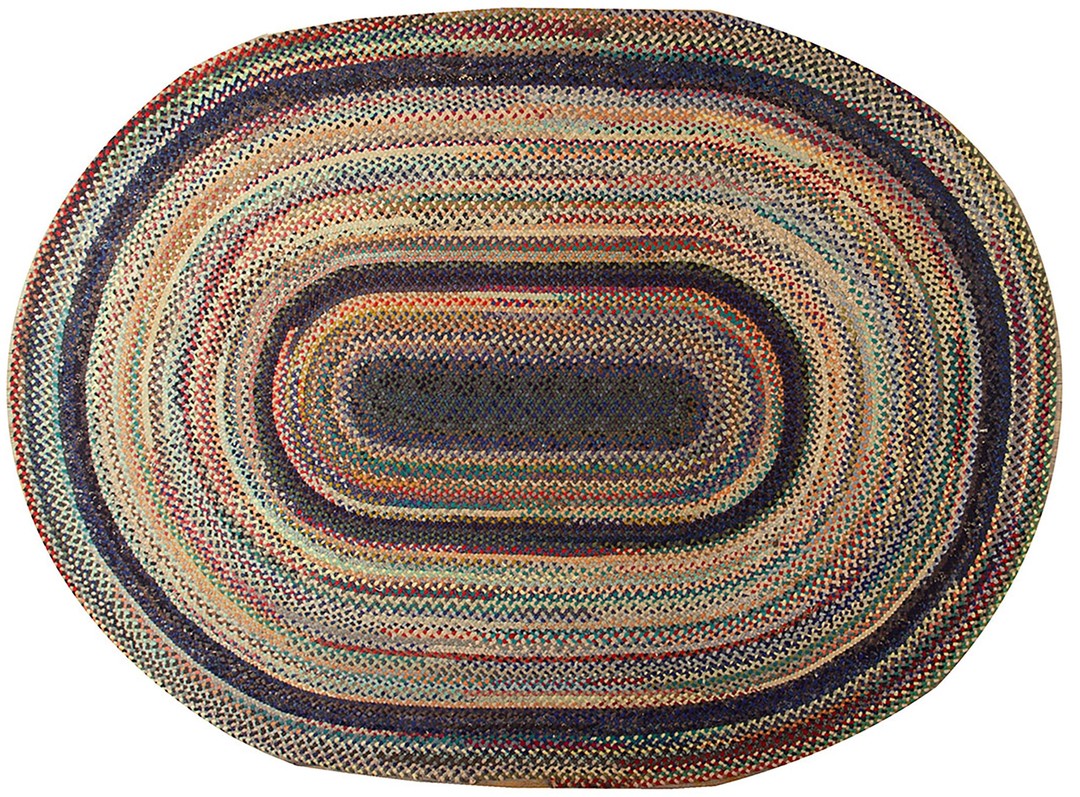
American hooked rugs are loop-pile works built through a backing; braided rugs stitch coiled fabric braids into ovals, rounds, or rectangles. Braids feel thicker and more rope-like.
- How do American hooked rugs differ from latch-hook rugs?
American hooked rugs form uncut loops; latch-hook rugs tie short yarn pieces into knots, creating a cut pile. Tools and base fabrics differ (hook on linen/burlap vs latch on canvas mesh).
- Are American hooked rugs considered folk art?
Yes—major U.S. museums collect American hooked rugs as folk art. Common motifs include florals, geometrics, eagles, dogs, and pictorial farm scenes.
- What materials are used in American hooked rugs?
Traditional American hooked rugs use wool or cotton rags for the pile and burlap or linen backings. Many modern versions use wool yarn on cotton or synthetic scrim for stability.
- Where did American hooked rugs originate?
American hooked rugs developed in the Northeast, especially Maine, as thrifty home crafts. By the late 1860s, Frost’s stenciled patterns helped popularize them nationwide.
- How are American hooked rugs constructed?
Makers use a hook to pull continuous wool or fabric strips into loops on a stiff base (linen, burlap, or rug warp). The loops stay uncut, creating a raised, textured surface.
- What is an American hooked rug?
An American hooked rug is a loop-pile textile made by pulling wool or fabric strips through burlap or linen backing. The craft flourished in 19th-century New England and remains a celebrated folk art.