
Introduction to the Navajo World
Explore our curated selection of handwoven Navajo rugs as well as other types of Native American rugs and own a piece of American artistry today.
Defining Navajo and Terminology
What the outside world recognizes as “Navajo” textiles are known to the Diné people—the Southwestern Indigenous nation often referred to by that name—as diyogí. The word Diné translates to “The People,” a name that encapsulates a language, tradition, and weaving legacy central to their cultural identity. The term Navajo itself is an exonym, originating from the Tewa Pueblo word Navahu (meaning “large field”), which was later adapted by Spanish colonists.
While “Navajo” has become the standard nomenclature in the global trade of authentic textiles, within the community, the weavers’ own terminology prevails. By using diyogí, Diné weavers assert a cultural self-definition that transcends Western markets, reminding historians and collectors that these pieces are not merely commodities, but living expressions of identity. An authentic Navajo weaving is recognizable through several distinctive technical hallmarks: tight hand-spun wool, the use of traditional upright looms, and geometric motifs that harmonize ancestral tradition with modern innovation.
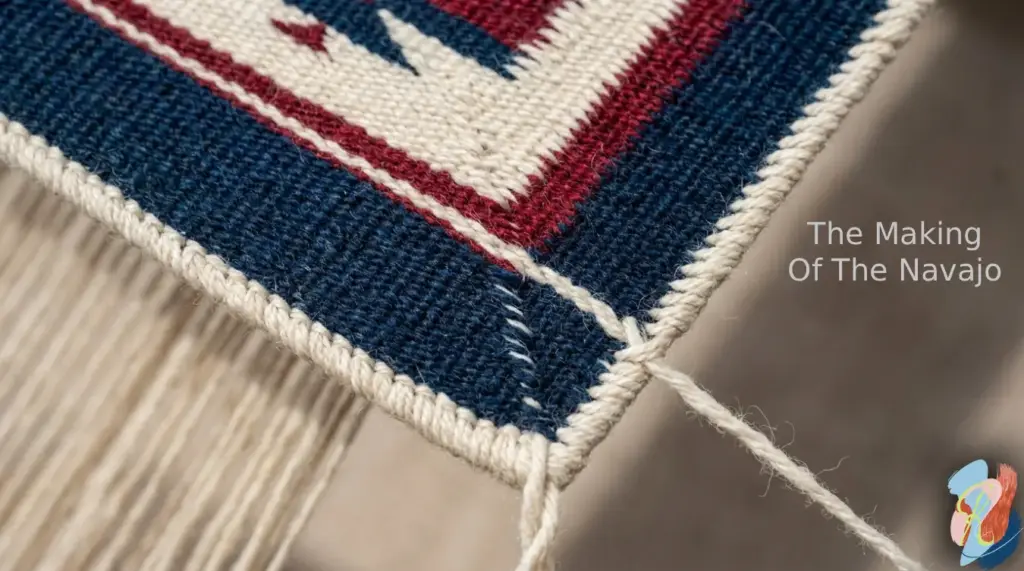
Unlike imitations or other tribal traditions, an authentic Navajo weaving utilizes a continuous warp, creating a seamless finish without end fringes or knots. The visual language—ranging from stepped diamonds and crosses to serrated edges and bordered fields—connects the weaver’s artistry to sacred oral histories and the physical landscape of the American Southwest. These structural traits together distinguish genuine Navajo blankets and rugs from mass-produced copies.
The Enduring Cultural Significance
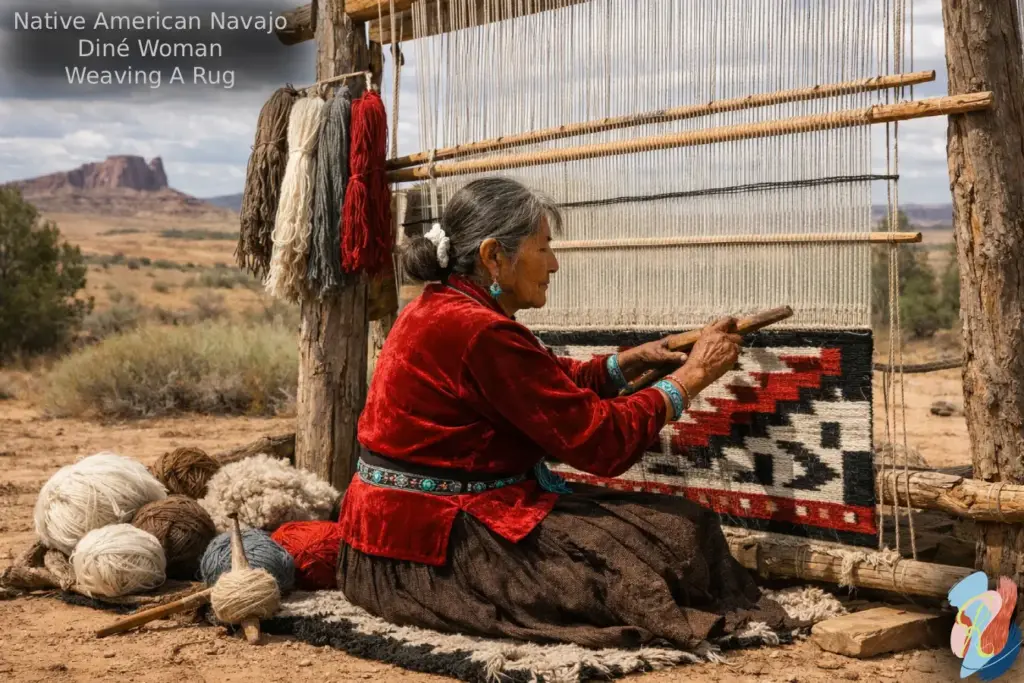
To the Diné, weaving is far more than a craft; it is a matrilineal tradition and an art form of survival, beauty, and storytelling. Each diyogí is a visual narrative, interlacing the weaver’s personal experience with ancestral memory. This process is often described by Diné elders as creating “woven spells of dignity, beauty, and utility.” These textiles hold ceremonial weight, domestic value, and artistic prestige simultaneously.
The cultural significance of a Navajo rug is inseparable from its role in daily life and spiritual practice. Patterns and colors often carry profound meanings linked to the four sacred directions and natural cycles. The act of weaving is considered a gift from the spiritual figure Spider Woman, who taught the Diné how to weave, binding cosmology directly into the textile arts. To this day, when a weaver sits at the loom, her work connects her to both the earth and her ancestors, making each rug an act of cultural preservation.
Beyond personal expression, Diné weaving embodies collective heritage. Families often maintain styles unique to their lineage, while regional designs reflect community ties across the Navajo Nation. This practice sustains cultural identity even in the face of historical and social pressures. While these textiles are admired in museums and private collections as fine art, they remain, first and foremost, expressions of Diné resilience and a sacred worldview. To call it simply a “rug” is to overlook its function as a cultural vessel; through diyogí, the Diné ensure that each thread carries forward the voices of generations past.
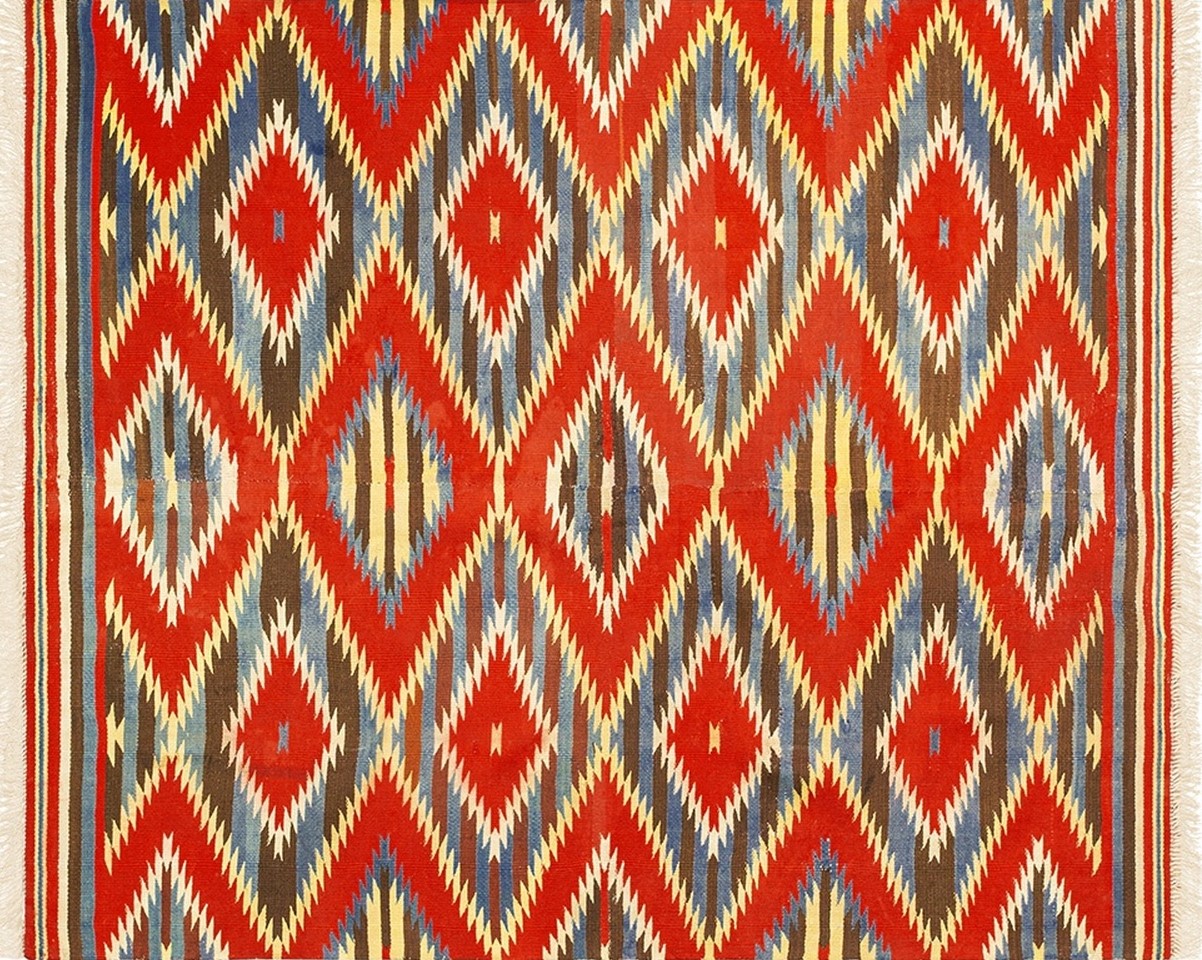
Antique Navajo American Allover Geometric Flat Weave Rug – by Rugs On Net
Origins and Evolution of Navajo Weaving
Mythic Beginnings: Spider Woman and Spider Man
According to Diné tradition, the origins of Navajo weaving are inseparable from sacred cosmology. The Spider Woman weaving legend tells that she bestowed the gift of weaving upon the Navajo people, teaching them how to interlace threads into balanced patterns that mirrored the harmony of the natural world.
Her counterpart, Spider Man, is credited with teaching the construction of the loom itself. In this myth, the loom’s parts are aligned with the universe: the earth is its base, the sky its frame, and the four sacred directions its support. Thus, weaving was not merely a technical skill but a divine act—every diyogí woven was an extension of cosmic order.
The stories placed weaving at the heart of cultural survival, ensuring that each generation understood its spiritual weight.
Early Influences: Pueblo Neighbors, Spanish Sheep
- Pueblo Neighbors — Why: In the 1600s, the Navajo lived alongside the Pueblo peoples, who were skilled cotton weavers. From them, the Navajo adopted the upright loom and techniques of weaving on a fixed frame. This intercultural exchange provided the structural foundation of what would later become authentic Navajo textiles.
- Spanish Churro Sheep — Why: With the arrival of Spanish colonists, Churro wool history reshaped Navajo weaving. Introduced in the 17th century, Churro sheep provided long, lustrous fleece, stronger and more versatile than cotton. Wool became the primary fiber, enabling finer, warmer textiles. The abundance of sheep meant weaving expanded from necessity into an essential economic and cultural practice.
- Trade and Anglo Influence — Why: Later, Anglo-American traders encouraged new designs, dyes, and markets, pushing Navajo weaving from household use into global recognition. This stage marked weaving as both traditional and adaptive.
From Blanket to Rug: The Transitional Period
In its earliest centuries, Navajo weaving origins were rooted in practicality. The textiles were woven as traditional Navajo blankets, draped over the body for warmth and status. These blankets were tightly woven, lightweight yet durable, and valued as trade items across the Southwest. Over time, particularly in the 19th century, a Navajo blanket to rug transition began.
Anglo-American traders recognized the global demand for floor coverings and encouraged the Diné to adapt their weaving to rectangular formats suitable as rugs. While the functional shift from blanket to rug occurred, the artistry, motifs, and spiritual depth remained constant.
This transformation ensured Navajo weaving’s survival in an evolving market, preserving heritage while creating a new category of Native American rugs that spread worldwide.
The Three Phases of the Chief’s Blanket: The Pinnacle of Prestige
Long before the transition to floor coverings in the late 19th century, Navajo weaving reached its aesthetic and technical zenith in the Chief’s Blanket. These were not rugs, but high-status shoulder garments—tightly woven, water-repellent, and designed to drape elegantly over the body. Within the world of Native American textiles, the Chief’s Blanket represents a sophisticated intersection of economic power, artistic evolution, and intertribal diplomacy.
Technical Distinction: Wider Than Long
A primary mechanical difference between a Chief’s Blanket and other tribal textiles (such as those of the Pueblo) is the weaving orientation. Most blankets are woven longer than they are wide; however, a Chief’s Blanket is woven wider than long. This ensures that when the garment is wrapped around the shoulders, the horizontal bands align perfectly at the front, creating a continuous, balanced visual field. Woven on an upright loom with a continuous warp and no fringe, these pieces utilized the fine, lustrous wool of the Navajo-Churro sheep, often featuring “lazy lines”—subtle diagonal shifts in the weave that serve as a hallmark of hand-loomed authenticity.
Who Wore Them and Why?
Despite the name, these garments were not restricted solely to Diné leadership. The “Chief” designation arose because these blankets were so expensive and time-consuming to produce—requiring months of spinning and weaving—that only the wealthiest individuals could afford them. They became a primary trade currency, highly coveted by the leaders of the Ute, Cheyenne, and Sioux nations. To wear a Navajo Chief’s Blanket was a declaration of immense prosperity and political influence across the Great Plains and the Southwest.
The Evolution of the Three Phases
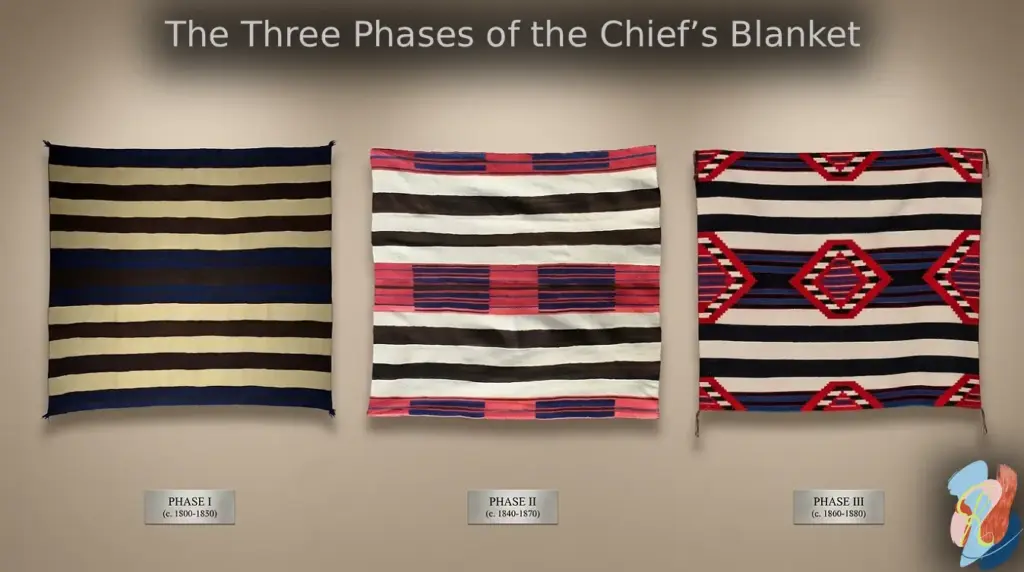
Collectors and historians categorize the evolution of these designs into three distinct “Phases,” each representing a shift in the visual vocabulary of the Diné weavers:
- Phase I (1800–1850): The Classic Minimalist. Defined by horizontal bands of natural ivory and brown-black wool, punctuated by thin stripes of indigo-blue. Its beauty lies in its mathematical austerity and the purity of the hand-spun yarn.
- Phase II (1840–1870): The Introduction of Red. This phase introduced small rectangular blocks of red, typically layered into the blue bands. The red was often sourced from Bayeta—European trade cloth unraveled and re-spun by the weavers. The addition of twelve red rectangles marked the beginning of a move toward more complex geometric arrangements.
- Phase III (1860–1880): The Diamond Composition. This is the most iconic style, featuring nine large, bold diamonds or partial diamonds arranged in a grid. When the blanket is wrapped around the wearer, the diamonds meet in the front and back to form a complete, singular medallion.
| Feature | First Phase | Second Phase | Third Phase |
|---|---|---|---|
| Primary Design | Simple horizontal bands | 12 Rectangular “boxes” | 9 Diamond elements |
| Era | 1800–1850s | 1840s–1860s | 1860s–1880s |
| Visual Style | Minimalist/Striped | Layered rectangles | Geometric/Serrated |
| Rarity | Extremely rare (~50–100 exist) | Rare transition style | Most common/Arti |
Symbolism of Color and Design
The visual language of the Chief’s Blanket is rooted in Diné cosmology and the Southwestern landscape:
- Diamonds and Triangles: Often represent the four sacred mountains that border the Navajo homeland, symbolizing protection and spiritual grounding.
- Blue (Indigo): Associated with the sky and the “female” principle of peace and reflection.
- Black and White: Represent the duality of night and day, or the natural variation of the earth.
- Red: Symbolizing the sun, life force, and the intensity of the “male” principle.
Finding an authentic Phase I or Phase II blanket remains the absolute pinnacle of textile collecting. These pieces are not merely historical artifacts; they are the woven manifestations of a period when the Diné were the preeminent artistic and economic force of the Southwest, asserting their identity through the rhythmic geometry of the loom.
A Uniquely Diné Legacy
While the high-status “Chief’s Blanket” was worn and treasured by leaders of the Sioux, Cheyenne, Ute, and Choctaw nations, it is a historical distinction that the Navajo (Diné) were the only tribe to create these specific woven textiles for actual internal use. To the Diné, the Chief’s Blanket was not a commercial product developed for outside markets, but a functional masterpiece of indigenous engineering designed for their own people and high-ranking indigenous peers.
While other Great Plains or Woodlands tribes focused their artistic leadership on hide-tanning, quillwork, or intricate beadwork, the Navajo alone developed the upright loom technology and “wider-than-long” orientation required to produce these seamless, water-repellent garments. When a leader from another tribe wore a Navajo blanket, they were wearing an imported luxury item—the “gold standard” of trade—that they could not produce within their own weaving traditions.
The meaning of a Navajo textile is thus inseparable from Diné identity. To call it simply a rug or a commodity is to overlook its primary function as a cultural vessel. Through the diyogí, the Diné assert a continuity of language, heritage, and sacred knowledge, ensuring that each thread woven today carries forward the resilient voices and singular artistry of generations past.
The Impact of the Long Walk
The Long Walk Navajo (1863–1868) marked a devastating interruption in weaving traditions. During this forced relocation, the U.S. military marched thousands of Diné from their homelands to Bosque Redondo.
The exile led to widespread suffering: flocks of Churro sheep were decimated, looms abandoned, and families stripped of the very resources that sustained weaving. The cultural trauma threatened not only survival but also the continuity of textile arts. Yet resilience defined the response.
After their eventual return to Diné Bikéyah (the Navajo homeland), the people rebuilt their herds and looms. Weaving resumed with renewed vigor, shaped by memory and loss but also by adaptation to new materials and markets. The Long Walk thus stands as a turning point—though it devastated communities, it did not erase weaving.
Instead, it forged a tradition that carried both grief and strength, ensuring that Navajo weaving origins and evolution remained central to Diné identity. Through myth, intercultural exchange, adaptation, and endurance, Navajo weaving became more than textiles. It is a history woven in wool: sacred, practical, and unbroken.
Another major turning point came during the 1930s, when federal livestock reduction policies sharply reduced Navajo sheep herds across the reservation. Because sheep were central not only to food and household economy but also to wool production, this period directly affected weaving practice, material availability, and family livelihoods.
Design Characteristics and Iconic Motifs
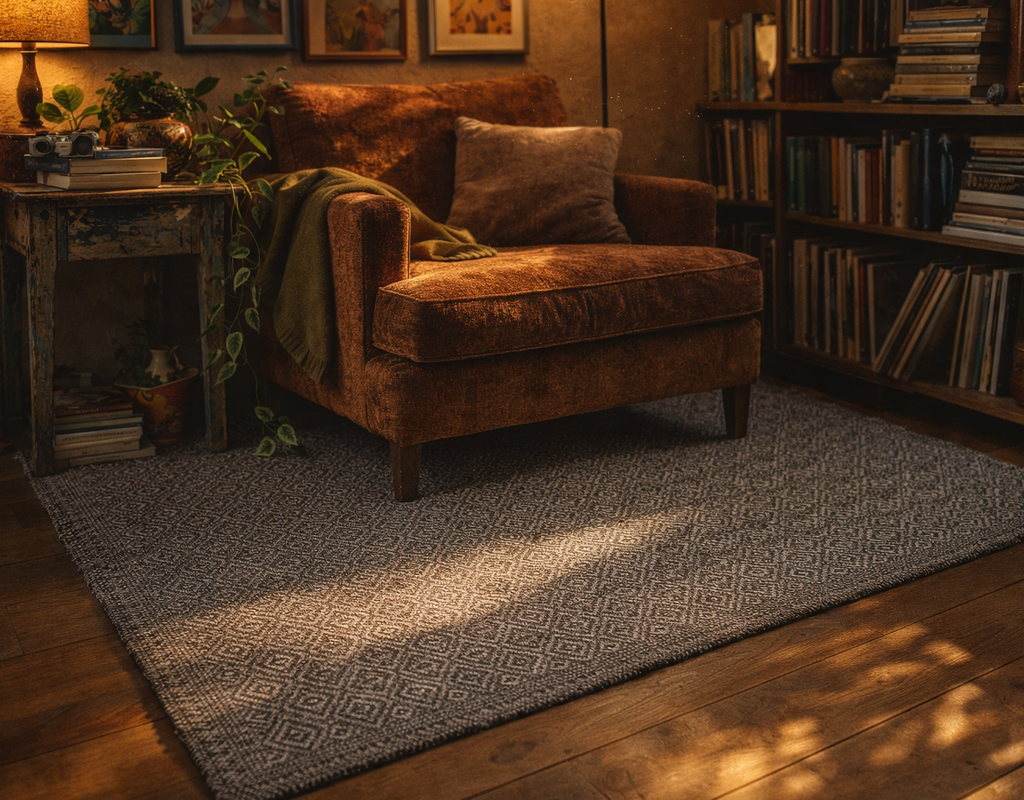
A geometric patterned rug anchors a warm and inviting reading corner filled with rich textures and deep colors.
Weaving a geometric pattern with a lightning motif.
Geometric Patterns in Navajo Rugs
- Diamonds: Among the most enduring Navajo rug patterns, the diamonds are often interpreted by collectors and scholars as references to sacred geography, balance, or protective enclosure, though Navajo motifs do not always carry one fixed universal meaning and may vary by weaver, family tradition, and regional style.
- Zigzags: Zigzags are frequently associated with movement, lightning, water, or directional energy, though interpretations vary and are not universally fixed.
- Stepped Triangles: These often appear in sequences and convey a sense of growth or ascent. They may echo the natural shapes of mesas or the movement between different worlds in Diné cosmology.
- Crosses: Beyond their geometric form, crosses can honor Spider Woman and mark sacred intersection points of earth and sky. but it’s imporatant to note that cross-like forms may be interpreted in different ways depending on context, and not all geometric forms carry a singular symbolic reading.
Together, these geometric Navajo rugs show that motifs are never random decoration; they are visual narratives rooted in spiritual meaning.
Spider Woman Crosses & Symbolic Features
The Spider Woman cross holds deep significance, honoring the deity who first taught weaving to the Diné. Placed within a textile, it is a mark of gratitude and remembrance, acknowledging the divine origins of weaving. In some area rugs, weavers add a tiny hole or an opening known as a Navajo spirit line (ch’ihónít’i).
This deliberate imperfection acts as a pathway for the weaver’s spirit to exit the rug, preventing her energy from becoming trapped within the threads. These elements distinguish symbolic Navajo weaving from imitations, showing that each textile is both spiritual expression and material craft.
The Whirling Log: A Sacred Symbol
Collectors of antique Navajo rugs may encounter the “Whirling Log” motif, which resembles a swastika. In Diné cosmology, this is a sacred symbol of healing and movement, often used in sand paintings. Following World War II, many Navajo weavers signed a proclamation to stop using the symbol to avoid confusion with the Nazi emblem. Today, antique rugs featuring this motif are rare and historically significant, but they require cultural context to be understood as symbols of peace and origin.
Colors and Dyes: From Natural to Aniline
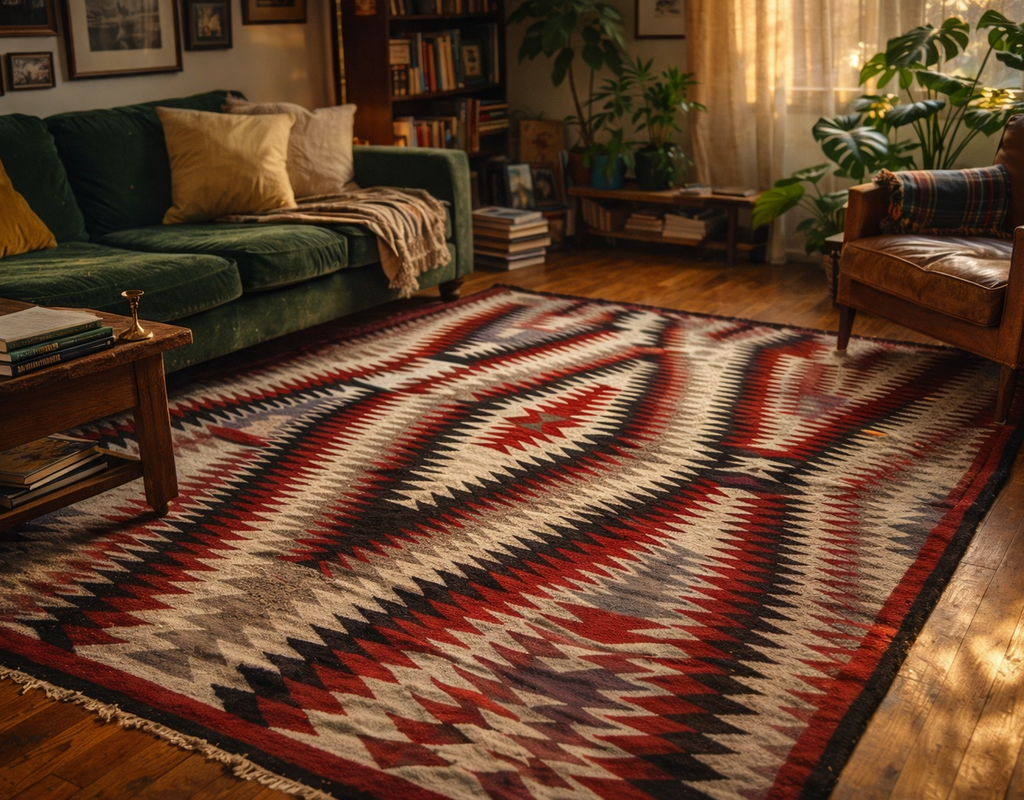
A richly textured interior scene where bohemian warmth meets Southwestern rug design.
- Natural Wool Shades — Why: Early natural dye Navajo rugs relied on undyed fleece in white, black, and brown, valued for their authenticity and subtle harmony.
- Indigo Blue — Why: Introduced through trade, indigo gave depth and contrast, often paired with natural tones.
- Raveled Bayeta Red — Why: Bright red cloth, unraveled from European trade textiles, became a treasured source of dye and status color.
- Aniline Dyes — Why: By the late 19th century, synthetic dyes created the “Eye Dazzler rugs,” known for their intense, brilliant hues. While striking, collectors often judge them differently: natural dyes are seen as markers of age and authenticity, often commanding higher value, whereas early aniline pieces reflect adaptation and market influence.
Distinctive Structural Elements
- Spirit Lines — Why: Some Navajo weavings include a spirit line (ch’ihónít’i), a small line extending from the field to the edge that is often understood as allowing the design to remain open rather than fully enclosed. Its use varies by weaver, family teaching, and intended composition.
- Lazy Lines — Why: Subtle diagonal breaks in the weave occur when the weaver shifts working sections on the loom. Far from being flaws, these are hallmarks of authentic Navajo craftsmanship, revealing the practical rhythm of weaving.
- Four-Selvage Edge — Why: Unlike many woven rugs, Navajo textiles have no fringe; the warp runs continuously, producing a seamless, self-contained edge. This technique reinforces authenticity and durability.
Germantown Rugs: The Railroad Revolution
In the late 19th century, the expansion of the railroad brought a new material to the Reservation: Germantown Wool. This was pre-dyed, commercially spun yarn from Pennsylvania. It allowed Navajo weavers to experiment with an “eye-dazzling” array of neon-bright colors they couldn’t achieve with local plants. These “Germantown” rugs are identified by their incredible color saturation and 4-ply yarn, representing a unique bridge between Industrial America and indigenous art.
Borders and Layouts: Storm Patterns, Central Medallions
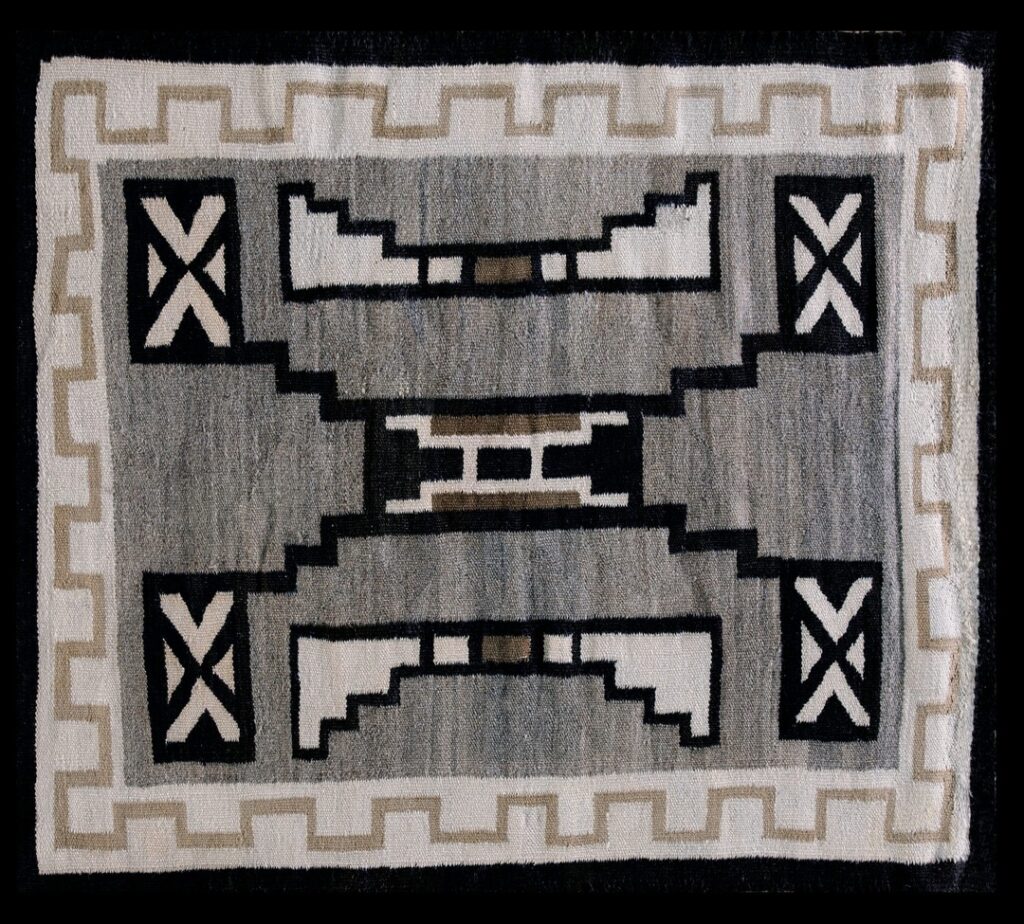
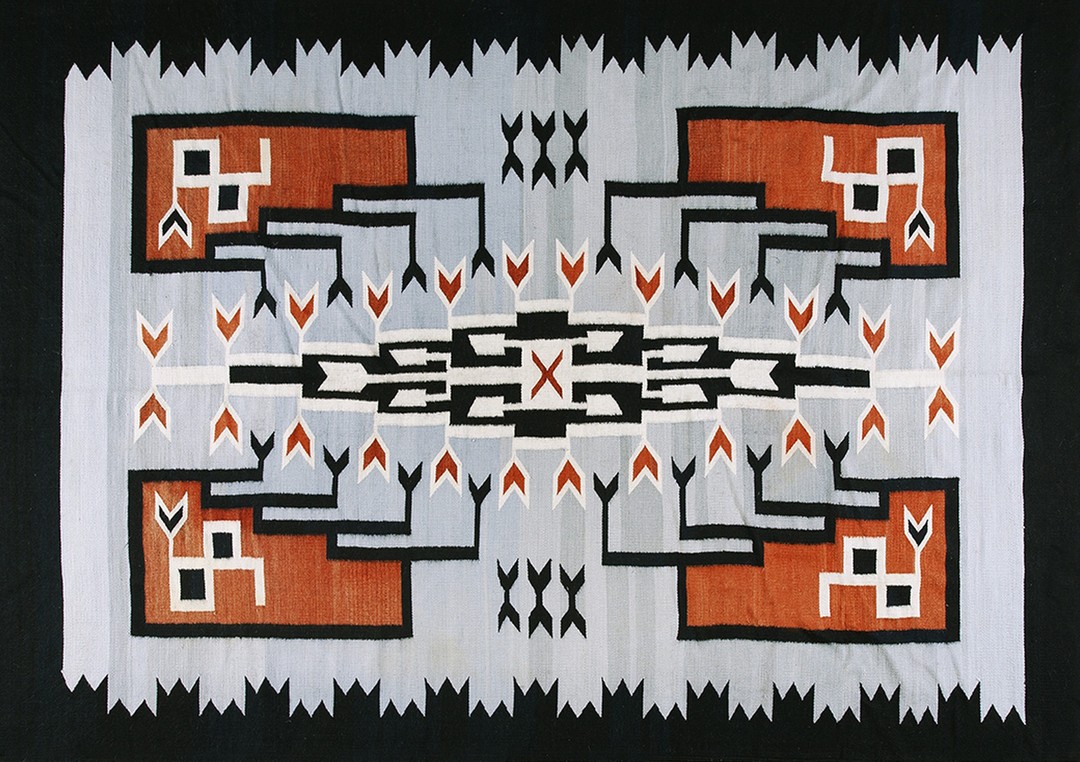
Certain layouts became iconic. The Storm Pattern features a central rectangle with zigzag lines—lightning bolts—connecting it to smaller rectangles at each corner, echoing Diné cosmology and the balance of forces across the universe. Central medallions, often diamond-shaped, anchor the composition and mirror sacred balance.
These designs are not purely aesthetic choices but structured expressions of worldview, connecting every rug to landscape, weather, and spiritual orientation. In every thread, Navajo rug patterns reveal meaning: geometry stands for sacred places, colors carry history, and structural elements like the Navajo spirit line protect the weaver’s spirit. The result is a textile that is at once functional, symbolic, and profoundly alive.
Materials, Tools, and Weaving Techniques
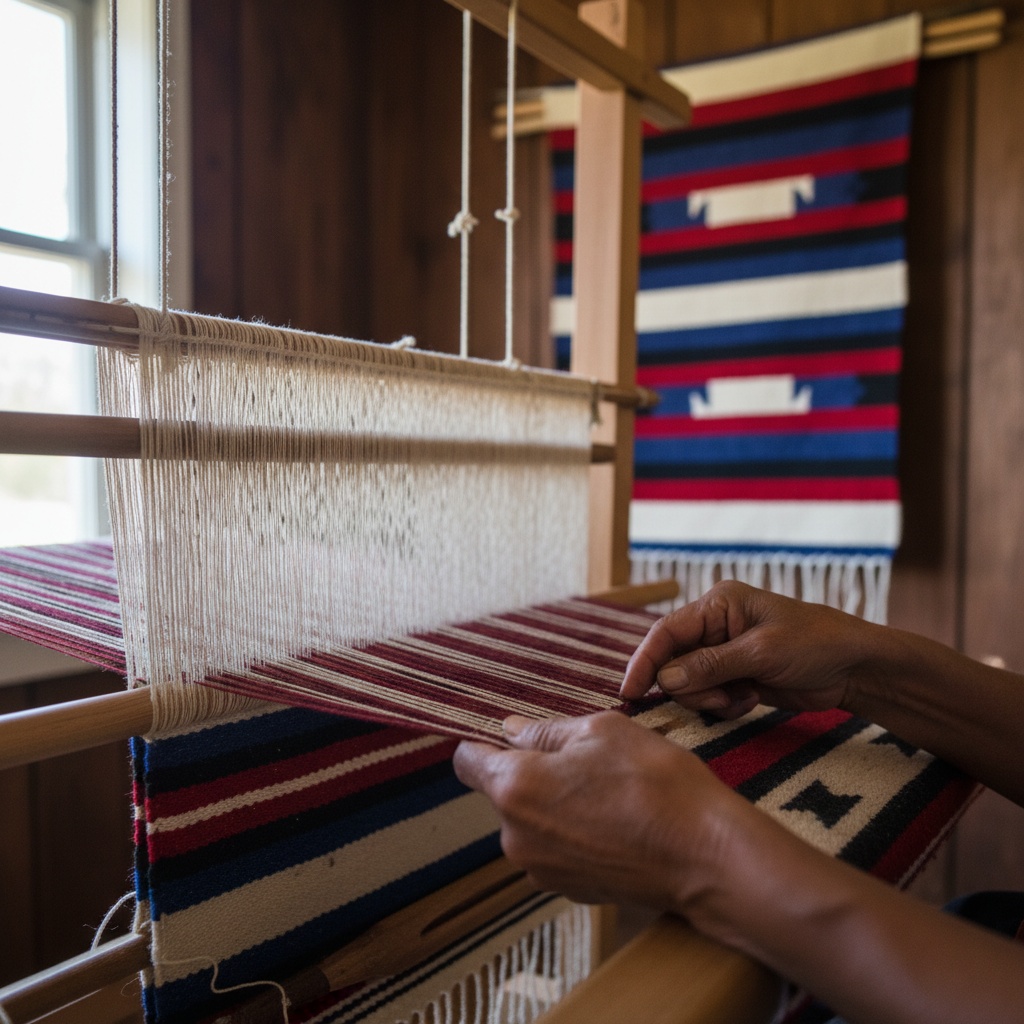
Using a shuttle on a vertical loom.
Traditional Materials: Navajo-Churro Wool and Cotton
The foundation of authentic Navajo rugs is their material. Early weavings often used cotton warps, learned from Pueblo neighbors, but by the 17th century the introduction of Spanish Navajo-Churro sheep transformed weaving. This hardy breed produced long, lustrous fleece ideally suited to spinning strong yet fine yarn.
Over time, Navajo rug wool became the defining fiber of Diné weaving, prized for its durability, warmth, and ability to take both natural and later synthetic dyes. The finest rugs still use Churro wool today, maintaining continuity with ancestral practices.
Wool quality directly affects the longevity of a rug: coarse or short-staple fibers wear down quickly, while high-grade fleece ensures strength, resilience, and a smoother finish.
In the late twentieth century, Navajo-Churro sheep underwent important revival efforts after earlier herd reductions had diminished traditional flocks. This revival helped restore access to long-staple wool valued for handspinning and for the distinctive texture associated with traditional Navajo weaving.
Upright Loom Construction
The Navajo loom construction is distinct in both design and outcome. Unlike floor looms with foot pedals, the Navajo loom is upright, simple, and portable, with no moving parts. Its defining feature is the continuous warp rug structure, where the warp threads loop around the loom’s beams and form a seamless base.
This method eliminates fringe and produces all-selvage edges, so the rug is finished on every side and can be reversed without unraveling.
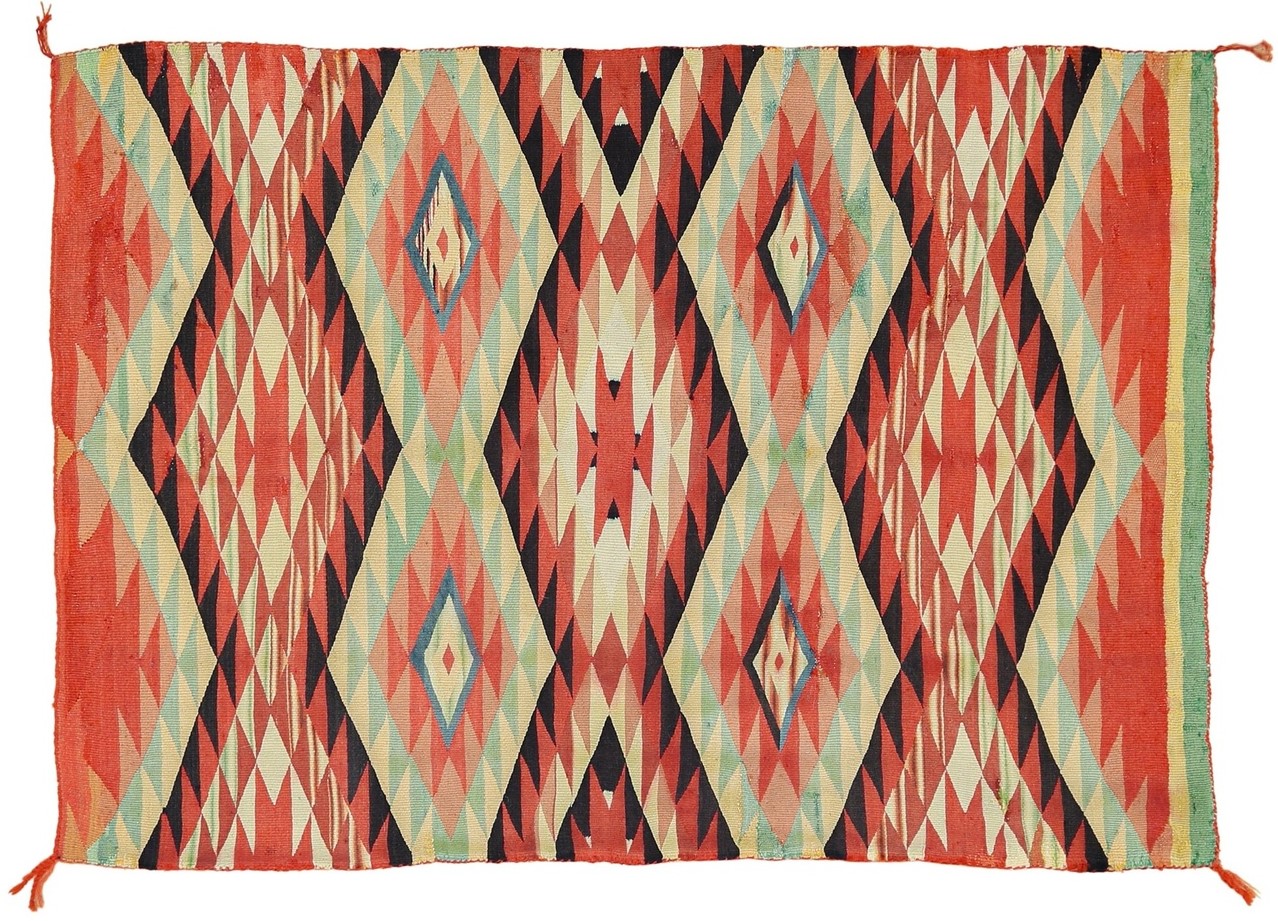
Antique Navahu American Geometric Multicolor 1890s Rug – by Rugs On Net
This construction hallmark sets Navajo weaving technique apart from most other traditions worldwide, where cut warps and knotted fringes are common. The continuous warp is both a technical achievement and a symbol of self-contained completeness.
Hand-Spinning and Dyeing Methods
- Handspun Navajo Yarn — Why: Wool is carded and spun by hand on a spindle, producing yarn with subtle variations in thickness and twist. This gives each rug unique character and tactile depth.
- Vegetal and Mineral Dyes — Why: Early dyes came from native plants, roots, bark, and minerals, creating earthy reds, browns, yellows, and the famous indigo blue. These colors carried cultural prestige and harmony with the landscape.
- Raveled Trade Cloth — Why: Red “bayeta” cloth imported from Europe was unraveled to reuse its vibrant cochineal dye, a mark of wealth in 18th–19th century weaving.
- Synthetic Dyes — Why: By the late 1800s, Germantown yarns and aniline dyes introduced brilliant colors and expanded design possibilities, though natural/vegetal dyes remain most valued by collectors for authenticity.
Why Navajo Rugs Lie Flat
The compact tapestry structure and strong edge control help Navajo rugs remain unusually flat and stable over time, even after generations of use.
Weaving Innovations: Tension, Edge Joins, Lazy Lines
Navajo weavers developed remarkable refinements that reveal both technical mastery and cultural style. They control loom tension with precision, ensuring a balanced weave that resists distortion over time. At the rug’s edges, they practice edge joins—pulling yarns together so no slit forms between colors, unlike slit tapestry weaves elsewhere.
Within the field, subtle diagonal breaks known as lazy lines appear when the weaver shifts sections of work. These lines are not flaws but authentic markers of Navajo weaving technique, showing how artisans build large designs with patience and rhythm. Every aspect of material and method—handspun Navajo yarn, the continuous warp rug structure, careful dyeing, and months of labor-intensive weaving—contributes to the value and authenticity of a rug.
It is this integration of quality wool, sacred loom structure, and human skill that gives wool quality Navajo rugs their lasting beauty and extraordinary durability.
Historical Periods and Regional Styles
Classic Blanket Weaving (1700–1863)
The earliest phase of Navajo rug weaving history is known as the Classic Period, spanning the early 1700s through the Long Walk of 1863. During this time, weavers produced blankets, mantas, and sarapes of extraordinary fineness, so tightly woven that they could shed water like a poncho. These traditional Navajo blankets were garments as well as trade items, worn with pride by both Diné people and their neighbors.
The famed chief’s blankets, with their bold horizontal bands, became a prestige item across the Southwest and Plains. Each blanket was both clothing and cultural marker, demonstrating the Diné mastery of Churro wool and upright loom technique.
Transitional Era: Blankets to Rugs (1868–1890s)
After the Long Walk and the return to Navajo homelands in 1868, weaving entered a transitional period. Whereas earlier textiles were worn, this era saw the shift from blankets to rugs. The emerging tourist and Anglo markets demanded durable floor coverings, and traders encouraged weavers to adapt their designs to meet this new use.
This is when Navajo blanket weaving evolved into Navajo rugs, keeping motifs but changing proportions, thickness, and orientation. Commercial yarns like Germantown and synthetic dyes introduced brighter palettes, leading to bold “Eye Dazzler” rugs of the late 19th century. This transition ensured that weaving remained viable, linking heritage to a broader economy.
Trading Post Styles (Ganado, Two Grey Hills, Teec Nos Pos, etc.)
- Ganado Rug: Associated with trader Juan Lorenzo Hubbell, the Ganado style features deep red fields, black borders, and bold central diamonds. It became a standard of the market and remains highly recognizable.
- Two Grey Hills: Known for undyed handspun wool in shades of brown, gray, black, and ivory, these rugs are woven with tapestry-like precision. Their tight weave and natural palette make them highly collectible, often commanding premium auction prices because they showcase both technical skill and wool quality. Yes, Two Grey Hills rugs are still woven today, sustaining their reputation as masterpieces of Navajo weaving.
- Teec Nos Pos:Distinguished by bright colors, multiple borders, and complex geometric fields. These rugs often push the limits of design intricacy, making them prized showpieces.
- Crystal Storm Pattern: From the Crystal region, weavers produced the famous storm pattern rugs, with central rectangles and lightning bolts extending to the corners. Later, vegetal dyes from Crystal also defined muted, earthy palettes.
- Wide Ruins: Known for fine horizontal bands in soft vegetal-dyed colors, these rugs reflect subtlety and rhythm rather than bold central motifs.
- Klagetoh: Similar to Ganado but with gray fields rather than red, providing a distinct tonal identity.
- Chinle: This pattern is recognized for horizontal banded layouts, open compositional spacing, and vegetal palettes built around browns, greys, muted reds, and soft earth tones. Their structure often emphasizes calm visual rhythm rather than dense central medallions, making Chinle one of the most enduring regional Navajo styles of the twentieth century.
- Burntwater: These emerged as a refined later regional style distinguished by soft pastel coloration, subtle terraced geometry, and finely balanced open fields. Cream, pale gold, muted rose, and grey tones are common, often woven with exceptionally fine handspun wool.
- Toadlena: These are associated with very fine tapestry-quality weaving, dense construction, and strong technical precision. Many examples emphasize tightly controlled geometry and highly refined wool preparation, often rivaling the fineness seen in Two Grey Hills weaving.
See Examples Below:
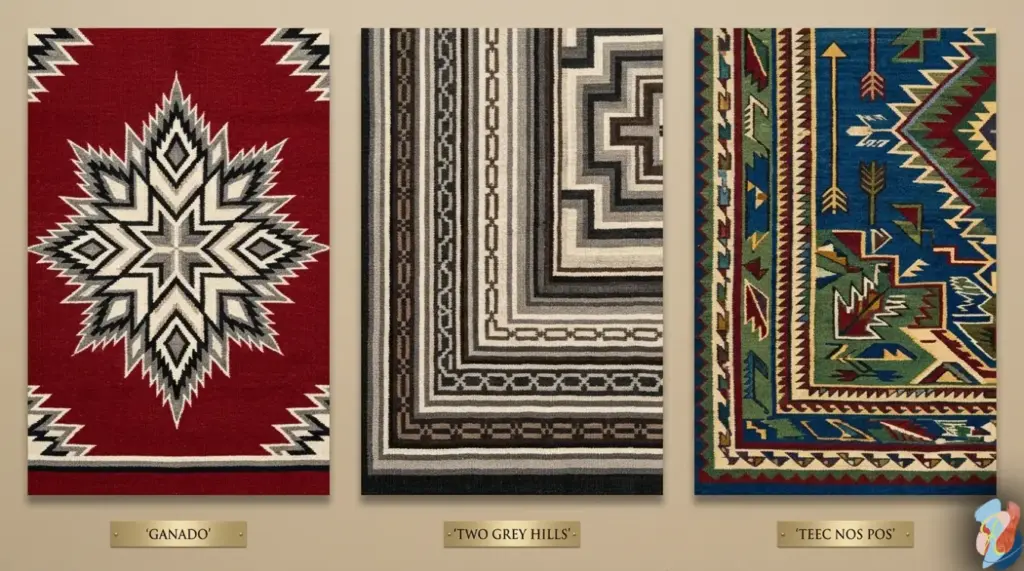
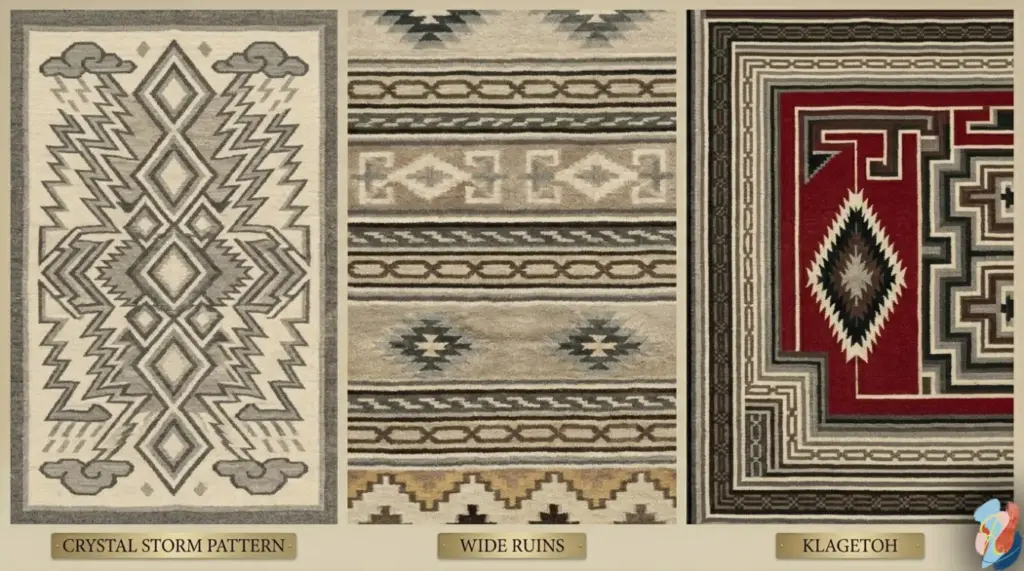
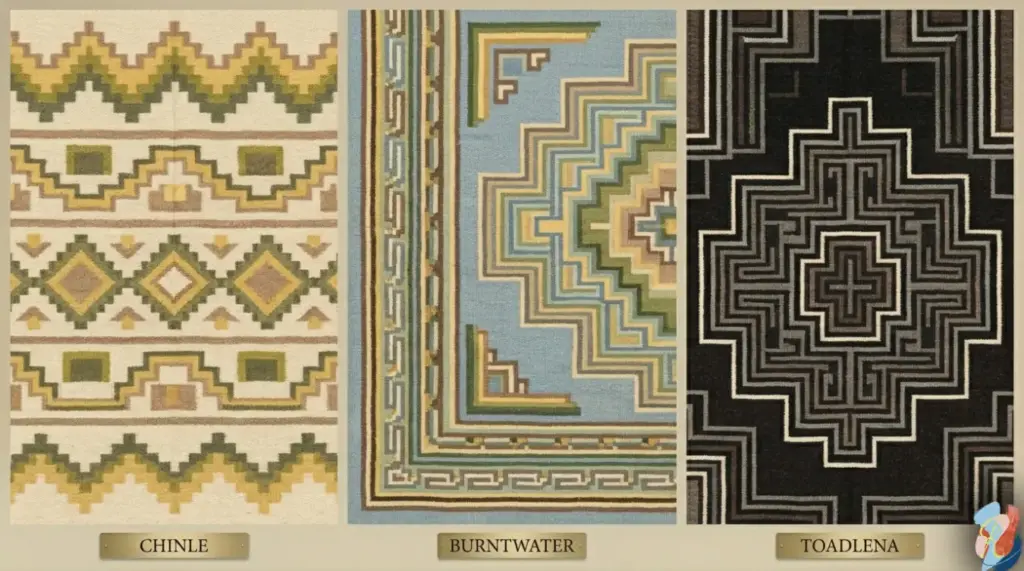
These regional Navajo rugs emerged through the influence of trading posts in the late 19th and early 20th centuries. While the labels reflect market branding, they also represent community-specific traditions that continue to this day.
Modern and Contemporary Innovations
Contemporary Diné weavers balance tradition with experimentation. Styles like pictorial rugs, Yei rugs (featuring Navajo deities), and sandpainting designs expanded the vocabulary of weaving in the 20th century. Techniques such as wedge weave Navajo textiles—where diagonal tension creates dynamic, slanted patterns—and ultra-fine tapestry Navajo rugs continue to attract collectors.
Many experts suggest that serious buyers should invest in both wedge weave and tapestry pieces, as these embody high technical artistry and innovation within tradition. Named artists have further transformed the field. Weavers such as Melissa Cody blend pop culture, digital aesthetics, and heritage patterns into cutting-edge works that travel in global art circuits.
These pieces show that Navajo weaving is not frozen in time but remains a living art form, capable of responding to contemporary issues while honoring ancestral lineage.
Today, whether one acquires a Ganado rug, a Two Grey Hills masterpiece, or a bold Teec Nos Pos, each represents not just a regional brand but a thread in the wider story of Diné resilience and creativity. These collectible Navajo rug styles remain touchstones for both cultural heritage and fine art markets.
Cultural and Social Roles in Diné Life
Weaving as Sacred Practice
For the Diné, weaving is more than craft; it is a sacred act that preserves hózhǫ́, the principle of beauty, balance, and harmony. The loom, the wool, and the weaver’s hands form part of a ritual alignment with the cosmos. Songs may be sung during the process, prayers are woven into the textile, and blessed tools are used, turning each rug into a spiritual offering.
This is why sacred Navajo weaving is often described as a prayer made tangible—threads carrying intention, dignity, and healing into physical form. The act itself is as important as the finished textile, binding the weaver’s spirit to the fabric of the world.
Gender, Family, and Matrilineal Traditions
Weaving resides firmly within Diné weaving culture as a matrilineal practice. Women are the primary weavers, and the knowledge is passed from mothers to daughters and granddaughters, linking families across generations. In Diné society, women hold land and livestock, and weaving strengthens their economic and social influence.
The loom is therefore not only a tool of creativity but also a symbol of continuity and resilience. Through weaving, women reinforce kinship ties and ensure cultural survival, teaching both technique and the deeper meaning of hózhǫ́. This intergenerational instruction answers how Navajo weaving family traditions transmit skills: by observation, apprenticeship, and lived practice within the home.
Ceremonial and Heirloom Uses
Ceremonial Navajo rugs serve vital roles at life’s turning points. They are gifted at weddings, honoring union and family. At funerals, they may be given as gestures of respect, remembrance, and healing. In rites of passage such as the Kinaaldá, weaving and woven textiles underscore the sacred bond between women, spirituality, and maturity.
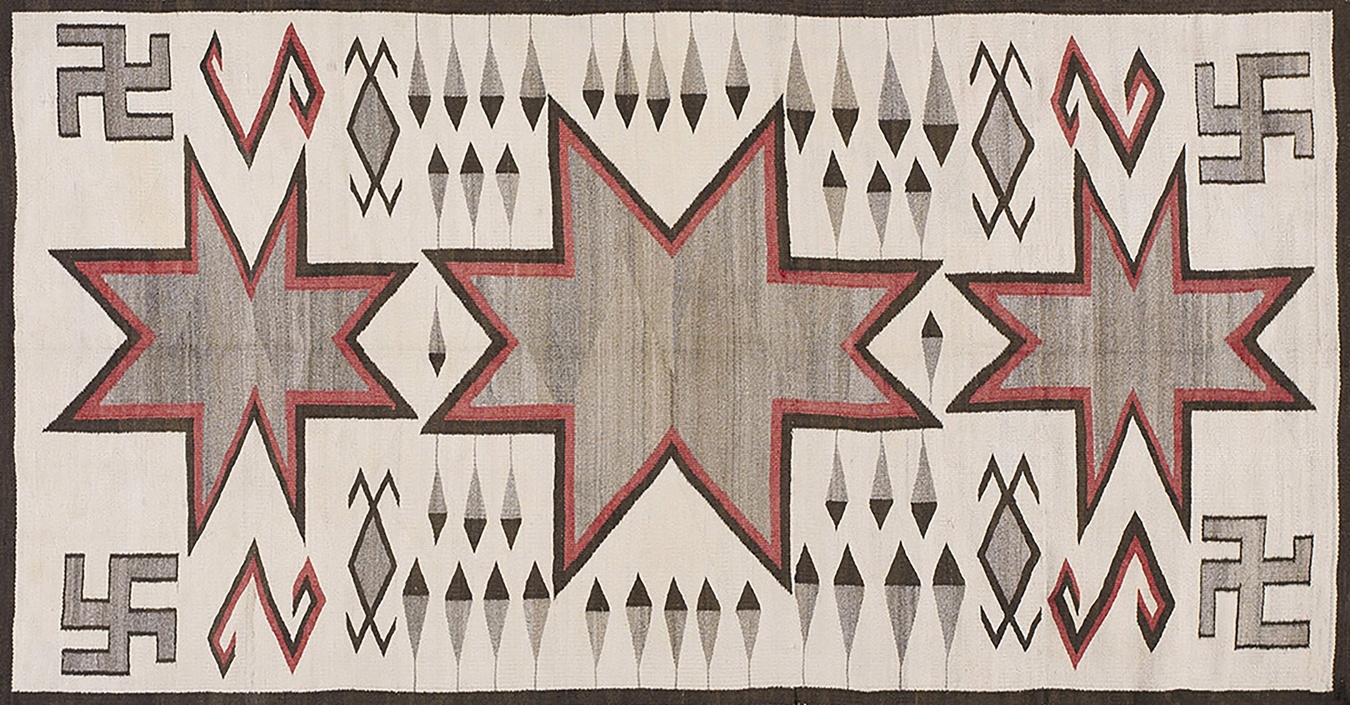
1930s Allover Geometric Wool Antique Hand Knotted Pile Ivory Beige Cream White Rectangle Rug – by Rugs On Net
As heirlooms, rugs embody family history, carrying the memory of ancestors who spun, dyed, and wove them. A rug preserved in the household becomes a living Navajo rug oral history, silently recording prayers, hardships, and celebrations across generations.
Rugs as Cultural Ambassadors and Storytelling
While woven for community use and exchange, Navajo rugs also act as cultural ambassadors. Exhibited in museums, displayed at fairs, and collected worldwide, they validate Diné women’s artistry on a public stage. Each rug tells a story—whether through geometric motifs symbolizing sacred mountains or through innovative patterns reflecting personal vision.
This storytelling function elevates rugs from commodity to narrative vessel, broadcasting Diné identity to audiences far beyond the reservation. Public recognition strengthens community pride, showing that what once lived solely in family homes now commands respect as fine art and heritage. In every role—sacred, familial, ceremonial, and diplomatic—Navajo rugs remain pillars of Diné society.
They are at once functional objects and spiritual vessels, everyday tools and timeless heirlooms, woven not just of wool but of memory, prayer, and enduring cultural identity.
Collecting, Value, and the Modern Market
Authenticity: Hallmarks and Provenance
- Handspun Wool — Why: A hallmark of an authentic Navajo rug, showing the weaver’s control over yarn texture and durability. Machine-spun yarns often indicate later or reproduction pieces.
- Continuous Warp and Four-Selvage Edge — Why: Unique to Navajo loom construction, this seamless warp structure with no fringe distinguishes genuine works.
- Lazy Lines and Spirit Lines — Why: Diagonal breaks and spirit exits are not flaws but signatures of true Diné weaving practice.
- Provenance Documentation — Why: Certificates, trader records, or family oral history greatly raise confidence for buyers and boost provenance Navajo rug value at resale.
Origins provenance is especially critical: a rug with verifiable documentation often sells far above an undocumented equivalent, as collectors and auction houses seek assurance of origin and integrity.
The Truth About “Lazy Lines”
A common question among new collectors is whether a diagonal line in the weave is a repair or a defect. These are actually “Lazy Lines.” Because Navajo looms can be quite wide, a weaver will often focus on one vertical section at a time as far as she can reach without moving her seat. The diagonal seam where two sections meet is a hallmark of an authentic, hand-woven Diné textile and serves as a “fingerprint” of the individual weaver’s reach.
Entry-Level Pricing & Value Factors
For those beginning to collect Navajo rugs, entry-level pricing typically starts around $400–$800 for small, recent pieces woven by contemporary artists. Size, region, design complexity, and wool quality increase the Navajo rug value, with mid-size regional rugs ranging from several thousand dollars to five figures at auction. Works by renowned weavers, or older rugs in excellent condition, command premium prices far beyond this range.
Regional Styles: Market Demand and Auction Trends
Some regional Navajo rugs consistently draw collector attention. Two Grey Hills rugs stand out because of their undyed handspun wool, subtle earth-tone palette, and extraordinarily fine tapestry-like weave.
Their combination of technical skill and material purity is why Two Grey Hills command premium auction prices, often topping sales charts. Ganado, Teec Nos Pos, and Crystal storm patterns also perform strongly at auction, reflecting both heritage recognition and buyer demand.
Synthetic vs. Natural Dyes
The dye source remains a dividing line in collectability. Natural dye value is higher: vegetal and mineral colors, as well as undyed Churro wool, are more desirable to collectors who prize authenticity and tradition.
By contrast, synthetic dyes, particularly those used in mass-market postwar rugs, can diminish value and lower auction interest. While bright “Eye Dazzler” pieces from the late 19th century retain historic appeal, mid-20th century synthetic-dye rugs are often overlooked in favor of naturally dyed examples.
Wedge Weave vs. Tapestry Rugs
From an investment perspective, both wedge weave investment pieces and tapestry Navajo value textiles are strong. Wedge weave rugs, with their slanted diagonals created through tension, are relatively rare and require technical mastery.
Tapestry rugs, woven with exceptional fineness, also stand at the pinnacle of skill. Collectors often favor these because their difficulty ensures scarcity, making them promising long-term investments within the Navajo rug market.
Museum Holdings and Restoration Impact
Museums worldwide hold iconic rugs, validating their place as fine art. However, restoration practices can complicate authenticity. If a rug has undergone significant repairs, especially without disclosure, its authenticity perception may be questioned by buyers.
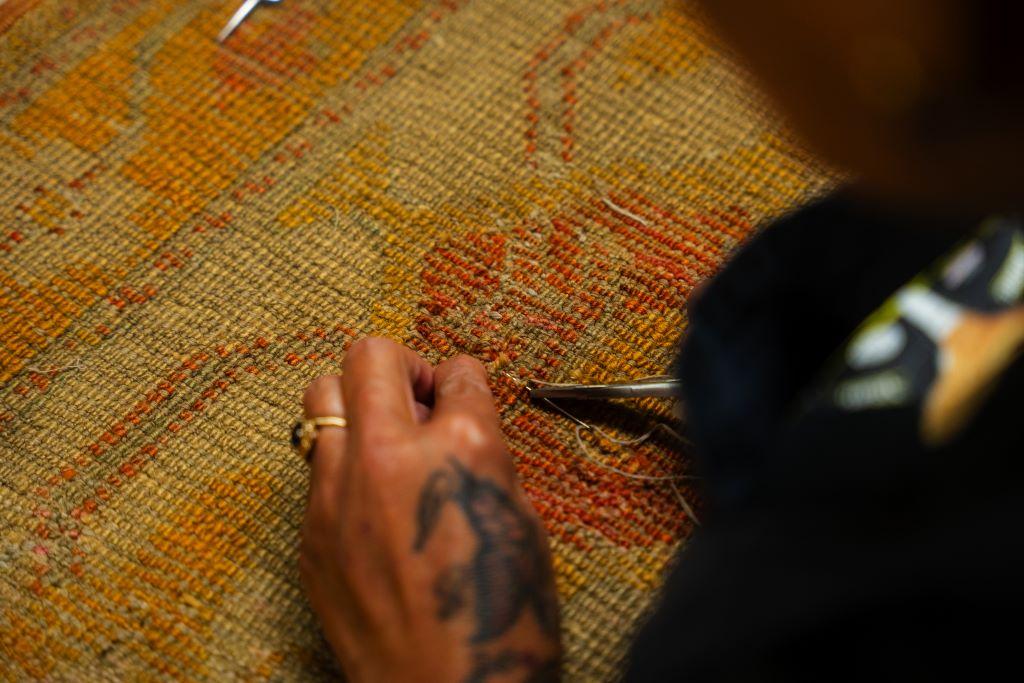
Detail of hands mending a rustic, richly colored woven rug.
In contrast, museum-documented restoration with full transparency can preserve value by linking the rug to institutional care. Documentation remains the critical factor: disclosed provenance reassures collectors, while hidden alterations risk undermining trust.
Differentiating Vintage from Contemporary
Vintage rugs are often identifiable by natural dyes, handspun yarn, and wear consistent with age, while contemporary rugs may use brighter commercial yarns, tighter edges, and carry artist signatures or cooperative tags. Understanding these markers helps buyers distinguish vintage pieces from newly woven works in today’s market. In sum, the market for authentic Navajo rugs rests on three pillars: materials and technique, provenance, and artistry.
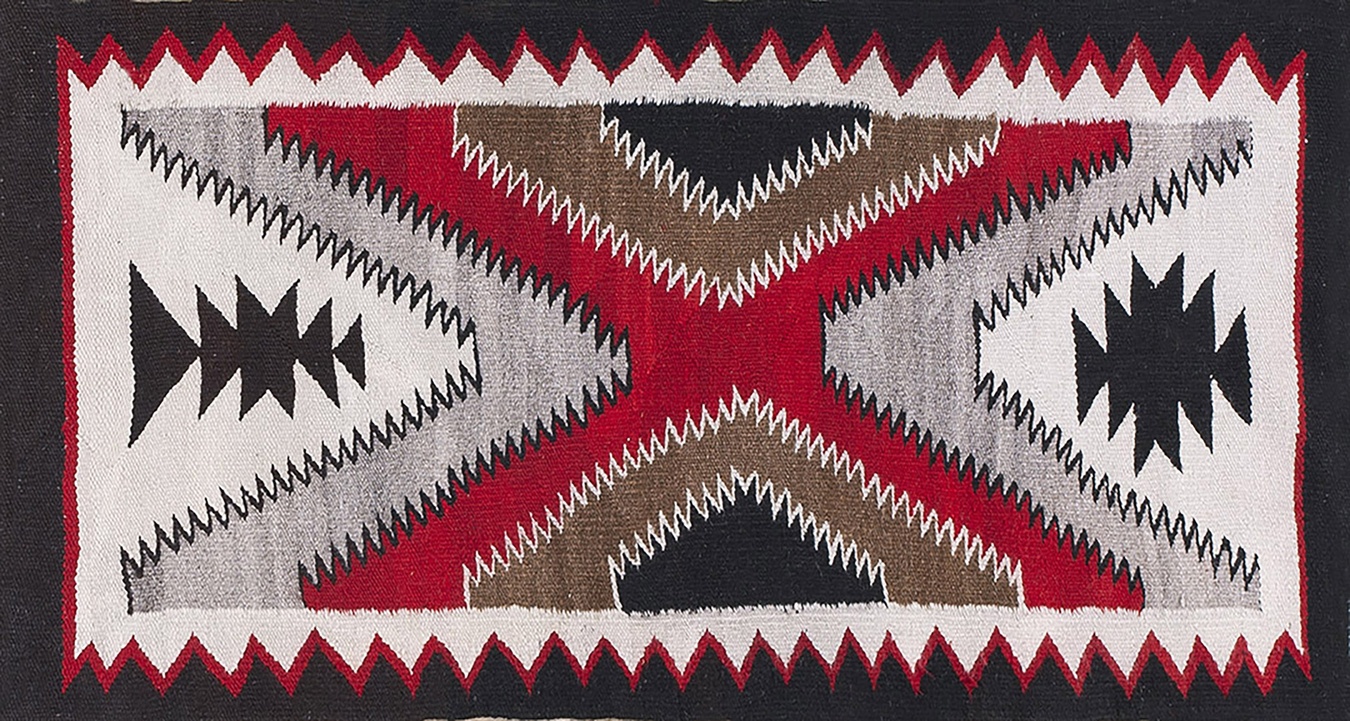
Antique Navahu American Coral 1935 Rug – by Rugs On Net
Collectors who focus on natural dyes, documented provenance, and technically advanced styles such as wedge weave and tapestry will find enduring value, while newcomers can begin with smaller contemporary works that still carry the spiritual and cultural essence of Diné weaving.
Buying Authentic Navajo Rugs Today
Where to Buy Directly from Weavers
- Crownpoint Rug Auction — Why: A monthly auction held on the Navajo Nation where buyers can buy Navajo rugs direct from weavers. This venue ensures artisans receive fair value while offering collectors access to fresh works.
- Navajo-Run Trading Posts — Why: Historic posts such as Toadlena and Two Grey Hills remain active, showcasing rugs from regional weavers with established reputations for excellence.
- Weaver Cooperatives and Museum Shops — Why: Online platforms operated by Navajo cooperatives or partnered museums allow buyers worldwide to purchase with confidence, ensuring authenticity and fair pay to the artists.
- Regional Fairs and Cultural Events — Why: Festivals and local markets offer direct interaction with weavers, letting buyers hear the story behind each rug and develop personal connections.
These sources not only guarantee authenticity but also ensure that revenue flows directly into Diné households.
Buyer’s Guide: Navajo vs. Mexican Imitations
This is the most critical addition for your Navajo guide. Because the market is flooded with “Southwestern-style” rugs made in Mexico (Zapotec) or overseas, collectors need a technical way to verify they are buying a genuine Diné (Navajo) textile.
Expert Checklist: Identifying Authentic Navajo vs. Mexican Imitations
For the untrained eye, a Mexican Zapotec weaving and a Navajo rug can look similar. However, their construction is fundamentally different.
Use this 4-point check to ensure authenticity:
The “No Fringe” Rule (The Warp)
- Navajo: A genuine Navajo rug is woven on an upright loom with a continuous warp. This means the vertical strings loop back into the rug. There is no fringe. If you see fringe that looks like it is part of the rug’s structure, it is almost certainly not Navajo.
- Imitation: Mexican rugs are typically woven on floor looms where the warp strings are cut at the end and tied into tassels or fringes.
The “Four-Selvage” Finish
- Navajo: Look at the four corners of the rug. You will usually see “tassels” of extra yarn at the corners only, which are the ends of the side-selvage cords. The top and bottom edges will be smooth and finished.
- Imitation: Imitations often have “fringe” that has been tucked back into the rug to hide it, creating a bulky or uneven “hem” at the top and bottom.
The Side-Selvage Cords
- Navajo: Genuine Navajo rugs have double or triple-stranded “selvage cords” running down the left and right sides. These cords are twisted as the weaver works to strengthen the edges.
- Imitation: Most copies lack these structural cords; the yarn simply wraps around the outermost warp thread, leading to edges that may curl or fray over time.
The “Lazy Line” Proof
- Navajo: Lazy lines, when present, can help identify traditional tapestry construction, though their absence does not indicate inauthenticity since many fine Navajo weavings minimize or conceal them.While not every Navajo rug has them, they are never found on Mexican or machine-made imitations, which are woven straight across the entire width.
The Material Burn Test
Fiber identification is best approached through magnification, touch, and structural examination rather than destructive testing. Wool typically shows slight variation in fiber thickness, natural crimp, and softness, while synthetic fibers often appear smoother and more uniform under close inspection.
- The burnt fibers smell tests:
- Real Wool: Smells like burnt hair and turns to ash.
- Cotton (Common in copies): Smells like burning paper and leaves no bead.
- Synthetic: Smells like plastic and melts into a hard black bead.
Weaving Labor Value
Depending on size, fineness, and complexity, a single Navajo rug may require weeks or months of work, with finer tapestry examples demanding particularly slow and disciplined weaving.
Signatures and Identification in Modern Navajo Rugs
Older Navajo rugs are often unsigned, especially nineteenth-century and early twentieth-century examples. Modern weavings may include woven signatures, attached tags, cooperative labels, or written documentation. However, the absence of a signature alone does not determine age or authenticity, since many highly respected weavers historically did not sign their work.
Recognizing Contemporary vs. Vintage Rugs
Contemporary Navajo rugs often come with signed tags, artist biographies, and cooperative documentation, features rarely seen in older works. Vintage rugs may show natural wear, patina, and earlier dye styles—indigo blues, vegetal browns, or the muted reds of bayeta.
Newer rugs are generally tighter, with vibrant colors from both natural and modern commercial dyes. For collectors, knowing these distinctions is essential to avoid misrepresentation and to appreciate each piece within its historical context.
The Role of Documentation and Artist Attribution
Navajo rug documentation—certificates, artist tags, photographs of the weaver, and cooperative provenance—adds lasting value to any purchase. Documentation reassures buyers of authenticity and strengthens future resale potential.
Attribution also deepens the connection between owner and artisan, allowing the rug to serve not just as decor but as a piece of living cultural history. In auctions and private sales, documented rugs often command significantly higher prices than undocumented pieces.
Supporting Living Diné Artisans
Ethical purchasing is critical. When buyers choose to support Diné weavers by purchasing new rugs, they sustain families, livestock herds, and cultural practices. The income helps artisans weather economic challenges, fund education, and keep the art form alive for future generations.
Ethical rug buying is therefore more than commerce; it is an act of cultural preservation. Each rug purchased directly from a weaver ensures that sacred techniques and stories continue to be woven into the fabric of daily life.
Layout / Decor Tips for Modern Interiors
Interior designers increasingly use Navajo rug interior design strategies to integrate these textiles into modern homes. Neutral-toned Two Grey Hills rugs complement minimalist spaces, while bold Ganado reds create powerful focal points.
Runners suit hallways and kitchens, while smaller textiles can be mounted as wall hangings or even used as pillow covers to bring heritage into contemporary decor.
For large living spaces, placing a central rug beneath a dining or coffee table highlights both craftsmanship and cultural depth, while ensuring the textile remains visible and celebrated.
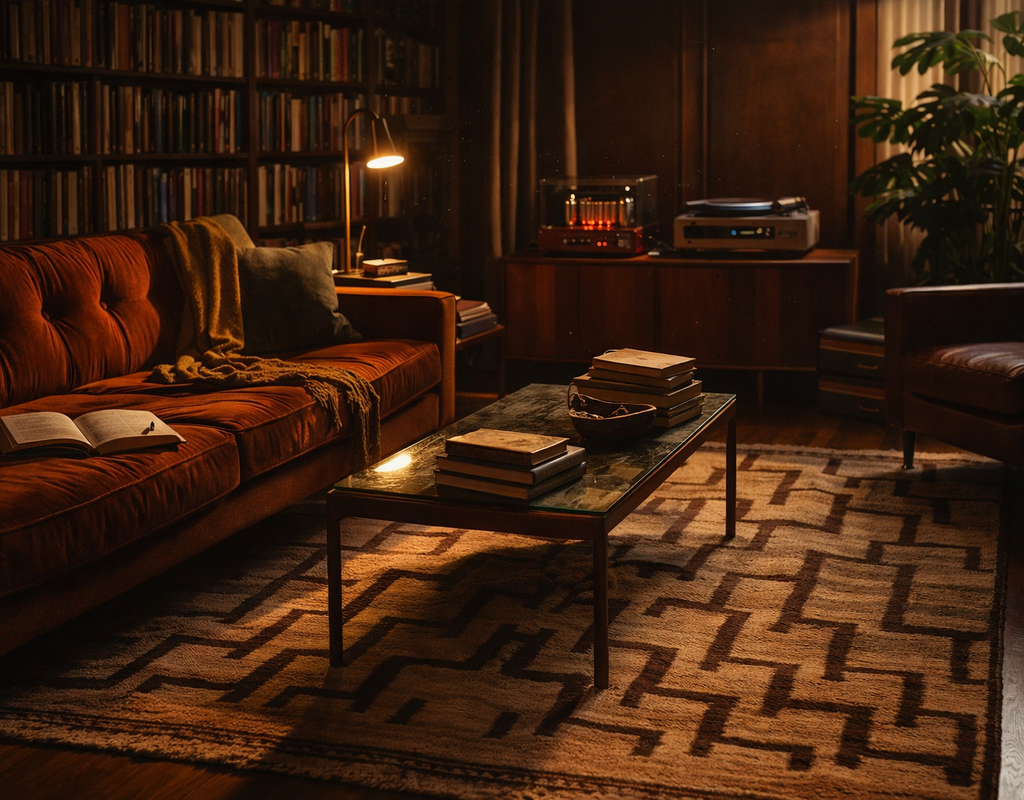
An inviting reading nook bathed in warm, ambient light, anchored by a textural geometric rug.
In today’s market, entry-level handwoven rugs typically start at several hundred dollars, with larger or regionally distinctive pieces commanding more.
Whether choosing a contemporary Navajo rug for everyday use or a vintage collectible, the guiding principle remains the same: buy with respect, buy with provenance, and buy directly when possible. By doing so, when you buy these area rugs you are not only acquiring art but also participate in sustaining Diné weaving as a living tradition.
Enduring Legacy and Future of Navajo Weaving
Intergenerational Teaching and Youth Involvement
The future of Navajo weaving rests on the continued teaching of skills from elders to younger generations. Master weavers guide apprentices in homes, workshops, and community programs, ensuring that loom construction, wool preparation, and sacred songs are not lost. Family remains the core of this process: mothers, grandmothers, and aunties instruct daughters and nieces, embedding weaving within everyday life.
Today, schools and cultural centers across the Navajo Nation host weaving demonstrations and youth programs, creating pathways for the next youth Navajo weaver to carry forward both technical skill and cultural meaning.
Global Influence: Art, Fashion, Design
Over centuries, Navajo weaving tradition has reached far beyond the reservation. Iconic rug motifs appear in global interior design, contemporary art, and fashion houses. While some instances represent respectful homage, others veer into Navajo rug appropriation, where sacred patterns are mass-produced without credit or compensation to Diné artists.
Still, the influence is undeniable: designers borrow the geometry of storm patterns, the earthy palettes of Two Grey Hills, or the bold reds of Ganado for international audiences. When properly attributed, these adaptations underscore the universality of Diné aesthetics while amplifying Navajo artistry on the world stage.
Cultural Protection and Appropriation Issues
Because of repeated misuse of their name and motifs, the Navajo Nation has actively defended its intellectual property rights, even pursuing legal action to protect Navajo rug branding and prevent unauthorized commercial use. Cultural appropriation concerns center on stripping designs of their spiritual roots and commodifying them without acknowledgment of Diné heritage. Protecting authorship and attribution ensures that when global consumers encounter Navajo rug fashion or design, they recognize the artistry as Diné-made rather than a detached style. Respectful collecting and accurate labeling remain essential to honor this cultural property.
Calls to Action: Collect, Preserve, and Celebrate
For collectors, enthusiasts, and scholars, the path forward is clear. To support the living tradition:
- Collect Ethically — Buy directly from weavers or trusted cooperatives to sustain Diné households and ensure authenticity.
- Preserve Knowledge — Document provenance, attribute works to individual artists, and archive oral histories tied to specific pieces.
- Celebrate Publicly — Support museum exhibitions, cultural fairs, and publications that highlight Diné artistry, such as landmark shows like Woven by the Grandmothers.
Contemporary weavers continue to innovate, blending digital aesthetics, pop culture references, or experimental color palettes with traditional motifs. These innovations prove that Navajo weaving is a living art, evolving while rooted in hózhǫ́, the balance and beauty that anchors Diné philosophy. The legacy of Navajo weaving tradition endures because it is simultaneously sacred inheritance and dynamic creative force.
Its future depends on sustaining intergenerational teaching, respecting authorship, and offering direct support to Diné artists. To collect Navajo rugs today is not only to own an artwork but to join in preserving and protecting one of the most profound textile traditions in the world.
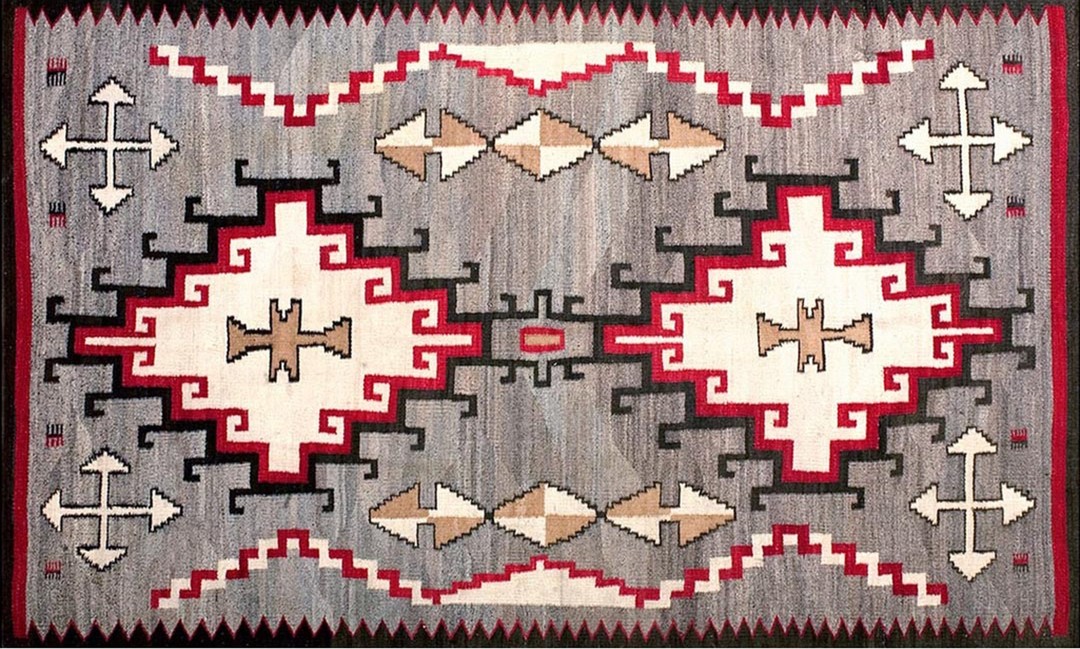
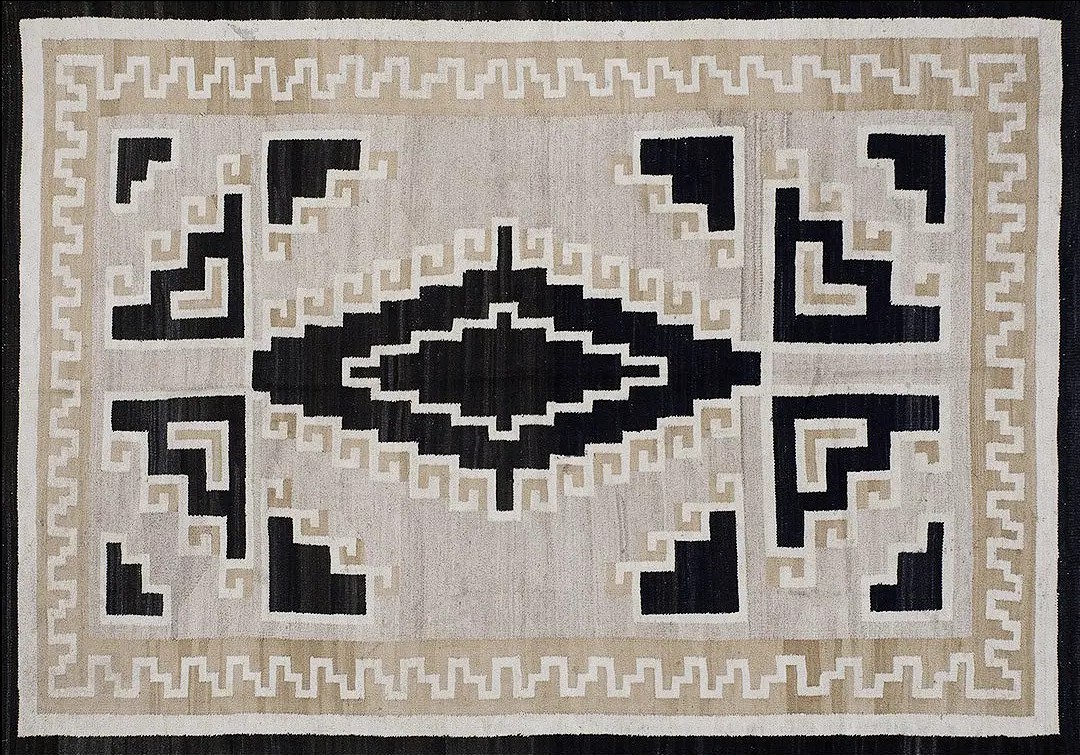
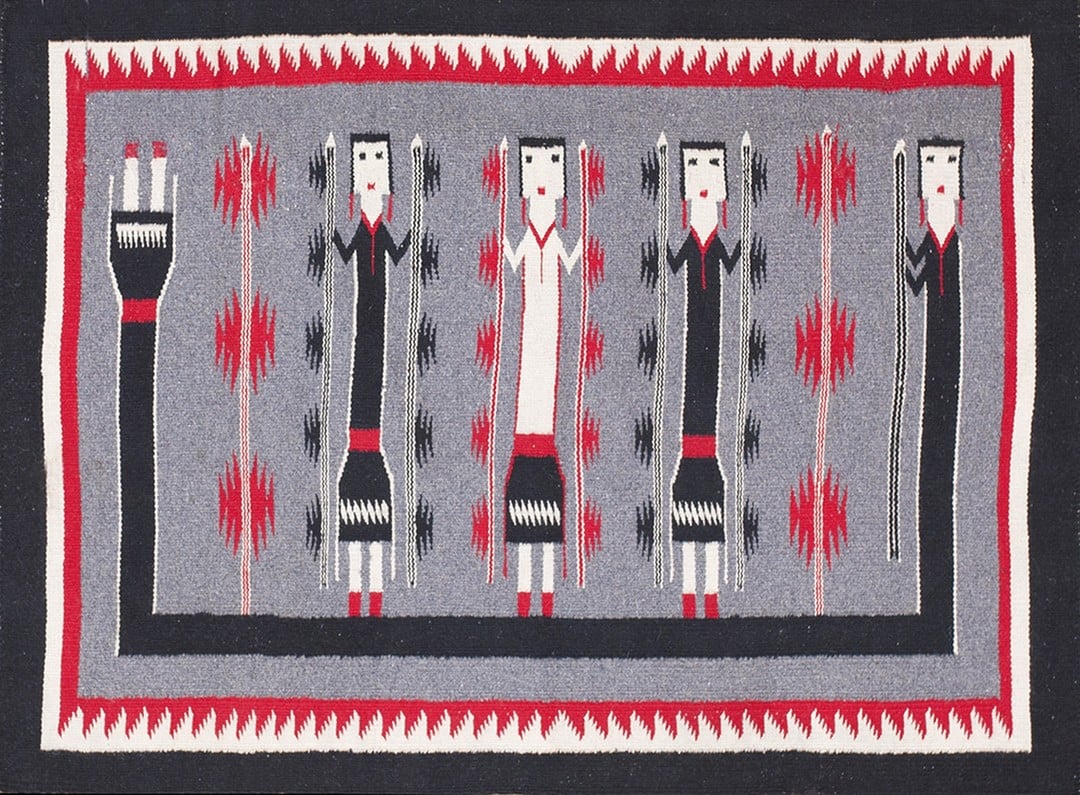
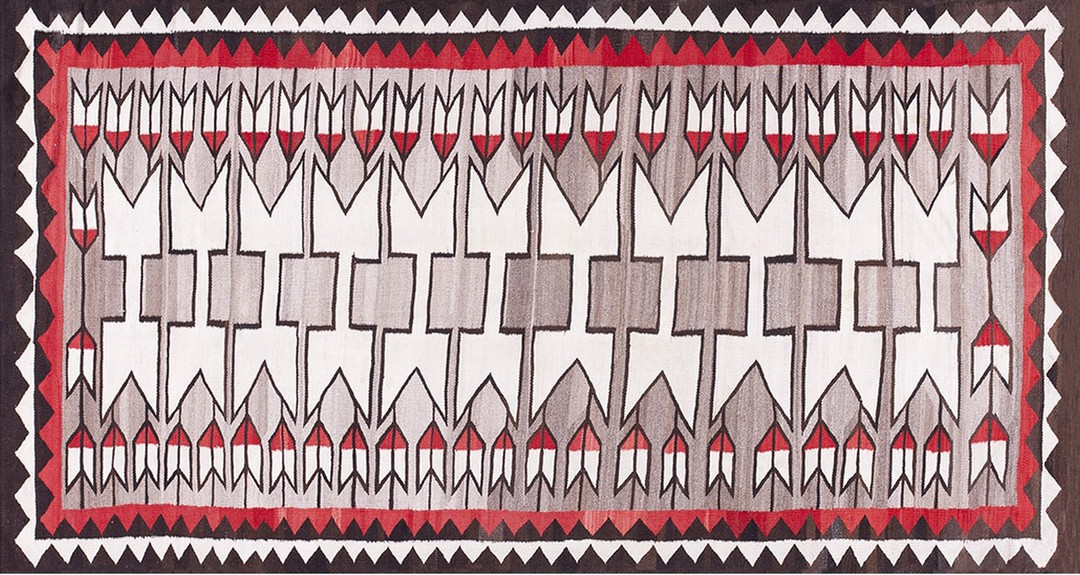
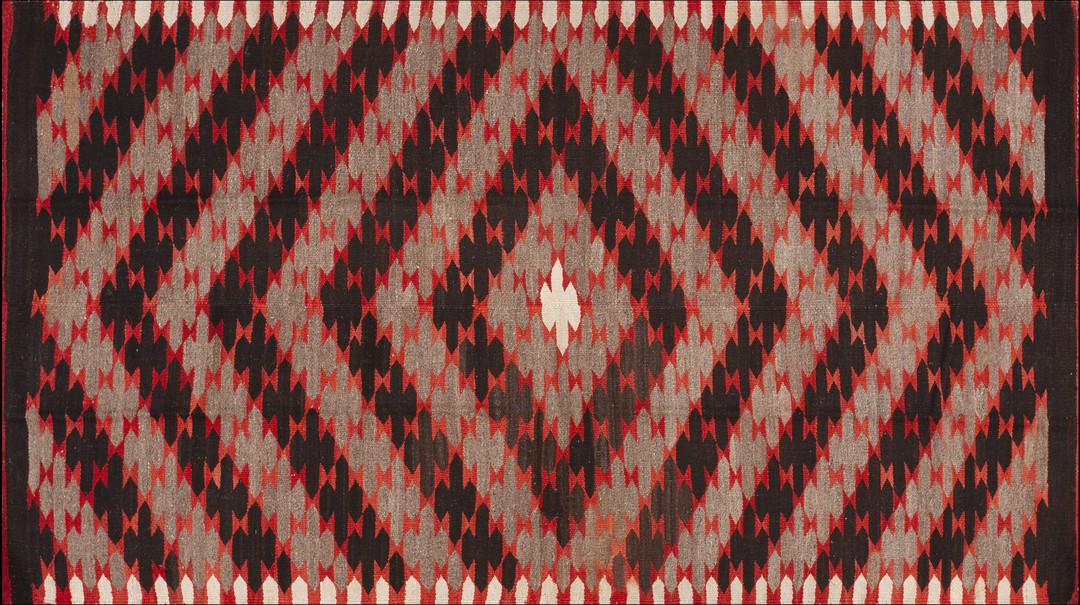
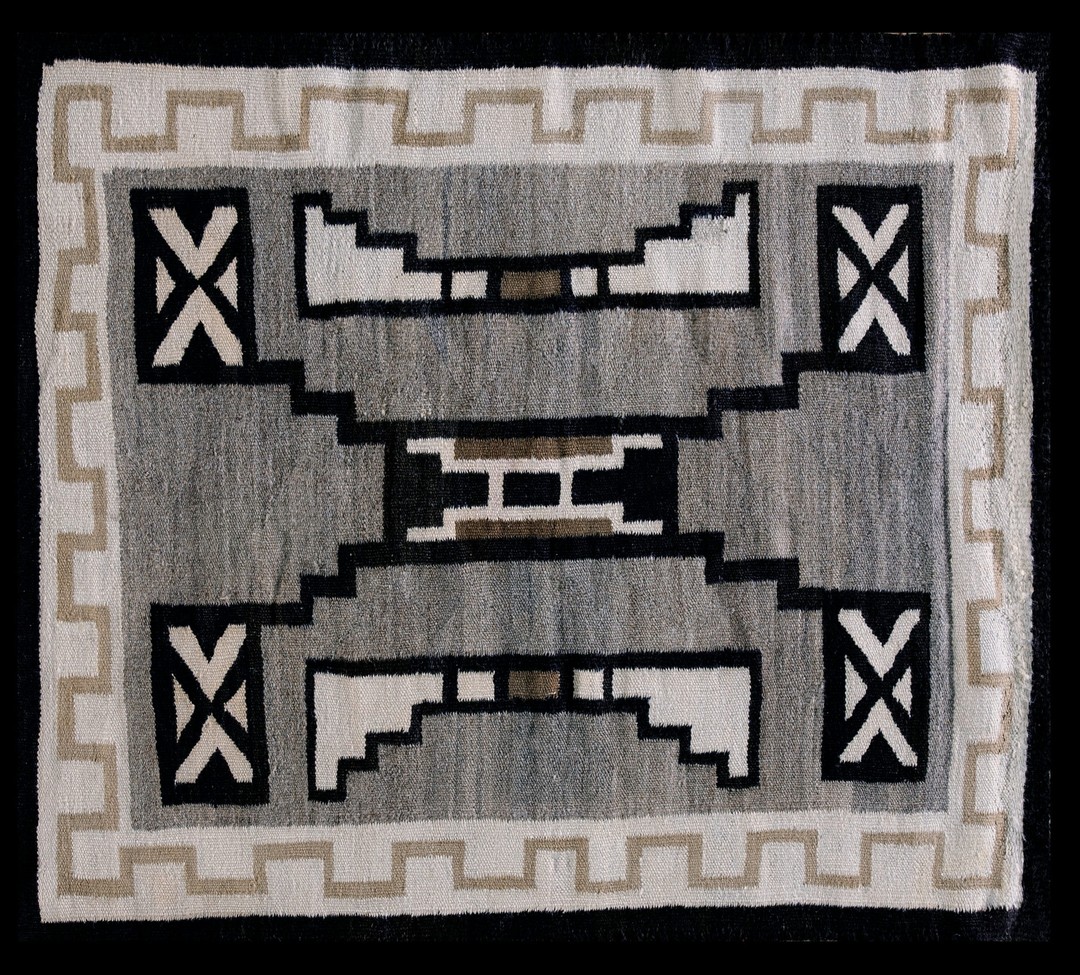
Explore a few of our favorite Navajo rugs
FAQ
- How do appraisals and authenticity certificates work for Navajo rugs?
Seek a qualified appraiser or dealer for a written report covering size, weave, region, age, and value. U.S. law (Indian Arts and Crafts Act) prohibits misrepresenting non-Native work as Native.
- Where can I buy authentic Navajo rugs in the U.S.?
Reputable options include Navajo trading posts, vetted galleries, museum shops, auctions on the Navajo Nation, and direct-from-weaver sales. Ask for written authenticity and transparent provenance.
- Do Navajo rugs bleed or crock dye?
Some vegetal or early aniline dyes can bleed if overwet. Spot-test with a damp white cloth; if color transfers, use minimal moisture and consult a professional cleaner.
- What are “lazy lines” in Navajo rugs?
Lazy lines are diagonal joins where the weft turns mid-row as the weaver works in sections. They’re evidence of handweaving and not a structural defect.
- How do Navajo rugs compare to Pendleton blankets?
Navajo rugs are handwoven, heavy flatweaves for floors or walls. Pendleton blankets are mill-woven jacquards designed for bedding/wear—lighter, finished edges, and different construction.
- How can I tell Navajo rugs from Mexican or machine-made copies?
Navajo rugs: no fringe, wool warp/weft, tight selvedges, and “lazy lines.” Many Mexican Zapotec rugs show fringe/cotton warp; machine-made have uniform backs and repeating patterns.
- How do I date Navajo rugs by era?
Broad eras include Classic/Late Classic (pre-1870), Transitional (c. 1870–1890), Rug Period (c. 1890–1930), and modern. Clues: yarn type, dyes, regional patterns, and wear; a qualified appraiser can confirm.
- Are Navajo rugs okay over radiant heat floors?
Usually, at moderate temperatures. Use a breathable felt pad, monitor humidity to avoid over-drying wool, and keep surface temps around typical room-comfort levels.
- Are Navajo rugs practical with pets and kids?
Generally, yes—wool resists soiling and recovers well. Trim nails to protect edges, address accidents within minutes, and consider a pad and rotation to spread wear.
- Can I hang Navajo rugs on a wall?
Yes. Sew a cotton sleeve and use Velcro on a supportive slat; avoid nails, clips, or adhesives. Keep out of direct sun and away from damp exterior walls.
- Do Navajo rugs need a rug pad?
Yes. A firm felt pad (⅛”–¼”) improves stability, reduces wear, and protects floors. Avoid sticky rubber/latex pads on hardwoods that can discolor or fuse.
- How do I store Navajo rugs safely?
Roll (never fold) with acid-free paper, elevate off floors, and keep cool, dry, and dark. For moth prevention, inspect quarterly; freezing in sealed bags for 72 hours can treat infestations.
- How should I clean Navajo rugs at home?
Vacuum without a beater bar and always with the suction head. Blot spills with cool water and wool-safe soap; avoid steam/extraction. For deep cleaning, use a wool/rug specialist.
- Are Navajo rugs durable for high-traffic areas?
Yes—wool is naturally resilient and soil-resistant. Use a quality felt pad, rotate every 6–12 months, and keep heavy UV exposure in check to reduce fading.
- What sizes do Navajo rugs usually come in?
Many Navajo rugs range from roughly 2’×3′ up to 5’×8′. Larger room sizes exist but are rarer and command premiums due to loom limits and weaving time.
- How much do authentic Navajo rugs cost?
Prices vary by size, fineness, age, and artist. Small contemporary Navajo rugs often start around \$300–\$1,500; larger or fine/antique examples can run \$2,000–\$10,000+, with masterpieces significantly higher.
- Why don’t most Navajo rugs have fringe?
The continuous warp is finished by turning back and weaving in the ends, producing clean edges without fringe. Visible fringe usually signals a non-Navajo copy.
- Do Navajo rugs have pile or knots like Persian carpets?
No. Navajo rugs are flat tapestry weaves, not knotted pile. Fineness is often described by wefts-per-inch; masterworks can exceed 80 wefts per inch.
- What materials and dyes do Navajo rugs use?
Traditionally churro and other wools; modern pieces use high-quality wool yarns. Dyes range from natural vegetal to synthetic anilines; undyed browns, greys, and whites are common in Two Grey Hills.
- What are Yei or Yeibichai Navajo rugs?
These depict sacred Holy People or ceremonial dancers. They’re decorative textiles—distinct from ceremonial use—so display respectfully and consult knowledgeable sellers about cultural considerations.
- What is a “spirit line” in Navajo rugs?
A spirit line is a narrow pathway from the design field through the border, symbolically letting the weaver’s creativity continue. It’s intentional, not a flaw, and may be a single thread-wide line.
- What do common patterns in Navajo rugs mean?
Names often reflect trading-post regions and looks: Ganado (red/black/white), Two Grey Hills (undeyed naturals, intricate), Teec Nos Pos (bold borders), Crystal/Chinle/Wide Ruins (banded), and Storm Pattern (central rectangle with corner motifs).
- What are the signs that a Navajo rug is genuine?
Look for no fringe, sturdy side selvedges, all-wool warp/weft, and handwoven “lazy lines.” Buy from reputable dealers and request written provenance; beware “Navajo-style” copies with cotton warp and fringe.
- How are Navajo rugs woven?
A Navajo rug is tapestry-woven with wool weft over a continuous wool warp on an upright loom. Selvedge cords strengthen the sides, and finished ends are typically tucked—so there’s usually no fringe.
- What are Navajo rugs?
Navajo rugs are handwoven, weft-faced wool textiles made by Diné (Navajo) weavers on upright looms. They’re flatwoven (no pile) and prized for geometric designs, vegetal/aniline dyes, and regional styles.