
Introduction: The Enduring Allure of Kerman Rugs
Discover our exclusive collection of authentic Kerman rugs and find the perfect centerpiece for your space.
The Reputation of Kerman Carpets in Persian and World Textile History
Few Persian carpet traditions carry the same weight of prestige as Kerman rugs, known in older Western sources as Kirman carpets. Since at least the 16th century, this southeastern Iranian city has been a recognized center of weaving excellence, producing some of the most celebrated examples of Persian textile artistry.
European courts, Ottoman elites, and later American collectors all prized Kerman’s output, elevating it into the ranks of the most desirable luxury goods of its time. What set these rugs apart was not only the quality of their wool—lustrous, fine, and durable thanks to the region’s favorable climate and sheep breeds—but also the intricacy of their curvilinear designs.
Unlike the bold tribal weavings of northern Iran, Kerman’s repertoire often embraced floral scrolls, garden layouts, medallions, and finely drawn motifs that mirrored the sophistication of Persian miniature painting. This gave the carpets an immediate association with refinement and courtly taste. The city of Kerman became synonymous with innovation while maintaining traditional artistry.
Workshops there adapted to international commissions, incorporating European coats of arms, baroque motifs, and even French-inspired patterns for export. This flexibility helped secure Kerman’s international esteem, ensuring that its carpets adorned palaces, museums, and private collections across the world.
Kerman’s artistic status also rests on continuity: unlike some weaving centers that peaked and declined, Kerman maintained a continuous weaving legacy, producing rugs that adapted to new fashions without losing their cultural authenticity. This resilience solidified its role as one of the cornerstones of Persian rug artistry.
Enduring Appeal: From Antique Masterpieces to Modern Décor
A sun-drenched reading nook featuring rich textures and a beautifully distressed oriental rug.
- Antique Kerman Carpets as Collector Treasures — Why: The refined craftsmanship and unique aesthetic of 17th–19th-century Kermans make them highly sought-after in auctions and museums. Their intricate floral compositions and palace-scale sizes represent the pinnacle of Persian weaving.
- Decorative Value in Modern Interiors — Why: Beyond collectors, homeowners appreciate Kerman rugs for their ability to blend ornate Persian artistry with modern décor. The fine curvilinear patterns and balanced palettes bring both elegance and warmth to contemporary spaces.
- Adaptability to Global Tastes — Why: Kerman weavers historically catered to both Persian and international markets, producing carpets that felt at home in Isfahan’s palaces, London’s drawing rooms, or New York townhouses. This cross-cultural adaptability continues today, giving Kerman carpets a versatile decorative appeal.
- Luxury Persian Rug Investment — Why: The durability of Kerman’s wool and knotting ensures longevity, while their reputation keeps values stable or appreciating. For many buyers, a Kerman rug represents both artistic enjoyment and long-term investment.
- A Living Tradition — Why: Unlike antique-only traditions, Kerman remains an active weaving hub. New carpets continue to emerge, often reviving classical motifs while adapting color schemes to modern preferences. This duality allows Kerman to thrive as both a heritage craft and a contemporary design force.
Kerman rugs thus embody a rare combination: the timeless artistry of antique masterpieces and the ongoing relevance of modern production. Their continued popularity underscores the city’s outsized role in Persian and world textile history, a role built on artistry, adaptability, and an enduring commitment to weaving excellence.
Origins & Etymology of the Kerman Rug Tradition
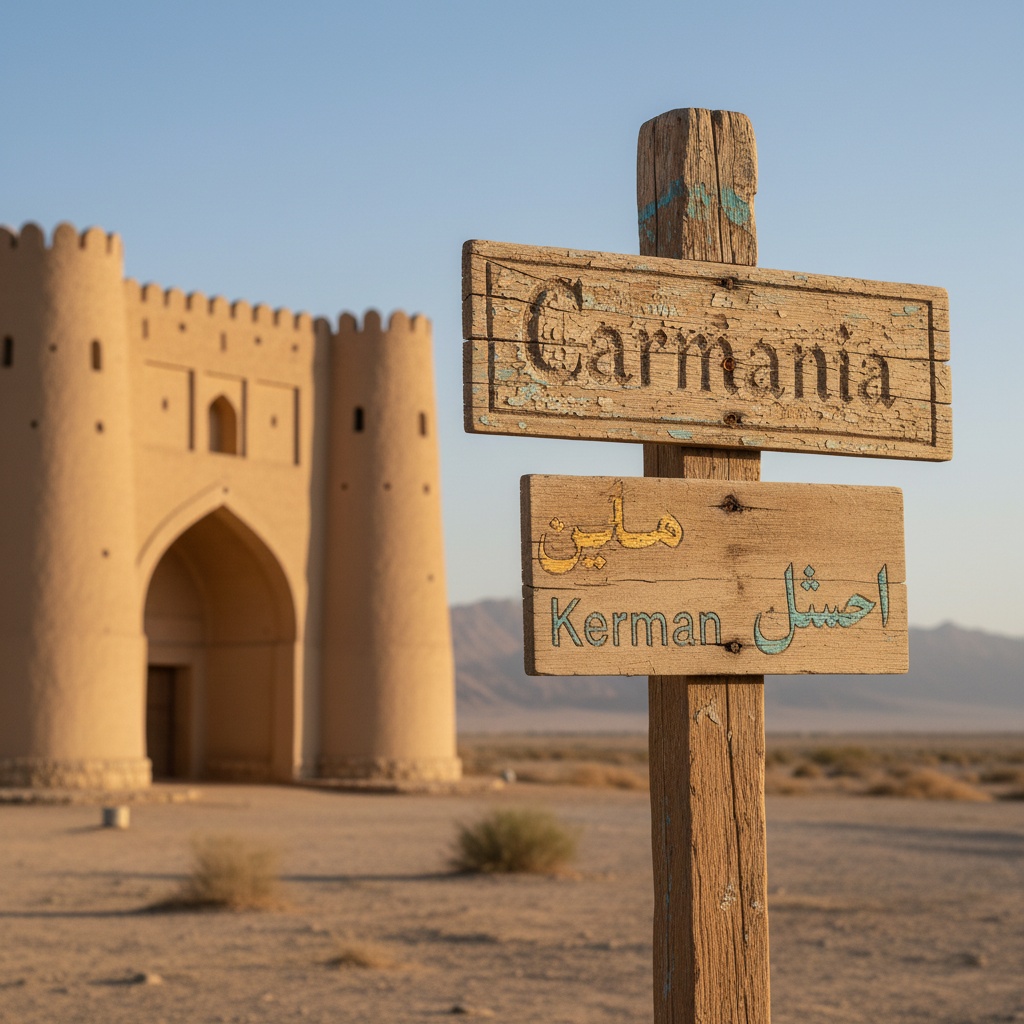
Signpost referencing historical region near Kerman.
The Name “Kerman,” “Kirman,” and “Carmania”
The term Kerman carpet refers to rugs woven in and around the city of Kerman, the capital of a vast southeastern Iranian province. Over centuries, the name has appeared in multiple forms: Kerman, the modern Persian transliteration; Kirman, an older variant common in 19th- and early 20th-century Western texts; and Carmania, the classical name used by European travelers and merchants.
“Carmania wool” in particular became a hallmark of export trade, signaling the region’s reputation for producing some of the softest and strongest fibers in the Persian rug world. These name variations are more than linguistic curiosities—they reveal how the province’s textiles entered global markets and how the brand of “Kerman” was established abroad.
Lavar (Ravar) Kerman: What the Name Means and Why It Matters
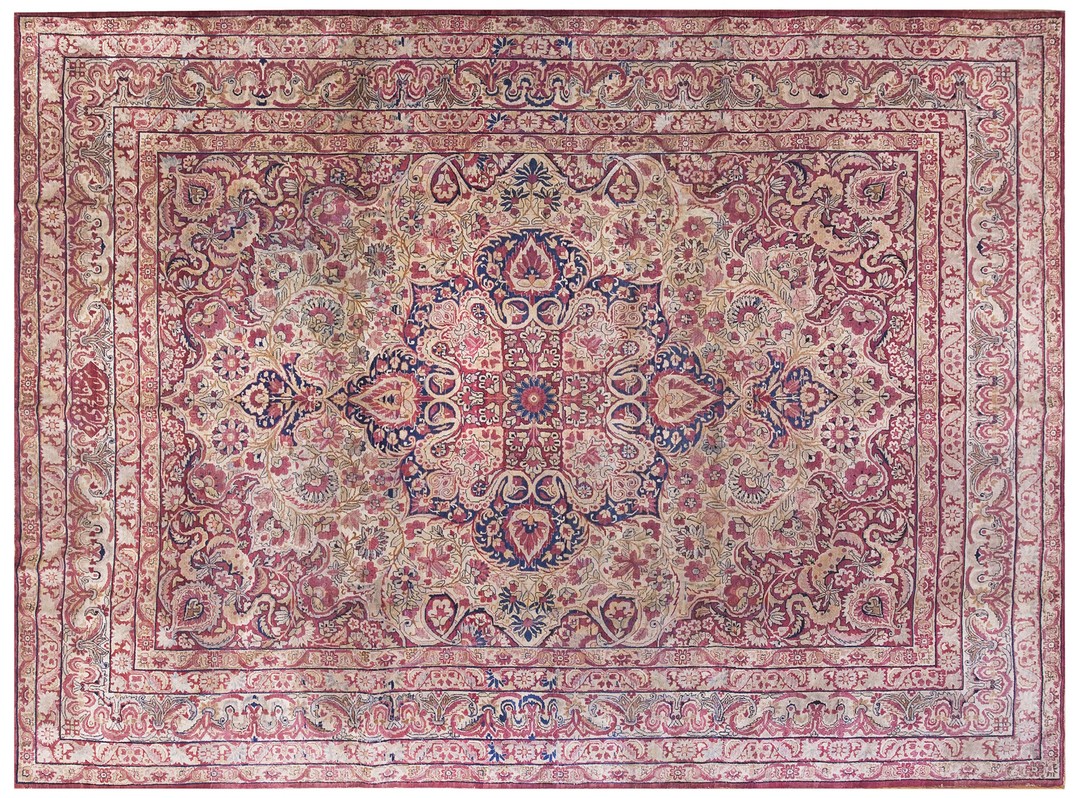
Within the broader Kerman tradition, Lavar Kerman—sometimes referred to as Ravar after the small town north of Kerman—represents the pinnacle of quality. These rugs are renowned for their extremely fine knotting, detailed floral medallion compositions, and, in many cases, woven signatures of the master weaver.
Lavar carpets often featured lush curvilinear fields packed with blossoms, palmettes, and vines, carefully executed with jewel-like precision. Because of their rarity and artistry, Lavar Kermans became a benchmark for excellence, sought by Persian elites and European collectors alike. In fact, the phrase “Lavar Kerman” still carries connotations of the finest possible weaving from the region, underscoring its enduring prestige.
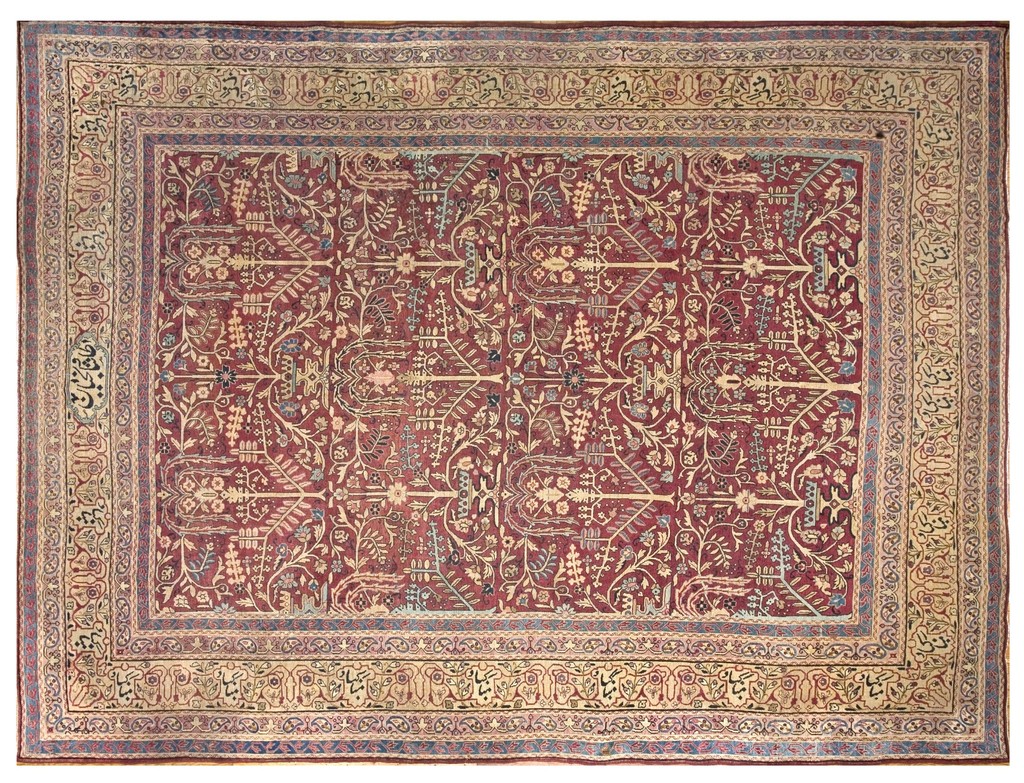
Antique Kerman – Lavar Room Size Wool Coral Rug by Rugs On Net
Historical Timeline of Kerman Rug Production
- 1st Century Beginnings — Why: Evidence of weaving in Kerman stretches back to the late medieval period, with the city already recognized for producing textiles of high quality.
- Safavid Golden Age (16th–17th Centuries) — Why: Kerman rugs gained international fame under Safavid patronage, when Persian carpet artistry reached new heights. Kerman’s curvilinear style and fine wool helped distinguish it from other weaving centers.
- 19th Century Expansion — Why: Trade with Europe intensified, and “Kirman” or “Carmania” carpets became fixtures in Western markets. This period saw experimentation with larger medallion formats and more export-friendly designs.
- Lavar/Ravar Flourishing (19th Century) — Why: The town of Ravar became synonymous with extraordinary quality, elevating Kerman carpets into a class of their own. Collectors began distinguishing Lavar Kermans as the most refined subset.
- 20th Century to Present — Why: Kerman maintained its reputation through both traditional workshops and new production. Antique Kermans became staples of major auction houses, while modern weavers continued adapting designs to global décor trends.
Geography & Cultural Foundations
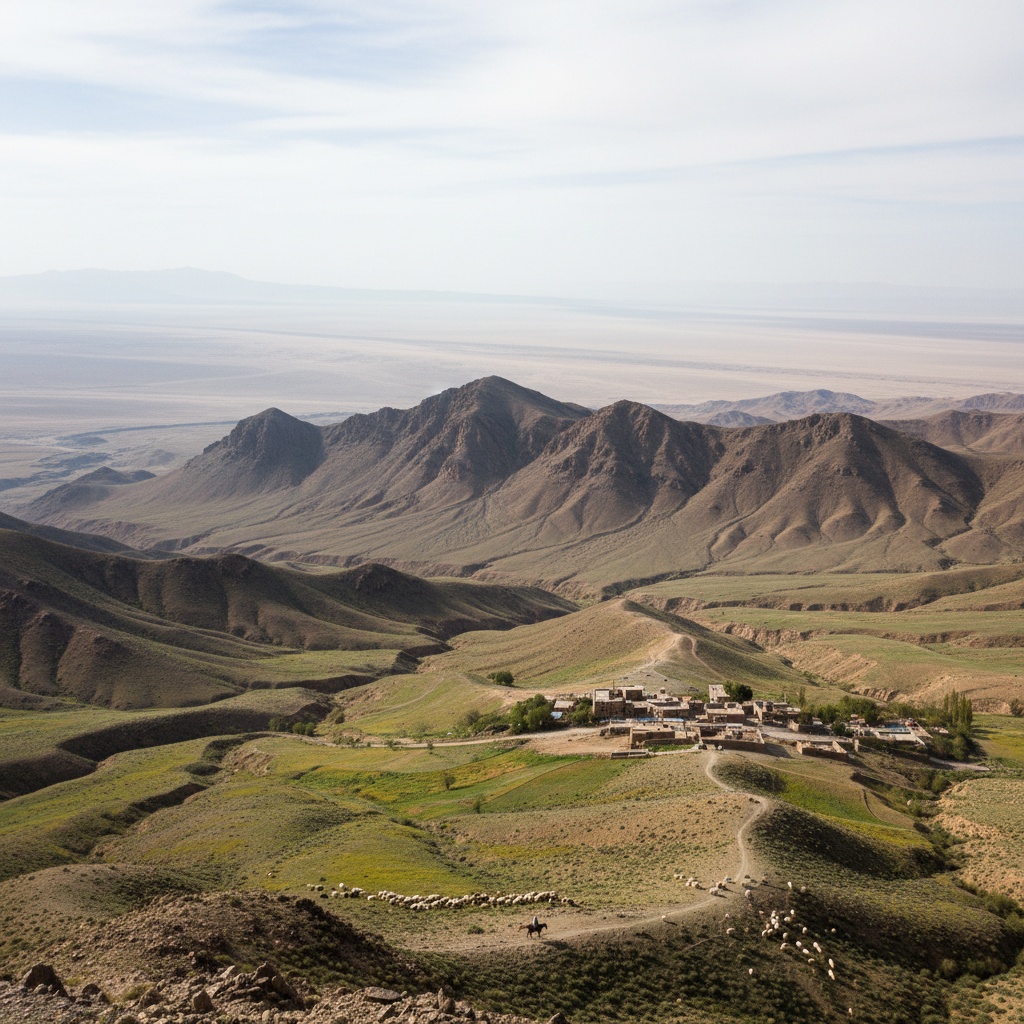
Arid landscape showing settlement in rolling foothills.
Where is Kerman Province Located in Iran?
Kerman province lies in south-central Iran, occupying a strategic position on the Iranian plateau. It borders the stark Lut Desert to the north and east, one of the hottest and driest places on earth, while its highland valleys and plateaus provide cooler conditions favorable to pastoral life and agriculture.
The city of Kerman itself is nestled at an elevation of about 1,750 meters (5,740 feet), a setting that has long sheltered and supported the development of fine textile traditions.
What Climate Conditions Shape Wool Quality in Kerman?
The region’s combination of arid climate, high altitude, and sparse vegetation produces exceptional conditions for raising sheep. The thin, dry air and harsh winters encourage the growth of wool that is both fine in texture and lustrous in sheen. Known historically in trade as Carmania wool, this raw material was prized not only within Persia but also by merchants abroad.
Its resilience, softness, and ability to hold vibrant dyes gave Kerman rugs a natural advantage over other weaving centers, helping explain their prominence in Persian wool and carpet history.
How Large is Kerman Province by Land Area?
By size, Kerman province is one of Iran’s largest, covering more than 180,000 square kilometers (approximately 70,000 square miles). This vast territory encompasses deserts, mountains, and fertile plains, giving it both geographic diversity and a wide range of cultural influences.
Its scale also meant that multiple towns and villages contributed to weaving, with some—like Ravar—developing reputations for superior workmanship.
The Region’s Diverse Population and Historical Context
- Muslims, Zoroastrians, and Others — Why: For centuries, Kerman was home to multiple religious and ethnic communities, including Muslims, Zoroastrians, and minority groups. This diversity fostered exchange of motifs, symbolism, and weaving techniques.
- Crossroads of Trade — Why: Positioned on caravan routes, Kerman absorbed influences from India, Central Asia, and the Persian Gulf, enriching its artistic vocabulary.
- Craft Innovation — Why: The mixture of cultures encouraged innovation not only in carpets but also in shawl weaving, dyeing methods, and textile design.
The blending of traditions gave Kerman carpets their uniquely rich repertoire, with floral scrolls, garden imagery, and medallion layouts reflecting centuries of cultural interplay.
Kerman’s Ancient Textile and Shawl Heritage
Long before its fame for rugs, Kerman was celebrated for producing woolen shawls of extraordinary delicacy. These 17th–19th century shawls, sometimes compared to Kashmiri examples, were worn by elites and exported abroad, reinforcing Kerman’s image as a premier textile hub.
The expertise in spinning, dyeing, and drawing intricate patterns for shawls translated directly into the curvilinear mastery seen in Kerman carpets. This continuity explains why the city remained synonymous with luxury textiles across multiple art forms.
Why is Kerman Important to Iran’s Economy?
Today, Kerman province remains an economic pillar of Iran, not only for carpets but also for agriculture (notably pistachios and dates), mining, and trade. Still, textile production—especially carpet weaving—remains central to its identity, sustaining employment across rural and urban communities. The prestige of Kerman textiles enhances Iran’s global cultural exports, while the reputation of Carmania wool continues to symbolize the province’s unique contribution to world markets.
In sum, the geography of south-central Iran, the high plateau climate, and the province’s cultural mosaic all converged to shape the artistry and enduring prestige of the Kerman rug tradition.
Artistry & Design Language of Kerman Rugs
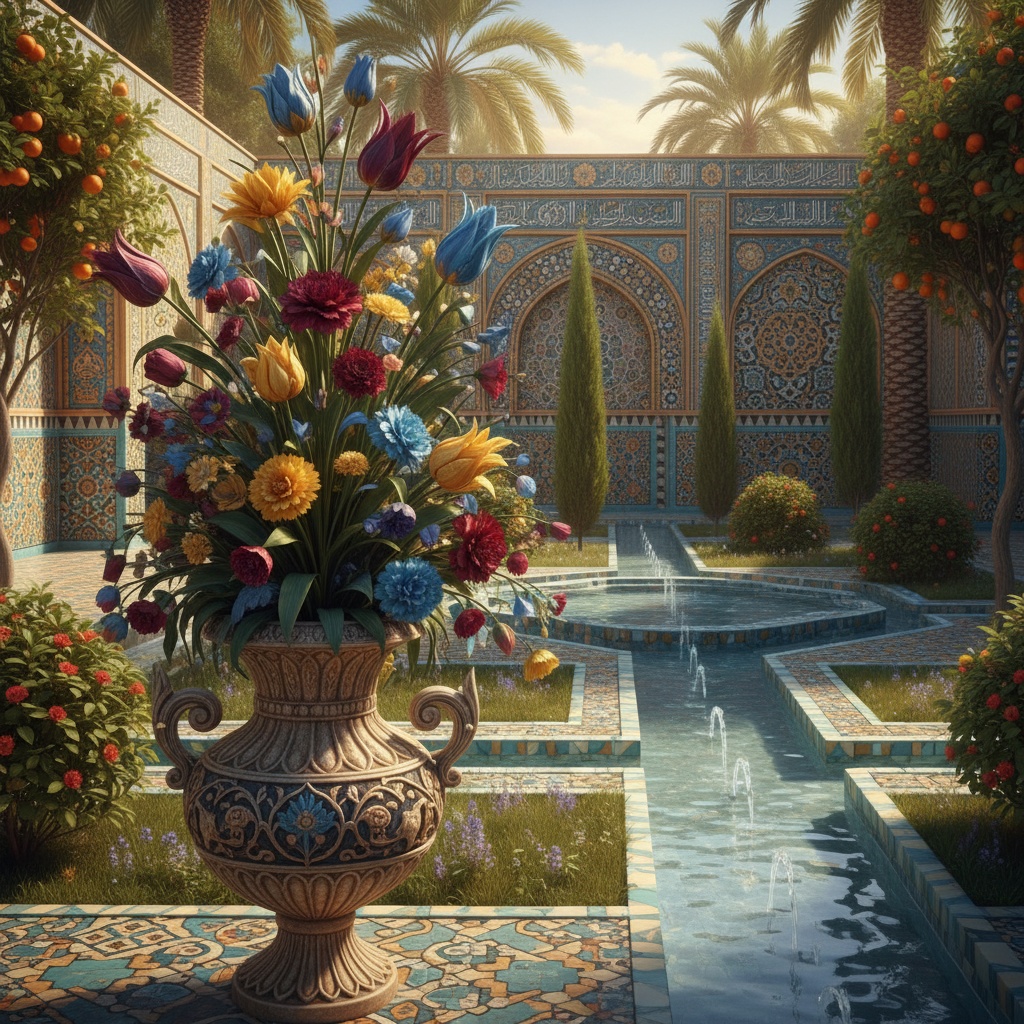
Vibrant floral and tile artistry inspiration
Evolution of Design: Safavid Era to Present
The Safavid dynasty (16th–17th centuries) marked the first great flowering of Kerman floral rugs. Under royal patronage, workshops produced masterworks for palaces and mosques, featuring lush curvilinear drawing and elaborate vase or garden motifs. These carpets set the standard for refinement in Persian weaving and became symbols of the empire’s cultural ascendancy. As Persian dynasties shifted, Kerman weavers proved remarkably adaptable.
By the 19th century, workshops adjusted designs to meet Western market tastes, introducing softer drawing, lighter backgrounds, and new formats suited to European interiors. The 20th century brought even further transformation: large-scale medallions, pastel palettes, and Western-influenced pictorial or French floral patterns became popular, particularly for export to America and Europe.
Today, Kerman carpets retain both classical Persian forms and modern decorative innovations, reflecting their ability to balance tradition with global demand.
Key Layouts
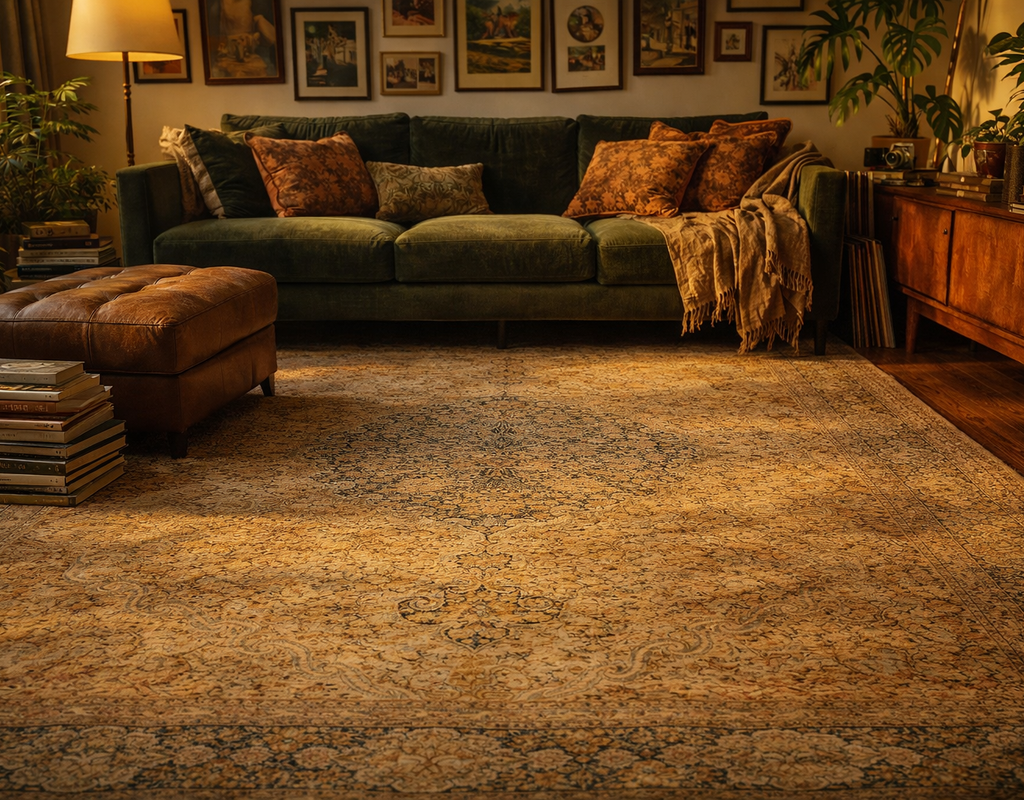
A luxurious, dimly lit interior design scene balanced by rich textures and warm, vintage-inspired textiles.
- Medallion Carpets — Why: A central medallion radiating into the field exemplifies Persian symmetry and grandeur; Kerman interpretations are noted for delicate floral surround.
- All-Over Patterns — Why: Continuous fields of vines or boteh motifs allow flexible placement in rooms and reflect the influence of textile design.
- Vase Carpets — Why: Among the most celebrated creations of the 17th century, these depict stylized vases with flowering sprays, symbolizing abundance and artistry. Their historical significance lies in representing Kerman’s peak during the Safavid golden age.
- Garden/Panel Designs — Why: Divided into quadrants or panels, these carpets symbolize paradise gardens, a key motif in Persian art, with flowing water channels, cypress trees, and blossoming flowers.
- Prayer Carpets — Why: Featuring pointed arches or mihrab motifs, these served devotional purposes while showcasing refined floral detail.
- Pictorial Carpets — Why: Some Kermans incorporated portraits, hunting scenes, or narrative elements, blending fine drawing with storytelling.
- Western-Influenced Layouts — Why: By the late 19th and 20th centuries, European floral sprays, rococo scrolls, and pastel tones were woven for export, underscoring Kerman’s openness to cross-cultural design.
Color Palettes
Kerman rugs are equally distinguished by their mastery of color. Natural dyes in earlier centuries yielded rich jewel tones—deep indigo blues, madder reds, and golden saffron accents—perfectly balanced to highlight floral intricacy.
By the late 19th century, with Western tastes shifting, Kerman weavers introduced softer pastel palettes, often in ivory, pale blue, and rose-pink, especially for export markets. The adoption of synthetic dyes in the 20th century broadened the range but sometimes reduced subtlety compared to natural dyes. Still, the careful orchestration of color remains a hallmark of Kerman’s artistry, distinguishing antique masterpieces from modern productions.
Symbolism in Kerman Rugs
- Floral Motifs — Why: Blossoms, especially the Damask rose, embody Persian ideals of beauty, renewal, and paradise. Their lush arrangement reflects Kerman’s legacy as a garden-inspired weaving center.
- Paisley (Boteh) — Why: This iconic flame- or teardrop-shaped motif symbolizes eternity and divine life force. Its repetition in Kerman textiles connects carpet design to shawl weaving traditions.
- Tree of Life — Why: A central cypress or branching tree symbolizes immortality and cosmic order, linking Zoroastrian heritage with Islamic symbolism.
- Hunting Scenes — Why: Evoking royal pastimes and Persian epics, these scenes symbolize power, vitality, and courtly elegance, weaving narrative and artistry into the fabric.
The Lavar Kerman Floral Medallion Style
The Lavar Kerman tradition, woven in the town of Ravar, is defined by exquisite floral medallion compositions of almost unparalleled delicacy. These rugs feature finely drawn blossoms radiating from a central medallion, executed with extraordinary detail and precision. Often incorporating the signature of the master weaver, they exemplify the technical and artistic zenith of Kerman weaving.
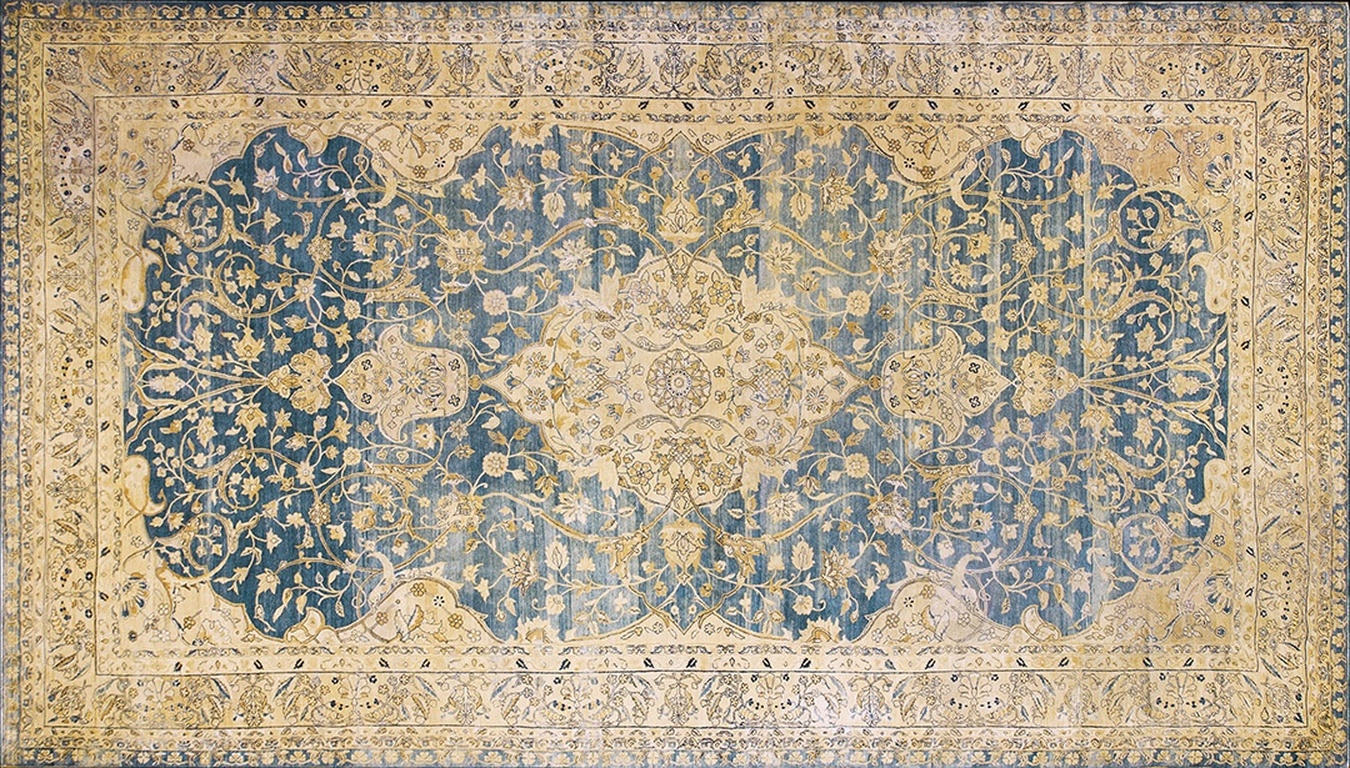
Antique Kirman Large Room Size Wool Blue Rug – by Rugs On Net
The density of the knotting, the shimmer of Carmania wool, and the perfectly balanced floral fields make Lavar medallion carpets the benchmark of luxury Persian rug artistry. From Safavid vase carpets to Western-influenced pastels, Kerman rugs showcase a spectrum of design language that continues to captivate.
Through their evolving motifs, colors, and symbolism, they embody both the classical essence of Persian symbolism and a global adaptability that keeps the tradition alive.
Materials & Construction Methods
Wool, Cotton, and Silk: Material Choices
At the heart of every Kerman construction lies its material foundation. The signature strength of these rugs comes from the use of Carmania wool, drawn from local sheep raised on the high plateau of Kerman province.
This wool is celebrated for its lustrous sheen, soft handle, and remarkable durability, making it one of the most prestigious fibers in the Persian carpet world. From the 19th century onward, cotton warps and wefts became the standard for structural stability, while silk—though rare—was occasionally employed in luxurious commissions or highlights, signaling status and opulence.
Knotting: The Persian Knot, Vase Technique, and Warp Depression
Kerman rugs are executed with the Persian (asymmetrical) knot, which allows for precise curvilinear drawing and fine floral detail. What makes the region particularly distinctive is the celebrated “vase weave” technique perfected in the Safavid era: a construction with triple wefts and depressed warps, which not only increased durability but also produced a subtle rippling or “wavy” texture across the pile.
This innovation gave rise to the famous Kerman vase carpets, prized for both strength and artistry. Depressed warps also compacted the knots, enabling sharper motifs and more clarity in design. In later centuries, especially in Lavar Kerman, knot density could range from 150 to 300 knots per square inch (KPSI), allowing unparalleled detail.
Pre-Spun vs. Fleece-Dyed Wool
One of the technical secrets behind the visual brilliance of Kerman floral rugs lies in how the wool was dyed. Traditionally, Kerman weavers favored fleece-dyeing rather than dyeing pre-spun yarn. By immersing the raw fleece in natural dyestuffs before spinning, the resulting yarn absorbed color more evenly and deeply, producing a vibrancy and consistency unmatched by other methods.
This practice made it possible to achieve the glowing jewel tones and harmonious shading that define antique Kermans. To answer directly: no, Kerman weaving did not traditionally use pre-spun dyed wool; it relied on fleece-dyeing to achieve its distinctive color quality.
Why Construction Details Matter
- Durability — Why: Triple wefts and strong cotton foundations ensure carpets withstand centuries of use, making antique examples highly collectible.
- Design Clarity — Why: High knot counts and depressed warps allow crisp rendering of floral vines, medallions, and garden layouts.
- Color Vibrancy — Why: Fleece-dyed Carmania wool absorbs natural dyes in a way that preserves brilliance over time.
- Artistic Legacy — Why: The vase weave technique is not only a technical hallmark but also a signature of Kerman’s historical innovation under Safavid patronage.
From the sheen of Carmania wool to the precision of the Persian knot and the ingenuity of the vase weave, every construction choice in Kerman rugs reflects a marriage of artistry and engineering. These structural refinements explain why a fine high-knot-count rug from Kerman is not just beautiful to behold but also built to endure across generations.
Historical Development: The Journey of Kerman Weaving
Safavid Golden Age: Royal Patronage and Innovations
The Safavid era (16th–17th centuries) was the formative golden age of Kerman weaving, when royal patronage transformed the city into one of Persia’s most important carpet centers. Shah Abbas I and his successors established court-sponsored workshops in major cities, including Kerman, elevating the craft with both resources and artistic oversight. This patronage encouraged technical experimentation, such as the celebrated vase weave with triple wefts and depressed warps, which produced highly durable yet graceful carpets.
It was during this era that the iconic Kerman vase carpets emerged, featuring large-scale vases from which floral sprays flowed across the field. These masterpieces embodied the Safavid court’s ideals of paradise gardens, abundance, and refinement, setting design standards that influenced Persian weaving for centuries. The Safavid court’s sponsorship also ensured that Kerman carpets reached foreign markets, cementing their status as both cultural ambassadors and luxury exports.
18th–19th Century: Survival, Adaptation, and Export Surge
Following the Safavid collapse, Kerman endured invasions and political instability that threatened its weaving industry. Yet the city adapted by shifting focus toward other textiles, particularly its famed wool shawls, which sustained the local economy through the 18th century. By the early 19th century, however, global trade and fashion demanded carpets again, and Kerman weavers redirected their skills to meet the growing appetite in Europe and beyond.
This was the period when Kirman carpets entered Western markets in significant numbers, with merchants often praising the quality of Carmania wool and the elegance of Kerman’s floral designs. Adaptations to market preferences became a hallmark of the industry, preparing the ground for a full-scale revival later in the century.
The Arjmand Era and Revival in the 19th Century
The true revival of Kerman weaving came in the late 19th century under the leadership of Mohammad Arjmand Kermani, whose workshop system modernized production and globalized its reach. Arjmand introduced more organized designs, including Lavar Kerman floral medallion carpets, and ensured consistent quality control. His workshop became a center for innovation, refining dye techniques, patterns, and layouts specifically for export audiences while maintaining the high standards of Persian artistry.
The Arjmand revival restored Kerman’s reputation at a time when European collectors were actively seeking Oriental carpets. Many of the most admired Lavar Kerman rugs, often signed and finely knotted, date from this period, confirming the lasting impact of his vision.
20th–21st Centuries: Modernization, Export, and Legacy
During the 20th century, Kerman workshops increasingly catered to Western décor tastes, producing rugs with softer pastel tones, ivory grounds, and French floral motifs. While some purists criticized these as commercialized adaptations, they kept Kerman at the forefront of the global rug trade.
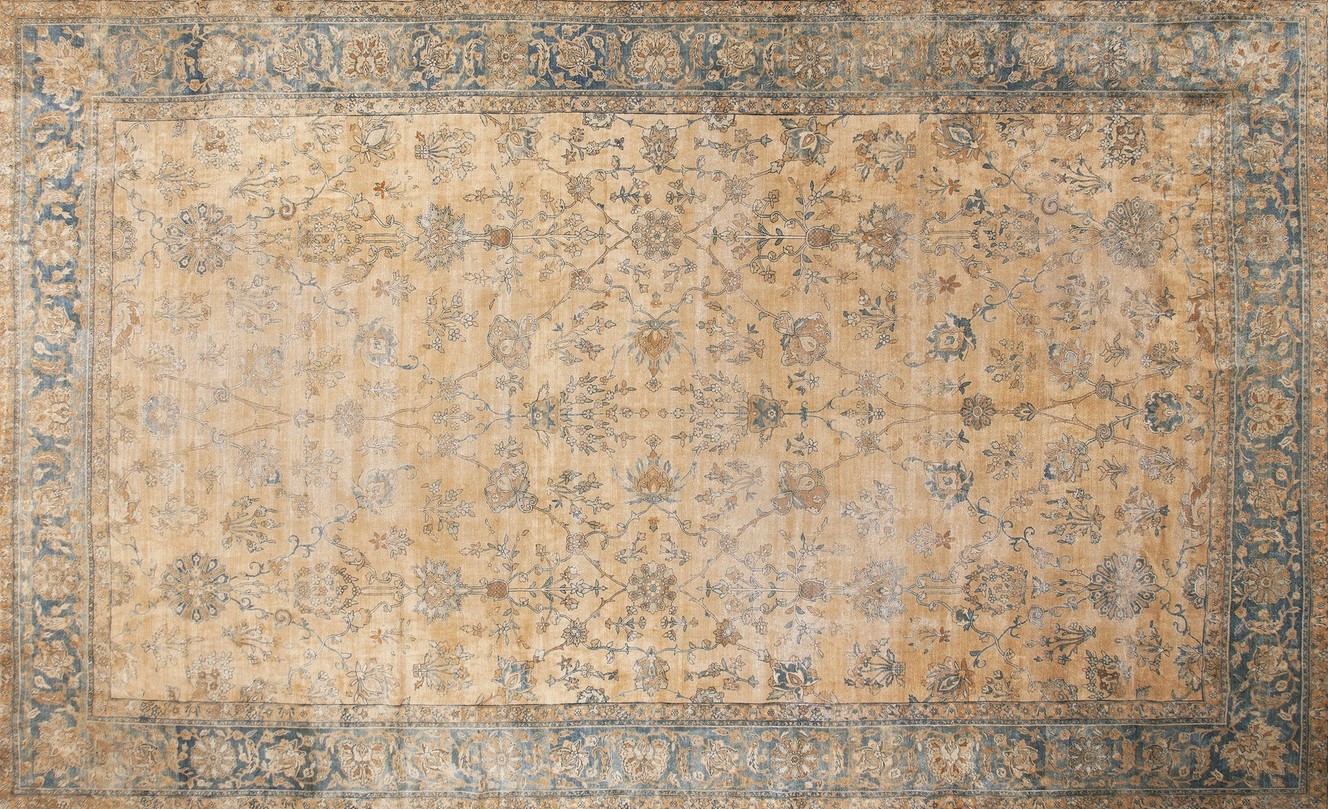
The mid-20th century also saw antique Kermans—especially vase carpets and Lavar medallions—enter major museum collections and auction houses, solidifying their prestige as collector’s treasures. In the 21st century, Kerman continues to balance heritage with modernization.
Traditional patterns remain in demand among collectors, while new productions incorporate contemporary color palettes and layouts for global homes. This dual identity sustains Kerman as both a historic weaving hub and a living craft tradition.
Key Milestones and Cultural Shifts
- Safavid Patronage (16th–17th c.) — Why: Elevated Kerman to international prominence and produced the iconic vase carpets.
- 18th Century Instability — Why: Weaving adapted to focus on shawls, showing resilience in times of conflict.
- 19th Century Revival (Arjmand Era) — Why: Mohammad Arjmand’s workshops standardized quality and revived global demand for Kerman rugs.
- Early 20th Century Adaptations — Why: Western tastes for pastel colors and lighter motifs influenced production and broadened appeal.
- Late 20th Century Collecting Boom — Why: Antique Kermans became highly valued in auctions and museums, confirming their cultural and financial significance.
- Present Day — Why: Kerman weaving endures, balancing tradition with modern markets to remain a cornerstone of Persian textile art.
From Safavid splendor to Arjmand’s revival and today’s ongoing legacy, the history of Kerman weaving illustrates how artistry, resilience, and global trade shaped one of Persia’s most enduring carpet traditions.
Regional Styles & Notable Variants
Lavar (Ravar) Kerman vs. Kirman
The most important distinction within the tradition lies between Lavar (Ravar) Kerman rugs and standard Kirman carpets. While both share the hallmarks of Carmania wool, Persian knotting, and curvilinear artistry, Lavar Kermans—woven in the town of Ravar—stand apart for their extraordinarily fine knotting, intricate floral medallion patterns, and frequent weaver signatures.
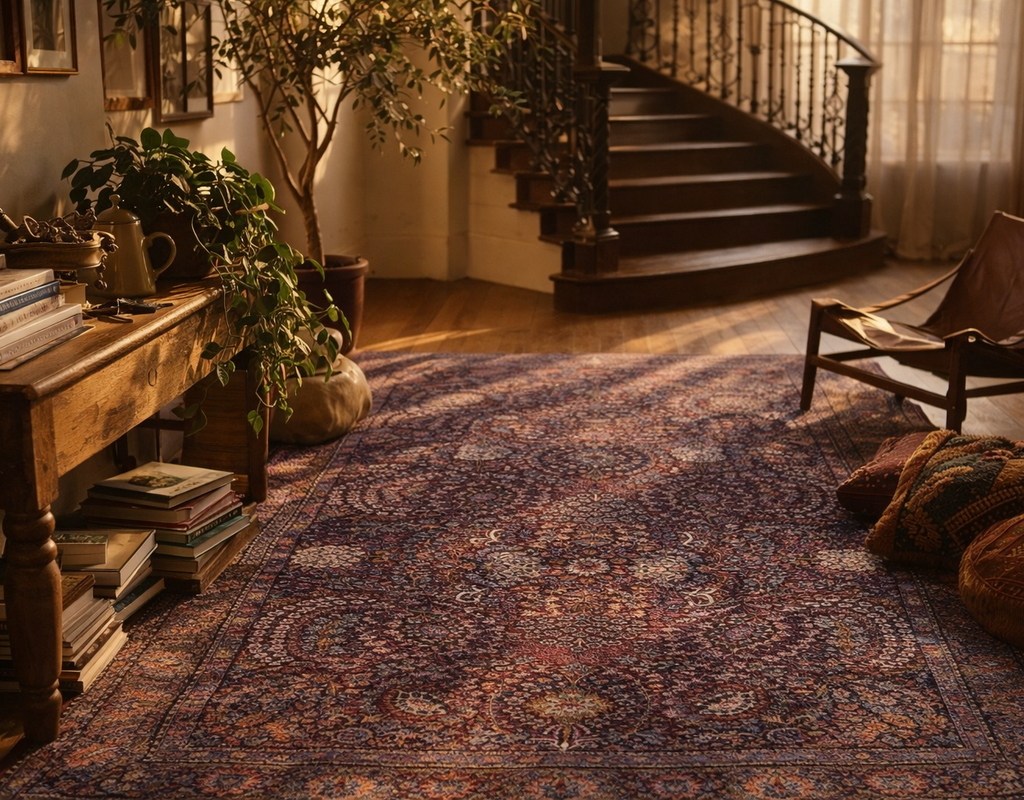
A richly colored Oriental-style rug grounds this inviting entryway, blending traditional patterns with natural light and warm wood accents.
These qualities made them benchmarks of refinement, destined for royal commissions and Western collectors. In contrast, standard Kirman rugs were often woven on a broader scale for both domestic and export markets, still of high quality but generally less densely knotted and rarely signed.
Rugs from the Ravar District
The Ravar district is renowned not only for its Lavar masterpieces but also for distinctive design motifs. Among them, the “Gol Sorkhi” (red rose) motif stands out as a regional signature, symbolizing beauty and renewal.
Ravar rugs often feature lush, naturalistic blossoms arranged around a central medallion or within elaborate fields, demonstrating craftsmanship of the highest order. Collectors prize these rugs for their exceptional detail, harmony of color, and unparalleled execution, qualities that set them apart within the larger Kerman family.
Sabzikar, Gol Sorkhi, and Signature Regional Motifs
Beyond the Lavar tradition, regional Kerman workshops developed characteristic motifs:
- Sabzikar Designs — Why: Known for leafy green vegetal patterns, these highlight the Persian garden theme and emphasize natural abundance.
- Gol Sorkhi (Rose Motifs) — Why: A symbol of beauty and life, roses became a Ravar specialty, distinguishing carpets woven in that district.
- Signed Medallion Carpets — Why: The inclusion of a master weaver’s name elevated carpets from craft to personal artistry, especially in the Ravar output.
These recurring design elements underscore the diversity of Ravar carpets and the city’s reputation for blending symbolic depth with decorative refinement.
Sirjan Kilims and Afshar Tribal Rugs
To the west of Kerman lies Sirjan, a hub of kilim production. Unlike the knotted-pile rugs of Kerman city, Sirjan kilims are flatwoven textiles, often featuring bold geometric patterns and bright colors. They are considered part of the wider Kerman weaving tradition because of their regional identity, yet they reflect a different weaving technique and cultural heritage.
Sirjan is also home to Afshar tribal rugs, small-format pieces woven by semi-nomadic groups. These rugs are known for strong geometric motifs, deep reds and blues, and highly collectible authenticity. Today, Sirjan’s kilim industry is evolving with modern markets: while retaining traditional patterns, many workshops now experiment with new color palettes and larger formats to appeal to contemporary buyers. This adaptability ensures that Sirjan remains a vibrant part of Kerman’s textile heritage.
Rafsanjan and Baft Production
Rafsanjan is one of the most important centers of Kerman carpet output, consistently ranking among the top-producing districts in the province. Known for large-scale workshop weaving, Rafsanjan’s production helped sustain the international presence of Kerman carpets well into the 20th century. Meanwhile, Baft, another district within Kerman province, has become notable for its adoption of modern natural-dye techniques. These methods echo traditional Persian practices while responding to today’s market demand for eco-friendly and sustainable production.
The result is a weaving community that both preserves regional heritage and appeals to global buyers interested in authenticity and sustainability. Together, the styles of Lavar Kerman, Ravar floral medallions, Sirjan kilims, Afshar tribal rugs, Rafsanjan workshops, and Baft’s natural-dye revival reflect the remarkable diversity of Kerman’s weaving heritage—each variant contributing to the province’s enduring reputation for artistry and innovation.
Cultural Landmarks & Tourism Connections
Arg-e Bam Fortress: Location and Significance
The Arg-e Bam, located in Kerman province, is the world’s largest adobe fortress and one of Iran’s most striking historical monuments. Situated on the ancient Silk Road, it served as both a citadel and a bustling trading post, linking merchants from Central Asia to the Persian Gulf. For centuries, its walls sheltered caravan traffic and facilitated commerce, including the trade in Kerman rugs and other textiles.
The fortress, though heavily damaged in the 2003 earthquake, remains a UNESCO World Heritage Site and a powerful symbol of Kerman’s resilience and cultural importance.
Ganjali Khan Complex: Must-Visit Status
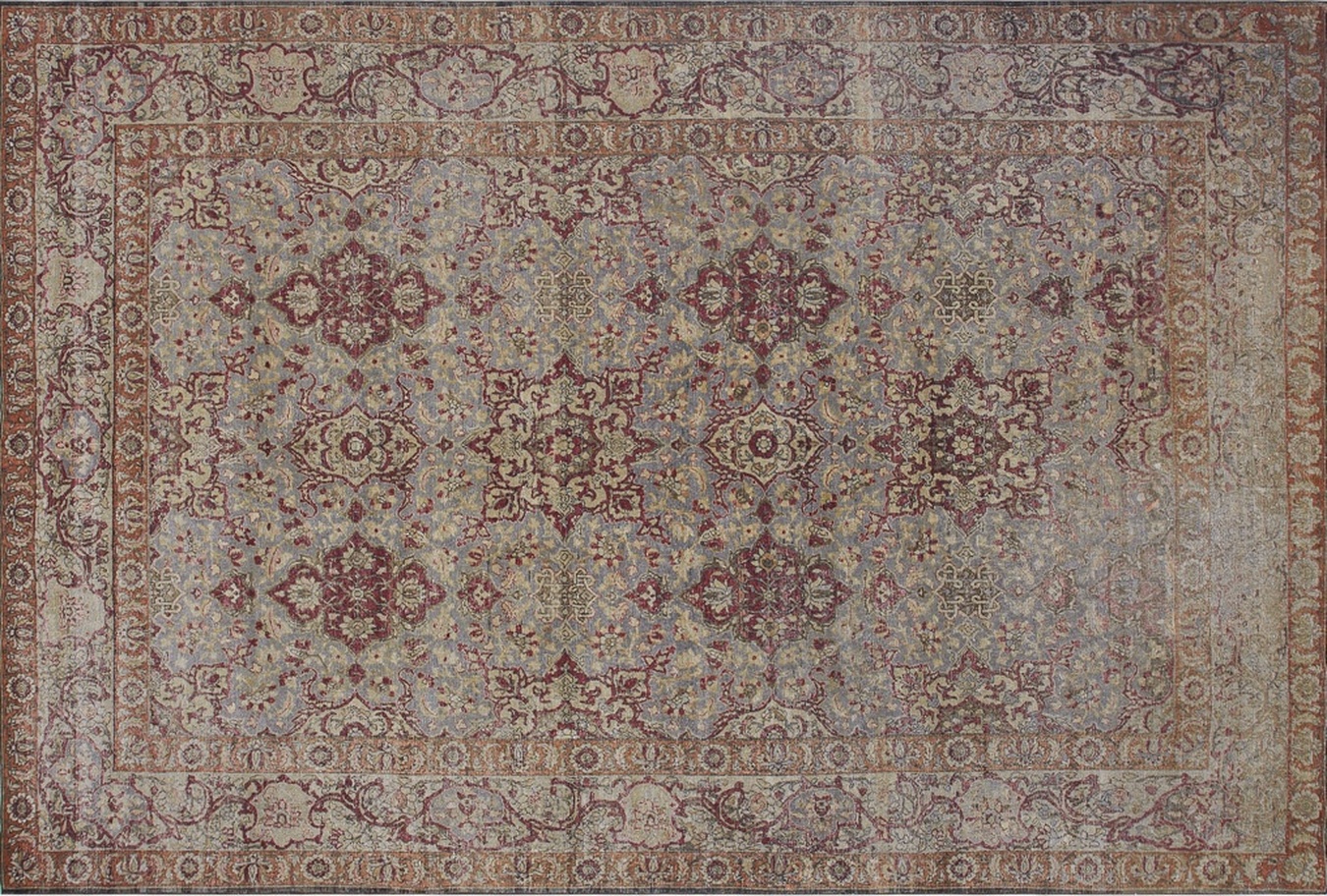
Antique Persian Allover Floral Wool Hand Knotted Pile 1920s Rug – by Rugs On Net
At the heart of Kerman city lies the Ganjali Khan Complex, built during the Safavid era under the governor Ganjali Khan. This architectural ensemble includes a caravanserai, a bathhouse, a mosque, and most importantly, a historic bazaar.
The complex is considered a must-visit site because it not only represents Safavid urban design but also embodies the fusion of commerce and culture. For visitors today, walking through its arcades evokes the centuries when Kerman’s carpets were traded here alongside silk, spices, and precious goods, underscoring its role in the region’s textile economy.
Shazdeh Garden: Why It’s Iconic
The Shazdeh Garden (Prince’s Garden), located near Mahan in Kerman province, is one of the most iconic examples of a Persian walled garden and holds UNESCO World Heritage recognition. Built in the late 19th century, it epitomizes the Persian ideal of paradise on earth, with cascading water channels, tiered terraces, and lush greenery set against a desert backdrop.
Its iconic status lies in this contrast: a fertile, cultivated oasis amid arid surroundings. Just as Kerman rugs often depict gardens and floral abundance, the Shazdeh Garden serves as a living metaphor for the symbolic content woven into Kerman floral rugs.
The Ancient Kerman Bazaar’s Vaulted Arcade
The Kerman Bazaar is among the oldest and longest covered bazaars in Iran, with a vaulted arcade dating back centuries—its origins lie in the Safavid period, though many sections were expanded in later eras. This historic marketplace stretches for miles through the city, serving as both commercial hub and cultural artery.
For the carpet world, it is especially significant: the bazaar has been the site of Kerman rug trade for generations, where merchants displayed, bargained, and shipped carpets destined for both domestic courts and international buyers. Its vaulted passages, filled with shops and caravanserais, remain a living extension of Kerman’s weaving heritage.
Living Craft: Modern Workshops and Kilim Revival
Beyond monuments, Kerman’s cultural identity continues in its workshops, where artisans weave both traditional pile carpets and Sirjan kilims. These modern studios often combine ancestral techniques with updated palettes to appeal to contemporary tastes. In villages such as Baft, the revival of natural dyeing methods links today’s production to the sustainability of older practices.
For visitors, these workshops offer not only a glimpse into living craft but also an opportunity to purchase authentic textiles at their source, reinforcing the connection between tourism and Kerman’s economic lifeblood. Together, Arg-e Bam, Shazdeh Garden, the Ganjali Khan Complex, and the Kerman Bazaar create a cultural landscape that mirrors the artistry of the province’s textiles. For travelers, they offer not only historic grandeur but also an intimate connection to the living tradition of Kerman carpet weaving.
Market, Legacy, and Modern Context
Antique Kerman Rugs: Auction Records, Museum Holdings, Collector Demand
The prestige of the antique Kerman carpet is firmly established in the art world. Among the most remarkable achievements are the Safavid vase carpets, woven in the 16th and 17th centuries, which continue to command record-breaking prices. A single Kerman vase carpet sold at Sotheby’s in 2013 for $33.8 million, setting a benchmark for any Persian textile and underscoring the unrivaled reputation of Kerman weaving.
Beyond auctions, leading museums such as the Victoria and Albert Museum in London and the Metropolitan Museum of Art in New York hold Kerman masterpieces, displaying them as cultural treasures alongside paintings and sculptures. Collectors value these carpets not only for their beauty but also for their rarity, durability, and historical resonance.
Contemporary Weaving: Scale, Styles, and Adaptations
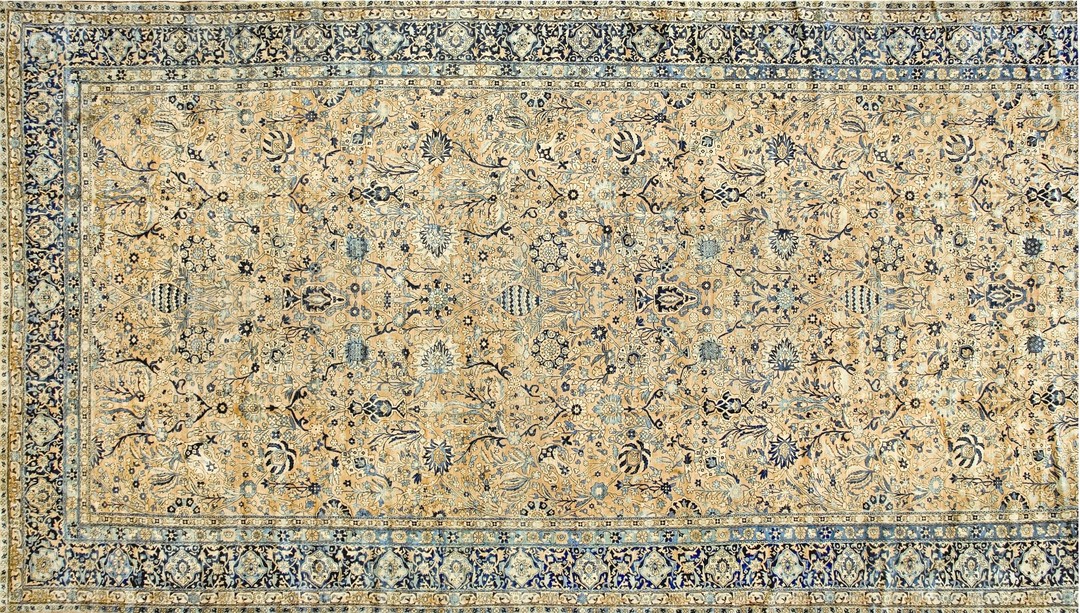
In the 20th and 21st centuries, Kerman remained an active weaving hub, though its styles evolved to meet new décor tastes. Earlier jewel-toned and densely floral rugs gave way to pastel palettes, ivory grounds, and softer medallion layouts tailored to Western interiors. Many modern Kerman rugs employ simplified motifs or French-inspired floral sprays, yet they retain the hallmark quality of Carmania wool and the fine Persian knot.
While mass production and global competition have reduced Kerman’s dominance, the city’s workshops continue to weave on a meaningful scale, ensuring that modern Persian rugs from Kerman remain widely available and recognizable.
Global Influence: Western “Kerman Style” Rugs and Replicas
Kerman’s impact extends far beyond Iran. By the late 19th century, Western manufacturers began copying Kerman design language, creating “Kerman style” rugs in India, Europe, and eventually in machine-woven factories. These replicas imitated the delicate medallions, floral scrolls, and pastel palettes that had made Kerman popular among European and American buyers.
While such copies lacked the finesse of original Kerman construction, their existence demonstrates how strongly Kerman motifs shaped global rug aesthetics. Even today, machine-woven rugs labeled as “Kerman design” remain common in the décor market, attesting to the international reach of the tradition.
Design Revival and Collecting Trends
In recent years, there has been renewed appreciation for antique Kerman carpets as collectors increasingly view them as “floor art.” Their artistry and durability allow them to be displayed in both formal and casual interiors, bridging historic craft and modern living. Auction houses highlight Kerman pieces not just as textiles but as cultural icons, while interior designers often seek them as statement pieces.
This revival mirrors the broader trend of valuing authenticity, handmade quality, and heritage in home décor, with antique and vintage Kermans now commanding higher visibility in both traditional and contemporary spaces.
The Role of Kerman Rugs in Modern Interiors
- Statement Centerpieces — Why: Antique Kermans, with their intricate medallions and lush floral fields, act as conversation-starting centerpieces in living rooms and dining areas.
- Harmonizing with Pastel Interiors — Why: Modern Kermans, woven in soft pinks, blues, and ivory, integrate seamlessly into light, contemporary spaces.
- Bridging Tradition and Modernity — Why: Their curvilinear artistry connects historic Persian craftsmanship with sleek modern décor, appealing to both collectors and homeowners.
- Durability for Functional Use — Why: The high-quality Carmania wool ensures rugs remain both luxurious and practical for everyday living.
- Versatility Across Styles — Why: Whether paired with classical furniture, minimalist interiors, or eclectic settings, Kerman rugs adapt, enhancing the space without overwhelming it.
From record-breaking Kerman auctions to modern pastel adaptations, the legacy of Kerman décor proves remarkably versatile. These rugs remain at once prestigious heirlooms, sought-after collector’s pieces, and adaptable design elements, embodying a tradition that is both timeless and continually relevant.
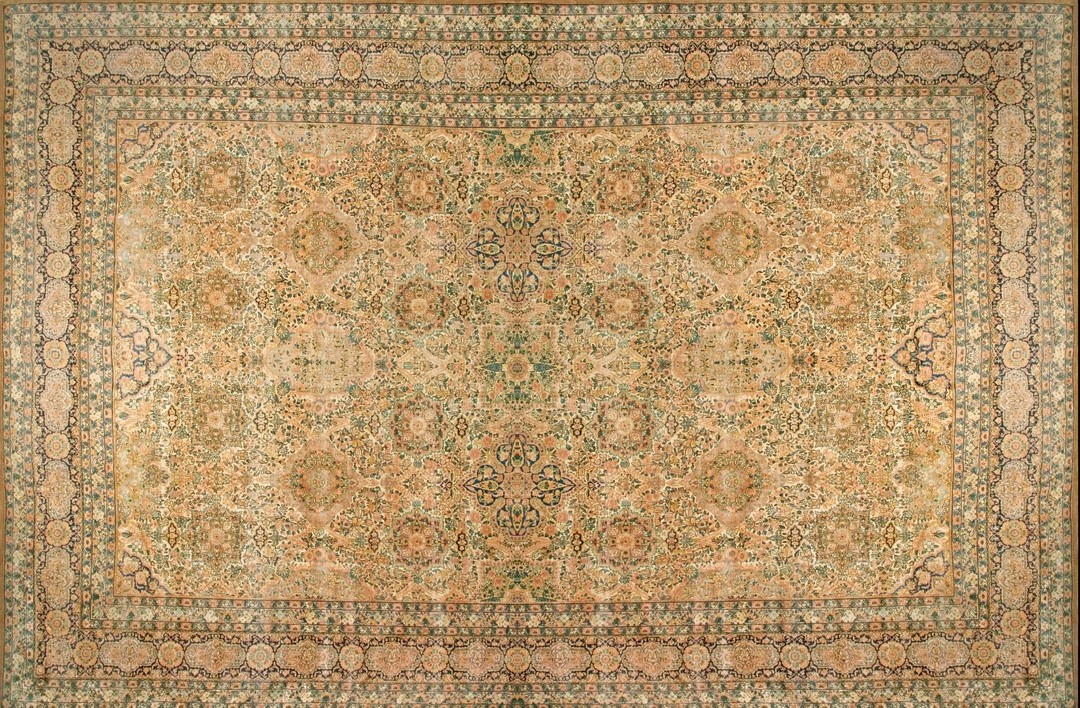
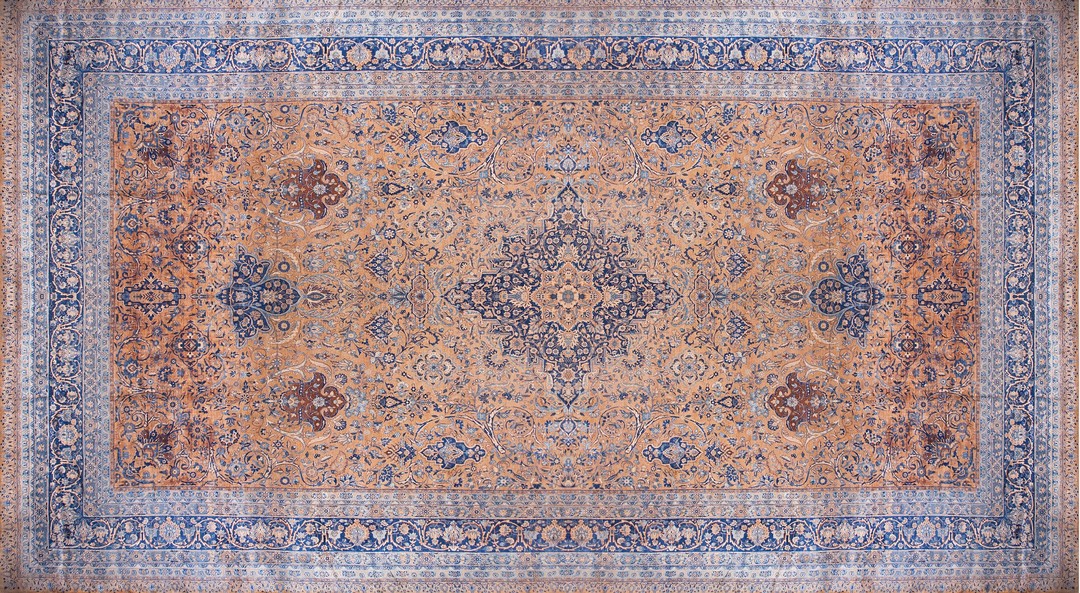
Browse a Few of Our Favorite Kerman Rugs
FAQ
- Where can I buy or see authentic Kerman rugs in the U.S.?
Look to specialist Persian-rug dealers, major auction houses, and museum collections to study examples. Ask for hand-knot verification, condition reports, and any signature or workshop attribution.
- How do I prevent moth damage to Kerman rugs?
Keep Kerman rugs clean, vacuum front and back (especially under furniture), rotate every 6–12 months, and avoid dark, undisturbed storage. For long storage, clean, wrap, and inspect periodically.
- Do Kerman rugs shed, and how do I reduce it?
New wool Kerman rugs may shed for several months. Vacuum gently without a beater bar, use a quality pad, and expect shedding to diminish with regular care.
- What makes Kerman vase-design rugs special?
Kerman vase-design rugs (16th–17th century) use a distinct triple-weft “vase technique” and allover florals with vases—museum-level textiles. Later Kerman rugs often emulate these motifs.
- How do I spot Kerman rug reproductions?
Many “Kerman-design” rugs are made in India or Pakistan. Watch for machine-made backs, glued-on fringe, and perfectly uniform tufts; authentic Kerman rugs show hand-tied knots and natural irregularities.
- Are Kerman rugs a good investment?
Top-quality antique Kerman rugs with strong provenance can hold or appreciate, but markets fluctuate. Buy what you love, document condition, and consult a qualified appraiser.
- How much do Kerman rugs cost today?
Expect wide ranges: small vintage Kerman rugs from around \$1,000, fine Lavar Kerman rugs mid-five figures, and exceptional antiques higher. Condition, size, and provenance dominate pricing.
- What sizes do Kerman rugs typically come in?
Kerman rugs appear in scatters to palace sizes; 8×10 and 9×12 are common, but gallery and 20-plus-foot lengths exist. Measure room and leave 12–24 inches to walls.
- How can I date Kerman rugs by look and structure?
Earlier Kerman rugs may show “vase-technique” triple-weft construction; 19th–20th-century pieces often feature pastel palettes for export. Lavar signatures and higher KPSI can indicate later, finer workshop work.
- Will robot vacuums damage Kerman rugs or fringe?
Robot vacuums can tangle in Kerman rugs’ fringes. Use no-go zones, tuck fringe under temporarily, and vacuum edges manually to protect tassels and selvedges.
- Can Kerman rugs be used over radiant floor heating?
Yes—Kerman rugs handle typical radiant-heat temperatures. Pair with a heat-safe felt or felt-rubber pad to protect fibers and floors while allowing heat transfer.
- What rug pad works best under Kerman rugs?
Use felt or felt-with-natural-rubber pads, cut 1–2 inches smaller than the rug. Avoid adhesive or PVC pads that can off-gas, slip, or stick to floors.
- How often should Kerman rugs be professionally cleaned?
Most Kerman rugs benefit from professional washing every 12–18 months, sooner with pets, kids, or heavy traffic. Regular rotation and pad use extend intervals.
- How should I clean Kerman rugs without damage?
Blot spills immediately with cool water and a pH-neutral wool-safe soap, then air-dry. Vacuum with suction only (beater bar raised), and test for dye stability before any DIY cleaning.
- Are Kerman rugs good for dining rooms?
Yes—pick low- to medium-pile Kerman rugs and size them so the rug extends 24–30 inches beyond the table on all sides. A felt-rubber pad prevents slips.
- Are Kerman rugs durable for high-traffic areas?
Wool Kerman rugs are durable, but antiques deserve moderate traffic and a pad. For busy spaces, choose thicker-pile, later Kerman rugs and rotate quarterly.
- How do Kerman rugs differ from Sarouk or Heriz rugs?
Kerman rugs are curvilinear and often pastel; Sarouk rugs skew denser red-blue florals; Heriz rugs are geometric and rugged. Choose Kerman rugs for elegance, Heriz for durability, Sarouk for balanced traditional looks.
- How do Kerman rugs compare to Kashan rugs?
Both are city weaves with florals, but Kerman rugs frequently use pastel palettes and French-influenced bouquets, while Kashan rugs lean classic red-and-navy medallions. Structure and workshop signatures also differ.
- What materials are Kerman rugs made of?
Most Kerman rugs are wool pile on cotton foundations, sometimes with silk details. Fine “kork” (soft, high-grade) wool is common on high-quality examples.
- What knot counts do Kerman rugs usually have?
Many Kerman rugs range roughly 120–400+ KPSI, with Lavar Kerman rugs often toward the higher end. Knot density varies by era, workshop, and size.
- What colors are common in Kerman rugs?
Expect saturated cochineal reds and indigos alongside soft pastels (amber, pink, blue-gray) popular for Western markets. Aging can shift “Kerman red” toward coral.
- What designs define Kerman rugs?
Kerman rugs feature medallions, allover florals, lattice layouts, tree-of-life and “vase” motifs, and millefleurs (“a thousand flowers”). Borders often carry flowing vine scrolls with Shah Abbas palmettes.
- How can I identify authentic Kerman rugs at home?
Genuine Kerman rugs show individual knots on the back, asymmetrical (Persian) knotting, and fringes that are warp ends—not sewn on. Lavar Kerman rugs often include a woven signature cartouche.
- What does “Lavar Kerman rugs” mean?
“Lavar” (Ravar) Kerman rugs come from the town of Ravar and are prized for especially fine weave and detail. Many Lavar pieces are signed and can reach 300–400+ knots per square inch.
- What are Kerman rugs?
Kerman rugs are Persian hand-knotted carpets from Kerman (Kirman), Iran, known for fine curvilinear florals and masterful dye work. Foundations are typically cotton with wool pile; some examples use silk highlights.