
Ireland at a Glance
Discover our complete range of luxury Irish wool rugs and bring home a piece of Celtic history today.
Country Of Ireland Overview
Ireland, known in its native language as Éire, occupies most of the island lying west of Britain, with a population of about 5.38 million people. The nation’s cultural identity has always been deeply tied to textiles, which serve as both practical necessities and expressions of artistry.
Linen, tweed, and hand-knotted rugs reflect Ireland’s longstanding weaving heritage, rooted in local natural fibers like wool and flax. In rural communities, textile production was historically essential for survival, but it also evolved into a celebrated art form that carried cultural pride.
Today, this legacy continues, with the fascinating area rugs of Ireland that are steeped in culture at the intersection of heritage preservation and sustainable innovation, appealing to those who value both tradition and eco-conscious craft.
Four Provinces of Ireland
- Ulster — Why: Known for its rugged landscapes and strong ties to Celtic traditions, Ulster has long been associated with cultural resilience and regional motifs that carry into textiles.
- Munster — Why: Home to vibrant folklore and musical traditions, Munster contributes colorful artistic influence that translates into lively design patterns in weaving and rug-making.
- Leinster — Why: As the seat of Dublin, Leinster represents Ireland’s political and cultural hub, where historic craft guilds and modern designers coexist, shaping rug culture for both local and global markets.
- Connacht — Why: A land of wild coasts and Gaelic traditions, Connacht embodies Ireland’s mystical heritage, often reflected in Celtic knotwork, spiral motifs, and natural landscapes incorporated into rug design.
These four provinces form the structural and cultural backbone of Ireland, and many Irish rug motifs are distinctly regional, tying local identity to woven expression.
Iconic Landmarks and Rug Motifs
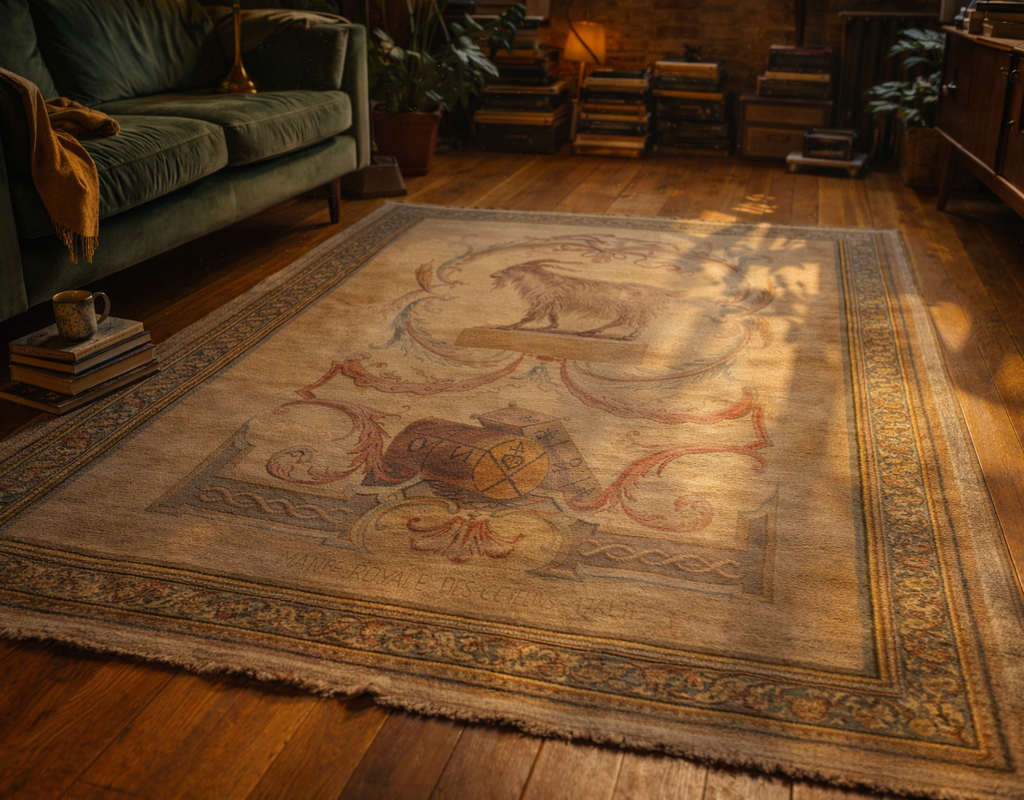
A unique, tapestry-style area rug centers this cozy living space bathed in warm, directional sunlight.
- Newgrange (3200 BC) — Why: This ancient passage tomb predates the pyramids and is famed for its carved spirals, which are frequently adapted into Celtic-inspired rug motifs.
- Skellig Michael (6th century monastic site) — Why: The dramatic rock monastery, now a UNESCO World Heritage site, embodies Ireland’s spiritual history and often inspires abstract geometric and cross motifs in textiles.
- Cliffs of Moher — Why: Ireland’s most famous coastal landmark, the cliffs’ dramatic lines and natural grandeur are woven into design patterns emphasizing vertical striations and bold contrasts.
- Abbey Ruins (e.g., Glendalough, Clonmacnoise) — Why: These spiritual ruins are central to Irish history and often appear symbolically in Irish map rugs, which stitch together outlines of the provinces with landmark references.
These Irish landmark rugs connect geography and heritage, often using motifs like Celtic spirals, monastic crosses, and map outlines to tell Ireland’s story through wool and design.
Why Irish Rug Heritage Matters Today
- Cultural Continuity — Why: Irish rug culture preserves ancient skills, ensuring that Celtic designs and regional weaving traditions remain alive in a globalized world.
- Sustainability — Why: With eco-friendly wool and natural dyes, Irish rugs exemplify sustainable craft practices that appeal to conscious buyers worldwide.
- Regional Identity — Why: Textiles tied to the Ireland four provinces highlight how weaving reflects not just artistry, but also local heritage and storytelling.
- Tourism & Economy — Why: Authentic Irish textiles fuel rural economies and attract cultural tourism, positioning rug weaving as both a livelihood and a symbol of national pride.
By linking landmark motifs, regional identity, and natural resources, Irish rug culture continues to thrive as both an art form and a meaningful expression of sustainability. Custom rugs inspired by Irish landmarks—such as map rugs featuring provincial borders, abbey ruins, and iconic sites—demonstrate how history and landscape still shape modern craft.
History of Rug & Textile Weaving in Ireland
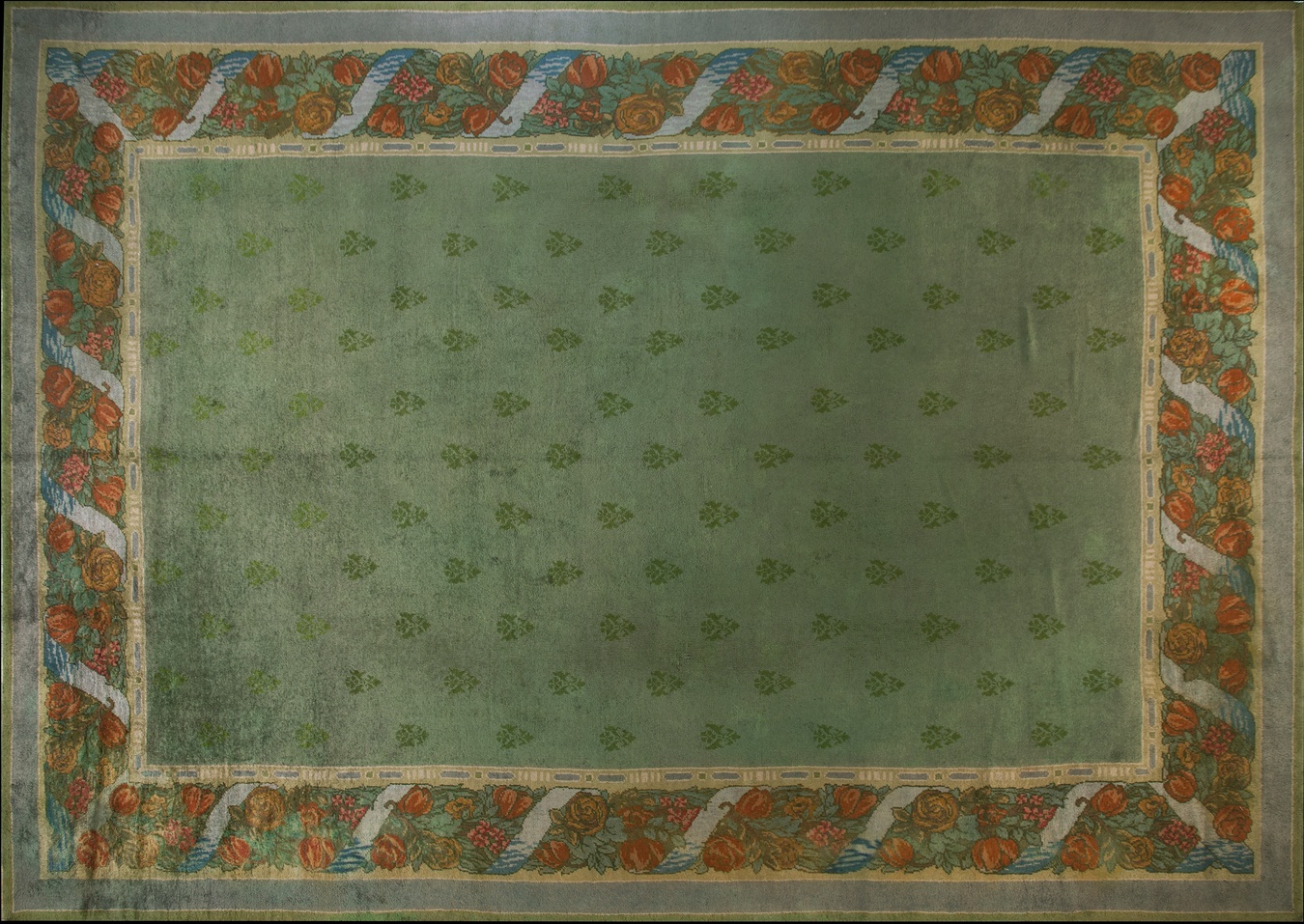
Ancient Origins to Early Medieval Weaving
The history of Irish rugs and textiles stretches back thousands of years. Archaeological finds at Neolithic sites such as Newgrange show that weaving tools were already in use between 3000 and 1600 BC. This evidence confirms that Ireland’s weaving tradition is among the oldest in Europe. By around 500 BC, the arrival of the Celts transformed the craft with the introduction of intricate patterns, spirals, and knotwork, alongside the use of natural plant-based dyes that produced rich greens, blues, and reds.
Early Irish law codes, the Brehon Laws, safeguarded the rights of women in weaving and spinning, acknowledging textiles as both valuable property and a key contributor to household wealth. This intertwining of artistry, economy, and social structure established weaving as a cornerstone of Irish identity.
The Wool Export Ban and Linen Boom
By the 17th century, Ireland’s rural economy revolved heavily around wool. However, the English Wool Act of 1699 dramatically reshaped the Irish weaving timeline by banning the export of Irish wool and restricting domestic textile industries. This economic blow redirected Irish craftsmanship toward linen, which was not bound by the same restrictions.
In 1711, the creation of the Irish Linen Board institutionalized this shift, and Belfast rapidly developed into the global hub of linen production, earning the title “Linenopolis.” The period marked a turning point, as Ireland’s international reputation became more closely tied to Irish linen origins than to woolen rugs. Yet, traditional rug-making and rural weaving practices continued quietly, sustained by communities who preserved local skills outside industrial centers.
Industrialization and Craft Revival
The 19th century brought industrialization, which both challenged and reinvigorated traditional Irish weaving. While machine production eroded demand for handwoven textiles, cultural leaders and rural communities launched craft revival movements in the 1890s. Central to this renaissance was the foundation of weaving centers in Donegal, particularly the Donegal Carpets workshop.
These carpets incorporated Axminster weaving techniques, adapted from England, which reached Irish workshops during this period. Donegal carpets history is especially significant: their combination of Celtic-inspired designs, high-quality wool, and Axminster methods allowed them to achieve international recognition. They were commissioned for embassies, theaters, and even royal residences, helping to place Ireland back on the global stage of rug making.
Modern Renaissance & Niche Production
The 20th century saw periods of decline as industrial shifts and global competition undermined Ireland’s textile industries. Yet, a modern renaissance has emerged, marked by niche production, luxury weaving, and eco-conscious practices. Community-driven initiatives, often in rural areas, continue to safeguard the craft, while independent studios emphasize authenticity, natural fibers, and sustainable methods. Today, Irish rug culture thrives in a specialized market where heritage textiles and handwoven rugs are valued as both functional art and cultural legacy.
By tracing the Irish weaving timeline from ancient origins through the wool ban, linen boom, and the Irish textile revival of Donegal, it becomes clear that Ireland’s rug and textile heritage is not just about survival but about resilience and reinvention.
The Donegal carpets influence on global rug making demonstrated how regional artistry could adapt Axminster techniques to express Irish identity while contributing to international design traditions. This adaptability ensures that Irish weaving remains a living heritage, deeply rooted yet constantly evolving.
Signature Irish Rug Styles & Textiles
Donegal Carpets: Hand-Knotted Heritage
The most celebrated expression of Irish rug culture is the Donegal carpets tradition, founded in 1898 in the fishing port of Killybegs, County Donegal. Killybegs became world-renowned for its Irish hand-knotted rugs, employing thick piles, meticulous knotting, and motifs that blended Celtic spirals with Persian influences.
These Killybegs rugs graced the halls of the White House, Dublin Castle, and British royal palaces, setting a global standard for Irish artistry. The reason Killybegs is famous lies in its dedication to hand-knotted craftsmanship rather than mass-machine production. While machine-made rugs are faster and cheaper, hand-knotted Donegal carpets are denser, longer-lasting, and more expressive, prized for their authenticity.
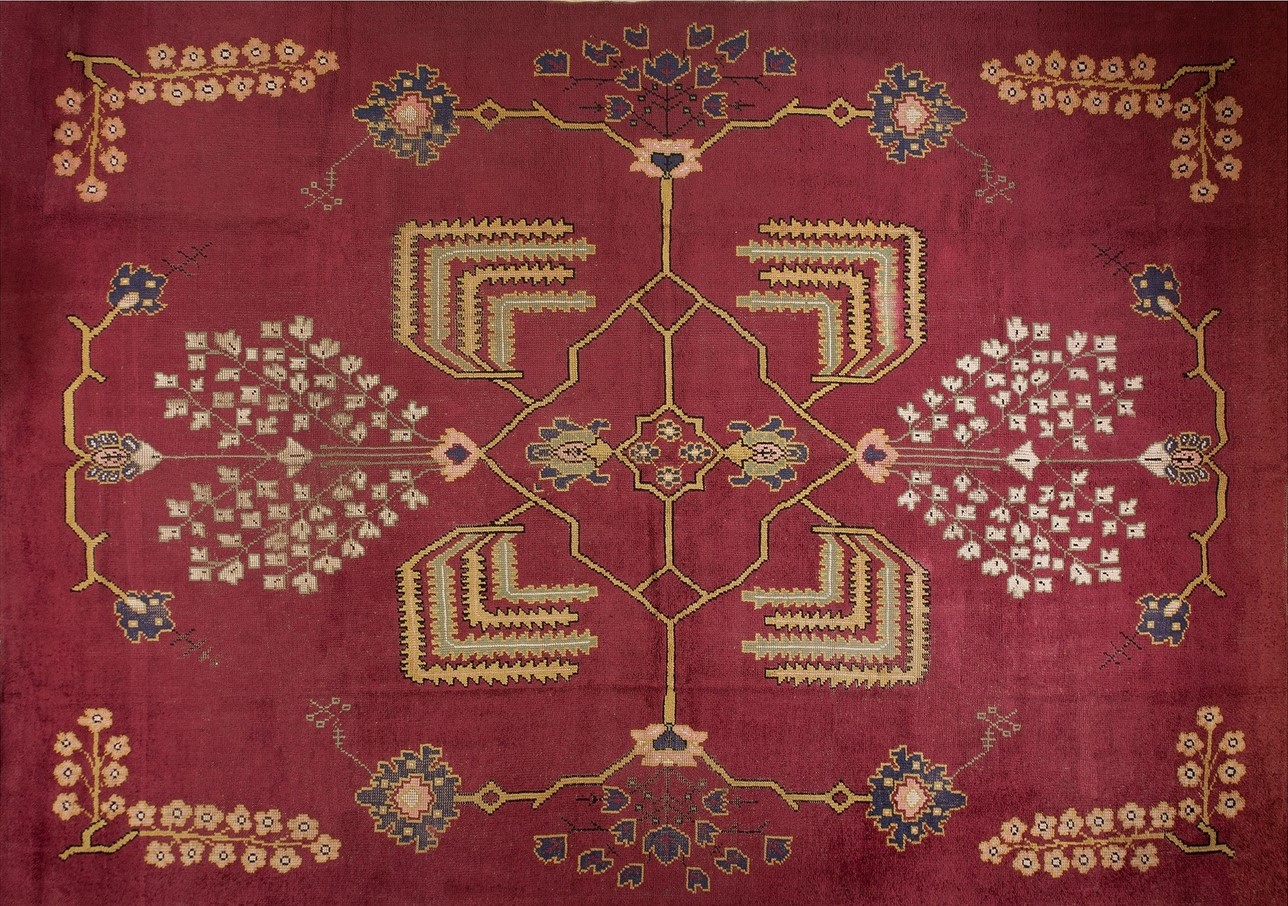
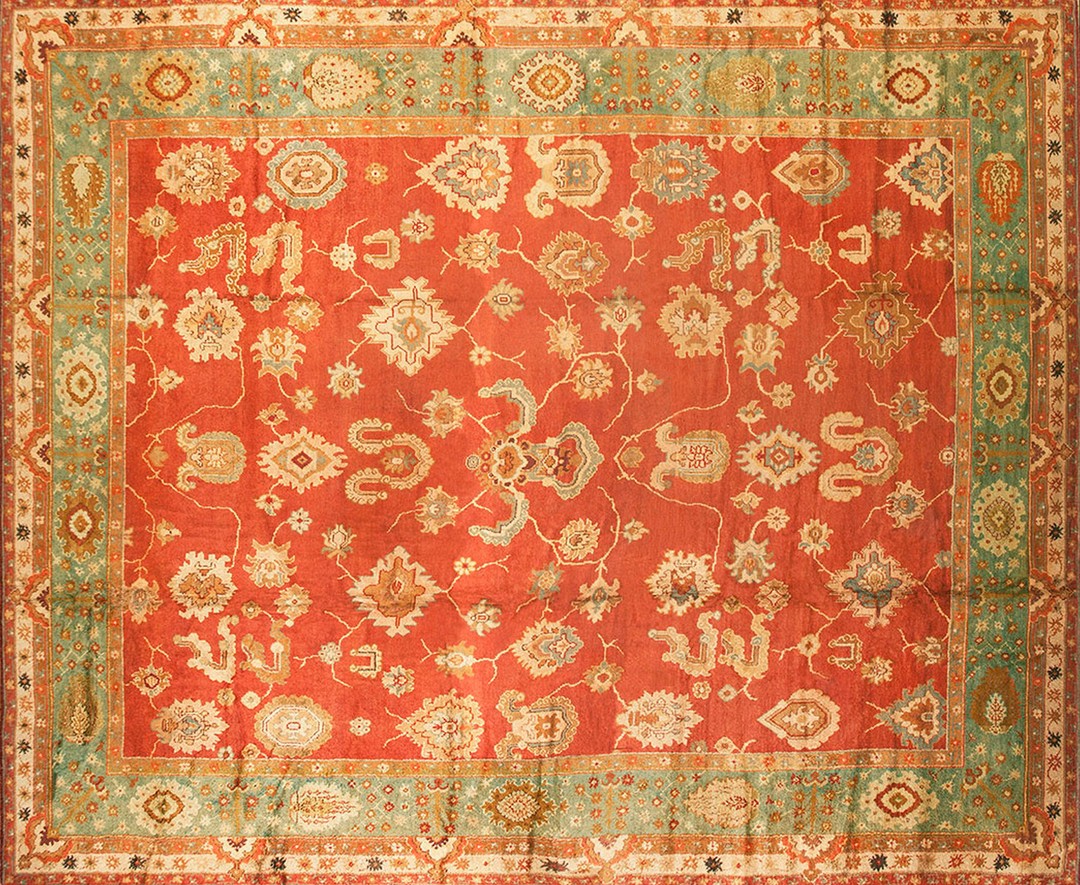
Antique Large Donegal – Arts & Crafts Ireland Geometric Knotted Rug – by Rugs On Net
Though often compared to Persian carpets, Donegal rugs are not easier to clean—their thickness and wool content demand careful maintenance—but they are admired for their durability and cultural identity. Choosing a hand-knotted Donegal over a machine-made alternative is a choice for heritage, longevity, and artistry.
Donegal Tweed Rugs
Distinct from hand-knotted carpets, Donegal tweed rugs carry the flecked character of Ireland’s most famous cloth. The wool is woven into plain, twill, or herringbone structures, with colors echoing the Irish landscape—heather purples, moss greens, and peat browns.
These tweed rugs embody both rustic simplicity and refined elegance, bridging fashion textiles and floor coverings. Their speckled “flecking” effect makes them visually rich yet understated, ideal for homes seeking natural texture and heritage in one piece.
Irish Linen Rugs
The reputation of Irish linen rugs stems from centuries of mastery in flax weaving. Known for their smooth, crisp finish, Irish linens were traditionally used in damask patterns and flatweaves. Today, linen flatweaves remain prized for their durability, easy maintenance, and suitability for modern homes.
An Irish flatweave rug is eco-friendly, breathable, and ideal for minimalist or contemporary interiors. Flatwoven linen and wool blends also preserve traditional damask motifs while serving practical needs, offering a heritage textile updated for modern lifestyles.
Woolen Blankets and Map Rugs
Wool has always been Ireland’s backbone fiber, with Connemara wool, sourced from hardy sheep of the western highlands, prized for its durability and resilience. This strength translates into blankets and rugs that withstand years of use while remaining naturally warm.
Connemara wool is also essential for weaving map rugs Ireland, where cartographic outlines of the island are combined with iconic landmarks like the Cliffs of Moher, abbey ruins, and monastic sites. These map rugs turn national geography into textile art, serving as both decorative objects and cultural statements.
Celtic Knot & Motif Rugs
- Celtic Knots — Why: Endless interlace patterns symbolize eternity, making the Celtic knot rug one of the most recognizable Irish styles.
- Spirals — Why: Ancient Newgrange spirals, dating back to 3200 BC, symbolize life cycles and energy, frequently woven into Irish rugs.
- Cross Motifs — Why: Inspired by Ireland’s early Christian high crosses, these motifs connect spirituality with textile design.
- Animal Interlace — Why: Stylized birds, hounds, and mythical beasts drawn from medieval manuscripts appear in rugs, linking textile art to illuminated texts.
These motifs carry Ireland’s sacred, mythological, and artistic heritage into woven form, making them uniquely identifiable.
Hand-Tufted Innovations
Modern artisan workshops have reinterpreted Celtic design through hand-tufting. Using tufting guns to punch yarn into cloth, makers recreate intricate Celtic knot rugs with speed and precision while preserving artistic complexity. This method allows for affordable yet high-quality rugs that echo traditional designs without the time investment of full knotting.
Contemporary studios across Ireland produce hand-tufted rugs featuring spirals, interlace, and symbolic landmarks, ensuring that Celtic heritage remains visible in modern interiors. By weaving together Donegal carpets history, tweed textures, Irish linen rugs, and Connemara wool durability, Ireland’s signature rug styles offer both heritage and innovation.
Whether it is a Killybegs hand-knotted rug for global prestige, a map rug Ireland for cultural symbolism, or a Celtic knot rug reimagined in hand-tufted form, Irish textiles embody a fusion of tradition, identity, and sustainability that continues to distinguish them worldwide.
Regional Rug Traditions of Ireland
Ulster (Northern Ireland): Linen Legacy
Ulster is the historic heartland of Irish linen, with Lisburn and Belfast standing as its great weaving centers. Linen damask from Ulster became world-famous for its intricate patterns and enduring quality, woven in both darker tones and complex designs. Museums and annual linen festivals in the region keep this tradition alive, celebrating Ulster’s contribution to the wider story of regional Irish rugs and textiles.
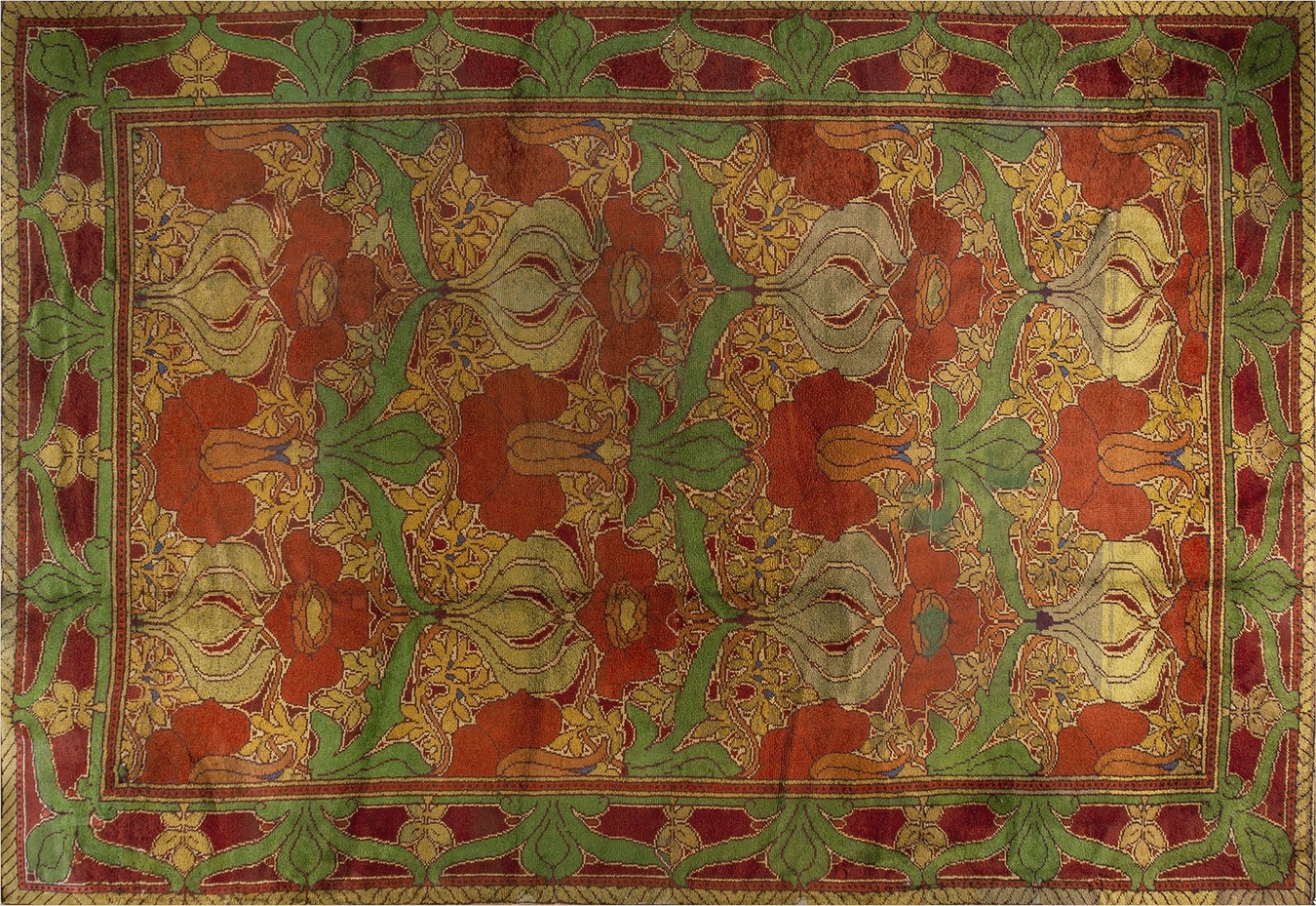
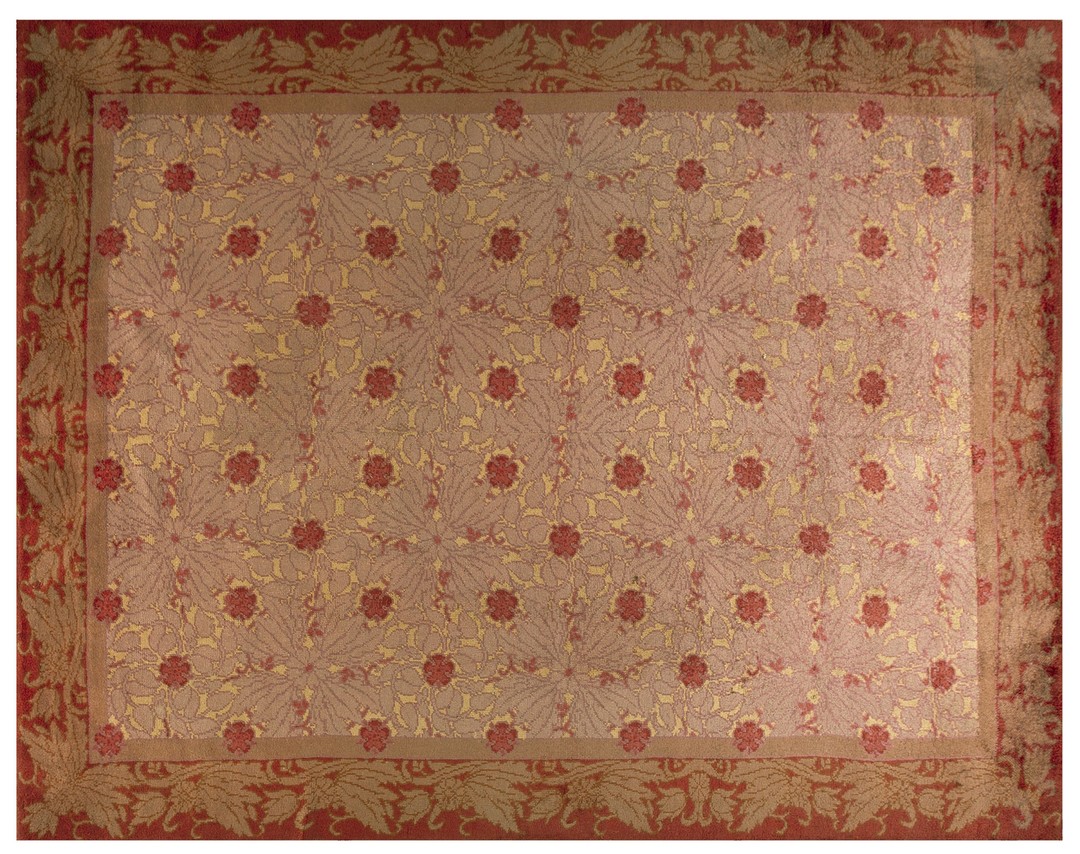
Antique Large Donegal – Arts & Crafts Ireland Floral Knotted Rug – by Rugs On Net
The technical refinement of linen weaving here set standards for elegance and durability, ensuring Ulster’s place as a cornerstone of the Irish weaving regions.
Donegal (Northwest): Rug and Tweed Capital
In the northwest, Donegal is synonymous with both Donegal Carpets and Donegal tweed, uniting hand-knotted rugs with flecked wool fabrics. The Gaeltacht villages of Donegal maintained weaving as part of daily life, producing goods that blended practicality with artistry.
From the 1890s onward, Donegal Carpets in Killybegs brought international prestige, while Donegal tweed continued to represent rustic heritage and the hues of the local landscape. Together, they cemented Donegal as Ireland’s rug and tweed capital, where craft and culture remain inseparable.
Mayo, Galway, Connemara: Wool & Dye Traditions
The west of Ireland is famed for its rugged sheep breeds and rich dyeing heritage. Foxford Woollen Mills in Mayo supplied blankets and tweeds, while Galway sustained handweaving traditions passed through families. In Connemara, wool from native sheep provided a foundation for some of Ireland’s toughest textiles.
With their high lanolin content, Connemara wool rugs and blankets are exceptionally durable and weather-resistant. Local dyers in these regions made use of natural resources—plants, lichens, and bogland minerals—ensuring that the wool carried both the toughness of the sheep and the vivid colors of the landscape.
Leinster vs Ulster Rug Design
- Leinster rug design — Why: Rugs from Leinster, especially those tied to workshops like Avoca Handweavers in Wicklow, often use lighter palettes, silkier blends, and colorful mohair throws. These reflect Leinster’s role as a more cosmopolitan, design-driven region.
- Ulster linen rugs — Why: In contrast, Ulster designs are rooted in linen damask, marked by darker tones and intricate weaving that emphasize structure and depth.
This contrast highlights how different Irish weaving regions developed distinct aesthetics: Leinster leaning toward brightness and variety, Ulster toward refinement and gravitas.
Munster: Kerry Woollens & Dyeing
In Munster, weaving traditions are anchored by Kerry Woollen Mills, one of the oldest surviving mills in Ireland. The region’s climate strongly affects dyeing: high rainfall and varying humidity intensify the saturation of natural dye colors, producing deep, lasting hues unique to Munster textiles. This natural advantage gave Munster rugs and woollens their signature richness, making them highly sought after.
Munster dyeing thus represents a direct link between Ireland’s weather and the colors of its rugs, proof that environment shapes aesthetic tradition. Regional differences are more than stylistic—they embody the climate, sheep breeds, and cultural practices of each province.
Whether the durability of Connemara wool, the contrast between Leinster rug design and Ulster linen, or the natural richness of Munster dyeing, these local identities continue to attract collectors who value authenticity and regional storytelling in regional Irish rugs.
Making & Materials: What Makes Irish Rugs Unique?
Irish Wool: Sourcing, Durability, and Cleaning
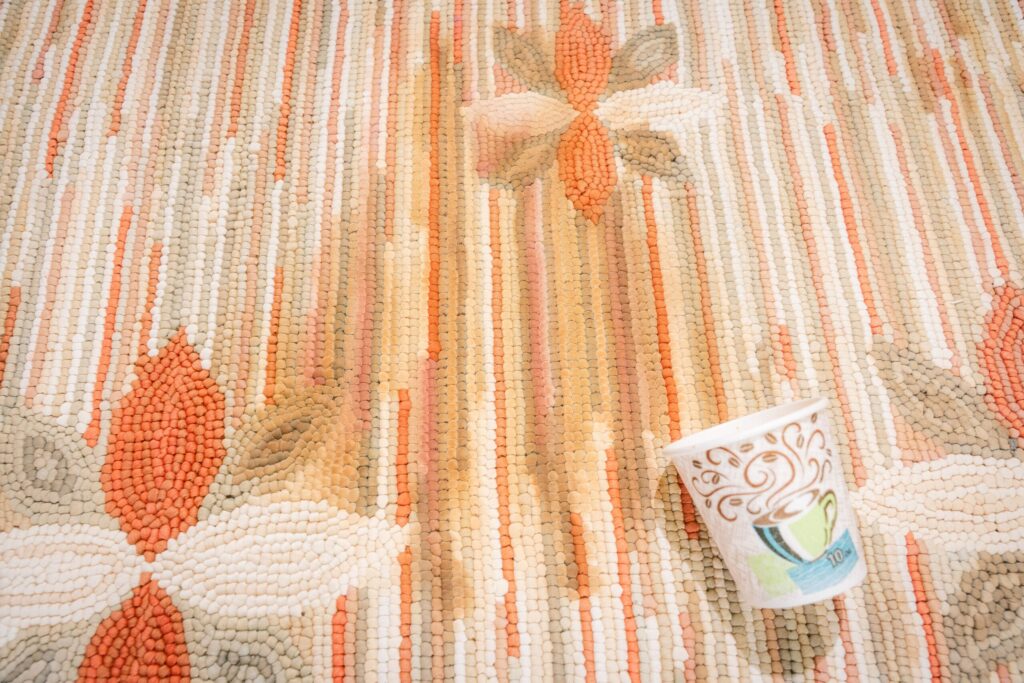
Close-up view of a tipped paper coffee cup resting on a handwoven wool rug, highlighting the rug’s dense pile, subtle color variations, and traditional geometric motifs in warm neutral and terracotta tones.
- Connemara Wool — Why: The hardy sheep of Connemara produce wool with naturally high lanolin content, making an Irish wool rug exceptionally tough, water-repellent, and long-wearing.
- Mayo & Kerry Wool — Why: These western regions supply resilient fibers that withstand damp climates, giving rugs built-in durability and natural stain resistance.
- Ease of Cleaning — Why: The lanolin in Irish wool means dirt tends to sit on the surface, allowing rugs to be brushed or lightly cleaned more easily than many synthetic alternatives.
The result is a durable rug that can endure daily wear, combining resilience with sustainability. Irish wool remains one of the key reasons these rugs are valued globally.
Flatweave, Hand-Knotted, Hand-Tufted: Techniques Compared
Hand-knotted Donegal rugs are the pinnacle of craftsmanship, with dense knots packed into every inch of fabric. This labor-intensive process creates carpets that can last for generations, outlasting most machine-made alternatives.
Collectors often ask, “Why choose a hand-knotted Donegal over machine made?” The answer lies in both longevity and artistry: each knot is a piece of heritage, whereas machine production emphasizes speed over substance. Flatweave rugs, often linen or wool, have no pile, making them lightweight, durable, and easy to clean—perfect for modern minimalist homes.
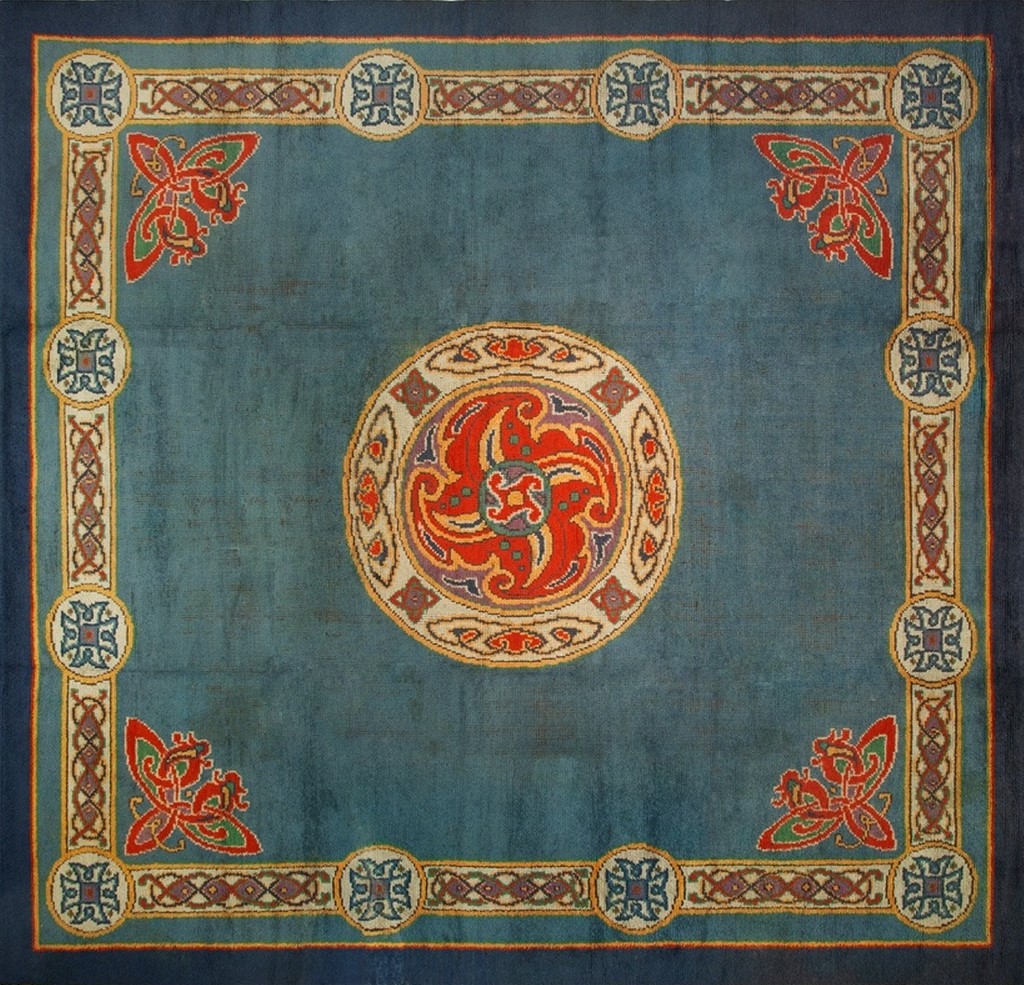
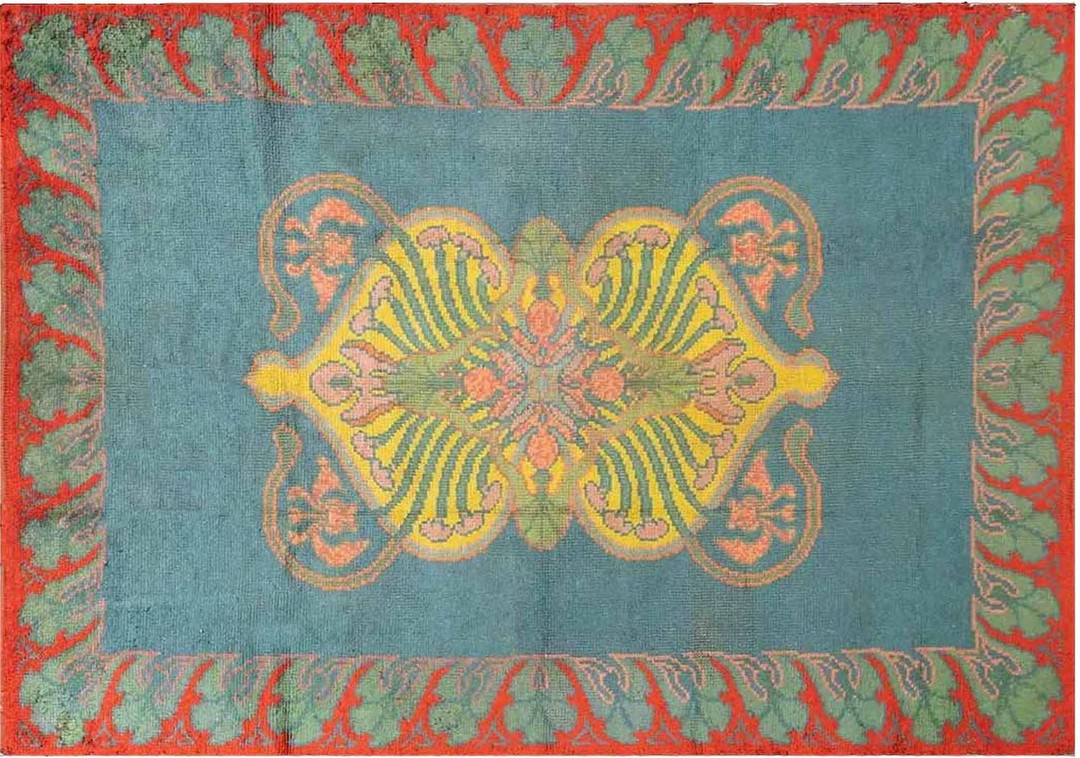
Antique Donegal – Arts & Crafts Room Size Wool Blue Rug – by Rugs On Net
Hand-tufted Celtic rugs offer a middle path: artisans punch yarn into a base cloth to create bold Celtic knot and spiral motifs, producing affordable yet authentic pieces that carry Ireland’s design legacy forward.
Natural Dyes & Eco-Friendly Weaving
Modern workshops have embraced eco-friendly Irish rug production, turning to biodegradable and renewable fibers such as wool, linen, and mohair. Traditional natural dyes—sourced from lichens, plants, and minerals—ensure vibrant colors without synthetic additives. This shift responds to global concerns about sustainability: many machine-made carpets shed plastic fibers, contributing to microplastic pollution.
By contrast, Irish microplastics carpets—that is, rugs woven from biodegradable fibers—reduce or eliminate plastic waste. For conscious buyers, this makes Irish weaving one of the leaders in sustainable rug production.
Landmark-Inspired Custom Rugs
- Ireland Map Rugs — Why: These bespoke rugs feature the national outline, often segmented by provinces, appealing to heritage and tourism markets.
- Cliffs of Moher — Why: The dramatic western coastline inspires bold vertical striations, woven into wool as natural motifs.
- Abbey Ruins & Monastic Crosses — Why: Iconic spiritual sites such as Glendalough or Clonmacnoise appear in custom rug designs, connecting textile art with Ireland’s sacred history.
- Newgrange Spirals — Why: Prehistoric patterns from this 3200 BC passage tomb often inform modern rug design, linking past to present.
These landmark-inspired custom rugs make Irish weaving deeply personal, tying geography and heritage into a decorative form.
Investing in Antique Irish Rugs
Scarcity, quality, and cultural value make Irish antique rugs increasingly attractive to collectors. Donegal carpets from the late 19th and early 20th centuries are rare, highly durable, and historically significant, with prices climbing as interest grows. For those asking, “Should collectors invest in antique Irish rugs now?” the answer is yes: these pieces embody a unique cultural narrative while offering enduring value in the art and design market.
Through Irish wool durability, the longevity of hand-knotted Donegal rugs, eco-conscious weaving that avoids microplastics, and bespoke map rug Ireland designs, what makes Irish rugs unique is their ability to combine heritage, sustainability, and artistry into one enduring craft.
Ireland’s Modern Rug Industry & Buying Guide
Boutique Mills, Major Brands, and Online Shopping
Ireland’s modern rug and textile industry is sustained by about 340 family-owned mills and firms, most of which emphasize premium, small-batch production. Leading Irish rug brands include Magee of Donegal, known for tweed and heritage carpets; Foxford Woollen Mills, famous for blankets and wool rugs; John Hanly & Co., specialists in throws and woven goods; and Avoca Handweavers, one of Ireland’s most colorful design houses.
Many of these mills now offer direct-to-consumer options, making it easier than ever to shop rugs online through their official websites or carefully vetted specialty retailers.
Authenticity & GI Protection
- Donegal Tweed GI — Why: The geographical indication (GI) protection for Donegal tweed ensures that only textiles produced in Donegal using traditional methods carry the name, safeguarding authenticity.
- Irish Linen Guild Certification — Why: This certification guarantees that a rug or textile labeled as GI Irish linen meets strict quality and provenance standards.
- Consumer Protection — Why: Buyers avoid imitations and know their purchase supports genuine Irish mills.
GI protections and guild certifications provide a reliable guide for buying rugs, helping them distinguish an authentic Donegal rug from mass-produced copies.
Where to See and Buy: Tourist Looms, Museums, & Online
- Killybegs (Donegal Carpets studio) — Why: Visitors can watch a working rug loom in action, experiencing hand-knotting traditions firsthand.
- Foxford Woollen Mills & Avoca Handweavers — Why: Both offer mill tours, combining history with live weaving demonstrations.
- Lisburn Linen Museum & Dublin textile museums — Why: These Irish rug museums preserve centuries of linen and the history of these rugs.
- Mill Shops & Official Websites — Why: The most trustworthy way to buy Irish rugs online is through direct brand sites or museum-affiliated shops.
These options provide not only access to authentic rugs but also immersive cultural experiences for rug tourists.
Collecting & Investing in Irish Rugs
- Antique Donegal Carpets — Why: Collectors prize late 19th- and early 20th-century Donegal rugs for their rarity and historic commissions.
- Celtic Revival Rugs — Why: Early 20th-century Celtic motif rugs reflect national identity and are increasingly sought after.
- Rising Value — Why: Limited supply and cultural significance make Irish rug investment a strong opportunity, with rising auction interest.
For those asking whether they should invest in antique Irish rugs now, the answer is yes—scarcity and cultural cachet continue to drive demand upward.
Caring for Irish Rugs: Cleaning, Longevity, and Value
Proper care ensures the value and longevity of Irish rugs. The high lanolin content in Irish wool means cleaning Irish rugs is often easier than caring for Persian counterparts, as lanolin repels stains and keeps fibers resilient. Regular brushing and light spot-cleaning usually suffice, though professional cleaning is advised for antiques or hand-knotted pieces.
With proper care, authentic Donegal rugs can last generations, retaining both functional and collectible value. Ireland’s rug industry today balances heritage with modernity: boutique mills keep traditions alive, GI Irish linen and Donegal protections guarantee authenticity, and tourists can still see looms at work in Killybegs and beyond. For buyers and collectors alike, Ireland offers both a tangible investment and an enduring cultural legacy woven into every thread.
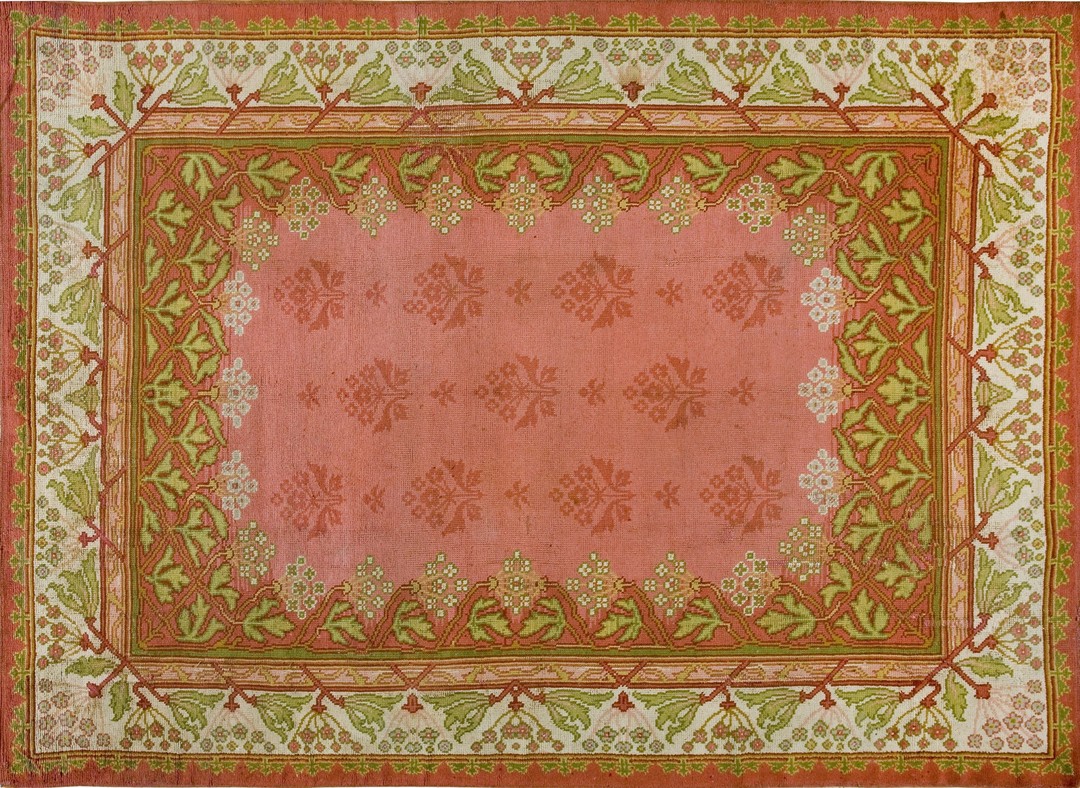
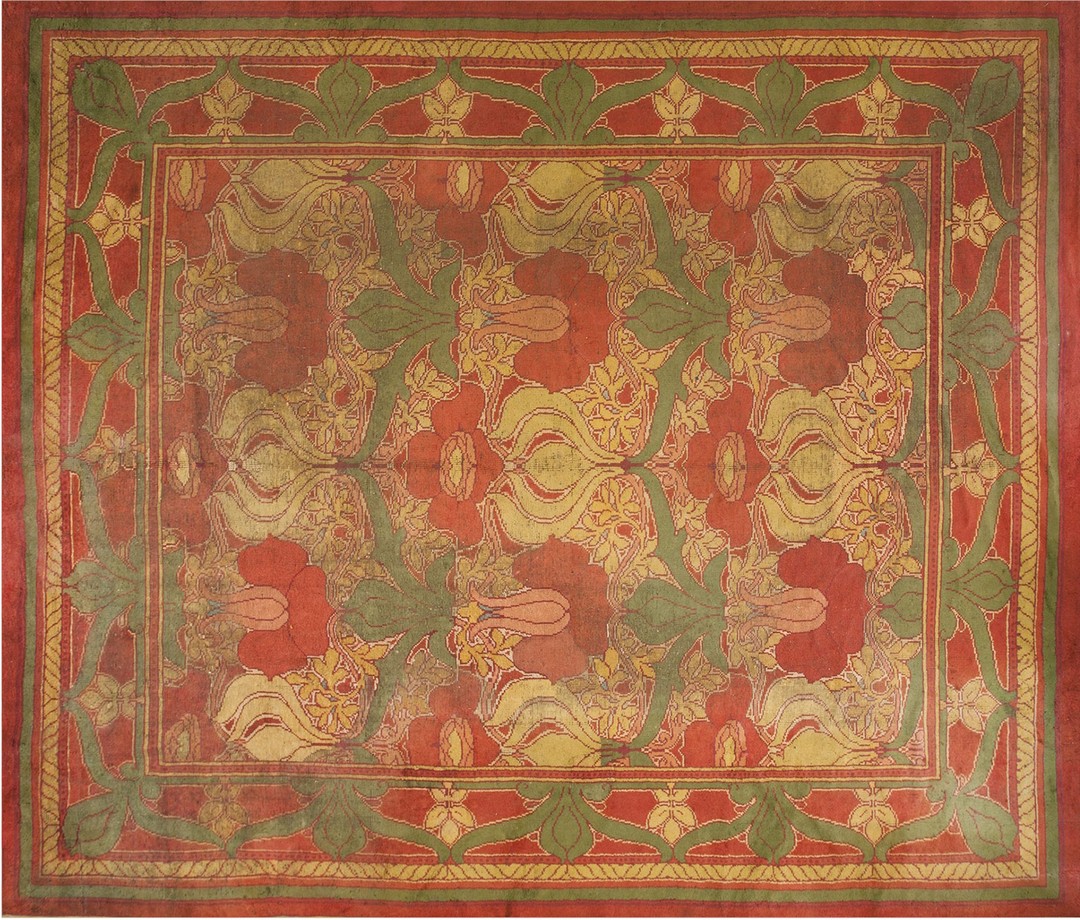
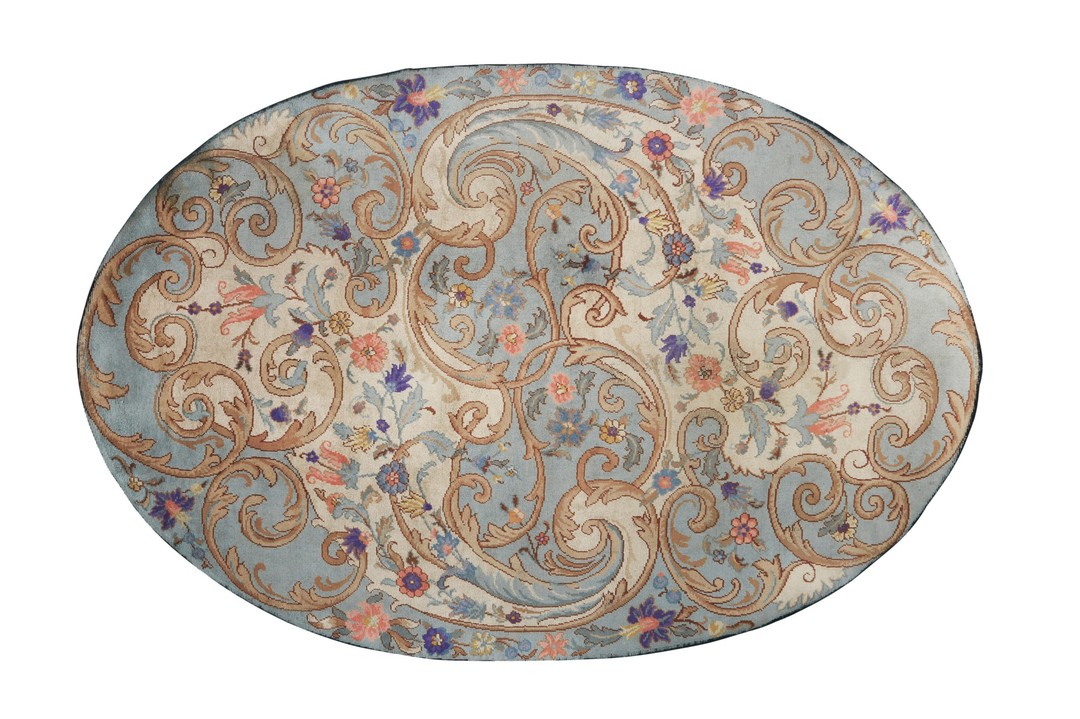
Explore a Few Rugs of Ireland Favorites
FAQ
- Where can I see Irish rug-making in person?
Visit Killybegs’ carpet heritage center in Donegal or arrange a studio visit with Wexford rugmakers. Many offer demonstrations or tours by appointment.
- How do I style Celtic-pattern rugs without overwhelming a room?
Balance bold borders with solid upholstery and neutral walls. Tone-on-tone palettes soften knots and scrolls while keeping the Irish character.
- Do Irish rugs use natural dyes?
Antique Donegals often used early aniline dyes; modern makers use stable contemporary dyes. Ask the seller for dye type and light-fastness tests.
- Can I commission a custom Irish rug?
Yes, Irish workshops offer bespoke sizes, colors, and materials. Expect several weeks to months lead time depending on complexity.
- What sizes are common for vintage Donegal rugs?
Many were room-size—9×12, 10×14, or larger—made for grand interiors. Long gallery runners exist but are scarcer.
- How does VAT work when buying from Ireland to the US?
Exports are typically zero-rated for Irish VAT; US import duties/taxes may apply. Confirm VAT treatment and landed costs with the seller before purchase.
- Will Irish rugs fade in sunlight?
Prolonged direct sun can fade dyes. Use UV sheers and rotate the rug quarterly to even exposure.
- Can Irish rugs be used outdoors?
Wool rugs are indoor-only; moisture and UV degrade them outdoors. Choose polypropylene or PET for patios.
- What rug pad works best under Irish wool?
Felt-and-natural-rubber pads add grip and cushioning without trapping moisture. Use 1/8–1/4 inch thickness based on door clearance.
- Are Irish wool rugs suitable for allergy-prone homes?
Wool can trap dust until vacuumed and breathes well, which many find manageable. Use a HEPA-filter vacuum and clean regularly.
- Do Irish wool rugs shed?
New wool rugs shed lightly at first, then taper over weeks to a few months. Weekly vacuuming (no beater bar) helps fibers settle.
- What do antique Donegal rugs cost?
Prices range from a few thousand dollars to high five figures, driven by size, condition, and provenance. Room-size examples commonly command premium prices.
- How can I verify an antique Donegal’s authenticity?
Look for Killybegs provenance, workshop labels, and hand-knotted construction. Ask for dealer documentation, repair history, and UV-stable dye assessment.
- What steps can I take to avoid moth damage on my wool rugs?
Keep rugs clean and regularly disturbed—vacuum the back and under edges. Use pheromone traps and rotate 180° every 6 months.
- How often should Irish wool rugs be professionally cleaned?
Every 12–24 months, sooner for heavy traffic or pets. Proper drying is essential to prevent odor or mildew.
- How do I clean a wool Irish rug at home?
Vacuum weekly in the pile’s direction and blot spills promptly with wool-safe solution. Avoid beater bars and over-wetting; test dyes before spot cleaning.
- What size Irish rug fits a living room?
Anchor the seating so front legs sit on the rug; 8×10 or 9×12 fits many spaces. Leave an 18–24 inch border from walls.
- Can I use an Irish wool rug over underfloor heating?
Yes, choose low-pile or flatweave wool with a UFH-rated pad. Avoid thick shag and keep floor temperatures within system limits (often around 80°F/27°C).
- Are Irish wool rugs durable for high-traffic areas?
Wool’s crimped fiber rebounds well and naturally resists soiling. Pair with a quality rug pad and rotate every 6 months for even wear.
- Who are notable contemporary Irish rug makers?
Ceadogán Rugmakers (Wexford) designs hand-tufted rugs; Donegal Carpets continues Killybegs’ tradition. Many collaborate with Irish designers on custom work.
- Are new Irish rugs still made in Ireland?
Yes—workshops produce hand-tufted and hand-knotted pieces alongside mill-woven carpets. Contemporary makers also offer bespoke sizing and colors.
- How do Donegal rugs differ from Persian rugs?
Donegals favor thicker wools and Arts & Crafts patterns; Persians often have finer knot counts and regional motifs. Both can be heirloom-durable with proper care.
- What styles or motifs define Irish rugs?
Celtic knots, stylized florals, and Arts & Crafts geometry are common. Colors often lean earthy—greens, russets, blues—and feel heathered like Donegal tweed.
- How are Donegal rugs constructed?
Traditionally with a Turkish (Ghiordes) knot in thick, high-quality wool. The result is dense, durable pile suited to large rooms.
- What are Donegal rugs?
Hand-knotted Irish wool carpets from Killybegs, famed for Celtic and Arts & Crafts motifs. Historic examples appear in Dublin Castle and the White House.