
Introduction to Area Rugs
Definition & Scope
An area rug is a floor covering designed to sit on top of existing flooring rather than being permanently installed. Unlike carpet, which stretches wall-to-wall and is fixed in place, an area rug is smaller, movable, and adaptable to different rooms or layouts.
These flexible floor coverings can be placed under furniture, centered in living spaces, or layered with other rugs to achieve specific visual effects.
What makes an area rug distinct is its versatility: it can be swapped, rolled, or repositioned to match seasonal décor, personal style changes, or evolving household needs.
Core Functions & Benefits
- Protects flooring — Why: Area rugs shield hardwood, tile, or laminate surfaces from scratches, dents, and daily wear.
- Reduces noise — Why: Dense fibers absorb sound, softening footsteps and lowering echo levels in open rooms.
- Defines seating zones — Why: By anchoring furniture groupings, a rug visually organizes a room and creates a sense of balance.
- Adds warmth and comfort — Why: Rugs introduce softness underfoot, especially in bedrooms and living rooms, while helping insulate against cold floors.
- Unifies décor — Why: Area rugs tie together color palettes and design elements, acting as a grounding piece in home design with rugs.
- Offers flexibility — Why: Unlike permanent carpet, rugs can be changed to align with new trends, seasonal themes, or personal taste. These benefits of area rugs make them indispensable tools in home styling.
Pile Height & Your Lifestyle
- Low Pile/Flatweave: Best for dining rooms (chairs slide easily) and high-traffic hallways (less of a trip hazard).
- Medium Pile: The “sweet spot” for living rooms—balances comfort with ease of vacuuming.
- High Pile/Shag: Reserved for bedrooms or low-traffic “cozy” nooks. Note: These require more maintenance as dust can settle deep into the long fibers.
Difference Between Area Rugs and Carpets
Area rugs stand apart from carpeting because they serve as flexible design tools. They provide all the comfort and functional advantages of carpet while offering adaptability that fixed installations cannot match.
For homeowners wondering what is an area rug used for, the answer lies in its ability to protect, enhance, and transform spaces—making them essential in modern interior design. For those comparing carpet vs rug, the distinction is clear: one is permanent flooring, the other is a versatile accessory that evolves with your home.
Origins and History of Area Rugs
Nomadic Beginnings (Central Asia & Middle East)
The origins of rugs trace back to nomadic tribes across Central Asia and the Middle East, where weaving served both practical and symbolic roles. Early herding communities relied on wool rugs for bedding, insulation, and portable decoration in their tents.
These woven textiles were not simply floor coverings; they embodied cultural identity, storytelling, and craftsmanship that could be carried across great distances. This nomadic foundation established rug weaving as one of humanity’s oldest artistic traditions, linking survival with beauty.
The Pazyryk Carpet & Early Examples
The Pazyryk carpet, discovered in a Scythian tomb in Siberia and dated to the 5th–4th century BC, is the oldest known rug. Preserved in ice for more than two millennia, it demonstrates remarkable sophistication: symmetrical knotting, rich colors, and complex patterns of horses and deer.
This artifact anchors rug history in deep antiquity, proving that advanced weaving and symbolic motifs existed long before the modern era. For those asking what is the earliest known history of rugs, the Pazyryk carpet remains the definitive answer.
Development Across Civilizations (Persia, Turkey, India, China)
As rug weaving spread, major civilizations developed distinct styles and techniques. Ancient Persian rugs became known for intricate floral patterns, high knot density, and symbolic motifs that conveyed spiritual or royal themes.
In Anatolia (modern Turkey), geometric designs and bold colors dominated, often tied to tribal symbolism.
India, influenced by Mughal patronage, introduced lush floral and garden-inspired motifs woven in fine wool and silk. In China, weavers integrated Buddhist and Taoist symbols, creating rugs that blended religious iconography with artistic detail.
Each region contributed unique aesthetics, shaping the global tradition of rug making.
Rugs in Palaces, Mosques, and Daily Life
By the medieval period, rugs had moved beyond nomadic tents to occupy grand spaces such as palaces and mosques. Monarchs commissioned vast carpets to demonstrate wealth and authority, while mosques used intricately woven prayer rugs and large carpets to elevate religious spaces.
At the same time, area rugs continued to serve in daily life, from floor insulation to decorative wall hangings. Their dual role—both utilitarian and symbolic—ensured that rugs became embedded in cultural identity across centuries.
Rug weaving dates back millennia, and its legacy remains visible today. The same patterns first woven by nomads or seen in the Pazyryk carpet still inspire modern designs.
For those wondering where did area rugs originally come from, the answer lies in this ancient convergence of necessity and artistry, with roots stretching across Central Asia, Persia, Anatolia, India, and China.
Ancient symbolism still informs today’s designs, reminding us that every area rug carries a thread of history beneath its surface.
Global Styles and Design Influence
How Rugs Define Style
- Anchor furniture groupings — Why: A rug provides a visual base for sofas, chairs, and tables, creating cohesion in seating areas.
- Unify color palettes — Why: Patterns and tones in a rug tie together wall colors, textiles, and furniture finishes.
- Define zones in open layouts — Why: In modern open-plan living, rugs mark distinct zones for dining, lounging, or working without the need for physical barriers.
- Express personality and taste — Why: The selection of a rug—whether geometric, floral, or abstract—immediately conveys a home’s stylistic character.
Area rugs are more than surface coverings; they shape both layout and aesthetic identity. For anyone asking how do area rugs define a room’s style, the answer lies in their dual ability to organize space and express design sensibility.
Anchoring Furniture & Open-Plan Zoning
In contemporary interiors, rugs are essential tools for spatial planning. Placed beneath a dining table or sectional, a rug anchors furniture and provides a sense of order.
In large lofts or open-plan homes, rugs function as flexible dividers, distinguishing one area from another while maintaining flow. Their adaptability makes them crucial for achieving balance between comfort and structure in modern living environments.
Common Motifs & Symbols
These rug motifs are not merely decorative—they are cultural rug symbols that transmit values, beliefs, and stories. For example, a boteh pattern might suggest fertility and abundance, while a dragon woven into a Chinese rug symbolizes power and endurance.
Cultural Heritage in Modern Rugs
Although rug weaving has become globalized, the cultural heritage woven into patterns continues to shape design today. Tribal flatweaves still emphasize bold geometrics, Persian-inspired rugs carry medallions and arabesques, and modern designers reinterpret these motifs into minimalist or abstract forms.
This blending of history and innovation demonstrates enduring rug design influence, where ancient artistry informs contemporary trends.
For those asking what are the key patterns seen in area rugs or how do cultural motifs influence area rug design, the answer lies in the continuity of symbols across time.
From boteh to gul, each design element carries a cultural narrative, ensuring that area rugs are not only functional but also storied expressions of human creativity.
Color and Mood in Area Rugs
Color Theory in Rug Selection
Designers approach rug colors through the lens of color theory, often using complementary or analogous schemes to achieve harmony. A rug can either blend with a room’s palette or provide contrast that makes furnishings stand out.
Because floor coverings dominate visual space, their hues strongly influence mood and perception. How do designers choose colors for area rugs? They evaluate lighting, existing décor, and desired ambiance, ensuring the rug serves as a unifying anchor or bold statement piece within the room.
Warm vs Cool Tones
- Warm reds, golds, and oranges — Why: These shades create intimacy, coziness, and a sense of energy, making them ideal for gathering areas such as living rooms.
- Cool blues, greens, and grays — Why: These tones evoke calmness, spaciousness, and serenity, expanding the perception of a room and working well in bedrooms or offices.
- Neutral palettes — Why: Soft creams, beiges, and taupes act as versatile backdrops, allowing furniture and art to shine without overwhelming the space.
Because rug colors affect room mood and perception of size, selecting between warm and cool tones can completely transform the atmosphere.
Abrash & Vintage Fading Effects
Abrash refers to the subtle variations or uneven fading of color across a handwoven rug, often caused by differences in dye batches or exposure to light over centuries. Rather than a flaw, abrash is highly valued as a marker of authenticity and character in antique rugs.
Why do vintage rugs fade differently over time? Natural dyes age uniquely, reacting to light and wear in ways that produce soft gradations and tonal shifts. This organic rug fading effect is celebrated because it highlights the handmade origin and historical journey of the piece.
Historic Palettes vs Modern Trends
Historically, rug weavers used natural dyes—madder root for reds, indigo for blues, pomegranate skins for yellows—resulting in vibrant yet earthy palettes tied to local resources. These traditional hues carried deep rug color symbolism, such as red for vitality or blue for protection.
Today, rug color trends lean toward muted neutrals, washed-out vintage looks, and bold abstract blocks of color that complement minimalist and contemporary interiors. Designers often blend historic inspiration with modern palettes, ensuring area rugs remain timeless yet aligned with current aesthetics.
From the rich reds of Persian medallions to the quiet grays of modern lofts, rug colors remain central to shaping both emotional tone and visual perception. Abrash is prized in vintage rugs, while evolving trends remind us that color remains the most immediate and powerful influence in rug design.
Materials and Fibers
Wool (Durability & Expense)
Wool rugs are considered the industry gold standard. Wool fibers are naturally resilient, springing back underfoot traffic and resisting crushing. Their lanolin content offers built-in stain resistance, making them long-lasting and relatively easy to clean.
Wool is also prized for its ability to hold dyes richly, resulting in vibrant, enduring colors.
Why are wool area rugs more expensive than synthetics? The answer lies in their labor-intensive production, natural sourcing, and unmatched longevity. While initial costs are higher, a quality wool rug often lasts for decades, making it a long-term investment.
Cotton & Silk (When/Why Chosen)
Cotton rugs are lightweight, affordable, and often machine washable, making them ideal for casual settings or layering. They tend to wear faster than wool but provide a relaxed, versatile look. Silk rugs, on the other hand, represent luxury.
With a delicate sheen and soft texture, silk enhances fine detailing and intricate patterns, especially in Persian and Oriental rug designs. However, silk is delicate, prone to staining, and significantly more expensive, so it is best suited for low-traffic or decorative spaces.
Together, cotton rugs offer casual utility while silk rugs deliver elegance and artistry.
Plant Fibers (Jute, Sisal, Seagrass)
Jute rugs, sisal rugs, and seagrass rugs introduce natural texture and rustic appeal. These plant-based fibers are eco-friendly and provide a tactile, organic look. Jute feels softer but wears down faster, while sisal is tougher and more durable but less comfortable underfoot.
Seagrass is naturally stain-resistant but limited in color options. These rugs work well in coastal, rustic, or minimalist interiors, though they are less resilient than wool or synthetics and not ideal for heavy traffic areas.
Synthetics
Synthetic rugs are popular for their affordability, uniformity, and easy availability. However, they rarely match the feel, longevity, or artistry of natural fibers. Their shorter lifespan makes them best for budget-conscious buyers or high-turnover décor settings.
Sustainable & Organic Materials
With growing demand for eco-friendly design, many manufacturers now offer area rugs made from organic cotton, undyed wool, and recycled fibers. Plant-based options like jute and sisal also play into this sustainable trend.
This area of the market is expanding and directly ties into sustainability discussions, where material sourcing and environmental impact shape consumer choices.
Material choice drives both cost and care needs, from the durability of wool to the delicacy of silk, the rustic appeal of plant fibers, or the practicality of synthetics.
For anyone asking what materials are area rugs commonly made from, the spectrum runs from luxury silk to everyday cotton, natural jute, and accessible synthetics—each with its own balance of beauty, cost, and performance.
The Lanolin Factor: Why Wool Wins
The reason wool is the “gold standard” for area rugs isn’t just durability—it’s lanolin. This is the natural oil found in sheep’s wool. It acts as a built-in “scotch-guard,” preventing spills from soaking into the fiber immediately.
When you buy a high-quality wool area rug, you aren’t just buying a textile; you’re buying a piece of self-protecting engineering that actually becomes more beautiful as the oils are “polished” by foot traffic over decades.
The Quality Test: Beyond the Surface
To truly evaluate an area rug, you must look at the back:
- Hand-Knotted: The pattern on the back will be nearly as clear as the front. You will see slight irregularities in the knotting—this is the “soul” of a handmade rug.
- Hand-Tufted: You will see a heavy canvas or cloth backing glued to the rug. These are thicker and softer but do not hold value like a knotted piece.
- Machine-Made: The back will look perfectly uniform, almost like a grid, and the fringe is usually sewn on later rather than being part of the structural “warp.”
Rug Construction Methods
Hand-Knotted (Knot Density & Heirloom Value)
Hand-knotted rugs represent the highest level of craftsmanship in rug weaving methods. Each knot is tied individually onto a foundation, a process that can take months or even years depending on the size and complexity.
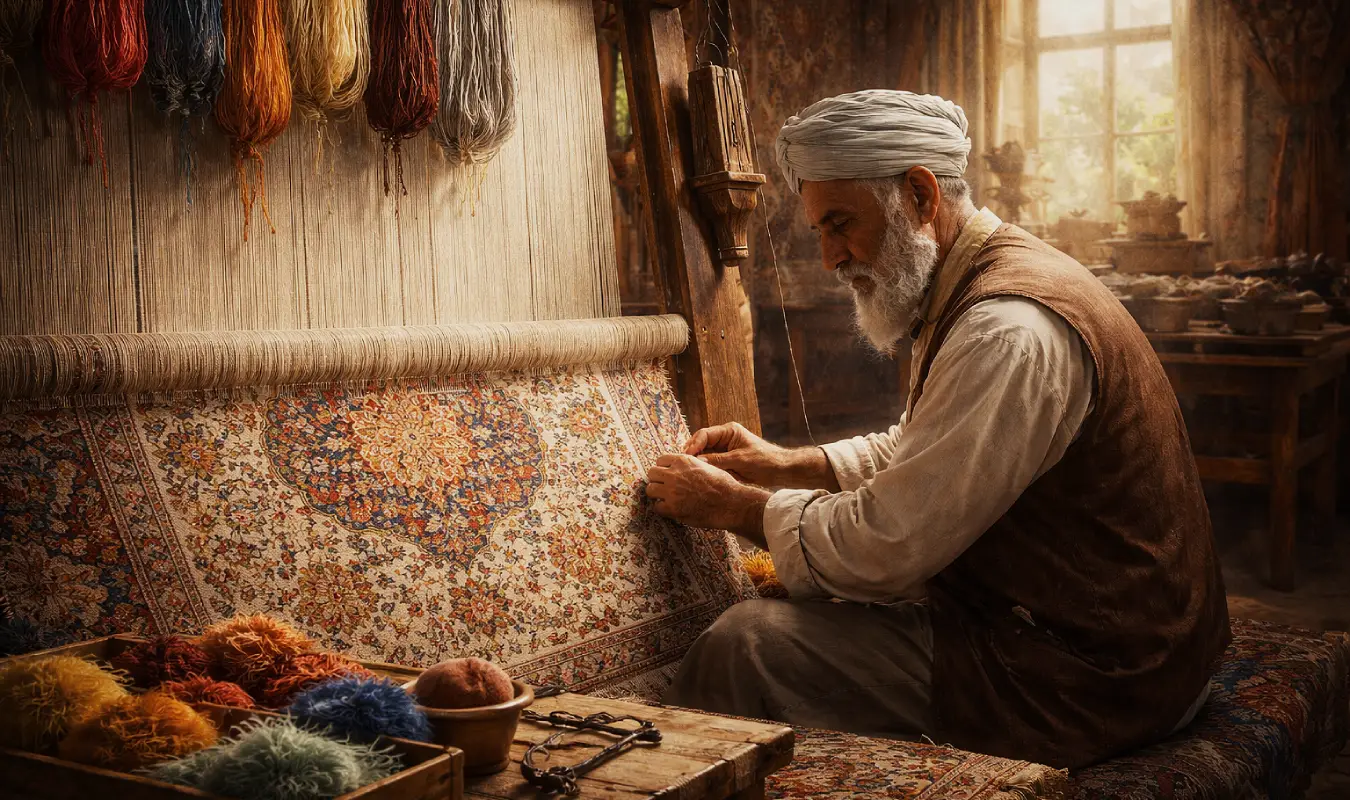
Knot density—the number of knots per square inch—is the shorthand for quality: higher density allows for finer detail and greater durability.
These area rugs are extremely long-lasting, often passed down as heirlooms, and retain strong resale value. For collectors and designers, hand-knotted pieces are considered the pinnacle of artistry and durability.
Flatwoven (Kilims, Dhurries, Aubusson)
Flatwoven area rugs such as kilims, dhurries, and Aubusson rugs are made without pile, resulting in a thin, reversible textile. Because they are lightweight and easy to move, they are especially popular in casual, layered, or nomadic settings.
Their bold geometric patterns and portability make them versatile, though they lack the plush feel of pile rugs. Despite being less durable than knotted rugs, their practicality and cultural authenticity ensure their continued popularity.
Hand-Tufted Rugs
Tufted rugs are made by punching loops of yarn into a backing fabric with a tufting gun, then shearing the loops to create a pile. Unlike hand-knotted rugs, they are much quicker to produce, making them more affordable.
However, tufted rugs typically have a shorter lifespan—usually around 5–10 years—and may shed more. They provide a cost-effective way to achieve a soft, luxurious look without the time or expense of knotting.
Machine-Made Rugs
Machine-made rugs are produced quickly using power looms. They provide affordable, uniform designs and are widely available in retail markets. While practical for temporary or budget-conscious needs, they lack the individuality, artistry, and longevity of handmade rugs.
Impact of Construction on Durability
The construction method is the single biggest determinant of lifespan. A hand-knotted rug may endure for generations, while a machine-made rug might only last a few years before showing wear. Handmade rugs are typically better than machine-made ones because they offer both durability and artistry.
For anyone asking how are area rugs constructed or woven, the answer spans a spectrum—from individually tied knots to industrial looms. The choice between hand-knotted rugs, tufted rugs, flatwoven textiles, and machine-made rugs ultimately dictates not just price, but performance, value, and cultural significance.
Traditional vs Modern Rugs
Benefits of Vintage Rugs
- Durability from natural fibers — Why: Most vintage rugs are hand-knotted with wool, making them resilient and capable of lasting generations.
- Unique patina and abrash — Why: Uneven fading from natural dyes creates character that cannot be replicated in new production.
- Eco-friendly reuse — Why: Purchasing a vintage rug extends the life of an existing textile, reducing waste and promoting sustainability.
- Cultural authenticity — Why: Antique or older rugs carry historical and artistic traditions, each one a reflection of the weaver’s culture.
- Investment potential — Why: Rare antique rugs and certain tribal pieces are highly collectible rugs, often appreciating in value over time.
For those asking what are the benefits of vintage area rugs, the combination of quality, character, and cultural resonance sets them apart.
Modern Styles & Accessibility
Modern area rugs are often produced with synthetic blends or lower-cost natural fibers, making them highly accessible. They respond quickly to design trends, offering bold geometric prints, abstract patterns, and minimalist color palettes at affordable price points.
Unlike traditional hand-knotted pieces, most modern rugs are machine-made or tufted, meaning they are practical for everyday use but rarely investment-grade. Their appeal lies in adaptability—consumers can refresh a room’s style without significant expense.
Fading: Abrash vs Synthetic Dulling
One of the defining differences between traditional and modern rugs is how they age. Abrash, the uneven fading seen in vintage handwoven rugs, is valued as a marker of authenticity and beauty.
By contrast, synthetic fibers in modern rugs tend to fade flatly, losing vibrancy without the nuanced tonal shifts that give antique rugs their depth. This distinction makes abrash a prized feature, while synthetic dulling is generally viewed as wear.
Rugs as Collectible Art
Beyond function, traditional antique rugs are often considered works of art. Collectors prize pieces such as antique Persian carpets or rare tribal flatweaves not only for their craftsmanship but also for their cultural and historical significance.
Each rug represents a chapter of textile history, making them sought after in galleries, auctions, and private collections. While modern rugs can be stylish, traditional and vintage pieces carry a narrative and permanence that elevate them to collectible rugs.
In comparing vintage rugs vs modern rugs, the contrast is clear: vintage offers character, eco-friendly reuse, and cultural depth, while modern prioritizes accessibility and trend-conscious design. Both serve valuable roles, but only the traditional side consistently bridges the gap between utility and art.
Understanding “Transitional” Design
If a traditional Persian rug feels too “busy” and a modern abstract rug feels too “cold,” the Transitional Rug is the solution. These pieces utilize century-old motifs (like the Oushak star or the Persian Herati) but execute them in muted, monochromatic palettes or “erased” patterns.
They are the preferred choice for modern designers who want the history of a classic rug with the “breathability” of contemporary style.
Regional Rug Traditions
Persian & Oriental Rugs
Persian rugs are perhaps the most famous of all, known for their intricate floral medallions, arabesques, and curvilinear patterns. Rich natural dyes—deep reds, indigos, and ivory tones—distinguish these masterpieces.
Woven by skilled artisans, Persian rugs are often hand-knotted with high knot density, making them both durable and visually detailed. Their motifs carry layers of symbolism, from flowers representing paradise to medallions symbolizing unity.
As the foundation of the Oriental rug tradition, Persian weaving set the standard for artistry and craftsmanship recognized worldwide.
Turkish & Anatolian Rugs
Turkish rugs, particularly those from Anatolia, emphasize bold geometric patterns, vivid colors, and symbolic designs rooted in tribal life. Prayer rugs from Turkey often include niches (mihrabs) symbolizing gateways to the divine, making them essential in religious practice.
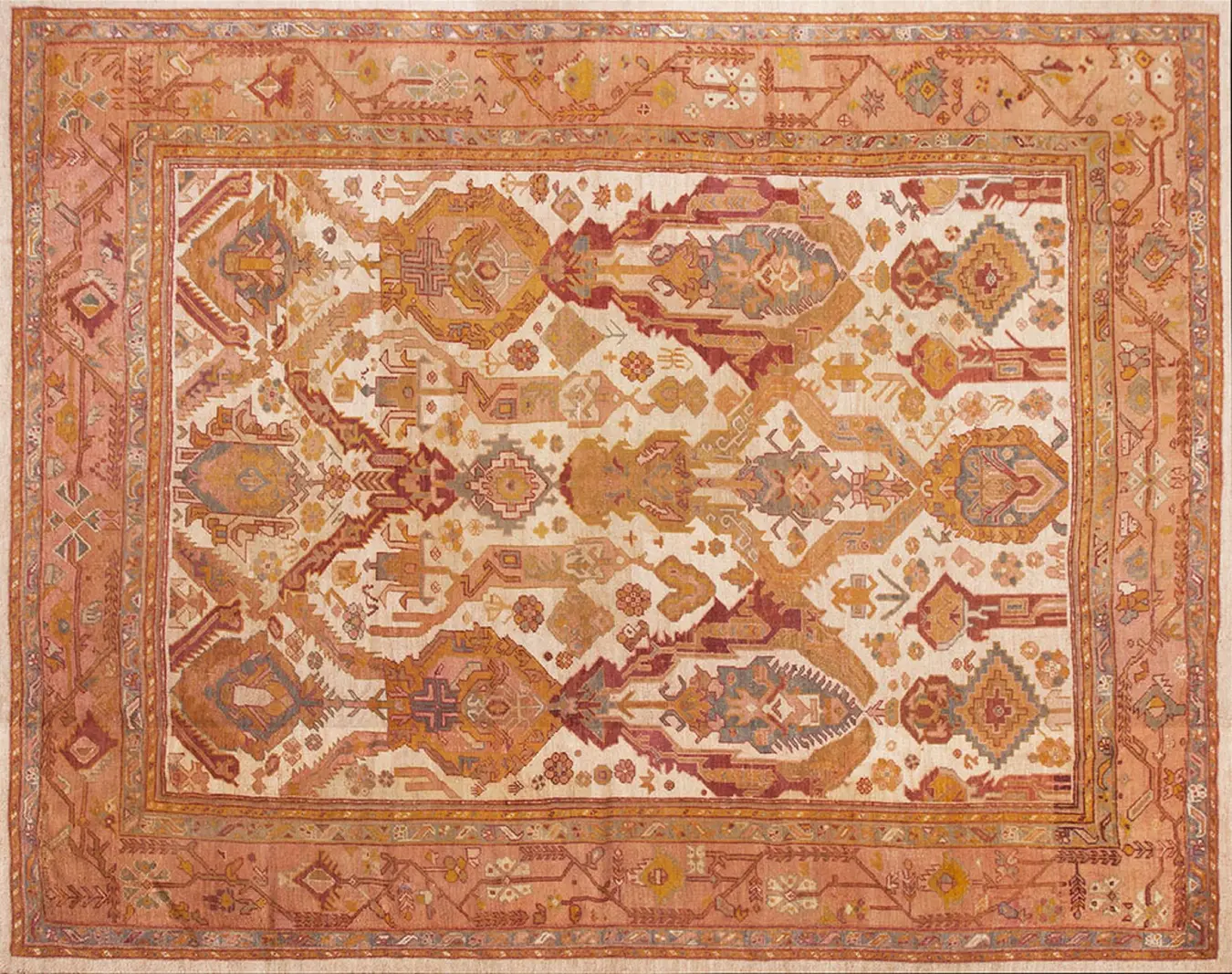
https://rugsonnet.com/antique-oushak-oversized-turkish-knotted-ivory-rug/
Flatwoven kilims, another Turkish specialty, are celebrated for their vibrant geometrics and portability. These traditions demonstrate how cultural motifs influence rug design, embedding spiritual and communal values into everyday objects.
Moroccan & North African Rugs
Moroccan rugs—especially the shaggy Beni Ourain style—are prized for their minimalist black-and-white motifs and plush textures. Originally woven by Berber tribes in the Atlas Mountains for insulation against cold, their high-pile wool construction provides warmth and softness.
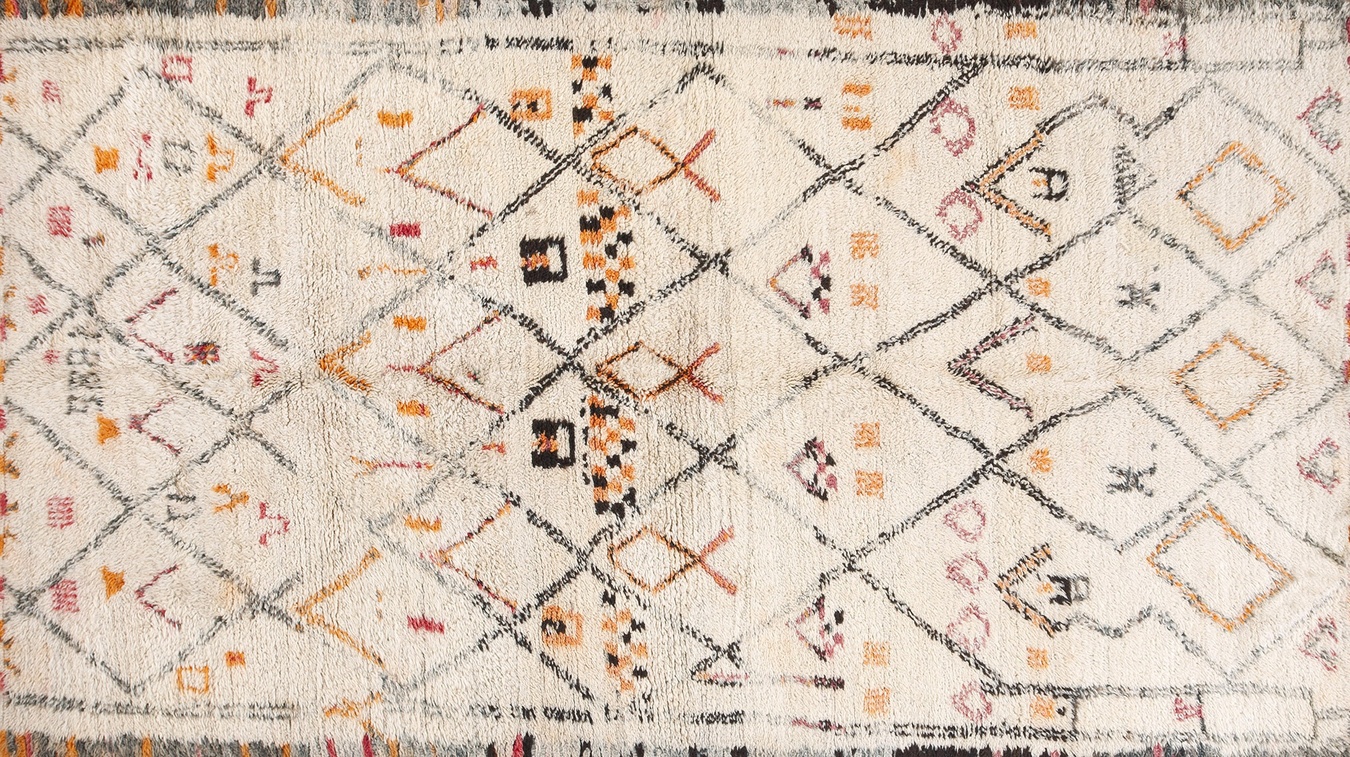
Today, Moroccan rugs are sought after in modern interiors for their abstract, minimalist aesthetic that feels both timeless and contemporary. North African weaving as a whole emphasizes tribal identity, translating nomadic culture into bold, geometric storytelling.
Indian, Chinese & Caucasian Rugs
- Indian rugs — Why: Mughal patronage introduced floral and garden-inspired motifs, blending Persian influence with Indian artistry in silk and wool.
- Chinese rugs — Why: Distinct for dragons, phoenixes, lotus blossoms, and Buddhist symbolism, Chinese rugs embody spiritual depth and imperial grandeur.
- Caucasian rugs — Why: Known for bold geometrics, tribal emblems, and primary color schemes, these rugs represent village and clan identities in highly symbolic form.
Each of these traditions contributes distinct voices to the global story of rug weaving, ensuring that every regional style has a recognizable fingerprint.
Regional Influence on Global Decor
From the floral medallions of Persian rugs to the minimalism of Moroccan rugs and the sacred motifs of Chinese rugs, regional traditions continue to define global décor trends.
Interior designers often draw directly from these heritages, blending Anatolian geometrics or Caucasian tribal patterns into contemporary homes.
For those asking where do different rug styles originate, the answer is deeply regional: each weaving culture brings forward unique artistry that has shaped interior design worldwide.
Regional traditions deeply shape rug styles, ensuring that rugs remain both functional floor coverings and living expressions of cultural history.
Symbolism in Rug Design
Geometric & Tribal Motifs
Many of the most recognizable rug motifs are geometric in nature, originating from tribal weaving traditions. Diamonds often symbolize protection, fertility, or the human eye warding off evil. Central medallions represent balance, unity, and spiritual centrality.
The boteh, a teardrop-shaped motif known in the West as paisley, conveys growth, eternity, and the continuity of life. These rug patterns carry meaning beyond decoration, serving as cultural rug symbols that preserve the beliefs and stories of nomadic and settled weavers alike.
Floral & Botanical Motifs
Floral designs and botanical vines are among the most enduring in rug symbolism. Flowers often denote beauty, paradise, and renewal, while intertwining vines suggest eternity and interconnectedness.
Persian rugs in particular emphasize lush gardens and floral medallions, evoking the image of paradise on earth. These motifs highlight the human connection to nature and spiritual ideals, with weavers encoding meaning into every bloom or curling tendril.
Religious & Cultural Symbolism
Religious and cultural values strongly influence rug symbolism. In Islamic weaving traditions, the depiction of human or animal forms is often avoided in religious contexts, leading to the prominence of abstract, geometric, and calligraphic motifs.
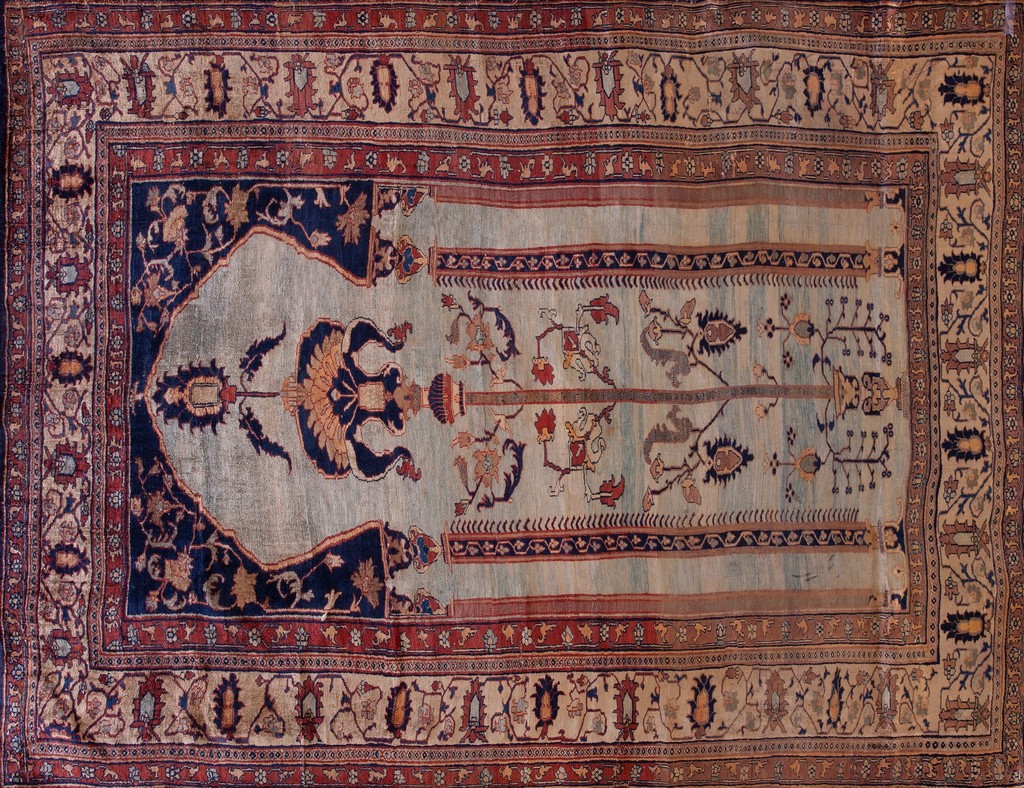
Islamic prayer rugs include symbolic elements such as the mihrab, a niche design indicating the direction of Mecca. Other cultural rug symbols reflect community identity: tribal emblems, totemic shapes, or clan-specific motifs signal belonging and lineage.
Thus, rugs serve as woven narratives of both faith and culture.
Role of Color Symbolism
Colors themselves function as a language in rug symbolism. Red conveys strength, vitality, and power; blue represents tranquility and protection; green is linked to paradise and spirituality; and white often symbolizes purity.
These shades are not chosen randomly but carry cultural weight, embedding meaning into the overall composition of the rug. What role do colors play in rug symbolism? They elevate patterns into deeper cultural expressions, transforming a rug into both an object of beauty and a statement of identity.
For anyone asking what do rug symbols represent, the answer lies in their multi-layered meanings: diamonds as protection, boteh as eternity, flowers as growth, colors as coded emotions.
Rug designs communicate symbolic meaning, and their enduring resonance ensures that every woven piece speaks a language shaped by history, culture, and belief.
Cost Factors & Budget Planning
How Rug Prices Are Calculated
The price of an area rug is determined by three main factors: size × material × labor. Larger rugs require exponentially more material and weaving time, which drives costs up significantly.
Materials such as wool and silk command higher prices because of their durability and luxury appeal, while synthetics are more budget-friendly.
Labor is the most defining factor for handmade rugs, with knot density and complexity directly influencing value. For buyers asking how much should I budget for a quality area rug, understanding this formula provides clarity: expect to pay more as dimensions, fiber quality, and craftsmanship increase.
Budget vs Luxury
This comparison highlights that wool vs synthetic rug cost differs not only in price but also in performance. Wool and silk rugs require a larger upfront investment but offer far greater longevity than synthetics, which are best for temporary or trend-driven décor.
Why Wool Rugs Cost More Than Synthetic
Wool rugs are more expensive than synthetic rugs because wool is a natural fiber requiring careful sourcing, processing, and skilled weaving. Wool also lasts much longer, resists stains naturally, and holds vibrant dyes.
By contrast, synthetic rugs are mass-produced from petroleum-based fibers, making them cheaper to manufacture but shorter-lived. Buyers should weigh initial affordability against long-term value when making a decision.
Rugs as Investments
Not all area rugs are created equal when it comes to value. Only hand-knotted rugs—especially those made from fine wool or silk—are considered investment rugs. These pieces hold or increase their value over time, particularly antique or rare examples like Persian or tribal masterpieces.
Machine-made and synthetic rugs, while functional, lack the uniqueness and durability required to appreciate in worth.
For anyone asking how do area rug prices vary by size, the answer is exponential: doubling the dimensions can more than quadruple the cost because of the added material and labor. And to can rugs be considered investment pieces?—yes, but only when they are handmade with high-quality fibers.
Rug prices reflect not just a floor covering, but a balance of craftsmanship, durability, and long-term value.
Shopping for Area Rugs
Online vs In-Store Buying
For buyers asking should I buy rugs online or in-store?, the answer is often both: combine online research with in-store testing. Use online platforms for variety and price comparison, but confirm texture and color in person if possible.
Choosing the Right Rug Size
- Measure seating areas, not just room dimensions — Why: A rug should anchor furniture groupings, not float in empty space.
- Leave consistent borders of flooring — Why: Exposed floor creates balance; rugs that are too large overwhelm the space.
- Size up when in doubt — Why: Undersized rugs make rooms feel smaller and disconnected, while larger rugs expand the sense of space.
- Consider proportions for dining tables and beds — Why: Rugs should extend beyond furniture edges to prevent awkward transitions.
Proper measurement is critical in rug shopping tips. A rug that is too small or ill-proportioned is one of the most common rug buying mistakes.
Mistakes to Avoid
Many shoppers fall into predictable errors. Mis-measuring is the most frequent mistake, resulting in rugs that fail to ground a space. Skipping rug pads is another misstep—pads not only prevent slipping but also extend a rug’s lifespan.
Buyers who over-prioritize price may sacrifice quality and end up replacing cheap rugs more often. Recognizing these pitfalls helps ensure smarter purchasing decisions.
Practical Tips
Successful rug shopping involves planning and balance. Start by setting a budget that aligns with both style goals and durability needs. Research online for inspiration and market value, then test options in person when possible.
Consider long-term care requirements, especially for wool or silk rugs, and factor in rug pads as essential accessories.
For those asking what mistakes do people make when buying rugs, the key issues are skipping accurate measurements, ignoring rug pads, and chasing bargains without considering durability.
Following these rug shopping tips ensures buyers select the right piece for their home—both visually and practically—whether purchasing online vs in-store rugs.
Placement and Positioning in Rooms
General Rules of Thumb
- All legs on — Why: Placing all furniture legs on the rug creates a unified, formal look, especially in large living rooms.
- Front legs only — Why: Keeping just the front legs of sofas and chairs on the rug anchors the space while conserving size and cost.
- Floating rug — Why: Allowing furniture to sit completely off the rug works in smaller spaces or with accent area rugs, providing a defined focal point without overwhelming the room.
These guidelines ensure that rug placement transforms functionality, shaping how furniture interacts with the room while avoiding awkward layouts.
Living Rooms, Dining Rooms, Bedrooms
In living rooms, the most common practice is placing rugs under seating groups, with either “all legs on” or “front legs only” approaches. For buyers asking where should rugs be placed in a living room?, the key is to ensure the rug grounds the main furniture cluster without appearing undersized.
In dining rooms, rugs should extend at least two feet beyond the edge of the table so that chairs remain on the rug even when pulled out—one of the most important dining room rug tips.
In bedrooms, rugs frame the bed: they may be placed entirely under the bed with ample margins, or partially beneath, extending out at the foot and sides for a softer morning step. Smaller rugs can also be used on either side of the bed.
Entryways, Kitchens, Hallways
Entryways benefit from durable rugs or runners that welcome guests while withstanding high traffic. Kitchens often use smaller accent rugs or runners at the sink or stove for comfort and warmth underfoot. In hallways, long runners scaled to the width of the corridor provide proportion and prevent the space from looking bare.
Offices, Commercial, Outdoor Spaces
For offices, rugs soften acoustics and add professional warmth. In commercial settings, rugs define waiting areas or collaborative zones. Outdoors, weatherproof rugs expand living areas, creating comfort and style on patios or decks.
Size-to-room ratio prevents awkward layouts, ensuring rugs feel intentional rather than forced. For those asking how do I choose the right rug size, the answer is to measure furniture groupings, not just room dimensions, and select a rug that harmonizes with the proportions of the space.
Thoughtful rug positioning guarantees that whether for living room rugs, dining rooms, bedrooms, or beyond, the rug feels integrated into the room’s design rather than an afterthought.
Longevity and Maintenance
Lifespan by Material & Construction
The rug lifespan depends primarily on material and construction. Wool rugs can last for decades—even generations—thanks to their durability and natural resilience. Silk rugs, while luxurious, require delicate handling and often have shorter usable lifespans in high-traffic areas.
Cotton rugs are casual and affordable but wear down faster. Synthetic rugs typically last only a few years, especially in busy households. Construction also plays a role: hand-knotted rugs outlast tufted or machine-made versions because of their superior craftsmanship.
These differences explain what factors affect rug lifespan: material choice, weaving method, and how well the rug is maintained.
Care Essentials
- Regular vacuuming — Why: Removes dust and grit that cut into fibers, extending rug longevity.
- Spot-cleaning spills immediately — Why: Prevents stains from setting and causing permanent discoloration.
- Rotation every 6–12 months — Why: Ensures even wear and fading, preventing one section from deteriorating faster.
- Protect from sunlight — Why: Reduces fading and preserves vibrant colors over time.
For those asking what is the best way to care for area rugs, these simple rug care tips form the foundation of long-term rug maintenance.
Professional Cleaning & Restoration
Routine care is essential, but professional services provide deeper protection. Rugs should be professionally cleaned every 1–3 years depending on traffic. Specialists can wash rugs safely, preserving natural fibers and dyes.
Restoration also plays a vital role: reweaving, binding, or repairing damaged sections can extend the life of antique or collectible pieces. Restoration extends antique rug lives, keeping them functional and valuable for generations.
Rug Pads & Their Role
Rug pads are an often-overlooked element of rug maintenance. They provide cushioning, prevent slippage, and reduce friction between the rug and the floor. By stabilizing the rug, pads minimize stretching, wear, and edge curling, significantly prolonging rug lifespan.
In rug ownership, maintenance is as important as quality. A finely crafted rug will not reach its full potential lifespan without regular care, rotation, and cleaning.
With proper rug maintenance and support from pads and restoration, rugs can retain their beauty and function far beyond the average expectations of textiles.
Sustainability and Eco-Friendly Choices
Natural Fibers vs Synthetics
The foundation of sustainable rugs lies in their materials. Natural fiber rugs made of organic wool, jute, cotton, or recycled fibers are renewable, biodegradable, and free from petroleum-based processing.
By contrast, synthetic rugs—often made of polypropylene or polyester—rely on fossil fuels and contribute to microplastic pollution. Choosing organic rugs not only reduces environmental impact but also creates healthier living environments by avoiding harmful off-gassing common in synthetics.
Low-VOC, Non-Toxic Dyes
Another hallmark of eco-friendly rugs is the use of low-VOC (volatile organic compound) or natural dyes. Traditional vegetable and mineral dyes produce rich, lasting colors without introducing toxic chemicals into the home.
This improves indoor air quality and ensures that area rugs are safe for children and pets. By contrast, chemical-heavy production can release emissions that affect both air and health.
Fair-Trade & Artisan-Made Area Rugs
Fair-trade rugs guarantee that artisans receive fair wages and safe working conditions. Many sustainable rugs are woven by hand in traditional communities, meaning that purchasing them not only reduces environmental impact but also supports heritage weaving practices.
Investing in artisan-made rugs sustains generational skills and helps preserve cultural identity in rug-making regions.
Are Sustainable Rugs Worth It?
For buyers asking are sustainable rugs worth the higher price?—the answer is yes. While sustainable rugs may cost more upfront, they are healthier for homes, longer-lasting due to durable natural fiber rugs, and ethically produced. They also carry the added value of reducing environmental footprint and supporting traditional craftspeople.
Eco-rugs are healthier for homes, offering improved indoor air quality and safety, while also carrying a positive global impact. Choosing sustainable rugs means investing not just in décor but in a healthier, more responsible way of living.
Buying sustainably supports heritage weaving, ensuring that beauty, tradition, and ethics are woven together in every piece.
Area Rugs as Design Investments
Rugs as Heirlooms (Generational Value)
Certain rugs transcend décor and become heirloom rugs, passed down through generations. Hand-knotted wool or silk rugs, particularly antique Persian and Oriental pieces, retain both beauty and durability over decades.
Their value compounds not only in monetary terms but also in sentiment, carrying family stories and cultural heritage. An heirloom rug becomes part of a household legacy, reminding future generations of their history while continuing to serve as a functional centerpiece.
Rugs as Financial Assets (Antique & Collectible Market)
Collectible rugs are well-established in the antique and art markets. Rare Persian carpets, Anatolian tribal rugs, and finely woven silk masterpieces can appreciate significantly over time, making them true rug investments.
Unlike mass-produced flooring, these pieces are finite in supply and valued for craftsmanship, age, and provenance.
For those asking can area rugs be considered investment pieces?—the answer is yes, but only when the rug is handmade, culturally significant, and well-preserved. Collectors often view such rugs as long-term financial assets comparable to fine art.
Rugs as Statement Decor
- Visual anchor for a room — Why: A statement rug immediately defines the tone of a space, whether bold, minimalist, or ornate.
- Expresses personal style — Why: Colors, motifs, and textures serve as a reflection of taste and personality.
- Bridges traditional and modern design — Why: Antique rugs bring depth to contemporary spaces, while modern statement rugs enliven classic interiors.
- Conversation piece — Why: A rare or striking rug naturally attracts attention, becoming the focal point of design narratives.
Statement rugs work not only as functional floor coverings but as artistic declarations within home design.
Balancing Function, Style & Value
The best rug investments balance practicality with aesthetic and financial worth. While collectible rugs may be too valuable for high-traffic areas, many owners choose to rotate or protect them with pads, ensuring longevity while still enjoying their beauty.
Everyday buyers can also invest wisely by choosing quality handmade rugs that may gain value over time while enriching their living environment.
Rugs are both décor and legacy assets. They operate as everyday essentials while also holding potential as collectible rugs and heirloom historical rugs.
Whether serving as family treasures, financial investments, or statement-making centerpieces, area rugs remain one of the rare home elements that seamlessly combine function, style, and enduring value.
FAQ
-
What sizes do runner area rugs come in and how should they fit?
Common runner area rugs are \~2.5×7 and 2.5×10; leave 4–6 inches of floor visible on each side and 6–12 inches at each end for a balanced look.
-
Do area rugs help with room acoustics?
Yes—area rugs absorb reflections and reduce echo; thicker cut-pile or layered rugs improve sound absorption in hard-surface rooms.
-
Which pile height should I choose for area rugs?
Low pile (<¼″) is durable and easy to clean; medium (¼–½″) balances comfort and care; high/shag (½–¾″+) feels plush but traps debris and vacuums harder.
-
What makes outdoor area rugs different?
Outdoor area rugs are typically polypropylene/polyester, resist mildew and UV fading, and can be hosed off; dry thoroughly to prevent odors.
-
Can I layer area rugs over carpet for style?
Yes—start with a larger, flatweave base and layer a smaller area rug on top; use a thin pad to prevent bunching and keep door clearances in mind.
-
Are area rugs a fall risk for older adults?
They can be; pair area rugs with non-slip pads, secure corners, avoid height transitions, and keep walkways clear to reduce trip hazards.
-
Will area rugs fade in sunlight?
Yes—UV light lightens colors. Rotate area rugs every 3–6 months, use window films or shades, and consider fade-resistant fibers for sunny rooms.
-
Do area rugs off-gas VOCs, and how can I minimize it?
Some do; choose natural-fiber area rugs and pads with Green Label Plus or GREENGUARD certifications, unroll in a ventilated space, and avoid PVC-heavy pads.
-
Can rolling office chairs go on area rugs?
Use low-pile area rugs plus a rigid chair mat or soft casters; larger-diameter wheels roll better and reduce denting.
-
Will robot vacuums damage area rug fringe?
Fringe can tangle; tuck fringe under, hide it with a stitch/tape solution, or set a no-go zone. Secure lightweight area rugs so bots don’t drag them.
-
Are area rugs safe over radiant floor heating?
Generally yes—use felt or felt-rubber pads rated for heated floors, avoid thick insulating layers, and limit rug coverage to roughly half the heated surface for efficiency.
-
How can I flatten curling corners on area rugs?
Reverse-roll the edges, weigh them down, or lightly steam/ice-relax the corners, then dry flat; add corner grippers if needed to prevent re-curling.
-
Do wool area rugs shed and for how long?
Yes—new wool area rugs often shed for weeks to months; regular gentle vacuuming and a quality pad help, with shedding typically diminishing by 6–12 months.
-
What’s the best way to handle pet accidents on wool area rugs?
Blot thoroughly, then apply a wool-safe enzymatic cleaner per label instructions; repeat as needed and dry completely to prevent lingering odor or dye migration.
-
How do I clean spills on wool area rugs safely?
Blot immediately—don’t rub—then treat with cold water and a wool-safe cleaner or mild vinegar solution; avoid soaking and let the rug dry flat with airflow.
-
How often should area rugs be vacuumed?
Vacuum weekly; in high-traffic spaces, 2–3 times per week with a HEPA vacuum. Use gentle suction and avoid aggressive beater bars on delicate weaves.
-
What kind of pad works for area rugs on carpet?
Use a carpet-to-carpet area rug pad (dense felt or specialty grip) to prevent ripples and walking “waves”; avoid slick liners that let the rug creep.
-
Do I need a rug pad under area rugs?
Yes—pads add grip, comfort, and floor protection. Size the pad 1–2 inches smaller than the area rug (up to 3 inches for thick piles) to avoid edges showing.
-
How much do area rugs cost on average?
Machine-made 8×10 area rugs often run \$100–\$400; hand-tufted wool \$200–\$1,000; hand-knotted wool typically \$2,000–\$10,000+ depending on craftsmanship and origin.
-
Are washable area rugs worth it?
Yes for small, high-mess zones; larger washable area rugs can strain home washers—many machines comfortably handle up to \~4×6 or require 5.5+ cu-ft capacity.
-
Which materials are best for area rugs?
Wool area rugs are durable, naturally stain-resistant, and low-VOC; polypropylene/polyester offer easy cleaning and lower cost; jute/sisal give texture but dislike moisture.
-
What size area rug should go under a king bed?
An 8×10 area rug is the minimum; 9×12 gives better side and foot coverage and looks balanced in medium to large bedrooms.
-
How big should a dining room area rug be?
Choose an area rug that extends 24–30 inches beyond the table edges so chairs stay on the rug when pulled out; low-pile or flatweave cleans easier under dining.
-
What size area rug works best in a living room?
Most living rooms suit 8×10 or 9×12 area rugs; aim for at least the front legs of all seating on the rug and leave 18–36 inches of walkway around.
-
What are area rugs and how are they different from wall-to-wall carpet?
Area rugs are movable floor coverings that define zones and add comfort without permanent installation; unlike carpet, they’re sized pieces you can lift, rotate, and clean separately.