Introduction to Sun Motifs in Rug Design
Discover our curated selection of luxurious Sun Designs Rugs to bring light and warmth into your living space.
The Sun as a Universal Symbol
Few symbols in human history carry the same weight and persistence as the sun. Its presence in rug weaving is not decorative alone but deeply emblematic, connecting to beliefs about survival, prosperity, and cosmic balance. Across cultures, the sun has been revered as the source of warmth, energy, and life itself.
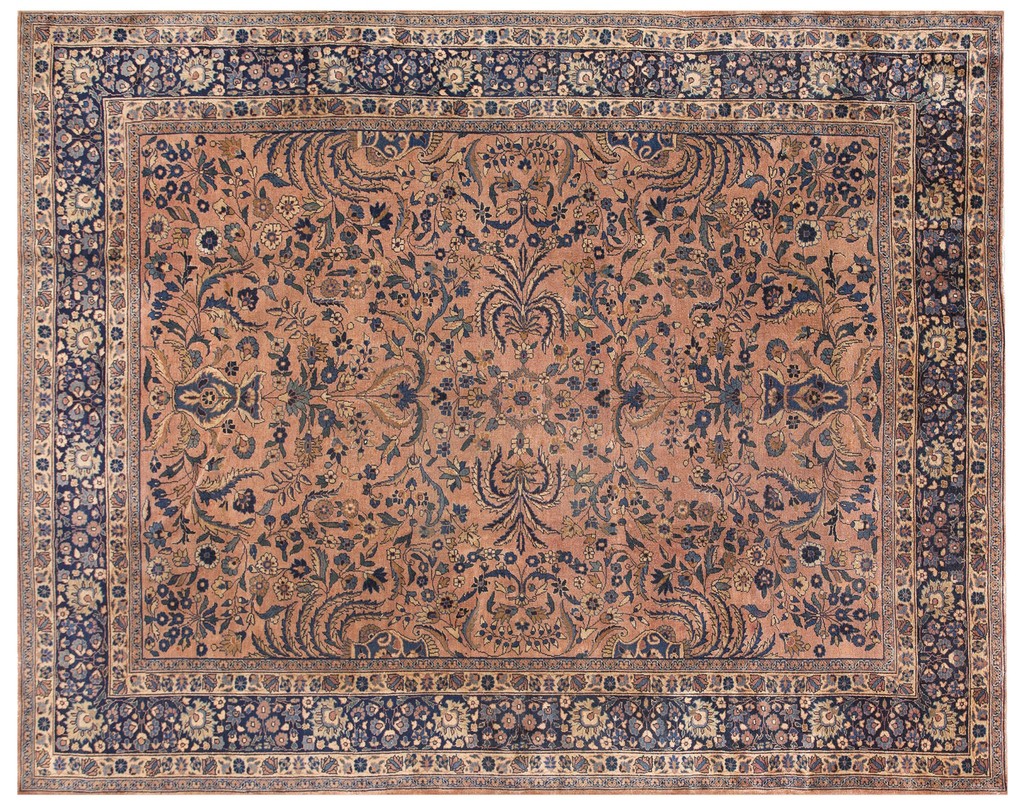
Antique Mashad Room Size Wool Coral Rug by Rugs On Net
Rug artisans—from Persian masters to Anatolian villagers—wove solar imagery into their textiles as a way to honor its power and to transfer that vitality into the home. Sun rug symbolism conveys not only physical sustenance but also spiritual illumination, representing fortune, renewal, and harmony within the domestic and cosmic order. In rug design, the sun motif serves as a reminder of cycles of day and night, death and rebirth, and the perpetual rhythm of life.
Cross-Cultural Sun Symbolism in Textiles
The ubiquity of the sun motif in textile art testifies to its universal appeal. In ancient Mesopotamian weaving traditions, circular radiating forms echoed the worship of Shamash, the solar deity linked to justice and truth. Persian weavers, influenced by Zoroastrian reverence for fire and light, used stylized suns known as Mehr to signify divine guardianship.
Anatolian carpets incorporated Güneş symbols with radiating lines, expressing fertility, vitality, and household prosperity. Navajo weavers in North America employed geometric solar disks and crosses as emblems of harmony between earth and sky, while Central Asian tribal rugs often presented suns as medallions radiating cosmic order.
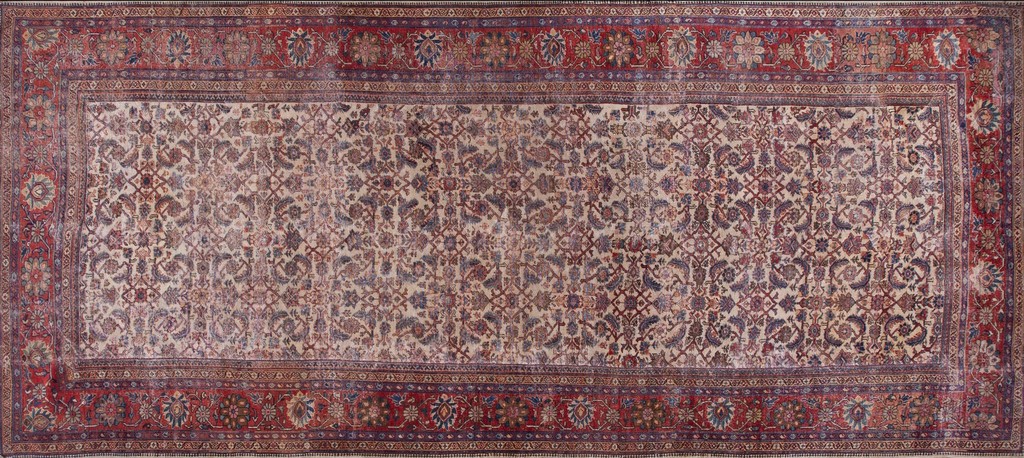
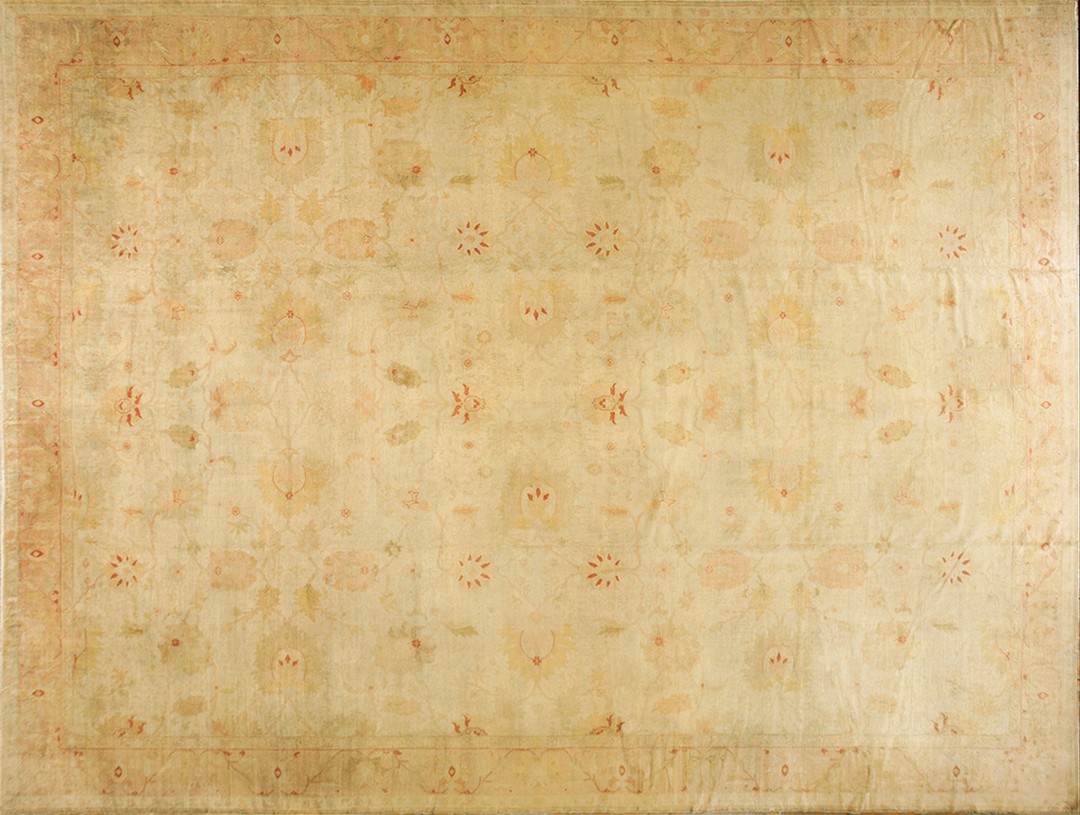
Antique Sultanabad Large Room Size Wool Rug by Rugs On Net
In North Africa, Berber artisans wove abstract solar symbols into kilims, reflecting their role as protective talismans against misfortune. This cross-cultural continuity underscores that the meaning of sun in rugs transcends geography: whether in Persia, Anatolia, or the Navajo Nation, the solar motif anchors the textile as a vessel of life-giving force. By weaving the sun into rugs, artisans infused their creations with protection, prosperity, and a connection to the divine.
Definition and Etymology of Sun Motifs in Rugs
The language surrounding sun motifs further reveals their ancient depth. In Persian, Mehr denotes both the sun and a divine principle of love, justice, and covenant, linking rug design to spiritual as well as natural realms. The Arabic Shams, derived from Semitic roots, emphasizes the radiant presence of the sun as a guiding light. In Turkish, Güneş signifies the life-giving and protective aspects of sunlight, often stylized in geometric medallions or radiant star forms on Anatolian carpets.
These linguistic threads tie directly to early solar worship, where deities embodied the sun’s force and were venerated through both language and art. In rug design, the sun motif often appears as a central roundel, a radiating medallion, or a stylized cross with extending beams. Each variant echoes an ancient understanding of the cosmos: that the sun governs order, fortune, and vitality. Etymology reinforces this role, showing how the very words for “sun” in different languages are inseparable from themes of creation, protection, and harmony.
What Does the Sun Motif Symbolize in Rugs?
At its essence, the sun motif symbolizes life itself. In rugs, it represents warmth and energy that sustain the earth, cosmic order that regulates time and space, and divine presence that protects the household. Woven into floors and walls, sun motifs transform textiles into carriers of good fortune and spiritual strength. Whether called Mehr, Shams, or Güneş, the symbol embodies a shared human impulse to honor the light that nourishes both body and soul. The meaning of sun in rugs is therefore universal: it is the weaver’s invocation of life, harmony, and sacred connection woven into every thread.
Origins & Evolution of the Sun Motif

Ancient relief carving featuring a sun motif.
Ancient Roots: Mesopotamia, Persia, and Central Asia
The origin of sun motif design in rugs reaches back to the earliest civilizations of the Near East and Central Asia. Ancient Mesopotamian art, particularly in textiles and seals, presented radiant solar disks tied to Shamash, the god of the sun and justice. These images carried through into woven traditions as protective and life-affirming symbols. In Persia, the history of sun rug design extends at least to the late 2nd millennium BCE, when solar imagery associated with the deity Mithra (Mehr) began to influence decorative traditions.
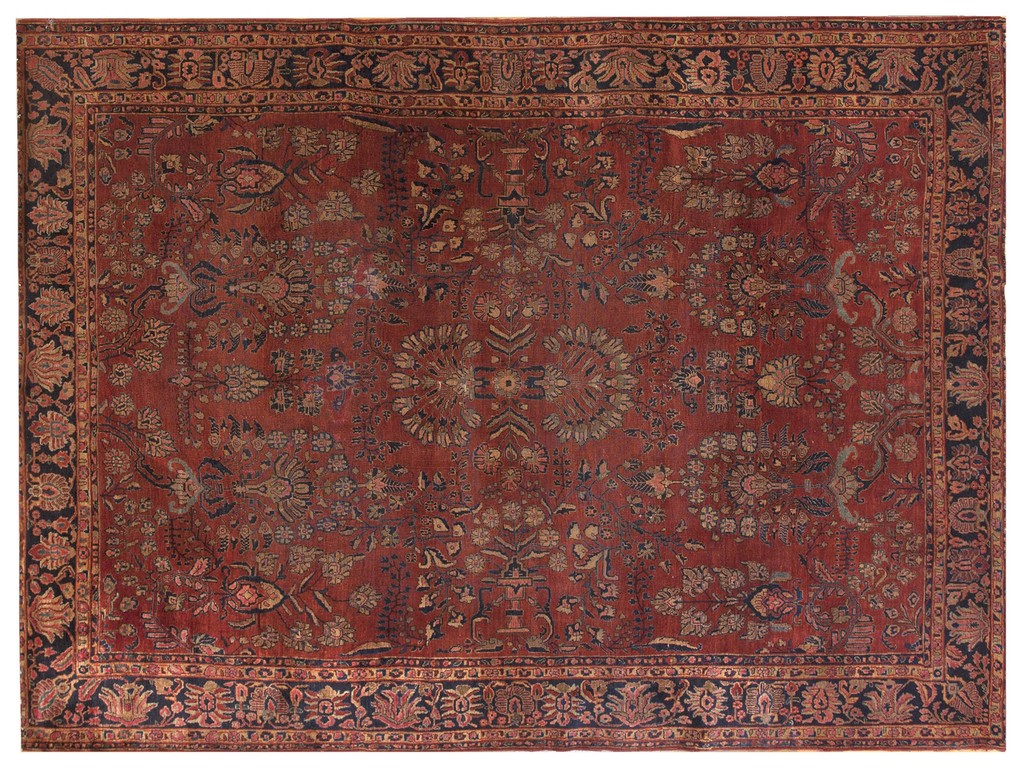
Antique Sarouk Persian Coral 1925 Rug by Rugs On Net
Early nomadic groups across Central Asia, moving along the trade routes of the steppe, incorporated ancient sun symbols in rugs as geometric roundels and radiating stars, ensuring that the life-giving light was symbolically present within the household. These ancient sun symbols in rugs are not merely aesthetic but serve as cultural documents, encoding beliefs about cosmic order, divine oversight, and the fertility of land and community. Their endurance across thousands of years attests to their centrality in weaving traditions.
The Swastika and Hooked Cross as Solar Symbol
One of the most enduring abstract forms of the sun motif is the swastika or hooked cross, long predating its modern associations. Known as the Mehraneh among the Qashqa’i of Iran, it was directly tied to Mithraic sun worship. The swirling motion of the swastika suggested the turning of the heavens around the radiant sun, marking cycles of time and the eternal renewal of life.
This symbol appears in early tribal rugs of Persia, Anatolia, and Central Asia, often woven into borders or central medallions as protective solar emblems. The swastika’s role as a solar figure links it with similar ancient traditions worldwide, from India to the Americas. In rug art, it functioned as a shorthand for the sun’s generative power, abstracted into a dynamic form that carried both religious and cosmological weight.
From Deity to Decorative Motif: A Timeline
The history of sun rug design reveals a clear trajectory from sacred icon to ornamental pattern. In the Bronze and Iron Ages, rugs and textiles featured direct depictions of the solar disk, often tied to specific deities such as Shamash or Mithra. With the rise of Zoroastrianism, solar imagery merged with broader fire and light symbolism, retaining religious overtones.
By the early Islamic period, however, figural representation of celestial bodies gave way to abstraction: radiant medallions, starbursts, and geometric crosses replaced literal suns. This evolution demonstrates how the origin of sun motif weaving adapted to new spiritual frameworks while preserving its symbolic essence. The sun remained a marker of cosmic order and blessing, but its representation transformed to suit cultural and religious aesthetics, ensuring its continuity in both sacred and domestic contexts.
How Old Is the Sun Design in Persian Carpets?
Archaeological and art historical evidence indicates that the sun design in Persian carpets is at least 3,000 years old, dating back to the late 2nd millennium BCE. These early motifs drew on Mithraic solar worship and evolved through successive eras, from direct depictions of radiant disks to stylized forms that survived into Islamic and tribal weaving traditions. The antiquity of the motif makes it one of the oldest decorative patterns in Persian and wider Eurasian textile history, underscoring its enduring role as a bridge between religion, culture, and art.
Visual Forms and Symbolic Meanings
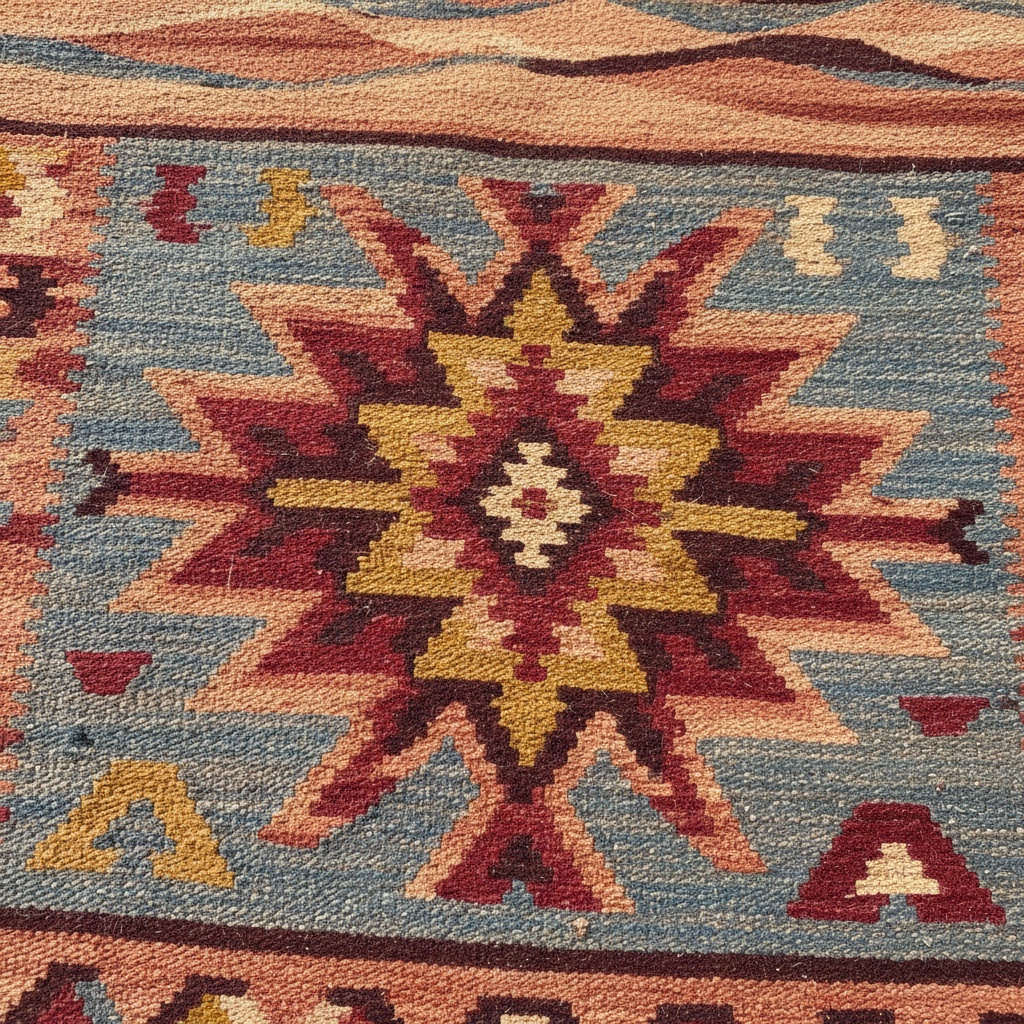
Geometric star form symbolizing solar energy in weaving.
Common Visual Forms
- Sunburst — A radiant circular medallion with points extending outward, symbolizing the sun’s rays. In rugs, this form often occupies the central field, creating both visual balance and a symbolic reminder of cosmic order. — Why: The sunburst rug design emphasizes the life-giving power of sunlight, radiating prosperity and protection across the woven surface.
- Star Motif — Frequently seen as eight-pointed stars, these geometric renderings of the sun connect to ancient ideas of cosmic harmony and celestial guidance. — Why: The star form provided a technical solution for weavers using angular looms while preserving the spiritual essence of the sun.
- Rosette — Stylized floral suns, often layered with petals or concentric circles, symbolizing fertility, growth, and renewal. — Why: The rosette blends solar and vegetal imagery, reinforcing the connection between the sun’s warmth and agricultural abundance.
- Swastika or Hooked Cross — Abstracted sun symbol with rotating arms, widely used in Persian tribal rugs. — Why: The dynamic motion reflects the turning of the heavens, tying the motif to cycles of time, fortune, and eternal renewal.
Symbolic Associations
- Life and Fertility — The sun was viewed as the ultimate source of agricultural productivity and human survival. — Why: Weavers incorporated sun motifs to invoke prosperity for households and fertility for land and family.
- Energy and Enlightenment — Beyond physical warmth, the sun represented illumination of the mind and spirit. — Why: Sun motifs in rugs acted as talismans of clarity, joy, and wisdom.
- Protection and Divine Watchfulness — The sun, ever-present in the sky, symbolized divine guardianship over people and spaces. — Why: By weaving a sun medallion, artisans invited spiritual protection into the home.
- Cosmic Order and Harmony — The sun governed cycles of day, night, and season. — Why: Geometric star motifs reinforced ideas of balance, rhythm, and the unity of creation.
These associations reveal that the meaning of sun in rugs consistently ties back to core ideas of vitality, safety, and cosmic alignment, regardless of the specific visual form.
Why Anatolian Kilims Feature Sunburst Medallions
Anatolian flatweave kilims are especially noted for their bold sunburst stars and medallions. The prevalence of this form arises from both cultural belief and technical necessity. Spiritually, Anatolian weavers regarded the sun medallion as a powerful emblem of divine presence, fertility, and joy, capable of warding off misfortune.
Technically, the geometry of the kilim loom—favoring straight lines and sharp angles—encouraged abstraction of the round sun into angular starbursts and radiating diamonds. These woven adaptations preserved the solar symbolism while embracing the structural limitations of flatweave technique.
What Does the Sun Motif Symbolize in Rugs?
The sun motif in rugs symbolizes the essence of life: fertility, energy, protection, enlightenment, and harmony. Whether rendered as a sunburst rug, star motif, rosette, or swastika, its meaning remains persistent across centuries and regions. The sun in textile art is a reminder that woven objects are more than utilitarian goods—they are carriers of cosmic order, spiritual blessing, and the eternal rhythm of renewal.
Regional Variations in Sun Motifs
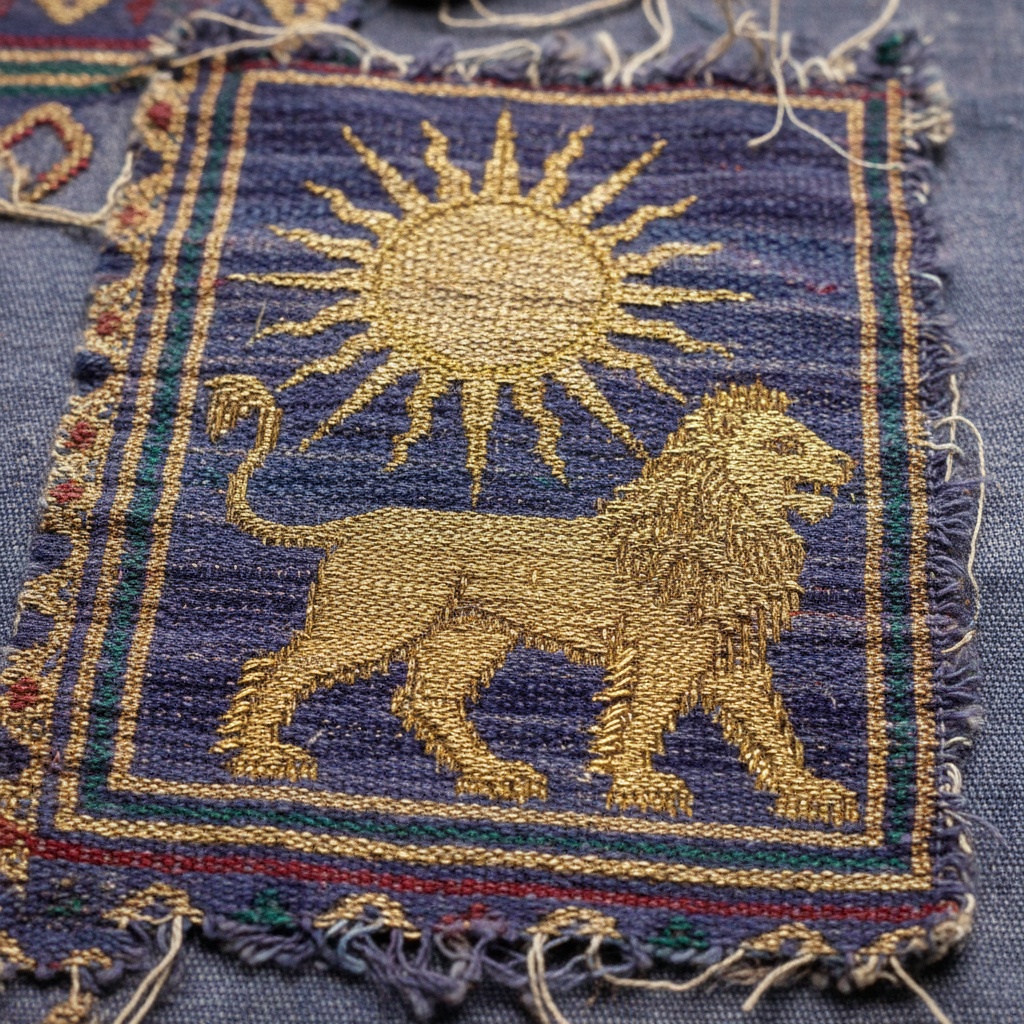
Golden lion and sun motif on blue textile
Persian Sun Rugs: Mehrāneh, Lion & Sun, and Khorshid Khanoom
Persian weaving traditions hold some of the most layered interpretations of solar imagery. The Mehrāneh, derived from Mithraic worship, is a swastika-like form symbolizing the eternal turning of the heavens around the sun. Over centuries, Persian sun rugs also incorporated compound designs such as the lion and sun motif, in which the lion represents royal power while the sun embodies divine radiance and cosmic order. This fusion was especially prominent in Qajar Iran, where it became a national emblem.
The female solar figure Khorshid Khanoom (“Lady Sun”), depicted with a radiant face, symbolized both fertility and cosmic guardianship, showing how the sun could be expressed through feminine imagery. These Persian sun rug forms reveal how religious, royal, and personal symbolism intertwined in textile art, embedding the weaver’s spiritual and cultural worldview directly into the carpet.
Anatolian Kilim Stars and Solar Geometry
Anatolian weavers developed some of the most technically striking solar forms. The Anatolian kilim star—usually an eight-pointed design—translates the round sun into angular radiance compatible with flatweave structure. Alongside stars, motifs such as swastikas, S-shapes, and the wheel of fortune conveyed cyclical renewal and fertility.
These Anatolian variations were not purely decorative: they served as cosmic emblems meant to guard households, bless marriages, and ensure agricultural success. Their presence in central sun medallions reflects both cultural symbolism and weaving practicality, as geometric looms encouraged abstraction into radiant stars and wheels.
Central Asian and Caucasian Suns: Gül, Lesghi Star, and Sun-Wheel
In the carpets of Central Asia and the Caucasus, solar imagery appears in bold geometric forms. The gül, a repeating octagonal motif, often carried solar resonance, representing the sun as a life-giving medallion replicated across the field. The Lesghi star, a jagged eight-pointed sunburst found in Dagestan and Shirvan rugs, embodies both tribal identity and cosmic energy.
Sun-wheels and cross-like emblems, with their radiating arms, reinforced ideas of motion, continuity, and spiritual oversight. These designs demonstrate how solar forms blended seamlessly with tribal emblems, making the sun both a cosmic and communal marker.
Navajo Sun Rugs and Whirling Designs
Among Navajo weavers, solar imagery carried sacred cosmological meaning. Central disks with radiating rays symbolized harmony between earth and sky, while the whirling log—a swastika-like solar form—expressed cycles of balance and renewal. Bold color schemes of yellow, red, and white intensified the imagery, reflecting the sun’s warmth and power.
Some Navajo rugs featured a spirit line, a small break in the border symbolizing the passage of energy or the sun’s force escaping into the universe. In dynamic “Eye Dazzler” patterns, the sun motif merged with dazzling optical effects, embodying both technical mastery and spiritual brilliance.
Berber Sun Symbols and Improvisational Forms
Berber weavers of North Africa took a freer, improvisational approach to solar imagery. Circles and stars often stood for the sun, while the lizard motif acted as a symbolic substitute, representing regeneration through its association with warmth and light.
These Berber sun symbols were scattered unpredictably across kilims, creating a balance between cosmic order and the spontaneity of human life. Their use of strong, contrasting colors echoed the sun’s intensity and tied local ecological realities to cosmic symbolism.
Which Rug Styles Commonly Display Central Sun Medallions?
Central sun medallions are most prominently found in Persian carpets—especially those featuring lion and sun motifs—as well as Anatolian kilims with star or wheel patterns. Central Asian and Caucasian rugs also frequently display sun-like medallions such as the gül and Lesghi star, ensuring the solar emblem dominates the visual field.
Why Do Certain Regions Blend Lion and Sun Icons?
The lion and sun motif emerged in Persian art as a synthesis of earthly and celestial power. The lion, a symbol of strength and royal authority, was paired with the sun to emphasize divine legitimacy and cosmic harmony.
This fusion reinforced the ruler’s role as both protector of the land and guardian under heaven’s light, turning rugs into woven statements of political and spiritual ideology.
Techniques and Materials in Sun Rug Weaving
Flatweave vs. Pile: Effect on Motif Style
- Flatweave (kilim sun rug) — The interlocking warp and weft structure favors angular geometry, producing stepped, diamond-like, or star-shaped suns. — Why: Kilims lack pile, so curves must be rendered as jagged lines, making abstract sunbursts and eight-pointed stars the dominant forms.
- Pile (Persian sun rug) — With knotted wool or silk, artisans can render smooth curves, glowing disks, and radiating arcs. — Why: The flexibility of pile structure allows gradual color blending and more lifelike solar imagery.
How Sunrise Colors Are Achieved in Wool
To depict the shifting tones of dawn and sunset, weavers select high-quality wool capable of absorbing dyes evenly and holding color depth. Natural dye sources—such as madder root for reds, weld and saffron for yellows, and indigo for blues—are layered and over-dyed to create radiant oranges and fiery gradients. These techniques allow the wool to mimic the warmth of sunrise, giving each natural dye sun rug a glowing intensity that synthetic substitutes rarely replicate.
Techniques for Radiant Effects
- Shading (abrash) — Subtle tonal variation within a single color band creates depth, imitating the soft diffusion of sunlight. — Why: These shifts transform a static motif into a radiant sunburst.
- Color gradation — Using successive bands of yellow, orange, and red to simulate the spectrum of sunlight. — Why: Gradation enhances realism and highlights the motif’s cosmic power.
- Shape emphasis — Sharp points, jagged rays, or concentric circles direct the viewer’s gaze outward. — Why: This creates the impression of movement and brilliance radiating from the rug’s center.
Pile Height, Knot Density, and Motif Clarity
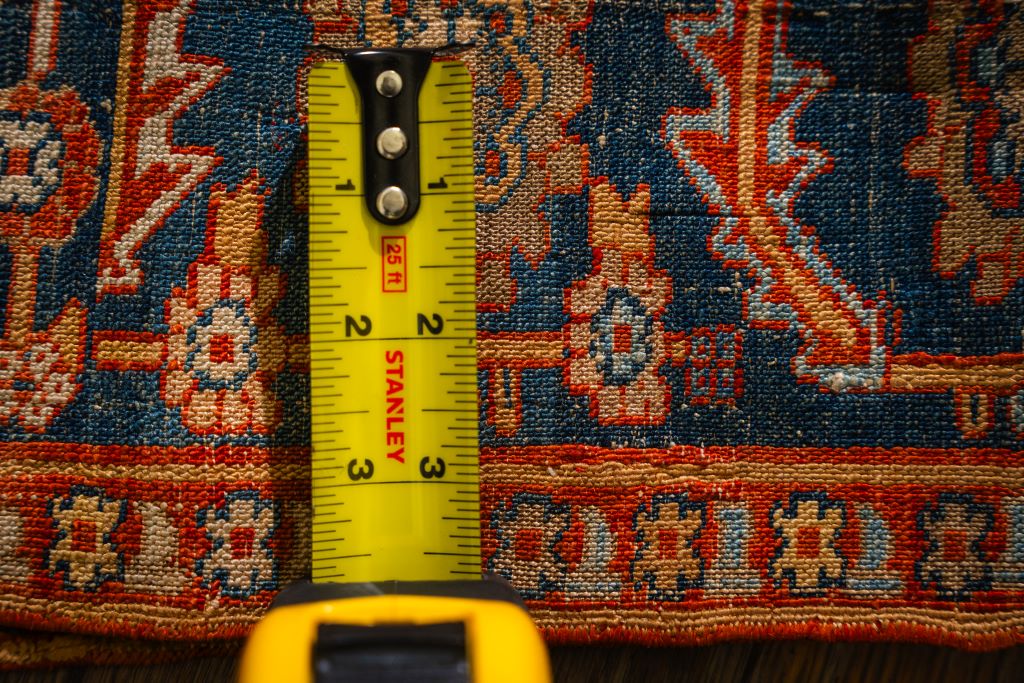
A detailed inspection of a richly colored oriental rug pattern while measuring its dimensions.
- Pile height — Low pile yields crisp lines, ensuring sun motif clarity in fine Persian rugs, while high pile creates a softer, blurred effect. — Why: The sharper the cut, the clearer the definition of rays and medallions.
- Knot density — Higher knots per square inch allow greater precision in weaving radiant sunburst medallions. — Why: Fine Tabriz or Isfahan carpets can render delicate solar rays, while tribal rugs with looser knots produce bolder, more abstract suns.
Dye Choices for Sun Vibrancy
- Natural dyes — Madder reds, saffron yellows, and pomegranate skins produce enduring brilliance. — Why: These dyes create hues that age gracefully, preserving symbolic vitality.
- Synthetic dyes — Introduced in the 19th century, they can provide bright initial tones but often fade unevenly. — Why: This can compromise the sun’s intended radiance over time.
- Natural vs. synthetic — Natural dyes are considered essential for authentic sun symbolism. — Why: Their organic vibrancy better reflects the life-giving and eternal qualities of the sun, aligning material with meaning.
Iconic Styles and Collectible Types
Rug Styles with Central Sun Medallions
- Persian Heriz and Serapi — Known for bold central medallions, these rugs often feature radiant star-like suns that dominate the field. — Why: Their geometric clarity makes the sun motif both visually striking and symbolically central.
- Caucasian Kazak and Karabagh — With their angular medallions and rich primary colors, these traditions emphasize sunburst and star motifs. — Why: The tribal aesthetic turns the sun into a powerful emblem of protection and vitality.
- Anatolian Kilim — Characterized by angular starbursts and radiant diamonds due to flatweave structure. — Why: These kilims showcase how loom limitations shaped distinctive interpretations of the sun.
- Other Notables — Antique Moroccan rugs with rosette suns and Uzbek Suzanis embroidered with radiant disks also highlight regional creativity. — Why: Their variations broaden the scope of collectible sun medallion carpets beyond Persia and the Caucasus.
Prevalence in Vintage Rugs
The vintage sun rug—especially from the 19th and early 20th centuries—is far more common than its modern counterpart. Tribal weavers during this period frequently employed sun medallions to embody cosmic order and cultural identity, while today’s mass-market rugs often forgo symbolic motifs for commercial patterns.
As a result, collectors searching for authentic sun imagery tend to gravitate toward vintage and antique pieces, where symbolism remains intact and craftsmanship reflects cultural traditions rather than industrial production.
Collecting Priorities: Hand-Knotted vs. Tufted
- Hand-knotted sun rug — Each knot secures clarity, durability, and artistry, allowing intricate sunbursts to appear with brilliance. — Why: These rugs are prized by collectors for their longevity and high sun rug value.
- Tufted or machine-made rugs — Faster to produce but lacking detail and symbolic authenticity. — Why: While affordable, they rarely carry collectible or investment potential.
Collectors are strongly advised to prioritize hand-knotted sun medallion carpets, as their craftsmanship preserves both visual sharpness and cultural meaning.
Provenance, Authenticity, and Valuation
The sun rug value is deeply tied to provenance: the region, period, and identity of the weaver or workshop. A Heriz sun medallion carpet with documented 19th-century origin commands significantly more than a generic reproduction.
Age, condition, and authenticity of dyes and materials also play pivotal roles. Collectors look for verified regional styles, such as a Lesghi star from Dagestan or a Serapi from Northwest Persia, to ensure cultural and artistic legitimacy. Provenance elevates a collectible sun rug from decorative object to historic masterpiece.
Restoration and Risks to Sun Motifs
- Sensitive restoration — Minor reweaving or color touch-up can preserve clarity. — Why: When carefully executed, it maintains both value and design integrity.
- Over-restoration — Excessive re-piling, harsh cleaning, or dye misapplication can blur radiant motifs. — Why: Intricate sunburst borders or fine medallions lose sharpness, diminishing symbolic and monetary worth.
- Neglect — Leaving tears or fading unaddressed risks permanent loss of detail. — Why: The symbolic sun may become distorted, erasing centuries of meaning.
Symbolic Synthesis: The Lion and Sun & Other Hybrids
The Persian Lion and Sun
Among the most iconic Persian hybrid symbols is the lion and sun motif, a powerful emblem that fused royal authority with cosmic protection. Its origins trace back to pre-Islamic Persia, where the lion symbolized strength and kingship, while the sun represented divine radiance and cosmic order. By the Qajar era (18th–19th centuries), this hybrid became both a national emblem and a talisman woven into carpets. In rugs, the lion was often shown standing before or beneath a radiant sun disk, embodying the ruler’s victory sanctioned by celestial power. Astrological associations further enriched the symbol: the lion represented the zodiac sign Leo, while the sun aligned with Persian cosmology as the governing force of fortune. Together, they expressed both political legitimacy and divine blessing, turning carpets into woven manifestos of authority and protection.
Compound Motifs in Anatolia, Berber, and the Caucasus
The adaptability of the sun into compound sun motifs appears widely beyond Persia. Anatolian weavers often paired radiant medallions with S-motifs, interpreted as serpents or protective forces of fertility, merging solar energy with terrestrial guardianship. In North Africa, Berber artisans used the lizard motif as a solar substitute, blending the regenerative symbolism of reptiles with the life-giving power of the sun.
In the Caucasus and Central Asia, geometric star-crosses combined solar rays with cross-like structures, emphasizing both cosmic balance and protective strength. These Persian hybrid symbols and regional variations underscore how the sun motif did not remain static; rather, it absorbed local beliefs and artistic conventions, transforming into versatile emblems of protection, fertility, and power.
Why Do Certain Regions Blend Lion and Sun Icons?
Regions such as Persia blended lion and sun icons to fuse earthly strength with cosmic legitimacy. The lion embodied political power and martial victory, while the sun conferred divine sanction and astrological harmony. This union created a potent hybrid that transcended mere decoration, becoming a symbol of protection, prosperity, and national identity woven into the very fabric of rugs.
Modern Uses and Revivals
Mid-Century Reinterpretations of the Sun
- Minimalist Scandinavian Designs — In the 1950s and 60s, Scandinavian weavers reimagined the mid-century sun motif as stripped-down disks or radiating lines in muted palettes. — Why: These rugs embodied the Nordic ethos of simplicity, light, and order.
- Moroccan Abstract Suns — Mid-century Moroccan weavings often replaced literal suns with bold geometric rosettes or radiant diamonds. — Why: Their abstraction fit seamlessly into modernist interiors while still carrying ancestral symbolism.
- Navajo Color Fields — Navajo-inspired rugs influenced modernist designers with their bold use of color and radiating forms. — Why: These reinterpretations emphasized the sun as both an energy field and an optical centerpiece in minimalist interiors.
These shifts show how designers redefined the sun emblem to align with 20th-century tastes—favoring abstraction, bold color fields, and clean geometry while preserving the sun’s essence of vitality and optimism.
Contemporary Tufted and Hand-Tufted Sun Rugs
Today, the modern sun rug often appears in tufted or hand-tufted constructions that replicate antique sunbursts. While tufting is less precise than hand-knotting, advanced fiber technology allows contemporary weavers to mimic the glowing gradients and radiating geometry of older carpets.
Some workshops use high-density tufting combined with digital patterns to recreate Persian-style medallions or Anatolian sunbursts, offering buyers the warmth of antique symbolism with the convenience and affordability of modern production. However, detail and longevity remain superior in hand-knotted reproductions, making tufted rugs best for casual décor rather than heirloom collecting.
Affordable Sun-Design Kilim Runners
- Etsy Shops — Many independent sellers source vintage Anatolian or Moroccan kilims with radiant stars and sun medallions. — Why: These platforms allow access to authentic regional designs at varied price points.
- Society6 & Similar Marketplaces — Contemporary artists create digitally printed kilim-inspired rugs featuring contemporary sun designs. — Why: Ideal for buyers who want the look without the high cost of handweaving.
- Moroccan Cooperatives — Direct-from-weaver cooperatives offer handwoven affordable sun kilim runners that support local artisanship. — Why: These sources combine ethical purchasing with genuine craftsmanship.
These entry points make the solar motif accessible, allowing homeowners to introduce vibrant energy into hallways, kitchens, and entryways without investing in museum-grade textiles.
The Sun Motif in Current Décor Trends
The contemporary sun design remains a favorite in today’s interiors because it radiates warmth, optimism, and positivity. In boho-chic settings, sunbursts and rosettes pair naturally with plants, textured walls, and layered textiles, creating a sense of joy and vibrancy.
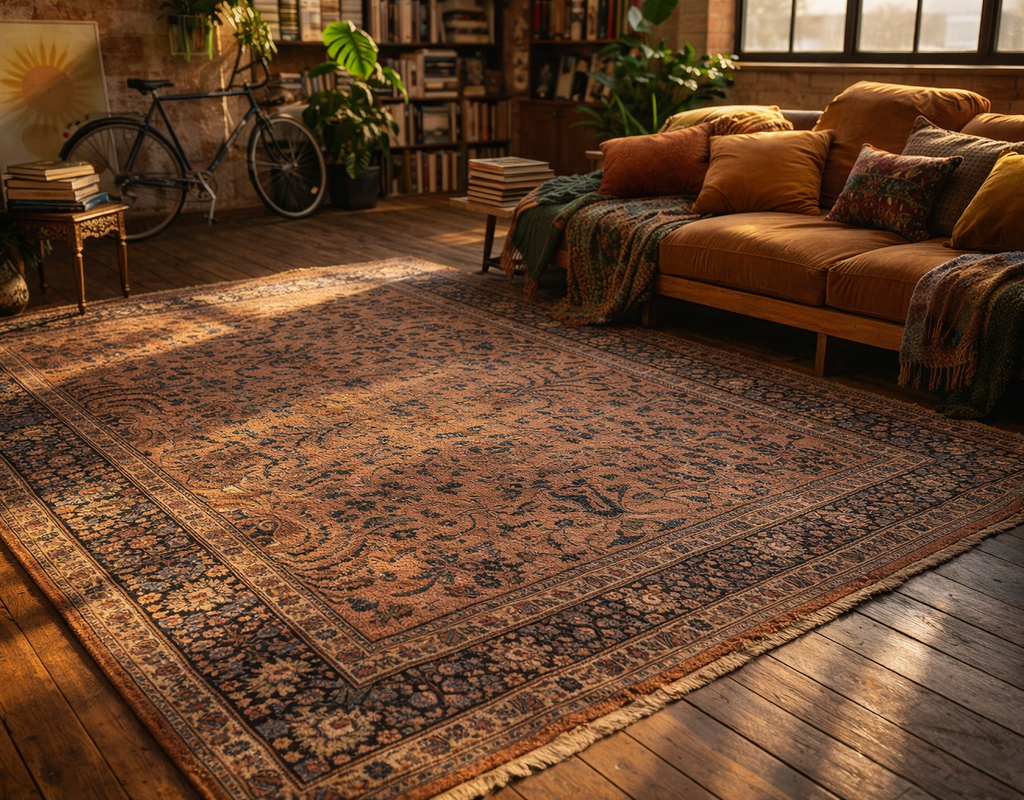
The antique-style Persian rug adds warmth and deep texture to this richly layered, sunlit living space.
In minimalist spaces, abstract disks or rays offer a focal point of light and harmony. Whether woven in wool, tufted with synthetic blends, or printed on affordable runners, the sun motif continues to embody timeless appeal, ensuring that this ancient emblem still shines at the heart of modern design.
Dating, Authenticity & Preservation
Dating Sun Medallion Rugs by Border Motifs
One of the most reliable ways of dating sun rugs is through close examination of border motifs. Antique Persian and Caucasian carpets often feature distinctive “wave,” “cross,” or narrow guard bands framing the central field. These secondary patterns shifted in popularity by century and region, offering valuable chronological markers.
For example, 19th-century Heriz or Serapi rugs with radiant sun medallions typically display angular rosettes and reciprocal trefoil guards, while earlier pieces show narrower, more restrained borders. Collectors use these surrounding designs to distinguish true antiques from later reproductions, since border work is often harder to forge convincingly than the central field.
Role of Natural Dyes in Authenticity
- Madder root (red) — Creates the enduring crimson often used for solar rays. — Why: Its depth and resistance to fading indicate genuine pre-synthetic dyeing.
- Weld and saffron (yellow) — Provide luminous tones central to the natural dye sun motif. — Why: Synthetic yellows introduced in the late 19th century tend to fade quickly, betraying younger pieces.
- Indigo (blue/black outlines) — Used to frame suns and stars. — Why: Natural indigo ages gracefully, unlike aniline substitutes that bleed or dull.
- Pomegranate rind and walnut husk (brown/green) — Secondary tones for shading. — Why: Variations in tone (abrash) signal handmade dye processes.
Natural dyes are essential for identifying an authentic sun carpet because their vibrancy and aging patterns align with centuries of weaving tradition. Their organic brilliance connects material quality to the symbolic vitality of the sun.
Climate Effects on Yellow Suns
Among solar colors, yellow is the most vulnerable to fading. Rugs with central yellow suns or yellow rays often lose intensity when exposed to decades of direct sunlight. Hot, dry climates accelerate fading, leaving behind pale or “washed-out” centers. Humid conditions, on the other hand, can weaken wool fibers and dull vibrancy.
To prevent a faded sun design, collectors should minimize UV exposure, rotate rugs to even wear, and store them in controlled environments. Proper preservation ensures the motif continues to radiate as originally intended.
Restoration Risks for Sunburst Borders
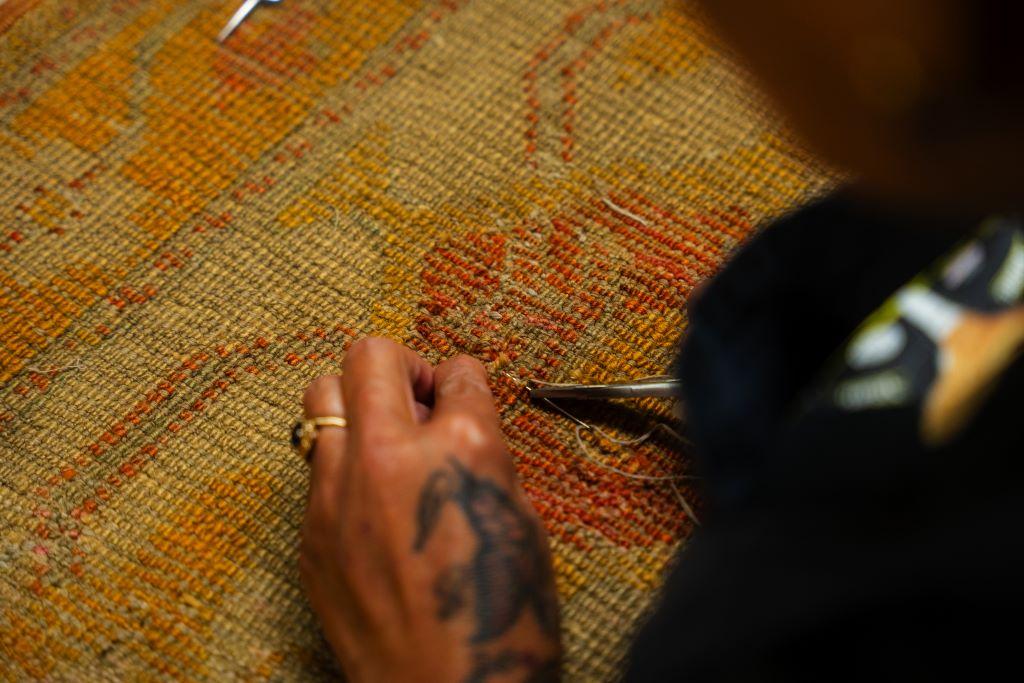
Detail of hands mending a rustic, richly colored woven rug.
- Over-reweaving — Adds bulk and alters the scale of rays. — Why: This disrupts the proportional harmony of the sunburst border.
- Synthetic color matching — Modern dyes used in repair may clash with natural palettes. — Why: Mismatched tones distort authenticity and reduce value.
- Excessive cleaning or chemical washing — Can strip yellows and reds from delicate motifs. — Why: Once lost, the radiance of a sun motif cannot be restored.
- Improper pile replacement — Alters clarity of fine rays. — Why: Crisp outlines blur, erasing the symbolic force of the sun.
Cultural, Spiritual & Social Significance
Why the Sun Remains a Powerful Motif
The sun endures in rug design because it transcends mere decoration, functioning as a spiritual and social emblem. In every weaving culture, the spiritual sun rug serves as a reminder of life’s rhythm: rising, setting, and returning with constancy. For weavers, embedding a sun medallion into a carpet symbolized not just warmth and fertility, but also divine protection for the household. Socially, the motif communicated prosperity, harmony, and connection to the cosmic order—values central to community identity. Its resilience across centuries lies in this dual role: cosmic power woven into intimate, everyday textiles.
Ceremonial, Protective, and Storytelling Functions
- Wedding and Dowry Carpets — Sun motifs often appeared in dowries to bless fertility and joy for a new household. — Why: The radiant symbol ensured prosperity and protection for the bride’s future.
- Ritual and Blessing — Many weavers prayed or performed invocations before weaving a ceremonial sun motif into the loom. — Why: The act imbued the rug with sacred energy, transforming it into a guardian object.
- Protective Symbolism — The ever-watchful sun functioned as a talisman against evil, much like the eye or star motifs in related traditions. — Why: Its central placement reinforced cosmic guardianship within the home.
- Storytelling Medium — The sun motif connected oral traditions to woven form, narrating myths of creation, cosmic cycles, and ancestral memory. — Why: These designs became intergenerational records of cultural identity.
Gendered Sun Symbols Across Cultures
The symbolism of the sun shifts in gendered terms depending on cultural worldview. In Persian heritage rug design, the sun is often feminine, embodied in the figure of Khorshid Khanoom (“Lady Sun”), whose radiant face represented fertility, beauty, and cosmic watchfulness. In contrast, Navajo weaving traditions depict the sun as masculine, a force of strength, harmony, and order guiding life cycles. These gendered interpretations show the sun’s adaptability: a universal symbol shaped by local cosmologies, reflecting different views of balance between masculine and feminine principles.
Living Tradition: The Motif as Cultural Heritage
The sun motif remains a living thread in rug-making, carrying forward centuries of craft and belief. A heritage rug design bearing a sun medallion does more than decorate a floor—it preserves stories of ancestors, rituals, and values passed through generations.
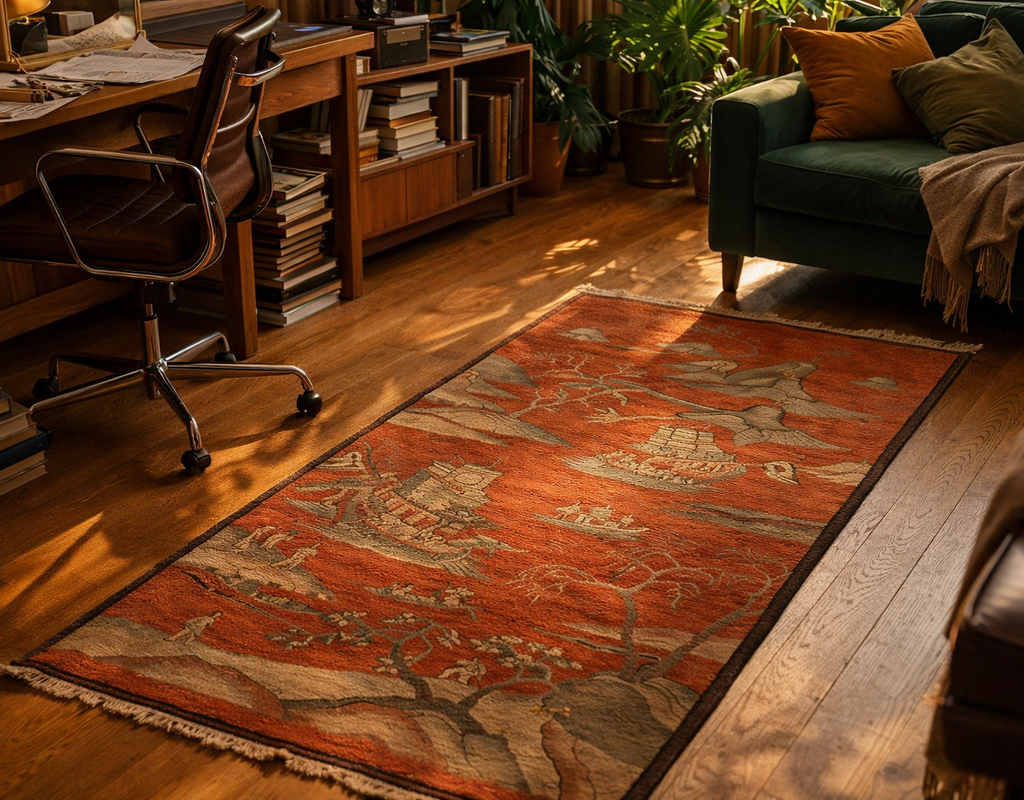
A vibrantly colored, scenic runner rug anchors the transition between a workspace and a plush seating area bathed in sunlight.
For Anatolian kilims, the geometric sunburst continues to embody fertility and cosmic balance; for Persian and Navajo rugs, it anchors cultural identity and spiritual practice. Even as modern trends reinterpret the sun in abstract or bohemian styles, its symbolic power persists, making every sun rug a testament to continuity, resilience, and cultural memory.
Actionable Collecting & Styling Tips
What to Look For in Sun-Themed Rugs
- Clarity of Design — A well-defined sunburst or medallion ensures visual impact and preserves symbolic power. — Why: Blurred or indistinct rays reduce both aesthetic and investment value.
- Natural Dyes — Look for saffron yellows, madder reds, and indigo outlines. — Why: Natural dyes age with grace, confirming authenticity and deepening the symbolic brilliance of the sun.
- Provenance — Documentation of origin, region, or tribal workshop. — Why: A rug with clear lineage carries higher cultural and financial value.
- Condition — Check pile wear, fading, and restoration history. — Why: Poor or careless repairs can distort intricate sun motifs.
Practical Advice for Buyers and Collectors
- Prioritize Hand-Knotted — Invest in hand-knotted sun rug tips, as these pieces retain sharpness, durability, and authenticity. — Why: Tufted or machine-made examples rarely achieve collectible status.
- Authenticate Dyes — Seek expert appraisal for color verification. — Why: Ensures that natural dye sun symbolism, not synthetic substitutes, defines the piece.
- Respect Restoration — Use professional conservators for faded or damaged sunbursts. — Why: Amateur fixes can permanently blur symbolic borders.
- Preserve Vibrancy — Rotate placement, limit sunlight, and maintain stable humidity. — Why: Prevents fading of yellows and reds, protecting the sun motif’s vitality.
Styling with Sun Rugs in Modern Spaces
A collectible sun rug is more than an artifact—it is a design statement. Central medallions naturally draw the eye, making them ideal focal points for living rooms or entryways.
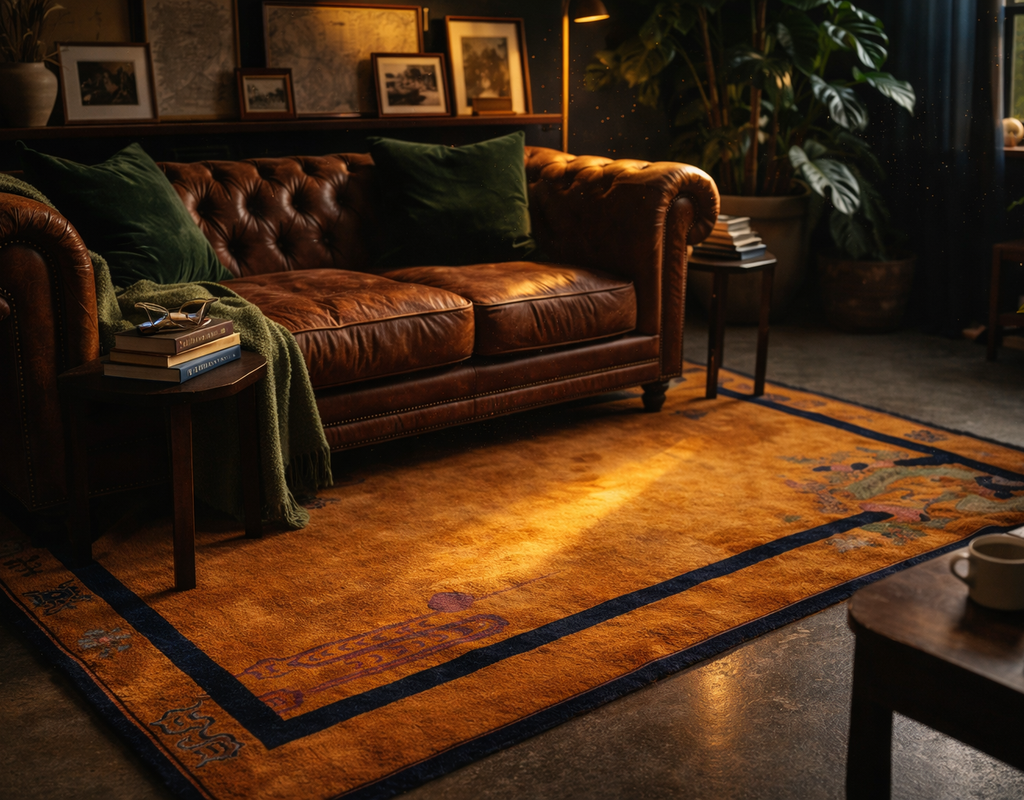
A richly textured room combining classic leather furniture with a striking, warm-toned area rug.
The radiance of a sun medallion carpet adds warmth and optimism, especially in minimalist or neutral interiors where it injects color and symbolic energy. In boho-chic décor, layered kilims with abstract suns reinforce themes of vitality and harmony. The enduring appeal of the motif lies in its versatility: it functions equally as heritage art and as a vibrant centerpiece of contemporary design.
Internal Linking Suggestions
- Guide to Medallion Rugs — Why: Helps readers compare sun medallions with other central-field motifs.
- Natural Dye Care — Why: Offers practical preservation strategies for authentic sun carpets.
- Antique Rug Valuation — Why: Provides insights into how provenance, condition, and symbolism influence sun rug value.
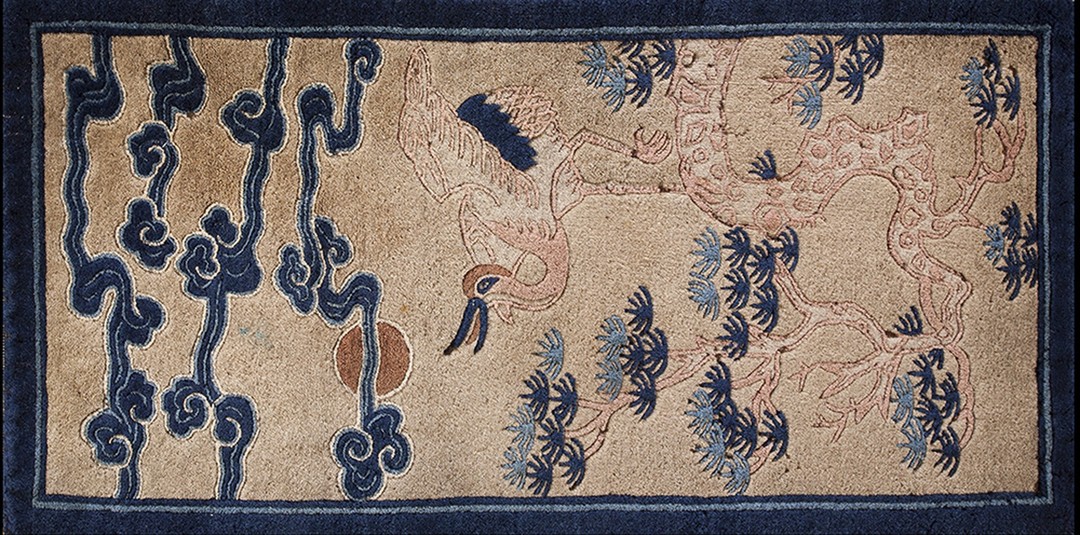
Explore a Few of Our Favorite Sun Design Rugs
FAQ
- What colors pair best with sun rugs?
Neutrals (oatmeal, beige, charcoal) let a sun rug pop; terracotta, mustard, or navy echo solar warmth. Repeat one rug color in 2–3 accents for cohesion.
- Are there cultural considerations with sun symbol rugs?
Yes—some sun symbols (e.g., Indigenous or sacred emblems) carry specific meanings. Buy from culturally respectful sources and avoid misusing sacred motifs.
- How often should I rotate sun motif rugs?
Rotate every 3–6 months to balance wear and sunlight. Mark calendar reminders to stay consistent.
- How do I keep a sun rug from slipping?
Use a natural-rubber or felt-rubber pad sized slightly smaller than the rug. In hallways, add corner grippers for extra hold.
- Where do sun rugs look best in a nursery or kid’s room?
Sun rugs brighten play zones; pick low-pile, washable, or OEKO-TEX–certified options if you’re sensitive to odors. A 5×8 often anchors a crib plus chair.
- How much do sun motif rugs cost?
Expect \$50–\$300 for machine-made synthetics, \$300–\$1,500 for quality wool, and \$2,000+ for hand-knotted sun rugs in larger sizes. Vintage or designer pieces can exceed these ranges.
- Hand-knotted vs machine-made—what’s better for sun rugs?
Hand-knotted sun rugs offer longevity and detail; machine-made sun rugs provide affordability and easy maintenance. Inspect the back: visible, irregular knots indicate hand-knotted.
- Can I layer a sun rug over a jute rug?
Yes—layer a smaller, patterned sun rug over a neutral jute base for texture. Keep layers flat with rug tape and a thin pad to prevent trip edges.
- Will robot vacuums work on sun motif rugs with fringe?
Most robots handle flat sun rugs, but fringe can tangle. Choose fringe-free edges or tuck/tape fringe under; keep pile low for smoother crossings.
- Are sunburst runner rugs good for entryways?
Sunburst runners energize entries, but use low pile (≤0.5″) so doors clear. A non-slip pad reduces buckling in high-traffic zones.
- Can sun rugs go over radiant (underfloor) heating?
Yes—low-pile natural fibers like wool or cotton transfer heat well. Avoid super-thick pads and check floor system guidelines for maximum tog/thermal resistance.
- What rug pad works best under sun rugs?
A felt-and-rubber pad offers grip plus cushion; ¼-inch thickness suits most living rooms. Trim the pad 1–2 inches smaller than the rug to prevent edges showing.
- How do I spot-clean a sun motif rug after a spill?
Blot immediately with a white cloth; avoid rubbing. Use a mild dish-soap solution (¼–1 tsp per cup lukewarm water) and test in an inconspicuous spot.
- Are washable sun rugs good for pets and kids?
Washable sun rugs (often polyester) are practical for mess-prone areas. Choose low-pile, patterned designs to hide crumbs and stains.
- Do wool sun rugs shed?
New wool sun rugs often shed lightly at first, then settle after a few months. Weekly vacuuming with suction-only helps minimize fuzz.
- Will a sun rug fade in direct sunlight?
Any rug can fade with strong UV, but solution-dyed synthetics resist color loss better. Rotate your sun rug every 3–6 months to even out exposure.
- Are outdoor sun rugs a thing?
Yes—look for outdoor sun rugs in polypropylene or solution-dyed fibers with UV resistance. Hose-cleanable, low-pile constructions dry quickly after rain.
- What materials are best for sun rugs?
Wool sun rugs are durable and naturally stain-resistant; polypropylene/polyester sun rugs are budget-friendly and easy-care. Flatweave cotton or jute works in casual settings but needs prompt spill cleanup.
- Round or rectangular—when should I use a round sun rug?
Use a round sun rug to soften boxy rooms or under round tables/coffee tables. Let it extend 18–24 inches beyond the table for balance.
- How big should a sun motif rug be under a dining table?
Choose a sun motif rug that extends 24–30 inches beyond the tabletop on all sides. This keeps chair legs on the rug when pulled out.
- What size sun area rug should I choose for a living room?
Pick a sun area rug large enough for at least the front legs of seating to rest on it. In many rooms an 8×10 rug works; larger layouts often need 9×12.
- Which styles work best with sunburst rugs?
Sunburst rugs pair naturally with Art Deco, mid-century modern, and contemporary spaces. Metallic accents and curved furniture echo the rays for cohesion.
- What’s the difference between sunburst rugs and sun-face sun rugs?
Sunburst rugs emphasize radiating rays from a center; sun-face sun rugs depict a face within the disk. Choose sunburst for graphic geometry and sun-face for a whimsical or vintage vibe.
- Are sun rugs trendy or tacky right now?
Sun rugs feel fresh thanks to the 1970s/Art Deco revival and “celestial” décor. Keep palettes tight (2–3 colors) and let the sun rug be the focal point to avoid clutter.
- What are sun motif rugs?
Sun motif rugs feature a stylized sun—rays, disks, or faces—woven or printed into the pattern. They range from minimal linework to ornate medallions and suit both modern and traditional rooms.