
The Enduring Allure of Blue Rugs
Discover our curated collection of striking blue color rugs and transform your space with timeless elegance.
Historical Significance of Blue in Rugs
The history of blue rugs reaches back thousands of years, where the use of indigo and lapis-based dyes marked a turning point in textile artistry. Across ancient Persia, Central Asia, and Anatolia, blue-dyed fields and borders were associated with prestige, spirituality, and protection. In Oriental rug art, blue symbolized both infinity and sanctity, evoking the heavens or a divine realm. Many mosque carpets incorporated deep blue fields to create a meditative atmosphere, reflecting the color’s spiritual resonance. Indigo sits on the outside of the fibre rather than through it, which is the single most useful test in our guide to natural vs synthetic dyes.
In Persian carpets, blue hues became especially beloved because they balanced vibrant reds and golds while highlighting intricate floral or geometric motifs. Elite Safavid-era weavings often showcased luminous indigo grounds paired with ivory and gold medallions, embodying both elegance and cosmic symbolism. Beyond Persia, nomadic tribes wove blue into kilims and pile rugs as a mark of identity, with indigo serving as a durable, natural dye resistant to fading. The blue rug symbolism that emerged from these traditions continues to shape their appeal: serenity, stability, and timeless refinement.
Blue’s Visual Appeal in Home Decor
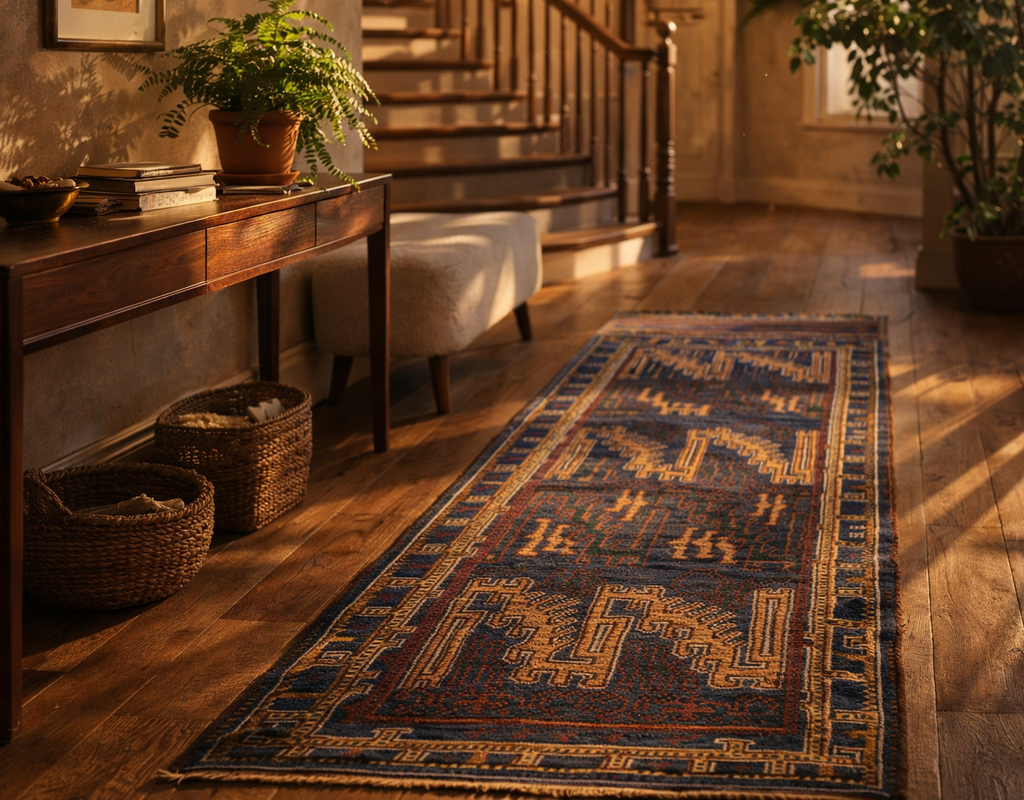
Golden hour sunlight streams across a rustic hallway, highlighting a richly patterned tribal runner rug.
- Calming Atmosphere — Why: Blue rugs are associated with peace and tranquility, making them ideal for bedrooms, living rooms, and meditation spaces. Their soothing tones reduce visual clutter and promote relaxation.
- Versatile Pairing — Why: From minimalist white interiors to richly layered traditional spaces, blue adapts seamlessly. Light blue area rugs brighten coastal or Scandinavian rooms, while navy and indigo anchor formal or eclectic designs.
- Symbolic Depth — Why: Classic blue area rugs carry cultural weight, grounding interiors with a sense of heritage and artistry. The symbolic resonance of blue in global traditions enriches modern décor.
- Anchor for Design Schemes — Why: A blue rug provides a visual foundation, unifying diverse colors and patterns. Designers often describe them as “grounding pieces” that pull a room together.
- Timeless Elegance — Why: The allure of blue carpets lies in their enduring popularity across centuries and cultures. Unlike trend-driven shades, blue remains a constant in home design, celebrated for its sophistication.
By combining historic prestige with contemporary adaptability, blue rugs embody both artistry and function. They do more than decorate a floor: they connect interiors to a long lineage of textile traditions while offering a calming, cohesive presence in today’s homes. The enduring blue rug appeal proves why they remain among the most sought-after styles in the world of classic and modern décor.
The Visual Spectrum of Blue in Rugs
Hue Variations: From Sky to Navy
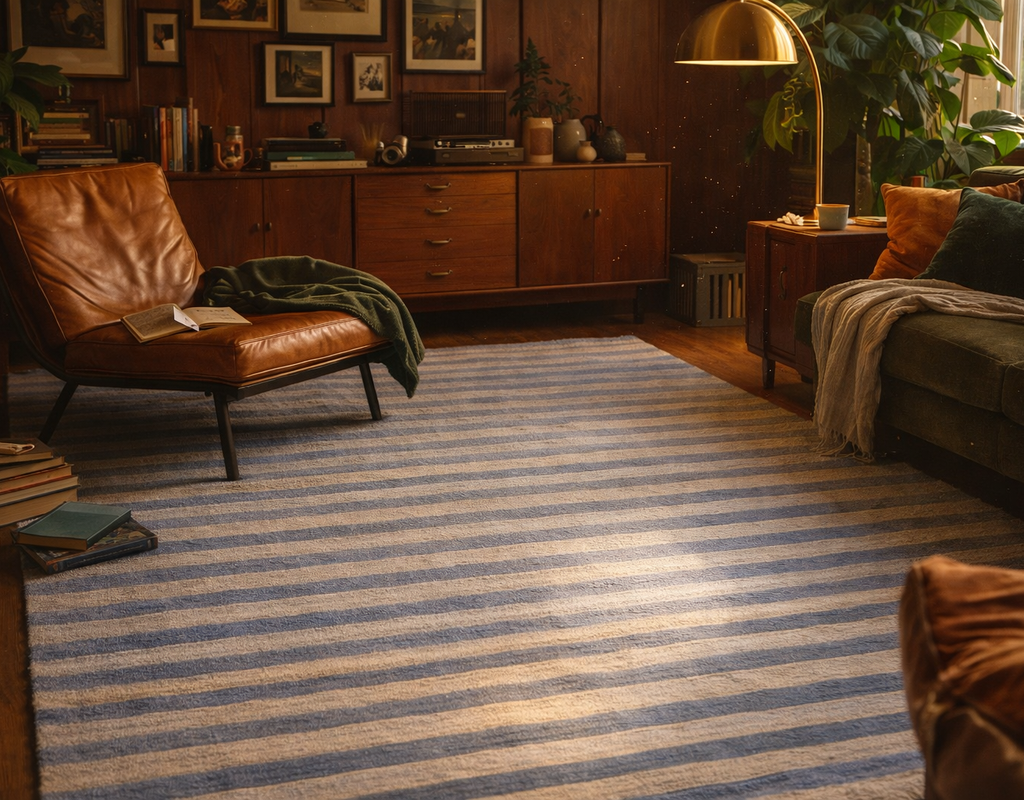
A modern-meets-vintage reading space anchored by a bold, horizontally striped area rug.
The blue rug hue spectrum is remarkably broad, shaped by dye source, fiber, and technique. Indigo, the most enduring dye, produces everything from delicate sky blue area rugs to the profound depth of a navy blue rug. Multiple dye baths intensify color: one or two dips yield soft pastel blues, while repeated immersions produce near-black midnight tones.
Historically, both indigo and woad plants were used, though indigo dominated for its strength and saturation. These natural dyes age gracefully, developing a muted, mellow character over centuries. Synthetic aniline blues, introduced in the 19th century, lacked this stability, sometimes fading unevenly or shifting toward purple.
The Role of Abrash and Aging
One of the most prized qualities in antique blue rugs is abrash, the subtle striping or variegation that results from hand-dyeing and weaving wool in small batches. As indigo ages, its natural irregularities deepen into a desirable patina, giving the surface dimension and vitality. Collectors often seek out this indigo aging effect, as it transforms a flat field into a living texture, with tonal shifts that resemble rippling water or changing skies.
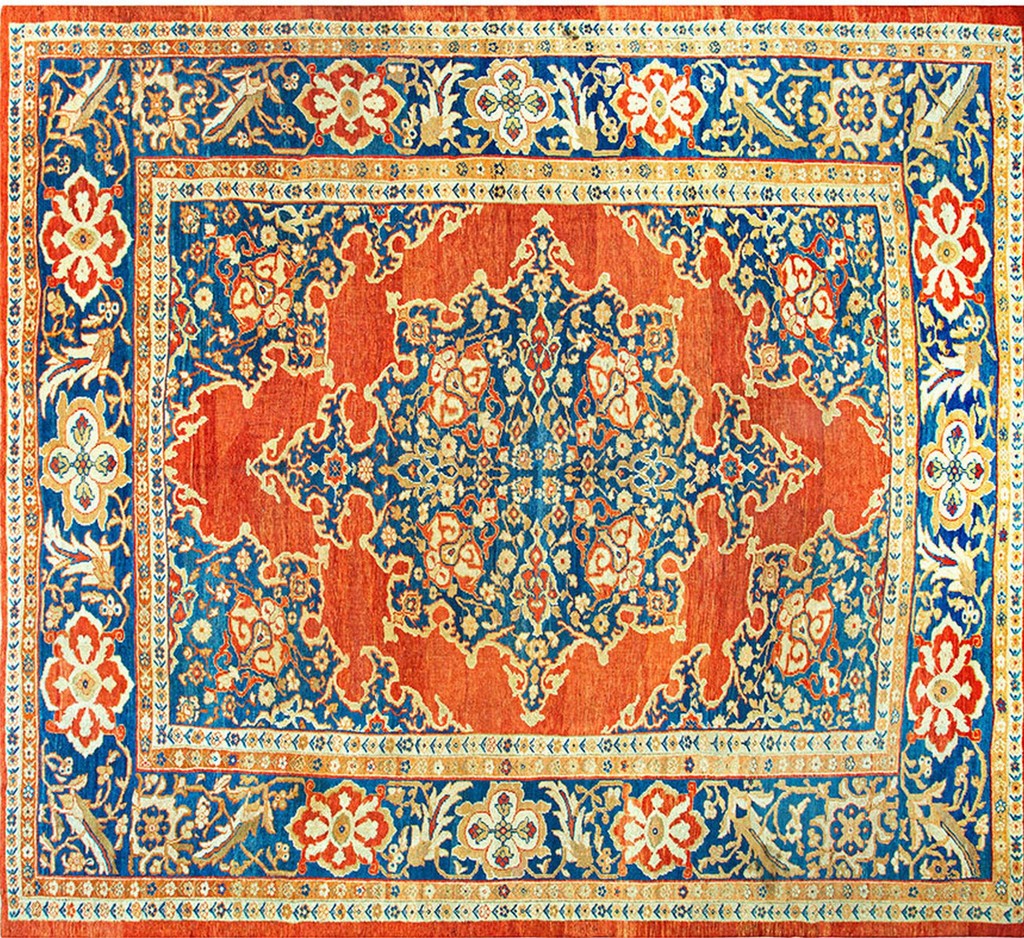
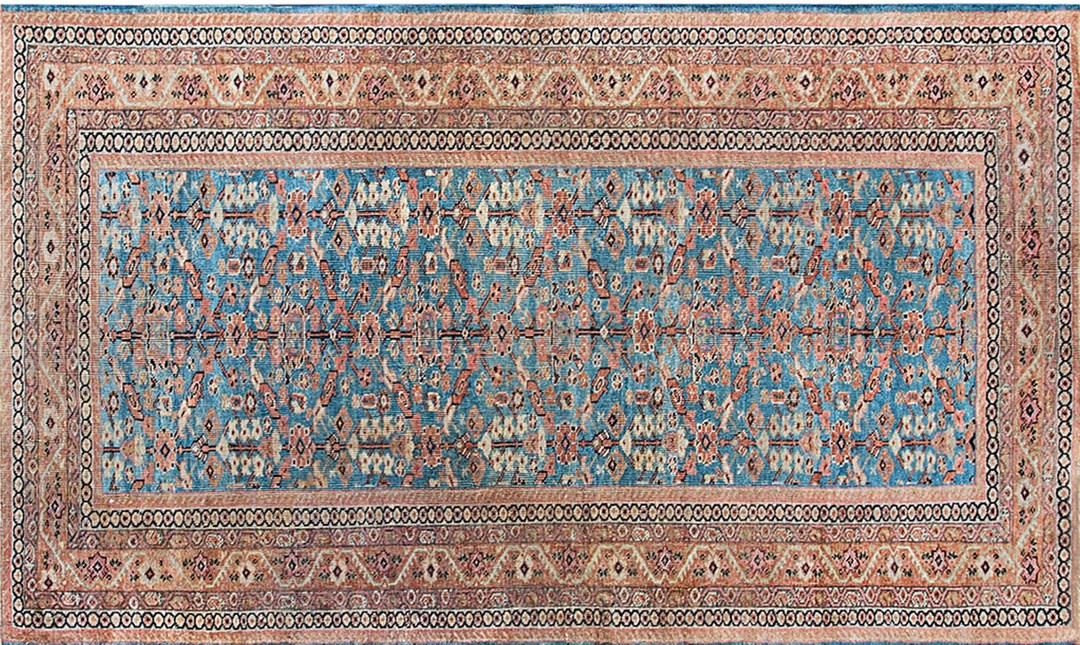
Antique Sultanabad Persian Floral, Medallion Knotted Rug by Rugs On Net
A faded blue rug with well-preserved abrash is not considered flawed but celebrated for its authenticity and visual poetry, reminding viewers of the artisan’s hand and the passage of time.
Blue in Different Fibers: Wool, Silk, Cotton
The appearance of blue changes dramatically depending on the material. On wool, indigo produces rich, matte tones with visible blue rug abrash, adding rustic depth and warmth. Silk, by contrast, amplifies the brilliance of dye: a navy field in silk glows with jewel-like intensity, while pale blues shimmer almost like water.
Cotton absorbs dye differently, giving a flatter, more uniform appearance, often used for weft or foundations but occasionally woven into full cotton rugs for a softer pastel palette. Together, these fibers showcase the versatility of blue—from luminous elegance in silk to grounding natural beauty in wool. In every case, whether shimmering in silk, grounding in wool, or softening in cotton, blue weaves a dynamic presence that evolves over time.
Its hues, abrash, and patina ensure that no two rugs are ever the same, reinforcing why the spectrum of blue remains endlessly captivating in the world of handmade carpets.
Origins and Chemistry of Blue Dye
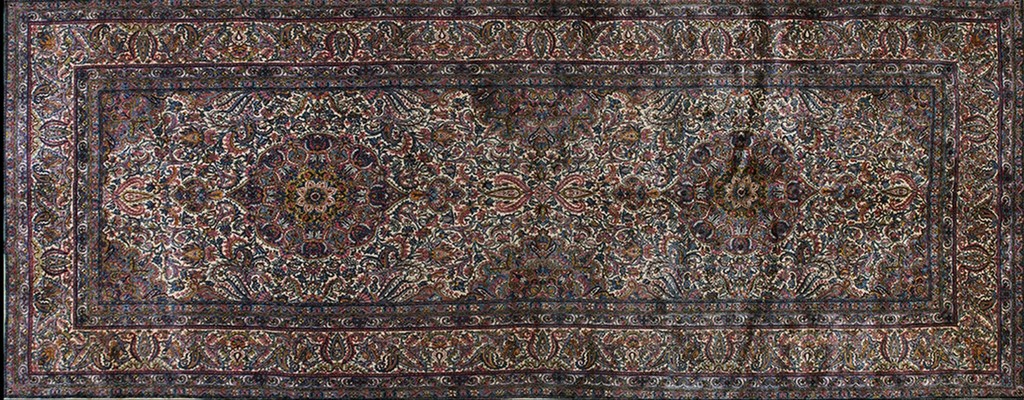
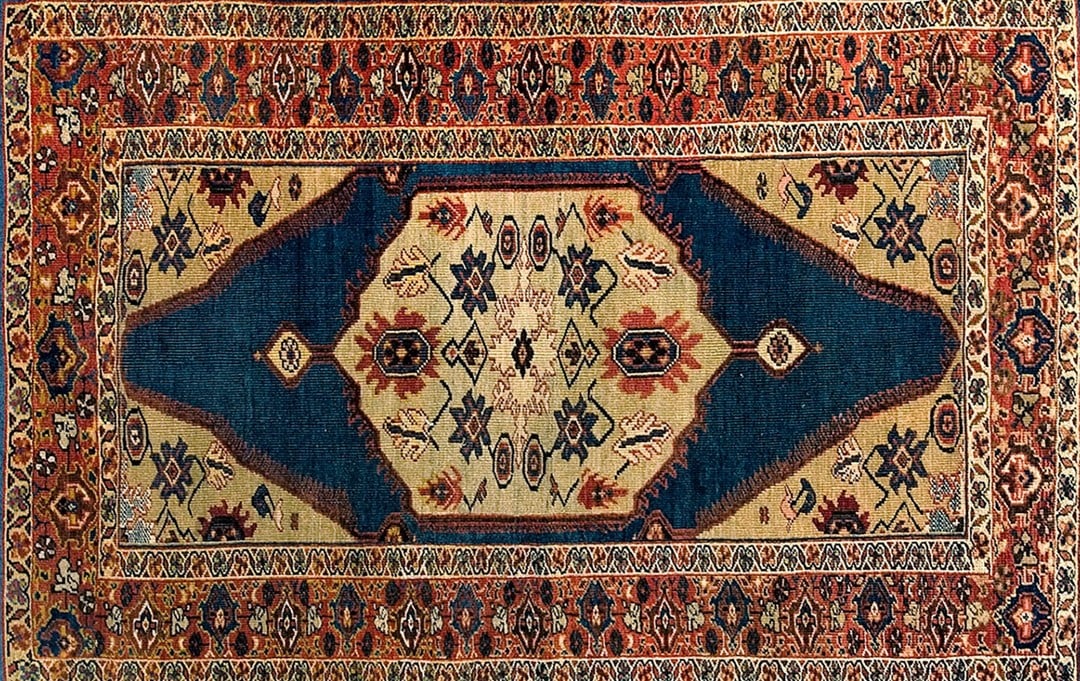
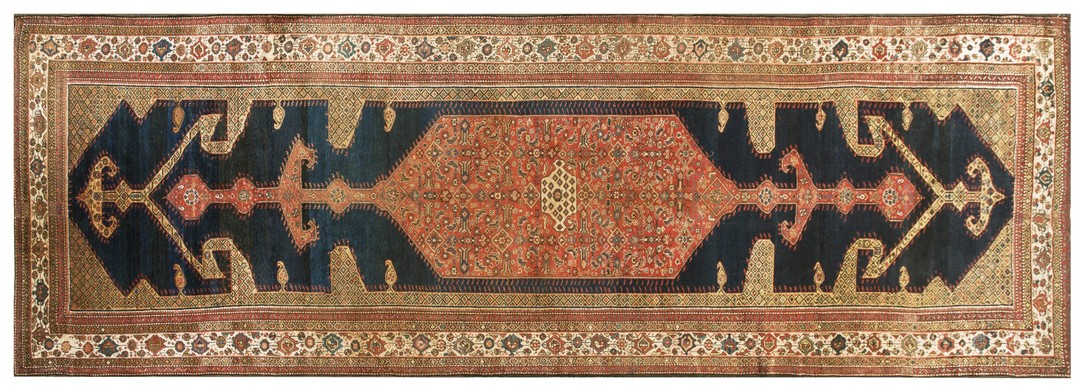
Antique Kilim Persian Knotted Rug by Rugs On Net
Natural Blue Dyes: Indigo, Woad, Others
- Indigo (Indigofera tinctoria) — Why: The most important source of natural blue globally, indigo yields the deep, saturated tones that define many indigo dye rugs. Its durability and richness made it the preferred dye across Asia, the Middle East, and Africa.
- Woad (Isatis tinctoria) — Why: Used widely in Europe before indigo was imported, woad produces more muted shades. In kilim traditions from the Balkans to Western Anatolia, woad dye lent a softer, earthy blue to textiles.
- Lapis Lazuli — Why: Rare and expensive, lapis was ground into ultramarine pigment for painting rather than weaving. Its use in rugs was minimal but symbolically linked to luxury.
- Other Plants — Why: Regional substitutes such as Strobilanthes in East Asia or Polygonum species in Japan expanded the palette of blue vegetable-dyed rugs, though indigo remained dominant.
Indigo Dyeing Process in Rugs
The indigo dye process reflects both chemistry and craft. Unlike most natural dyes, indigo is insoluble in water. To dye fibers, artisans first ferment the indigo leaves or cakes in an alkaline vat, reducing the pigment to a soluble yellow-green state. Skeins of wool, cotton, or silk are dipped into this vat, appearing green at first.
Only when the fibers are withdrawn and exposed to air does oxidation occur, transforming the yarn into the distinctive blue we recognize. Repeated dipping deepens the color, allowing for variations from pale sky tones to nearly black navy. This process, often repeated dozens of times, requires patience and precision—underscoring why natural blue dye rugs carry such artisanal value.
The Rise and Impact of Synthetic Blues
By the late 19th century, the introduction of synthetic aniline dyes and later synthetic indigo revolutionized rug production. Synthetic dyes were cheaper, easier to produce in bulk, and expanded the available palette. However, they often lacked the subtlety and permanence of natural indigo. Some aniline blues faded quickly or shifted hue, causing uneven wear.
For collectors, the presence of synthetic blue in an antique rug can reduce its value, since authenticity and natural patina are prized. Yet in modern weaving, synthetic indigo has become the standard, delivering consistent results while preserving affordability. In sum, blue in rugs owes its longevity to a marriage of chemistry and tradition. From the organic vats of indigo dye rugs to the modern dominance of synthetics, the story of blue is as much about innovation as it is about enduring artistry.
Cultural Symbolism of Blue in Rug Art
Meanings Across Rug-Making Cultures
The blue rug meaning varies widely across cultures but consistently carries depth and importance. In many weaving traditions, blue signifies the sky and water, embodying clarity, stability, and renewal. Among Anatolian and Central Asian tribes, blue also carried protective functions, appearing in motifs designed to repel misfortune.
In certain regions, particularly in parts of the Caucasus, dark blue could even signify mourning or death, marking rugs used for solemn occasions. These layered interpretations highlight why blue remains one of the most powerful symbolic colors in rug art.
Blue in Persian Carpets: Why It’s So Beloved
Few traditions elevated blue as highly as Persian carpet weaving. In Persian blue symbolism, indigo fields and medallions represented serenity, peace, and the divine order. Deep blues evoked the eternal heavens, while turquoise suggested paradise and rebirth.
Elite Safavid carpets frequently employed blue grounds to frame golden arabesques or floral medallions, signaling both status and spiritual aspiration. For this reason, blue remains one of the most beloved hues in Persian carpets, treasured by collectors for its balance of elegance, calm, and grandeur.
Blue’s Role as Protection, Status, and Spiritual Symbol
Across rug traditions, blue was not just decorative—it was believed to safeguard. In Turkey and Central Asia, blue was woven into amuletic designs to guard against the evil eye rug curse, a motif still visible in kilims and pile carpets today. Beyond protection, blue denoted rank and prestige: its costly indigo dyes made it a status marker, reserved in some cultures for leaders or sacred spaces.
Spiritually, blue symbolized wisdom and the divine, a link between the earthly and the eternal. Together, these meanings form a rich tapestry of blue symbolism in rugs. Whether shielding a household from harm, evoking paradise in a mosque, or marking the prestige of its owner, blue has consistently anchored rug art with its dual powers of protection and transcendence.
Iconic Blue Rug Styles and Regional Traditions
Persian Rugs
Among the world’s most celebrated Persian blue rugs, several weaving centers stand out for their masterful use of indigo. Tabriz blue rugs frequently display deep cobalt fields, often paired with ivory medallions or elaborate floral arabesques. In Isfahan, blue appears in balanced medallion-and-corner layouts, symbolizing harmony and paradise.
Bidjar weavers favored navy grounds framed by dense, repeating patterns, producing rugs so durable they earned the title “iron rugs of Persia.” Nomadic groups such as the Qashqai also embraced blue, weaving vibrant indigo fields into prayer rugs and tribal pieces, combining symbolism with bold artistry.
Anatolian & Oushak Rugs
In Anatolia, blue was equally central, especially in the production of navy Oushak rugs. These rugs, characterized by large-scale geometric medallions and soft wool, became staples in Ottoman palaces and later European interiors. Indigo’s depth provided a dramatic backdrop for golden and ivory motifs, ensuring contrast and elegance.
Today, the navy Oushak rug remains a timeless classic, bridging centuries of taste and proving that certain color traditions never fall out of style. Its protective and royal associations in Anatolian culture only reinforced its desirability.
Caucasian and Central Asian Blue Rugs
The Caucasus produced some of the boldest expressions of blue. Caucasian blue carpets—especially blue Kazak rugs and Shirvans—are renowned for their strong indigo grounds, often filled with white, red, and green geometric motifs.
In these tribal weavings, blue served as both a grounding field and a spiritual shield. In Central Asia, blue appeared more sparingly: Turkmen tribes typically employed deep reds but reserved blue for accents, double-dyed at times to achieve near-black tones. This selective use of blue heightened its symbolic and visual impact.
Motif Placement: Fields, Borders, Accents
- Fields — Why: A deep blue field provides both visual calm and symbolic depth, serving as the foundation of many Persian and Caucasian masterpieces.
- Borders — Why: Blue borders frame a rug like a horizon line, containing intricate motifs and emphasizing balance.
- Accents — Why: Indigo in motifs such as boteh, medallions, or prayer niches adds symbolic weight and highlights details without overwhelming the design.
From the grand medallion carpets of Persia to the tribal geometrics of the Caucasus, blue is more than a color—it defines identity, heritage, and timelessness. Among all, the navy Oushak rug stands as proof that certain shades and traditions carry eternal appeal, forever anchoring the legacy of blue rug style in global weaving.
Historic Evolution and Modern Use of Blue
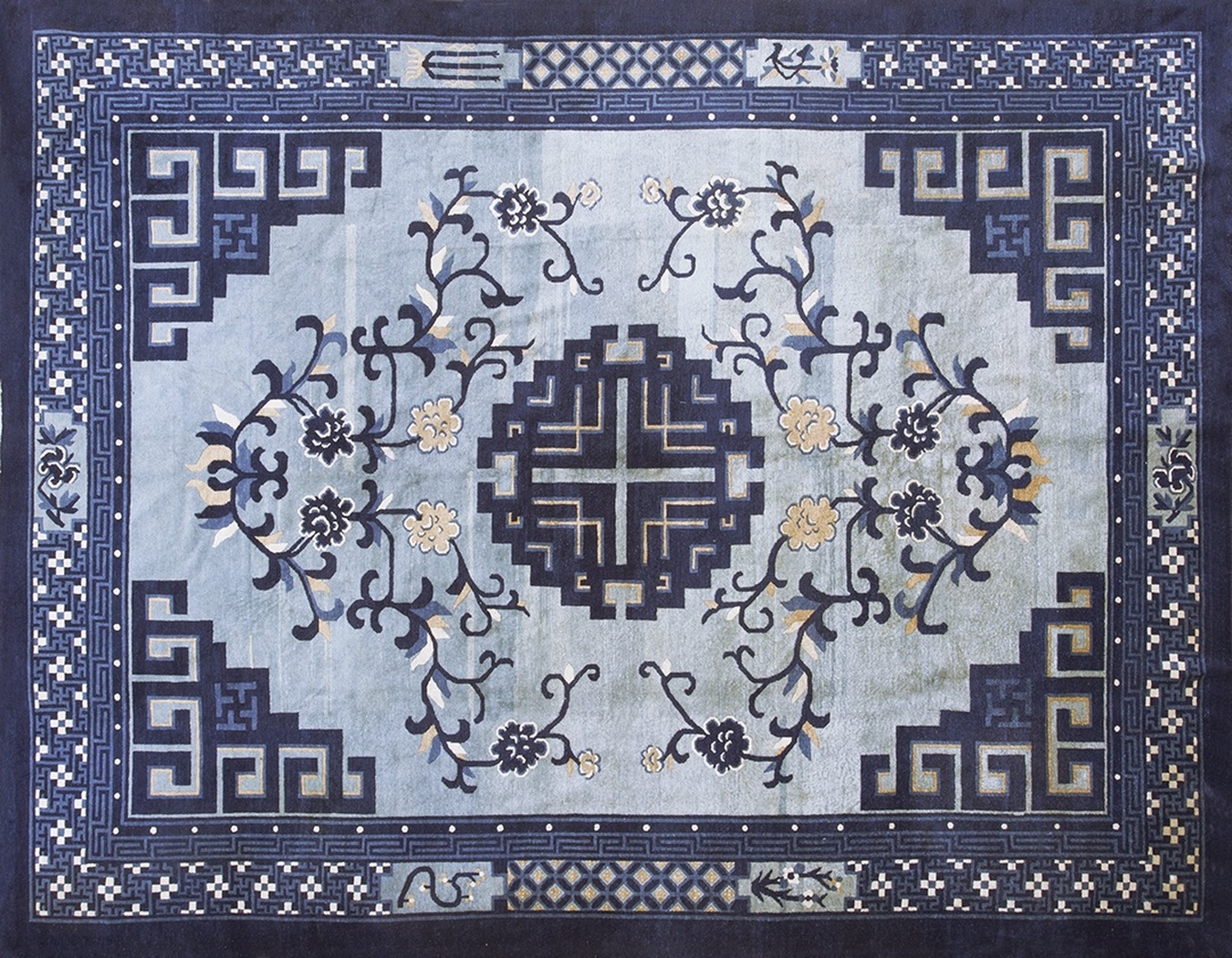
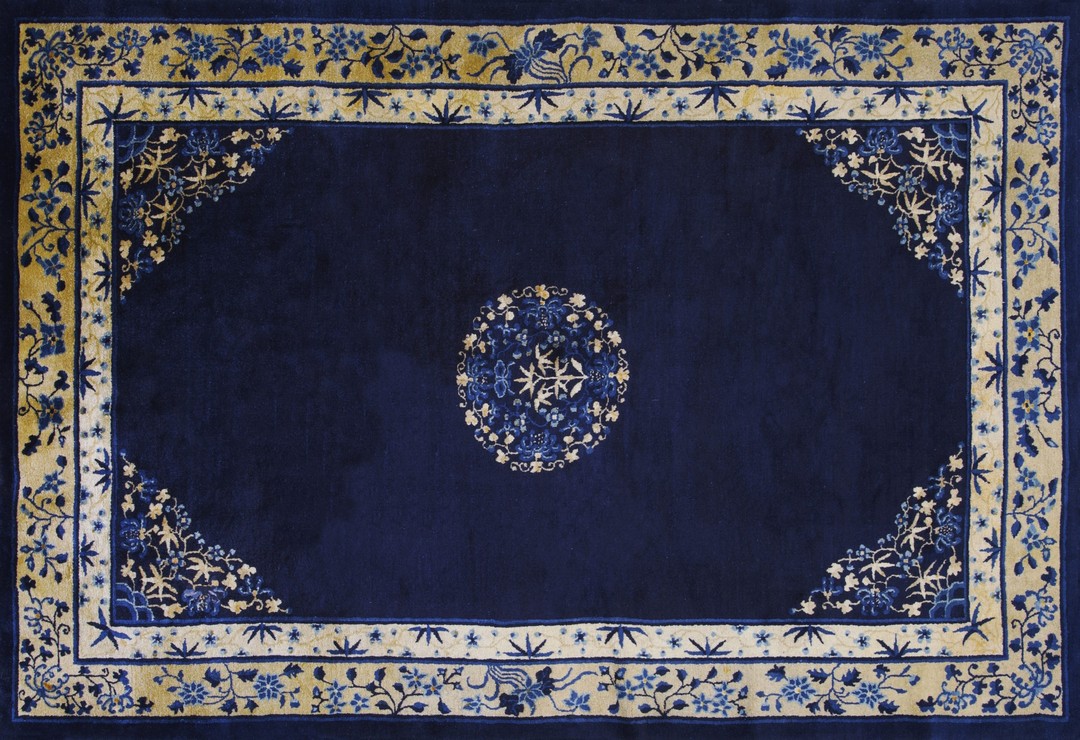
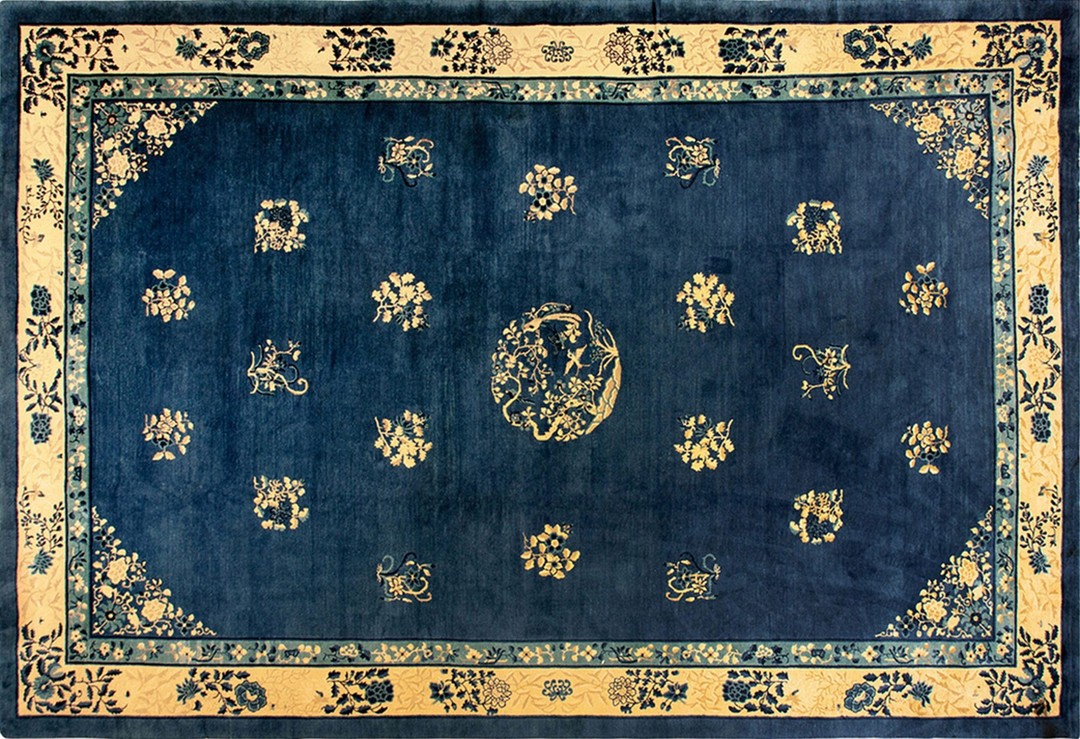
Room Size Chinese Knotted Antique – Peking 1880s Rectangle Wool Blue Rug – by Rugs On Net
From Rare Treasure to Common Color: Indigo, Trade, and Tech
The blue rug history begins with rarity. For centuries, blue was a prized treasure, since indigo had to be cultivated, fermented, and traded across long distances. In regions without access to indigo, weavers relied on woad, producing softer, muted blues.
As global trade routes expanded, especially through Persia, India, and the Ottoman Empire, indigo became more widely available, and blue moved from elite palaces into village and tribal weaving. By the 18th and 19th centuries, blue was no longer a rarity but a hallmark of artistic tradition across Persian, Anatolian, and Caucasian carpets.
Synthetic Blue’s Influence on Value and Collectibility
The invention of synthetic dyes in the late 19th century marked a turning point. While synthetic blues made production faster and cheaper, they often lacked the subtle aging and durability of natural indigo.
For collectors, this shift is crucial: an antique rug woven with natural plant-based indigo retains higher value, while a piece with early synthetic blues may be devalued because of uneven fading or chemical harshness. Thus, when assessing synthetic vs. natural blue, provenance and dye source directly impact collectability.
Modern Design Trends: Overdyed & Contemporary Blue Rugs
Today, blue is experiencing a strong revival in contemporary design. The popularity of the blue overdyed rug—where vintage carpets are stripped and recolored in saturated indigo or turquoise tones—has reintroduced blue as a bold fashion statement. At the same time, “distressed” and vintage blue rugs appeal to those who love character and patina, echoing antique abrash.
Designers also turn to deep navy or smoky slate as grounding shades for modern interiors, proving blue’s versatility from bohemian lofts to sleek minimalist apartments. Meanwhile, an indigo revival rug movement, particularly in artisan cooperatives in Turkey, Iran, and India, has returned to natural dye methods, offering eco-friendly and authentic options for buyers seeking traditional quality.
Blue has journeyed from rare luxury to everyday staple and back to premium status in the eco-conscious era. Natural indigo once again defines the highest-quality pieces, making blue vegetable-dyed rugs not just a nod to history but also a sustainable choice for modern homes.
Decorating with Blue Rugs: Style and Pairing
Wall and Floor Pairings for Blue Rugs
- Sky Blue with Soft Walls — Why: A sky-blue area rug pairs beautifully with light gray, ivory, or soft beige walls, creating a calming, airy effect. These neutrals prevent the rug from being washed out while maintaining balance.
- Blue Rugs and Warm Hardwoods — Why: Many wonder if a blue rug can harmonize with warm hardwood floors. The answer is yes—indigo or navy contrasts warmly against oak, walnut, or cherry, highlighting both rug and floor while grounding the space.
- Cool Tones with Deeper Blues — Why: Navy and cobalt rugs thrive against crisp white or slate walls, amplifying their elegance without overpowering.
Layering and Mixing Blues with Neutrals/Warm Tones
Designers often embrace blue rug layering to add depth and dimension. A popular choice is laying an indigo rug over a natural jute or sisal runner—this contrast enhances texture, adds warmth, and softens the formality of deep blue.
For eclectic interiors, layering multiple blue hues (from powder to navy) enriches the palette without clashing, especially when grounded by neutral textiles. This is why decorators frequently recommend indigo rugs over jute runners, as the combination blends organic texture with refined tone.
Blue Rug Placement: Small vs. Large Rooms
- Small Rooms — Why: A blue-and-white geometric rug can dominate a tight space if the pattern is too bold, but when scaled correctly, it adds lively energy without overwhelming. Light blues also open up small rooms visually.
- Large Rooms — Why: In expansive or open-plan layouts, a cobalt blue rug provides anchoring power. Its strong hue grounds furniture arrangements and prevents the space from feeling scattered, making it an ideal focal point.
Matching Undertones and Accent Textiles
When decorating with blue rugs, undertones matter. A rug with cool undertones (e.g., slate or icy blue) pairs best with silver, gray, or crisp whites, while warmer undertones (e.g., teal or turquoise) harmonize with creams, golds, and terracotta.
While designers recommend coordinating undertones, it isn’t necessary to match accent textiles exactly—slight variations add depth and keep the design from appearing flat.
Blue Rugs as Room Anchors or Statement Pieces
A blue rug decorating scheme often hinges on whether the rug acts as a quiet foundation or a bold centerpiece. Navy or cobalt can anchor a room with a blue rug, creating stability in an open-plan living area.
Conversely, patterned sky-blue rugs with white accents work as statement pieces in bedrooms, entryways, or dining rooms, infusing vibrancy while keeping the palette versatile. Whether layered with natural textures, paired with hardwoods, or used to ground expansive interiors, blue rugs adapt effortlessly—balancing symbolism, history, and modern design needs.
Care, Conservation, and Restoration of Blue Rugs
Fading, Bleeding, and Sunlight Exposure: Prevention & Fixes
Exposure to direct sunlight is the greatest threat to blue rugs. UV rays gradually lighten indigo, turning deep navy into muted slate. To prevent blue rug fading, rotate the rug once a year so wear and light exposure are distributed evenly.
Window treatments, such as UV-filtering blinds, are also effective. If fading occurs, it should be considered part of a rug’s natural patina unless it becomes uneven or overly stark, in which case professional intervention may be required.
Vacuuming, Cleaning, and Preserving Abrash
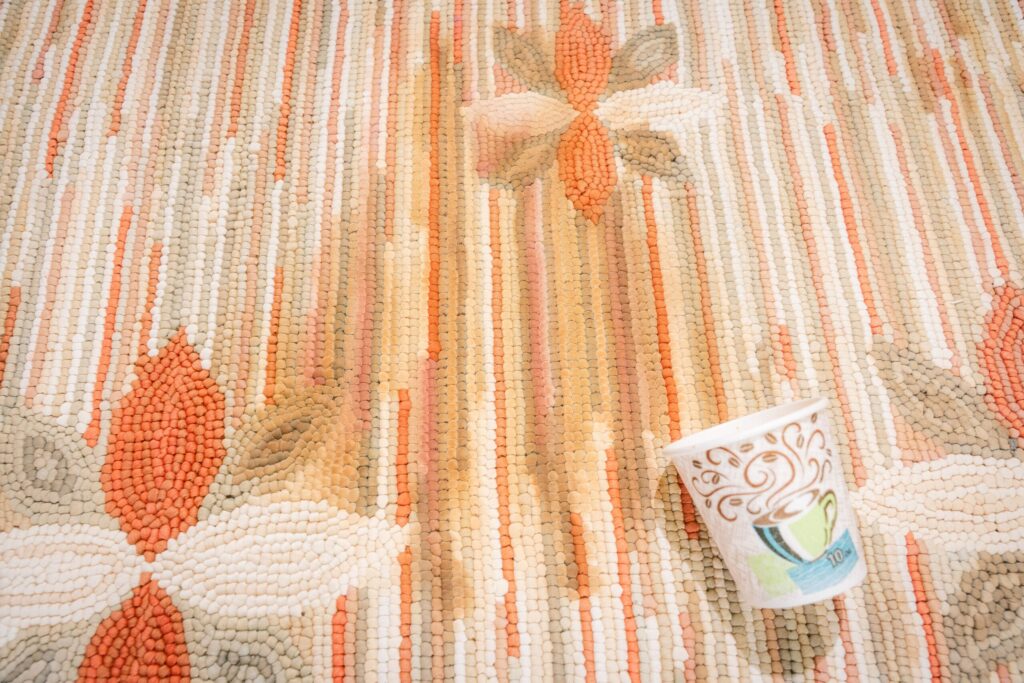
Close-up view of a tipped paper coffee cup resting on a handwoven wool rug, highlighting the rug’s dense pile, subtle color variations, and traditional geometric motifs in warm neutral and terracotta tones.
- Vacuum Regularly, Gently — Why: Frequent vacuuming does not fade blue pile colors; instead, it prevents dirt from embedding and dulling the surface. Always avoid harsh beater bars that may damage fibers.
- Spot Cleaning — Why: Indigo-dyed rugs are susceptible to dye bleed when overly saturated with water. Gentle blotting with a damp cloth is safe, but large spills should be managed by a professional to avoid color migration.
- Preserving Abrash — Why: The beauty of abrash in blue rugs—those subtle tonal shifts—is best maintained by gentle cleaning that preserves original dye variations rather than attempting to “correct” them.
When and How to Re-Dye a Faded Blue Rug
A rug that has softened in tone through natural aging rarely requires intervention, since a faded blue rug often carries desirable character. However, when fading is patchy or extreme, professional re-dyeing may be appropriate.
Minor areas can sometimes be touched up with textile dye pens, but serious restoration demands expertise in matching fiber type, undertones, and oxidation effects. Attempting to re-dye at home risks uneven results and damage to fibers.
Professional Restoration Best Practices
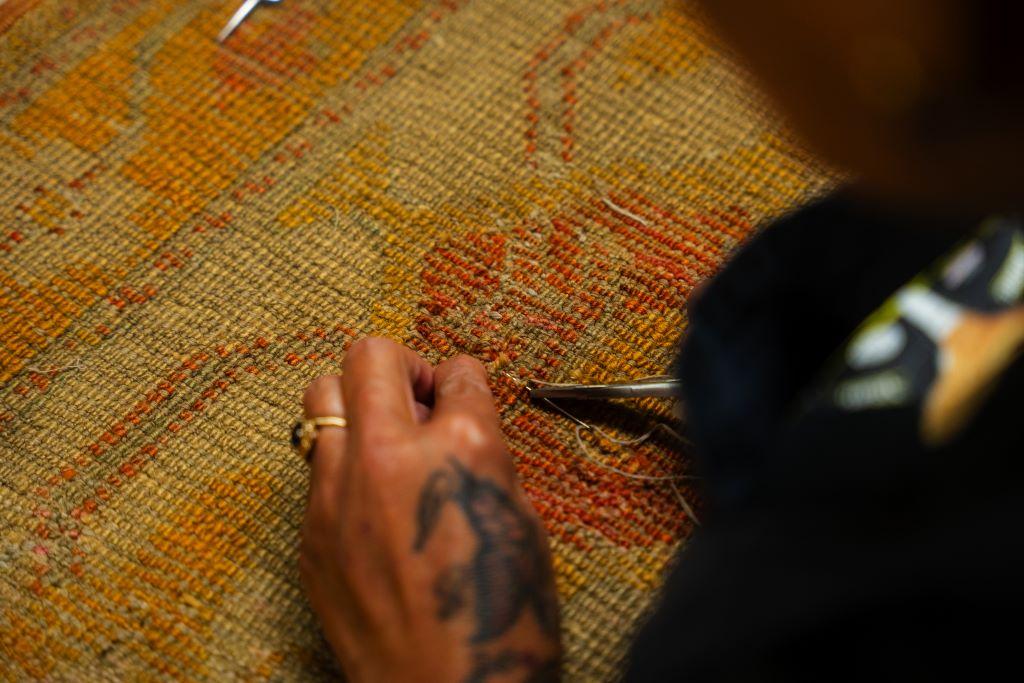
Detail of hands mending a rustic, richly colored woven rug.
Restoration experts approach blue rugs with caution, testing fibers for dye fastness before cleaning or re-dyeing. Repairs may include re-knotting worn areas, stabilizing foundations, or carefully applying new dye in harmony with the rug’s age and character. Authenticity is valued: a restored rug should look whole without erasing the marks of time that give it historic appeal.
Eco-Friendly and Vegetable-Dyed Blue Rugs: Sourcing
For buyers seeking sustainable options, eco-friendly blue rugs made with vegetable-based indigo are increasingly available. Artisan cooperatives in Turkey, Iran, and India specialize in plant-dyed, handwoven carpets that honor traditional methods. Reputable dealers and certified fair-trade networks are the best places to source an eco-friendly blue rug, ensuring both authenticity and ethical production.
From rotating rugs to block the sun to knowing when to call a restorer, blue rug care ensures lasting vibrancy and integrity. With the right balance of preventive measures and professional support, indigo masterpieces can endure for generations while retaining their depth, brilliance, and cultural value.
Investment and Collectibility of Blue Rugs
Market Value of Vintage Blue Bidjar and Others
Among collectible carpets, few are as highly regarded as the vintage blue Bidjar rug. Known for their dense weave, exceptional durability, and deeply saturated indigo fields, Bidjars are often called the “iron rugs of Persia.” Their resistance to wear makes them not only practical but also enduringly beautiful, allowing them to retain strong market value over decades.
Collectors and designers alike prize the balance of artistry, structure, and lasting color, making blue Bidjar value particularly high compared to other regional weavings. Other Persian traditions, including Tabriz and Isfahan, also hold their place in the market, but Bidjars are especially valued when featuring deep blue grounds and strong abrash.
How Blue’s Origin Affects Longevity and Value
The distinction between natural indigo and synthetic blue is crucial in assessing collectible rugs. Natural indigo, with its proven colorfastness and graceful aging, signals authenticity and long-term value. Rugs woven with indigo not only develop desirable patina but also tend to appreciate in worth.
By contrast, early synthetic blues—though historically important—often faded unevenly or shifted in tone, diminishing collectability. For buyers seeking a blue rug investment, the dye’s origin is as significant as knot density or region of production.
Tips for Collectors and Interior Designers
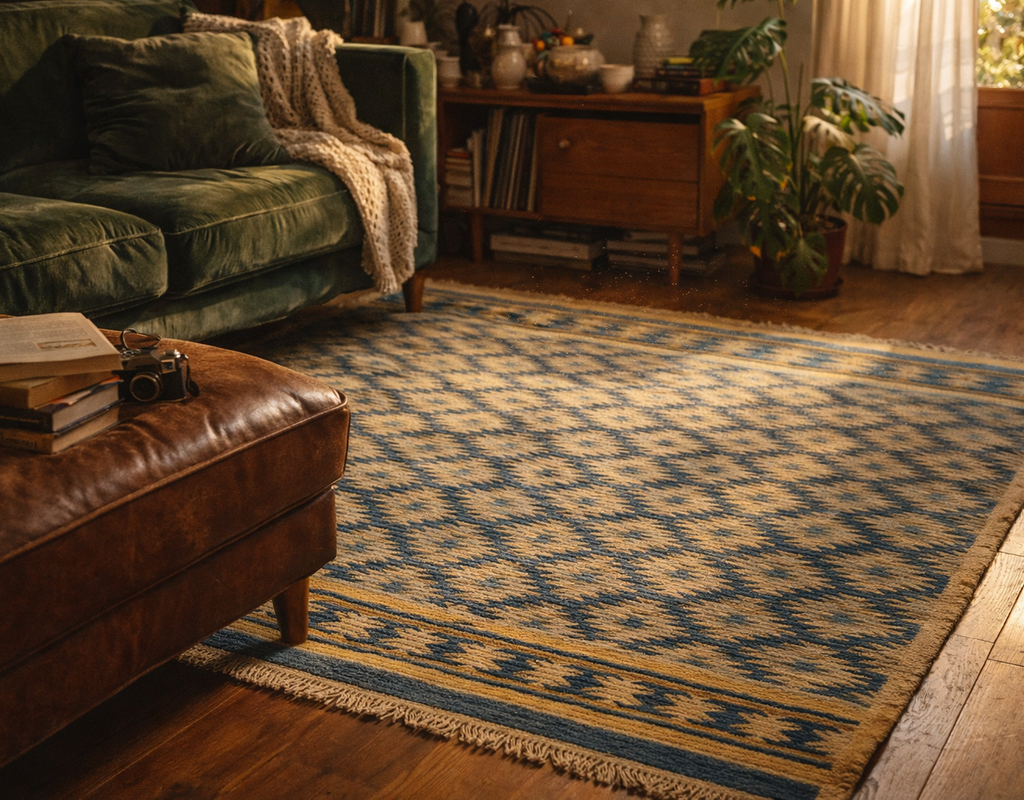
A richly textured living space anchored by a vibrant, patterned flatweave rug.
- Look for Natural Indigo — Why: A rug dyed with true vegetable indigo promises longevity, beauty, and higher resale potential.
- Check Provenance — Why: A documented origin or attribution to a known weaving center increases trust and collectible value.
- Value Abrash and Patina — Why: Subtle tonal shifts and graceful fading demonstrate authenticity, enhancing the charm and uniqueness of a collectible blue rug.
- Condition Matters — Why: Even the finest rug loses value if excessively worn or poorly restored; professional evaluation before purchase is recommended.
- Design Versatility — Why: For interior designers, a strong blue piece can function both as a decorative anchor and as an appreciating asset.
For those considering whether investing in vintage blue Bidjar rugs is a good value, the answer is yes: their strength, artistry, and enduring color make them a safe and often rewarding addition to both collections and interiors.
Choosing to buy a vintage blue rug with natural dyes, authentic abrash, and solid provenance ensures not only beauty but also long-term worth.
Explore Some of Our Blue Rug Favorites
FAQ
- How do I stop a blue rug from curling or slipping?
Use a felt-rubber pad, reverse-roll tight corners overnight, and add corner grippers if needed. Ensure the pad is 1–2 inches smaller than the blue rug.
- How much do blue rugs cost?
Machine-made blue rugs start under \$100 for small sizes and \$150–\$600 for 8x10s; hand-tufted wool often runs \$300–\$1,200, while hand-knotted blue rugs can cost \$1,000–\$5,000+.
- Are blue kitchen runners practical?
Yes—choose a low-pile or washable blue runner with a non-slip pad. Deeper navy or heathered blues hide splashes better than pale sky tones.
- What patterns suit blue rugs in small spaces?
Try small-scale geometrics, tone-on-tone textures, or subtle stripes to elongate sightlines. Keep palettes to two or three blues plus one neutral to avoid visual clutter.
- Are blue Persian-style rugs too formal for modern rooms?
Not if you balance them. Pair a blue Persian-style rug with clean-lined furniture and simple fabrics; the intricate pattern helps hide stains and anchors contemporary spaces.
- Can I use blue rugs on radiant-heated floors?
Yes—pick thinner, breathable blue rugs and avoid thick or rubber-backed styles. Limit coverage to roughly 50% of heated area and follow your floor manufacturer’s guidance.
- Will a blue rug work with a brown leather sofa?
Absolutely. A navy blue rug adds crisp contrast; lighter blue rugs soften dark leather. Echo blue in pillows or art for a cohesive palette.
- Do blue rugs hide dirt and stains well?
Darker navy blue rugs conceal dirt better than pale blues. Patterned blue rugs also mask everyday spills; reserve very light blue rugs for lower-traffic spaces.
- Are natural-fiber blue rugs healthier than synthetics?
Blue rugs in wool or cotton avoid plastic fibers; synthetics may shed micro-fibers. If you’re sensitive, ventilate new rugs, use low-VOC pads, and consult product safety details.
- Which materials are most durable for blue rugs in high-traffic areas?
Polypropylene and nylon resist stains and are easy to clean; wool is naturally resilient and ages well with care. Choose low-pile (≤0.4″) for busy rooms and entryways.
- Are blue rugs still in style for 2025?
Yes. Baby-blue and muted blue rugs read like “new neutrals,” while textured navy blue rugs feel timeless; prioritize texture and subtle pattern over busy watercolor prints.
- Do blue rugs work with warm wood floors?
Yes—navy blue rugs pop against walnut and mahogany; dusty or denim blues flatter honey oak. Balance with warm metals or terracotta so the room doesn’t feel too cool.
- What size blue rug should go under a dining table?
Add at least 24 inches on all sides beyond the tabletop so chairs stay on the blue rug when pulled out. Leave 12 inches from rug edge to walls.
- What size blue rug fits under a queen bed?
An 8×10 blue rug usually fits best; 6×9 works in tight rooms. Aim for 18–24 inches of rug showing on the sides and foot for comfortable step-off.
- Are outdoor blue rugs fade-resistant?
Look for solution-dyed polypropylene or polyester labeled UV-resistant. Hose off to clean and rotate seasonally; even UV-treated fibers can lighten with prolonged direct sun.
- What rug pad works best under a blue area rug on hardwood?
A felt-and-natural-rubber pad (about 1/8–1/4 inch) adds grip and cushioning while protecting floors. Trim the pad 1–2 inches smaller than the rug.
- Do blue rugs fade in sunlight?
They can. Rotate every 3–6 months, use UV-filtering shades, and consider solution-dyed polypropylene for sun-soaked spots; avoid placing deep indigo areas in direct south-facing light.
- Can robot vacuums handle blue rugs with fringe?
Use caution—fringe can tangle robot brushes. Fold fringe under, set no-go zones, or lift the rug before runs to avoid damage to tassels and rollers.
- How do I clean a blue wool rug without dye bleed?
First colorfast-test with a damp white cloth. Blot spills immediately, then use cool water and a wool-safe detergent; a 1:1 water–white-vinegar rinse can help stabilize dyes.
- Do blue wool rugs shed?
New blue wool rugs typically shed for weeks to months, then taper. Vacuum gently without a beater bar and use a rug pad to reduce fiber loss.
- Are blue and white rugs practical with kids or pets?
Yes if you choose a low-pile, patterned blue and white rug and spot-clean quickly. A flatweave or washable style helps; keep enzyme cleaner and white towels ready.
- Will blue rugs clash with gray walls?
No—blue rugs complement most grays. Choose dusty, slate, or navy blue rugs against cool grays, and softer sky or denim blues against warmer “greige” tones.
- Do light blue rugs make small rooms feel bigger?
Often. Light blue rugs reflect more light and visually expand tight spaces; pick a larger size that runs under front furniture legs to unify the room.
- Are navy blue rugs a good choice for living rooms?
Yes—navy blue rugs ground a space and hide wear. Common sizes are 8×10 or 9×12, and they look sharp with light walls and brown or camel leather seating.
- What colors go best with blue rugs in a living room?
Blue rugs pair reliably with whites, creams, and soft grays; to warm things up, add tan leather, walnut wood, terracotta, or brass. Try one accent color repeated 3–5 times for cohesion.