
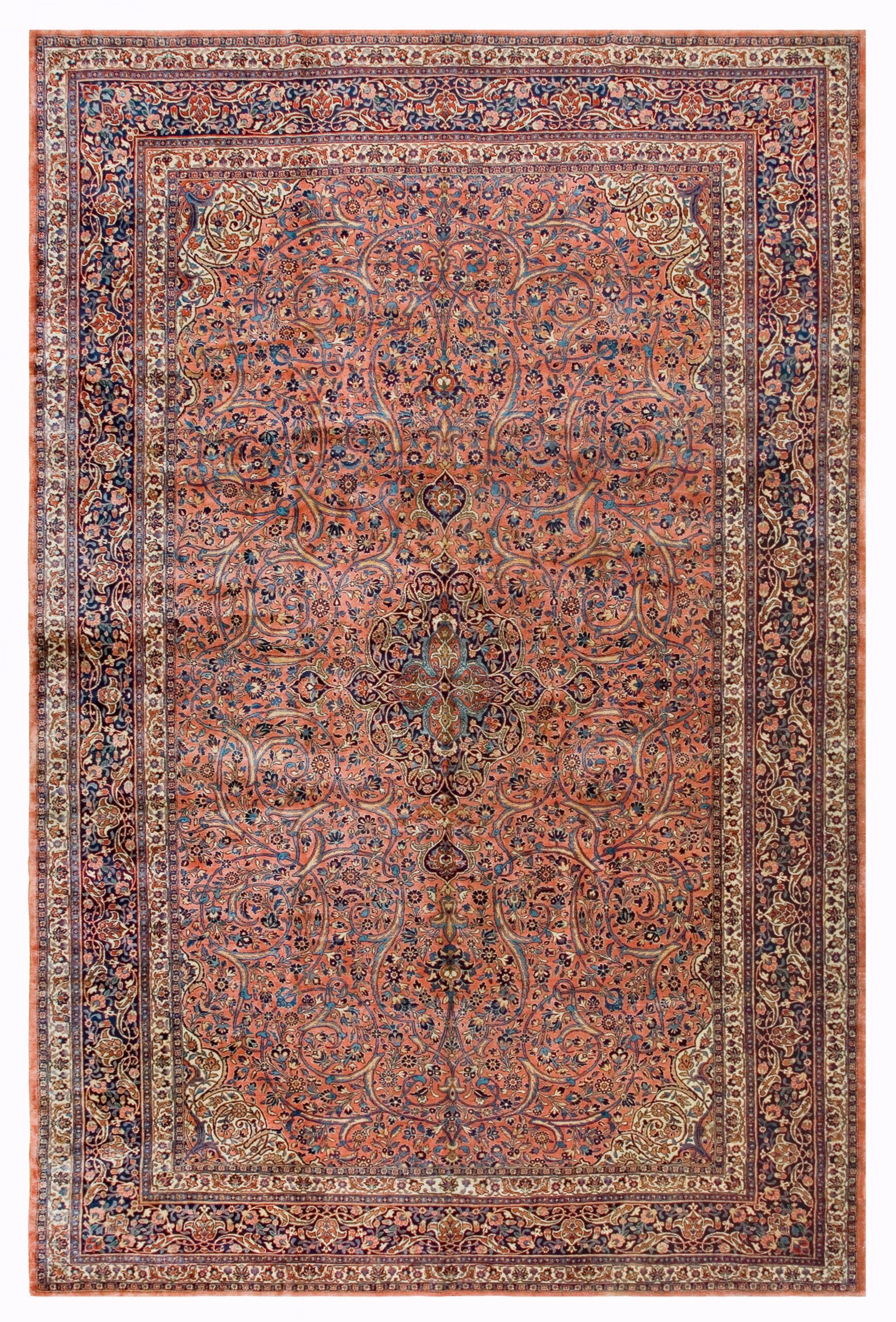
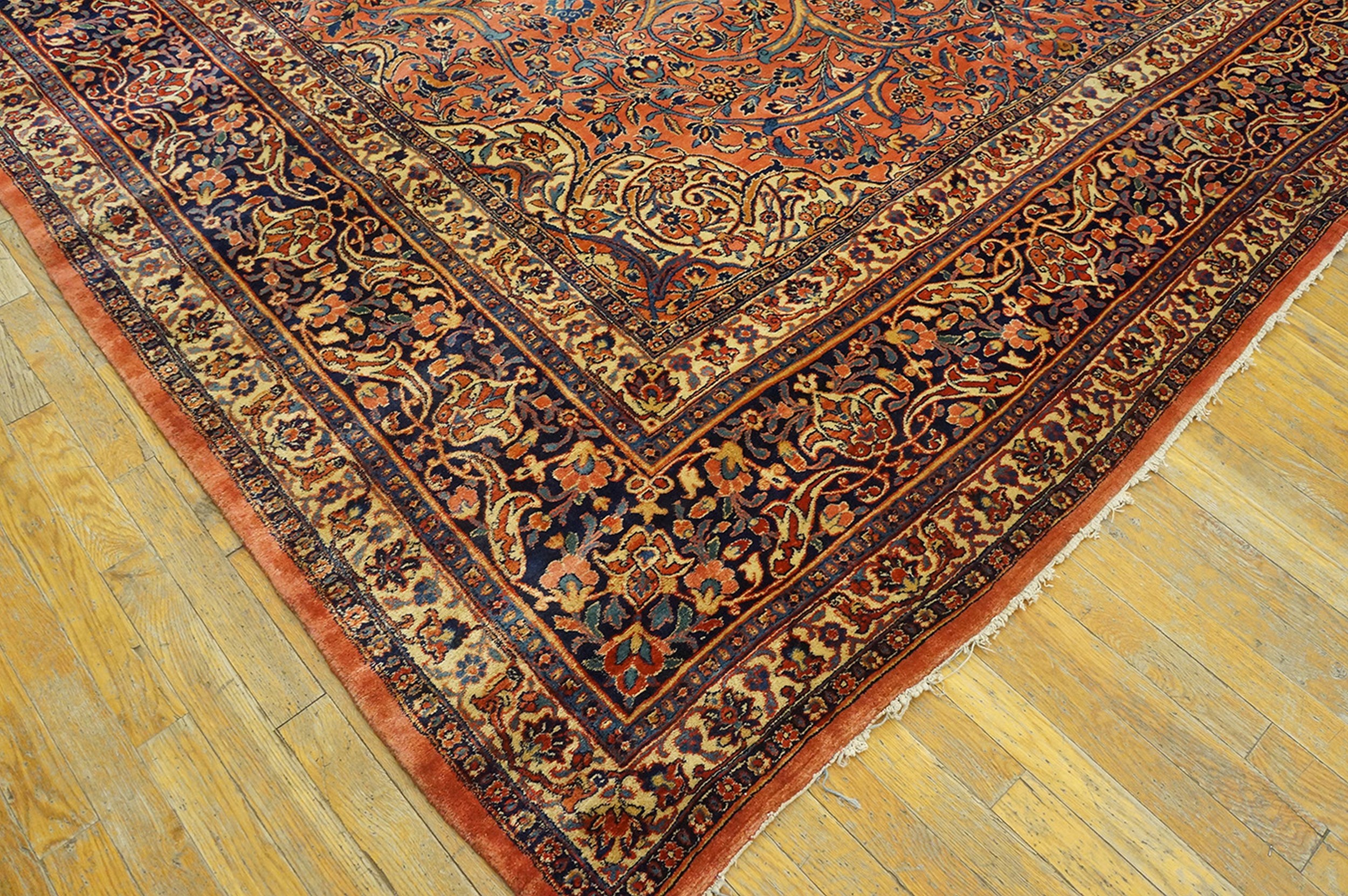
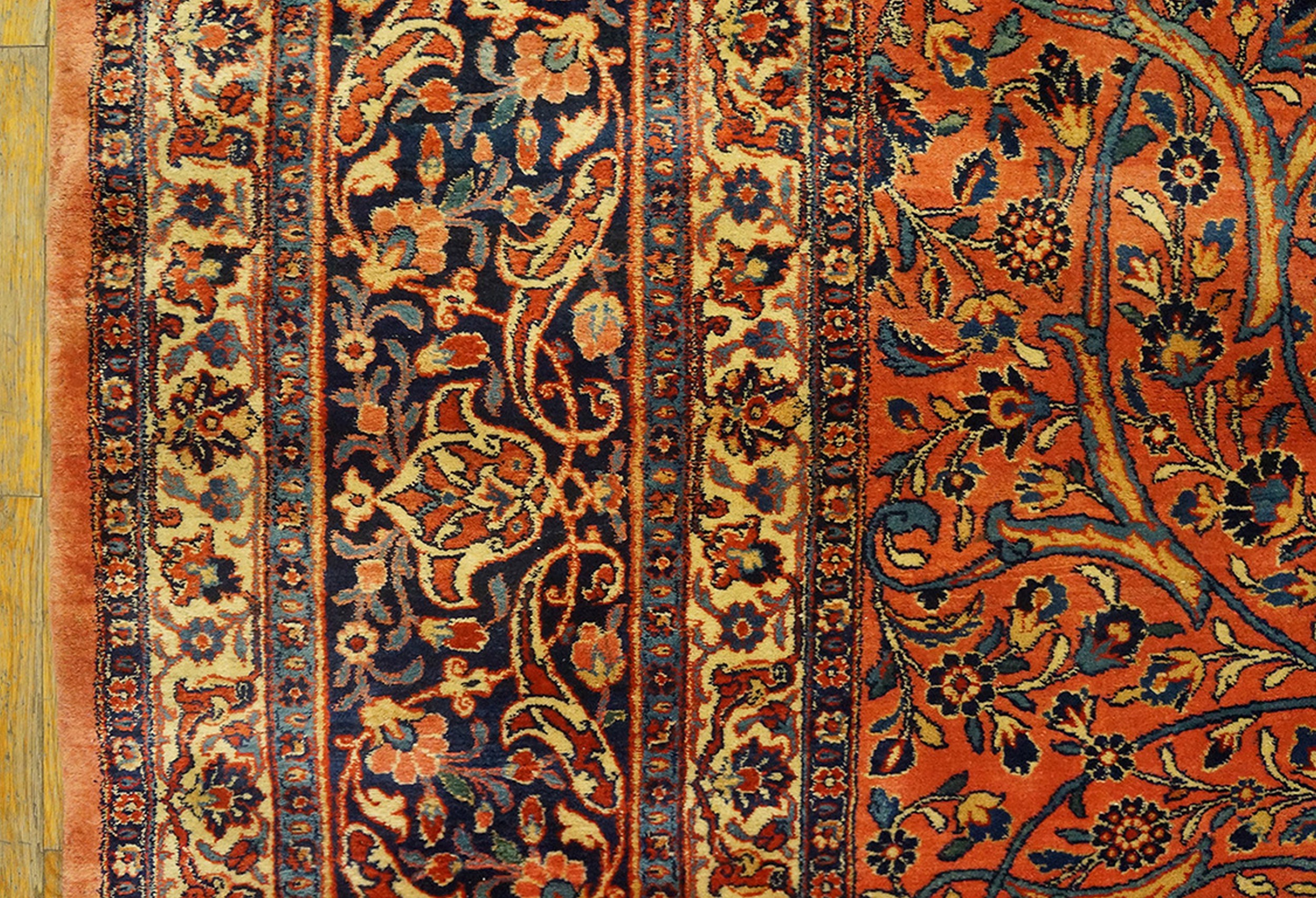
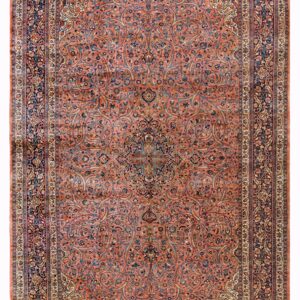
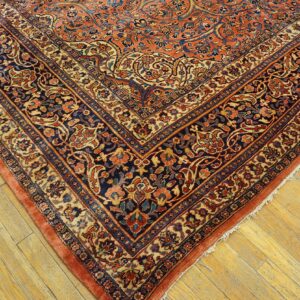
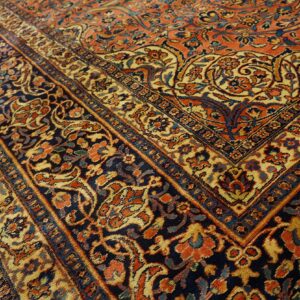
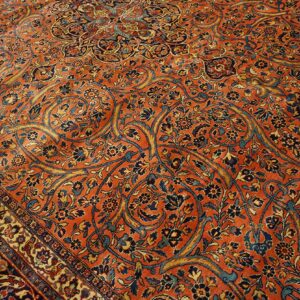
This magnificent late nineteenth-century Persian Dabir Kashan rug is a premier example of “City Workshop” excellence, specifically originating from the esteemed Dabir looms. Historically, “Dabir” denotes a specific workshop or master-weaver tradition within Kashan that was renowned for using the highest quality “Kork” wool—the softest fibers taken from the under-neck of the sheep—resulting in a textile that is both incredibly dense and exceptionally lustrous. This room-sized specimen represents a sophisticated fusion of “Red Floral” charm and the mathematical precision that defined the Kashan aesthetic during the “Masterpiece” era. Most Dabir pieces were in fact woven in th nearby town of Natanz. Size 10’0″ x 15’4″ Format: rectangular
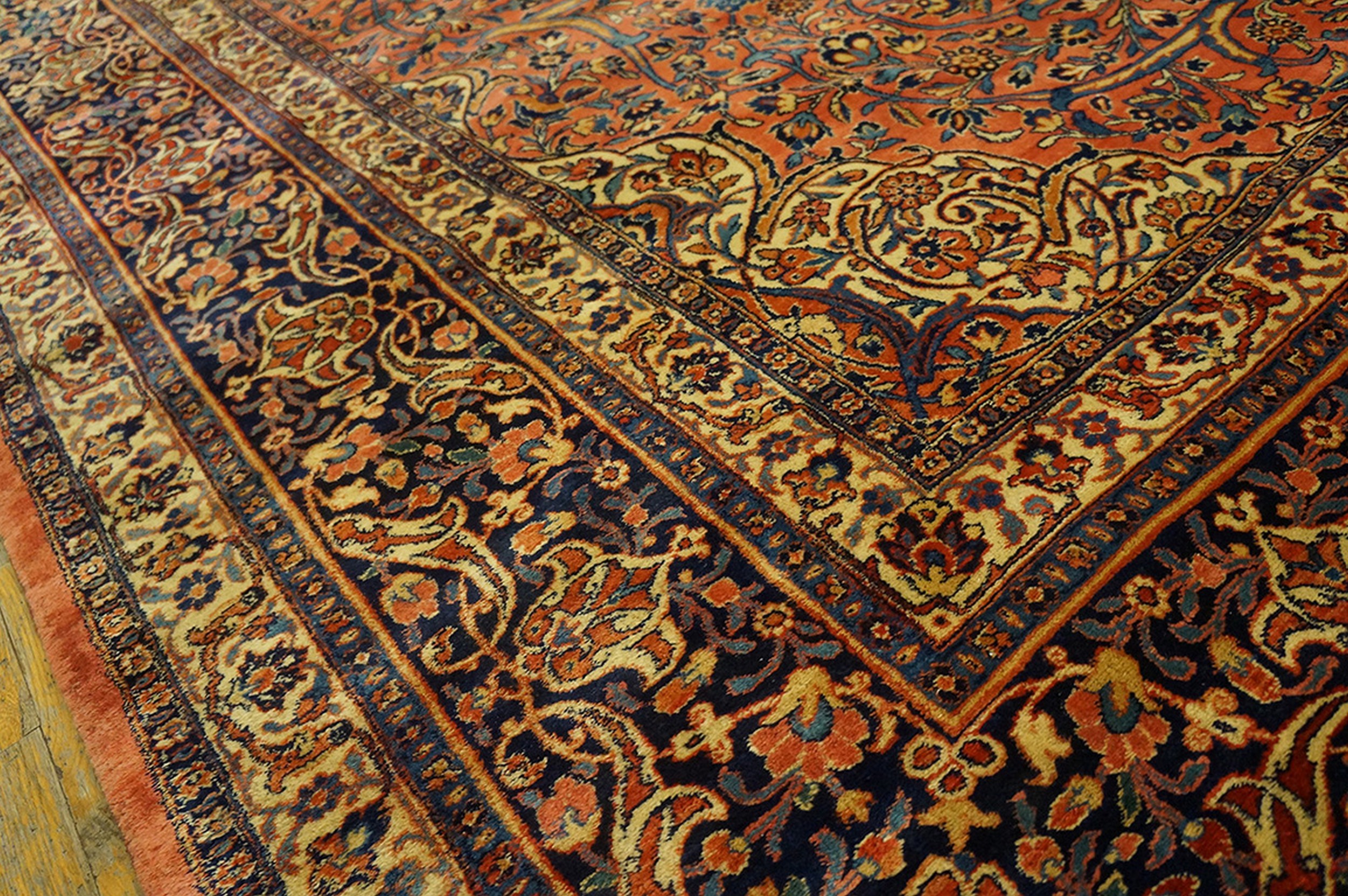
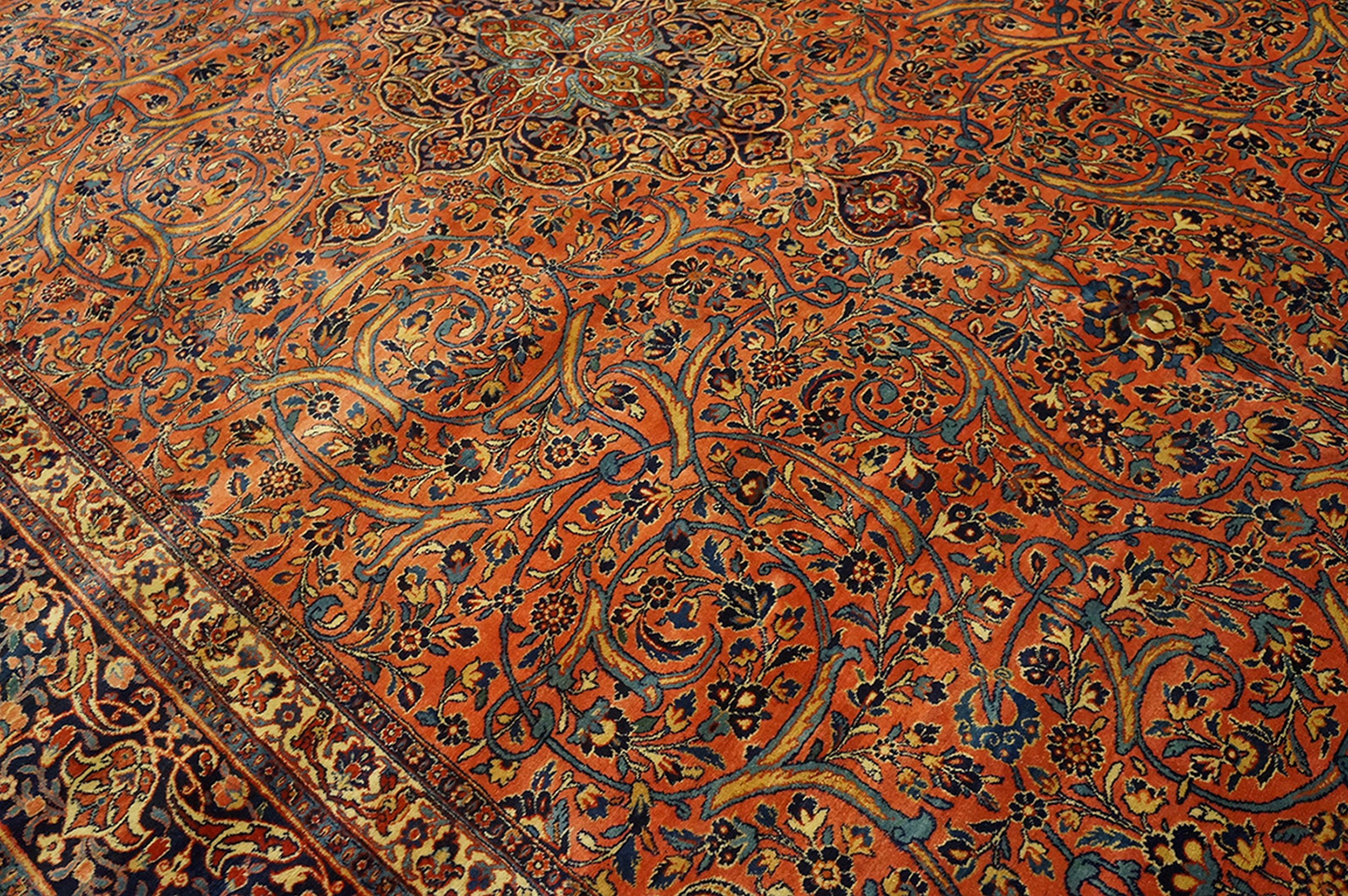
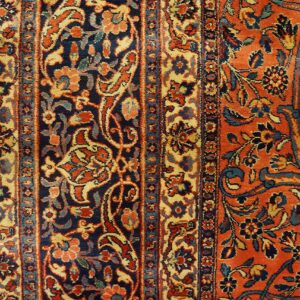
The composition is centered upon a powerful, multi-lobed floral medallion that radiates outward like a sunburst across the field. Unlike the more rigid, clinical designs of later urban Persian rugs, this Dabir Kashan possesses a “painterly” spontaneity in its floral drawing. The field is densely populated with a lush “Thousand Flowers” (Millefleurs) arrangement, where scrolling vines, delicate rosettes, and botanical sprays are rendered with a three-dimensional depth. The palette is a classic display of 19th-century dyer’s art: deep, nocturnal indigo and rich madder reds are balanced by luminous ivory and soft olive accents. These natural vegetable dyes have mellowed over a century, developing a shimmering abrash that gives the rug a “watercolor” effect.
Historically, a Dabir Kashan of this scale was a high-status commission, likely intended for a formal salon or the private quarters of a Persian noble. The vibrant quality refers to the exuberant, slightly oversized nature of the floral motifs, which gives the antique rug a warmer, more inviting personality than the often-stiff city carpets of the era. Technically, the rug is characterized by an extremely high knot density and a thin, elegant profile, allowing the intricate patterns to appear “razor-sharp.”
The borders act as a regal architectural frame, featuring a primary “Herati” band that mirrors the complexity of the central field, grounding the design in a sense of timeless symmetry. To possess a fine antique Dabir Kashan is to hold a monument to the peak of Persian textile engineering—a work that transforms the floor into a sprawling, hand-wrought garden, capturing the eternal spring and scholarly refinement of the Safavid tradition.
Condition: Good.