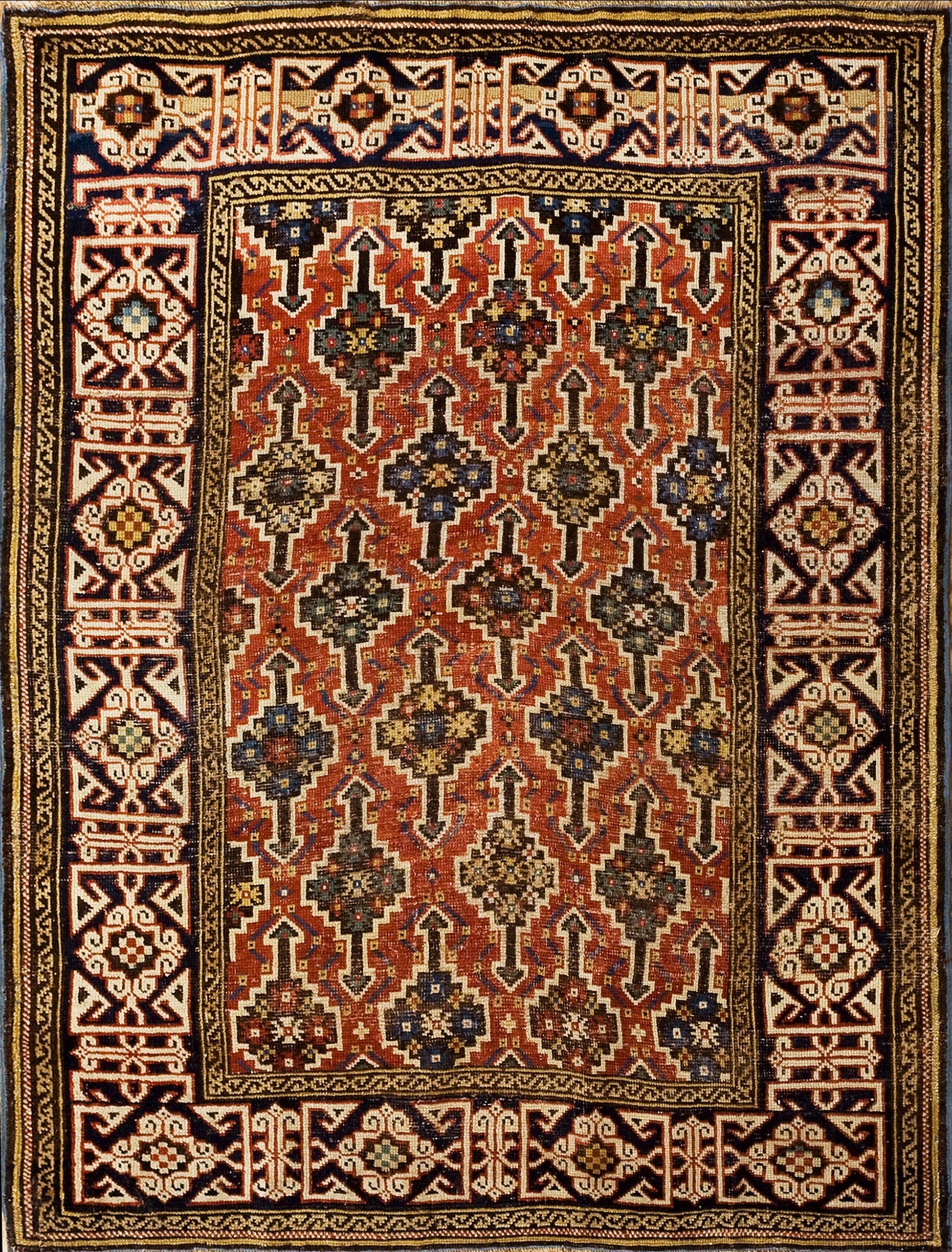
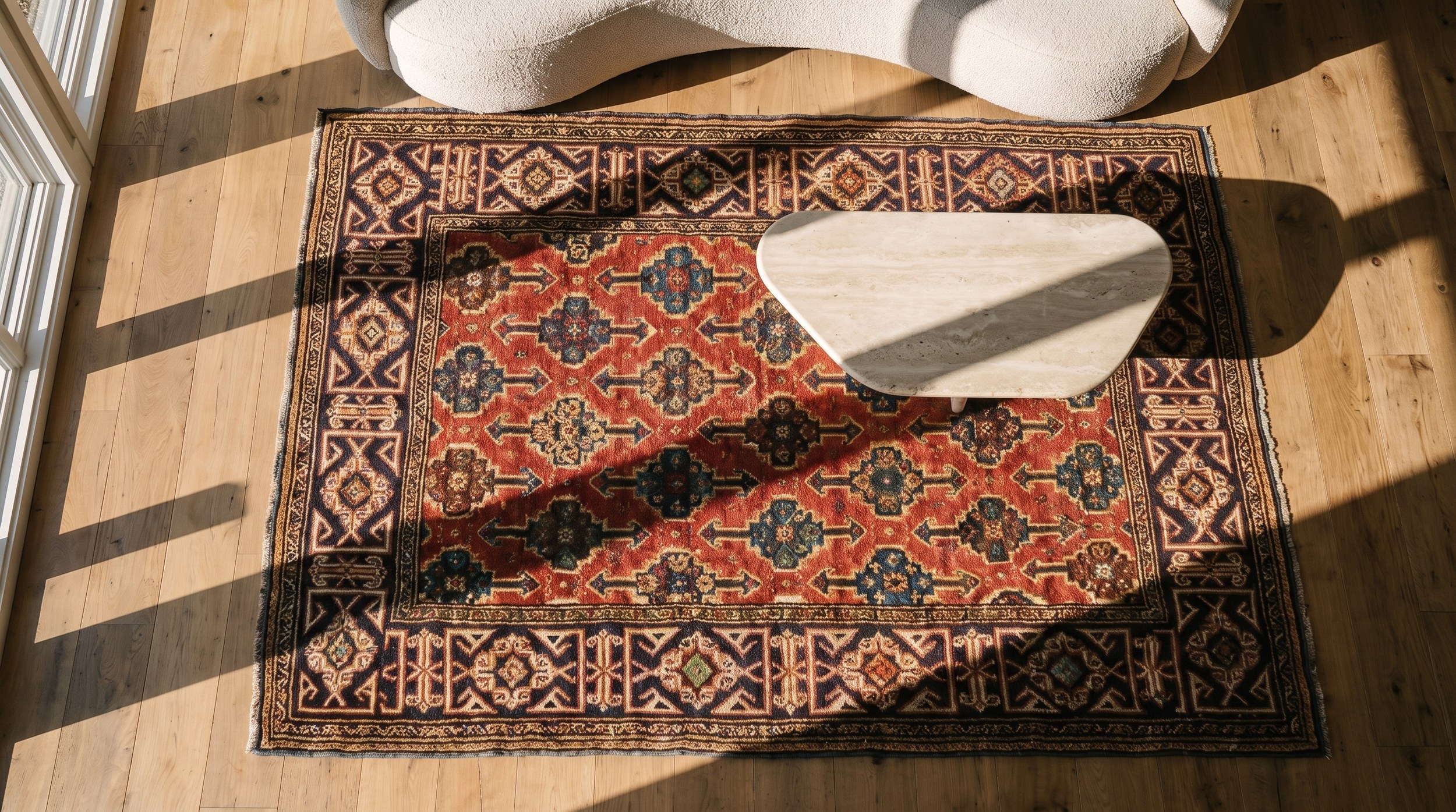
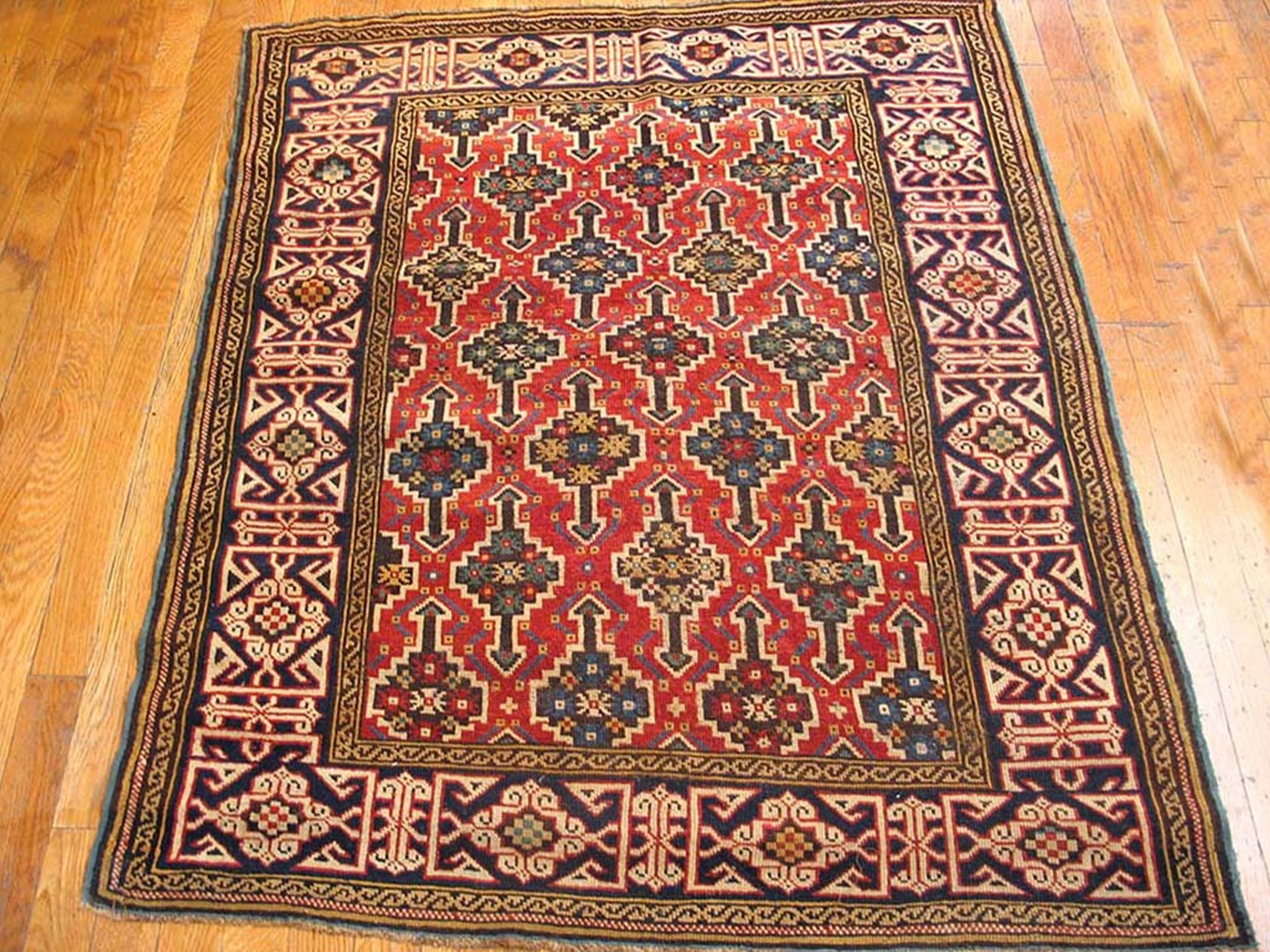

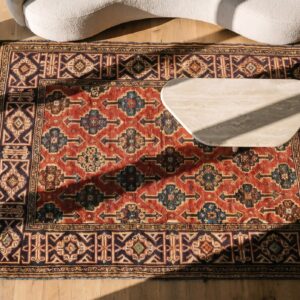
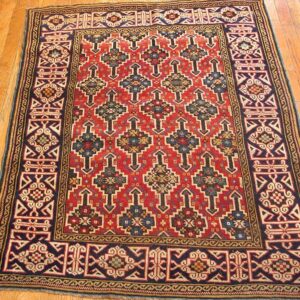
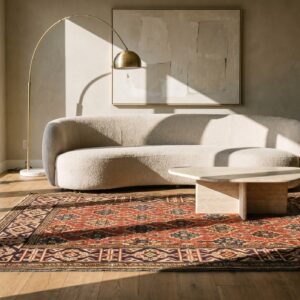
This late 19th-century Caucasian Kuba rug is a sophisticated example of “Geometric Tribal Art,” hailing from the prestigious Kuba district in the northeastern Caucasus. Known for producing some of the most technically refined and complex weavings of the region, this small scatter-size specimen distills the rugged soul of the mountains into a disciplined, high-art format.
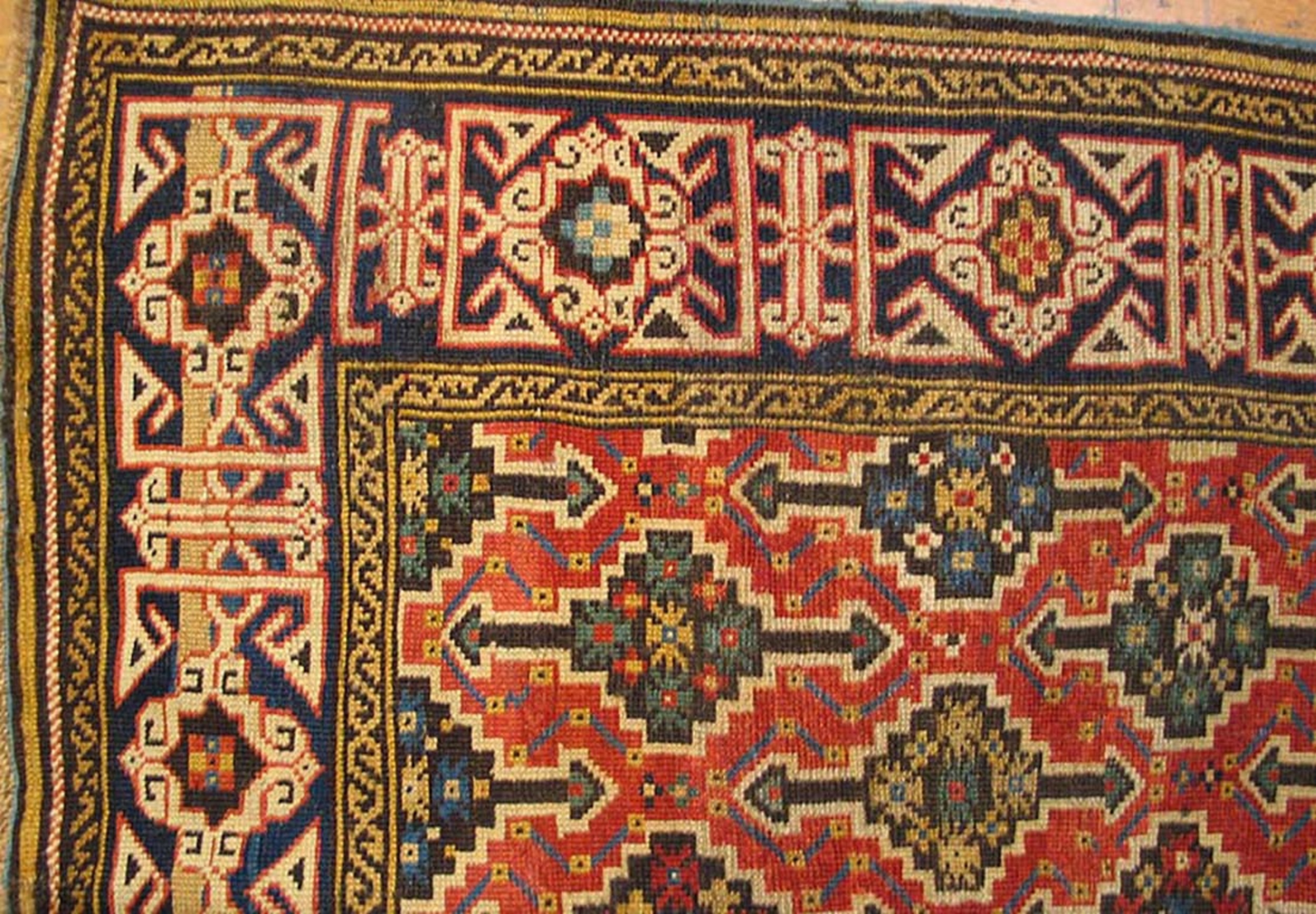
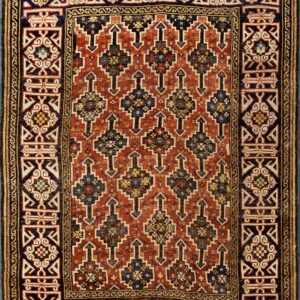
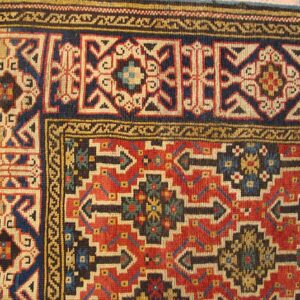
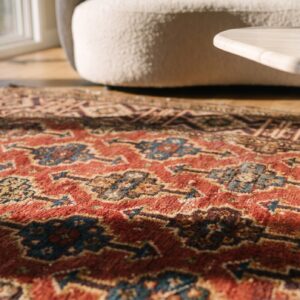
The composition is centered upon a dense, “All-Over” Tribal Geometric design. Unlike the massive medallions often found in neighboring Kazak rugs, the Kuba aesthetic favors a rhythmic, “tapestry-like” repetition of smaller motifs. The field is typically populated with a “galaxy” of eight-pointed stars, stylized “S-hook” protection symbols, and geometric blossoms. The drawing is remarkably precise, showcasing the “razor-sharp” execution that is a hallmark of the Kuba weaver. This intricate detail creates a sense of infinite, architectural depth, making the small size area rug feel monumental in its visual weight.
The palette is a masterclass in saturated, high-contrast natural dyes. The ground is a deep Red, providing a dramatic stage for the secondary accents. Because these dyes were derived from indigenous plants and minerals, they possess a magnificent abrash (tonal variation). This shimmering, “watercolor” effect prevents the dense geometry from appearing static, imbuing the antique tribal Caucasian rug with a sense of historical pulse and light-reflective depth.
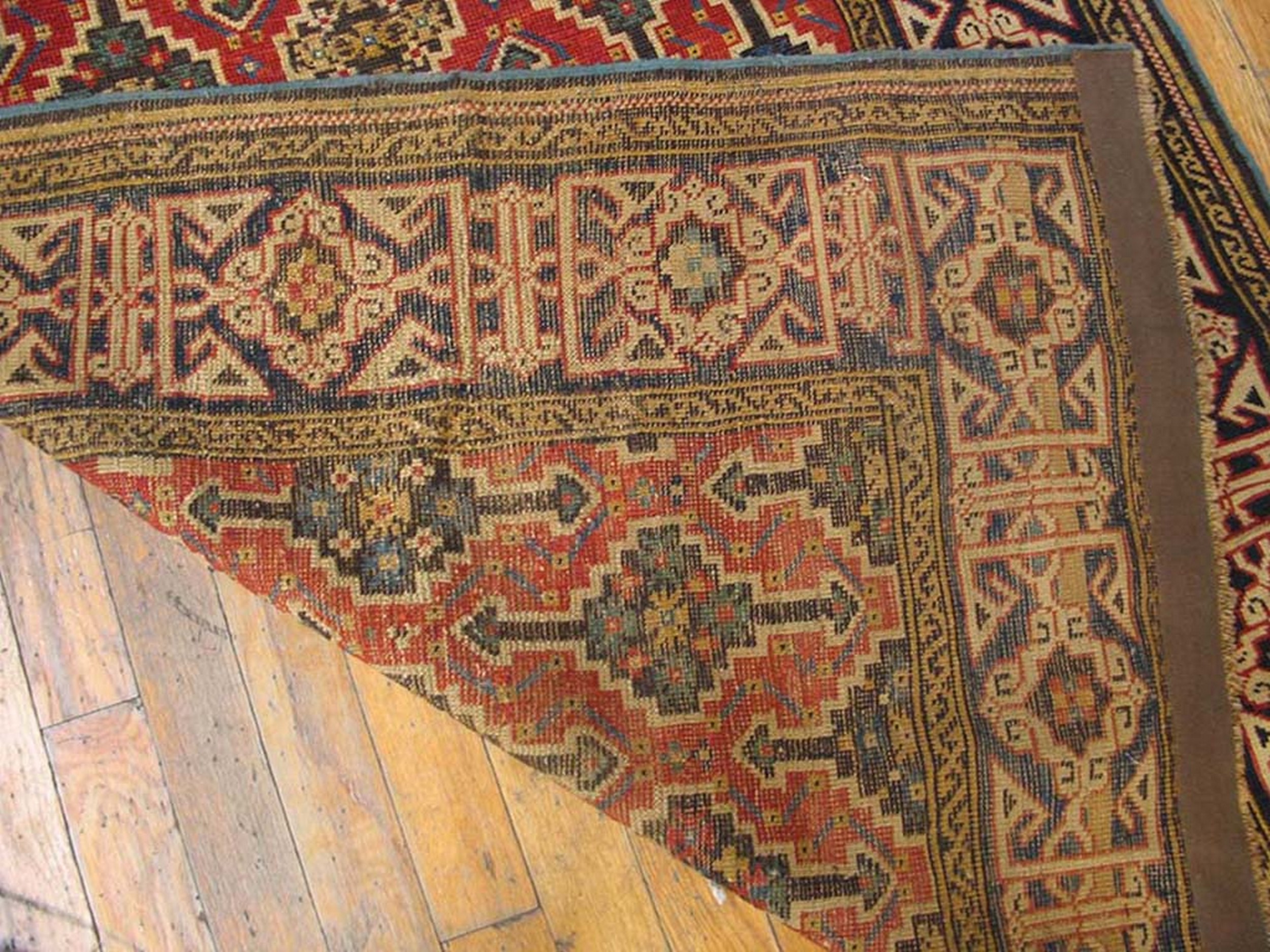
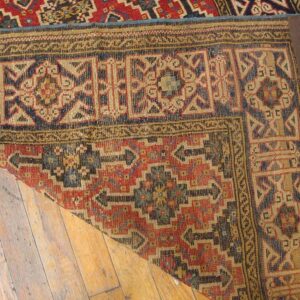
Technically, an antique Kuba is prized for its expert construction and firm, crisp handle. Unlike the “fleshy” feel of a Kazak, the Kuba features a shorter-cut pile and a higher knot density, which allows the complex geometric patterns to sit with maximum clarity. Woven from the lustrous, high-altitude wool of local sheep, the surface possesses a soft, matte patina that has developed over more than a century of use.
The borders act as a disciplined architectural frame, often featuring the iconic “Kufic” design or “Running Dog” patterns, or perhaps a complex “leaf and calyx” vine. This framing serves to “lock in” the explosive energy of the all-over field, providing a sense of permanence and pedigree. To possess this antique Red Kuba is to hold a monument to a vanishing tribal heritage—a work that bridges the gap between nomadic utility and sophisticated geometric art, transforming a small space into a sanctuary of historical gravity and Caucasian brilliance.