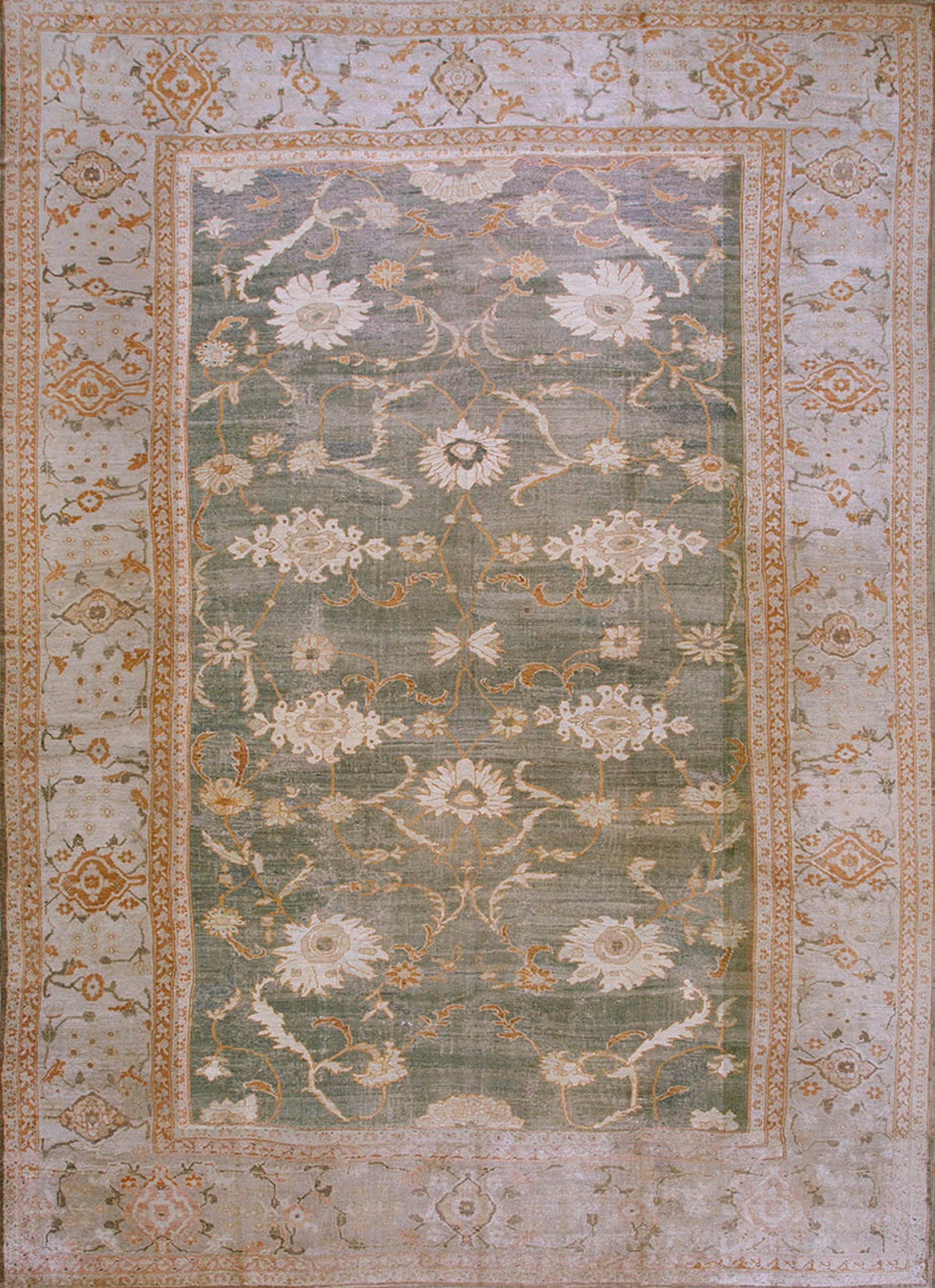
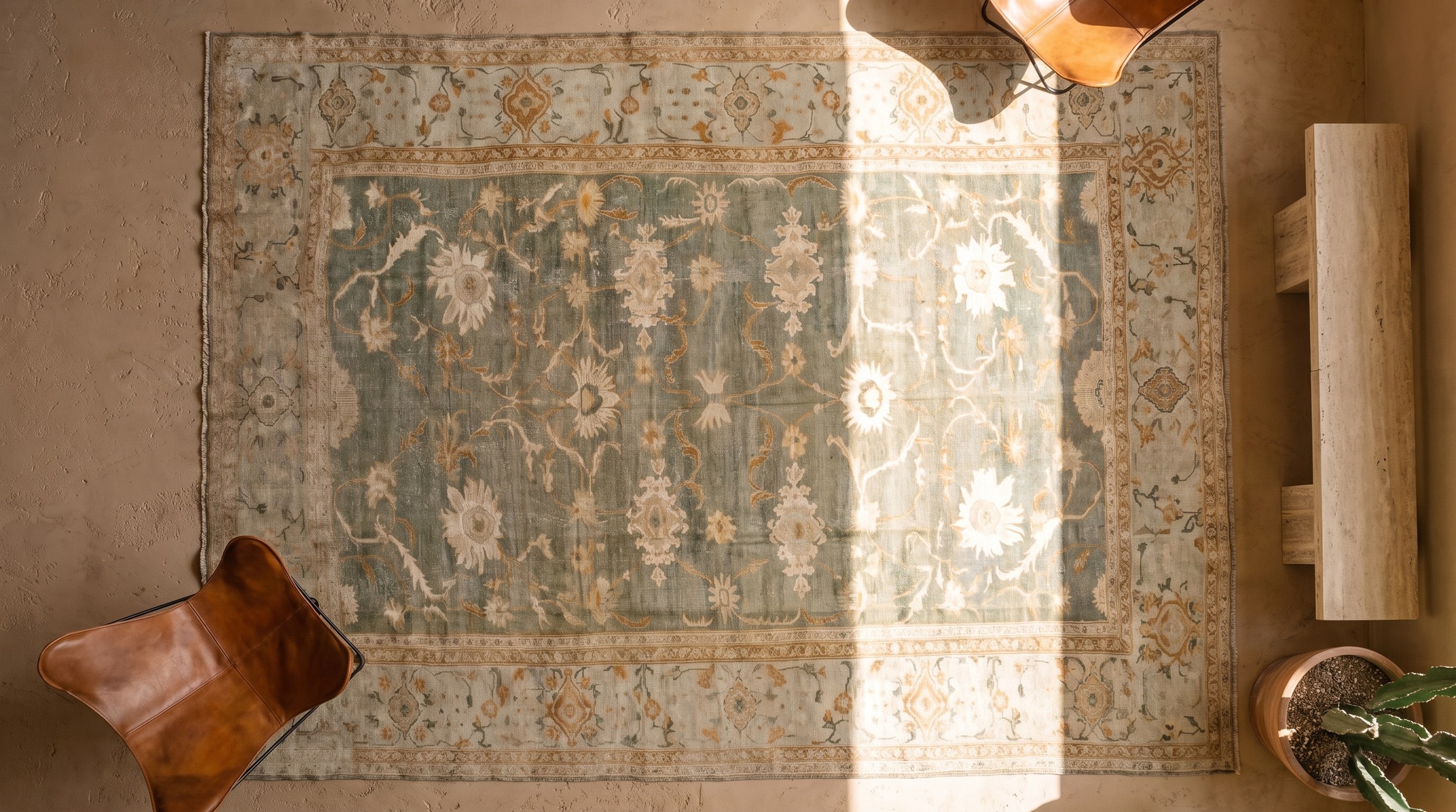
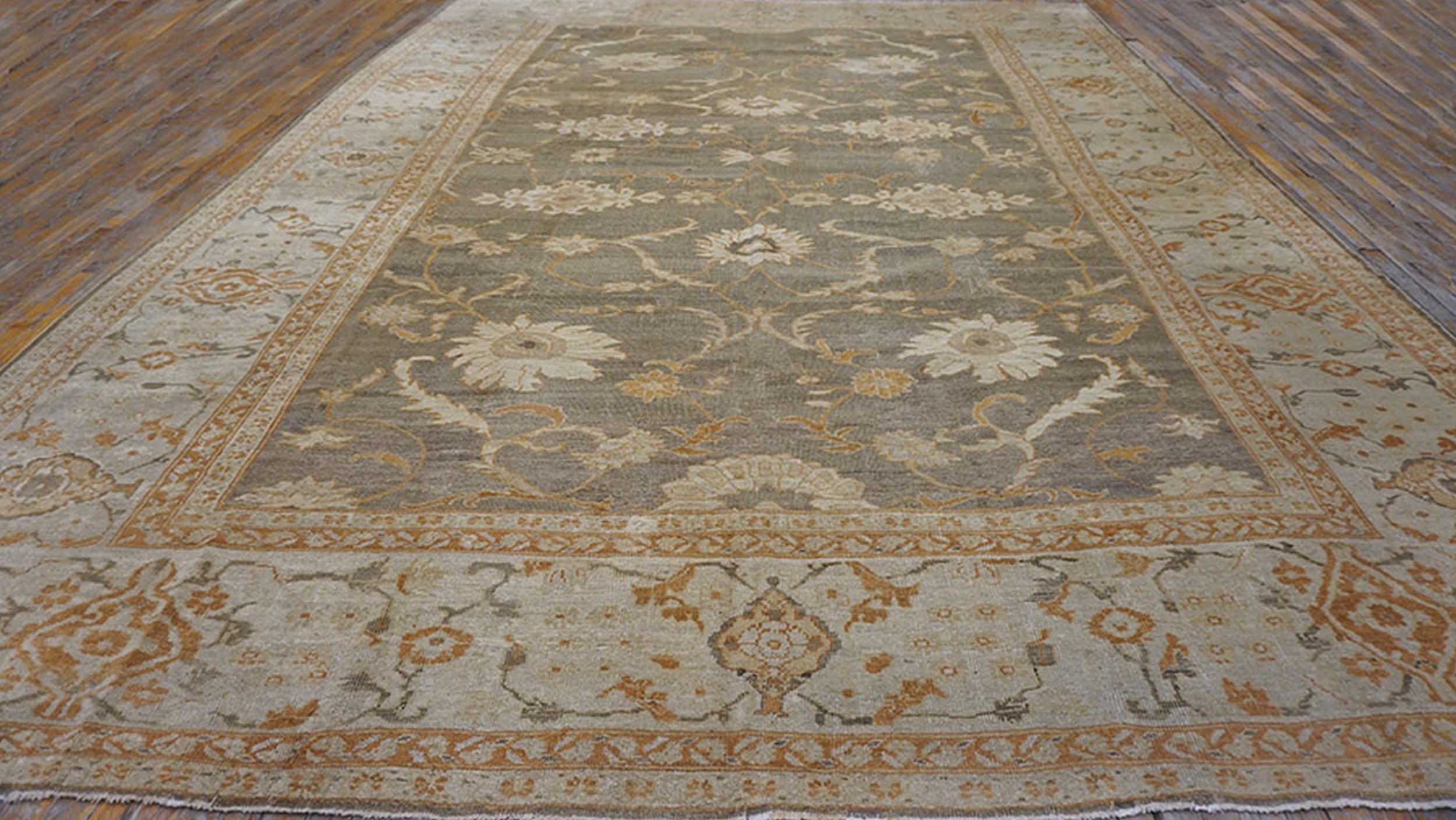
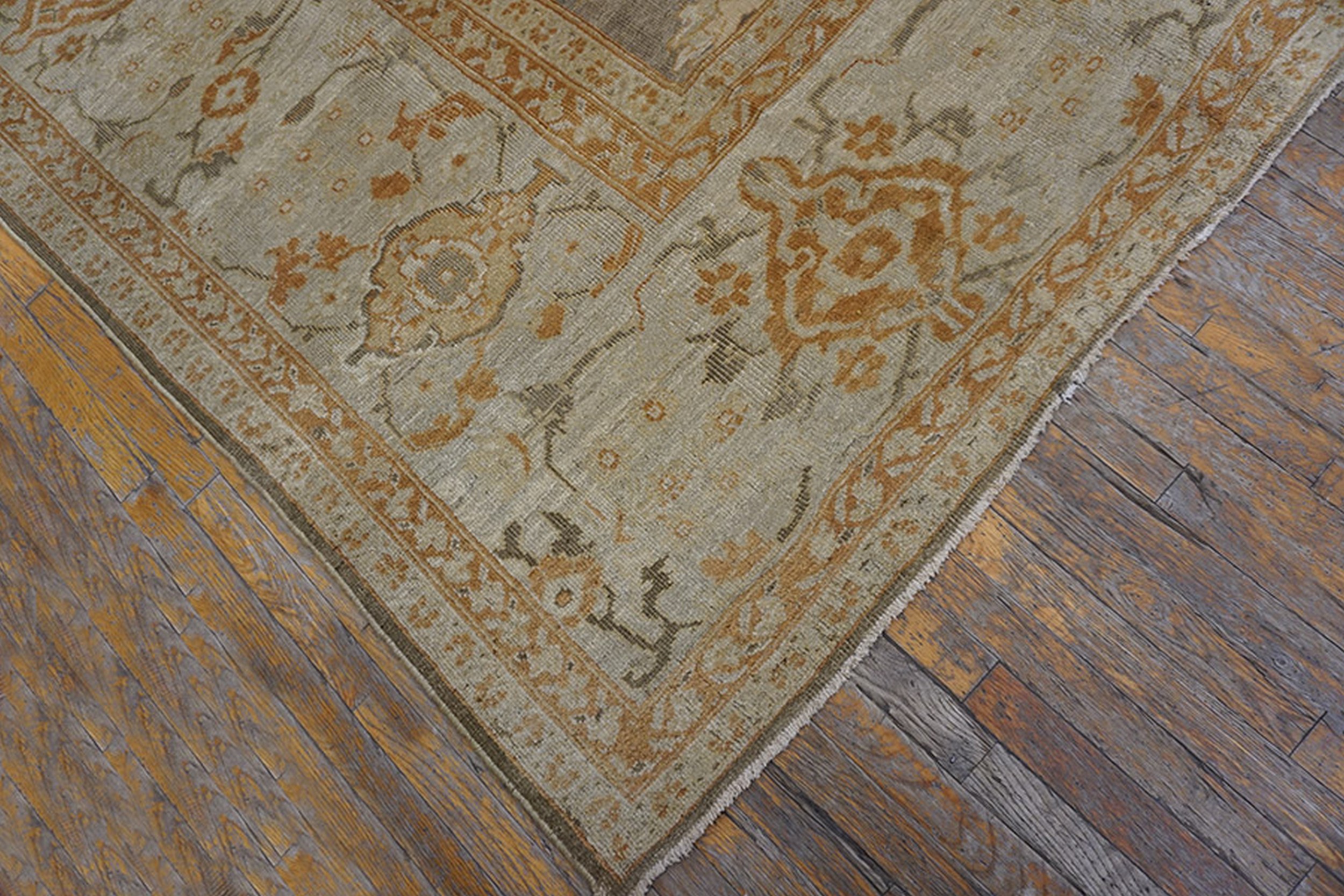
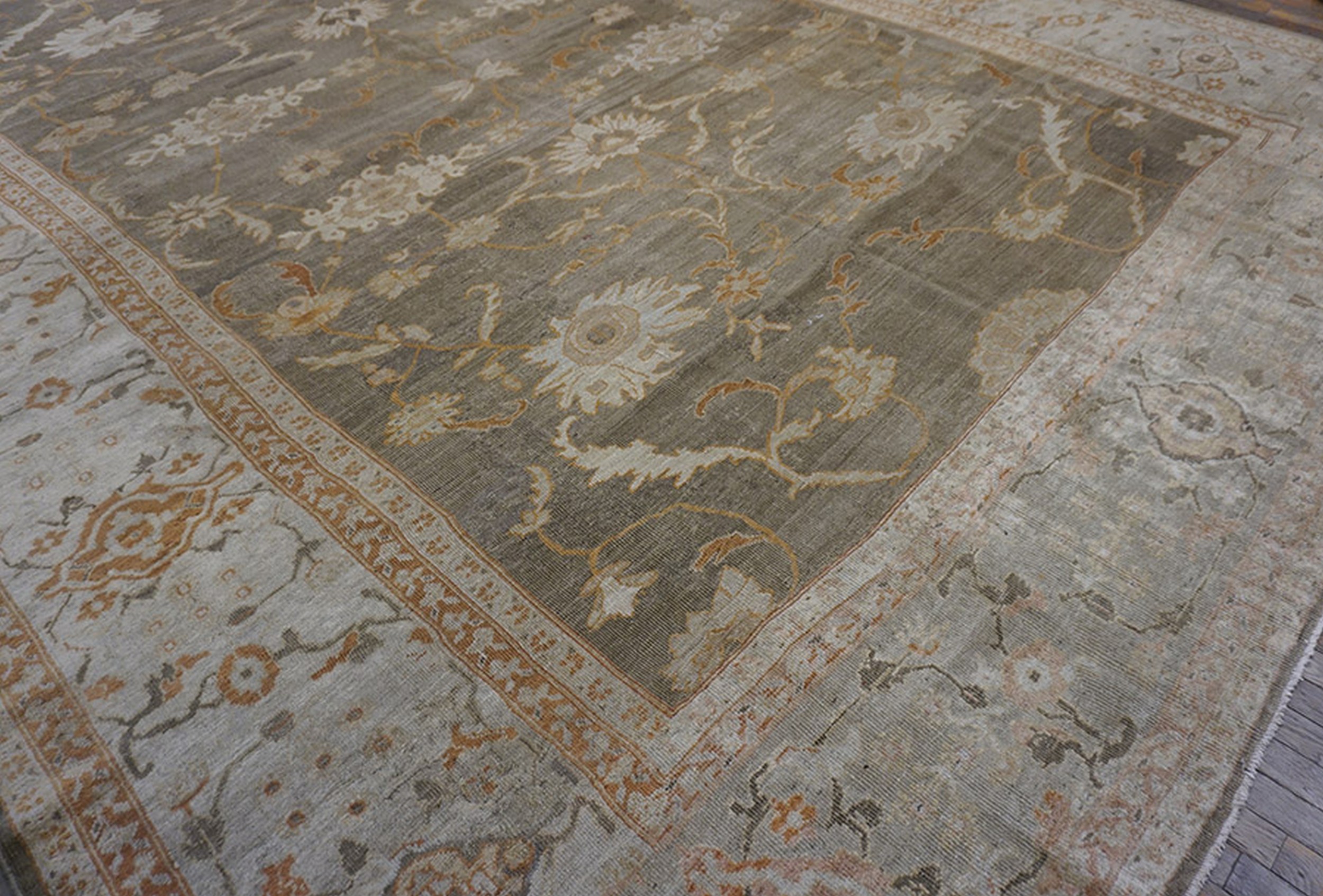
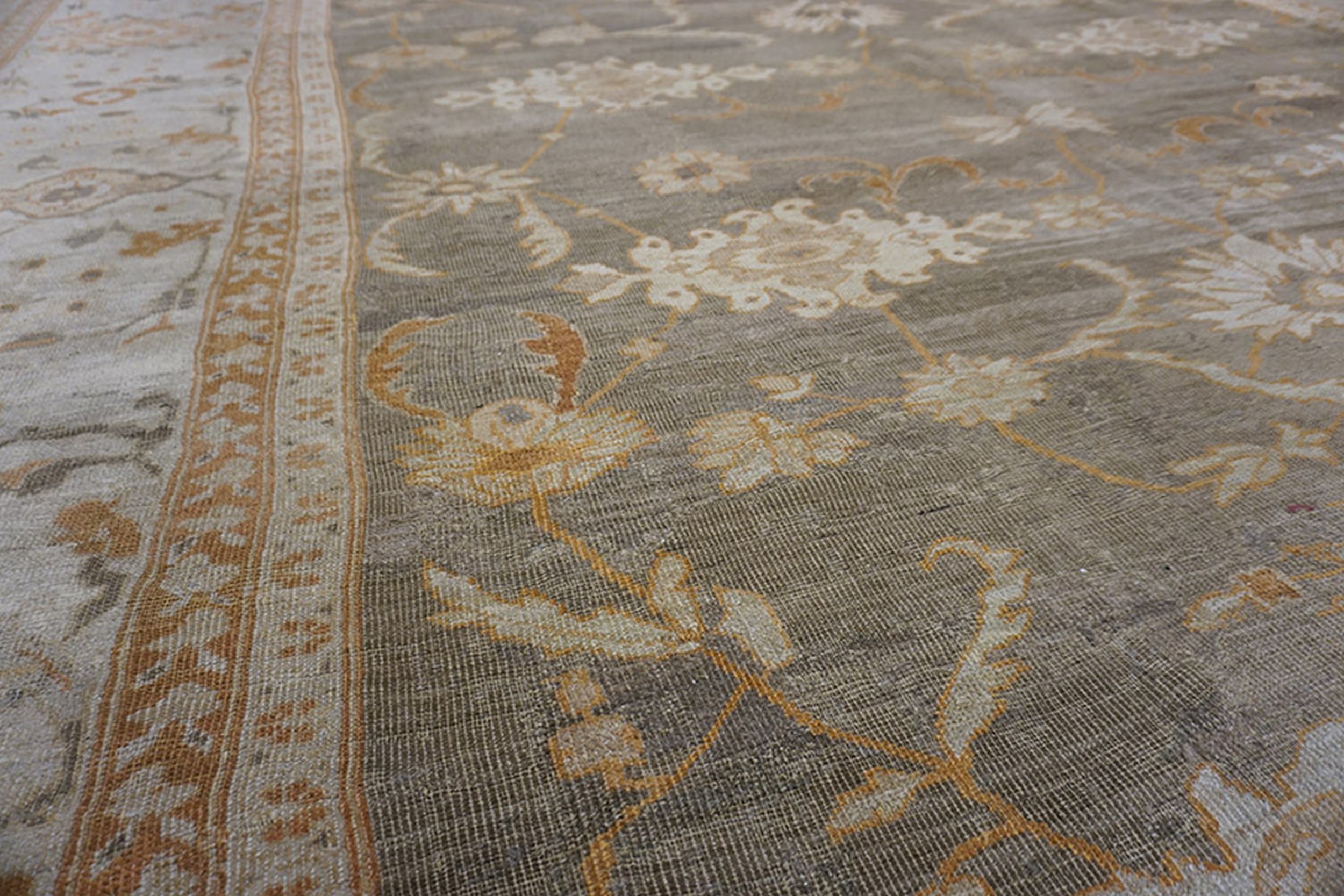
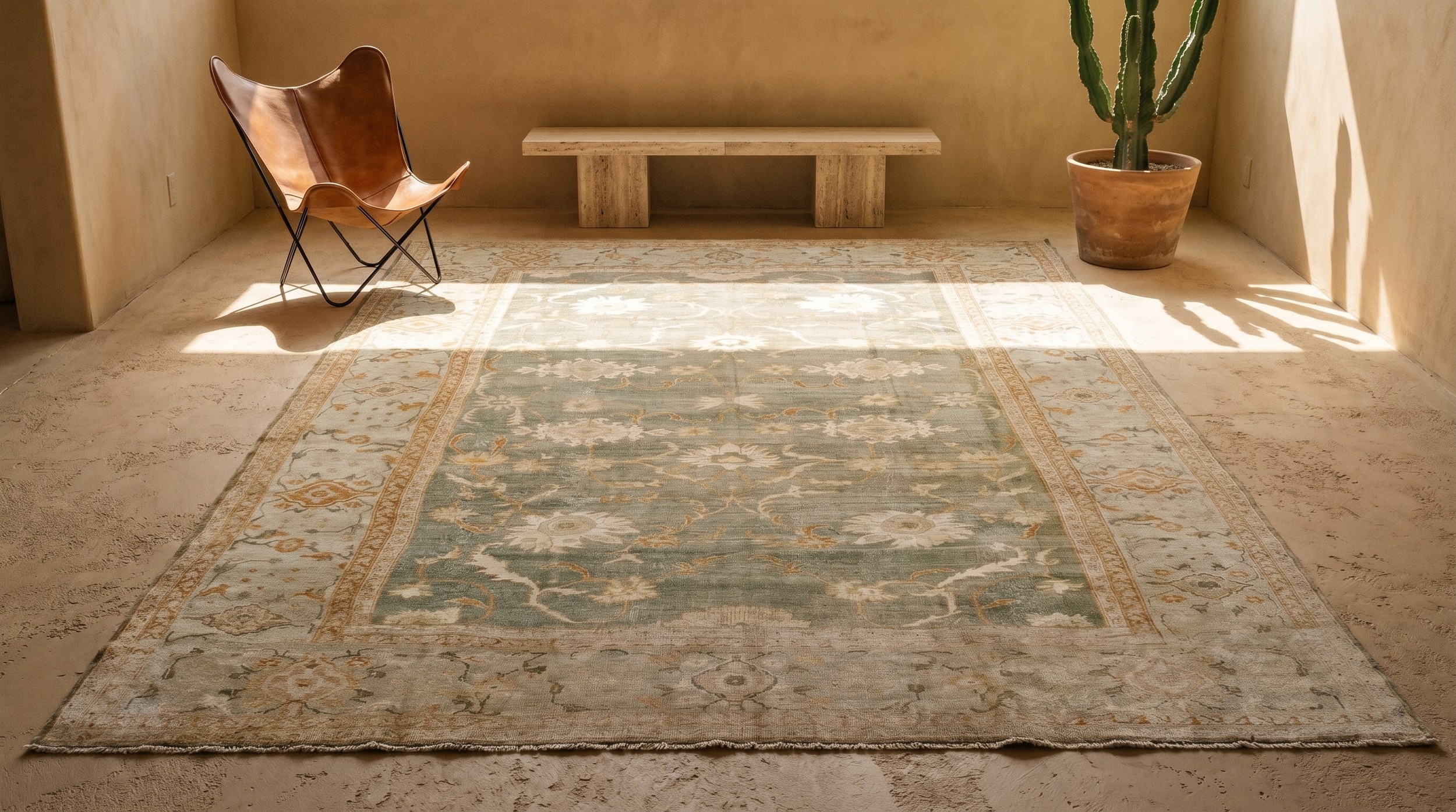
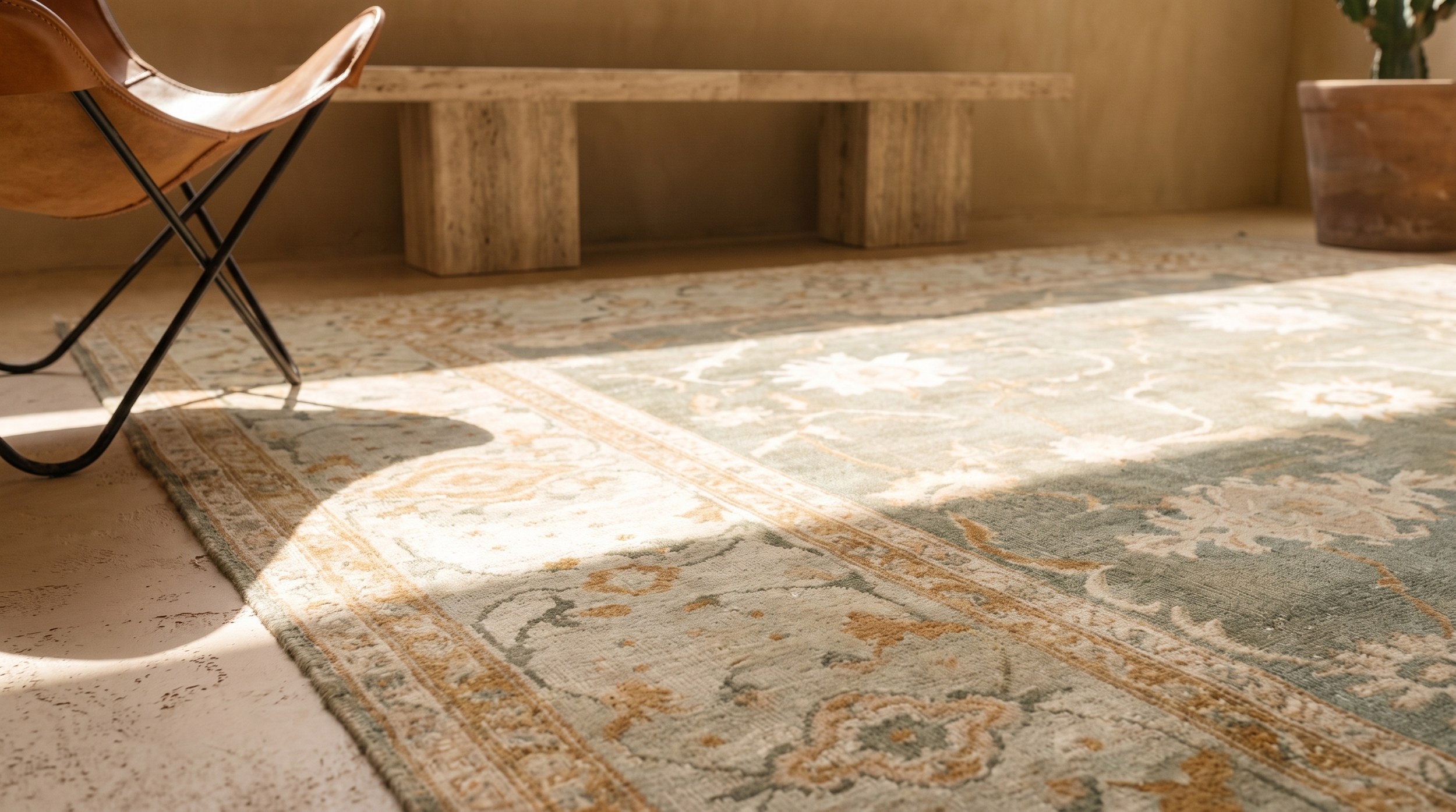
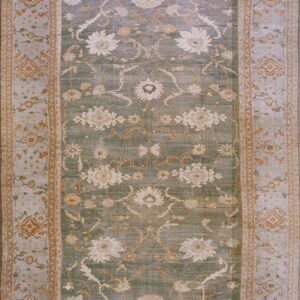
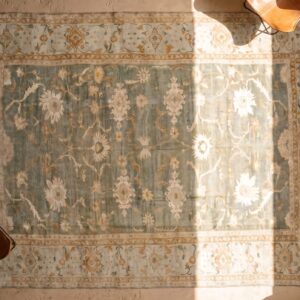
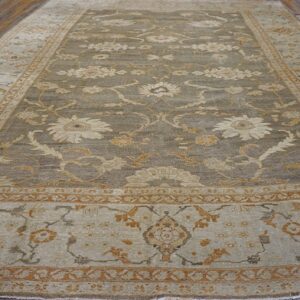
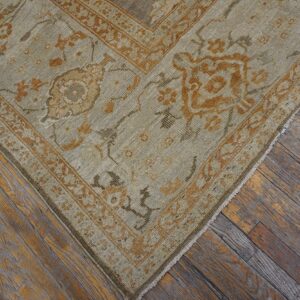
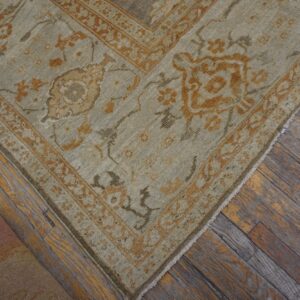
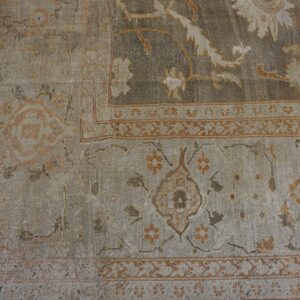
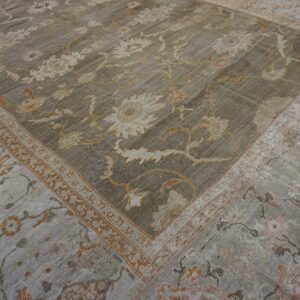
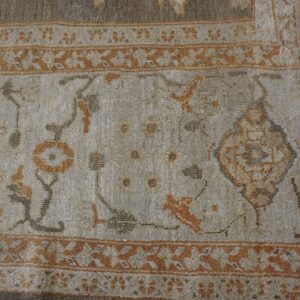
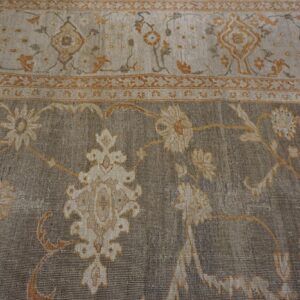
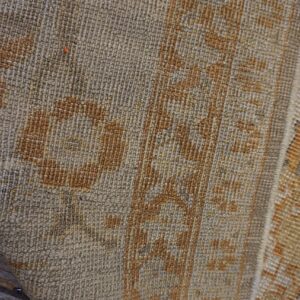
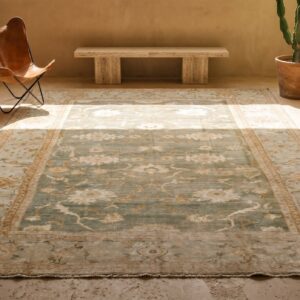
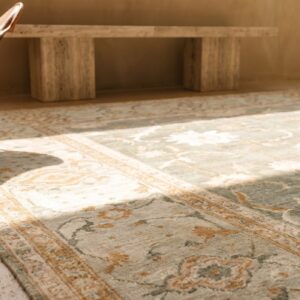
This nineteenth-century Persian Sultanabad carpet, distinguished by its rare light green field and expansive tribal motifs, is a quintessential artifact of the “Ziegler” era—a transformative period in textile history that redefined the Persian weaving industry for the Western world. In the late 1800s, the Manchester-based firm Ziegler & Co. established a dedicated workshop in the Sultanabad district (modern-day Arak) to produce antique rugs that married traditional Persian craftsmanship with the burgeoning aesthetic demands of Victorian and Edwardian Europe. By enlarging the scale of the motifs and employing a more restrained, “earth-toned” palette, the Ziegler weavers created a new design dialect that moved away from the dense, dark-toned patterns of the past, resulting in a more spacious and architecturally versatile floor covering.
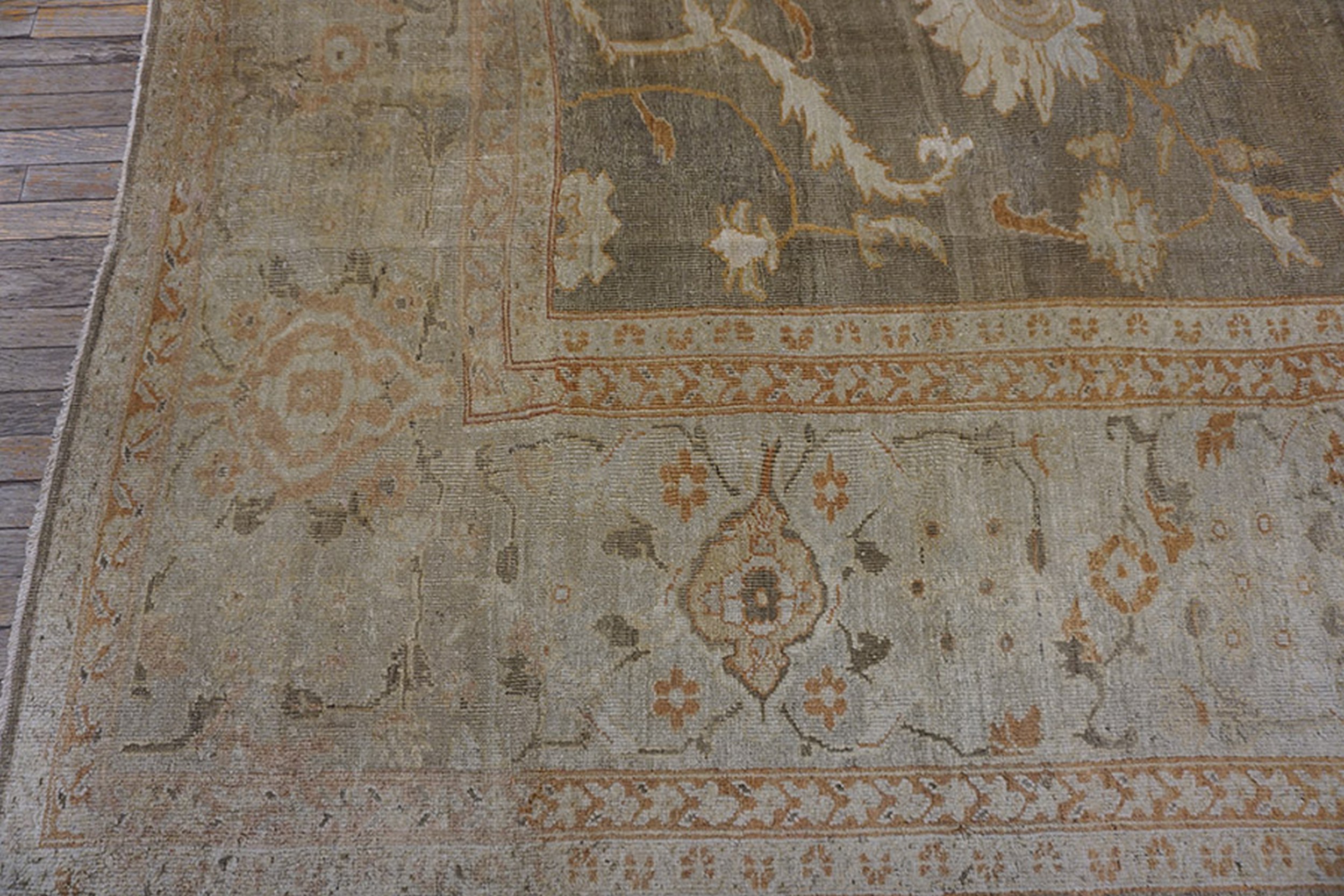
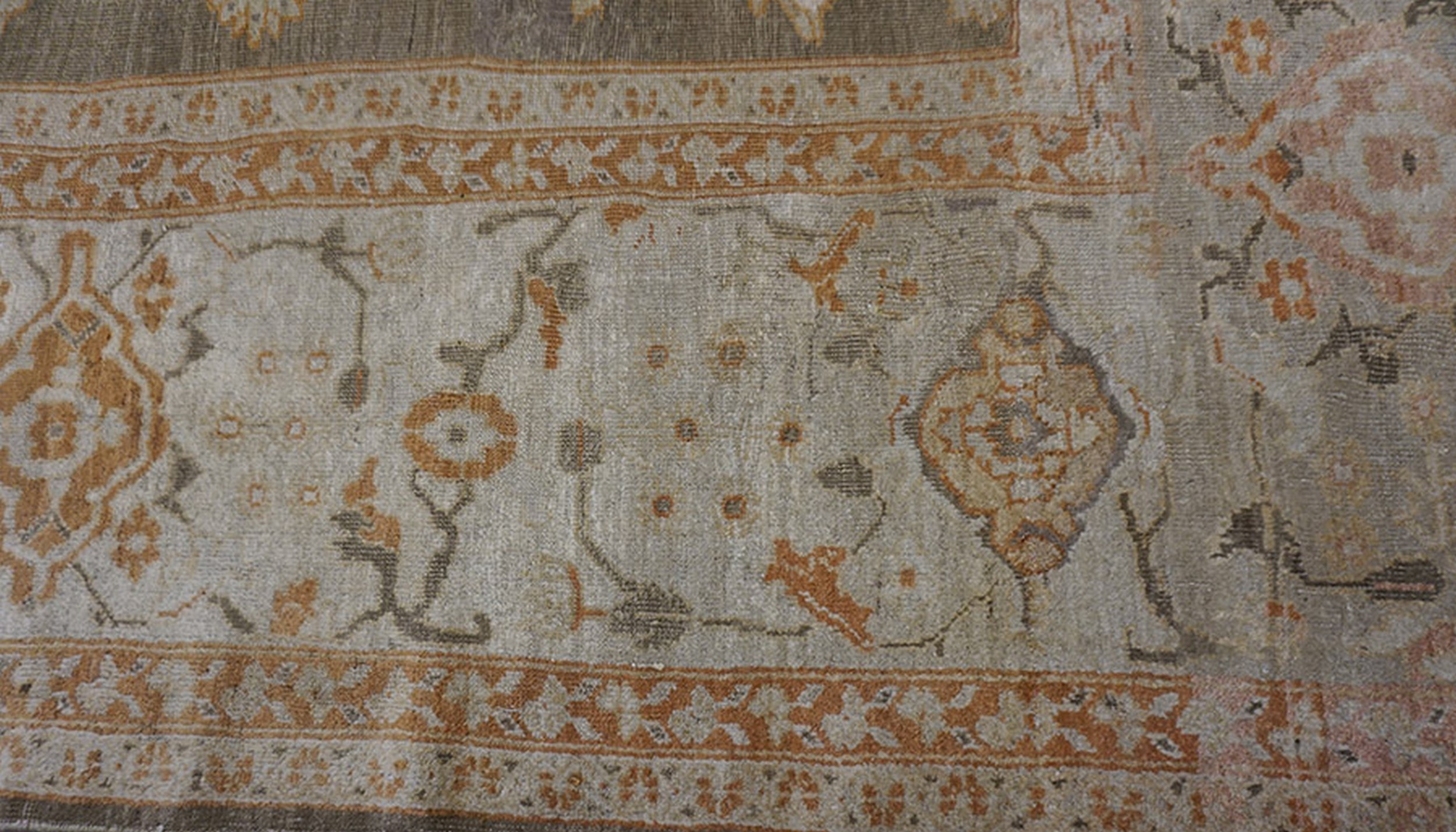
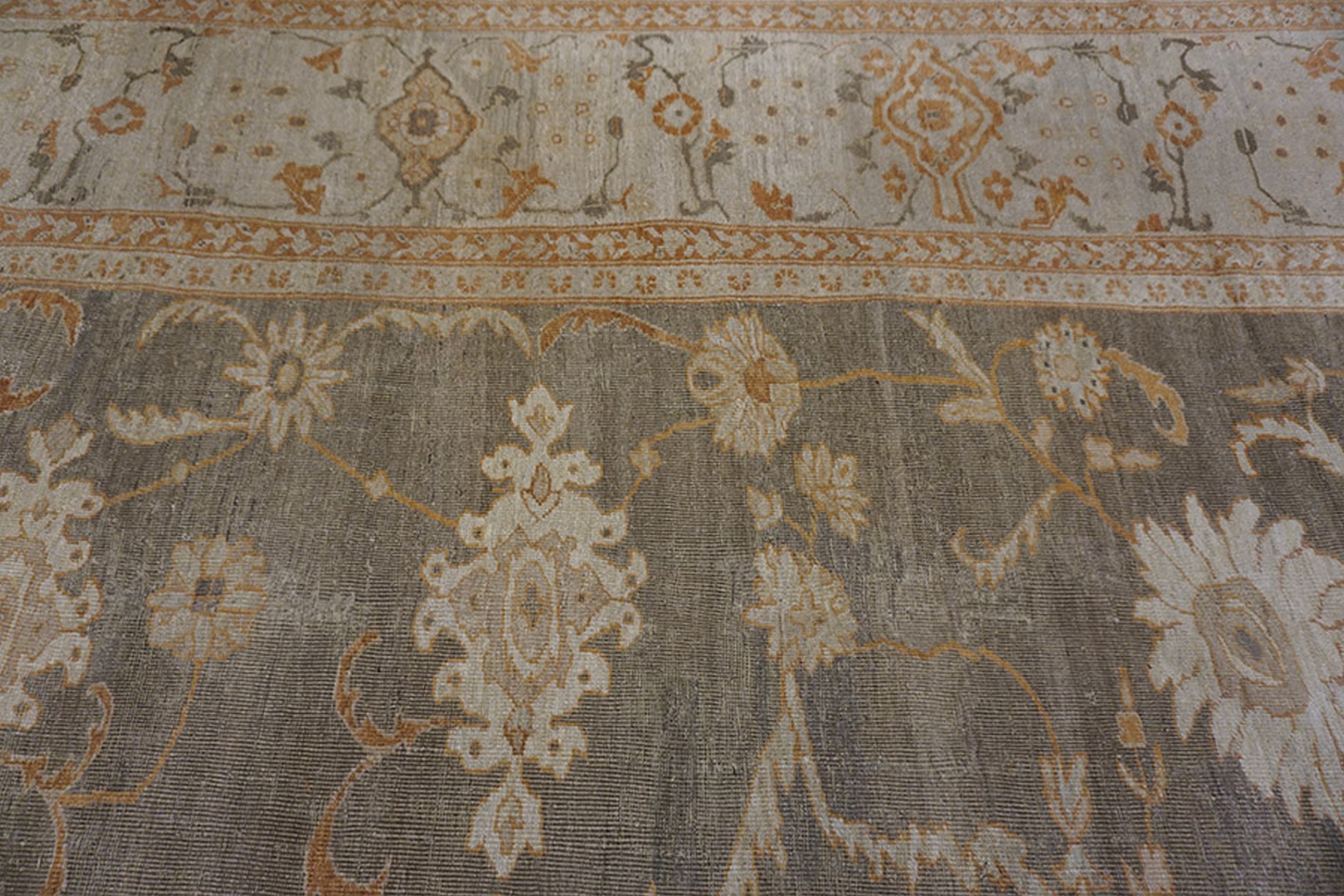
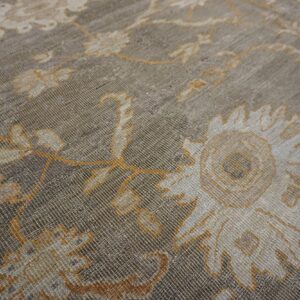
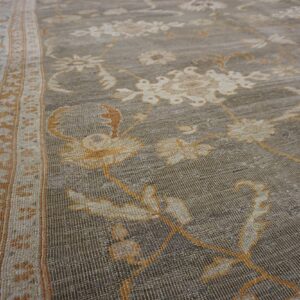
The historical significance of this specific specimen lies in its monumental “all-over” botanical design, which eschews the traditional central medallion in favor of a sprawling, continuous network of palmettes and scrolling vines. This “open-field” concept was a deliberate stylistic choice intended to accommodate the grand furniture arrangements of European manor houses, ensuring that the rug’s artistry remained visible even when partially obscured by dining tables or settees. The light green color ground is an exceptionally rare find from this period; such hues were achieved by utilizing the natural, undyed wool of local sheep or by meticulously blending subtle vegetal dyes with aged minerals to create a soft, weathered patina. The “large-scale” nature of the floral elements reflects the tribal roots of the Sultanabad weavers, who favored a bolder, more expressive hand compared to the rigid, fine-lined precision of the court looms in Tabriz or Isfahan.
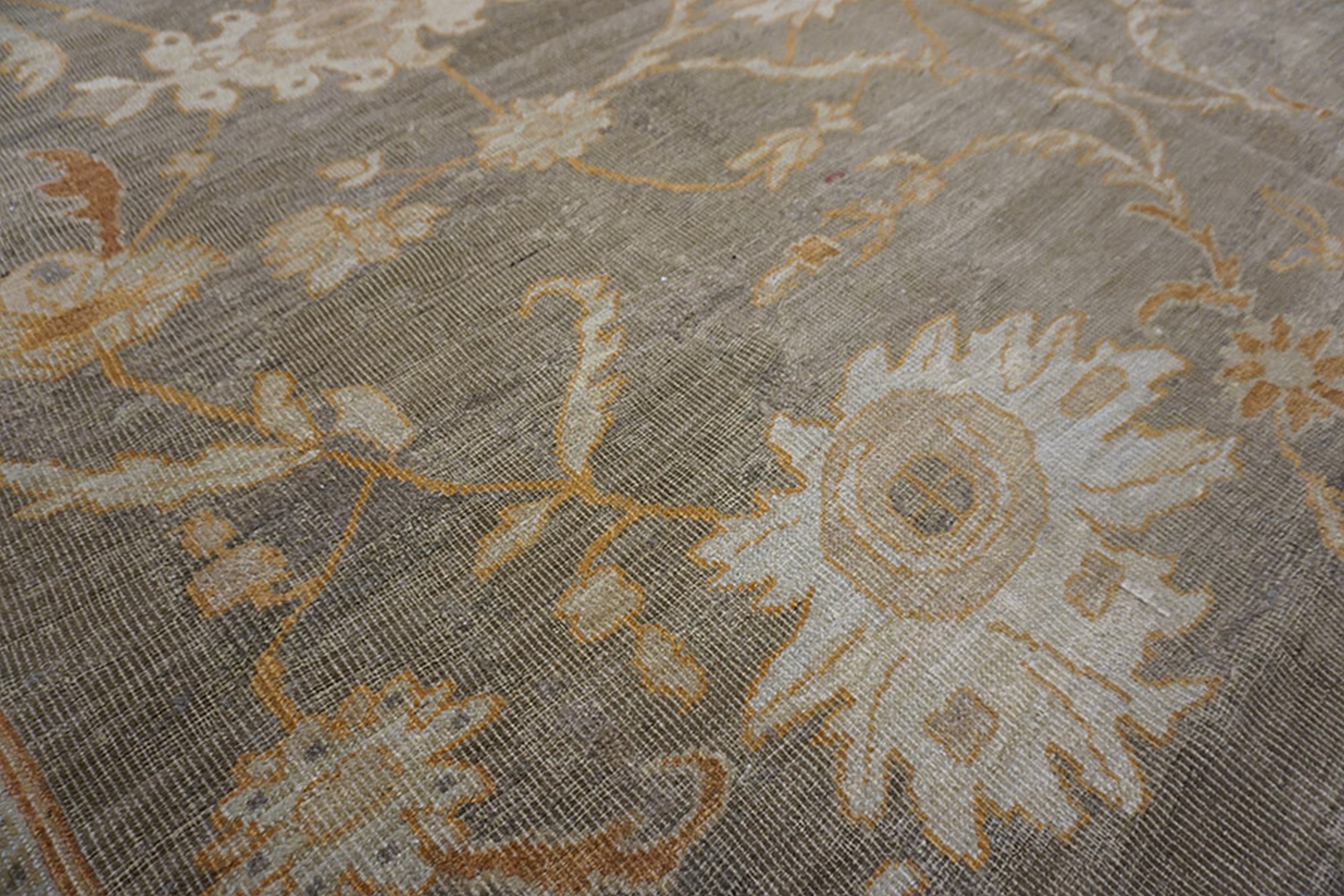
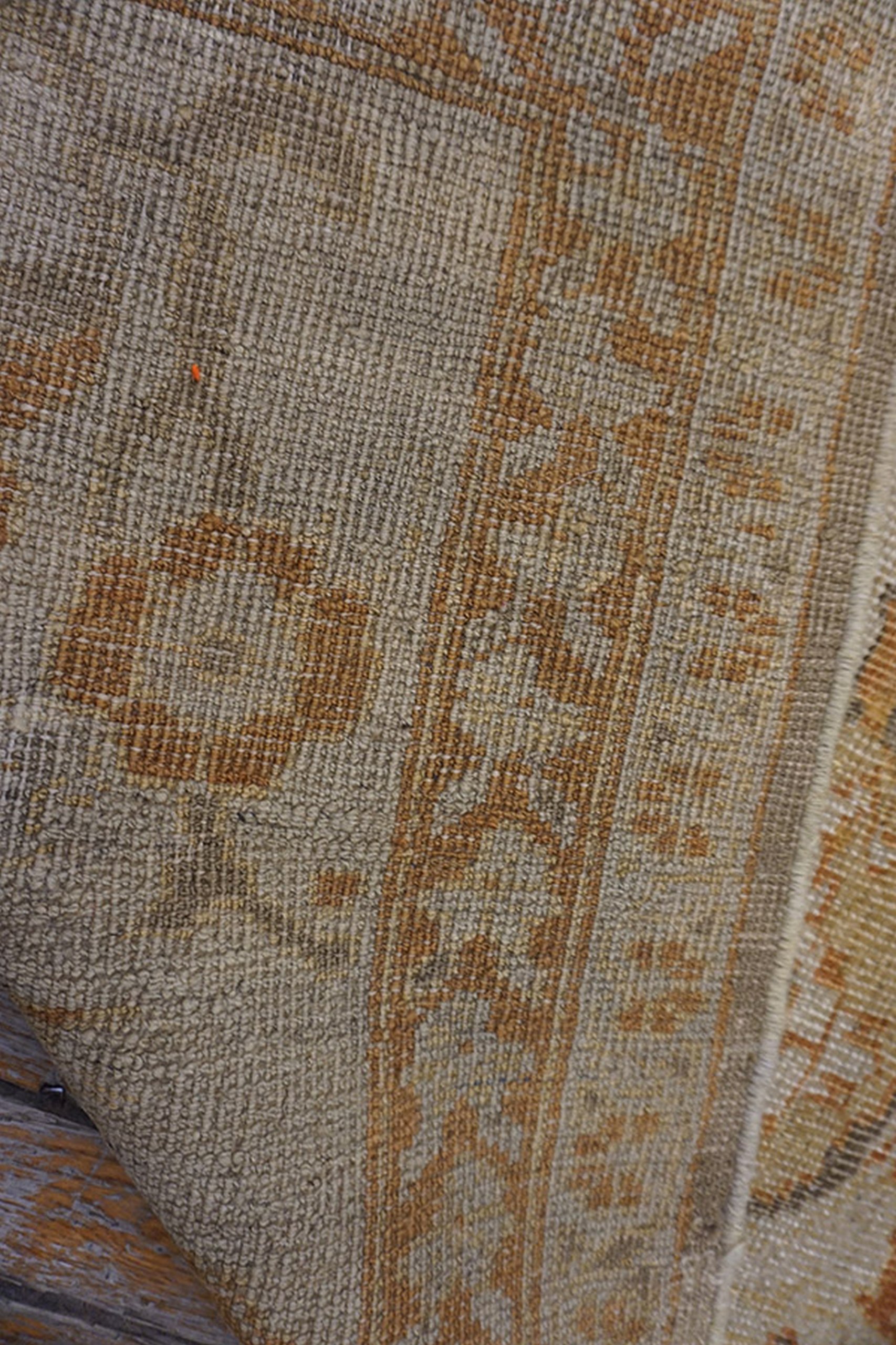
During the late nineteenth century, Persian carpets from Sultanabad became the “designer’s choice” for the most prestigious interior commissions in London and New York, favored by the likes of William Morris and the era’s leading tastemakers for their rugged yet refined character. The wool used in these pieces is traditionally hand-spun and high in lanolin, giving the carpet a distinctively lustrous “glow” and a supple, heavy handle that has allowed it to survive over a century of use. This carpet is not merely a decorative element but a bridge between two worlds: it retains the raw, symbolic energy of the Persian village tradition while embodying the sophisticated decorative language of the 19th-century arts movement. To possess a Ziegler Sultanabad of this scale and unique coloration is to hold a masterpiece of cultural synthesis—a textile that remains as modern and relevant today as it was in the grand salons of a century ago.