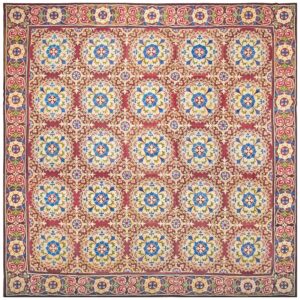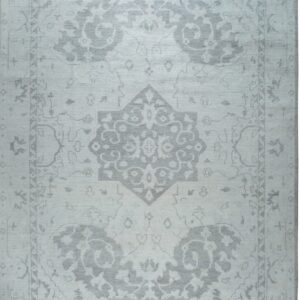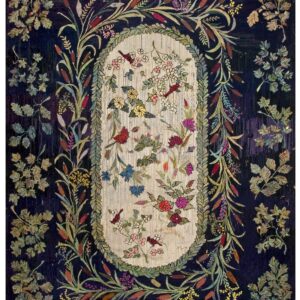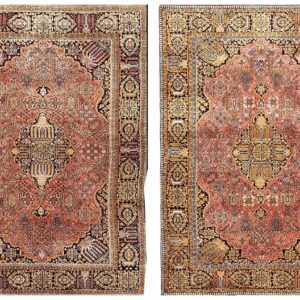
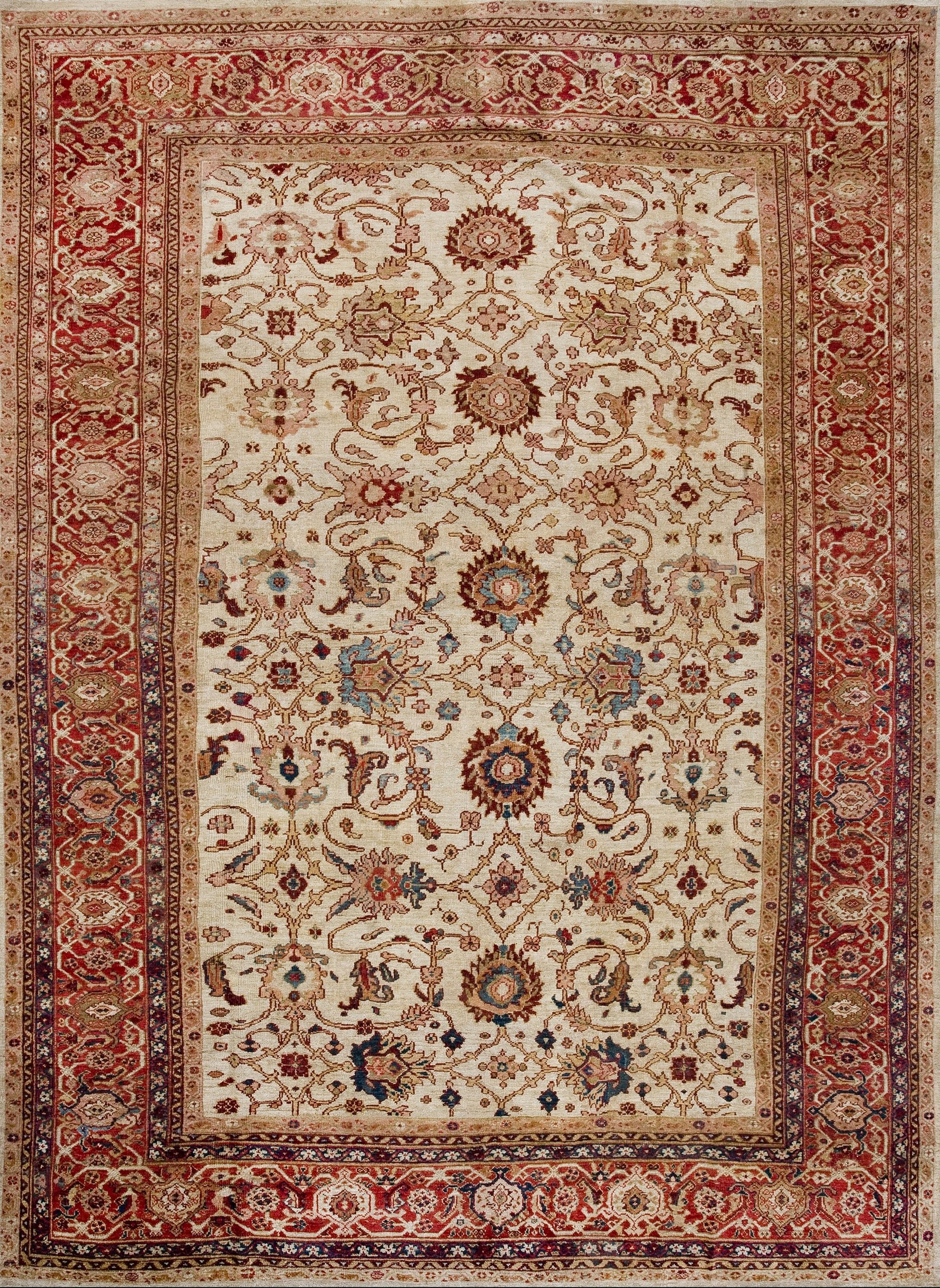
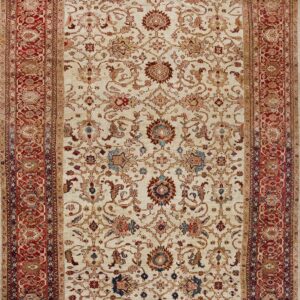
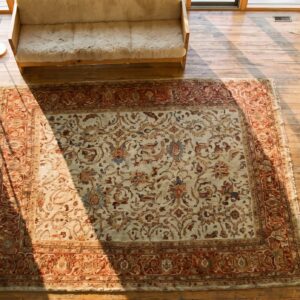
This nineteenth-century antique Persian Sultanabad carpet is a superlative example of the “Grand Room” aesthetic, representing the height of the decorative revolution that occurred in the Arak region during the late 1800s. Historically, the Persian carpets of Sultanabad became the preferred choice for the great manor houses of Europe and the burgeoning estates of the American “Gilded Age” due to their unique ability to blend tribal spontaneity with a sophisticated, architectural scale. This specific specimen is defined by its luminous light ivory and cream field—a palette of extreme rarity and high status. While most Sultanabads of the era utilized deep madder reds or indigoes, an ivory ground of this clarity was often a bespoke commission, intended to provide a sense of “ethereal opulence” and to brighten the often-dark, wood-paneled interiors of the nineteenth century.
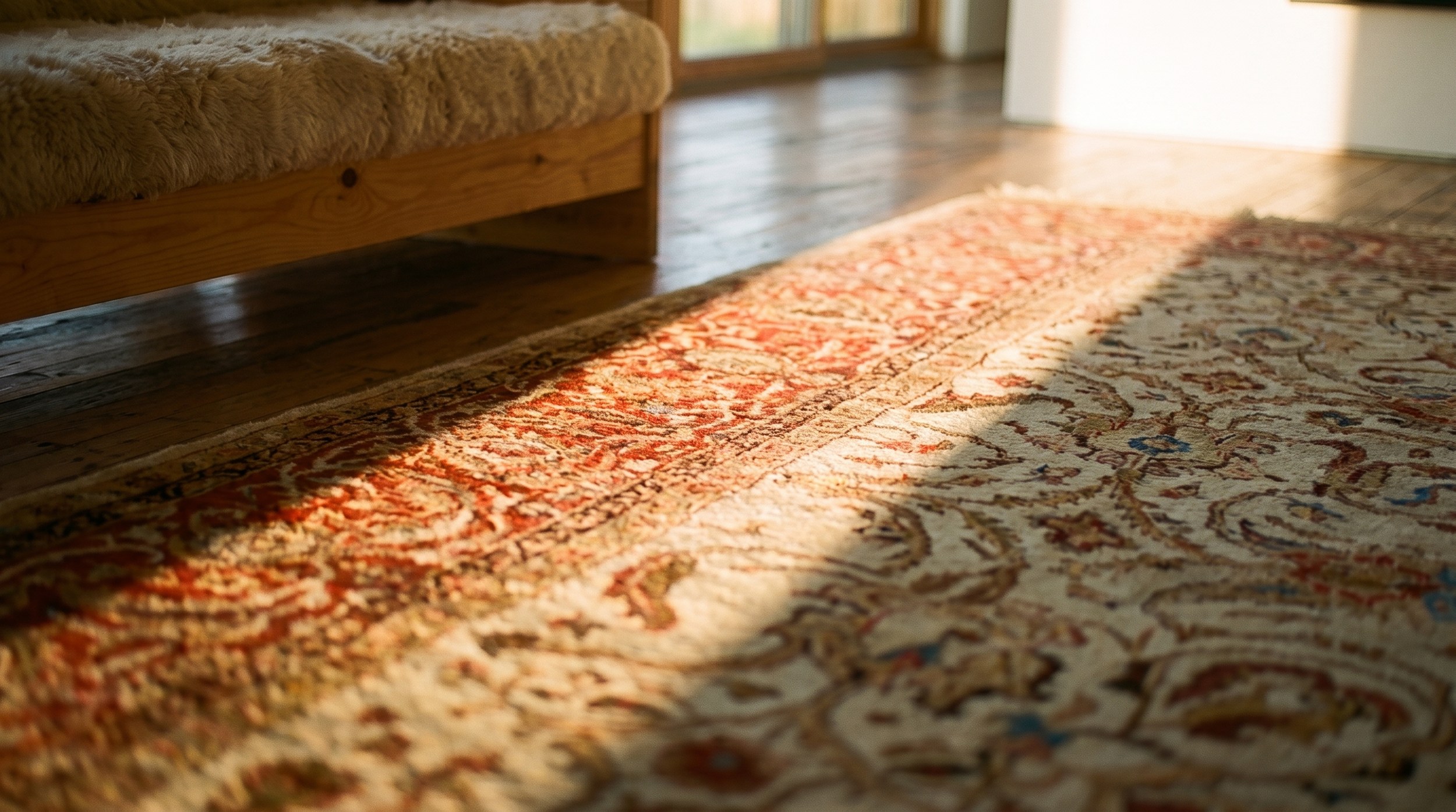
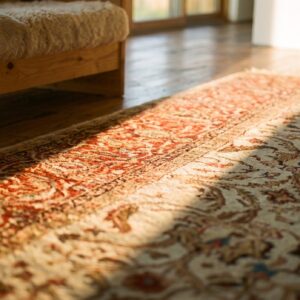
The composition features a sprawling, “all-over” floral arrangement of oversized palmettes, scrolling vines, and serrated leaves. This design reflects the influence of the legendary Ziegler & Co. workshop, which refined the rugged, “Mahal” style of the local villagers into a more “breathable” and organized artistic language. Unlike the dense, mathematically rigid patterns of city workshops like Isfahan or Tabriz, this Sultanabad possesses a “charming irregularity.” Each floral motif is rendered with a bold, painterly quality, allowing the expansive ivory field to remain the focal point of the composition. The use of soft, vegetable-dyed accents in shades of sage green, pale terracotta, and sky blue creates a sophisticated abrash—a natural tonal variation that gives the antique carpet a shimmering, multi-dimensional character.
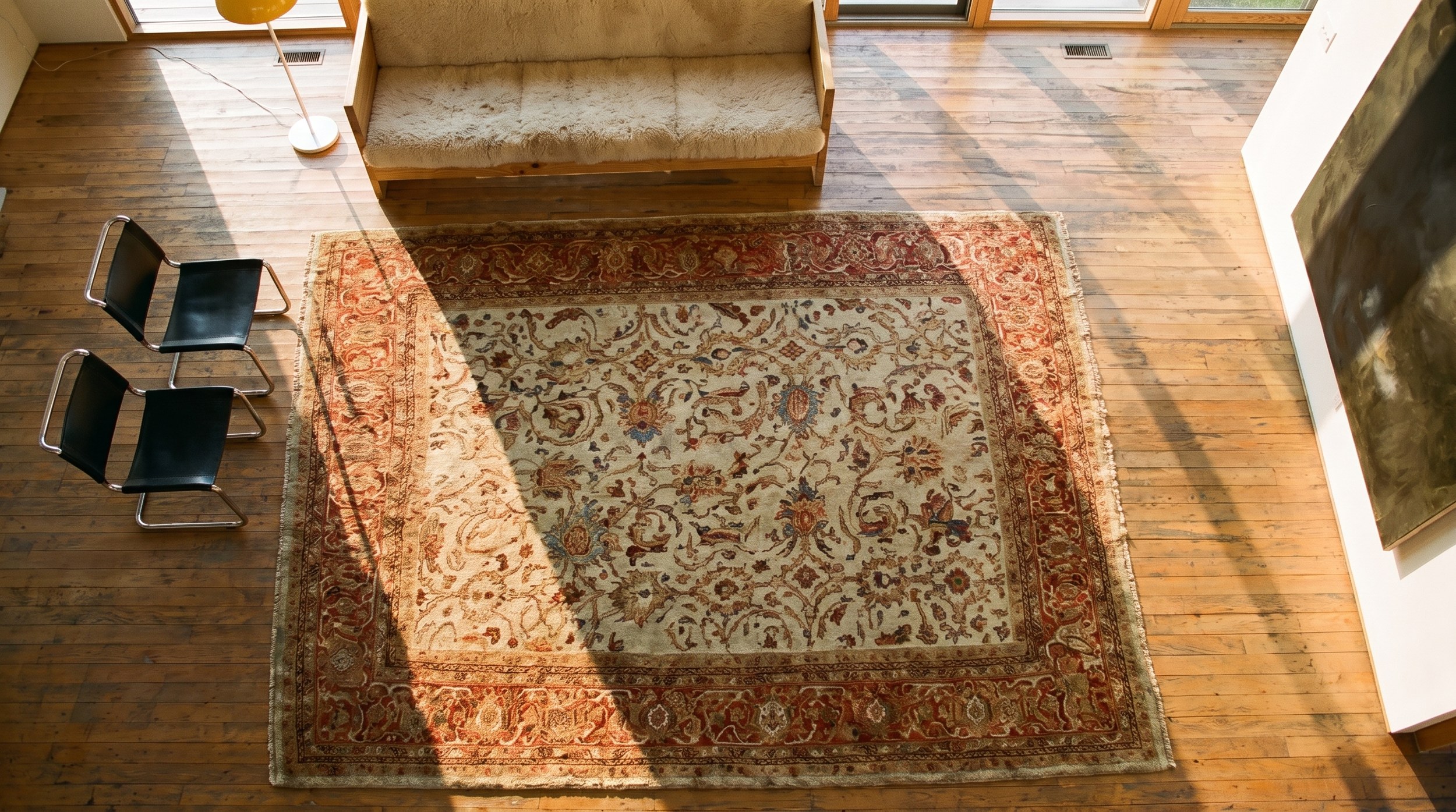
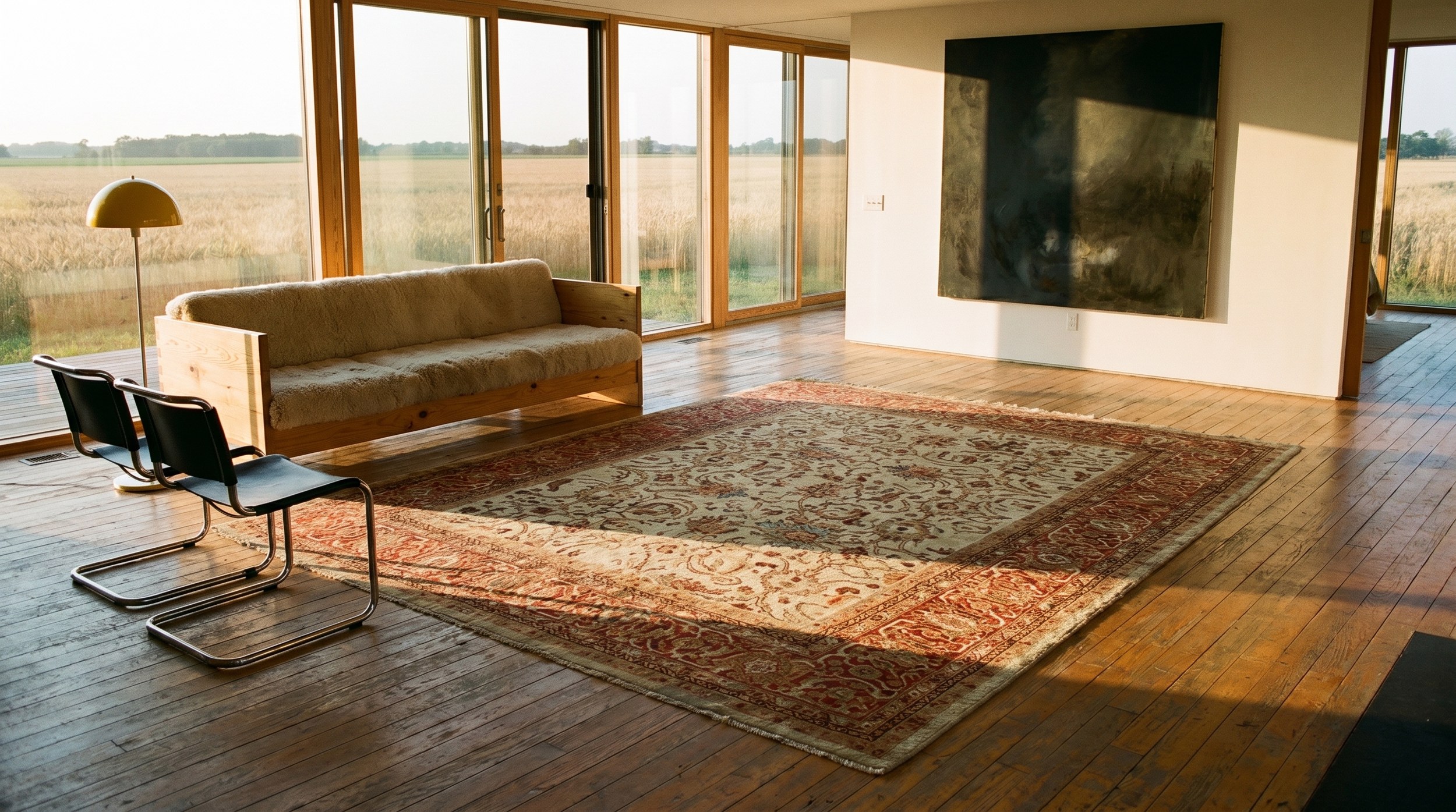
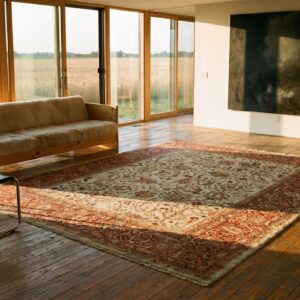
Historically, a Sultanabad of this scale and coloration was a masterpiece of textile engineering. The wool, hand-spun and rich in natural lanolin, provides a lustrous, matte finish that has only improved with over a century of age. The “all-over” layout makes it an exceptionally versatile piece for interior design, as it lacks a central medallion, allowing furniture to be placed across its surface without disrupting the visual harmony of the pattern. The borders act as a structural frame, featuring a primary band of alternating rosettes and foliate scrolls that anchor the radiant energy of the cream field. To possess an antique ivory Sultanabad of this caliber is to hold a monument to the “Masterpiece Era” of Persian weaving—a work that bridges the gap between the raw, tribal soul of the Persian plateau and the refined, globalized luxury of the late nineteenth century.