

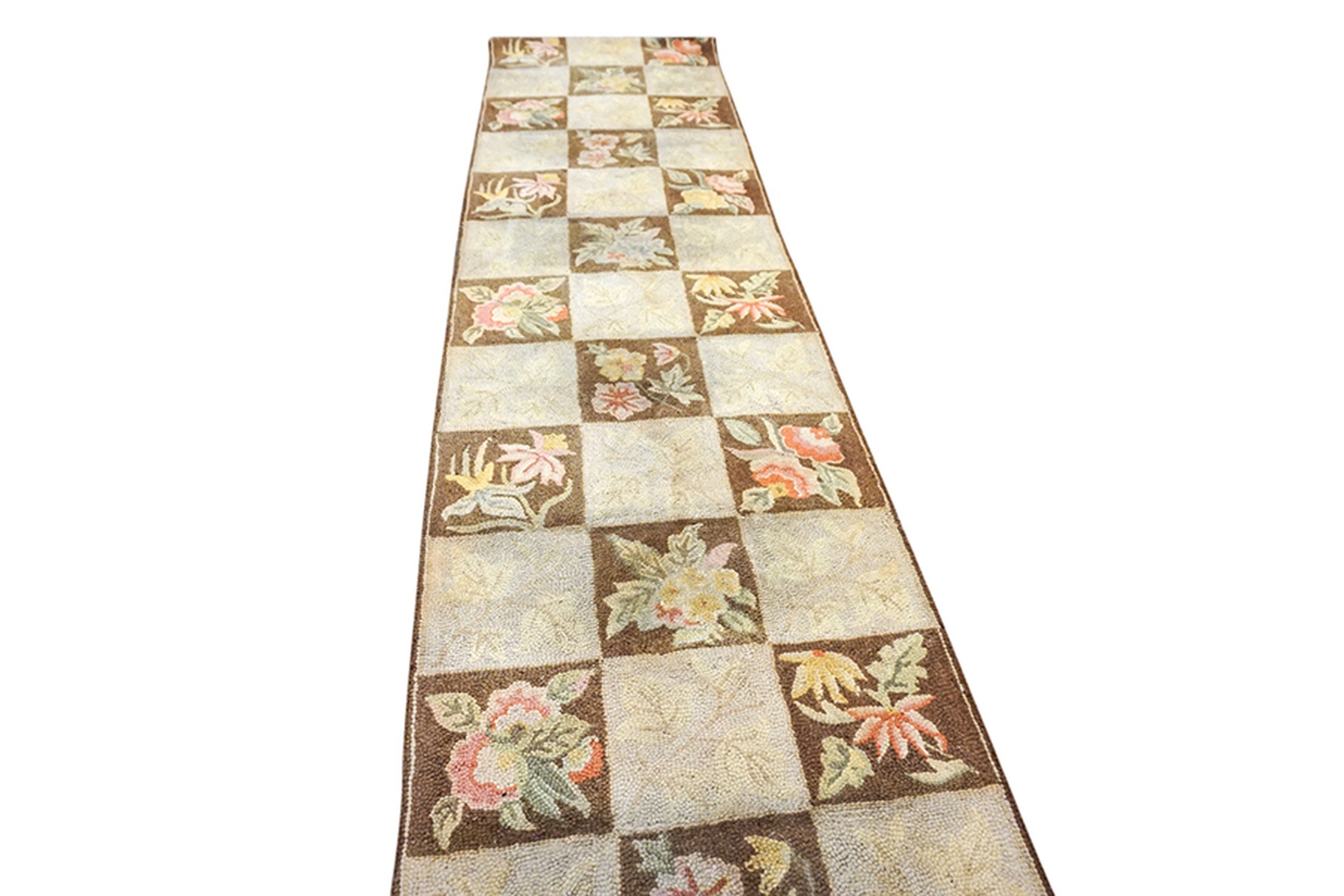
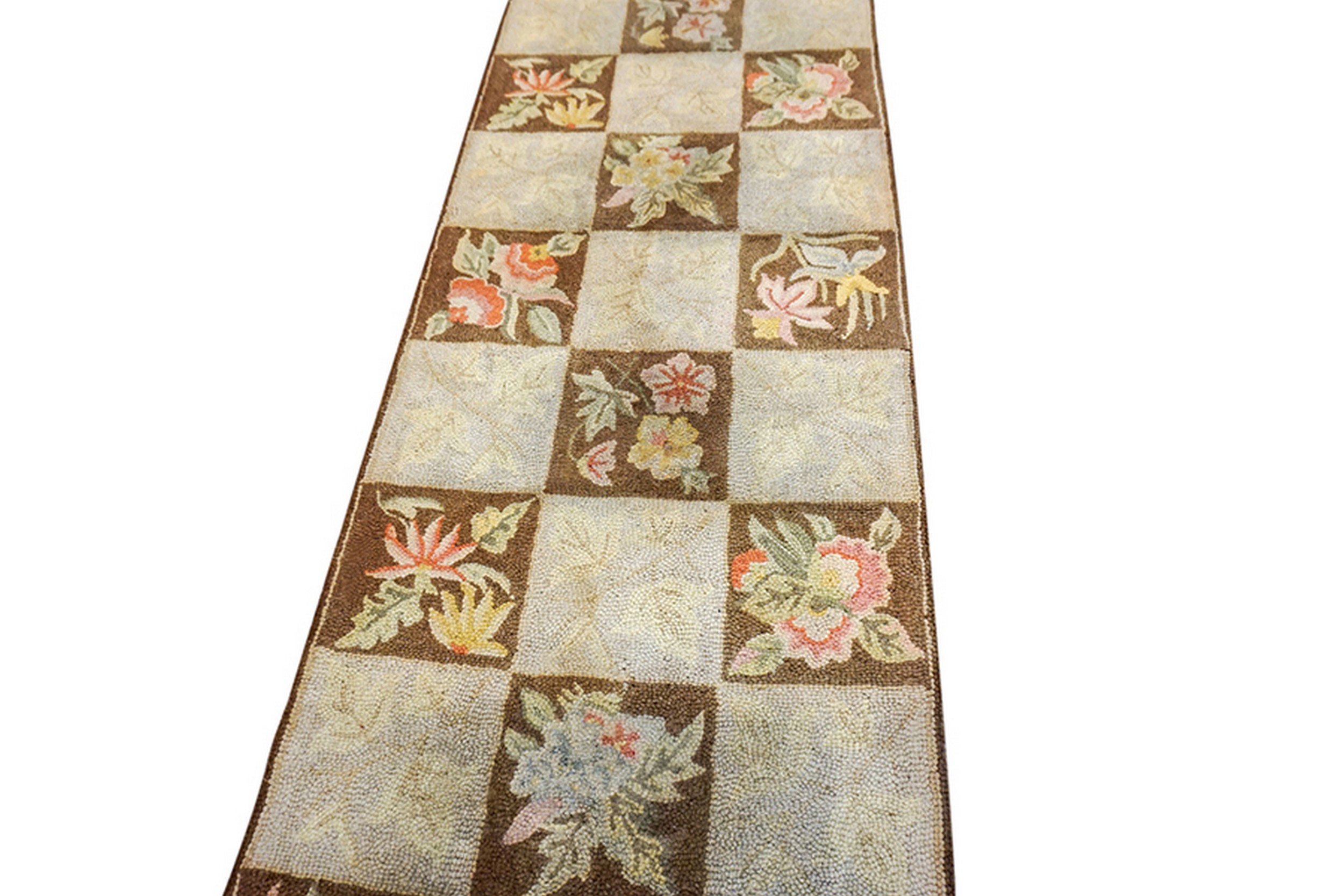
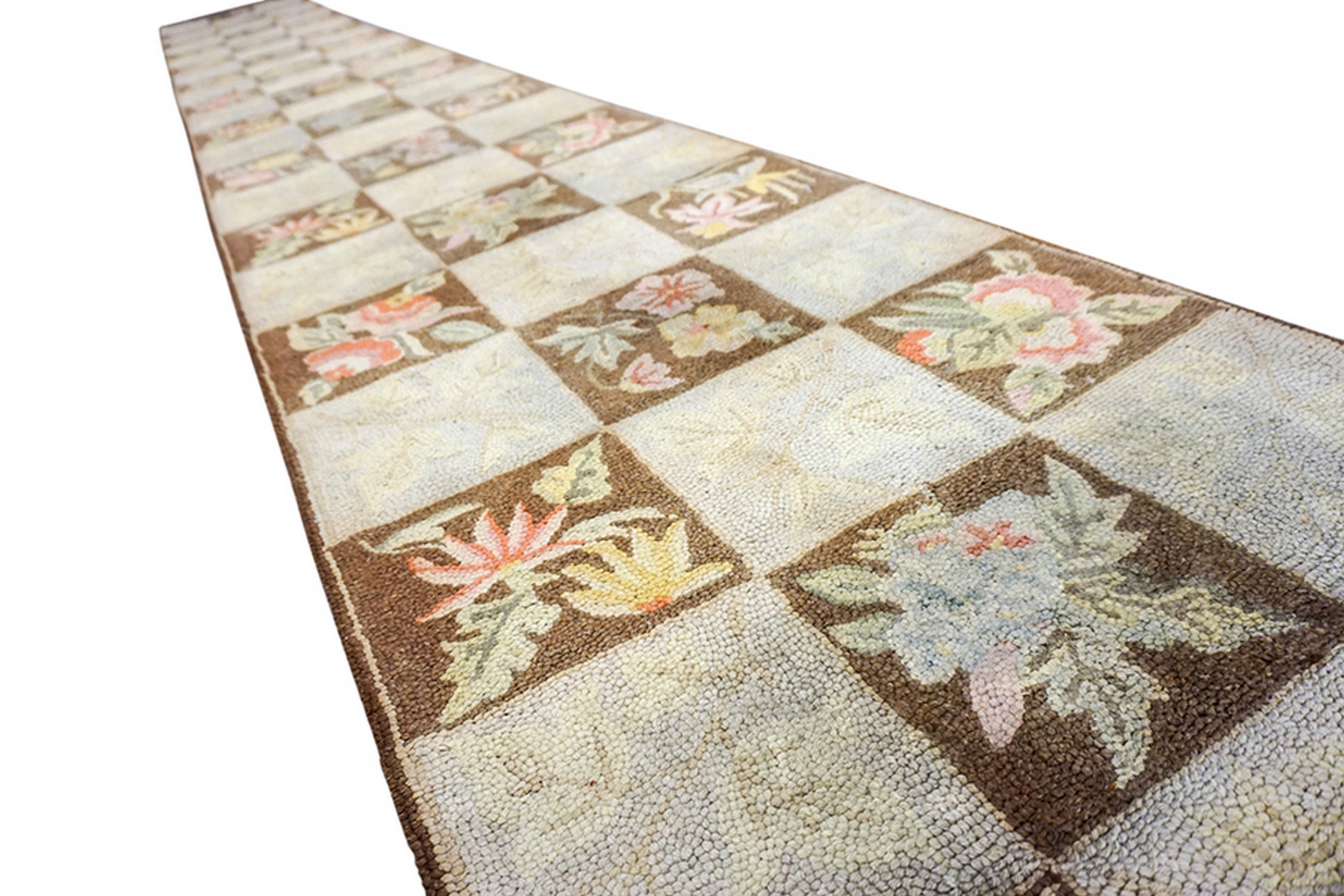
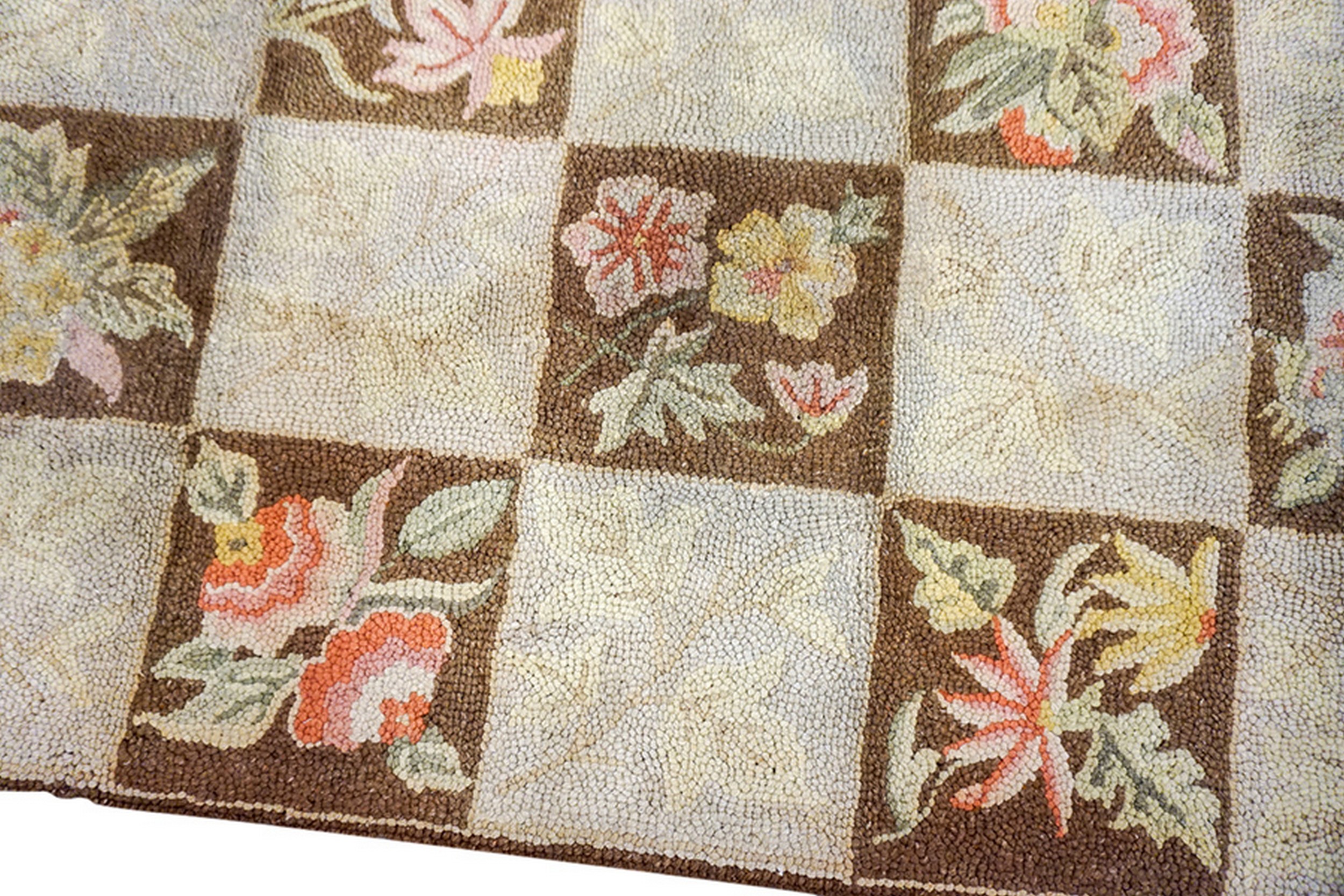
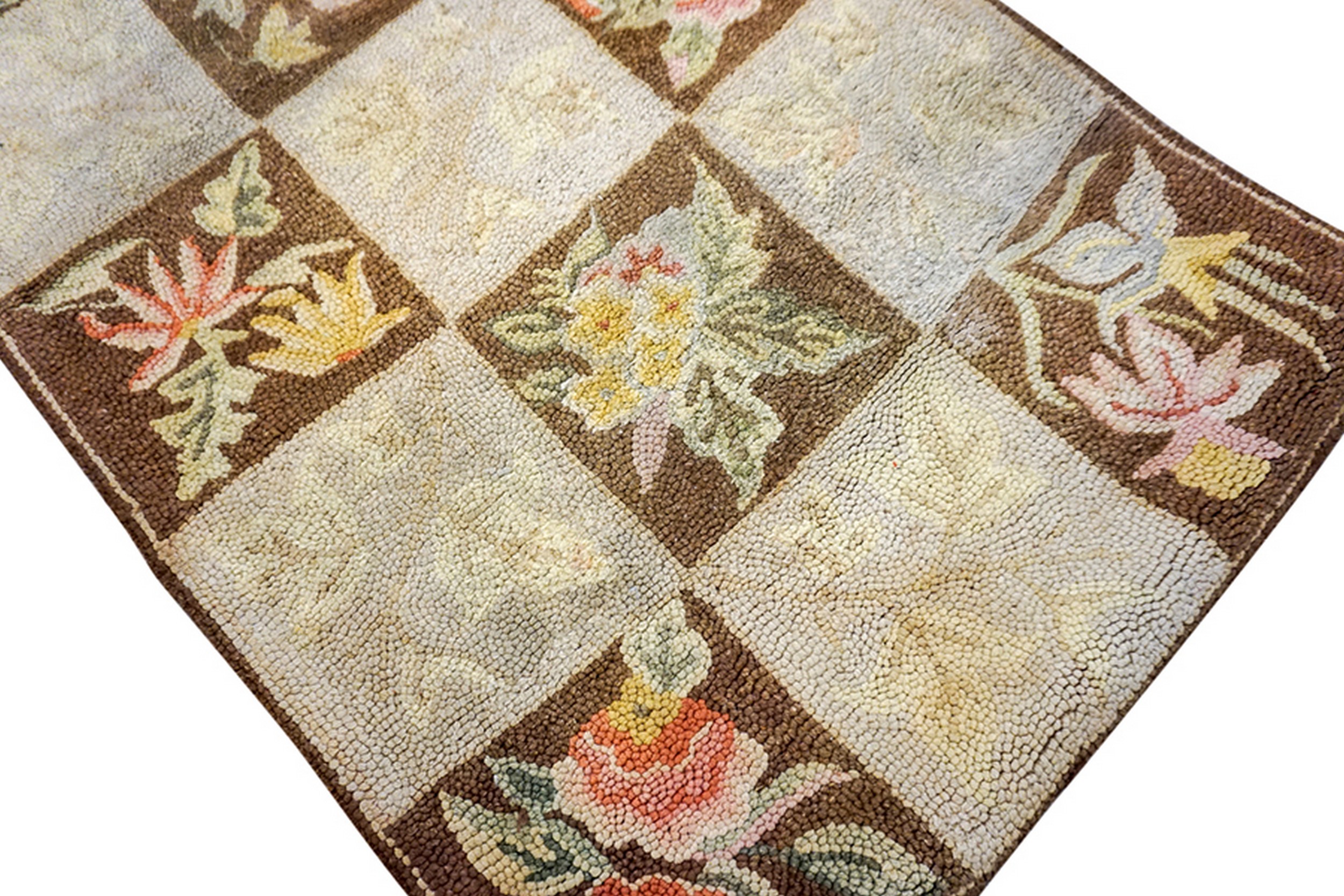
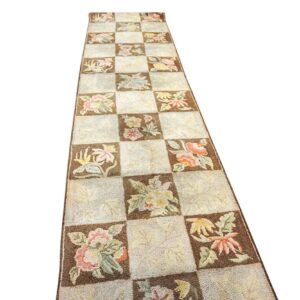
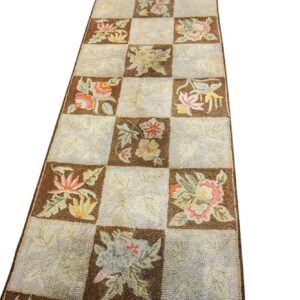
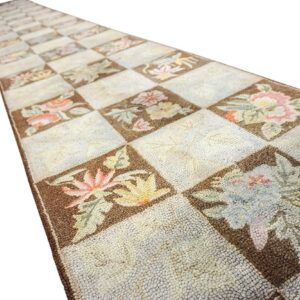
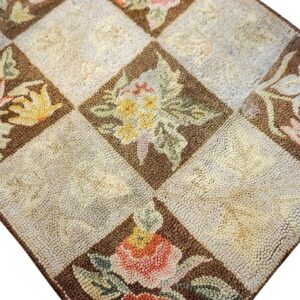
This mid-20th-century hooked runner rug from America is a striking example of “Vintage Americana,” showcasing a creative transitional period where traditional folk art motifs met the bold, graphic sensibilities of the mid-century home. While early American hooked rugs often focused on singular pictorial or floral themes, this hall runner utilizes a complex, repetitive architectural layout to create a rhythmic “pathway of art.”
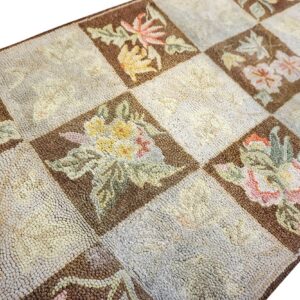
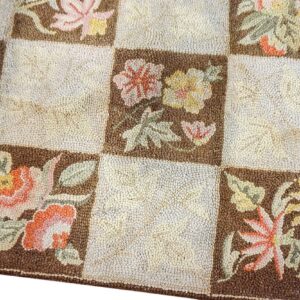
The composition is centered upon a rare and visually stimulating checkerboard geometric design. The field is divided into a series of alternating “tiles,” creating a structured grid that provides a sense of order and movement. Within these compartments, the weaver has inlaid delicate floral motifs, softening the rigidity of the geometry with the organic grace of blossoms and leaves. This “Grid-and-Garden” approach is a hallmark of sophisticated hooking, requiring the artisan to balance mathematical precision with the fluid, “primitive” drawing style characteristic of the American domestic tradition.
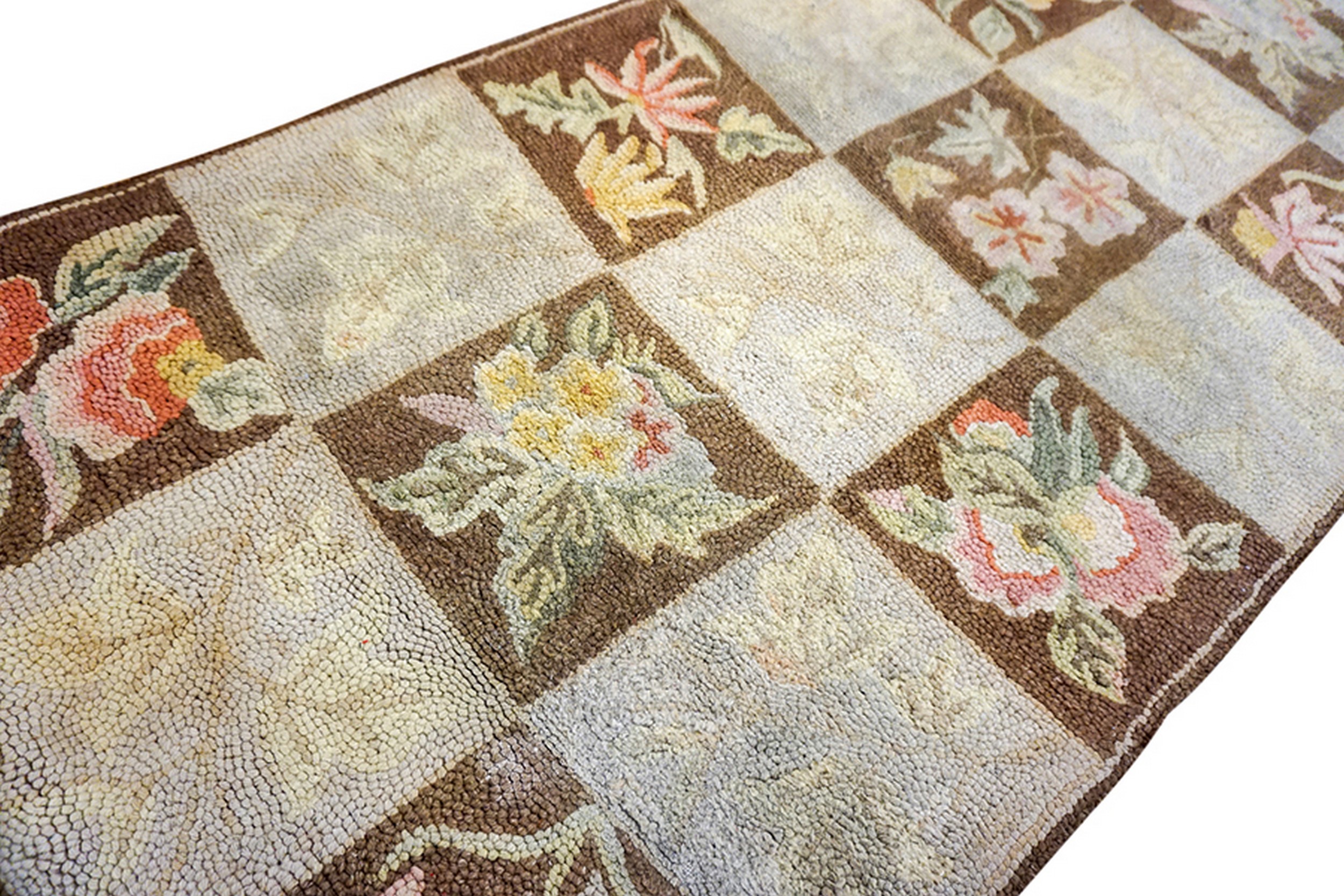
The palette is defined by its warm, earthy Ivory and Brown contrast. The alternating squares of cream and deep chocolate-brown create a high-value graphic “pop,” making the runner a powerful focal point for a transitional space. Because this vintage runner rug was created using hand-cut strips of recycled wool and flannel, the brown and ivory areas possess a magnificent “marbled” variegation (the folk-art equivalent of abrash). This shimmering, “salt-and-pepper” texture gives the neutral tones a watercolor-like depth and a soft, historical patina that prevents the checkerboard from appearing overly stark or modern.
Technically, this warm and inviting long hallway runner rug is prized for its tightly looped, nubby texture and substantial, “meaty” handle. The process of hand-hooking individual loops through a sturdy backing creates a three-dimensional surface that is remarkably durable—essential for a high-traffic hallway piece. Over the decades, the wool fibers have slightly “felted,” resulting in a velvety, suede-like surface that is soft underfoot and serves to round out the edges of the checkerboard and floral patterns.
The borders act as a simple but necessary architectural frame, “locking in” the rhythmic energy of the repeating tiles and providing a sense of permanence. To possess this Vintage Checkerboard American Hooked runner is to own a monument to mid-century domestic ingenuity. It is a work that bridges the gap between the structured “Modernist” aesthetic and the warmth of traditional folk art—transforming a long hallway into a sanctuary of historical symmetry and soulful, botanical grace.