
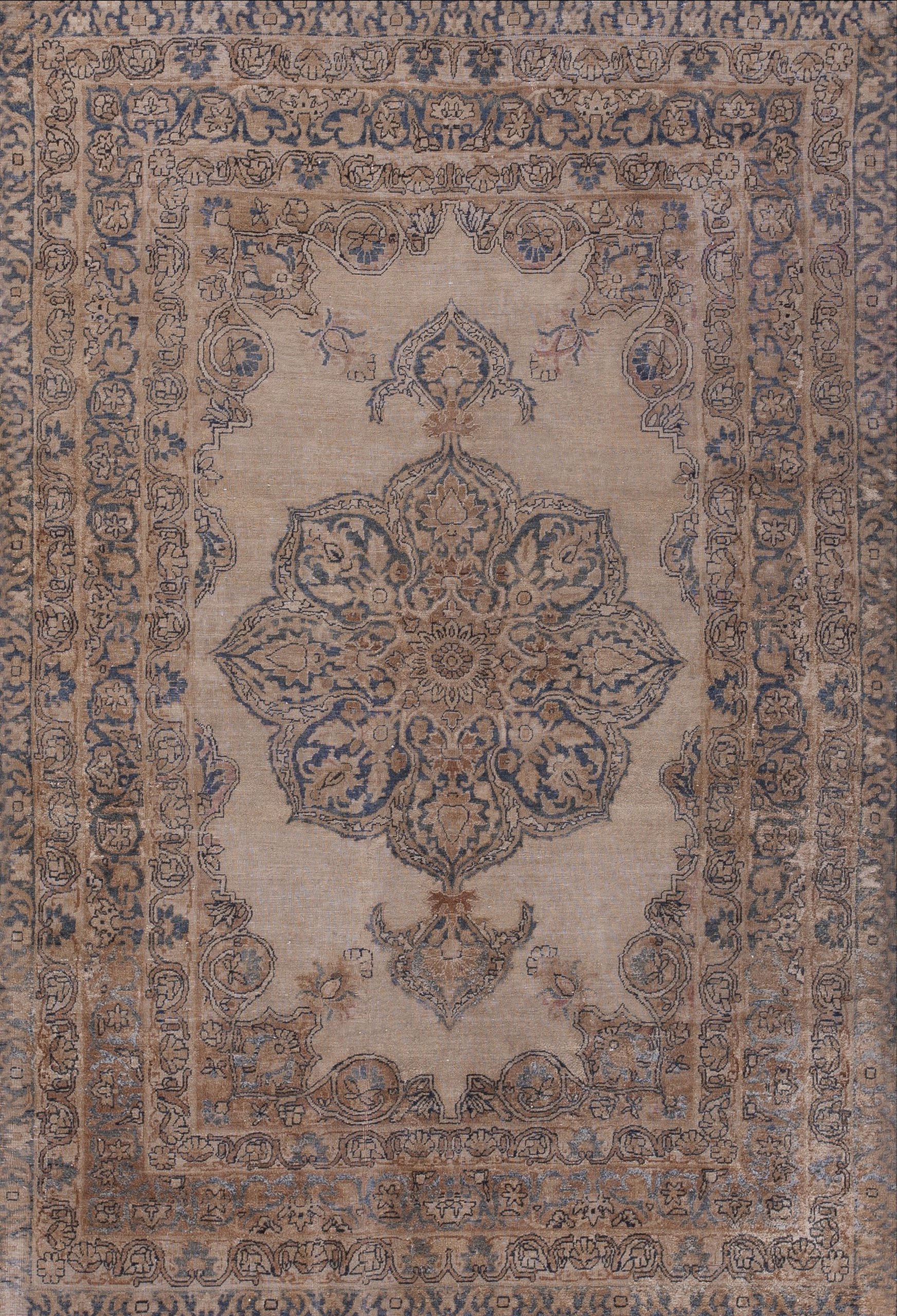
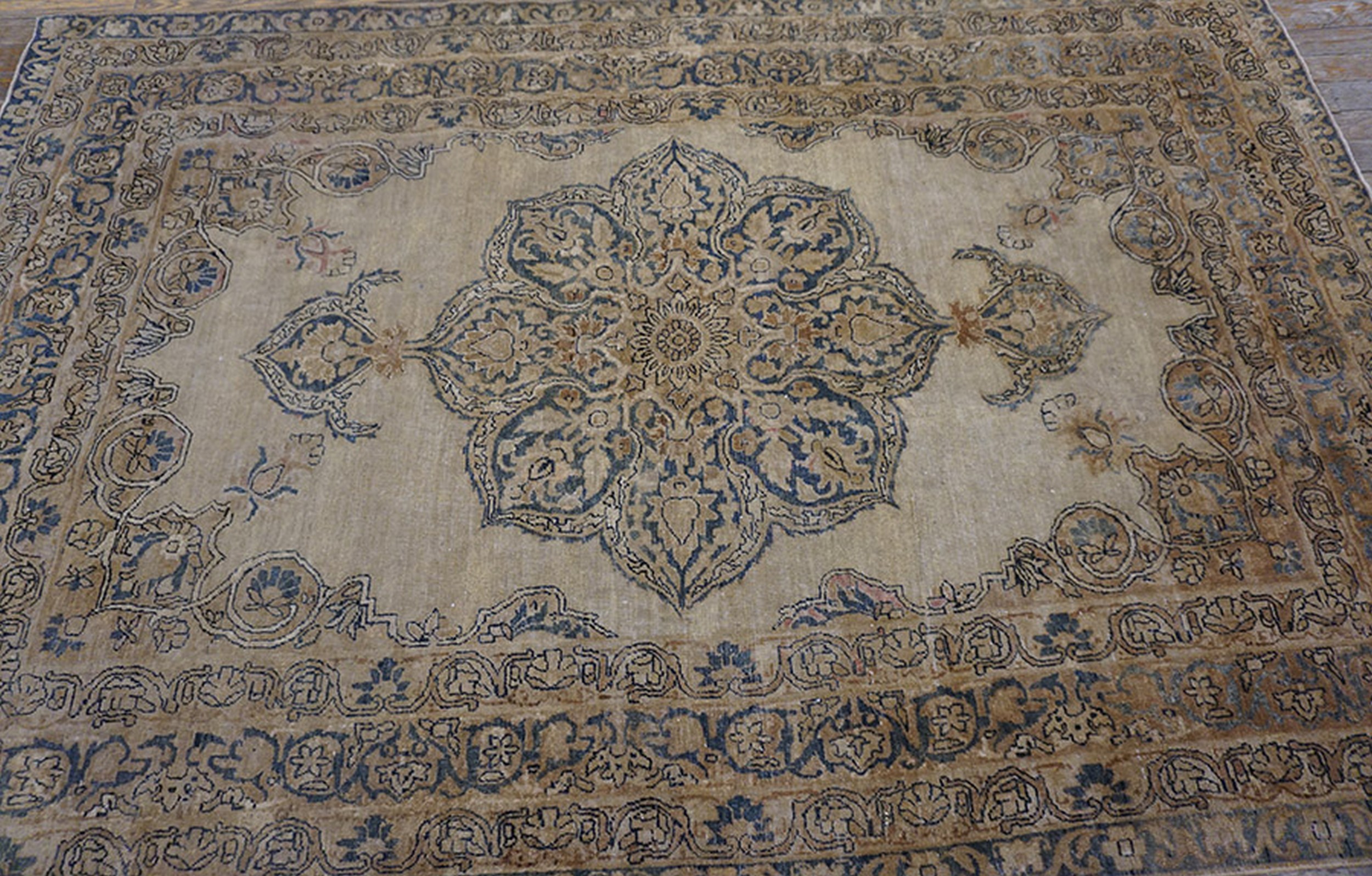
This fine late 19th-century Persian Kerman (Kirman) rug is a masterwork of “City” weaving, representing the height of classical elegance and technical fineness from Southcentral Persia. While the tribal rugs of the Caucasus or the Northwest are defined by their rugged geometry, the Kerman tradition is celebrated for its fluidity, sophisticated floral artistry, and “courtly” refinement. This specific small scatter-size specimen is a “jewel box” textile, distilling the grandeur of a palace carpet into a compact, scholarly format.
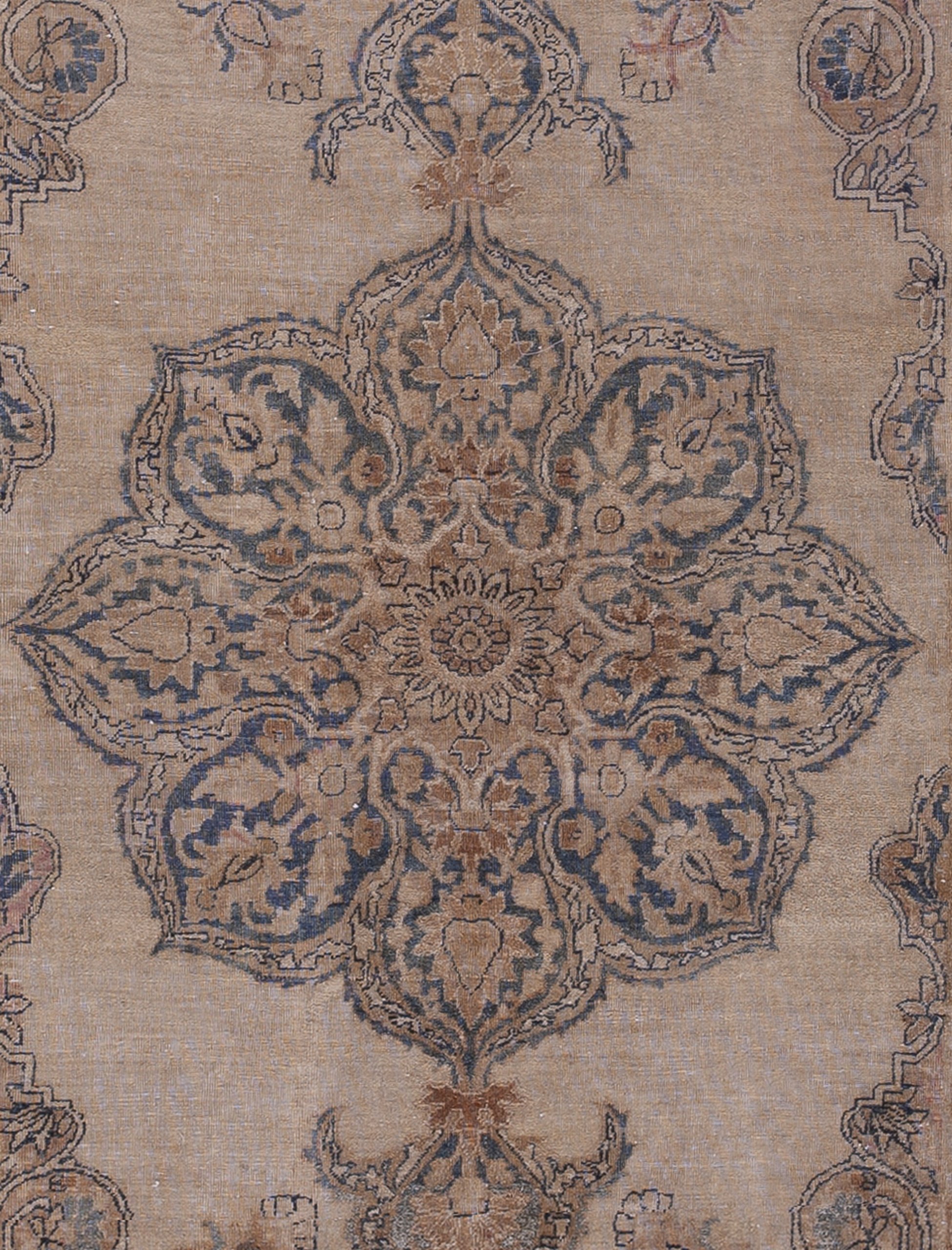
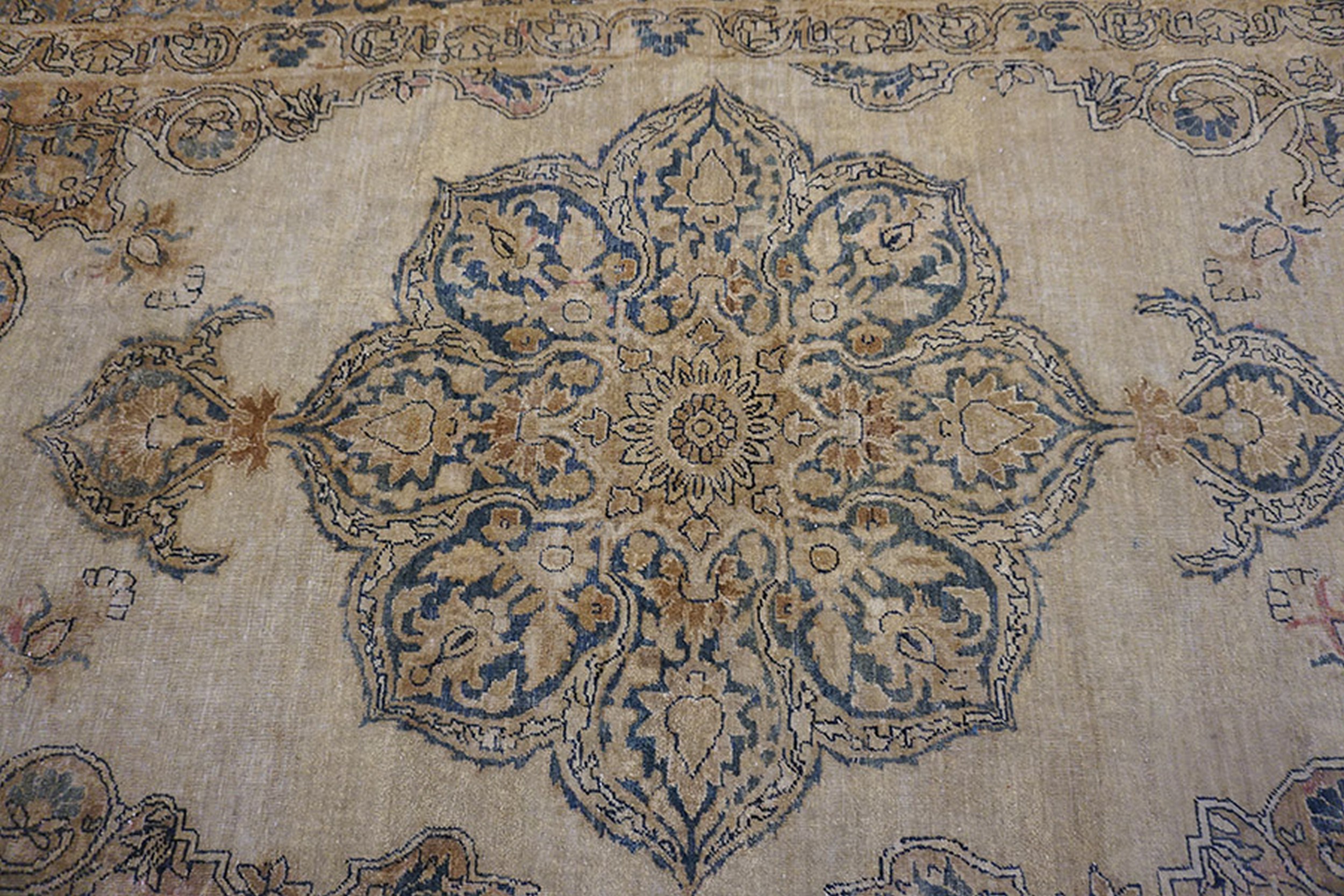
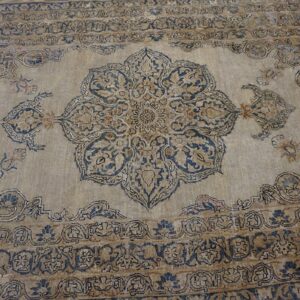
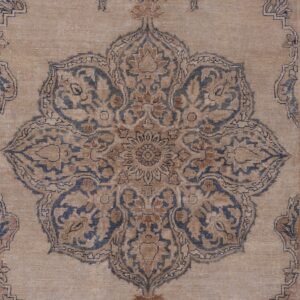
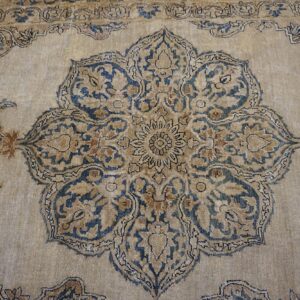
The composition is centered upon a delicate and complex Floral Medallion, which acts as the architectural heart of the piece. The drawing is remarkably fine, featuring “razor-sharp” execution of tiny botanical details—scrolling vines, blossoming rosettes, and perhaps the iconic boteh (paisley) or “thousand flowers” motif. The curvilinear nature of the design reflects the immense skill of the weaver, who had to meticulously knot the wool to mimic the graceful, sweeping lines of a calligrapher’s brush. The spaciousness of the corners (spandrels) balances the central medallion, creating a harmonious symmetry that is both timeless and serene.
The palette is anchored by a luminous Antique Cream and Ivory foundation. This soft, neutral ground provides a “parchment-like” stage for the secondary accents of muted rose, dusty blue, and soft sage green. Kerman weavers were famous for their mastery of delicate, pastel-leaning tones—often achieved through the use of rare local dyes like cochineal and walnut husks. The resulting color story is one of “Quiet Luxury,” offering a sophisticated alternative to the high-contrast primary colors found in more rustic tribal weavings.
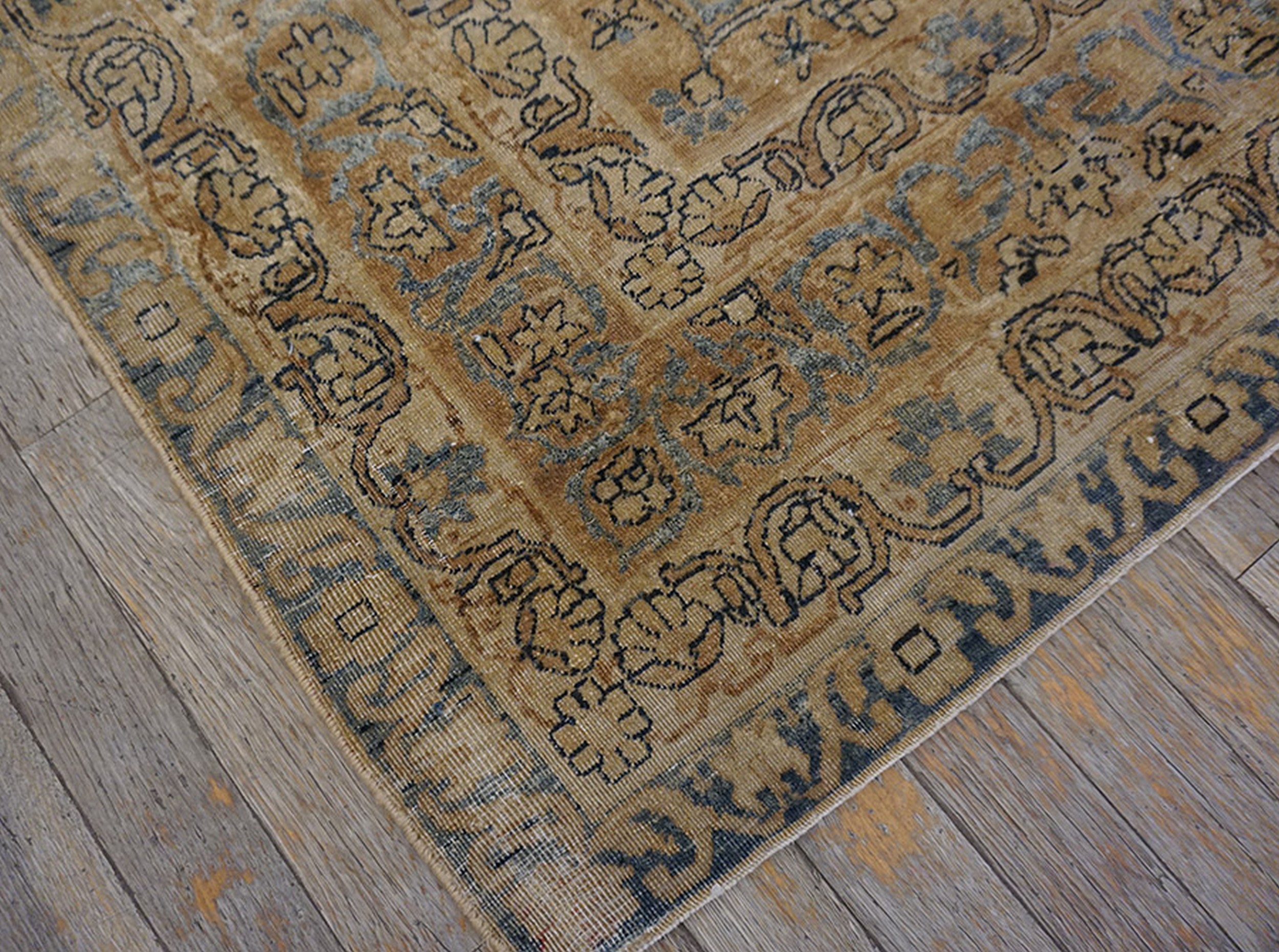
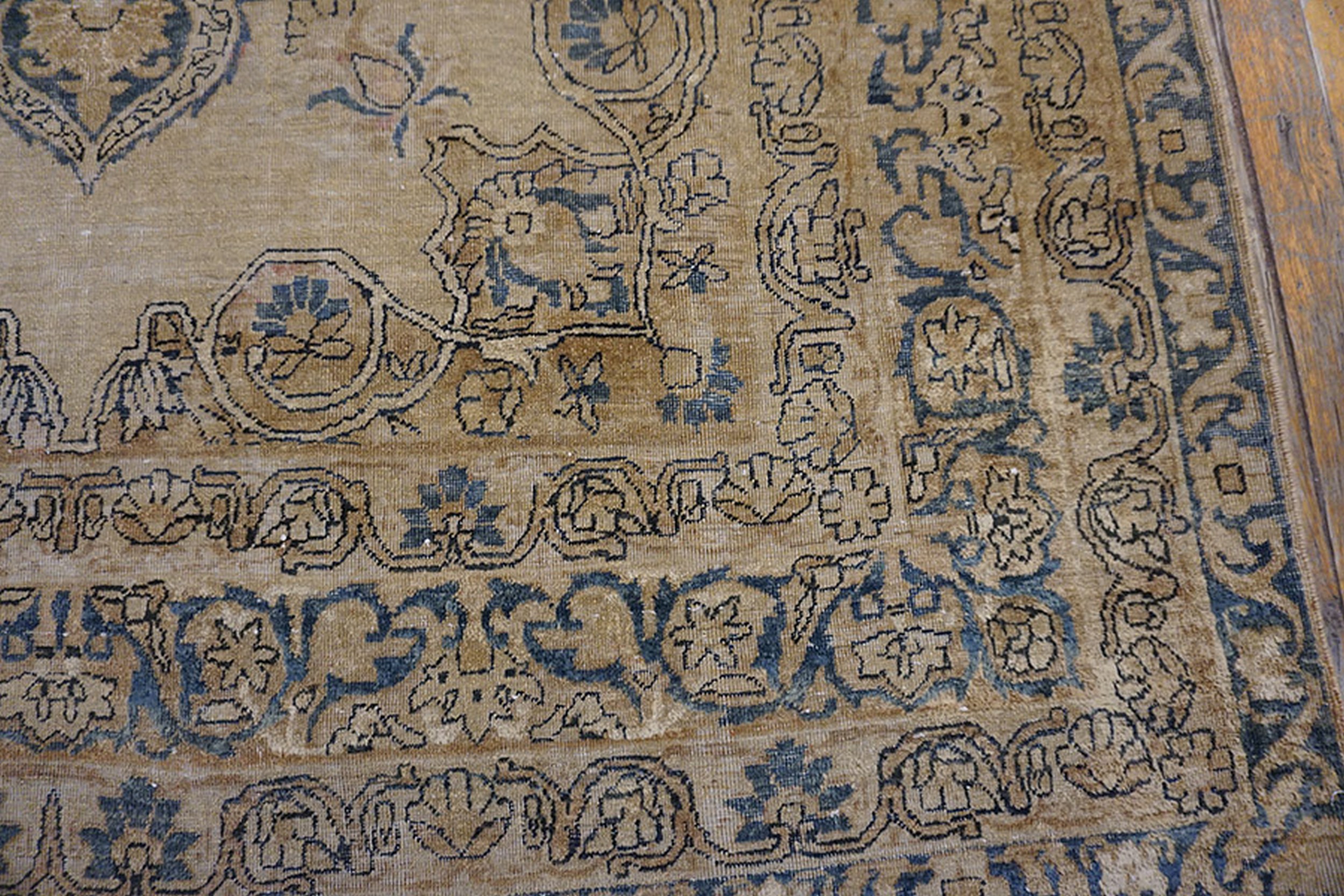
Technically, a Kerman of this era is prized for its expert construction and supple handle. Woven with a high knot density on a cotton foundation, the antique Persian rug possesses a “paper-thin” but incredibly durable structure. The wool used is often “Carmania” wool—exceptionally soft, fine, and lustrous—which gives the low-cut pile a silky, light-reflective quality. Over a century of use has mellowed the texture into a velvety patina, enhancing the rug’s historical soul.
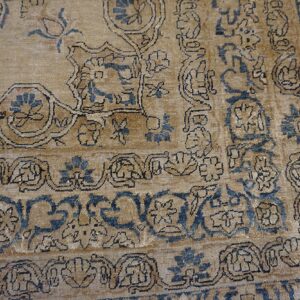
The borders serve as a sophisticated frame, typically featuring a series of “guard borders” that echo the floral complexity of the main field. This architectural layering “locks in” the airy elegance of the cream center, providing a sense of permanence and pedigree. To possess this antique Kerman floral medallion rug is to hold a monument to Persian artistic heritage—a work that bridges the gap between textile utility and fine art, transforming a small corner into a sanctuary of historical gravity and refined, floral grace.