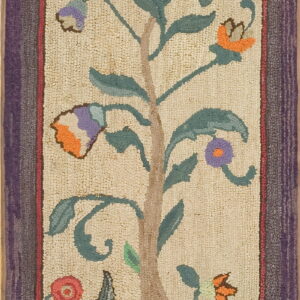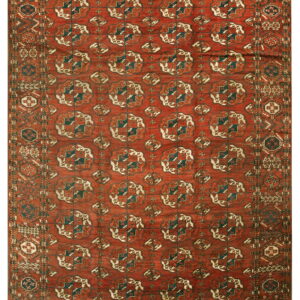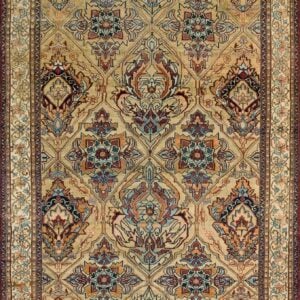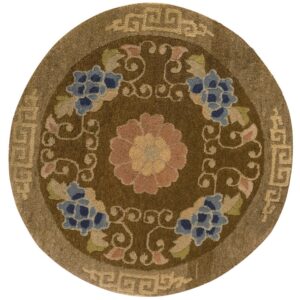
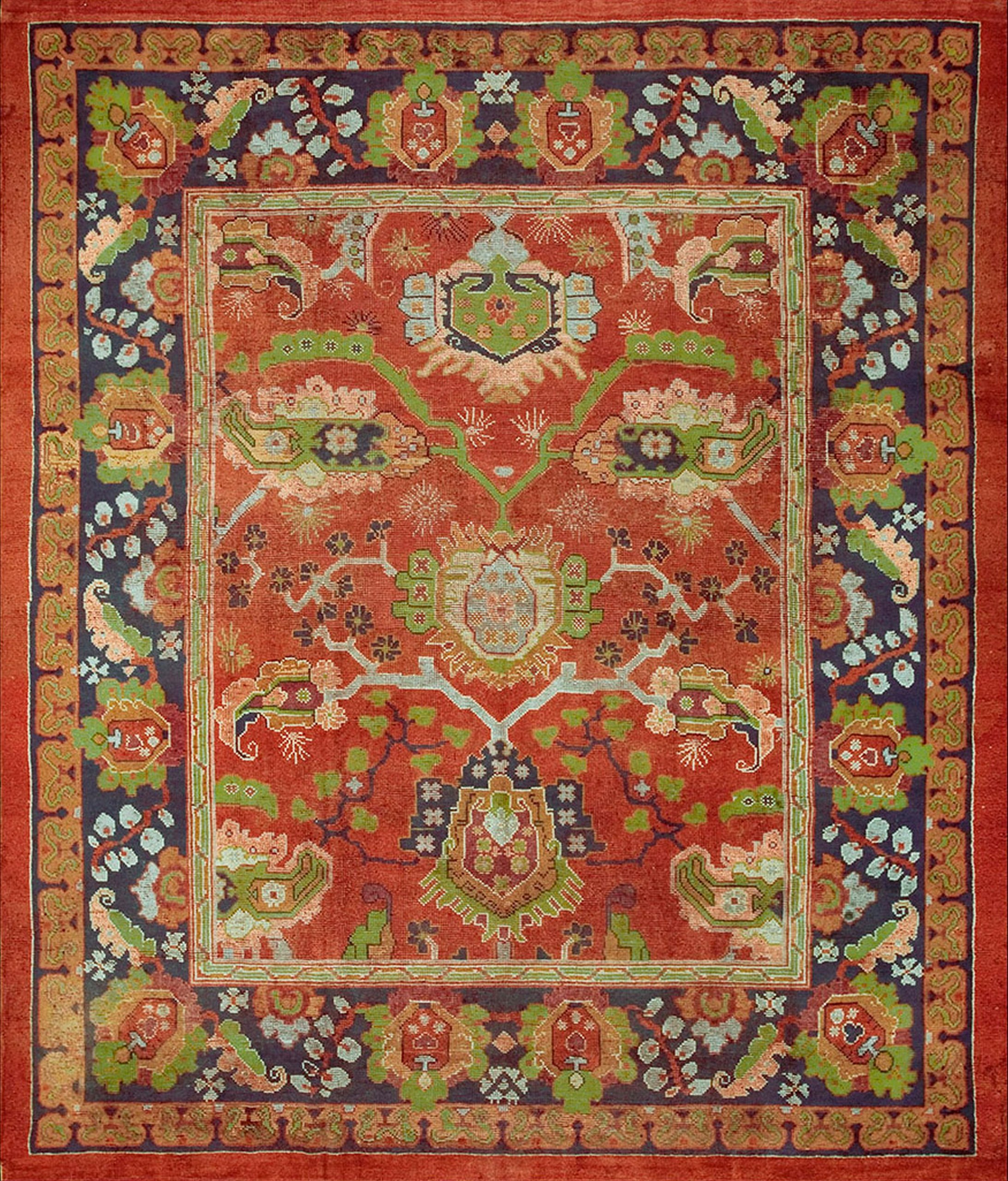
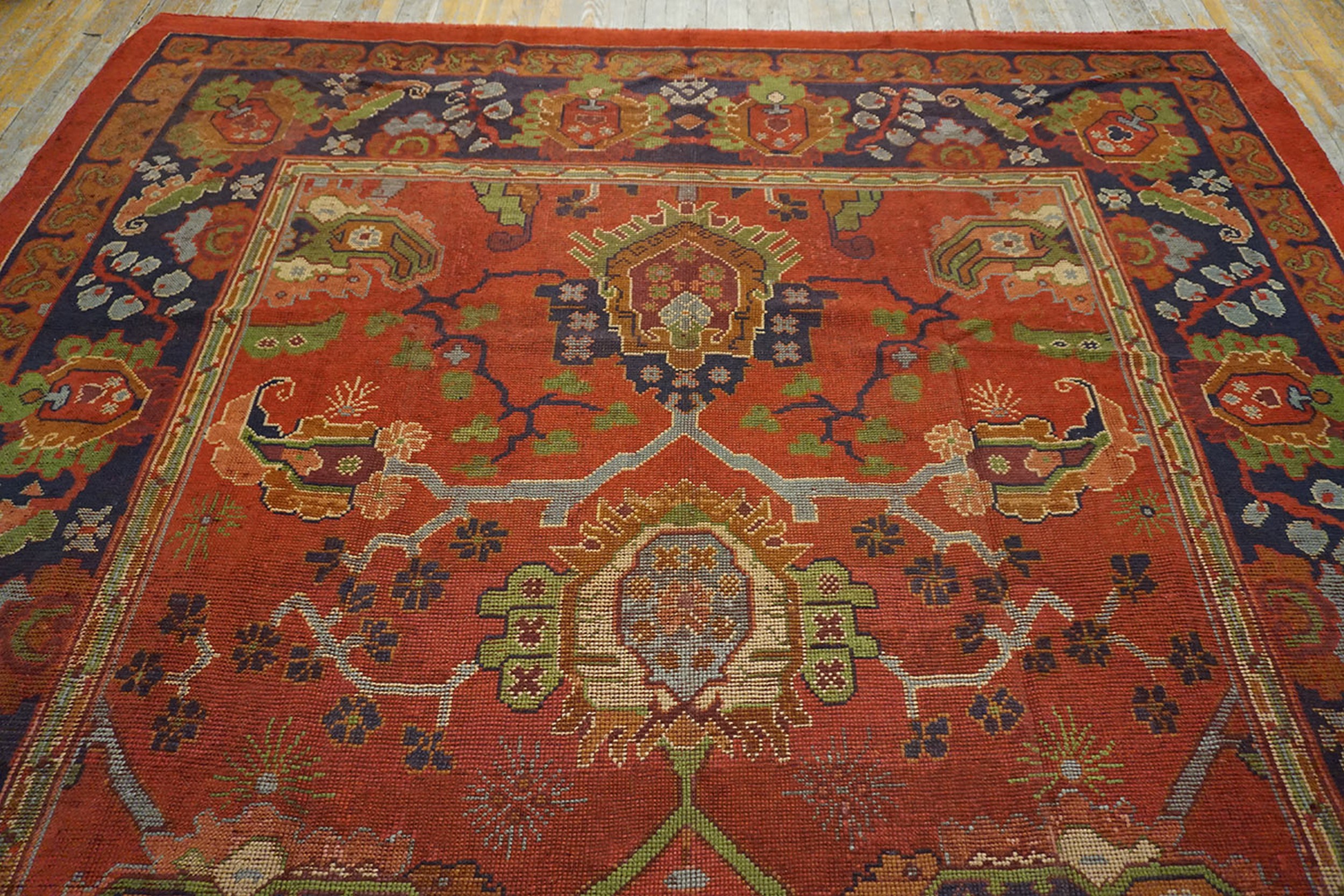
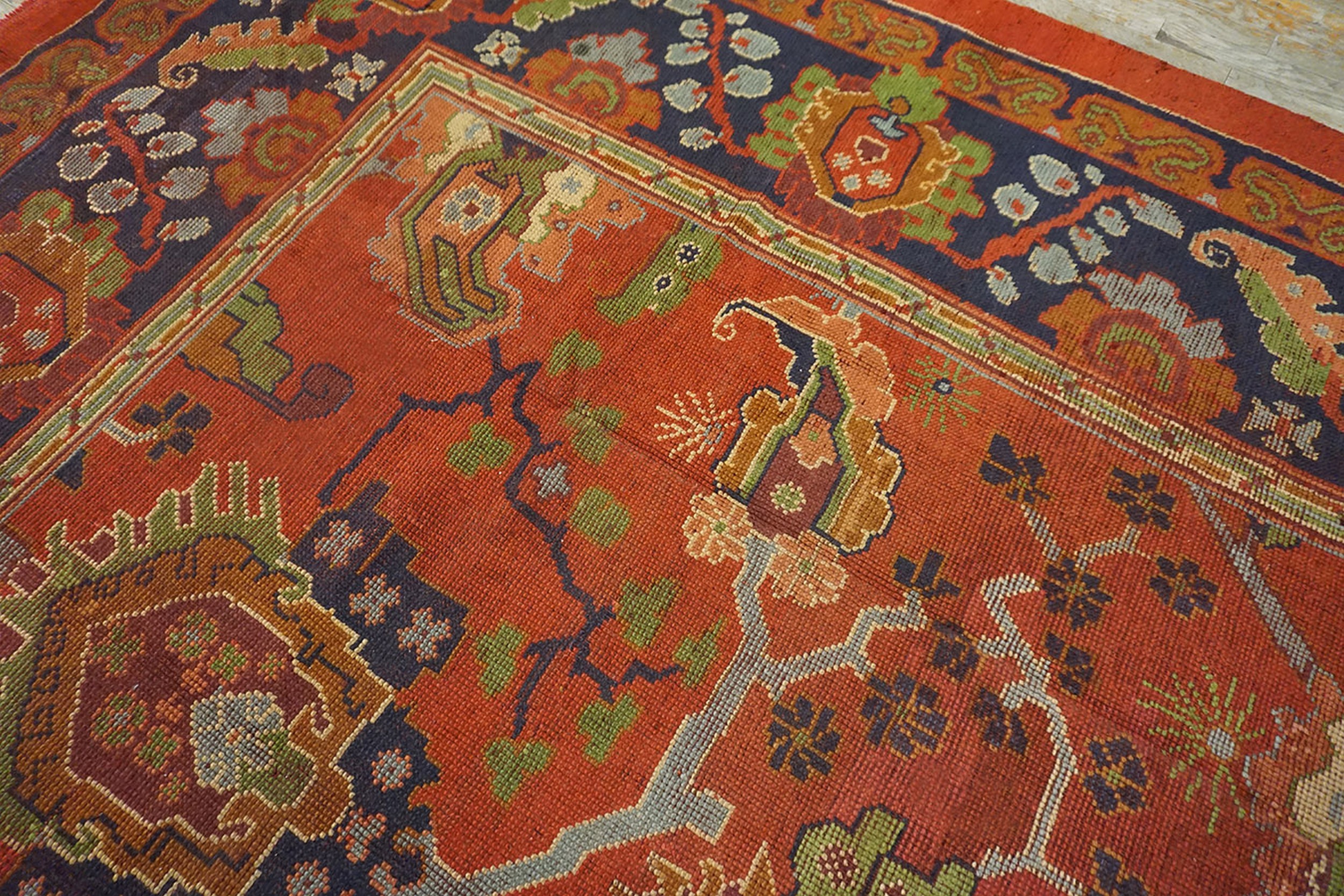
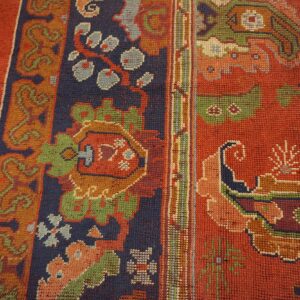
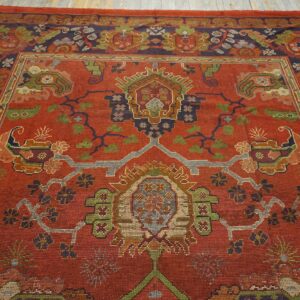
This magnificent antique Irish Donegal carpet, dating from the late nineteenth or early twentieth century, is a masterpiece of the “Arts and Crafts” movement, likely designed by the renowned Gavin Morton. Historically, antique Irish Donegal carpets represent the pinnacle of Western weaving, established in the rugged Northwest of Ireland to provide a high-quality, hand-knotted alternative to Persian imports. Gavin Morton, the principal designer for Morton & Co., was a visionary who moved away from Victorian clutter toward a bold, organic aesthetic influenced by William Morris and the Celtic Revival. This specific specimen is exceptionally rare due to its nearly “square” format—a shape highly coveted for its architectural versatility in modern and traditional spaces.
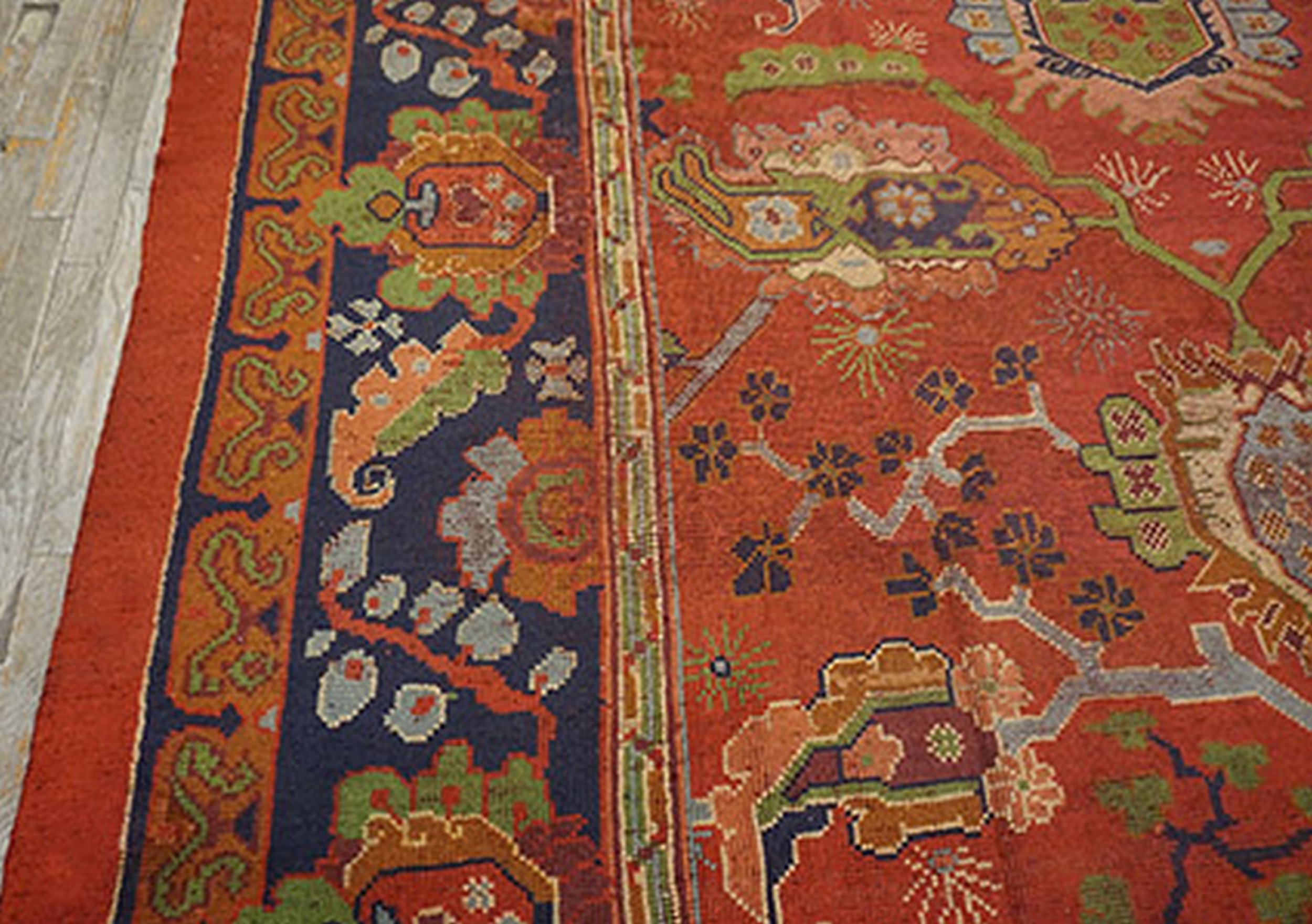
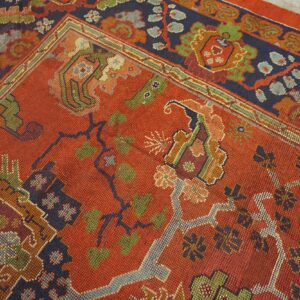
The rug composition is a virtuoso display of the “Large-Scale” Arts and Crafts design language. Eschewing the intricate, fine-point detail of Persian city rugs, this Donegal embraces a “Rustic” power, featuring monumental stylized flora, oversized palmettes, and thick, scrolling “Tree of Life” vines. The design philosophy here is one of “Truth to Materials”; the motifs are bold and graphic, intended to be seen from a distance as part of a total interior environment. The palette is a hallmark of the Donegal tradition, utilizing saturated “heather” tones—earthy ochres, deep forest greens, and muted terracottas—that reflect the wild Irish landscape and the natural, locally sourced dyes of the era.
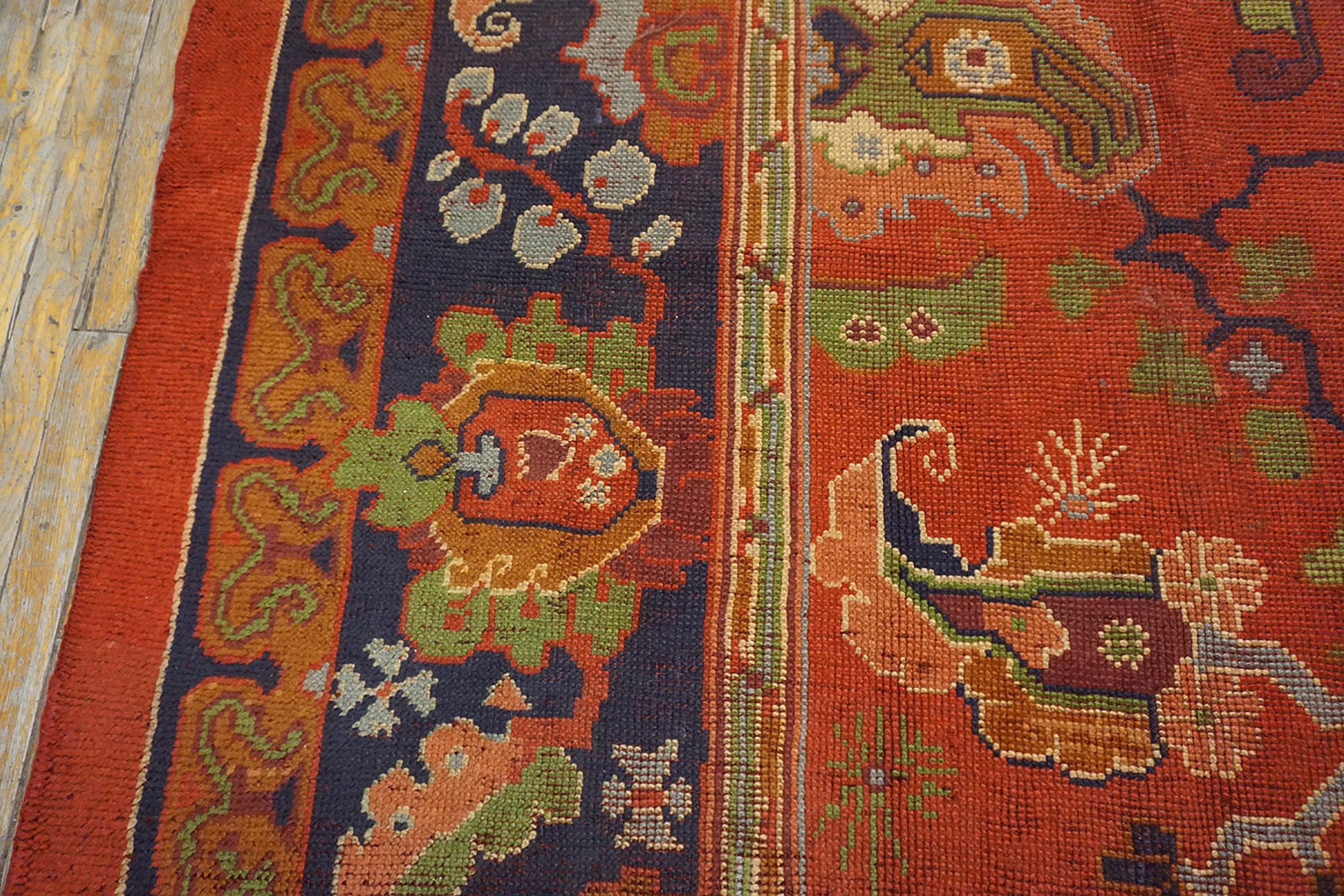
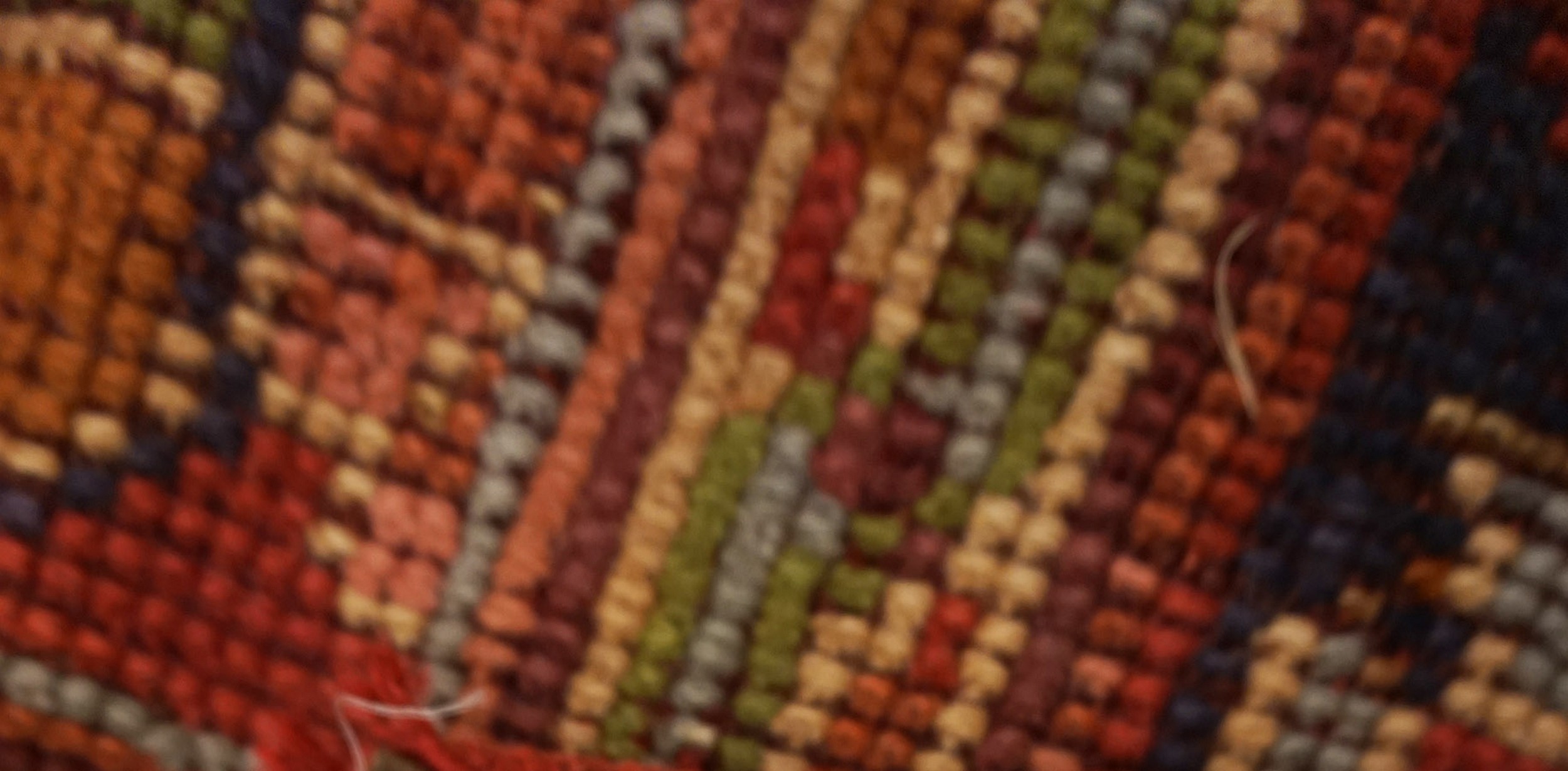
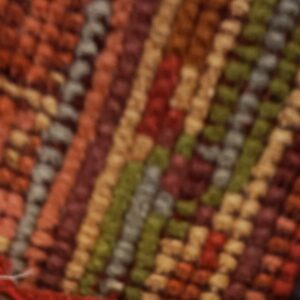
Technically, the antique Irish carpets are prized for their substantial, “architectural” pile and luxurious, heavy handle. Because they were hand-knotted using a coarser Ghiordes knot than their Eastern counterparts, they possess a unique, nubby texture that feels both rustic and incredibly opulent. This “Gavin Morton” style is characterized by a deliberate lack of busy borders, often using a single, broad decorative band to frame the central field, which allows the expansive, geometric-floral patterns to dominate the room.
To possess a square, large-scale Donegal of this caliber is to hold a monument to the British and Irish Design Reform. It is a work that bridges the gap between the ancient Celtic spirit and the modern, minimalist aesthetics of the early 20th century—a sprawling, hand-wrought textile that transforms a room into a gallery of Arts and Crafts history and timeless, organic grace.