
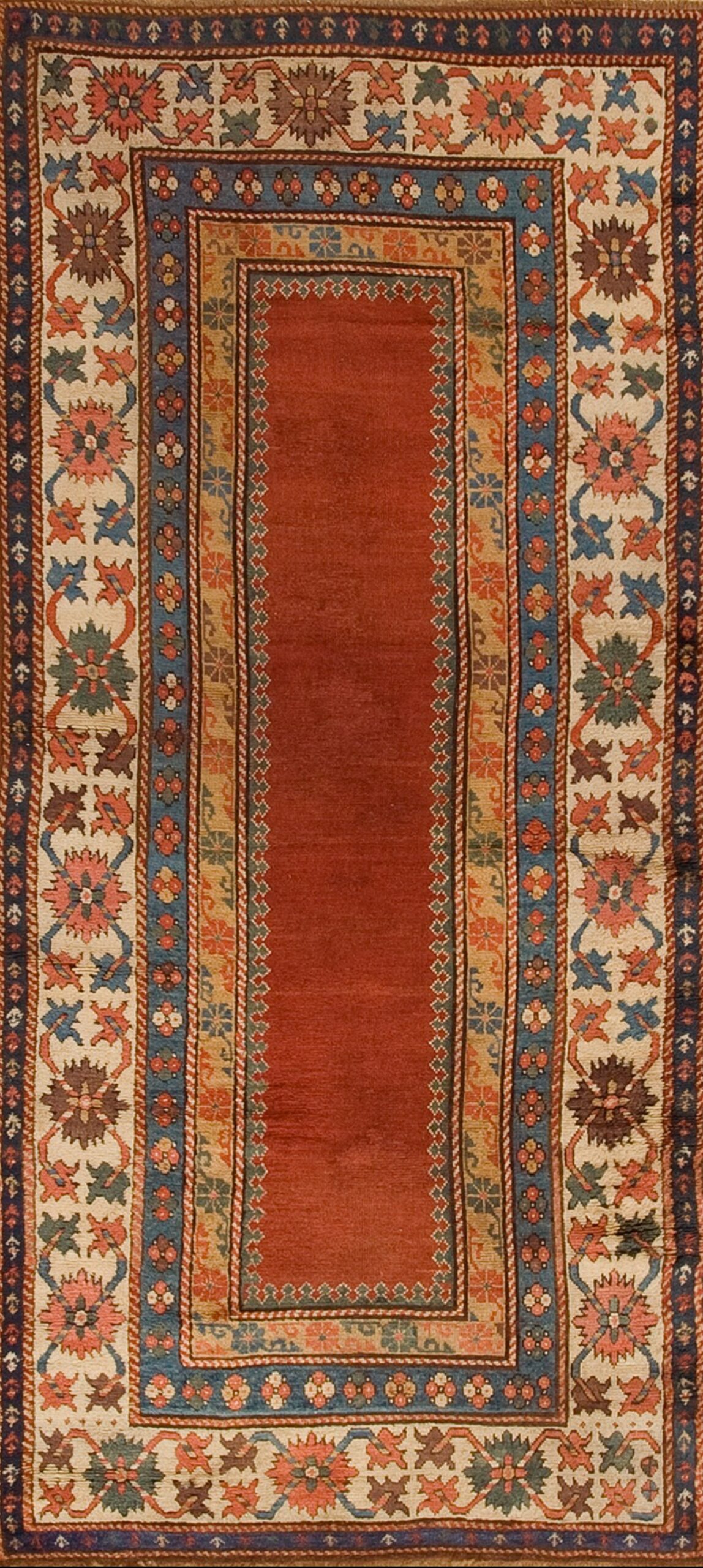
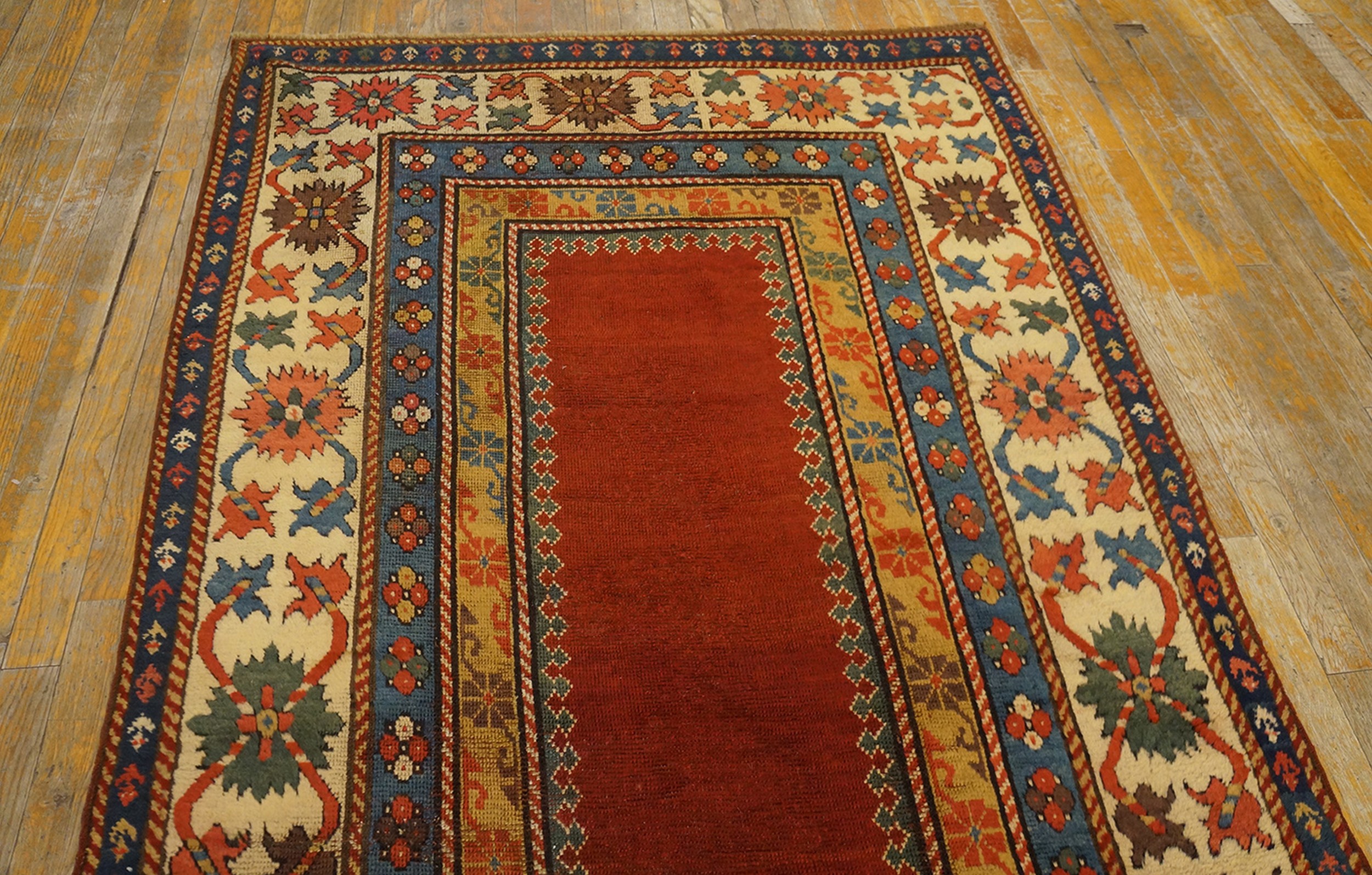
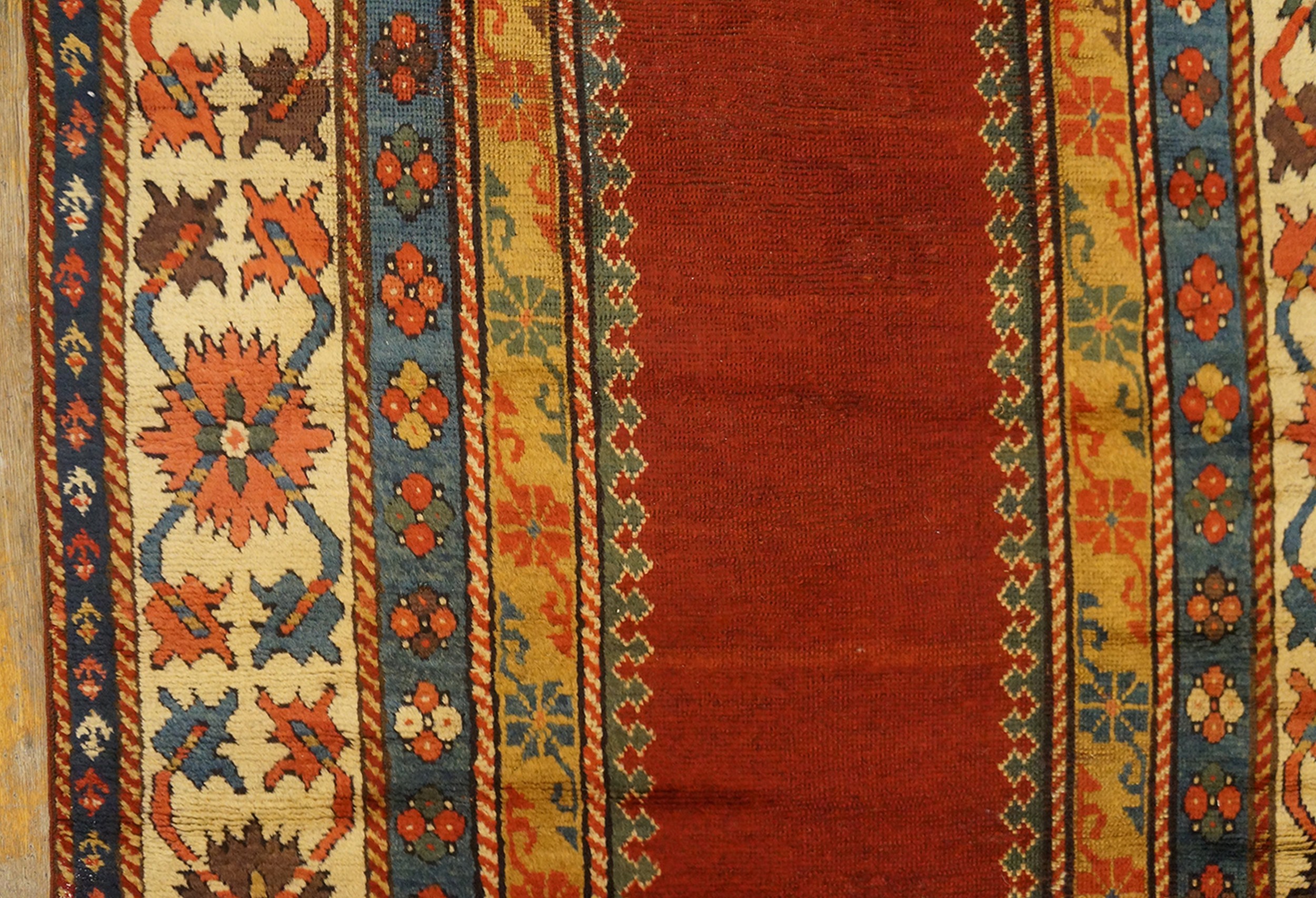
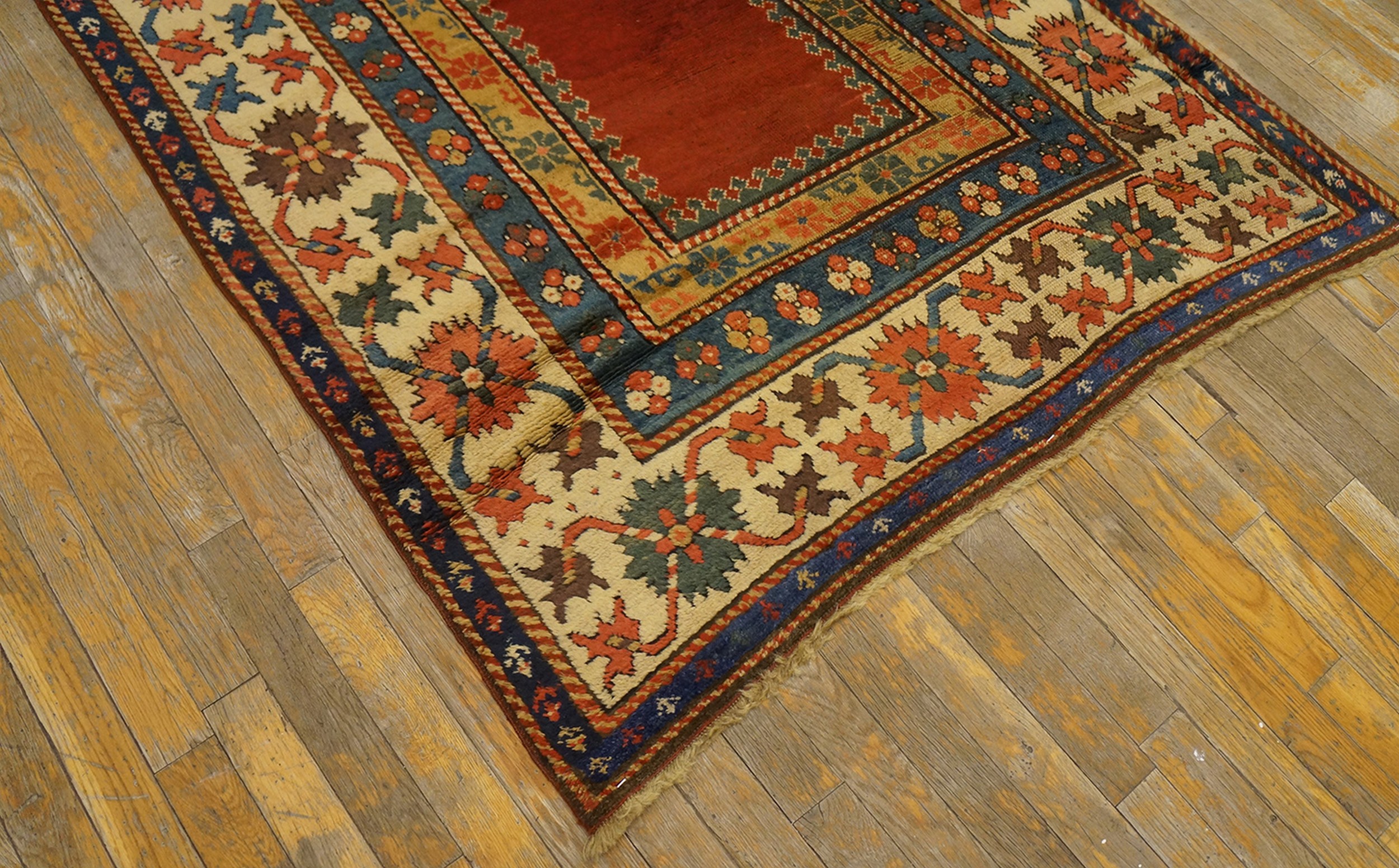
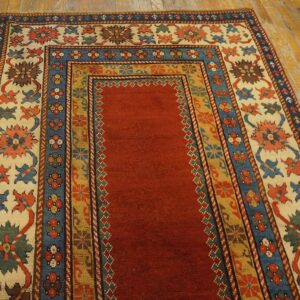
This mid-nineteenth-century tribal antique Caucasian carpet is a powerful monument to the “Architectural Minimalist” tradition of the high Caucasus Mountains. While most antique tribal Caucasian Kazak rugs are famous for their dense, explosive geometric medallions, this specimen is a significantly rarer find—a “Solid Open Field” design. This intentional use of negative space was often a stylistic choice reserved for the most confident weavers, allowing the sheer quality of the dye and the wool to speak as loudly as the tribal motifs themselves.
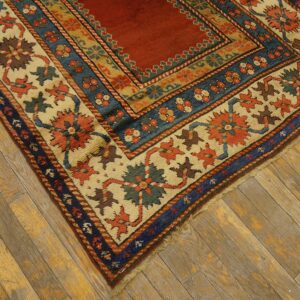
The composition is centered upon a magnificent, expansive solid open field, a design choice that gives the rug a modern, “color-field” energy despite its 170-year-old origins. The absence of a central medallion focuses the viewer’s eye on the Tribal Geometric details found in the perimeter and corner “spandrels.” These motifs—likely “hooked” polygons or stylized “S” forms (ancient Zoroastrian symbols for light and protection)—are rendered with the fierce, angular drawing that defines the Kazak spirit. This layout is highly prized by collectors for its “contemplative” quality and its ability to act as a grounding foundation in both rustic and contemporary minimalist interiors.
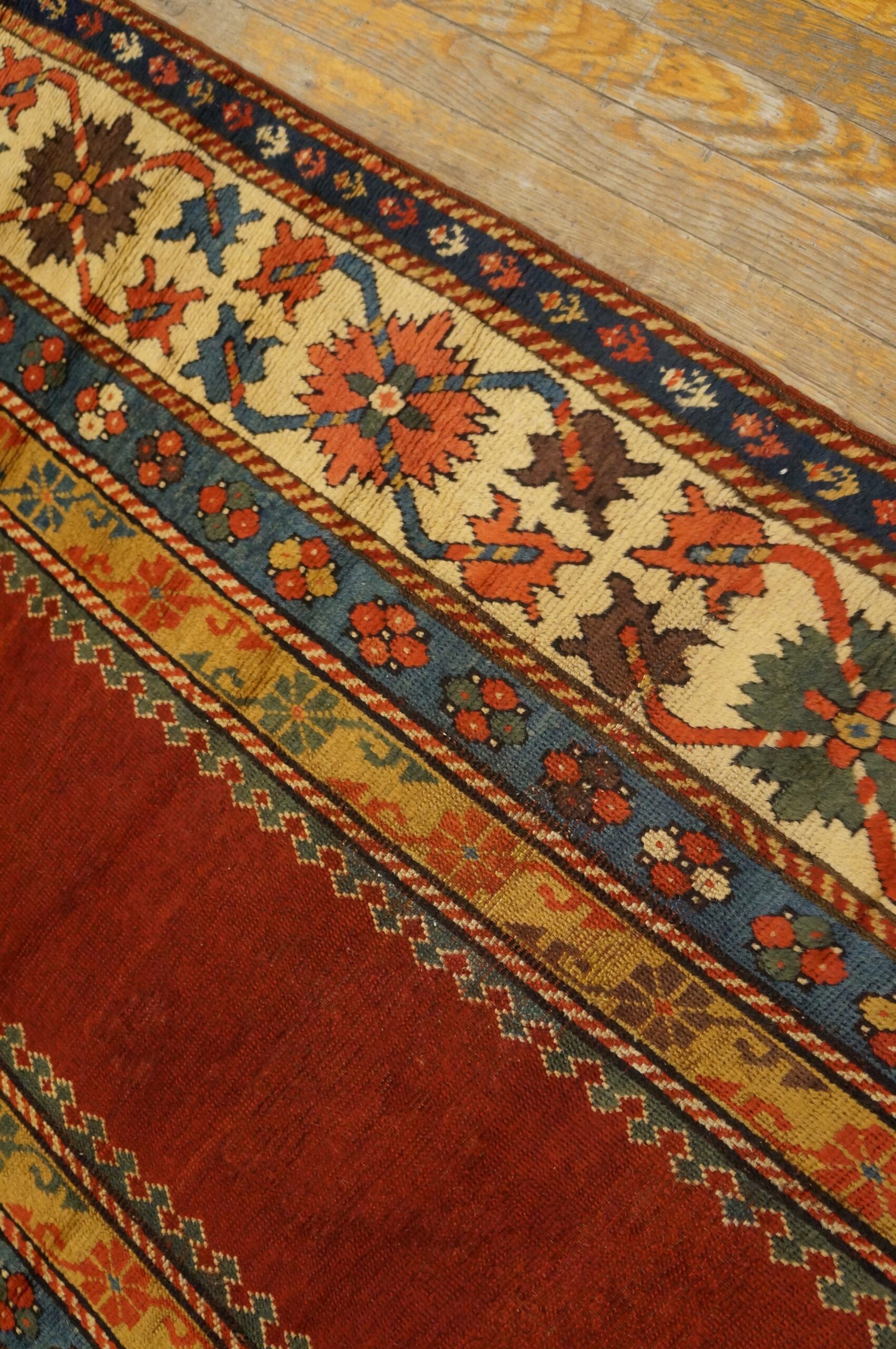
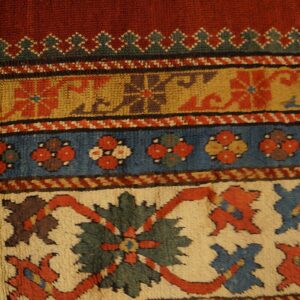
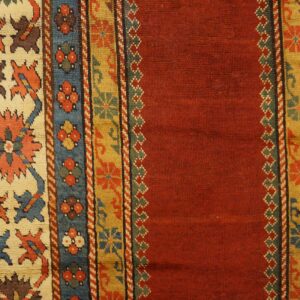
The palette is anchored by a breathtaking and iconic Caucasian Red foundation. This color is the result of a masterful use of madder root, which, in the mid-19th century, was fermented and applied to the wool in a process that could take weeks. The result is a color of extraordinary depth and resonance. Because this is an antique specimen, the field exhibits a magnificent “Fire-like” Abrash (tonal variation), where the red shifts from a deep, earthy terracotta to a vibrant, sun-drenched orange. Against this monochromatic stage, the secondary accents in indigo blue, creamy ivory, and forest green provide a sharp, jewel-toned contrast.
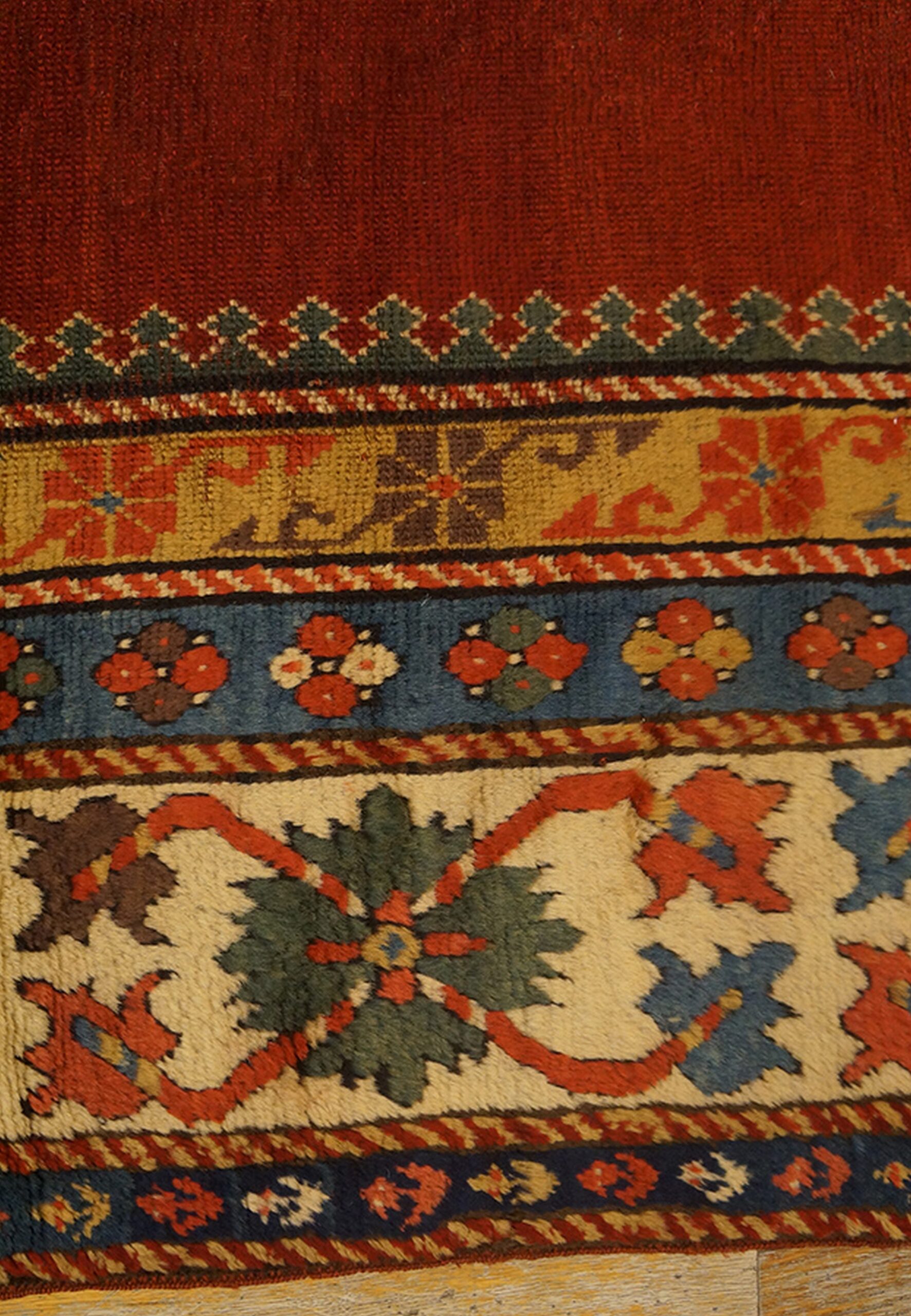
Technically, this Kazak is prized for its substantial, “meaty” handle and its high-grade “highland” wool. Sourced from sheep that grazed in the brutal cold of the mountain peaks, the wool is exceptionally rich in natural lanolin. This creates a pile that is not only incredibly durable but possesses a natural, healthy luster that makes the matte surface appear to glow from within. The weave is characteristically “chunky” and robust, giving the antique tribal design area rug a flexible, almost “blanket-like” drape that is the hallmark of authentic nomadic production.
The borders act as a protective architectural frame, often featuring the “Medallion-and-Bracket” or “Leaf-and-Wineglass” motifs, providing a disciplined geometric contrast to the “infinite” energy of the open field. To possess this Mid-19th Century Open Field Kazak is to own a piece of tribal history. It bridges the gap between the rugged survival of the Caucasian steppe and the sophisticated “less-is-more” aesthetic of the modern world—transforming any space into a sanctuary of historical gravity and warm, sun-burnished soul.