
Introduction to Polka Dot Design Rugs
Explore our curated selection of designer Polka Dot Rugs and find the perfect circular motif for your home.
What Are Polka Dot Rugs?
Polka dot design rugs are decorative floor coverings defined by repeated dot motifs arranged in playful or orderly sequences. Whether bold and oversized or subtle and uniform, these rugs transform a room with rhythm, balance, and whimsy. A polka dot design rug can be woven, tufted, or printed, and it may feature dots as crisp circles, hand-drawn spots, or textured round elements raised above the ground weave.
Designers often use them as a grounding statement in children’s rooms, modern lounges, or eclectic interiors where pattern is essential. Unlike striped or geometric rugs, which convey direction and structure, a dot pattern rug feels lighter and more dynamic, almost musical in the way the circles repeat across the surface.
Today, you’ll find spotted area rugs in every material and size, from plush wool carpets to sleek flatweaves, bringing a sense of energy and charm to spaces. What distinguishes these pieces is not only the repeating motif but also their cultural resonance: dots in design often suggest joy, optimism, and a touch of the avant-garde.
That quality carries forward into flooring, where the cheerful repetition of dots transforms simple textiles into statement décor.
Name, Etymology & Pattern Origins
The word “polka dot” first entered fashion vocabulary in mid-19th century Europe and America, directly tied to the polka dance craze sweeping ballrooms at the time. The pattern was not invented alongside the dance, nor does it reference steps or costumes; rather, its naming borrowed from a trend. Just as the dance represented modernity, novelty, and widespread enthusiasm, so too did the dotted textile.
By the 1850s, magazines and fabric houses used “polka dot” to market spotted prints and accessories, signaling cheerfulness and fashionable flair. Yet the polka dot design in textiles predates this Western label by centuries.
In India, the resist-dyeing art of bandhani produced fields of small white or colored dots against deep indigo or crimson cloth.
In Japan, shibori techniques created spotted motifs through intricate folds and ties, often yielding circular bursts of dye. Across Africa and the Middle East, dotted embroidery and weaving added texture and rhythm to cloth long before the 19th century.
The West’s naming of the polka dot design carpet or dress fabric was less an invention than an appropriation of a global visual language.
Dots carried symbolic meaning across cultures: in some traditions they suggested fertility, continuity, or cosmic order, while in others they were simply decorative, offering lively contrast against plain grounds. By the Victorian era, however, “polka dot” became shorthand for spirited, modern, and fashionable—qualities that spread quickly through clothing, upholstery, and eventually rugs.
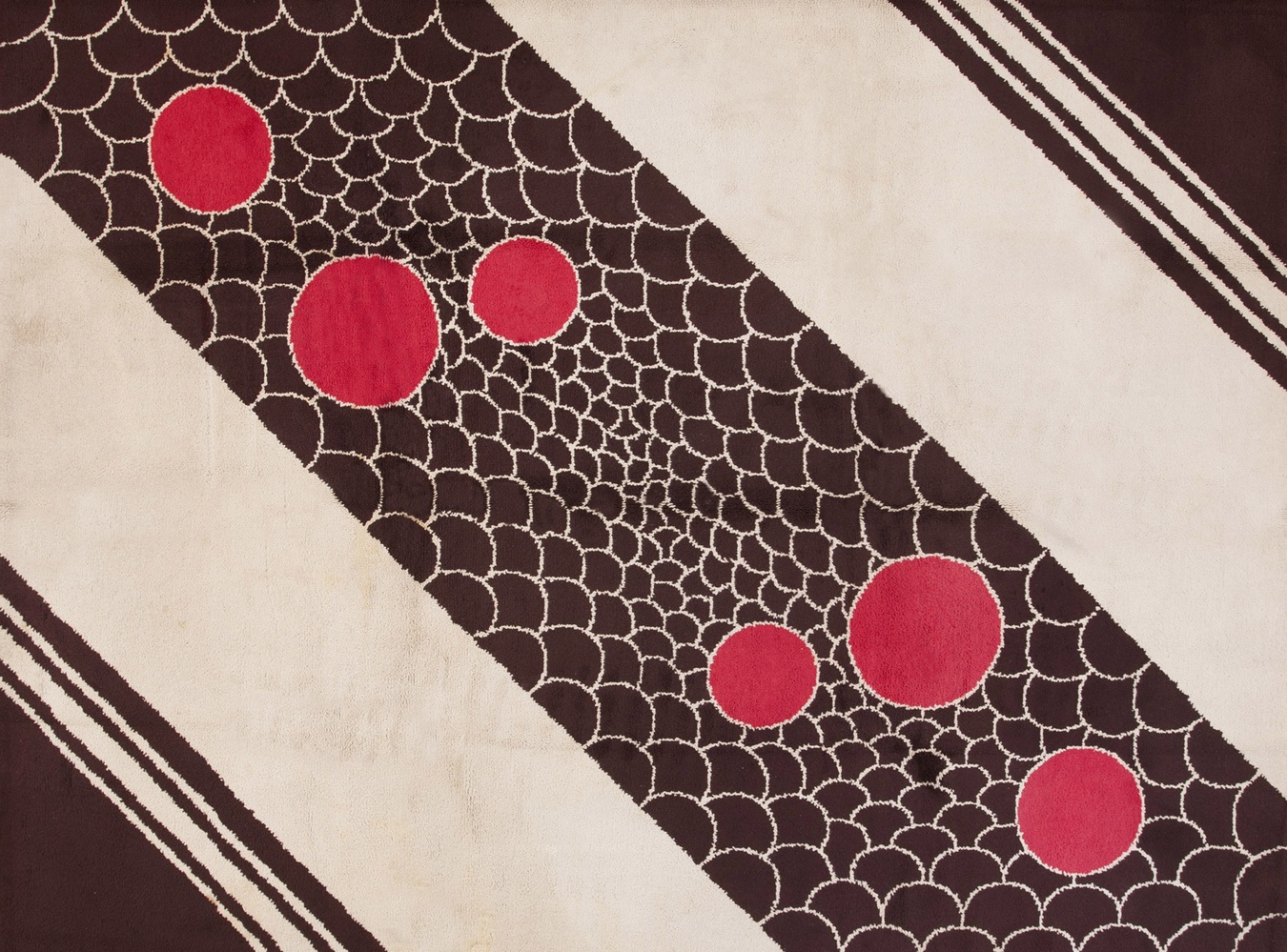
In short, polka dot design rugs represent both a historical fashion phenomenon and a universal decorative instinct. While the term arose from European cultural trends of the 19th century, the motif itself is far older, proving that spotted designs are one of humanity’s most enduring ways to animate textiles.
As these dots migrated from fabric to floor, they carried with them centuries of cross-cultural meaning while adapting to modern interior design.
Historical Evolution of Polka Dot Design Rugs
Pre-Polka Dot Dot Design Motifs
- India’s Bandhani — Why: This resist-dyeing technique produced thousands of tiny white or colored dots against rich backgrounds, showing how circular motifs predated the Western “polka” label.
- Japan’s Shibori — Why: Tie-dye methods yielded dotted bursts and concentric rings, linking circles with craft traditions centuries before polka dots became fashionable.
- African Textiles — Why: Beadwork and embroidery often used dotted patterns for rhythm, fertility symbolism, and visual storytelling.
- Middle Eastern Weaves — Why: Geometric carpets sometimes incorporated repeating circles or medallion-like dots, revealing how round motifs were part of global textile vocabulary.
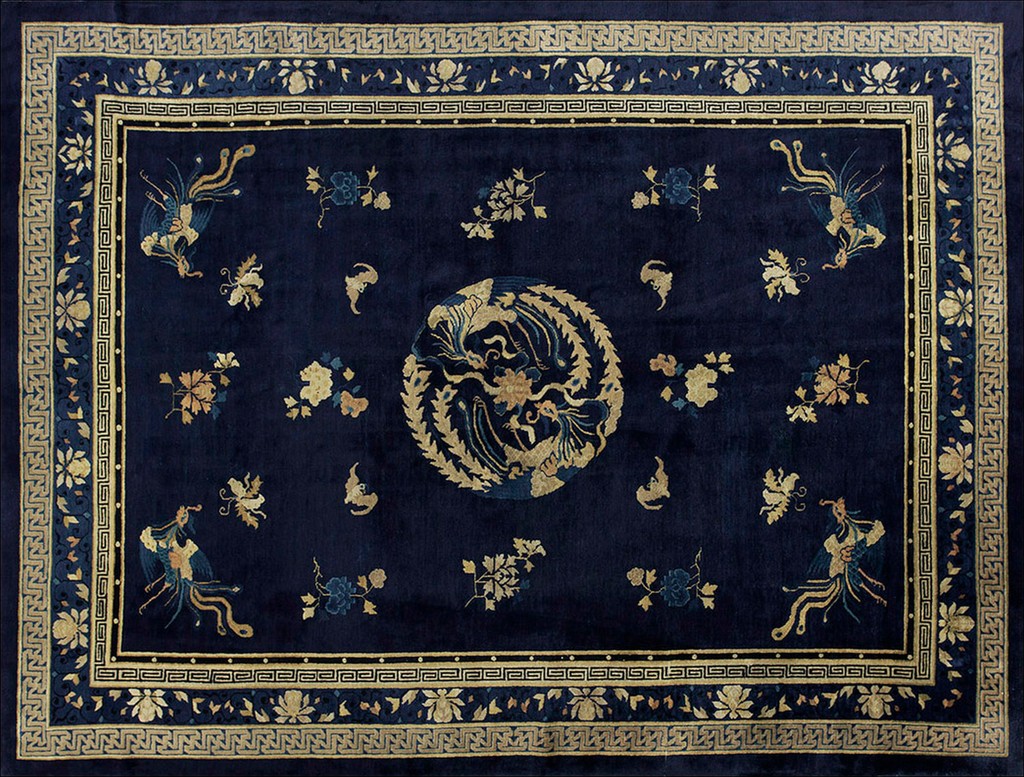
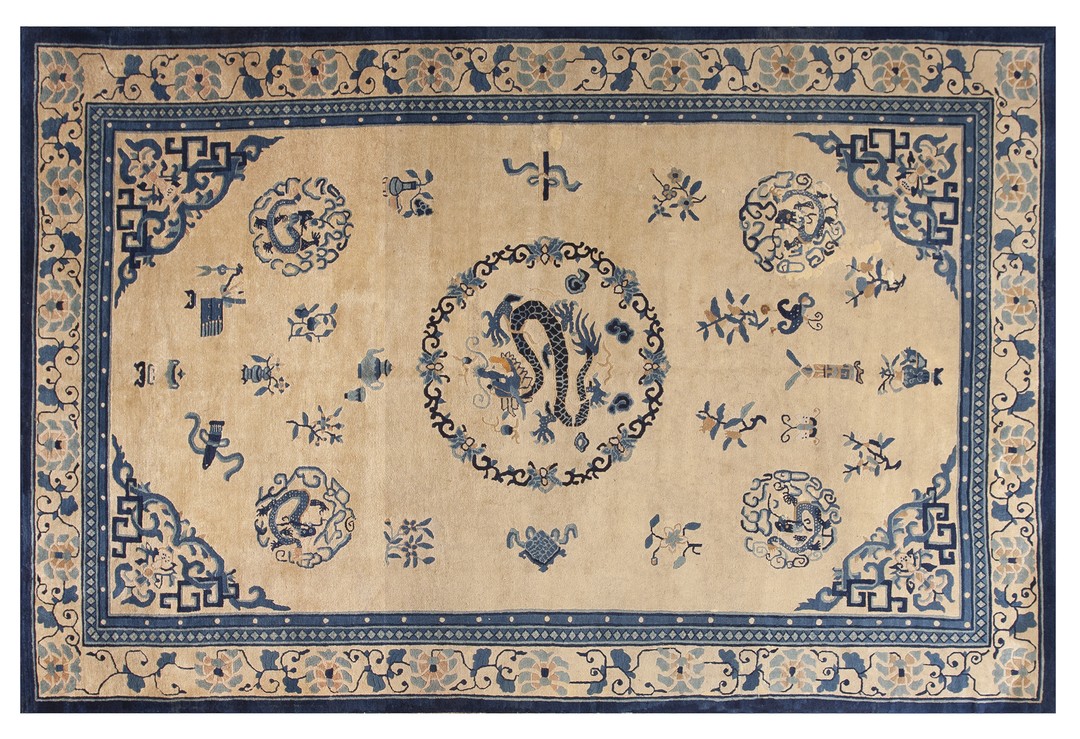
Antique Peking Chinese Medallion Blue 1890s Blue Rug by Rugs On Net
These traditions remind us that the history of polka dot design rugs begins not with the Victorian parlor but with humanity’s long-standing fascination with repeating circular forms.
19th-Century Polka Dot Fad and Impact
By the 1840s, Europe and America were swept up in the polka dance craze, and with it came the branding of everyday products with the word “polka.” Clothing, ribbons, and fabric prints featuring dotted repeats were suddenly advertised as “polka dot.” The term symbolized vitality and modernity rather than any specific dance step.
This coincided with the Industrial Revolution’s advances in machine weaving and textile printing, which allowed for precise geometric repeats. Soon, carpets and household textiles adopted dotted designs to align with fashion, making the cheerful spotted motif accessible across both clothing and interiors.
Migration from Fashion to Rugs
How did polka dot design motifs migrate from fashion to rugs? As the spotted pattern became synonymous with cheer and novelty in dresses and accessories, manufacturers realized its potential in home décor.
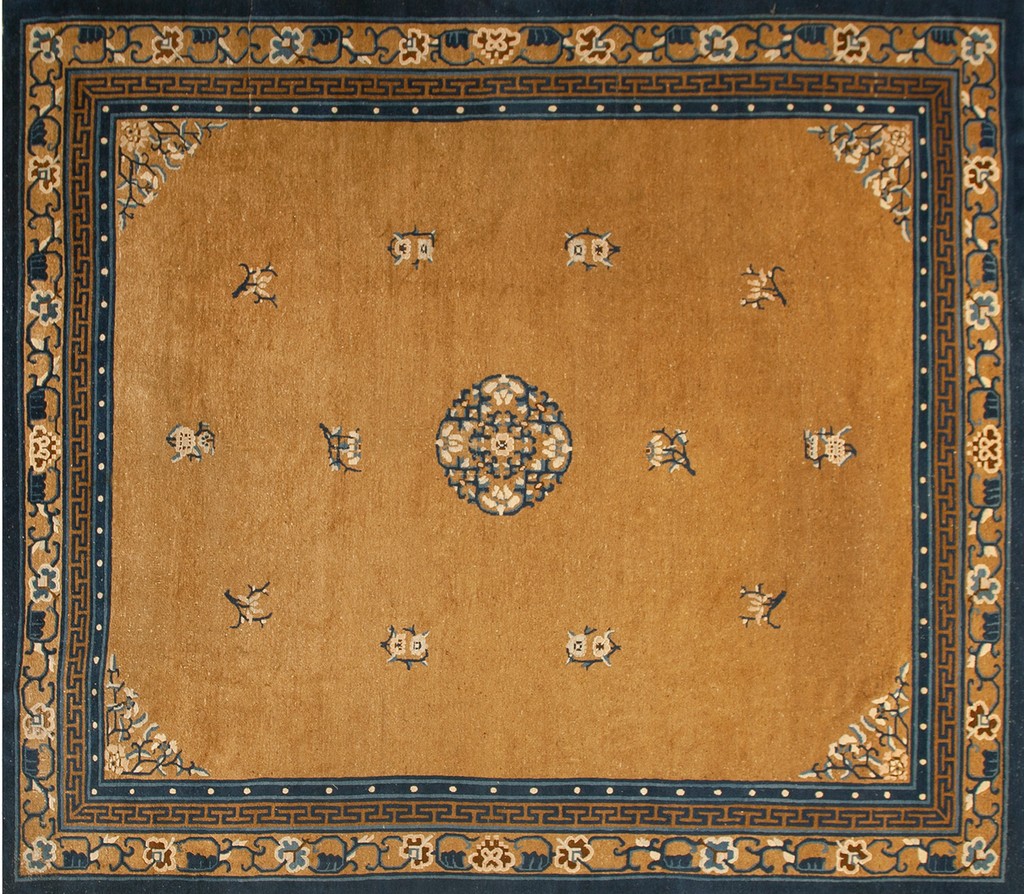
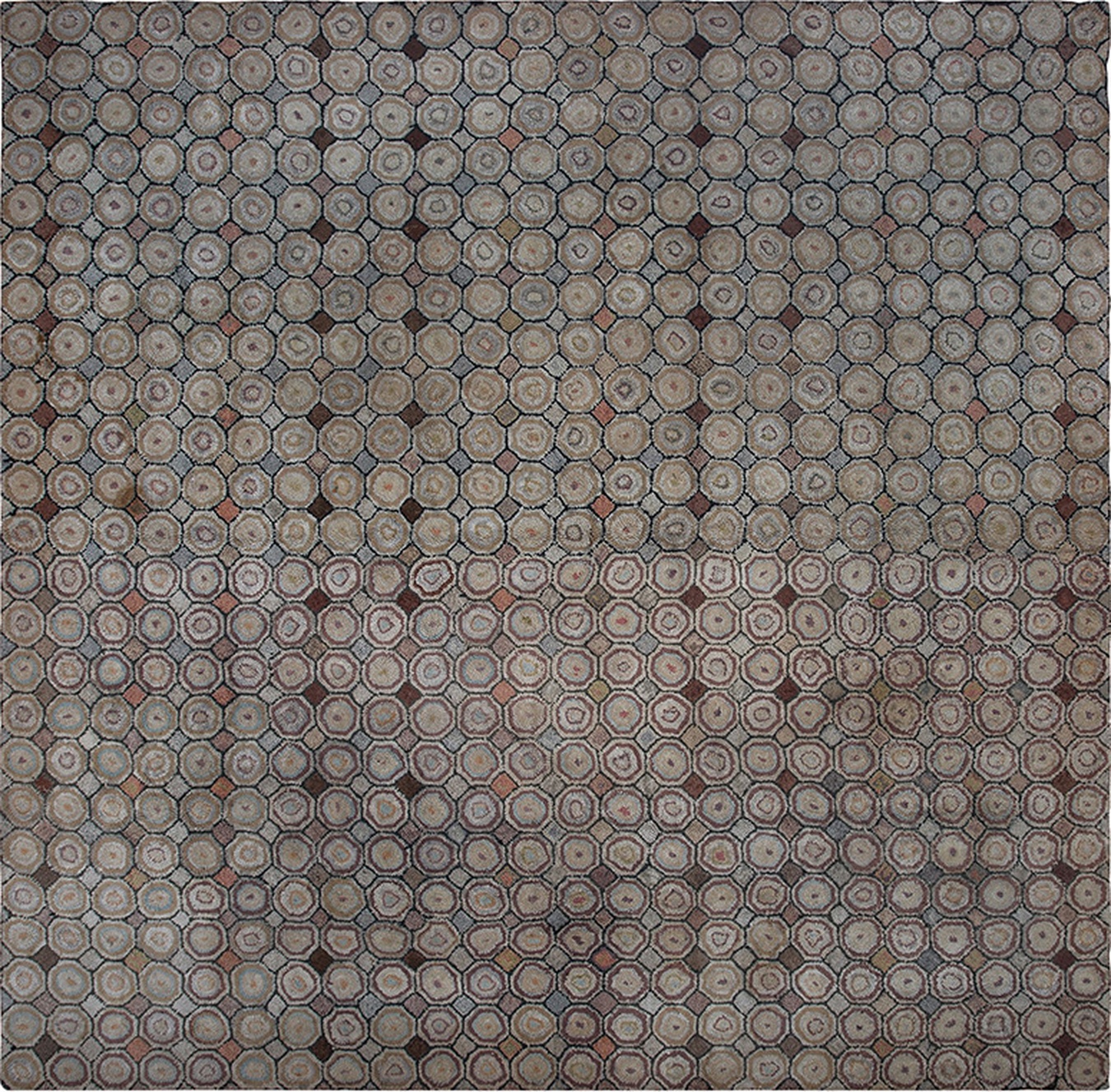
Wool Antique Rectangle 1920s Hand Knotted Pile Rug From China by Rugs On Net
Advances in carpet weaving and later rug printing allowed mills to replicate the dotted repeats seen in fashion fabrics. Consumers who embraced polka dot design dresses in the 1850s could now coordinate with polka dot design carpets underfoot, a clear reflection of how cultural taste and technological innovation worked together to shape interior style.
20th & 21st Century Adaptations
In the 20th century, dotted motifs in rugs evolved alongside broader artistic movements. The mid-century dot carpet often reflected streamlined modernism, with larger, graphic circles against neutral fields, echoing Scandinavian design principles. In the 1960s, Pop Art pushed the dot motif into bolder territory, with oversized circles inspired by artists like Yayoi Kusama and the comic-inspired Ben-Day dots of Roy Lichtenstein.
Later, digital design and contemporary printing expanded the range of spotted rugs, producing crisp, computer-generated repeats or playful irregular spots suited for children’s rooms and minimalist lofts alike. Today, polka dot design rugs serve both as nostalgic nods to mid-century aesthetics and as fresh, digitally enhanced statements.
Collectibility & Vintage Value
- Mid-Century Rugs — Why: Original vintage polka dot rugs from this era reflect the optimism and playful design of the postwar period, making them desirable for collectors.
- Pop and Art-Inspired Rugs — Why: Rugs influenced by the bold dot experiments of Pop Art are considered collectible polka dot rugs, especially when tied to notable designers.
- 1980s Minimalist Dots — Why: These often featured muted palettes and larger repeats, appealing today to enthusiasts of retro-modern interiors.
- Condition and Provenance — Why: As with all rugs, wear, authenticity, and designer attribution raise value, while overuse or fading can diminish it.
Are vintage 1950s polka dot design rugs still available today? Yes—though scarce, they surface at auctions and specialty dealers. Can vintage polka dot rugs appreciate as collectibles? Absolutely, especially when tied to mid-century or Pop Art design movements.
How do mid-century polka dot rugs differ from modern ones? Mid-century examples emphasized handcrafted quality and bold yet simple geometry, while modern rugs often use digital tools to create highly precise or irregular, painterly dots. Together, these stages illustrate that the history of polka dot design rugs is more than decoration.
It reflects the migration of a global motif into Western fashion, its spread into home décor, and its continual reinvention as both a nostalgic collectible and a contemporary design choice.
Design Characteristics and Visual Effects
Layout, Repetition & Symmetry
Polka dot design rugs are defined by the arrangement of circular motifs across their surface. The layout may follow a grid, producing an orderly and balanced rhythm; a staggered repeat, where dots offset each row for a dynamic effect; or a random scatter, creating spontaneity and movement.
Symmetry gives a sense of structure, while irregular spacing leans toward playful or artistic expression. A dot pattern rug effect changes dramatically depending on this layout: perfect alignment conveys elegance and precision, while scattered dots feel whimsical and casual.
Dot Scale: Micro-Dot vs. Oversized
How does dot scale change a polka dot design rug’s vibe? Small, tightly spaced dots—often called micro-dot rugs—read as subtle, textural, and sophisticated, almost like a fine weave from a distance. These work well in spaces where pattern should enrich without dominating. In contrast, an oversized dot carpet transforms a room into a bold, graphic statement.
Large circles are eye-catching, playful, and even theatrical, making them ideal for modern interiors, children’s rooms, or retro-inspired designs. The choice of scale directly shapes the mood, from understated chic to exuberant fun. Should small rooms use micro-dot or large-dot rugs? In compact spaces, micro-dots often feel less overwhelming and add texture without shrinking the room visually.
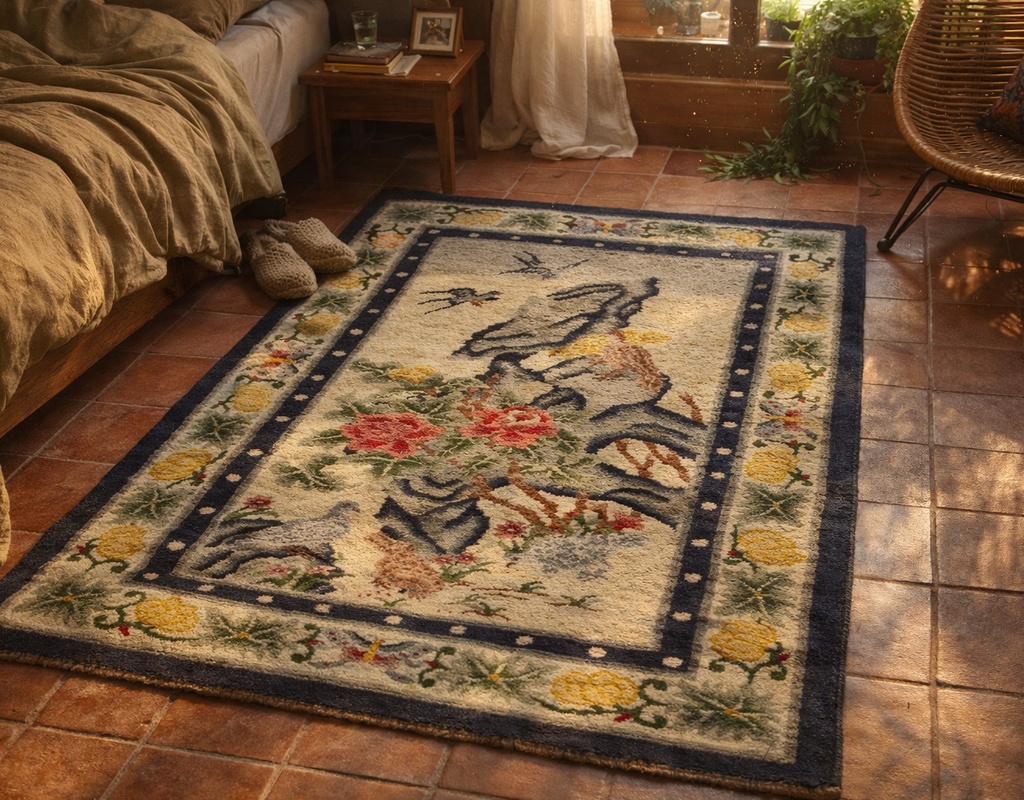
Natural light illuminates the intricate details of a traditional floral and bird-themed area rug in a tranquil bedroom setting.
Oversized dots can work too—but only if the palette is restrained, ensuring the bold pattern doesn’t overpower the scale of the space.
Color Schemes & Contrast
The visual impact of polka dot design rugs also relies heavily on color. High-contrast duotones, such as black and white or navy and ivory, evoke timeless chic and graphic clarity. Multicolored dots on neutral grounds bring playful energy, while tone-on-tone combinations, like cream on beige, whisper subtle elegance.
Contrast defines mood: sharp oppositions feel modern and assertive, while soft gradients read as refined and calming. Designers often leverage these palettes to either anchor a room or inject vibrancy into otherwise minimal décor.
Material & Texture Contrasts
Polka dot designs can be amplified through materials and textures. In some cases, silk dots shimmer atop a matte wool ground, creating tactile luxury. Variations in pile height—such as carved or tufted circles against a flat base—add dimension that makes the dots feel raised and touchable.
Flatweave rugs with printed dots give a crisp, graphic edge, while plush pile carpets make the dots more playful and cozy. These material contrasts ensure that polka dot design motifs are not just visual but also tactile experiences.
Visual Effect of Polka Dot Design Rugs in Spaces
What visual effect do polka dot design rugs add to spaces? They energize interiors, turning floors into focal points that guide the eye and set the tone. Depending on scale, color, and symmetry, a dotted rug may add whimsical charm, retro-modern flair, or chic minimalism.
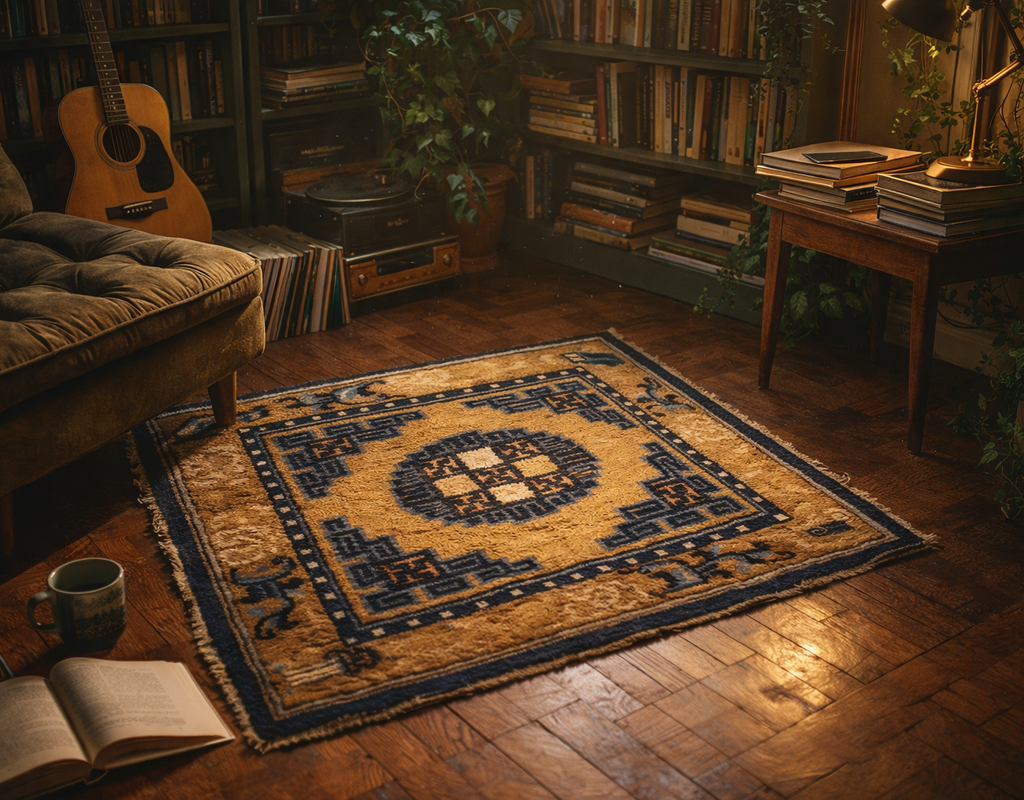
A richly patterned vintage-style rug anchors a warm and inviting reading nook filled with books and natural light.
In living rooms, dots can lift otherwise plain décor; in children’s spaces, they introduce joy and movement; in modern offices, they break monotony with subtle rhythm.
The dot pattern rug effect lies in its versatility—able to be playful or poised, bold or understated—making it one of the most adaptable motifs in rug design.
Materials & Construction Methods
Fibers: Wool, Synthetic, Organic
Which fibers are most durable for polka dot design area rugs? Wool remains the gold standard. Wool polka dot rugs are prized for resilience, natural stain resistance, and exceptional dye uptake, meaning the dots stay rich and vivid for decades. Synthetics like nylon and polyester dominate in budget-friendly options. A synthetic fiber polka dot carpet may resist stains and moisture but generally lacks the longevity and depth of color wool provides.
Does wool hold polka dot dyes better than synthetics? Yes—wool’s natural scales bond tightly with dye, producing longer-lasting saturation compared to synthetics, which fade more quickly under sunlight or repeated washing.
Are organic wool polka dot design rugs worth the premium? For many buyers, yes. They offer eco-friendliness, superior durability, and vibrant color retention. While more expensive, their longevity and sustainable sourcing often justify the cost for households prioritizing natural, toxin-free interiors.
Weaving & Knot Density
What knot density suits a high-traffic polka dot runner? Higher densities (120–200 knots per square inch and above) increase durability and detail, making them ideal for polka dot design rugs placed in hallways or family rooms.
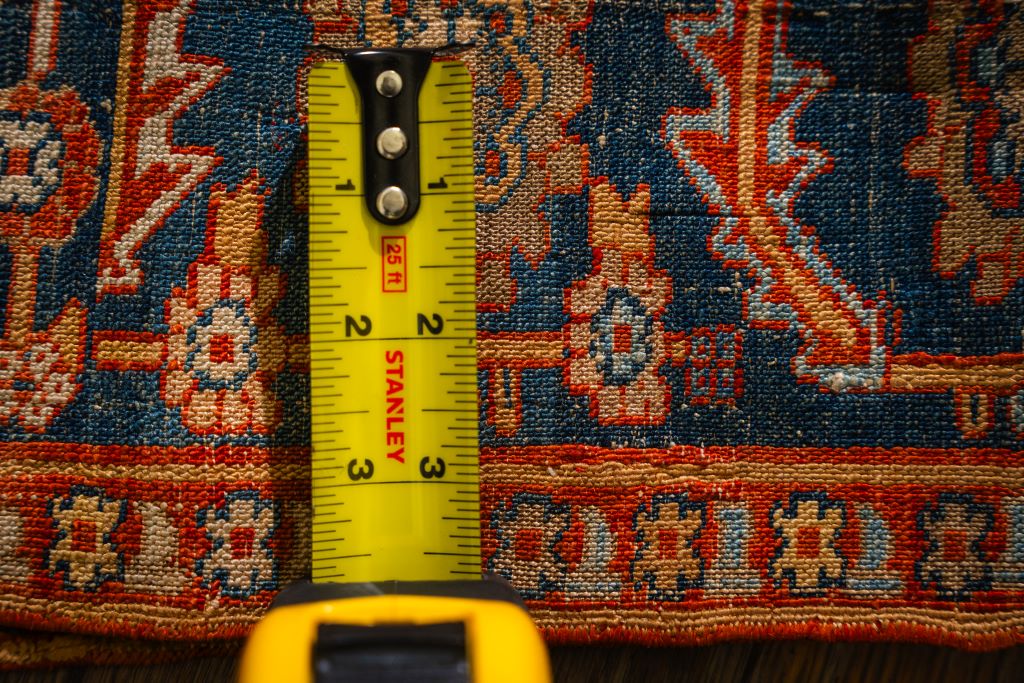
A detailed inspection of a richly colored oriental rug pattern while measuring its dimensions.
Lower densities suffice for decorative pieces but may show wear more quickly. In both hand-knotted and hand-loomed construction, dense weaving ensures crisp, well-defined dots and stronger fibers that resist crushing.
Hand-Tufted Rugs: Construction & Durability
How are hand-tufted polka dot design rugs constructed? A hand-tufted polka dot rug begins with a canvas backing onto which the dot pattern is stenciled. Artisans use a tufting gun to punch yarn through the canvas, following the drawn design.
Once complete, the back is coated with latex for stability and finished with a fabric covering. This process makes tufting especially effective for bold, circular motifs. Hand-tufted rugs are more affordable than hand-knotted pieces but less durable long-term, typically lasting 5–10 years depending on traffic.
Printing & Dyeing: Modern Advances
How has digital printing changed polka dot design rug production? Digital and screen-printing technologies allow manufacturers to create complex dotted designs at scale with high precision.
Designers can experiment with gradients, multi-colored dots, or irregular scatter effects not easily achieved with traditional weaving. These advances democratized the dot pattern rug, making bold and playful designs accessible at every price point.
Machine-Washable Rugs: Color Retention
Can machine-washable polka dot design rugs keep colors bright? Solution-dyed synthetics used in machine-washable dot rugs hold up well through repeated laundering, but they will not match wool’s natural dye permanence.
Over time, fading is inevitable with synthetics, especially under heavy washing cycles or direct sunlight. Still, machine-washable rugs remain practical for families and pet owners who value convenience over longevity.
Cost Comparison: Hand-Loomed vs. Machine-Made
How much do hand-loomed polka dot design rugs cost versus machine-made? A hand-loomed rug generally costs two to five times more than a machine-made equivalent, with the difference widening for larger sizes or premium fibers like wool and silk. Machine-made rugs appeal to budget-conscious buyers, while hand-loomed versions cater to those who prioritize artistry, durability, and long-term investment value.
In essence, the material and construction method of a polka dot rug dictate its vibrancy, resilience, and price. Wool polka dot rugs stand out for their enduring beauty, while synthetics and printed models make the motif widely accessible. Whether one chooses a tufted, hand-loomed, or machine-washable dot rug, each construction balances cost, durability, and style to suit different needs.
Regional & Cultural Variations
South Asia: Bandhani, Dhurrie, Mirror Work
- Bandhani dots — Why: The resist-dyeing tradition of Gujarat and Rajasthan creates tiny dotted constellations, often in deep reds, yellows, and indigos. When translated into rugs, these dots evoke continuity and rhythm.
- Indian dhurrie dot rug — Why: Flatwoven cotton dhurries often adopt simple circular repeats, balancing affordability with cultural authenticity.
- Mirror work (shisha) — Why: Embroidered mirrors appear as sparkling dots on textiles, inspiring rug designs that mimic this dotted shimmer with reflective or metallic yarns.
East Asia: Shibori, Minimalist & Pop Art Dots
Japanese dyeing traditions like shibori produced bursts of circles that resonate with today’s minimalist aesthetics. The Japanese polka dot design carpet can be both meditative and playful, depending on the scale and hue of the dots.
In the modern era, Yayoi Kusama’s polka-dot-saturated environments influenced not only galleries but also textiles, lending rugs a bold Pop Art intensity. Marimekko, with its iconic Unikko dot-inspired prints, also extended Nordic minimalism into dotted floor coverings, merging art with interior design.
Middle East & North Africa: Berber and Modern Dots
- Berber dot rug — Why: Moroccan rugs often feature dotted or lozenge-shaped motifs representing fertility, protection, and tribal lineage. Their irregular spacing distinguishes them from Western grid-like dots.
- Modern hybrids — Why: Contemporary North African workshops blend Berber-inspired dot arrangements with global polka branding, creating rugs that marry tradition and modern décor.
Africa: Mudcloth, Ankara, Ndebele Influences
- African mudcloth motif — Why: Malian bogolanfini uses resist-dye to form dotted and dashed patterns, translating naturally into spotted rug textures.
- Ankara prints — Why: Bold African wax prints often use dotted backgrounds or circular elements, inspiring rug designers to embrace vibrant polka dot palettes.
- Ndebele geometry — Why: South African Ndebele art incorporates circles and dots in architectural painting, now echoed in dotted carpets celebrating geometric rhythm.
Western: Scandinavian, American Folk, Pop/Art Deco Dots
- Scandinavian design — Why: Nordic rugs often favor restrained dot pattern rug layouts, using neutral palettes and oversized circles to evoke simplicity and calm.
- American folk rugs — Why: Hooked and braided rugs in 19th- and 20th-century America sometimes featured spotted motifs, echoing quilt patterns.
- Pop & Art Deco dots — Why: Early 20th-century Art Deco introduced stylized circles, while mid-century Pop Art transformed dots into oversized, graphic rug statements. Both periods remain collectible and influential.
Contemporary & Designer Interpretations
- Designer polka dot rugs — Why: Today’s market sees high-end designers reimagining the motif with luxury fibers, irregular scatter patterns, and sculpted pile. Kusama-inspired collaborations, Marimekko prints, and boutique studios create dotted rugs that double as functional art.
- Global hybrids — Why: Many rugs now merge regional traditions—like Indian weaving with Scandinavian minimalism—showing how global design pulls diverse dotted heritages into modern homes.
Polka dots in rugs are never a one-size-fits-all pattern. From the Indian dhurrie dot rug to the Berber dot rug, from African mudcloth motifs to Japanese polka dot design carpets, regional styles shape the materials, arrangements, and meanings of dots.
Most modern spotted rugs are hybrids—global in inspiration, contemporary in branding—proving that a centuries-old decorative instinct still thrives in fresh forms.
Polka Dot Design Rugs in Interior Design
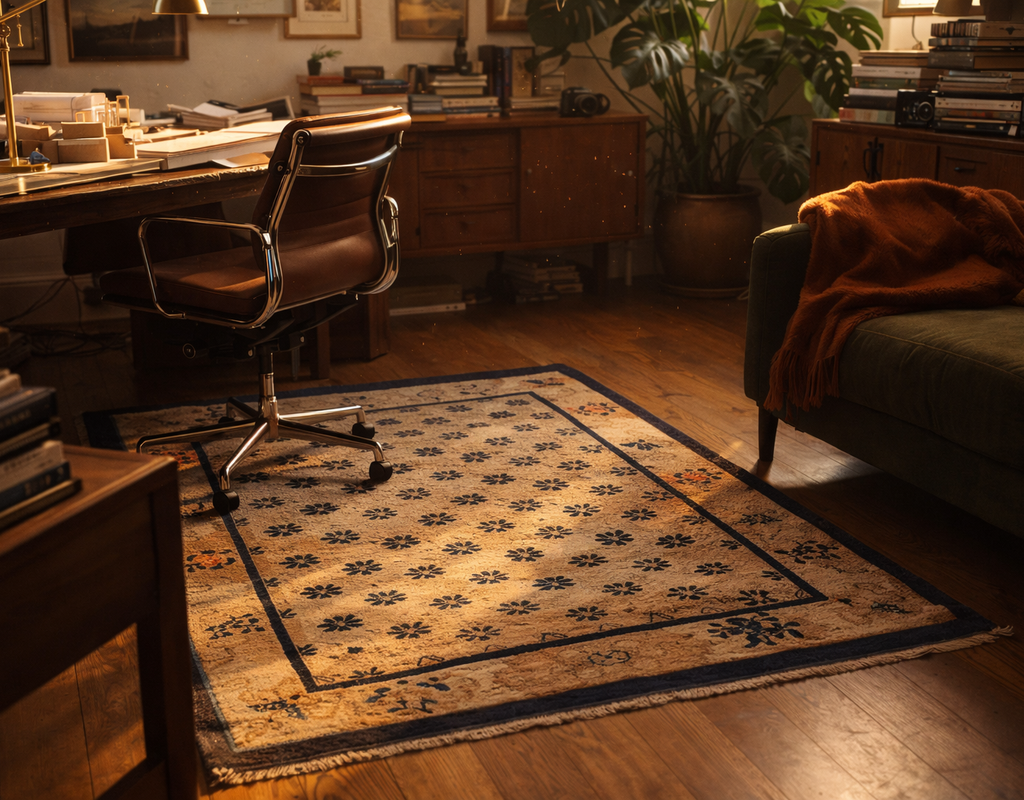
A vintage-style floral rug defines the central area in this richly textured, warmly lit home workspace.
Room Size & Dot Scale: Best Practices
Should small rooms use micro-dot or large-dot rugs? In compact spaces, a micro-dot rug is often best. Small, evenly spaced dots create texture without overwhelming the eye, making the room feel larger and more open. In contrast, oversized dots can dominate a small room, though they work well when balanced with minimal furnishings.
For open-plan layouts or large living rooms, an oversized dot carpet serves as an anchor, drawing the eye and adding personality. Choosing the right dot scale ensures that the rug enhances, rather than competes with, the proportions of the room.
Nursery & Kids’ Room Trends
Why are polka dot design rugs popular choices for nurseries? The nursery polka dot rug is a perennial favorite because of its cheerful, playful energy. Dots evoke a sense of wonder, rhythm, and learning—qualities ideal for early childhood spaces. Gender-neutral palettes, such as soft greys, pastels, or cream with multicolored spots, make dotted rugs versatile for any nursery theme.
They also double as educational tools: babies and toddlers respond visually to repeating shapes, while older children can interact with the dots in play. The durability of flatweaves or machine-washable dotted rugs makes them especially practical for family use.
Mid-Century vs. Modern Room Uses
How do mid-century polka dot design rugs differ from modern ones? The mid-century dot carpet is characterized by bold, graphic circles—often large and high-contrast—reflecting the optimism and geometric clarity of the era. These rugs work well in retro-inspired interiors or eclectic living rooms where statement patterns are encouraged.
Modern dotted rugs, on the other hand, often favor tone-on-tone palettes or abstracted circles that blur into textured backgrounds. This subtle approach suits minimalist and contemporary interiors, where the dots serve more as visual rhythm than as focal points.
Rug Size & Pricing Impact
Does rug size drastically affect pricing for polka dot designs? Yes. The best size polka dot rug for a given room depends on function and budget, but size is the single biggest driver of cost. Larger rugs require more material and labor, and prices rise accordingly—whether hand-loomed or machine-made.
For example, a 5×8 rug may be accessible in both wool and synthetic versions, while an oversized 9×12 dotted rug in wool can cost several times more. Pricing for polka dot design area rugs therefore scales directly with size, as well as material and construction method.
Mixing Patterns & Placement Tips
- Layer with solids — Why: A polka dot rug pairs best with solid upholstery or curtains, ensuring the dots shine as the focal point.
- Balance with stripes or checks — Why: Dots combine well with other geometric patterns when scales differ, creating harmony instead of chaos.
- Centering matters — Why: Positioning the rug so dots radiate evenly under furniture helps maintain visual balance.
- Anchor playful zones — Why: Spotted rugs are ideal for play areas, reading nooks, or dining rooms where they create defined zones within open layouts.
In short, polka dot rugs remain one of the most adaptable design elements. From the nursery polka dot design rug to the mid-century dot carpet, scale, size, and placement determine whether they energize, soothe, or ground a space—all while balancing budget through careful attention to rug dimensions and construction.
Buying, Collecting & Resale Insights
Availability of Vintage 1950s Polka Dot Design Rugs
Are vintage 1950s polka dot design rugs still available today? Yes—authentic examples surface at specialist auctions, online vintage marketplaces, and through rug dealers who focus on mid-century design. A true vintage 1950s polka dot carpet is rare, especially in excellent condition, because many were produced for everyday use rather than as collectibles.
Buyers should be cautious of reproductions marketed as “vintage,” checking provenance, weave type, and signs of natural wear before investing.
Collectible Value & Investment Potential
Can vintage polka dot rugs appreciate as collectibles? Absolutely. A collectible polka dot design rug from the mid-20th century can rise in value, particularly if it features bold geometric dots characteristic of mid-century modern design. Condition, rarity, and authenticity remain the strongest value drivers.
Rugs tied to specific designers or noted workshops carry added investment appeal. For owners of period properties, especially mid-century modern homes, an authentic spotted rug not only enhances authenticity but can also serve as a mid-century home rug investment, increasing both aesthetic and resale appeal.
Where to Source Limited Edition/Designer Rugs
Where can I source limited-edition designer polka dot rugs online? High-profile collaborations and exclusive pieces are often sold via design houses, museum shops, and curated e-commerce platforms. Examples include limited edition designer dot rugs linked to artists like Yayoi Kusama or brands like Marimekko, as well as collaborations with luxury labels such as Louis Vuitton.
These pieces command premium prices, not only for their quality but also for their collectibility as art-meets-design statements. For online sourcing, reputable design retailers, auction houses with digital bidding, and official brand shops are the most secure routes.
Pricing Factors & Smart Buys
Does rug size drastically affect pricing for polka dot designs? Yes—just as with other rug types, larger polka dot rugs require more material and labor, raising the cost. Material further shapes pricing: wool and organic fibers carry higher price tags than synthetics. Limited-edition or signed designer pieces command premiums, while standard machine-made spotted rugs remain accessible.
Are polka dot rugs a smart resale investment in mid-century homes? They can be. Authentic mid-century dotted rugs in good condition align seamlessly with period décor and are in growing demand among collectors. While not every dotted rug will appreciate, those with strong provenance, recognizable design lineage, or rarity often do.
Buyers seeking smart acquisitions should balance condition, size, and source: smaller rugs in excellent shape may outperform larger but worn examples in long-term resale value. In sum, the market for polka dot rugs spans accessible modern options to museum-worthy collectibles.
Whether acquiring a vintage 1950s polka dot carpet, investing in a limited edition designer dot rug, or searching for a collectible polka dot design rug to elevate a mid-century interior, success depends on careful sourcing, attention to authenticity, and an eye for both design and long-term value.
Symbolism & Cultural Significance
Playfulness, Modernity, Gender Meanings
The symbolism of polka dot design rugs often begins with their Western associations. In fashion and interiors, dots carry connotations of playfulness, nostalgia, and optimism. A dotted rug on the floor can feel lighthearted, youthful, or even retro-modern, evoking both 1950s cheer and contemporary whimsy.
In some contexts, polka dots historically leaned toward femininity, particularly in mid-20th-century dresses and textiles, though today the motif is embraced as gender-neutral, especially in nurseries and children’s rooms. Modern designers use dots not just as decoration but as a statement of joy, rhythm, and openness.
Protective & Auspicious Symbolism
- Indian mirrors and dots — Why: In Indian embroidery traditions, small round mirrors and dotted stitches symbolize protection from the evil eye, making dotted motifs auspicious.
- African beadwork — Why: Circular bead arrangements serve both decorative and protective roles, signifying wealth, fertility, or spiritual safeguarding.
- East Asian dots — Why: In Japanese art and design, dotted motifs sometimes suggest harmony, balance, or cosmic cycles.
- Lucky charms — Why: Across cultures, repeating circles are seen as endless forms—symbols of unity, continuity, and prosperity, which makes auspicious dot motifs a common choice in household textiles.
The Dot as a Universal Design Element
- Cosmic resonance — Why: From Kusama’s infinity nets to ancient symbols, dots are metaphors for stars, atoms, or life itself, linking micro and macro worlds.
- Visual simplicity — Why: The circle is the most basic shape, universally understood and easy to replicate across materials and techniques. This accessibility explains why the cultural meaning of dot pattern spans continents and centuries.
- Adaptability — Why: Dots translate seamlessly from embroidery to print to rug weaving, making them one of the most flexible design motifs in global craft history.
Ultimately, the polka dot design is more than a trend. Its meanings shift across geography and time—sometimes protective, sometimes playful, always resonant.
Whether viewed as auspicious dot motifs or as icons of modern joy, the enduring appeal of dotted rugs lies in their ability to connect art, culture, and everyday life in one of design’s simplest yet most powerful forms.
Explore a few of our favorite polka dot rugs
FAQ
- Can polka dot rugs be machine-washed?
Some thin, washable polka dot rugs are designed for home machines—follow the label (cold cycle, air-dry). Traditional wool or thick rugs aren’t machine-washable.
- Will a polka dot rug fade in sunny rooms?
Solution-dyed synthetics resist fading; wool also holds color well. Rotate the rug periodically and consider UV-filter shades for south-facing windows.
- Are polka dot rugs practical for kitchens and entries?
Choose flatweave or low-pile polka dot rugs, darker tones, and a grippy pad. They catch grit, reduce noise, and hide everyday scuffs.
- Do polka dot rugs work with modern or mid-century decor?
Yes. Geometric dots suit modern lines; two-tone or monochrome polka dot rugs feel especially chic with mid-century woods and clean silhouettes.
- Are polka dot nursery rugs a good idea?
Definitely—opt for washable, low-pile polka dot rugs with non-slip backing. Look for safety labels (e.g., OEKO-TEX/low-VOC) and pair with a quality rug pad.
- Will polka dot rugs make a small room feel bigger or smaller?
Light, larger-spaced dots can open a room; very dense, high-contrast dots feel busier. Use one strong pattern and keep surrounding elements calmer.
- Are polka dot rugs OK with radiant (underfloor) heat?
Yes—choose thinner polka dot rugs and heat-safe pads. Avoid thick rugs or non-breathable backings that trap heat; check floor manufacturer limits.
- What’s the safest way to spot-clean a polka dot rug?
Blot—don’t rub. Test colorfastness, then treat with a mild dish-soap solution, rinse with clear water, and blot dry. Call pros for persistent stains.
- How do I stop polka dot rug corners from curling?
Reverse-roll, then weight corners overnight. For stubborn curls, lightly steam through a towel or use discreet corner grippers.
- Can I layer a polka dot rug over carpet?
You can. Vary textures (flatweave over plush), stick to one dominant pattern, and use a carpet-specific pad to prevent buckling or creeping.
- What rug pad works best under polka dot rugs?
Felt-and-rubber pads add cushion and grip for large rugs; thin rubberized pads stop slipping under runners. Trim pads 2–3 inches smaller than the rug.
- Are outdoor polka dot rugs a thing?
Yes—polypropylene polka dot rugs handle moisture, mildew, and UV better. Hose off to clean and store during harsh weather to extend life.
- Will a black-and-white polka dot rug confuse robot vacuums?
Sometimes. Very dark sections can trigger cliff sensors on some models. Test first; cleaning sensors or setting no-go zones can help.
- How do I mix polka dot rugs with other patterns?
Balance scale and color. Pair medium dots with solids or smaller-scale stripes/florals; repeat one color from the rug elsewhere for cohesion.
- Do polka dot rugs hide stains well?
Yes—patterned polka dot rugs camouflage everyday marks better than solids. Darker or multicolored dots conceal traffic and spills more effectively.
- Should I avoid viscose polka dot rugs?
Often yes for high-traffic homes—viscose can yellow, water-spot, and lose strength when wet. Choose wool or performance synthetics for durability.
- Are wool polka dot rugs hard to maintain?
Not if you’re gentle. Vacuum without a beater bar, blot spills quickly, and use wool-safe cleaners. Wool’s lanolin helps resist many stains.
- What materials make polka dot rugs kid- and pet-friendly?
Solution-dyed polypropylene/polyester polka dot rugs resist stains; cut-pile wool is durable and naturally soil-resistant. Prefer low-pile; avoid loop piles that snag claws.
- Any tips for polka dot runner rugs in hallways?
Leave 4–6 inches of floor showing on each side, center the runner, and use a non-slip pad. Longer runs look best when covering \~¾ of the hallway.
- How big should a dining room polka dot rug be?
Add 24–30 inches beyond the table on all sides so pulled-out chairs stay on the rug. Low-pile polka dot rugs prevent snagging and ease cleanup.
- What size polka dot rug fits under a queen bed?
An 8×10 polka dot rug is the safe choice, extending 18–24 inches beyond bed sides/foot for comfy step-out space and balanced proportions.
- What size polka dot area rug should I pick for a living room?
Common picks are 8×10 or 9×12 polka dot rugs. Aim for at least 6–8 inches wider than the sofa on both sides to visually anchor seating.
- Which rooms suit polka dot rugs best?
Polka dot rugs work in living rooms, bedrooms, nurseries, offices, and entries. Use low-pile or flatweave for dining/kitchen so chairs glide and crumbs don’t embed.
- Are polka dot rugs in style or a passing trend?
Yes—polka dot rugs are resurging and still timeless. Choose monochrome or medium-scale dots for longevity; bolder, high-contrast dots skew trendier.
- What are polka dot rugs and where does the motif come from?
Polka dot rugs feature repeating, evenly spaced circles; the name traces to the 19th-century polka dance. Today they read playful yet classic across modern interiors.