
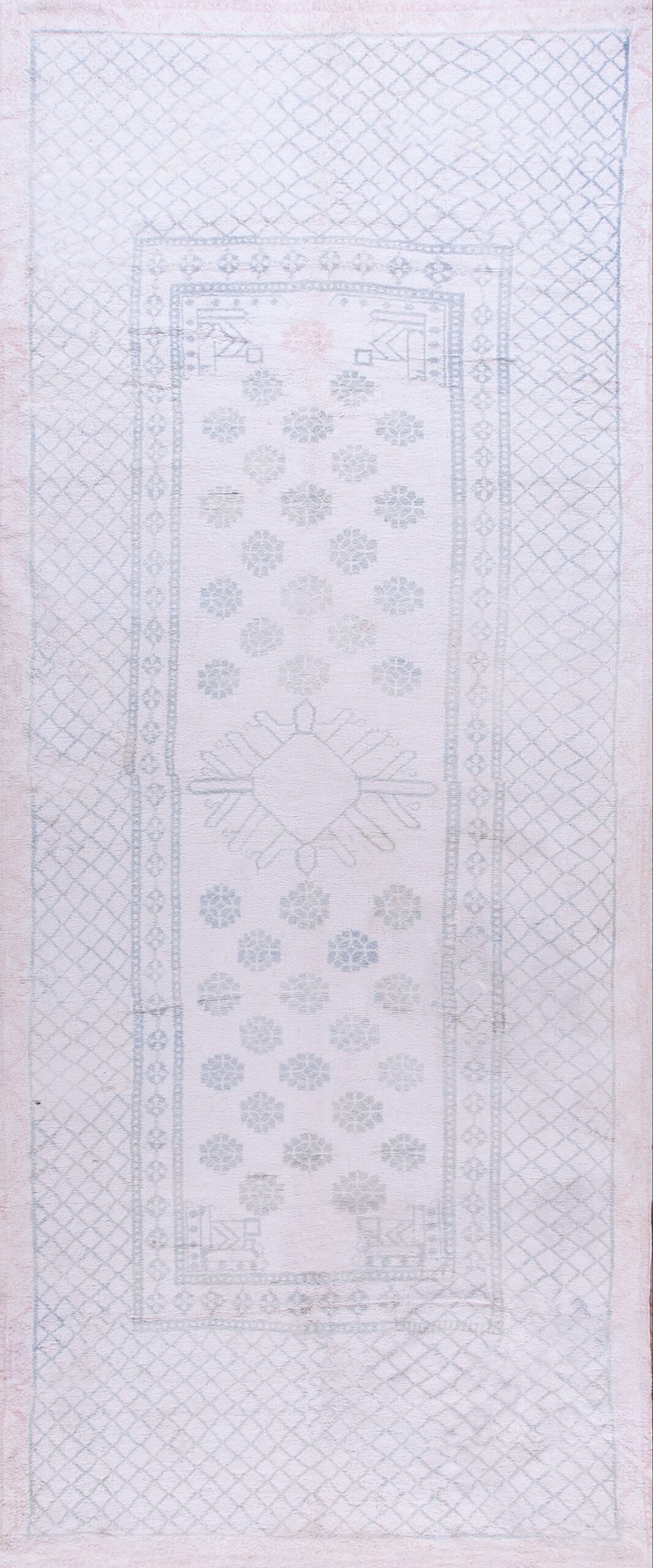
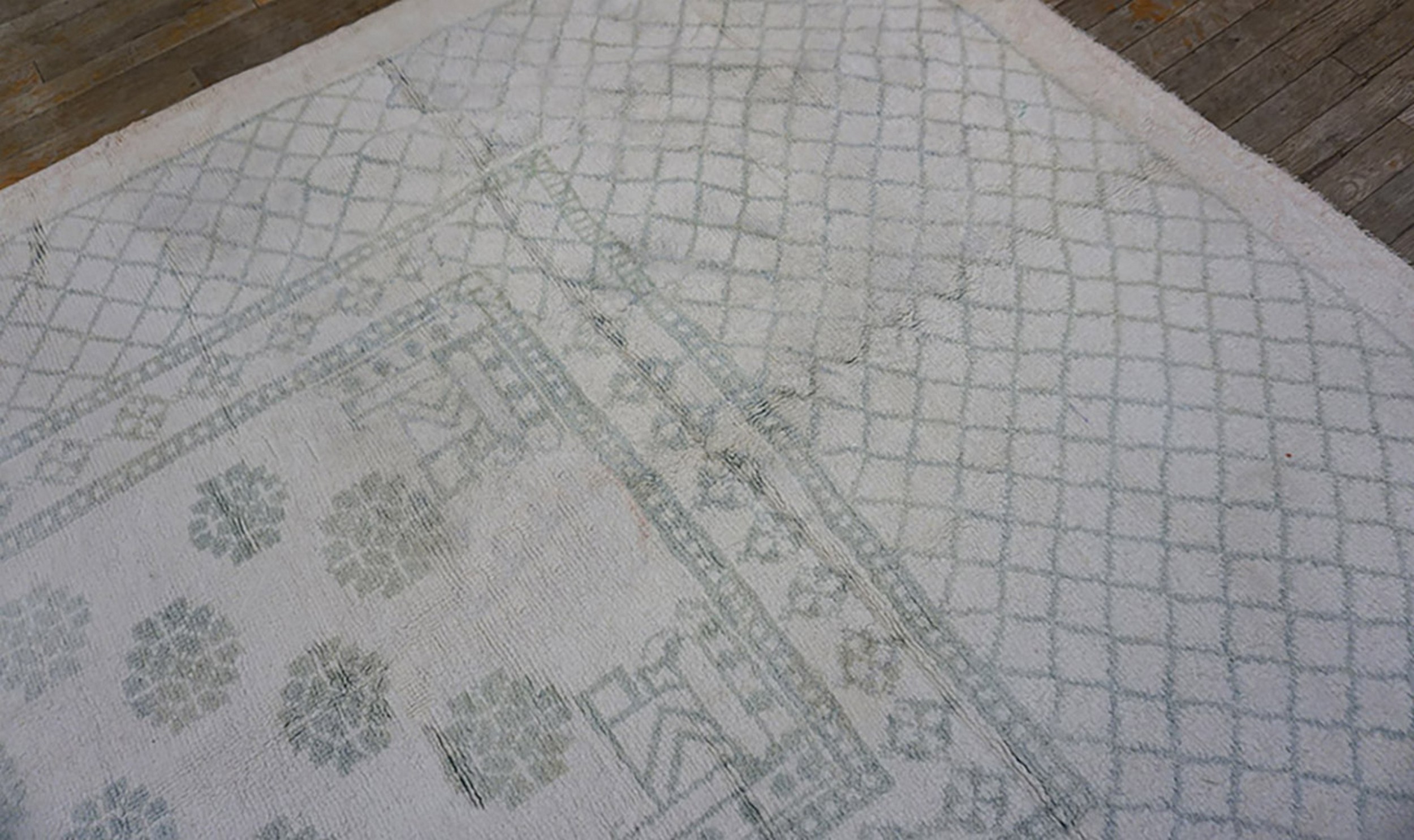
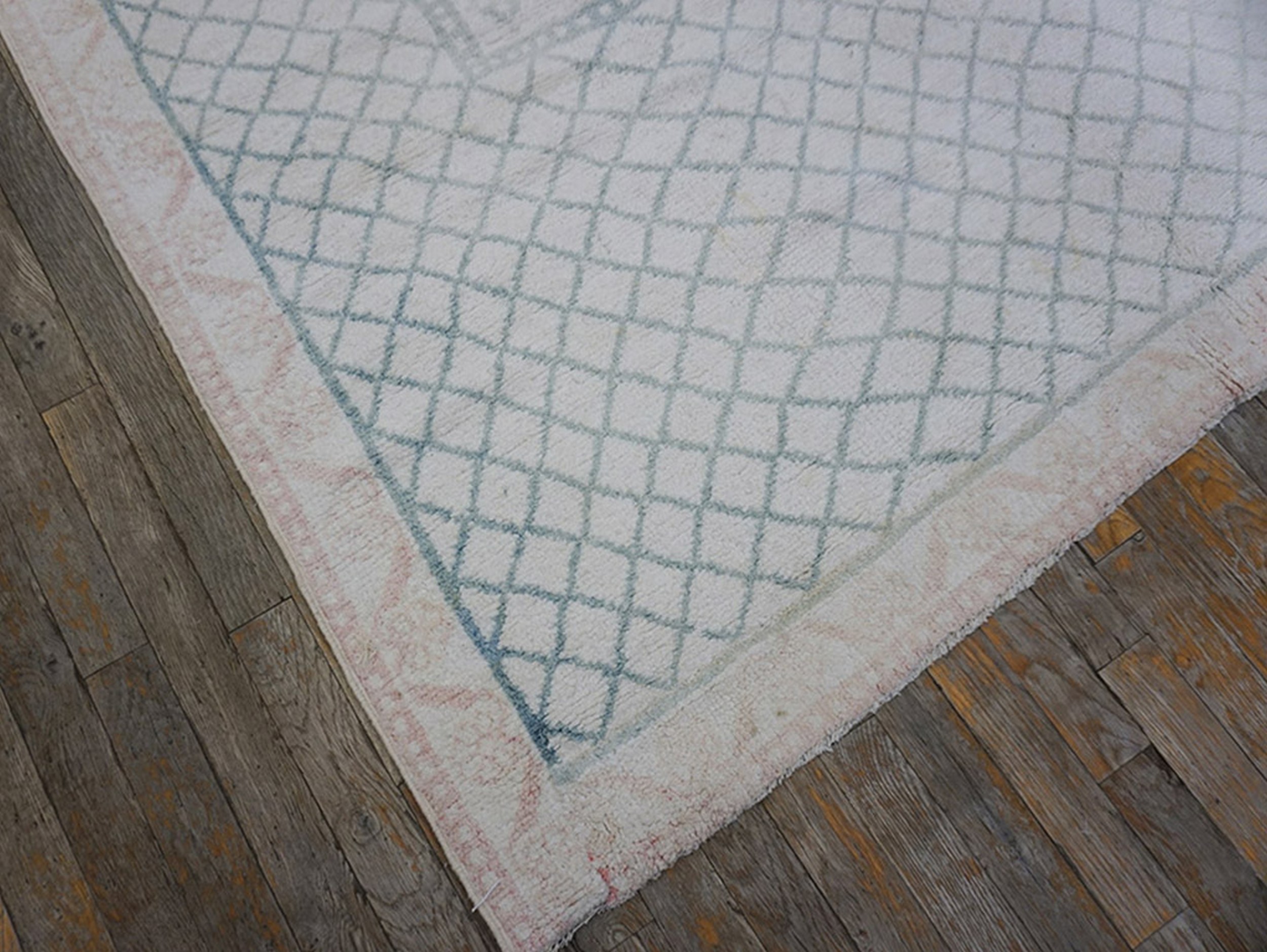
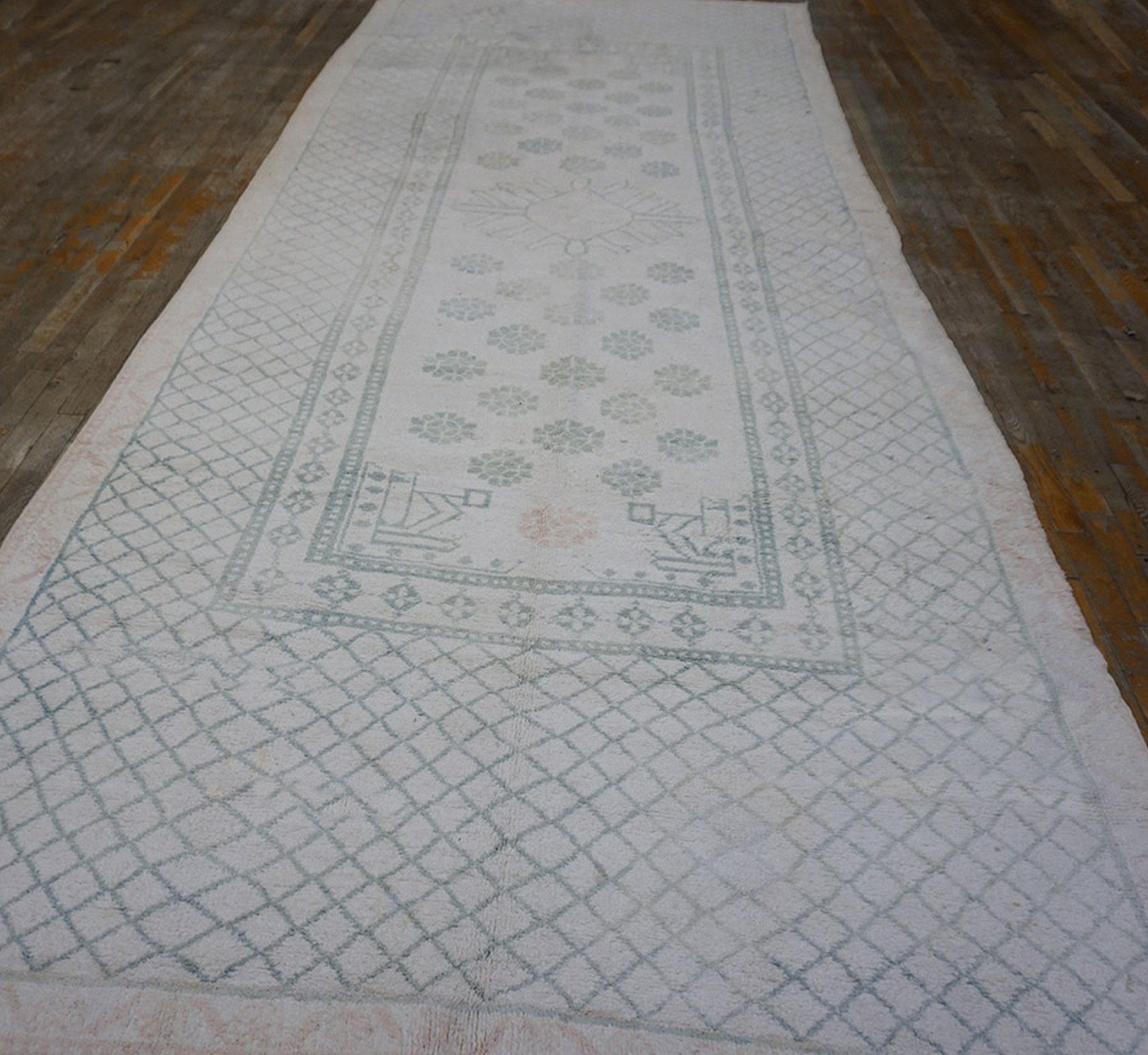
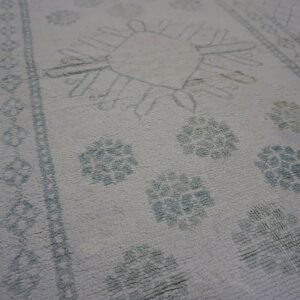
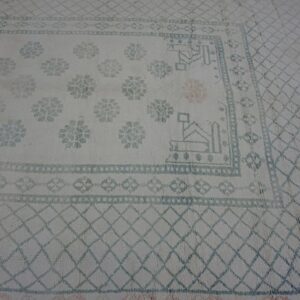
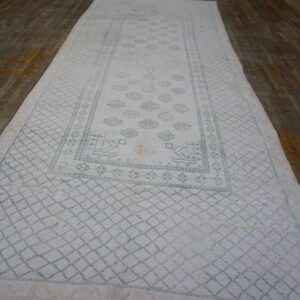
This nineteenth-century carpet from India is a masterwork of “Workshop Tribalism,” representing the legendary weaving heritage of North India. While Agra—the city of the Taj Mahal—was famous for its grand, Persian-influenced palace carpets, this specific specimen is distinguished by its rare Cotton foundation and pile, and its transition into a specialized Gallery size (long and narrow). This combination of materials and format suggests a custom commission designed to bring the palatial luxury of the Mughal tradition into the stately corridors of a grand colonial or European residence.
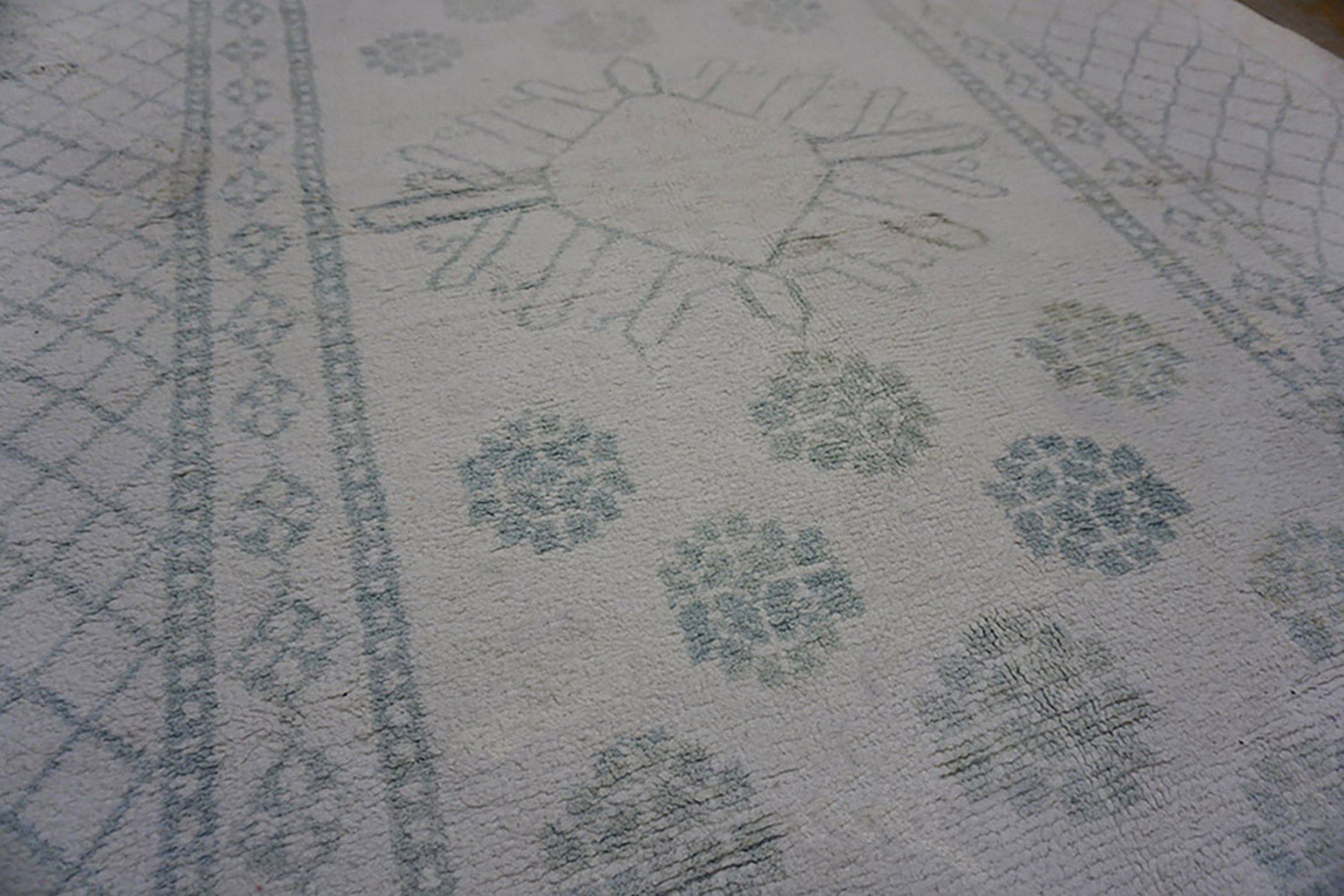
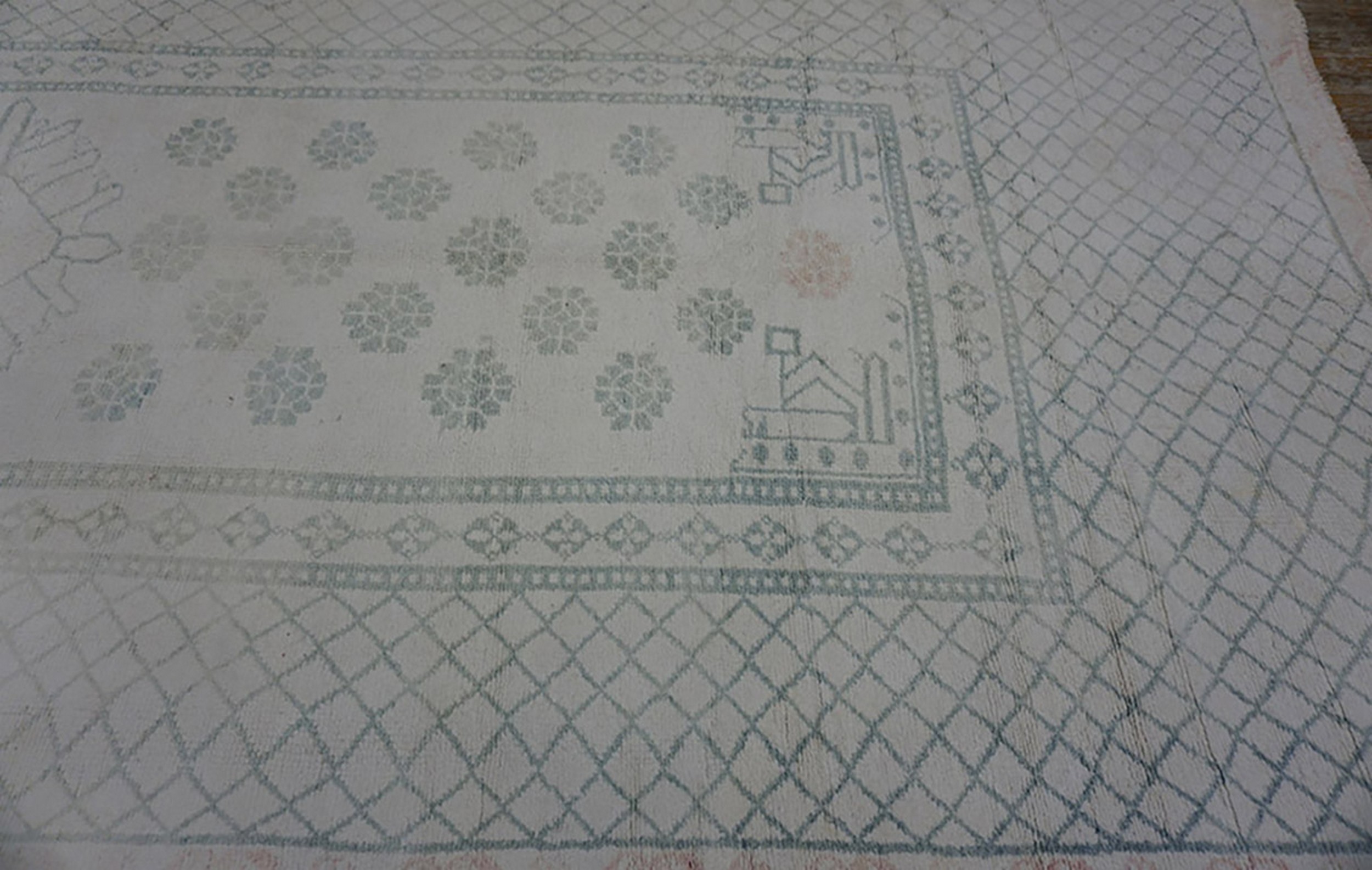
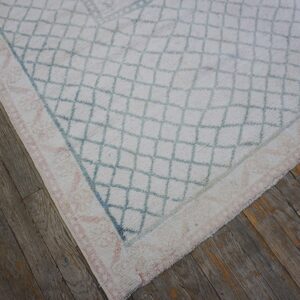
The composition is a virtuoso display of the Geometric Floral style. Unlike the fluid, swirling scrolls of Safavid Persia, the Agra artisans often “tribalized” these botanical motifs, giving them a disciplined, structural weight. Against a luminous Light Ivory field, the carpet features a rhythmic “all-over” design of stylized blossoms, diamond-shaped rosettes, and serrated leaves. This ivory ground acts as a high-contrast stage, allowing the intricate, multi-colored motifs to appear with a crystalline clarity that defines the scholarly Agra aesthetic.
The palette is a celebration of the natural dye tradition of the Indian subcontinent. Soft, sun-faded ochres, earthy madder reds, and “watery” indigo blues populate the field. Because this piece utilizes a cotton pile, the colors have a unique, matte quality that differs from the oily luster of wool; it offers a crisp, cool surface that remains remarkably vibrant even after a century. Over time, the ivory has mellowed into a creamy, parchment-like tone, imbuing the rug with a sense of historical gravity and architectural permanence.
Technically, a cotton Agra is highly prized for its structural stability and “razor-sharp” drawing. The use of cotton allows for a tighter, more compact weave, enabling the weavers to execute the complex geometric intersections of the floral patterns with mathematical precision. The Gallery format (typically between 5 and 7 feet wide and extending significantly in length) provides a cinematic perspective, drawing the viewer’s eye down a corridor of repeating botanical wonders.
To possess an antique ivory cotton Agra gallery carpet from India is to hold a monument to a vanished era of cross-cultural artistry. It is a work that bridges the gap between the nomadic soul of tribal patterns and the sophisticated requirements of urban architecture—a serene, hand-wrought sanctuary that transforms a transitional space into a gallery of 19th-century elegance and scholarly grace.
Condition: Good. Repaired. Minor fading.