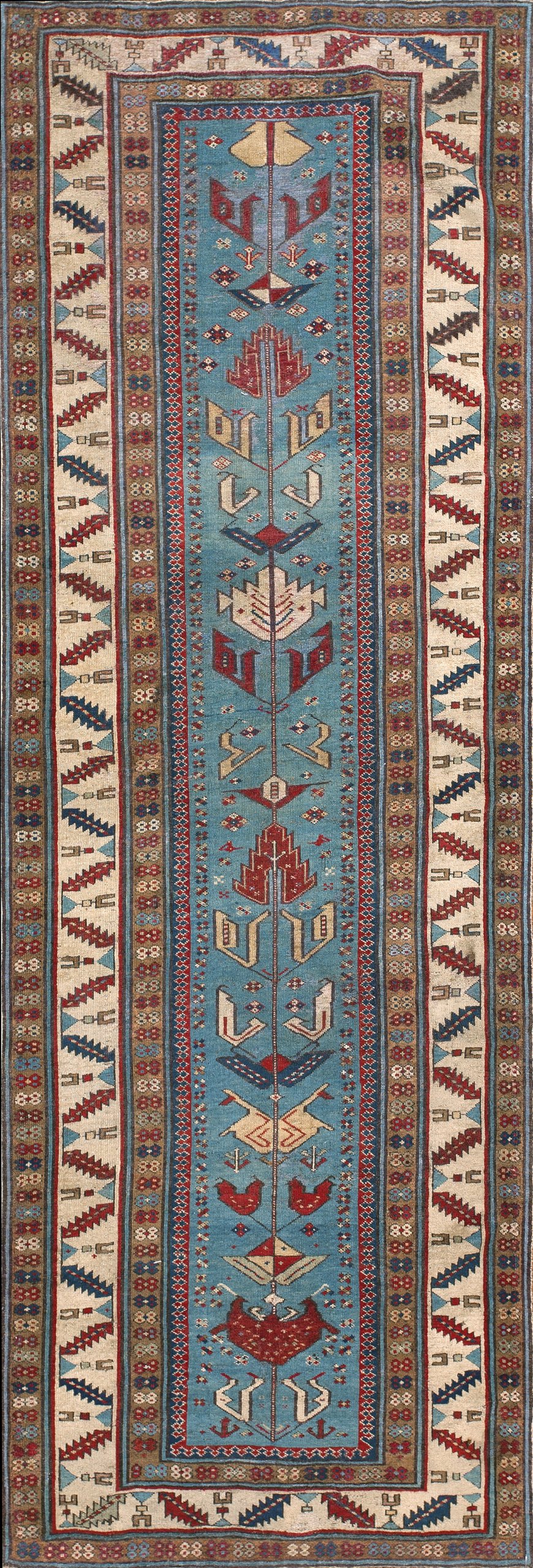
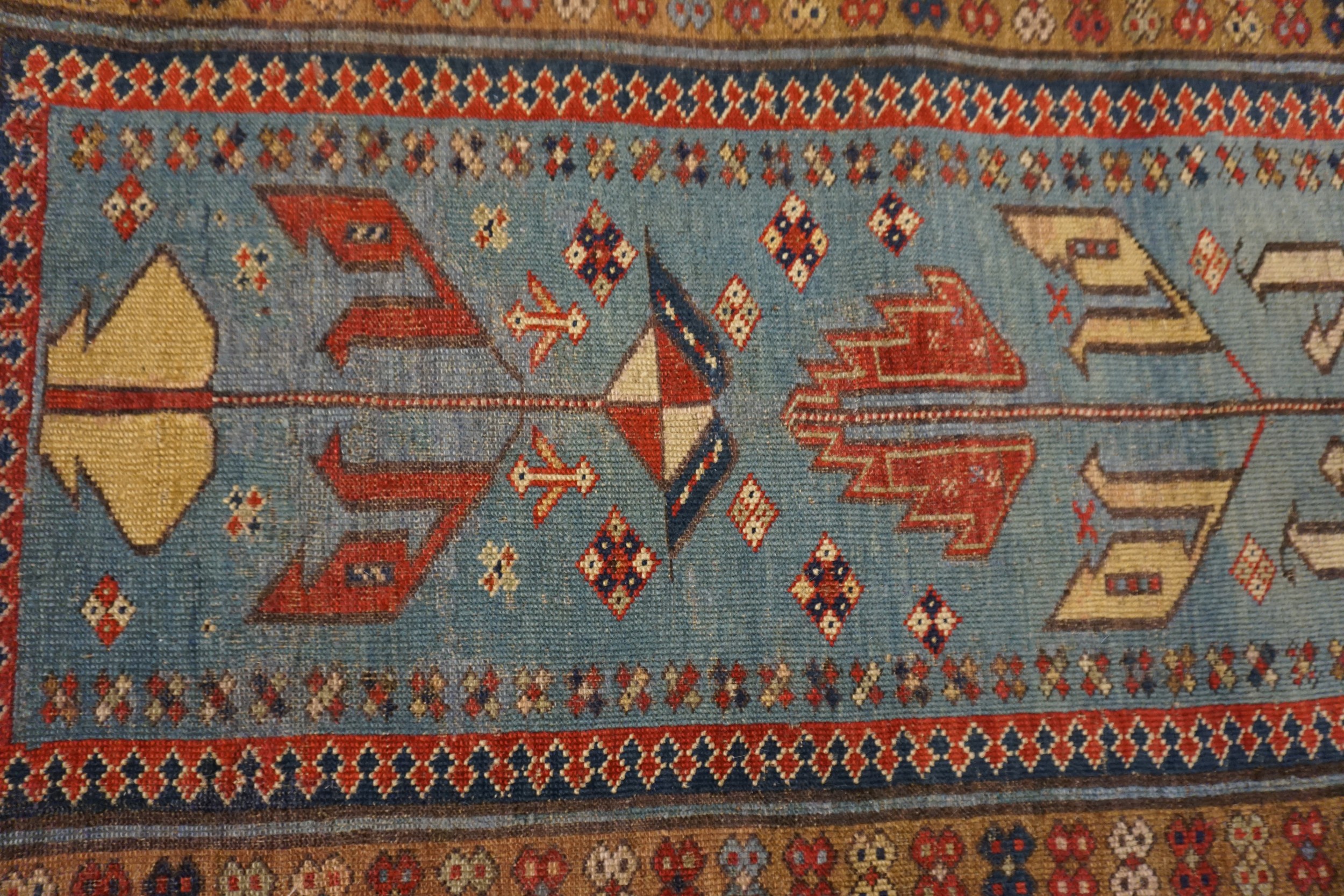
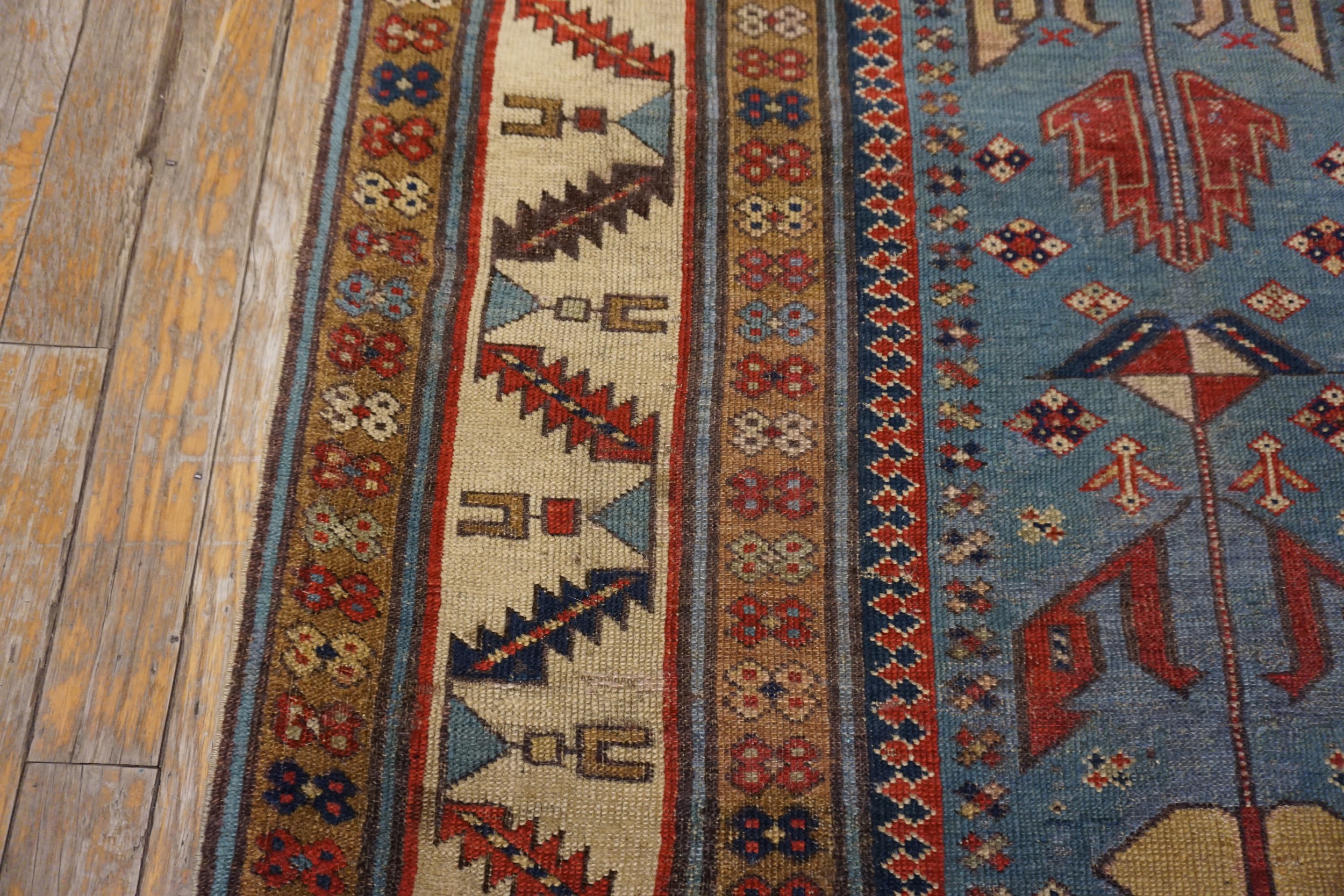
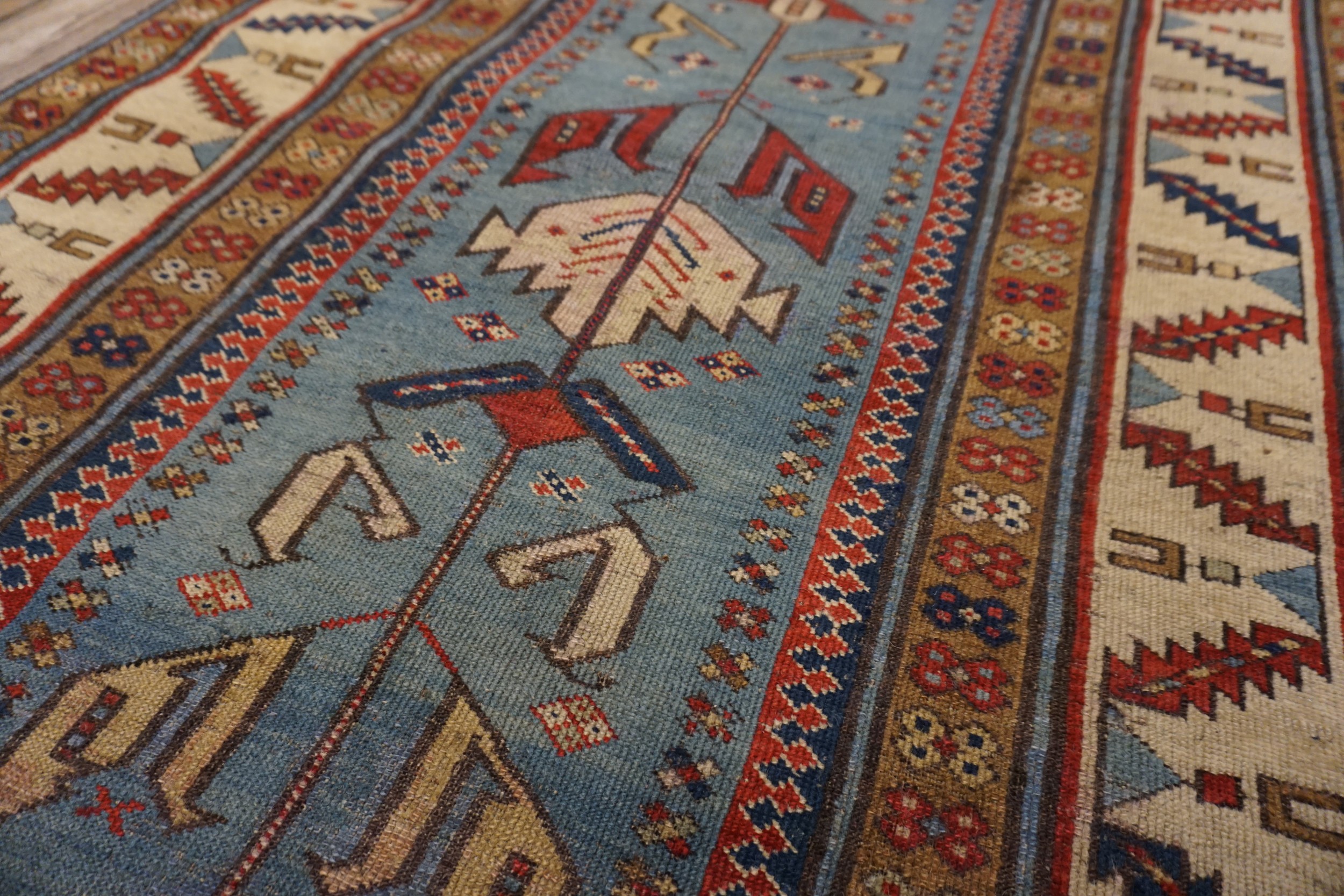
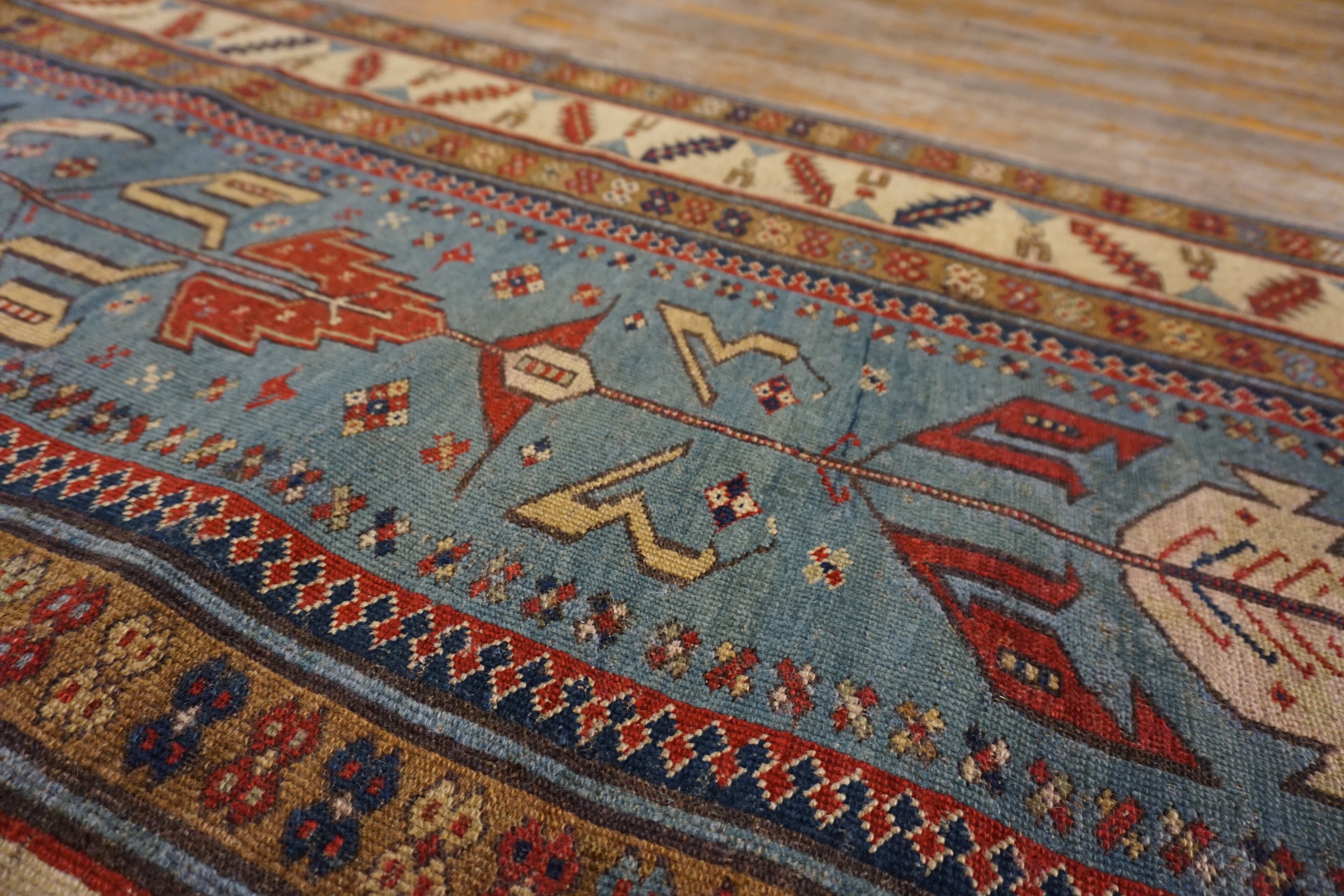
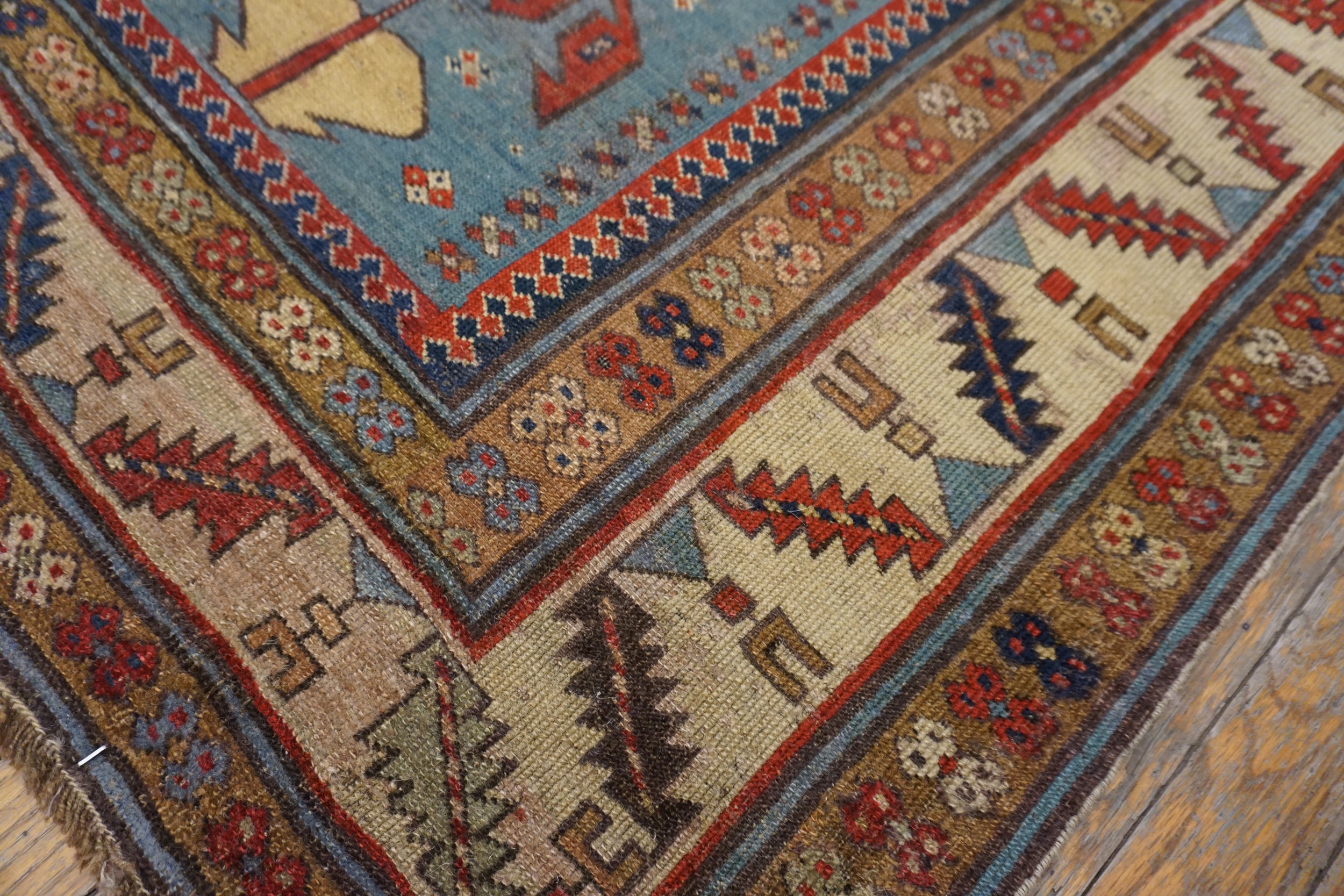
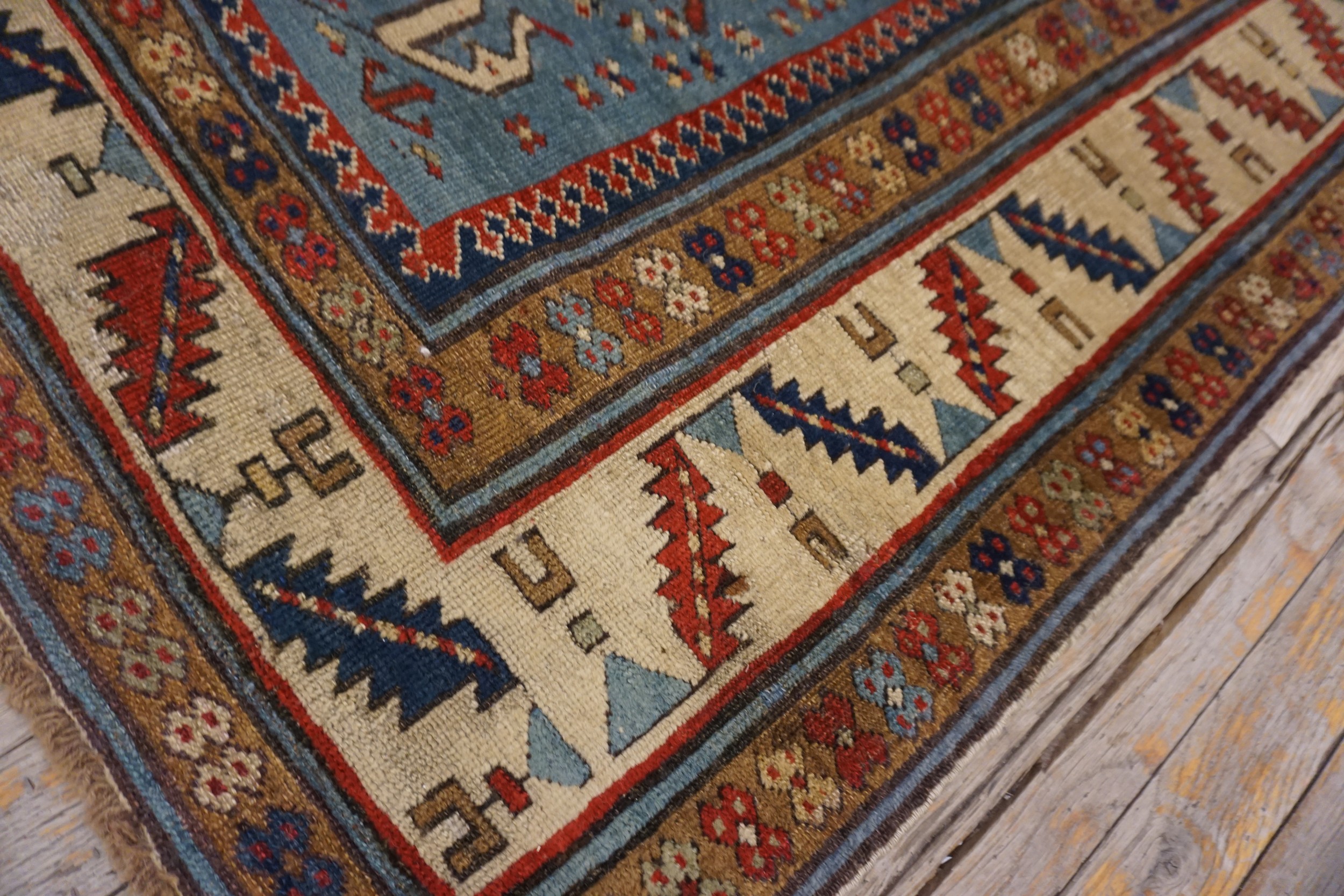
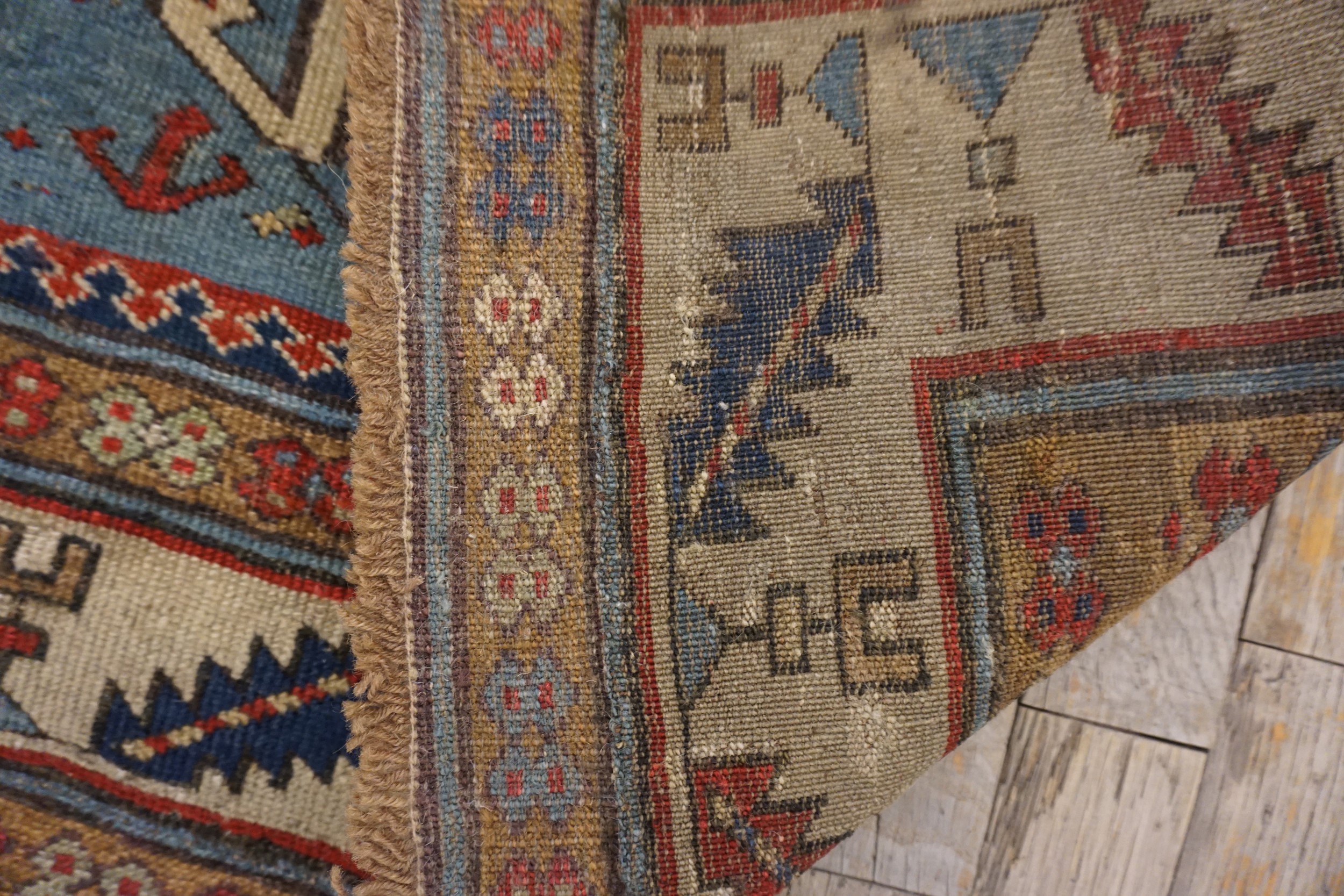
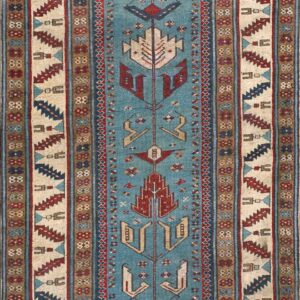
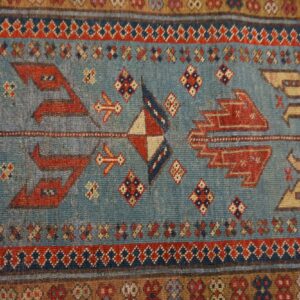
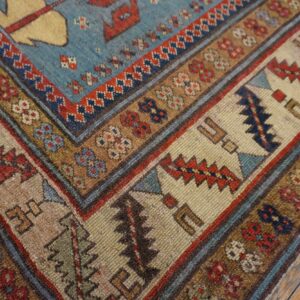
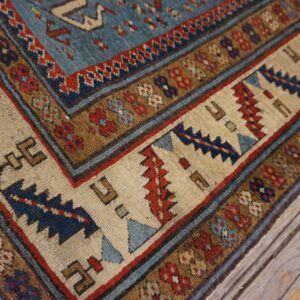
This mid-nineteenth-century tribal geometric antique Caucasian Shirvan hallway runner rug is an exceptional rarity, representing the “Golden Age” of tribal weaving from the eastern Caucasus. Historically, the tribal Caucasian Shirvan rugs were the most technically advanced of the Caucasian weaves, characterized by an incredibly fine, tight structure and a sophisticated handle. This specific specimen is distinguished by its luminous “sky blue” field—a color of extreme scarcity in the 19th-century tribal world. While deep indigo was common, achieving this specific light-blue hue required a master dyer’s touch, utilizing a shorter fermentation process and premium hand-spun wool to create a “celestial” backdrop for its bold geometric narrative.
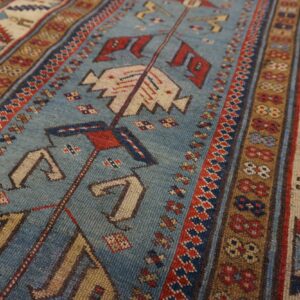
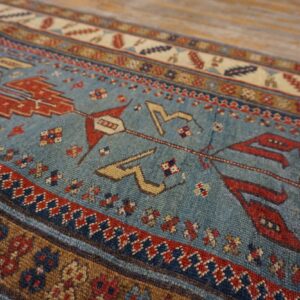
The composition features a rhythmic succession of complex tribal medallions, likely “Lesghi stars” or “stepped polygons,” which march down the long, narrow field with mathematical precision. Each medallion is a self-contained universe of ancient symbolism, containing stylized animal figures, “S” hooks for protection, and multi-pointed stars that reflect the nomadic spirit of the steppes. The mid-19th-century origin is evident in the “spaciousness” of the design; unlike later, more crowded commercial versions, this piece allows the motifs to “breathe” against the radiant blue ground, a hallmark of the most collectible Caucasian textiles.
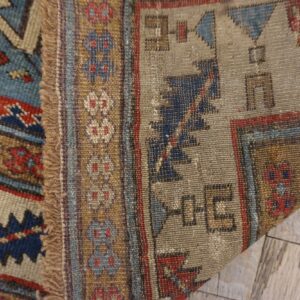
Technically, this Shirvan is a masterpiece of early-Victorian-era tribal engineering. The wool is exceptionally lustrous and “thirsty,” having absorbed the natural vegetable dyes—including madder red, saffron yellow, and ivory—to create a high-contrast, “jewel-box” effect. The runner format (Kenareh) suggests it was a piece of significant status, intended for the primary corridor of a tribal leader’s home or a merchant’s estate.
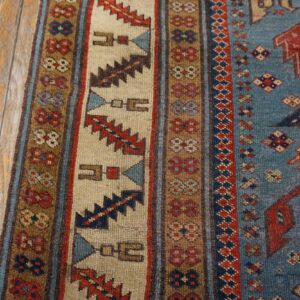
The borders provide a powerful architectural frame, typically featuring a “white-ground” primary band with the classic “Leaf and Calyx” (Oak Leaf) or “Kufic” pattern, which grounds the ethereal energy of the blue field. Over nearly two centuries, the antique tribal geometric Caucasian rug has developed a “leather-like” supple handle and a soft, shimmering patina. To possess a mid-19th-century light blue Shirvan is to hold a monument to a vanishing artistic tradition—a work that bridges the gap between ancient nomadic geometry and the refined, modern-day appreciation for textile as “fine art.”