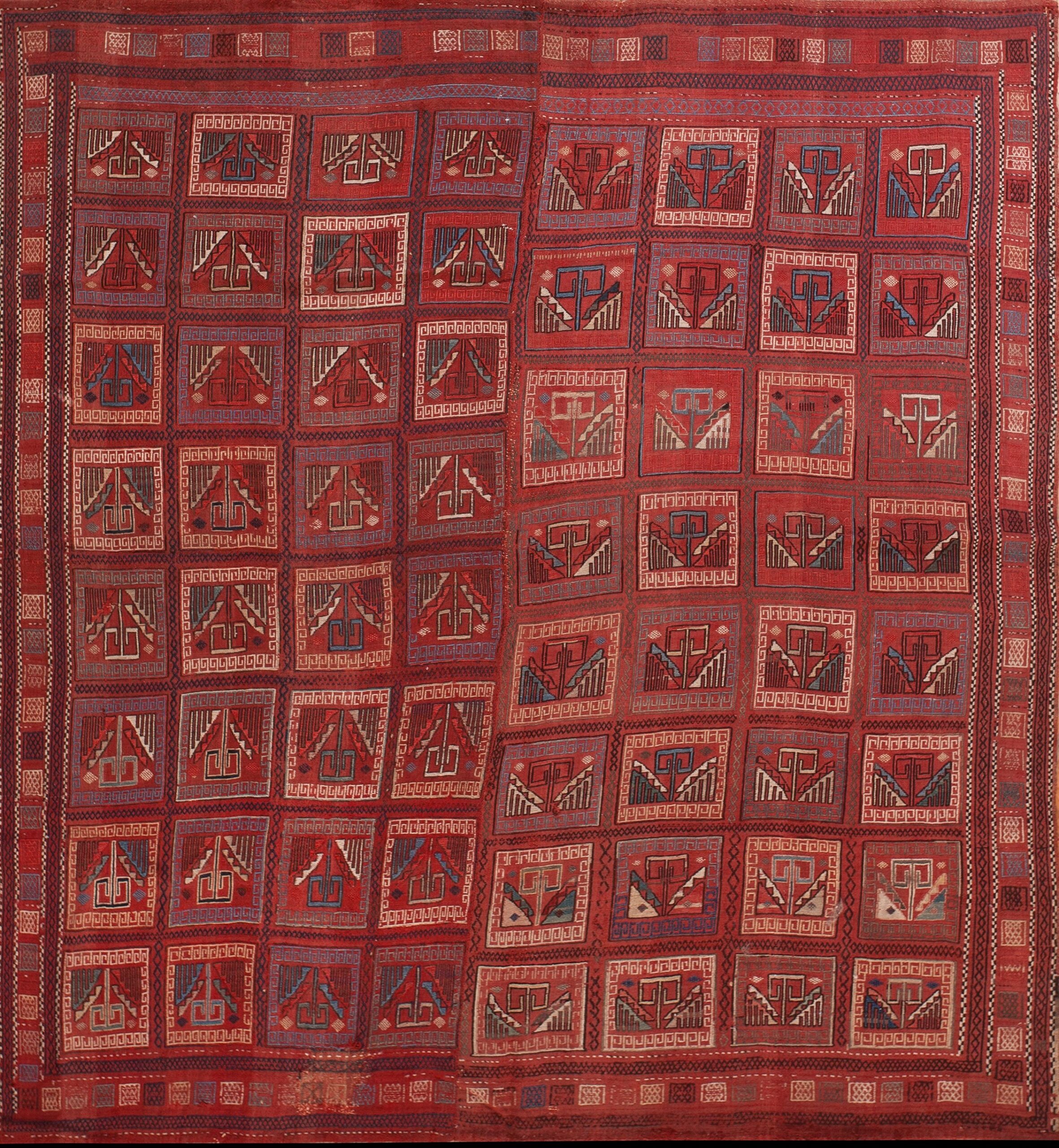
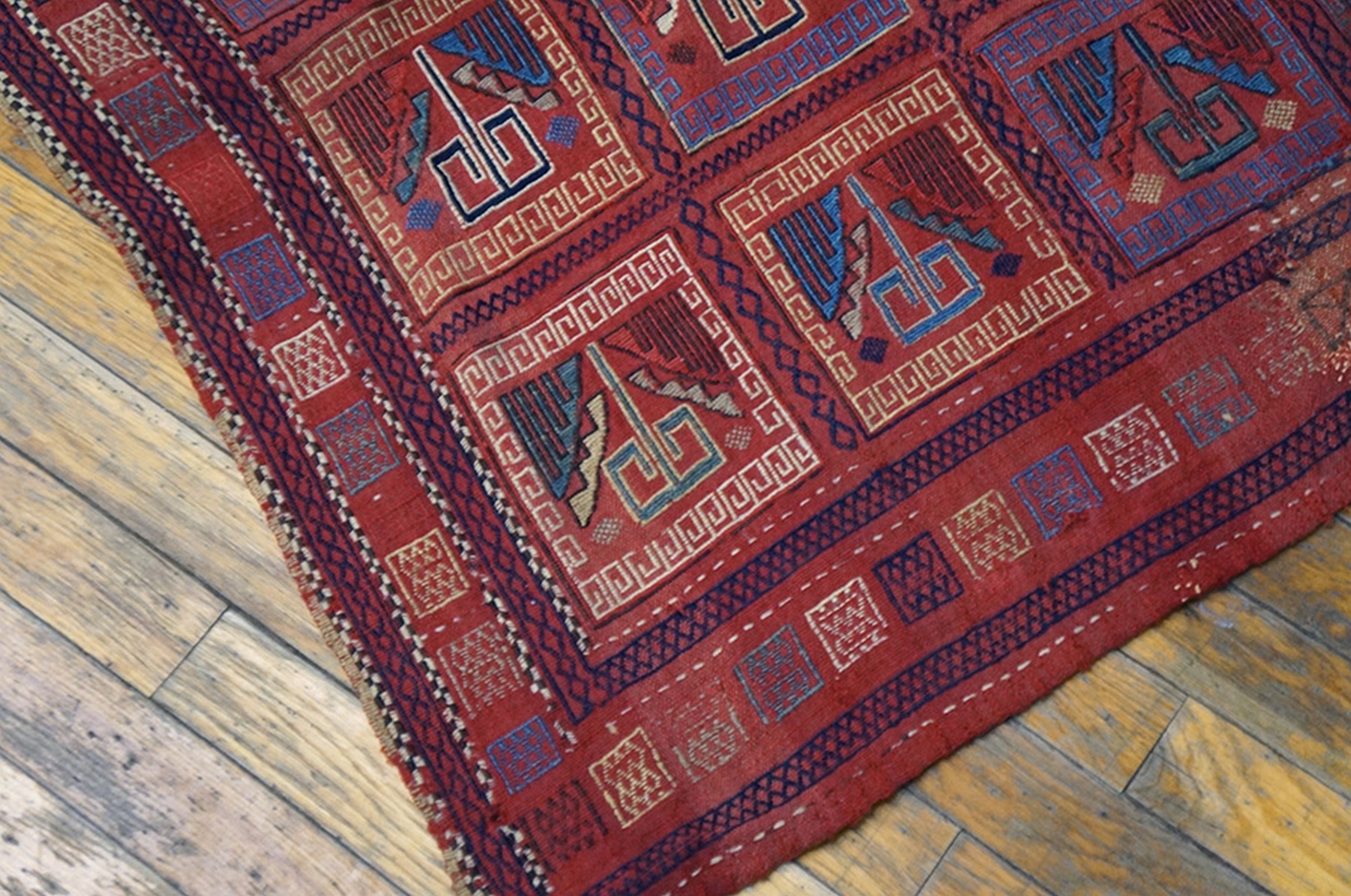
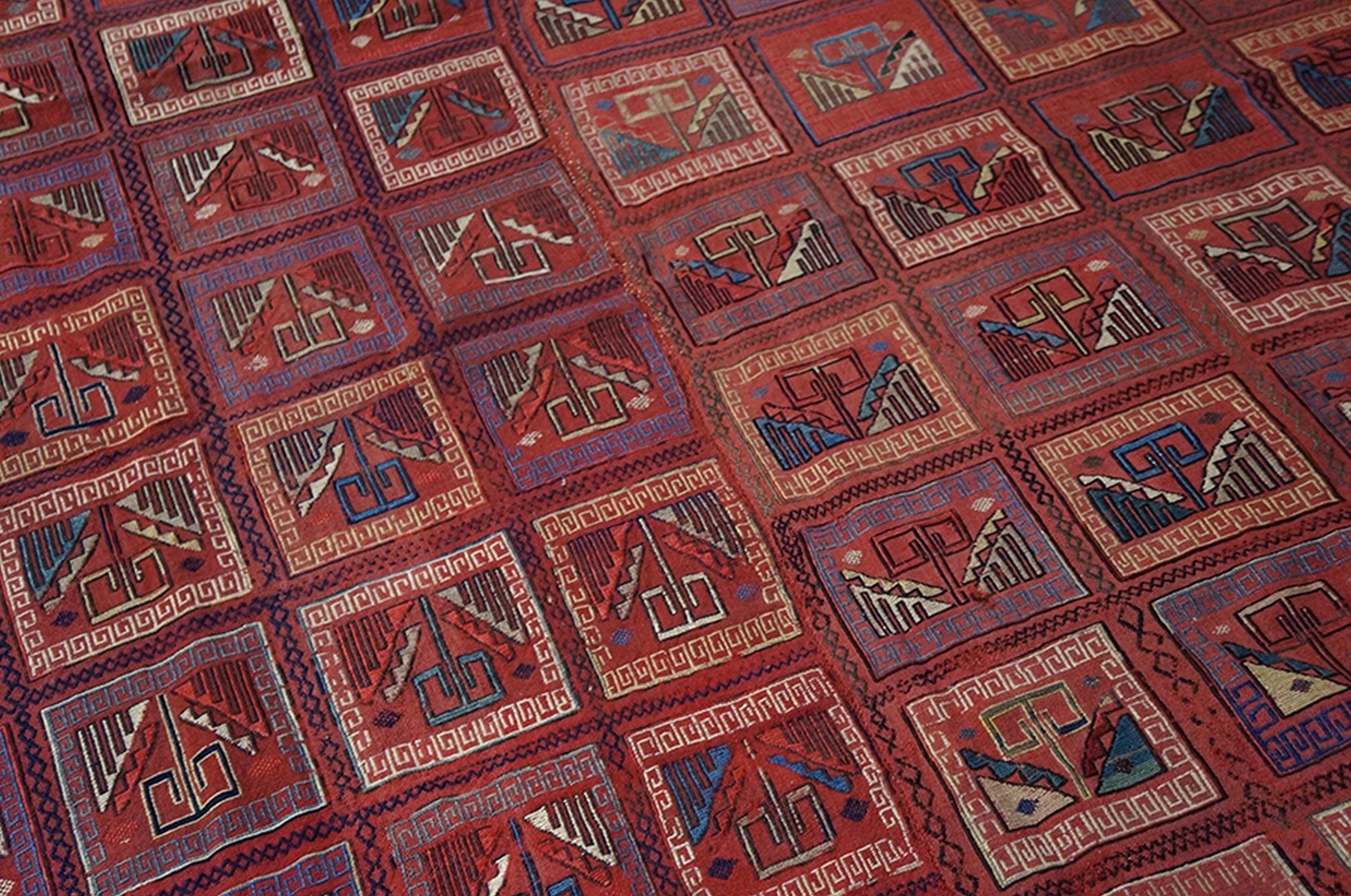
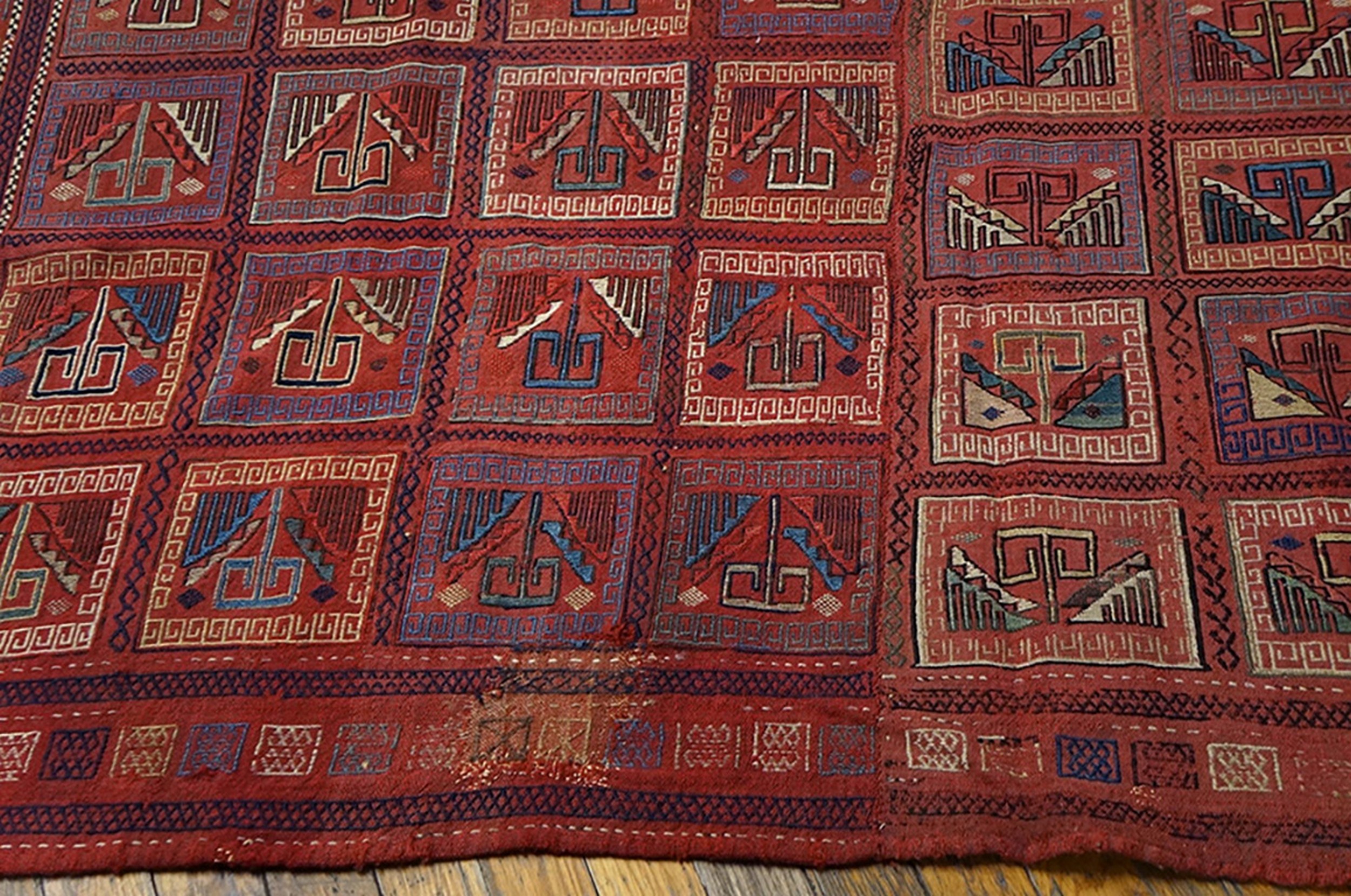
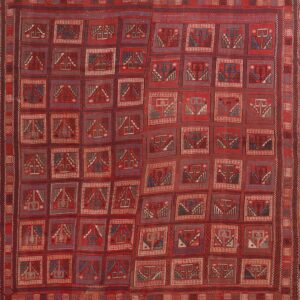
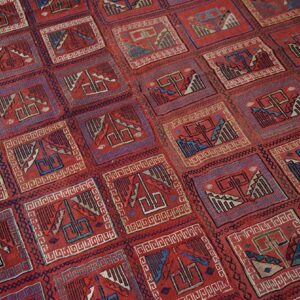
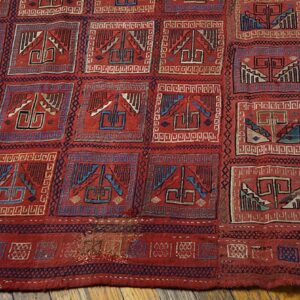
This late nineteenth-century Caucasian flat woven Verneh kilim rug is a masterpiece of nomadic tribal art, representing one of the most technically demanding and symbolically rich traditions of the South Caucasus. Unlike standard slit-weave antique kilims, the Verneh (or Varni) is a specialized “brocaded” flat-weave, often associated with the Karabagh or Shusha regions, prized for its structural density and its role as a dowry piece for tribal elites.
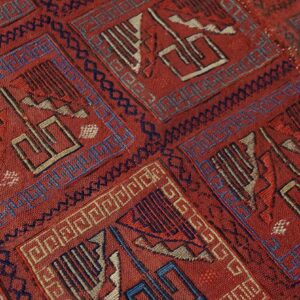
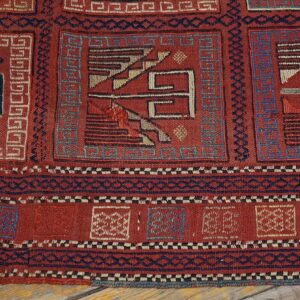
The composition is centered upon a rigorous tribal geometric pattern, often featuring the iconic “S-form” or “Dragon” motifs. In the Caucasian tradition, these stylized, angular shapes are ancient protective symbols, believed to ward off evil and represent the fluidity of the soul. The layout is typically organized into a series of large-scale geometric medallions or a rhythmic grid, creating a bold, architectural presence that is characteristic of the fierce “Highland” aesthetic. The drawing is remarkably sharp, showcasing the weaver’s ability to maintain perfect mathematical symmetry without the use of a written chart.
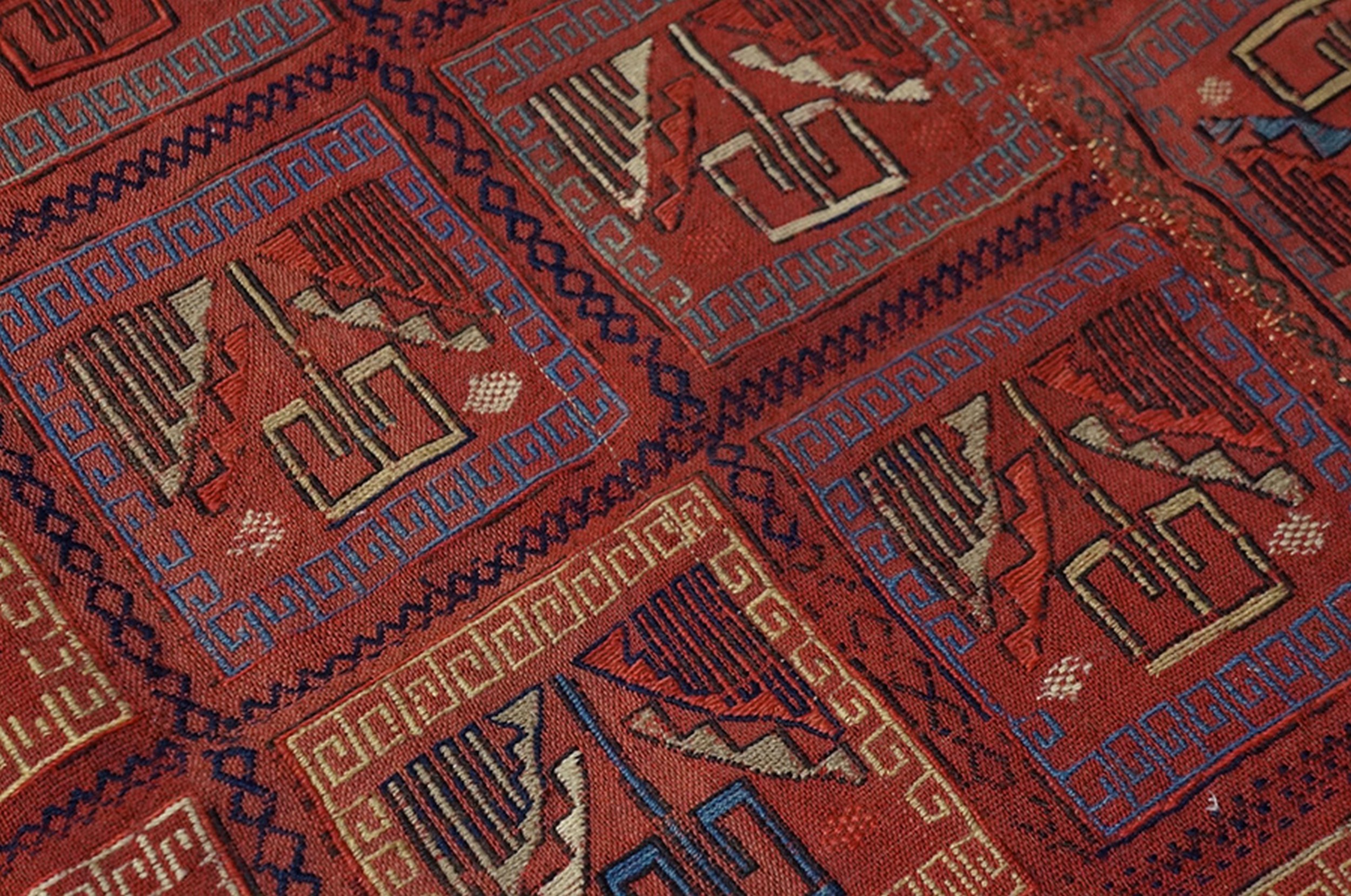
The palette is anchored by a powerful and resonant Caucasian Red foundation. This deep, earthy crimson is the result of masterful madder root dyeing—a process that, in the 19th century, yielded colors of extraordinary permanence and depth. Against this fiery stage, the secondary accents are rendered in midnight indigo, ivory, forest green, and hints of saffron. Because this is an antique specimen, the red field exhibits a magnificent “fire-like” Abrash (tonal variation), where the color shifts from terracotta to a sun-burnished orange, giving the flat surface a three-dimensional vitality.
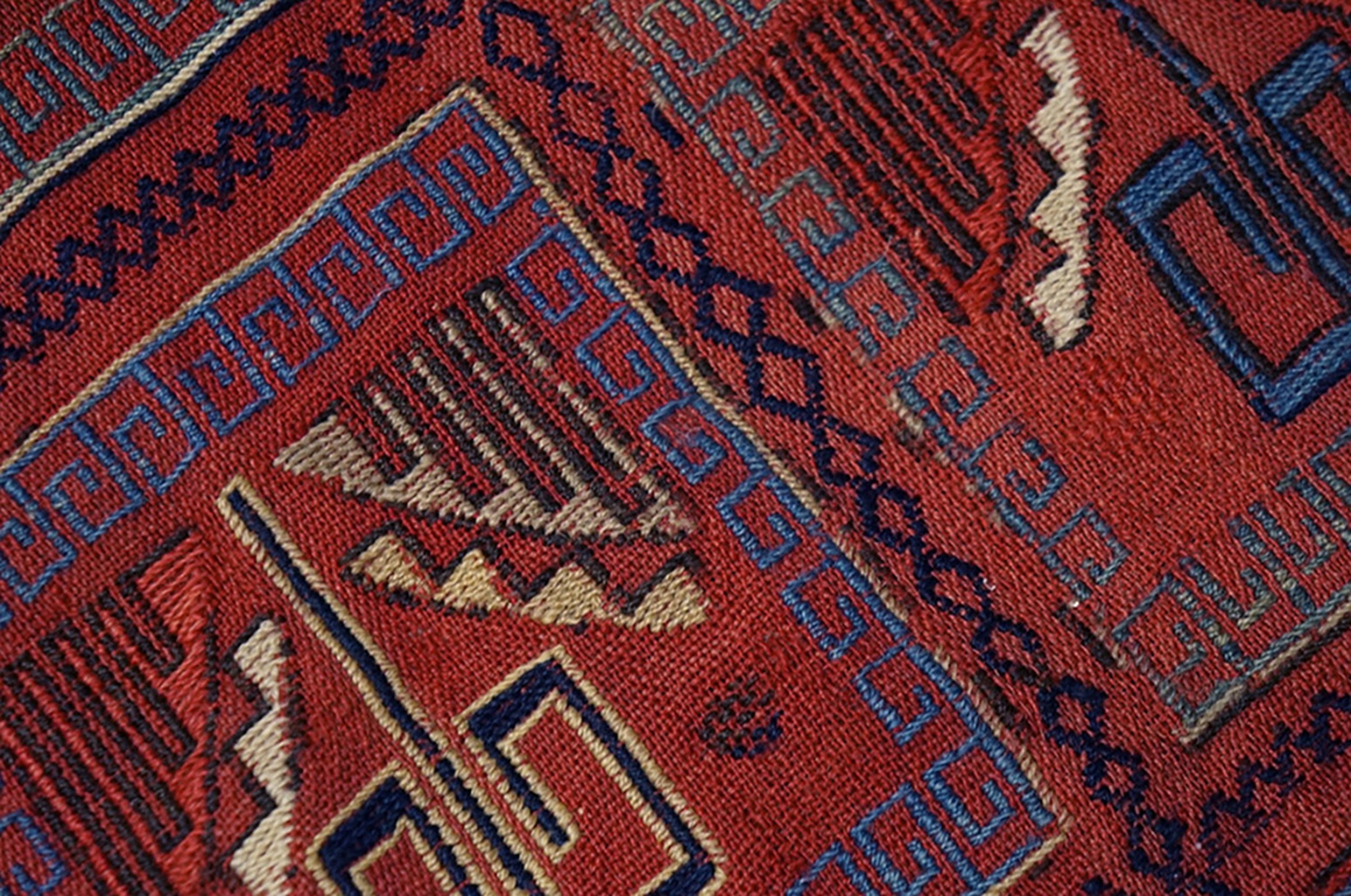
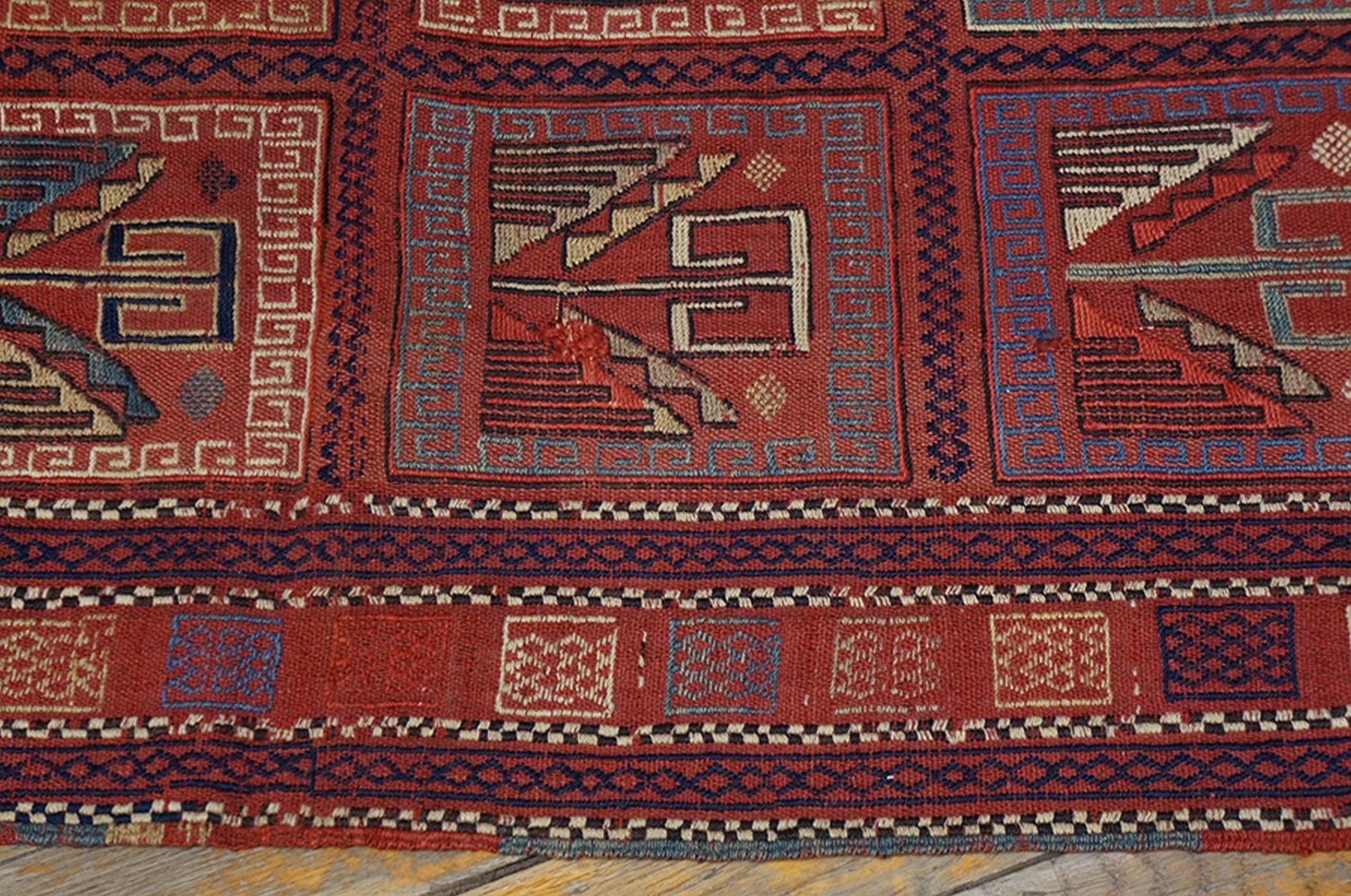
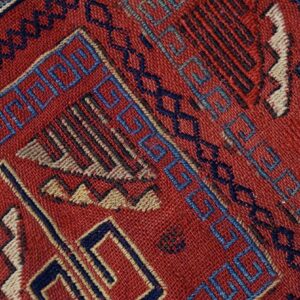
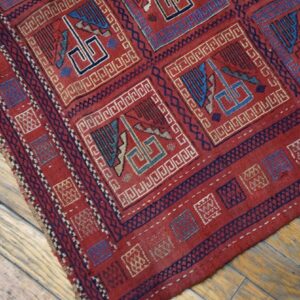
Technically, the Verneh is distinguished by its extra-thread wrapping (soumak) technique. While the base is a flat-weave, the decorative motifs are “brocaded” onto the surface, creating a slightly raised, embroidered texture that gives the square shape area rug a substantial, “meaty” handle. This technique makes the antique tribal area rug significantly heavier and more durable than a standard kilim, allowing it to lay perfectly flat on the floor with a “leathery” drape. The wool used is high-altitude, hand-spun yarn, rich in natural lanolin, which provides a matte, organic luster.
The borders act as a disciplined geometric frame, often featuring “running dog” or “hooked diamond” motifs that provide a sharp, high-contrast finish to the expansive field. To possess this late 19th century tribal patterned Caucasian rug is to own a piece of tribal history. It bridges the gap between ancient nomadic symbolism and the sophisticated, “Graphic-Modern” requirements of contemporary interiors—transforming any space into a sanctuary of historical gravity and warm, tribal soul.