
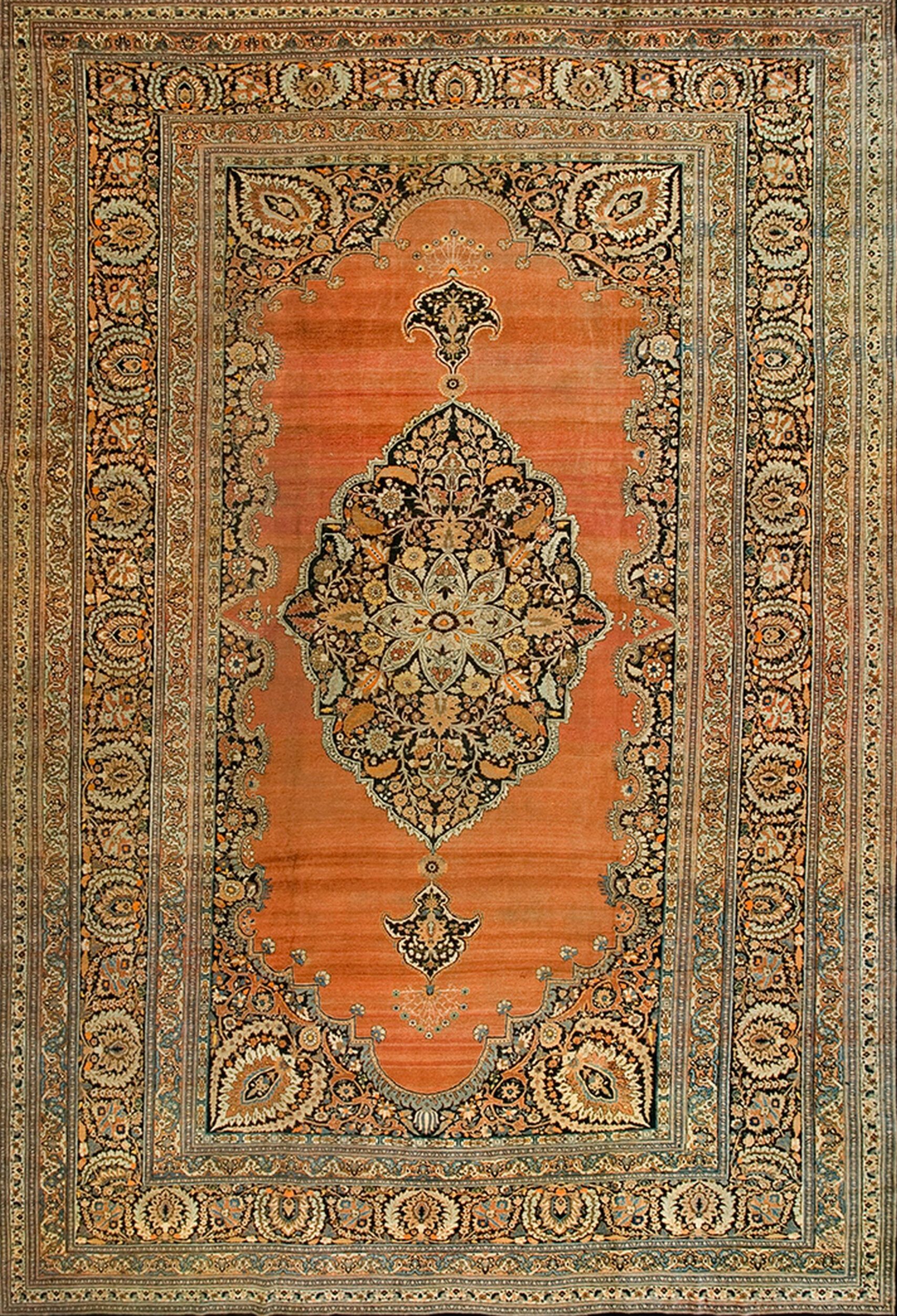
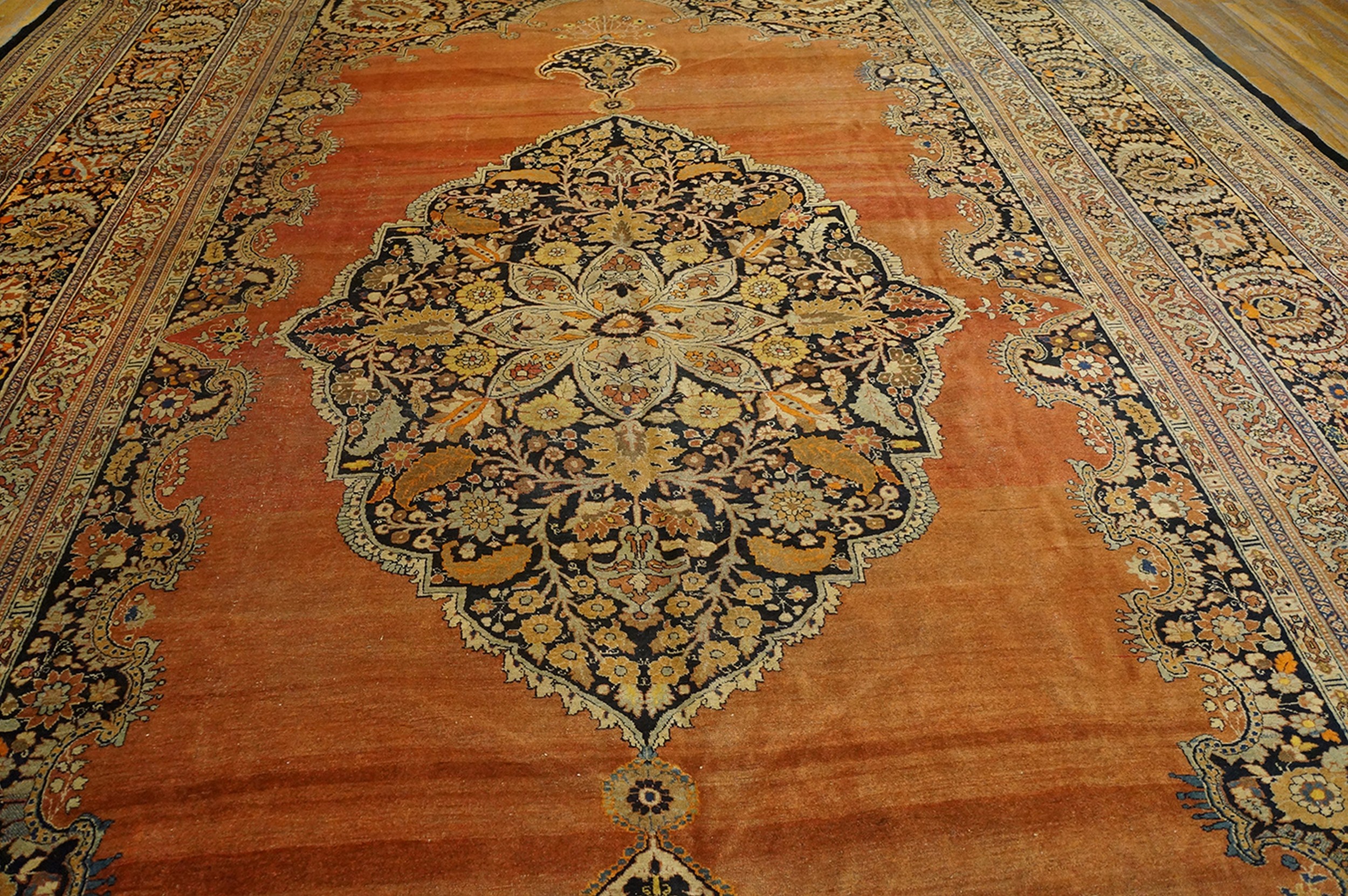
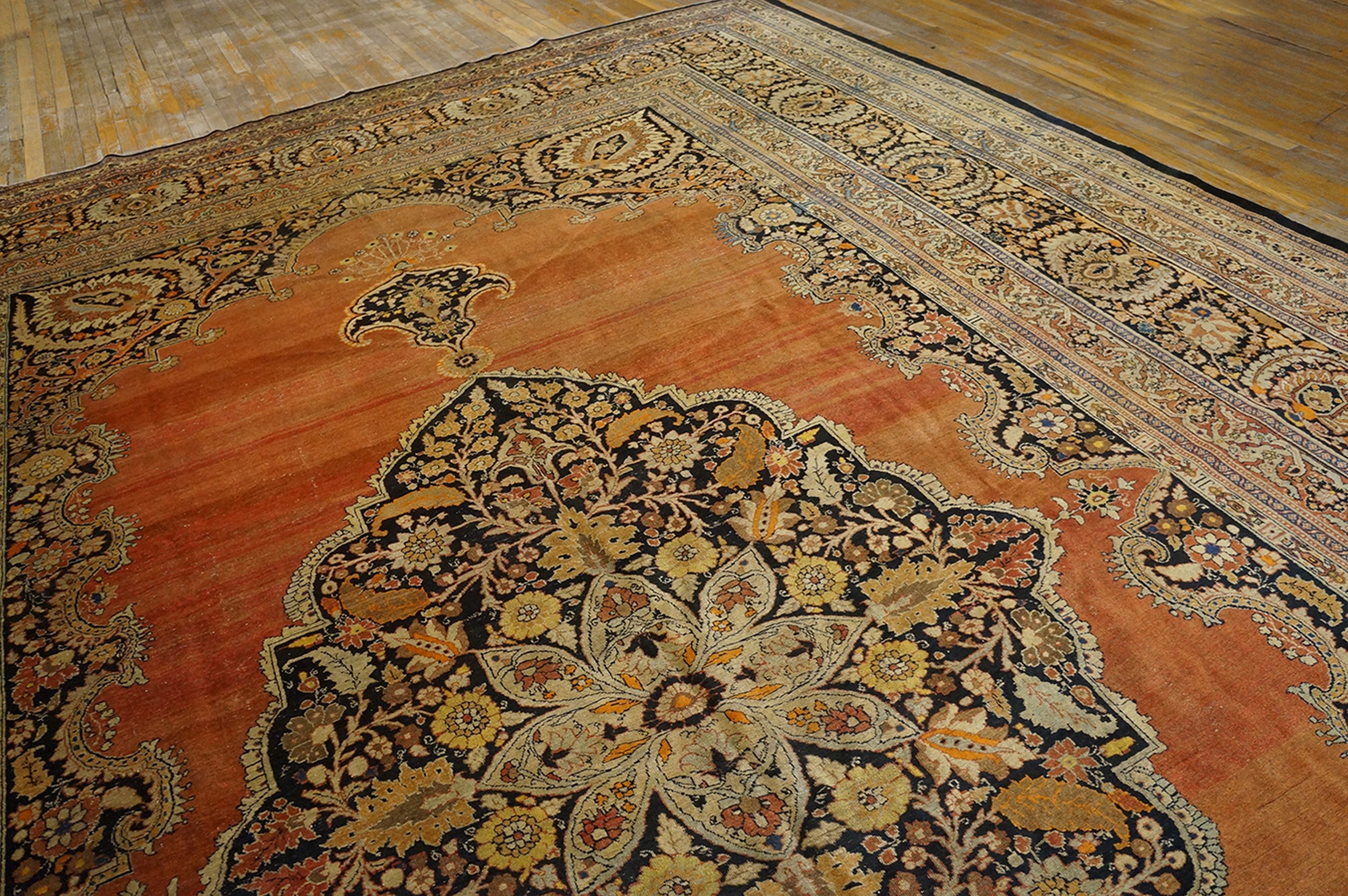
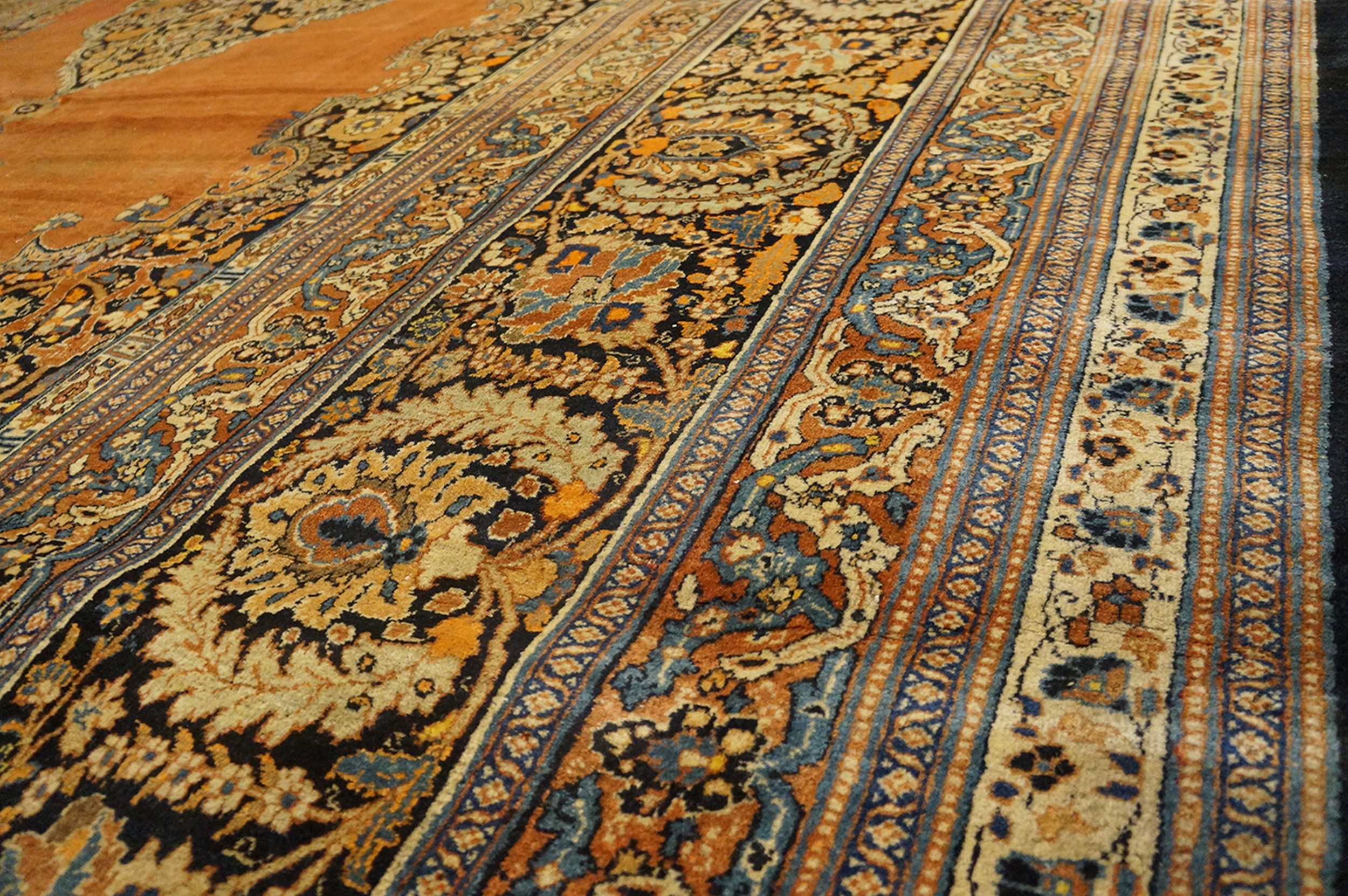
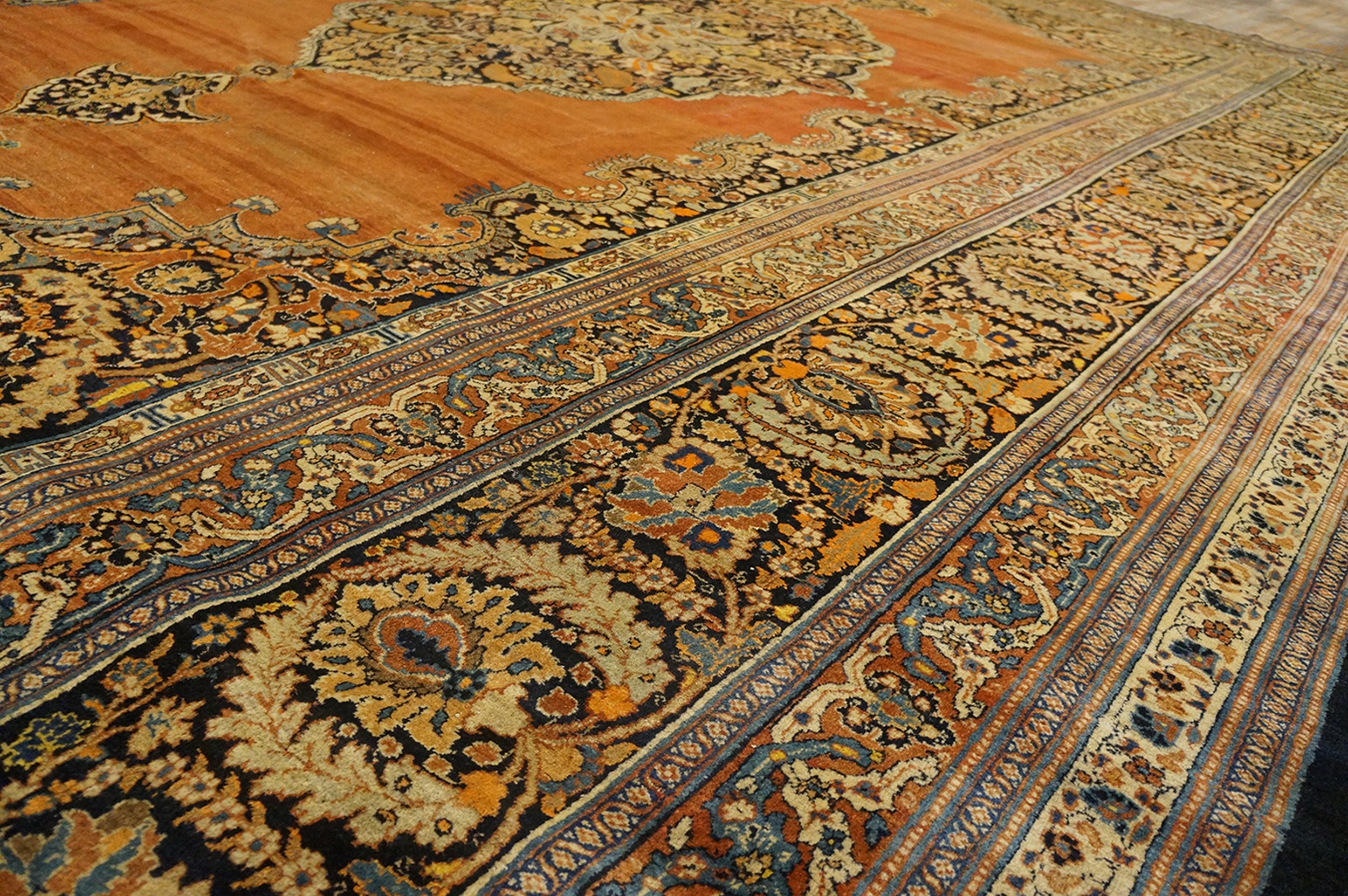
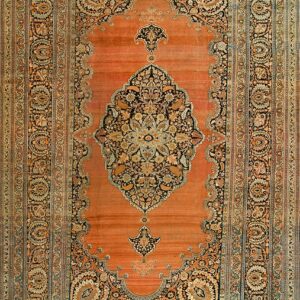
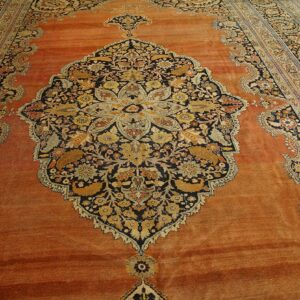
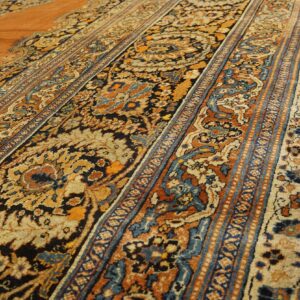
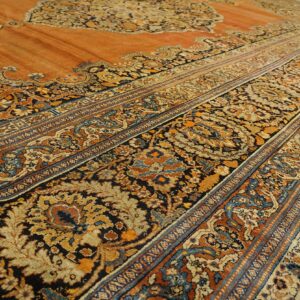
This magnificent fine late nineteenth-century Persian Tabriz carpet is a masterwork of the “Grand Classical” tradition, representing the pinnacle of urban weaving from Northwest Persia’s most scholarly artistic center. Historically, Tabriz was the epicenter of the Persian rug renaissance, where master weavers revived Safavid-era designs for a global audience. This specific specimen is distinguished by its “Open Field” composition—a sophisticated design choice that eschews dense clutter in favor of a serene, expansive background, allowing the central floral medallion to command the viewer’s full attention.
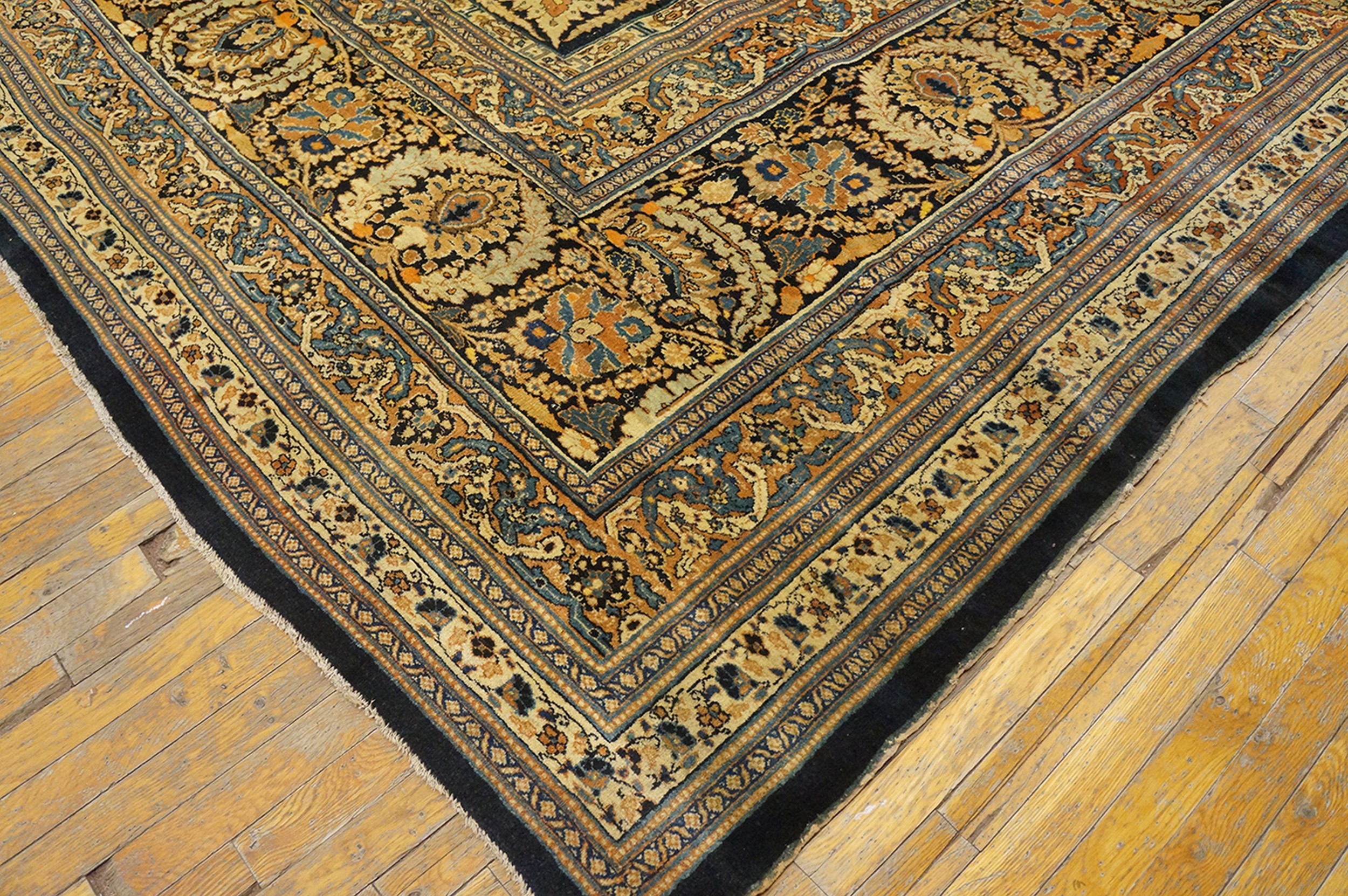
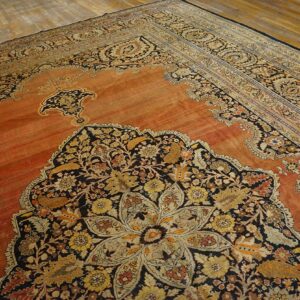
The composition is anchored by a powerful, multi-lobed floral medallion that radiates outward across a rich, “rustic” field. This “open-field” style was highly coveted by Western connoisseurs of the late 1800s for its architectural clarity and its ability to ground a room without overwhelming it. The “rustic” quality refers to the vibrant, natural vegetable-dyed palette—often featuring deep madder reds, burnt oranges, or earthy terracottas—which has aged over the last century into a nuanced, shimmering abrash. Surrounding the medallion is a delicate dance of scrolling vines, palmettes, and botanical sprays, rendered with the “razor-sharp” precision for which the fine Tabriz workshops are world-renowned.
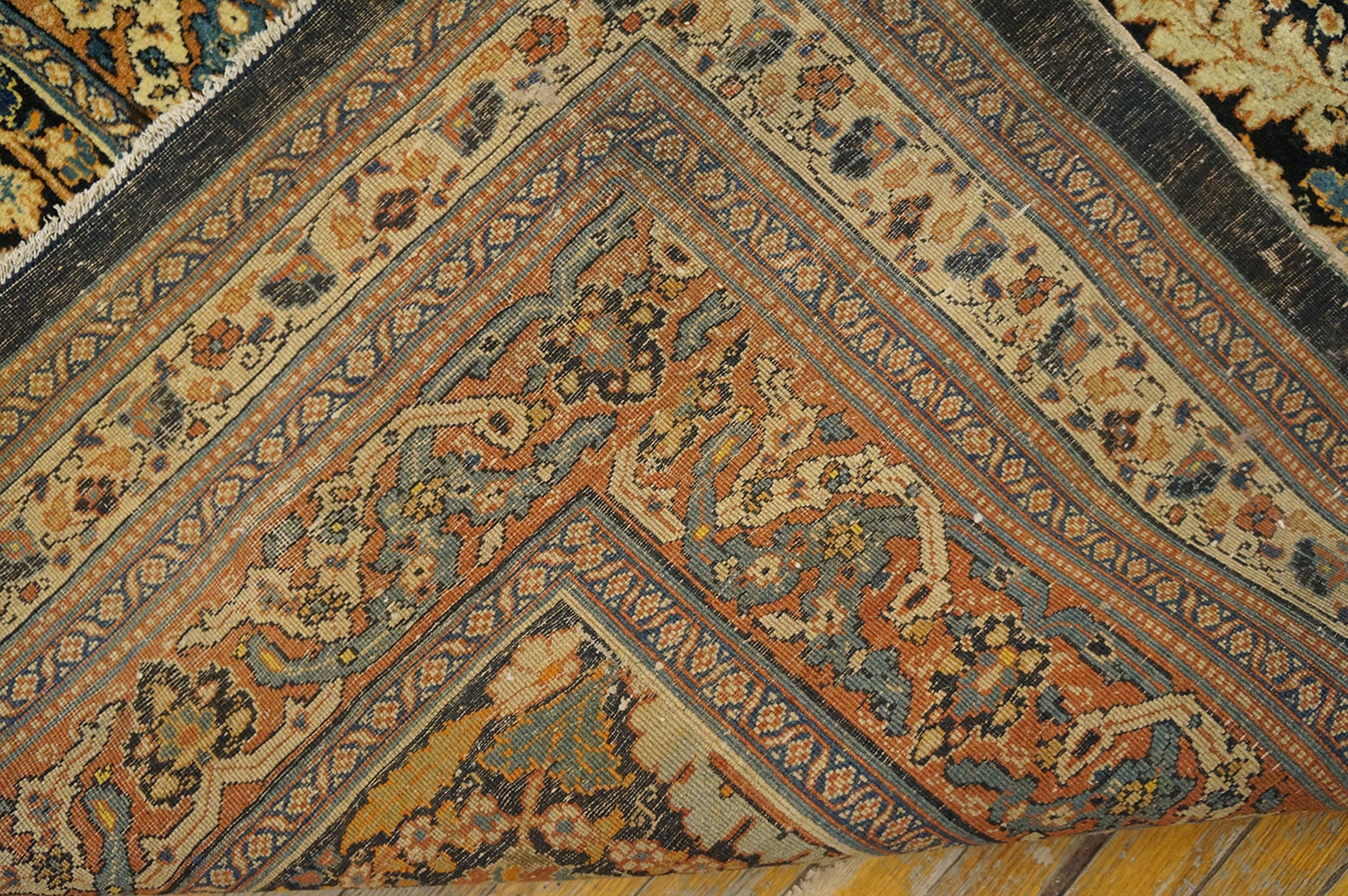
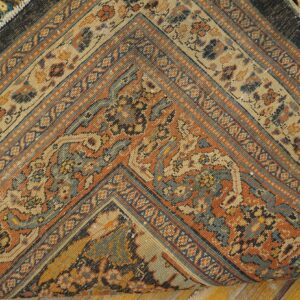
Technically, a Tabriz of this “fine” caliber is characterized by a high knot density and the use of superior, resilient wool on a firm cotton foundation. The “rustic-classical” hybridity of this piece bridges the gap between the formal symmetry of city looms and the expressive, organic energy of the Persian countryside. The absence of a dense “all-over” pattern in the field creates a modern sense of space, making it a versatile anchor for both traditional grand manors and contemporary minimalist interiors.
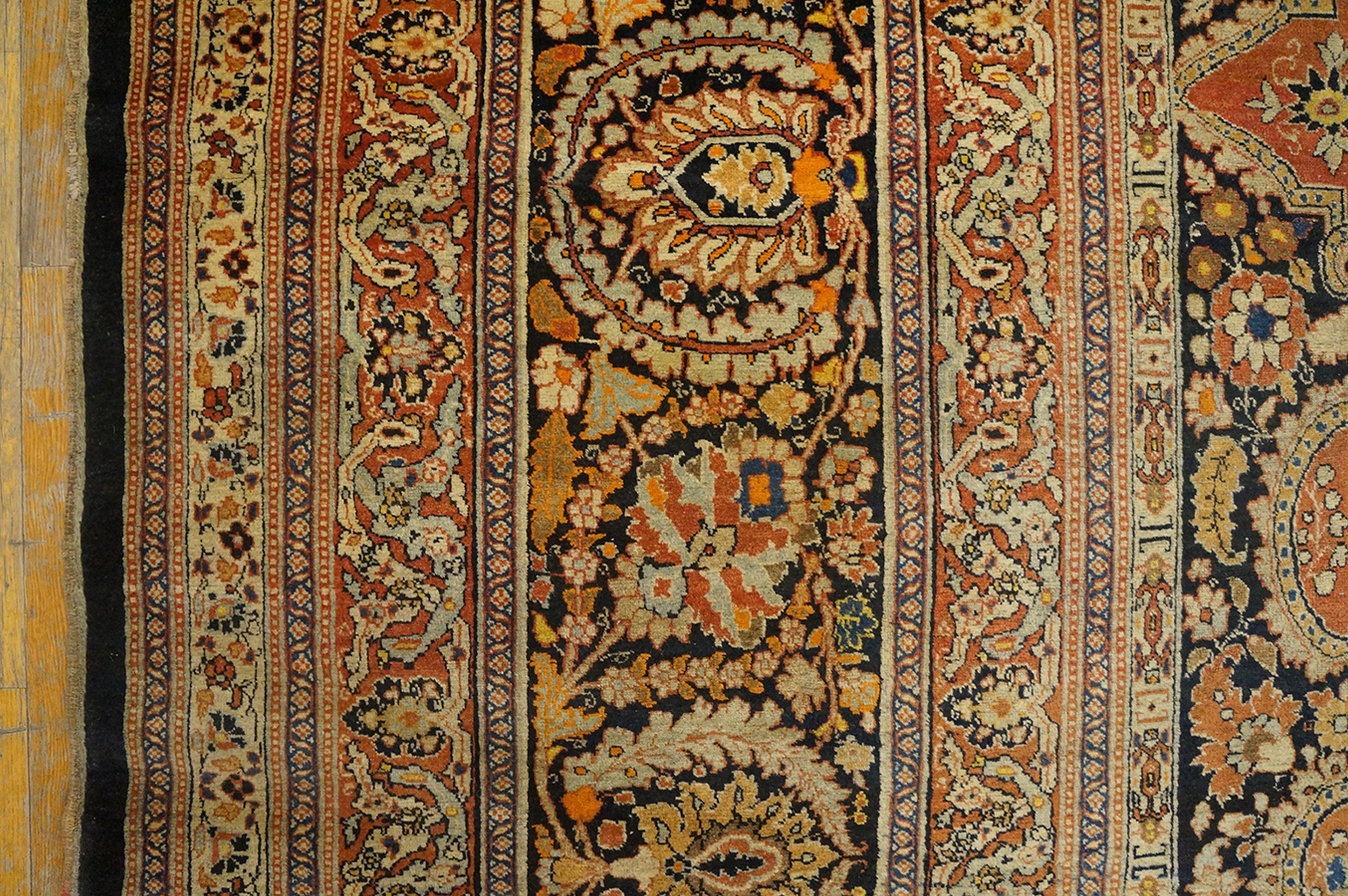
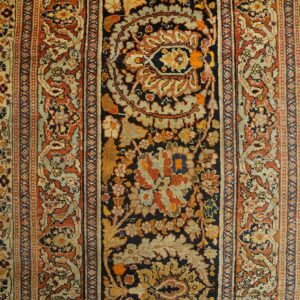
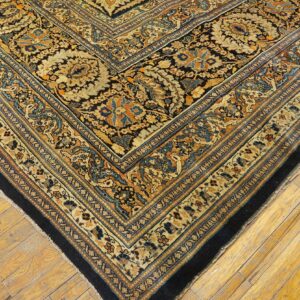
The borders act as a regal architectural frame, typically featuring a primary “Samovar” or “Herati” band flanked by intricate guard stripes. These borders serve to “contain” the radiant energy of the open field, providing a sense of classical permanence. To possess a large-scale, open-field antique Tabriz is to hold a monument to nineteenth-century textile engineering—a work that transforms the floor into a sprawling, hand-wrought canvas of Persian history and timeless, understated opulence.