
Introduction to Geometric Rugs
Explore our curated selection of stunning geometric motif rugs and transform your living space today.
What Defines a Rug’s Design as Geometric?
A rug is considered geometric when its design is built primarily from straight lines, angular motifs, and symmetrical arrangements. Unlike curvilinear or floral carpets, which feature flowing vines, rounded blossoms, or naturalistic curves, geometric rugs rely on order and clarity. Their patterns often consist of diamonds, triangles, squares, octagons, hexagons, or grid-based arrangements, repeated in balanced compositions.
In rug studies, the term rectilinear rugs is often used interchangeably with geometric rugs, highlighting the emphasis on straight lines and precise angles. Whether woven into the dense knots of a tribal carpet or expressed in the bold blocks of a modern geometric rug, this aesthetic is defined by its structure.
These designs are often easier to weave on a loom, especially for tribal or nomadic weavers, making them historically significant in both origin and technique.
The Universal Appeal of Geometric Patterns
The power of geometric motif rugs lies in their timeless, cross-cultural universality. Civilizations across the world—Persian, Turkish, Moroccan, Native American, and even Scandinavian—have used angular motifs as visual language for centuries. From tribal geometric rugs woven by nomadic groups to abstract rugs designed for contemporary interiors, the use of symmetry and repetition creates a sense of balance that transcends geography. Part of their appeal comes from adaptability.
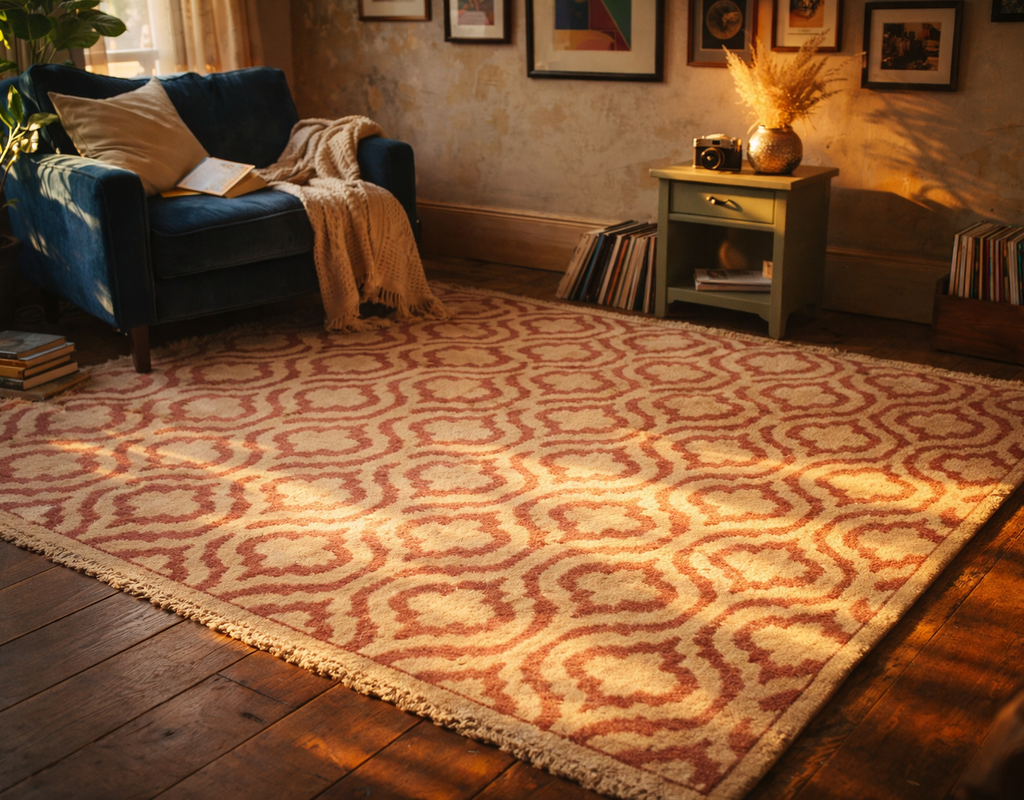
A geometric rug anchors this eclectic and cozy reading corner illuminated by beautiful afternoon sun.
A geometric area rug with bold diamond medallions may recall tribal heritage while simultaneously serving as a striking focal point in a modern loft. Minimalist interiors benefit from their clean lines, while traditional spaces welcome their historic symbolism. Unlike floral or figurative designs that may feel tied to specific eras, angular pattern carpets remain perennially relevant, effortlessly bridging old and new.
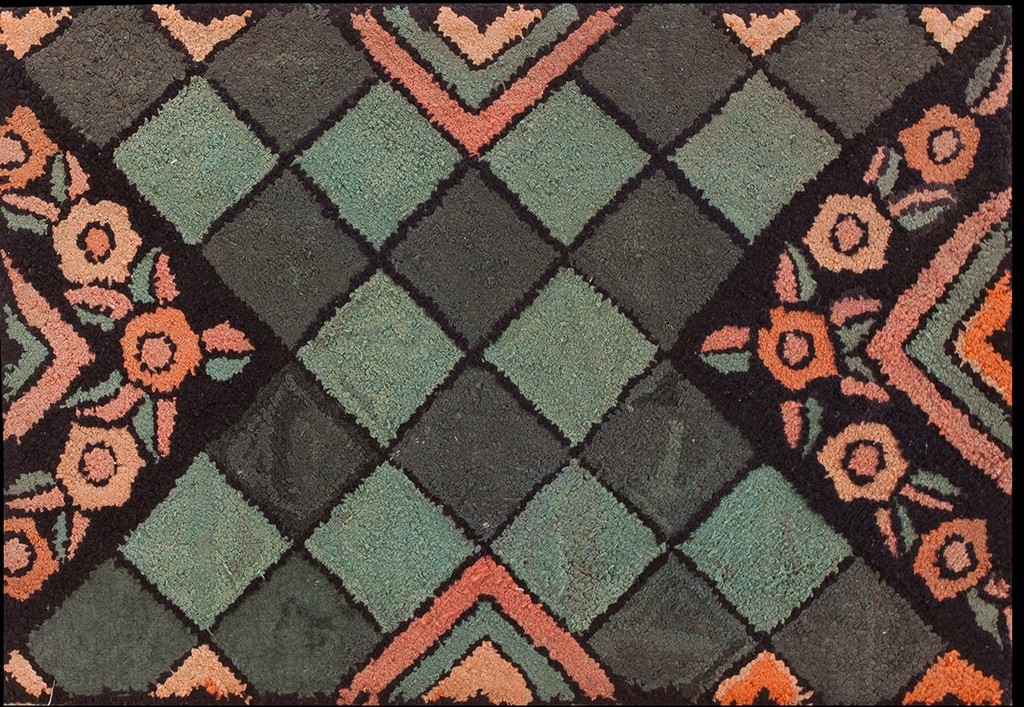
Antique American Hooked America Multicolor 1920s Rug by Rugs On Net
Equally important is their versatility in scale and tone. Large angular motifs deliver bold statements, while finely detailed grids offer subtle refinement. Whether vibrant and tribal or subdued and contemporary, geometric rugs continue to unify spaces with an aesthetic rooted in structure and timeless design.
Key Phrase Meanings and Synonyms
- Geometric Rugs / Rectilinear Rugs — Rugs defined by straight lines and angular structures, often symmetrical. — Why: Clarifies the distinction from curvilinear or floral styles.
- Angular Pattern Carpets / Angular Motif Rugs — Emphasize sharp angles and linear repetition in the design. — Why: Highlights the structural nature of the ornamentation.
- Tribal Geometric Rugs — Rugs made by nomadic or village weavers where geometric patterns reflect heritage and symbolism. — Why: Links geometric design with cultural storytelling and tradition.
- Modern Geometric Rug / Abstract Rug — Contemporary interpretations of geometric motifs, sometimes simplified or minimal. — Why: Demonstrates how the same design principles adapt to modern decor.
- Geometric Area Rug / Patterned Rug — General phrases used in design and retail contexts to describe rugs featuring angular or repeating motifs. — Why: Broadens search and consumer understanding while reinforcing versatility.
In every form, geometric rugs stand apart for their structural elegance and universal adaptability. By leaning on symmetry, repetition, and timeless shapes, they create a visual language that resonates in homes across cultures and generations.
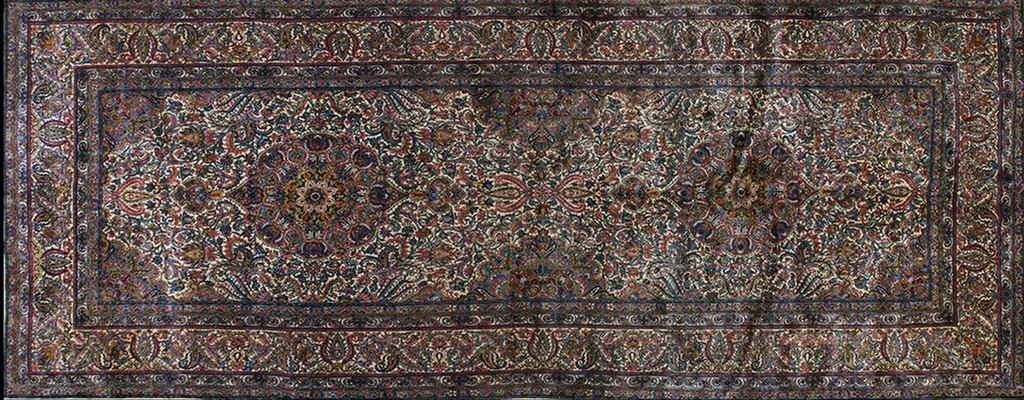
Antique Kilim Persian Knotted Rug by Rugs On Net
Historical Roots of Geometric Rug Design
Early Origins: Pazyryk and Prehistoric Motifs
The history of geometric rugs stretches back thousands of years, long before the rise of great weaving empires. Archeological discoveries show that angular ornamentation is among humanity’s oldest decorative languages. The most famous example is the Pazyryk carpet, unearthed in a Siberian burial mound and dated to the 5th century BCE.
Despite its advanced knotting technique and complex border structure, its motifs reveal strong geometric foundations: repeated squares, stylized animal figures framed within angular registers, and symbolic patterns that emphasize order and symmetry. Even earlier, prehistoric weaving traditions in baskets, mats, and textiles used straight-line designs out of necessity.
Woven reeds and fibers naturally produced angular grids, which later informed rug ornamentation. As weaving spread along the “rug belt”—stretching from Central Asia through Persia and Anatolia to Morocco—ancient rug patterns carried these rectilinear elements forward, embedding them with symbolic meaning tied to protection, fertility, and the natural order.
How Did Geometric Patterns Emerge in Persian Carpets?
In Persia, geometric carpets first developed within tribal and nomadic groups, where limited tools and loom structures favored angular designs over flowing curves. These Persian tribal rugs often featured bold medallions, hooked diamonds, or stepped lozenges that balanced aesthetic clarity with symbolic storytelling. The strength of these rectilinear patterns lay in their adaptability: they could be easily memorized, passed down through generations, and woven without formal cartoons or diagrams.
During the Safavid era (16th–17th centuries), workshop carpets woven for royal courts diverged toward highly refined curvilinear florals, reflecting Persian garden ideals and cosmopolitan tastes. Yet outside the city centers, tribes and rural villages maintained their rectilinear heritage.
These Safavid geometric rugs represented a continuity of ancient design principles, distinct from the elaborate courtly tradition. The geometric style thus became a defining mark of rural identity, standing apart from the curvilinear aesthetics of city weaving.
Tribal vs. Workshop Weaving
The tribal vs. workshop dichotomy explains much of the evolution in rug history. Tribal rug history emphasizes angularity: bold, linear motifs woven by nomadic groups not only reflected ancient tradition but also accommodated the practical limits of horizontal ground looms. These rugs were personal, symbolic, and tied to daily life—used in tents, for ceremonies, or as dowries.
By contrast, workshop weaving in urban centers like Isfahan, Kashan, and Tabriz advanced sophisticated curvilinear styles, aided by vertical looms and detailed design cartoons. These rugs became luxury objects, filled with intricate vines, arabesques, and floral medallions. Over time, this divergence cemented the role of geometric tribal rugs as the guardians of ancient angular motifs, while city carpets embodied the evolution of Persian artistry toward curvilinear refinement.
Ultimately, the origins of geometric carpets reveal a story older than writing itself: born from prehistoric weaving, carried through tribal memory, and preserved as a distinct tradition alongside the rise of elaborate city florals. The endurance of geometric design demonstrates both its practicality and its timeless symbolic resonance.
Core Design Elements of Geometric Rugs
Defining Motifs: Diamonds, Octagons, Gul, Stars
At the heart of geometric rug motifs are a set of bold, repeatable shapes that provide both structure and symbolism. The lozenge, or diamond pattern rug, is among the most common, representing protection and continuity. Its sharp, elongated lines draw the eye across the field and create a sense of direction.
The octagon, often expressed as the “gul” motif, has deep tribal significance, serving as a mark of identity among Turkmen weavers and symbolizing strength and unity. The eight-pointed star—a balance of two intersecting squares—conveys harmony and cosmic order, its symmetry appealing across cultures.
Triangles, crosses, and stepped motifs appear frequently as well, each bringing a distinct rhythm and reinforcing the visual clarity that defines geometric rugs. These shapes are not purely decorative; they carry cultural memory. A tribal gul is not just an octagon but a visual signature of a community. A star medallion, placed at the center of a rug, transforms the textile into both a practical object and a symbolic canvas.
Structure: All-Over vs. Medallion Layouts
The structure of a geometric rug often determines its overall mood. In an allover geometric rug, motifs repeat continuously across the field, creating a sense of infinite pattern and balanced order. This style works well in large rooms where the uninterrupted rhythm of diamonds, stars, or triangles can anchor the space without a single focal point.
By contrast, the medallion rug relies on a central motif—often a star, diamond, or gul—framed by a field of secondary patterns. This composition creates hierarchy and directs the eye toward the rug’s center, much like a painting.
Other variants include compartmentalized layouts, where grids or panels divide the field into smaller sections, each filled with repeating angular motifs. These compositional choices highlight the adaptability of geometric design, shifting from balanced repetition to bold centrality depending on the weaver’s intent.
Borders, Symmetry, and Color Blocking
Borders frame the design with secondary motifs like Greek keys, latch-hooks, reciprocal trefoils, or rows of small triangles. — Why: They establish boundaries, preventing the central pattern from visually “spilling out” and reinforcing balance.
Symmetry governs layout through mirrored or rotational arrangements of motifs. — Why: This creates order, reflecting cultural values of harmony and reinforcing visual stability. Color blocking introduces contrast by setting solid fields of color against sharp motifs. — Why: It amplifies the clarity of each geometric form, making the rug more striking from a distance.
How Does Color Blocking Enhance Geometric Rug Patterns?
Color block rugs rely on strong contrasts—reds and blues, ivory and black, or earth tones divided into bold fields—to heighten the sharpness of motifs. By isolating diamonds or stars against solid backgrounds, color blocking emphasizes line and form, ensuring that angular motifs remain distinct rather than blending into the field.
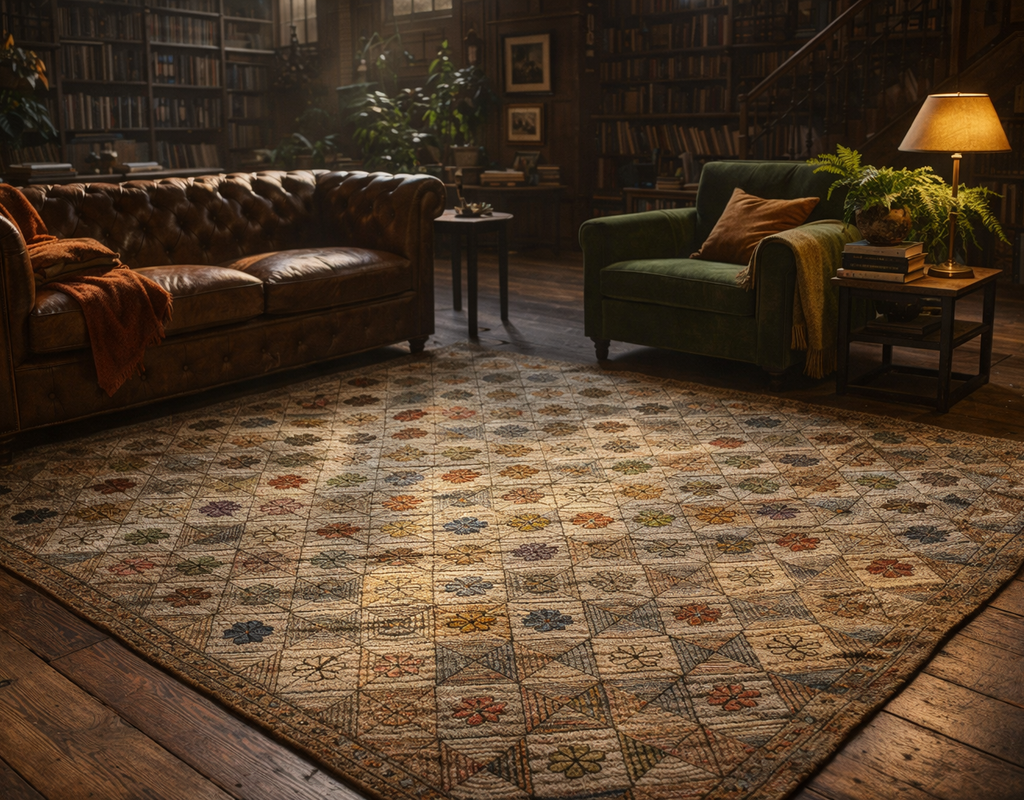
A vibrant, patterned area rug provides a focal point in this cozy, traditionally styled study or library.
Antique Serab Oversized Large Big Wool Brown Rug – by Rugs On Net
This technique also creates rhythm: alternating bands of color guide the eye across the rug, reinforcing its structure. For both tribal and contemporary weavers, color blocking remains a powerful tool to achieve graphic clarity and visual impact.
Busy vs. Minimal Geometric Design: How to Choose?
The choice between a busy geometric rug and a minimalist geometric rug depends on room size, decor style, and the desired atmosphere. A busy rug, filled with dense motifs and layered borders, conveys energy, tradition, and warmth—ideal for large living rooms or spaces with neutral furniture that benefit from strong pattern density.
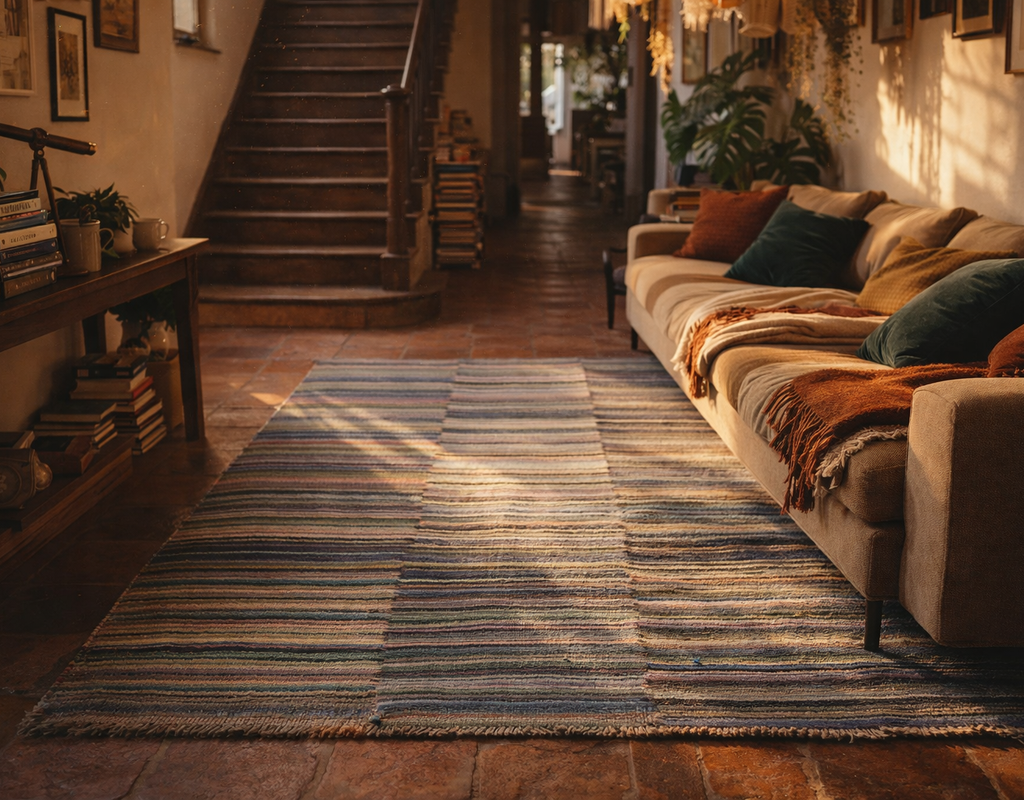
A vibrant, multi-colored striped rag rug adds texture and color contrast to a rustic living area bathed in warm sunlight.
In contrast, a minimalist geometric rug, with larger shapes and open fields, brings calm, focus, and modern refinement. It suits smaller rooms, contemporary interiors, or spaces where subtlety is preferred.
Ultimately, pattern density should match the environment: busy for vibrancy and storytelling, minimal for serenity and balance. Both approaches highlight the enduring adaptability of geometric rugs, proving that angular design can energize or soothe depending on its scale and complexity.
Materials, Weaving Techniques & Construction
What Materials Best Showcase Sharp Geometric Rug Lines?
The best material for geometric rugs has always been wool, particularly hand-spun varieties. Wool’s natural elasticity allows weavers to pull knots tightly, resulting in straight lines and crisp angles.
Its excellent dye uptake produces saturated reds, blues, and earth tones that emphasize angular contrasts in a geometric wool rug. Silk is occasionally used in high-end workshop rugs for extra sheen, but wool remains the classic fiber for both tribal and urban weaving traditions. Cotton foundations further stabilize designs, especially in finer city rugs, ensuring motifs remain aligned over centuries of use.
Hand-Knotted vs. Flatweave for Geometrics
Both hand-knotted geometric rugs and flatweave geometrics excel in different ways. A hand-knotted rug creates a pile surface, allowing geometric motifs to appear with depth and even three-dimensional relief. Fine knotting makes it possible to weave small stars, hooked diamonds, or intricate gul motifs with precision.
By contrast, the flatweave kilim eliminates pile altogether, relying on warp and weft interlacing to generate sharp, tapestry-like designs. Where hand-knotting offers durability and sculptural texture, flatweaves achieve the purest, most graphic expression of geometry on a flat plane.
How Do Kilim Weaves Produce Crisp Geometric Shapes?
Kilim geometric rugs employ tapestry techniques such as slit-weave and interlocking wefts. In slit-weave, adjacent colored wefts leave small vertical gaps, creating razor-sharp edges between motifs like diamonds, triangles, or zigzags.
Interlocking methods can soften these joins, but slit-weaves remain the hallmark of kilim angularity. The result is a rug that emphasizes line and color over texture—ideal for bold, minimalist interpretations of geometric motifs.
What Knot Density Suits Fine Caucasian Geometric Carpets?
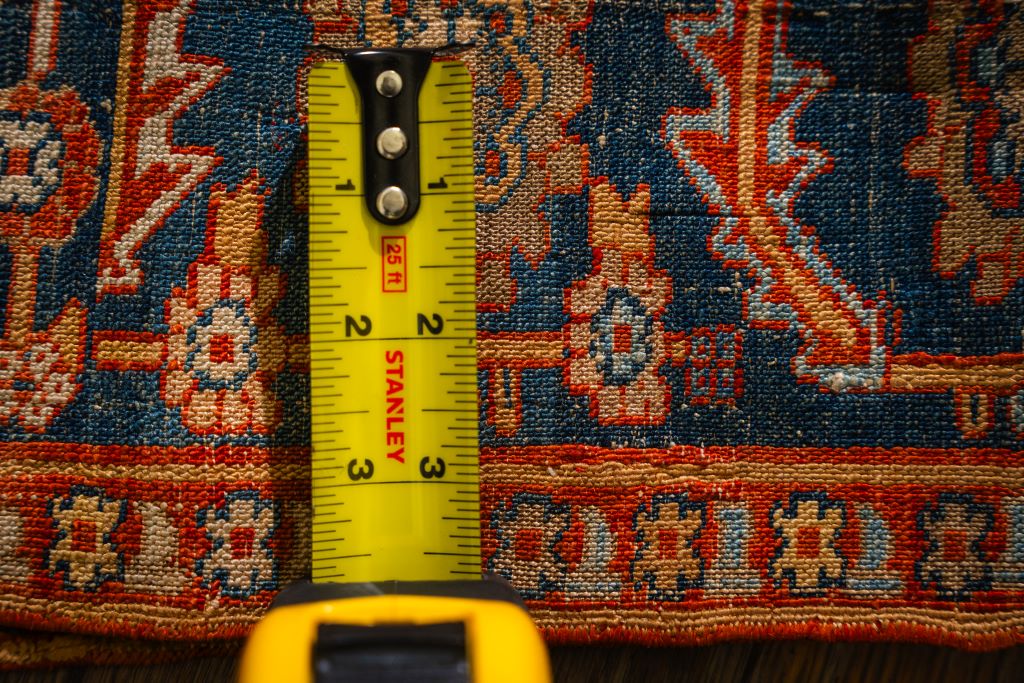
A detailed inspection of a richly colored oriental rug pattern while measuring its dimensions.
In hand-knotted traditions, knot density determines detail. Tribal weavers often favored medium counts for bold designs, but fine Caucasian geometric carpets stand out for their intricacy.
These rugs can reach 100–150 knots per square inch or higher, enabling delicate stars, stepped medallions, and finely hooked diamonds. Collectors prize these rugs for their balance of tribal angular motifs and technical refinement, where each knot contributes to crisp outlines and tight symmetry.
Are Synthetic Fibers Durable for Bold Geometric Motifs?
Modern weaving often employs synthetics like polypropylene, nylon, or polyester to produce durable geometric rugs. These fibers withstand heavy traffic and are cost-effective, making them popular in machine-made synthetic geometric carpets. Their resistance to staining and wear ensures longevity, especially in family or commercial spaces.
However, synthetics cannot replicate the tactile richness of wool. The flat sheen and uniform texture may diminish the depth and organic irregularities that make handwoven wool geometrics so compelling.
In essence, materials and techniques define the visual character of a geometric rug: wool for sharp clarity and heritage, kilim for crisp angular tapestries, fine knotting for intricate detail, and synthetics for accessible durability. Each method carries forward the timeless appeal of angular patterns, adapted to different needs and contexts.
Regional Styles: Geometric Rugs Around the World
A collection of rugs showing global geometric motifs.
Regional Variations: Caucasian, Persian, Anatolian, Central Asian, Berber/Moroccan, Navajo, More
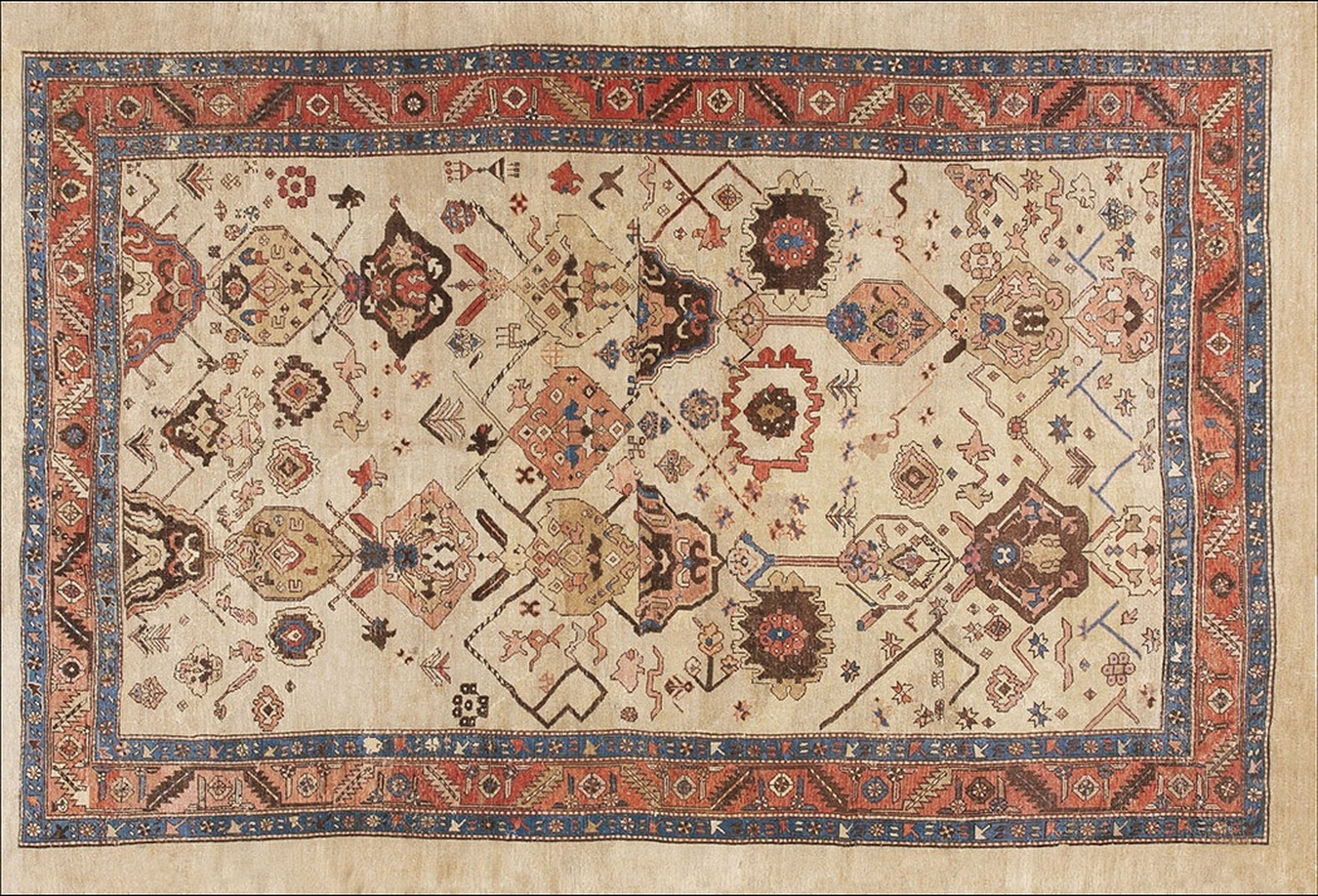
Antique Bakshaish Persian Brown 1875 Rug – by Rugs On Net
- Caucasus: The Caucasian geometric rug tradition is bold and vibrant, with Kazak, Shirvan, and Daghestan rugs featuring rich colors, stepped diamonds, stars, and medallions. — Why: These tribal rug regions produced some of the most collectible and recognizable geometric weavings in history, prized for their energy and contrast.
- Persia (Iran): Villages and tribes such as Heriz, Bakhtiari, Qashqai, and Kurdish weavers are known for rectilinear styles. The Heriz geometric rug is iconic, with massive angular medallions woven in durable wool. — Why: Persian tribal groups maintained geometric motifs even as urban workshops shifted to curvilinear florals, preserving cultural heritage.
- Anatolia (Turkey): Anatolian village weavers, including Yörük and Konya groups, excel at geometric kilims and pile rugs, often with bold zigzags and prayer-niche layouts. — Why: Their flatweave traditions highlight crisp angular motifs, showcasing the adaptability of tapestry techniques.
- Central Asia: Turkmen, Uzbek, and Kyrgyz weavers created angular guls and compartmentalized fields, especially in the Bokhara geometric carpet tradition. — Why: The repeating octagonal gul became a symbol of Turkmen tribal identity, now globally recognized.
- North Africa (Morocco): The Beni Ourain diamond rug, woven by Berber tribes in the Atlas Mountains, epitomizes minimalist geometry with ivory fields and simple black lozenges. — Why: Their understated elegance fits both tribal heritage and modern design trends.
- Southwest United States: Navajo geometric rugs feature stepped diamonds, serrated zigzags, and cross motifs in earthy palettes. — Why: They represent indigenous artistry tied to sacred cosmology and natural landscapes.
Together, these global geometric rug styles reveal how angular design adapts to local traditions, creating a shared yet diverse aesthetic language.
Who Weaves Iconic Heriz Rugs with Geometric Medallions?
The Heriz geometric rug comes from northwest Iran, specifically the villages surrounding Heriz. Woven by local artisans, these rugs are defined by oversized angular medallions, corner spandrels, and bold borders.
Their coarse but durable wool and striking color contrasts make them some of the most enduring Persian geometric carpets. Unlike urban city rugs, Heriz pieces remain firmly rooted in village tradition, bridging tribal simplicity with architectural grandeur.
Where Are Renowned Geometric Rugs Woven Today?
Authentic geometric rugs are still woven across the traditional rug belt. In Iran, village and tribal groups continue producing Heriz, Kurdish, and Qashqai carpets. Turkey remains a center for kilims and Yörük styles.
Moroccan geometric carpets, especially Beni Ourain, are made by Berber weavers in the Atlas Mountains. Afghanistan and India also produce angular tribal designs, including kilims and modern reinterpretations.
In the Caucasus, Georgia and Azerbaijan sustain traditional Kazak and Shirvan weaving. These regions collectively ensure that both tribal and workshop geometrics remain available for collectors and homeowners alike.
Where Can I Buy Vintage Beni Ourain Diamond Rugs?
Vintage Beni Ourain diamond rugs are best sourced directly from trusted Moroccan dealers, specialty galleries, or reputable online retailers specializing in tribal and vintage carpets. Authentic examples typically feature undyed ivory wool with minimalist black lozenges and a supple handwoven texture. Buyers should look for provenance and authenticity guarantees, as the popularity of Moroccan geometrics has led to many imitations.
Investing in a genuine vintage piece ensures both quality and connection to Berber cultural heritage. In every region—from the mountains of the Caucasus to the deserts of Morocco—geometric rugs embody cultural identity through angular design.
Whether it’s the structural medallions of a Heriz, the symbolic guls of Turkmen Bokhara, or the minimalist diamonds of a Beni Ourain, regional diversity is what gives the geometric tradition its enduring global resonance.
Cultural & Symbolic Meanings
Symbols and Motifs Decoded
- Diamond: Often linked to femininity and fertility, the diamond is one of the most widespread geometric rug symbolism elements. — Why: Its lozenge form represents continuity of life and protection of family.
- Ram’s Horn: Stylized as curling angular motifs, the ram’s horn embodies strength, masculinity, and vitality. — Why: A powerful symbol of endurance, it communicates resilience in tribal societies.
- Star: Frequently rendered as an eight-pointed form, the star stands for cosmic order, hope, and spirituality. — Why: Its symmetry connects earthly life with celestial balance.
- Lattice/Grids: Repeated interlocking lines symbolize walls or protective enclosures. — Why: They function as protective motifs, guarding against harm or misfortune.
- Birds and Animals: Abstract angular depictions of animals or birds often carry coded tribal meanings. — Why: These motifs can express clan identity, prosperity, or mythological tales.
Together, these symbolic pattern rugs translate visual geometry into layered cultural language.
Why Are Tribal Carpets Famed for Geometric Motifs?
Tribal rugs are celebrated for their geometric motifs because nomadic and village weavers relied on memory-based designs rather than drawn cartoons. The structural nature of tribal looms made sharp lines and angular shapes more practical than flowing curves. But beyond technique, tribal rug meaning lies in symbolism: diamonds as fertility charms, ram’s horns as strength emblems, lattices as protection talismans.
By encoding beliefs into angular abstraction, tribes transformed rugs into cultural artifacts that held identity, ritual value, and social significance. The clarity of geometry gave tribal weavers both a technical solution and a symbolic voice.
Geometric Rugs as Cultural Storytellers
Every folk art rug carries narrative weight. For tribal groups, weaving was a medium of storytelling, where patterns conveyed life events, myths, or community identity. A story rug might use latticework for protection during a wedding, or stars to invoke blessings in a dowry piece. Abstract forms allowed for multiple interpretations, enabling personal creativity while keeping shared symbolic codes.
Because geometric abstraction transcends literal depiction, these storytelling rugs could hold universal meaning across generations. To outsiders, they appear as vibrant designs; to insiders, they are symbolic pattern rugs encoding belief systems, family histories, and protective prayers.
This duality is why geometric carpets endure as both art objects and living cultural documents. Ultimately, geometric rugs are cultural storytellers: talismanic textiles where straight lines, stars, and diamonds become a woven language of identity, protection, and tradition.
Modern Uses & Interior Applications
Can Geometric Rugs Complement Both Modern and Vintage Interiors?
Yes—geometric rugs in modern decor serve as versatile anchors, equally at home in minimalist lofts and heritage interiors. Their clean lines and symmetry bring clarity to contemporary spaces, while their tribal roots and symbolic motifs lend depth to vintage or traditional rooms.
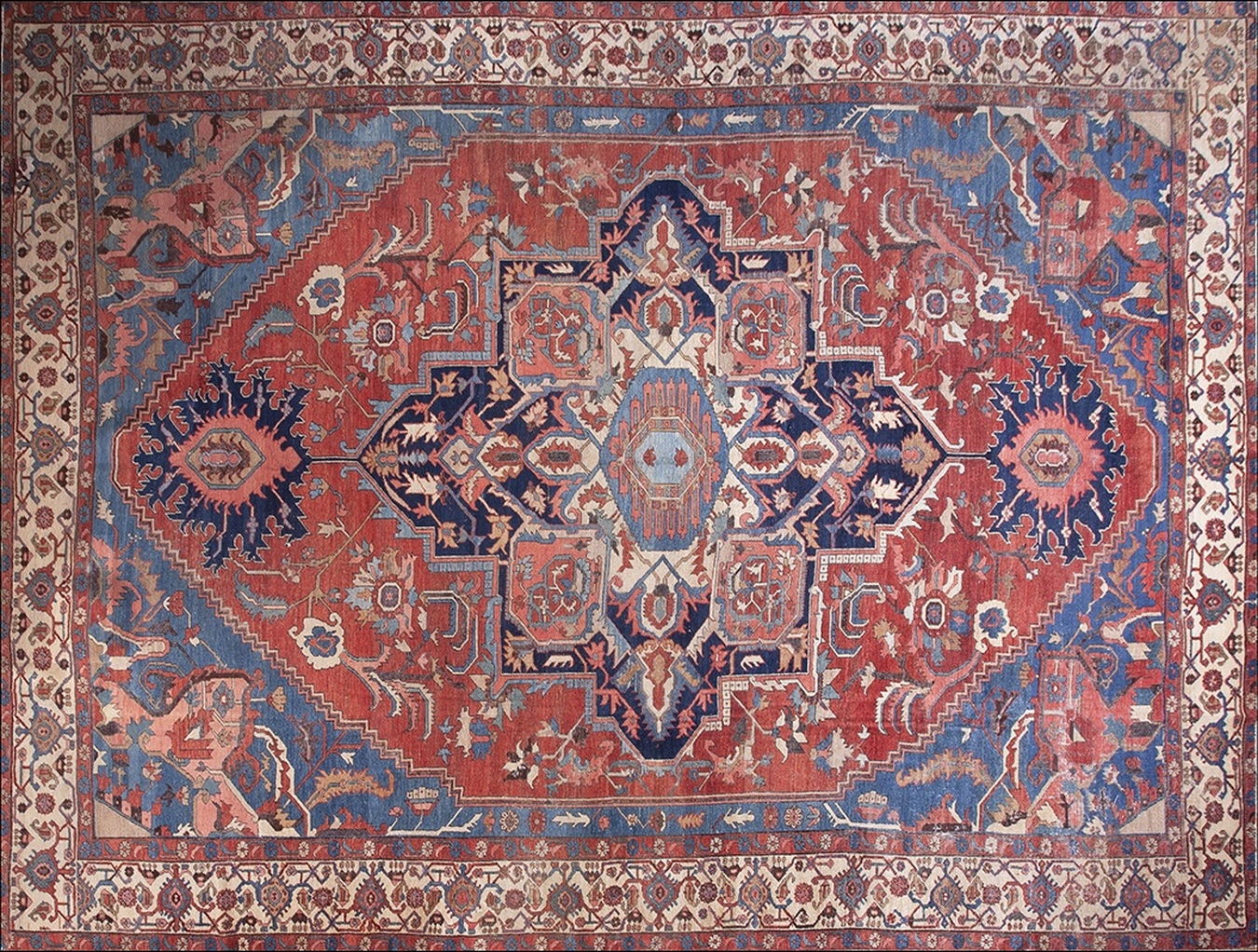
A geometric rug can modernize an antique-heavy setting by adding graphic order, or conversely, soften sleek modernism with warmth and history. This adaptability explains their enduring role in interior design: they bridge styles without feeling out of place.
Why Do Mid-Century Homes Favor Geometric Area Rugs?
Mid-century geometric rugs became a design staple because their bold simplicity harmonized with the architectural ethos of the era. Mid-century modern homes emphasized open floor plans, organic shapes, and functional furniture; angular rugs with repeating motifs grounded these interiors with warmth and texture.
Handwoven wool offered tactility, while geometric forms echoed the clean lines of mid-century architecture. Today, designers still pair geometric area rugs with mid-century furnishings for their ability to reinforce structure without overpowering space.
Matching Pattern Scale to Room Size
Pattern scale is crucial to achieving balance. In spacious living rooms or open-plan layouts, large-scale motifs such as oversized diamonds or star medallions create a focal point and prevent the rug from appearing visually lost.
Conversely, in smaller bedrooms, studies, or apartments, small-scale or minimalist geometric rugs with tight grids or subdued color-blocking offer harmony without overwhelming the space. When choosing a rug, matching rug scale to room size ensures proportion and comfort: bold patterns for expansive rooms, refined motifs for intimate spaces.
Geometric Rug Trends
- Layering geometric rugs — Stacking rugs of different patterns or textures creates eclectic, bohemian energy. — Why: Adds depth and visual richness to a room.
- Color blocking — Contrasting fields of solid tones in a color block rug highlight angular clarity. — Why: Emphasizes modern graphic design while maintaining simplicity.
- Oversized patterns — Expansive diamonds, stars, or medallions dominate the field. — Why: Perfect for open interiors, these patterns become architectural features.
- Scandinavian/Moroccan mashups — Combining minimalist Nordic palettes with Beni Ourain–style diamonds. — Why: Fuses global traditions into a contemporary aesthetic.
These geometric rug trends show how timeless motifs evolve with taste, from layered boho looks to pared-back modernism. Whether anchoring a vintage parlor or a sleek mid-century home, the pattern size rug remains central to design harmony.
Buying, Collecting & Value
How Does Age Influence Vintage Geometric Rug Pricing?
Vintage geometric rug prices are strongly tied to age, condition, and provenance. Rugs woven before 1940—especially those made with natural dyes and hand-spun wool—tend to command higher values, provided they are well-preserved.
Older rugs carry not only aesthetic appeal but also rarity, as many weaving traditions have diminished or industrialized. A geometric rug appraisal will typically weigh age alongside wear, restoration, and regional origin to determine worth. The older and rarer the rug, the greater its potential as an investment rug.
Why Do Antique Heriz Geometrics Make Strong Investments?
The antique Heriz rug is one of the most respected categories in the world of geometric carpets. Woven in northwest Iran, Heriz rugs are famed for their oversized medallions, angular motifs, and durable wool construction.
Their iconic design and longevity make them highly collectible, ensuring they retain value even in fluctuating markets. Because production in village settings was limited and older examples are increasingly rare, Heriz geometrics stand out as strong investments, appealing equally to collectors and interior designers.
Can Machine-Made Rugs Replicate Hand-Knotted Geometric Textures?
Machine-made rugs can imitate angular patterns and produce affordable alternatives, but they cannot truly replicate the tactile richness or value of a hand-knotted geometric rug.
The difference lies in texture: hand-knotting produces subtle irregularities, pile depth, and durability that machines cannot mimic. For decorative purposes, machine-made options are serviceable, but in terms of geometric rug value and long-term appreciation, hand-knotted examples remain superior.
Does Limited-Edition Designer Geometric Rug Appreciate More?
A designer geometric rug produced in limited editions may appreciate over time, especially if tied to a notable artist, brand, or design house. However, appreciation depends on several factors: rarity, material quality, and cultural significance.
Unlike tribal or antique rugs with centuries of tradition behind them, designer editions occupy a contemporary art niche, where value is tied to market demand and provenance. While some may gain in prestige, they rarely rival the consistent investment performance of antique tribal and village rugs.
Practical Buyer’s Guide
- Check the age and origin — Older, pre-1940 rugs and iconic tribal/village types carry higher long-term value. — Why: They combine rarity with craftsmanship that is difficult to replicate today.
- Assess materials and construction — Hand-spun wool and natural dyes signal authenticity. — Why: These materials enhance durability, color richness, and cultural integrity.
- Evaluate condition — Look for even wear, minimal repairs, and stable edges. — Why: Condition directly affects both vintage geometric rug price and investment potential.
- Seek provenance and authenticity — Purchase from reputable dealers with documented origins. — Why: Verified history increases confidence in value and collectability.
- Decide between investment and decor — Not every rug must appreciate; some serve best as stylish, functional textiles. — Why: Collectors and homeowners may have different priorities, from financial growth to daily enjoyment.
In sum, rug collecting requires discernment: age, authenticity, and iconic status define an investment rug, while materials, condition, and provenance ensure a purchase that blends beauty with lasting value.
Care, Display, and Styling Tips
Placement, Layering, and Maintenance
- Placement: Use bold geometrics in central living spaces where they can anchor the room, while opting for minimalist geometric rugs in bedrooms to create a calmer atmosphere. — Why: Placement influences mood—energetic motifs in communal areas, softer ones in private spaces.
- Layering: Pair geometric kilims with neutral sisal or jute mats, or layer rugs of different scales for depth. — Why: Layering adds texture, visual richness, and a curated look.
- Maintenance: Rotate rugs regularly, vacuum gently without beater bars, and rely on professional cleaning when needed. — Why: Proper geometric rug maintenance preserves crisp lines, prevents uneven fading, and extends lifespan.
How to Choose, Care For, and Style Geometric Rugs
- Choose by room and scale: For high-traffic areas, pick bold motifs that disguise wear. For small rooms, select fine grids or subdued patterns. — Why: Proportion and traffic use directly affect the rug’s impact and durability.
- Care for longevity: Regular rotation, protection from direct sunlight, and professional washes keep colors bright. — Why: These steps ensure your rug remains vibrant and structurally sound over decades.
- Style with intent: Use geometric rugs to bridge eras—add warmth to modern interiors or introduce structure to vintage spaces. — Why: Styling geometric rugs allows them to function as either bold statements or subtle harmonizers.
These principles provide a direct answer to how to choose geometric rugs, how to care for them, and how to style them, making them accessible for both casual homeowners and serious collectors.
Call-to-Action: Explore Geometric Rug Collections
The appeal of geometrics lies not only in their bold designs but also in their versatility. By caring for geometric rugs with consistent maintenance and thoughtful placement, they can remain family heirlooms or contemporary design statements for generations.
From antique Heriz medallions to minimalist Moroccan diamonds, every geometric rug carries a story. Explore both vintage geometric rug collections and modern interpretations to find a piece that suits your space.
Whether anchoring a living room, layering in a bedroom, or adding heritage to a study, styling geometric rugs connects you to a global tradition that is as timeless as it is adaptable.
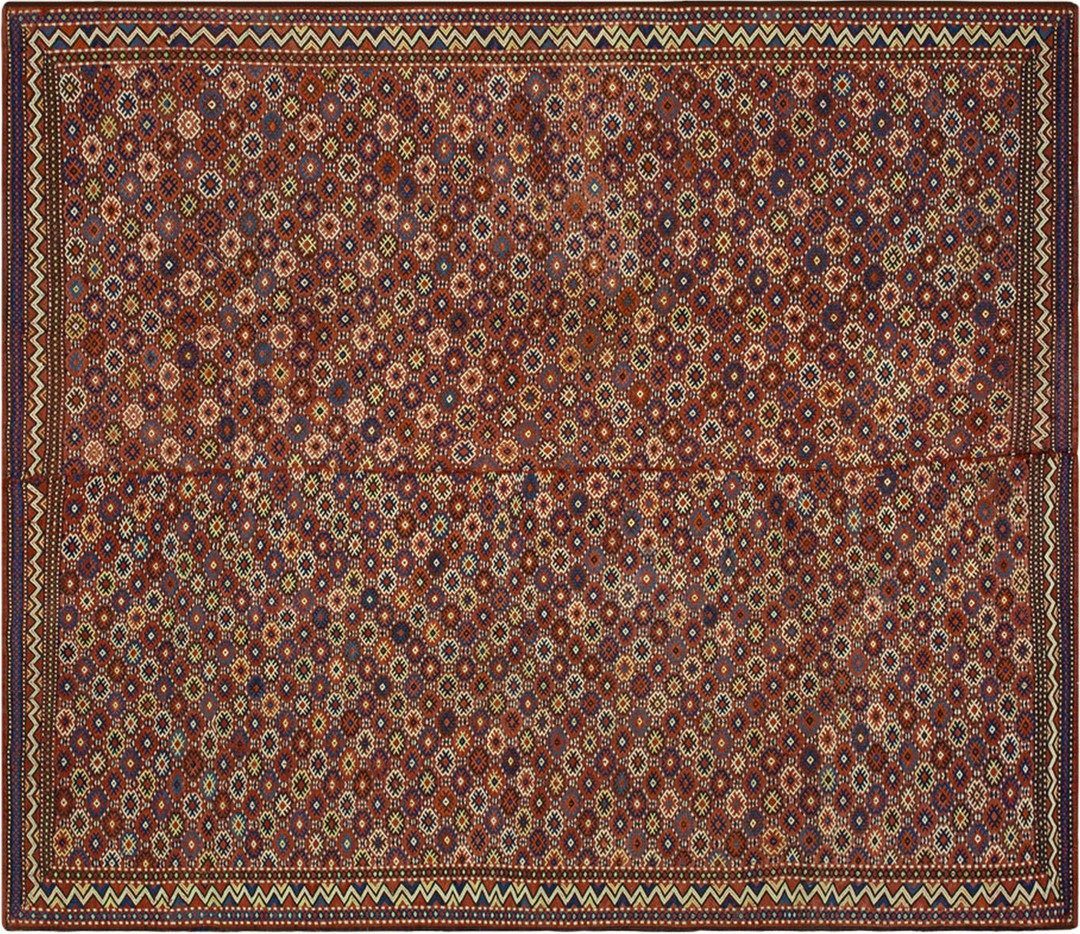
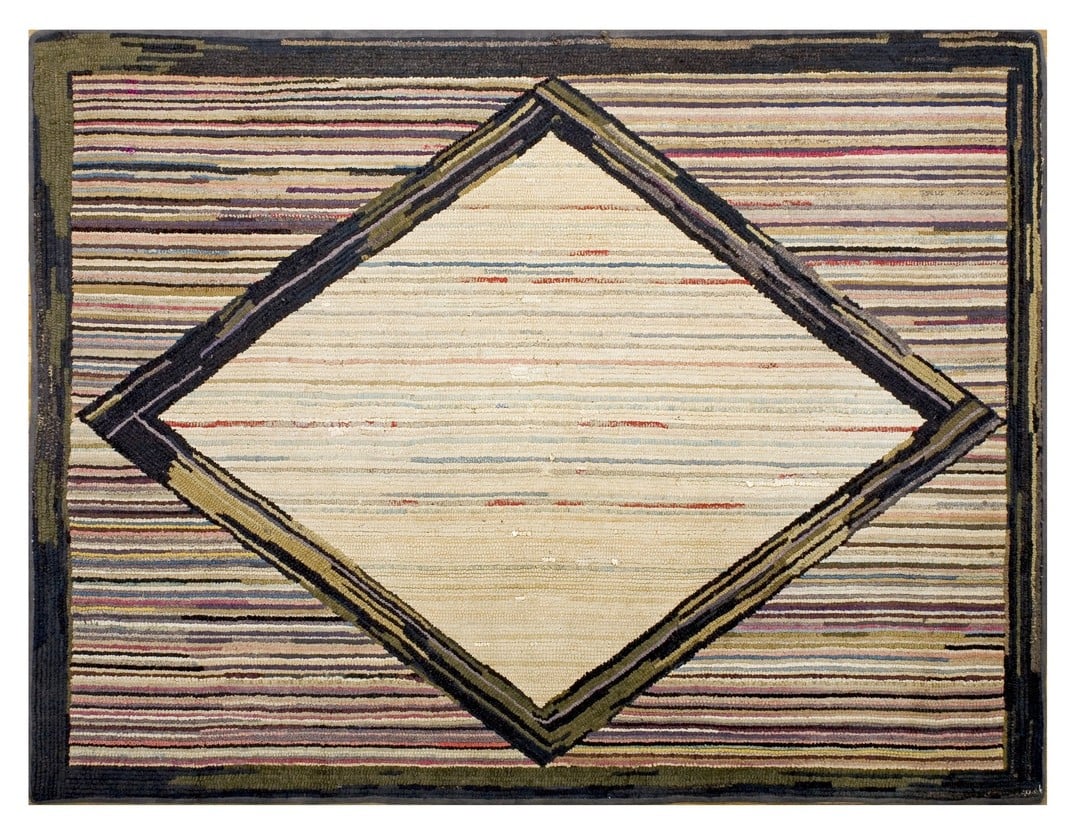
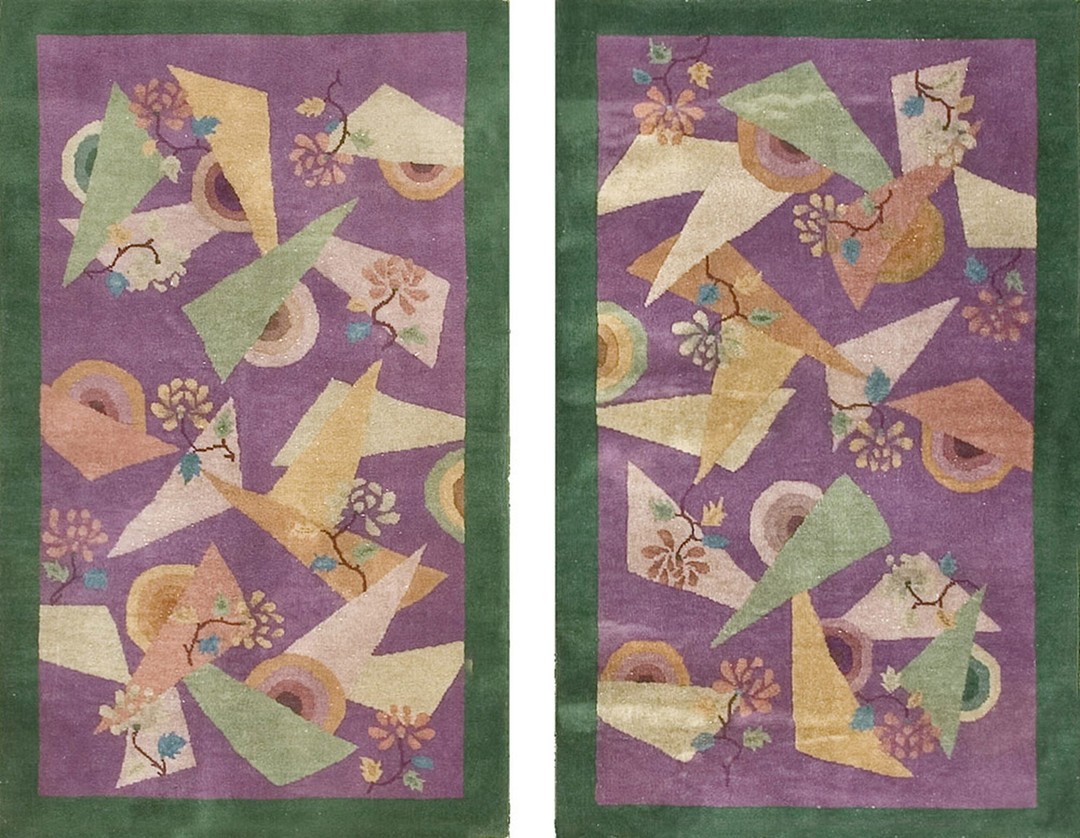
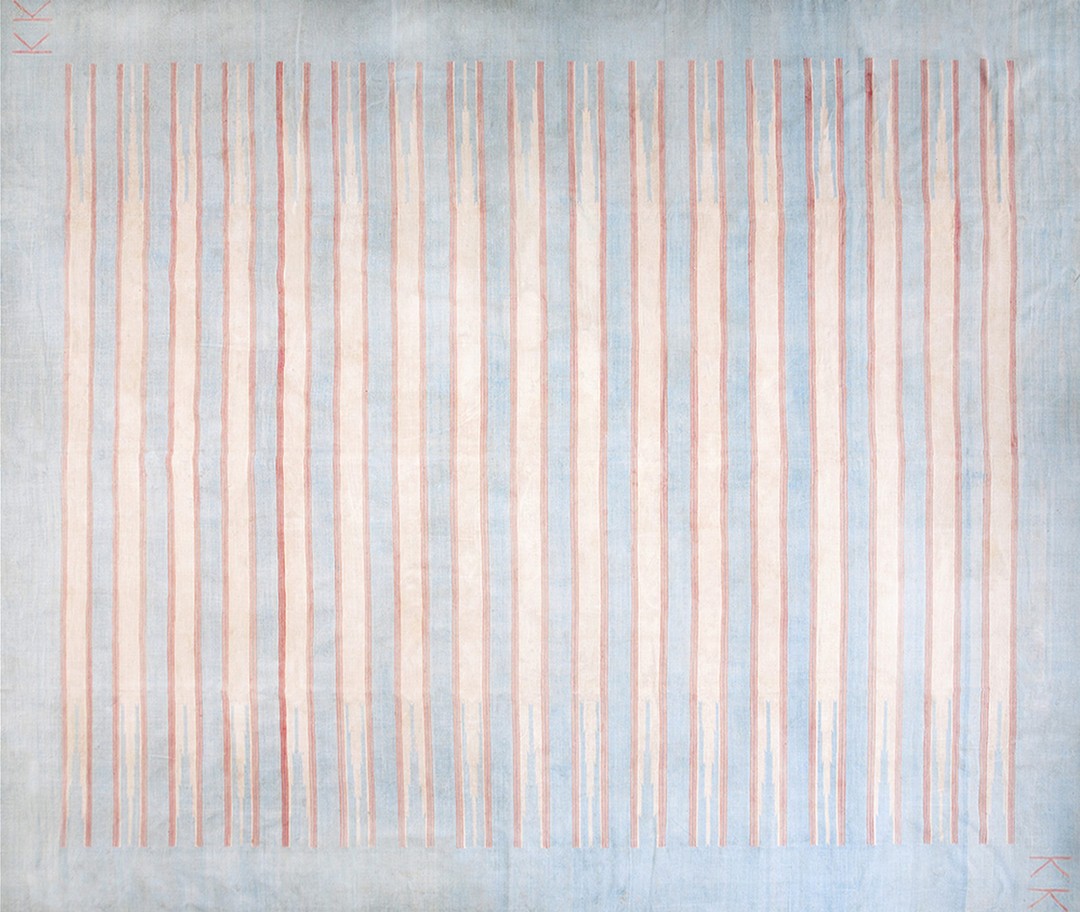
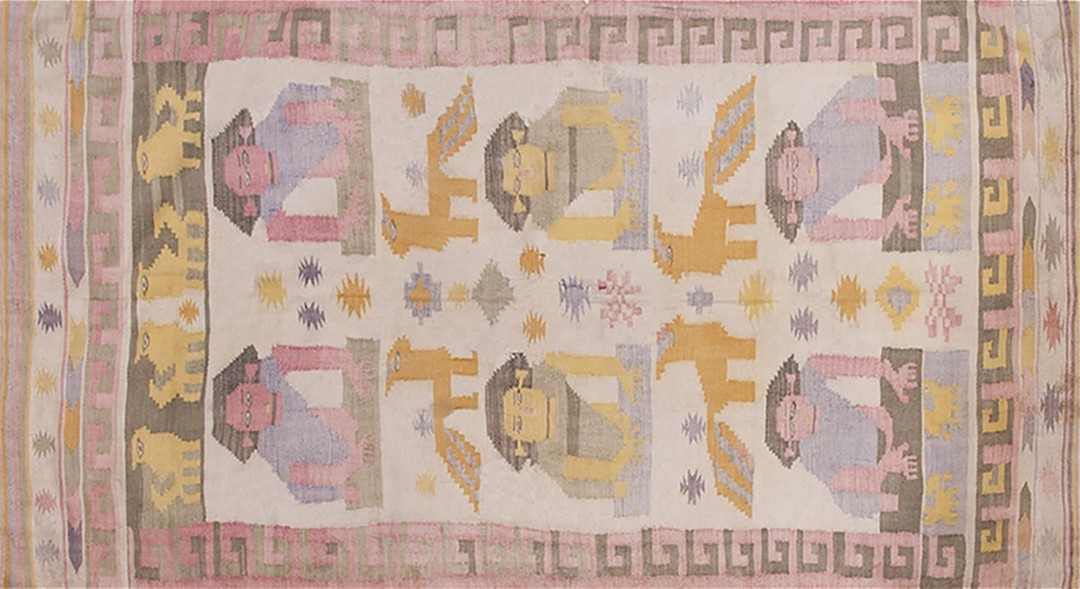
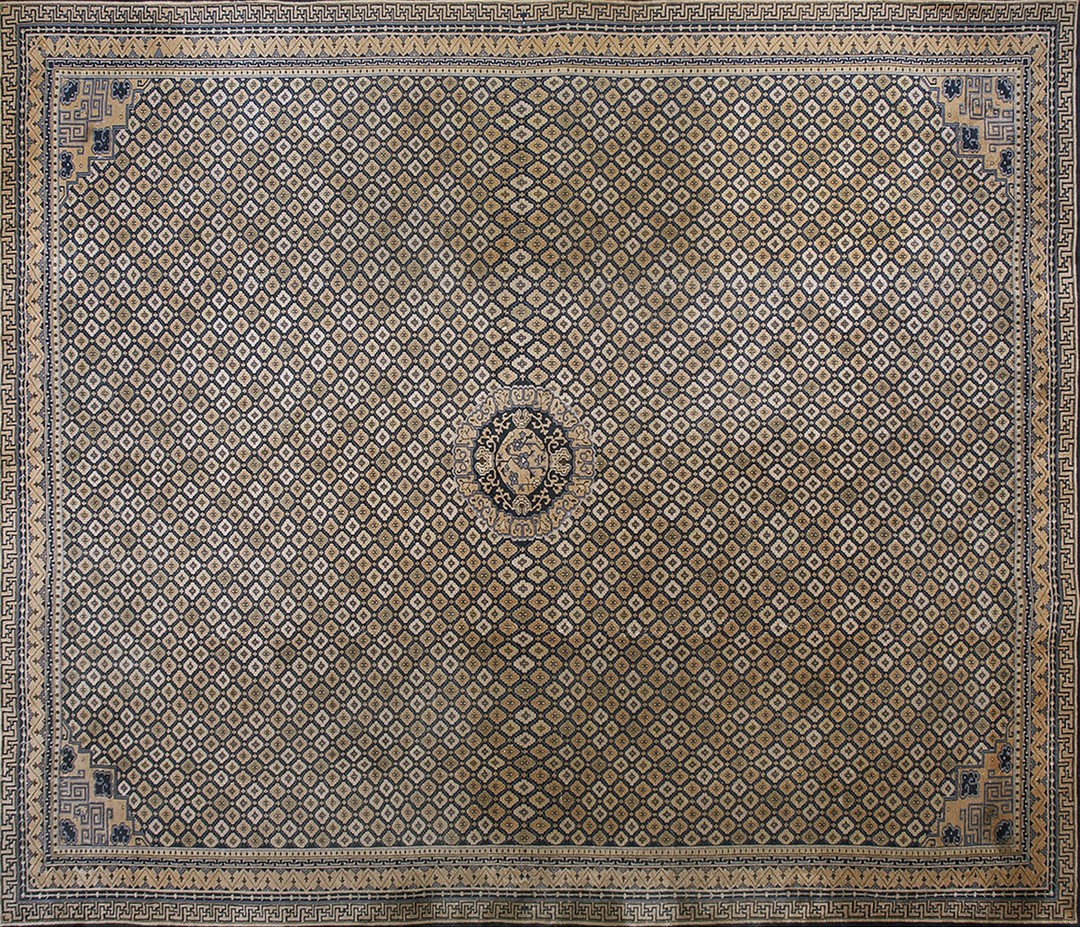
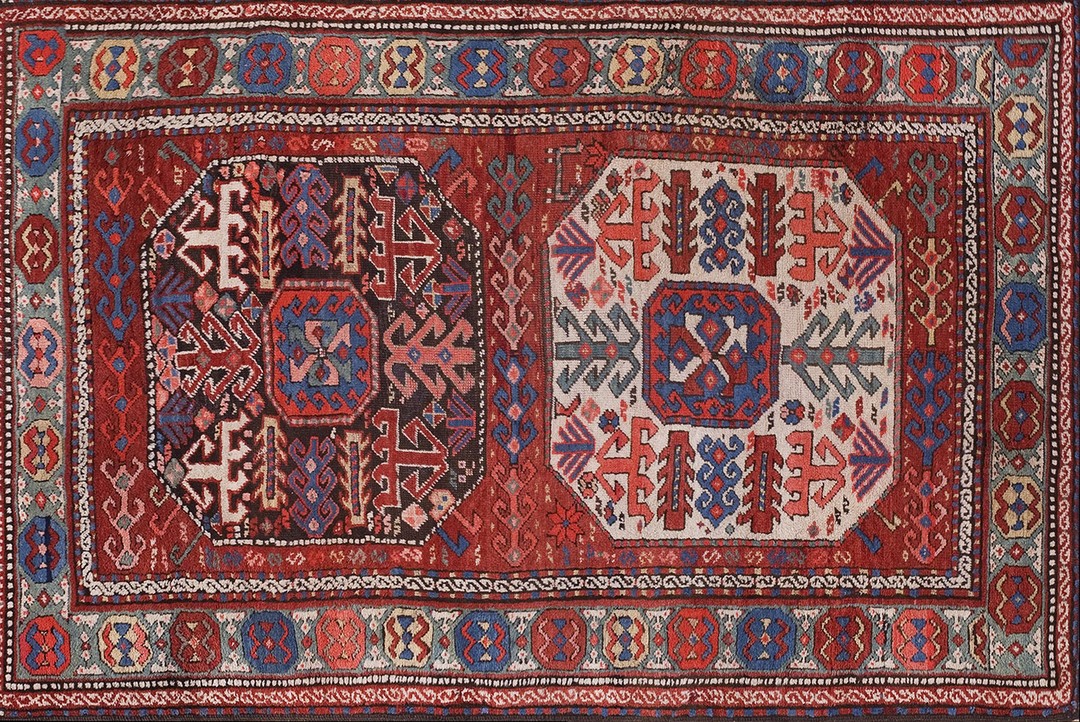
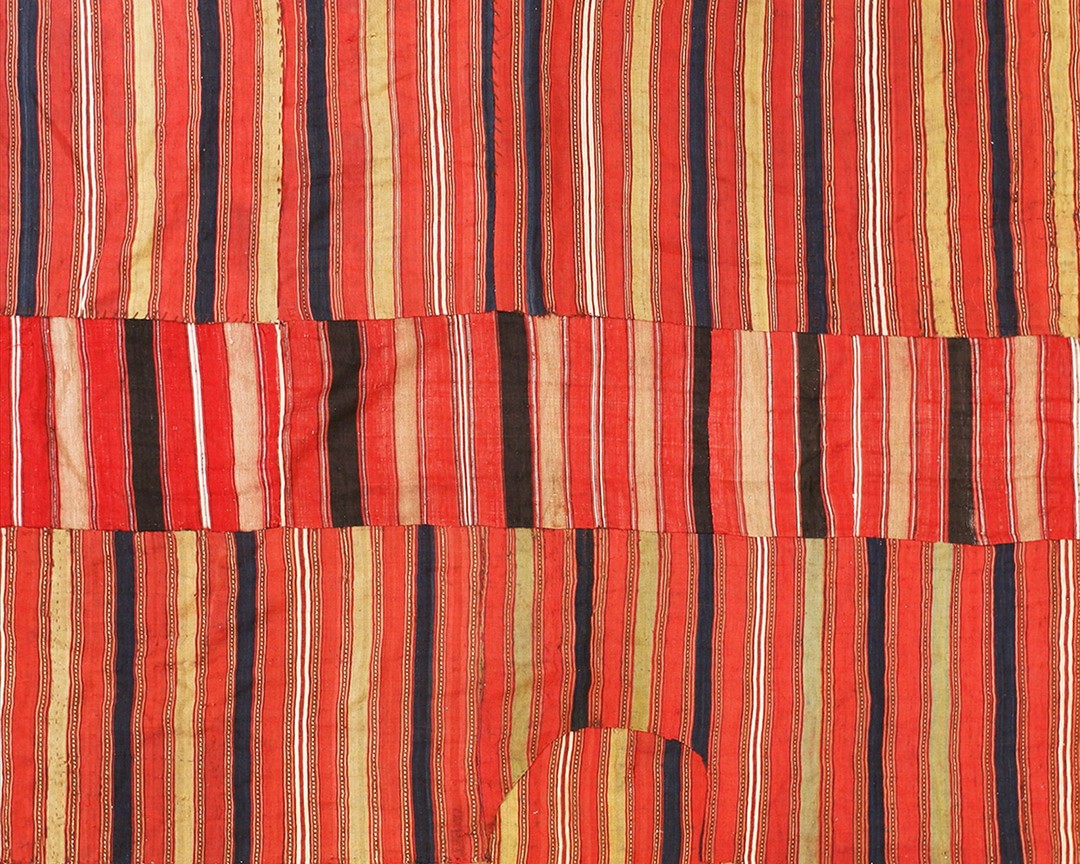
Explore a Few of Our Geometric Rugs
FAQ
- How often should I rotate a geometric rug to keep patterns even?
Rotate geometric rugs every 3–6 months to balance sun exposure and foot traffic. This helps prevent uneven fading and wear lines.
- Are geometric rugs kid-room friendly?
They’re great—bold shapes engage kids and patterns hide spills. Opt for washable or low-pile synthetics, and use a pad to prevent slips.
- Are geometric runners good for hallways and entryways?
Yes—geometric runners add direction and hide traffic wear. Pick 2’6″–3′ widths, leave \~3–5″ floor reveal on each side, and use a non-slip pad.
- How much do geometric rugs cost on average?
Machine-made geometric rugs often start under \$100 for small sizes, while custom hand-knotted geometric rugs typically run about \$50–\$200 per sq ft.
- Can I layer a geometric rug over wall-to-wall carpet?
Absolutely—use a carpet-to-carpet pad to prevent slipping and ripples. Low-pile geometric rugs layer best on low-pile carpet.
- Are geometric area rugs safe over underfloor heating?
Yes—choose low-pile geometric rugs and low-tog pads (target ≤2–2.5). Avoid thick rubber backings that trap heat and reduce efficiency.
- What defines a geometric Heriz rug among geometric rugs?
Heriz geometric rugs center on a bold, angular medallion with rectilinear motifs. They’re hand-knotted wool and notably durable.
- What is a geometric Moroccan rug versus other geometric rugs?
Moroccan (e.g., Beni-style) geometric rugs typically feature cream fields with dark diamond lattices. They’re often shaggy wool, soft underfoot, and statement-making.
- Are geometric kilim rugs flatweaves, and what does that mean?
Yes—geometric kilim rugs are flatweave (no pile), so they’re thin, reversible, and easy to move. They clean quickly but show crumbs sooner than plush piles.
- Can robot vacuums handle geometric rugs with fringe or high contrast?
Robot vacuums can tangle in fringe; tuck or hide tassels and set no-go zones. Bold, high-contrast patterns may confuse cliff sensors on some models.
- What rug pad should I use under a geometric rug on hardwood floors?
A felt-and-natural-rubber pad grips without staining and adds cushioning. Avoid cheap PVC pads that can discolor finishes.
- Do geometric rugs fade in sunlight, and how can I protect them?
All rugs can fade; rotate geometric rugs periodically and use window treatments. UV-treated synthetics fade less; still expect gradual change in strong sun.
- How do I clean a polypropylene geometric area rug?
Take it outside, hose both sides, scrub lightly with mild dish soap, then rinse and air-dry. Avoid harsh chemicals and ensure it’s completely dry before use.
- How do I clean a wool geometric rug safely?
Vacuum with suction only (beater bar off or highest setting). Blot spills with mild soap and water; professional cleaning is best for deep stains.
- Are outdoor geometric rugs a good idea for patios?
Yes—polypropylene outdoor geometric rugs resist moisture and fading and can be hosed clean. Let them dry fully in the sun before placing back.
- Should geometric rug stripes run lengthwise or crosswise in a room?
Run linear geometric rugs (stripes/chevrons) with the room’s longest sightline to elongate it. Flip them crosswise to visually widen narrow spaces like hallways.
- How do I mix a geometric rug with florals or stripes without clashing?
Vary scale: one large-scale geometric rug, then medium florals and small stripes. Keep to a 3–5-color palette so patterns relate.
- Are geometric rugs good for dining rooms with chairs?
Yes—pick low-pile or flatweave geometric rugs so chairs slide easily. Size the rug at least 24″ beyond the table on all sides.
- Do geometric rugs hide stains and pet hair well?
Yes—multi-tone geometric rugs camouflage messes better than solids. Choose low pile (≈0.25–0.4″) and mixed colors close to your pet’s fur.
- Will a geometric rug overwhelm a small room, or can geometric rugs help?
Use larger, calmer motifs in light colors to reduce visual noise. Smaller rooms benefit from small-to-medium scale patterns and a rug that fills the seating area.
- What size geometric area rug should I choose for a living room?
Most living rooms look right with 8×10 or 9×12 geometric area rugs. Aim for front furniture legs on the rug and 8–24 inches of floor border.
- What materials work best for geometric rugs in living rooms?
Wool geometric rugs feel durable and naturally stain-resistant; synthetics like polypropylene are budget-friendly and easy to clean. Low to medium pile (under \~0.5″) balances softness and upkeep.
- Which patterns are most common on geometric area rugs?
Diamonds, trellis, chevrons, stripes, and herringbone are staples on geometric area rugs. Borders often use a Greek key/meander for a clean frame.
- Are geometric rugs considered modern or traditional geometric rugs?
Both—geometric rugs span tribal/vintage (Heriz, kilims, Navajo) and crisp contemporary looks. The difference is scale, color, and construction rather than the motif itself.
- What is a geometric rug, and how is a geometric rug different from abstract patterns?
A geometric rug uses repeatable shapes (diamonds, trellis, chevrons, herringbone, Greek key) with clear structure, while abstracts are looser. Think symmetry and grids vs. painterly swirls.