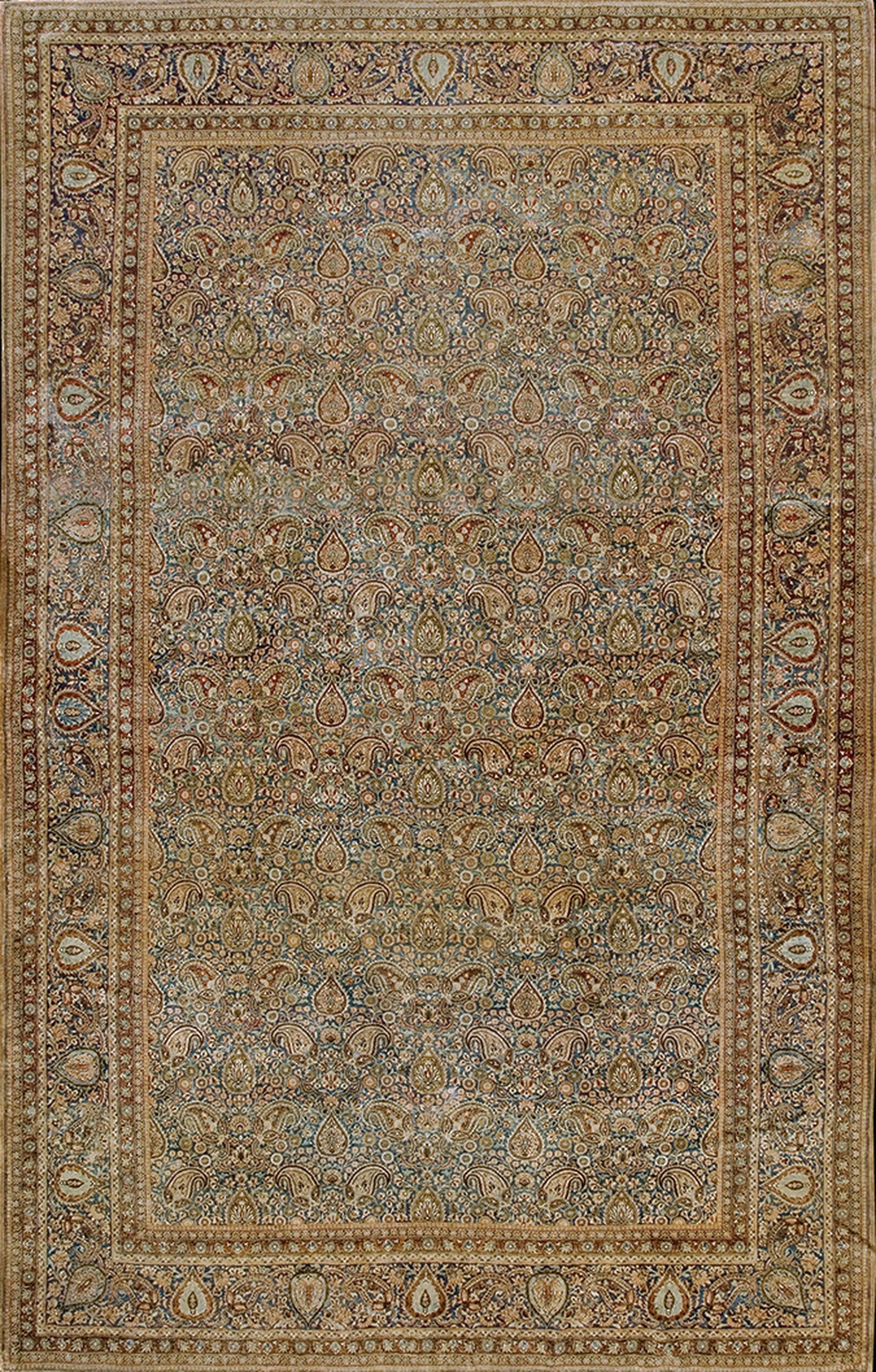
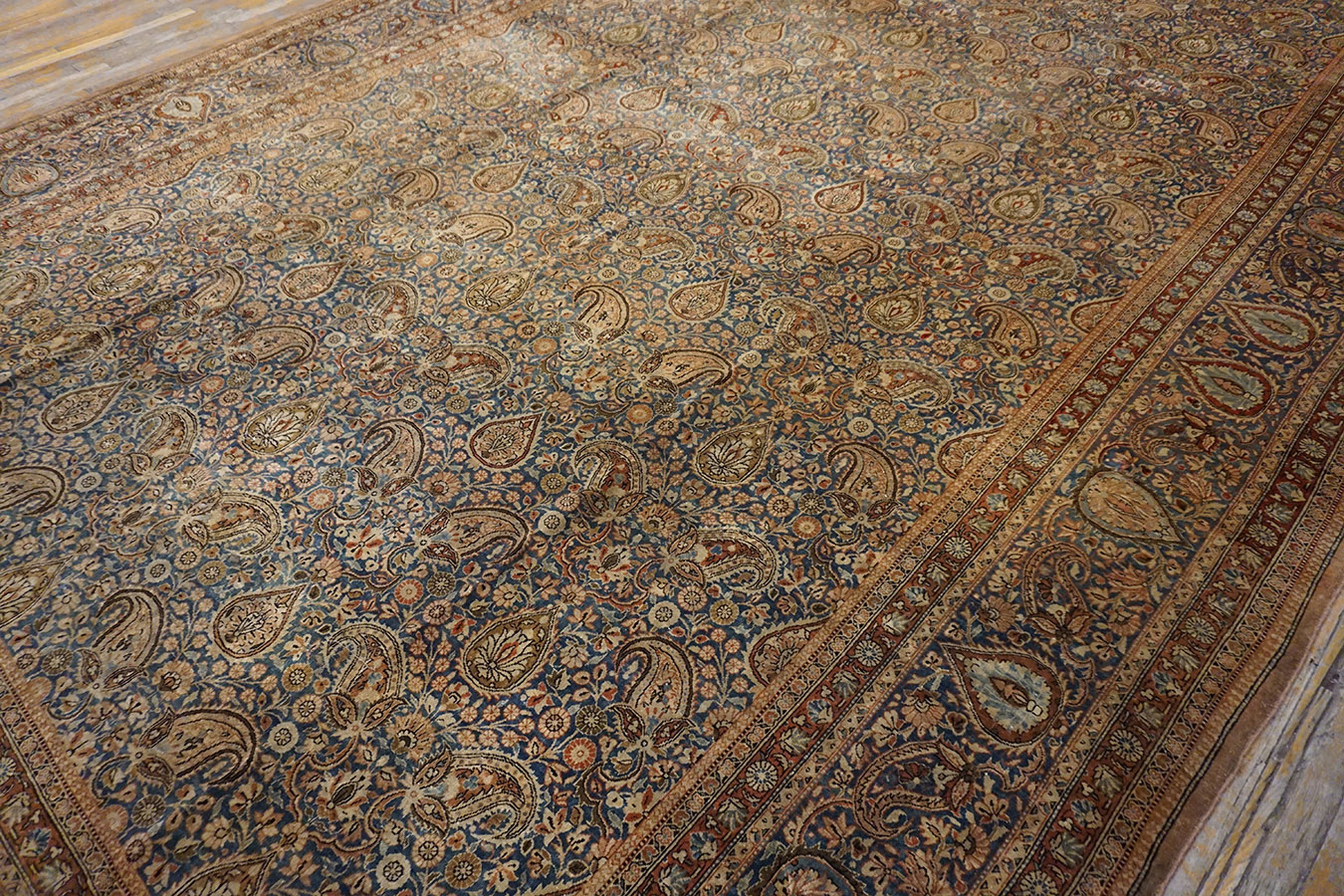
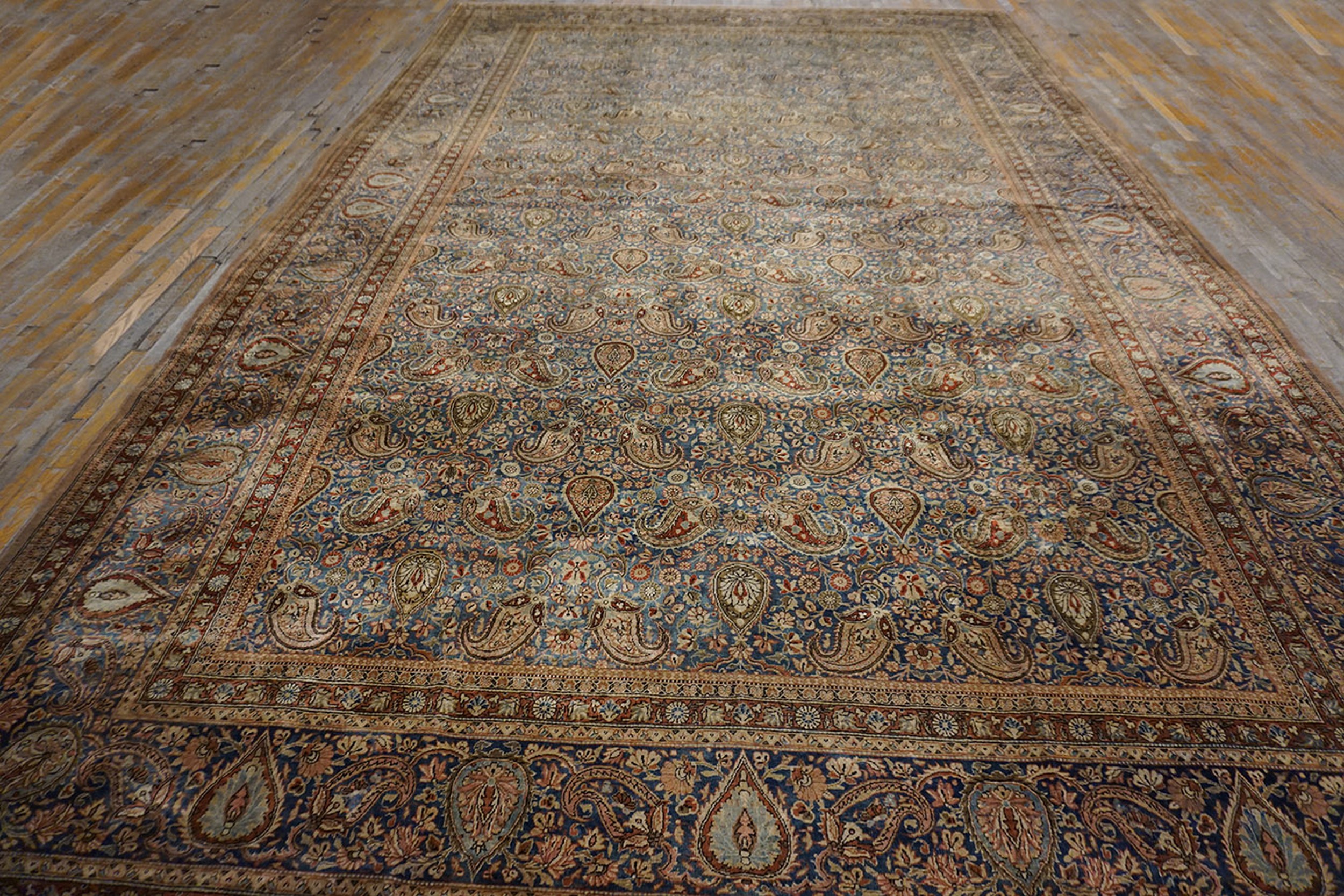
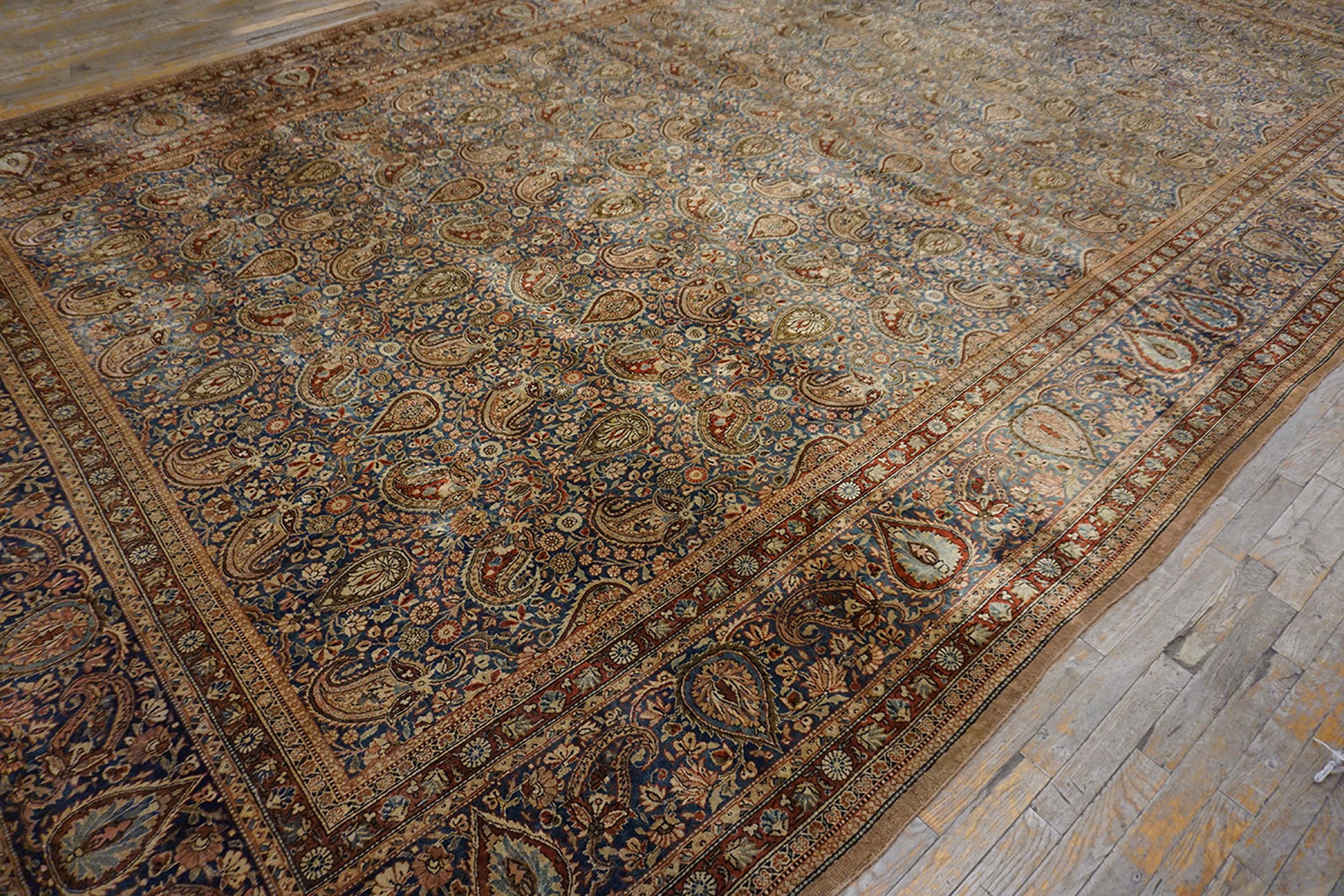
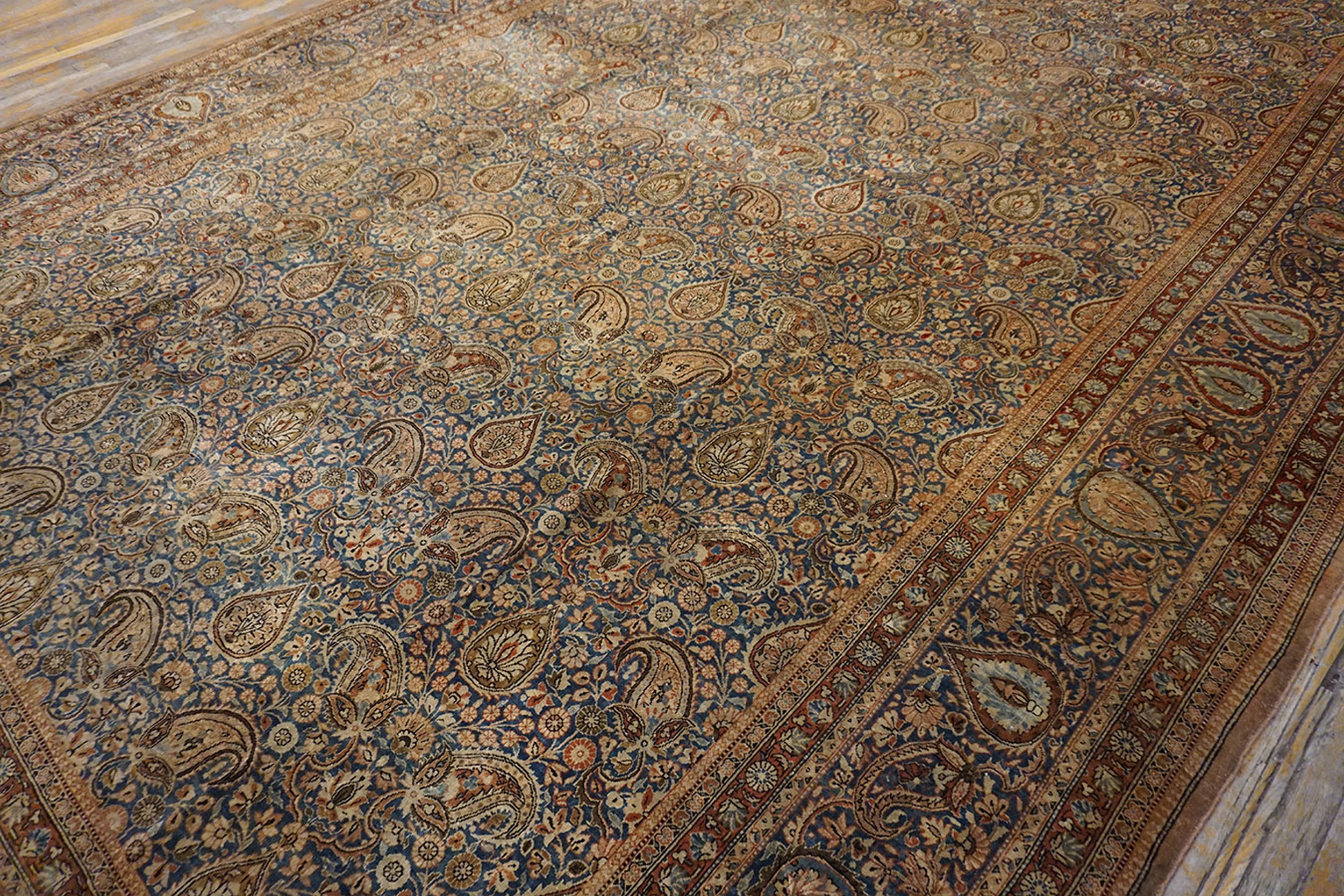
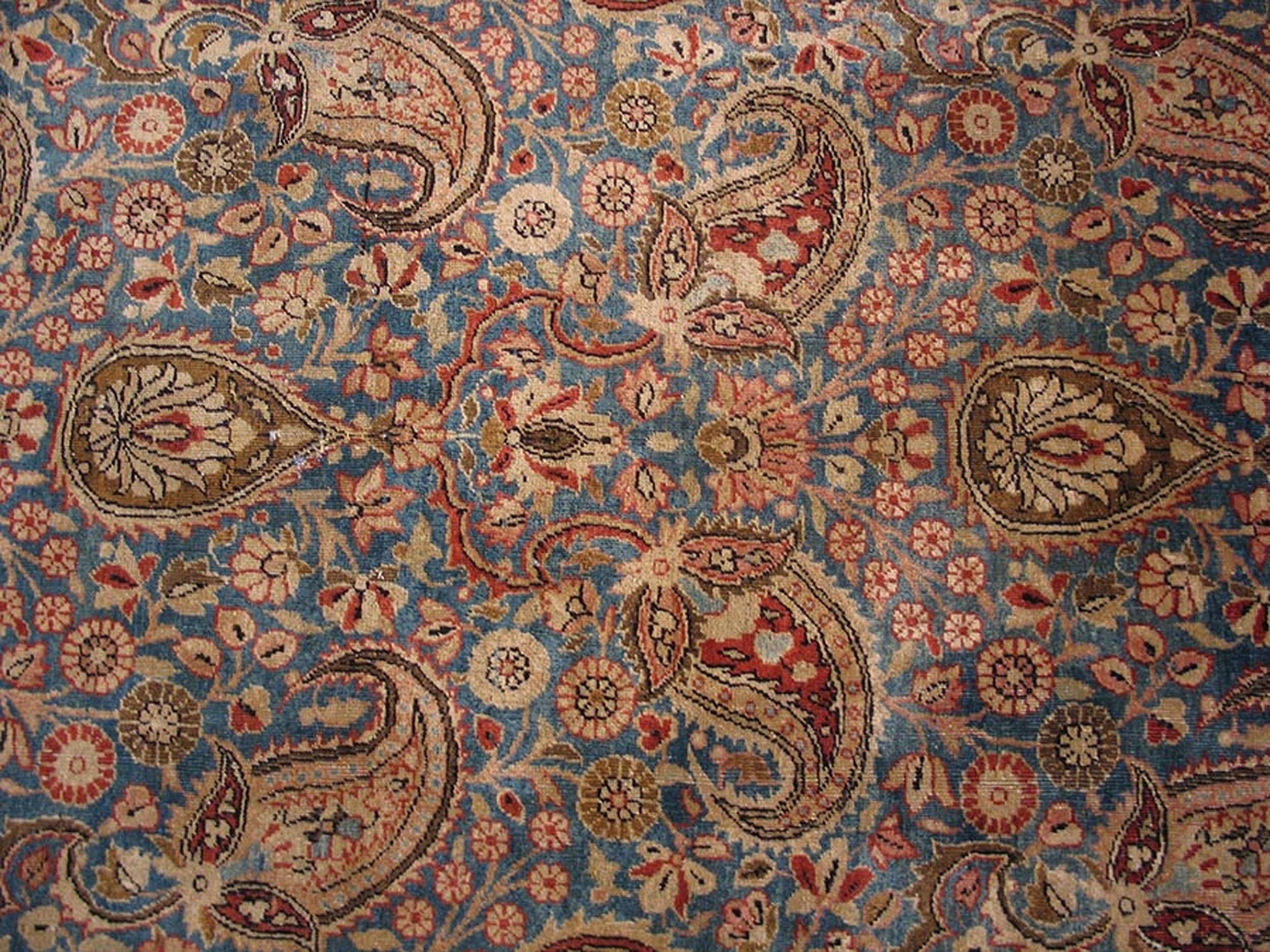
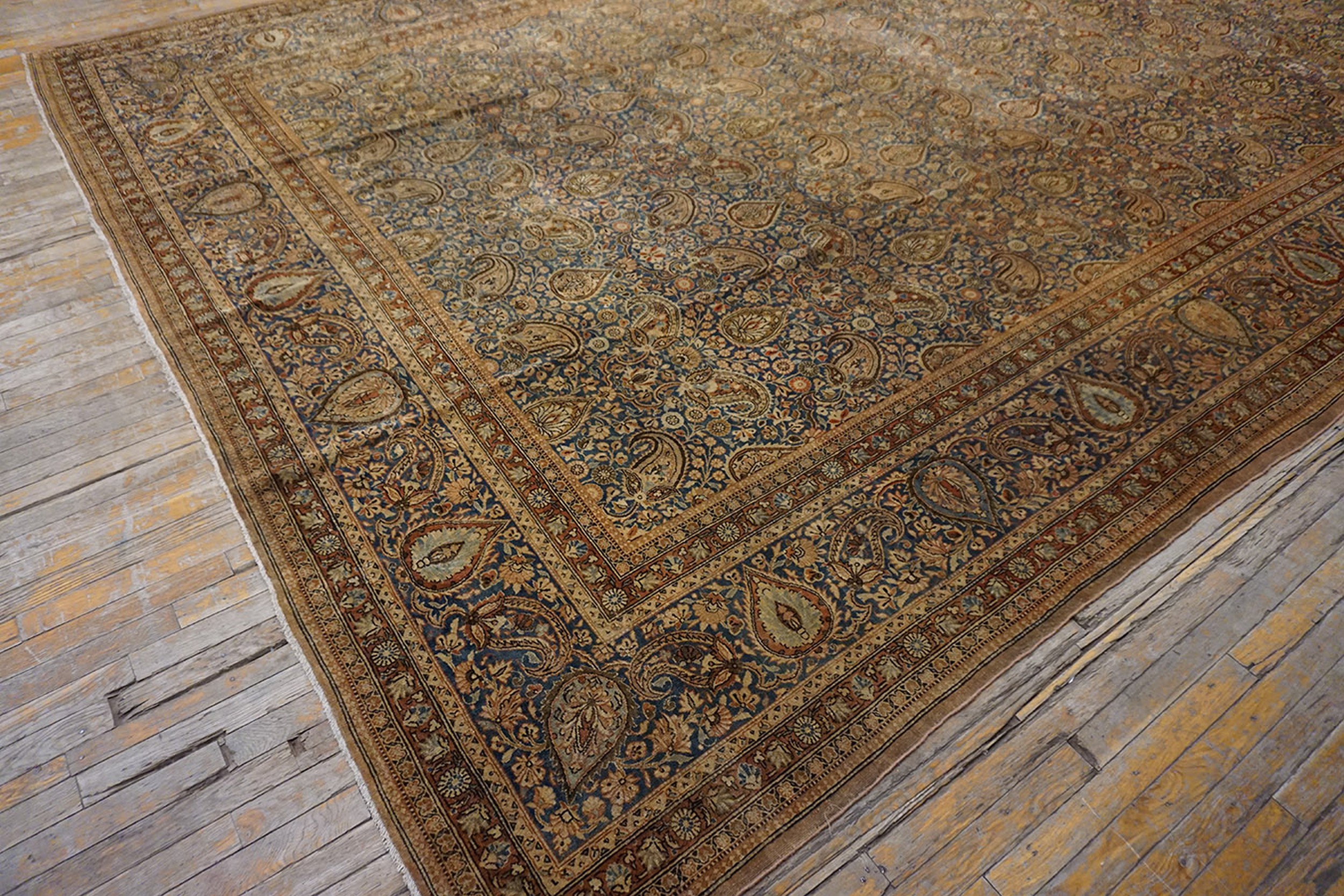
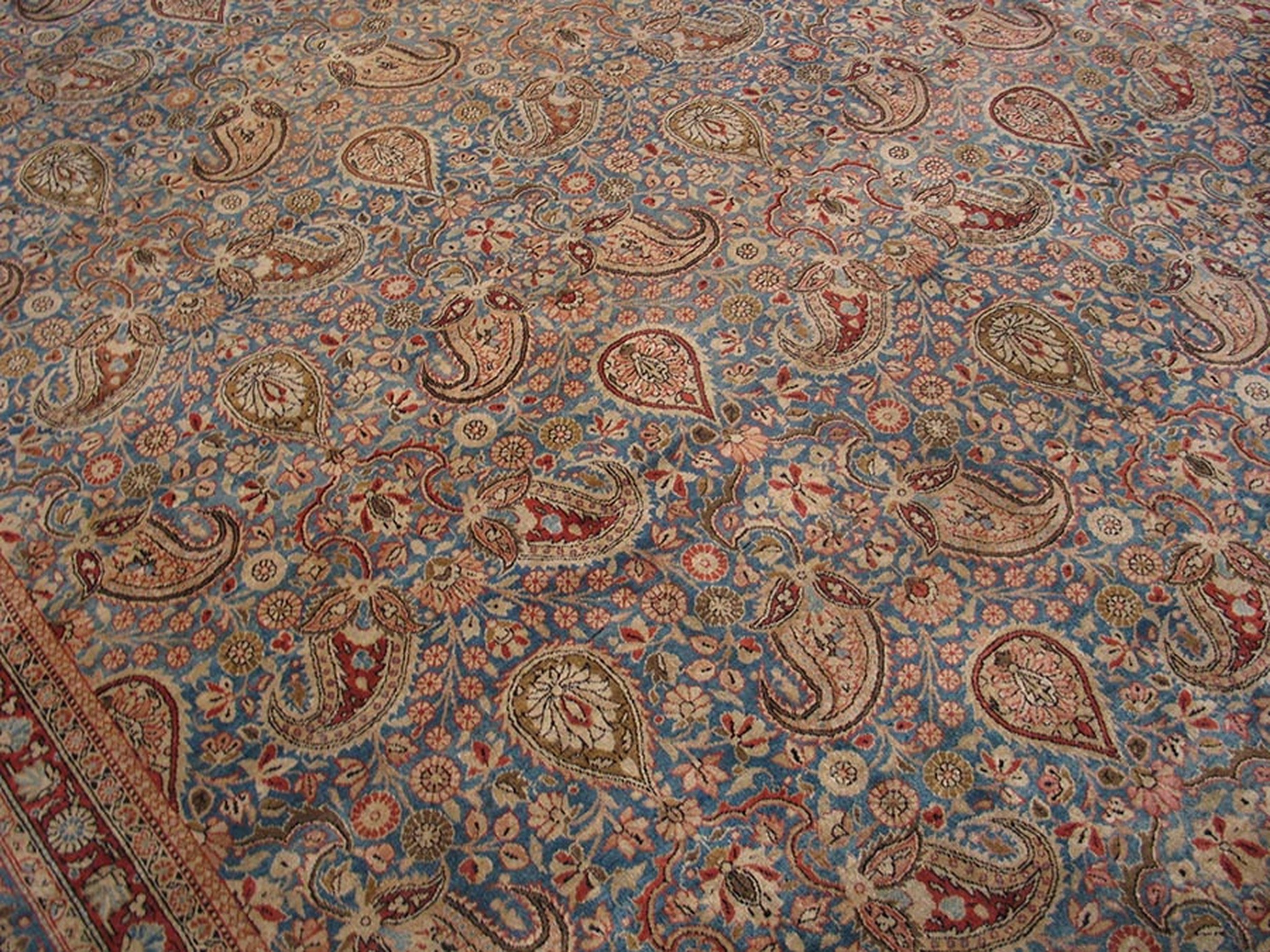
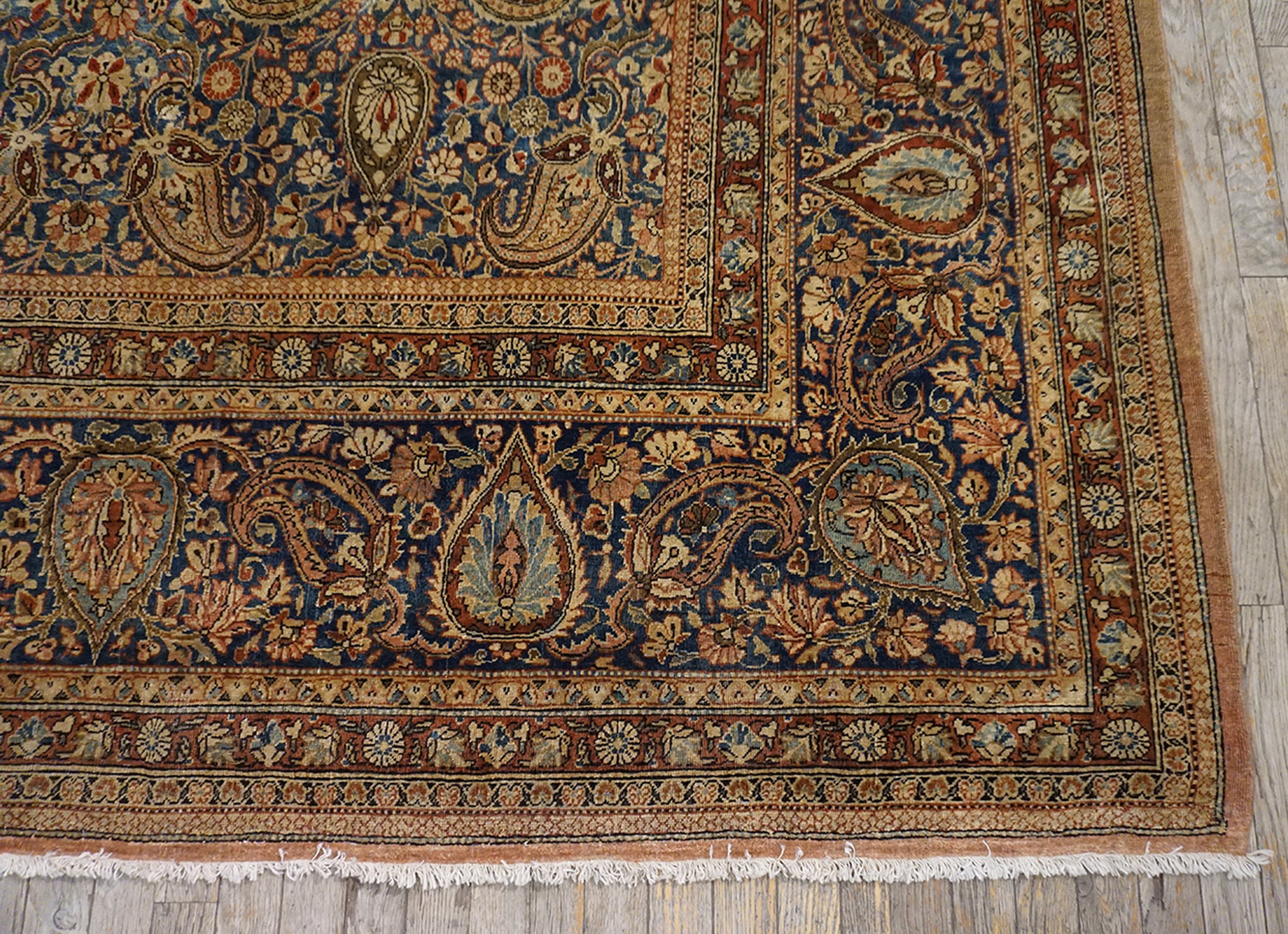
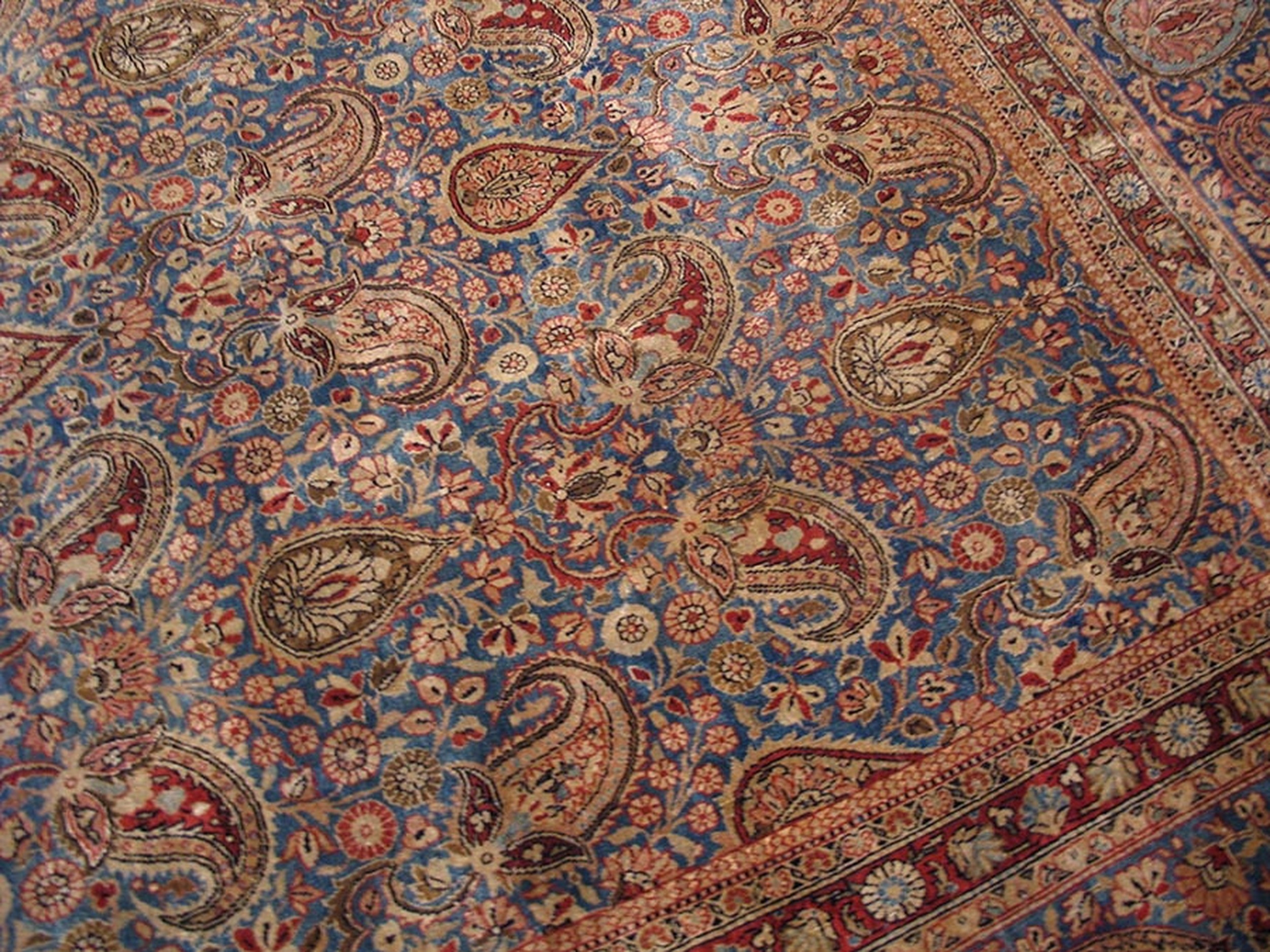
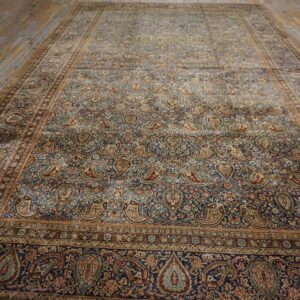
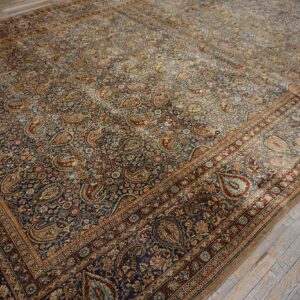
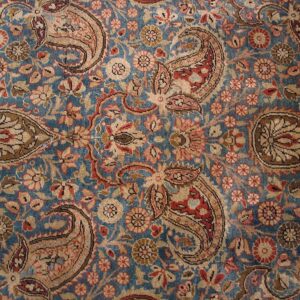
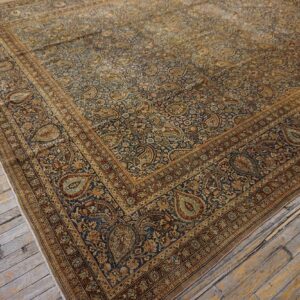
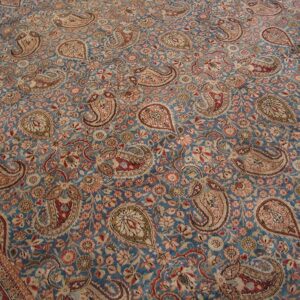
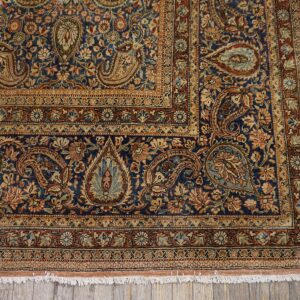
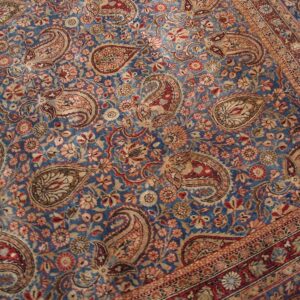
This magnificent late nineteenth-century fine Persian Kashan rug is a superlative example of the “City Workshop” tradition, representing the pinnacle of weaving from one of Iran’s most prestigious artistic centers. Historically, Kashan was the cradle of the Safavid Renaissance, and by the late 1800s, its master weavers were renowned for producing carpets of unparalleled density and grace. This specific specimen is defined by its deep, saturated indigo-blue field—a color of immense prestige achieved through a meticulous, multi-stage fermentation of the indigo plant. This “midnight” ground serves as a dramatic canvas for a dense, all-over floral pattern, creating a sense of a lush, nocturnal garden that radiates both mystery and opulence.
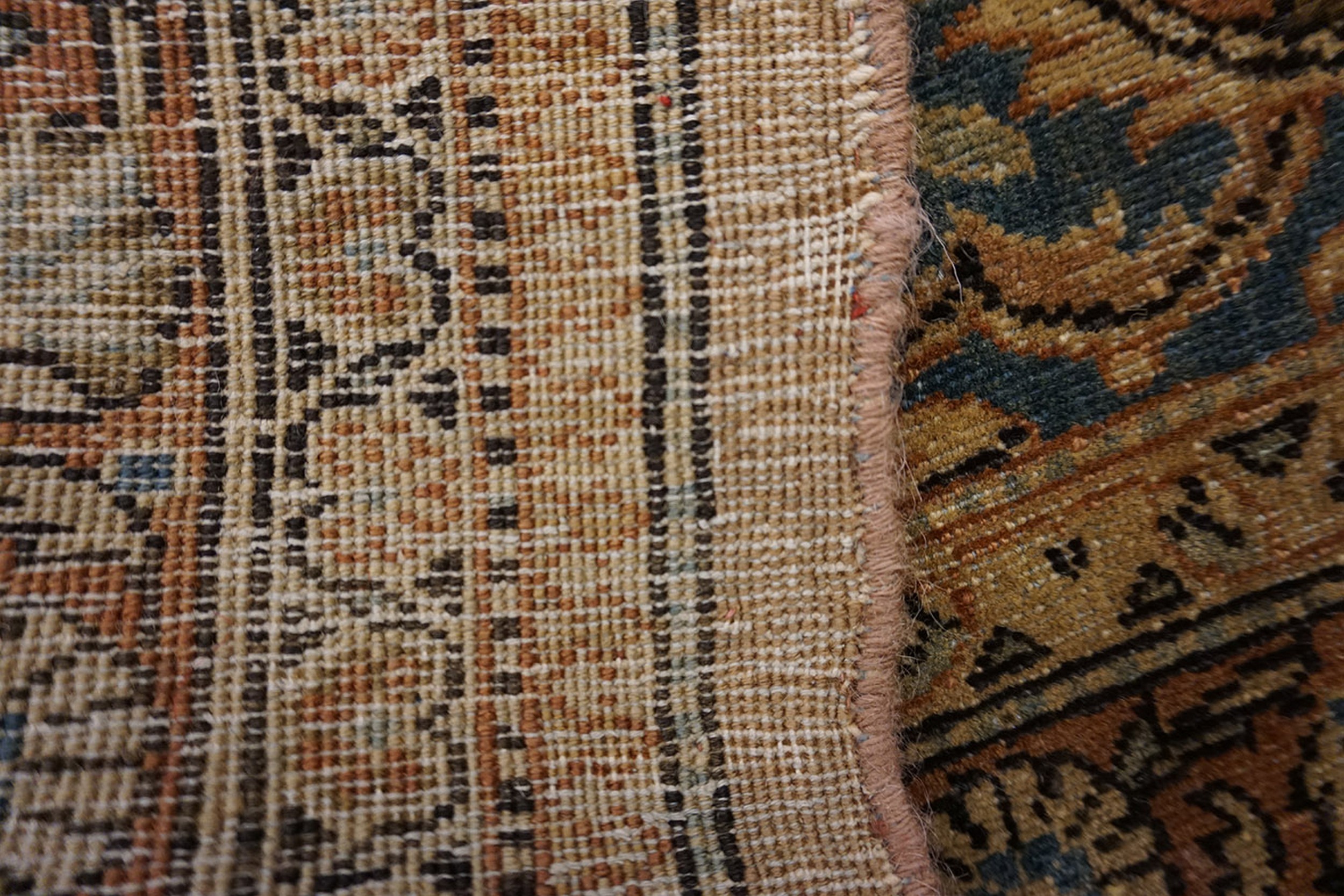
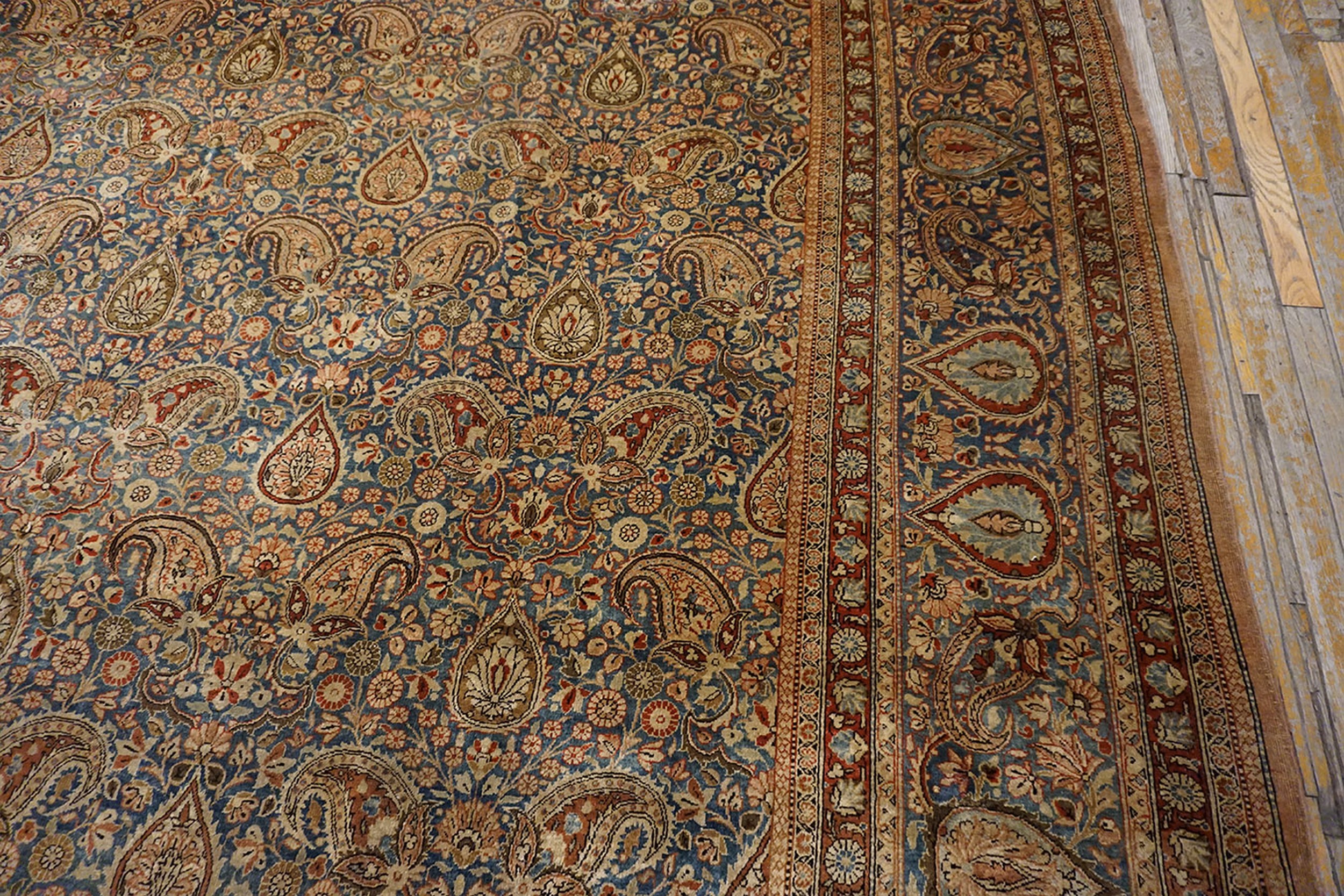
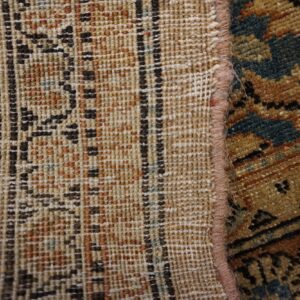
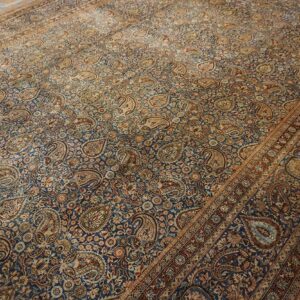
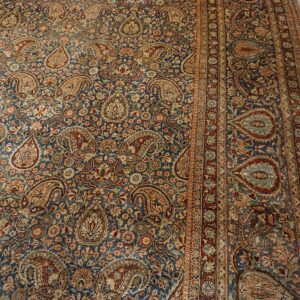
The composition is centered upon a virtuoso rendering of the Boteh (Paisley) motif, a symbol that traces its lineage back to ancient Zoroastrianism and represents the “Flame of Zoroaster” or the “Tree of Life.” In this Kashan, the Paisley is not merely a decorative element but a rhythmic heartbeat that pulses across the entire field. These motifs are interwoven with a delicate lattice of scrolling vines and botanical sprays, executed with the “razor-sharp” precision that only the high-knot density of a Kashan loom can achieve. Unlike more rustic tribal Persian rugs, this piece possesses a sophisticated symmetry and a “silken” handle, a hallmark of the high-quality “Kork” wool used by the city’s elite ustads (master designers) during this period.
Historically, a large room-sized blue Kashan was a high-status commission, likely intended for a formal reception hall or a diplomatic residence where its scholarly design and cool palette would command the room. The borders act as a regal frame, featuring a primary “Herati” or “Samovar” pattern that grounds the exuberant energy of the central field within a disciplined, classical border. Over the last century, the vegetable dyes have developed a sophisticated abrash, softening the intensity of the blue into a shimmering, multi-dimensional patina. To possess this 19th-century Kashan is to hold a monument to Persian textile engineering—a work that bridges the gap between the mathematical perfection of Islamic geometry and the romantic, floral abundance of the ancient East.