
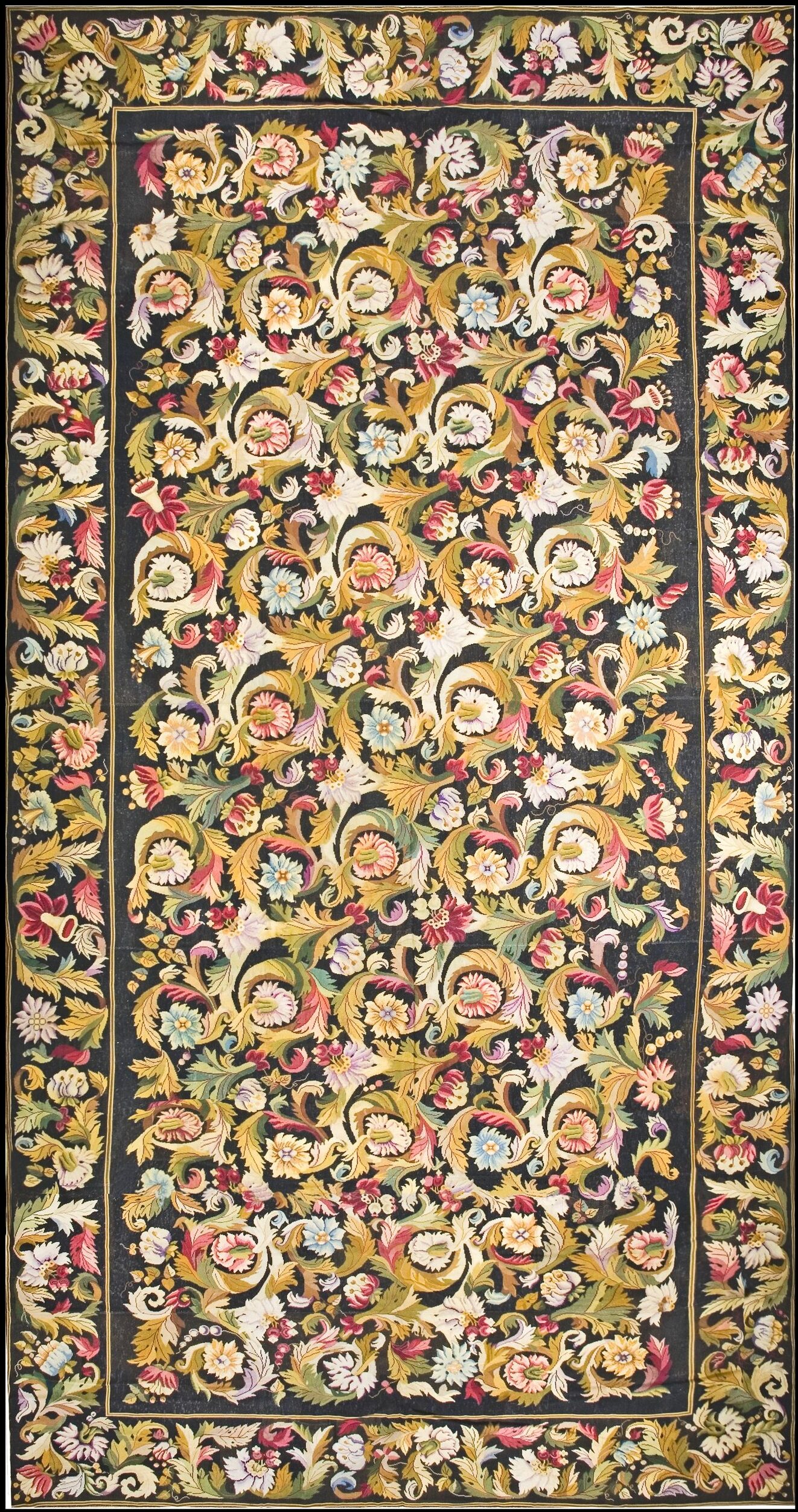
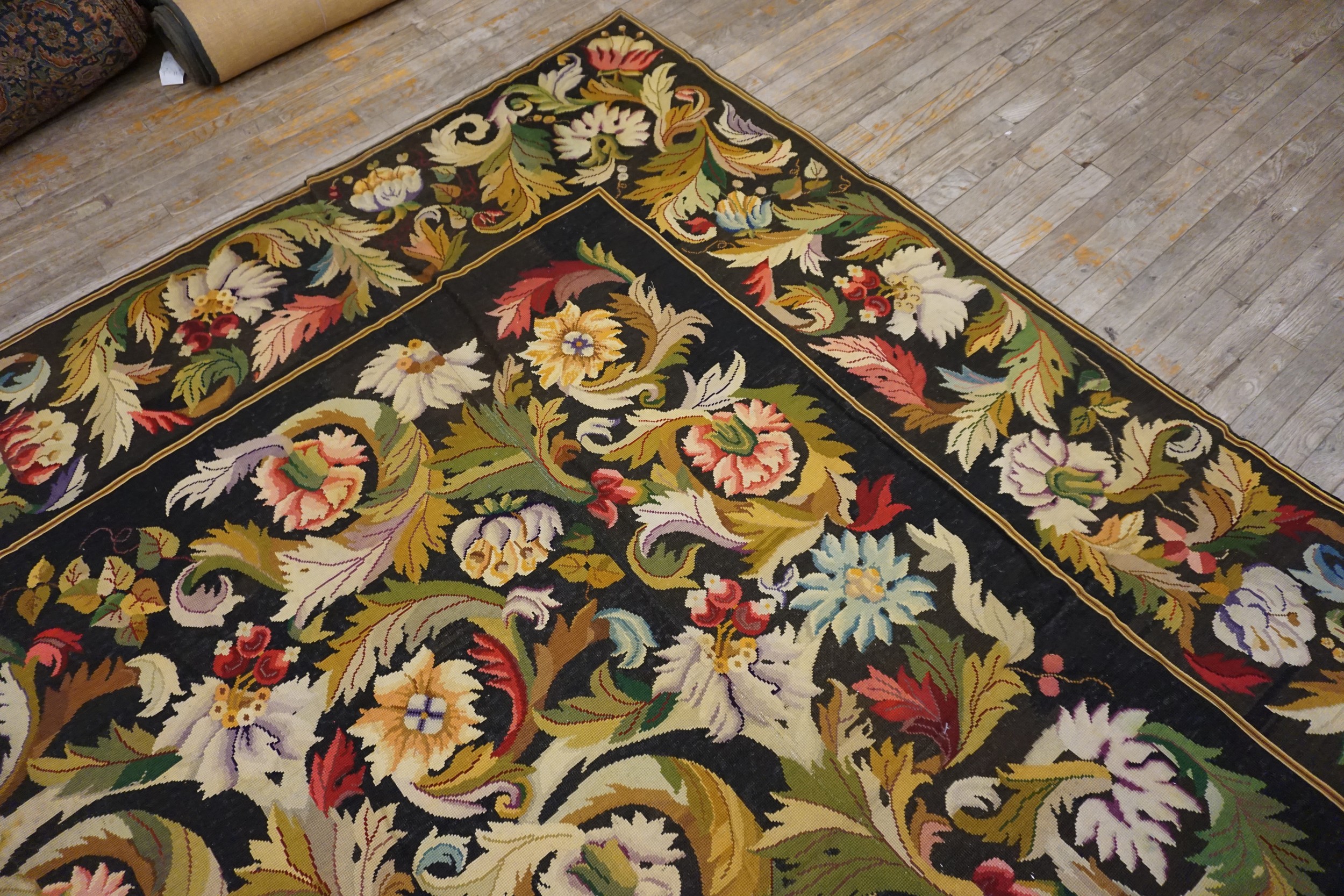
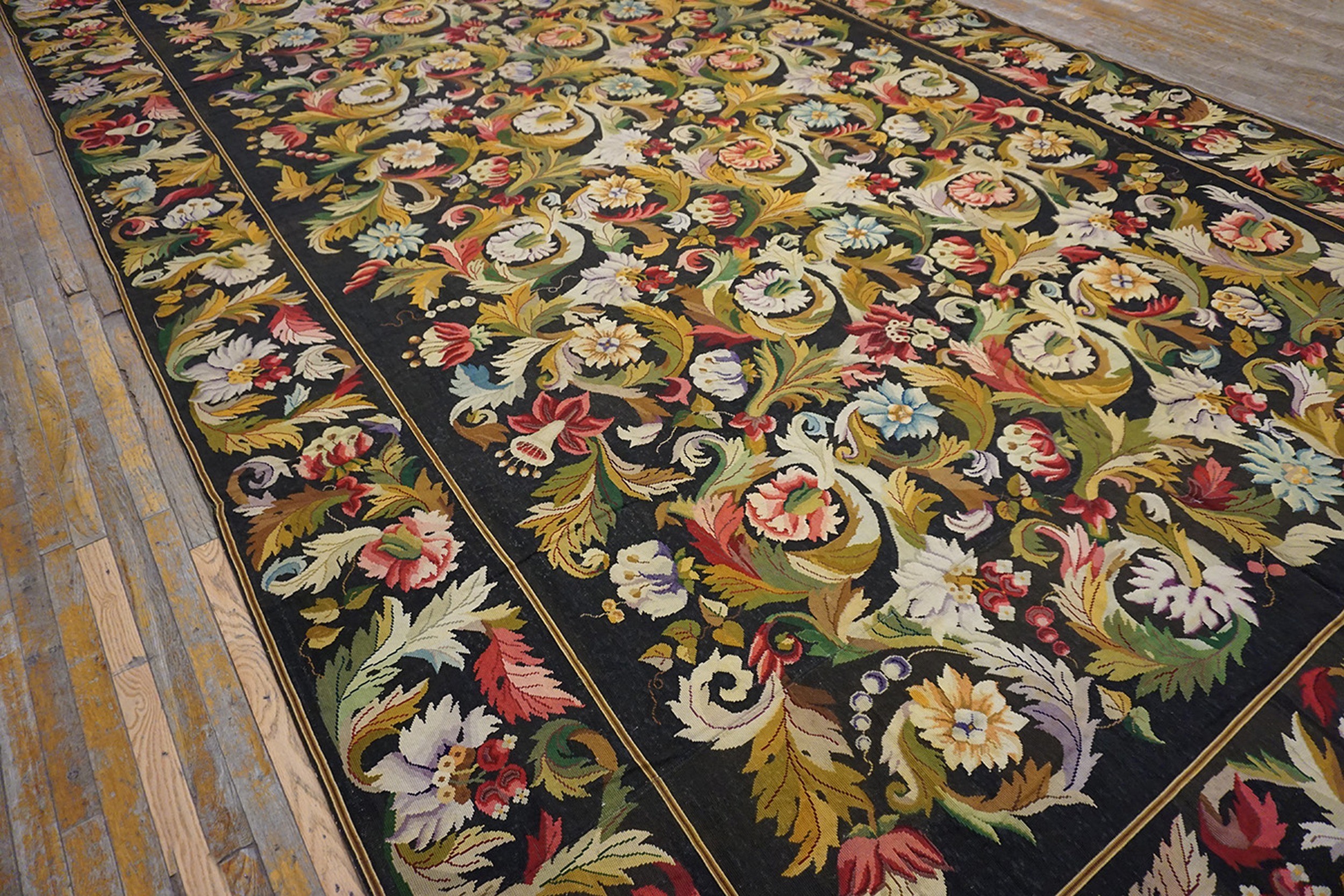
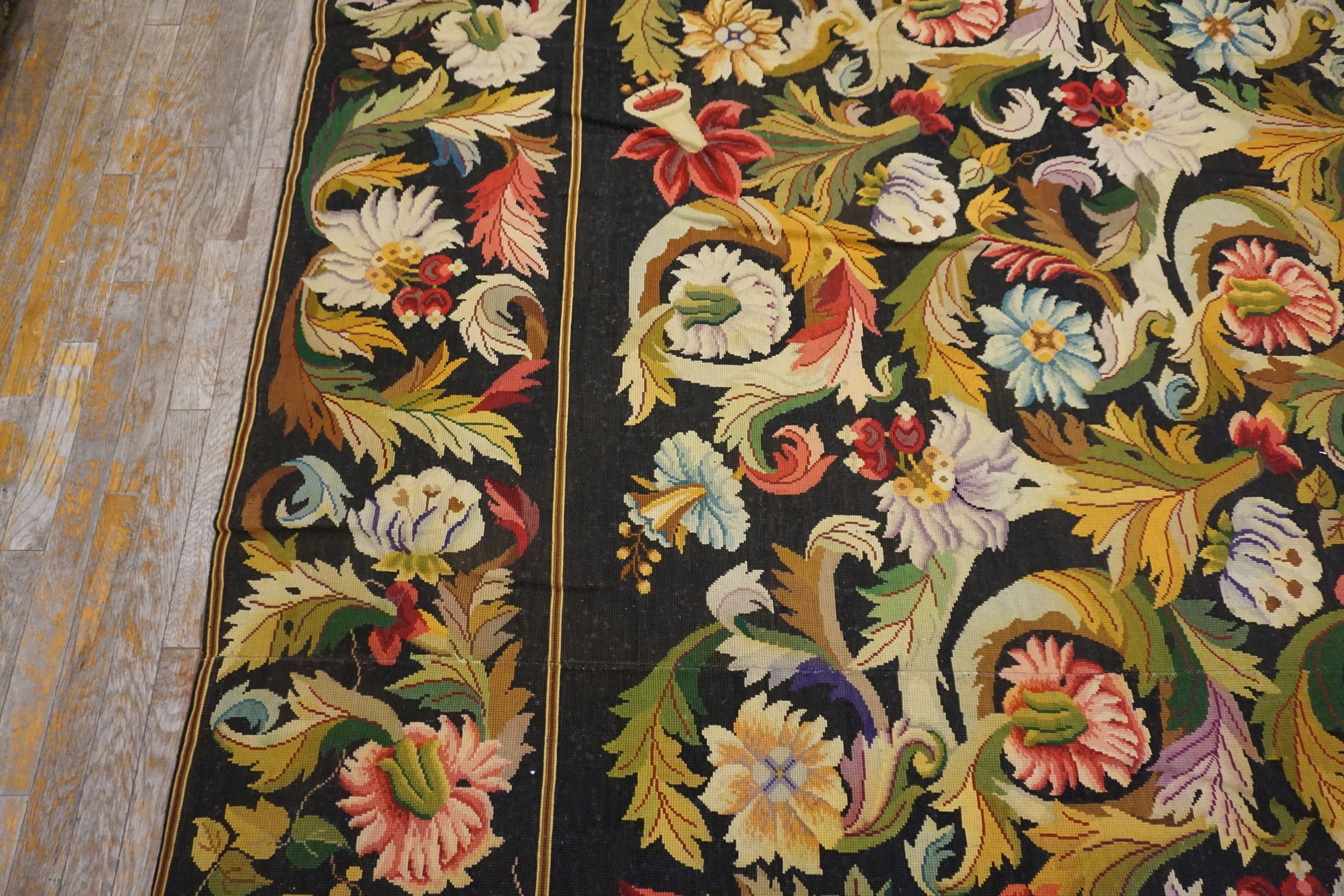
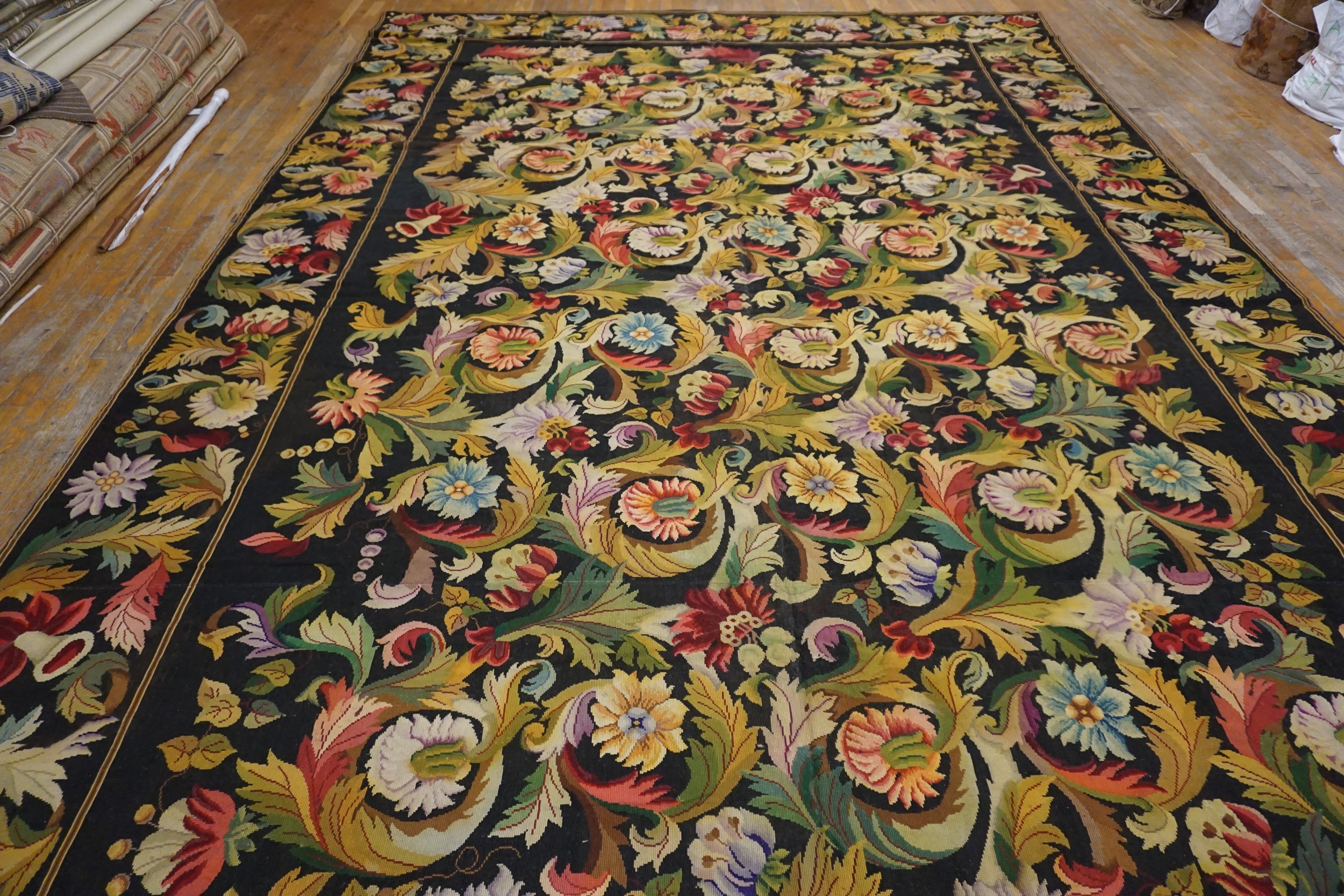
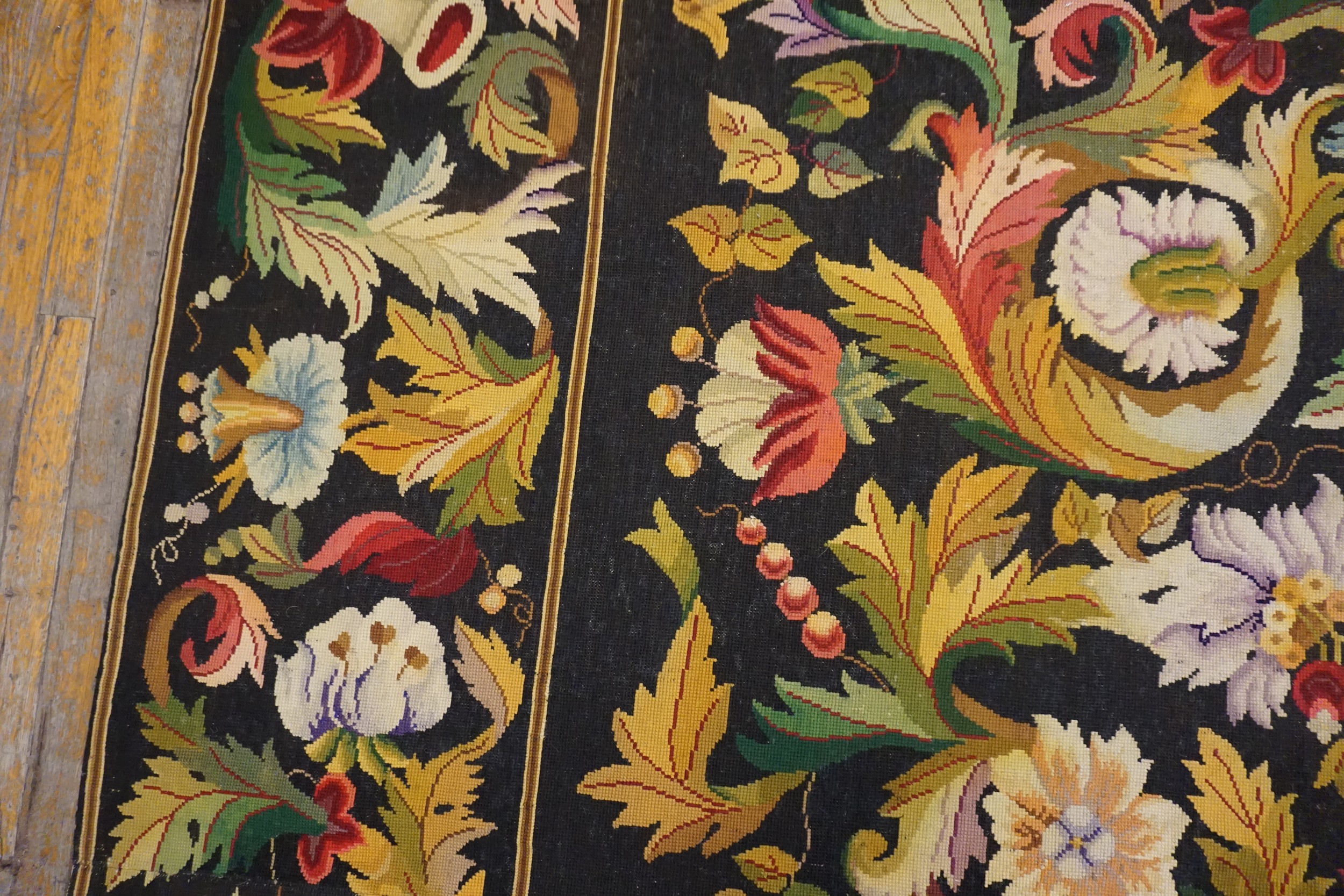
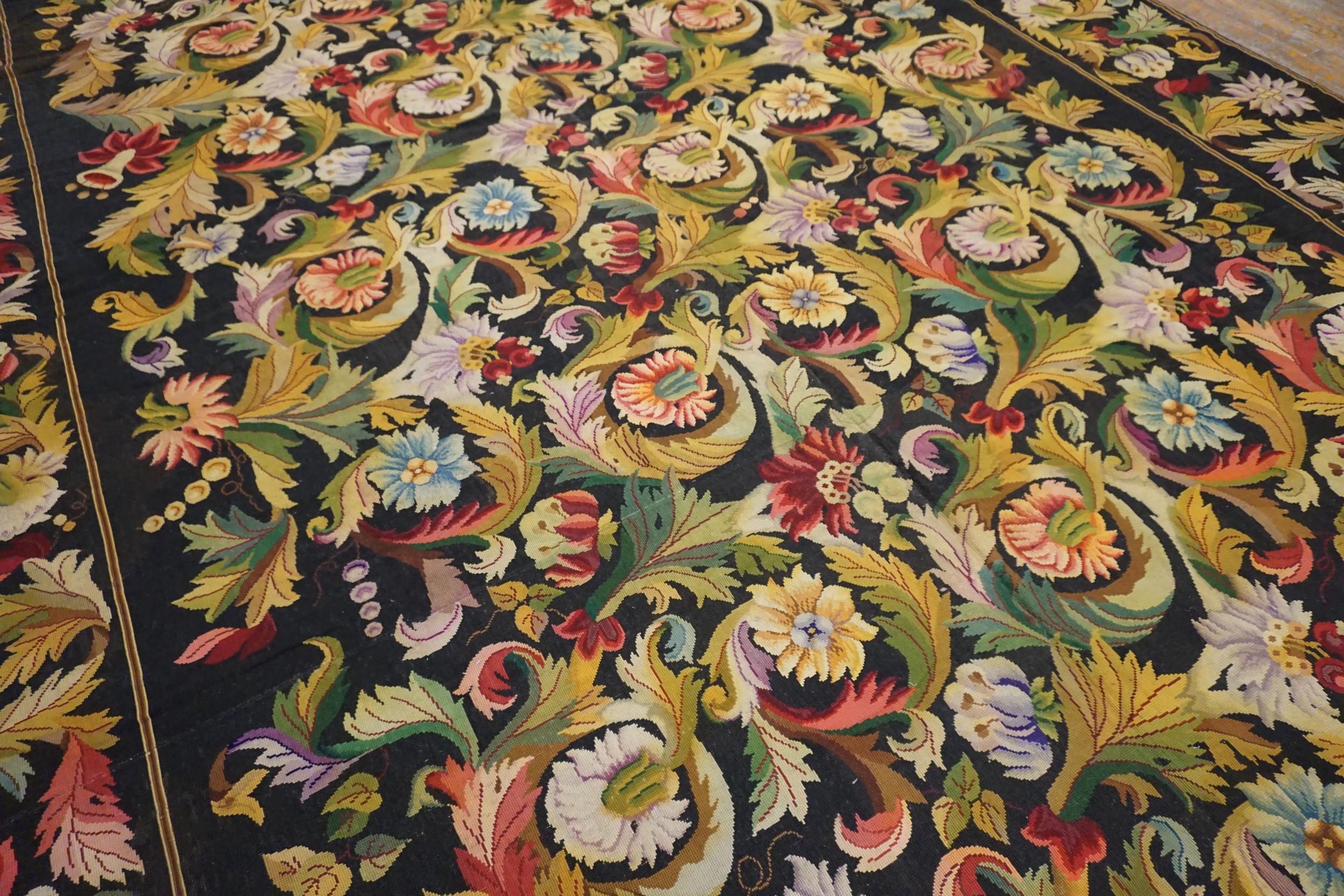
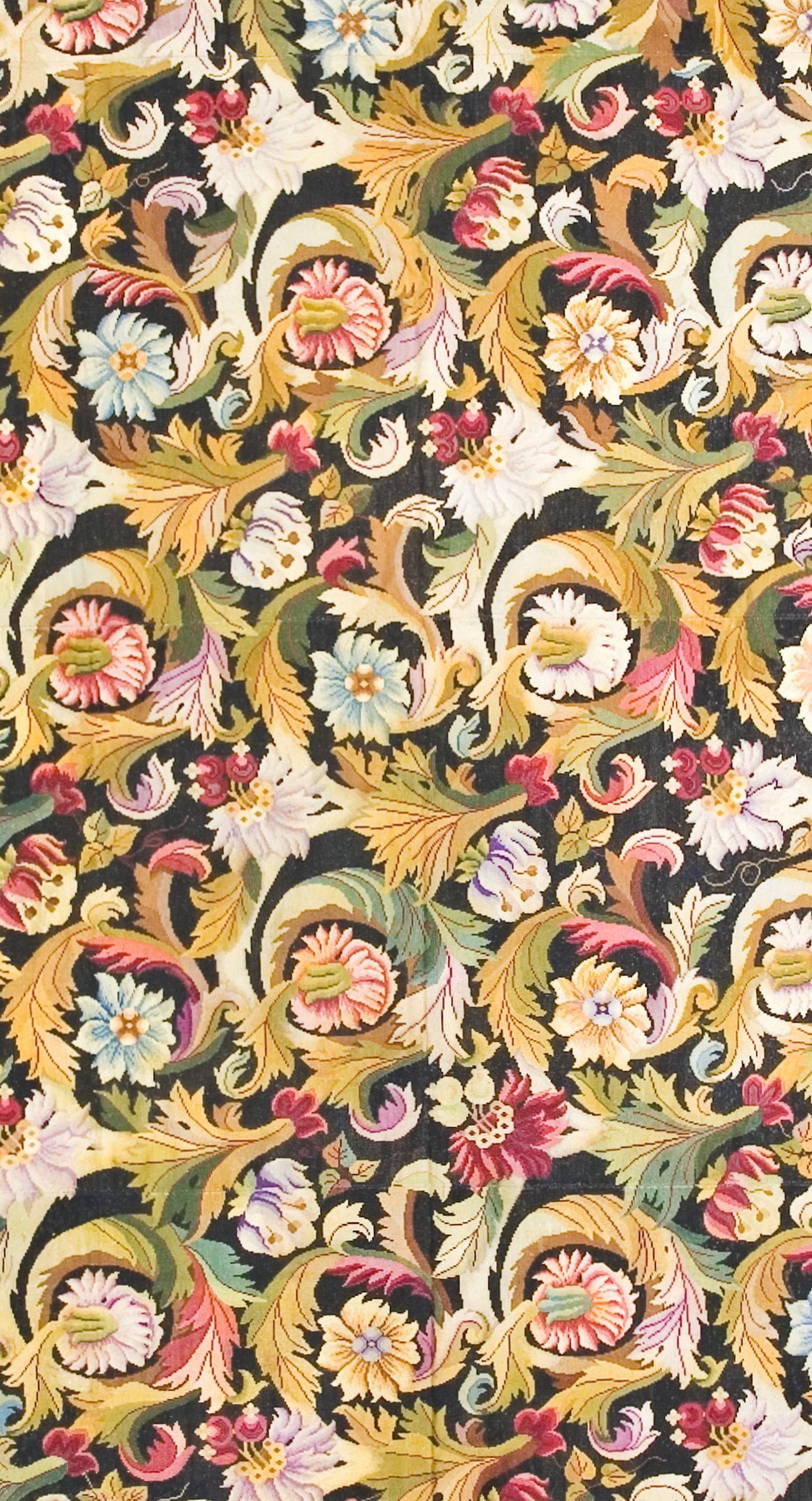
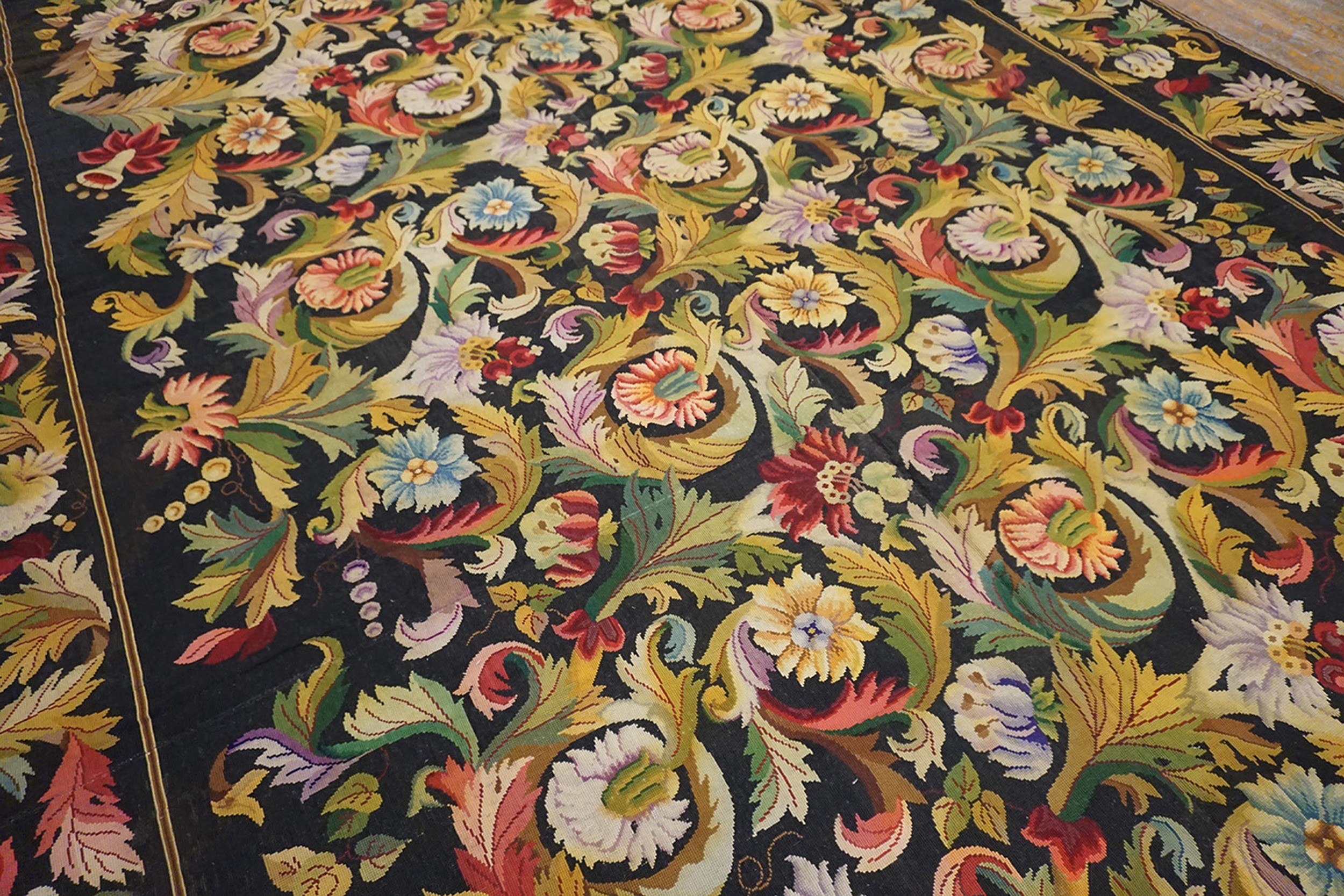
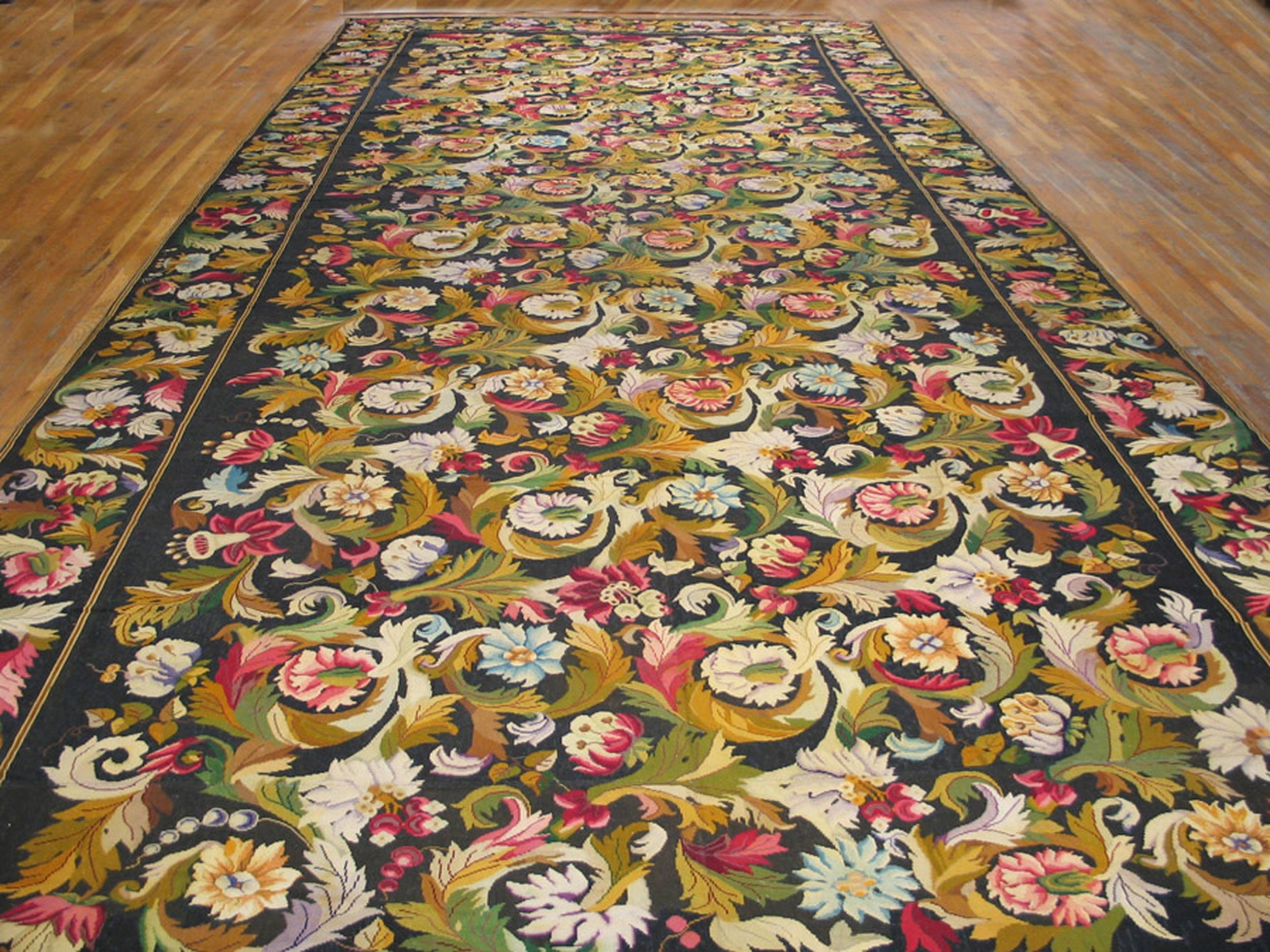
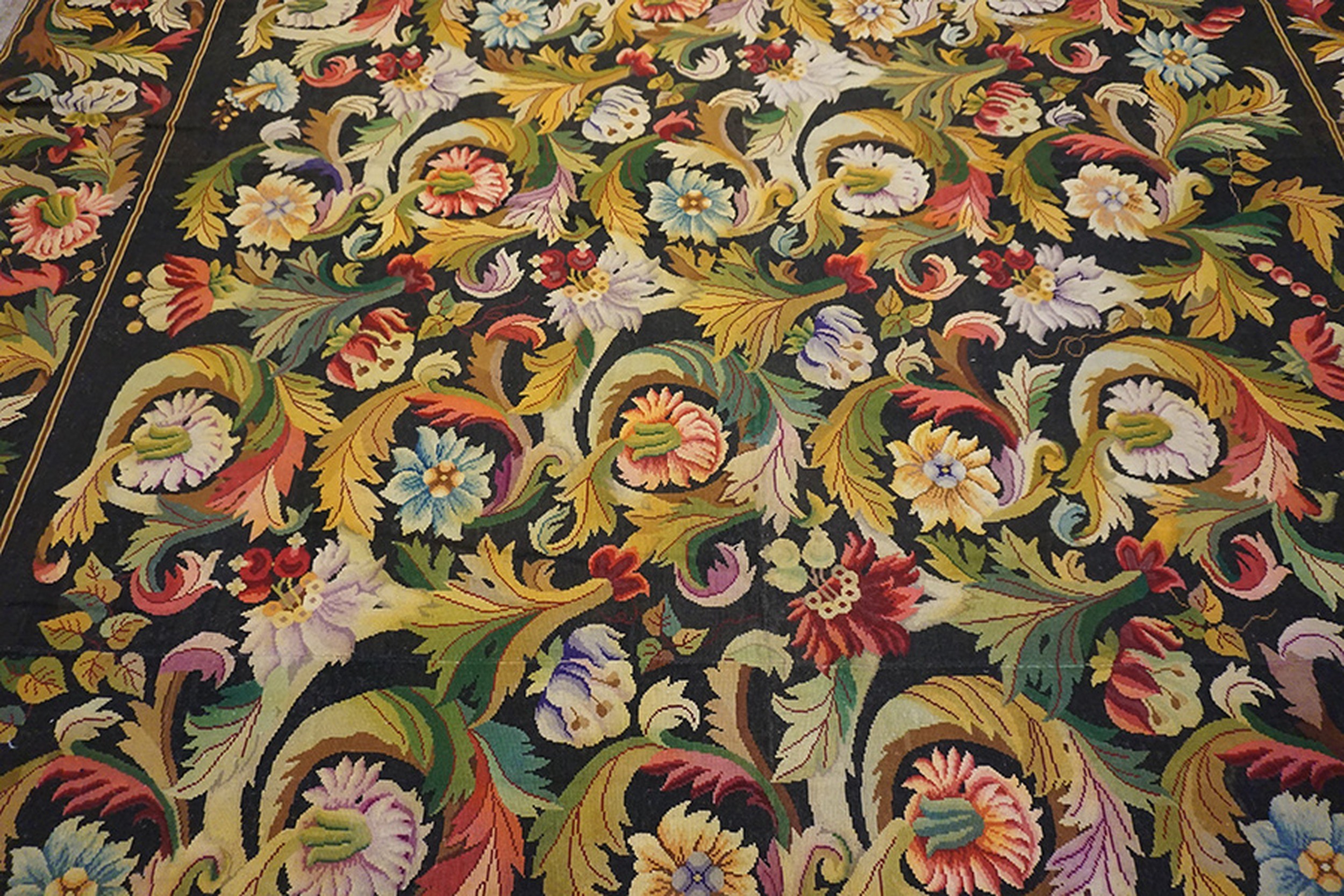
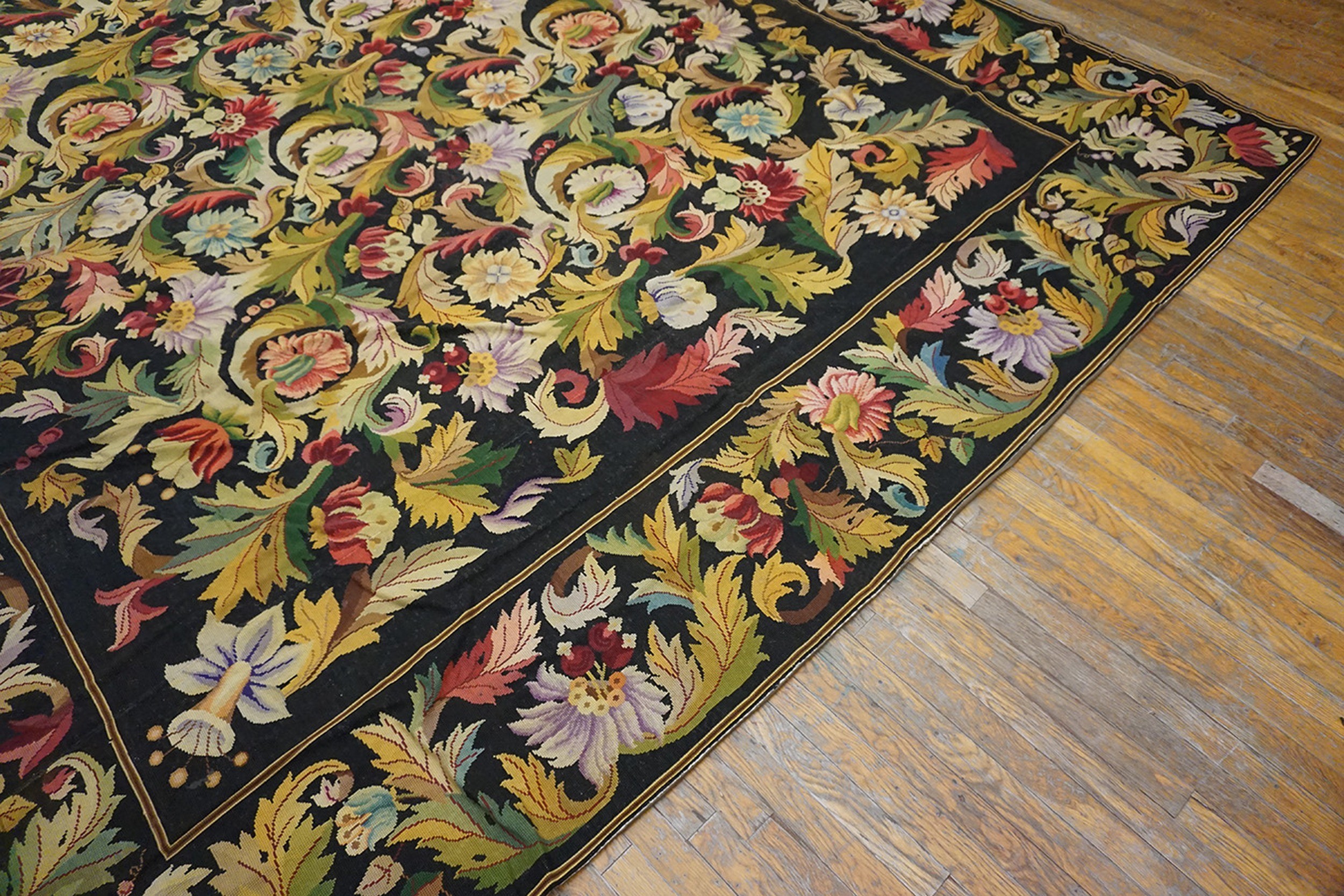
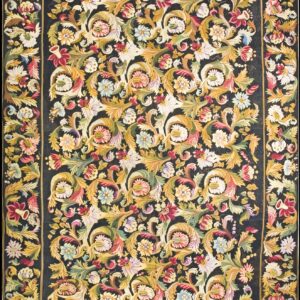
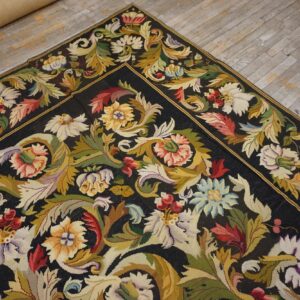
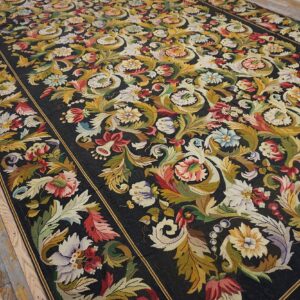
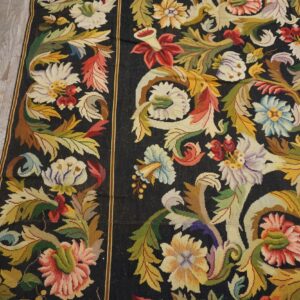
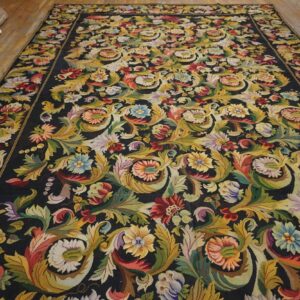
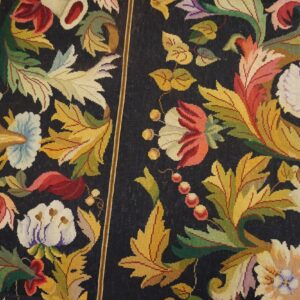
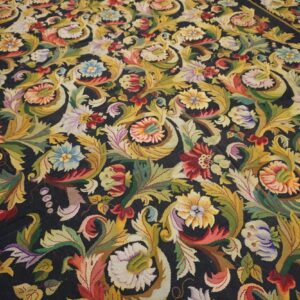
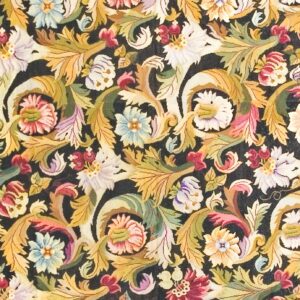
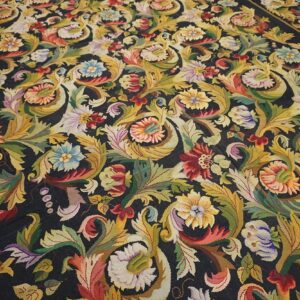
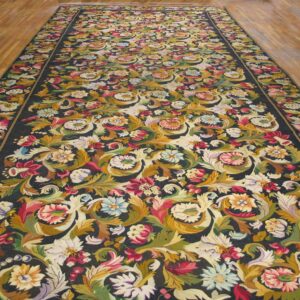
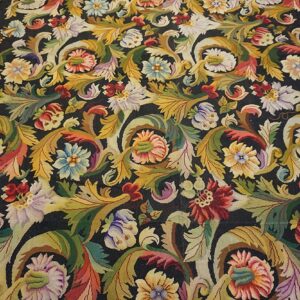
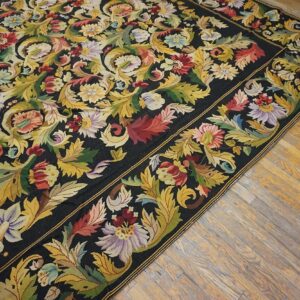
This monumental antique French needlepoint carpet, featuring a dramatic black field and a lush floral composition, is a superlative example of the “Grand Victorian” aesthetic that dominated European interior design in the late nineteenth century. Historically, French needlework rugs—distinguished from the loom-woven Aubusson rug and Savonnerie carpet traditions—were hand-stitched on a structural canvas, a technique that allowed for a level of painterly nuance and botanical realism impossible to achieve on a standard loom. The choice of a black ground was the height of mid-to-late 19th-century sophistication; it served as a “midnight canvas” that allowed the vibrant crimsons, soft blushes, and verdant greens of the floral motifs to pop with a theatrical, three-dimensional intensity, mirroring the popular “Still Life” oil paintings of the Dutch and French masters.
The historical significance of the “oversize” format in needlepoint cannot be overstated. Because every square inch of the rug was painstakingly cross-stitched or tent-stitched by hand, an antique French carpet of this magnitude represented thousands of hours of skilled labor, often executed by teams of women in professional workshops or as high-status domestic commissions. The design vocabulary—featuring a central bouquet surrounded by scrolling acanthus leaves and a cornucopia of seasonal flowers—is a direct descendant of the Louis Philippe and Napoleon III styles. These rugs were designed to anchor the grandest salons and “winter gardens” of the European elite, providing a sense of permanent springtime and botanical abundance within the formal, often somber, architecture of the era.
Beyond its decorative power, this European flowers design carpet serves as a bridge between the aristocratic past and the burgeoning middle-class desire for “attainable luxury” during the industrial age. The use of hand-dyed wool yarns gives the surface a soft, matte finish and a characteristic “textile mosaic” appearance, where each stitch contributes to the overall impression of a woven garden. Unlike the more rigid Oriental patterns, French needlepoints were celebrated for their organic, flowing lines and their ability to harmonize with gilded furniture and ornate moldings. To possess an antique specimen of this scale with such a pristine black field is to hold a rare monument to 19th-century French craftsmanship—a work that transforms the floor into a sprawling, hand-wrought tapestry of European horticultural history.